




Abstract
This article reports findings from a larger research project which aimed to promote learner autonomy among Thai secondary school learners of English as a foreign language (EFL) through strategy-based instruction (SBI). The study involved 30 learners from an intervention class and 32 learners from a comparison class. Nine strategies were introduced to the intervention class learners over a semester with the purpose of helping them develop essential skills for strategic and autonomous language learning. This article focuses on examining how explicit teaching of strategies in class affected learners’ reading scores and approaches to reading. It also observes the effects of SBI on learners’ perceptions of their ability to read English. Findings from the pre-, post- and delayed reading tests and think-aloud reading sessions showed significant increase in the intervention class learners’ reading test scores and their enhanced strategic approaches to reading. Group interviews further revealed learners’ positive attitudes towards English reading and increased confidence in their ability to manage their reading process independently. This article argues that explicit strategy instruction can help language learners develop essential strategic skills to process English texts. It also discusses how SBI can be effectively implemented in language classrooms.
Keywords
I Introduction
Reading English can be a challenging task for learners of English as a foreign language (EFL). This is because reading is not a process of matching words to meanings or merely translating chunks of texts from one language to another. According to the construction-integration model of text comprehension (Kintsch, 2018), effective comprehension depends on the interplay between construction process in which readers decode words, phrases and sentences, store them in their working memory and combine them into idea units, and integration process in which they integrate information from the text to their background knowledge and make logical inference from what is read. These cognitive processes enable readers to construct meaningful mental representations or their understandings of what they read. In this sense, reading can be viewed as an interactive meaning-making and problem-solving process that requires deliberate efforts and strategic abilities from learners.
While these processes are essential for comprehension construction, they often remain implicit and are not taught or explicitly modeled in class. Typical reading lessons, which involve learners practicing reading texts with support from the teacher and answering comprehension questions, do little in teaching learners how to read (Macalister, 2011). In addition, while it is often assumed that learners’ reading strategies in the L1 may be transferable to their L2 reading, there is still not enough evidence to confirm that this transfer can take place automatically. However, it has been suggested that positive transfer of L1 reading strategies to the L2 context and the development of L2 reading ability can be assisted by extensive instruction in class (Afflerbach et al., 2020; Grabe & Stoller, 2013).
Strategy instruction can support L2 reading development as it explicitly introduces learners to strategic approaches to engage with reading and provides extended opportunities for learners to practice using strategies in a contextualized manner (Brevik, 2019; Newton et al., 2018). Thus, training learners to be strategic in their reading is likely to benefit EFL learners who are developing their reading abilities to tackle academic demands at school.
However, it is unlikely that strategy instruction will make its way into language classrooms unless teachers understand what to do (Goh, 2019) and are convinced of its applicability and benefits to their learners’ proficiency development (Pawlak, 2019; Pawlak & Oxford, 2018). While there is plenty of research linking strategic learning to proficiency development, these studies often failed to demonstrate how exactly learning strategies were taught to learners (Plonsky, 2019). This article describes in detail how explicit SBI was implemented in the reading modules of a secondary school English class. It investigates how this pedagogical intervention helped enhance learners’ strategic skills in reading and how learners used these skills to regulate their reading process to attain their reading goals by themselves.
II Literature review
1 Strategy instruction and reading competence
Reading is an interactive and non-linear cognitive process that requires readers to use both their linguistic resources (vocabulary and grammar) and background knowledge to extract and interpret meaning from the text (Grabe & Stoller, 2013). In addition, successful reading also demands learners’ metacognitive abilities to plan for their reading, identify problems, apply strategies to solve the problems, and evaluate whether their comprehension has been successful (Afflerbach et al., 2013). This implies that successful readers are motivated and actively engaged in their reading process. Afflerbach et al. (2013) further point out that learners’ self-efficacy and beliefs about reading can also influence reading development. Learners who perceive themselves as capable readers and view reading as an opportunity to learn new things tend to adopt a more proactive and strategic approach to reading. While these metacognitive factors are necessary for reading development, Afflerbach et al. note that they often receive insufficient instructional focus in class.
The question then becomes, how can teachers promote cognitive and metacognitive abilities in reading? More specifically, what kind of teaching and learning activities can enhance learners’ control of their reading process and reading competence?
Research shows that strategy instruction can enhance reading development. Explicit strategy instruction, which aims to develop learners’ metacognitive ability, can also foster their development as effective and independent learners (Chamot & Harris, 2019; Shen, 2003). The construct of learning strategies, however, is not without problems. A number of researchers have raised concerns about the definition of learning strategies and the distinction between strategies and skills (see Macaro (2006) and Afflerbach et al. (2008) for in-depth discussions). Despite these concerns, various studies over the years have provided empirical evidence showing positive impacts of strategy instruction on reading success and learner development. For instance, Zhang’s (2008) intervention study indicates that explicit strategy instruction not only contributed to Chinese learners’ improved reading performance but also promoted their engagement in strategic reading. Yet, Zhang observes that some strategies appear to be more cognitively demanding for his learners and thus may require more practice to activate. Similarly, Wichadee’s (2011) study shows that SBI could enhance learners’ reading test scores and contribute to learners’ increased awareness of strategy use. However, she notes that while most of her learners appeared more ready to adopt strategies in their reading, low proficiency learners may need more practice to develop understandings about strategy use.
Aghaie and Zhang (2012) found that explicit instruction of cognitive and metacognitive strategies for reading promoted Iranian EFL high school learners’ self-regulation, which, in turn, led to effective management of their reading process and improved reading test scores. They also found evidence of strategy transfer to new reading tasks which suggested learners’ developed ability to read independently and strategically after the intervention. The benefits of strategy instruction on reading performance are also identified in Lee’s (2017) intervention study which investigated the effects of a school-wide strategy intervention program on Hongkong primary school learners’ development. After the intervention, learners in Lee’s study showed increased motivation, engagement in the reading process, as well as noticeable improvements in their strategy use and reading performance. Moreover, the strategy instruction program was viewed as a valuable experience for the participating teachers as it provided them with opportunities to work collaboratively to improve their learners’ reading skills.
Together, these studies indicate that strategy instruction can be a viable means to develop learners’ reading performance and metacognitive control of their reading process. While these empirical studies provide support for strategy instruction in classrooms, Plonsky (2019) notes that the effectiveness of strategy instruction also depends, to a large extent, on how it is implemented. The next important question then is: How best to teach strategies?
2 Approaches for strategy instruction
Research evidence in language learning strategy instruction points to the conclusion that explicit strategy instruction conducted as an integrated part of regular language lessons is likely to be more effective than implicit or non-integrated instruction (Cohen, 2018; Gu, 2019). When explicit strategy instruction is included in learners’ language lessons, it provides opportunities for them to practice their strategic learning skills in the context of a particular learning task which is relevant to their immediate learning concerns. This can motivate further exploration of strategies and deliberate strategy practices (Rubin et al., 2007).
Explicit instruction of strategy does not mean simply telling learners to use strategies. In fact, it entails discussing with learners what strategies are, why they are useful and when they can be used. Explicit strategy instruction also involves demonstrating how the target strategy can be used to facilitate task completion. In other words, the goal of strategy instruction is to help learners develop essential skills to regulate their learning. Rubin et al. (2007) observe that approaches for strategy instruction usually follow the common four instructional stages which guide learners towards increasing degrees of responsibility in strategy use and independence in managing their own learning. The first stage is to raise learners’ awareness of strategies they are already using. This awareness is heightened in the second stage when the teacher models how to use strategies on learning tasks. The teacher’s scaffolding is gradually removed in the third stage when learners are given repeated opportunities to practice strategies with peers or on their own. The last stage is to evaluate the effectiveness of the strategies and encourage learners to transfer the strategies to new tasks.
Guided by this broad framework and research literature on strategy instruction and reading development, the present study investigates how a strategy-based intervention program embedded in the reading modules of an English course can contribute to learners’ reading development and perceptions of their ability to read English. It attempts to answer the following research questions:
What are the impacts of the strategy-based intervention on learners’ English reading?
How does the strategy-based intervention affect learners’ perceptions of their ability to read English?
III Method
1 Participants and research context
This study took place at a large urban secondary school in North-eastern Thailand. It involved 62 eleventh-grade (age 17) Thai EFL secondary school learners from two intact classes. One class (30 learners) was assigned as an intervention class in which the SBI was conducted. The other was a comparison class (32 learners) which received regular reading lessons without any explicit attention to strategies. Before participating in the study, all learners had received four years of English instruction at the school. During the semester in which the intervention took place, all learners received four hours of English instruction per week (two hours for a compulsory English course and two hours for an elective English course). The teaching approaches were predominantly teacher fronted. Classroom activities often involved choral drills, explicit teaching of grammar points, and vocabulary recitation. These activities are common in English classrooms in Thailand (Hayes, 2008). The learners observed that their English reading lessons focused mainly on reading texts aloud and translating them to Thai. None reported having received formal SBI prior to participating in the study.
The strategy-based intervention was integrated into the reading modules of the English in Daily Life III, an elective English course which the first author co-taught with the course teacher. The reading modules of the course featured short to medium length (50–350 words) expository and narrative texts. Each reading lesson in the coursebook was usually followed by comprehension-checking activities.
The objective of the reading modules was to develop learners’ ability to read, identify main ideas and understand various types of English texts. During the intervention, the first author took the role of a teacher/researcher whose main responsibility was to deliver the intervention lessons while the course teacher was responsible for teaching the listening, speaking and writing modules of the course and grading. This is to minimize the potential conflicts of interest that may arise from the first author’s roles in the research. The first author usually began each intervention lesson in English and switched to Thai when necessary. The occasional use of the learners’ L1 in the intervention lessons was useful as it helped clarify the concept of learning strategies and process of strategy use to learners who are not familiar with SBI.
2 Procedures
The 10-week intervention was conducted over a semester with the purpose of helping learners develop strategic skills to manage their reading. Each week, learners in the intervention class received a 50-minute session of SBI. They were informed of the purpose of the intervention and their rights as participants at the beginning of the semester. During the intervention, nine strategies were introduced to learners. The selected strategies were based on previous learning strategy studies (Chamot, 2009; O’Malley & Chamot, 1990; Zhang, Gu & Hu, 2008) and the lesson sequence was based on the course content, course objectives, text types and the pre-intervention group interviews in which the learners collectively expressed their need for effective approaches to reading English.
The strategies included in the original lesson plans were setting goals, preparing for reading, taking notes, imagery, self-questioning, making inferences, analysing text structure, summarizing and goal checking. The lesson plans were subsequently presented to the course teacher who was asked to review whether the selected strategies would be suitable to the course content, overall curriculum objectives and the learners. After reviewing the lesson plans, the course teacher suggested removing the analysing text structure strategy from the list as he believed it had already been mentioned in the previous compulsory English courses. This strategy, therefore, was removed based on the course teacher’s suggestion.
However, as the intervention progressed into the fifth week, the first author received requests from the learners for an additional session on how to strategically guess word meaning from word parts and contextual clues. Therefore, in the eighth week, she decided to add this strategy into the lesson plans. Table 1 presents the final version of the lesson plans used in the intervention.
The lesson plans.
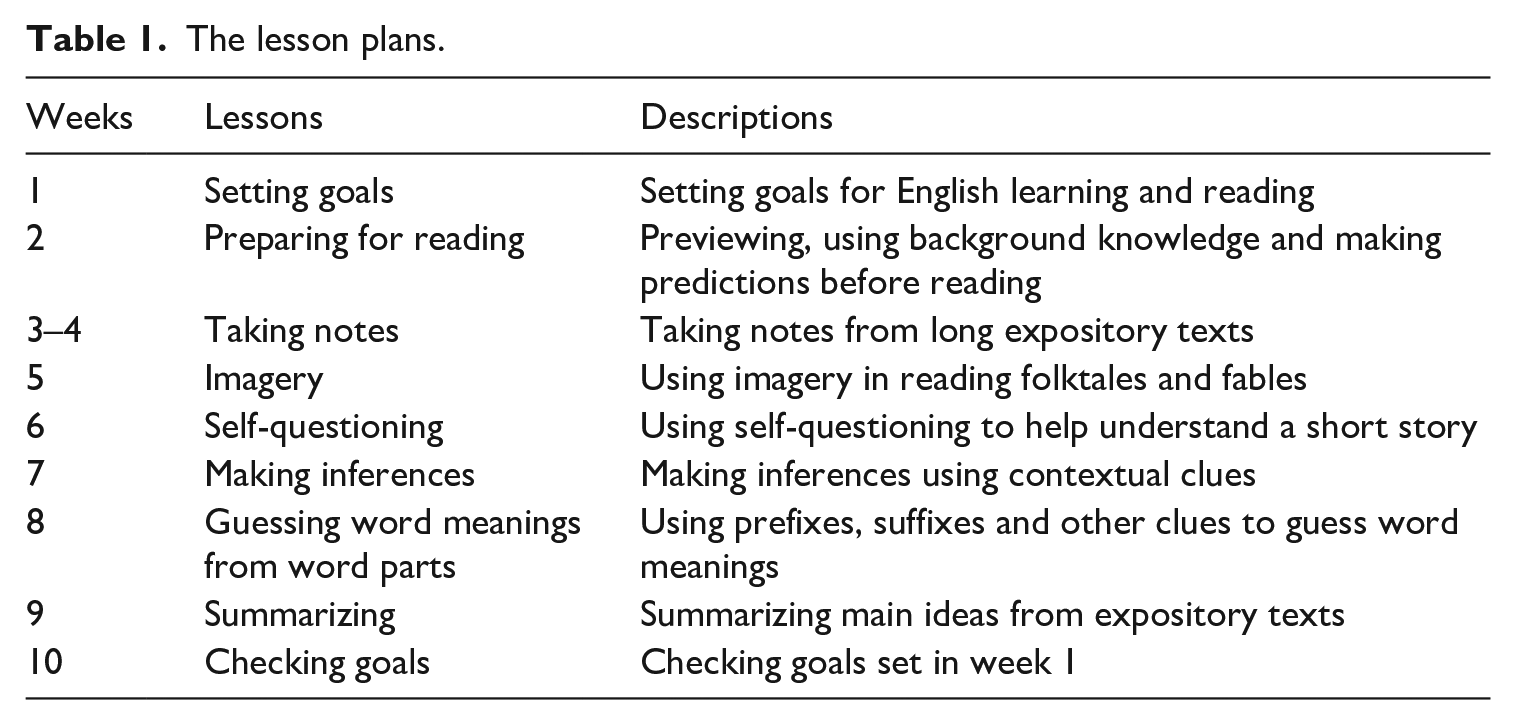
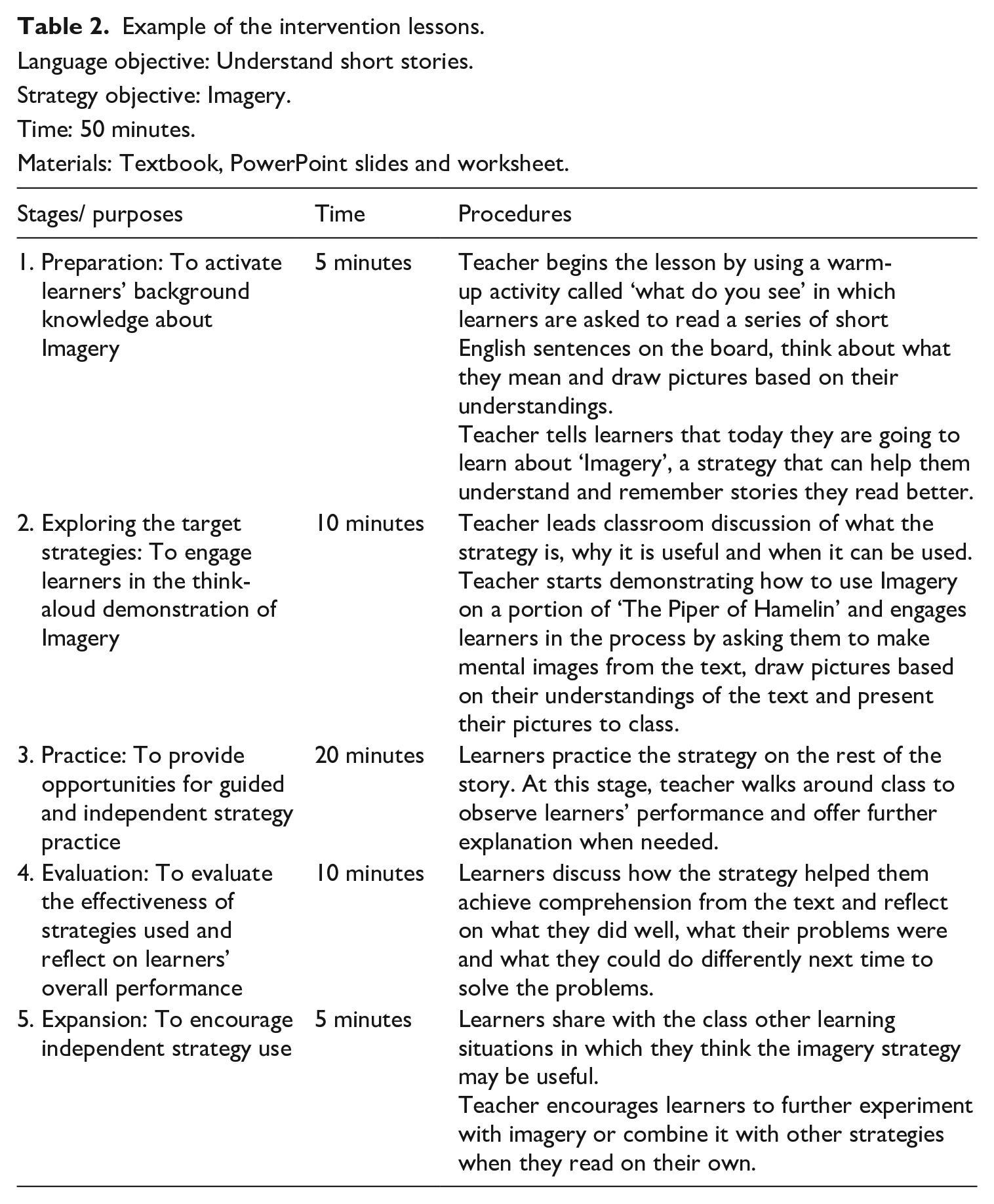
Each lesson was guided by the Cognitive Academic Language Learning Approach (CALLA) model for strategy instruction (Chamot, 2009). The model includes five recursive steps of instruction: preparation, presentation, practice, evaluation and expansion. This instructional model was chosen as a framework for the SBI in this study because of its strong theoretical support from language learning strategy research. The model aims to help learners develop not only declarative knowledge but also procedural and conditional knowledge for strategic learning. Its non-linear nature also allows learners to progress towards more independence with appropriate degrees of scaffolding from teachers. In this study, an adaptation was made in the presentation stage in which the teacher presents and models the target strategies to learners through think-aloud demonstration. The presentation stage was adapted to ‘exploring the target strategies’ to highlight the interactive nature of the stage and the learners’ role in co-constructing knowledge about strategy use. The following section provides a detailed account of how learners were guided through each instructional stage of the intervention lessons. An abridged example from the lesson plans implemented during the intervention is presented in Table 2.
Example of the intervention lessons.
Language objective: Understand short stories.
Strategy objective: Imagery.
Time: 50 minutes.
Materials: Textbook, PowerPoint slides and worksheet.
a Preparation
The first author began each intervention lesson by writing down the strategy names on the board and asked learners to share with the class what they thought the strategies were, how the strategies could help with their reading and whether they have used the strategies before in other learning activities. Occasionally, warm-up activities which required learners to exercise their strategic problem-solving skills were also used. The purpose of this alternative activity was to raise learners’ awareness of their own strategies and other possible strategies to solve the presented problems. Before moving to the second stage, learners were informed of the lesson objectives and what they were expected to achieve at the end of the lesson.
b Exploring the target strategies
This stage involved classroom discussion about the target strategies in terms of what they are, why they are useful as well as when and how they can be used to facilitate the reading process. The first author presented a sample reading task to learners and led the think-aloud strategy demonstration.
The first author read the text aloud, verbalized her thinking process when using the target strategies on the reading task and encouraged learners to voice their thoughts as they followed the demonstration. In this way, the strategic reading process which is usually implicit in typical reading instruction is made transparent to learners. Because this stage aims to promote knowledge co-construction through dialogic interactions in class, learners were asked to discuss with their peers and the teacher how the target strategies can be used when planning before reading, monitoring for comprehension while reading and evaluating whether comprehension has been achieved after reading. They were also asked to consider other strategies that can be used to achieve the task goal. To make the process of exploring the target strategies more interactive to learners, the first author would sometimes make intentional mistakes, verbalize her confusion and frustration, ask herself aloud how the problems could be solved and ask learners for strategic solutions to the problems. In this sense, learners were directly engaged in the process of task analysis, strategic problem-solving, and regulating negative emotions caused by difficulties in reading.
c Practice
The third stage of the intervention lesson was the practice stage in which learners practiced using the target strategies on new reading tasks in groups, in pairs or individually with teacher assistance. This stage aimed to provide opportunities for guided and independent strategy practice to scaffold learners’ development as strategic readers. At this stage, learners were given reading worksheets that were adapted from the reading activities in the course workbook. Games and other creative activities, such as quiz and drawing, were also used to stimulate learners’ engagement and deliberate practice of the target strategies. While learners practiced using the target strategies to complete the task goals, the first author walked around class to monitor their practice and evaluate their understandings of the lessons. She also answered questions, gave additional explanations and examples on how to use the target strategies when requested. As learners became familiar with the practice stage and more confident in using strategies, their practice also became less guided.
d Evaluation
The fourth stage was to evaluate the effectiveness of the strategies. Post-task evaluation is an essential component of SBI as it helps learners understand which strategies they used were or were not helpful for their reading activities. This kind of conditional knowledge can further help them make informed decisions when choosing strategies for future reading tasks.
After learners finished practicing the target strategies on the given reading tasks, they were asked to think about the reading activities they did and discuss with the whole class what they learned, what they thought they did well, what their main problems in reading and using the target strategies were, how the strategies had helped them with their reading and what they should do to improve their performance next time. The first author also answered questions learners had and gave feedback on their strategy choice and overall performance.
e Expansion
In the expansion stage, learners were asked to think about the target strategies and share with the class examples of other learning situations where the strategies could be useful. At the end of each lesson, the first author assigned homework and encouraged learners to try using the strategies they learned in class with their homework and other independent learning activities. The purpose of the expansion stage is, thus, to encourage independent strategy practice.
3 Instruments and data analysis
a Reading tests
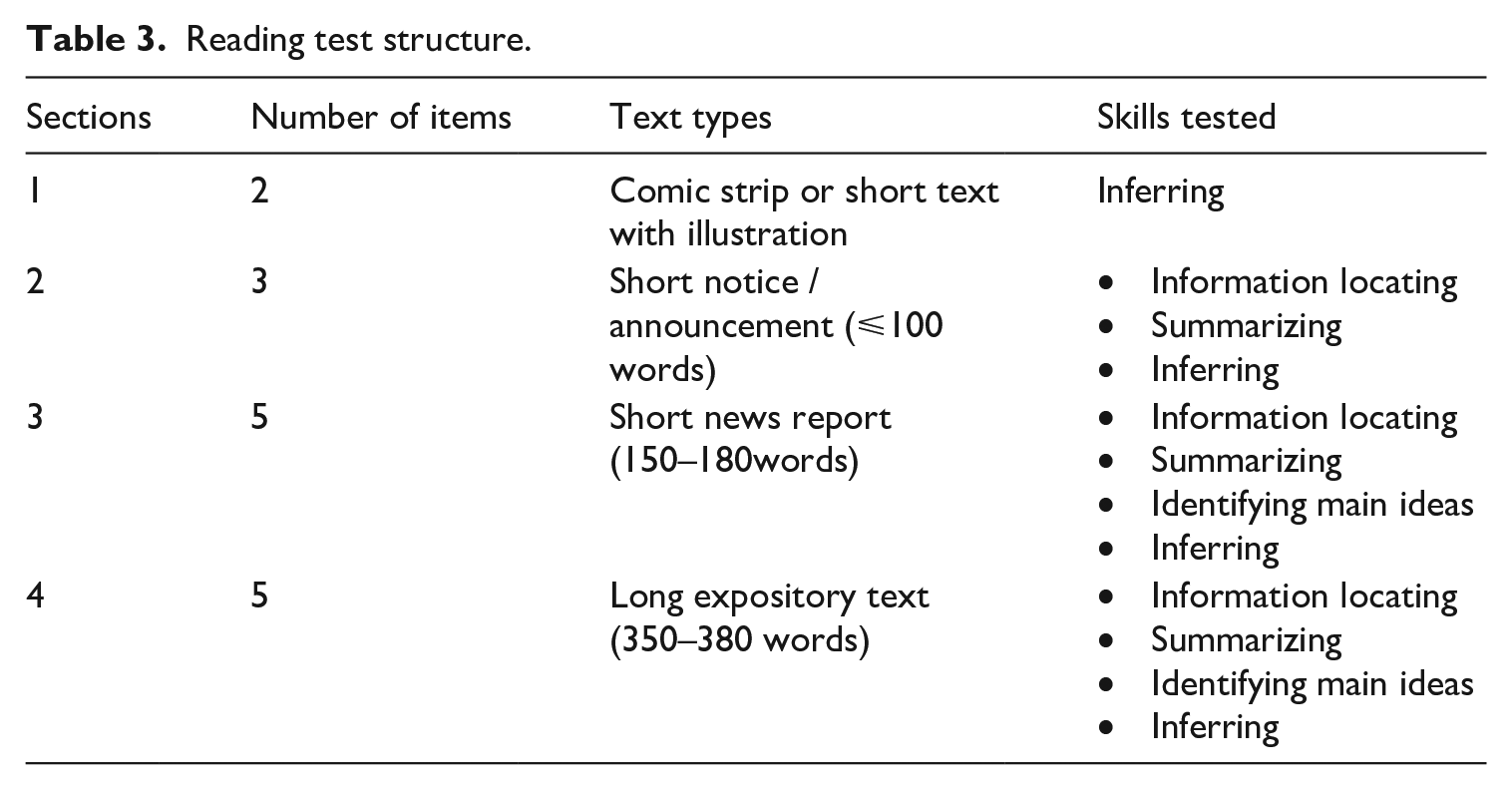
Three sets of 15-item multiple choice reading tests which were based on the reading section of the school’s mid-term and final English exams for grade 11 were used as the pre-, post- and delayed tests in this study to identify changes in learners’ reading test scores after participating in the intervention. The pre-test took place at the beginning of the semester while the post- and delayed tests were administered immediately after the last intervention lesson and five weeks after the intervention respectively. All test scores were analysed by SPSS version 25.
Prior to administration, all three reading tests were piloted with 106 learners and the results of One-Way ANOVA showed that these tests were not statistically different (F(2, 315) = .753, p = .472). Therefore, they could be used as the pre-, post- and delayed tests. Table 3 provides details regarding the structure of the reading tests and skills tested.
Reading test structure.
b Think-aloud reading activities
In addition to the reading tests, a total of 24 think-aloud sessions were conducted with six intervention class learners and six comparison class learners before and after the intervention to observe how learners’ approaches to English reading changed over the intervention period.
While there seems to be a consensus that think-aloud protocol can be a reliable data collection tool, Zhang and Zhang (2020) note that a lack of clear instruction on the think-aloud process can compromise data accuracy and completeness. Before participating, all think-aloud participants were given two hours of preparation during which they were informed about the purposes and procedures of reading think-aloud. The texts selected for think-aloud sessions were similar to the ones learners encountered in their course materials. They were 175–190 words long and on general-interest topics. Each think-aloud session usually lasted 30–40 minutes. Learners were asked to read the given English text and verbalize their thoughts while reading. They were also reminded that they could take their time and choose to verbalize their thoughts either in English or Thai. All participating learners chose Thai. The first author used prompts such as ‘what are you thinking?’ and ‘please keep talking’ to remind learners to say their thoughts out loud when she noticed a lapse in their verbalization. She also took notes of interesting incidents during the think-aloud and followed them up at the end of the session. All sessions were audio-recorded and later transcribed for data analysis.
Each think-aloud transcript was coded in NVivo for three rounds; immediately after the sessions, one month after the sessions and three months after the sessions to ensure consistency of the findings. The first step of coding for each round was to read through all transcripts and note all the incidents that could represent learners’ use of strategies. Then, the transcripts were coded using a provisional code list which was based on Chamot’s (2009) and O’Malley and Chamot’s (1990) strategy descriptions as well as Zhang et al.’s (2008) coding scheme. The final step was to merge, delete, organize and reorganize the codes. This is to ensure that the generated code list could accurately capture the strategies learners used during their think-aloud sessions. An independent coder was also asked to code 20% of the think-aloud data. The percentage of inter-coder agreement was 88.52%, indicating an acceptable level of agreement between both coders (Miles et al., 2014). In addition, the independent coder and the first author also discussed differences in their analyses until a final agreement was reached.
c Learner group interviews
At the end of the semester, learners from the intervention class were invited to share their experiences and feedback for the intervention in group interviews. The main purpose of learner group interviews was to explore learners’ perceptions about their English reading process and their own ability to read English. These perceptions are worth investigating as they can help construct a holistic view of the learners’ improvement after the intervention. All interviews were conducted in Thai as the learners felt that they could express their ideas more comfortably in their L1.
Because the aim of the interviews was to obtain data from the learners’ perspectives in their context, interview data were first coded inductively to identify recurring themes through open coding, and then deductively with a focus on the research questions. Coding and revisions continued until the process no longer produced new information or insights. In other words, the coding process stopped when data saturation was reached (Merriam & Tisdell, 2016).
IV Findings
1 What are the impacts of the strategy-based intervention on learners’ English reading?
The impacts of the intervention on learners’ reading proficiency were observed through the learners’ performance on the pre-, post- and delayed reading tests as well as pre-and post-intervention reading think-alouds.
a Improved reading test scores
All test scores were analysed using multivariate analysis of variance (MANOVA) in SPSS version 25. The average scores for both classes’ reading tests are summarized in Figure 1. While the average scores of the comparison class remained almost unchanged across the three tests, a large improvement can be observed in the intervention class. The intervention class’s average test scores increased from 5.3 in the pre-test to 8 in the post-test, and dropped slightly to 7.4 in the delayed test.
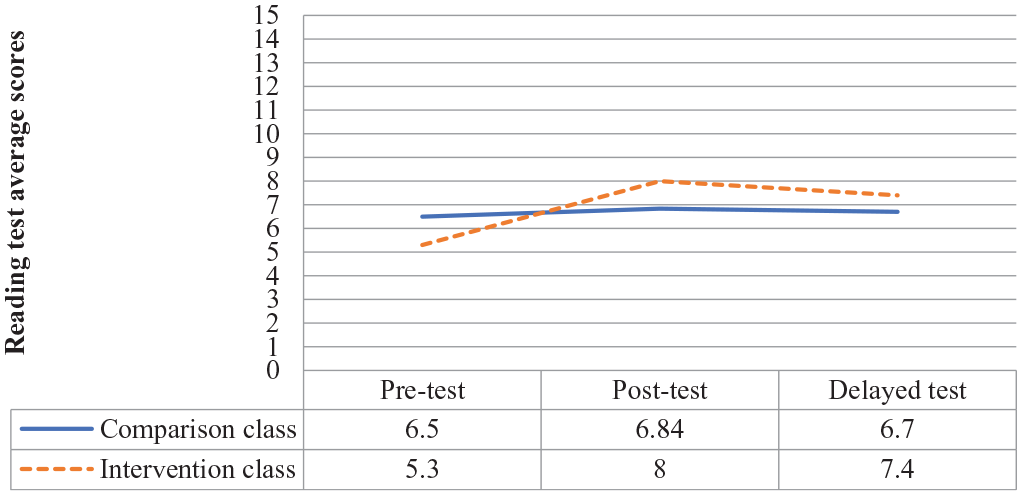
Reading test scores of the two classes.
The test scores of both classes were compared using a MANOVA (Tables 4 and 5). Results show that, overall, there was a statistically significant difference in the test scores between the two classes, F(3, 58) = 6.66, p = .001, Wilks’ λ = .744, partial η² = .26. Tests of between-participants effects indicate that the two classes’ pre-test scores were not statistically significantly different, F(1, 60) = 3.56, p = .064, partial η² = .06. This means that despite the comparison class’s average pre-test score (6.5) being higher than that of the intervention class (5.3), learners in the two classes were not different in terms of their performances on the pre-intervention reading test.
MANOVA results: Multivariate tests: Design: Intercept + Class.
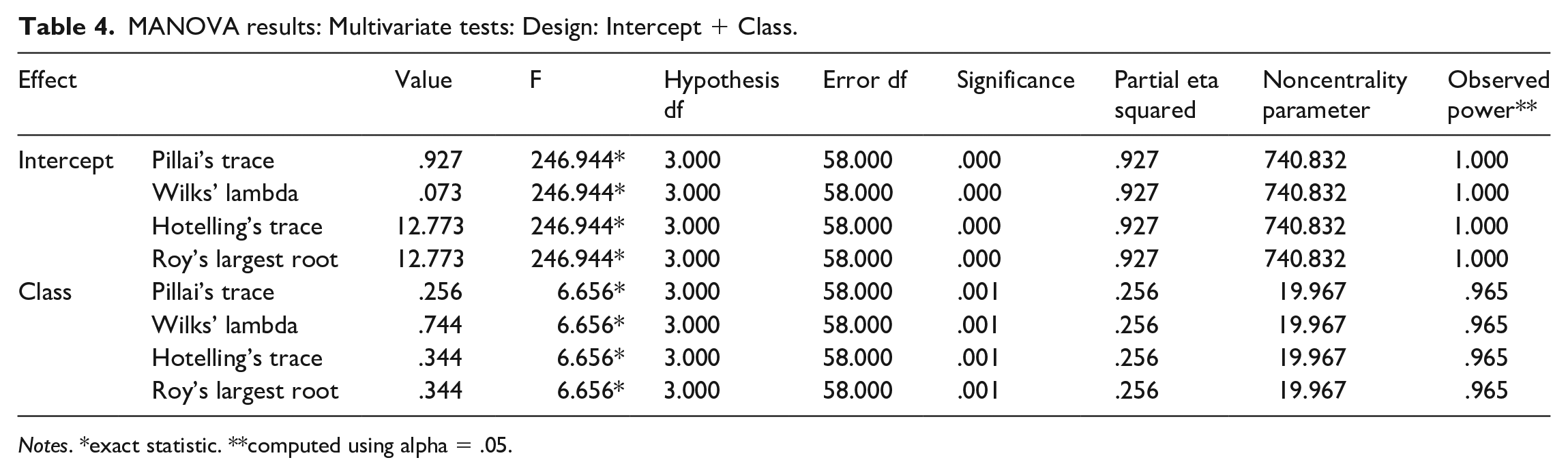
Notes. *exact statistic. **computed using alpha = .05.
MANOVA results: Tests of between-participants effects.
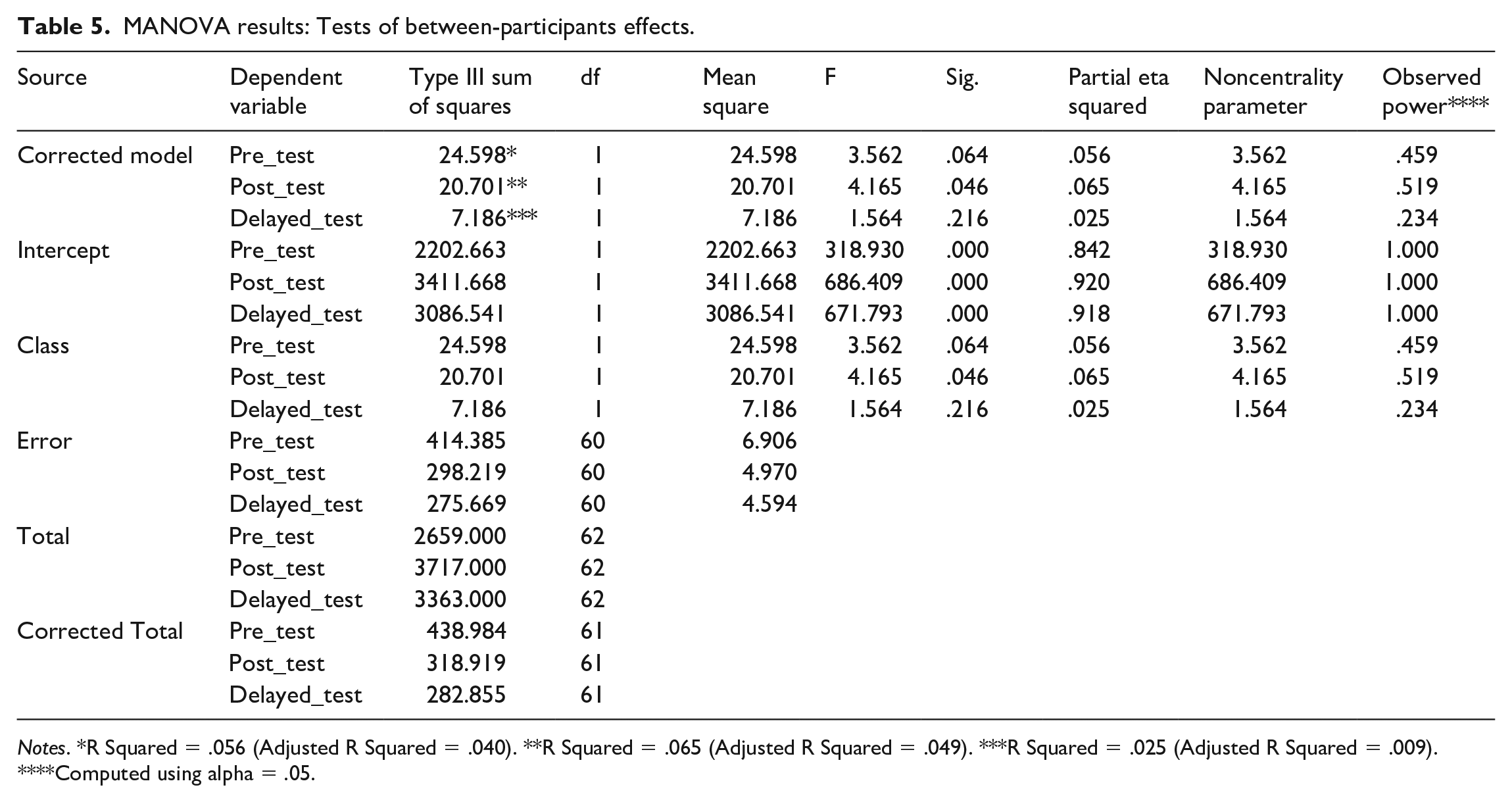
Notes. *R Squared = .056 (Adjusted R Squared = .040). **R Squared = .065 (Adjusted R Squared = .049). ***R Squared = .025 (Adjusted R Squared = .009). ****Computed using alpha = .05.
However, there was a statistical difference in the two classes’ post-test scores, F(1, 60) = 4.17, p = .046, partial η² = .07. In other words, the intervention class significantly outperformed the comparison class in the post-test. Despite the decrease in both classes’ delayed test scores, the intervention class still performed better than the comparison class though the difference was not statistically significant F(1, 60) = 1.56, p = .216, partial η² = .03. This could be due to two possible reasons: (1) the duration and intensity of the intervention and (2) the lapse of time between the post- and delayed tests. While the intervention could lead to immediate gains in test scores, one 50-minute session of guided strategy practice per week may not be sufficient to help learners master their strategy use. Thus, more hours of scaffolded strategy practice may be needed before stronger effects of SBI on reading outcomes can be observed. In addition, the 5-week interval between the two tests may have led to forgetting. Since strategic learning was a new concept to these learners, some may forget about, or stop using strategies altogether after the intervention. In this case, future research into factors that support or hinder strategy retention is likely to enhance the effectiveness of SBI on language learning.
In sum, test score analysis indicates that, after receiving the intervention, learners in the intervention class outperformed the comparison class learners in the post- intervention and the delayed reading test as well. Thus, it is reasonable to conclude that the intervention influenced the learners’ improvements in reading over time.
b Enhanced strategic approaches to reading
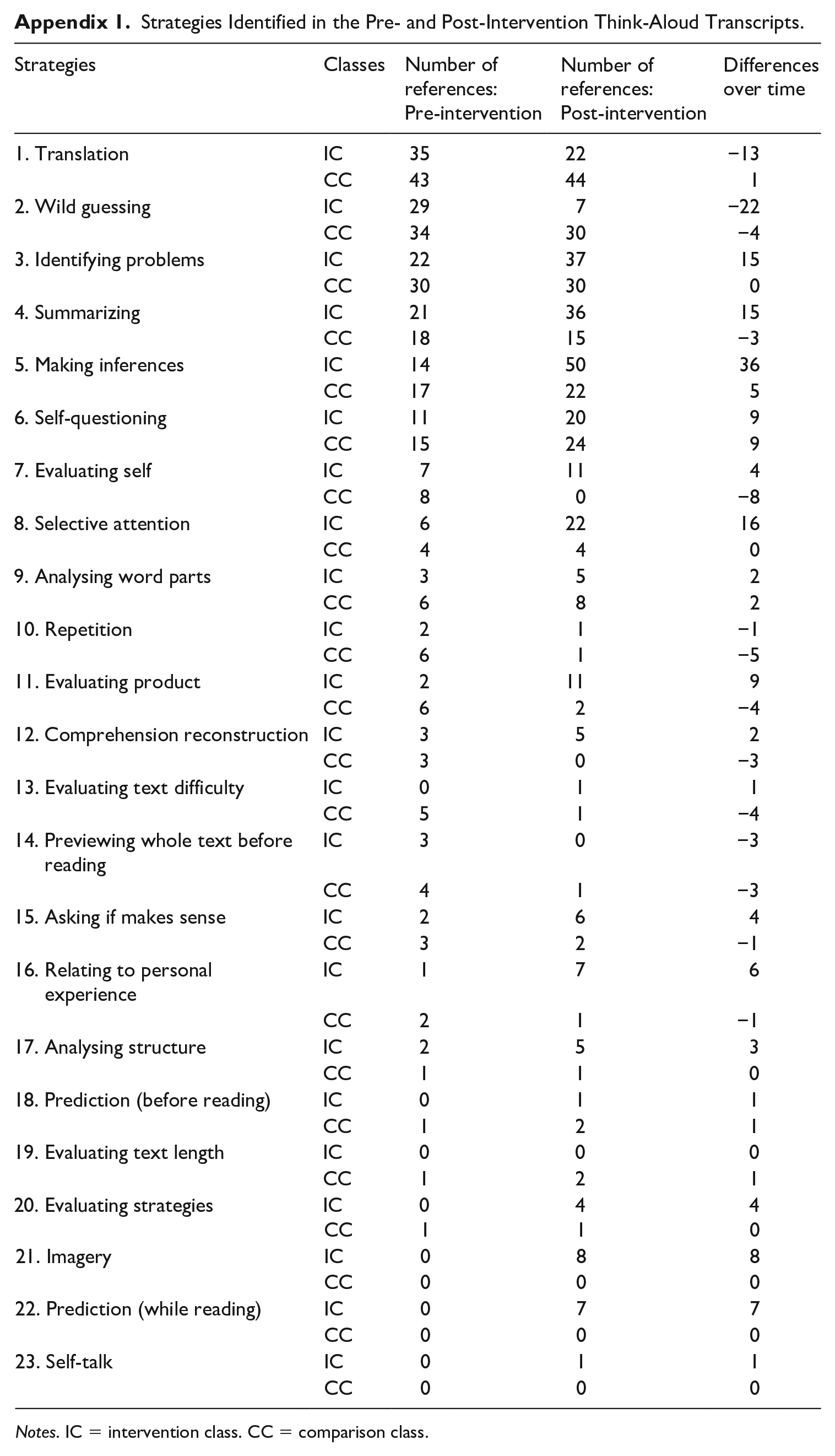
The impacts of the intervention on learners’ reading were also observed through their performance in the reading think-aloud activities. In total 23 strategies were identified in the learners’ pre-and post-intervention think-aloud transcripts (see Appendix 1).
This section presents four reading think-aloud excerpts that represent common approaches to English reading identified among learners in both classes before and after the intervention. Excerpts 1 and 2 show Mon’s (a comparison class learner) and Mind’s (an intervention class learner) strategy use during the pre-intervention think-aloud. The text used was ‘Gifted students’. Excerpts 3 and 4 show the same learners’ strategy use when reading a text titled ‘Ig Nobel Prize’ in the post-intervention think-aloud.
The following examples show portions of the think-aloud texts and learners’ reading of the text in italics, while their verbalized thinking process in Thai was translated and presented in non-italics. All learners’ names are pseudonyms.
c Pre-intervention think-aloud findings
Extract from the think-aloud text ‘Gifted students’: Boaler says she has seen the damage in adults and students who believe they don’t have ‘math brains’ or that they’ll never be good at math. Through talking with her students, Boaler began to see how being seen as ‘gifted’ or ‘smart’ as children negatively affected even bright and successful young people. It’s not uncommon for gifted students to fear failure more than other students because they feel they have more to lose. Excerpt 1: Mon (Comparison class, pre-intervention). Mon: Boaler says she has seen damage in adults and children who believe that they don’t have math brains or that they’ll never be good at math. Boaler says that adults who believe that children who cannot do math will not be good at anything math-related. Through talking with her students, Boaler began to see how being seen as gifted or smart as children negative affected . . . uh … even bright and successful young people. So, the person talked to their children. Boaler thinks that she/he gave gifts for students’ intelligence . . . Then ‘negative affect’ might mean their children have negative thoughts about successful young people.
In his pre-intervention think-aloud session, Mon appeared confident in his vocabulary knowledge. His main strategy in reading this text was translation. He proceeded to translate one sentence to the next swiftly without seeing the need to connect them to construct meaningful idea units. He continued reading the rest of the text by translating and guessing. As a result, despite his apparent confidence, Mon’s understanding of the story was incomplete and inaccurate.
Mon: Boaler did research on smart and weak students. Boaler did the research and found that most children’s levels of intelligence were not equal. This led him/her to provide options for teachers to understand their students better . . .
In attempting to understand the same portion of the text, Mind made inferences based on certain words from the passage and asked herself questions relating to the text. However, she did not seem to be aware of the need to find more contextual evidence to support her inferences or answer her questions. This resulted in an incomprehensible summary and she eventually gave up reading.
Excerpt 2: Mind (Intervention class, pre-intervention). Mind: Talking . . . it said this math education. This should be about mathematics. Boaler says she has seen. This one I don’t know. Adults and students who believe they don’t have math brain. People who had ideas? Ideas? thoughts or dreams that they are not good at math. They don’t have brains for math . . . not good at all at math. Don’t think that. Boaler started to see children . . . gifted . . . smart students or not smart at all. It’s not uncommon for gifted students to . . . I have no idea what this part here is about. Because they feel they have more to lose. I’m still a bit bothered with this part because they have more to lose . . .
Findings from the pre-intervention think-aloud indicate that reliance on direct translation, ineffective use of inferences and summarizing strategies as well as lack of comprehension monitoring were common among learners in both classes. These findings are understandable considering learners’ familiarity with the Grammar-Translation method of reading instruction in their learning context. While learners’ use of strategies was similar before the intervention, post-intervention think-aloud findings reveal noticeable qualitative difference between the intervention and the comparison class learners.
d Post-intervention think-aloud findings
Extract from the think-aloud text ‘Ig Nobel Prize’ Each year, the Ig Nobel Prizes are given out to the funniest, most unusual research produced from around the globe. The Ig Nobel has been held at Sanders Theatre at Harvard University since 1991. The prizes have been awarded every autumn to celebrate 10 unusual or trivial achievements in scientific research. The awards have been given out to ‘researchers’ whose research may first make people laugh, and then make them think. Excerpt 3: Mon (Comparison class, post-intervention). Mon: Each year Ig Nobel prizes are given out to the funnest more unusual research product from around the globe. This means . . . uh . . . every year, the Ig Nobel prizes are given to products, weird or funny products. These products are made for something around the world. The Ig Nobel . . . held at Sanders Theater at Harvard University since 1991 . . . have been awarded every autumn to celebrate 10 unusual or trivial achievement and scientific research. It is that the Ig Nobel prize has been kept at Harvard since the year 1991 and then awarded every autumn . . . it’s like . . . uh . . . as a celebration for . . . uh . . . scientific products . . . something like that.
Mon’s approach to reading in the post-intervention think-aloud was similar to what he did in his pre-intervention session. He processed the text mainly by translation. His approach was to restate what was mentioned in the text rather than extract the meaning from the paragraph.
Mon: The awards have been given out to researchers whose . . . whose research may first make people laugh and then make them think. It is given to the creator . . . the creator of the product and then to the first person to make people laugh. Hm . . . laugh . . . then make them think . . . uh . . . kind of making people happy.
Although Mon could eventually produce a partially accurate summary of the text, his example represents a common pattern of reading among comparison class learners. That is, they usually read through the passage quickly with less attention to putting ideas together and checking whether their comprehension made sense.
Excerpt 4: Mind (Intervention class, post-intervention): Extract from the think-aloud text ‘Ig Nobel Prize’ Foster spent time as a badger, an otter, a deer, a fox, and a bird, eating as each creature would eat and living as it would live. Thwaites created prosthetic extensions for his arms and legs in order to walk on the hills among goats. Both men wrote books about their experiences, and both were honored this year for their service to interspecies relations. Mind: Foster spent time as a badger . . . hm . . . a badger . . . spent time as a badger. I feel like I have seen this. Maybe it’s an animal? Fox . . . this one and this one are animals. Eating as each it would eat and living as it would live. Hm. It should be an animal.
Compared to her performance in the pre-intervention think-aloud, Mind appeared to handle unknown words more effectively after the intervention. In the above example, she was not sure what ‘badger’ meant. Instead of guessing, she incorporated two strategies to work out the word’s meaning. First, she reread the phrase and then tried to activate her prior experience of the word (relating text to personal experience). She then guessed what ‘badger’ could mean based on the surrounding words (making inference). She finished reading the sentence and came to a well-supported conclusion that the unknown word, badger, is a name of an animal. The following part further shows how Mind tried to figure out another unknown word (prosthetic extensions) by making inferences from words she knew.
Mind: For the person named Thomas, hmm . . . I think I have seen this word before (prosthetic extensions). Hold on. I think I read . . . I’m sure create means to build. He built equipment? Because of the words arms and legs . . . The person named Thomas must have built some equipment to imitate those of animals. Goats . . . goats walk, actually . . . OK, this makes sense now.
Mind selectively attended to contextual clues, ‘create’, ‘arms and legs’, ‘goats’ and ‘walk’ to help narrow down the possibility of what the unknown part, ‘prosthetic extensions’, could mean. She also evaluated her understanding as she finished reading the text. As a result, she was able to make a rather accurate guess based on her effective strategy combination. This example clearly illustrates the increased use of comprehension monitoring and problem-solving strategies among the intervention class learners after participating in the intervention. The intervention class learners’ abilities to select and appropriately use strategies to monitor their comprehension and overcome difficulties in their reading, as represented in Mind’s example, are characteristics of strategic readers.
2 How does the strategy-based intervention affect learners’ perceptions of their ability to read English?
Four group interviews were conducted with the intervention class learners to explore how the strategy-based intervention affected their perceptions of their ability to read English. Learners mentioned that their experiences during the intervention and their improved reading competence had made them feel more confident when reading English texts.
NN: I still feel a bit nervous, but I’m not scared anymore because I practiced guessing word meanings, making good guesses. I looked at pictures. I could understand more and could answer more questions compared to the beginning of the semester. (Learner interview, group 3)
NN’s comment represents the learners’ view that although English reading was still viewed as a challenging task, this challenge has become more manageable. The learners further explained that their confidence came from knowing how to use strategies to construct meaning from what they read. They attributed this newfound confidence to the strategy-based intervention.
Naa: When other teachers . . . other English teachers taught . . . uh, it made me feel that they were not being specific. There were no clear ways of thinking. When you taught us, I found it easier to work with passages and other reading assignments. You gave us something to read and then you always showed us some techniques such as making inferences or predictions or guessing meanings from word parts. This made me feel better. (Learner interview, group 4)
In addition, it appears that learners’ perceived confidence in their reading ability could also trigger strategy transfer. Learners reported experimenting with the strategies they learned in class in their independent reading activities.
JJ: I used strategies when I read long English articles. Normally, I would have some difficulties in getting the main ideas or arranging ideas together in my head when I read. I then used self-questioning to help me. For example, I would ask myself questions, something like, how does that character relate to the story? Yes, asking myself questions helps me find answers in what I couldn’t understand. Then I could arrange ideas better. (Learner interview, group 4)
These interview findings confirm the reading tests and think-aloud findings of the positive effects of the strategy lessons on learners’ reading ability. The interviews further reveal learners’ perceptions of themselves as confident and capable readers and learners of English. The learners’ unprompted transfer of strategies they learned in class to their self-selected learning activities outside of class is clear evidence of their enhanced ability to independently control their strategy use. Together, these findings are encouraging as they demonstrate how SBI can help learners develop both their strategic abilities to read and their metacognitive awareness about themselves and the reading process.
V Discussion
1 Strategy-based instruction and improved performance in reading
The main concerns that hold teachers back from spending their valuable class time on strategy instruction are that they may not be convinced of its effectiveness on language learning and that they are uncertain of how strategic learning could be systematically promoted in classrooms (Goh, 2019; Pawlak, 2019; Pawlak & Oxford, 2018). This study has identified the pedagogical procedures for SBI and detailed how it helped learners develop strategic approaches to reading which appeared to have contributed to their reading development.
Learners’ improved reading test scores and their enhanced strategic approaches to reading identified in this study confirm the positive impacts of SBI on learning outcomes (Aghaie & Zhang, 2012; Lee, 2017; Pawlak, 2019; Wichadee, 2011; Zhang, 2008).
What contributes to improved performance in reading in this study is not the learning strategies per se. In fact, what sets the two groups of learners apart in terms of their reading performance is how they used strategies to facilitate their reading. While learners from both classes used similar strategies in their reading think-aloud, learners from the intervention class appeared to be more skillful at orchestrating their strategies to meet the task goal. For instance, Mind’s post-intervention think-aloud excerpt shows that instead of guessing wildly or fixating on words she could not understand in the text, she decided to skip and later return to the unknown parts with more contextual information to make inferences. This ability to tolerate ambiguity, flexibly apply a cluster of strategies and modify strategy use in the light of the task goals is one of the significant metacognitive factors that distinguish successful language learners from their less successful counterparts (Afflerbach et al., 2013; Griffiths, 2013).
While there is not enough evidence in this study to suggest that SBI could lead to stable long-term effects on reading scores, this study provides encouraging evidence that a carefully planned and well-executed SBI program can create an optimal learning condition that fosters strategic approaches to reading. With more practice, learners’ strategic approaches to reading are likely to result in improved reading outcomes.
2 Strategy-based instruction and effective control of the learning process
SBI in this study also contributed to learners’ developed metacognitive knowledge about learning. The intervention lessons, which involved learners in the process of strategic problem-solving and provided opportunities for guided strategy practice, appear to have enhanced learners’ task, strategic and self-knowledge. This enhanced metacognitive knowledge is what enabled them to take effective control of their reading and their learning process in general (Chamot & Harris, 2019; Zhang, 2010).
First, learners’ deliberate attempts to use and adjust their strategies to construct, repair and confirm their comprehension throughout their reading process are indicative of their enhanced task knowledge. Learners became aware, through participating in the intervention lessons, that their main goal of the task (English reading) was not to translate word-for-word what they read but to construct meaning from what they read. To these learners, reading is a meaning-making process that requires them to actively plan what to do to achieve the task goal, solve problem, monitor their comprehension, and evaluate and change their strategies as needed.
The learners’ refined task knowledge also prompted revisions in their strategy use. Since the task purpose for the learners has changed from translation to comprehension construction, their approaches to reading in the post-intervention think-aloud have also become more comprehension-oriented. The intervention class learners’ regulation of strategies to clarify their confusion and monitor their overall comprehension are evidence of their conscious efforts to strategically construct meaning from what they read; this was rarely evident in the pre-intervention think-aloud. The learners’ improved performance in the post-intervention think-aloud supports previous research findings (Lee, 2017; Shen, 2003; Zhang et al., 2008) that explicit strategy instruction can develop learners’ strategic knowledge. To put it another way, after the intervention, learners seemed to be more aware of strategies for reading and could use the strategies they learned to manage their in-class and out of class reading process more effectively.
Furthermore, interview responses, which suggest learners’ confidence in their ability to manage their reading tasks, show that SBI can strengthen learners’ sense of self-efficacy in learning. After participating in the strategy-based lessons, most learners in the intervention class see themselves as capable readers who can read and manage problems in their reading on their own. In a similar vein, learners’ expressed intention to continue using strategies in their future learning tasks also shows the positive effects of SBI on both learners’ motivation to read (Afflerbach et al., 2013) and their willingness to take control of their learning process, an important ingredient for autonomous language learning (Afflerbach et al., 2008; Gu, 2019).
In sum, the lack of significant quantitative improvement in reading test scores and qualitative changes in the comparison class learners’ approaches to English reading indicate that going through reading lessons without explicitly teaching learners how to read is not likely to improve EFL learners’ reading ability. In contrast, SBI appears to have led to improved reading scores and enhanced learners’ metacognitive knowledge, which enabled them to regulate their reading process effectively and confidently by themselves.
VI Implications for classroom practice
Two emerging principles for strategy instruction from this study can offer useful guidelines for strategy instruction in language classrooms.
First, it is clear that successful strategy instruction needs to be well-planned. This means that the design of the lesson plans should be based on the dual aims of raising learners’ metacognitive awareness about the learning process and developing strategic learning skills. This study shows that a SBI program that provides clear rationales for strategy use, explicitly models how the strategies can be used and offers learners repeated opportunities to practice and reflect on their strategies is more likely to benefit learners’ reading development. While the process of planning effective strategy lessons may sound like a tall order, this does not necessarily mean that teachers have to create their lesson plans from scratch. In fact, teachers can draw on detailed lesson plans from learning strategy handbooks and available resources (e.g. Chamot, 2009; Chamot et al., 1999; Gu, Zhang & Bai, 2011; Psaltou-Joycey, 2015) to start engaging their learners in the strategic learning process.
In addition, it is important to keep in mind that the choice of strategies and how the lessons are delivered need to be context dependent. Teachers should base their lesson content and instructional methods on a careful consideration of the learning tasks, their overall curriculum goals, their teaching and learning context as well as their learners’ proficiency levels and needs. As shown in this study, the context-sensitive approach of strategy instruction not only improved learning outcomes but also substantially contributed to learners’ sense of self-efficacy and motivation to continue with strategic learning. Therefore, while a well-planned lesson can give teachers some guiding framework for strategy instruction, the degree of success depends greatly on the teachers’ sensitivity to learners’ needs (which are likely to evolve over time as they become more proficient and strategically competent) and ability to adapt their lessons accordingly.
VII Limitations and suggestions for future research
Although this study reveals positive effects of strategy instruction on learners’ development as skilled readers, it should be noted that this conclusion is drawn from a small-scale study conducted in an EFL classroom with learners from a homogenous background. The findings, therefore, may have limited generalizability. Nevertheless, this study still provides reasonable classroom-based evidence justifying the pedagogical value of strategy instruction in language classrooms. Where possible, further research should adopt a longitudinal approach to explore how strategy instruction can contribute to learners’ metacognitive knowledge, as well as how learners’ strategy use can increase or diminish over time in relation to their proficiency levels and learning goals. Longitudinal interventions can also shed light on whether and how the effects of strategy instruction in one skill area can be transferred to other skill areas. Moreover, more empirical studies on the effects of strategy instruction on groups of learners from different educational levels, such as Lee’s (2017), can provide significant insights into how methods of instruction and learner variables, such as age, proficiency levels and motivation, can influence their development as strategic learners. Studies of this kind can guide teachers to tailor their methods of strategy instruction to meet their learners’ needs.
While the effectiveness of strategy instruction on learner development is supported by decades of empirical research, there is still the need for classroom-based evidence that connects theory to everyday practice (Pawlak, 2019). The present study has been one attempt to fill this research gap. It is our hope that the findings from this study can encourage language teachers to consider implementing SBI to foster strategic and autonomous learning in their language classrooms.
Footnotes
Appendix
Strategies Identified in the Pre- and Post-Intervention Think-Aloud Transcripts.
| Strategies | Classes | Number of references: Pre-intervention | Number of references: Post-intervention | Differences over time |
|---|---|---|---|---|
| 1. Translation | IC | 35 | 22 | −13 |
| CC | 43 | 44 | 1 | |
| 2. Wild guessing | IC | 29 | 7 | −22 |
| CC | 34 | 30 | −4 | |
| 3. Identifying problems | IC | 22 | 37 | 15 |
| CC | 30 | 30 | 0 | |
| 4. Summarizing | IC | 21 | 36 | 15 |
| CC | 18 | 15 | −3 | |
| 5. Making inferences | IC | 14 | 50 | 36 |
| CC | 17 | 22 | 5 | |
| 6. Self-questioning | IC | 11 | 20 | 9 |
| CC | 15 | 24 | 9 | |
| 7. Evaluating self | IC | 7 | 11 | 4 |
| CC | 8 | 0 | −8 | |
| 8. Selective attention | IC | 6 | 22 | 16 |
| CC | 4 | 4 | 0 | |
| 9. Analysing word parts | IC | 3 | 5 | 2 |
| CC | 6 | 8 | 2 | |
| 10. Repetition | IC | 2 | 1 | −1 |
| CC | 6 | 1 | −5 | |
| 11. Evaluating product | IC | 2 | 11 | 9 |
| CC | 6 | 2 | −4 | |
| 12. Comprehension reconstruction | IC | 3 | 5 | 2 |
| CC | 3 | 0 | −3 | |
| 13. Evaluating text difficulty | IC | 0 | 1 | 1 |
| CC | 5 | 1 | −4 | |
| 14. Previewing whole text before reading | IC | 3 | 0 | −3 |
| CC | 4 | 1 | −3 | |
| 15. Asking if makes sense | IC | 2 | 6 | 4 |
| CC | 3 | 2 | −1 | |
| 16. Relating to personal experience | IC | 1 | 7 | 6 |
| CC | 2 | 1 | −1 | |
| 17. Analysing structure | IC | 2 | 5 | 3 |
| CC | 1 | 1 | 0 | |
| 18. Prediction (before reading) | IC | 0 | 1 | 1 |
| CC | 1 | 2 | 1 | |
| 19. Evaluating text length | IC | 0 | 0 | 0 |
| CC | 1 | 2 | 1 | |
| 20. Evaluating strategies | IC | 0 | 4 | 4 |
| CC | 1 | 1 | 0 | |
| 21. Imagery | IC | 0 | 8 | 8 |
| CC | 0 | 0 | 0 | |
| 22. Prediction (while reading) | IC | 0 | 7 | 7 |
| CC | 0 | 0 | 0 | |
| 23. Self-talk | IC | 0 | 1 | 1 |
| CC | 0 | 0 | 0 |
Notes. IC = intervention class. CC = comparison class.
Acknowledgements
The authors would like to thank David Crabbe, Kristen Sharma, and the anonymous reviewers for their constructive comments and suggestions on the earlier version of this article.
Funding
The author(s) disclosed receipt of the following financial support for the research, authorship, and/or publication of this article: This work was supported by a Victoria Doctoral Scholarship, Victoria University of Wellington, New Zealand.
