



Abstract
Intercultural competence in foreign language teaching has gained importance in recent times. Although current work has highlighted the advantages of content and language integrated learning (CLIL) for intercultural development, little is known about its potential for teaching literature in secondary schools. Treating literature itself as an art form, the aim of this article is to formulate research-based design principles for an integrated intercultural literary pedagogy (IILP) that may foster intercultural competence through arts integration in foreign language classes. This article reports on the process of evaluating IILP-based pilot lesson materials in pre-university education in the Netherlands. Educational design research was applied as a method that encompasses the systematic study of designing, developing, and evaluating educational interventions through an iterative process of evaluation with stakeholders. Three iterations of formative evaluation were conducted, with additions to the tentative design principles following each of the first two iterations. The process resulted in a set of four refined principles. Results also illustrated the effectiveness of IILP-based lesson materials for intercultural competence. Although participating students encountered some difficulties relating to the functionality of the design, the students appreciated its social relevance and reported that the processing of literary texts through dialogic tasks with peers in the target language fostered intercultural language learning.
Keywords
I Introduction
Generally, it is undisputed that literature can foster intercultural competence (Burwitz-Melzer, 2001; Matos, 2012). In particular, foreign language literary texts can help to develop intercultural understanding because they present readers with different cultural worlds through a different language. But besides textual elements, such as cultural-specific content or ‘other’ perspectives on reality, it is mostly the process of experiencing literature that seems to benefit intercultural development. In sharp contrast with reading for information, aesthetic reading of literary texts is an interpretative and affective process through which readers bring their own experiences to the text (Bredella, 1996) and engage in self-reflection, which is a crucial element of intercultural competence. In addition, as reading literature is an imaginative process, readers can ‘de-centre their own thinking by placing themselves in somebody else’s shoes’ (Porto & Zembylas, 2020, p. 358). Further, through engagement with characters, readers can virtually experience the other’s perspective, instead of merely learning about it. Thus, when reading literature, we encounter cultural practices, products, and perspectives that are different from our own, and through these ‘intercultural encounters’, we may relate to otherness and become aware of how we are shaped by our own cultural make-up. This potential ‘to engage readers in the exploration of the deepest layers of our selves through representations of other subjective worlds’ (Matos, 2012, p. 4) makes literary texts highly valuable artistic expressions for intercultural development.
Considering these benefits of literary texts, the foreign language classroom can be an ideal place in which to foster intercultural competence. Educational contexts in which literary texts in a foreign language are used have great potential in this regard as the unfamiliar textual environment can help generate intercultural encounters in several ways: intercultural encounters between readers and text through the target language, intercultural encounters through the readers’ identification with protagonists, and intercultural encounters as represented within the text. Even more relevant for the particular context of a classroom are the real-life intercultural encounters between classmates. As classrooms are culturally heterogeneous spaces, encouraging students to discuss their interpretations of a literary text can establish intercultural dialogue between peers (Kramsch, 1993). Literary pedagogies in which this variety of intercultural encounters is actively stimulated by teachers or through tasks are, therefore, important means through which the development of a deeper ‘understanding of otherness’ (Burwitz-Melzer, 2001, p. 29) can be cultivated.
Strongly intertwined with the above-mentioned discourse on the use of literary texts for intercultural competence is recent research that addresses the role of arts integration in intercultural learning (Matos & Melo-Pfeifer, 2020a; Porto & Zembylas, 2020). Arts integration is a cross-curricular approach connecting art and curricular subjects that encourages students to build knowledge through art forms, to react to art forms, and to become creative through the generation of new art forms. It is defined as ‘a pedagogical approach combining a core curricular concept with an art form (or art forms) such as visual art, music, theatre, or dance’ (Sulentic Dowell & Goering, 2018, p. 87). As art tends to be multi-layered, responsive and open to multiple interpretations, its inclusion in language teaching may enhance reflection and dialogue, both of which are core elements of intercultural learning. Considering also that art stimulates imagination while simultaneously relating strongly to social outsides, its inclusion may not only nurture students’ cognitive and creative capacities but also their critical awareness, which is another fundamental aspect of intercultural competence. Correspondingly, Matos and Melo-Pfeifer (2020a, p. 294) state that art is ‘a means to make the imagination work at both the receptive and the production levels, and as a means to address issues of social, cultural, political, ecological responsibility while adopting an ethical, and humanistic stance’. Thus, in this study we approach literature in the foreign language classroom from an arts integration perspective, which implies that the role of this art form is multifaceted: as a means to experience the other (receptive imagination), as an artistic medium for creative response (productive imagination), and as artistic expression to promote social and political engagement.
In the Netherlands, literature has always been an obligatory component of foreign language teaching at the secondary level, but an intercultural perspective is not explicitly demanded so far. The national core standards expect students to read a minimum of three foreign language literary texts and refer to targets for reading for personal development, and for knowledge of literary history, concepts, and terminology (Meijer & Fasoglio, 2007). Remarkably, there is no mention of intercultural objectives in these standards, although the curriculum was developed with reference to the CEFR and its new descriptors stress the intercultural perspective (Council of Europe, 2018). While major governmental plans to revise the national Dutch curriculum have started, and the use of literature and other art forms as tools for intercultural understanding is gaining territory in the curricular debate (Curriculum.nu, 2019; Meesterschapsteam MVT, 2018), literary texts in educational practice are mostly reduced to materials for the development of language proficiency and informative representations of the foreign language culture (Schat et al., 2018).
In contrast with the above, recent survey studies in the Netherlands on teachers’ beliefs (Lehrner-te Lindert et al., 2018) and student perspectives (Bloemert et al., 2019) have revealed that both stakeholders prioritize the cultural element of literature teaching. Regarding this discrepancy between practice and beliefs, Dutch foreign language teachers have reported the lack of instructional guidelines and materials, arguing that simply exposing students to literary texts with intercultural content does not necessarily lead to intercultural learning (Schat et al., 2018). Despite an abundance of theoretical research on the benefits of using literature in the foreign language classroom for intercultural development, empirical studies on effective pedagogical approaches are scarce. Apart from influential studies with a focus on higher education (Matos, 2012; Porto & Byram, 2017), studies focusing on the secondary level (Burwitz-Melzer, 2001; Hoff, 2019) are rare. Due to the specific age group and linguistic level of these foreign language learners, more insight on how to teach literature for understanding otherness aiming at adolescents is needed. Given the fact that foreign languages are taught in secondary schools globally, and considering the urgent need for the creation of artistic spaces for intercultural dialogue for the specific age group of adolescents, as well as the benefits literature has to offer, more guidelines are needed.
For the purpose of describing principles for intercultural language learning through arts integration at the secondary level, we have used the intercultural literary competence (ILC) construct (see Figures 1 and 2) that we developed in an earlier study (Schat et al., 2021). Our construct takes a dialogic approach by which literature education encourages reflection through two types of dialogue: a dialogue with the text and a dialogue with others (Fenner, 2001; Kramsch, 1993; Schrijvers et al., 2019). The first dialogue concerns the interaction between the student and the text: through an internal dialogue, students become aware of the feelings, thoughts and experiences they bring to a literary text. The second dialogue concerns the social interaction about the text: through external dialogues about literary texts students exchange their reading experiences and explore their peers’ personal reactions. To describe the construct of ILC, we adjusted the five savoirs from Byram’s (1997) model of intercultural communicative competence to the context of a foreign language classroom in which literary texts are explored in such a dialogic manner. Being so, ILC proposes that through dialogue with a foreign language literary text, students can develop a willingness to engage with otherness (savoir-être), broaden their theoretical and relational knowledge (savoirs), and use that information to explain and relate a text to their own life experiences (savoir comprendre). Dialogue with others about the foreign language literary text may foster the students’ ability to use the foreign language in interaction to gain insight into the cultural presuppositions of others (savoir apprendre / faire), and to express a personal evaluation of the text by critically questioning its discourse (savoir s’engager). With the aim of reflection, a strong focus on personal response to literature is essential in both dialogues (Schat et al., 2021).
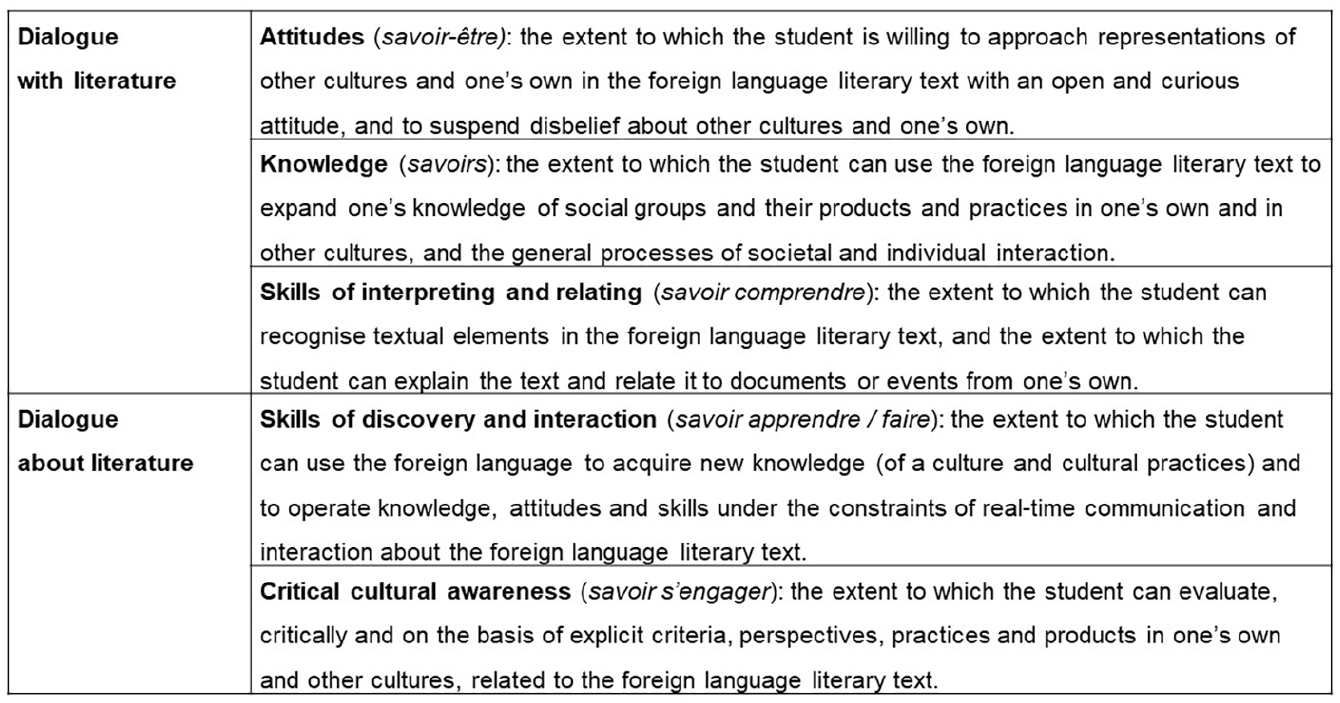
Construct of intercultural literary competence.
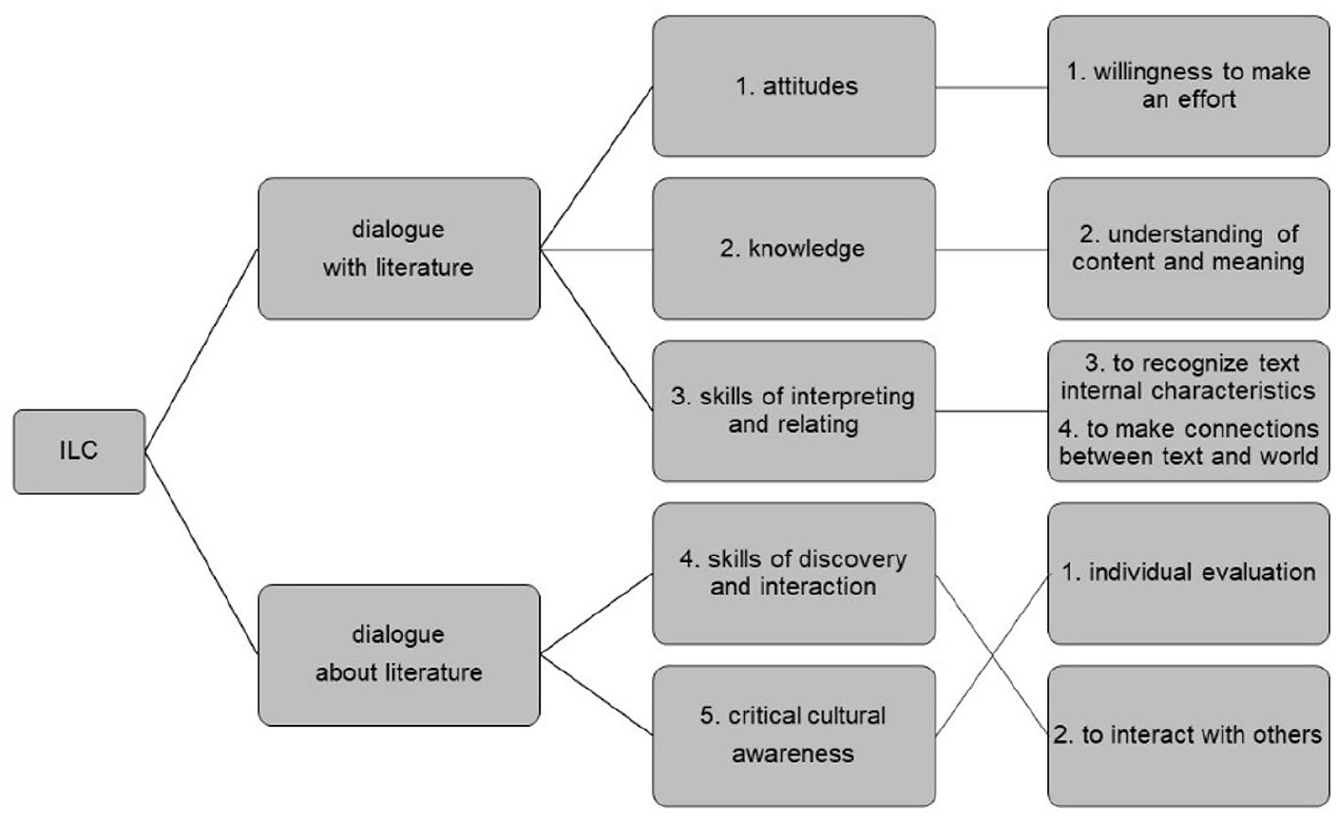
Schematic representation of the construct intercultural literary competence.
The question of interest here is what should occur in foreign language education at the secondary level in order for such learning to be realized. Or, in other words, how can these competences (see Figures 1 and 2) be enacted in pedagogy? A possible answer could be explored within the framework of content and language integrated learning (CLIL), a pedagogy commonly applied in bilingual education. Whereas the traditional use of the term CLIL refers to a bilingual programme in which a foreign language is used as a medium for the learning of content in subjects such as physics or geography, a more general understanding may refer to any type of pedagogical approach that integrates the teaching of content and a foreign language (Mearns & de Graaff, 2018). In CLIL, content and language objectives are pursued simultaneously, and spoken and written output in a foreign language are highly important for processing content (Coyle et al., 2010). Porto (2018, p. 88) argues that content in the CLIL framework is equivalent to the knowledge dimension in the ICC model (Byram, 1997). By taking a CLIL approach to foreign language teaching in which literary texts are used as an artistic medium, interculturality can shape the content of language lessons by foregrounding ‘knowledge about social groups and their cultures’ and ‘knowledge of the processes of interaction at individual and societal levels’, while simultaneously promoting language learning both by responding to and creating new art forms. CLIL-based foreign language lessons, in which students not only learn cultural content through literature as a medium, but also speak and write in the foreign language to explore their own and other personal responses to literature through creative tasks, could thus stimulate ILC development.
II Aims of the study
As most studies on CLIL pedagogy for intercultural competence have been performed in prototypical CLIL classes in which content teachers teach their subject using the foreign language (Van Kampen et al., 2018), research on intercultural competence in a type B CLIL classroom, ‘in which foreign language instruction is thematically based and content from other school subjects is used in the language class’ (Cenoz, 2015, p.11), is relatively scarce. While the relationship between CLIL and intercultural competence in language learning environments is gaining importance (Byram et al., 2017), research in a CLIL classroom where literature is the topic aiming at intercultural development has been conducted in higher education (Rodríguez & Puyal, 2012) but remains rare at the secondary level. This article explores how CLIL-based literature teaching can foster intercultural competence for the secondary level context. The guiding question was: How can foreign language lessons with CLIL characteristics support secondary students in developing their intercultural literary competence?
By attempting to answer this question, we hope to provide pedagogical principles for an integrated intercultural literary pedagogy (IILP), which is a set of recommendations aimed at secondary language teachers intended to help them guide their students toward intercultural understanding through the integration of cultural content and language objectives in their literature lessons. In addition, we hope to yield sound teaching materials that can illustrate ways in which these principles can be put into practice in an arts integration project in foreign language teaching.
III Theoretical framework
1 Theoretical underpinnings
This section starts by describing intercultural theories that help theorize how a CLIL-approach in foreign language class can support intercultural development through arts integration. Coyle, Hood and Marsh (2010) describe four parameters of CLIL – culture, content, communication, and cognition – arguing that CLIL focuses on the interrelationship among content (subject matter), communication (language learning and using), cognition (learning and thinking processes), and culture (developing IC and global citizenship) (Coyle et al., 2010, p. 41). The intercultural theory presented below follows these four parameters and discusses how these CLIL parameters can be operationalized for teaching literary texts. After providing the theoretical background, we identify four ‘tentative’ design principles for an integrated intercultural literary pedagogy (IILP). We formulate two initial principles for IILP text selection and two for IILP task design.
a Culture: a dynamic understanding of culture
As culture permeates the whole CLIL framework (Coyle et al., 2010), it is imperative to describe our understanding of culture for an IILP. Although culture is a construct complex to define, our approach is non-essentialist; culture is seen as a ‘set of ever-changing characteristics which the members of a given human group recognize as their own’ and ‘identity is defined as the personal, contextual and dynamic process of identification’ with these groups (Borghetti, 2019, p. 27). Intercultural education requires a conceptualization of culture that is a dynamic, challenging essentialist notions of culture that perceive people through a single identity, belonging to national and geographical boundaries. Thus, an important criterion for an intercultural approach to language teaching is to use literary texts that stimulate students’ critical thinking about what culture actually is, and about how to define identity in relation to culture, in order to foster a dynamic understanding of culture. This can be done in various ways: either with texts that contain highly stereotyped images of cultures or using texts that depict cultural complexity and provide encounters with diverse cultural identities, countering cultural stereotypes. Independent of the way the text describes the ‘cultural’, it is imperative that a text puts the students’ focus on the ‘cultural’, in order to problematize what culture is. Thus, when interculturality lies at the heart of the foreign language class, it is essential to select texts with a focus on ‘the shared beliefs, values and behaviours of a social group large or small, with determined or fuzzy boundaries’ (Porto & Byram, 2017, p. 21), aiming to provoke the students’ assumptions about culture. For an IILP, teachers should select texts that explore concepts of culture and identity, fostering students’ awareness that cultures are dynamic, and challenging static views on the concept of culture.
b Content: themes of citizenship
As Porto (2018, p. 88) argues that content in the CLIL framework is equal to the knowledge dimension of the ICC model, a first criterion for literary content selection is that texts must provide students with ‘knowledge about social groups and their cultures’ and ‘knowledge of the processes of interaction at individual and societal levels’ (Byram, 1997, p. 35). Taking into account that the ILC construct is based on the idea that reflection is stimulated through internal and external dialogues focusing on personal response, another important consideration for literary content selection is that texts should engage students in dialogue. As conflict, ambiguity, and difference are considered ‘potential fruitful conditions for profound dialogue between Self and Other’ (Hoff, 2014, p. 508), we argue to select texts addressing controversial issues (e.g. race, poverty, gender, human rights). Through dialogue with and about literary texts that address citizenship themes, students are stimulated to relate this content to social justice issues in their societies. Porto (2018, p.19) emphasizes that ‘one crucial element in intercultural citizenship is that it encourages learners to relate these themes to concrete situations in the real world’. In such ways, the foreign language classroom can function as citizenship education. Based on this reasoning, we encourage the selection of literary texts addressing themes of social justice relevant in both the students’ societies and the society under exploration. Such foreign language texts provide readers with knowledge about social groups and interaction on a societal level in cultural settings belonging to the target language, while at the same time stimulating reflection and discussion. For an IILP, teachers should therefore choose texts that depict controversial societal issues considering that these representations of misunderstanding and conflict in another cultural context can take shape in students’ imaginations, and then elicit their emotional response by relating the discussion to current debates in their own lives.
c Communication: creative tasks for dialogue
As the production of written and spoken output in the target language is highly important for the processing of content, CLIL is grounded in communication. From an ILC perspective, dialogue can deepen knowledge of content. Through dialogue both with the text and with others, ‘learners discover which ways of talking and thinking they share with others, and which are unique to them’ (Kramsch, 1993, p. 27) and meaning can be constructed. Fenner (2001, p. 29) considers dialogue to be an active, creative part of language learning, and suggests four classroom activities through which students can construct meaning: ‘dialogue between learner and the text, oral dialogue with peers, written dialogue between individual learners and the teacher and, finally, oral dialogue between the whole group of learners and the teacher’. For an IILP, we recommend tasks that focus on personal response and stimulate these four types of dialogue. We recommend the design of creative tasks through which students: 1) become aware of their own thoughts, feelings, and ideas while encountering ‘the other’ in the text; 2) become aware of other responses to a text in conversation with peers; 3) write a creative personal response to a text; and 4) reflect on these responses in classroom discussion. By carrying out these individual and collaborative dialogic tasks both orally and in writing, students can develop awareness not only of their linguistic capacities and content knowledge, but also of their own and other perspectives and how they are shaped by cultural environments.
d Cognition: cyclic learning process
As cognition in the CLIL framework refers to the process of how students perceive and process information, it is imperative to describe the learning processes that may stimulate ILC. Liddicoat and Scarino (2013) argue that in intercultural language teaching, students need to go through learning processes that include noticing, comparing, reflecting, and interacting. In this interconnected but nonlinear set of four steps, students 1) notice cultural similarities and differences as they are made evident through language; 2) compare what they have noticed about another language and culture with others, or what they already knew about other languages and cultures; 3) reflect on what the experience of linguistic and cultural diversity means to them; and 4) interact ‘on the basis of one’s learning and experiences of diversity in order to create personal meanings about one’s experiences, communicate those meanings, explore those meanings and reshape them in response to others’ (Liddicoat & Scarino, 2013, p. 61). By integrating this four-step cyclical process into an IILP task-unit, all four dialogic classroom activities proposed above can be elicited. Through the mere process of noticing, students may encounter ‘the other’ in dialogue with the text. Students can perform oral dialogue with peers by comparing what they have noticed with their peers’ perspectives and experiences, or with what they already knew before. Written creative tasks can serve to create personal meanings about one’s reading, while formulating them in response to others. And reflection on the above-mentioned tasks can help generate classroom discussion.
2 Tentative design principles
Based on the reasoning outlined above, we formulated the four tentative design principles presented in Table 1. While Design Principles 1 and 2 are recommendations for text selection, Design Principles 3 and 4 relate to task design. The first principle for an IILP recommends the use of literary texts that problematize the dual concepts of culture and identity (DP1). The second principle suggests using literary texts that comprise topics of social justice that students can relate to the real world (DP2). Regarding task design, we propose that IILP tasks should focus on personal response and encourage the negotiation of meaning through dialogue in various forms (DP3). Regarding the theory on the cyclical learning process of intercultural language learning, task-units should be structured along the four steps of noticing, comparing, interacting, and reflecting (DP4).
Tentative design principles.
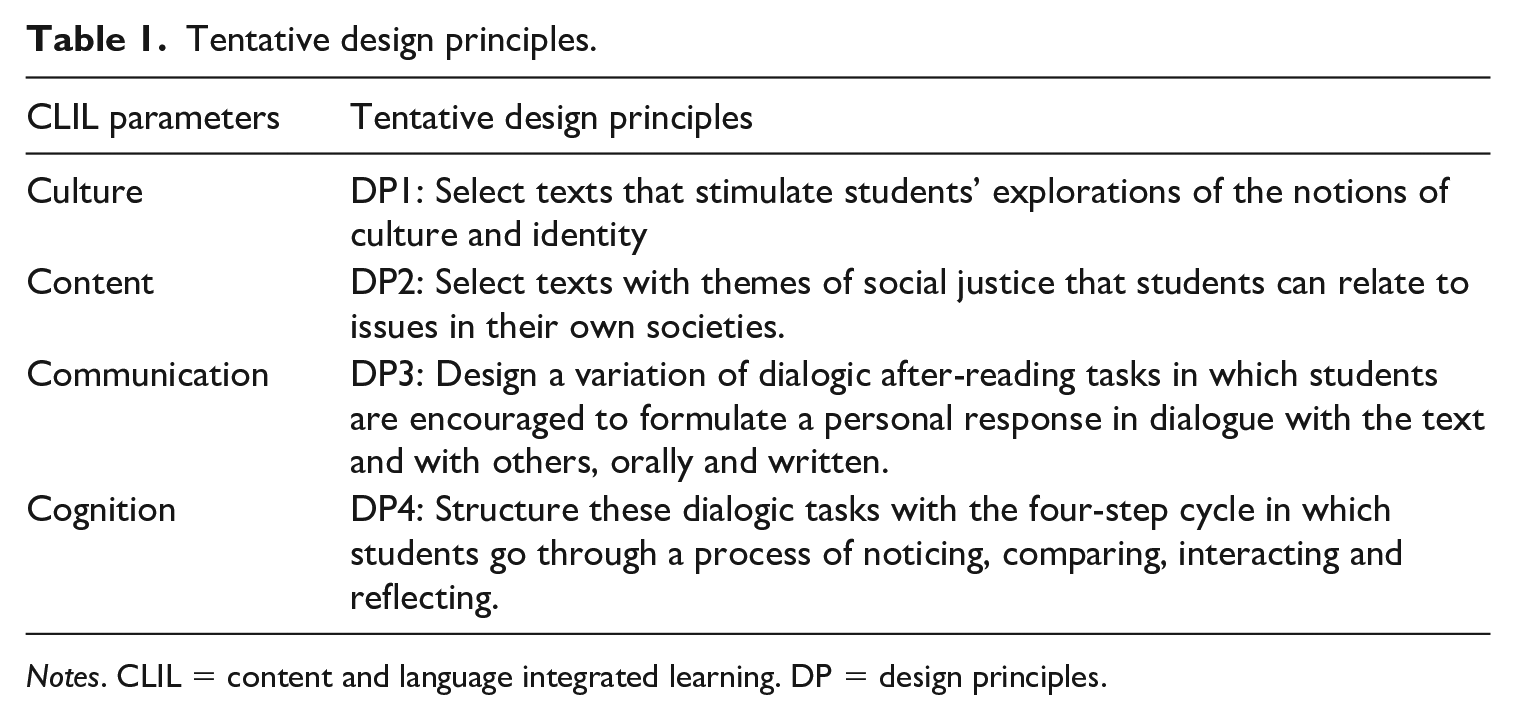
Notes. CLIL = content and language integrated learning. DP = design principles.
IV Method
1 Educational design research
As the aim of this project on arts integration in intercultural language learning was to provide pedagogical principles as well as sound materials for CLIL-based literature classes, we chose to use educational design research as a method. Educational design research is defined as ‘the systematic study of designing, developing and evaluating educational interventions’ (Plomp & Nieveen, 2013, p. 11), in which the term intervention is used to refer to all educational entities that can be designed and developed such as programs, teaching-learning strategies and materials, products and systems. The objective is twofold: to design and develop interventions, and to gain knowledge of the characteristics of these interventions through an iterative process of formative evaluation (Bakker, 2018; McKenney & Reeves, 2018; Plomp & Nieveen, 2013). As such, this approach fits both the theoretical and the practical purpose of our study. By setting up a cycle of formative evaluation with teachers and students in educational practice, we aim to improve and refine both our materials and their underlying principles.
Plomp and Nieveen (2013, p. 29) describe four criteria for evaluating good quality interventions that are linked in a hierarchical manner and their importance runs parallel with the stages of the development of interventions: relevance, consistency, practicality, and effectiveness. In the development phase, relevance and consistency are most important. During a pilot intervention, practicality is decisive. Effectiveness is crucial in the final stage. Related to these quality-indicators, McKenney and Reeves (2018) distinguish three types of testing in the evaluation phase of educational design research: alpha, beta, and gamma testing. Alpha testing refers to the evaluation of the rationale (relevancy) and the internal structure (consistency) of an intervention, and focuses on the intended objectives of a program. Beta testing refers to the evaluation of the perceived value (practicality) of an intervention, and focuses on students’ experiences when it is implemented. Gamma testing refers to the evaluation of how the intervention meets its objectives (effectiveness) and focuses on curriculum outcomes.
Coherence between the ‘intended, implemented’, and the ‘attained curriculum’ (Van den Akker, 2003) plays an important role in the success of educational programmes, so we set up three iterations of formative evaluation running parallel with the stages of the development of an intervention:
alpha testing of the intended curriculum: a skeleton design of the intervention with an expert appraisal as evaluation method;
beta testing of the implemented curriculum: a pilot intervention with a student interview and task analysis as evaluation methods; and
gamma testing of the attained curriculum: a try-out intervention with text analysis of students’ written response as evaluation method.
After each iteration, refinements to the tentative design principles were made, and intervention materials were then improved upon that basis. A schematic overview of the evaluation process is presented in Figure 3.
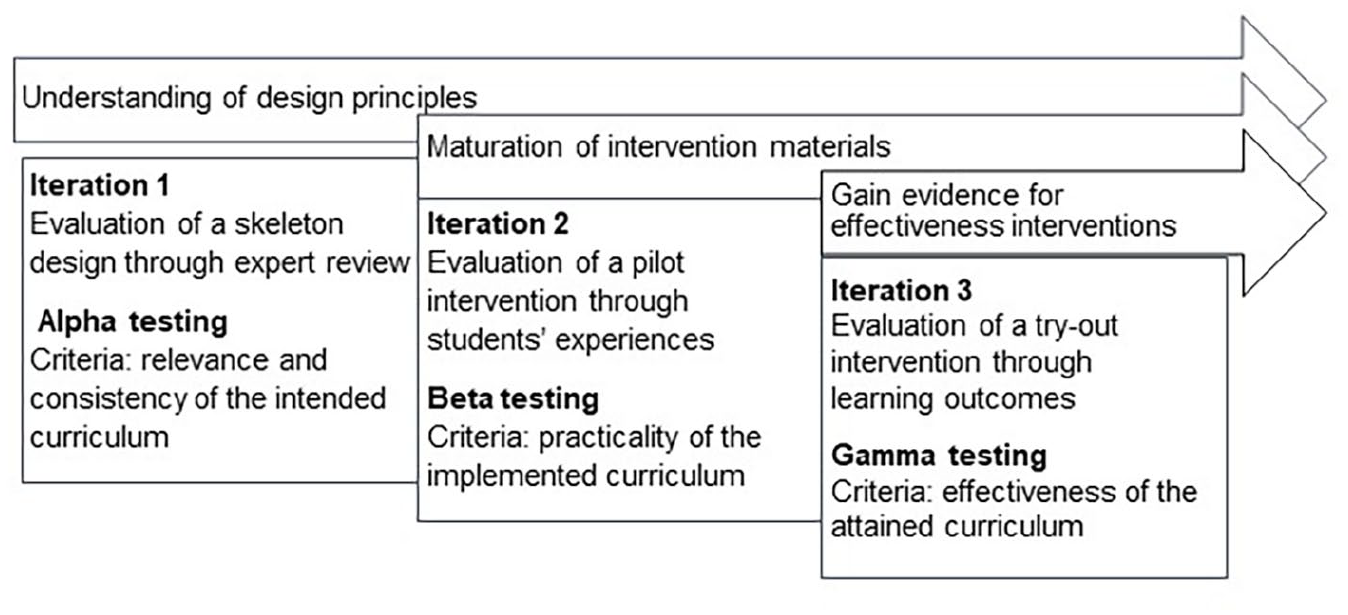
Schematic overview of the evaluation process.
2 Material and design rationale
Based on the tentative Design Principles (DP1–DP4) presented in Table 1 above, we designed, for this particular project, three interventions for Spanish-as-a-Foreign-Language class in pre-university education in the Netherlands. Each intervention consisted of a sequence of ten sixty-minute lessons. Based on the design principles for text selection (DP1 and DP2), we selected a text for each intervention. Based on the design principles for task design (DP3 and DP4), we developed a workbook with the selected literary texts. We decided to select a different literary text for each intervention as our aim was to formulate general IILP design principles applicable to various literary texts, and not specific to one title.
Based on the design principles for text selection (DP1 and DP2), we chose migration as an overarching topic for our project taking the view that such narratives can help generate self-reflection, depicting not only the cultures of migrant ‘others’ but also one’s ‘own’ culture as seen through the eyes of the other. In addition to containing an ‘intercultural encounter’ on a textual level, these stories of migration problematize the concepts of culture and identity (DP1), questioning national boundaries. Furthermore, these narratives encapsulate a worldwide vision of social justice to which participants of this study can relate in real-life situations due to its topicality in the Dutch context as well as in global contexts (DP2). For interventions 1-3, we chose the three texts listed below that each present different angles on this topic from within the Spanish-speaking world.
Los ojos de Carmen (Moscoso, 2020)
Caravana al Norte (Argueta & Monroy, 2019)
Abdel (Páez, 2015)
These three texts ranged in language proficiency from CEFR level A2 to B1+ (Council of Europe, 2018). Los ojos de Carmen (A2) is a novella 1 about an American boy who visits his uncle who migrated to Ecuador and his Ecuadorian family. It depicts discrimination against indigenous peoples and the gap between rich and poor. Caravana al Norte (B1) is a poetic novel about a Salvadoran boy whose family joins the migrant caravan heading north to the United States. It depicts the migrant crisis at the Mexican American border. Abdel (B1+) is a novel about a Tuareg boy who migrates to Spain and tries to find a life there depicting the migrant problems near the Strait of Gibraltar. In addition to the thematic and level considerations outlined above, another requirement was that the texts had to be original texts and written by Spanish-speaking authors.
Based on the two tentative design principles for tasks design (DP3 and DP4), we developed accompanying workbooks for the three literary texts that contained task-units for each chapter with a variation of dialogic tasks (DP3) structured along the four steps of noticing, comparing, interacting, and reflecting (DP4). So, the first step in the workbook tasks encourages learners to notice different practices, perspectives, or products in the literary text. In the second step, students compare these with their previous knowledge or with their own or peers’ practices, perspectives, or products through oral dialogue with classmates. In the third step, students are encouraged to interpret those experiences and to formulate a personal written response in a creative task. In the last step, students formulate what they have learned or what they will take away from the task and discuss this in class.
3 Participants
As our study design process consisted of three successive rounds of evaluation, three different groups participated in this study. In the first round, four teachers of Spanish evaluated the material. All four teachers were working in upper secondary education at the time of the study and had an average of 10 years (SD = 6.9) of teaching experience. In the second round, 24 students (10 male and 14 female) participated in a pilot intervention within which three students (1 male and 2 female) aged 16 and 17 years participated in the interview. In the third round, 25 students (12 male and 13 female) participated in the try-out intervention.
4 Data collection and instruments
a Iteration 1: Evaluation of a skeleton design of Abdel (N=4)
For the first round of evaluation, we developed a digital evaluation instrument. To ensure that all important aspects of an intervention were included in the evaluation, Van den Akker’s (2003) curricular spider’s web model was used to guide instrument design. In this model, a spider’s web is used to represent the curriculum with the vision located at the centre and nine other components around it, which represent the following nine threads of the spider’s web curriculum: learning objectives, content, learning activities, teacher role, material & resources, grouping, location, time and assessment. Teachers were asked to reflect on the objectives and tasks of the Abdel intervention by considering each thread in turn, and completed the checklist in January 2019.
b Iteration 2: Evaluation of a pilot intervention of Los ojos de Carmen (N=24 and N=3)
To evaluate practicality, a pilot intervention was conducted by the first author in her own class. The practicality of an intervention results from how students experienced working with it, and the extent to which intended processes were engendered by it. After a sequence of 10 lessons in May and June 2019 in which students read Los ojos de Carmen, student responses to a task in the workbook were analysed, and a one-hour focus group interview was conducted with three students in July 2019, and the interview lasted one hour. Focus group interview data consisted of audio recordings of the discussion and notes.
c Iteration 3: Evaluation of a try-out intervention of Caravana al Norte (N=25)
As gamma testing refers to how the intervention meets its objectives when it is implemented, a try-out intervention was conducted in a group of another Spanish teacher who worked at the same school as the first author in November 2019. As the effectiveness of an intervention results from the achievement of the desired learning outcomes, 23 writing tasks were analysed to observe ILC dimensions in the students’ written response to Caravana al Norte.
5 Data analysis
All the data in this study were analysed manually by grouping responses into themes using an Excel worksheet. Data analysis of the interview and expert review consisted of putting the teachers’ and students’ comments into rubrics. Data analysis of the tasks consisted of labelling dimensions of ILC in the students’ responses. The teacher evaluation contained 24 rating questions and 296 words. The student interview consisted of 4,115 words, and the text corpus consisted of 5,519 words. Participants were guaranteed confidentiality, and data were anonymized. An overview of the data collection and analysis procedures is presented in Figure 4.
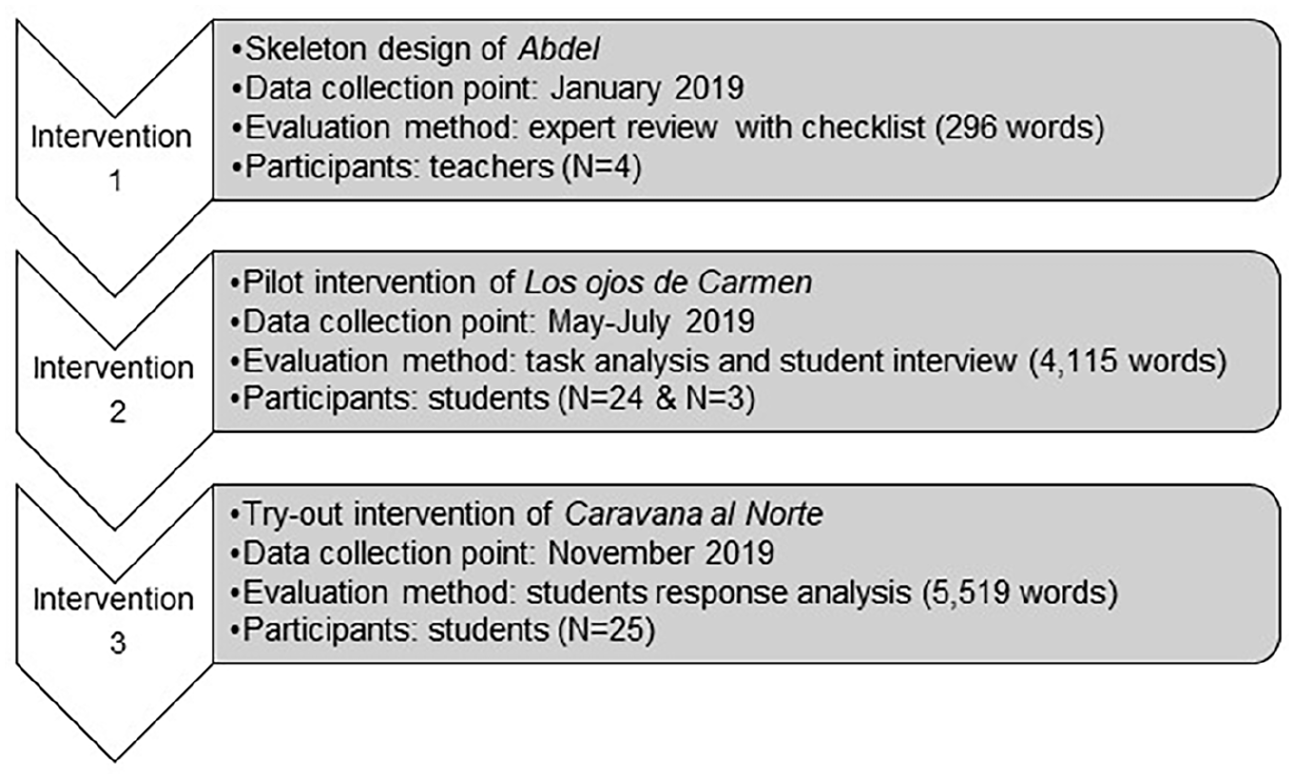
Diagram of data collection and analysis procedures.
V Results
1 Iteration 1: The relevance and consistency of intervention 1
The data collected in the first evaluation round through the teacher screening served to detect firstly whether the Abdel intervention was based on state-of-the-art scholarly knowledge (relevance), and secondly whether the intervention was ‘logically designed’ (consistency). Teachers were asked to comment on how well the tentative design principles were embodied in the design, and whether or not components were linked to each other consistently. The results of the evaluation of the first intervention suggested strong relevance and, to a lesser extent, materials’ consistency. In Data 1 below, for example, Teacher A affirmed how the materials echoed Design Principle 2: Data 1: Teacher A: There are many tasks in the workbook that lead to empathy with people from a different cultural background. There are also many tasks that stimulate the dialogue about current social themes, such as refugees and racism.
Figure 5 contains an example of such a task-unit. Chapter 2 recounts the protagonist’s experience of crossing the Strait of Gibraltar. In the first step of this task, students are asked what catches their attention regarding the representation of the Strait of Gibraltar in this chapter. This first step is to stimulate the process of noticing, through which students increase their awareness of what provokes their assumptions. In the second step, they compare new input about the experiences of the teenage refugee Abdel to what they already knew about it before, using the foreign language to discuss their comparisons with their peers in class. While this process of comparison is not the endpoint, this identification of similarities and differences provides a resource for interaction and reflection. In step 3, they have to creatively write in the foreign language. They take up the perspective of the protagonist by writing an imaginary letter to one of Abdel’s friends, recounting his experiences and feelings during the crossing. In the last step, students are asked to reflect on the significance of taking up another perspective, making personal sense of the task in the process. This personal reflection about the importance of decentring is used for classroom discussion about migration.
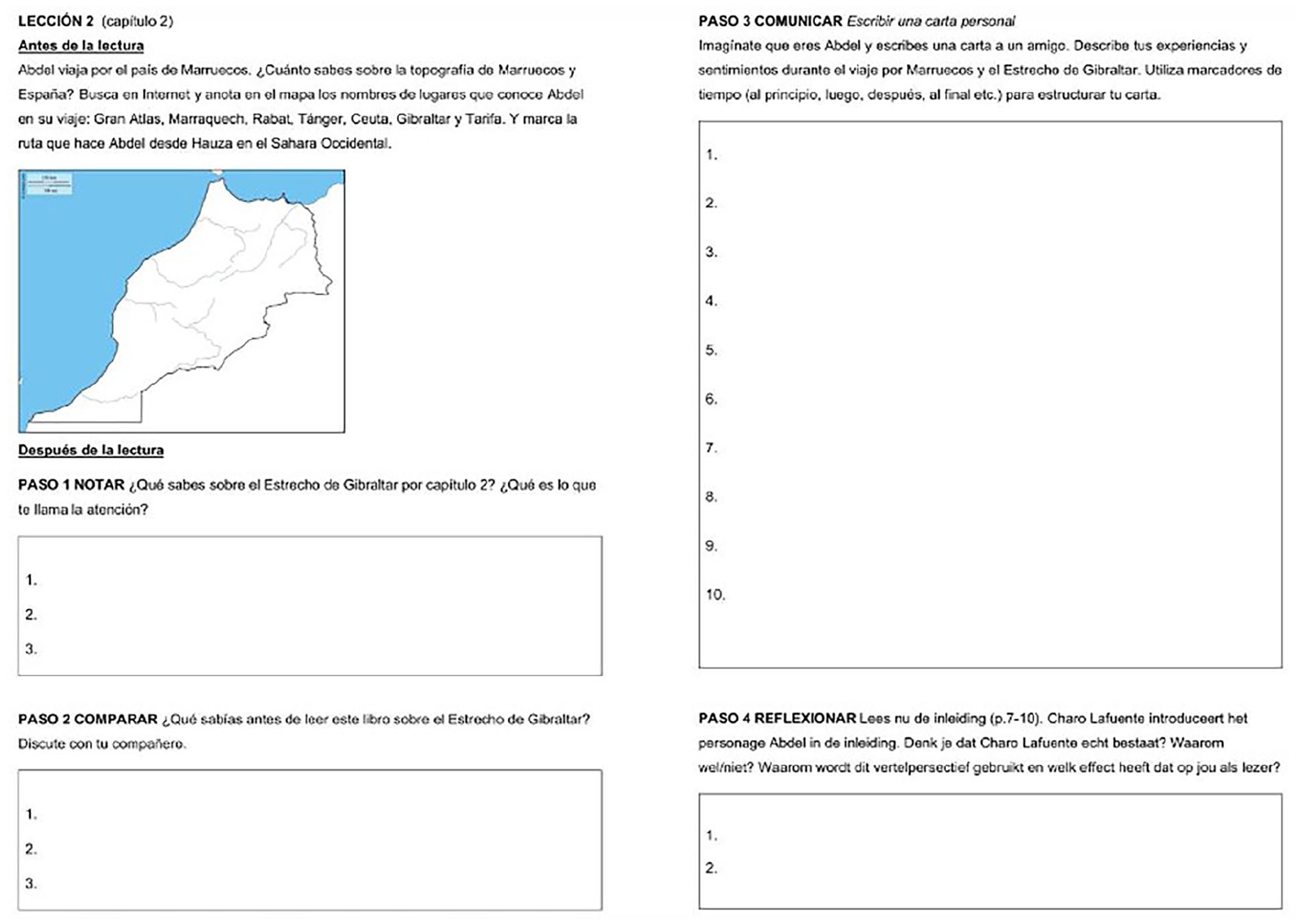
Illustrative task used in intervention 1.
Minor recommendations were centred on Design Principle 3. Teachers argued that whilst performing a dialogic task, students probably needed more linguistic guidance than what the literary text offered in order to be able to formulate a personal response to a literary text in the target language. They pointed out that their current textbooks did not include the teaching of subject-specific language for literature. Teacher B, for example, was worried that the absence of key phrases or specific vocabulary to speak about literature may obstruct students whilst performing the dialogic after-reading tasks (Data 2) and Teacher C echoed the need for more language support (Data 3).
Data 2: Teacher B: I personally think that these tasks are the most difficult to have the students perform properly because it demands a lot of initiative. Data 3: Teacher C: Some tasks are really difficult for the students. More language support should be provided.
Based on such recommendations from the teacher evaluation process, we decided to include more language support in the workbook for intervention 2. As ‘CLIL involves learning to use language appropriately whilst using language to learn effectively’ and ‘language needs to be transparent and accessible’ (Coyle et al., 2010, p. 42), we decided to refine Design Principle 3, suggesting the inclusion of key phrases in task instructions to help facilitate the formulation of a personal response to art.
2 Iteration 2: The practicality of intervention 2
In order to evaluate the practicality of the second intervention, we wanted to investigate how dialogic tasks, designed with the four-step cycle (noticing, comparing, interacting, and reflecting), engender the five dimensions of ILC. For that purpose, we analysed the task-unit about the fourth chapter of Los ojos de Carmen. In step 1 (noticing), students had to notice and describe a cultural misunderstanding. In this story, the North American protagonist wants to spend his time in the kitchen with the servants to practice his Spanish and help them, but his cousin tells him not to because it is inappropriate, which he cannot understand. In step 2 (comparing), students had to discuss this issue with their peers by comparing the characters’ perspectives with both their own and their peers’ perspectives. In step 3 (interacting), students had to write and perform an imaginary dialogue between the two characters. In step 4 (reflecting), they had to explain, with reasons, which character they could empathize most with and why, and what they had learned from the task. Two examples of students’ responses are presented in Figures 6a and 6b.
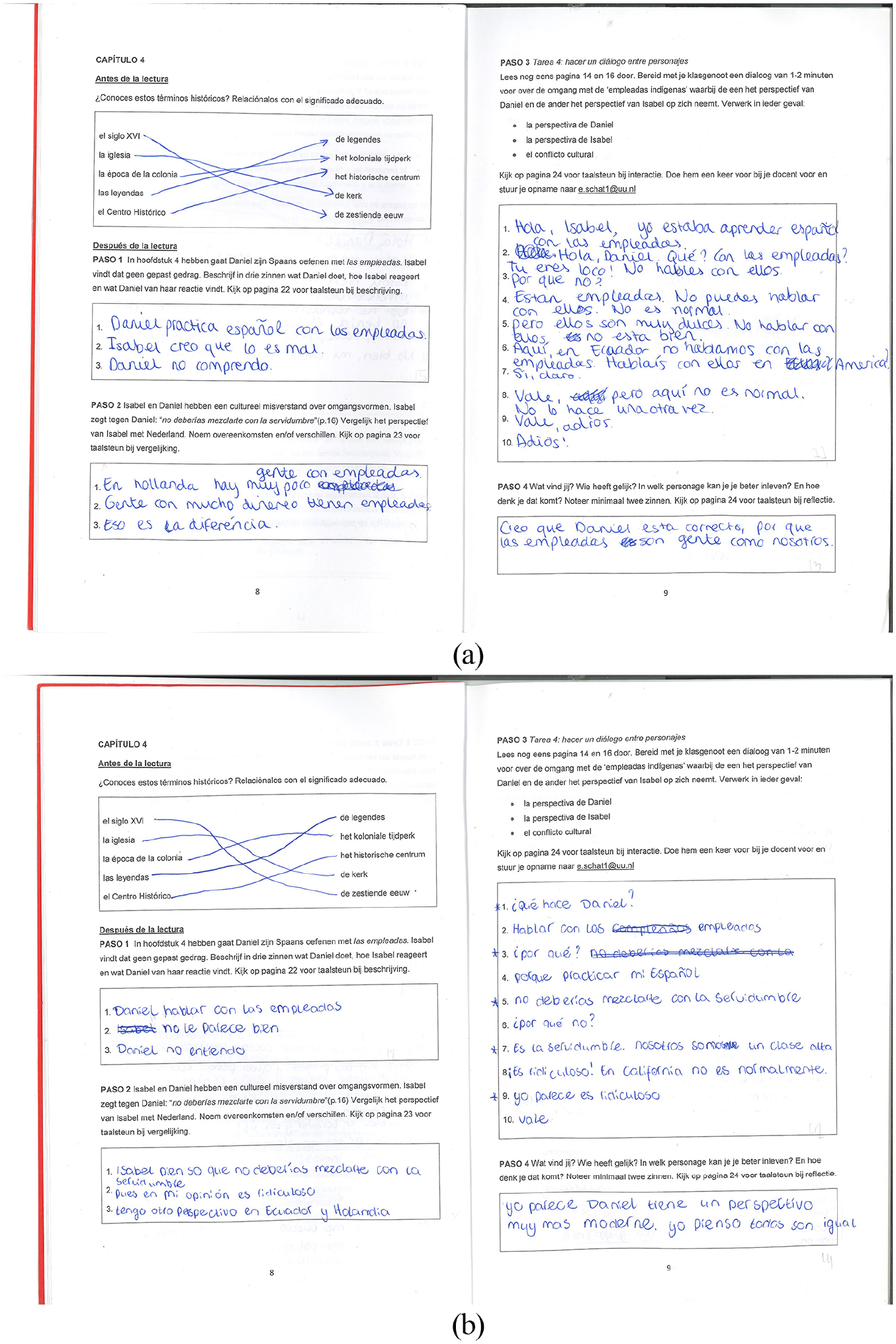
Response student A.
In step 1, both students write that the protagonist of the story communicates with the servants, that the other character considers the behaviour inappropriate, and that the protagonist does not understand why that is wrong. By merely describing the misunderstanding, students are encouraged to approach different perspectives with a non-judgmental attitude and to use the literary text to expand their knowledge about ‘the processes and institutions of socialisation’ and ‘social distinctions and their principal markers’ in other cultures (Byram, 1997, p. 52). After students’ awareness of cultural differences and misunderstanding has been raised, students compare these perspectives on societal interaction to their own life and discuss this with classmates in step 2. This second step encourages students to practice their skills of discovery and interaction by interaction in the foreign language exploring the perspectives of classmates through oral dialogue. Student A writes that in the Netherlands there are not many people with servants and that this is a huge difference, and therefore difficult to understand. Student B writes that he has a totally different perspective and thinks it is ridiculous not to mix with the servants. By comparing cultural practices in the text with their own cultural practices and that of their peers, students explore the different perspectives and cultural backgrounds of classmates and become aware of ‘how one’s natural ways of interacting with people are the naturalized product of socialization’ (Byram, 1997, p. 52).
In step 3, students write an imaginary dialogue between two characters about their interpretation of the misunderstanding. They deconstruct the misunderstanding as a critical incident and use their creativity to explain it deploying their skills of interpreting and relating in the process. As can be seen in Figures 6a and 6b, the students ‘identify areas of misunderstanding and dysfunction in an interaction and explain them in terms of each of the cultural systems present’ (Byram, 1997, p. 52) in both imaginary dialogues. While student A intends to solve differences between the two views without dichotomizing them and explains them in terms of national cultures (Data 4), student B dichotomizes the views, but tries to explain them in terms of class (Data 5).
Data 4: Student A (translated from Spanish into English by the author): Aquí en Ecuador no hablamos con las empleadas. ¿Habláis con ellos en America? [Here in Ecuador, we don’t talk with the servants. Do you talk with servants in the United States?] Data 5: Student B (translated from Spanish into English by the author): Es la servidumbre. Nosotros somos una clase alta. Es ridiculoso. [They are servants. We are high-class people. This is ridiculous.]
In step 4, students reflect on the exploration of the misunderstanding in the text and describe what they have learned from the task. In this last step, their critical cultural awareness is stimulated, as they describe their own evaluation and the criteria on which they base their opinions, all of which will be used later in further classroom discussion related to the topic. Student A writes that servants are people like us; student B writes that all people are equal. Although not all dimensions of ILC are explored fairly (i.e. the critical cultural awareness is rather poor), the analysis of this task may illustrate how the different dimensions of ILC can be engendered through these four step tasks even at an A2 level.
In order to further explore the practicality of the design, we discussed the perceived value of intervention 2 with three students in a focus group interview. Their overall opinion was that the lessons helped them to improve their Spanish linguistic skills as well as their ability to substantiate their views on current societal debates (Data 6). Regarding the tasks (DP3 and DP4), there was some discussion, as student D and E expressed contrasting views (Data 7 and Data 8) regarding the perceived value of the tasks. Students also reported to experience some difficulties whilst going through the task-units as they sometimes lacked the language needed to notice, compare, reflect, and interact with others about their personal response to the material. Student E, for example, commented on seeing the value of going through the process of all four steps but argued that peer-students probably lacked sufficient language scaffolds. (Data 9).
Data 6: Student C: I think it’s also very useful from an international point of view to be able to express . . . and to be able to say this is my view. This is important for every human being. Data 7: Student D: I always dreaded the tasks because you always have to speak Spanish after reading a whole chapter. Never a moment to relax. Data 8: Student E: No, I think those tasks are good. Usually, we work together. You both have knowledge and then you just start exchanging. Having a conversation together. Data 9: Student E: In this task, you have to reflect on a task about the protagonist’s decision. I know how to say that, but maybe it’s useful to give phrases to do that. I can imagine that people miss an intermediate step.
When we were discussing text selection (DP1 and DP2), we asked them about how the selected text had contributed to their learning. In response, students claimed that the main characters being adolescent actually seemed more important than the intercultural aspects of the plot (Data 10). To the students, the age similarity was thus important. In their view, it was not through the intercultural encounters within the narrative that they could understand otherness, but through identification with a ‘different’ peer protagonist.
Data 10: Student C: What I really liked was that it is a boy our age, so you can really see, it’s like that over there and it’s like this over here . . . and then you can easily engage yourself, because the protagonist is your age.
Based on the interview, we suggested refining Design Principles 2 and 4. For an IILP for the secondary level, we added to the second design principle ‘by selecting texts within the genre of young adult fiction’ because its content, recounting experiences of peers, seemed to carry the potential to stimulate development of the skill of relating and, therefore, could potentially engender more profound negotiation between self and other (Alter, 2015). As the students seemed to have experienced a lack of language scaffolds for going through the four-step cycle, we decided not only to add key vocabulary in the tasks, but also to include a compendium in the student workbooks that contained language they might need for describing the processes and experience of ‘noticing, comparing, reflecting, and interacting’.
Teaching an academic subject involves teaching the subject-specific discourse to that subject, and literacy development should be a core element of CLIL (Coyle et al., 2010; Meyer et al., 2015). For these reasons, the workbooks used in the third iteration were adapted. The new versions contained not only subject-specific language to communicate about literature, and ways of responding to art, using the language of learning, but also the specific language demanded by the tasks (language for learning) organized along the four steps of noticing, comparing, interacting, and reflecting in a compendium.
3 Iteration 3: The effectiveness of intervention 3
In order to evaluate the effectiveness of intervention 3 in the third round of evaluation, a try-out intervention with Caravana al Norte was conducted. We analysed the last task of intervention 3, in which students wrote a review outlining the content of the book and describing their opinion. We labelled 23 reviews and investigated how the reviews embodied ILC objectives, and how the principles of text selection had contributed. Through counting procedures, we ascertained that skills of interpreting and relating seemed to be the most visible dimension (96%), followed by critical cultural awareness (70%) and attitudes (44%), whereas the cognitive development was only mentioned by a few students (13%). While most reviews (70%) reported on how the students could relate the theme to migration issues in their society (DP2), few reviews (9%) mentioned how the conceptualization of culture as embodied in the narrative challenged their understanding of culture and identity (DP1). To illustrate how objectives of ILC were met through the principles of text selection (DP1 and DP2), a series of excerpts from the reviews are presented below (Data 11-14) by way of example with reference to the relevant savoirs from the ILC model listed below. We did not include skills of discovery and interaction in the analysis, however, as the writing of the review was an individual task.
Attitudes: the extent to which the student is willing to approach representations of other cultures and one’s own in the foreign language literary text with an open and curious attitude, and to suspend disbelief about other cultures and one’s own. Data 11: Student F (translated from Spanish into English by the author): El libro se cuenta desde la perspectiva de Misael. Misael es un niño salvadoreño. A veces tiene un poco miedo y parece tímido.
Data 11 shows how the inclusion of a social justice theme can promote de-centring. By taking up the perspective of the protagonist and approaching a controversial issue in the literary text with an open attitude, student F was able to engage, sympathize, and thus experience fear. According to student F, it is a good and recommendable book, because putting yourself in someone else’s shoes is important to humankind in general. The excerpt shows that student F has experienced that taking up another point of view on social justice themes is important.
Knowledge: the extent to which the student can use the foreign language literary text to expand one’s knowledge of social groups and their products and practices in one’s own and in other cultures, and the general processes of societal and individual interaction. Data 12: Student G (translated from Spanish into English by the author): La historia del libro empieza con Misael que habla sobre su país El Salvador y
Data 12 illustrates that through the reading activities, student G, has acquired cognitive knowledge not only about the foreign language culture (El Salvador and its people and the different cities of Mexico) but also of how migration, a worldwide issue of social justice, impinges on daily life in other cultures.
Skills of interpreting and relating: the extent to which the student can recognize textual elements in the foreign language literary text, and the extent to which the student can explain the text and relate it to documents or events from one’s own. Data 13: Student H (translated from Spanish into English by the author): La historia está escrita en pequeños versos, lo que hace que sea fácil de leer, pero también me hace sentir menos involucrado en la historia. La tema central son los problemas de los refugiados, y también nos afecta en Europa. Creo que hay que encontrar una solución rápidamente, porque los refugiados no salen de sus casas sin razón. [The story is written in small verses, which makes it easy to read, but also makes me feel less involved in the story. The central theme is the problems of refugees, and it affects us in Europe too. I believe that a solution must be found quickly, because refugees do not leave their homes without reason.]
In Data 13, student H recognizes text-internal characteristics by describing form and writing style and arguing how it affects him. The student also relates the theme of migration at the US border to refugee issues in Europe, an event in his own setting.
Critical cultural awareness: the extent to which the student can evaluate, critically and on the basis of explicit criteria, perspectives, practices and products in one’s own and other cultures, related to the foreign language literary text. Data 14: Student I (translated from Spanish into English by the author): El tema central es la emigración. Creo que es un tema bastante feroz. Nunca lo entenderé del todo porque no tengo que hacerlo yo mismo. Me gustó el libro. No lo leeré de nuevo. Me resultaba difícil leer en español. Es más lento. [The central theme is migration. I think it is a harsh theme. I will never fully understand it because I don’t have to do it myself. I liked the book. I won’t read it again. I found it difficult to read in Spanish. It is slower.]
Data 14 shows that student I acknowledges the inability to fully understand the social reality of the protagonist’s life. He is also conscious of his linguistic inability to fully understand the book, yet he did like the book. This quote reveals student I’s awareness of the background of his thinking and of the criteria he uses to make his personal evaluation of the literary text.
VI Conclusions and discussion
Literature of all kinds is considered a means of artistic expression that is able to engage its readers in a relationship with otherness and encourage self-reflection. Although a considerable amount of research points to the potential of literature education for intercultural competence, clear guidelines for foreign language teaching at the secondary level are scarce and good practice materials are lacking. This article has addressed this gap by developing a series of three finely tuned interventions to identify tentative design principles that secondary school teachers can implement directly. To ensure the relevance, consistency, functionality, and effectiveness of the interventions, we set up an iterative process of formative evaluation. We departed from the hypothesis that intercultural development can be enhanced by addressing citizenship themes through literary texts that problematize concepts of culture and identity, through which students perform a variation of dialogic tasks structured by the four-step cycle of intercultural language learning proposed. The results of the study described in this article affirm the relevance of the intercultural theories used: all were viable for the design of integrated intercultural literary pedagogy (IILP) interventions. However, some additions to the tentative design principles were required for the specific context of secondary education.
While the experiences of teachers and students revealed the value of the four-step cycle as a framework within which to shape dialogic tasks, they also reminded us of the importance of language accessibility for content-oriented learning in CLIL programmes. In order to achieve language through learning in a foreign language classroom, secondary school students need subject-specific language on the topic of literature (language of learning), as well as language support needed to help them to function effectively in dialogic activities (language for learning). For IILP-based lessons for secondary schools, it is therefore recommended that sufficient language scaffolds are provided in teaching materials that can help students to develop their linguistic repertoire by describing what they notice in art forms, enabling them to compare that to other perceptions, as well to perform creative tasks themselves and to reflect on these activities in the foreign language. This seems to be in accord with the growing area of research (Meyer et al., 2015; Van Kampen et al., 2018) that foregrounds literacy development as being a fundamental aspect of CLIL.
Furthermore, this article has also tentatively shown that emotional engagement increases when texts depicting controversial themes are used. The use of these text types seems to encourage students to relate literary content to current social issues in their societies. Yet, in order to experience otherness, the students also benefited from the fact that the chosen narratives had protagonists who were of a similar age to them. It is therefore recommended that, for the specific target group of secondary school language learners, literary texts should preferably include an adolescent protagonist, because identification potentiates intercultural understanding (Alter, 2015). By including the above-mentioned extensions to the tentative design principles presented in Table 2, the principles can be better adapted to the secondary education context.
Tentative and refined design principles.
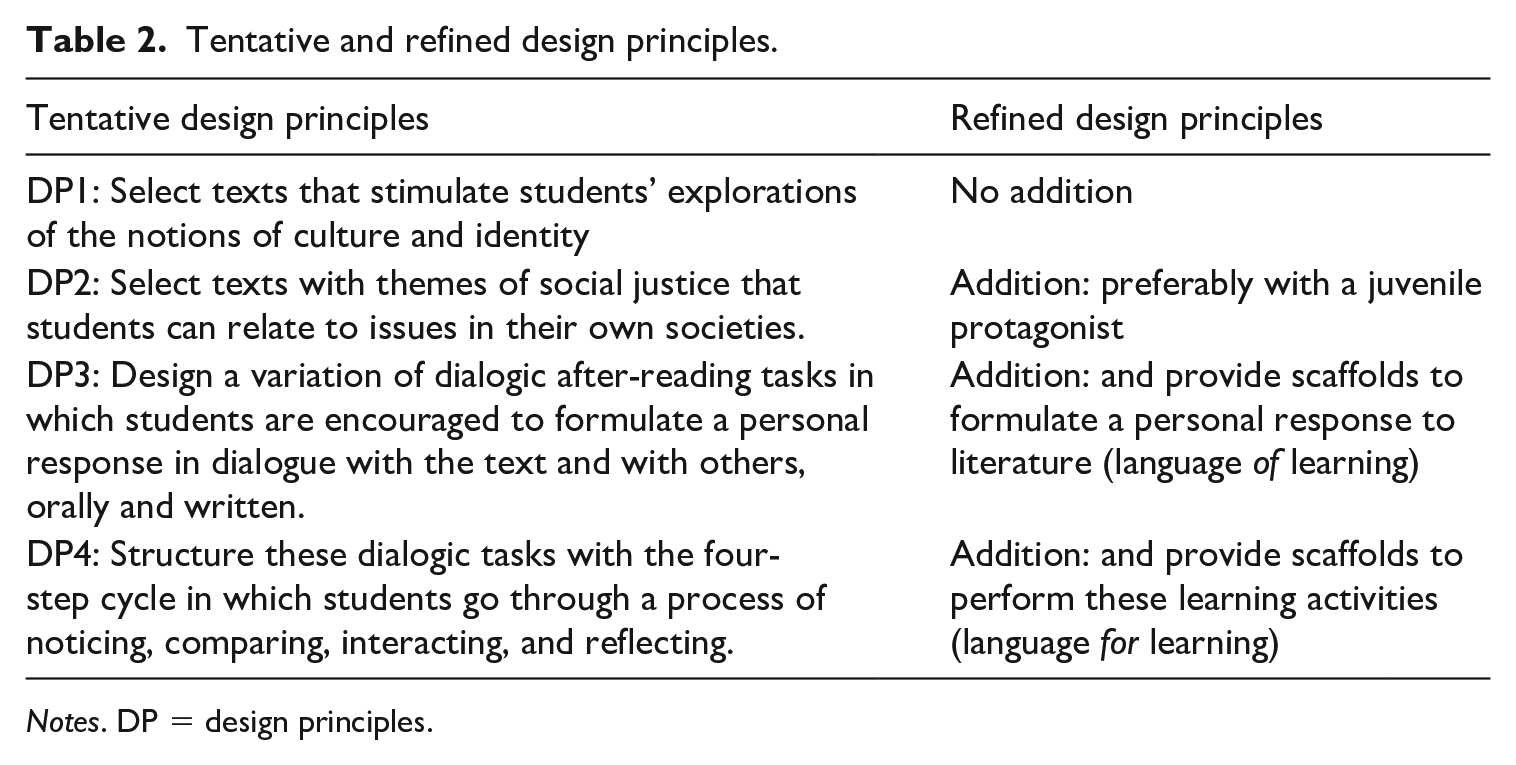
Notes. DP = design principles.
VII Limitations and implications
A clear limitation of this study is its small-scale, but this is inherent to educational design research generally. As the conclusions of this article are primarily based on the formative evaluation by stakeholders at only one school, no claims can be made about the attained effects of an IILP-based intervention. Further research on IILP is thus necessary: a traditional intervention study with a pre- and post-test design, conducted in several schools with different settings, is suggested to investigate its effectiveness empirically. Nevertheless, such empirical studies with a focus on effects offer little room for describing design processes and practical experiences of teachers and students. The descriptions of the present study are, therefore, of great importance because they allow statements on the rationale and the quality of an intervention (Plomp & Nieveen, 2013). We hope that this article, by providing a step-by-step description of an evaluation process, has revealed how educational design research can contribute to the maturation of interventions, and to transforming tentative design principles into tangible, research-based ones, specifically operable in its context.
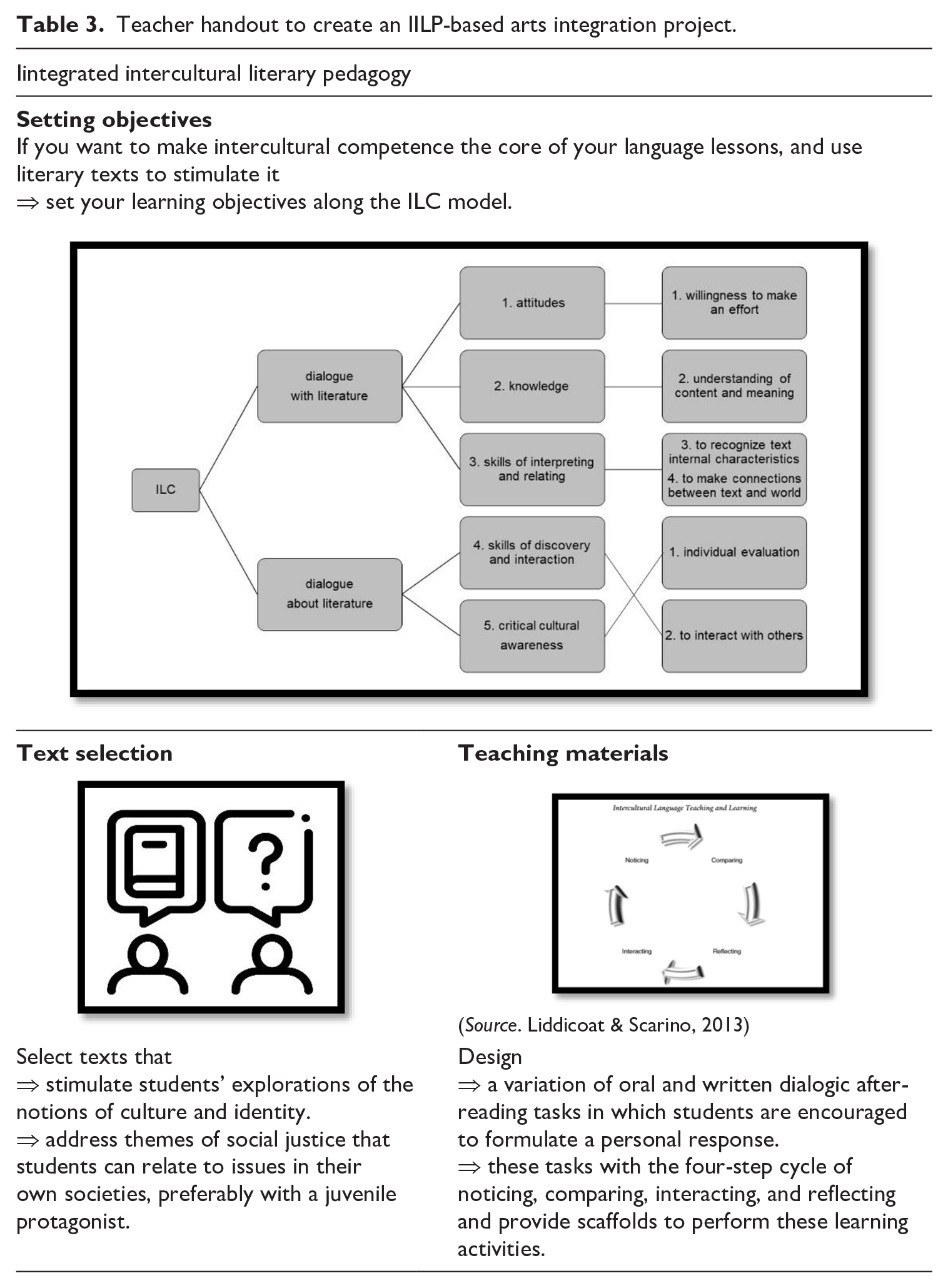
All in all, the most important implication of this article is exactly the coinage of these principles. Whilst being easy-to-implement recommendations for text selection and task design that teachers worldwide can use directly, applying them to their own favourite literary texts in any language, these generic design principles can be applied meaningfully in local contexts and are transferable to other language teaching environments. Combined with the ILC framework, the principles offer teachers worldwide theoretical and practical guidance to integrate intercultural competence and literature into their language classrooms. To this end, this study has provided both procedural (design principles) and substantive knowledge (theoretical model of ILC) about how to use literary texts for intercultural development at the secondary level. Table 3 offers an A4 printable diagram of the key findings of this study. It is intended as a handout to assist teachers in applying appropriate procedural and substantive knowledge to create their own IILP-based project in the hope that these recommendations will be used frequently, and inspire teachers around the world to make intercultural literary competence the core of the language lesson.
Teacher handout to create an IILP-based arts integration project.
In addition to these practical implications, the coinage of these principles also has the potential to strengthen the current theoretical discourse about the benefits of literature for intercultural development, as they complement this body of research with a specific focus on adolescents. As such, the formulation of principles for an IILP will hopefully promote the use of literature more firmly in language teaching environments and also contribute to a proliferation of arts integration in secondary school curricula, nurturing adolescents’ active stance to political and social issues. Therefore, the results of this study may enhance education for more democratic societies as ‘the literary imagination is a key ingredient to transform our dreams, our minds, and the worlds around us’ (Matos & Melo-Pfeifer, 2020b, p. 15).
Footnotes
Acknowledgements
We would like to thank the participants of this study (students and teachers) for their time and effort. We also would like to thank the guest editors for their valuable comments.
Funding
The author(s) disclosed receipt of the following financial support for the research, authorship, and/or publication of this article: This study is part of a PhD project funded by a Dudoc-Alfa Research Grant for teachers in the Netherlands (project code: DA2-2017-08).

Data availability
The data that support the findings of this study are available on request from the corresponding author, E. Schat. The data are stored on a secured server of the Research Institute and shall remain restricted for access during the PhD project.