




Abstract
As a research interviewer, walking alongside research participants is a creative methodology that enables researchers to discover more democratic, richer data on places, spaces, and surroundings. This article reflects upon walking methods in National Park landscapes from experiences of working on a social research project, which applied a walking methodology in the North York Moors National Park. From the findings of this project and drawing on walking methods literature, the article argues that walking blurs any cultural–natural divisions and allows the interview to be placed into a natural environment where the interview is influenced and shaped by the landscape. The article contributes to the social sciences by innovatively demonstrating how walking acts as an everyday, collaborative research method which through its multi-sensory interactions is an important approach to understand non-human environments and protected landscapes. Applying a participatory research lens, the article reveals the relationships between walking and routine, heritage, participation, nature, sensory immersion, and identity in a contested environment.
Keywords
Introduction
The moorland landscape is ideal for walking. The surface is usually dry with springy turf, there are numerous tracks and footpaths, and the sequence of panoramic views gives a ‘roof of the world’ character to the walker. (Spratt and Harrison, 1989: 214)
Walking methodologies have become an increasingly popular social research approach to consider how people’s lives and identities relate to different landscapes, spaces, and places. The method comprises the interviewer and the research participant moving from place to place within a landscape as the interview is conducted (Marcotte et al., 2022; Figure 1). Walking methods allow a researcher to investigate the everyday, embodied experiences of humans in a landscape, such as a National Park. Being ‘in’ the landscape provokes ideas, beliefs, and opinions about a specific landscape which may not have emerged if the interview had happened away from this place. Rather than being in the formal setting of an interview room, this type of interview brings the human closer to the natural environment and allows ecosystems to interact and shape the interviewee’s responses. The article argues that walking or movement through a place makes the interviewee and interviewer more attuned to landscapes, allowing people to fully immerse themselves in their surroundings and with more-than-human worlds, negating that a culture–nature division exists. It builds on Moles’ (2017) insightful work that through walking in environments meaning, value, and identity can be generated and Evans and Jones (2011) astute research that walking in different environments can shape the research discussion. Landscapes and environments are effectively connected to humans and non-humans that dwell within them through their movements and practices (Ingold, 2000, 2010). Understanding this connection was an integral part of an AHRC-funded social research project conducted in the North York Moors National Park (NYMNP) from 2017 to 2022 with the research methods implemented during the data collection phase of the project analysed in this article.
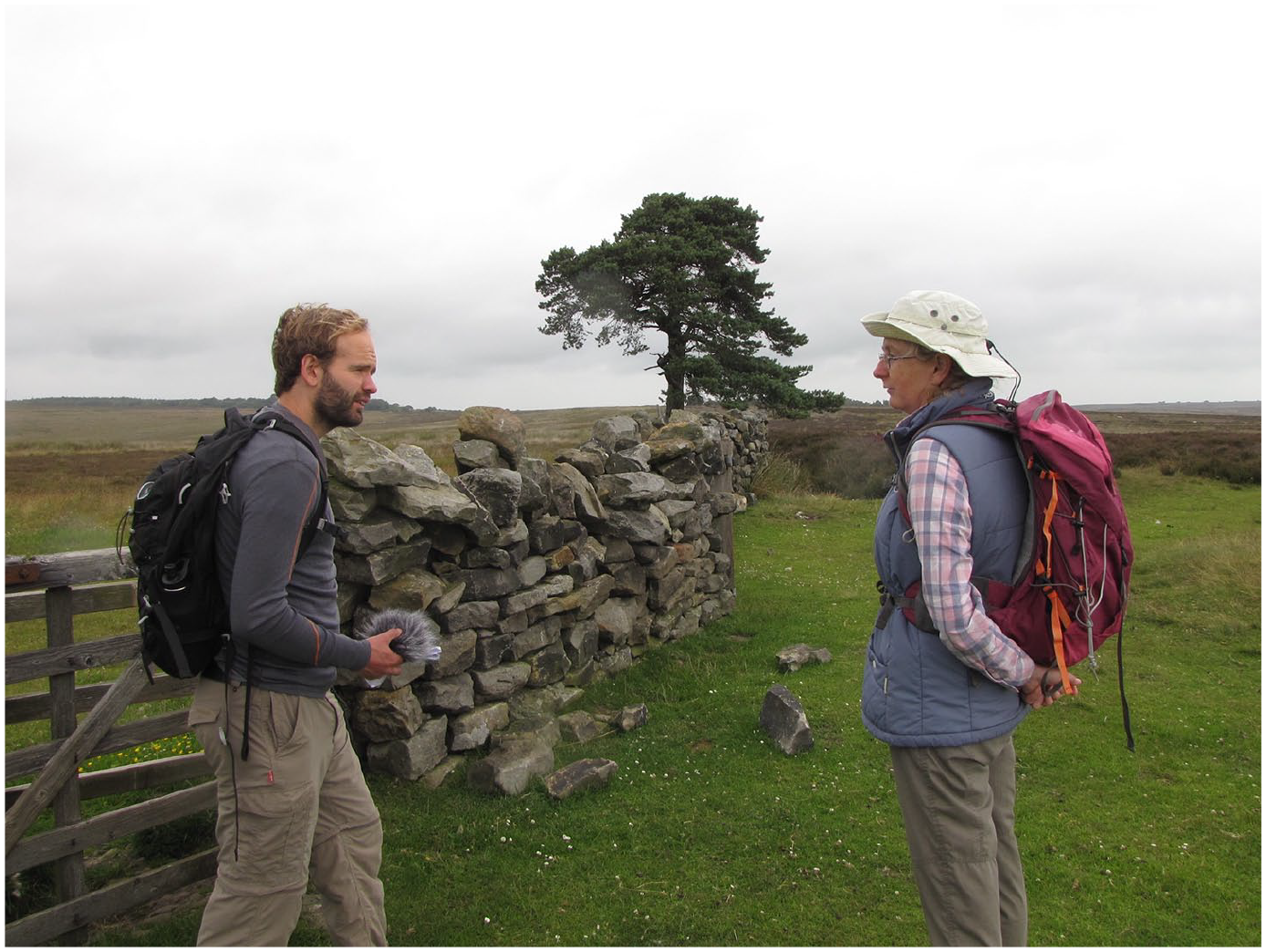
A walking interview in the North York Moors National Park.
The methodological benefits and drawbacks of walking research methods have been captured widely with a variety of strong contributions, especially over the last 15 years from different academic disciplines including geography (Evans and Jones, 2011; Macpherson, 2016), social sciences (Bates and Rhys-Taylor, 2017; Moles, 2017; O’Neill and Roberts, 2019), urban planning (Degen and Rose, 2012), anthropology (Ingold and Lee, 2006), health sciences (Carpiano, 2009; Marcotte et al., 2022), and the emergence of the WalkingLab research project (Springgay and Truman, 2018). However, there has been less of a reflective focus within protected landscapes on how important, from an epistemological, participatory perspective, this type of method is in understanding the relationships between people and these landscape types. Furthermore, walking research methods have been underutilised in the NYMNP located in North Yorkshire, England – the case study of this article. There have also been few research projects in sociology which use walking interviews to investigate the connections between humans and landscapes in the countryside. The article innovatively addresses these gaps in research by demonstrating how walking methods have an important future use in all types of protected landscapes to collect rich, robust data which encourage everyday, participatory dialogue and multi-sensory interactions with non-human environments. This research aids the social science disciplines’ understanding of walking interviews as an important method to study qualitative, subjective perceptions of natural environments in the UK, which is critical with these environments currently in flux due to the pressures instigated by global sustainability challenges such as the biodiversity and climate-change emergencies.
The article will begin by analysing how this study connects with the literature on mobile and walking methods. It will then outline a short history of walking in the North York Moors and the significance of walking to peoples’ encounters of the British countryside including National Parks. The final two sections of the article will critically evaluate the walking research process, explaining the methods implemented and demonstrating the experiences and findings from the research.
Sociology and walking methods
Place and participation
Mobile and walking methods have been mainly utilised in sociology when studies have been conducted on urban environments (Jackson, 2021; Kusenbach, 2003) including green spaces in cities (Moles, 2017). There have been fewer research studies in the social sciences which investigate walking interviews within a rural context, especially in UK National Parks. This research contributes to the sociological mobile research work which has previously investigated the phenomenology of how lived experiences relate to the surrounding environment from an everyday perspective through an urban lens (Bates, 2017; Kusenbach, 2003; Peyrefitte, 2012). There are learnings relevant to this article from this work within an urban setting (Kusenbach, 2003); for example, in sociological terms, the lived experience-place-space nexus can determine the identities, perceptions, and knowledge of stakeholders towards the countryside for researchers. Drawing on Evans and Jones (2011) research, the walking method allows researchers to understand, through research participants’ interactions with a certain landscape, how these landscapes can shape certain personal values, identities, and experiences. Kusenbach (2003: 469) also finds that witnessing this type of interviewee perception while on a walk can remove ‘the researchers’ own perceptual presuppositions and biases’, helping researchers to gain more genuine insights into research participants connections with an environment. Moles (2017) supports this idea by establishing that walking methodologies can reveal hidden, specific interactions with a landscape and at the data analysis stage of a project allow new data themes to be produced.
As well as producing new types of data, walking methods in a landscape can provide a participatory voice to a wider community which can give broader opportunities and advocate bottom-up approaches (Teff-Seker et al., 2022) alongside top-down to understand peoples’ values and identities associated with place and the natural environment. As evidenced in Evans and Jones (2011) writing this can inform the relationship with decision making, policy, and strategy linked to a landscape. In the early stage of community consultations, this type of method can seek to better understand the knowledge, experience, and power of stakeholders in a landscape, such as a National Park, which can feed into decision-making processes about sustainable land management, for example, the evaluation of cultural ecosystem services for management (Teff-Seker et al., 2022).
Nature–human relations
From previous sociological research, it is clear that space, place and time (Evans and Jones, 2011; Kusenbach, 2003; Moles, 2017; Peyrefitte, 2012; Vannini and Vannini, 2017) frame much of the data that has been collected on sociological research projects that implement walking methodologies. However, there is another significant framing that is emphasised in this article which is the relationship between nature and humans that builds on the sensory features of walking and place-making research (Ingold and Lee, 2006; Pink, 2007, 2008; Springgay and Truman, 2018).
Environments and landscapes are ‘the overlapping world-making activities of many agents, human and non-human’ and ‘open-ended assemblages of entangled ways of life’ (Tsing, 2015: 152, 154). Walking in a National Park, as a dynamic, embodied method relating to phenomenological frameworks within social research studies (Ingold, 2000), immerses the interviewer and interviewee in natural environments; to some degree decentring the human and attempting to put an understanding of environmental systems at the forefront of a ‘relational’ interview. The new data from this research project revealed that walking is a more systemic approach to understanding changing, different perspectives and experiences of a fluctuating countryside with the state of nature declining, the climate crisis affecting human and plant communities and emerging landscape recovery projects and ‘rewilding’ projects bringing alternative perspectives towards land management in the UK. A National Park landscape acted as a case study to identify how this method can produce efficient, robust data about these systems and how they change in a rural context.
Current research also informs that human mobility in a landscape is interlinked with nature conservation and a care for the natural environment (Springgay and Truman, 2018; Teff-Seker et al., 2022), further accentuated in protected landscapes such as National Parks. The walking method intrinsically relies on human impact on the natural environment (Springgay and Truman, 2018) with the human interview affecting nature by being immersed in these ecosystems while reciprocally nature is affecting the human and thus the interview itself. Contrary to the traditional distinctions between nature and culture, walking blurs the boundaries between the natural environment and the cultural environment offering sensory, relational insights into how a National Park environment functions, as found in aspects of the WalkingLab research project (Springgay and Truman, 2018). This highlights the value of walking methods in capturing dynamic human–environment interactions to inform conservation efforts in protected areas.
Walking in the North York Moors National Park
The modern history of the UK National Parks system has always been closely affiliated with the movement of people on foot; wayfaring, hiking, trekking, walking, and mountaineering across these landscapes. In the 19th and 20th centuries, a growing interest in the environment and its protection, instigated by a desire to get away from increasingly industrialised urban areas, enhanced walking as a leisure activity in the British countryside (Svensson et al., 2022). This interest was confirmed by the National Parks and Access to the Countryside Act in 1949 establishing the rights of way network across England in law 1 and also the National Park system itself.
Following this act, the North York Moors was designated a National Park in 1952. The creation of this National Park in the post-war period, alongside the increasing use of the motor car, the popularity of walking clubs (such as the Ramblers Association) and the development of youth hostels would result in a new wave of walkers for leisure purposes visiting this landscape in the 1950s. This coincided with the formation of the Lyke Wake walk in 1955 by Bill Cowley which was a 40-mile crossing of the North York Moors and became a popular charity ‘challenge’ walk in the 1960s and 1970s. Furthermore, Alec Falconer, one of the founding members of the Middlesbrough Rambling Club campaigned for the idea of a long distance walk around its periphery which would eventually become established as the Cleveland Way in 1969 (Sampson, 2001). While walking has been linked to the North York Moors landscape since the 12th and 13th centuries when pilgrims and travellers sought refuge in monasteries and abbeys, the need for a more leisure-based lifestyle in the decades that followed the Second World War saw the popularity of walking in the North York Moors rise. This trend continues to this day in the National Park where walking is one of the main recreational activities especially among the tourism economy with 1,400 miles of public rights of way. Walking for over an hour was cited in the North York Moors Visitor Survey as the second main activity (after visiting a café/tea room) which visitors participated in when visiting the National Park (North York Moors National Park Authority, 2021). The interest in walking has only been heightened by the COVID-19 pandemic, especially with the rise in outdoor activities and nature-based tourism including adventure activities such as trail running and mountain biking (Svensson et al., 2022).
While UK National Parks are still largely privately owned, they attempt to democratise society’s rights to the countryside and enhance human access to natural environments through the rights of way system (Speakman, 2011). By walking through these landscapes, researchers and participants not only engage with the environment but also invoke the lengthy heritage of walking, conservation, and access debates making connections with the broader social, environmental, and political contexts that shape the use and management of protected areas today.
Research in motion
Research objectives
The walking methodology explained in this article was part of a wider AHRC research project from 2017 to 2022 which was primarily a qualitative study of the viewpoints of landscapes held by a range of communities and key NYMNP stakeholders and how these people connect with and have agency in these landscapes. The project concentrated on three specific landscapes within the NYMNP – Fylingdales Moor, the Woodsmith Mine, and Goathland East and West Moor (Figure 2). The project researched how people value, engage with, and use these three landscapes in the National Park, and what types of people influence these landscapes. The three landscapes provided a vehicle for discussions about changes to land, land ownership and power, land use, land management, and community-environment interactions.
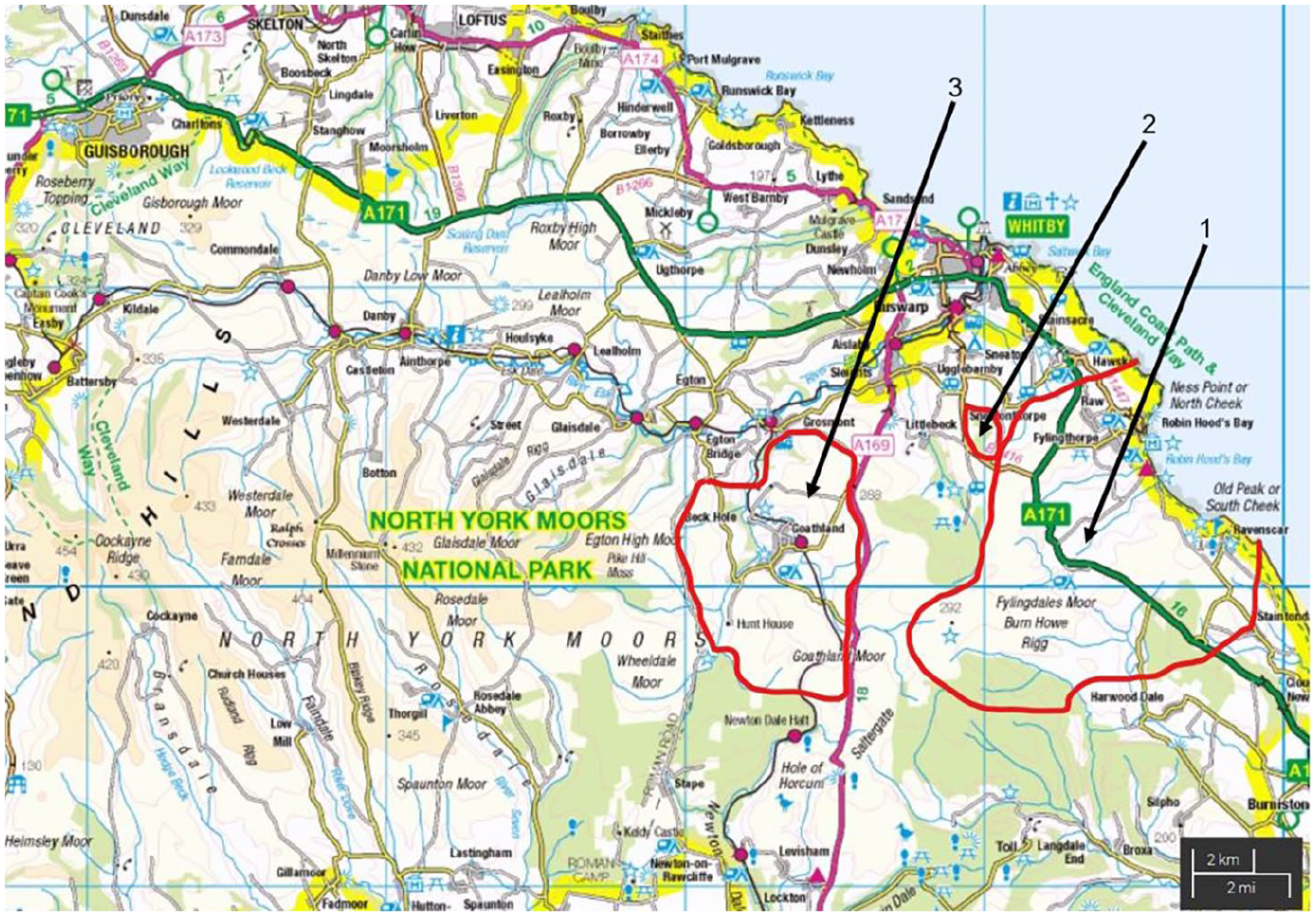
The three landscape case studies in the NYMNP – Fylingdales Moor (1), the Woodsmith Mine (2) and Goathland (3). The lines drawn here are based on the Goathland parish boundary, the Fylingdales Moor boundary and the mine head site.
Study area
The NYMNP is located in Northern England and is a diverse upland landscape with a high heather moorland plateau, deciduous woodlands, pastoral farming, conifer forests, and a rugged coastline (Ratcliffe, 2024). This National Park was chosen as the focus of the study to gain an in-depth understanding of three case studies in their everyday context and collect qualitative data in ‘natural settings’ (Yin, 2012: 4–5), especially as much of the data collection took place outdoors. By focusing on a single National Park and three landscapes within it, the project concentrated on certain concepts and themes such as contest, conservation, access, land management, human–nature relations, community participation, power, and identity in a protected landscape context. Through examining these concepts and themes in detail, the project refined its interpretations of these concepts within the National Park and the complex network of factors which affect them (George and Bennett, 2005). All three landscapes in the study area incorporate their own unique, contemporary debates within the National Park.
The northern end of Fylingdales Moor was chosen as the main location for many of the walking interviews because it incorporates two out of the three landscape areas – the moorland of Fylingdales and the Woodsmith Mine – during a single walk (Figure 3). The location was also chosen because of the differing environments encountered in this area and the multiple vantage points with a 360° view of diverse habitats: the coastline (North Yorkshire and Cleveland Heritage Coast), the seascape, forestry plantations, valleys, agricultural fields, and heather moorland. This gave the interviewee the opportunity to discuss broader landscapes within the NYMNP and to contribute to debates which were occurring in other landscapes – positioning the specific landscape in which the walk took place within wider contexts. Also, the May Beck Forestry Commission Car Park where the walk started (Figure 4) and ended had good access from the B1416 near to the A171 (Scarborough to Whitby road).
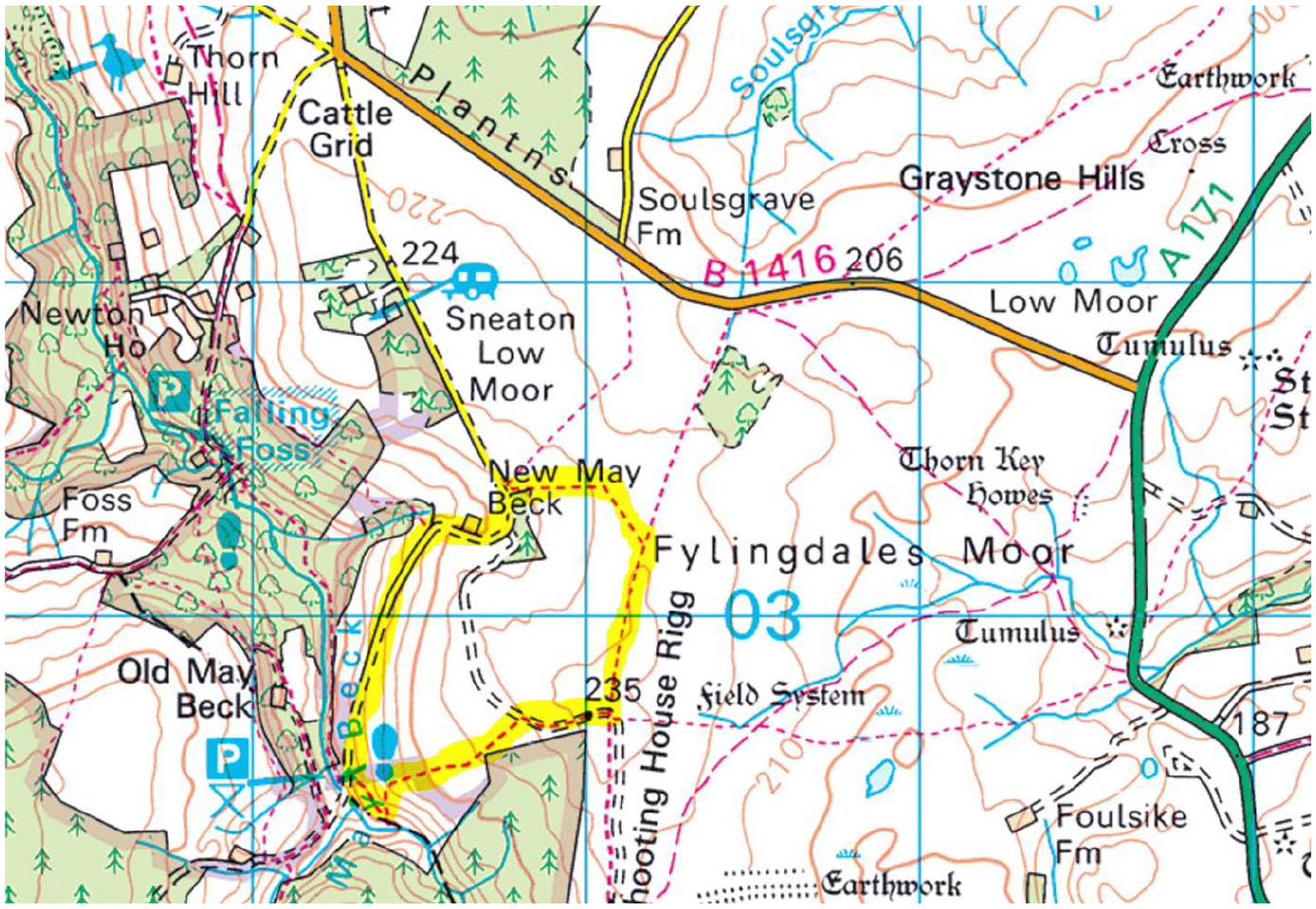
The May Beck walking route (highlighted in yellow), Fylingdales Moor, and the Woodsmith Mine construction site. This map was sent to participants before the walk and shows the chosen route for the May Beck walking interview.
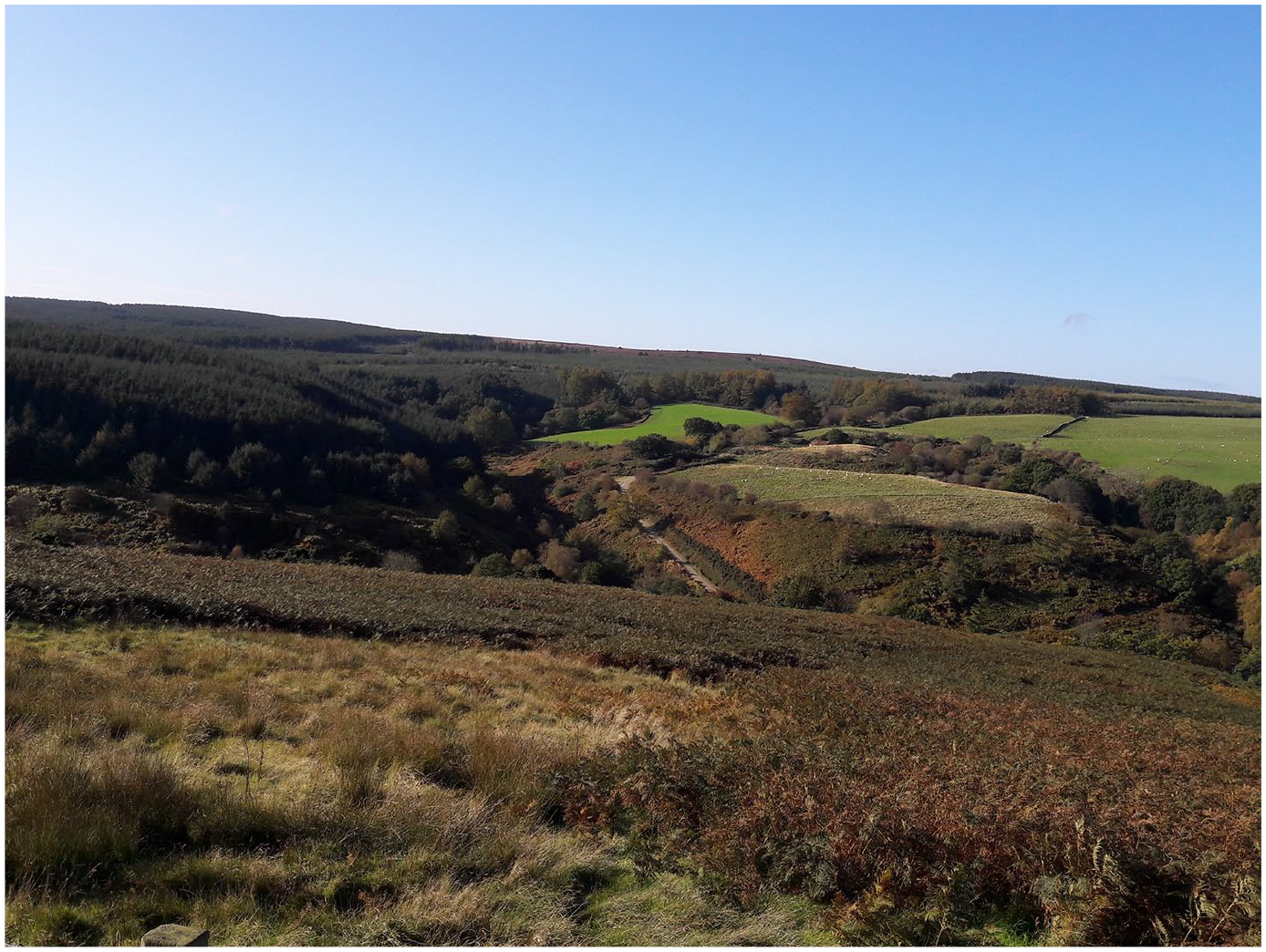
The majority of the walking interviews started at the bottom of this dale at May Beck Forestry Commission car park. We climbed out of the valley through forestry plantation and bracken and up on to the heather moorland of Fylingdales Moor. This view looks back on the starting point of the walk.
The third landscape investigated in depth was Goathland. Here, the moorland is managed for grouse shooting, a common use for heather moorland across the National Park. In Goathland, the land management of the moorland was being contested by the Goathland Moor Regeneration Group (Ratcliffe, 2024). It was rare to find this type of modern tension between a community group and land managers in the NYMNP. Hence, this case study had the most potential to uncover new knowledge about people–natural environment relations and the influence of communities on a protected landscape (Ratcliffe, 2024). Walking interviews also took place on Goathland East Moor, again reaching a viewpoint overlooking the wider landscape (which included the village of Goathland). The inclusion of a third landscape which did not border the other two landscapes meant that walking interviews could not take place in a single location, therefore these interviews tended to focus on the land management issues specific to Goathland.
Research participants and the route
The project conducted 27 semi-structured ‘walking interviews’ as the primary method of data collection including five shorter walking interviews. Key stakeholder organisations interviewed included the National Park Authority, government bodies, conservation organisations, non-government organisations, landowners, land managers, developers, local voluntary, education, and tourism groups. A walking interview was offered to the representative from these organisations but the distance of the NYMNP from their base location and the busy nature of their professions meant that this was not always taken up. In total, 17 semi-structured sedentary interviews were carried out at office locations when the interviewees did not have the time to travel to the study area and then participate in what was perceived a longer format of interviewing.
The general targets of research participants set for the sample framework were a mix of staff levels, ages, genders, ethnicities, and must have been in their current role for more than 6 months (if working for a stakeholder organisation). The project also interviewed more people who lived inside the Park than those who lived outside as the project’s focus was on NYMNP communities and it would be easier to interview local people in the chosen study areas because of better access with less travel constraints. At the start of the data collection, these targets were allowed to fall out naturally and they were constantly assessed throughout the research project to ensure that a mix of staff levels, ages, genders, and ethnicities were interviewed. Conditions for participating in the walking interviews were straightforward. The respondent needed to have an affiliation with one of the three landscape areas in the NYMNP. 2 This could be from living close to or working on projects within one of these areas.
Participants were taken on a set walking route of Sneaton Low Moor and Fylingdales Moor and other locations around the National Park which took around 1 hour to walk while questions were being asked (Figure 5). A set route ensured that participants would experience vantage points and different environments in the National Park which was the rationale for the choice of the case studies, as described in the ‘study area’ sub-section. It also gave participants confidence that they would know their exact location in a remote area, especially those participants who were not familiar with the route, with a map of the route sent to all participants before the interview took place. Applying an adaptive approach common to participatory research (Burns et al., 2022), there was some flexibility in the route taken and the participant had the opportunity to stop the researcher at various points of the walk and point out and converse about various aspects of the surroundings. The walking interviews were recorded using a ZOOM audio-recorder (Figure 6) and the data were transcribed. Informed consent was obtained from all research participants.
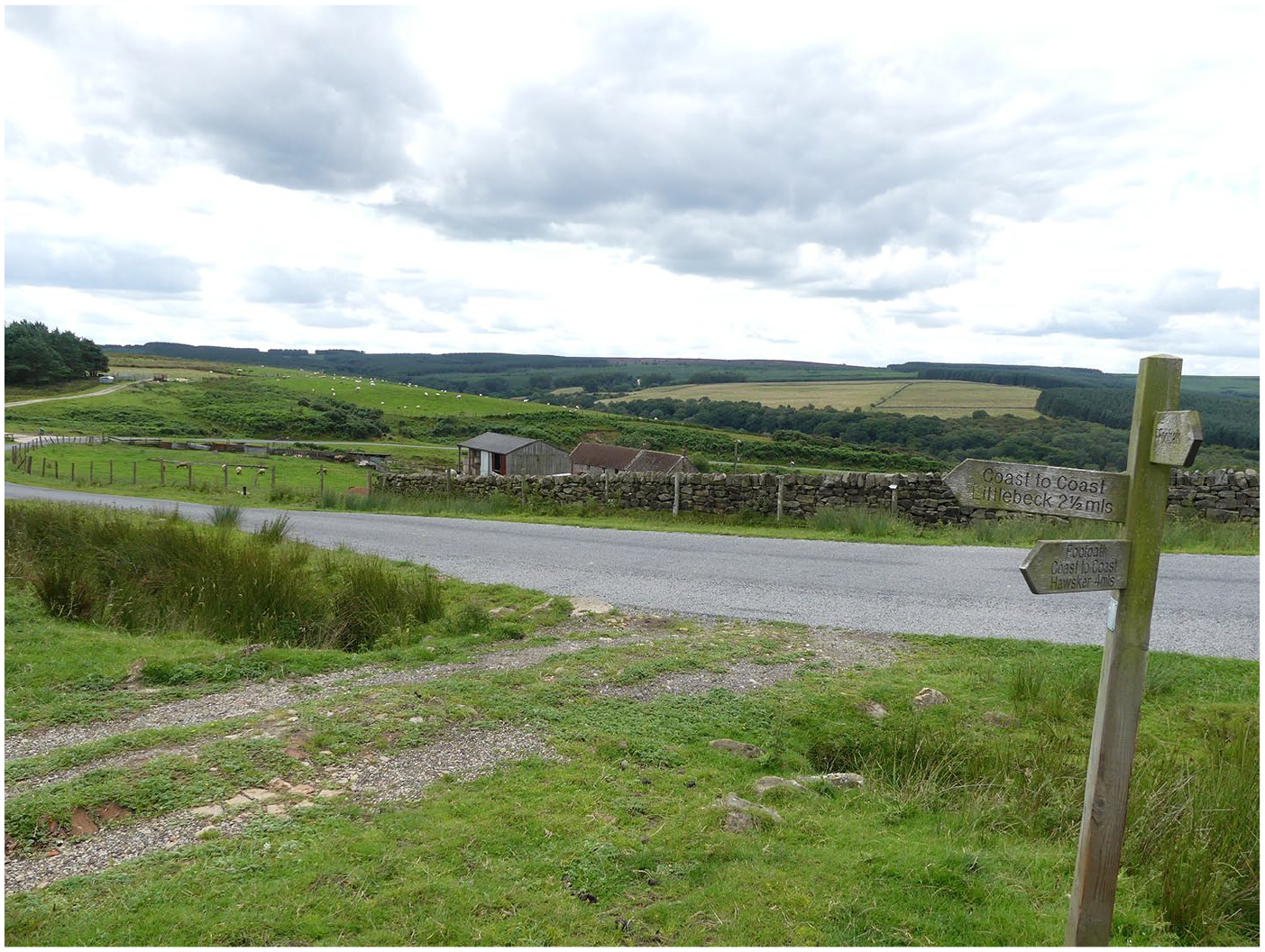
Walking on official signposted walking routes, such as Wainwright’s Coast to Coast walking route meant that interviewees trusted the paths which the interviews took place on.
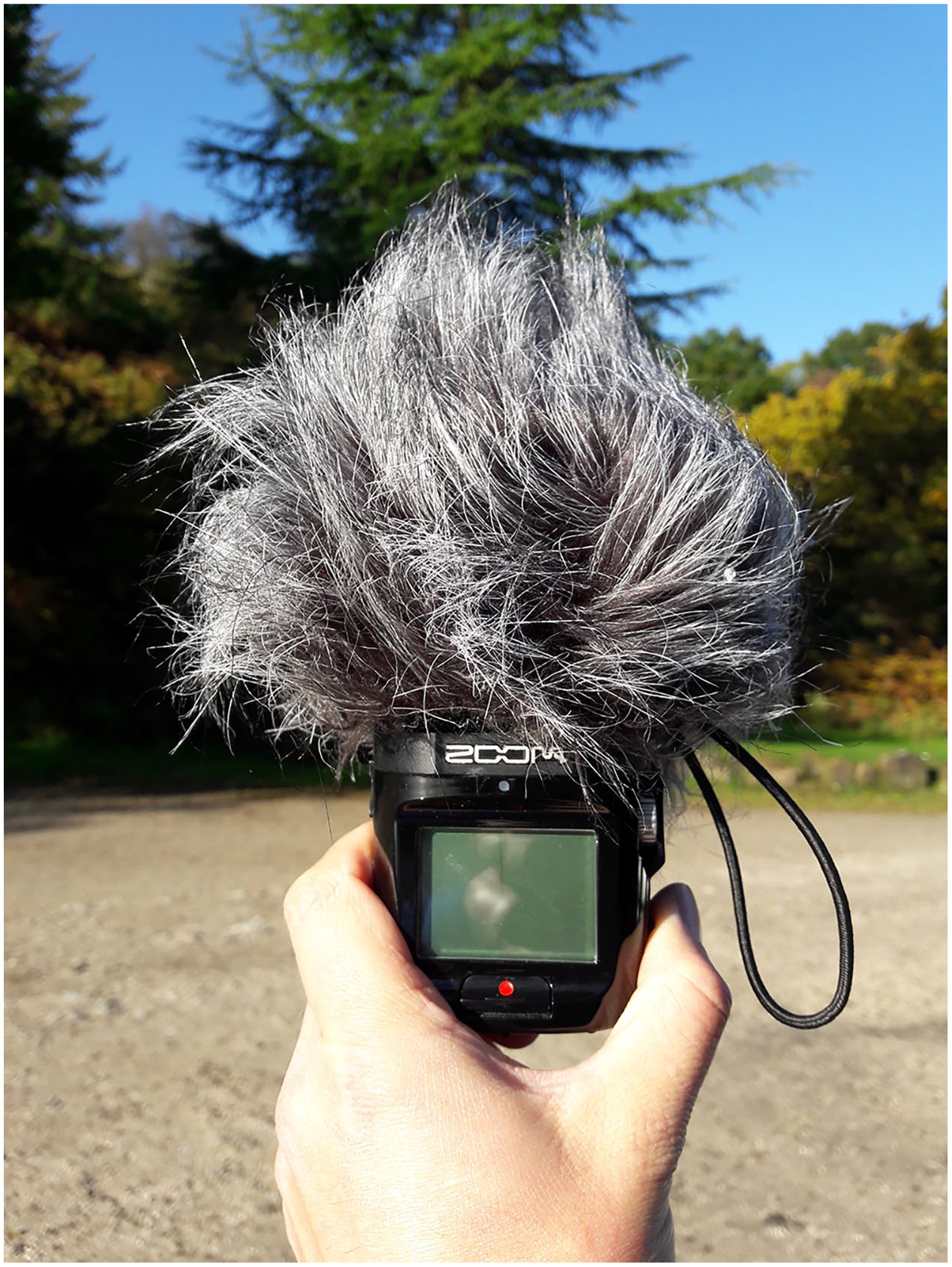
Walking interviews were recorded on a ZOOM audio-recorder with a wind blocker to ensure high-quality sound. All participants had to give their consent for the interview to be audio recorded.
Analysis
Conforming with qualitative analysis guidance (Harding, 2019; Mason, 2018) and following mainly an inductive process, the data was analysed thematically using Nvivo. Out of these themes, arguments developed which were evidenced by the data – also considering alternative or counter arguments (Mason, 2018). The empirical approach to the research project also included a core thread of reflexivity in relation to the positionality, interests in the subject, and conscious and unconscious biases of those who worked on the project which, in turn, challenged the project to re-examine the literature and the developing arguments. The researcher also supported the analysis stage of the project with a reflective diary of the research methodology and a theoretical analysis of primary and secondary literature.
Ethical considerations
As Jones et al. (2008) emphasise in their article exploring space and place with walking interviews, ‘mobility takes the research process out of fixed (safe, controlled) environments and introduces a range of new issues to consider’ (p. 2). Ethically, confidentiality is an important consideration of walking interviews because they are occurring outside in public locations; therefore, it was unfeasible to maintain complete confidentiality (Kinney, 2017). Steps were made to mitigate this; participants were made aware that they could be seen alongside the researcher, although because the interview was occurring in an isolated area, there was a very low risk that members of the public would hear the conversations. In certain interviews, staff from the Forestry Commission and the NYMNP were dressed in uniform so again to protect their anonymity they needed to be aware that the interview was occurring in a public place. This was discussed beforehand with the participant to minimise the risk of the encounter being linked to the research project.
The next section reflects on the findings and experiences of walking in the NYMNP with research participants.
Reflective analysis of the walking method
Walking, routine, and heritage
Throughout the interview process, not once were questions such as ‘why conduct a walking interview?’ or ‘what is the purpose of walking interviews?’ raised by participants; rather the concept of a walking interview was readily embraced as a logical research methodology. Despite being briefed on the specifics of the walking interview and the recording process, some participants appeared to either quickly forget or overlook these details. Instead, they merely took pleasure in the idea of walking in a National Park (under most weather conditions). Some of the interviewees had never visited this specific area of the North York Moors, yet walking interviews felt a normal type of everyday experience for both interviewer and interviewee alike, as walking was a routine physical practice for those interviewed.
It presented a different type of method to the traditional ‘one-on-one’ sedentary interview which sometimes can feel quite abstract and demanding for interviewees, with a certain burden of pressure added to those participants who are unfamiliar with this process. Many of the interviewees were accustomed to walking on a frequent basis: in their day jobs or in their free time, many for leisure purposes. They were also used to socialising during walks and their familiarity with making conversation while on the move made for some very open discussions.
The idea of routine and the walk feeling normal among research participants was also interlinked with nostalgia, memory work, and interactions with the natural–cultural heritage of the place. I interviewed two people from the Lyke Wake Walk Club and one person from the Ryedale Walking Club. Some had previously been on the paths we walked on during the interviews: I know this path very well . . . this used to be horrendously boggy and the Park is doing a damn good job here . . . you are on the old smugglers trod route.
Here, the path acted as part of the process of heritage with an interview’s movement along the path inciting intergenerational memories of previous uses and conditions of the footpath. The paths created by movement reveal ‘the accumulated imprint of countless journeys that people have made . . . as they have gone about their everyday business’ (Ingold, 2000: 204). The walk through the moorland landscape saw the heritage process being practised and created its own present memories for interviewer and interviewee. The topography of the moorland generated these memories and stories akin to the evidence from research conducted by Brudin Borg (2022) when walking on the Camino de Santiago in Spain. Many memories of the moors related to political aspects of landed history such as access and conservation in the Park and were associated with routine and familiarity which gave interviewees a further sense of comfort on these trails and increased trust in the interview process. In agreement with Kusenbach’s (2003) research on ‘go along interviews’, the spatial interactions while walking through a landscape can integrate memories with present and future thoughts clarifying that walking as a normalised routine has a temporal dimension that influences the data collected. The sight of an old military bunker on Fylingdales Moor led to stories of the military presence on this upland during the Second World War and of the current, nearby RAF Fylingdales Radar Station, an early warning station for ballistic missiles. The close by construction of the Woodsmith Mine, a new polyhalite mine, provided a discussion point for the interview on what the future of the UK’s National Park landscapes might hold: [The Woodsmith Mine] is a version of rapid (kind of) accelerated change bringing modernity to the National Park. (Estate Manager/Farmer)
Being in the now, as interviewees walked across the land, was crucial to the questions which I asked and the responses which interviewees gave about their perceptions and experiences of the environment. For example, when I asked, ‘How would you describe the North York Moors landscape?’ participants were able to point and discuss features in the landscape such as the big skies, the openness of the moorland and the wildlife witnessed on Sneaton Low Moor and Fylingdales Moor, while considering the impact of the Woodsmith Mine. Akin to the findings from Edensor’s (2000) research that ‘walking is a way of being in the world’ (p. 104), the person or people walking in the present affect any component of that world including the past and the future – the heritage of this landscape.
It was clear from the interviews that this temporal framing including stories and memories which underlies moving through a landscape shape and construct present and future perceptions of nature–culture relations within these environments. This can add deeper understanding and knowledge to the datasets when interviewees provide their perceptions of the environment in which they are in. These stories in the data also demonstrate the potential for positive mental health benefits of walking such as improved memory which conforms with findings from recent studies on the effects of walking on memory performance (Won et al., 2023).
It is also important to recognise that walking was not part of every interviewee’s routine because not everyone is physically able to walk, and some individuals simply preferred not to. When I offered the option of walking to a local, semi-retired farmer, he replied, ‘We are not doing that, I don’t walk anywhere, we’re getting in my tractor!’ However, the tractor still provided a medium with which we could move through and engage with the environment (Figure 7). For this farmer, the tractor was an everyday component in which he could immerse into the landscape enabling him to identify with the land. His life experiences were deeply entwined with the close-knit relationship with this landscape and moving through the land provided a prism into his local knowledge of how this environment functions. Different forms of movement produce their own distinct experiences and relationships with land (Árnason et al., 2015).
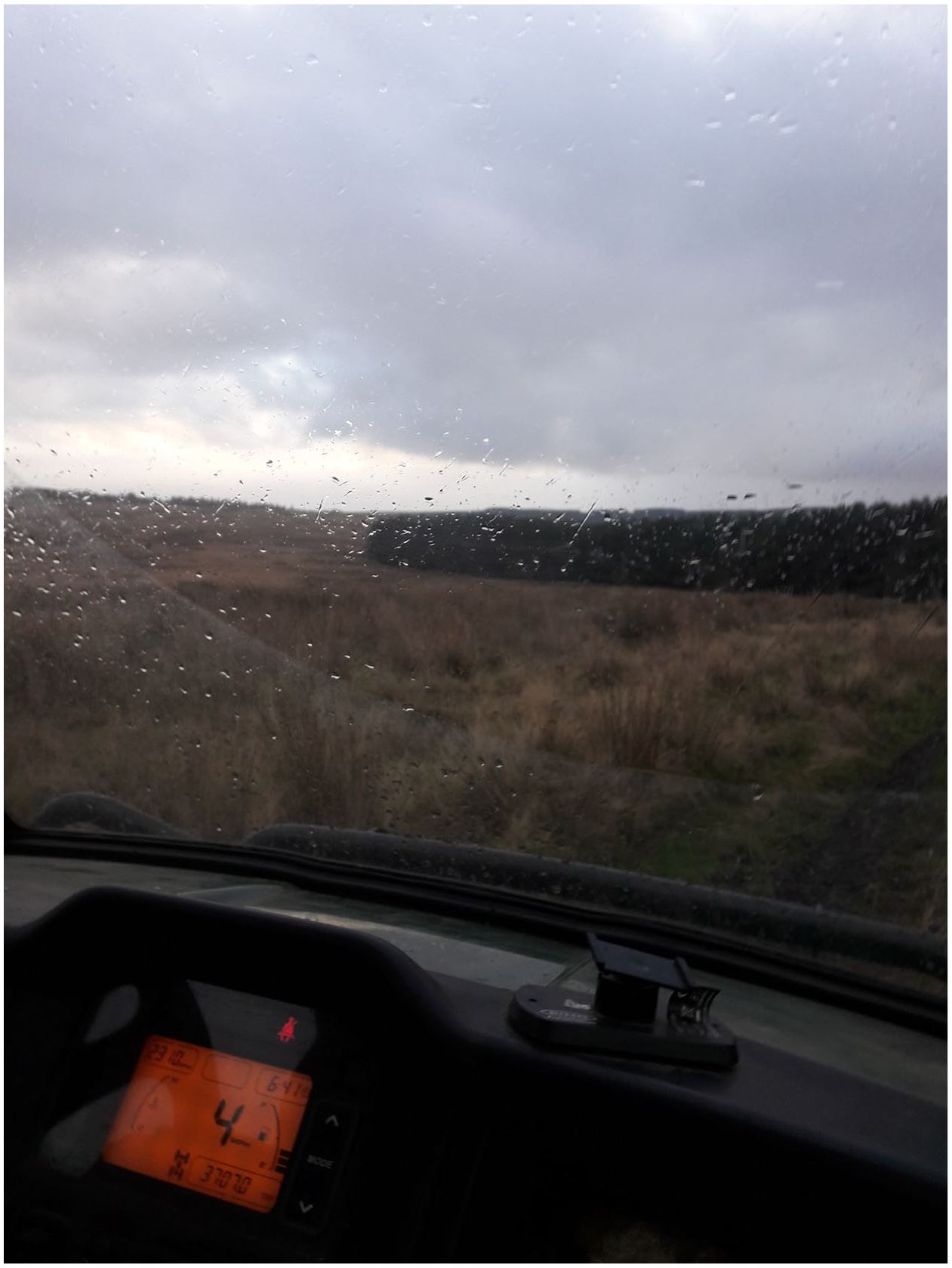
Interviewing a farmer in a tractor on Sneaton Low Moor.
Walking and participation
While acknowledging that not everyone has the capability to walk nor an interest in doing so, walking is still seen as a very inclusive, participatory activity because, as analysed in the previous section, it is a normal practice fundamental to social life (Ingold and Lee, 2006). Walking as an egalitarian motion reduces the power imbalance between interviewer and interviewee as the researcher walks alongside the participant. As I walked along with interviewees, it was noticeable that the casual and relaxing nature of walking made it easier to connect with the participants and, as a consequence, the conversation felt ordinary. This was confirmed by feedback received through email from an interviewee: It is such a good idea to do the interviews while outdoors, and so much better than an impersonal office or tea-shop location. (Staintondale & Ravenscar Local History Group, pers. comm. 2019)
While the interview schedule was semi-structured, it felt less like being in a structured interview and more like being involved in a conversational dialogue. I wanted the interview to be informal, notifying the interviewees beforehand that it would be a ‘conversation whilst walking on the moors’, which positioned the interview in an everyday, more common situation. This approach allowed for a natural flow of discussion which, at times, felt as if this increased the rapport between interviewer and interviewee. The participant and I would sometimes talk about other subjects which might not have been directly linked to the interview schedule, side tracked by a feature in the landscape, such as the passing of a runner provoking discussions about the history of fell/trail running or sightings of lapwings prompting conversations about wildlife on the moors. In addition, as interviewees grew more comfortable with the research process, they also asked me questions – ‘How do you use the moors?’ and ‘what’s the main research question of your thesis?’ These exchanges enriched the depth of our interactions and emphasised the growing trust and engagement within the interview process.
The organic flow of conversation in the moorland environment facilitated the data to be co-produced between the interviewer and interviewee fostering a sense of equality in power dynamics. This balance was aided by the bodily positions of walking side by side and the informal, relaxed nature of the discussion. For those few participants who were slightly uncertain about being interviewed and recorded, their confidence and trust in the research process developed as the walk progressed. These connections between interviewer and interviewee became stronger across the walk and I was able to continue the conversation about the landscape with these people after the interview had concluded, further enriching the rapport and the project’s datasets. The interviewees present involvement and opportunity to reflect generated data that was pragmatic and valued in everyday situations which is a critical feature of participatory research (Burns et al., 2022).
Certain research participants, such as ecologists and National Park Rangers were attuned to these local, dynamic environments and used their lived experience and knowledge from spending time moving across these landscapes to provide responses to the research questions. This facilitated their expert knowledge of these landscapes to manifest in the data providing critical insights into the everyday experiences of these participants and their relationships with the environment (Pink, 2007). The Rangers, for example, had already spent time on these paths, and in my fieldwork diary I wrote, ‘they knew the landscape, the paths and the footpath signage better than I did’. Being outside for the interview gave more of a holistic understanding of non-human perspectives, especially when professionals such as ecologists, land managers, and rangers were explaining their interactions with the moorland environment. For example, a land manager pointed to an area where a group of merlins, the UK’s smallest bird of prey, were nesting in some of the wilder, less managed heather located on the east side of Fylingdales Moor: There are large areas such as Derwent Head over the skyline there where it’s totally left unburnt. They are merlin nesting areas. [points to where it is on the skyline]. Source of the River Derwent. Its left unmanaged. (Land Manager)
This illustrates how walking can facilitate firsthand observations and discussions about wildlife habitats and conservation work (Figure 8).
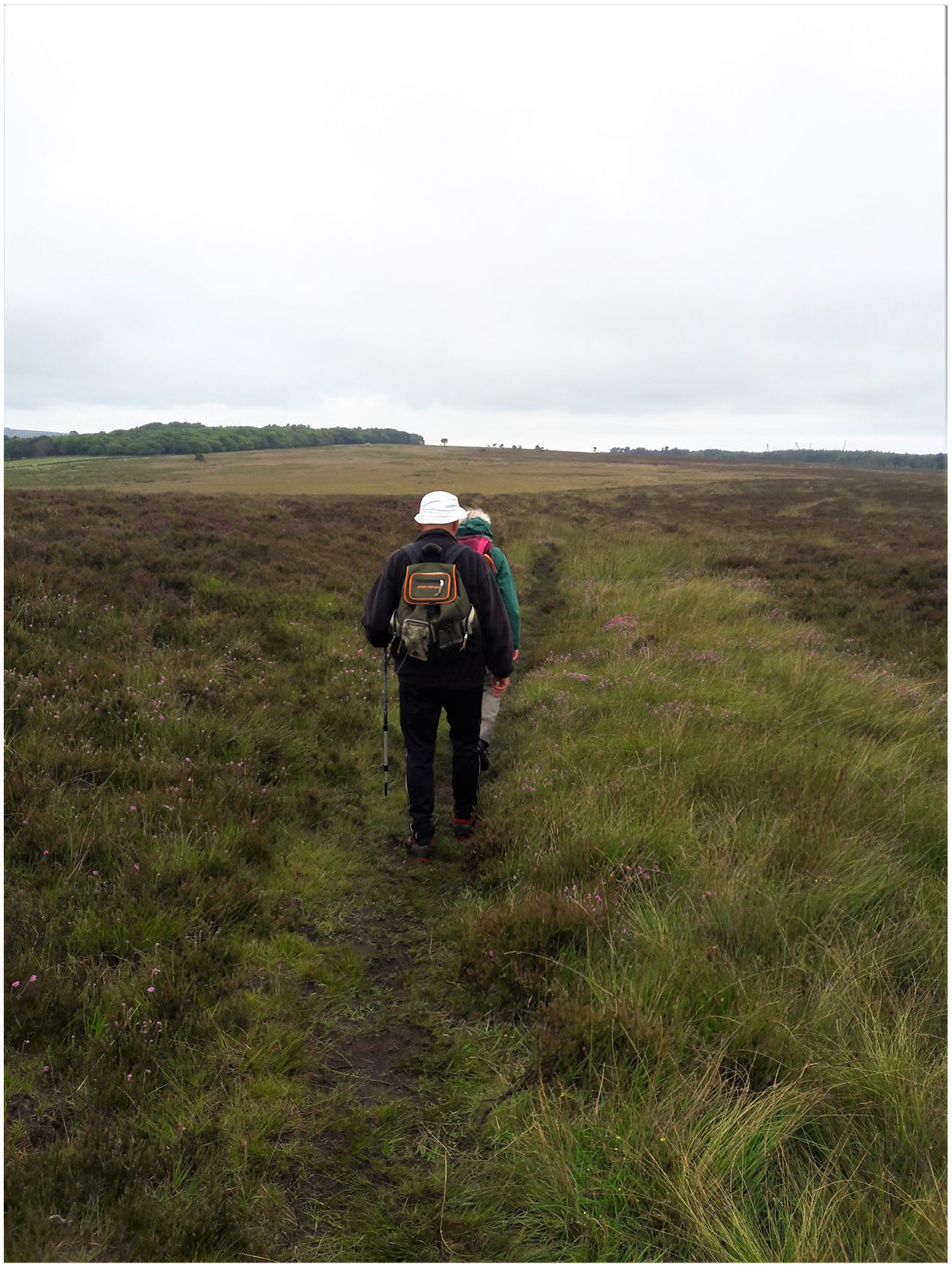
Walking across Sneaton Low Moor with interview participants.
The qualitative data from the project demonstrated that as a method, walking can be used to better interact and engage more democratically with human and non-human systems, especially as more formal types of research methods can exclude certain audiences. It is a more participatory, real-life form of research which can better democratise the research process creating a balanced relationship between interviewer and interviewee and adding to the researcher’s phenomenological understanding of humans’ presence in nature (Pink, 2008). In agreement with Teff-Seker et al. (2022) research, walking methods can provide deeper understandings of culture–nature relations, including a wider representation of perspectives from different groups, therefore encouraging social and ecological justices in these National Park spaces. By embracing this more inclusive and participatory approach, researchers can develop a greater appreciation for the interconnectedness of human and non-human systems and promote more equitable and sustainable practices within protected environments.
Walking and connecting with nature
Indeed, this approach in a rural setting often entails discussions about social relations such as who owns the farm, who owns the land and connections with other stakeholders in the area. However, fewer encounters with people in this environment tend to mean that these discussions are instigated by the interview script. Walking methods outdoors in the landscape helps to focus the interview process on the natural environment as well as these social connections, engaging with the multi-sensory elements of the place activity (Pink, 2007, 2008; Springgay and Truman, 2018): Getting out here in that fresh air. It is relaxation and peacefulness. It brings a different mindset connecting with nature. I get something to take home. (Support worker in local community)
Engaging with nature through walking can have a profound sensory impact on individuals, providing a sense of relaxation, peace, and a unique connection with the natural environment that transcends mere conversation. Grass covering former grouse butts on Fylingdales Moor, observed by an interviewee, acted as a reminder that natural reclamation processes have occurred over time in this landscape, signifying how nature has been given a form of control on this moor and is affecting the interview process (Figure 9). This type of interview initiates a sensitivity about the environment (Springgay and Truman, 2018), encouraging conversations about ecological dynamics, changing landscapes, conservation, access, and the influence of humans and nature on this land, again providing richer data about the synergies between people and the environment and the multifaceted experiences of individuals within rural landscapes. The functioning processes in the natural environment are affecting the place-making construction found in Pink’s (2007, 2008) research on walking.
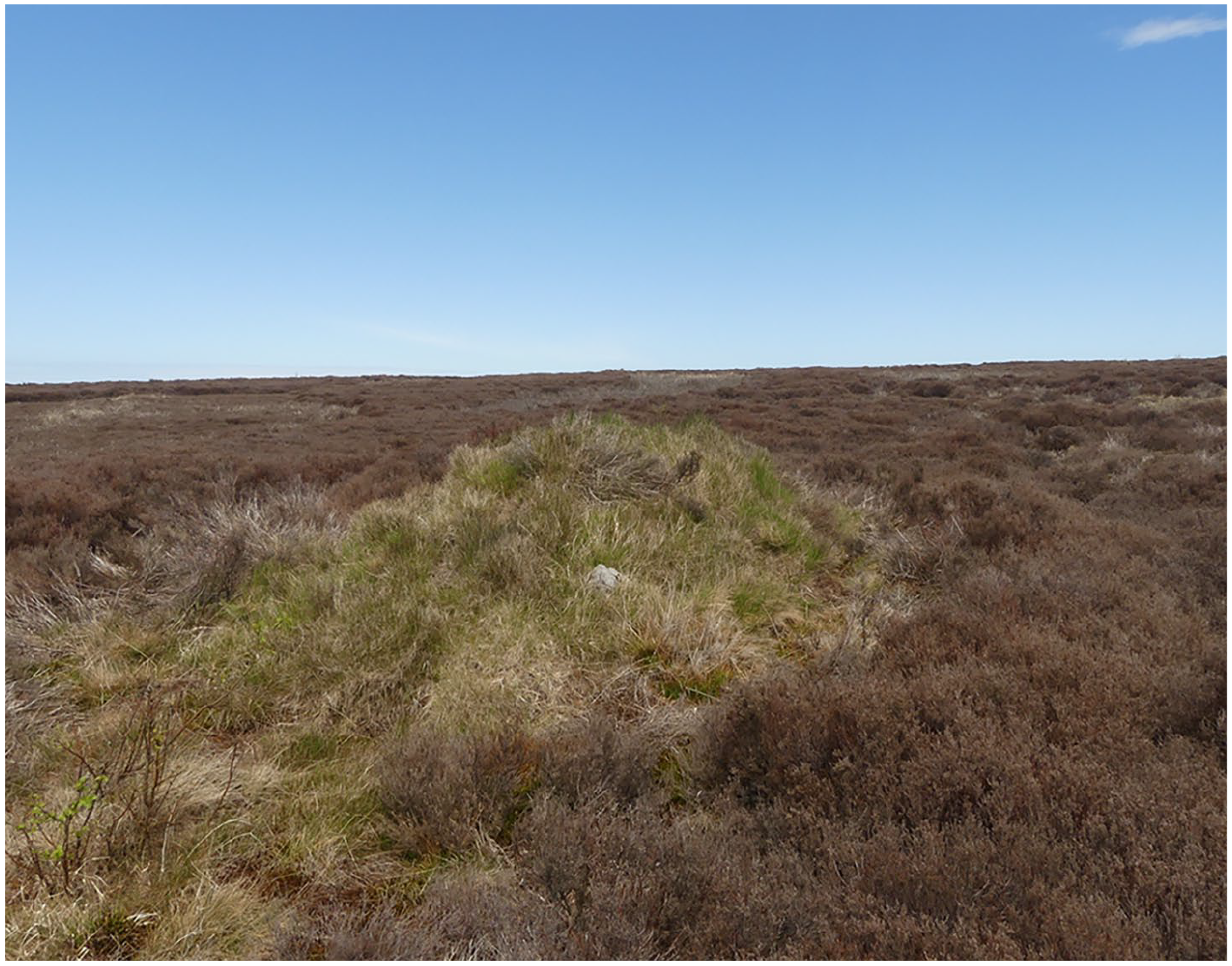
An old grouse butt on Fylingdales Moor, covered over in grass, no longer used for grouse shooting.
Furthermore, walking methods offer a platform for innovative and creative solutions to be put forward by research participants to address sustainability challenges, including climate change and biodiversity emergencies, which are affecting changing moorland landscapes. By immersing themselves in landscape, participants can offer hidden socio-perspectives on the natural environment. It provokes interviewees to consider more sustainable alternatives in decision-making processes – energising their ‘environmental imagination’ of a place in accordance with future-orientated thinking. For example, alternative moorland management methods (including the absence of intensive heather burning on Fylingdales Moor), the introduction of nature recovery networks which interlink across the Park and co-operative/participatory types of governance and management systems which involve a wider range of communities and stakeholders (Ratcliffe, 2024) were shown by the data to be important approaches to creating more resilient and sustainable protected landscapes.
Walking and sensory immersion
The walking interview method taking place outdoors capitalised on the multi-sensory nature of the landscape (Edensor, 2017; Gerodetti and Foster, 2016; Macpherson, 2016). ‘Apprenticing ourselves to a place’, according to Wattchow (2013: 94), is the blending of narratives and sensory immersion and allows the researcher to better understand the interconnections between identity, values, and perception within a sociological study. An interview outside in the North York Moors landscape presented an opportunity to understand the sensory reaction of the interview process to its surroundings. Interviewees talked about ‘the cry of the curlew’ which they could hear in the distance being carried by the wind. Life was circulating around the interviewees as they gave their opinions, told their stories, and reacted to their surroundings or the surroundings responded to the interviews’ movements. For example, in my fieldwork diary I wrote, ‘a grouse squawked and then hovered off into the distance as our steps got closer to where it was nesting’. On one walk, we also saw a slow worm sleeping on the path. A professional ecologist I was walking with pressed on its skin to check that it was still alive. This encounter shows the uniqueness of walking interviews in enabling the integration of ecological real-time insights into the datasets (Figure 10).
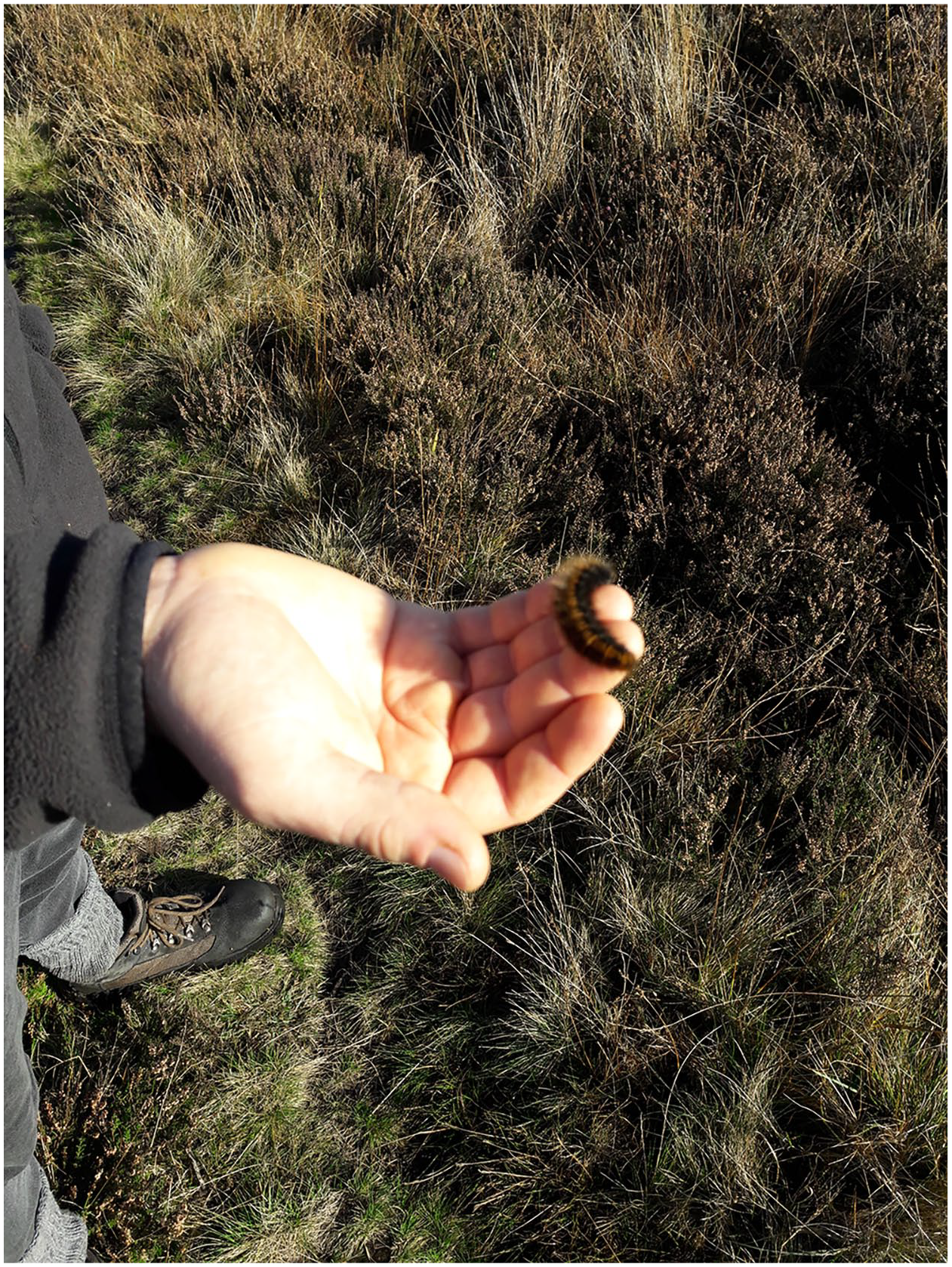
An ecologist I was interviewing also discovered a Fox Moth caterpillar in the heather during a walking interview.
As Bates (2017) states, ‘where and how people move is a constant negotiation between the body and the environment’ (p. 57). The springy moorland or a sheep running across the trod which we were walking along affected our movements, senses, and discourse of the interview. The interactions with the landscape stimulated, at times, passionate responses and new perspectives about habitats from the interviewees, especially when discussing a changing environment and the differences from one moorland to the next: It’s really great to have an area that is managed more gently like Fylingdales is. They will support different types of habitat. Some birds in particular really like that short, rotational heather. Waders and other assemblages of birds like the longer heather. It will be certainly more diverse within the North York Moors. (NYMNP Officer)
Robert Macfarlane (2012) writes that the paths people walk offer ‘not only means of traversing space, but also ways of feeling, being and knowing’ (p. 24). Building on phenomenological perspectives (Peyrefitte, 2012), it is only by being embodied and immersed in that place that one can truly know and learn its landscape and how its ecosystems function. Indeed, this does not mean that the interviews constantly focused on the surroundings, but, through an exploration of this land, the landscape was affecting what was being conversed. The form of mobility brought interviewer and interviewee closer to the landscape which saw the co-production of local knowledge in these spaces, and, in turn, the environment became closer to these human movements. The personal knowledge and perceptions materialising in the interviews were being produced by the lived experiences and the relationships and connections with space, place, and the non-human in these environments. The trails and paths that interviewees walked on connected with the non-human world; the rocks, the plants, the heather, and the insects. They forge the relationships between humans and the environment and the future changes which are made through the walking of the human body along the earth, meaning that with this immersion – nature and culture are also joined.
The method also instigated empathetic feelings towards the environment, which is found in Springgay and Truman’s (2018) Walking Lab research. As exemplified by a member of a local history group who said, ‘I love just being out here in this weather, at one with the landscape’. The data revealed that interviewees’ multi-sensory experiences of walking on the moorland in various weather conditions elicited positive emotional responses. For example, interviewees frequently mentioned the freshness and cleanliness of the air – ‘there is more oxygen’ – and noted how the fresh air and their presence in the environment made them feel relaxed and happy. Therefore, walking interviews facilitate unique, embodied experiences where environmental factors shape human emotions and these experiences can lead to mental and physical health benefits. However, it is essential for researchers to be aware of the effects of these positive endorphins on the walking interview method, data collection and interpretation, as highlighted by Macpherson (2016).
Conclusion: walking and widening perspectives
Walking interviewees used their experiences, memories, knowledge, and values of their surroundings within the interview process to rationalise the responses they gave to the interview questions. Those taking part in the interviews benefitted from the multi-sensory nature of the environment as a stimulus and context for present interactions (Macpherson, 2016). Immersed in a landscape, they felt more comfortable in expressing their attitudes and articulating their feelings about how they identify with landscapes in the National Park. The diversity and richness in responses were driven by a method which encouraged every day, participatory dialogue and interactions with surroundings, wider systemic thinking (than merely straightforward interviewing) and movement as part of the ‘meshwork’ (Ingold, 2011) of a dynamic, changing National Park landscape.
Moving through a landscape is regarded ‘a more intimate way’ to engage with its nature–culture relations offering profound insights into place, power structures, and management issues within that landscape (Evans and Jones, 2011; Macpherson, 2016; Solnit, 2001). Walking methods are therefore an effective form of data collection to understand relationships between people and a place, especially to understand the changing British countryside in the face of the impact of climate change and the biodiversity crisis. They enable the sociological lens to become closer to an ecological lens and to provide deeper analysis of the human and non-human issues within the countryside.
The walking method also had its design strengths as being part of a wider, mixed methodology which took a flexible, inclusive approach depending on the needs of the research participants. A mix of methods enabled those who have less time and/or a lack of means of transport to the interview to still be involved in the research. Each method had its own benefits and limitations but produced different types of evidence that would together bring a wider, more diverse range of data to the project. Maps and photographs were included alongside the questions in the sedentary interviews to act as prompts for participants and to replicate some of the walking elements of the interviews. The sedentary interview could not reach the same intricate depth of understanding about nature–culture relations from the interviewee as a walking interview. Being inside, away from the landscape meant that this type of interview lacked the dynamic, present interactions with a landscape. However, its triangulation with walking interviews added to and supported the walking interview data enhancing the validity of the total dataset, especially when it was a strategic interview where the participants were more likely to provide a wider perspective on the National Park landscape and its management. Many of the stakeholder sedentary interviews provided contextual grounding for the more specific data and new themes which were drawn out of a walking interview.
The co-productive nature of the interviews also ensured that the data was pertinent and accessible to those being interviewed and the wider National Park community with two articles, based on this project’s findings, published in local conservation magazines. Furthermore, this particular article contributes to contemporary sociological literature on walking methods (i.e. Bates and Rhys-Taylor, 2017; O’Neill and Roberts, 2019; Springgay and Truman, 2018) by establishing the value of walking research as a data collection method in understanding people-landscape relations through its connections with routine, heritage, participation, nature, sensory immersion, and identity in protected landscapes that have an extensive history of walking.
In the future, there is potential for this method to be replicated in other National Parks or landscape settings, both in and outside the United Kingdom. Moreover, a longer fieldwork timeframe, including repeating walks in the same landscape, would allow this type of project to focus more on changes over time in values, perceptions, and identity within an anthropogenic landscape and how these interactions have an effect on peoples’ influence and decision making in landscape conservation and society more generally.
Footnotes
Acknowledgements
The author would like to thank Prof Keith Shaw and Dr Joan Heggie for their supervision and guidance throughout the research project and Patrick Gibbs for the use of his camera. Many thanks also to the research participants who mostly consisted of the North York Moors communities for their engagement in the research and to the Arts and Humanities Research Council for their funding support. Finally, the author would like to thank Steve and Jane Ratcliffe for their brilliant support and proofreading. The article is dedicated to his Nan who loved to walk in her garden.
Declaration of conflicting interests
The author(s) declared the following potential conflicts of interest with respect to the research, authorship, and/or publication of this article: The author is a current trustee and council member of the North York Moors Association. He joined this organisation in January 2022.
Funding
The author(s) disclosed receipt of the following financial support for the research, authorship, and/or publication of this article: This work was supported by the Arts and Humanities Research Council.

Notes
Author biography
He completed an Arts and Humanities Research Council funded PhD thesis titled ‘Contested natural-cultural landscapes in the Anthropocene: Connecting community identity, heritage and influence in the North York Moors National Park’.
In addition, Tom is a co-convenor of the Ecological Justice Research Group and a member of the ‘Visitor Economy and Experience Research Group’ at York St John University. He is also a member of the ‘Human-Nature Relations Research group’ at the Centre for National Parks & Protected Areas, University of Cumbria.
Before returning to academic life in 2017, Tom worked as a Heritage and Tourism Consultant for 5 years designing strategic plans and conducting audience research projects for National Lottery Heritage Fund projects at heritage and landscape sites across the United Kingdom.