




Abstract
This study aims to explore the practices of intimacy among Emirati spouses in a society where gender discrimination persistently governs the private space of family relationships. Participants include 41 young Emirati working wives aged 24–30 who have jobs and are enrolled in graduate studies and research degrees (PhD and MA). In-depth interviews were used to collect data. Line-by-line coding, thematic coding, and constant comparison method were employed to analyze and interpret data. Analyses revealed seven interrelated categories associated with the gendered practices of intimacy. They were influenced by factors such as the wives’ status, the gap of age, and the wives’ religiosity. These themes are suppressed self-disclosure, restricted self-disclosure of wives, not sharing responsibilities, not sharing time, unequal mutual reciprocity, not solving problems, and not thinking together. Narratives highlighted gendered interaction and low quality of intimacy between spouses. The findings of this study show that empowering women in the public sphere has not impacted their position in the patriarchal structure of the family, which is reproduced by traditions and religious interpretations. This study’s findings can inform social policymakers aiming at bridging empowerment between the public and private spheres.
Keywords
Introduction
The United Arab Emirates (UAE) is a federation of seven monarchies. It is ranked as one of the highest-income countries and advanced social welfare system among 14 countries in the MENA region (Index of Economic Freedom, 2020). The economy of the UAE is driven by oil, gas, and tourism. The UAE has become an oil-rich nation and a highly developed society over the past 30 years. It has witnessed rapid and widespread changes in the tangible aspects of everyday life; however, previous studies have shown that the nontangible aspects of society are changing very slowly, specifically the patriarchal structure of the family and its values (Al Hourani, 2019b; Ashencaen, 2007; Foster et al., 2014; Pinto, 2012).
The modernization process has developed a structural gap in the UAE. The material part of modernity, such as economic growth, and state-building infrastructures, such as roads, airports, as well as human development, such as education, health care, housing, and job opportunities, are influenced by modernization, while the traditional and cultural aspects of the society, such as family and tribal structure, women’s legal status, as well as gender roles are disrupted by the modernization process (Al Oraimi, 2004). According to Kirdar (2010), ‘Emirati women are undergoing a transition as their society, exposed to foreign influences, adapts to changing identities while protecting cultural and religious traditions’ (p. 1).
Today, with the ongoing evolution and modernization process that has taken place over the past years, the literacy rate of women in the UAE is 95.8%. Women constitute almost two-thirds of students attending state universities and over half at private tertiary-level institutions. Emirati women make up 70% of all university graduates; they furthermore make up 66% of the public sector workforce. Around 30% of women are in leadership roles and 15% are in technical and academic roles. The UAE women comprise over 40% of all employees in education, at least 35% work in the health sector, and approximately 20% in social affairs. The UAE has nine female ministers (out of 31), making up 29% of ministerial roles, one of the highest in the region. Women comprise 30% of the diplomatic corps, where they occupy 234 positions, 42 of whom working on missions abroad, and 7 acting as ambassadors. The first Emirati woman was appointed as ambassador in 2009 (UAE Women FAQs, 2021). Nevertheless, such achievements have not been translated into substantial changes in the dominant culture that still regards women as inferior.
This study conceptualizes gendered interaction among spouses as a process that reproduces men’s higher position and grants them more power to control all aspects of relationships than women. This interaction is not usually constructed between the spouses as much as it emerges from the background expectations that are institutionalized in the culture. According to Jameison (2011), gendered interaction impacts the quality of practicing intimacy through which spouses do their family; gendered practices of intimacy impact the quality of intimacy including emotion, cognition, and mutual love. Hence, they impact marital satisfaction, self-esteem, self-reliability, and family cohesion.
This study draws on Jameison’s (2011) sociological work on intimacy, since it places the concept in the sociocultural and historical contexts. Furthermore, this perspective focuses on contextual practices that produce intimacy such as shared interests, values, and family responsibilities, open communication between the couples, and their ability to deal with marital problems. Hence, this sociological perspective can frame spousal relationships in the UAE since marriage is often arranged by the extended family which consecrates gender discrimination and differentiation. Accordingly, even if women are educated and work in a gendered cultural and religious context, they are expected to experience gendered practices of intimacy in their spousal interaction. This means that the practices of intimacy in the UAE are bound by traditions and religion more than by individuals.
The present study aims to expand knowledge about the experiences of the young educated and working Emirati women associated with practices of intimacy in their spousal interactions. To do so, my inquiry is guided by questions that explore the experience of self-disclosure, sharing responsibilities and common interests, flexible coordination, and solving problems. The current study employs in-depth interviews of young Emirati wives to let their voices be heard and heeded in UAE policymaking and programs. Moreover, consistent with the feminist methodological approach, the current study places great value on the experience of wives by way of multiple voices and multiple truths. I assert that uncovering wives’ experiences about spousal intimacy would bolster efforts to empower working women in family life as well as in the workplace.
Intimacy, gender, and spousal relationships
According to the British sociologist Lynn Jameison (2011): ‘intimacy refers to the quality of the close connection between people and the process of building this quality . . . intimate relationships are a type of personal relationships that are subjectively experienced and may furthermore be socially recognized as close’ (p. 1). The quality of intimacy includes emotion, cognition, and mutual love, which are produced and reproduced during the lived experiences of persons who are special to each other. Creating intimacy depends on ‘practices of intimacy’ that focus on ‘culturally and historically variable practices people use to “do” family, to create an experience of particular places, relationships and events as meaning and expressing family’ (Jameison, 2011: 1).
Practices of intimacy are contextual in that they are recognized and subjectively experienced by the persons involved in the relationship. Furthermore, practices of intimacy focus on culturally and historically variable practices that people use to maintain a subjective sense of closeness, being attuned, and being special to each other. Based on a general review of personal relationships, Jameison (1998) concluded that personal relationships reinforce gender divisions rather than democratize personal life. In her critical work of Gidden’s ‘pure relationship’, entitled Intimacy Transformed? Jameison (1999: 482) points out that ‘personal relationships are not typically shaped in whatever way gives pleasure without the taint of practical, economic, and other material circumstances’. Thus, practices of intimacy interact, with the nature of gender relationships (equal or unequal), particularly in family and spousal relationships in different cultural contexts. For instance, traditional cultures include strict differential gender relationships that consecrate the superiority of men over women. Accordingly, doing intimacy is an obligation of women rather than men.
Jameison (2011) indicated that intimacy is practiced through ‘self-disclosure, giving to, sharing with, spending time with, knowing, practically caring for, feeling attachment to, expressing affection for’ (p. 3). Nevertheless, she asserts that ‘each practice tends to produce intimacy but is not a sufficient condition’ (p. 3). This means that intimacy is associated with a sense of closeness or being special to each other rather than mutual practices of the intimacy elements. However, sometimes one practice can stand in for other practices of intimacy. For example, in gendered spousal relationships, the husband’s expressions of love and care for his wife on a certain occasion can compensate for the sense of inequality. Compensatory practices of intimacy can be considered situational since they are incapable of providing a permanent sense of equality even in contexts in which couples take unequal gender roles for granted. Without any compensatory practices, a sense of marriage dissatisfaction can reach high levels. Consistently with this notion, research shows that wives who reciprocate low self-disclosure with their husbands expressed a low level of relational satisfaction and intimacy (Quek et al., 2015). Intimacy in spousal relationships is fundamental for high self-esteem, and the sense of self-value necessary for secure families and cohesive social existence (Diener and Diener, 1995; Kim and McKenry, 2002).
Considering practices of intimacy draws attention to the fact that intimacy represents the flow of subjective mutual acts, rather than an objective structure. Drawing on the aforementioned notion, Jackson (1999) suggests that human subjectivity may be constrained and shaped by social structures, structural hierarchies, and patterned relationships that pre-exist us, ‘but it is nonetheless constructed through reflexive processes in which we are active participants’ (p. 13). Based on this sociological perspective, Jackson (1999) asserts that everyday gendered performances are not directly determined by social structures, but are meaningful interactions in situated social contexts. These performances could not occur ‘without the engagement of a reflexive social self which enables us to enact gender and make sense of others’ actions as gendered’ (p. 13). I would argue that gender performances represent ‘carriers’ of practices of intimacy. Thus, making sense of others’ actions as gendered reflects an evaluation process of others’ practices of intimacy.
Literature review
Previous studies in the Arab region have shown traditional gender ideology that consecrates and legitimizes the subordination of women to the authority of men, within both public domains, including organizational positions, and private domains including family roles (James-Hawkins et al., 2017; Moghadam, 2003; Said-Foqahaa, 2011). The lower status of women is associated with the patriarchal order that is sustained and reproduced through the practices of both men and women. Women participate in reproducing gender discrimination by socializing their daughters to be good wives and kitchen workers and obeying their husbands (Al Hourani, 2019b). Thus, the patriarchal system is arranged hierarchically based on age and sex, giving the privilege to older males. Previous research has shown that after the wave of modernization in the Arab region, the oldest structure of the patriarchal system has changed to a ‘Neo-Patriarchal’ system, where women attained high levels of education and are involved in the workforce. Nevertheless, they are expected to maintain their traditional responsibility of home duties, thus the Neo-Patriarchal system enhanced women’s education and work to be better wives and mothers (Hasso, 2010; Olmsted, 2005). However, it should be noted that female labor force participation rates within the Arab region are low (18.4% in 2020 according to International Labour Organization (ILO)). This situation reflects the fact that the main source of income for a woman is from her male next-of-kin rather than paid employment and underpinning a woman’s status as a secondary wage earner if she does work (Boustati, 2020). Furthermore, this situation intersects with the fact of women’s primary role as housewives and/or mothers. Therefore, while marriage provides a woman with income, it consecrates and legitimizes dependency and subordination to the husband as the breadwinner (Assaad et al., 2017; Minguez, 2012; Moghadam, 2005). Even when women join the workplace they are still constrained by their traditional roles, and they are expected to be emotionally supportive and maintain family cohesion (Al-Klharouf and Alqamash, 2005; Al-Krenawi, 2010; Moghadam, 2004). The contradiction between their rising expectations in the workplace and the social and cultural pressures they experienced may contribute to their low level of satisfaction with marriage (Al-Krenawi, 2010).
The concept of gender has been variably interpreted and translated in the Arab region (Mahadeen, 2016), resulting in misunderstanding and confusion, especially for non-academics. The term ‘gender’ entered the UAE in early 2002 when a report from the United Nations revealed the low level of women’s participation in decision-making (Al Oraimi, 2011). This situation inspired scholars to publish about the topic while exerting caution. However, research on gender issues in general, and spousal relationships continued to be one of the most sensitive topics in the UAE, especially for academics who publish in the Arabic language. Hence, it is not surprising that there is a dearth of studies to deepen our understanding of gender dynamics between spouses and their impact on practices of intimacy. However, the limited number of research across the UAE has shown that spousal relationships are governed by gender inequities, inequalities, and strict division of household work in UAE families (Al Hourani, 2019b). Moreover, the traditional roles of men and women are still reproduced through culture and religion. Thus, the home environment is seen as being the proper domain, regardless of the official call for education and work (Al Hourani, 2019a; Ashencaen, 2007; Schvaneveldt et al., 2005). Research on marital satisfaction in the UAE has shown that Emirati men were more satisfied with their marriages than women because of gender discrimination; they are heads of their families and have more independence and social support, and their experience is less distressing (Al-Darmaki et al., 2016; Al-Othman, 2012). In addition, research has shown that young Emirati women experiencing violence, a dearth of emotional bonds and effective communication in spousal relationships, and the control that their husbands exerted over them, contributed to marital dissatisfaction (Al Hourani and Al Garbawi, 2020; Bromfield, 2014).
The UAE is a predominately Muslim society and based on Islamic law, men are allowed to have four wives. Thus, Islamic beliefs legitimize polygamy. Research in the UAE has shown that polygamy contributes to a lack of intimacy, emotional mutuality, and marital dissatisfaction for wives (Al Hourani and Al Garbawi, 2020; Al Shamisi and Fulcher, 2005).
Accordingly, research has shown that traditional UAE society continues to reproduce itself through family practices. These practices reproduce traditional gender roles (Stocker and Ali, 2014), inhibiting women from being independent and expecting them to marry at an early age and focus on raising their children. Therefore, some women find themselves forced to cease employment once they get married, especially when they give birth, and become unable to resume their education. Thus, if a wife decides that she wants to pursue a career, some local men still feel that this is a challenge to their role as the breadwinner (Al Marzouqi and Forster, 2011). Accordingly, research on married Emirati student women in higher education revealed that they face complexities to balance married life with being a student. They expressed feelings of guilt, stress, and exhaustion. Furthermore, the power of the larger community, and the family’s approval, remain essential influences on all major decisions that women make (Saqr et al., 2014).
Besides, research has shown that men have ways of thinking about how to degrade women and prevent their progress. These ways appear through their interaction with women in public and private spheres simultaneously. Based on their cultural attitudes men do not evaluate and consider the employment of Emirati women (Al Shamsi and Lulu, 2001; Al Smri, 2008). Thus, Al Mutawa (2016) revealed that women’s status in the workplace does not affect their status in household work. Working Emirati women, including women in leadership, are expected to both be full-time workers while being full-time wives and mothers. Although there are no restrictions on women owning businesses, and despite the laws protecting Emirati women in the workforce, sociocultural context and family law prevent women from gaining their independence. The legal system is in harmony with the sociocultural system, for example, a woman needs her husband’s permission to work and travel abroad and cannot decide on their marriage without the guardian’s permission (Al-Muttawa, 2016; Allagui and Al-Najjar, 2018).
This means that Emirati women not only need to cross gender boundaries to obtain equal or higher consideration, dignity, and egalitarian interaction, but they furthermore need to change the stereotypes that are vested in men’s way of thinking. Moreover, we have to know that Emirati men prefer workplaces that are gender-segregated for female members of their families (Foster et al., 2014).
Method
Participants
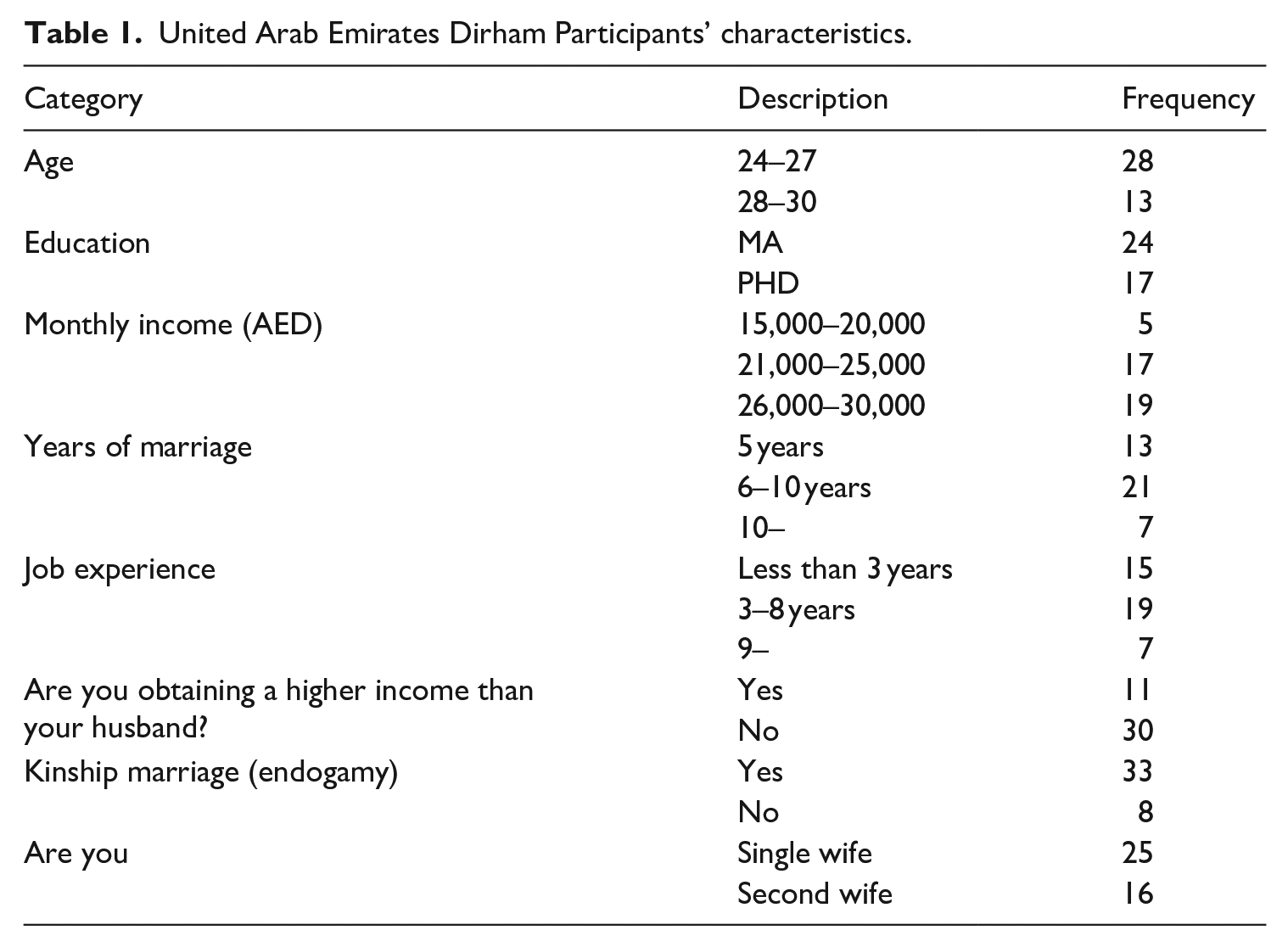
Participants in the current study include 41 local Emirati wives. They meet the criteria for inclusion in the study (aged 24–30, living with husbands, involved in graduate programs, and all have jobs). The wives varied in age, educational background, occupation, monthly income, the experience of marriage, and experience of the job (see Table 1). These criteria were used for the following reasons: (1) the age (24–30) embodies the latest generation of females in the UAE which reflects the degree to which change has impacted spousal relationships, also this age represents the average of female students who are involved in graduate programs; (2) they should be wives because this study focuses on gendered interaction and the practices of intimacy among spouses; and (3) education, especially graduate studies, and jobs are sources of empowerment for women.
United Arab Emirates Dirham Participants’ characteristics.
Recruitment
A purposive sample strategy was used to locate the potential participants of the current study. Since the population of this study is conservative, the researcher identified and contacted key informants who were furthermore research assistants. They were three local female graduate students at the University of Sharjah in the UAE. They assisted the researcher in the recruitment of participants from the local community and their colleagues at the University of Sharjah. The research assistants were trained to conduct interviews, and they were aware of the criteria that participants must meet to be included in the study. A face-to-face individual interview meeting was scheduled for all individuals who expressed interest. Informed consent was obtained before conducting all interviews.
Data collection
Individual face-to-face in-depth interviews lasting approximately 1–2 hours were conducted by the research assistants in locations selected by participants, which included participants’ homes, workplaces, and the author’s office at the university. All interviews were audio-recorded and transcribed by the research assistants. Interview questions were focused on gathering knowledge about the practices of intimacy as experienced in spousal interaction. The interview guide included four open questions; the first question focused on the participants’ general experience of the spousal relationship. They were asked to describe the spousal relationship regarding decision-making, division of household work, sharing and expressing true feelings, discussing problems, and interdependency. During the interview participants’ narratives were directed to answer the main three questions: (1) to what degree are you expressing antagonistic claims and how? (2) to what degree do you and your husband share common interests? and (3) to what degree do you and your husband produce consensual agreements through spousal interaction and how? These questions were used as starting points that helped frame the analysis of the current study concerning spousal intimacy practices and gendered interaction.
Ethical considerations
The current study implemented the principles of research ethics: (1) research assistants were trained to respect participants’ thoughts, feelings, and autonomy; (2) informed consent was obtained, and participants were provided with an accurate account of the nature of the participation and the goals of the research, and they chose the place and time of the interview; and (3) confidentiality and privacy were protected by keeping records of participants’ personal identification information (such as their names, locations, or contact information) separate from transcribed data, and their names were anonymized in analyzing data.
Researcher positionality and reflexivity
The author is a male with a PhD in sociology who supervised recruiting of all participants. In addition, the author supervised the female assistants who conducted all interviews. The author is identified as an ally of gender issues, gender equity, equality, and justice. He has several published papers about gender and women in the UAE and Jordan. Hence, the present study was a natural progression of the author’s publication, which is aimed at creating safer, kinder, and more inclusive spaces for women across the Arab world context. Furthermore, the author is very well trained in conducting interviews; he has conducted tens of interviews with males, females, officials, policewomen, civil society members, leaders of social movements, and physicians throughout his career. Thus, his experience enabled him to maintain reflexivity and ensure that the findings emerged directly from the data. The importance of positionality is rooted in feminist methodology which has argued that knowledge is contextual, it is situated and produced in a specific context (Valentine, 2002), and reflexivity enables the researcher to reflect on how positionality in the field affects how the researcher represents participants, including assessing how social, cultural, and historical factor shape the research site and participants’ experiences (Kirsch, 1999).
Data analysis
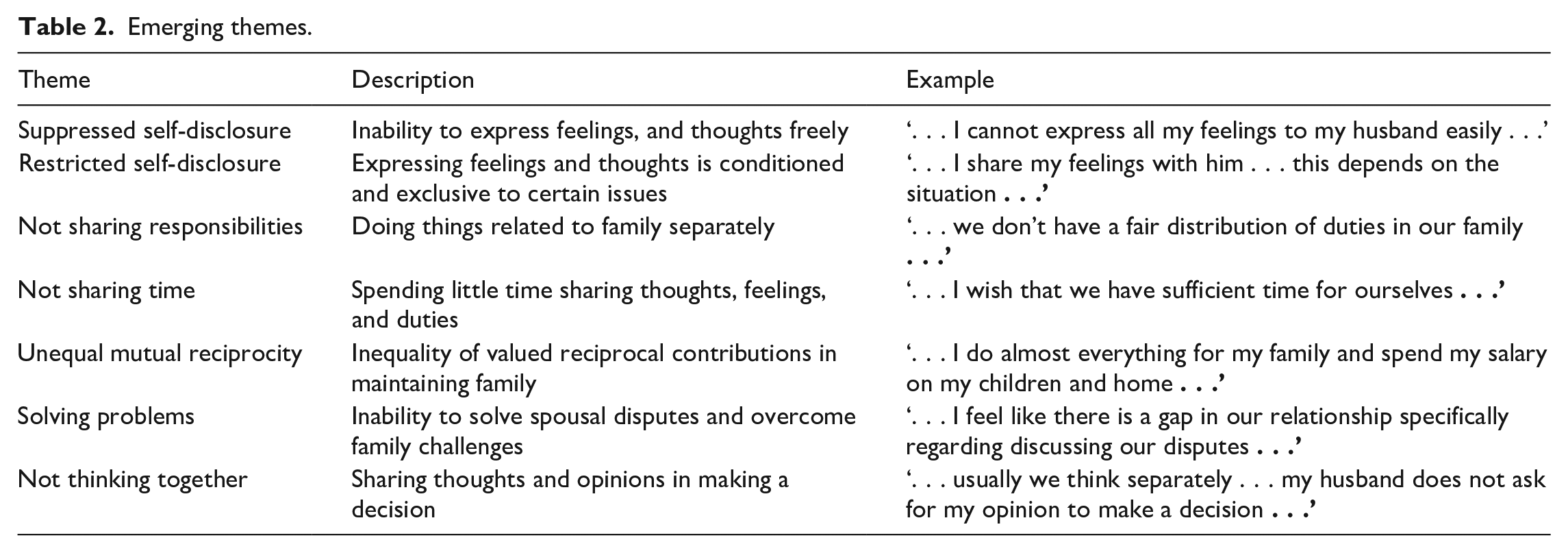
Notes were taken following each interview. Furthermore, the interviews were transcribed by research assistants after they were conducted. Data were initially analyzed using line-by-line coding, thematic coding, and constant comparison methods (Creswell, 1994), by the author and research assistants. In addition, concepts and linkages to the theoretical model and literature review have been noted. A transcript would be coded together and then each transcript would be gone through and discussed whether or not each code represented the starting points and if the codes captured what the participants were trying to convey. Analyses began after the first three interviews were conducted by each research assistant, which allowed the researcher to direct assistants to collect deeper and richer data on emerging themes during later interviews. Moreover, analyses revealed seven interrelated categories that reflect gendered practices of intimacy, in the context of gendered spousal interaction (see Table 2), and they appeared to be influenced by factors such as the wives’ status, the age gap, and the wives’ religiosity, suppressed self-disclosure, restricted self-disclosure, not sharing responsibilities, not sharing Time, unequal mutual reciprocity, not solving problems, and not thinking together. These themes are interrelated since husbands who internalized gendered culture, do all the gendered practices mentioned above. Each category is explained in the following discussion.
Emerging themes.
Results
Self-disclosure
The themes associated with self-disclosure showed the low quality of intimacy. Consistent with the theory of practices of intimacy, this is because of gender differentiation among spouses. Most of the participants (34 women) stated that they relatively cannot express their antagonistic claims, opinions, negative feelings, discontent, and dissatisfaction with their husbands.
Suppressed self-disclosure
Practices of intimacy are affected by cultural and historical contexts. Thus, because of the gendered structure of the family in the UAE, participants expressed suppressed feelings and thoughts with their husbands. One participant stated,
. . . you know we are living in traditional society . . . and we are Muslims, so the woman has to respect her husband and obey him . . . actually, for me I cannot express all my true feelings to my husband easily . . . sometimes when we engage in an acute discussion over something, I give up too quickly to end the argument . . . regarding our traditions, it is shameful for a woman to make an argument with husband . . . it is not acceptable . . . our society consider it as you’re challenging your man.
According to Jameison (1999), practices of intimacy are shaped by practical, economic, and other material circumstances. Hence, low quality of self-disclosure continued to be maintained and impacted by religion and the nature of the sociocultural context. Although Islamic regulations grant women a wide range of rights that facilitate their involvement in the public sphere, they have to obey and respect their husbands. Consistent with Islamic regulations the political agenda in the UAE includes an empowerment program for women in all areas of social life, except the family area which is considered private and sacred. Furthermore, tribal traditions are overwhelmed with Islamic principles and consecrate the superiority of the husband over his wife specifically in family life, which impacts the quality of intimacy among spouses.
Restricted self-disclosure
Some of the participants (seven women) reported that they expressed conditioned and exclusive feelings and thoughts about a certain issue. One participant described her experience:
. . . yes . . . I share my feelings with him . . . this depends on the situation . . . for example, when I face a problem at my job I usually tell him what is bothering me . . . this does not mean that he always listens to me very well or provides suggestions to solve the problem . . . I do this because the husband in our culture should know everything about his wife . . .
Participants showed latent gender boundaries that govern the practicing intimacy even when husbands permit them to express feelings and thoughts as indicated by the following quote:
. . . of course, my husband accepts expressing my feelings and thoughts . . . but you know he is the man . . . you have to do this morally . . . sometimes I cannot express my true feelings . . . you know . . . as a female you cannot always disclose your thoughts or feelings . . .
Consistent with the theory of practices of intimacy, ‘sometimes one practice can stand in for other practices of intimacy’ (Jameison, 2011: 3). However, there is a gendered boundary that wives could not go beyond. Participants explain the situation through respect, morals, and religious and cultural considerations. Their explanations approve the fact that they are still subordinate to their husbands. It should be noted that the word ‘Man’ in Arabic and Islamic culture is overloaded with masculine meanings and privileges more than it is in Western culture.
Sharing common interests
Intimacy is practiced through ‘self-disclosure, giving to, sharing with, spending time with, knowing, practically caring for, feeling attachment to, expressing affection for’ (Jameison, 2011: 3). Sharing common interests is one practice of intimacy that creates interdependency among spouses; it works as a mechanism of maintenance of the spousal relationship, then overriding and polarization are less likely to happen (Wallace and Wolf, 2006: 136). Participants were asked if they were sharing common interests with their husbands such as distributing duties and responsibilities, consulting each other, doing things together. Findings showed that the quality of practices of intimacy among spouses was very low and dissatisfied. Three themes have emerged in this regard.
Not sharing responsibilities
For most participants (37), there is no, or there is a low level of sharing duties, family responsibilities, doing things together, and overcoming difficulties together. This result indicates participants’ lack of wide range of practices of intimacy that are necessary to do their families and make their marriage satisfied (Quek et al., 2015). One participant stated that
no . . . we don’t have a fair distribution of duties in our family . . . we don’t depend on each other in performing family chores . . . it is mine . . . regardless of my education and income . . . in our society, you cannot speak about this . . . men don’t share family duties . . . they are not raised to take care of children or to clean . . . I know this is not fair, and sometimes women take very hard responsibilities.
Participants express gendered practices of intimacy with their husbands. Consistent with the theoretical framework and literature, these findings indicate that participants experience unhappy and stressful spousal relationships (Flood and Genadek, 2016; Jameison, 2011). However, they are relatively able to cope with the situation, because they internalized the traditional cultural patterns of their society (Schvaneveldt et al., 2005).
Not sharing time
Most of the participants (31) indicated that they do not spend much effective real-time with their husbands, or time is insufficient to share things, including coordinating their family demands. Spending time is a very important practice that improves the quality of intimacy, it is necessary for creating a sense of closeness or being special to each other (Jameison, 2011). The following quote indicates that gender differences constrain the time that couples can spend together.
One participant stated that
I wish that we have sufficient time for ourselves . . . he does not pay attention to this issue . . . he spends most of his time at work, with his parents and brothers, or with his friends . . . we did not learn to set together . . . in our traditions men set together in Al Majlis (a large hall separated from home which build usually in the yard and dedicated to men meetings) . . . we don’t have a time dedicated to discuss our relationship and demands . . .
This result shows the low quality of practices of intimacy which result in feeling apart and not special to the other. Despite the challenges that contemporary couples in the UAE face in finding time one for another (Flood and Genadek, 2016), gendered roles are at the core of spending little time together. The larger cultural context consecrates and legitimatizes gendered practices that constrain the flow of intimacy practices by allowing the man to spend more time in Al Majlis, with friends, and with the family of origin members. Thus men in the UAE culture are raised not to pay attention to internal family issues. Women are responsible for this private domain (Al Hourani, 2019b; Crisan and Al Hourani, 2021). According to Jameison (2011: 1): ‘intimacy refers to the quality of the close connection between people and the process of building this quality . . .’. Hence, this result is consistent with the fact that Emirati spouses have an emotional divorce (showing no concern for their spouse’s feelings) that reflects the low quality of the practices of intimacy (Al Hourani and Al Garbawi, 2020).
Unequal mutual reciprocity
Creating intimacy depends on ‘practices of intimacy’ that are subjectively experienced and may furthermore be socially recognized as close (Jameison, 2011). Socially recognized closeness includes respect, recognition, and mutual reciprocity of all practices of intimacy. Most of the participants (34) reported unequal reciprocity with husbands, which means the low quality of the practices of intimacy. They indicated that husbands do not give the same significance to the marital relationship and family as they do. Furthermore, participants reported that their husbands underestimate their contribution to the spousal relationship and family. Husbands do not see their work, both paid and unpaid, as productive and valuable. Besides, wives consult their husbands regarding their interests, however, husbands do not do so; they prefer to consult a person from their family of origin. The following quote indicates the unfair mutual reciprocity of spousal intimacy:
. . . I do almost everything for my family and spend my salary on my children and home . . . this does not make my contributions equal to my husband’s contribution . . . I don’t get thanks for doing this . . . sometimes I feel like doing nothing for my family . . . but when I say that I want to resign he becomes angry and nervous . . . you know only a man’s job deserves recognition in our community . . . this is disappointing . . . but I have to cope with it . . .
As a result of the low quality of the practices of intimacy, participants expressed their dissatisfaction and discontent. Unfair reciprocity of intimacy decreases women’s self-reliability, self-esteem, and recognition, and predicts marriage instability (Amato et al., 2007; Kahneman and Krueger, 2006; Zuo, 1992). Furthermore, these findings indicate that empowering women in the masculine culture requires parallel empowerment of men to change their cognition and perception of women’s worthiness (Al Shamsi and Lulu, 2001; Al Smri, 2008).
Flexible coordination: creating consensual agreements
Most of the participants (36) reported rigidity of coordination with their spouses. Gendered culture gives men legitimate authority to practice masculine hegemony over females of their family members. Thus, they tend to make decisions without sharing them with their wives even when the decision relates to their wives’ interests. Accordingly, participants reported that their husbands rarely share their decisions, discussions, thoughts, finding solutions, and shifting responsibilities. These results reflect a low quality of intimacy between spouses and predict relational dissatisfaction, disintegration, and unhappy marriage (Al Hourani, 2019b; Lopes et al., 2005). The emergent categories were as follows.
Not solving problems
Practices of intimacy include ‘self-disclosure, giving to, sharing with, spending time with, knowing . . .’. (Jameison, 2011: 3). These practices enable spouses to resolve their relational disputes and family problems. The following quote indicates the lack of practices of intimacy that are necessary mechanisms for spouses to resolve relational disputes:
. . . I feel like there is a gap in our relationship specifically regarding discussing our disputes. . .when a problem arises we cannot compromise easily . . . he does not confess that he commits a fault . . . men think that they are always correct . . . I don’t know how . . . but our problems end without a solution . . .
Gender differentiation reduces the practices of intimacy and deepens polarization between spouses once disputes arise. This is because the man in the gendered culture denies woman’s rights of rejection, objection, and negotiation. He feels as if his superior status will be threatened (Al-Klharouf and Alqamash, 2005).
Not thinking together
Participants shared experiences showing that husbands do not share thoughts with wives since both of them have gendered concerns and separate objects in everyday life. Consistent with the theory of intimacy, not sharing thinking between wife and husband reduces feelings of attachment to each other, which reflects an inability to make consensual agreements. The following quote explains how gender roles reduce mutual thinking, sharing opinions, and making decisions:
. . . usually we think separately . . . sometimes this depends on the object that we need to decide on . . . nevertheless, my husband does not ask for my opinion to decide . . . he just lets me know what he decided regarding something . . . I do the same regarding some minor issues related to visiting a friend, following up on children at school, and buying some furniture . . .
These findings indicate that spousal interaction in the gendered culture does not consider women as equal partners who could be consulted, think with, and share decision-making with. This situation shows that women do not receive the respect and recognition that their husbands receive, and then do not find themselves special and close in the relationship with their husbands.
Significant variables across wives’ experiences
Across data analyses, I found two combinations of variables that influenced and differentiated wives’ experiences: these combinations are a wife’s higher education, position, and income versus a retired husband, and the gap in age between a wife and a husband. Furthermore, wives’ religiosity influenced their experiences. These combinations of variables impact the practices of intimacy positively. The realm of the family is consistent with the realm of work. They have authority, and making-decisions, share time and responsibility, share feelings, solve problems, and experience satisfying marriage. Thus, women do not face fissures in their basic personalities between the two realms, and the supportive practices of intimacy could improve their performances in the workplace.
Wives’ status
Across interviews, wives were asked about the husband’s characteristics, including the husband’s job and income. Seven participants reported that their husbands are retired from the military or police forces and that they support the household for their family more than their husbands do, and they reported their husbands’ lower level of education. The voices of these women revealed supportive practices of intimacy with their husbands. The following quote indicates positive practices of intimacy associated with the wife’s status, which is acknowledged and legitimized by the husband.
One participant stated that
. . . I share my husband my negative feelings with, and he furthermore shares his feelings . . . we solve problems together . . . honestly, he trusts my opinion and decisions . . . he depends on me . . . he was behaving like this before he retired . . . he was spending three days or four days away from home . . . imagine what would have happened if I depended on him . . . he knows very well the prestigious position and the influence of my decisions (she means in the workplace) . . . of course, I have to respect his opinion . . . we have traditions . . .
Traditional gender lines and expectations suggest that men should be the breadwinner. Thus, if the man cannot fulfill these expectations, specifically in a society with traditional culture, he will be motivated to abdicate a part of his privileges. Nevertheless, the previous quote indicated that, traditionally, the wife has to respect the husband. In the context of traditions and Islamic regulations, the interpretation of the term ‘respect’ is to obey.
Age gap
All participants were asked about their age versus their husbands’ age. Across data analysis, I found that the little age differences (equal age, 1 year, or 2 years) associated with a little gap in income and position, lead to a more egalitarian spousal interaction and supportive practices of intimacy. Five wives who were equal or very close to their husbands’ age reported satisfaction and practices of intimacy. One participant who was equal to her husband’s age, and almost equal in income and position shared her experience as follows:
. . . in general, we understand each other very well . . . I did not face huge problems yet . . . all that I faced were minor disputes . . . we discuss our problems and managed together to solve them . . . most often during the day . . . I know that our community grants men superiority over women . . . but not all women accept the subordination . . . my husband is keen to get my opinion and consult me even in matters that relate to his job . . .
This result is consistent with the findings of previous studies, which indicated that the little age differences and socioeconomic status are associated with positive social and interpersonal influences, fewer power differences, happiness, high self-concept, and stability (Kemkes-Grottenthaler, 2004; Williams and Durm, 1998).
Wives’ religiosity
The narratives of participants have shown that the religiosity of the wife plays an important role in marriage intimacy and satisfaction. Nevertheless, religiosity legitimizes the gender practices of husbands. Three participants were postgraduate students in the College of Al-Sharia (college of Islamic studies). These participants used interpretations of hadiths (sayings) of the Prophet and the verses of the Qur’an to show how the marital relationship ought to be. Specifically, the wife’s obligations and commitments, and the husband’s rights in Islam. One participant shared how religiosity made her marital intimacy and happiness:
. . .We respect each other . . . my husband is religious and educated . . . therefore, he consults me for everything and respects my opinion and feelings . . . but he has the right to make a decision or do responsibilities without sharing them with me . . . this is his right . . . you know . . . as a Muslim woman I have to obey my husband’s orders as long as they don’t contradict with the acceptable regulations of our religion . . . this is what our holy Qur’an and prophet have recommended us to do . . . for instance . . . if a woman obeyed her husband, then she will be asked to enter paradise from where she wants (prophet’s saying) . . . and Allah said: men are superior to women . . . respect is required but we shouldn’t be equal . . . yes this is what makes me satisfied and happy in my marriage.
According to Islamic principles; husbands have the right of Al Qiuamah (responsibility for the family support). Based on Al Qiuamah, men are the head of a family and have the right to make decisions on family issues; however, this principle is restricted by who provides family more. Based on their supplies to family, the Islamic religion grants women the right to Al Qiuama. Hence, many Islamic scholars understand Al Qiuama as an overburdened role more than a privilege (Jawad, 1998). Over time, religious principles were confused by traditions, specifically patriarchal traditions of the extended family. Thus, most women are subordinate to their husbands regardless of their level of education, job, and income. Consistent with this result, previous studies showed that spouses’ religiosity strengthens the marital relationship and increases satisfaction (Alghafli et al., 2014; Call and Heaton, 1997). Furthermore, previous studies revealed that religious couples are happier and have stable marriages compared with other couples who are not religious (Sullivan, 2004). This result is inconsistent with previous studies that considered the Islamic religion as an oppressive ideology that produces unhappy spousal relationships by granting domination to husbands over their wives (Crisan and Al Hourani, 2021).
The three variables mentioned above do not attain gender equality and the practices of intimacy are partial. Jameison (2011) points out that sometimes one practice can stand in for other practices of intimacy. For example, in gendered spousal relationships, the husband’s expressions of love and care for his wife on a certain occasion can compensate for the sense of inequality. However, compensatory practices of intimacy can be considered as situational since they are incapable of providing a permanent sense of equality even in contexts in which couples take unequal gender roles for granted.
Discussion and conclusion
The themes associated with the practices of intimacy in the gendered sociocultural context of the UAE highlight interdependent practices. For example, participants reported suppressed self-disclosure, which represents low-quality intimacy. In addition, this result is consistent with other results that show the low quality of intimacy such as not sharing responsibilities, not sharing time, unequal mutual reciprocity, not solving problems, and not thinking together. This is because all practices occur in the same gendered context, and affect each other. Thus, the husband who does not share decisions and solve problems with his wife, could not be open-minded toward sharing responsibilities or thinking.
Each practice tends to produce intimacy but is not a sufficient condition. Nevertheless, none of these practices produced high-quality intimacy in the gendered context of family in the UAE. The quality of intimacy includes emotion, cognition, and mutual love, which are produced and reproduced during the lived experiences of persons who are special to each other (Jameison, 2011: 1). According to the theory of intimacy, practices of intimacy are used by spouses to maintain a subjective sense of closeness, being attuned, and being special to each other (Jameison, 1998). Thus, people replace gendered practices with practices of intimacy to do family and marital relationships in culturally and historically gendered contexts.
Gendered interaction among spouses reduces the flow of practices of intimacy, including mutual appreciation, recognition, fairness, and a sense of equality. Thus, education and work as presupposed sources of power and equality for women have not improved their status in families, especially in spousal relationships. Consistent with this, participants experienced unfairness and injustice since husbands do not pay equal attention to the marital relationship, and they underestimate their contributions to the family. This situation indicates that the patriarchal family’s cultural heritage, which acknowledges masculine contributions, continued to be reproduced (Hasso, 2010). Although the UAE government has paid huge efforts to empower women in the public sphere through education and work, social forces that consecrate women’s subordination in the private space such as extended family, patriarchal culture, and interpretation of religious beliefs continued to be reproduced effectively (Al Smri, 2008).
Although they are educated and have jobs, participants’ narratives indicated that they cannot express feelings to their husbands and avoid arguments with them. In addition, husbands do not share responsibilities with them, especially household roles which are constructed through socialization. Participants recognize that they experience a disprivileged situation and considered their spousal relationship dissatisfied (Al-Darmaki et al., 2016).
Sometimes wives’ status impacted the practices of intimacy positively when husbands fully depend on their wives’ contributions to the family, and are less educated or not educated as them. Also, findings revealed that the small age differences associated with a little gap in income and position lead to a more egalitarian spousal interaction and supportive practices of intimacy. Furthermore, the religiosity of both wives and husbands affects intimacy positively (Allagui and Al-Najjar, 2018). Although these variables support intimacy, they did not enhance gender equality. Practices of intimacy associated with these variables can be considered situational since they are incapable of providing a permanent sense of equality even in contexts in which couples take unequal gender roles for granted (Jameison, 2011).
All participants in this study internalized the cultural rules of UAE society, and at the same time, they internalized the formal rules of their works. Thus, they have two separate social worlds, and both of them are required to cope through different strategies. The basic personality (the pattern of thinking, feeling, and behaving) in the family is a wife and mother, and a qualified and professional woman at the workplace. The results showed that the confusion between the two realms produces challenges and conflicts and could lead to withdrawal from the workplace.
Considering all the results of this study, there should be more research on women’s voices and experiences. Specifically, women who do not have jobs and have low levels of education. This approach gives women the opportunity to address their problems and challenges as they experience them. Furthermore, it fills the gap in feminist qualitative research in Arab countries, including the UAE.
Footnotes
Funding
The author(s) received no financial support for the research, authorship, and/or publication of this article.
