




Abstract
This contribution draws on the voices and reflections from young people as co-researchers in the Growing-Up Under Covid-19 project – a longitudinal ethnographic action research project to document, share, and respond to impacts of the pandemic on different spheres of young people’s lives. The research was conducted entirely online over 18 months in seven countries and has involved youth-led approaches to research, including video diaries and the use of artefacts and visual material to convey their experiences and support reflection and dialogue across research groups and with external stakeholders. In this contribution, the young co-researchers reflect on their rationale for using different visual media and why this was important for them. They also reflect on the significance of the representations in the visual images and how these images communicate how young people’s understanding of COVID and its impact on young people has changed (or given new meaning to) and how this in turn has given rise to particular responses and opportunities for young people. The article draws on examples of different visual forms selected by young people in Singapore, Italy, Lebanon, and the UK nations, including video, drawing, photography, and crafts. These different media and links to videos were included in the accompanying document. The contribution explores the different narratives and meanings behind the visuals, using the words of young people themselves, interspersed with narration from the adult researchers.
Keywords
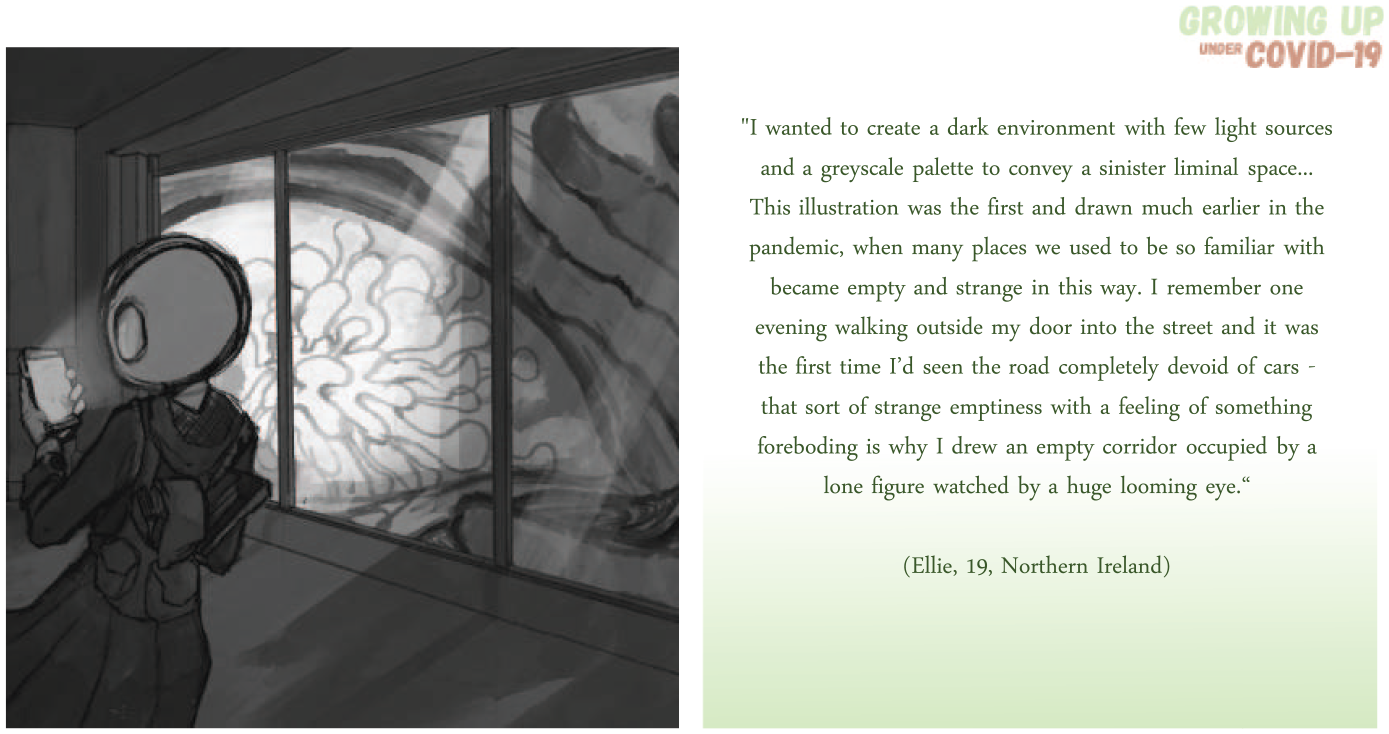
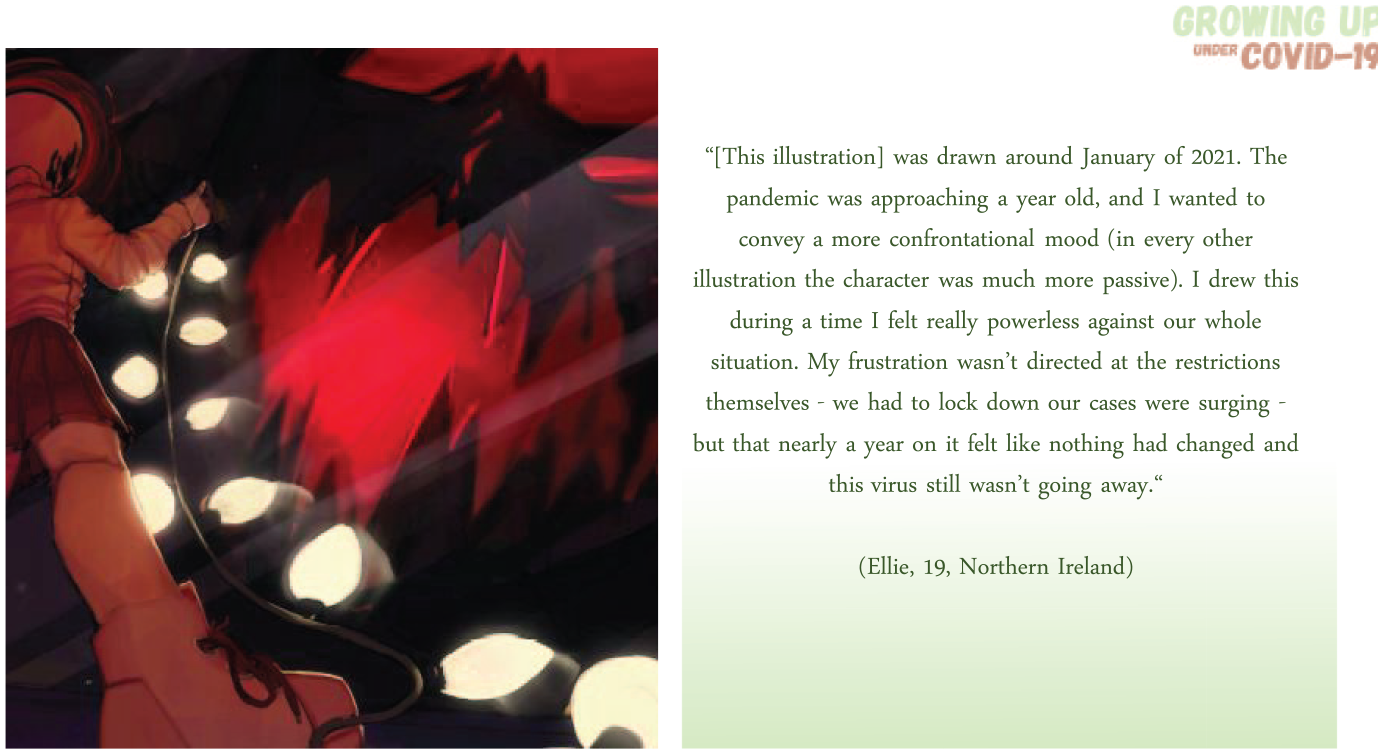
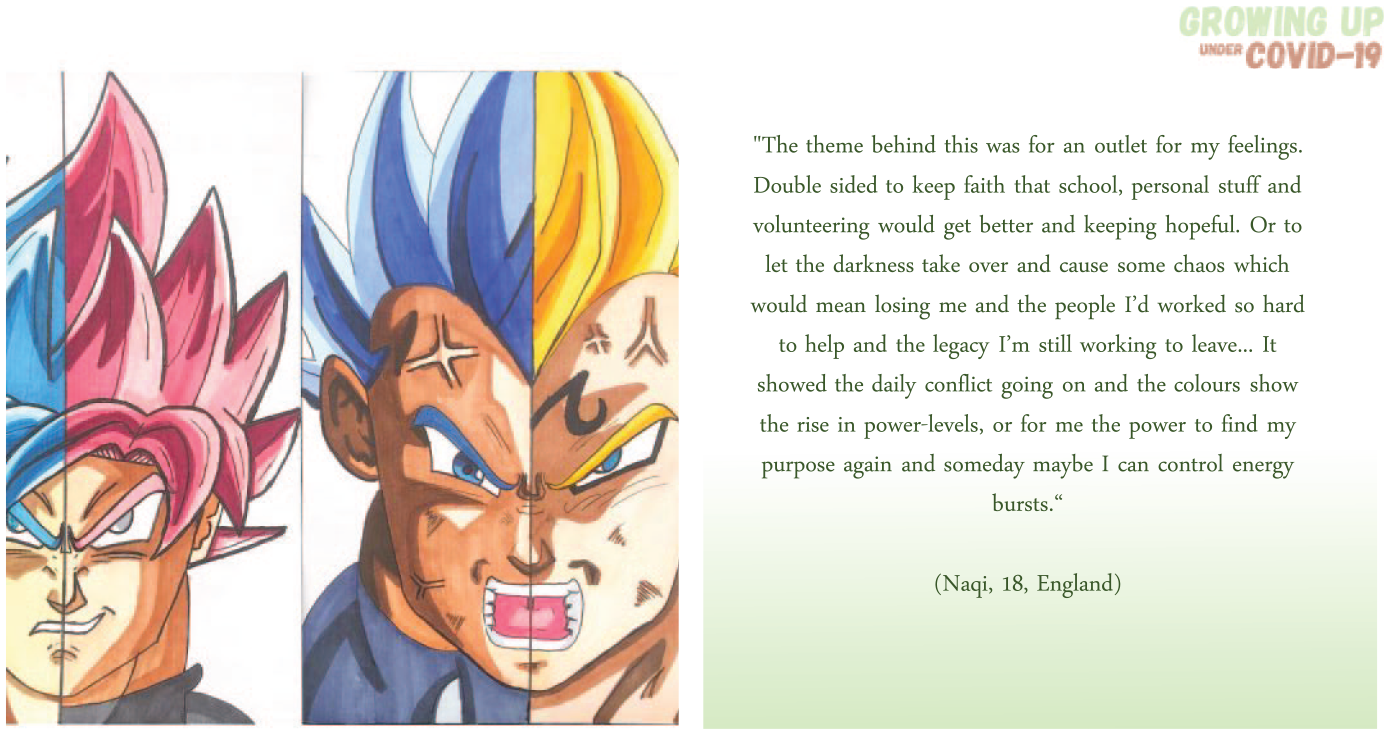
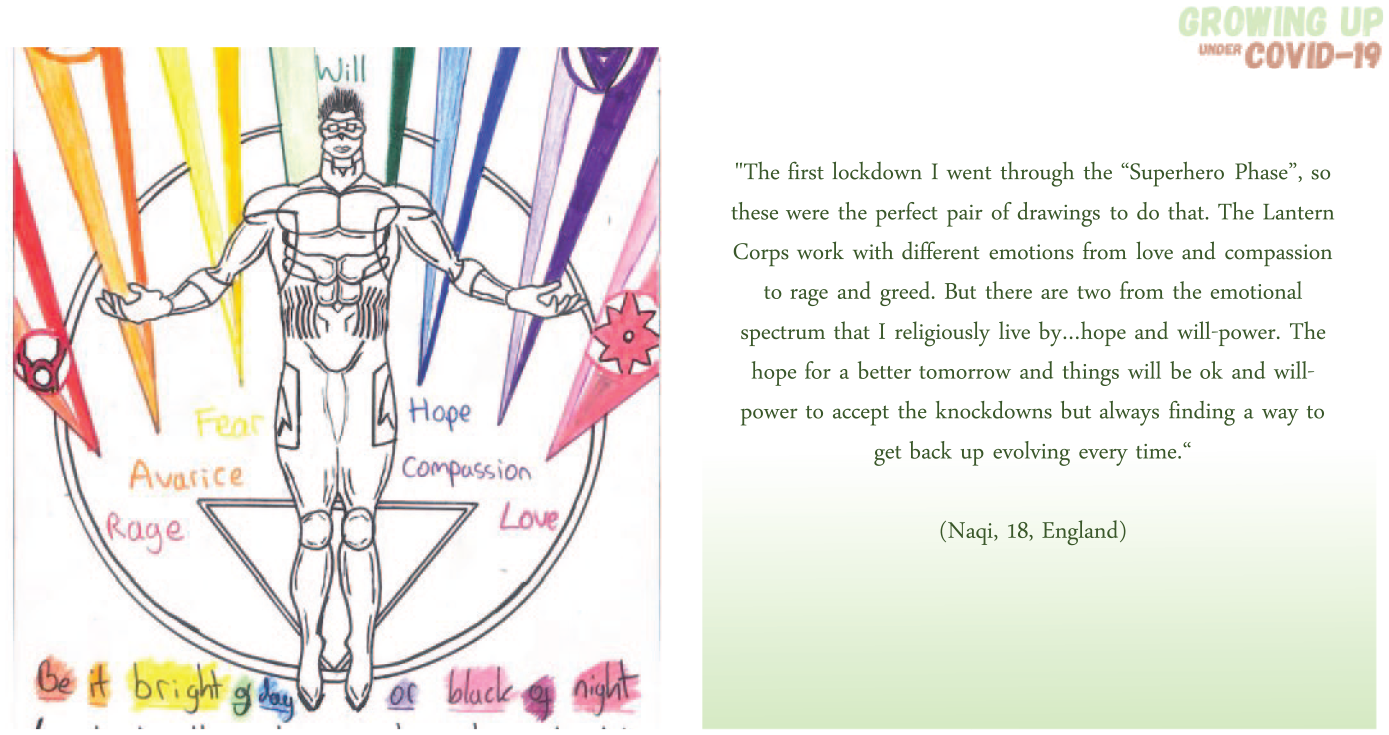
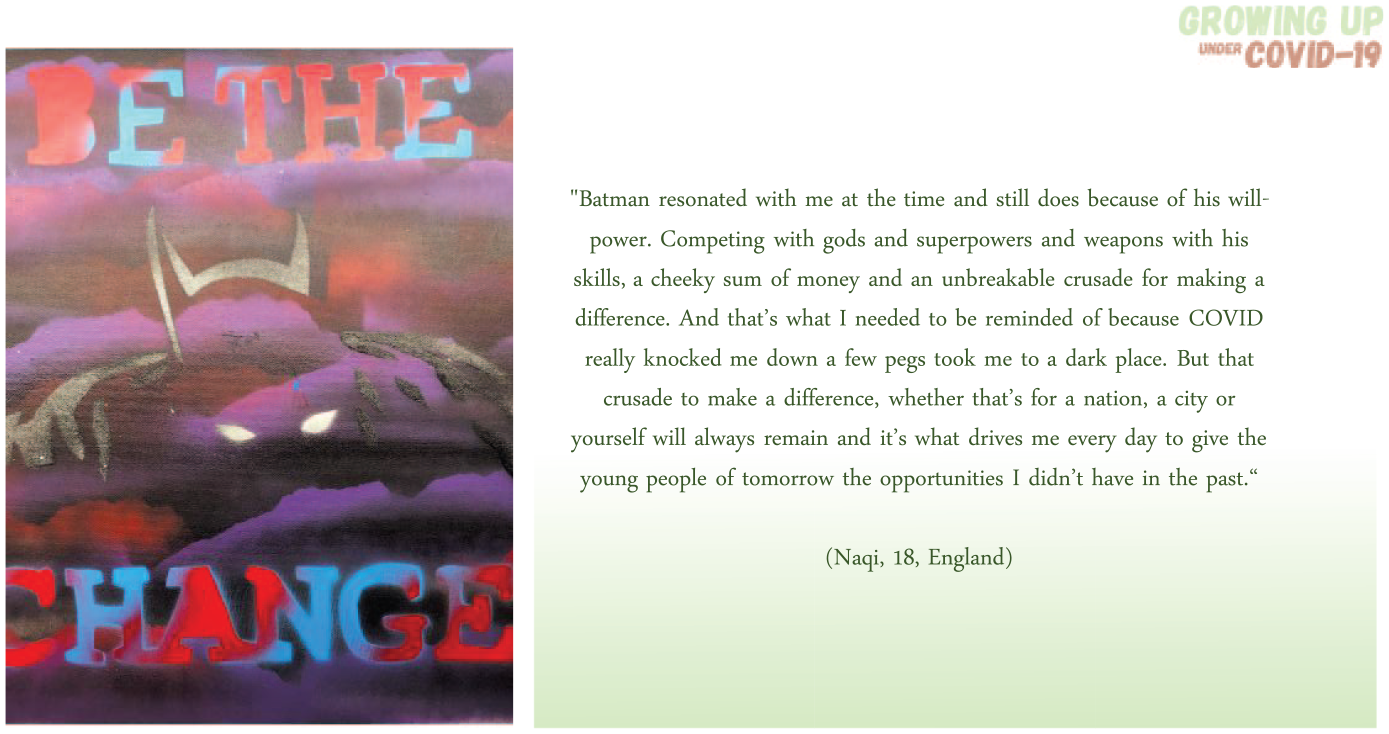
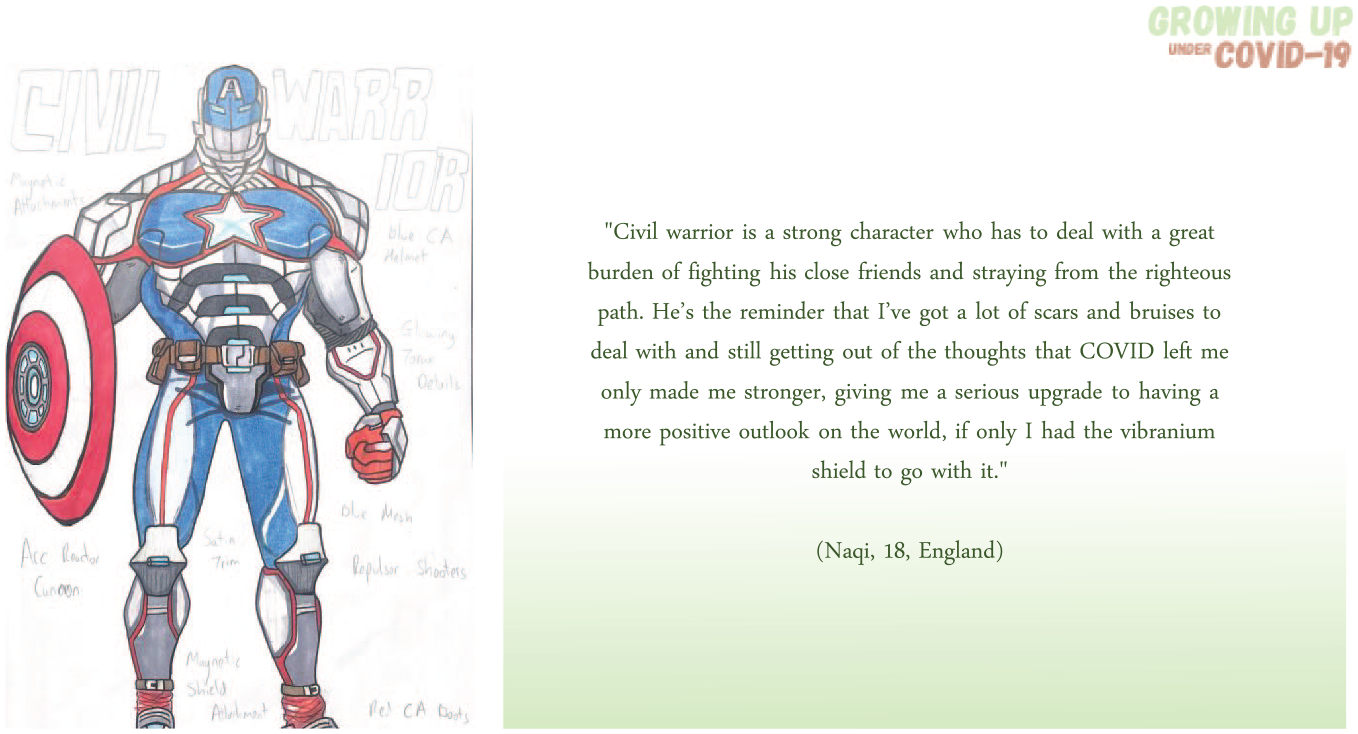
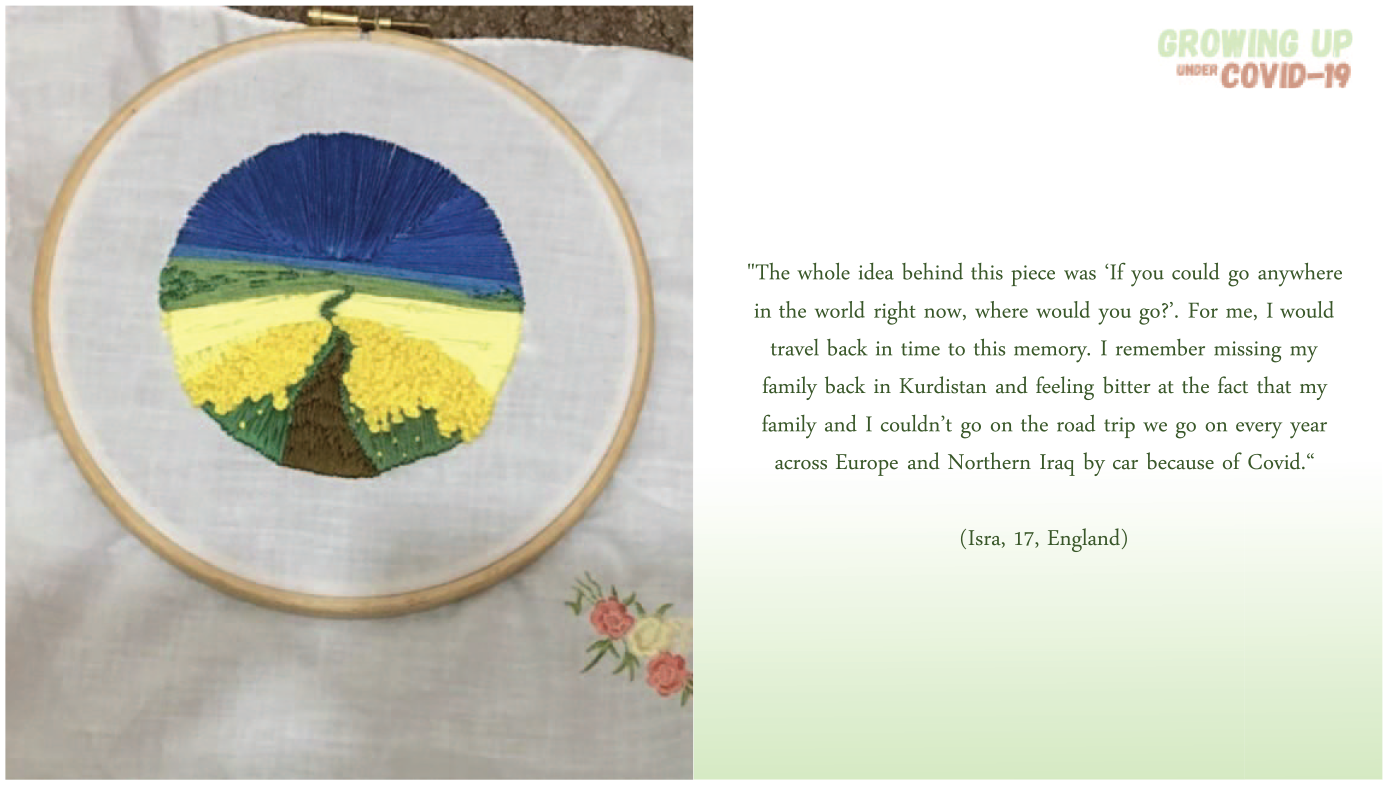
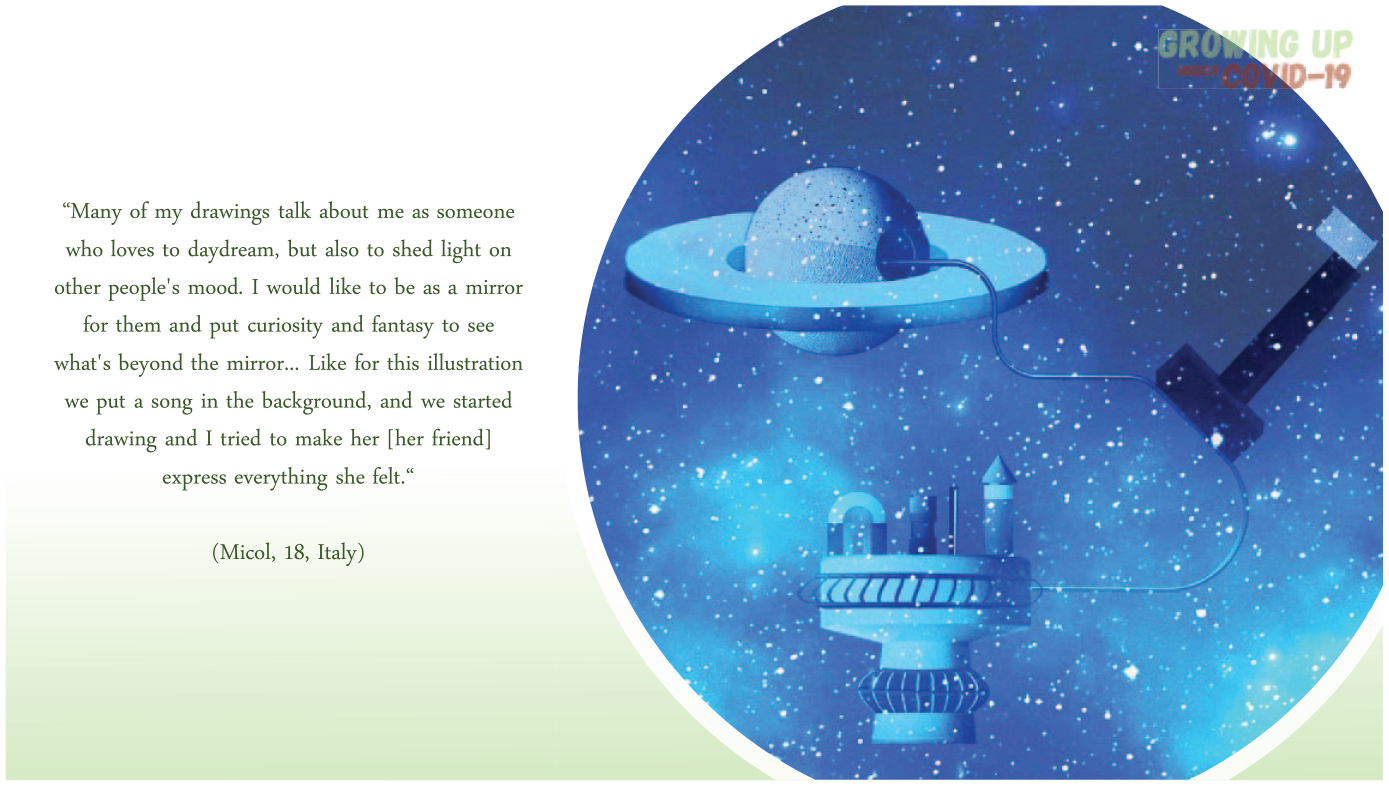
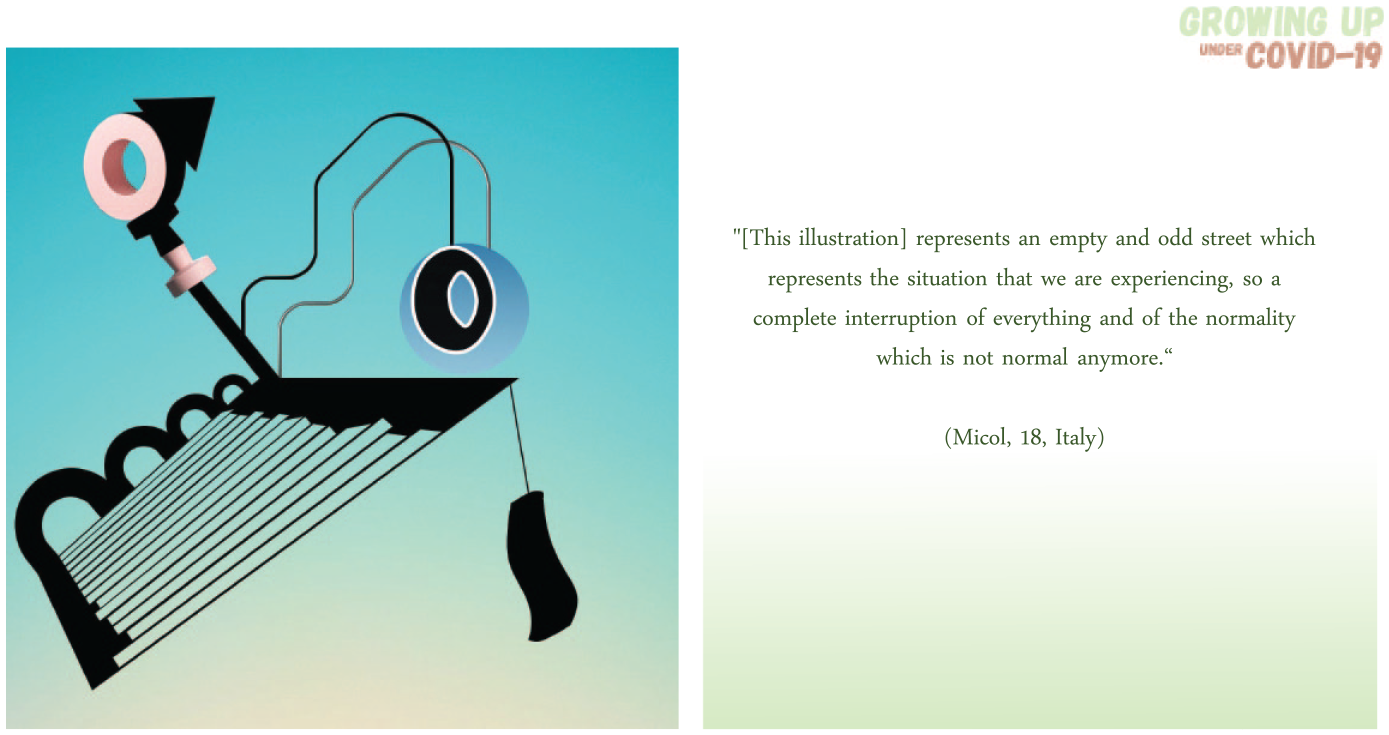
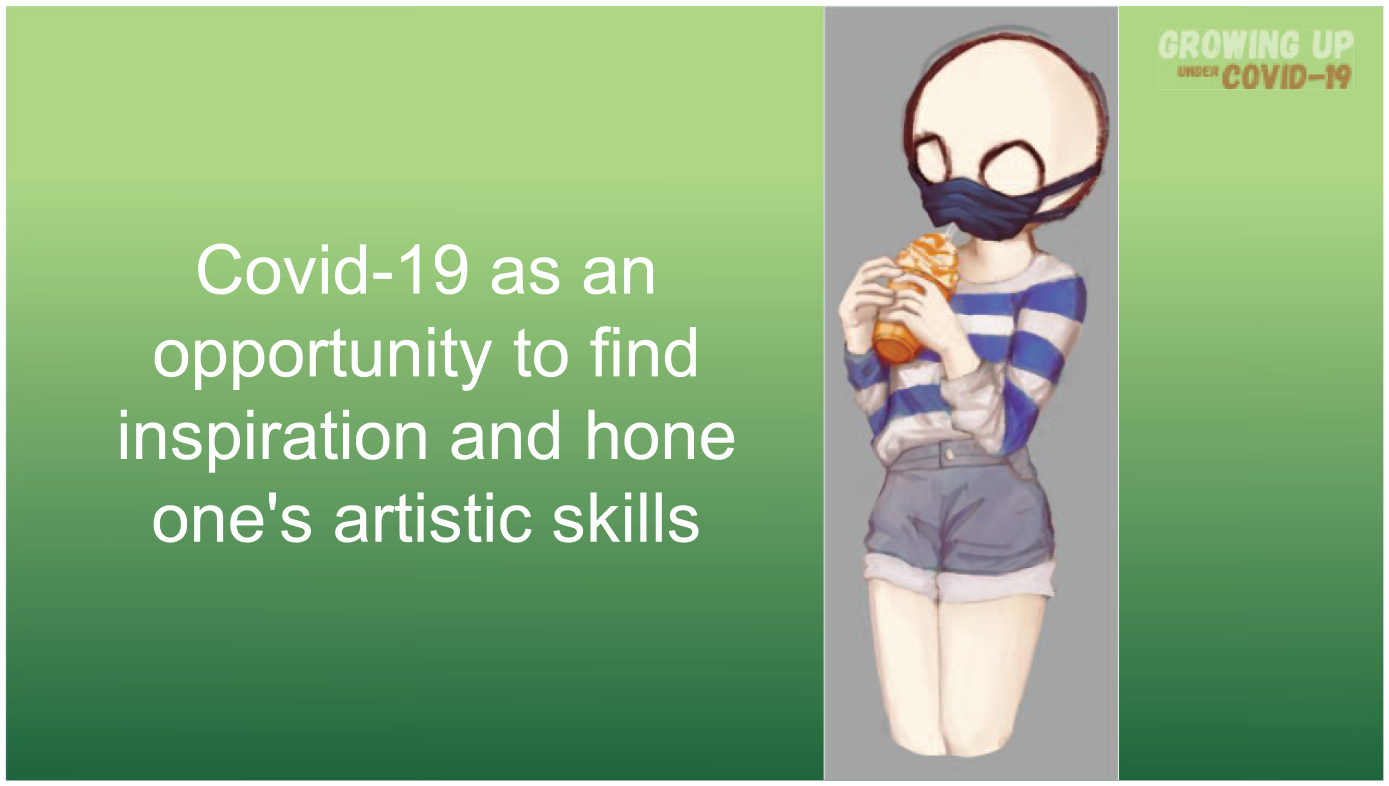
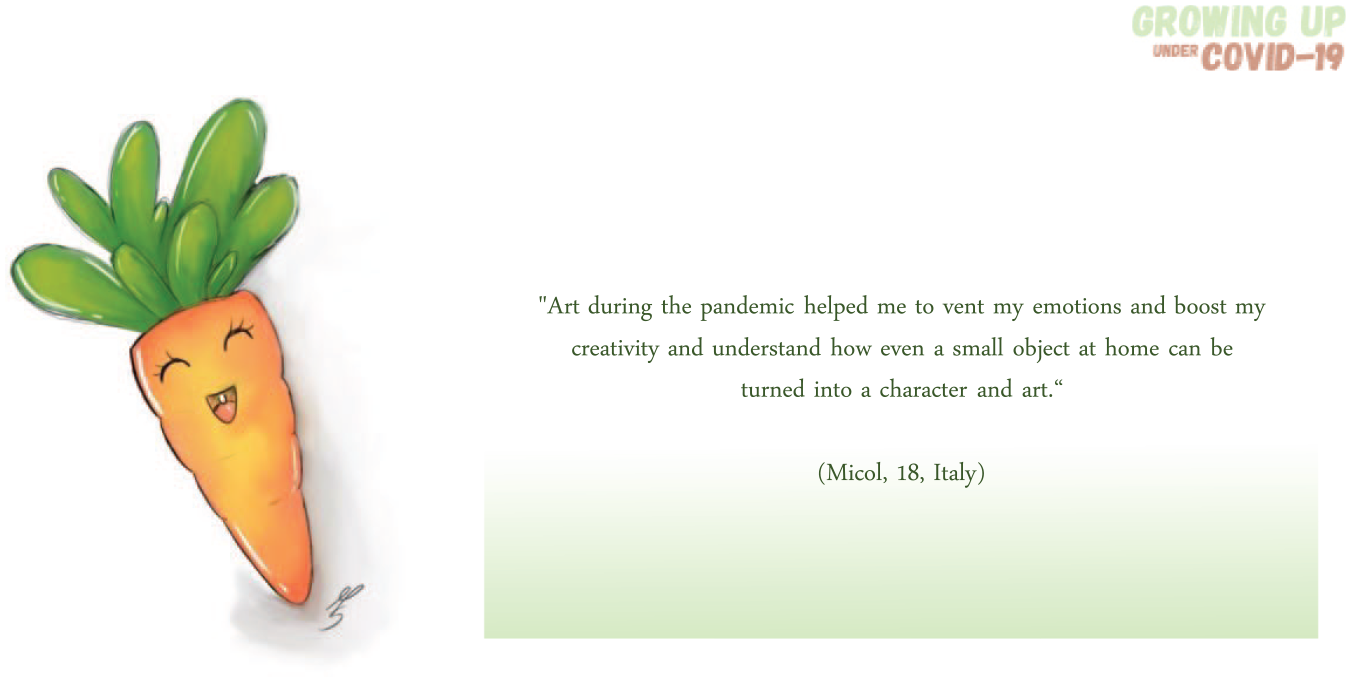
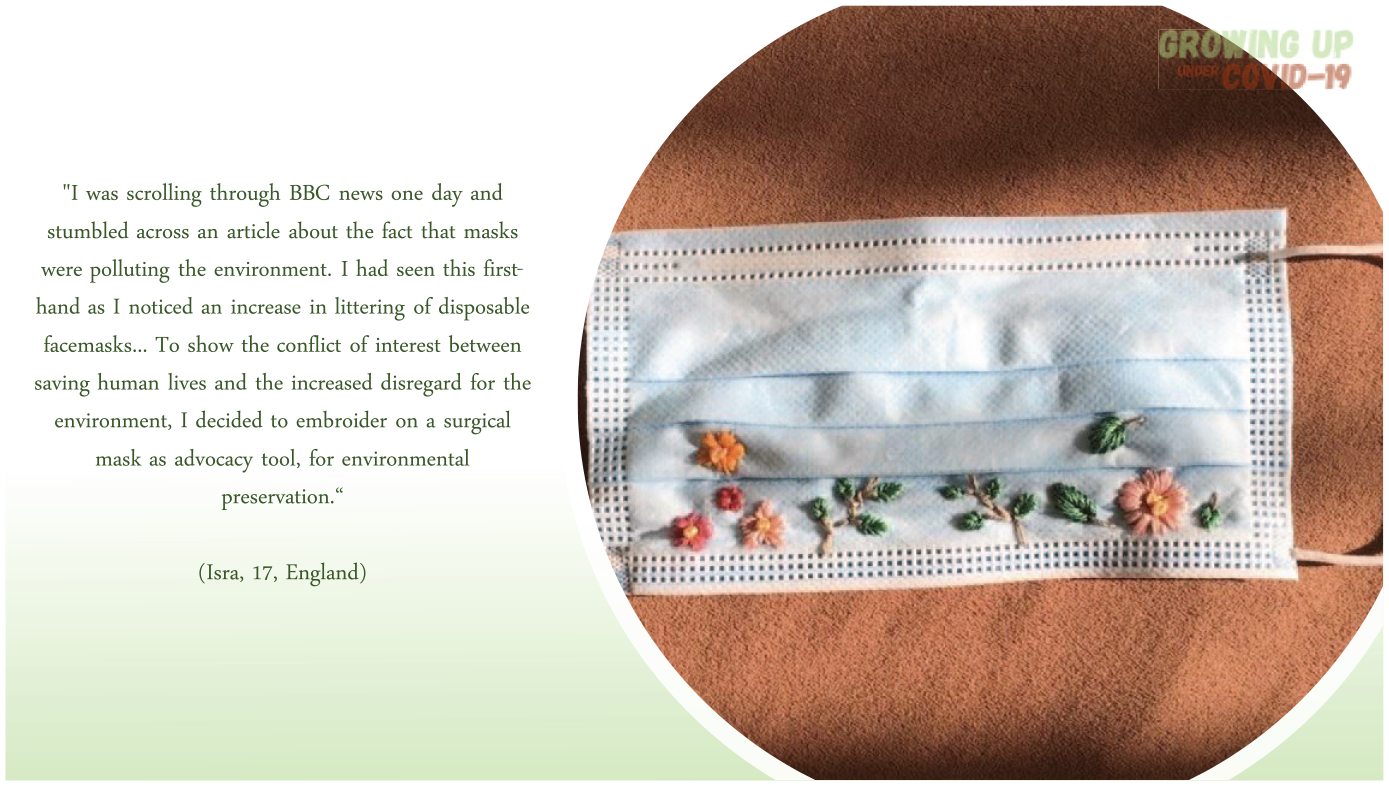
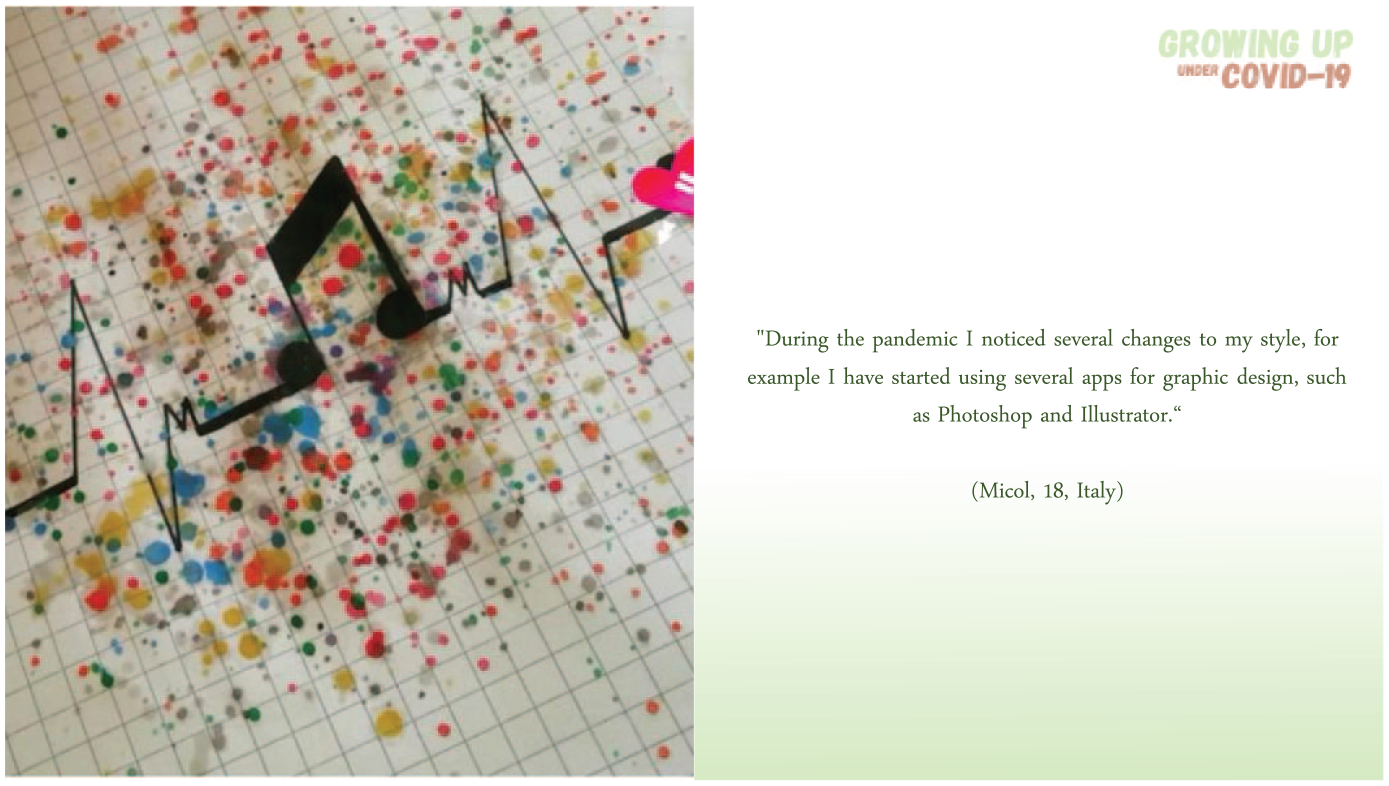
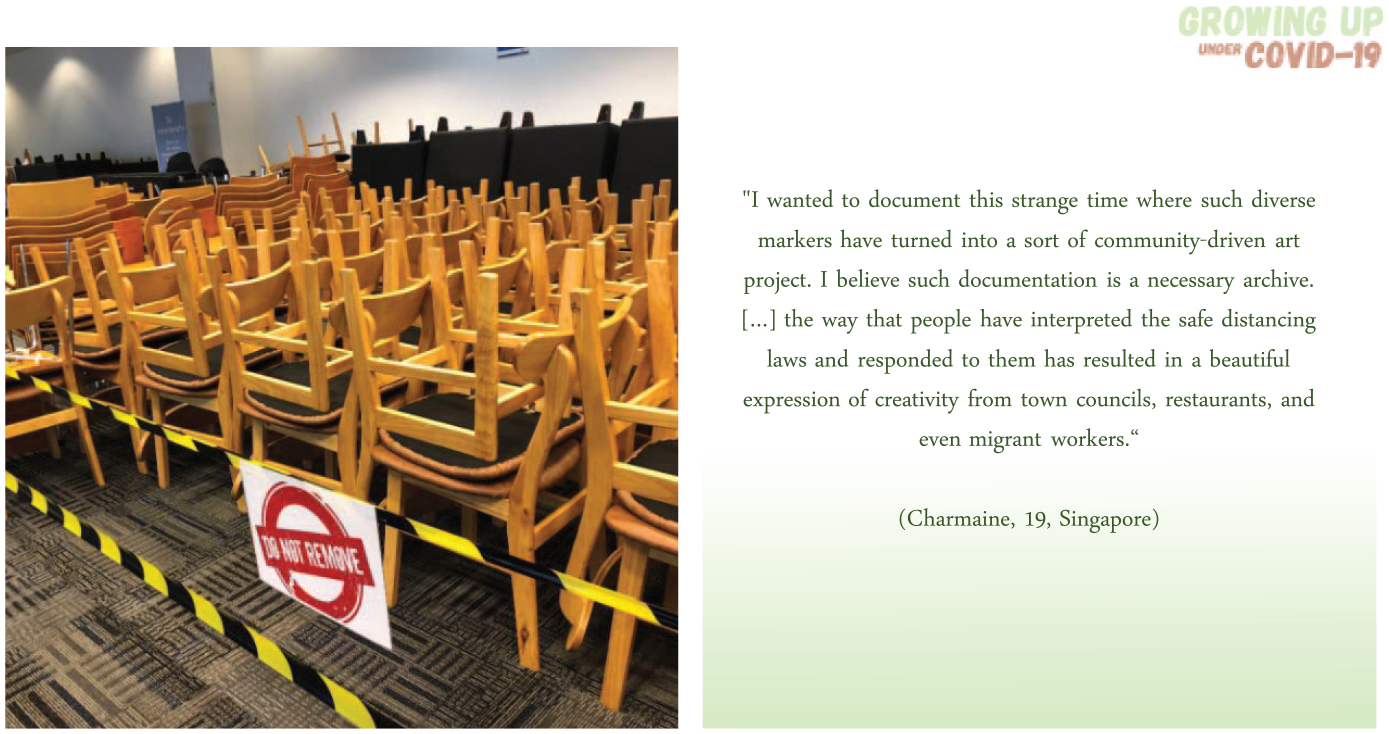
This contribution emerges out of a Nuffield-funded project (www.GUC19.com) that involved young researchers (aged 14–18 years) documenting, making sense of, and communicating their experiences, perspective, and realities growing up under COVID-19. In contrast to the sudden deluge of quick consultations with young people as the pandemic took hold, the research team was keen to engage young people in documenting their experiences on their own terms in ways that provided more in-depth accounts of what they were living through. The project adopted a longitudinal ethnographic participatory action research (PAR) approach working with panels of young co-researchers in seven countries to generate rich qualitative insights into their experiential lifeworlds, struggles, uncertainties, and emotions throughout the pandemic, through cycles of inquiry. Young co-researchers have used drawings, photography, videos, and embroidery to convey their experiences, feelings, and reflections on the impacts of the pandemic on their lives (https://www.guc19.com/resource-bank.php). This article draws on representative artworks by young co-researchers, along with their reflections about the divergent narratives and meanings underpinning their use of different visual media.
In using an action research approach, we aimed to support young people in making sense of their realities, focusing on their own contexts and priorities. Elsewhere, within the traditions of PAR, the use of visuals has been developed in creative ways to support active participation (see, for example, Percy-Smith and Carney, 2011) and collaborative inquiry to support a deeper process of participatory social learning between young people and with adults (Percy-Smith, 2021). Attention to ‘learning’ in participation, as an active process of participatory inquiry, often receives little attention in discussions about child and youth participation. In this project, young people were encouraged to engage in reflective inquiry, for example, through artistic media that challenged their own knowledge and understanding, and served as a basis to then engage in group discussion and collectively make sense of the events around them.
In supporting young people’s own action research in terms of documenting and reflecting on their own experiences and the situations around them, we provided training and resources to avail young people with a menu of possibilities to use as methodological tools. The media that young people chose to use were entirely their own choice, some emerging serendipitously as they (re)discovered art and craft activities and hobbies such as embroidery, video-making, or drawing. We felt this was important within the context of a PAR project and widening debates in participatory research and inquiry concerning Knowledge Democracy (Burns et al., 2021; Rowell, 2017), rather than having methods pre-determined by us as adult researchers.
Use of visuals in social research has long been acknowledged as an effective way of enabling the articulation of ‘different ways of knowing’ (Harper, 1994). Different ways of knowing are fundamental to action research (Broussine, 2008; Reason and Bradbury, 2001) and were actively encouraged in this project. Broussine (2008) argues that creative approaches provide a possibility for ‘seeing differently’ and communicating in ways that are not just rational or analytical, but can also uncover subconscious emotions and the political, processual, and social texture of lifeworlds. Visual media facilitate ‘knowing’ holistically and viscerally, without losing the richness and complexity of the experience (Meyer, 1991). Lewin and Shaw (2021), exploring the participatory potential of visual approaches, draw attention to the ‘potential to tap into what Foucault terms “subjugated knowledges”’ (p. 713) that emerge from normally hidden embodied emotions and imaginations. They argue that, by interrupting the ‘normal’, ‘aesthetic acts [. . .] can create new forms of social and political subjectivity’. In this way, visual forms are central to the ‘performativity’ of visual media, necessitating both expression and listening as individuals open up to possibilities for collaborative inquiry with others.
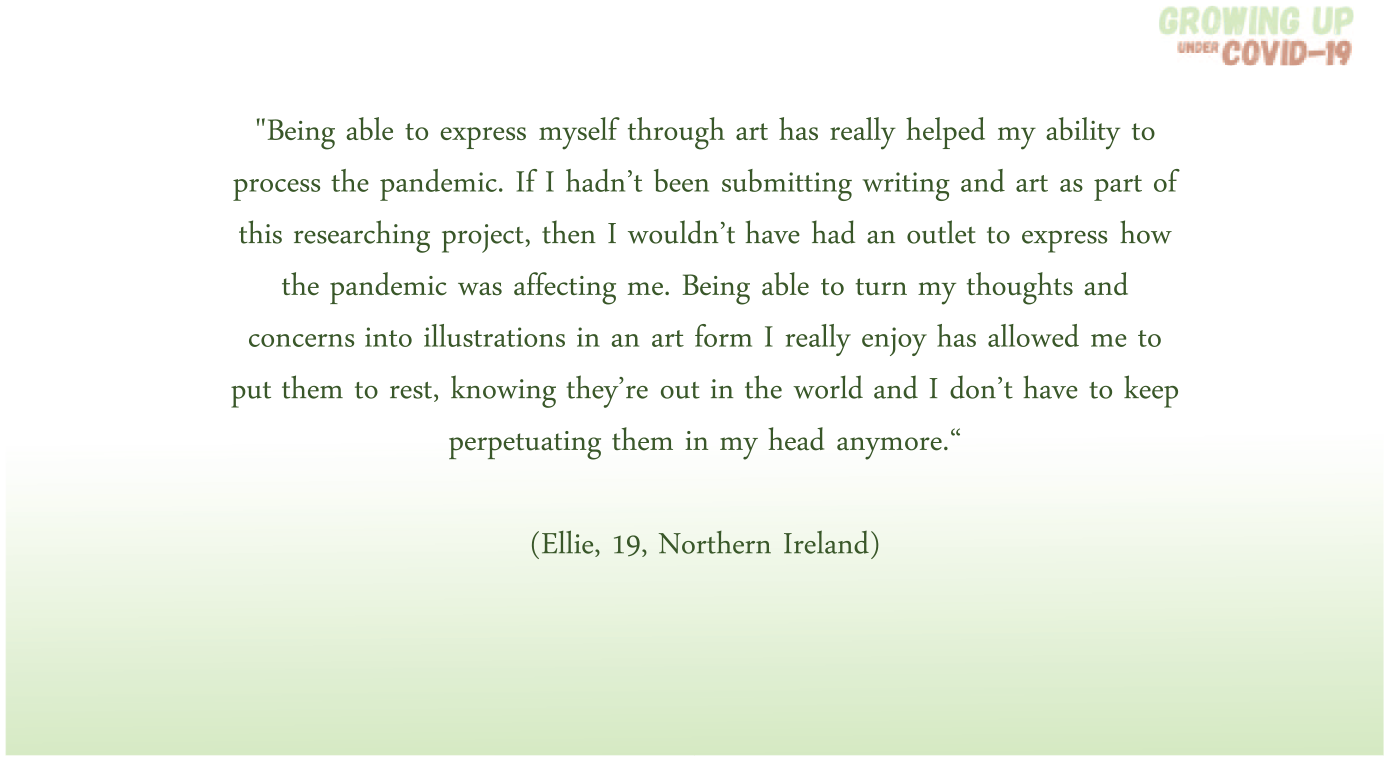
In this project, art has offered young co-researchers a creative way to express their feelings, both positive and negative, in a way that they feel is less literal but specific to the author. Some young people appreciated and chose art as a medium of expression, as it leaves the viewer with more room for interpretation, including suggesting new meanings the author had not thought about originally.
We were mindful of avoiding potential pitfalls highlighted by others, concerning the danger of possible adult (mis)interpretation of young people’s visual artefacts (Piper and Frankham, 2007). Instead, as researchers, we chose to adopt the position of enablers and scaffolders of young people’s own participatory social learning (Wildemeersch et al., 1998; Percy-Smith, 2006) and sense-making to counter mainstream narratives about young people’s plight. However, young co-researchers did not see in this a risk of misunderstanding, and rather embraced art as a powerful form of communication. Sharing their artwork and establishing a ‘two-way relationship between the maker of the piece and the viewer’ was seen as a core part of the artistic process. Art was considered ‘an exciting way to open up new discussion points about new ideas on a certain topic that you may not have thought of yourself’, demonstrating the role of creative media in inquiry-based approaches to research.
One young co-researcher mentioned her willingness to become ‘a mirror for other people’s moods’ through her drawings, and all agreed that this interaction nourishes feelings and ideas on both sides and increases motivation:
Sharing your art encourages you to keep making it. To know that what you make means something to other people and they like to see it makes you want to make more because your unique take on a situation is being valued.
In this project, while young people valued the individual benefits of engaging in artistic forms of expression, they were also keen to expound the importance of art as a way of sharing and engaging with others. For young people, this sharing provided a way of learning together, in ways that helped them make sense of their experiences, while simultaneously providing a way to cope with the experiences they were living through. This was especially the case for young people who felt they were missing out on experiences and opportunities they would normally enjoy and used artistic media to momentarily escape by ‘travelling beyond the interruption of normality’.
Running through these visual expressions and uses of visual media to research their own situation are expressions of hope, resilience, and agency. Far from young people being victims of the pandemic, the visuals articulate the extent to which feelings about travelling through the darkness of the pandemic are mediated by demonstrations of their own abilities as active social agents and participants in finding a way of dealing with their situations.
While artistic media, such as the examples represented in this contribution, worked for some young people, these methods were not appropriate for all young people, and some chose to use the spoken and written word. Discussions of the use of artistic media need also to be tempered with an appreciation that action research is not just about data gathering but is about a process of learning and sense-making individually and with others to enable those concerned to respond differently to the situation they are in.
In particular, using artistic forms to communicate young people’s views and experiences to local and national leaders can have a powerful impact, and one of the webinars in the UK as part of this project invited positive responses. However, in the context of seeking to convey key messages to decision-makers and influence policymaking in relation to youth issues, the use of visual and artistic media is not necessarily straightforward. More broadly, however, in the face of critiques of tokenism in research with young people, where the feeling is that research has been conducted on, rather than with, young people, the experiences of this project reinforce the need to continue to innovate approaches to research beyond standard methods, in order to democratise knowledge production. Related to that, young people from the project have taken active part in the co-development of this article, as co-authors, and have agreed to be named in it.
Footnotes
Funding
The authors gratefully acknowledge funding from the Nuffield Foundation (WEL/FR-000022571) for the project ‘Growing up under COVID-19’ on which this paper is based. The ideas and experiences expressed in this paper are those of the authors and do not reflect the views of the Nuffield Foundation.
