




Abstract
Staff experience in youth custody are often categorised by strains, which are affected by communication and support. This research explores the association between staff roles, within a Secure Training Centre in the England, and the levels of communication and support. It enhances our understanding of the challenges faced by staff members working with young people in custodial settings and how levels of communication and support are dictated by staff roles. Through questionnaires (N = 74) and interviews (N = 15) with staff, statistically significant relationship between staff role and levels of communication and support was identified. Through triangulation, this article illustrates the effectiveness of the job demands–resources model in understanding staff experiences with communication and supervisory support in youth custody. It has wide-ranging implications by providing sociologists with an effective model for understanding job satisfaction and stress and by providing policy-makers and organisations delivering custodial services an understanding of the communication and support required to reduce stress and turnover.
Introduction
Staff in youth custody work in harsh and challenging conditions that are often characterised by violence and abuse (BBC News, 2016; Ofsted, 2018; Paterson-Young, 2021). These conditions impact staff wellbeing, job satisfaction, and stress (Lambert et al., 2009; Lambert and Paoline, 2005; McNamara, 2010). Sociological research on experiences in youth custody has primarily focused on understanding the experience of children and young people (Andow, 2020; Paterson-Young, 2018; Paterson-Young et al., 2019). A study examining staff experiences in Australian residential youth justice facilities was conducted by McNamara in 2010, illustrating the implementation of Staff Support and Supervision Programme (SSSP) to tackle the challenges experienced by staff in residential youth custody. This article adds to existing literature by exploring the association between staff roles and experiences with communication and support in Secure Training Centres (STCs), for young people, in England.
This research explores staff experiences of working in STCs by drawing on the job demands–resources model (Demerouti et al., 2001) that explores employee wellbeing in organisations. It explores how communication (often referred to as ‘Instrumental Communication’) and supervisor support contribute to creating a supportive and effective working environment for staff based on their role. It focuses on supervisor support and communication for staff in residential roles and staff in specialist roles. Residential staff support young people with all aspects of daily life (e.g. preparing meals, washing clothes, morning routine, and bedtime routine). Staff in specialist roles have professional qualifications (or significant experience) to support young people through focused activities/interventions for shorter periods of time. As the role of staff members in STCs amalgamates the responsibilities of traditional custodial officers with the provision of social care, a theoretical framework based on the job demands–resources model provides a robust theoretical structure for this article. It adds to the literature on the experiences of staff working in youth custody (Lambert et al., 2009; Lambert and Paoline, 2005; Paterson-Young et al., 2019) by exploring how staff roles (residential or specialist) are associated with communication and support.
Working with youth in custodial environments
STCs are youth custodial environments that accommodate boys and girls aged 12–17 years (with some provisions for vulnerable young people aged 18), convicted or remanded for their involvement in criminal activity, in England. Each STC accommodates 50–80 young people who have been remanded or convicted of crimes and are assessed as vulnerable. The purpose of STCs is to ‘accommodate[e] trainees in a safe environment within secure conditions; and help trainees prepare for their return to the outside community’ (STC, 1998: 1). Young people in STCs are accommodated in small residential units, with six to eight young people in each unit. Statistical information from April 2018 to March 2019 shows variations in the number of young people in all STCs per month (Her Majesty’s Prison Probation Service (HMPPS), 2020), peaking in July 2018 when 163 young people were accommodated in all STCs in England.
Staff members working in STCs face nearly insurmountable challenges, with limited resources coupled with violence contributing to a stressful and challenging environment (Paterson-Young, 2018; Paterson-Young et al., 2019). Staff working in these environments are reliant on effective communication and support to foster motivation and job satisfaction (Carpenter et al., 2012; Maslach, 1993; Stanley & Goodard, 2002). Staff in secure environments often report negative experiences with support and communication, leading to emotional exhaustion, limited personal accomplishment, reduced commitment to the role, and negative attitudes towards residents (Carpenter et al., 2012; Maslach, 1993; Stanley and Goddard, 2002). The challenge for staff working with young people in custodial environments is heightened by exposure to sensitive and emotionally distressing information (Chan et al., 2020; Davies, 1998; Stanley and Goddard, 2002). Young people in STCs report adverse experiences such as parental separation (68%), pro-criminal family members (68%), domestic abuse (51%), bereavement (25%), and/or experiences in the care system prior to accommodation in the STC (43%) (Paterson-Young et al., 2017).
Research shows that exposure to violence and distressing information can cause ‘burnout’ (Maslach, 1993) and vicarious trauma (Bell et al., 2003; Cornille and Meyers, 1999). Burnout occurs in the presence of four factors: emotional exhaustion, reduced personal accomplishment, commitment to the role, and negative attitudes towards young people (Lambert et al., 2010; Maslach, 1993). Reducing burnout requires organisations to foster supportive environments for staff, as well as offering salaries that reflect the responsibilities and challenges of the job (Arches, 1991). Staff working in STCs are exposed to information on young people’s backgrounds, including information on traumatic experiences, which creates the potential for vicarious trauma (Dalton, 2001; Stanley and Goddard, 2002). Fostering a supportive environment helps to reduce vicarious trauma – the individual’s psychological, physical, and emotional wellbeing through engagement with material depicting trauma (Pearlman and Saakvitne, 1995).
Demands and resources
Research exploring the impact of custodial environments on staff use a plethora of theoretical frameworks, including the dispositional and organisational model and the job demands–resources model (Lambert et al., 2018). The job demands–resources model (Bakker et al., 2003; Demerouti et al., 2001) operates under the assumption that the risk factors associated with job stress can be categorised as either job demands or job resources. Job demands are the physical, psychological, social, and organisational elements of a job that require sustained physical and psychological effort (e.g. unsafe environments). Staff will perceive job demands differently and their responses can become negative if they do not possess the right skills and support to meet demands (Meijman and Mulder, 1998). Job resources are the physical, psychological, social, or organisational elements of the job that are required to achieve goals, reduce demands, and stimulate personal development. Job resources, then, are necessary for enabling staff to deal with job demands, as well as improving job satisfaction, motivation, and personal development. The complexities and vulnerabilities of young people accommodated in STCs increase demands on staff, creating a challenging environment that increases the need for adequate resources.
Research shows that staff working in complex and challenging environments require adequate communication and support to foster job satisfaction, motivation, and personal development (Carpenter et al., 2012; Lambert et al., 2018; Maslach, 1993; Stanley and Goddard, 2002). The model was used by Lambert et al. (2018) to examine the impact of adult custodial environments on staff, with the application of a sociological lens to understanding the prison environment. This research outlined key factors impacting staff experience, including job autonomy, integration, input in decision-making, communication, supervisor support, and strain (Lambert et al., 2018). Drawing on this job demands–resources model, this research explores the impact that staff roles have on communication and support. Communication (the sharing of information from management to front-line staff) and supervisor support is essential in developing effective and supportive environments (Paterson-Young et al., 2019); therefore, understanding the impact of staff roles on communication and supervisor support is crucial for improving staff experiences in custodial settings. It builds on literature on the sociology of prisons (Crewe et al., 2013; Liebling and Arnold, 2004; Sykes, 1958) by offering insight into the experiences of staff with communication and supervisory support in the prison environments.
Communication and supervisor support
Communication, sometimes referred to as ‘Instrumental Communication’, is a job resource that relates to the effective communication of information (i.e. policies and procedures) (Lambert et al., 2018). Effective communication helps staff members to understand their job which improves staff productivity, efficiency, wellbeing, and job satisfaction (Castle and Martin, 2006; Lambert et al., 2016; Lambert et al., 2006). Hennestad (2002) argued that effective communication creates an environment that empowers staff while improving the organisation’s capacity and efficiency. This helps meet the social and psychological needs of staff, improving opportunities, personal growth (Likert, 1961), and satisfaction (Boone and Hendricks, 2009). Communication has a negative association with strain, resulting in reduced job satisfaction, wellbeing, and motivation for staff in custodial environments (Lambert et al., 2018). Communicating essential information to staff members promotes a clearer understanding of roles and expectations, resulting in fewer problems (Castle and Martin, 2006; Lambert et al., 2016; Lambert and Hogan, 2006).
Supervisor support, a job resource, helps to create a supportive environment, which in turn reduces negative outcomes such as emotional exhaustion, uncertainty, reduced commitment to the role, and negative attitudes to young people (Carpenter et al., 2012; Maslach, 1993; Stanley and Goddard, 2002). It helps staff to deal with the demands of working in challenging environments; improving job satisfaction, and overall personal value (Lambert et al., 2009). Supervisor support empowers staff, improves wellbeing (Vasugi and Manicka, 2011), promotes positive and meaningful relationships in the workplace (Vasugi and Manicka, 2011), increases morale (Vasugi and Manicka, 2011), and improves supervisor–supervisee relationships (Farmer, 2011). Research found that supervisor support enables staff to deal with the challenges of working in custodial environments (Lambert et al., 2018). Failure to provide supervisor support leads to frustration and strain; impacting on service delivery (Lambert et al., 2018). Research has shown that accessible support allows organisations to retain front-line staff by improving motivation and appreciation (Cicero-Reese and Clark, 1998; National Council on Crime and Delinquency, 2006).
Communication and supervisor support contribute to the development of supportive and effective environments that reduce strain and improve job satisfaction (Lambert et al., 2009; Lambert and Paoline, 2005). Griffin (2001) found that strain contributes to staff turnover, which inevitably, has an impact on the services available for young people. Understanding the factors that impact staff experience is pivotal in developing an effective and supportive environment. This research explores how communication and supervisor support differ based on staff roles in an STC in England while controlling for factors such as gender, ethnicity, and length of service. It enhances our understanding of the challenges of working in youth custody, particularly for staff members in front-line roles, by outlining the appropriate job resources required to manage the demands, and/or challenges of the job. It offers guidance on promoting supervisor support and communication in developing policies and procedures for staff in youth custody and other custodial settings.
Methodology
This article compares the association between staff roles (residential or specialist) and communication and supervisor support in an STC in England. This role is front-line, with residential staff spending significant portions of the day with young people in units. Specialist staff support young people with specific interventions for short periods of time. These staff members are required to have professional qualifications or significant experience in substance misuse, psychology, or education. There are significant differences in the roles, including the salary, with the average starting salary for residential staff around £21,800 and the average starting salary for specialist staff around £24,000. Residential staff are positioned within units, separate from the management team located in the main building, while specialist staff are positioned in the main building or education building. This means that residential staff have limited contact with the senior management team; however, residential managers, who are responsible for support and supervision, are visible on each unit. This research aims to test the following hypotheses: residential staff experience lower levels of supervisor support than specialist staff; and residential staff experience lower levels of communication than specialist staff.
Participants
The empirical data presented in this article were collected over a 12-month period (2016 and 2017) for a wider research project, conducted by the author, on how social impact measurement as a form of organisational performance management can enhance the outcomes for young people in STCs (Paterson-Young, 2018). This wider research project explored young people’s experiences in STCs; however, it only partially addressed staff experiences. During the research period, the STC employed 219 1 staff members, with 58.9% in residential roles and 30.6% in specialist roles (Table 1 provides a breakdown of the sample demographics). Approximately, 23 staff members were described as administrative and/or other staff (without contact with young people). This article focuses on data collected from a questionnaire (N = 74) and interviews (N = 15) with staff members.
Sample data comparison for staff interviews and staff questionnaire.
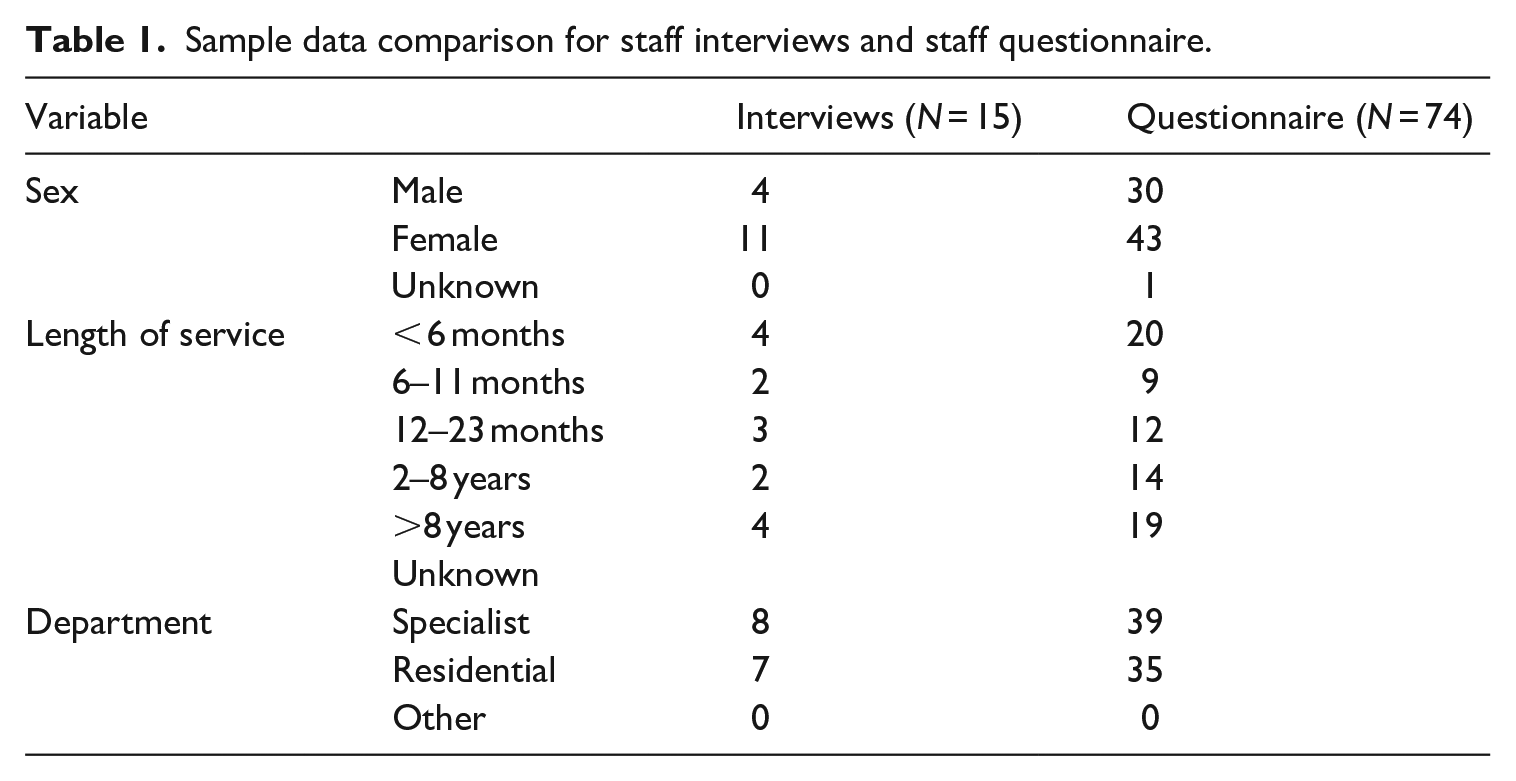
The questionnaire was completed by 74 staff members, representing a 37.4% (with administrative roles removed from the overall numbers) response rate which reflects the challenges of accessing staff due to turnover and staff access to technology on units (this challenge was mitigated by allowing staff to complete paper copies of questionnaires). Other potential challenges to participation in the research relate to the topic (investigating workplace experiences and management). Staff were invited to participate in the research across the centre. The questionnaire sub-sample was cross-checked with the demographics of staff employed in the STC, to confirm the sample was representative in terms of gender and ethnicity to the overall staff population.
Semi-structured interviews were completed by 15 staff, with 7 from Residential roles and 8 from Specialist roles. Interview participants were mostly female (n = 11), with the remaining participants male (n = 4). Staff qualifications ranged from secondary education (i.e. basic secondary school education) to university education (i.e. undergraduate or postgraduate degree). The service length of participants varied from 1 month to over 8 years. The interview sub-sample was cross-checked with the demographics of staff employed in the STC, illustrating differences in gender for the semi-structured interview sample.
Questionnaire
Questionnaires were sent to all staff members through email and hardcopies were available in designated staff spaces to ensure staff were free to respond to the questionnaire on paper or electronically. The questionnaires utilised two scales, including a seven-item scale, responses from strongly disagree (1) to strongly agree (7), measuring communication and supervisor support. Communication was measured using a scale adapted from Curry et al. (1986) with key statements reworded to reflect the STC setting. This includes questions such as ‘I understand the principles and values in the Secure Training Centre’ and ‘I receive timely information on any changes to Secure Training Centre policies and procedures’. The items had a Cronbach’s alpha value of .759. Support was measured using a scale developed through consultation with management in the STC. This included questions such as ‘I receive regular support and supervision’ and ‘I would like more support and supervision’. The items had a Cronbach’s alpha value of .832. The independent variable for this research, staff role, was divided into two categories – residential and specialist. Finally, staff characteristics of gender, ethnicity, and length of service were included as control variables.
Semi-structured interviews
Staff completing questionnaires were invited to participate in a semi-structured interview, with additional interview invites sent via email to all staff members in residential and specialist roles. A convenience sampling technique was adopted, and subjectivity and human bias (Bryman, 2012) were addressed through a transparent and rigorous process in which data from interviews were cross-checked with findings from quantitative research. Posters inviting staff to participate in interviews were placed in designated staff spaces (i.e. canteen, offices). Semi-structured interviews were designed to gather information on participant’s perceptions of the STC, with opportunities to reflect on communication and supervisor support. A sequential approach was used to design interview protocols, with questionnaire results informing the questions. Semi-structured interview schedules contained questions such as ‘Are the principles and values appropriate at the Centre?’ ‘What training have you received to complete your role?’ ‘Do you feel you have adequate training to complete your role?’ ‘Do you receive support and supervision to complete your role?’ These interviews were recorded and transcribed by the researcher, allowing for rigorous analysis using thematic analysis, as outlined below.
Analysis
Questionnaire data were analysed using the Statistical Package for the Social Sciences (SPSS v22.0), with univariate and bivariate analyses conducted. Univariate analysis was performed to outline the descriptive statistics for the variables explored in the study, while bivariate analyses were performed to explore the association between the independent variable (staff role) and the dependent variables (communication and supervisor support). Bonferroni correction, dividing the alpha value by the tests conducted, was applied to reduce multiple test bias. Caution should be exercised when interpreting these data as, in statistical terms, a sample of 74 is relatively small. Although the sample is small, it accounts for 37.4% of non-administrative staff in the STC.
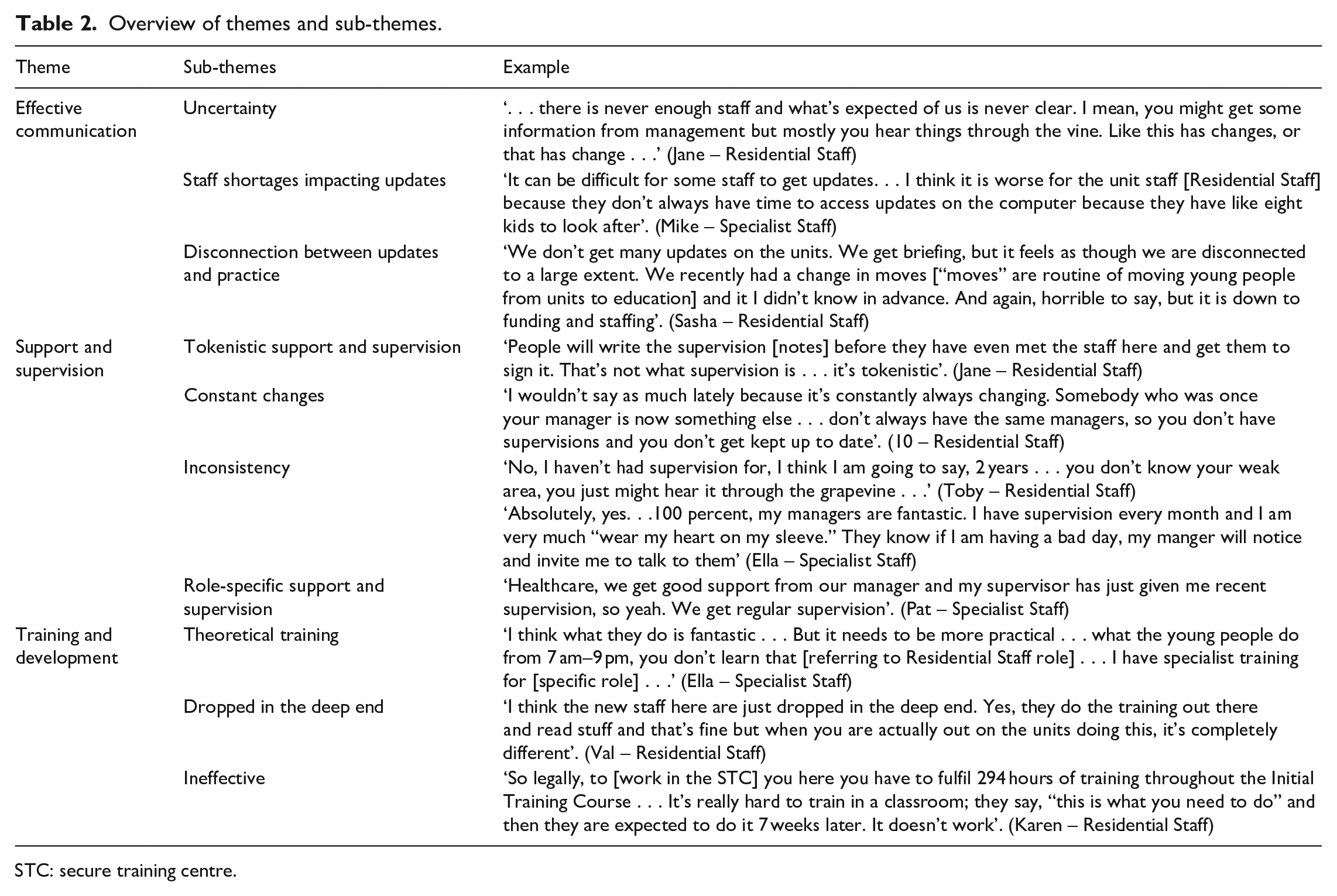
Interviews were organised in NVivo 11.4.0 and analysed using a six-phase thematic analysis approach (Braun and Clarke, 2006, 2020; Clarke and Braun, 2017). This six-phase process – ‘data familiarisation’, ‘data coding’, ‘theme development’, ‘theme review and development’, ‘theme refinement and naming’, and ‘reporting’ (Braun and Clarke, 2006, 2020; Clarke and Braun, 2017), was used to analyse the qualitative data. ‘Data familiarisation’ enabled the thorough review of interview transcripts from residential and specialist staff. This enabled familiarisation which was essential for ‘data coding’, with sections of text in the transcripts coded by identifying recurring ideas. Patterns and themes (‘theme development’) were identified and reviewed in the ‘theme review and development’ phase. These themes were refined, with three core themes identified – ‘effective communication’, ‘support and supervision’, and ‘training and development’ (Table 2). This process enabled themes to emerge from the data through inductive reasoning.
Overview of themes and sub-themes.
STC: secure training centre.
Ethics
Ethical issues were reviewed in line with the British Education Research Association and Universities ethical guidelines. The ethical issues considered surrounded informed consent, confidentiality and anonymity, data protection, data storage, and safeguarding and power dynamic. Ethical considerations were reviewed by the Youth Justice Board and the Head of Safeguarding at the STC with full approval was granted by the Universities Research Ethics Committee. The researcher completed Safeguarding and Health and Safety Training delivered by the STC, University and Local Authority. A full updated Disclosure and Barring Service (DBS) application was submitted and approved. The research investigated staff’s workplace and experiences of management; thus, concerns over confidentiality and anonymity were discussed openly with participants. Interview participants were randomly assigned pseudonyms to protect confidentiality and anonymity.
Results
Quantitative results
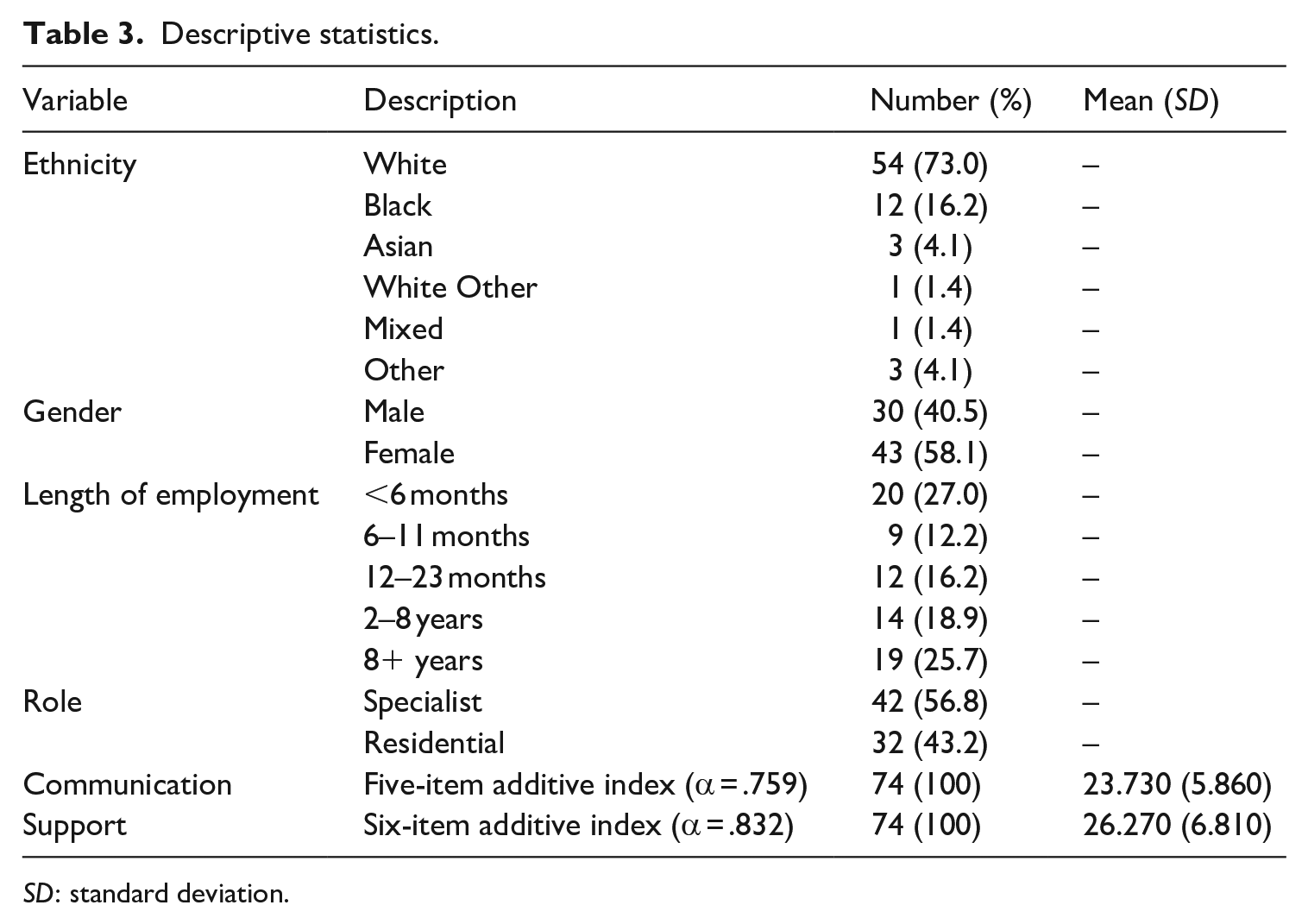
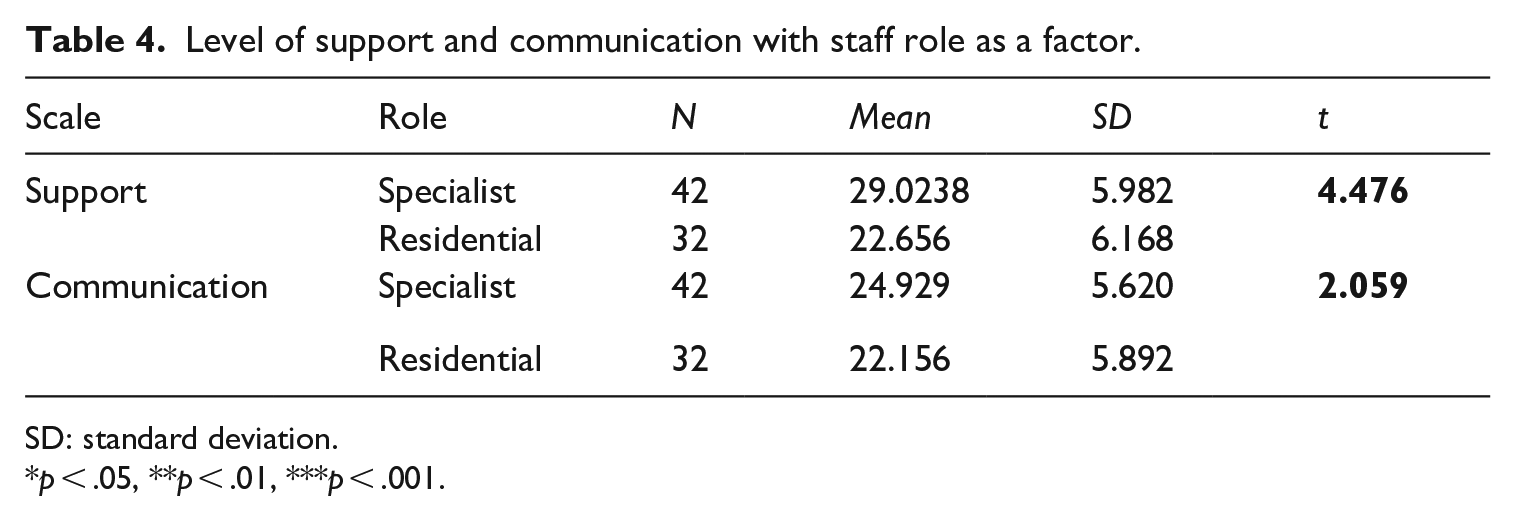
The descriptive statistics for the dependent and independent variables are outlined in Table 3. Analysis was conducted for each hypothesis, with independent t-tests used to explore the relationships between staff role (factor), support (dependent variable), and communication (dependent variable). Results of the independent t-test for support revealed a statistically significant difference (t = 4.476 (N = 74), p < .001), with people employed in residential roles receiving less support than those in specialist roles. While the difference in scores is not large, it illustrated the inconsistency in support for staff in STCs. Results of the independent t-test for communication revealed a statistically significant difference (t = 2.059 (N = 74), p < .05), with individuals in residential roles receiving less communication (with regards structure/management and policies/procedures) than staff in residential roles. While the difference in scores is not large, it illustrated the inconsistency in communication for staff in STCs. Overall, residential staff receive lower communication and support than specialist staff, albeit specialist staff report average levels of communication and support (see Table 4). Additional analysis shows that residential staff have a limited understanding of the policies and principles in the STC, with 46% reporting limited knowledge of changes to policies and procedures and 60% reporting limited knowledge of the changes to structure and management
Descriptive statistics.
SD: standard deviation.
Level of support and communication with staff role as a factor.
SD: standard deviation.
p < .05, **p < .01, ***p < .001.
A multiple regression was conducted for three independent variables (gender, ethnicity, and length of service) and two dependent variables (communication and support). Results show no statistically significant variance in communication for staff based on gender, ethnicity, or length of service (F(3, 66) = 1.08; p > .05, R² = .04, R² adjusted = .004). There was no statistically significant variance in support for staff based on gender ethnicity or length of service (F(3, 66) = 1.50; p > .05, R² = .06, R² adjusted = .021).
Qualitative results
To contextualise findings from the quantitative research, semi-structured interviews were analysed, leading to the identification of themes – ‘effective communication’, ‘support and supervision’, and ‘training and development’. Effective communication from management is associated with service delivery (Castle and Martin, 2006; Lambert et al., 2016; Lambert and Hogan, 2006). Residential staff reported uncertainty resulting from the poor communication of expectations:
. . . there is never enough staff and what’s expected of us is never clear. I mean, you might get some information from management but mostly you hear things through the vine. Like this has changes, or that has change . . . (Jane – Residential Staff)
Staff shortages can result in communication issues, with Jane explaining that staff do not always receive information on commencing a shift. This impact on role-clarity, a job resource, impacts wellbeing and emotional strain. Jane’s views were supported by Specialist staff who explained that updates are not always communicated to Residential staff:
It can be difficult for some staff to get updates . . . I think it is worse for the unit staff [Residential Staff] because they don’t always have time to access updates on the computer because they have like eight kids to look after. (Mike – Specialist Staff)
Mike explains that Residential staff do not always receive adequate updates, with staff shortages meaning that Residential staff need to ‘hit the ground running’ at the start of a shift.
STCs experience constant flux, with the movement of young people and staff reliant on effective communication and updates:
We don’t get many updates on the units. We get briefing, but it feels as though we are disconnected to a large extent. We recently had a change in moves [‘moves’ are routine of moving young people from units to education] and it I didn’t know in advance. And again, horrible to say, but it is down to funding and staffing. (Sasha – Residential Staff)
The movement of young people in the STC relies on effective communication, with any failure to communicate changes potentially dangerous for young people and staff.
All staff are supposed to receive ‘Support and Supervision’ (also known as ‘Supervision’) sessions from managers. These sessions are designed to give staff opportunities to discuss challenges and areas for development from managers. This opportunity to discuss job demands and job resources is essentially for promoting job satisfaction. Residential staff reported different experiences with Support and Supervision than specialist staff:
People will write the supervision [notes] before they have even met the staff here and get them to sign it. That’s not what supervision is . . . it’s tokenistic (Jane – Residential Staff)
The view that supervision is tokenistic was in reference to managers writing supervision notes for staff to sign rather than sitting down with staff and conducting a Support and Supervision. This illustrates problems with the overall supervision process. Problem with the supervision process was mentioned by other residential staff:
I used to have regular support and supervision . . . the new manager isn’t as good. I think we need support in this role . . . Some people attend supervision and just sign the notes, half of the time the notes were written before . . . (Laura – Residential Staff) No, I haven’t had supervision for, I think I am going to say, 2 years . . . you don’t know your weak area, you just might hear it through the grapevine . . . (Toby – Residential Staff) I wouldn’t say as much lately because it’s constantly always changing. Somebody who was once your manager is now something else . . . don’t always have the same managers, so you don’t have supervisions and you don’t get kept up to date. (10 – Residential Staff)
Many residential staff members reported negative experiences with Support and Supervision; resulting in emotional exhaustion, limited personal accomplishment, reduced commitment and negative attitudes towards young people. Mirroring the questionnaire results, staff in residential roles reported poorer experiences with supervisor support than staff in specialist roles:
Absolutely, yes . . .100 percent, my managers are fantastic. I have supervision every month and I am very much ‘wear my heart on my sleeve’. They know if I am having a bad day, my manger will notice and invite me to talk to them. (Ella – Specialist Staff) Yeah so my manager is really good, and he does meet with us once a month. And we can just catch up regularly, if he can’t catch up with me officially then he will come and check on the staff and see if we are alright. (Val – Specialist Staff) Healthcare, we get good support from our manager and my supervisor has just given me recent supervision, so yeah. We get regular supervision. (Pat – Specialist Staff)
Support for staff is available in STCs through the provision of Support and Supervision and specialist training. On recruitment to the STC, staff complete a 7-week Initial Training Course. This training is designed to support new staff members to develop the skills required for working with young people in a secure residential environment, covering topics such as security, safeguarding, first aid, substance use, and managing and minimising physical restraint. Training enables staff to develop the skills required for managing job demand. All staff note disparity with the theoretical knowledge and practical experiences offered in training:
I think what they do is fantastic . . . But it needs to be more practical . . . what the young people do from 7 am–9 pm, you don’t learn that [referring to Residential Staff role] . . . I have specialist training for [specific role] . . . (Ella – Specialist Staff) I think the new staff here are just dropped in the deep end. Yes, they do the training out there and read stuff and that’s fine but when you are actually out on the units doing this, it’s completely different. (Val – Residential Staff) So legally, to [work in the STC] you here you have to fulfil 294 hours of training throughout the Initial Training Course . . . It’s really hard to train in a classroom; they say, ‘this is what you need to do’ and then they are expected to do it 7 weeks later. It doesn’t work. (Karen – Residential Staff)
Residential staff viewed the training provisions as inadequate and inappropriate, with those entering the centre feeling ‘unprepared’. Specialist staff viewed training positively, however, one Specialist staff member commented on the need for practical training for residential staff.
Discussion
Communication is a job resource that involves conveying information (i.e. policies and procedures) to staff (Castle and Martin, 2006; Lambert et al., 2016). Analysis revealed that residential staff have a limited understanding of the policies and principles in the STC, with 46% reporting limited knowledge of changes to policies and procedures and 60% reporting limited knowledge of the changes to structure and management. Findings from an independent t-test showed that staff in residential roles experience lower levels of communication. Residential staff report receiving less information on changes in management, structure, and policies, which may lead to strain and low job satisfaction (Griffin, 2001). Failure by management to communicate changes in the strategic direction to residential staff creates uncertainty, which can result in increased strain and reduced job satisfaction (Lambert et al., 2009; Lambert and Paoline, 2005).
Improving communication on the strategic direction and purpose of residential secure environments is vital for ensuring the effective delivery of services. The literature shows that unclear direction can result in staff uncertainty, reducing job satisfaction. Therefore, improving communication between management and other staff members, especially residential staff, increases the capacity for understanding the organisation’s strategic direction (Abu-Jarad et al., 2010; Hennestad, 2000). Effective communication plays a central role in improving staff experience, which reduces staff burnout and turnover. Arches (1991) argues that burnout has an impact on an organisation’s ability to retain experienced staff members, diminishing the quality of services. Burnout and turnover impact the quality of support and training available to staff, with analysis showing that 39% of staff were employed for less than 12 months (with over half employed for less than 6 months). Staff with limited experience working with children in custodial environments require targeted training and support to deliver effective support without reliance on restraint (Denison et al., 2018).
Support for staff is available in STCs through the provision of support and supervision and specialist training. Staff members discussed the availability of supervisor support and training, noting that the frequency and quality were dependent on their role. Findings revealed a negative correlation between staff roles and supervisor support, with residential staff reportedly receiving less supervisor support than those employed in specialist roles. The differences in supervisor support for specialist and residential staff could be explained by proximity, with specialist staff situated in the administrative buildings with management. However, another explanation could relate to the professional aspect of the specialist role, with health care and education staff reporting the most positive experiences with supervisor support. Providing supervisor support helps to create a supportive environment, which in turn, reduces negative outcomes such as emotional exhaustion, uncertainty, reduced commitment to the role, and negative attitudes to young people (Carpenter et al., 2012; Maslach, 1993; Stanley and Goddard, 2002). Research has outlined the need for supportive management, effective training, clear guidance, regular reviews, and an open organisation culture for staff in custodial environments (Skills for Care, 2013). Social support from supervisors has a direct stress-reducing effect on staff, promoting social networks, and wellbeing (Stansfeld and Candy, 2006). Considering social issues (i.e. cooperation, common areas, and peer support) is essential to improving job satisfaction; thus, organisations should consider these in designing the work environment. Ensuring all staff have access to positive supervisor support is essential for reducing burnout and emotional exhaustion.
Effective communication and supervisor support, motivates, and empowers staff to deliver effective services by providing the skills and knowledge required for success (Griffin, 2001; Lambert and Paoline, 2005). The job demands–resources model outlines that staff will perceive job demands differently and responses/experiences can become negative if staff do not possess the right resources (support, communication, and training) to meet demands (Meijman and Mulder, 1998). Research exploring the impact of communication and support (Griffin, 2001; Lambert et al., 2009; Lambert and Paoline, 2005) outlines the need for relevant and adequate training to reduce negative experiences. It is evident from this research that residential staff have different experiences with support and community, highlighting the need for clear and consistent communication, and support plans.
This research is not without limitations; the study is contextualised to youth custodial environments; thus, generalisation across other cultures requires further research. Although the sample is limited, with 74 staff participating in the quantitative phase and 15 staff participating in the qualitative phase, conducting research in secure environments with children and young people is challenging. This includes challenges in securing access and navigating a volatile environment. Participation in the research was hindered by high staff turnover, sickness, and access to online systems (although paper copies of the questionnaire were available). Despite lower than expected samples, the quantitative sample was higher than that recommended by Onwuegbuzie and Leech (2004) and the qualitative sample was higher than that recommended by Creswell (1998). The research was conducted in one STC in England; thus, further research on the experiences of staff working in other custodial environments would help to enhance the validity of the findings.
Conclusion
Working in custodial environments, with young people, is challenging with rising levels of violence (Ofsted, 2018) coupled with limited resources and unchanging principles (Paterson-Young, 2018). The increased stress and reduced job satisfaction associated with these environments (Griffin, 2001; Lambert et al., 2009; Lambert and Paoline, 2005) can hinder the delivery of services. Residential staff experience uncertainty, with communication and support often limited. This, coupled with inadequate support and training, creates a high stress environment that increases burnout and turnover. Creating an environment with effective communication and supervisor support, for all staff members, improves organisational capacity and efficiency (Hennestad, 2002), promotes personal growth and satisfaction (Likert, 1961; Boone and Hendricks, 2009), and enhances service delivery. The challenge for staff is working in environments with high job demands (e.g. managing violence and safeguarding) coupled with limited job resources (e.g. supervisor support and clear expectations of the role). If staff, working in custodial environments, receive inadequate supervisor support and training, in conjunction with limited communication and training, then service delivery can be hindered. This, in turn, hinders the outcomes and progression of young people by fostering an environment fuelled by negativity, stress, and dissatisfaction.
This article illustrates the effectiveness of the job demands–resources model in understanding staff experiences with communication and supervisory support in youth custody. The principles of the job demands–resources model have practical applications, not only in youth custody in England but also across the globe. It enhances our understanding of the challenges of working in custodial setting, particularly for staff members in front-line roles (directly working with young people), by outlining the appropriate job resources required to manage demands. In developing our understanding of the job demands–resources model, and its application in understanding staff experiences working in challenging and volatile environments, this article offers sociologists an effective model for understanding job satisfaction and stress (Tausig, 2013). It emphasises the importance of considering social issues (i.e. cooperation, common areas and peer support) in designing work environments that improve job satisfaction and reduce stress. It also provides guidance to policy-makers, researcher, and organisations on understanding the physical, psychological, sociological, and organisational for staff working with young people. This has the potential to not only enhance the services delivered to young people, but also reduce the recruitment and sickness costs associated with staff turnover and trauma.
Footnotes
Funding
The author(s) disclosed receipt of the following financial support for the research, authorship, and/or publication of this article: The original research was funded by the University of Northampton.
