




Abstract
There are currently over 35 million students within Europe and yet, to date, we have no clear understanding of the extent to which understandings of ‘the student’ are shared across the continent. Thus, a central aim of this article is to investigate how the contemporary higher education student understands their own role, and the extent to which this differs both within nation-states and across them. This is significant in terms of implicit (and sometimes explicit) assumptions that are made about common understandings of ‘the student’ across Europe – underpinning, for example, initiatives to increase cross-border educational mobility and the wider development of a European Higher Education Area. Drawing on data from students across Europe – and particularly plasticine models participants made to represent their understanding of themselves as students – we argue that, in many cases, there is an important disconnect between the ways in which students are constructed within policy, and how they understand themselves. The models produced by participants typically foregrounded learning and hard work rather than more instrumental concerns commonly emphasised within policy. This brings into question assertions made in the academic literature that recent reforms have had a direct effect on the subjectivities of students, encouraging them to be more consumerist in their outlook. Nevertheless, we have also shown that student conceptualisations differ, to some extent, by nation-state, evident particularly in Spain and Poland, and by institution – most notably in England and Spain, which have the most vertically differentiated higher education systems. These differences suggest that, despite the ‘policy convergence’ manifest in the creation of a European Higher Education Area, understandings of what it means to be a student in Europe today remain contested.
Introduction
There are currently over 35 million students within Europe and yet, to date, we have no clear understanding of the extent to which understandings of ‘the student’ are shared across the continent. Thus, a central aim of this article is to investigate how the contemporary higher education (HE) student understands their own role, and the extent to which this differs both within nation-states and across them. This is significant in terms of implicit (and sometimes explicit) assumptions that are made about common understandings of ‘the student’ across Europe – underpinning, for example, initiatives to increase cross-border educational mobility and the wider development of a European Higher Education Area. We draw, primarily, from data from students themselves but, where relevant, compare their understandings with those of other social actors, including policymakers.
The arguments we make in this article articulate with extant debates – conducted across the disciplines of education, sociology, geography, and social policy – about the extent to which educational processes have been globalised. Some scholars have argued that, in contemporary society, education policy and practice have both been profoundly changed by globalising pressures. Usher and Edwards (1994) have argued that globalisation has tended to undermine the modernist goals of national education as a unified project and, as result, education can no longer control or be controlled. Some researchers have contended that the state’s capacity to control education has been significantly limited by the growth of both international organisations and transnational companies (Ball, 2007). Ozga and Lingard (2007) suggest that one consequence of this questioning of the nation-state as the ‘natural’ scale of politics and policy has been the emergence of alternative interpretive frames – some of which draw on more localised traditions and values. With respect to HE, in particular, Sam and der Sijde (2014) have argued that the three traditional models of university education in Europe (Humboldtian, Napoleonic and Anglo-Saxon) have been replaced by a single Anglo-American model, characterised by, inter alia, competition, marketisation, decentralisation, and a focus on entrepreneurial activity. Moreover, policy convergence in such areas has been explicitly encouraged by the European Union, through its desire to create a ‘European Higher Education Area’ and, through the goals of the Bologna process, ‘the harmonisation of the overarching architecture of European higher education’ (Dobbins and Leišyté, 2014: 989). Indeed, Slaughter and Cantwell (2012) have argued that the European Commission is committed to ‘reverse engineering’ Anglo-American HE models.
Nevertheless, this analysis is not shared by all. Many writers contend that the demise of the nation-state has been overstated and that national governments retain considerable influence – in shaping education policy within their own borders, as well as upon the nature of globalisation itself. Green (2006) argues that most governments still see education as an important vehicle for nation-building and shaping national identities. National curricula continue to place considerable emphasis on national languages and cultures and, while national education systems have become more porous, they still attempt to serve national ends. With respect to European HE, scholars have pointed to enduring differences between nation-states and the associated heterogeneity of the neoliberal turn. For example, not all European nations have sought to establish elite universities or maximise revenue through attracting international students, and significant differences remain in the way in which HE is funded (e.g. Hüther and Krücken, 2014). Moreover, there is variation in the extent to which European nations have embraced marketisation (e.g. Dobbins and Leišyté, 2014), and the nature of the Anglo-American model of HE that has been implemented in different national contexts (Sam and de Sijde, 2014). In explaining such variations, scholars have pointed to differences in political dynamics, politico-administrative structures, and intellectual traditions, as well as the flexibility and mutability of neoliberal ideas themselves (e.g. Bleikie and Michelsen, 2013). However, research to date has focused primarily on the extent of convergence (or divergence) with respect to top-level policies; as a result, little work has explored the perspectives of social actors – and particularly students themselves. Our knowledge of the ‘lived experience’ of HE across Europe is thus partial.
Scholarship that has focused on students’ understandings has tended to argue that, across Europe, we are seeing increasing convergence around the assumption of consumer dispositions. Moutsios (2013) has asserted, for example, that as a result of the shift to corporate management, ushered in by the Bologna Process, academics have come to be viewed as ‘brainpower’ to be harnessed for the use of business, and students positioned largely as consumers. There is certainly evidence that, at least within countries with neoliberal welfare regimes, students are constructed largely as consumers within contemporary policy texts. However, there is less consensus about whether or not students have taken up the consumer identity that is outlined in such documents. Some scholars have assumed that this construction of student-as-consumer is having a profound effect on how students themselves approach HE. Indeed, Molesworth et al. (2009) contend that the inculcation of a consumer identity has brought about a more passive approach to learning, in which students place much more emphasis on their rights rather than their responsibilities, and on having a degree rather than being a learner. Others have, however, suggested that, despite the increasing recourse to the language of economics in policy documents (in which students are positioned as consumers and universities as providers), in practice, the behaviour of prospective students does not conform to this model. Dodds (2011) argues that students are not simply ‘consumers’; they also constitute important ‘inputs in the production process’ (p. 321), given that the experience of one student is inevitably influenced by the identifications and meaning-making of the other students who are recruited onto the same course – while Williams (2013) has argued that ‘for the most part, students do not want to be considered as consumers, and lecturers do not want to deliver a service’ (p. 148). Furthermore, there is compelling evidence to suggest that students do not act as the rational economic actors assumed by most policy texts. Research has shown, for example, that there is no simple relationship between the provision of information about HE and the knowledge acquired by prospective students (Dodds, 2011): ‘official’ information from universities is often mediated by a range of social factors (Reay et al., 2005). Others have suggested that it is only more affluent groups who have the capacity to ‘shop around’, unencumbered by financial concerns or the ‘identity risks’ of moving away from home (Patiniotis and Holdsworth, 2005).
Methods
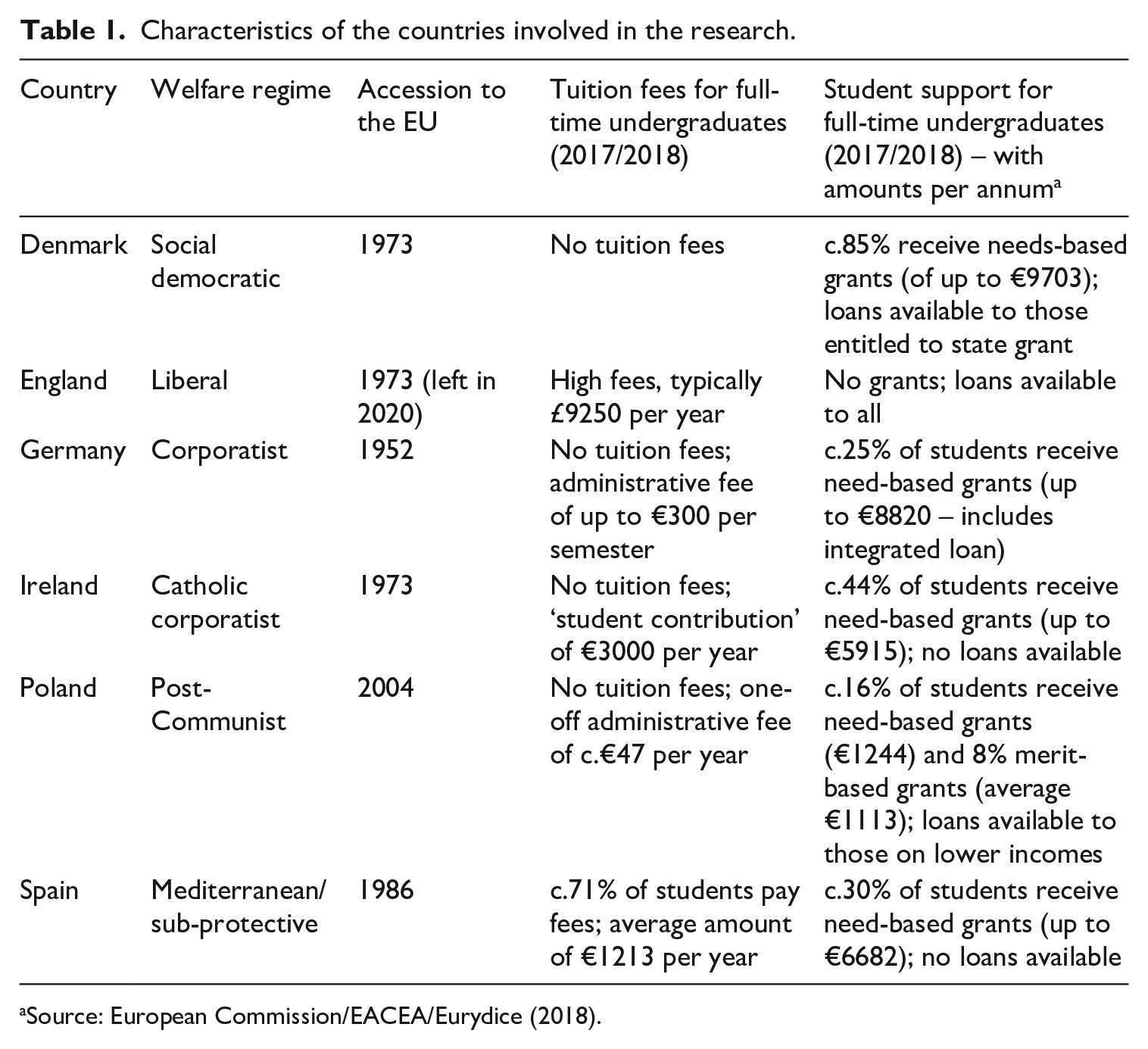
This article draws on data from 54 focus groups that were conducted with a total of 295 undergraduate students across Europe between November 2016 and October 2018. Six countries were involved in the project – Denmark, England, Ireland, Germany, Spain, and Poland – chosen to provide diversity in ‘welfare regime’ (Esping-Anderson, 1990), relationship to the European Union, and mechanisms for funding HE (see Table 1). In each country, we collected data in three higher education institutions (HEIs). Where possible, these were chosen to represent key elements of the diversity of the relevant national HE sector. For example, in Ireland, we chose one institute of technology, as well as two universities; in Spain, one private university and two public universities; and in England, which has the most vertically differentiated system in our sample, institutions of different ages, which mapped onto different league table positions. Three focus groups were conducted in each HEI, each comprising, on average, about six students. We sought to include students who were broadly representative of the demographics of the wider institution in terms of disciplinary mix, gender balance, and age (in a few cases, however, this was not possible for logistical reasons). Because we were primarily interested in understandings of national students, we excluded international students from our sample. Prior to the focus groups, all participants completed a short questionnaire, which asked about various social characteristics, including parental education and occupation. Then, in the focus groups themselves, we asked students a wide range of questions about their understandings of what it means to be a student today.
Characteristics of the countries involved in the research.
For the purposes of this article, we draw on data from one activity undertaken during the focus groups – that of plasticine modelling. This creative method, as discussed by Ingram (2011) and Abrahams and Ingram (2013), can be a useful tool for eliciting rich data on a subject such as identity, as it enables participants to make tangible relatively abstract ideas, and allows greater time for reflection. At the start of each group, we asked all participants to make two plasticine models: the first focusing on how they understood themselves as HE students, and the second on how they thought others viewed them. Students were subsequently asked to talk us through what they had made and why. In this article we focus on analysis of the first model (the second model is discussed in a separate article). The focus groups lasted, on average, about 90 minutes. Those in Denmark, England, and Ireland were conducted in English, while those in the other three countries were conducted in the national language (in most cases by a local researcher) and then translated into English prior to analysis. Both deductive and inductive approaches were used, the former informed by previous work on conceptualisations of students (see Brooks, 2018a for details).
In the remainder of the article we discuss the various constructions that emerged from the plasticine models, first considering two that were common across all six nations, before going on to explore some constructions that were seen only in specific nations and/or institutions.
Common constructions of students
Student as learners
In all six countries, numerous focus group participants made plasticine models that represented, in some way, the learning they were undertaking, and how they saw this as fundamental to what it meant, to them, to be a student. The models included books, laptops, brains, trees, and flowers; there were also a number of models of pathways, indicative of – the students suggested – moving forwards, although sometimes with an unknown destination. Implicit in these models was a positive view of HE, in which it was valued for its impact on the students’ intellect and their view of the world. The following models and accompanying quotations are indicative:
I’ve been really surprised by how much I feel like my subject has come to like define me and how much genuinely of what I talk about is about my subject and things that I’ve discovered that I’m really interested in, and to be proud of that, because to start with I was like, ‘Oh sorry, it’s so geeky, just talking about this all the time!’ (England, HEI2
1
)
Mine is this little fellow with a big brain . . . Well, I don’t think it needs that much explanation, just like you get a lot of knowledge all the time and you’re, sometimes your brain is bigger than your face and you can’t control it! (Denmark, HEI1)
I’ve done something very colourful, abstract. It was important to me to have lots of colour because while I’m studying I’ve noticed that I’m discovering so much diversity and lots of different ways of life and I’m discovering a lot about myself too, things I wouldn’t otherwise be able to access because, before everything was prescribed, it had to be this way or that . . . (Germany, HEI1)
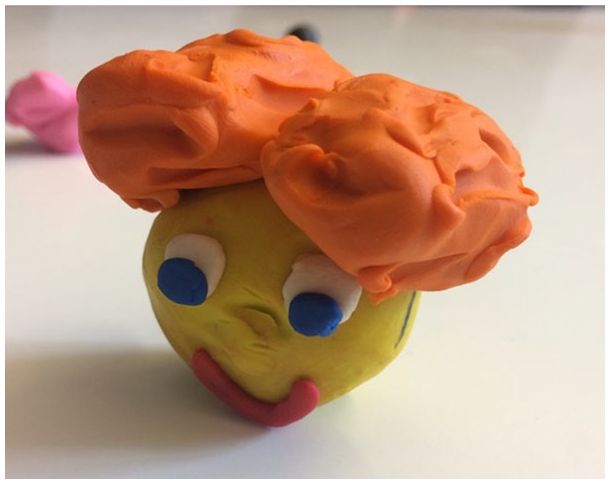
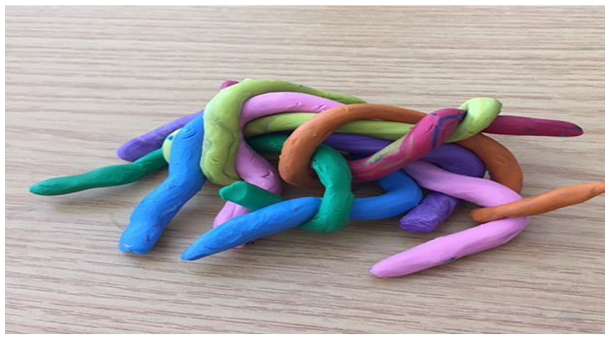
This emphasis on learning and the acquisition of knowledge was evident even in those countries with more marketised systems, such as England, and those, such as Denmark and Poland, where our previous analysis has shown policymakers had expressed concerns about the quality of the student body as a result of massification (Brooks, 2019). This centrality of learning contrasted strongly with the notable absence of models that foregrounded employment, understanding students as primarily ‘future workers’ (although see exceptions from Spain and England below) – or constructed students in more instrumental terms. Here, there are clear differences from the dominant narratives within policy. Our analyses of HE policies across Europe have indicated how the construction of student as ‘future worker’ is often dominant (Brooks, 2019), and that of student as learner frequently marginal or not evident at all (Brooks, 2018b). There are also clear contrasts with the ways in which students are often discussed in the literature, with some scholars presenting them as, first and foremost, consumers aware of their rights (Kwiek, 2018; Molesworth et al., 2009; Moutsios, 2013). The emphasis on the value of knowledge and truth, even in supposedly ‘post-truth’ times, evident within the students’ narratives, diverges quite considerably from Williams’ (2013) argument that, with respect to the UK in particular, the liberal purpose of HE (i.e. the focus on knowledge for its own sake) has been ‘squeezed out’ as a result of the use of the university system for other ends (such as to enhance national economic competitiveness and promote social inclusion).
Students as hard workers
While representing themselves as learners and/or engaged with knowledge was the most common way in which participants talked about themselves, another frequent representation, across most of the countries, was as hard workers. Students emphasised the demanding amount and level of work that was required of them by their courses, and how they had risen to this challenge. Although some acknowledged that hard work could lead to tiredness, a lack of time for other pursuits, and other negative consequences, most tended to discuss it in positive or at least neutral terms, with many appearing proud of the commitment they were showing to their degree programmes. The following models and quotations are typical:
That’s me with a laptop! That’s basically what I do all day, that’s how I fall asleep, that’s how I wake up! Basically I study, I programme, that’s it, there’s not much else and there’s not much time for anything else. (Ireland, HEI2)
My model, which seems rather truthful to me, is a book with a cup of tea. I have to put a lot of effort into learning and so on, and I sacrifice a whole lot of time, despite not having a lot of classes at the university. (Poland, HEI1)
I have represented myself as being constantly surrounded by a mountain of books and notes, and because of the degree course I’m doing and the mountain of text books that I have, I’m never going to finish reading them, ever. (Spain, HEI1)

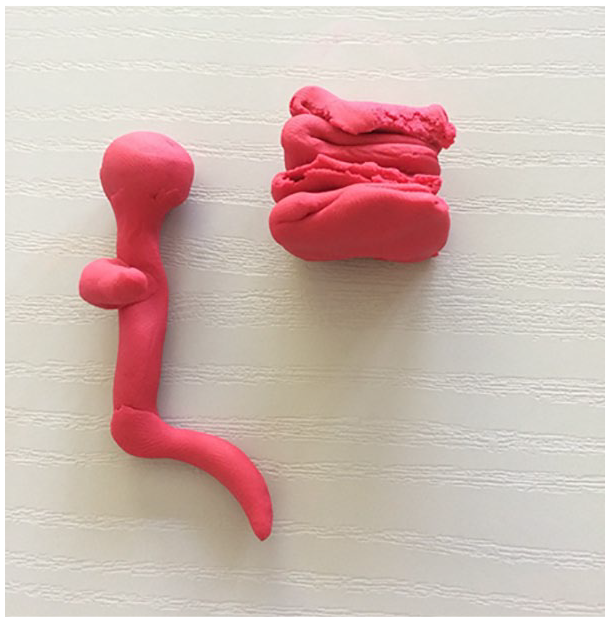
While various commentators have argued that, under conditions of marketisation, students have increasingly come to view a degree as a product to be bought, rather than a process of learning that requires effort on their part (e.g., Nixon et al., 2018), the responses above suggest that, not only did the focus group participants see the process of learning as central to their understandings of what it means to be a student, but also that they viewed it as not always easy and, often, requiring considerable effort. In general, there was no attempt to position themselves as ‘effortless achievers’ as a means of demonstrating their ‘authentic intelligence’, as has been documented in numerous studies of compulsory education, and some of HE (see, e.g., Jackson and Nystrom, 2015).
Instead, the students’ narratives would appear to offer some support to Mendick et al.’s (2018) contention that, for many young people under conditions of ‘austere meritocracy’, hard work has come to be seen as a key moral imperative. By this, they mean that the emphasis on working hard reflects the language of politicians, in which the appeal to hard work has, first, been used to ‘erase any image of over-privileged indolence from the speaker’s persona’ (Littler, 2013: 67) and, second, to interpellate the listener ‘as able to achieve a similar social status’ (Littler, 2013). Such discourses serve to shore up the idea of meritocracy, and deflect responsibility for social inequalities back to the individual (Littler, 2013; Mendick et al., 2018). Within HE policy, specifically, the idea of ‘hard work’ has also been discussed by politicians and other social actors. In England, for example, an implicit contrast is drawn between those students who work hard and are thoroughly deserving of their degree outcome and others who have not shown such commitment and yet have been unfairly rewarded with a ‘good degree’ as a result of ‘grade inflation’ (Brooks, 2018a). Similarly, in Denmark, the figure of the ‘lazy’ student has been used as a foil for introducing a range of reforms intended to encourage students to progress through their studies at a faster pace (Brooks, 2019; Ulriksen and Nejrup, 2020) while, across Europe more generally, reforms associated with the Bologna Process have sought to increase the ‘efficiency’ with which students move through their HE, with implied consequences for how hard they are expected to work (Nielsen and Sarauw, 2017). It is thus possible that such discourses serve to underline the expectation of hard work but also, through the assertion that some students are lazy, provoke a reaction in which individuals are at pains to stress their hard-working nature. Indeed, the wider focus group discussions indicated that this was commonly the case, with students keen to challenge notions that they were lazy, and emphasise that they often worked much harder than people thought.
Nationally differentiated constructions
Students as depressed, disappointed, and critical
While, as we have indicated above, in general, most of the models conveyed a positive understanding of what it meant to be an HE student, those produced by many of the Spanish students were notably different. They tended to be critical of the HE experience they were receiving, and pessimistic about where their degree would lead them. The following comments are typical:
Well, mine is like a sad and frustrated doll, because I believe they have to change the teaching methodology that they use in class, it has to be more dynamic, different, not the typical one of coming here, sitting down, warming your seat and listening to all they tell you. (Spain, HEI3)
I see myself alone in the middle of nothing, I have no idea about anything nor how I am going to finish what I’m studying nor what to do afterwards nor what I like. (Spain, HEI1)
I have made a kind of dead figure, like a skull, I don’t know if you can see it, but the face is a skull and it is dragging itself along in desperation because it’s trying to arrive but it can’t, and it has wings but they are drooping. (Spain, HEI3)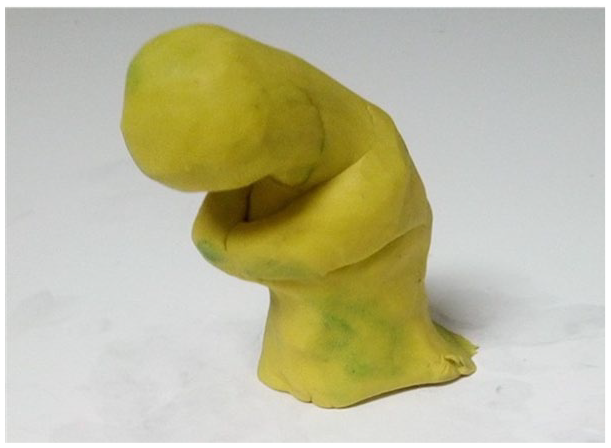


The contrast with the models produced in the other five countries is striking. Perhaps the most plausible explanation for this national difference lies within the labour market. At the time of data collection, the youth unemployment rate in Spain was 34.3% (the second highest of any EU country) compared with 13.8% in Ireland, 11.7% in Poland, 11.3% in the UK, 9.3% in Denmark, and 6.2% in Germany (and 15.2% across the EU as a whole) (Eurostat, 2019). Although the quotations above do not make specific reference to the labour market, it is implicit in the comments about having ‘no idea’ what to do afterwards and ‘trying to arrive but it can’t’. Moreover, some participants were more direct, noting that there were insufficient jobs available for all those who graduated with good grades. One student from HEI3, for example, argued that the labour market was ‘a competition’ in which ‘more and more and always more’ was asked of graduates, ‘it’s never enough’. Furthermore, previous research in Spain has found that the extent to which a degree was considered ‘job related’ was the strongest predictor of graduates’ satisfaction with their HE in general (Lafuente et al., 2012).
Spanish students’ dissatisfaction appeared also to be linked to what they perceived to be the high fees many of them were paying, and the poor quality education they were receiving. Although, as Table 1 shows, fees were considerably higher in England, unlike in Spain these did not have to be paid up-front, and English students were much more content with their degree programmes. It is possible that the views of the Spanish students were also informed by comparisons they made between themselves and their peers in other European countries. Comparative judgements were not articulated in any of the other countries, but informed several of the models made in the Spanish focus groups. In the quotations below, for example, the first student suggests that students from other nations have much more ‘real life experience’ built into their degree programmes, and are thus better prepared for the labour market, while the second student believes that people in other countries hold Spanish students in low esteem because of perceptions about the low quality of Spanish HE:
I feel I’m studying for five years, but all the practical experience that I’ve got I have had to discover for myself . . . I feel like most Europeans students are on another level regarding work experience . . . real experience going out seeing the world. (Spain, HEI2)
I have made a planet and me standing over Spain. I think I can have a global perspective with all the problems that we have being discussing, the problems of the university students in Spain, and the limitations we have because of the view that other people in the world have about us. (Spain, HEI2)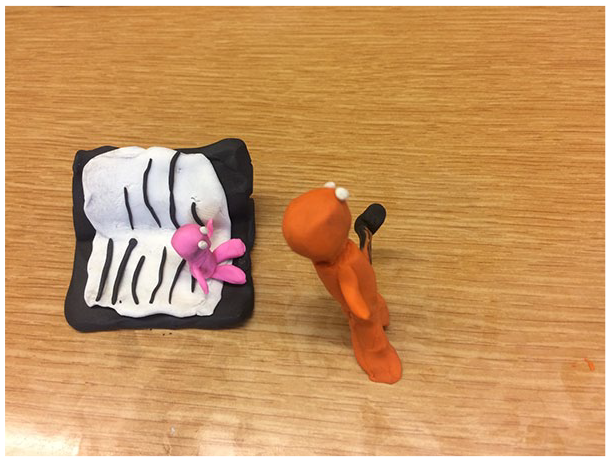
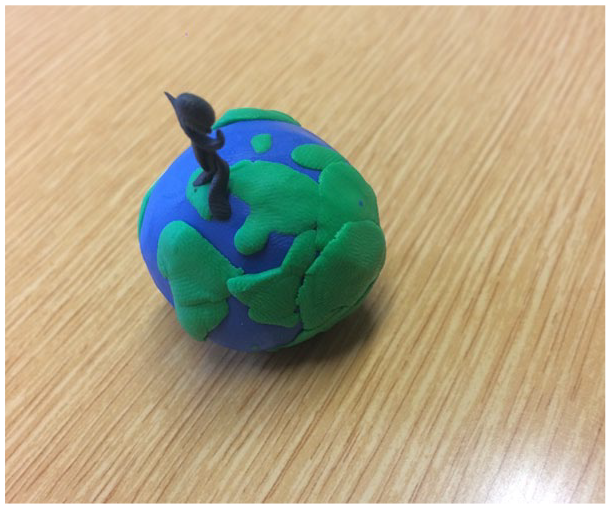
These narratives appear to articulate with broader ‘spatial imaginaries’ that have been discussed with reference to Spain, specifically. Bonal and Tarabini (2013) have, for example, argued that ‘Europe’ acts as an important point of reference within Spain, with official discourse frequently underlining the advantages of becoming more closely aligned with other European states, and viewing this as a key means of securing social and economic progress. While the emphasis in the students’ comments is rather different, the comparative focus and positioning relative to European others is evident.
Students as consumers
Spanish students also differed from those in the other five countries with respect to their discussion of consumerism. It was only in the Spanish focus groups that the plasticine models made specific reference to the marketisation of HE, and the implications participants believed this had had for understandings of what it means to be a student. The following two quotations illustrate this perspective:
I feel about myself is as if I was what I have tried to make, a cardboard box to show that I feel like a piece of merchandise in this educational situation, which in the end is more of an attempt at the commercialisation of education than learning. So, I feel as though they wanted to squeeze all the juice out of me and take advantage of my future trajectory and of my future in general. (Spain, HEI1)
. . . supposedly, you ascend [to the top of the slide] because you learn, [but] when you get to the top you have a series of problems, but they find a way to make you finish up as a consumer product for the system. (Spain, HEI3)
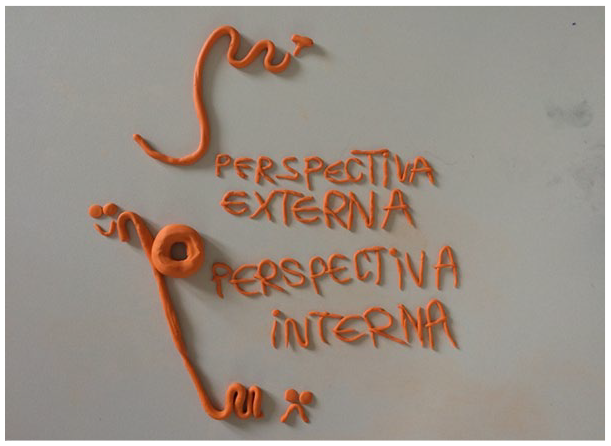
In many ways, this foregrounding of consumerism with respect to the Spanish models – but not in the focus groups in any of the other countries – is curious, as marketisation is more firmly established in several of the other nations (and in England particularly). Indeed, analysis of HE institution websites has indicated that Spanish students (unlike their counterparts in England, Ireland, and Denmark) are not addressed as consumers but as novices in an academic community or recipients of a public service (Lažetić, 2019). Moreover, Spanish policymakers have tended to be strongly opposed to a consumerist discourse, while marketisation (with respect to students) is discussed very little in the media in Spain (Jayadeva et al., 2020).
In seeking to explain the distinctiveness of the Spanish responses, it is possible that the stage of marketisation is significant. In England, for example, market reforms and consumer discourse are now firmly established (Molesworth et al., 2009); university websites clearly address students as consumers (Lažetić, 2019); and policy documents are infused with market logic (Brooks, 2019). In such circumstances, ideas associated with marketisation may have become so normalised that they are not worthy of comment. In Spain, however, there may be heightened sensitivity and resistance to such ideas because they are relatively new and not yet firmly established in all parts of the HE system. This reflects, to some extent, Klemenčič’s (2014) argument that national political norms can affect what is seen as an ‘acceptable’ education policy – and what is, conversely, met with resistance and opposition. In line with the argument made above, this distinctiveness of the Spanish data may also relate to the way in which HE is funded. The combination of relatively high fees and widespread dissatisfaction with the quality of education received may cause more students to question the basis for fees (i.e. a consumerist system, in which HE is understood, at least partially, as an individual good) than in nations where students are generally happy with the education they are receiving. Similarly, the high level of youth unemployment (outlined above) may also have led students to critique consumerist understandings, given that strong links are often made by policy actors and others between HE consumerism and future employability.
Students as just like everyone else
In Poland, students were broadly in line with their counterparts in the other five nations in emphasising the importance of learning and hard work to their understandings of what it meant to be a student, and their relatively upbeat assessment of their lives. However, they differed from their peers in suggesting that there was nothing intrinsically different about being a student; students were just people like everyone else. This is made explicit in this comment from a focus group participant:
I’ve made a regular person [for my model] because I think that every student is just a regular person and the fact that you are attending University doesn’t make you special in any way. That’s it. (Poland, HEI2)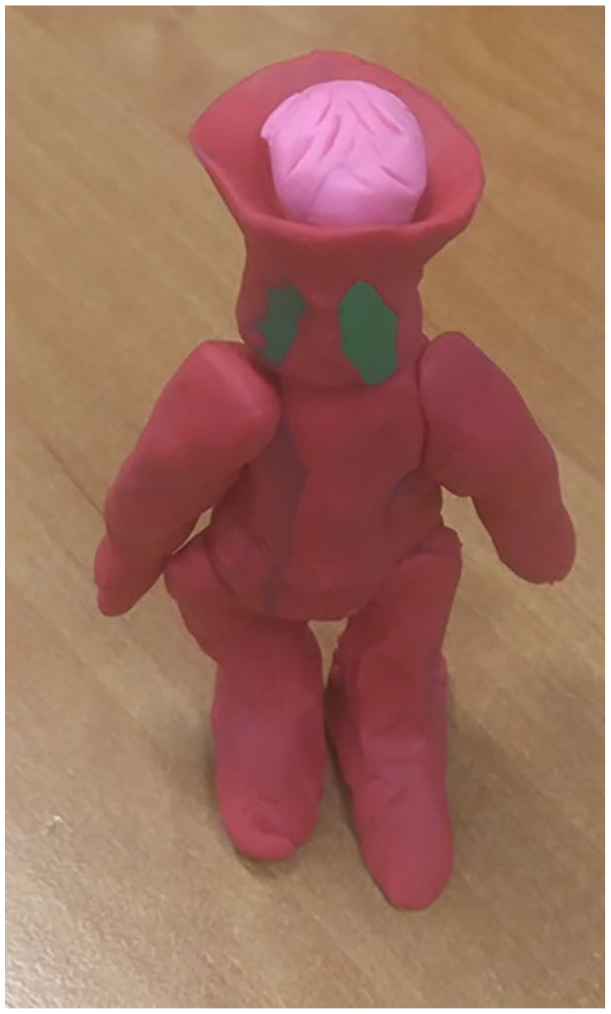
Others focused on particular characteristics that they had, which had no obvious connection to being a student, for example:
I have made a person [in plasticine] because I see myself as an outgoing person and someone that needs other people to feel good and I am always at the centre of attention. (Poland, HEI2)
These kinds of comments were wholly absent from the focus groups in the other five countries where, typically, all participants considered that there was something specific about being a student, even if the nature of this differed. The Polish data can, perhaps, be explained by considering changes to the HE sector over the past decade. Poland differs from most of its European neighbours by the sharp rate of increase in HE participation that has occurred over the past 30 years. In 1989, for example, only 10% of each age cohort progressed to university, whereas now the comparable figure is about 50%. While the current level is not significantly higher than in many other European countries (in England, it is now also around 50%, for example), the rate of increase has been notably higher. We suggest that this may have led to a perception among Poles that now ‘everyone’ is going to HE and it is no longer associated with any special social status. Indeed, a recent survey conducted in Poland indicated that 78% of those interviewed believed that ‘everyone can study’ (Kwiek, 2018, p.20) – perhaps linked, not only to the sharp increase in the percentage of each cohort progressing to HE, but also the ease of accessing most courses, even those in prestigious universities, because of policies of ‘almost open access’ (Kwiek, 2018: 21). It is conceivable that the students’ views may also be informed by the legacy of Poland’s Communist past, in which no ‘elite’ groups were recognised, and individuals were seen only as peasants, workers, or intellectual workers (Dakowska, personal communication). Finally, it is possible that the prevalence of paid work alongside studies, in the lives of many Polish students, affected their perspectives. In Estonia, Beerkens et al. (2011) have argued that paid work is much more significant to students than their HE studies – largely because they believe employers view it as a more important marker of their abilities than their degree result. Although the level of student employment in Poland is similar to that in some of our other countries (Eurostudent, n.d.), the apparent belief among the population at large that a degree has low labour market value (Kwiek, 2018) may encourage students to foreground their worker identity rather than that associated with their studies. Indeed, research that has asked students (who have engaged in paid work during their studies) whether they identify primarily as a student or worker has indicated that percentage choosing the latter is high in Poland (48.4%, compared with 25% in Ireland and only 9% in Denmark) (Eurostudent, n.d.).
Institutionally differentiated constructions
In most of the countries in which data were collected, there were broad similarities across all the nine national focus groups in terms of the type of plasticine models the students made, and the tenor of the discussion more generally. The two exceptions to this, however, were England and Spain. In these two nations, the focus groups at one of the institutions differed from those at the other two quite markedly. In England, students at HEI1 talked about the struggle they had to cover the cost of HE much more than in the other two institutions, and also focused more on the opportunities believed they had in the future to earn more. Here, there was less emphasis on learning and hard work, and more on the economics associated with HE (both in the present and future). The following extracts are illustrative:
Yeah, so mine’s [my plasticine model] a £5 note that’s been ripped because it means that I’m broke . . . . obviously at uni, you come here and you are just, you are constantly broke or trying to find money! But yeah, hopefully something better in the future. (England, HEI1)
Mine [my model] is money, because being a student like you don’t have much money but you . . . everyone says, oh you don’t have money as a student, but then I think you only realise when you’re a student how little money you do get. But also when you do graduate, it is opportunities for you to get more money. (England, HEI1)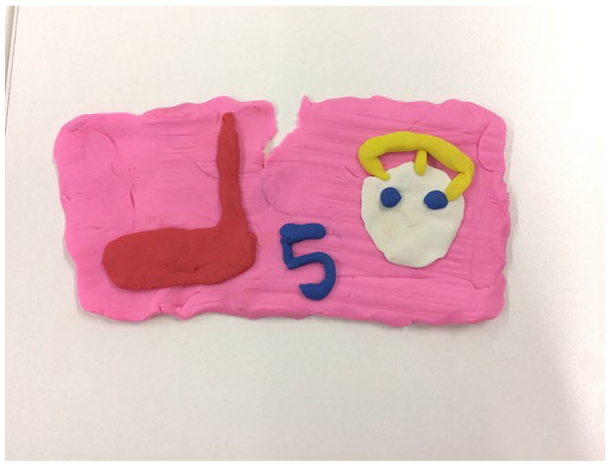
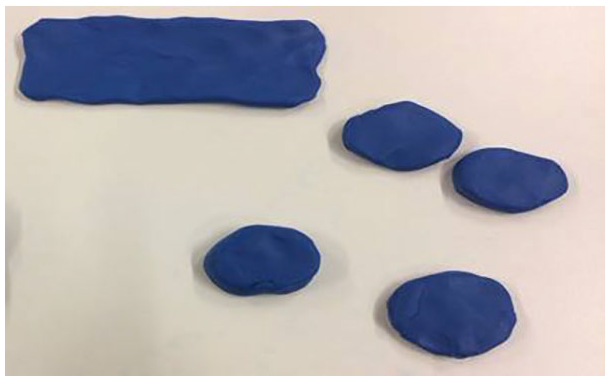
Within Spain, students at HEI2 differed from their counterparts at the other two universities in being more positive about their experiences and more optimistic about the future. In the first quotation below, we also see an implicit reference to the joy of learning, echoing the kind of comments made in the other countries, but largely absent from many of the Spanish focus groups:
I made a happy face because I am quite content, because I consider that to have been able to get to university . . . is a great opportunity for all of us who are here . . . . That is, you can focus upon the things you enjoy and then go deeper into them. (Spain, HEI2)
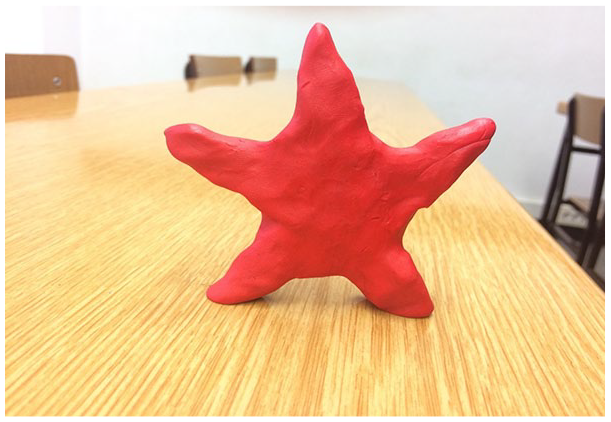
I have made a star thinking, above all, in how, as a university student, I feel like one of the privileged few who can access this kind of study . . . I have modelled a star because in today’s society university students . . . are seen, as I have said, as being privileged (Spain, HEI2)
These data suggest a relationship between the degree and type of differentiation within the national HE system and the extent to which there are differences in students’ understandings of what it means to be a student. In England, there have long been pronounced status differences between ‘research intensive’ institutions (such as Oxford, Cambridge, and other ‘Russell Group’ universities) and those that achieved university status more recently. These differences are reflected in the size of institutions, their wealth, their position in national and international league tables, and the grades that are required to secure entry (Raffe and Croxford, 2015). HEI1, where students focused more on the cost of their HE and the anticipated material rewards, is the newest and lowest ranked of the three institutions in which we conducted fieldwork. In Spain, differentiation relates more closely to how a university is funded (through public or private sources). At the time of data collection, there were 50 public universities in Spain and 34 private institutions. While HEIs 1 and 3 in our sample were both public universities, HEI2, where students were much more positive about their experiences, was private.
These institutional differences map onto social differences. Within Spain, although some scholarships are offered by private universities, and some students attending public universities are entitled to grants, in general, more privileged students are likely to be found within the former – and this was played out within our data, too, when we asked participants about their family background. It is thus perhaps unsurprising that the students at HEI2 (the private university) were more optimistic about their future and less worried about their current position than their peers at the two public universities (HEIs 1 and 3). Similarly, within England, although almost all institutions charge the same tuition fee, and all students are eligible for a loan to cover all of their tuition and at least some of their maintenance costs, it is well-documented that less privileged students from lower income families are more likely to be found in lower status institutions (Boliver, 2013) – and, again, these differences were evident in our data, when we asked about participants’ backgrounds. Moreover, students without a family history of HE, for whom embarking on a degree is likely to be more of a social and financial risk (Patiniotis and Holdsworth, 2005; Reay et al., 2005), have been shown in previous studies to be more likely to emphasise future job opportunities rather than the love of learning for its own sake (Ball et al., 2002). It is thus perhaps to be expected that understandings of what it means to be a student were related more closely to financial struggles and material rewards in HEI1 than in the other two English universities.
Discussion
The data presented above speak to debates about European homogenisation discussed in the first part of the article. There are clearly some important commonalities in conceptualisations of what it means to be an HE student among our focus group participants from across Europe. Indeed, the emphasis on both the centrality of learning and hard work was evident in most of our 54 groups. This suggests that the majority of those involved in our research had a rather less instrumental view of education than is sometimes suggested within the literature (Nixon et al., 2018), and were committed to putting in a sufficient degree of effort to ensure they got the best out of their degree programme. However, these commonalities can be set against some of the differences, by both nation-state and institution, that were also evident in our study. As we have explained above, many Spanish students differed from their counterparts in the other five countries in having a markedly less positive view of what it means to be an HE student. They were also more likely than their peers in other nation-states to make reference to ideas associated with consumerism and marketisation. National differences were also evident in Poland, with participants typically conceptualising students as little different from other members of society. In all other countries, students were much more likely to identify a range of characteristics that they thought were specific to HE students. There were also, as we have outlined, differences in student understandings by university, although in only two of our six countries (Spain and England), which we have explained in terms of the difference in social characteristics of those attending these particular institutions.
These differences – by both country and, in some cases, by institution 2 – raise questions about the extent to which HE systems are converging as a result of the Bologna Process and the creation of the European Higher Education Area as scholars such as Moutsios (2013) and Slaughter and Cantwell (2012) have argued. Indeed, it seems as though, in relation to student understandings at least, there remain some significant differences, which are informed by the particular histories of nation-states and their specific social, political, and economic contexts. In Poland, this can be related to short-term effects such as the sharp rate of change in HE participation rates over the past two decades, and possibly longer term factors, such as those associated with the transition from Communism. Similarly, within Spain, we have suggested that contemporary conditions – here, related to the labour market and, specifically, the rate of youth unemployment – may have informed students’ understandings, as well as larger scale political and cultural factors, such as a strong societal discourse which constructs Europeanisation as a means of advancing social and economic progress (Bonal and Tarabini, 2013). The inflection of these European initiatives by national specificities, as well as institutional factors, is thus important.
As we noted at the start of this article, some scholars have argued that, as a result of market reforms across Europe, students have become increasingly consumerist in their outlook (e.g. Moutsios, 2013; Nixon et al., 2018). The plasticine models produced by our participants were generally more ambivalent with respect to such assertions. Although their emphasis on the importance of ‘hard work’ can, as we discussed above, be read as an internalisation of neoliberal imperatives and, in some nations, a reflection of the language used by policymakers, this reading is in tension with the non-instrumental focus implicit in the emphasis of many students on their love of learning, and their sense that it was this that was central to their identity as HE students. In these cases, we can see the strength of more traditional understandings of the purpose of HE being played out among students – which foreground ideas about knowledge acquisition and personal growth rather than labour market readiness. Our findings here resonate with those of scholars such as Tomlinson (2017), who have argued that even in countries such as England where fees are very high and policy tends to focus on developing ‘future workers’ rather than critical thinkers, students are often quite resistant to being positioned as consumers, believing that it underplays the effort they have to put into their own learning, and has an adverse effect on their relationships with their teachers.
It is intriguing that understandings of students as consumers came, not from the countries that are typically assumed to have the most firmly entrenched market-based systems (such as England), or those where HEIs tend to treat students as consumers (Denmark, England, and Ireland) (Brooks, 2018a; Lažetić, 2019), but from Spain where market reforms have been introduced relatively late, and policymakers remain resistant to consumer discourse (Jayadeva et al., 2020). In explaining this variation, we have suggested that the broader economic context may be key, and that students may come to understand their position very differently if they are concerned about their labour market outcomes. However, it may also be the case that the specific stage of policy implementation is important, with students in Spain more concerned about the impact of marketisation, because it has yet to be normalised nationally. In contrast, in England, market logic has informed the HE sector for a long time, and may either be not noticed or not deemed worthy of comment by students. These data thus indicate that differences between students in different nation-states cannot easily be read off policy pronouncements and formal policy positions. Moreover, it suggests that there is not always a straightforward relationship between policy and student subjectivities (Nielsen, 2011) and that, to understand the experiences of being a student in contemporary Europe, we need to look beyond policy and political rhetoric, to the lived experiences of individuals.
The disconnect between policy emphases and student understandings suggests that nations should not necessarily be understood as ‘coherent educational entities’ (Philips and Schweisfurth, 2014), and that what it means to be a student in contemporary society can, in some countries, differ quite markedly between policy actors and students themselves. There were also, as we have shown above, differences between the views held by students in two of our four countries. In Spain, those attending the private university conceptualised the role of the student in considerably more positive terms than their peers at the two public universities in our sample, while, in England, students at the lowest status university tended to foreground issues about the cost of HE and its labour market outcomes in ways that were not seen in the other two institutions. Given the well-established relationship between university status and social composition, such differences suggest that, in England and Spain, students’ conceptualisations are likely to vary by family background. Moreover, the absence of any such variation in the other four countries, may point, as we have suggested above, towards a relationship between the degree of vertical institutional differentiation in a country and the extent of any variation in students’ understandings of their position.
Conclusion
Drawing on data from students across Europe, this article has argued that, in many cases, there is an important disconnect between the ways in which students are constructed within policy, and how they understand themselves. The plasticine models produced by participants typically foregrounded learning and hard work rather than more instrumental concerns commonly emphasised within policy. This brings into question assertions made in the academic literature that recent reforms have had a direct effect on the subjectivities of students, encouraging them to be more consumerist in their outlook. Nevertheless, we have also shown that student conceptualisations differ, to some extent, by nation-state, evident particularly in Spain and Poland, and by institution – most notably in England and Spain, which have the most vertically differentiated HE systems. These differences suggest that, despite the ‘policy convergence’ manifest in the creation of a European Higher Education Area, understandings of what it means to be a student in Europe today remain contested. They also articulate with various debates within sociology, and other cognate disciplines, about the ostensible demise of the nation-state under conditions of globalisation. Our data suggest that although European students appear to share a common belief that learning is at the heart of what it means to be a student, their understandings are also strongly framed by national concerns, conditions, and histories. The influence of the nation-state, within this domain at least, appears to endure.
Footnotes
Acknowledgements
The authors thank all those who kindly gave up their time to be interviewed or take part in a focus group, and to the colleagues in Spain and Poland who conducted the focus groups for them. They would also like to thank the European Research Council for the award of a Consolidator Grant to Rachel Brooks.
Author contributions
Rachel Brooks was responsible for data analysis and writing the article. Jessie Abrahams was responsible for data collection and initial data coding.
Funding
The author(s) disclosed receipt of the following financial support for the research, authorship, and/or publication of this article: A Consolidator Grant was awarded by the European Research Council to R.B. (No. 681018_EUROSTUDENTS).
