




Abstract
On 1 June 2019 plastic bags were banned in Tanzania. The ban was driven by a global environmentalist narrative that plastic bags harm marine life and livestock; contribute to flooding events; and produce unsightly litter. Five years later, small polyethylene pouches remained integral to daily life for the majority of residents in Tanzania's biggest city, Dar es Salaam. This article introduces ‘The Plastic Divide’, between urban poor and middle/ruling class, as a way to understand the effects of the plastic bag ban in Tanzania. Although originally emerging from the Global South, blanket moves to ban plastics bring greater harm to the poorest who are most reliant on plastics, least able to access alternatives and yet remain the most adversely affected by plastic pollution. By paying attention to the material specificities of plastics however we can gain insight into how and why they have become resistant to regulation in many contexts.
Introduction: ‘you and I together are responsible to save the planet’
Passengers are advised that all plastic carrier bags, regardless of their thickness are prohibited from being imported, exported, manufactured, sold, stored, supplied and used in Mainland Tanzania. Please use alternative allowed carrier bags. You and I together are responsible to save the planet.
A female voice sounds over the tannoy at Julius Nyerere International Airport. The message is a reminder of a piece of legislation that came into force in Tanzania on 1 June 2019. I have just finished a 4-month stint of fieldwork in the country's biggest city, Dar es Salaam following these illegal plastic bags around; from shops to homes to markets to factories. The collective ‘you and I together’ of the tannoy voice grates. It grates not just because of the irony of telling air travellers that they can save the planet by using a certain kind of carrier bag but because in my fieldwork, 1 the responsibility to save the planet via ‘alternative allowed carrier bags’ was never presented to me as horizontal or collective effort. The ban that the tannoy message refers to appeared more often in my observations and conversations with people as a confrontation. The ban is a vertical imposition that residents in Kigogo, the neighbourhood of Dar es Salaam on which my fieldwork centred, understand the reasons for: the visual problem of plastic litter and its effects on marine and terrestrial animal life; but struggle to adhere to because, within the current food system of the country, there actually is no alternative to the polyethylene pouch for those living in low-income communities.
Most residents of Dar es Salaam get their daily essentials (e.g. oil, flour, and sugar) over the counter at small shops where the shopkeeper portions out the required amount from a large (polypropylene (PP)) sack onto scales and then packages this smaller amount for the customer in a polyethylene pouch. But the alternatives referred to on the tannoy and displayed on faded National Environment Management Council (NEMC) posters at markets around the city (see Figure 1) are too big for this primary purpose. They can only serve as secondary packaging – to carry already portioned items.
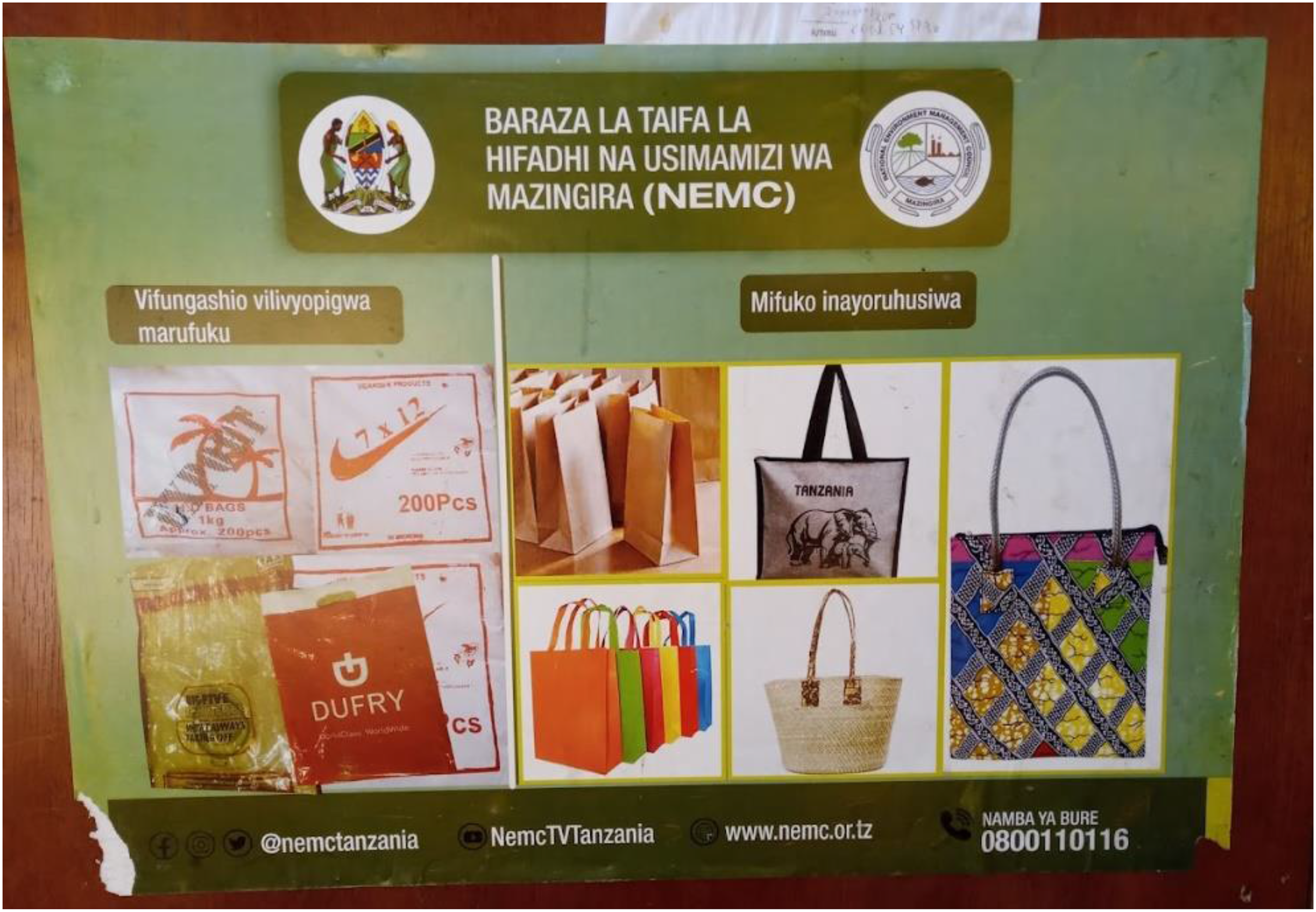
A NEMC poster on display at the Machinga Complex market, Dar es Salaam (Author's image, December 2022).
Beyond size, there are other issues with the allowed alternative bags (see right-hand side of Figure 1). Paper bags, fabric bags, woven grass/leaf baskets and non-woven PP carrier bags are too expensive; they cannot take wet things; and they are not as widely available. Leaving the field, I reflect that the plastic bag ban is navigable for people like me who travel by air and can afford to shop in supermarkets, buying pre-packaged goods in large amounts, but this is not the case for the majority living in Dar es Salaam.
This is what I call the Plastic Divide. On the one side there is the global turn against plastic, underpinned by narratives of visible litter and harm to terrestrial and marine life. On the other there is the local reality of daily life in Dar es Salaam where, although connected in very real ways to the climate and biodiversity crises, 2 plastic is understood as mundane, normal and actually quite useful. On one side of the Plastic Divide are globally-connected politicians; government officials; international non-governmental organisations (NGOs); and local activists. On the other side are the majority population who live on a daily income; plastic manufacturers; plastic wholesalers; plastic retailers; and food vendors (raw and cooked). The Divide is broadly characterised by economic status. Those with the economic means are able to follow the global turn against plastics leaving those with less economic security to grapple with the consequences. Beyond plastic use however the Divide maps onto resource use and carbon footprints more generally: the same groups that are able to absorb the costs associated with moving away from plastics are also those that drive private cars; waste food; eat branded fast food, with its associated packaging; and fly. If we look beyond plastic bags then it becomes clear that in ‘saving the planet’ we are not actually together.
In pursuing bans on plastic manufacture and use, the ‘global environmentalism’ in the title of this paper is, I suggest, creating the Plastic Divide. I use ‘global environmentalism’ to refer collectively to varied efforts and initiatives around the world from governments, NGOs, scientists and activists to reduce our use of plastics, particularly single-use plastics. This takes the form of campaigns, research, reports, protest, advocacy and legislation. Although not necessarily a co-ordinated or bounded movement there are shared narratives that dominate: namely that plastic is bad. Plastic is cast as being a bad material because it is made from fossil fuels and takes a long time to decompose. The latter then causes negative impacts for human and environmental health as well as for wildlife.
On the eve of a similar plastic bag ban being introduced in neighbouring Kenya, geographer Jeremia Njeru demonstrated how the human and environmental risks of waste plastic bags are concentrated in low-income areas. Plastic bag waste, Njeru concludes, is an example of environmental injustice (Njeru, 2006). Similarly, anthropologist, Lydia Gibson, working in Jamaica, argues that the banning of plastic bags around the world further entrenches marginalisation (Gibson, 2023: 531). This article follows Njeru, Gibson and others in drawing attention to the unequal ways in which plastics are experienced and so the injustices that can result from their blanket removal. For the majority population in Dar es Salaam, plastic bags either directly or indirectly support them in what they refer to as the ‘search for life’ – meaning the hunt for economic security.
By exposing contemporary inequality in this way, the article responds to one of the three ways that Abrahms-Kavunenko (2021) articulates anthropology might contribute to building our understanding of plastics. 3 Although arguably late to engage – the first synthetic plastic was invented in 1907 (Liboiron, 2016: 95) – there is a growing body of literature from anthropology grappling with this now ubiquitous type of material. Anthropologists have enlisted plastics to explore (in)authenticity (Chao, 2019; Meiu, 2020; Roth, 2015), pollution and toxicity (Liboiron, 2016; Pathak, 2020), and agency and labour in the global margins (Braun and Traore, 2015; Dey, 2021; Knowles, 2017). One emerging convergence, particularly relevant to this article, is the idea that plastics are not universally denigrated and indeed in several contexts they are considered empowering, positive, or generative (Bredenbröker, 2024; McKay and Perez, 2018). In Tanzania too, plastics are ambivalent: both environmental scourge and economic aid. Beyond providing another case study of how plastics are otherwise in another place, in this article I suggest that, following Max Liboiron (2016), by attending to the material specificities of plastics we can learn about their social mechanics too. I argue that similar to how plastics (through their constituent elements) embed and enmesh themselves into biological systems, their material properties – light, strong, flexible – have helped them make strong bonds in economic systems. First, I discuss how the Plastic Divide arose. In the second section I turn to the anti-plastic side of the Divide, looking specifically at the plastic bag ban in Tanzania: its development, initial implementation and ongoing enforcement. I then move to the other side of the Divide, where the plastic bag remains a very useful item in securing one's daily needs – what residents refer to as the ‘search for life’. From here I zoom in on the material specificities of plastics and how their biological interactions might offer insights to their ubiquity in our economic system and their resistance to regulation. The article concludes by suggesting ways in which the Plastic Divide might be closed and the global environmentalism that has created it – across multiple countries—might become truly global—for the benefit of all people within those countries.
The rise and fall of the plastic carrier bag
‘John Rambo, a drifter just passing through their town’ states the voiceover introducing Sylvester Stallone's title character in the trailer to the film Rambo: First Blood (Kotcheff, 1982). Over a franchise of five films released in the subsequent 27 years, John Rambo, or ‘Rambo’ for short, drifts around, defying death on countless occasions and over-riding the instructions of his handlers to carve out his own path through diverse environments around the world: American mountains, Vietnamese jungle and Afghan desert. Over the same time period, the U.S. military veteran also travelled to Tanzania, where his image was printed on to polyethylene carrier bags (see Figure 2).
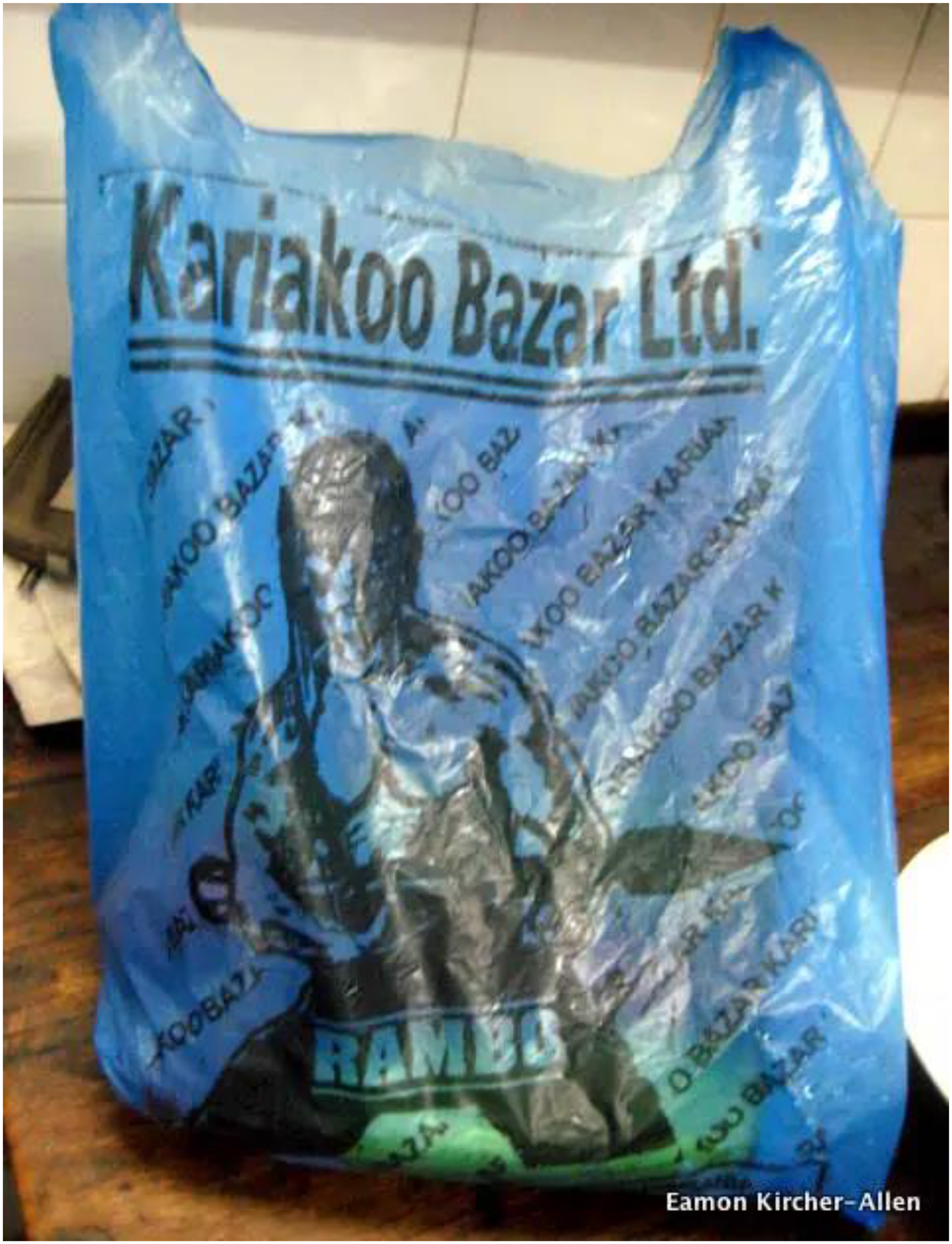
A ‘Rambo’ bag (Eamon Kircher-Allen, October 2009).
So extensive was this reproduction of Stallone: biceps bulging, rocket-propelled grenade launcher in hand, that the name, ‘Rambo’ came to be used as short-hand for the plastic carrier bag in the country. Other ‘brands’ were available, including bags displaying the logos of international companies such as Ferrari cars and Marlboro cigarettes, but it was the strongman Rambo that stuck as the catch-all term to describe plastic bags.
Although the name, ‘Rambo’, is unique to Tanzania, the takeover of the plastic carrier bag in the latter half of the twentieth century was global. But it became, in some ways, a victim of its own success. In more recent decades, the plastic carrier bag has come to be a major villain of environmentalism and has been subject to bans around the world. In this section I argue that the rise of the plastic bag, although global, was not uniform. I locate the origins of the Plastic Divide in this divergence: as poorer groups in particular come to rely heavily on plastic bags in a variety of ways outwith and beyond their intended use for carrying shopping. If the rise is different, I suggest, one must ask whether the fall might also need to be different.
The rise
The history of the carrier bag is intimately connected to shopping and in particular, shopping for food. This history has been described by scholars in the field of ‘consumer logistics’ (Hagberg, 2016; Petroski, 2003). There it is argued the carrier bag emerged with the transition to self-service shopping and the move away from shop-keepers measuring out items in front of the customer, to shoppers themselves moving around a store and taking pre-packaged items off a shelf (Hagberg and Normark, 2015: 469). This narrative however does not fit with Tanzania, where most of the population today still source their food over the counter.
The first carrier bags were not made from plastic but from paper. As the processes of urbanisation and globalisation gathered pace, the use of paper bags was increasing and so concerns rose around their disposal as well as the increasing amount of timber needed to make them (Hagberg, 2016: 122). Ironically, one of the motivating factors to move away from paper bags towards plastic was that the plastic ones were (more) re-usable than paper and so would pose less of an environmental hazard. Although the plastic carrier bag was invented in Sweden in 1965 (UNEP, 2024) it was the advent of the supermarket, particularly the Safeway and Kroger chains, in the United States of America in the 1980s that drove the rapid growth and spread of the technology (Valtin-Erwin, 2022: 169). At this point in their narrative, consumer logistics scholars highlight the advent of mass car ownership as a further driver increasing the use of bags, as the size of purchases from a single shop visit increased due to the greater carrying capacity of a car boot than a customer's two arms (Hagberg, 2016: 120). However, like the switch to self-service shopping, mass car ownership does not apply in Tanzania today.
Once it had taken over retail systems in Europe and North America, the plastic carrier bag began to spread beyond the food shop. The reusability it offered ahead of the paper bag, particularly in terms of being waterproof, meant the plastic bag came to be used for different secondary uses such as carrying schoolbooks, dirty laundry or swimming gear (UNEP, 2024). Supermarket names would be printed on the side, transforming the bags into mobile adverts displaying company logos in a wide range areas of daily life: kitchens, classrooms, sports changing rooms. One might have thought that one form of common re-use – to store domestic waste – would not be something a brand wanted to associate with but from the beginning the Swedish company, Teno, which Hagberg centres their analysis on, embraced this as an environmentally-friendly use of its plastic bags: The Teno bags are also excellent as garbage bags, fit normal wire baskets, can stand wet waste, and can be tied together … Keep nature clean with the help of the Teno bag, as it can stand wet waste. (Hagberg, 2016: 122)
Beyond multiple uses, the plastic carrier bag took on multiple meanings in the 1980s and 1990s as well. Historian Leah Valtin-Erwin has described the various ways in which bags are remembered in East Germany, Poland, Romania and the Soviet Union from that time: as desirable accessories to show off to friends and neighbours one's connection to ‘the West’ and Western brands (Valtin-Erwin, 2022). Meanwhile in West Africa, large, chequered, zipper bags (made from plastic) became known in Nigeria as ‘Ghana-must-go!’ bags after the 1983 expulsion of Ghanaian migrants from the country (Gibson, 2023: 531). The migrants would pack their lives into these bags for their return journey. In Jamaica plastic bags became a political icon around the 1993 general election; the black plastic carrier bag – ‘the scandal bag’ – came to represent the ‘slick, lurid, and opaque’ (Gibson, 2023: 532) corruption of the ancien regime. These examples together show the universal, global spread of the plastic bag but individually they show how the bags came to hold different significance in different parts of the world. It is in these differences that we can find the beginnings of the Plastic Divide.
The fall
By the release of the fourth Rambo film in 2008, the tide was turning against Stallone's Tanzanian namesake. Three decades of food shopping made for a lot of plastic bags to be out there, drifting through towns, refusing to die. Despite the multiple uses extending the life of plastic bags, they found their way, like Rambo, into various environments around the world. That bags were given out for free meant re-use (for shopping) was not incentivised and so their use became profligate. With so many bags in circulation, it was perhaps inevitable some would escape waste management systems. And when they did, the bags’ light, thin structure made them susceptible to being blown by the wind and ending up in all manner of places. Made in whites, blues and other colours made these strewn bags highly visible litter items. In various parts of Africa, they have colloquially been referred to as ‘African flowers’ (Lacey, 2005); ‘Hargeisa flowers’ (Lacey, 2005); and the ‘Flowers of Malawi’ 4 in recognition of how they get caught in trees or to rocks and plants on the ground.
It was in Asia however that the first action was taken against the bags. In 2002, Bangladesh became the first country in the world to ban plastic bags, citing the role they played in clogging drainage systems and so exacerbating flooding in the country as the reason to do so (UNEP, 2024). Since then, at least 127 countries have taken steps to limit or eliminate the use of plastic bags (UNEP, 2018). According to environmental scientist Joana Carlos Bezerra and colleagues, policies are increasing more rapidly in ‘developing countries’ than ‘industrialized ones’ and Africa is ‘leading the way’ within that (Bezerra et al., 2021: 1). There is a correlation between effective waste infrastructure and legislation against the bags. Countries that struggle to manage domestic waste, especially in urban environments, have been quicker to ban bags, due to their greater visibility and so more immediate threat to drainage, soils, livestock and marine life. Some countries with a prominent tourism industry are understood to have pursued bans in order to bolster their green credentials and continue to attract foreign investment and visitors from the Global North who are, it is implied, perceived to be more environmentally concerned (Behuria, 2021: 1798).
Zanzibar, a semi-autonomous archipelago within Tanzania, is highly dependent on tourism yet in an interview with the Director of the Zanzibar Environmental Management Authority it was not mentioned as a factor in the islands’ pursuit of their own ban. Instead, the Director told me that it was primarily because of visual pollution that they sought to end the sale and use of bags as early as 1999 when blue bags specifically were banned in urban areas. Rwanda were the first country in Eastern Africa to introduce a ban however. Starting in 2003 following a report from the national environment management authority, via a few interim pieces of legislation, non-biodegradable bags were banned in 2008. It was one of the most severe bans in the world at the time (Behuria, 2021: 1796) and has been understood as part of a wider pursuit of environmental leadership in the region. Indeed it was Rwanda that later led the East African Community (EAC) to pass the Polythene Materials Control Bill in 2016 designed to create a region-wide ban on plastic bags (The East African Community, 2016). Although some have suggested Tanzania has at times been a ‘“spoiler” of EAC regional commitments’, (Behuria, 2021: 1792) the trend was clear by the 2010s; plastic bags were on the way out.
This brief history of the plastic carrier bag to date shows that the technology has been intimately connected to food provisioning and environmental concern, and so politics, from the beginning. But within that, bags have carried meanings: commercial, social, cultural. Crucially these meanings are context-specific: the bags were only called Rambo bags in Tanzania; only symbolised political scandal in Jamaica; only became a desirable pseudo-currency in Eastern Europe. I suggest, following David Evans and colleagues, that any contemporary attempts “to bring about changes in the use and disposal of plastics must be grounded in understanding how things come to be as they are in the first place.” (Evans et al., 2020: 7)
Yes the bags spread everywhere, and now bans are spreading everywhere as well, but they are not used and experienced in the same way everywhere. It is this diversity of meanings and uses that is not accounted for in the global turn against plastics. And in not accounting for them, the first cracks of the Plastic Divide can be identified.
The next section introduces in more detail the case study of Tanzania, where, as indicated above, the spread of the plastic bag cannot be attributed to self-service shopping or private car ownership.
The ban
Ultimately, Rambo met his match in 2019 when real-life strongman John Pombe Magafuli, the fifth president of Tanzania, oversaw a ban on plastic carrier bags. A government leaflet gives 12 major reasons behind the ban including the dangers to animals when ingesting or getting entangled in them; their ability to block drains; and their connections to types of cancer and reproductive problems in humans (The United Republic of Tanzania, n.d.). At the imposition of the ban, the government, via NEMC, promoted the use of what it calls ‘alternative allowed carrier bags’ instead. The most prominent and widespread of these alternatives has, ironically, been carrier bags made of PP – another type of plastic. Several of the larger manufacturers of the old Rambo (polyethylene) bags conformed to the ban and pivoted to manufacture the new polypropylene ones. These non-woven bags, as they are known to manufacturers, are even made in the same set of standardised sizes as their polyethylene predecessors. They are referred to by some in the country as ‘Magafuli bags’ (see Figure 3) reflecting the former president's role in their emergence in the market. John Magafuli has replaced John Rambo.
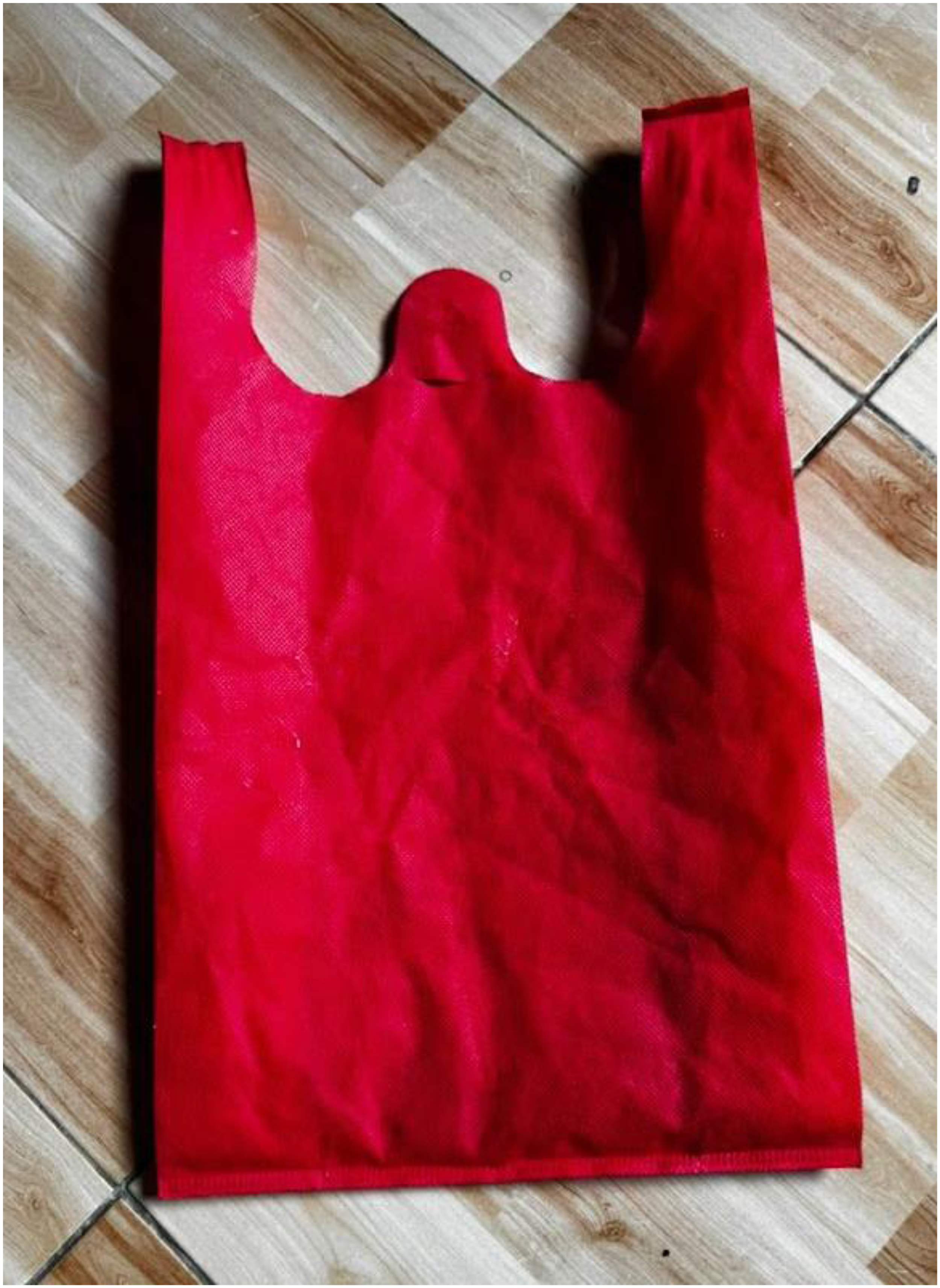
A red Magafuli bag (Stephano Ayo, November 2024).
Few however think of these bags as plastic. The Magafuli bags’ greater thickness; rougher, more fabric-like feel; and the fact that they rip like paper rather than stretch like polyethylene, means people describe them in Swahili, the national language of Tanzania, as ‘kama nguo’ (like cloth) rather than as plastic. 5 Unlike the Rambo bags, Magafuli bags are not given out for free but are sold for 200 shillings ($0.09 6 ) and upwards according to size. They come in a wide range of bright colours.
While larger purchases, or already-packaged items, can be carried in the Magafuli bags, interviewees in small food shops around the city repeatedly told me you cannot use them for half or a quarter of a kilogram of something – they are too big and too expensive relative to the value of those small quantities, nor are they suitable for wet items. For those, one needs the cousin of a Rambo bag – a smaller polyethylene pouch with no handles. These plastic pouches are blue, clear or sometimes a silvery-grey. They are available in two main sizes: 7 × 12 cm and 10 × 16 cm. Some have white, black or green writing printed on them, indicating their purpose, to carry: MEAT, CHICKEN, FISH, VEGETABLES. Some have illustrations to accompany the text (see Figure 5). More variety is found in the outer packaging of pouches. For some, this is nothing more than another pouch. But others indicate a notional brand: Jitihada; Tembo; Hakuna Matata; UMETA; TOCO; JESCO. By far the best seller however is Mnazi, the name of which is not always written on the packet but more often indicated by a large red ink drawing of a coconut palm; mnazi is the Swahili word for a coconut palm (see Figure 4). Some of these pouches are manufactured locally by smaller scale producers. Others are said to be imported from Uganda (where there is no ban) and China. Tanzanians use the same word to describe pouches as they do bags: mfuko (mifuko, plural). 7 To differentiate pouches from bags people might specify they are talking about a mfuko wa nailon 8 (nylon pouch; see Figure 4 and Figure 5). Although sold less obviously and more carefully by some actors now than in the past, in fear of being reprimanded, these pouches have defied the ban.
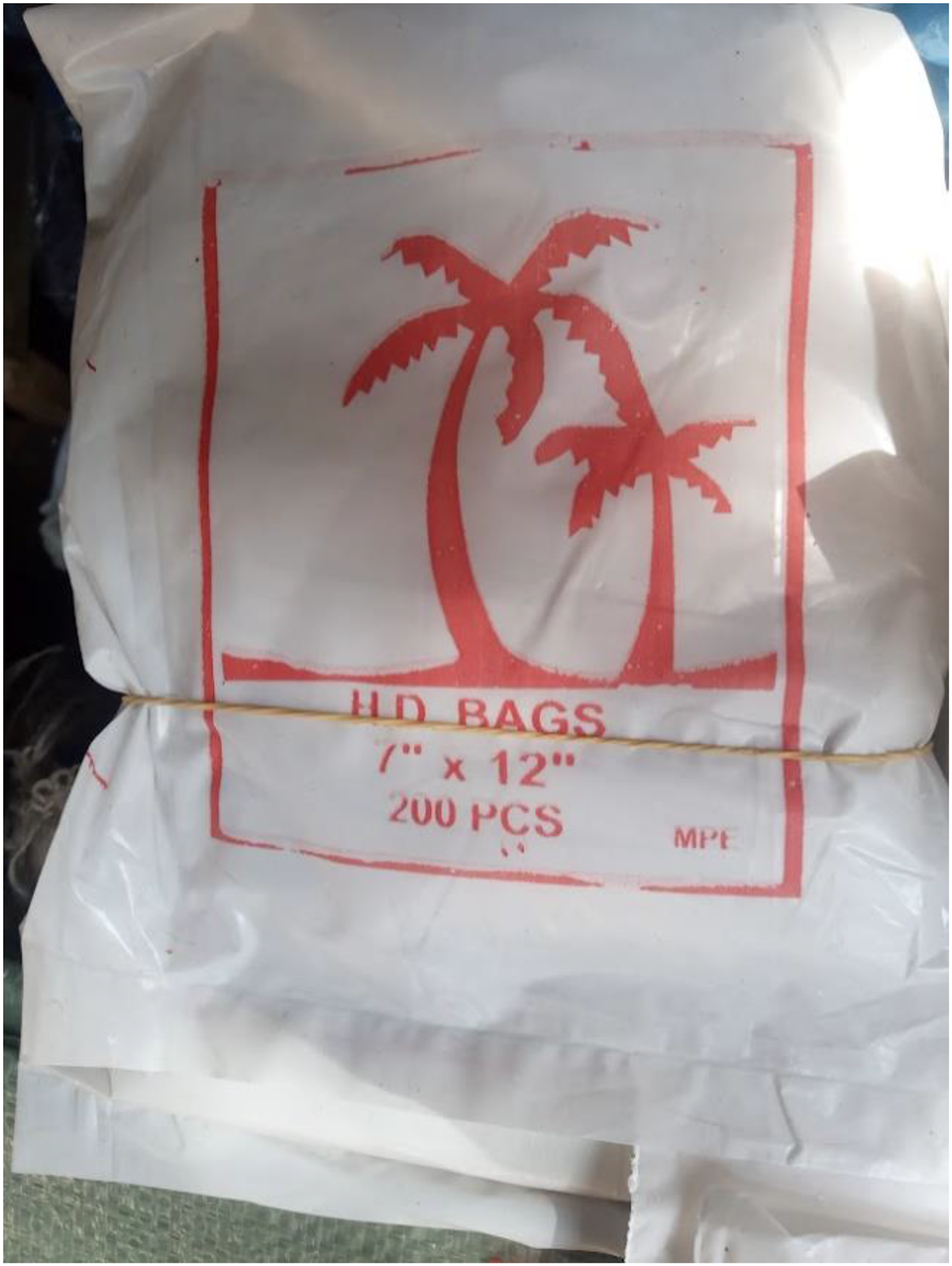
Clear ‘Mnazi’ pouches in their outer packaging (Author's image, November 2022).
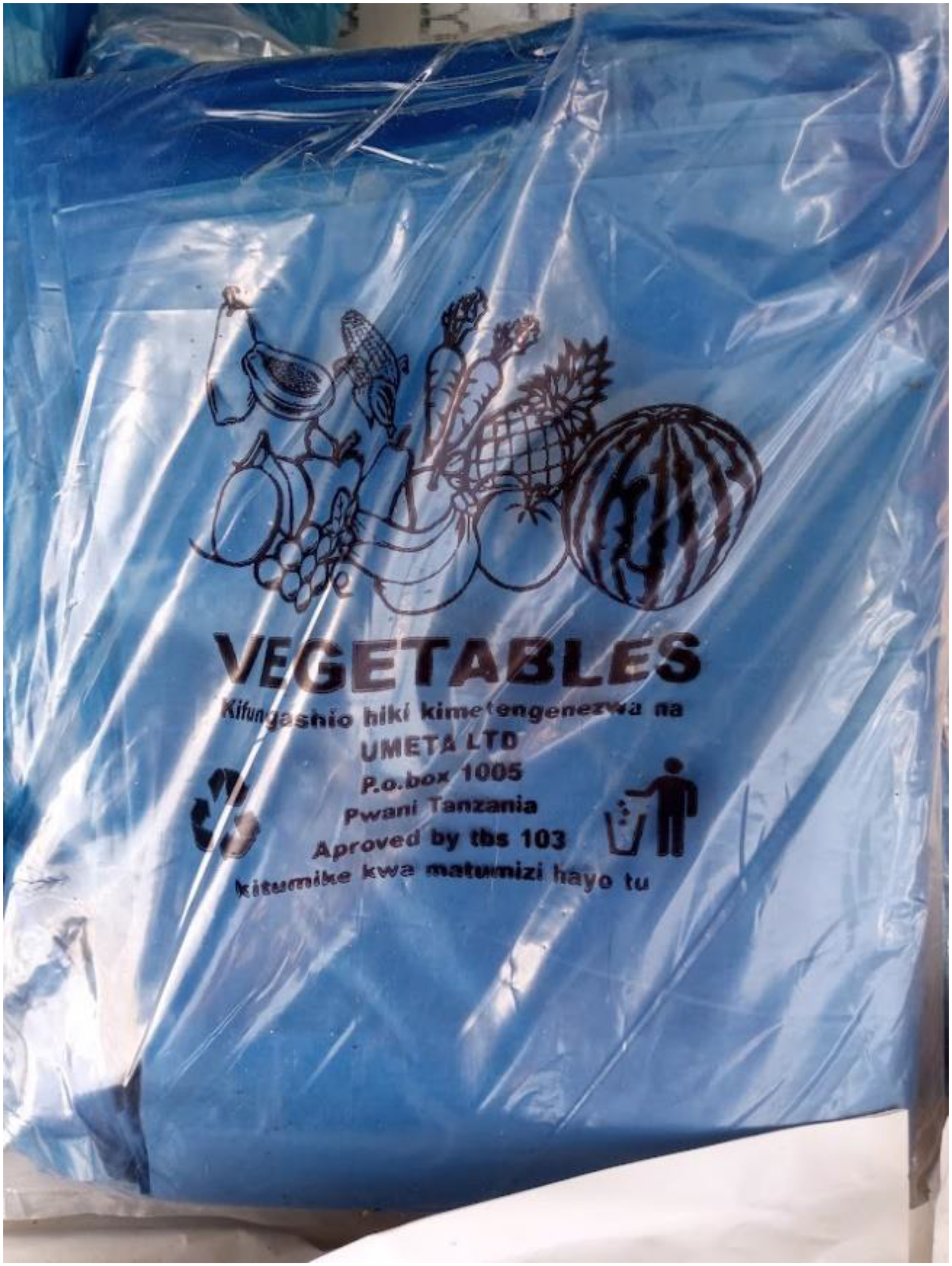
Blue pouches in their outer packaging (Author's image, November 2022).
The ban in Tanzania can be viewed as a partial success: polyethylene plastic bags have disappeared but in their place are another type of plastic bag (made from PP) and, five years after the ban first came in, small polyethylene pouches remain widespread. In this section I argue that this partial effectiveness is due to three aspects: clarity around definitions; consistency of enforcement; and a lack of available alternatives. Despite its mixed impact, what the ban has done is give a legal basis to the Plastic Divide.
Clarity of definition
The Environmental Management (Prohibition of Plastic Carrier Bags) Regulation, 2019 imposed a ban on the “import, export, manufacturing, sale, and use of plastic carrier bags regardless of their thickness.” (The United Republic of Tanzania, 2019: 5) 9
The legislation defined a ‘plastic carrier bag’ as ‘a bag made of plastic film, 10 with or without handles, or gussets’ (The United Republic of Tanzania, 2019: 3). This specification regarding handles and gussets (a triangular fold used to give bags strength and more room at the bottom) is key as it meant that both bags and pouches, which do not have gussets, were covered by the ban.
Despite this, there remains confusion among the public about what is and is not banned. So much so that in April 2023, the regional government organised a meeting of 500 or so local government representatives and plastic bag wholesalers to remind them that the ban was still in force and that they should communicate this in their respective parts of the city. After a brief recapitulation of the 2019 legislation in a PowerPoint presentation, the meeting got quite animated when one of the small-scale bag sellers came down from a back row onto the floor to make his point, in defence of the pouches, more clearly. He was initially met there by a representative of the Tanzania Bureau of Standards (TBS), who tried to articulate what was and was not allowed according to the ban. However, his explanation was soon contradicted by the director of NEMC – the body responsible for the design and now enforcement of the ban – who came down to take the place of the TBS official on the floor. The debate between these three men was a neat reflection of the confusion I encountered during fieldwork.
Consistency of enforcement
The meeting ended that morning with the head of the regional government, Amos Makalla, announcing a two-week plan of action: one week of renewed sensitisation in every neighbourhood of the city followed by one week of enforcement. Anyone caught in contravention of the legislation can, in theory, be fined 20 million up to 1 billion shillings ($8526 to $426,289) and/or imprisoned for up to 2 years for manufacturing or importing bags down to 30–200,000 shilling ($13–85) fine and/or 7 day's imprisonment for using or possessing them (The United Republic of Tanzania, 2019: 5–6). In practice, however, people I interviewed often took enforcement of the law as evidence that the law was still in place. When enforcement had not been seen or heard of for a while, bags creep back in and people may even think the ban is no longer in place. Just weeks after his strong pronouncements at the conference centre, for instance, Makalla was relocated to the northern city of Arusha and with him went the initiative to continue with a new push on the ban.
In interviews I was told of the government doing ‘operations’ to remove the bags – meaning they entered markets and factories to confiscate goods. The language of ‘operesheni’, from the English ‘operation’, carries military overtones. 11 The operations are even overseen by a ‘Task Force’. The imposition of the ban sets up a conflict. Many wholesalers and retailers declined to speak to me at all fearing I might either work for, or report them to, the government. Government operations manifest the Plastic Divide.
Lack of alternatives
Aside from confusion over the rules and inconsistency in implementation the main barrier to compliance for the majority population in Dar es Salaam is the lack of alternatives. Shopkeepers, fishmongers, butchers, street food sellers and residents at home all told me in interviews that the allowed alternative carrier bags are too big, too expensive and cannot actually do what the polyethylene pouches do (i.e. hold/carry wet things). In their discussion of Nigeria's ban, environmental scholars, Nwafor and Walker argue that Breaking out of the cycle of plastic pollution requires provision of viable alternatives. Alternatives are required to meet specific needs for which different kinds of plastic products are made. This can offer more promising results than blind bans that do not contemplate issues like replaceability and affordability. (Nwafor and Walker, 2020: 2)
Beyond materials one could also consider more contextual or structural changes like different food supply chains or more consistent incomes for the poor: which, as the two biggest factors driving the continued use of the pouches, would reduce the need for pouches and so aid compliance. The focus on material alternatives reveals the narrow understanding the Tanzanian government, following the global environmentalist narrative, has of plastic bags. The Divide becomes even more pronounced when looking at the exemptions to the ban. That there are exemptions admits that there are cases where there is no material alternative to plastic. Exemptions include: ‘agricultural sector’; ‘construction industry’; ‘food processing’; ‘industrial products’; ‘medical services’; and ‘sanitary and waste management’ (The United Republic of Tanzania, 2019: 4). These are areas in which the use of plastic wrapping, casing, container, sheet or carrier bag is still allowed (The United Republic of Tanzania, 2019: 4, 6). The exemptions reveal the Divide once more as it is larger scale, formal operations that are exempt, not small-scale, everyday shopping or local home-made foods and street stalls.
The ban in Tanzania has not achieved its aim of removing plastic bags: non-woven PP carrier bags are ubiquitous as are polyethylene pouches. Together the confusion of what is actually allowed, the inconsistency of enforcement and the lack of alternatives to small pouches means plastic bags remain in use. What the ban has achieved is to codify in law the lines of the Plastic Divide. The next section looks at the side of the Divide where pouches are still used.
To search for life
While policy and its implementation ebbs and flows and political leaders that personify certain policies move on to the next role, or in the case of Magafuli, the next life, life goes on for the citizens. The population of Dar es Salaam is growing rapidly. It is currently estimated to be around seven million people but is forecast to rise to more than 50 million by 2060 (Nyyssölä et al., 2021: 2). Much of this growth is ‘driven by rural-urban migration’ (Nyyssölä et al., 2021: 2) which is too great to be captured by formal employment and so is ‘absorbed by the informal economy’ (Nyyssölä et al., 2021: 4). These population level trends played out in my personal interactions with people. When I asked interviewees where they were from, many told me that they were born in regions outside of Dar es Salaam. When I asked why they had come to the city they said it was ‘kutafuta maisha’ – to search for life.
Most of these ‘urban refugees’ (Nyyssölä et al., 2021: 4) earn their income daily and in small amounts. This leads to a pattern of food sourcing in small, frequent purchases over the counter, at the market or roadside and on foot. It is in this context that the search for life in Dar es Salaam becomes closely entangled with the use of plastic pouches. Pouches are used to carry or package raw or cooked food items from street food vendors, market stalls and small shops. Their thin-ness and relative weakness (if pulled, subjected to heat or caught on a sharp edge) mean that they are not used for storage – their contents are mostly consumed directly from the pouch. The usage time of these bags varies between a few seconds for a quick road-side snack to a few hours if the buyer is say, travelling with their purchases on a long bus journey. After use pouches can be dropped to the ground, put into municipal or domestic waste receptacles, or scrunched or torn and used to light the household stove.
In this section, I present three groups who benefit from the continued presence of the pouches in Dar es Salaam: those who are directly involved in the manufacture and distribution; those who make use of them within their catering businesses; and end users. These three groups all sit on the pro-plastic side of the divide. So central to life for many, I argue that those on this poorer side of the Plastic Divide have a different relationship with the material than those seeking to eliminate it.
Jobs
Tracking down manufacturers of the pouches during fieldwork put me in a similar position to NEMC officials trying to locate the same factories during their operations to shut them down in accordance with the ban. Many were understandably reluctant to speak to me. However, I was able to meet with the two founders of one manufacturer. Amri and Said, described themselves as just small businessmen (‘wadogo wadogo tu’). This narrative of being small or little was one I encountered often and, in the face the ever-looming Tanzanian state, 12 perhaps it is a fair assessment of their relative position. Of the pouches themselves Amri and Said said: ‘nailon inabeba vitu vingi na watu wengi’ (nailon carries lots of things and lots of people). By this, the two friends meant that the plastic pouches are the basis of lots of people's livelihoods.
After manufacturing, the main hub for the wholesale of Magafuli bags and polyethylene pouches is the Machinga Complex – an impressive concrete structure of two towers connected by a bridge straddling a road near to the city centre. At the bottom of the more westerly of the two towers there is an alleyway that is lined on either side with bag sellers. It is colourful and the volumes of stock on display is impressive. In early 2023, my colleague and I convened a meeting of the sellers that operate from the alleyway, in a small room on one of the upper floors of the complex. After I introduced our research project and interests, I did not need to say much but instead grappled to write down the main points the sellers made as they stood in turn and delivered passionate speeches, in broad defence of plastics: ‘The government gets taxation from plastic products’ ‘Plastic recycling makes wealth and employment’ ‘The life of the poor is sustained by plastic’
Some of those people include the sellers who move around on bicycles to distribute pouches and Magafuli bags from the Machinga Complex to food markets and small shops around the city. These mobile bicycle sellers, as well as their static customers at food markets, use the bright-coloured allowed PP Magafuli bags, to attract customers and advertise what it is they sell (bags) but at the bottom of their bicycle baskets and under their counters it is the piles of polyethylene pouches that actually make them money. The same attributes of the Magafuli bag that makes it attractive to NEMC – re-use and durability – make it less attractive to retailers as people re-using them means they have do not need to buy them as frequently. The pouches on the other hand are cheap to buy and easy to shift – their single-use nature means there is always renewed demand. In interviews these sellers spoke favourably of this business because bags do not rot unlike other market produce.
The next step in the supply chain is shops in residential areas. Many of these look similar with a floor-to-ceiling metal grid across the front. From the grid hang bakery-produced loaves of white bread and sometimes cakes in branded soft plastic packaging (these are allowed as it has been packaged at the site of food production and is labelled with the necessary information regarding contents and contact details of the producer of the product – thus they are covered by the exemption given to ‘food processing’). During an interview at one shop in Kigogo I noticed some rather dirty, translucent, and ripped pouches hanging at the very top of the grill. Thinking they were surely too dirty to be sold, I asked Hassan, the shopkeeper, about them. He said that he leaves them there to stop the dust from coming inside – yet another use of the pouches, beyond carrying or packaging for food. The pouches Hassan does sell he buys at 1300shs ($0.56) for a pack of 200 clear ones. He sells these on to customers for 1500shs ($0.64) in order to make a 200 shilling ($0.09) profit. 13
Business
Hassan's customers are people like Latifa. In the shade of a tree elsewhere in Kigogo, sit four translucent plastic buckets showing Latifa's wares: samosas, large cubes of sponge cake, red-coloured, sugar-coated baobab seeds (a popular children's sweet) and brightly multi-coloured crisp snacks. The seeds and crisps are in the same sealed plastic packets. 14 Latifa uses pouches to package samosas and cake for her customers on request. I asked Latifa why she does not use alternative packaging such as newspaper. She said that if you use newspaper, you cannot put sauce on a samosa; also, if she is giving it to a child, they might drop the packet and if only wrapped in newspaper it could fall out on to the ground. Retailers regularly told me that they could not sell their produce without these pouches. Business just would not ‘go’. When I ended the interview and put away my phone that I was making notes on, Latifa visibly relaxed and our conversation moved to more general topics like our respective families. As we were talking, a clear pouch blew past from elsewhere. We laughed at this and watched as it got stuck momentarily under the log we were sat on before continuing on its journey.
Use
Although I ate my two samosas and tangy mango chilli sauce from a re-usable plastic plate at Latifa's spot, I bought plenty of other street food snacks on-the-go which I was given in a pouch. When finished with them I usually stuffed the pouches into the back pocket of my jeans to empty it into the bin once back at my accommodation that evening. In my case, the pouches were, as Njeru has argued, ‘instruments of consumption’ (Njeru, 2006: 1049): I did not consume them directly but they enabled me to consume other items. However, my fieldwork offers several examples where pouches are consumed themselves. In April 2023, I interviewed a lady called Prisca at her home in Kigogo. She had moved to Dar es Salaam from Tanga in 2017 ‘kutafuta maisha’ (to search for life). Currently that meant working at a guest house. Prisca was one of many interviewees who told me after using the contents of the pouches, they use pieces of the bags to light their charcoal stove for cooking. At other times during fieldwork I saw people adopt pouches as hairnets to protect their weaves and wigs from the rain; as covers to keep the steam in a pot of rice; as something to sit on and so keep dust, dirt and sand off the rear of their clothes; as fly swats to keep insects off the fried octopus they were selling at the roadside; or as makeshift packaging for electronics – again to protect from rain and dust (see Figure 6).
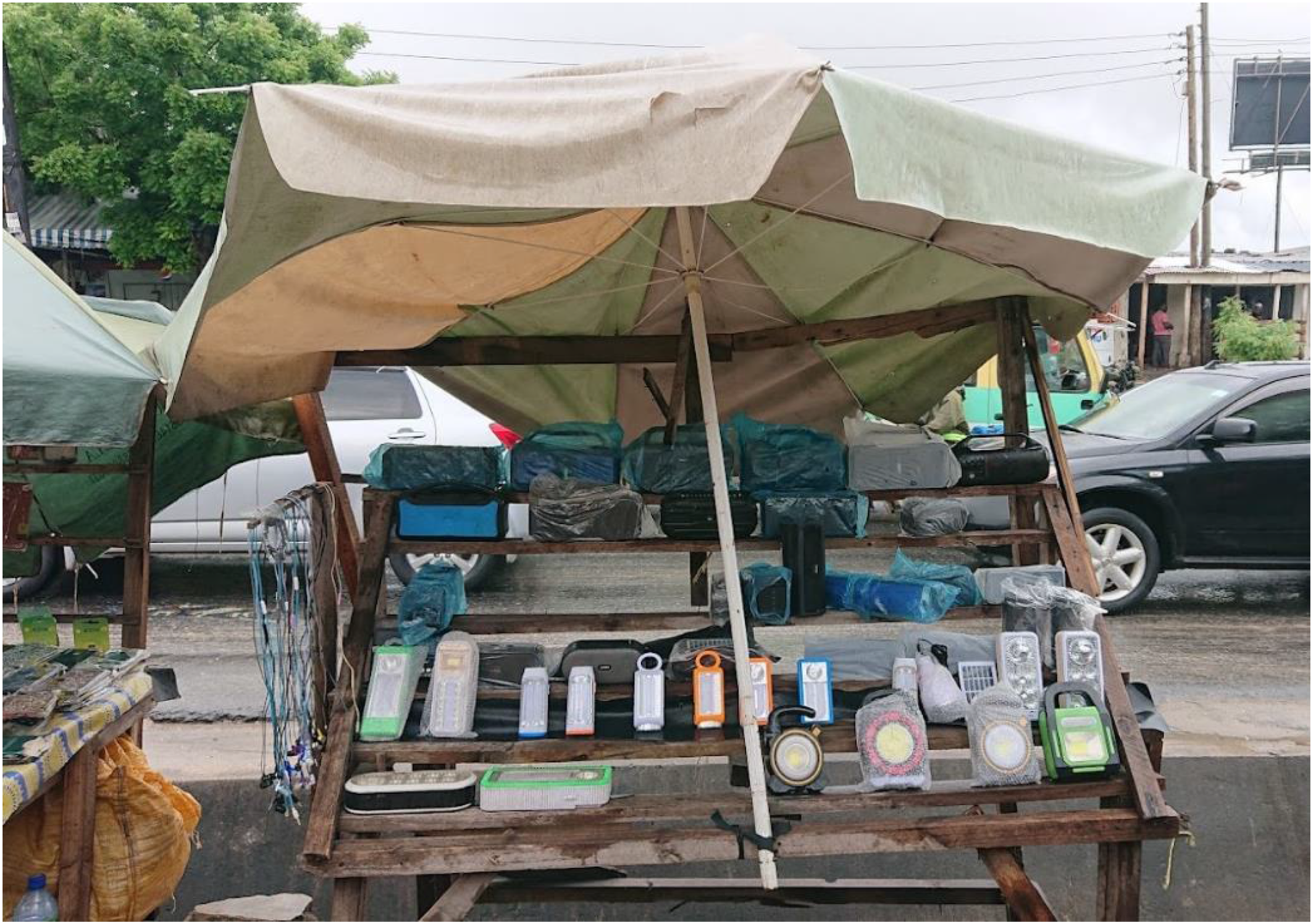
Electronics for sale on a market stall in Kigogo. The products have been put inside pouches to protect them from the elements. (Author's image, November 2023).
Gibson argues that plastic engagements like this ‘reveal desperate attempts at survival’ (Gibson, 2023: 534) as low-income groups in the Global South attempt to navigate insufficient infrastructures and other forms of (post-)colonial violence. But the search for life in Dar es Salaam is not as dramatic as that. Instead, I identify a more prosaic, mundane, phenomenon. For the manufacturers and those involved in the distribution of the pouches, there is certainly an overt commitment to the benefits of plastic, no doubt connected to the financial gain they are able to secure from it. But for users and retailers, they are not devout believers in plastic; it's just what they are given, it's just what they use. Plastic just is. I buy them for this much, put these things in them and that is that. In this sense, this article is a response to Gay Hawkins’ invitation for us to study the plastic bag as is (Hawkins, 2001). I too want to steer “away from accounts of plastic as a source of catastrophic global pollution and towards accounts of plastic as ordinary and pervasive.” (Hawkins, 2018: 386)
It is ironic that the global turn on plastics is framed around the protection of life, often animal life, yet in this local manifestation in Tanzania, it threatens human lives.
Plastics as econo-crine disruptors
There is a tendency in (English language) public discourse to speak of plastics as if they are one thing. We do not, for instance, typically speak of a polyethylene bag or a polyethylene terephthalate bottle, opting instead to talk of plastic bags and plastic bottles. The same tendency can be found in the anthropology literature around plastics. While this elision is convenient for communication it serves to flatten out distinctions between the vast array of different plastics that exist and the different dangers they present. Liboiron, does not do this. Instead, Liboiron goes further in their ‘struggle to represent the different agencies of different kinds of plastics’ (Liboiron, 2016: 91) and foregrounds the component parts of plastics: polymers and additives. Polymers, derived from hydrocarbons, are very strong – this is what makes plastics physically dangerous by giving them their ability to persist in bodies and environments. This persistence allows plastics to transport external toxic chemicals as well as extending challenges of ingestion and blockage. Additives, also known as plasticizers, are what gives plastics their other attributes, such as flexibility or mouldability – these are what makes plastics chemically dangerous as the additives disrupt hormones or increase cancer risks. Plasticizers are the same shape as hormones and so they can latch on to cell receptors in place of hormones, a process known as endocrine disruption.
Liboiron's argument is that we have to pay attention to the material specificities of plastics – their structure and how they interact – in order to comprehend how they pollute. That the effects of endocrine disruption can sometimes not appear until a subsequent generation (foetuses are particularly vulnerable to endocrine disruption) or that it is very difficult to establish which plasticizer causes which effect or that each hormone that is disrupted itself has multiple functions challenges accepted understandings of pollution like the ‘threshold model’. This is where pollutants are accepted or unavoidable up until a certain measurable point or level. After that point, pollution is said to occur. Plastic pollution, however, is less discrete. A threshold model cannot cope with generational delays; impacts that are hard to trace or isolate; the ability to transport other toxic chemicals; and ubiquity – that they are already everywhere makes it difficult to measure effects of plastics.
Reading Liboiron maps on to my experience in Dar es Salaam. Plastic bags have, like the polymers and additives that constitute them, circulated, settled, and embedded themselves into the economic structures of our lives. The ability of plastic bags to persist, physically, has allowed secondary uses to develop beyond carrying and packaging. This social entanglement is akin to how they get caught in trees or on coral reefs. Small pouches have changed eating and shopping practises in the city in a way that mirrors how plasticizers confuse hormone receptors inside the human body. Their convenient and extensive use by poor populations exacerbates the impacts of poverty in a way similar to how polymers extend the negative impact of other toxic chemicals as they move through environments. Generations have grown up entangled with plastics in ways that makes it difficult to now separate ourselves from this set of materials. What if in addition to endocrine disruption plastics also cause econo-crine disruption? The word endocrine comes from the Greek words ‘endo’ (inside) and ‘krinein’ (to separate or distinguish). In biology, endocrine is used to refer to the internal system whereby hormones separate, or rather are secreted, from glands and travel through the bloodstream until they encounter cell receptors where they activate a particular deoxyribonucleic acid (DNA) response (Thyroid UK, 2025). I propose econo-crine then, from econo-mic, to reflect how plastic pouches have separated from designed functions to carry items to the adoption of alternative uses. They have replaced previous generations of materials and previous practices of stopping and sitting to eat or taking one's own containers to the shop or market. They have disrupted the economy of food provision, storage and consumption. For Liboiron, the material specificities of plastics demand new understandings of pollution. In the case of Dar es Salaam, they demand new approaches to regulation.
Conclusion: Bridging the Plastic Divide
The harm caused by plastics is not an invention of the global environmental movement. Plastics are made from fossil fuels and require energy to produce (Tilsted et al., 2023); plastic waste does block urban drainage (van Emmerik, 2024); and both chemically and physically plastics do cause problems for animal and human health (Thompson et al., 2009). Research has also shown that these harms are most acutely felt by coastal communities and the urban poor (Corcoran et al., 2009; Gutberlet, 2023). It could then be a progressive move to control plastic pollution. Controlling plastic pollution through bans relies on the plastics being understood as bad, not useful or even vital for daily living. However, for the urban poor, in lots of places, not just Dar es Salaam, plastics are good. They are affordable, handy, lightweight, and can double up, beyond carriers or containers, as a source of fuel for cookstoves or protective covers against dust and rain. Current approaches to ban plastic materials without providing alternatives that can match plastic on price and performance therefore risk causing additional, social harm to those already facing the worst effects of plastic pollution. Bans produce a plastic divide. What then are alternatives ways to manage plastic harm?
Econocrine disruption reveals that we may be too far gone. If it is impossible to remove plastics from our lives then perhaps the alternative to bans is to learn to live with them. Indeed, this is what many in low-income communities are already doing. The economic precarity of life in places like Kigogo has produced plenty of positive examples of plastic re-use and re-manufacture which reduce or delay the amount of discarded plastics ending up in the environment or open landfill. Beyond polyethylene, various other types of plastic are integral to making a living or reducing expenditure in the city: discarded PP pallet straps are woven into a rainbow of baskets, suitcases and storage chests; used PET bottles are collected en masse to be recycled into new products or to package home-made juice, beer and palm wine; old polyvinyl chloride banners are transformed into car seat covers; used polyethylene sacks (which previously packaged virgin polymers) are sewn into sheets to sell goods from, dry maize on or cover market stalls with; while used PP paint buckets and cooking oil containers are washed out and re-sold for storing water at home; and broken PP chairs are melted and stitched back together to keep them in use longer. This range of activity demonstrates that the Plastic Divide is not a division between more and less action. These plastic engagements are Tanzanian examples of the ‘actually existing circularity’ (O’Hare, 2021) or ‘accidental sustainability’ that have been identified in other contexts (Hourigan, 2025). Although environmental concern is less overtly or vocally expressed on the poorer side of the Plastic Divide, there is often actually much greater environmental action there. The aims of global environmentalism and the search for life are not necessarily incompatible.
When we approach plastic items not as villainous antagonists but quotidian, mundane objects, the plastic actions of the majority population in Dar es Salaam are not just understandable but endorsable under the full weight of economic and material realities [which] often remain absent from discursive and analytical registers that surround plastic and wider Anthropocenic concerns. (Gibson, 2023: 534)
Bridging the Divide requires elevating these other ways of being with plastic and, when designing policy which affects plastic, ensuring to engage with those that will be most affected. Whilst the scale of re-use and re-manufacture I encountered in Dar es Salaam is currently far from the scale of new plastic production it at least hints at alternative ways of managing and marshalling plastic materials, that, given how embedded they are in our economic system and how entangled in our lives, we might need to promote if we want to minimize the negative impacts this set of materials has when left unchecked.
Footnotes
Glossary
Acknowledgements
I am grateful to my colleague, Dr Stephano Ayo, at Dar es Salaam University College of Education (DUCE) for arranging the meeting with the bag wholesalers referred to in the ‘Jobs’ section of this article. Ayo also accompanied me on occasion to interview retailers and users of bags. The research was conducted as part of a project called: Sustainable Plastic Attitudes for the Benefit of Communities and their Environments (SPACES). I am also grateful to my mentor and one of the project co-investigators, Professor Kate Hampshire, for providing feedback on the ideas and the text for this article. Colleagues at the University of Manchester also offered comments on a version of the article presented in the Social Anthropology department seminar. Finally, I would like to thank the three anonymous reviewers and the editorial team at the Journal of Material Culture for their close reading and constructive feedback on the article.

Ethical considerations
This study was approved by the Durham University Ethics Committee.
Consent to participate
The nature and purpose of the research were explained to all participants. Informed consent to participate was verbal, as is appropriate in the context.
Funding
The author disclosed receipt of the following financial support for the research, authorship, and/or publication of this article: This work was supported by the UK Research and Innovation National Environment Management Research Council (NE/V005847/1).
Declaration of conflicting interests
The author declared no potential conflicts of interest with respect to the research, authorship, and/or publication of this article.
Data availability
The data sets generated during and/or analysed during the current study are not publicly available due to the need to protect research participants – some of whom were engaged in technically illegal activity.