




Abstract
This article reconsiders the relation between ethnographic accounts and non-human inscriptions by tracing waste as material data. It engages with the dynamism of residual matter at the epistemic level while aiming at expanding the range of possibilities of research on waste. What we call garbography unsettles the predominant meaning-centric understanding of our methods by paying attention to the expressiveness of residual matter as an asemic inscription or graphein of sorts: in its propensity to leak, rot, grow, mould, tarnish, and stink, waste ‘writes’ by leaving marks. To practice garbography is thus to be involved in exercises of tracing material inscriptions that might not be directly translatable to verbal language. After providing a series of examples from fieldwork in post-industrial settings of Estonia, we conclude that by thinking with traces and approaching waste in the writing, we can better understand non-human socialities and how the organic, the symbolic, and matter are entangled.
Keywords
Introduction
What new can waste teach us about the world and, eventually, ourselves? William Rathje's ‘Garbology project’ engaged with this question by making use of the methods typically applied by archaeologists to study the remains of ancient civilisations, yet in his case, to the purpose of studying the leftovers of our own contemporary societies. Rathje and his colleagues branched out into exploration of landfills to examine the rubbish as if it were a record of human culture and social relationships. The project's premise was that garbage is a useful source of cultural information, revealing more about people's lives than what they themselves are willing to disclose or even capable of telling. In his garbology, Rathje (1996) approached contemporary garbage as a material laden with meaning and tried to bring in scientific analysis (logos) based on that kind of data. He advocated for the additional analysis of material traces as insights into the nature of our societies. Yet, besides learning about people's behaviours from the material realities they had consumed, garbologists also discovered that biodegradation was not proceeding as designers had assumed and the respective leftovers were lasting longer in the landfills than initially foreseen (Rathje and Murphy, 1992).
The physicality of waste tends to be obscured, however, by approaches which assign primacy to its nature as a sign and as a symptom. Hence, instead of examining residual matter as a reflection of society and consumerism, as garbology does, in this article we propose a research strategy for depicting waste beyond representation, as a form of writing that might have significance despite holding no meaning. We call our approach garbography, by which we mean a multimodal engagement with the dynamism of residual matter by tracing voiceless expressions such as rotting, scratching, engraving, rolling or incising. The neologism is formed by combining the English word ‘garbage’ and the old-Greek ‘graphos’ (a drawing, a writing) inscribed in the concept of ethnography.
Even if the left behind may resist our analytical interpretations and appear in ways that do not make sense to us, Garbography presents a means of attending to the relative independence of waste and its material processes from human agency and intentionality. It is about studying ethnographically waste's capacity of expression through non-representational inscriptions that do not convey any semantic meaning or verbal message per se. This research practice traces the relationalities constitutive of and constituted by garbage, even at the expense of engaging with what lies beyond our familiar structures of meaning and is remote from human comprehension (Schwenger, 2003; Yusoff, 2013; Zhu, 2018). As a result, garbography unsettles the predominant meaning-centric understanding of ethnographic research, problematising the conventions of knowledge production and representation.
Garbography entails sensory attentiveness to a non-static field in which matter constantly mutates, shifts, and inscribes itself. Therefore, garbography helps us venture into new ways of knowing with waste by embracing its ambiguity, mutability, and all the indeterminacies that come with any human gesture to do so (Lepawsky, 2018; Liboiron and Lepawsky, 2022). By tapping into non-human communication, we aim at widening the possibilities of describing waste and the expressiveness of residual matter. Hence, we do not propose garbography as something that discard studies scholars should consider over garbology but as something complementing it, to be taken alongside it. Thereby, we refer to ethnography in a manner different from how this research method is usually understood; instead of people (ethnos) and instead of searching for meaning, our explicit focus is on the materiality of waste and what escapes words.
In what follows, we examine the expressiveness (rotting, decomposing, tarnishing, leaking, rolling, decaying, etc.) of residual matter as a form of inscription. To develop a way of attending to the dynamism of residues at the methodological level, the garbographic engagement with waste tries to avoid the subordination of material inscriptions to language and meaning. For that, we study waste as a non-representational ‘trace’ that does not communicate anything else but its – oftentimes disturbing – own material presence (Derrida, 1981; Ingold, 2007; Lorimer, 2005; Thrift, 2008). The interpretation of waste does not have to be semiotic, nor do thick descriptions need to be constrained by text-centred frameworks (Geertz, 1973). Therefore, garbography expands the range of possibilities of research in discard studies, yet without reducing it to conventional word-based descriptions.
Garbography provides a non-verbal entry into the understanding of residual matter while challenging the anthropocentric notion of waste. By depicting residual matter beyond conventional language-based expressions, we also foreground the relative independence of waste and its developments from human agency. Doing so, we challenge not only the separation of the knowing subject from the known object but also the aspiration to separate, categorise, appropriate, and control matter and materials, as well as delineate the limits of this way of thinking. We start by elucidating the endeavour of examining waste beyond meaning. Then, we delineate garbography by distinguishing it from both garbology and bio-semiotics, which too have addressed the materiality of waste. Whereas they treat waste as a sign, we consider waste in terms of non-representational traces or asemic inscriptions. After that, we move to our empirical stance and illustrate the practice of garbography by drawing on a series of art projects and fieldwork conducted in post-industrial settings of Estonia. Finally, we conclude by summing up the main contributions of the article and highlighting to what extent the consideration of waste in terms of asemic inscriptions has the potential to expand the ways of depicting matter beyond interpretative frameworks.
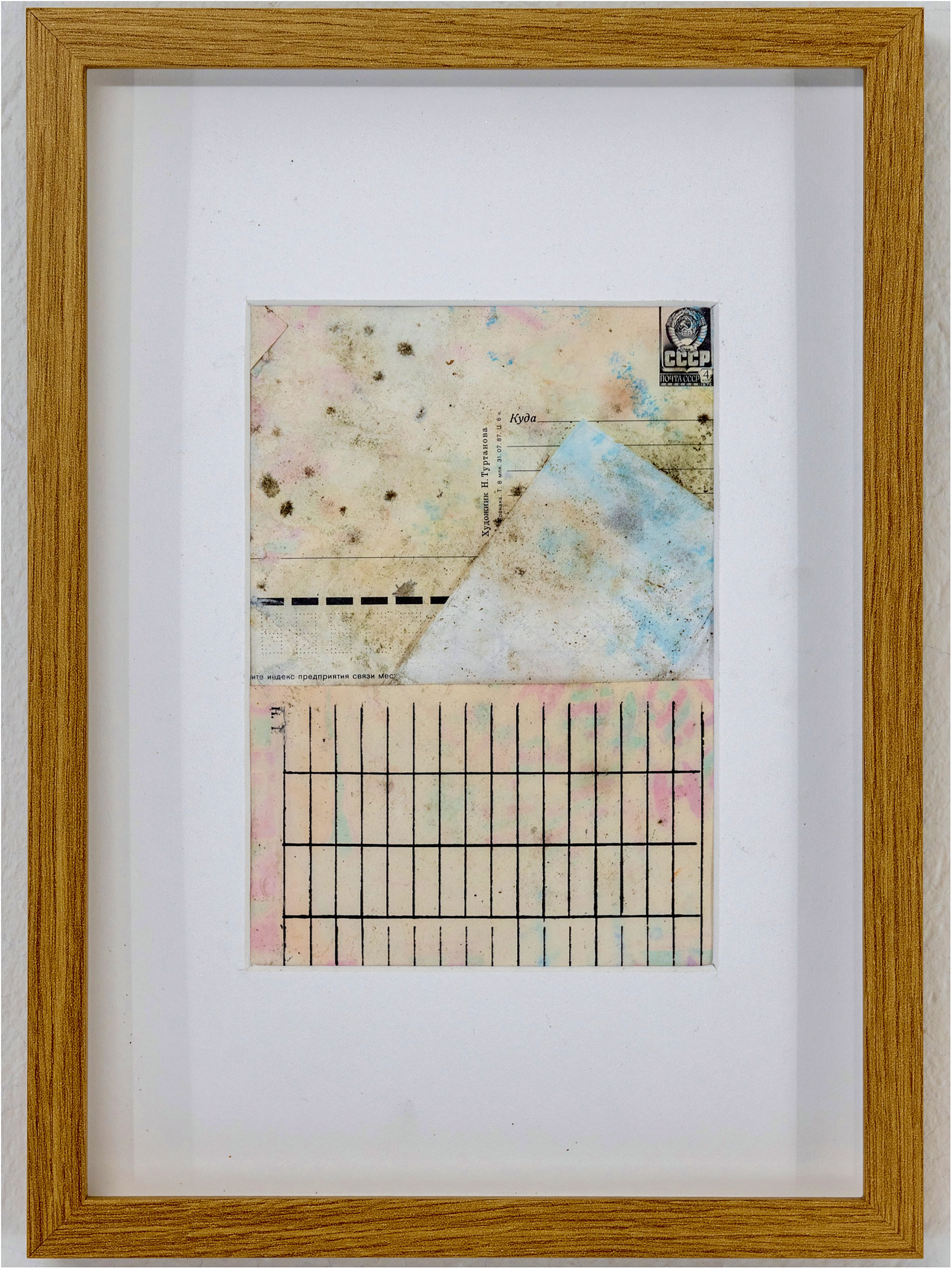
Territory, by Francisco Martínez. Joosep Kivimäe, 2024.
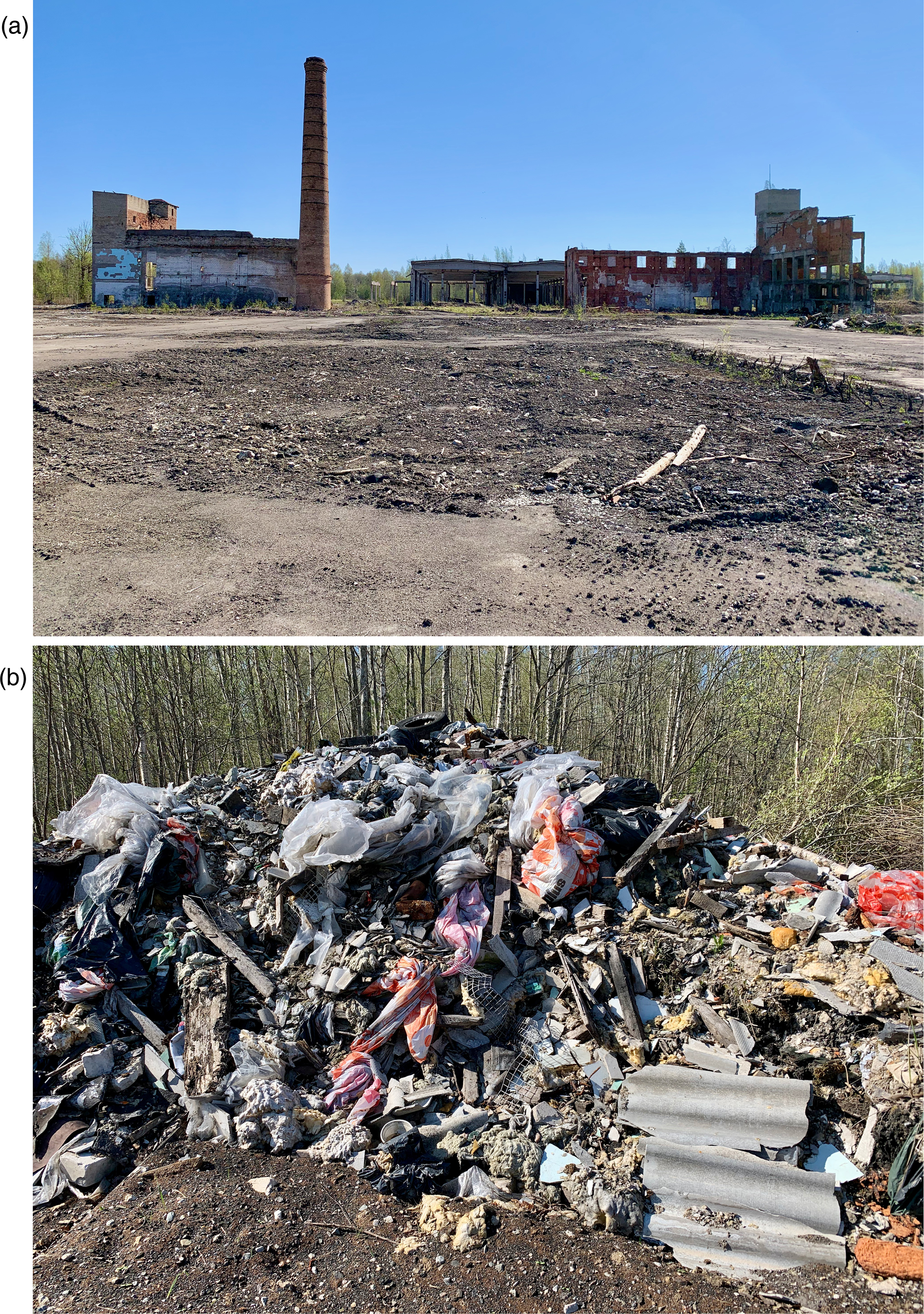
Residual materials at the site of the Kohtla mine. Francisco (Martínez, 2021).
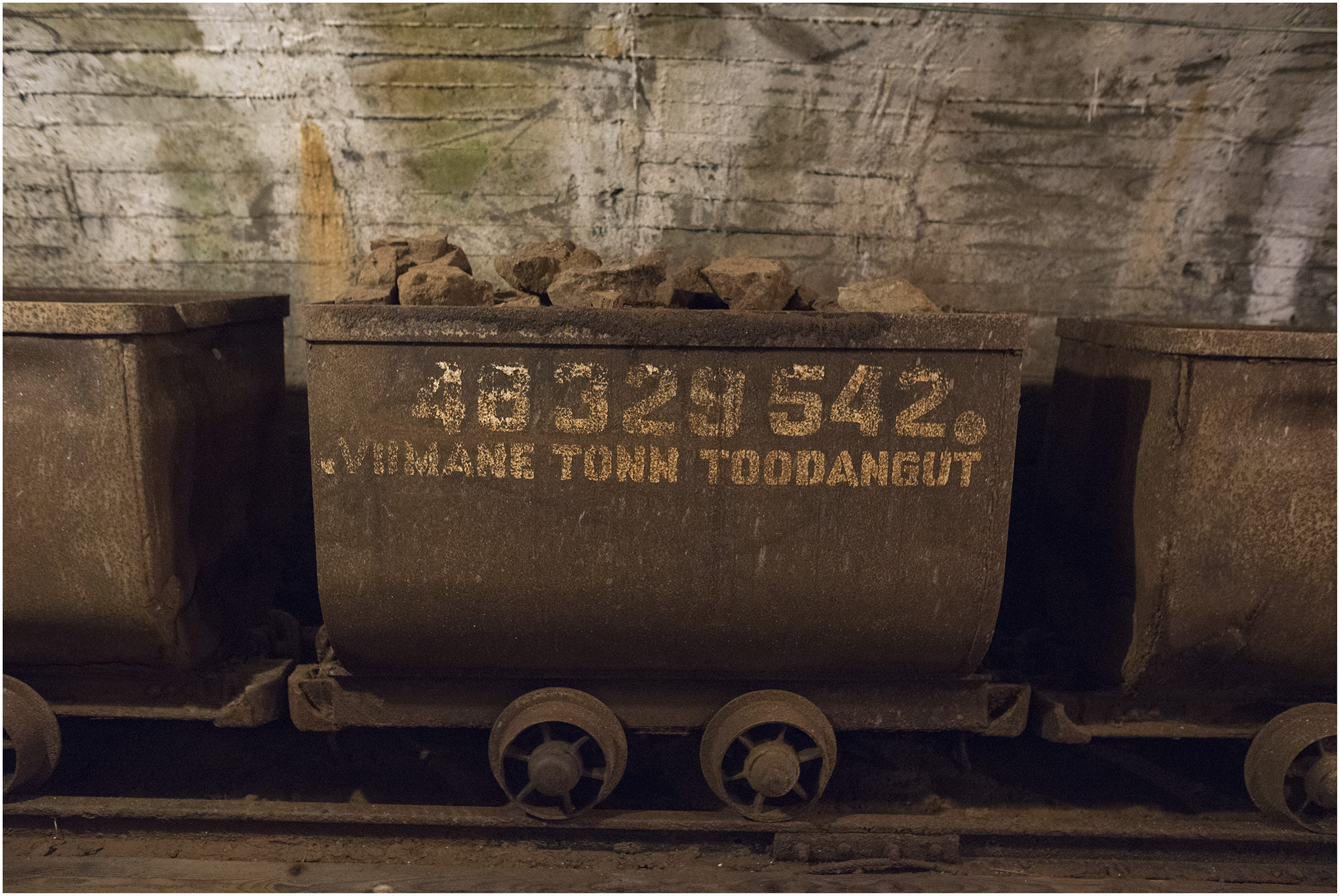
Last wagon of oil shale, displayed at the museum. Laura Kuusk.
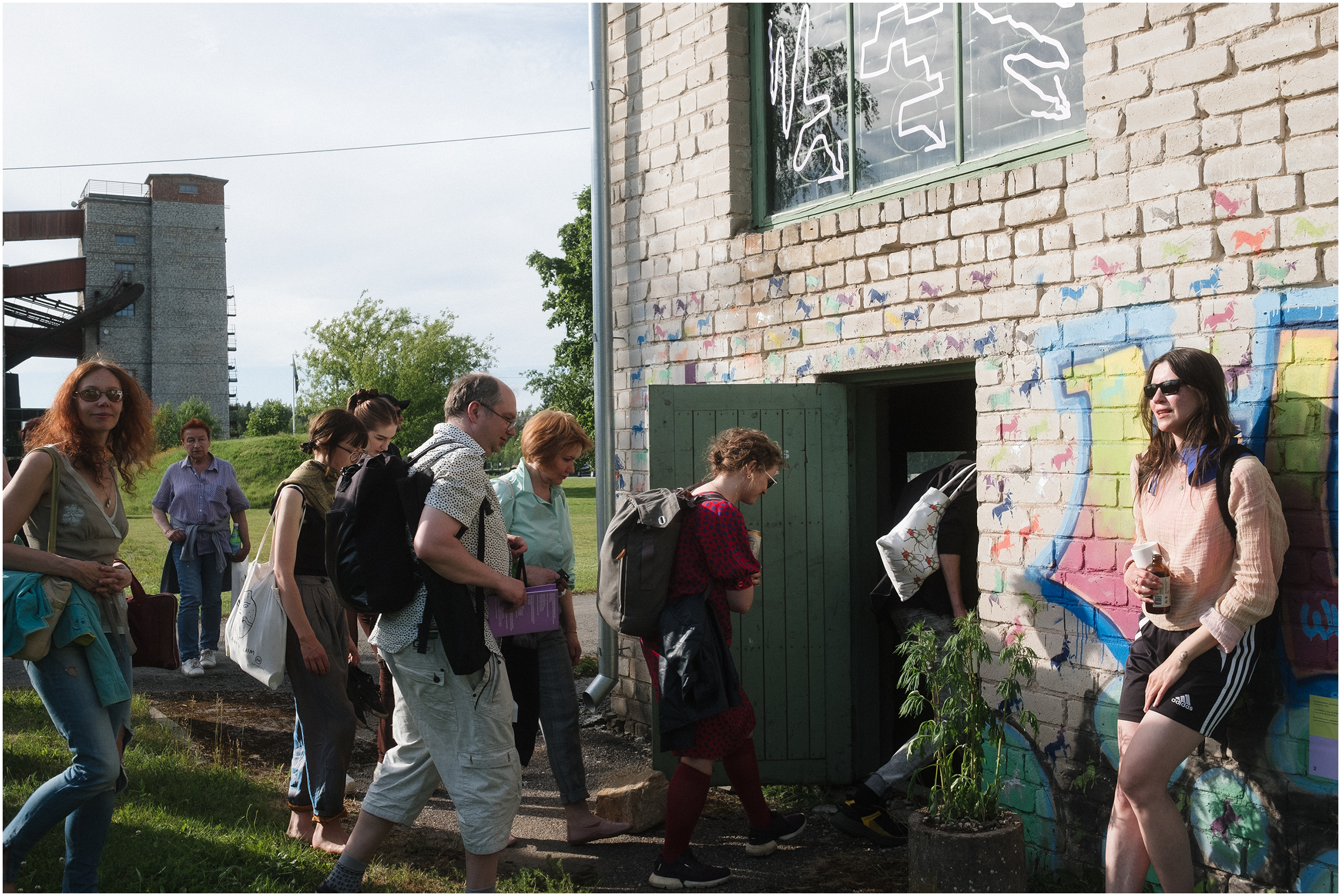
‘Sore’, by Sandra Kosorotova. Joosep Kivimäe, 2021.
‘Geofractions’, by John Grzinich. Laura Kuusk, 2021.
‘Waste Side Story, by Viktor Gurov and Francisco Martínez, 2025.
Interior of one of the apartments. Laura Kuusk, 2021.
A corner on the stairs of the abandoned building. Francisco Martínez, 2023.
Waste matter as asemic inscriptions
How can a focus on non-representational waste-traces possibly renew the study of residual matter and the understanding of waste? The field of discard studies has traditionally explored how humans dispose of and generate trash, and also how waste can be managed and transformed into a resource (e.g. Alexander and Reno, 2012; Corvellec, 2014; Crang and Gregson, 2015; Isenhour and Reno, 2019). Consequently, different efficiency-driven, technocratic systems have been developed (e.g. recycling, solid waste management), yet the overwhelming increase and multiplication of residues challenge prevailing assumptions about the governability of waste, since managerial and technological measures have not succeeded in resolving the waste problem (Corvellec, 2019; Czarniawska and Lövgren, 2014). Residual matter remains despite strenuous socio-technical efforts made at eliminating it. Waste is therefore never completely tamed and controlled by the techniques that manage, govern, and exploit it, but it constantly escapes them. It is the same with the human imposition of meaning on waste, we would argue. Hence, in this article, we explore what it would be to look at residual matter not only beyond management but also beyond language and signification, from the point of view of ecological forms of writing. And our answer is to practice garbography, a mode of inquiry that focuses on traces and inscriptions in and of waste.
Despite the advances brought up by material culture studies about the limitations of a strictly social approach to materialities (Buchli and Lucas, 2001; Drazin and Küchler, 2015; Miller, 2005), 1 insufficient focus has been given to how residual matter might have capacity for expression independent from humans. The same holds for discarded studies as well. For all its recent insistence on waste being also material (Thompson, 1979), social research on rubbish nevertheless tends to remain within the framework of human categorisation, insofar as it considers waste as the result of a separation of the desirable from the unwanted and value from the valueless (Reno, 2017).
To counter such anthropocentric line of thinking, Tim Ingold (2011) suggested that analyses of material culture should focus less on the ‘objectness’ of things and more on the textures of the world and the material flows through which relations come into being. Also anthropologist Joshua Reno has argued for an alternative manner of approaching waste. Drawing from bio-semiotics and cross-species scholarship, Reno considers residual matter as ‘a sign or remnant of a form of life, whether human of otherwise’ (2014: 8). 2 What the garbographic take has in common with Reno's bio-semiotics is an attempt to speak of waste beyond symbolic categorisation and as something else than merely ‘a mirror of human culture’. However, as Reno treats waste as a ‘sign’, for us, his approach still bears echoes of the privileged position given to language and meanings over the materiality of waste and, therefore, fails to free itself from the culturalist framework.
In bio-semiotics, the actual material processes that make up our worlds therefore fade into the background. To avoid the subordination of waste to the framework of language, we propose considering residual matter in terms of traces and inscriptions, drawing from the artistic movement of asemic writing. The word ‘asemic’ is derived from the Greek word sema, ‘sign,’ preceded by the privative a- (Schwenger, 2019). While the asemic movement is of recent origin, launched by two visual poets, Tim Gaze and Jim Leftwich in the 1990s, examples of asemic written forms can be found in several cultural traditions long before – for example in 8th century China – there was a name for such things. In the West, artistic traditions as diverse as Dada, Futurism, Surrealism, Fluxus and Abstract Expressionism explored wordless forms of writing (Gaze and Jacobson, 2013). 3
Inspired by these traditions, Martínez has performed two garbographic exercises for the exhibition Misreadings (Telliskivi Creative City, Tallinn, 2024), organised together with designer Viktor Gurov. The first one was an art installation titled ‘Asemic Letters,’ which reproduced the senseless inscriptions caused by mould, mildew, rodents, birds and insects in the documents encountered in an abandoned library of the nuclear town of Sillamäe. Within the pages of old books, the two garbographers gathered dozens of marks and patterns that could not be read yet served to mark some activity and territory, as if these expressions were graffiti tags or coded messages. Here, we are not talking of vandalist activities nor of lovers’ notes, but the signature of multiple non-human agents forming altogether a parasitical art.
Asemic inscriptions are not exactly a message, nor a linguistic form of expression. They communicate nothing but their own nature as writing. The prefix a- negates the expectation – or even any possibility – of meaning. In that sense, asemic writing is ‘illegible,’ impossible to read and translate into human language. The marks and inscriptions do not belong to any familiar sign system; they exist before language and meaning (Gaze and Jacobson, 2013; Schwenger, 2019). Attending to the inscription of non-ideogrammatic marks, garbography treats waste as material information (Offenhuber, 2017), as having four-dimensional expressive capacities apart from humans.
As long as waste is conceived as a reflection of society (as in garbology), or as a sign of life (as in bio-semiotics), its auto-objective (Deleuze and Guattari, 1987: 317) and auto-graphic (Offenhuber, 2024) nature is obscured. By contrast, when conceptualised as asemic inscriptions, residual matter is examined as traces that do not stand as a sign of and for anything else, merely present themselves. By the notion of ‘trace’ we refer to inscriptions and marks (Ingold, 2007), which nevertheless do not appear in the guise of the sign but as a witness of the unrepresentable (Derrida, 2016). Accordingly, one way of distinguishing between garbography, on the one hand, and garbology and bio-semiotics, on the other, is by focusing on their very different understanding of trace. While for garbology, waste is taken as a reflection of social relations or a mark of a human subject, and for bio-semiotics ‘a sign of and for other-than-human beings’ (Reno, 2014: 4), for garbography trace is autonomous, examined in its materiality, without seeking any cultural meaning in it.
Accordingly, the activities of the garbographer do not resemble those of ‘the translator, the exegete, the iconographer’, to whom Clifford Geertz (1973: 5) likened the ethnographer, but those of a gleaner, curator, or ‘correspondent’ (Ingold, 2016). Waste-traces are ‘self-inscribing’ (Offenhuber, 2024: 14, 17). Not unlike other ecological forms of writing, such as rolling rocks, rives in the soil, animal bones in the stratum, leaves in the coal, patterns of a wood worm on a tree bark or bitemarks of bugs (Emerson, 1901: 203; Pyyhtinen, 2022), residual matter expresses its presence by trace-making. Such writing happens before signification in the form of non-verbal inscriptions and may therefore carry shadows of meaning, without conveying any message. Garbography thus entails a move from a semiotic reading of waste to a ‘textural’ approach (de la Fuente, 2019). It focuses on surface patterns as well as on the mutating trajectories, flows, and movements of materials foregrounding the materiality of writing.
The second garbographic exercise at the Misreadings exhibition was the art installation ‘Territory.’ The project inspected the polluted and stigmatised condition of Eastern Estonia, one of the most waste-heavy areas of the world with over one billion tons of industrial refuse. ‘Territory’ was the result of an experimental collaboration with the soil and water of the region. Five documents from the former School No. 1 of Sillamäe were buried for three weeks in the area where the uranium factory used to be, and other five documents were sunk into the waters of the poisonous blue lagoon of the Auvere Power Plant for a day. Then, cataracts of toxic time began weathering through the documents. The tortured aesthetics of these artworks were completed by external elements, such as leaking, rainfall, material interactions, mineral mutations, and bacterial and alkaline interventions, besides the spirit of the place, of course. The volume of the documents increased, as mould took over. Small ecstatic forms of disappearance also germinated, as if the documents were incorporating the side effects of infrastructural harm on themselves (Figure 1). The experimental exercise was a way of re-presenting how the externalities of mining transpire, generating, in turn, more-than-human aesthetics that favour the possibility of knowing the territory anew.
If we assume that experimentation involves doing things differently, and not just with other technologies, not imposing meaning on our waste is a way to rethink how we relate to the world. Garbography is about venturing into new ways of knowing with waste by cultivating a tracing sensibility. It shares with garbology the idea that ‘to understand garbage you have to touch it, to feel it, to sort it, to smell it’ (Rathje and Murphy, 1992: 9), but it refutes the interpretative approach and search for meaning of the latter. Nonetheless, waste-traces are not ‘monolithic entities’ but the product of the interfolding of variegated materials and processes with different spatial origins, intensities and temporal rhythms (Latour, 1999; Millar, 2018). Waste-traces tend to be ‘additive’ rather than ‘reductive’ (Ingold, 2007: 43), as they form an extra-layer on a surface rather than being scratched, etched, or scored on it. In addition, traces do not have to be enduring, but they may also be ephemeral phenomena such as smells or sounds.
Garbography provides an opportunity to come-to-know traces since, epistemologically, they exist in a state of in-betweenness, being something out there in the world while at the same time recognised by the observer (Offenhuber, 2024: 23). Garbography attends to residues both as a material trace (auto-objective) and as trace-making (auto-graphic) matter. The idea of waste as auto-graphic entails that residual matter is examined not as a substance that would then express itself in some ways, but as something that is its expressions and inscriptions. When understood as a trace instead of a sign, waste appears not as the constituted mark of a single agent, be that human or non-human, or as a symptom of culture and social relationships, but as the constituting mark of a territory or domain. 4
Next, we will illustrate the practice of doing garbography in more detail by drawing on fieldwork conducted in the former Kohtla mine located in Eastern Estonia and the ISFAG Gallery of Tallinn. Our work around these post-industrial sites serves to make a case for garbography as a research practice and exemplify how it is embedded within a wider ecology in which we, humans, are not the only agents engaged in inscribing, expressiveness and place-making.
Strangers in the landfill
The Estonian oil shale industry officially started with a decree on 24 November 1918, subordinating the explorative open pits initiated by Russian and German engineers to the government. In the short geological instance while the Kohtla mine was active (1931–2001), human action seemingly colonised both the territory and resources; yet that was only a brief mirage. The current site hosts different instances of residual mutation that go from entropic implosions of signs and expressions to silent traces of recovery. When humans abandoned the site and the elements left behind began to deteriorate, the area was reclaimed by vegetation and animal life, and the territory became a no-man's land with uncoded negativity. A lot of seemingly undetectable activities happen there now, where nature-culture hybrids emerge or disappear disobediently. Therein, we can encounter fragments of planned and unplanned actions, multi-directional geological and biological mutations, and inscriptions to be found in feral trails, rubber shreds, plant seeds, mouse droppings, fungi, white and red bricks, animal and body hair, decomposing plastic bottles and burned metal cans, rusting pipes, enduring wires, floating ashes, leaks and drips, growing shrubs, orifices, scat and newfound shelters by various species.
Non-human sociality and salvaged expressions become accessible by practising garbography, entering the blurred terrain where neither nature nor culture, nor the elements that traditionally compose them, are easily distinguishable and knowable (Harrison et al., 2004). Eventually, the attunement to waste as traces allows us to account for how trash is part of a material world beyond human-defined objects and despite eroding assigned meanings (Edensor, 2005). Nonetheless, garbographic research does not follow the traditional inter-actionist understanding (in which the agents are fixed, identifiable entities pre-existing their relations), but rather goes a step forward and takes an intra-actionist mode of study where the world is constituted by betweenness and a multiplicity of hybrids (Barad, 2007; Whatmore, 2002). The ongoing agencies are thus removed from unity, concreteness, and function, and simply endure as salvage matter with no fixed and clear signification (Figure 2-3).
These kinds of traces are traditionally labelled irrelevant in heritage and scientific accounts, often erased or ignored. Yet in garbography, they are given precedence precisely because of reflecting the tension between the natural and the cultural. Provocatively, Claude Lévi-Strauss complained about the human tragedy of not being able to verbally communicate with other living species, despite sharing with them the joys of the planet (Lévi-Strauss and Eribon, 1991: 139). And it has been a recurrent human dream to know how some animals, trees and birds might feel or become like them, even if temporarily. Think, for instance, of the wonderful adventures of Nils Holgerssons flying on wild geese during their migrations (Lagerlöf, 1907). There are also more recent examples of this. For instance, designer Thomas Thwaites (2016) took a break from being human in an attempt to learn from the bodies of other animals. Thus, to walk like a goat, he built quadripedal prosthetics. To achieve a goat-like mindset, he experimented with hallucinogens and transcranial magnetic stimulation. He had difficulties with eating grass though, since goats have four stomach chambers with which to digest it. Nonetheless, with this apparently weird experiment, Thwaites managed to show the limits of the human senses and physiognomy.
In the study of how humans arrange themselves materially and relationally, ethnographers come to know by acting as professional strangers (Agar, 1980; Martínez, 2021). Likewise, we are also foreign when stepping into a landfill or a post-industrial site. Eventually, spaces such as the site of the Kohtla mine, being marked by a long absence of human activity, can give rise to non-authoritative narratives (Edensor, 2005). This is because the disintegration of human occupation does not necessarily lead to the evacuation of other forms of activity. Instead, the residual matter left behind deploys an indirect way of telling stories ‘that we could never grasp through more direct forms of representation’ (Hetherington, 2001: 39).
Indeed, the wasting at the site of the Kohtla mine encourages experimentation with our ways of investigating waste. This was exemplified by geographer Caitlyn DeSilvey while studying a derelict homestead in Montana. She confronted the challenge of how to document these things in decomposition. Instead of categorising them, DeSilvey chose to show the processuality of their decay through situated forms of storytelling. The things she encountered were becoming rusty, holed, or pulled apart by animals, covered in mould, generating not only contemplation through the embodied responses of ‘repugnance and attraction’ (DeSilvey, 2006: 320), but also questions about how they might have ended up together in a dump. Interestingly, the disarticulation and decomposition of these things was ‘allowing other-than-human agencies to participate in the telling of stories’ (ibid: 318), as they were left together on a specific site. Thus, even if involuntary and imperfect, this residual matter was holding a potential of becoming data, something of an entropic, outdoors archive, as it were (DeSilvey, 2007).
This article also suggests a reconsideration of the role of creative forms of (re-)presentation as key ways of engaging with residual materials, because matter transcends our capacity to document and interpret its shifts, mutations, decay and territorialisations. Subsequently, the garbographer navigates through sensorial passages, being affected by the fluctuations, leaks, and flows of residual matter. Besides vision, garbographers also intertwine other senses such as smell and touch with their research practices as a way to know the capacity to affect and be affected that resides within residual matter. A multimodal approach is thus useful in making graspable the complex array of processes and guises that render material arrangements constitutive of more-than-human entanglements.
Lost and found
When the Kothla mine was closed down, a mining park with different leisure activities began to operate on the western side of the waste hill and, soon after, a museum was opened there. The current Estonian Mining Museum offers the opportunity to explore underground kilometres of mining, get acquainted with obsolete technology, and enjoy guided tours by former miners (Figure 4). Hence, it provides a nice visit, combining historical information and entertainment. One of the interesting aspects of this museum is how the different parts of the landscape are integrated into the visiting experience, since some are partly underground and indoors, and some other parts above. The display has many devices for school kids, the main audience of the museum. We can also notice the branding effort of the corporation that owns the place – Eesti Energia.
Nevertheless, once you step out of the museum and explore the nearby territory, things start to go wild. You do not have to jump over any fence for that; just walk over the hill, to the forgotten ponds, or into the former administrative building of the mine. At the entrance to that white building, we can read a banner telling a Kafkaesque story of the time when a bunch of flies took over that construction, right after a shady renovation in the 1990s. Here is a translation summarising the story: As time went on, the old wooden administrative building grew too small—the entire mine was growing and the number of miners increasing… The new brick building erected in 1960 was much bigger and more presentable. Many everyday problems resolved once the move was complete; for instance, the new building had better showering facilities. The only negative aspect was the lack of a basement… In the mid-1990s, a modern tin roof was built on the building. When the mine director went to see the bosses, they did not agree to the idea of changing the existing roof for a more expensive one. The director did not back down, so the roof could only be changed by concealing the costs. At Eesti Põlevkivi, no one found out about the new roof, so the problem apparently solved itself. However, the new roof produced a mysterious phenomenon: for unknown reasons, the attic became infested with fruit flies. There were so many that the windows on the third floor could not be opened. All sorts of things were tried to get rid of the insects—toxic sprays to replacing the insulation in the attic, but nothing helped. The fruit flies went away by themselves when the temperature fell below freezing.
An example of this fact is ‘Sore’ by Sandra Kosorotova (Figure 5). For her installation, Sandra transplanted several weeds found among the debris of mining into the exhibition, using trash ‘pots’ to grow them. She also dyed a textile with local plants, which was then displayed in the laundry room of the former administrative building of the mine. Sandra started her research by asking ‘What plants actually grow in exhausted ecologies?’ Then she developed a genealogy of what a weed is, challenging modern ideals of how nature and culture should interact.
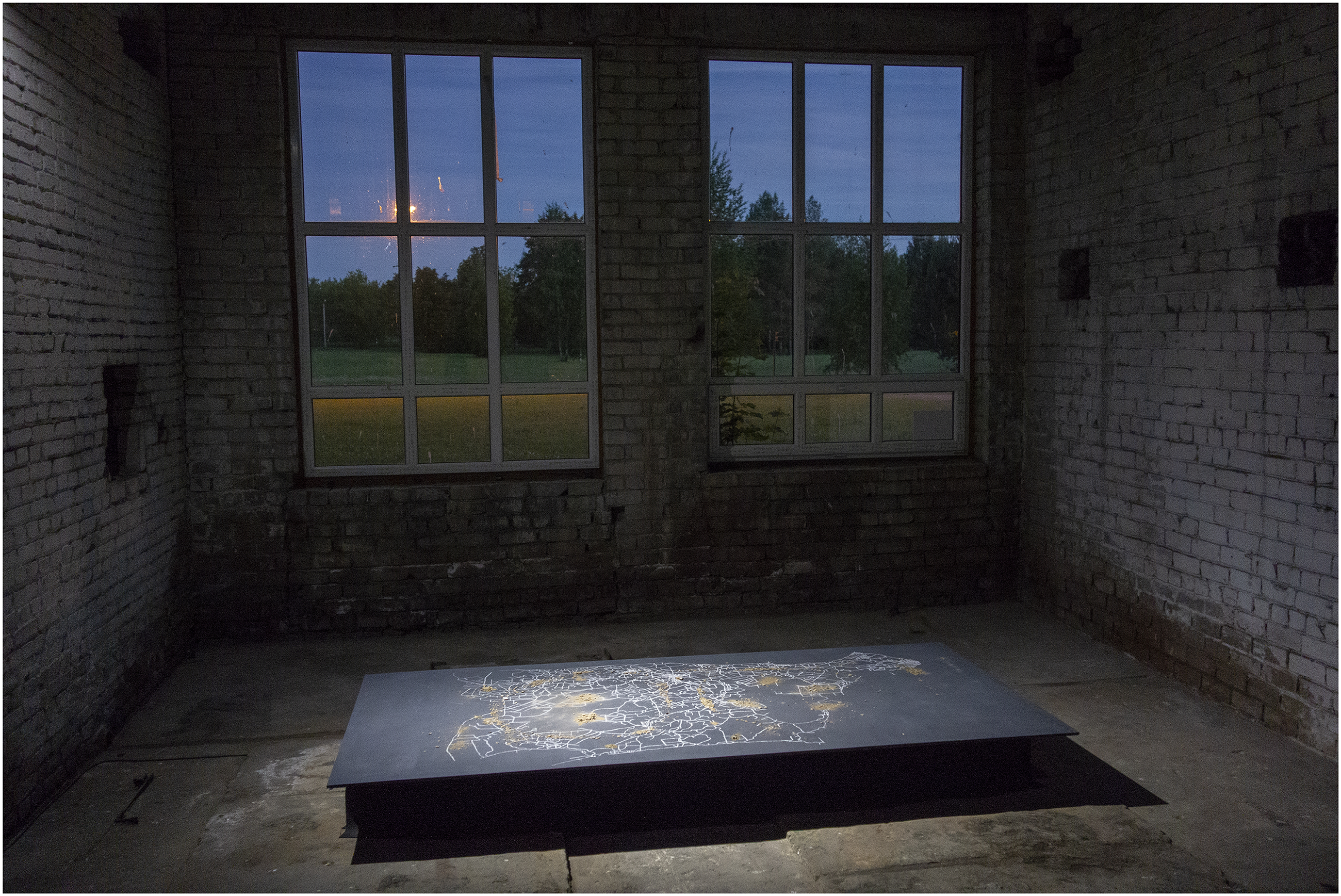
Another of the installations displayed in the exhibition was ‘Geofractions’ by John Grzinich. This project gave a sensory experience of the processes and infrastructure of oil shale extraction that often remain hidden from the public (Figure 6). While we have grown familiar with the visual language of mined landscapes, we have rarely been able to immerse ourselves in extractive processes through the auditory. During our time in Kohtla-Nõmme, John was talking of unexpected surfacing reactions and ‘the iceberg effect of land processing,’ by which we can only see a small part of the whole industrial intervention. As part of the public programme of the exhibition, John also did a performance presenting the dystopian scenario of a sudden reduction of energy production in the word. While John was playing his industrial sounds, a flock of birds living under the roof of the boiler building were singing to the extent of not clearly distinguishing what was recorded and what was performed in situ. Later on, one of the birds also fell dead in front of his installation, as if culminating the dystopian tale.
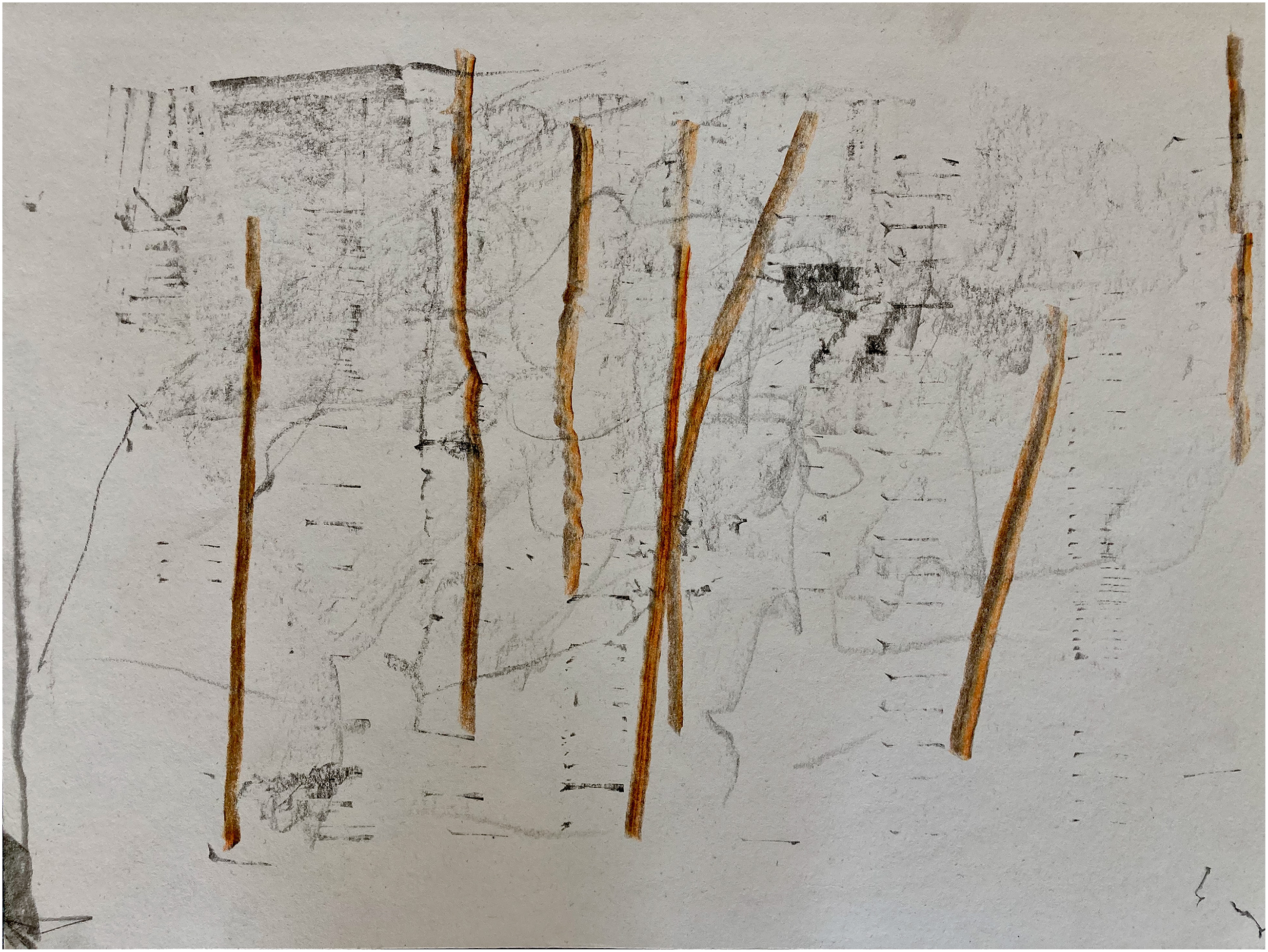
The practice of garbography allows us to capture the elusive, unruly, and fluid character of waste, as well as to empirically engage with ambivalent perceptions traditionally associated with negativism and aversion. This research strategy can be performed with multimodal accounts using photographs, drawings, maps, sound recordings, video, art performances and storytelling sculptures to represent the transformation of both inorganic matter and living bodies as waste, here taken as non-linguistic data in physical form. An example of this is the installation ‘Waste Side Story’ recently created by Martínez with designer Viktor Gurov. Inspired by the asemic artistic traditions, we have created five collages, a series of waste tags and a sculpture capturing the capacity of expression of the industrial rubble accumulated in the Paljassaare peninsula. In an attempt to write drawingly the multiple layers of waste accumulated there, Martínez and Gurov traced different marks of decomposition of the mixing and mutating residual matter (Figure 7).
This area has been receiving industrial waste for a century. A coastline recession at the end of the nineteenth century exposed more land in north Tallinn, where early industrial developments, workers’ housing, and a brick factory were established. A great part of the waste of their activity has been thrown into Paljassaare, generating a multiplicity of materials and layers of rubble since then. The area originally comprised two islands, which were then attached to the continent, looking like a peninsula as a result. Besides a landfill, Paljassaare was also used for fishing, for mineral extraction, and as a military control zone. 5 By being involved in exercises of tracing material inscriptions that might not be directly translatable to verbal language, we aim at widening the possibilities of understanding how the organic, the symbolic, and matter are entangled. This experimental form of ethnography shows how we can operate beyond meaning-centric observations and allows us to develop multiple ways of paying attention to the presence, composition, and mutation of residual matter. We look at waste, not through it, assuming that rubble is able of narrating itself in through a series of inscriptions and traces that are available to the senses in a wordless material way.
Another example of introducing discontinuity and loss of meaning into research is provided by the site-specific exhibition I looked into the walls and saw… that Martínez curated at ISFAG in Tallinn together with Maros Krivy. Rather than bringing new artworks to the gallery, we proposed to the participants to reflect on the post-industrial space as if it were a sculpture, an installation or a painting in its own right. In this case, the gallery had functioned for more than half a century as a coal storage for the near electricity plant. The curatorial gesture thus consisted in approaching the space of the gallery as the object of curation while refraining ourselves from any physical intervention in it. Subsequently, we invited twenty guests to engage sensorially with the diverse physical qualities of the space, identifying site-specific features already present there. Indeed, the main artworks of the show were the patina of the former industrial complex, themselves subject to disintegration and in the middle of multiple apparitions and dispositions. 6
One of the participants was street artist Minajalydia, who noted how the space encapsulated mysterious inscriptions that made us think of coded messages. She originally approached material decay as an act of communication similar to graffiti. The gallery space also served as a distinct ecological habitat for microbes and fungi; these kinds of appropriations were narrated by art historian Marika Agu through the Thumbelina fairy tale. We also tried to account for the relations forged by different organisms, some of them invisible to us. So, Tiiu Koff and Agata Marzecova developed a geological cross-section analysis of the wall, noting materials and rocks from different eras, as well as an X-ray fluorescence spectrometry of the gallery floor to find rare earth elements and heavy metals therein.
But what is in decay and for whom? For the microorganisms at the mine and the coal storage there is no decay, just permanent transformation. Postindustrial landfills are particularly vigorous with bacteria metabolising discarded objects into leachate, which then leaks into plants, trees, animals, fungi, insects, cells, and the atmosphere. These metabolic interchanges not only challenge the primacy of anthropocentric perspectives but even question the human control of waste. Materials at landfills, for example, can never be fully technocratically constrained nor rendered determinate by forms of human knowledge (Hird, 2012; Ureta, 2016). Waste relentlessly flows, but not in ways that are necessarily comprehensible. In this context, garbography allows us to represent different elements of variability, shift, and biodegradation, therefore experimenting with the possibility of practising more dialogical descriptions that include the perspective of residual materials.
A garbographic engagement with these traces shows that decay might also be generative across artistic and scientific spheres (Martínez, 2025; Reno, 2020) and a necessary step in the process of an object to become heritage (DeSilvey, 2017; Pétursdóttir, 2013). Following the previous example, we can also address the site of the former Kohtla mine as an ambivalent living heritage and as a gallery. Both ambivalence and the amalgamation of inscriptions bring up the actual heterochrony within the site, characterised by contingency, non-reciprocal exchange, and the coexistence of multi-vocal durations. In the same way as we proposed to imagine a gallery in which artists did not bring anything in, we can limit the researcher's intervention to following and attending to traces that hold the potential of ethnographic knowing (Napolitano, 2015). That is why we suggest that resisting the traditional impulse to interpret and find meaning can potentially yield new insights into the ambiguity and indeterminacy of waste. In doing so, the otherness of rubbish is not dispelled through human meaning-making and residual matter is not prevented to keep on leaking apart from people (Ingold, 2012).
Leaking data
Mining companies define 99% of the materials they extract as garbage, and that residual matter is often contaminated or causes pollution itself. Heaps of black ash are indeed visible from a kilometre away in Kohtla-Järve and in Narva, and the smell of oil shale processing is highly noticeable likewise. Mining legacies are more than left behind buildings and infrastructures; they also are tailings, smells, flying ashes, predatory insects and chemical components in the air (Martínez, forthcoming). The environmental damage caused by the oil shale industry in the area consists of a combination of brutal landscape transformation, hazardous residuals in rivers and soils, stench and continuous atmospheric emissions. For instance, volumes of toxic earth had to be insulated, hills of ashes and semi-coke dump have to be regularly maintained, the chemical residues of artificial lakes have to be regularly measured, and human-made groundwater movements changed the hydrological parameters of the rivers Purtse, Rannapungerja, Pühajõgi, and Vasavere (Liblik and Rätsep, 2004).
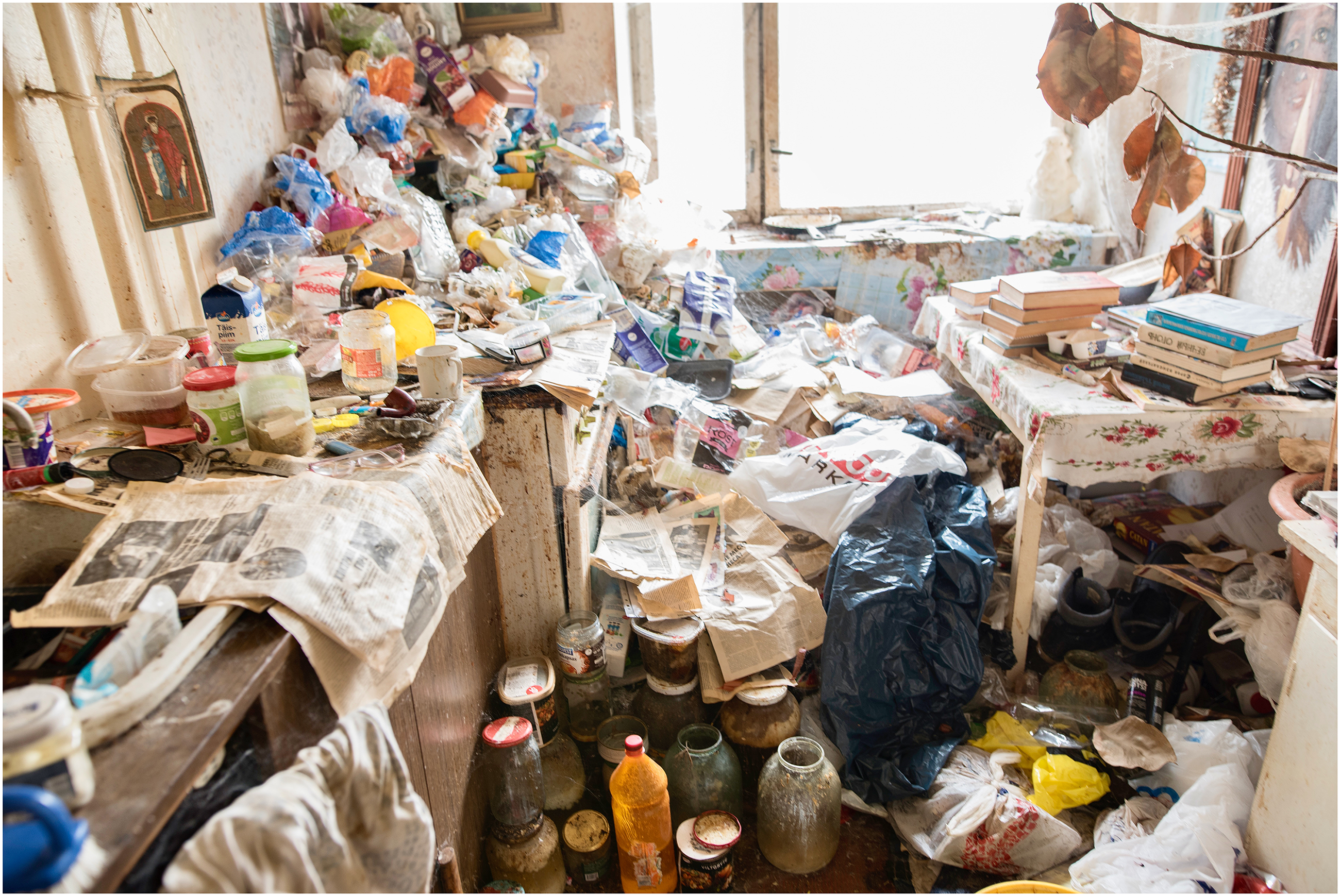
Also, the real estate of this area has radically lost their value, and there are thousands left vacant. Following the out-migration trend in Kohtla-Järve (the mining capital where the population has decreased from 87,500 to 33,197), hundreds of privately owned properties have been transferred to the municipality. As a result, the Estonian Ministry of Finances, in cooperation with different stakeholders, have initiated a pilot project in which the demolition of half-empty apartment houses is proposed as a future-making intervention. Demolition, however, is costly and produces waste. 7 Nevertheless, those directly affected by the demolition pilot are not always interested in relocating to the apartments offered by the authorities, which had been vacant for several years. Martínez visited 25 of those ‘empty’ apartments and what he encountered was a pathological misalignment; a meaningless mass of stuff, trash and clutter.
In the vacant apartments, one can see traces of anterior human presence: the portrait of an unknown young lady, unwashed dishes, dirty pampers, unfinished medicines and empty bottles of hard spirits, worn down mattresses, tired wallpapers, bulky furniture, Soviet and orthodox religious symbols, CDs, plastic flowers, foreign flags, broken glass, newspapers from October 2009… Everything in there is hopelessly beyond repair. This residual matter shows a gradual loss of objectness, questioning the modern understanding of domesticity as linked to care and ownership (Douglas, 1991), and of materiality considered in terms of determinate, tangible objects (Domínguez Rubio, 2016).
In some other contexts, material disaggregation may entail positive symbolic power, comparable to patina. But that is not the case with the abandoned things encountered in these apartments. The encounter with these items provokes epistemic disorientation and hesitation, while also being a trigger for self-assessment. There, you cannot miss the effluvium of long vacancy either. These salvaged remains appear as inscrutable and illegible because they have ceased to exist as concrete objects and signifiers, and now unfold themselves as decomposing matter. For quite a while, nothing has been coming in or out of these apartments. Due to the death of the owners, there have been neither additions nor withdrawals. The lamps do not work, the dishes are dirty, the windows broken, in some walls the paint is cracked, and in others the paper is falling off. Clocks have stopped working, and the calendars hanging on the floors refer to 2007, 2018, and 2003. Alas, they are not simply litter, out-of-place things evoking loss and disgust while lying in a transitional state (Figure 8). They are also unruly matter existing apart from us, irrespective of humans and not offering itself for reinvestment, reinterpretation, or revaluation.
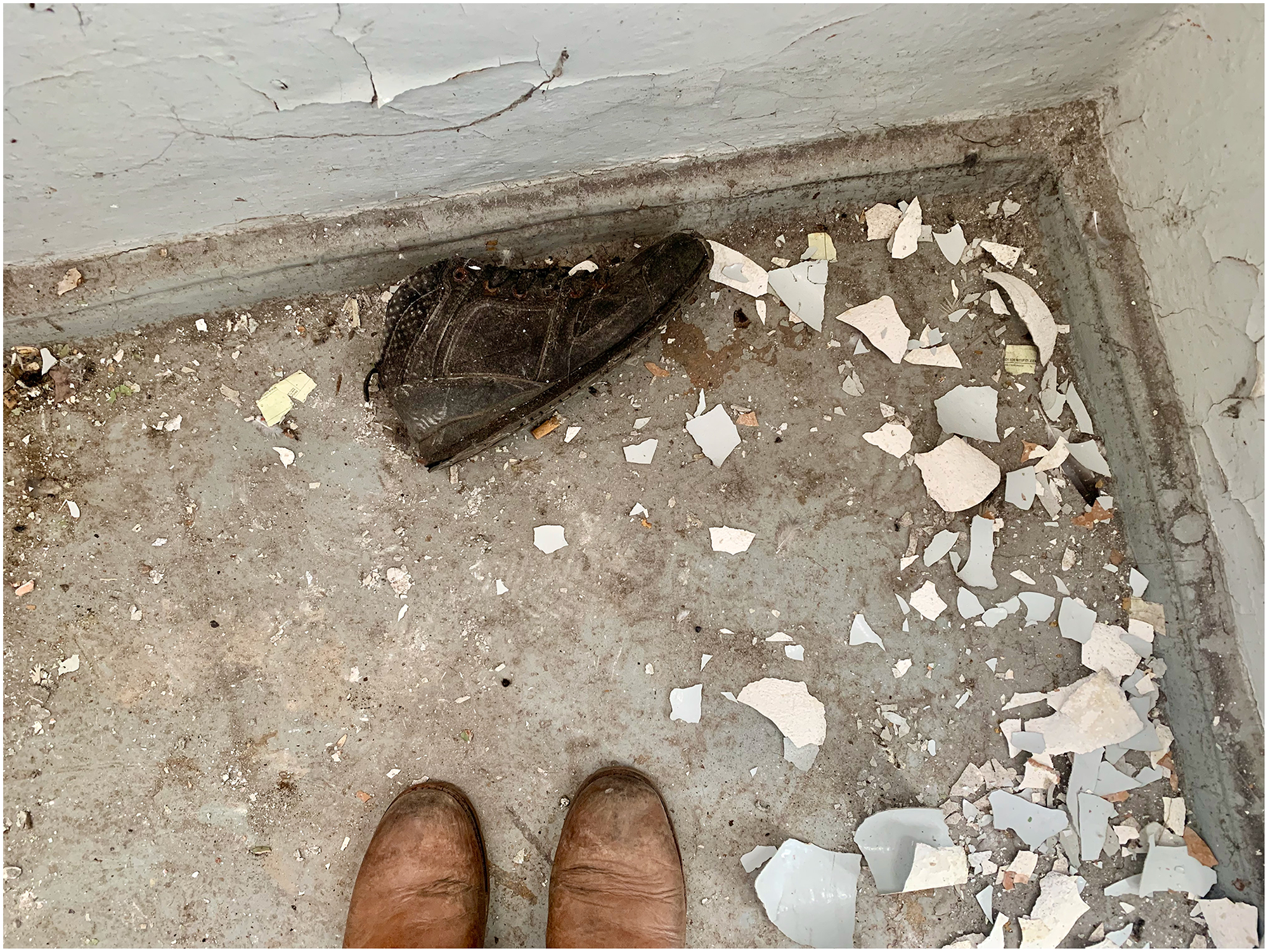
Martínez got a similar impression when trespassing into the abandoned building on Rumjantsevi tn. 3, once the headquarters of a local newspaper in the former nuclear town of Sillamäe. The heating system and lamps therein have been stolen, yet wires and pipes were left behind. When strolling around, one can also detect traces of previous trespassers, such as graffiti on the walls and human excrement on the floor surrounded by flies. Someone seems to have used the darkness of this corner to satisfy their scatological needs. The feather on the stairs might also be a testimony to how the building has been transformed into a pigeon loft (Figure 9). Further on, one sees a series of toy guns lying on the floor, indicating that the building has become a playground for some. There is also broken glass, peeled off wallpaper, headphones, books, banners from the social democrat party, and decomposing newspaper sheets from different years lying on the floor, alongside leftover shoes and rotten animals.
The residual matter that we studied in this article is far from spectacular and meaningful. Certainly, these material expressions evoke repulsion and disgust, but also indecipherability, being manifestations of the vitality of matter – traces constitutive of potencies even when left behind (Novick and Pirogovskaya, 2025). Rather than amounting to dead matter, the residues described here were teeming with life, placed in movement and constant variation, and also continuing to affect and transform other materials in turn. Therefore, what we are proposing with garbography is a research strategy to study how waste decomposes, shifts, and mutates over time leaving different kinds of marks throughout the process. Garbography turns residual matter into field inscriptions through a sensorial and multimodal engagement with a pile of trash, a scrap of metal, and with feather, hair, and fossil skeletons. That is, indeed, a key contribution of garbography – to account for how residual matter is never entirely passive or stable. And in doing so, it foregrounds the resistance of waste to social determination, whilst conversely venturing into more-than-human realms composed of elements that are not always available for meaningful relations.
Conclusion
The ways in which waste-traces constitute rubbish ecologies call for discard studies to be engaged in new ways of thinking. Whereas traditional methods focus mostly on language and signification and assign primary dynamism to human agents, garbography attends to residual matter and its inscriptions. This research strategy places waste-traces at the core of the fieldwork, going down to fetid fields to re-present repulsive matter, not alien to rodents, moulds, insects, and other organisms not known for their beauty, and which have well colonised these leftovers. What we encounter in landfills is precisely a by-product of their activity, decomposing concrete objects into something else. Their activity leaves traces, inscriptions, and an array of marks inscribed on changing surfaces. This is how waste expresses itself, we have argued here. Hence, we attempted at gaining other-than-human perspectives into the dynamism of residual matter, de-privileging humanity as the sole source of expressivity by focusing on waste's writing, instead of writing about waste.
Garbography turns sensorially to expressions and inscriptions that occur after humans have abandoned landfills and industrial infrastructure; while not being irrelevant, humans are no longer at the centre of the action nor of the representation. For that, we need to find ways to capture the non-representational expressiveness of residual matter and garbography does so by paying attention to how waste sticks by, tarnishes, rots, and decomposes on its own terms. This research strategy is informed by how discards flow, spill over, leak, mix, mutate, roll and linger on materially. It consists in noticing and portraying something non-verbal that borders on illegibility and is characterised by the absence of clear meaning. We tapped into this difficulty and outlined garbography as a multispecies approach that allows us to reconsider the ways in which we come to know (with) waste by shifting from the textual to the textural and from language to matter. In doing so, garbography contributes to expanding the methodology for discard studies and, overall, how social sciences can operate beyond meaning-centric observations.
Footnotes

Funding
The authors disclosed receipt of the following financial support for the research, authorship, and/or publication of this article: This research was financially supported by the Spanish Ministry of Science, Innovation and Universities through a Ramón y Cajal contract (MICIU/AEI/10.13039/501100011033), the Kone Foundation [grant number: 202009490], the Research Council of Finland [grant number: 350191], and by the European Union through the projects ‘EUROREPAIR: Europeanisation through repair’ (MOBERC30) and WasteMatters [ERC grant: 101043572].
Declaration of conflicting interests
The authors declared no potential conflicts of interest with respect to the research, authorship, and/or publication of this article.
Supplemental material
Supplemental material for this article is available online.