



Abstract
The highly visible yet poorly studied phenomenon of roadside colossi—oversized commercial buildings and statues in the shape of everyday objects, referred to in this article as Big Things—has often been dismissed as a kitschy by-product of American post-war consumerism and car culture. There are no universal definitions or typologies for this form of material culture, nor is there a sufficiently global history that explains the origin, spread and contemporary popularity of these landmarks. In this article, I address these gaps in the discourse, drawing attention to the rich yet largely untapped theoretical underpinnings of Big Things. In doing so, I highlight the potential for further study of these landmarks as material evidence of broader socio-cultural impulses, particularly in communities across North America and Australia, where Big Things can be found in their greatest numbers.
Introduction
For millennia, civilizations have constructed giant statuary to express notions of power and belief, to commemorate important individuals and events, and to demarcate territory. Some of the earliest examples of such landmarks were enshrined in the so-called Seven Wonders of the Ancient World, while more recent constructions—such as Christ the Redeemer (Rio de Janeiro, Brazil), and the Statue of Liberty (New York City, US)—have become globally-recognized icons of the modern age. Art and architectural historians have given these monumental forms substantial coverage, and they are accepted as a sub-category of fine or high art. In contrast, the several thousand examples of twentieth and twenty-first century roadside colossi that can be found primarily across North America and Australia—and which are referred to in this article as ‘Big Things’—have received minimal academic attention. There are no universal definitions or typologies for this phenomenon, nor is there a sufficiently multi-national history that explains the origin, spread and contemporary status of these landmarks. In this article, I address these gaps, as well as shedding light on the underlying motivations for, and public appeal of, Big Things generally. I do not, in the present work, attempt to provide comprehensive histories of individual Big Things, or of regional or national groupings - though these would be worthy subjects for historical and sociological investigation. Instead, the aim here is to establish a foundation upon which more nuanced, detailed work can be built across the interdisciplinary spectrum of material cultures.
This article is the product of six years of research on Big Things across Australia, Canada, the US, and—to a lesser extent—the rest of the world. In the present work, I draw from several academic discourses as well as my own observations, derived from historical and descriptive data collated on over 1000 Australian, almost 1250 Canadian, and at least 2000 American Big Things constructed since the 1880s. Much of this information was accumulated through searches of newspaper archives; the websites and print material of tourism organizations, chambers of commerce and councils; and the small but detail-heavy online footprints of roadside history groups and amateur enthusiasts (e.g., RoadsideAmerica.com, the Society of Commercial Archaeology). The websites of individual Big Things were consulted, and where necessary, owners were contacted to gain further insight. This cache of information has already been used to draw thematic comparisons between Australian and Canadian Big Things (Clarke, 2023). Having undertaken such a detailed, years-long study, however, it has become clear that in addition to region-specific histories of Big Things, there is an obvious need for a more theoretical, foundation-establishing discussion about the phenomenon generally.
Such an ambitious task necessitates the drawing together of several distinct but overlapping realms of ideas. I begin with a consideration of the societal urges that have driven the erection of giant landmarks and statuary throughout history. Having established a historical and motivational basis against which the modern Big Things phenomenon can be considered, I proceed to an explanation of the small (largely amateur) body of existing work on Big Things, and adjacent discourses concerning roadside material culture, architecture and advertising. This leads into a discussion of the core elements that define a Big Thing, including scale, materiality, authorship, and subject-matter. From this background, the discussion progresses to the second half of the article: a multi-national survey that charts the historical and theoretical nature of the Big Things phenomenon. Here I sketch out the trend's origins in the early decades of the twentieth century in North America, and its rapid expansion after the Second World War. I offer a brief comparison of the three largest clusters of Big Things (in the US, Canada, and Australia), revealing some of the different regional qualities and meanings. In drawing the article to a close, I consider the changing perceptions of critics, commentators and the public towards Big Things. The shift that is observed here—from Big Things as ‘kitschy’ examples of roadside blight to cherished remnants of post-war material culture—helps to explain the contemporary popularity of Big Things and emerging debates over their conservation. Ending with such observations highlights the need for more research on the phenomenon, and reinforces my broad foundation-setting ambitions in the present article.
Markers of power, belief and territory: historical colossi
Over the past several millennia, numerous civilizations have erected giant anthropomorphic and zoomorphic statuary. The exaggerated, sometimes landscape-defining size of these creations was a conscious choice, intended to communicate ideas about the subject-matter quite distinct from that which could be expressed by a statue built to a more realistic scale. If we look to examples from classical antiquity through to the twentieth century (Table 1), such as the Sphinx of Giza, the statue of Zeus at Olympia, and the Colossus of Rhodes, we can discern a number of motivations for the adoption of such monumental scale. All three can be understood as explicit assertions of power via notions of dominance and durability (Verschaffel, 1999: 335), against which the vulnerability, impermanence, and implied unimportance of humans—miniaturized as they are by comparison—is enhanced (Stewart, 1993: 74). The type of power being communicated may differ, however. The Sphinx and statue of Zeus were created in part as religious expressions, and their scale can be understood as an amplification of sacred power. Similar observations could be made of other such landmarks (Table 1), including that of the Bamiyan Buddhas, the Leshan Giant Buddha, and the more recent example of Christ the Redeemer (Cristo Redentor).
Historical examples of colossal landmarks.
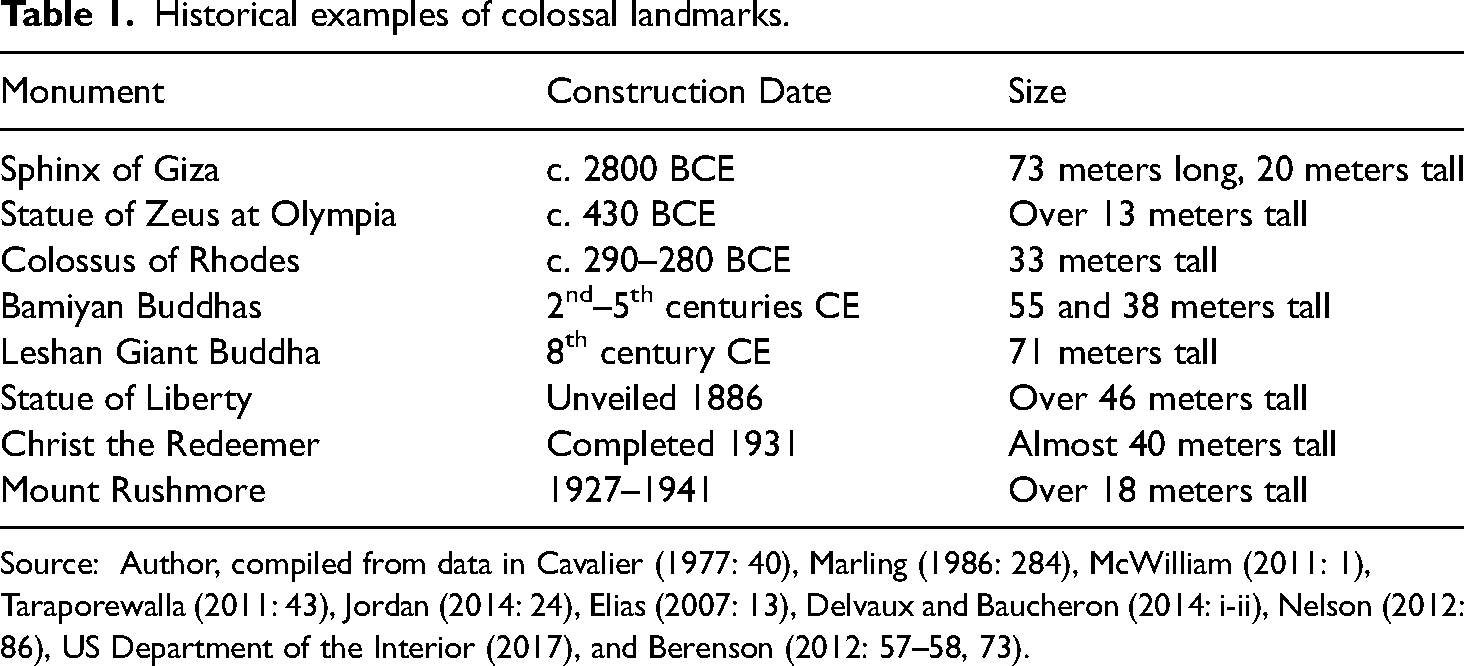
Source: Author, compiled from data in Cavalier (1977: 40), Marling (1986: 284), McWilliam (2011: 1), Taraporewalla (2011: 43), Jordan (2014: 24), Elias (2007: 13), Delvaux and Baucheron (2014: i-ii), Nelson (2012: 86), US Department of the Interior (2017), and Berenson (2012: 57–58, 73).
The Colossus of Rhodes, on the other hand, does not have an obvious religious message: it was constructed following the end of the aborted siege of Rhodes at the hands of the Macedonian army (Maryon, 1956: 68). The erection of the towering landmark expressed the resilience and pride of the citizens of Rhodes; but also demarcated the perceived boundary between Greek civilization and barbarian chaos (Marling, 1986: 284). The Colossus thus expressed a kind of political power, through which territories were claimed and ideologies were championed. An argument can be made that the Sphinx of Giza and the statue of Zeus at Olympia were also material gestures of political belief, because the sacred and secular frameworks of power overlapped considerably in classical antiquity. And as physical manifestations of their respective societies’ belief systems, we could interpret the Sphinx and the statue of Zeus as territorial markers, akin with the Colossus, too. Instead of separating the ‘light’ of Greek civilization from the dark barbaric hinterlands, however, the Sphinx and the statue of Zeus demarcated boundaries between life and afterlife, or human and divine. Similar observations have been made about the growing number of oversized statuary erected in India in recent decades, with Jain (2021) highlighting the obvious capitalist and political undertones of colossal Hindu sculptures constructed in key electoral districts, and Reese (2020) framing the giant, illuminated two-dimensional depictions of Tamil political figures (known as gopurams) as spectacles that both demarcate the territory of festival spaces and infer the sacred, god-like status of the individuals they represent.
The equation of size with power that motivated the erection of such ancient colossi continued into the modern era. Grigsby's 2009 work, Colossal, establishes a through-line from the statuary and pyramids of ancient Egypt to the imperial desires of France during the Napoleonic and Second Empire eras, in turn leading to collaborations across the worlds of art, architecture and engineering that produced monumental icons such as the Eiffel Tower, and Suez and Panama Canals. This era of industrial ambition and fascination with monumentality also spawned the Statue of Liberty (details in Table 1), which was designed and constructed in pieces in France before being shipped to New York City, where it was unveiled in 1886 (Berenson, 2012: 57–58, 73). This colossus, as well as the monumental Mount Rushmore (also detailed in Table 1), are two ‘New World’ icons that were completed during the era of Big Things (late nineteenth into the twentieth centuries, as will be elaborated upon shortly) and they stand on the same American soil that now hosts more than 2000 roadside colossi. As such, it is tempting to categorize the Statue of Liberty and Mount Rushmore as American Big Things. This would, however, obscure one of the most important distinctions between high art monuments and the Big Things that I will discuss in the remainder of this article. Unlike the structures of interest to Grigsby (2009), Reese (2020), Jain (2021) and others, Big Things are not political or religious in nature, but concerned instead with secular regional identity, and commercialism; they are apolitical (and in this sense, they align with Sontag's definition of ‘camp’ [2018: 2]). The same cannot be said of the Statue of Liberty or Mount Rushmore, which have more in common with the Colossus of Rhodes than the countless giant animals and foods that decorate the American roadside. Like the Colossus, the Statue of Liberty operates as a border marker, beyond which lies the civilized ‘New World’. Indeed the Statue of Liberty's creator, Frederic Auguste Bartholdi, acknowledged the Colossus of Rhodes as a precedent for his own harbor-defining landmark (Grigsby, 2009: 63–65). The Statue of Liberty expresses, too, a political ideology that at times has approached a kind of American religion: republican democracy, capitalism, and the grand notion of ‘liberty and justice for all’. Mount Rushmore echoes some of these themes in its portrayal of four revered American Presidents, as the master sculptor of this granite work, Gutzon Borglum, is said to have chosen his subjects as representations of ‘Empire Makers’ who expanded the nation's borders and demonstrated American exceptionalism (Fisher, 2011: 120, 127). The Statue of Liberty and Mount Rushmore are explicit messages of political and ideological power; their colossal scale amplifies these meanings whilst simultaneously evoking an additional characteristic of the American nation: its tremendous geographic size.
Two final distinctions between these kinds of monumental landmarks and Big Things should be made here, and that is that, firstly, the examples noted thus far have been constructed from high art materials such as sandstone, granite, marble, and/or precious metals; and second, the creators of these landmarks are generally noted in the historical record. As Margolin observed (2002: 8), the quality and monetary value of materials is often one of the determining factors between art being labelled as ‘high-brow’/’fine’ or ‘low-brow’/’kitsch’. Prior to the mass-production and consumption of material culture that emerged in the late nineteenth century, this relationship between materials and high art had a certain logic. The art world was essentially patronized by the upper-class elite, and art works were created to last—both by intention, and by virtue of the more elemental, less ‘manufactured’ nature of the materials available. The arrival of cheap, mass-produced synthetics did not immediately challenge this relationship, but it did make it possible for more people to create and consume art, and further enabled the mass-production of decorative features, including statues. Moreover, unlike the recognition given to the creators of historic landmarks like the Colossus of Rhodes and Statue of Liberty, it was and is common for creators of low-brow art (this term overlapping to some degree with folk and/or vernacular art) to remain anonymous. Such creations—including many of the Big Things scattered across North America and the Antipodes—are the product of amateurs, people who may have felt a need to build something giant not for art's sake, but for commercial or social gain. The characteristics noted here—of humble or cheap materials, and the anonymity of creators—are among the traits of popular (or commercial, or mass) art that attracted the ire of critics such as Greenberg (1939) and Macdonald (1953), who regarded its popularity among the working classes as evidence of the corruption of the art world by commercial and political forces. While they did not specifically mention oversized roadside statuary, the similarities between Big Things and the ‘kitsch’ phenomenon Greenberg, Macdonald, and others (e.g., contributors in Dorfles, 1975) were concerned with are numerous. And, while it is beyond this article's scope to determine whether Big Things should be labelled as ‘kitsch’ (noting, too, that there is disagreement about how to define kitsch; see Kjellman-Chapin, 2010), it is worth acknowledging that recent works on ‘low’ or ‘popular’ art have questioned the earlier tendency to dismiss such art as ‘bad’, ‘dumbed-down’ or ‘fake’ (e.g., Attfield, 2006; Binkley, 2000).
Discourses on roadside architecture and landmarks
While there have been numerous academic contributions on oversized religious and political statuary and mammoth feats of civil engineering, there is a dearth of research on Big Things, though a sub-section of the genre that is concerned solely with architecture has received some critical attention. But this body of work is complicated by the numerous names given to the architectural style: ‘programmatic’ (sometimes with a singular ‘m’; Gebhard, 2001: 8); ‘mimetic’ (Liebs, 1985: 48); architecture parlante (‘speaking architecture’; Schuyt et al., 1980: 19); ‘commercial bizarre’ or ‘delirious trademark’ (Jencks, 1979: 10); and ‘duck’ architecture (popularised by Venturi, Scott Brown and Izenour in Learning From Las Vegas [1977 (1972): 87]). ‘Programmatic’ and ‘duck’ architecture are most consistently used, though all these labels are describing the same thing: enterable structural forms in the shape of oversized real-world objects, such as the now iconic Big Duck (Figure 1) on Long Island (NY) which inspired Venturi, Scott Brown and Izenour to devise a binary for categorizing modern architecture. In their view, when the ‘architectural systems of space, structure, and program are submerged and distorted by an overall symbolic form […] this kind of building-becoming-sculpture’ is best described as a ‘duck’, ‘in honor of the duck-shaped drive-in’ of Long Island. The alternative is an architecture whereby ‘systems of space and structure are directly at the service of program, and ornament is applied independently of them’; this the authors labelled the ‘decorated shed’ (1977 [1972]: 87). The significance of ‘duck’ architecture is that its sculptural form serves as a sign, communicating the nature of the business contained within. As Wines observed, ‘…the Big Duck has no large-scale graphics, no mammoth sign to define its function. The Duck is its own advertisement—both denotative and connotative as one entity’ (1972: 61). Though their work is concerned with the other end of the scale, it is interesting that Davy and Dixon (2019: 11–13) observed similar definitional complications in the study of miniatures: that is, overlapping, conflated and imprecisely applied terms that obscure important nuances of style, use and intention.

The big duck on Long Island, New York State. Source: Mike Peel, 2018 (Credit: Wikimedia Commons CC BY-SA 4.0; https://en.wikipedia.org/wiki/Big_Duck#/media/File:Big_Duck_2018_05.jpg).
The general literature on roadside advertising, tourism, and post-war material culture does incorporate some mention of Big Things (both architectural and sculptural/statuesque forms), though it too fails to settle on a clear label. Works such as Main Street to Miracle Mile (Liebs, 1985), Fill’er Up: An Architectural History of American Gas Stations (Vieyra, 1979), Fun Along the Road (Margolies, 1998), and publications by Jakle and Sculle (e.g., Jakle, 1978; Jakle and Sculle, 2004), are typical of the academic study of roadside history and material culture, though they are primarily focused on the US. These works are concerned with the documentation of specific types of roadside businesses such as motels, fast-food restaurants and diners, and gas stations, and as such, their inclusion of Big Things is tangential. These were the businesses that most often adopted oversized sculptural architecture and colossal statues to advertise their wares, but this was the exception and not the rule. Many more businesses opted instead for streamlined, modern architecture that communicated through billboards or company branding, as typified by the corporate design iconography of fast-food chains like McDonald's (Hess, 1986: 63).
Architectural criticism from the mid twentieth century does not address Big Things specifically, but several works provide a sense of the sometimes-controversial nature of roadside architecture in this period. This includes the aforementioned work by Venturi, Scott Brown and Izenour, as well as that of J. B. Jackson (1956–57), Charles Moore (1965), and Charles Jencks (1977). Their contemplations of car-centred landscapes (highways, strip-malls, roadside stands, billboards) reveal much about the increasing sensitivity of critics and the public to the merging of advertising with commercial architecture, and debates around landscape ‘beautification’. Though less concerned with design theory, more recent work by Edensor (2004) has highlighted the potential for articulating identity through ‘national motorscapes’, while Dalakoglou (2010) has drawn scholarly attention to ethnographic encounters with road spaces. These hint at directions for future Big Things research, and the importance of expanding understandings of the material culture of roadscapes generally.
A small number of Big Things-centric texts have been published since the 1980s, but these have focused on specific geographic regions, or are travel guides written by amateur enthusiasts. There are guides of varying breadth and quality for Australian (Amdur, 1981; Clark, 2004; Scutt, 2009), Canadian (Robideau and Day, 1988), and American (Andrews, 1984; Butko and Butko, 2005; Peterson, 2008; Wilkins et al., 1992) Big Things, as well as Karpan and Karpan's Saskatchewan-specific text (2006), Marling's Colossus of Roads (1984) which focuses on a range of roadside attractions in America's Mid-West, and Heimann and Georges’ California Crazy (2001). None of these, except for the opening pages of Marling's work (1984), Gebhard's introduction for California Crazy (2001), and Stockwell's introduction for Big Things: Australia's Amazing Roadside Attractions (2004), offer much insight into the historical or theoretical underpinnings of the phenomenon. The discourse is similarly thin across academic journal publications, with only three Australian articles (Barcan, 1996; Cross, 1995; Stockwell and Carlisle, 2003), and Stymeist's exploration of what he called the ‘totemic art’ of rural Canada (2012). While they do provide some theoretical reflections relevant to their geographic locales, and Stymeist's article extends into discourses on material culture theory, none of these articles—nor any of the other texts noted previously—clarify the typological parameters of Big Things. The following discussion—aided by information garnered from the literature outlined thus far, as well as from my observations of the several thousand Big Things across North America, Australia, and the rest of the world—is provided to fill this gap.
What are ‘big things’?
As a starting point, it is helpful to briefly revisit some of the typological qualities of Big Things that have already been established herein. Firstly, unlike the more traditional high art colossi, Big Things do not have political or religious subject-matter, and instead take the form of oversized everyday objects, such as fish, birds, mammals, food, sporting equipment, and generic human ‘characters’ such as mechanics and cowboys. These gigantic sculptural forms typically advertise businesses, or towns and communities; the latter—as will be discussed momentarily—is common in rural areas. It has also been established that Big Things are often made from cheap, readily-available materials (e.g., plastic, fiberglass, concrete, and aluminium), and the creators of these landmarks are often amateurs who remain largely unrecognized. ‘Programmatic’ or ‘duck’ architecture is a sub-category of the Big Things genre, but the phenomenon is not limited to habitable sculptural structures; giant statues—providing they are three-dimensional, as opposed to flat, two-dimensional cut-out shapes—are also included as Big Things. The dimensionality is important, as it distinguishes between Big Things and other roadside advertising, such as billboards. And it has been noted that these colossal forms typically stand by the roadside. They use their substantial scale in otherwise non-descript environments to attract the attention of passing motorists, many of whom are travelling at high speed and thus capable of processing only the simplest advertising messages (Jakle and Sculle, 2004: 32).
One thing that has not yet been considered directly is the matter of size itself. I have used descriptors such as ‘giant’, ‘mammoth’ and ‘colossal’ throughout this article, but these are not particularly helpful when it is considered that a word such as ‘giant’ could describe a mosquito the size of a dinner-plate as well as a mosquito the size of a family car. In his partial catalogue of Australian Big Things, Clark adopted the rule that landmarks needed to be ‘bigger than the real thing they represent’ (2004: vi). But this does not sufficiently address the matter at hand, because by such a definition, a basketball-sized strawberry (bigger than a ‘real’ strawberry) would be considered a Big Thing, despite this being quite small and not particularly impactful on its surrounding landscape. A further problem with Clark's rule is that people would need to be aware of the ‘real’ size of the thing being represented in order for the landmark to be deemed ‘Big’ by comparison. For the truly banal objects—fruit and fast-food, for example—this is not unreasonable, but there are many roadside attractions that take the form of whales, dinosaurs, sharks, giraffes, elephants, and so forth. These depict large real-world creatures, and while most people have probably seen them in photos, they are less likely to have had the opportunity to gauge their size in person. As such, a life-sized statue or sculpture of a giraffe or whale may appear ‘big’ to the average person, despite not being ‘bigger’ than the real thing it represents. Certainly, anything that looms over people is going to give an impression of bigness, even if it is life-sized or even smaller than the thing it is imitating. But this is not, in my view, sufficient for said landmarks to be categorized as ‘Big Things’; rather, they would best be described as ‘things that appear big’.
With these issues in mind and in order to reach a clearer definition, it is helpful to reflect on the underlying motivation for building something giant. That is, when the choice is made to increase an otherwise everyday object to mammoth proportions, the creator is trying to make the structure stand apart in the landscape and be so dramatic that people are compelled to take a closer look. So, in addition to the other characteristics already noted, for a roadside statue, structure, or sculpture to be considered a Big Thing, it must also be of a size that is obviously, spectacularly, even bizarrely large when compared to its true-to-life form. This echoes remarks of scholars like Davy and Dixon, who have suggested that the appeal of miniatures and colossi (of all kinds, not just roadside attractions) is that ‘they are not quite of our own reality’ (Davy and Dixon, 2019: 1). Kuchler (2019: 1) and Grigsby have offered similar observations, with Grigsby (2009: 17) taking inspiration from the earlier ideas of Kant and Aristotle, noting that, ‘…colossi have confounded the intellect in ways that for centuries have intrigued artists, writers and philosophers. The apprehension of immensity is disorienting, its representation perplexing, and the concept difficult to formulate.’ It is this sense of disorienting immensity applied to typically banal subject matter (fruit, animals, sporting equipment, and so on), that can—when combined with three-dimensionality, comparatively cheap materials, and the anonymity of the creator—qualify a roadside statue or structure as a ‘Big Thing’.
A global historical survey of big things
Now that the typological nature of Big Things has been clarified, we can proceed to a discussion of the phenomenon's global history, albeit concentrated primarily in North America and Australia. I have identified small numbers of Big Things in Western and Central European countries (e.g., Spain, Portugal, Czech Republic, Denmark, Austria), as well as a smattering in China, Japan, South Africa, New Zealand, and Mexico, among other places. These global examples have the same or similar qualities and general histories as those that can be found in Canada, the US and Australia, but they are not sufficient in number to constitute national or regional clusters that can be analysed to ascertain thematic patterns. As such, the discussion here focuses primarily on the North American and Australian groupings, with the acknowledgment that some may take issue with this being labelled a ‘global’ survey.
When applying the definition sketched out earlier, the first clear example of a Big Thing can be isolated to the New Jersey shore, where real-estate developer James V. Lafferty constructed ‘Lucy the Margate Elephant’ (Figure 2) in 1881 (Liebs, 1985: 44). Unlike many of the Big Things that would follow, Lucy is relatively well covered in academic literature, with scholars of American material culture identifying the erection of this almost 20-meter-tall elephant—complete with internal rooms, and a canopied seat or ‘howdah’ on top—as a turning point in modern advertising history (Jakle and Sculle, 2004: 40; Marling, 1984: 93–95). The most detailed account comes via Cavalier's 1977 article ‘Elephants Remembered’, in which he outlines Lafferty's ambition to create gigantic animal forms as bizarre spectacles that would advertise his shore-front property portfolio. Two additional giant elephants, ‘Elephantine Colossus’ and ‘Light of Asia’, were completed in 1884, though neither survived longer than a few years (Cavalier, 1977: 42–43). Lucy, however, outlived several owners and uses between the 1880s and 1970, after which she was donated to the city of Margate. Lucy achieved State Historic Status in 1966, and was added to the register of National Historic Landmarks a decade later (Cavalier, 1977: 42). But despite Lucy's now-iconic status, she did not immediately prompt an outbreak of roadside colossi in the 1880s. Instead, the trend spread across the US—particularly in places like California—with the gradual increase of private car ownership and improvement in road quality during the 1920s-30s (Gebhard, 2001: 10–11; Jakle and Sculle, 2004: 40). Banham (quoted in Liebs, 1985: 49) has suggested that the concentration of Big Things in Los Angeles was connected to the flourishing entertainment industry, though Liebs himself argued that many growing American cities had collections of fanciful ‘duck’ architecture and oversized statuary by this period (1985: 49).
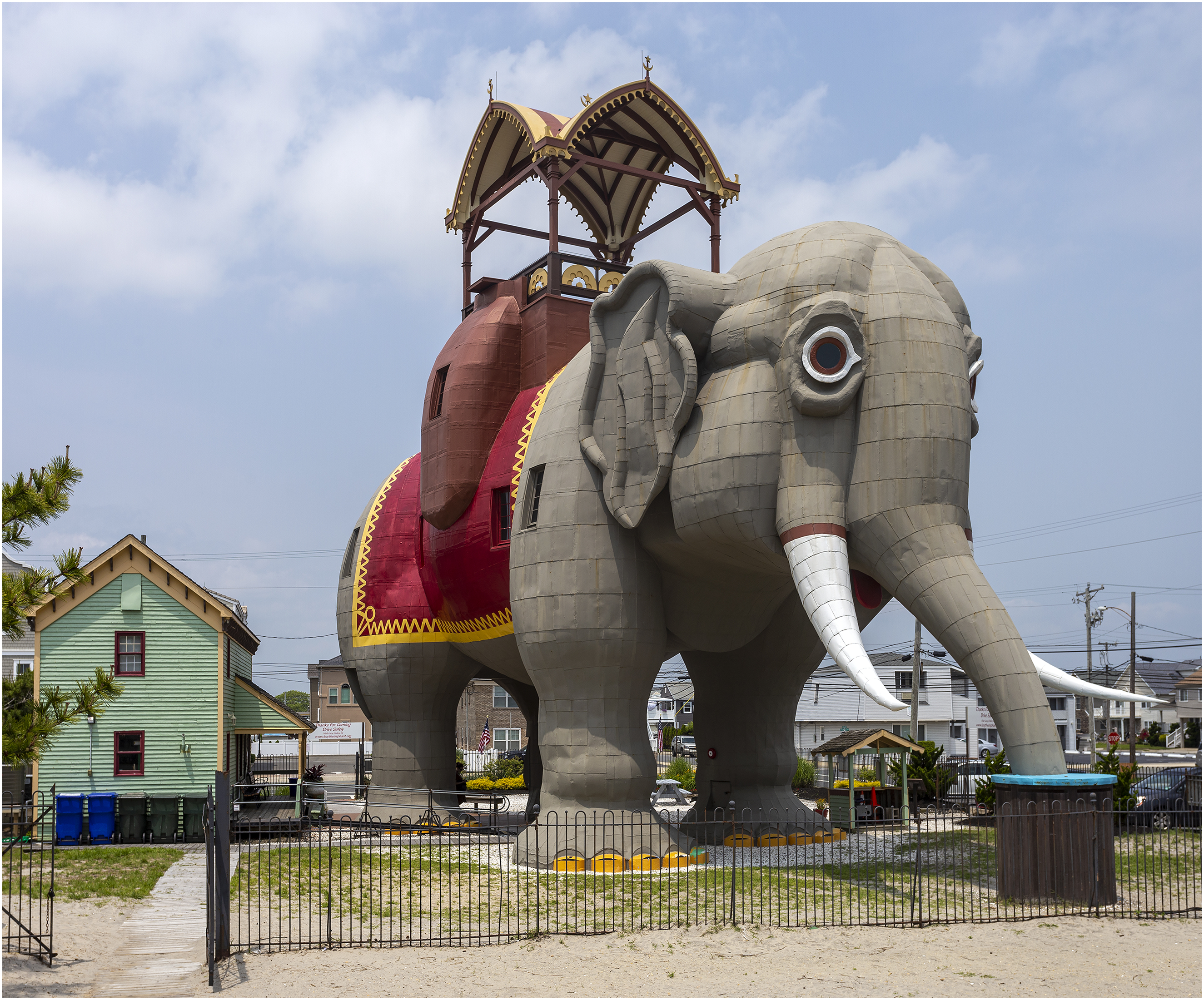
Lucy the Margate Elephant, New Jersey. Source: Acroterion, 2019 (Credit: Wikimedia Commons CC BY-SA 4.0; https://en.wikipedia.org/wiki/Lucy_the_Elephant#/media/File:Lucy_the_Elephant_NJ3.jpg).
Big Things did not take hold across the breadth of the North American continent until the post-war era. The highway network gradually extended across the US between the First and Second World Wars, but it was not until the 1950s that this infrastructure became sufficiently reliable—and cars grew increasingly affordable—to facilitate widespread road-based vacations. The post-war era was also when fiberglass became widely available, and manufacturing firms such as California-based Prewitt Fiberglass (later renamed International Fiberglass) began creating giant three-dimensional objects for businesses to capture the attention of motorists (Butko and Butko, 2005: 15–16). While some of the same influences extended north across the border, Canada's highway network was slower to develop (Davis, 1986: 121–23) and this hindered the spread of Big Things. The Trans-Canada Highway project was instigated in 1949 and not completed until 1962, and as Sajecki has remarked, in this period Canadian tourism boards were primarily concerned with catering to the American rather than the domestic market (2017: 572–76). As I have noted elsewhere (Clarke, 2023: 243), Canada's ‘boom’ period of Big Things construction began in the 1970s, and this aligned with the improvement of the road network across the country, not just in the border region shared with the US. And at the same moment that the roadside colossi were taking over Canadian landscapes, the trend spread across the Pacific Ocean to Australia. Like Canada, the Australian road network had been slower to develop than in the US, but car-based vacations were immensely popular by the mid-1970s, especially along the eastern Australian coastal highway route (Kerr, 2019: 110). Several individuals familiar with Big Things in North America brought the idea to Australia in the 1960s and early 1970s, and by the 1980s the phenomenon had become widespread (Clarke, 2023: 244).
Big Things can be found outside of North America and Australia, though in far smaller quantities. New Zealand hosts a few dozen such landmarks, including the pioneering Big L&P Bottle (a New Zealand soda) in Paeroa, erected in 1968, and the Big Carrot of Ohakune, which was unveiled in 1984 (Orzessek, 2016). Commercial colossi exist in Western Europe and Scandinavia too, though they are more likely to be found in inner-city areas than at the side of rural highways, and they are often mass-produced as opposed to being one-off creations. The furniture company Lutz has several giant red chairs outside its stores across Austria (e.g., Waymarking.com, 2010), for example, while Tegut supermarkets have over-sized shopping bags decorating several sites in Germany (e.g., Waymarking.com, 2018). Large fiberglass ice cream cones can be spotted throughout Western Europe and Scandinavia (e.g., Big Things Across Canada and the World, 2020), and these serve the obvious purpose of advertising local ice-cream parlors and cafes. This contrasts with the Pop Art sculpture of Claes Oldenburg entitled ‘Dropped Cone’ (Figure 3), which depicts an up-turned ice cream melting over the façade of a building in Cologne (Reymann-Schneider, 2019); it is not advertising anything. Finally, Big Things have increasingly featured in the landscapes of North Asian countries over the past few decades. In Japan, for example, the town of Konagai has more than ten fruit-shaped bus-shelters designed for an expo in Osaka in 1990 (Atlas Obscura, 2016), while Noto authorities made international headlines in 2021 after they unveiled a 13-meter-long squid constructed to attract tourists amidst the COVID-19 pandemic (BBC, 2021). This brief global summary of Big Things reveals some of the phenomenon's regional variations, but these distinctions become even more apparent when the three largest clusters—the US, Canada, and Australia—are compared.
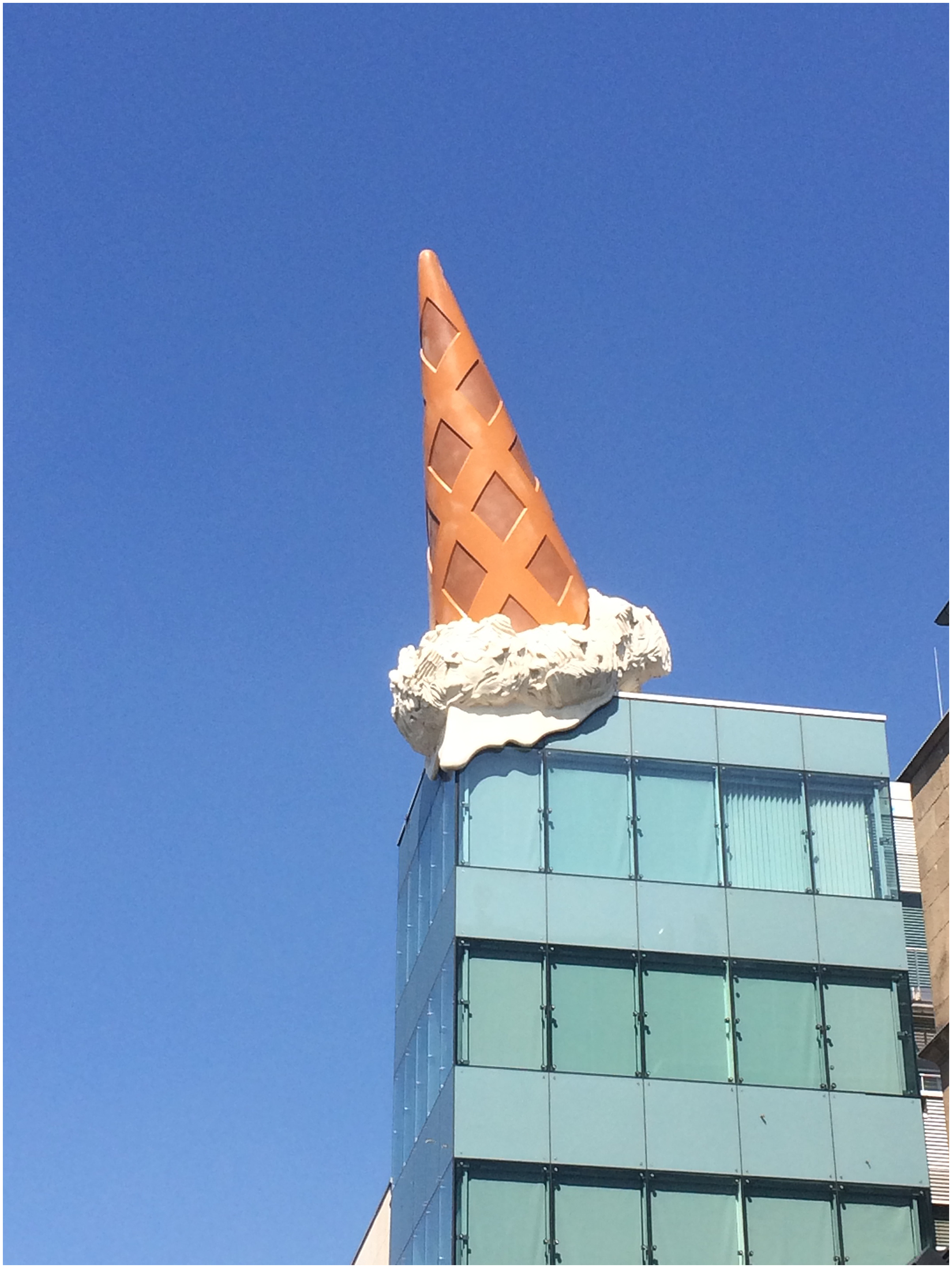
Claes Oldenburg's ‘dropped cone’ (2001), on a building in Cologne, Germany. (Credit: Author, 2015).
Regional big things themes
The commercial nature of a Big Thing is one of its defining qualities, as this sets the genre apart from high art colossi. To say that a roadside landmark was motivated primarily by commercial ambitions does not fully capture the regional differences that emerge upon closer inspection, however. American Big Things have a long tradition of being erected by individual business-owners to market their products, as well as being mass-produced by retail or fast-food chains to serve as landmarks familiar to consumers across the country. While this kind of explicit commercialization can be observed in Canada and Australia too, it is far less prominent. Instead, the subject-matter of the roadside colossi of these nations is typically location-specific; that is, the landmarks serve as place-making or branding devices that have touristic benefits for the wider community because they draw attention to things that are special to that region. This distinction is also apparent in the quantity of certain subjects of Big Things across the three countries. ‘People’-based Big Things—often directly associated with the advertising of an individual roadside business—are much more common in the US than elsewhere, whereas Canada and Australia tend towards community-driven sculptural iterations of fruit (Figure 4), vegetables, fish, birds, mammals, and products of local significance (Figure 5).
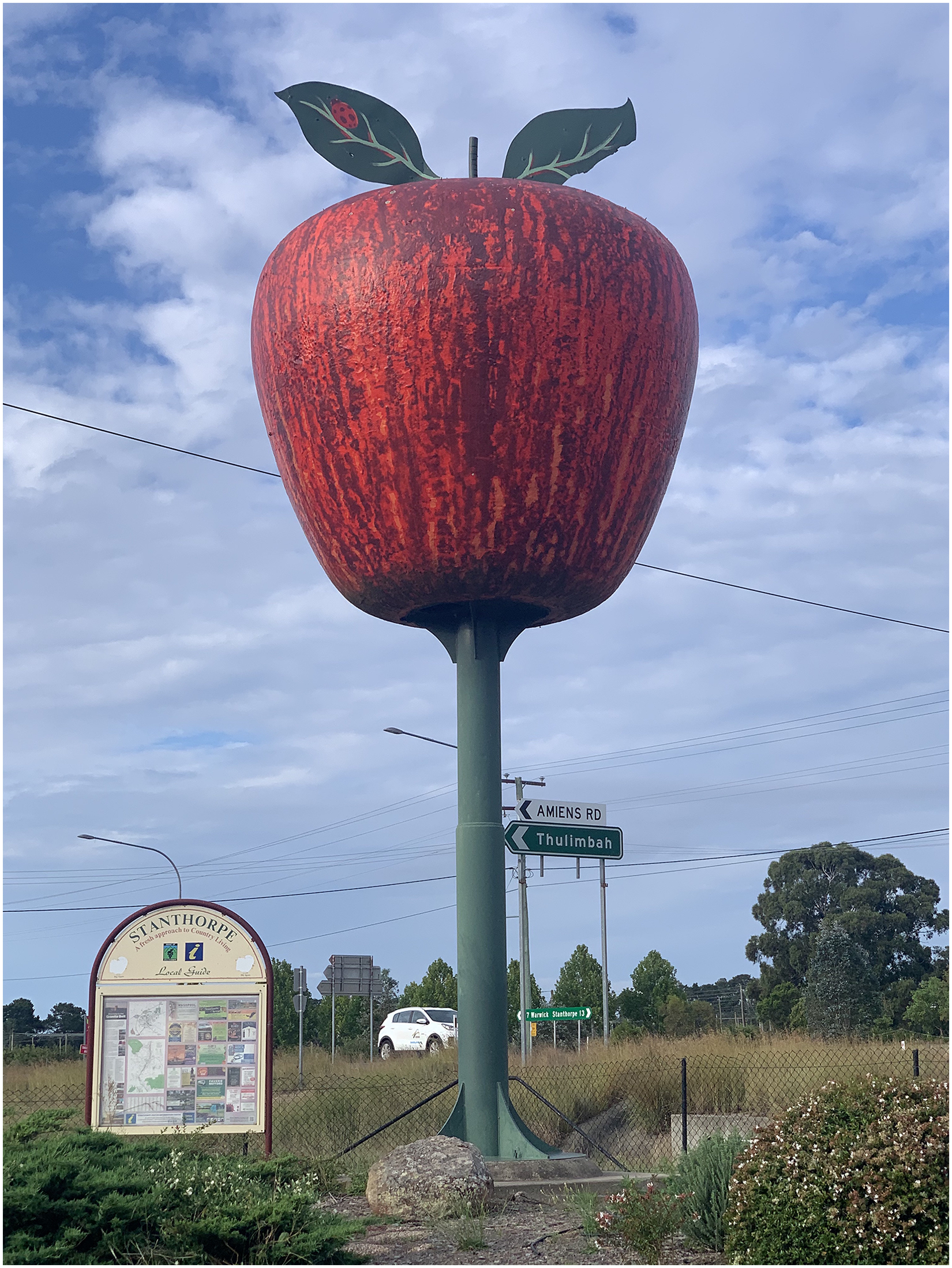
The ‘big apple’, near Stanthorpe, Queensland, Australia. (Credit: Author, 2021).
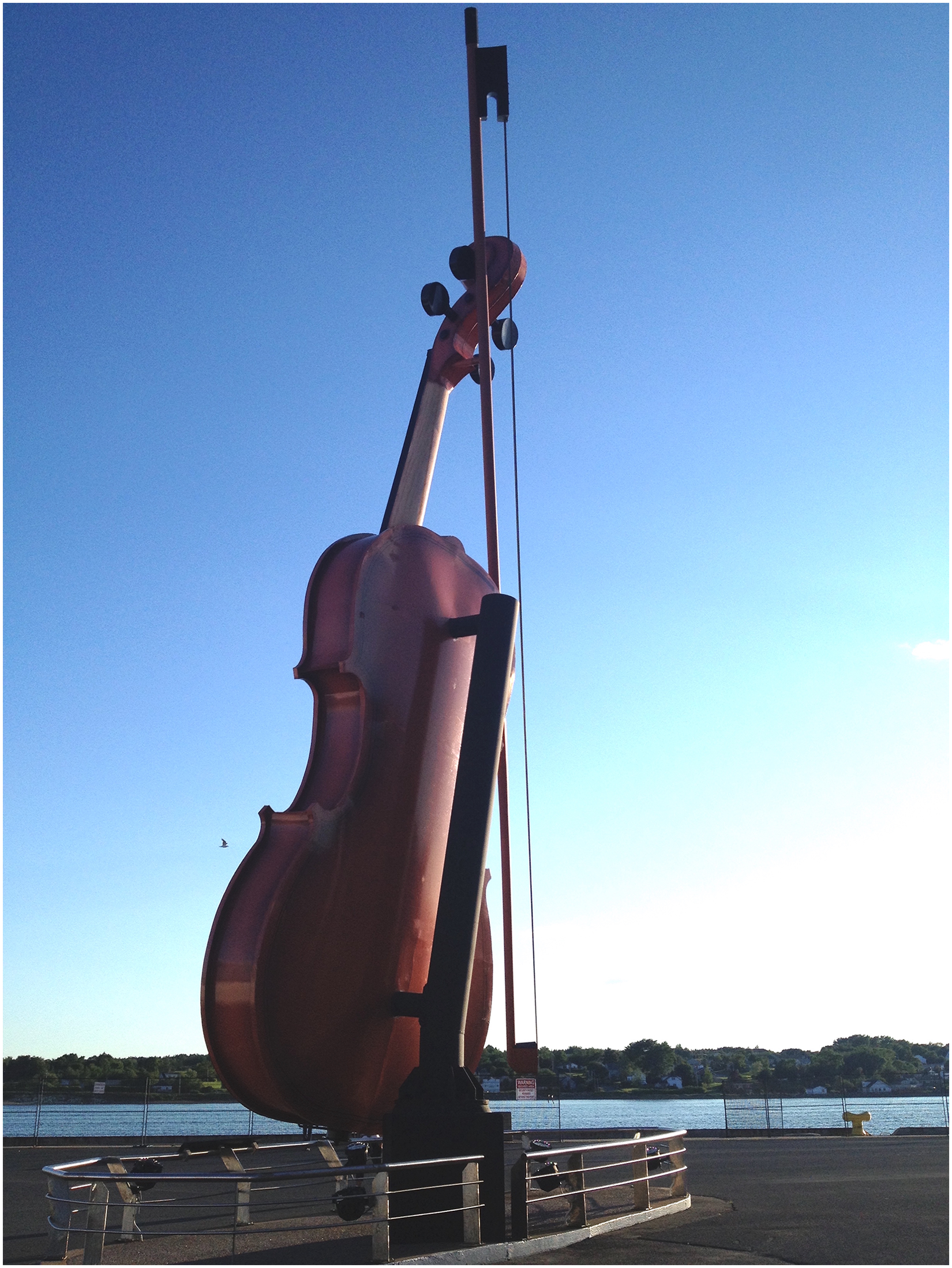
The ‘big fiddle’, in Sydney, Nova Scotia. (Credit: Author, 2012).
One of the reasons for this division between US and Canadian/Australian Big Things likely stems from the American post-war explosion of the phenomenon. Manufacturing firms like International Fiberglass marketed giant generic characters known as ‘Muffler Men’ and ‘Uniroyal Gals’ at trade shows across the US from the 1960s (Butko and Butko, 2005: 15–16). These men (mechanics, cowboys, lumberjacks, farmers) and women (bikini-clad but apparently jobless) held wrenches, axes, car tires and other automobile products (Figure 6). People purchased these and other mass-produced fiberglass colossi (such as hot-dogs, hamburgers, and roosters) to help advertise their roadside businesses, and by the 1970s it is estimated that several hundred such creations existed across the US (Roadside America, 2022). The trend was also adopted by fast-food chains, with KFC erecting giant fried-chicken buckets, and the Happy Boy and A&W Burger chains installing large fiberglass statues of their branded characters (Seltzer, 2017: 74). The proliferation of mass-produced and often ‘people’-themed Big Things across the US in the 1960s–70s established this kind of landmark as a common feature of American roadside advertising. Manufacturers such as F.A.S.T. Corporation (based in Wisconsin) continue to produce these types of Big Things for companies throughout the US today (Patrick, 1995: 28; Roadside America, 2020). The original Muffler Men have now become collector's items and have found their way into popular culture: a giant Native American appears in the opening sequence of the television series Parks and Recreation, for example, while a Muffler Man can be seen in the opening credits of The Sopranos. There are several websites and social media accounts that specialize in tracking their locations throughout America (Meier, 2016; Roadside America, 2022).
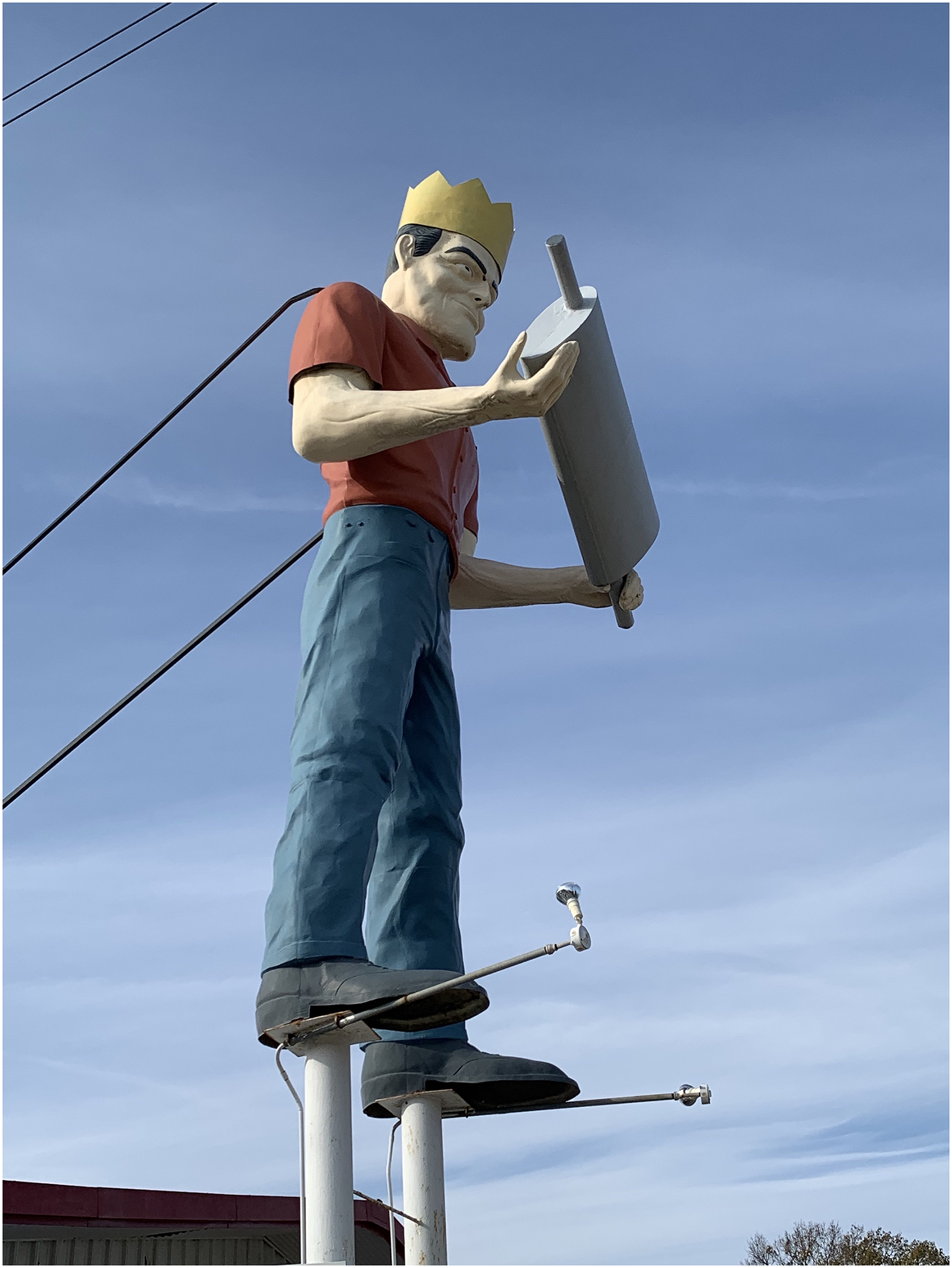
A ‘muffler man’ in Newport News, Virginia. (Credit: Author, 2018).
Mass-produced roadside colossi are not the only kind that can be found in the US; there are numerous unique Big Things that advertise roadside businesses, and many hundreds more that have been erected by communities as place-making landmarks. But the relative absence of mass-produced Big Things in Canada and Australia, combined with the much smaller number of ‘people’-based Big Things in these countries, means that the region-promoting colossi are more obvious there than in the US. One of the few theories that has emerged from the existing Big Things discourse is the suggestion that in Canada and Australia, rural communities have—perhaps subconsciously—erected the giant landmarks as a way of ‘claiming’ the land or asserting their presence. Stymeist, discussing ‘totemism’ in small-town Canada, has argued that ‘(a)n enormous statue is designed, constructed, and exhibited by a community as a declaration of its existence’ (2012: 6). Barcan, and Stockwell and Carlisle, go further still, pondering whether the erection of Big Things in Australian towns is a reactive measure by non-Indigenous Australians concerned with establishing a physical sense of ownership over contested lands (Barcan, 1996: 36; Stockwell and Carlisle, 2003: 12). Langton and David have observed that the fondness for wildlife iconography (including big versions of native fauna) in Australian material and popular culture is ‘a pervasive signification of the taming and commodification of the “natural” order’ that ‘represents the legitimacy of post-colonial dominion by the very act of representation’ (2003: 161). And while he did not directly mention a disconnect between Indigenous and non-Indigenous Australians’ connections to the environment, after he was commissioned to create a set of Big Things postage stamps, the Australian artist Reg Mombassa similarly reflected on the identity-establishing nature of roadside colossi. Big Things are ‘like our pyramids, our temples’, he told journalists, ‘(b)ecause European settlement was so recent, Australia doesn’t have historic old buildings like in other countries and the Big Things are a way of saying “we’re here, this is our place”’ (Sands, 2009).
Despite six years of laborious research, no direct evidence has emerged proving that owners or creators of Big Things undertook their projects with the intention of explicitly erasing or denying the sovereignty and historical connections of Canadian or Australian First Nations peoples with their lands. It is possible that there is a more complicated psychological process at play here; whereby the non-Indigenous peoples who erect or support Big Things in the ‘New World’ are, on some level, motivated to do so because the landmarks serve as tangible expressions of belonging. These Big Things become a way of illustrating a stakeholder-type relationship felt by the community, not to the exclusion of First Nations peoples, but as a distinct and/or parallel version of meaning-making. As I have noted elsewhere (Clarke, 2023: 250–252), flora and fauna-themed Big Things are among the most common in Canada and Australia, and these are—more than any other category of Big Thing—inherently connected to the natural environment and primary products of their communities. Stymeist makes a similar observation, noting that in rural Canada, Wild plants and animals are frequently portrayed […]. The depiction of game fish, birds, and mammals is one of the central motifs of town monuments, and supplementing this are statues that celebrate the presence of locally distinctive life forms. […] These kinds of monuments are mostly ways of asserting that there is something exceptional about a town in its natural setting (2012: 15–16).
Contemporary popularity of big things: concluding remarks
In addition to establishing definitional parameters for ‘Big Things’, in this article I have provided a brief historical overview of Big Things globally, and identified some theoretical underpinnings for their adoption by businesses and communities. What has not yet been addressed is the contemporary popularity of Big Things; while previous authors have described it as a hallmark of the post-war era of road-based advertising and tourism, it is in fact an ongoing phenomenon. Its longevity is due, in part, to the evolving critical and popular response to roadside colossi, but it is also the result of late twentieth and early twenty-first century nostalgia. In closing this article, I will consider these elements and the debate over heritage conservation (or preservation, in the US) of Big Things.
At the same time that Big Things were spreading across the US, proponents of the ‘City Beautiful’ movement and, later, the campaigners behind the Highway Beautification Act (1965), challenged the phenomenon's ongoing existence (Helphand, 1988: 65). One of the earliest hints of this resistance to Big Things can be seen in an opinion piece by Orr (1927), in which he remarked, We should view with some alarm the use to which the noblest art is now applied. Witness, if you will, our sculptural monuments conceived to advertise gasoline, cafes, theaters, dairy, club and hotel. […T]hey are being made and erected in limitless numbers and set up on private property along congested public highways with and without reference to any formal setting, but always for the sole purpose of attracting the attention of the public, not to art for art's sake, but to commerce. (54–55)
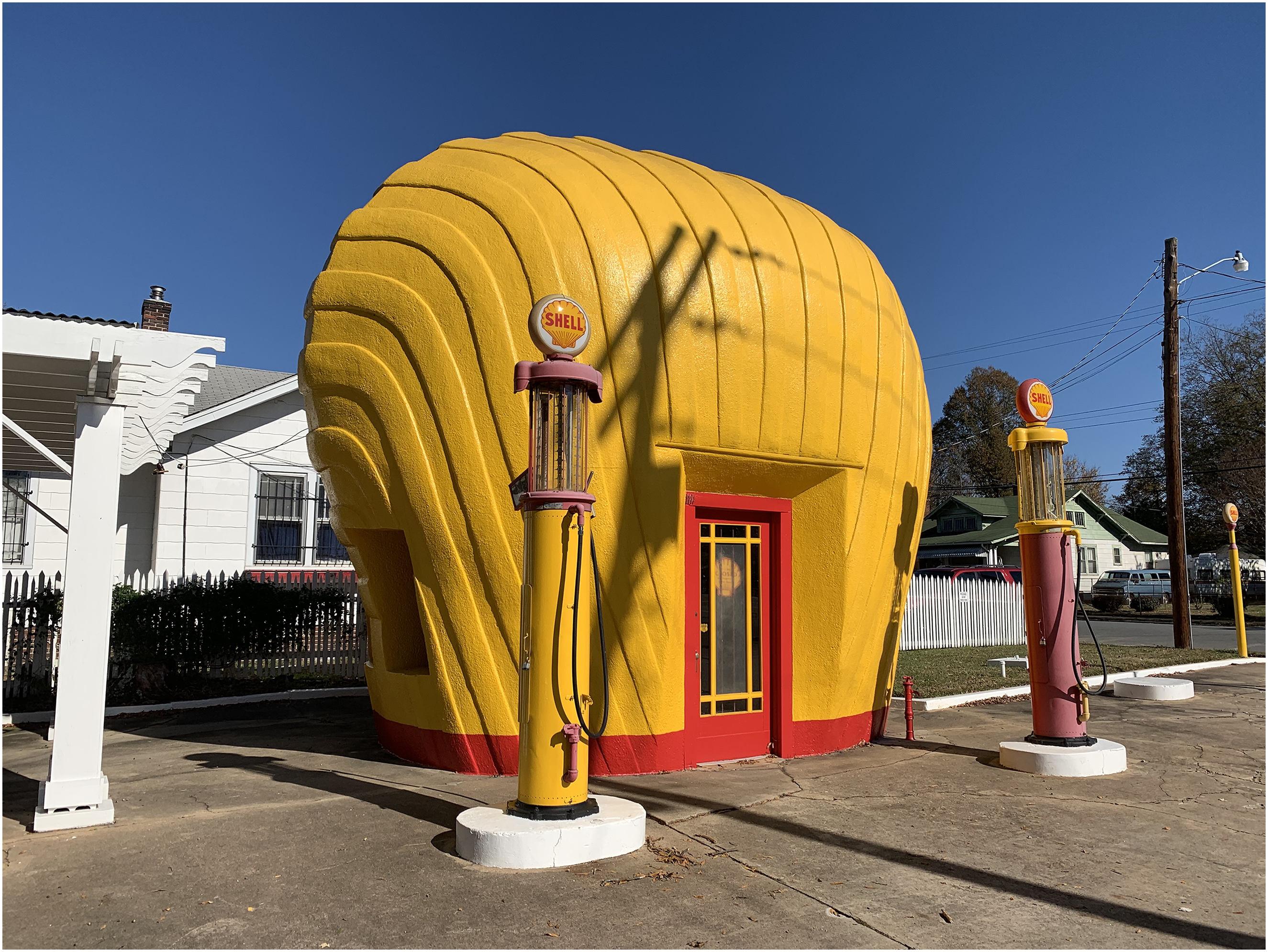
The shell gas station in Winston-Salem, North Carolina. (Credit: Author, 2018).
The historicization of the earliest examples of Big Things is understandable, as it aligns with late twentieth century efforts to broaden the scope of conservation to include working class, industrial, and commercial heritage. Less clear are the reasons for the ongoing popularity of Big Things in recent times. Several hundred have been built across North America and Australia in the past few decades, and as noted earlier, the phenomenon has spread to other parts of the world. There are two explanations that seem plausible here, and they are, perhaps, intertwined. The first harks back to the issue of size itself, and of the human fascination with the unusual. Upton has suggested that one of the attractions of ‘duck’ architecture is that it puts people in an unfamiliar spatial relationship with otherwise familiar objects (2003: 346). This ‘incongruity of scale and the surreal surprise of reality warping out of all proportion’ (Stockwell and Carlisle, 2003: 3), has the effect of shocking, startling, and amusing. Thus, it seems logical that Big Things remain popular, and continue to be erected, for the same reason that theme parks do; they offer a novel form of entertainment for all ages, and their extraordinariness is emphasized by their banal subject matter and the everyday landscapes that surround them.
The second explanation relates to this idea of novelty, in that Big Things are often associated with childhood memories of family vacations, and this in turn means that adults might regard them as nostalgic remnants of a ‘simpler time’. Several scholars have suggested that nostalgic impulses swell during times of societal uncertainty, revolution, depression, and transformation (Boym, 2007: 10; Hunt and Johns, 2013: 16). The authors of California Crazy observed a boom in giant roadside attractions in California during the Great Depression (Heimann and Georges, 2001: 63–68), and the explosion of Big Things across the US in the 1960s-70s occurred during the tumult of the Vietnam and Cold Wars. Some theorists of kitsch have suggested the popularity of low-brow mass-produced art in the first half of the twentieth century happened at a time when the working classes needed pleasant and unthreatening distractions from their everyday lives (Atkinson, 2007: 525). While it is difficult in this initial, foundational article to clearly establish the reasons for the uptick in Big Things construction over the past decade or so, it is not unreasonable to suggest that the turbulence wrought by globalization, the internet age, the 2008–09 Global Financial Crisis, numerous multilateral conflicts and civil wars, the COVID-19 pandemic, and increasing evidence of the world's changing climate, may be fostering a desire to turn back towards the past. Big Things, which are the subject of fond childhood memories formed during summer vacations, and are straight-forward visual expressions of cartoonish but simple everyday objects, may be precisely the sorts of landmarks that satisfy this desired nostalgic escapism.
Far from being a truncated trend of post-war roadside advertising isolated to the US, I have demonstrated that the Big Things phenomenon has a longer and more global history, and moreover, that it shows no sign of ceasing. The reluctance to give Big Things serious academic attention, or to treat them as anything more than passing moments of commercial kitsch, has been acknowledged for some time (e.g., Andrews, 1984: xii; Headley, 1996: 2). This is perhaps symptomatic of what Miller (2010) has described as a hesitance to focus on the ‘humility of things’; a hesitance that is still being dismantled (see, for instance, Trowell's exploration of British fairground prizes [2019], and McVeigh's investigation of the complexity of meanings in the consumption of Hello Kitty in Japan [2000]). This may explain why there has been no foundational study until now. In addition, in this article I have highlighted several theoretical ideas that warrant further investigation. This has included the possibility that Big Things being erected in large quantities in the economically developed nations of the ‘New World’ is connected on some level to the desire of non-Indigenous peoples to bind themselves to the landscape in acts of meaning-making or belonging. These observations, as well as the framing of Big Things as the material hallmarks of societies that are eager for distraction and nostalgia, can and should be interrogated by others. My primary aim here was to establish a foundation upon which future discourse could build; a discourse that can now progress with greater typological clarity and a trans-national awareness of Big Things as a persistent type of roadside material culture.
Footnotes
Data availability statement
The data set associated with this paper is not currently publicly available, due to ongoing research privacy and human ethics requirements. The Corresponding Author will consider individual requests to access the data set upon contact by email.
Declaration of conflicting interests
The author(s) declared no potential conflicts of interest with respect to the research, authorship, and/or publication of this article.
Funding
The author(s) disclosed receipt of the following financial support for the research, authorship, and/or publication of this article: This work was supported by the Duke University - Visiting Research Fellowship (Rubenstein Library) 2018-2019.


Author biography
Amy Clarke is a Senior Lecturer in History at the University of the Sunshine Coast. She specialises in heritage (particularly architectural), identity politics, British colonial and Australian socio-cultural histories. She has a PhD, MSc (Res), GradCertTertT, and BA (Hons 1), and was a Duke University Fellow (2018-19). Amy is the Deputy Editor of Historic Environment (the journal of Australia ICOMOS), an elected Fellow of the Society of Antiquaries Scotland and a Full International Member of ICOMOS. She appears regularly on Australian radio as a cultural history and heritage commentator.