




Abstract
This article explores material culture and peoples’ engagement with built environments from the perspective of vernacular architecture, adaptive reuse and more specifically barn-inspired architecture. Departing from actual cases of conversions that involve material reuse and initiate a correspondence between various more-than-human actors and temporal dimensions, we join the debate around sustainable architecture. We understand sustainability rather as transmission than as arresting change, and we have taken into consideration a broad scope of heritage, including masses of unlisted and abandoned buildings. Adaptive reuse and other comparable forms of using and caring for the outworn existing building stock are practices intended to prolong the lifespan of material resources through reinterpretation. Through barn architecture, we suggest alternative approaches and concepts, such as mending and care, to both fields of architecture and architectural conservation.
Introduction
In this article, adaptive reuse in architecture converges with heritage issues and sustainability discourses, allowing us to reconsider the established notions and dynamics of these fields. Practices of managing historic buildings are always future-oriented; they proceed without abandoning the ties to the past, allowing for movement and change. We examine barn architecture through repair studies (e.g. Denis and Pontille, 2015; Durrani, 2019; Graham and Thrift, 2007; Jackson, 2014), an emerging interdisciplinary field of study. The increasing interest in maintenance and repair arises partly from an awareness of the ecological crisis and global inequality (Jackson, 2014: 234; Graham and Thrift, 2007: 18). Perspectives that aim to reframe repair (e.g. Durrani, 2019 on garment mending as a social practice) encouraged us to examine the borderlines of architectural conservation, building repair, and contemporary architecture entangled in messy and complex socio-material networks. In terms of the existing building stock, prolonging the lifespan of buildings and building parts is an ecologically and culturally sustainable practice (see Leifeste and Stiefel, 2018; Yarrow, 2018). Sustainability in this article is perceived as transmission and transformation, carrying on, as Ingold (2017) puts it.
Drawing from the particular context of ‘barn architecture’ in Fennoscandia (Sweden, Norway and Finland), we identify areas where contemporary architecture and architectural conservation cross in fostering care and sustainability. The term refers to a contemporary architecture where vernacular barns and other agricultural structures, commonly designated secondary buildings, function as a material resource and inspiration for residential buildings (Figure 1). Looking at the modest yet historical buildings like barns allows us to recede from the requirement of authenticity and historical correctness that often occupies architectural preservation and heritage management (Jokilehto, 1999 [2011]: 17–18). Adding empirical observations to the emerging field of maintenance and repair studies we turn to the mending and repair of traditional buildings and landscapes to provide insights into the myriad ways material and form are carried on and cared for.
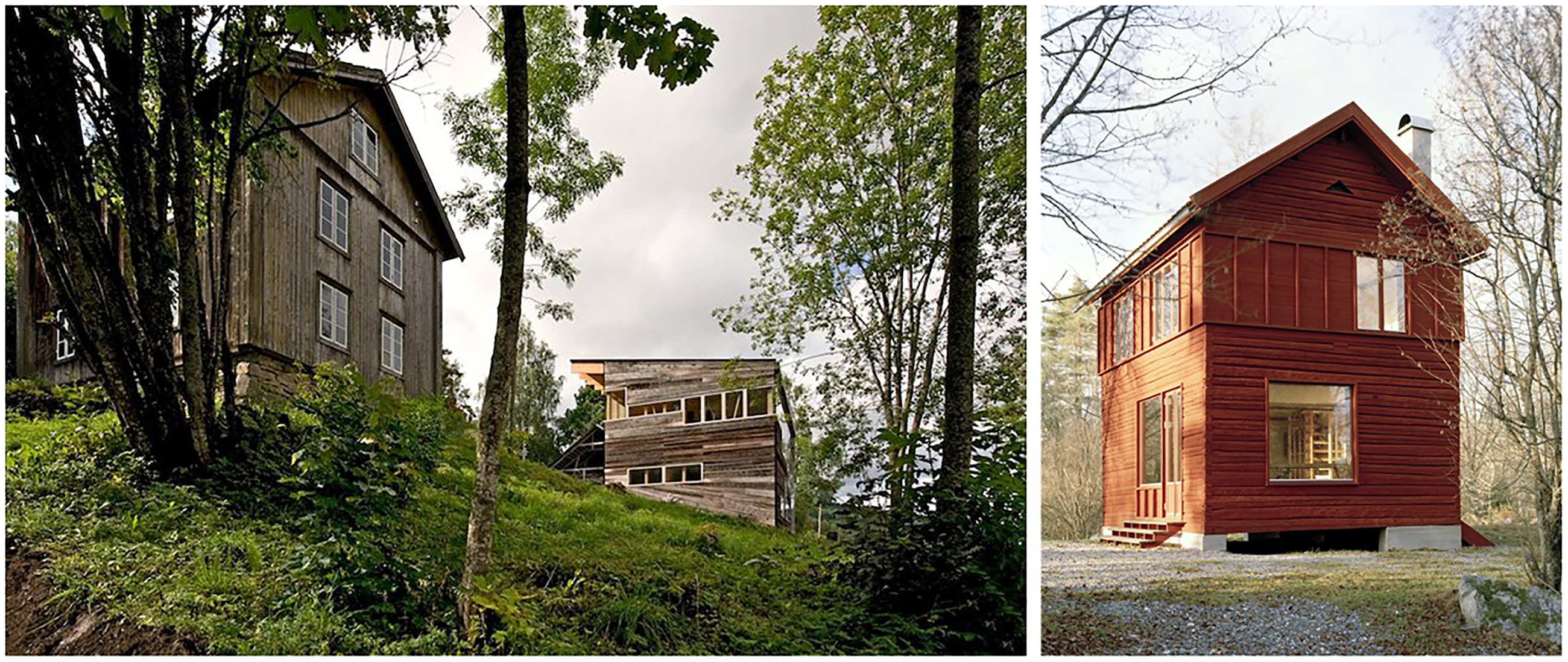
Vernacular barns re-interpreted. Farm House (left) Norway, where only claddings of the previously existed barn were used to cover the new barn-inspired house. Quite interestingly, the old main building is used only for guests and storage. © Jarmund/Vigsnæs AS Architects MNAL. Nannberga House (right) is a relocated barn converted to a house. © Mikael Olsson, General Architecture.
The expansion of the scope of heritage has turned more buildings, building types and heritage categories into conservation targets. Concurrently, most buildings remain outside of studies, regulations and management of built heritage. These are managed with various ‘untheorised’ actions of maintenance and repair (Ashworth, 2011: 2). Long before the idea of architectural conservation emerged, people took care of their material belongings, such as buildings (Leifeste and Stiefel, 2018: 46). To ensure the continuity and functionality of things, they need perpetual maintenance and repair. The conscious acts of repair have not been much theorised and are executed by default rather than by policy (Leifeste and Stiefel, 2018: 52; Oliver, 2006: 9). Fixing and mending are among the oldest practices humans have engaged with to sustain material-semiotic continuity and manage change and entropy (Durrani, 2019: 23; Jackson, 2014: 231). Choosing to fix is a value-based decision that leads to other value-based considerations of how-to's, materials and conditions. Repair is not just an act of fixing. It is an attitude or a school of thought that entangles social relations, materiality, ecology, political infrastructures and economic motives. Repair is a bodily practice that brings together the past and the future (Durrani, 2019). Architectural conservation, in turn, is a specific kind of repair that operates with buildings that have distinct historical or artistic values (Perkkiö, 2007: 25).
The notion of architectural conservation is relatively young. From the 18th century, it became defined as a specific kind of repair that aims at preserving the cultural values of monuments, such as palaces and cathedrals (Jokilehto, 1999 [2011]: 1). More broadly, conservation takes responsibility for transmitting objects and environments from the past to the future (Matero, 2006: 73). Acknowledging the inevitability of change in the movement from pasts to futures, the task of conservation has become to manage that change carefully (Sully, 2013: 296). Heritage has been defined as a dynamic process (Harvey, 2001) involving the entanglement of various actors, human and non-human and is mindful of change and adaptations over time. Likewise, it has become a highly specialised field that requires multidisciplinary expertise (Matero, 2006: 87; Yarrow, 2018: 11). Homeowners, building professionals and conservation experts involved in ongoing conservation projects all have different perceptions of architectural conservation and their materialisation in renovation practices, as Yarrow (2018) highlighted in his study of overlooked areas of how and why conservation matters. While conservation theories have evolved, most buildings remain outside the scope of heritage and architectural conservation (Ashworth, 2011: 2). Our study builds on this focusing on architects’ perspectives on old buildings that fall outside the scope of conservation.
Through a range of material expressions of barn architecture, we look for alternative approaches to both fields of architecture and conservation. Once entangled with repurposed farm buildings, we pondered whether the motivation for such reuse was creative, ecological or heritage oriented. These considerations took us on a speculative journey to investigate how trained architects engage with an alternative architectural language while ensuring the continuity of traditional materials and forming entanglements between sustainability, reuse, architectural imitations and vernacular buildings. Rudofsky (1964) referred to vernacular buildings as ‘architecture without architects’. Rather than examining the vernacular as a historical document from the past that needs preservation and stabilisation, architects learn from it through ‘the active reuse, reinterpretation or adaptation’ (Asquith and Vellinga, 2006). We interpret architects’ engagement with built heritage beyond its official management and the conservation of listed buildings as mending practices ethically related to architectural preservation and contemporary architecture. This contributes to experimental heritage approaches, as listed by DeSilvey (2017), that accept change as a vital part of the heritage process and take its ecologies into account, or ‘its messy worldly relations’ (Bangstad and Pétursdóttir, 2022: 5).
The ensuing investigation of barn architecture has phenomenological underpinnings. This perspective focuses on experience and sensual engagement with the environment. According to Frykman (2012), doing phenomenological research requires the researcher to take on a specific perspective that involves attending to experience, the presence and the effects of materialities and things. This is to correspond with people and things, as Ingold (2017) frames it, and to engage in collective knowledge-making.
Methods and materials
The paper builds on material gathered with ethnographic methods, interviews and online fieldwork. Focusing on contemporary architects’ engagement with barns, we looked at examples from archdaily.com, a platform that claims to be ‘the world's most visited architecture website’ (Figure 2). The website is intended to serve architects and provide them with a platform to collect and share projects, get inspired and stay up-to-date with developments in the field. It has turned into a database for architecture from all over the world, open to everyone but directed toward architecture professionals ‘seeking to build a better world’ (archdaily.com/about). This provided insights into the cultural expressions of barns in contemporary architecture and architects’ engagement with this building type and building traditions, enabled a contextualisation and provided us with a ground to stand on. We simmered these open observations into five common approaches to the barn that disclose the extent of reuse, how new buildings corresponded with former barns’ materiality and original location, and how architects approached building traditions. These are conversion, repurposing, relocation, reinterpretation and imagination (Figure 3). The exploration was geographically limited to Sweden, Norway and Finland. This is, to some extent, a culturally, historically and climatically uniform area, a region covered with forests, which has resulted in a high prevalence of wooden buildings and common building traditions (Kärki, 1999; Larsen, 1987). Furthermore, this is where the authors of this paper are situated and have access to and feel for the landscape and local building traditions.
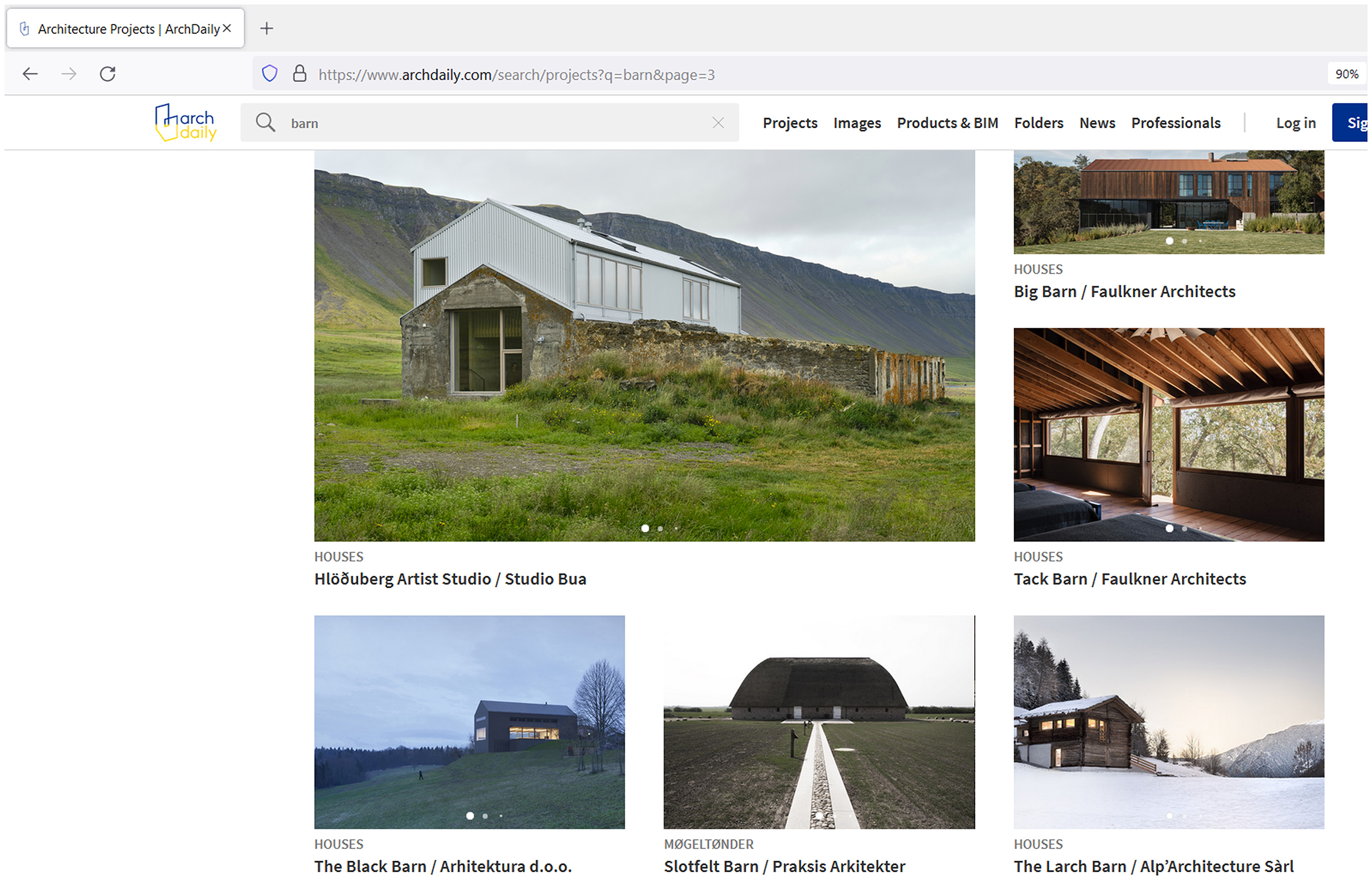
Screenshot from the ArchDaily website showing the search results for the key word ‘barn’ demonstrates the variety of architectural reinterpretations of barns. There are almost 7,500 architecture projects (searched August 19th 2022) indicated with the term ‘barn’ in the website including barn conversions and barn-inspired houses.
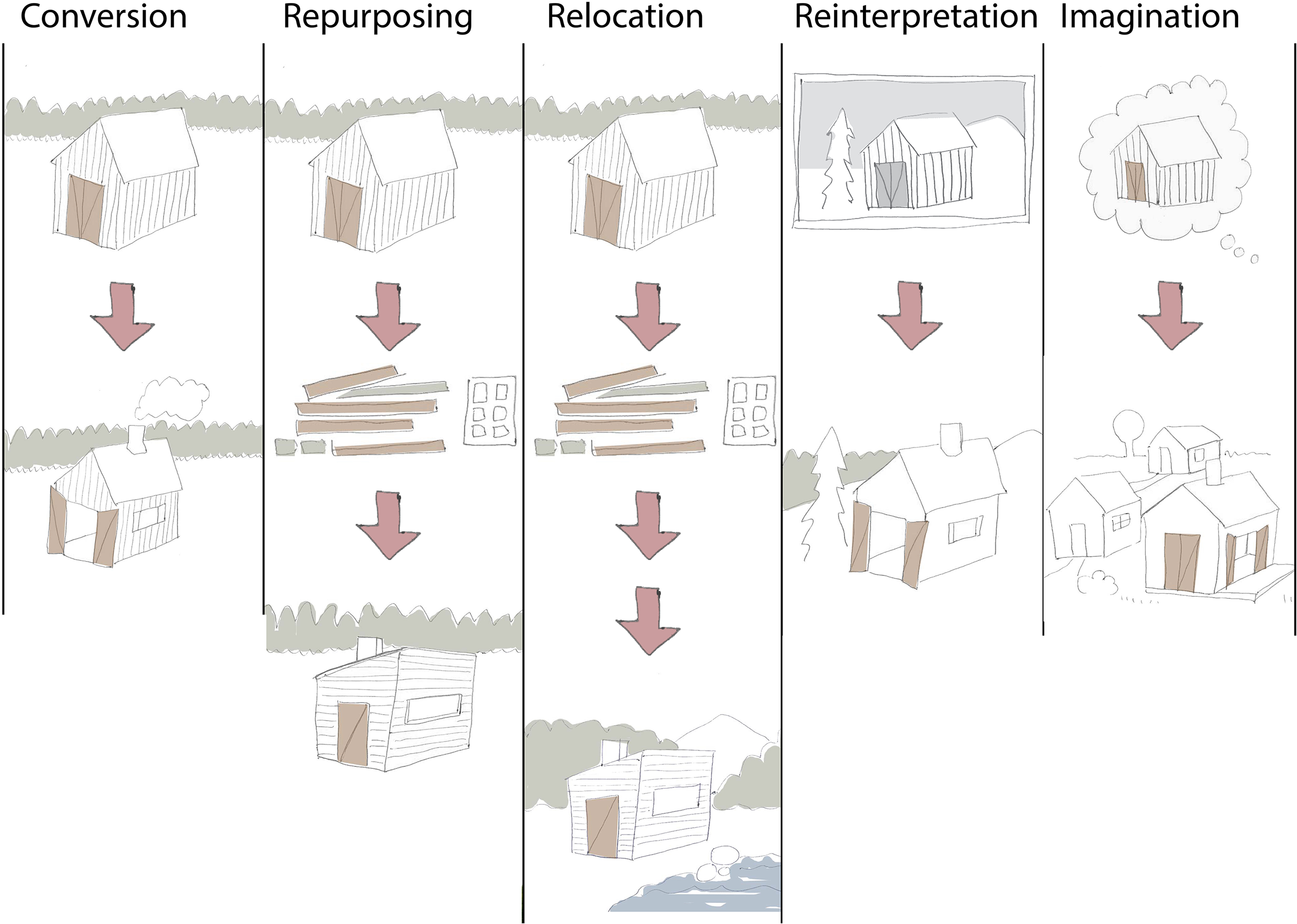
Five types of architectural responses to barns were identified in the preliminary explorations for this study: conversion, repurposing, relocation, reinterpretation and imagination. Drawings © Iida Kalakoski
However, this article is largely informed by two in-depth semi-structured interviews with two Swedish architects selected from the bulk of projects found through the preliminary exploration. We asked Jonte Norin about Oröd Lada (Figure 4) and Eric Persson about the Nannberga house (Figure 1), both in Sweden. These projects deviated from their usual work in terms of location and scale. Persson's office, General Architecture, often works with existing buildings of different scales and eras, but this small rural house is perhaps its most published project. This inquiry followed the lines of experimental, qualitative methods that aim at finding ways to understand material culture and focus on materials, their properties and human sensual engagement with them (Pink, 2009; Woodward, 2016).
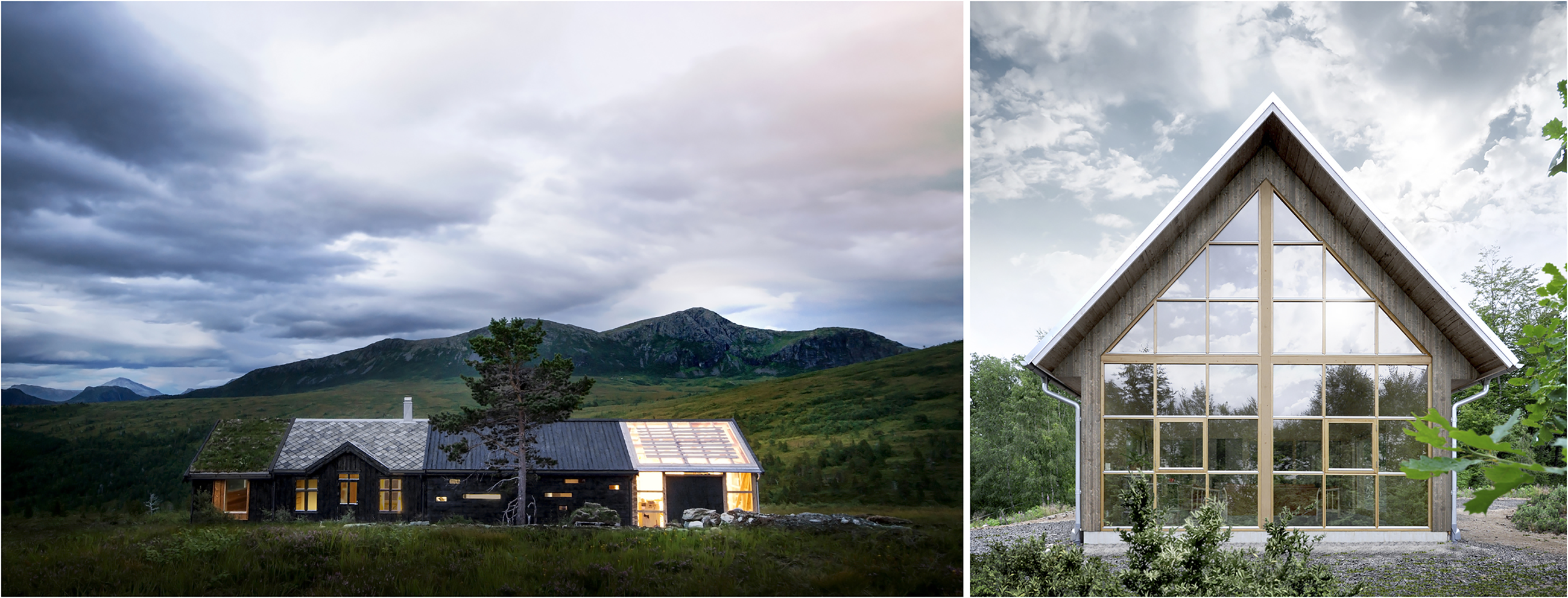
Reinterpreting the traditions. Cabin at the Troll's Peak, Norway (left) has the layout of a traditional row farm and is built using traditional building techniques. © Tom Auger, Rever & Drage Architects. Oröd Låda, Sweden (right) is inspired by barn architecture but is accompanied with an interpretation of a glassporch, which is a typical element in historical Scandinavian houses. © Jonte Norin.
Following ethical research procedures, we obtained informed consent from both participants, and they did not choose to be anonymised. The results are not intended to produce generalisable results. Instead, following Ingold’s (2017) notion of correspondence, we regarded the setting as an opportunity to create paths of making knowledge together, learning both from the buildings and people involved how materials and lives carry on and make their way into the future together.
The notion of sustainability
The interviewees did not claim to be experts in vernacular architecture or heritage issues, nor did they feel they were experts in green architecture. However, the sustainability and longevity of their buildings were essential to them. An environmental rationale and a resource ethos seeped into how the architects described their architectural approach: aspects of sustainability emerged and became entangled with issues of old buildings, building materials and landscapes. Both Norin and Persson expressed a sense of responsibility for cultural and ecological sustainability and were familiar with characteristics of the Swedish cultural landscape and building traditions.
The go-to definition of sustainability is often the Brundtland report (United Nations, 1987) and the concept of sustainable development as development that ‘meets the needs of the present without compromising the ability of future generations to meet their own needs’. Sustainable development is thus dependent on the responsible use of natural resources, contrasting the negative effects (environmental and societal) of their current use. Sustainability understood in this way is complex and multifaceted and involves social, environmental, economic and cultural issues (Soini and Birkeland, 2014). The call for sustainable and integrated living environments keeps getting louder, snatching up the fields of built heritage and contemporary architecture in its webs through reuse practices and building care.
The notion of sustainability has been a part of discourses within architecture and architectural conservation increasingly within the last few decades. In architecture, the focus has been on building sustainably and in building conservation, it has been focused on managing existing buildings (Eriksson, 2021; Leifeste and Stiefel, 2018). Energy efficiency has been the primary goal, although a resource-based management approach to heritage has emerged (Holmberg, 2019). This approach to sustainability beyond energy efficiency perceives the vernacular as a source of knowledge and creativity that invokes culturally and environmentally sustainable built environments (Vellinga, 2006: 83). Framed as a non-renewable resource (Feilden and Jokilehto, 1998), the management of cultural heritage is increasingly referred to as an ‘act of sustainability’ (see Gradén, 2021; Källbom, 2021). Reflecting an engagement with the current climate crisis heritage becomes entangled with a resource ethos and sustainability as resource-saving activities, as Holmberg (2019) suggests. We argue that the same applies to the practice of architecture and other fields involved in making and caring for material worlds. Adaptive reuse and other comparable forms of using and caring for the outworn existing building stock are practices intended to prolong the lifespan of material resources through reinterpretation.
Architecture is fundamentally about creating living environments for the human species on Earth, making up patterns for desired ways of living, and responding to the existing environment in one way or another. Architecture can also be thought of as a form of householding, or what Tham et al. (2019) refer to as Oikology or Home Ecologics. Linking heritage up with the term oeconomia, meaning the management of household affairs and economy, framing it as a practice of caretaking, safeguarding and mending, Holmberg (2019: 2) regards it as ‘an activity in opposition to exploitation’. It involves a sensible, just and wise use of resources for the long-term and beyond individual gain. This understanding expands our notion of heritage to include activities, buildings and professionals that do not belong to official heritage discourses (Smith, 2006) and engages with the management of continuity and change in other ways than heritage professionals do. Harrison (2015) proposed that heritage practices compose a particular ‘regime of care’ meant to ensure the longevity of historical materials that foster relations between the past, present and future.
In this article, sustainability also has phenomenological underpinnings as it revolves around understanding complex human–material relationships. We approach sustainability with the notion of care, ‘as a manifold range of doings needed to create, hold together, and sustain life and continue its diverseness’ (Puig de la Bellacasa, 2017: 70), in other words, ways of carrying on (Ingold, 2017). As an ethical concept, it furthermore highlights the consequences of human actions on the ecosystem (Moore, 2016: 5). As the modest and overlooked buildings turn into objects of care, they also become triggers for creative processes. These practices offer hopeful approaches to handling the ‘fragile’ (Spelman, 2002) or ‘broken’ (Jackson, 2014) world. Maintenance and repair are attempts ‘to redirect our gaze from moments of production to moments of sustainability’ (Jackson, 2014: 234). The focus on care emphasises entanglements, relations and the significance of virtually irrelevant, neglected things.
Re-evaluating barns
Barns and other agricultural buildings are essential yet often neglected elements of the rural landscape (Figure 5). Urban sprawl, industrialisation and radical changes in the world's economy and culture from the 19th century onward have resulted in dramatic changes in landscapes (Antrop, 2004). Many farm buildings have been rendered useless in rural areas faced with depopulation and the modernisation of agriculture (Verhoeve et al., 2012). These buildings may not have high economic or heritage value but can be a meaningful source for an alternative perspective on history (see Kuisma, 2019; Lange, 2008). Likewise, their nostalgic feel, aesthetics and tectonic characters are valued (Walsh, 2020). Secondary buildings’ simple and rational forms continue to inspire Nordic architects and prefabricated house producers.
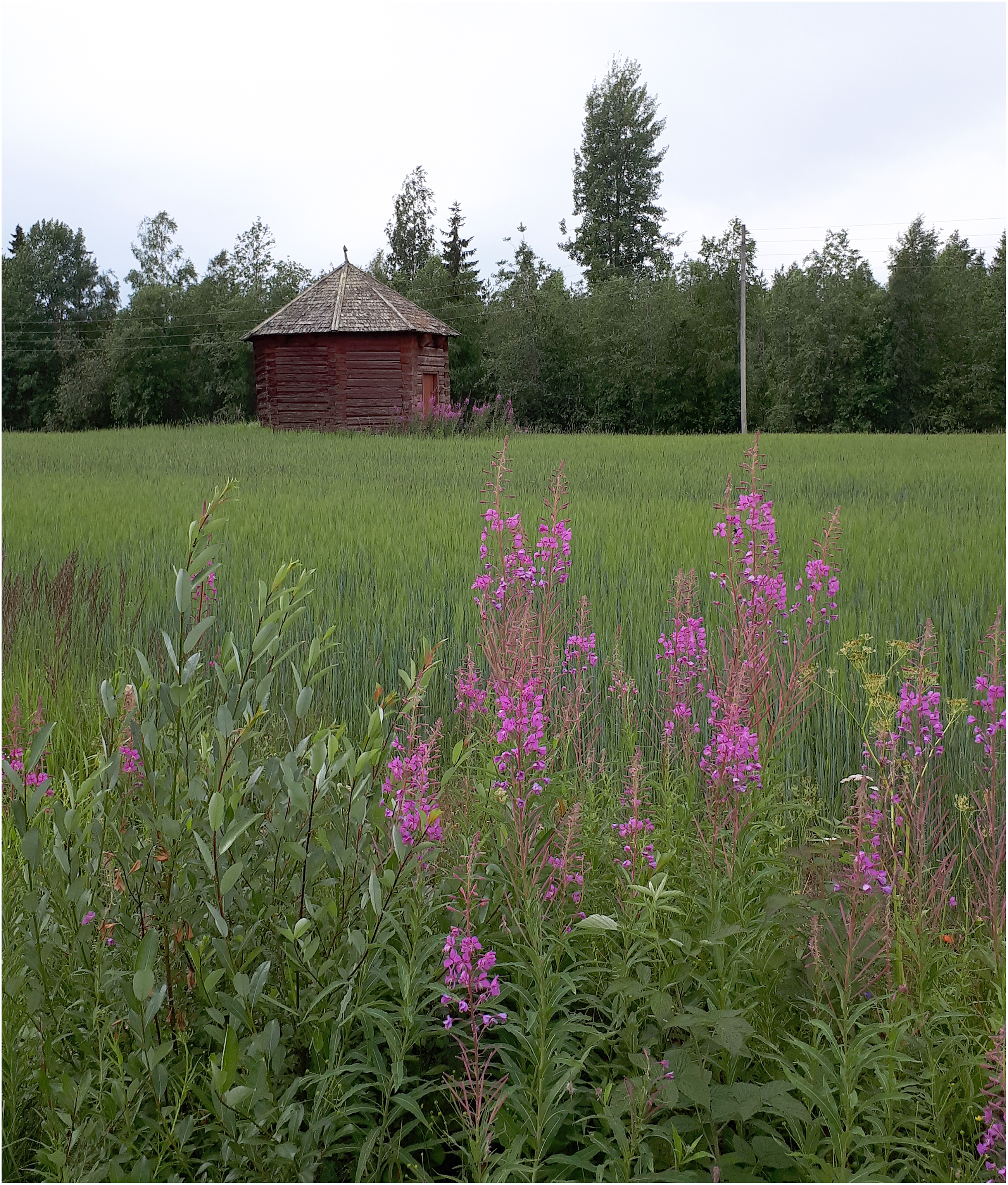
This small barn in Western Finland has an atypical hexagon-shaped floor plan, but typical setting as an accent of agrarian landscape. The beautifully weathered façade is painted with natural red ochre. Photograph © Iida Kalakoski
While abandoned farm buildings might be associated with poverty and backwardness (Asquith and Vellinga, 2006: 1), their reuse and conversion are a widespread, global trend. Regarding local social dynamics and cultural landscapes, the adaptive reuse of farm buildings has been regarded as destructive (Aicher, 2018: 67; Rice, 2003) but also an opportunity to revitalise rural areas (Historic England, 2017). Academically, fields like land use policy, agricultural engineering and sustainable tourism have addressed the reuse of old farm buildings in many geographical contexts (Bocz, 2012; Candura et al., 2008; Van der Vaart, 2003; Verhoeve et al., 2012). The farm buildings in these studies are often quite large-scaled or belong to urbanising rural areas (Antucheviciene, 2003; Van der Vaart, 2003), which conjures different responses than small, abandoned wooden barns in depopulating rural areas of Fennoscandinavia. These are not only unused and inoperable agricultural buildings but complex and fragile socio-material entanglements in the process of breakdown. Situated in time and space, they stand as statements of past generations’ work, expressing pastness and building traditions. The reuse ensures their continuity, albeit in a different form and context. Norin pointed out that ‘there are so many buildings with qualities that are not used in a good way now’, and Persson mentioned that the Nannberga house started with easy access to affordable material: There were a lot of these timber frame structures for sale, and they're dead cheap; they cost next to nothing because the people who sell them want someone to come and take them down.
Here the adaptive reuse of secondary farm buildings is a way of assembling the neglected (Puig de la Bellacasa, 2017) and carrying on (Ingold, 2017).
The online observation demonstrated a variety in architects’ approaches to barn reuse (Figure 2) indicating a spectrum of barn architecture's approaches to built heritage and building traditions. To begin with, we loosely classified the variety of barn architecture into five sub-categories (Figure 3) based on their characteristics. On the one hand, these approaches involve material reuse and engagement with tangible built heritage. These include cases of conversions: an existing barn converted to a house in its original location; repurposing: involving building parts or materials of a former barn redesigned into a new barn-inspired house on its original site and; relocations: the former barn is relocated and transformed into a new building. On the other, these involve engagement with the intangible elements of architectural heritage and references to secondary buildings in the facade. These involve reinterpretation: building a new barn-inspired house in a typical setting for a barn, and imagination: designing a new barn-inspired house without a specific connection to the building site. Norin's building, Oröd lada, could be interpreted as an example of reinterpretation. However, Persson's house Nannberga, a private house made of a relocated log frame of an old granary, represents relocation.
When the objective is to position the new design with local heritage, a sensitivity to the farm buildings’ role as cultural objects in landscapes was noticeable, foregrounding familiarity with the local landscape and building traditions. In others, barn-inspired houses seem closer to expressions of generic nostalgia or longing for the idealist image of ‘country living’. As harmless and inoffensive as these references might seem, there is a risk of cultural appropriation (see Harper, 2018). In the Fennoscandian context, where urbanisation is a relatively new phenomenon, and most people still have a connection to the countryside, the barn architecture might not come out in this light. However, this question should not be neglected since a particular cultural gap is a precondition for reinterpretation and appropriation.
There is a limited amount of research about architects’ responses to the aesthetics of farm buildings. Still, insights into a more popular fascination for farm buildings and other modest building types are easily accessible. As stated before, the ‘barn conversion’ is a global trend, represented in social media (e.g. Instagram and Pinterest) and television shows (such as Grand Designs). They enter the public imagination as shared stories and become part of a world-making process. In an article dedicated to barn architecture on archdaily.com, Walsh (2020) notes how material elements of these buildings stimulate designers: Simple in construction, and traditionally shaped from necessity rather than aesthetic, barns have nonetheless continued to spark the imaginations of those seeking a contrast to the fast-paced, dense, globalised reality of urban life. They also spark the intrigue of designers.
Farm buildings’ simple and rational aesthetics invites contemporary architects to reinterpret them in their design (Walsh, 2020). Yet, the attractiveness of barns also comes from being alternative and therefore open for reinterpretation. In his study on Cabin Porn, a popular website exhibiting photos of modest cabins, Jørgensen (2015: 558–559) interprets the fascination for these images as a phenomenon that romanticises low-tech rural lifestyles and expresses criticism toward modernism (Figure 6). The website claims to inspire the spectator's ‘quiet place somewhere’. The cabins presented on the website span the globe, but Fennoscandia has a strong presence. There is undoubtedly something similar in the fascination for cabins, cottages and barn architecture. They both rely on the aesthetics of modesty, quiet and slow-paced life, and nostalgic longing for the less complicated past. Both also reflect the idea of a primitive hut, an archetypical construction, man's first house, consisting of four poles, four beams and a roof (see Laugier, 1755 [1977]).
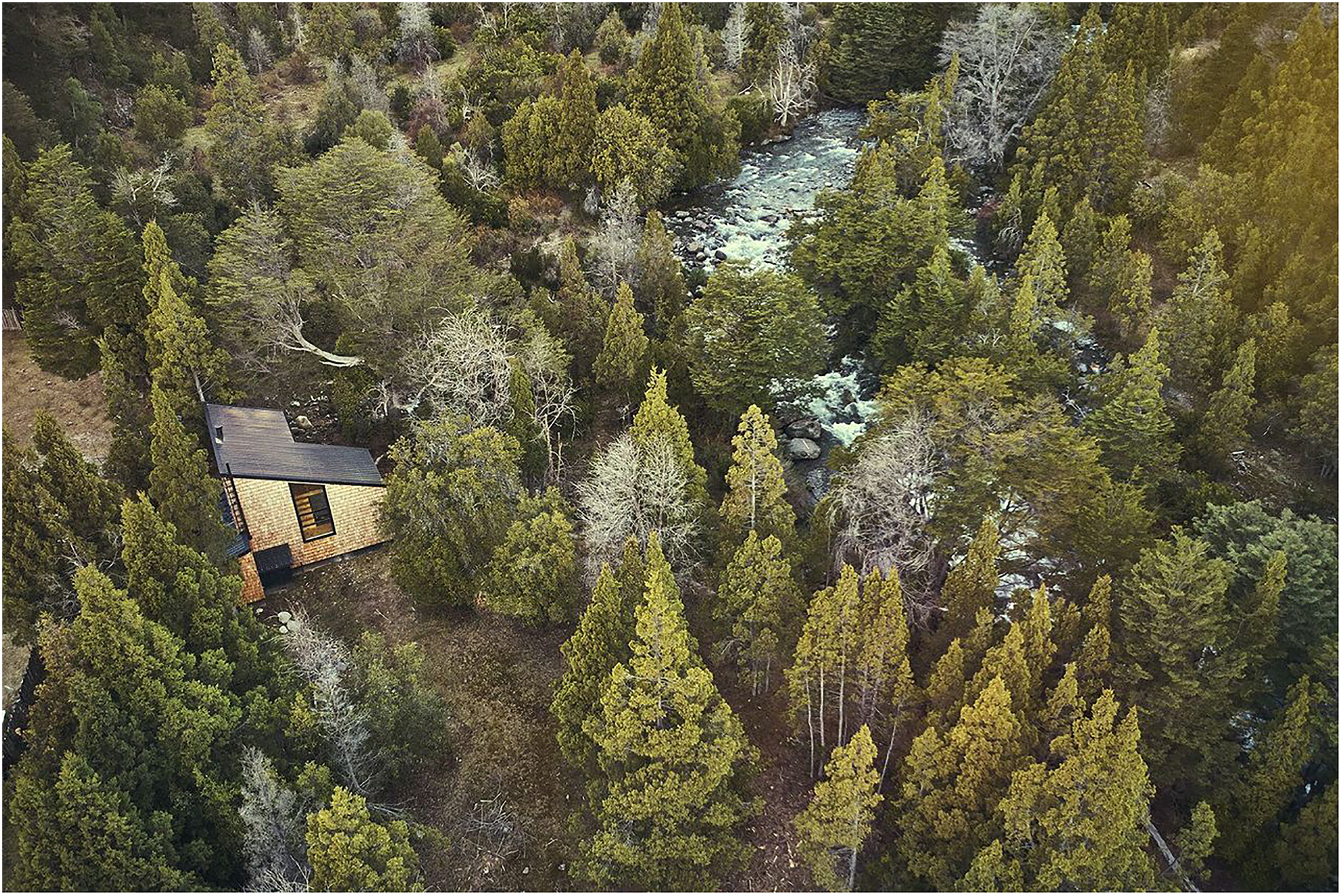
A cabin in the wilderness. Cabin ‘Rio Chico’ by architect Paul Steel Bouza in Chile, published in Cabin Porn website. Photograph © Gustavo Zylberstajn.
The popularity of cabins and barn architecture might appear escapist, indicating the reluctance to face the ‘real world’ and its exploitative culture (Tuan, 2000). Barn architecture might also evoke another kind of escapism. Unlike the ordinary projects of the architects we interviewed, they were small and virtually marginal projects, secondary in their references to modest farm buildings and terms of the commission. Small ‘side-projects’ for private clients allowed freedom for unusual experiments and precision juxtaposing doings, aesthetics and ethics of mending with those of reuse, sustainable architecture and architectural conservation.
Tradition and sustainability converged
Our conversations with the architects revealed that they did not profoundly analyse their relationship with the built heritage. However, when it comes to design, they play with pastness and building traditions quite intuitively. Learning from the vernacular in these cases meant selecting and merging qualities of traditional primary and secondary buildings, traditional landscape and green building theories. Therefore, the concept of barn architecture opens an intriguing perspective for studying the spectrum of practices that aim to prolong the lifespan of historical buildings and maintain some of their qualities.
As already noted, barn architecture frequently refers to tradition. Tradition, or the traditional, is often regarded as handed down between generations and conceived of as static and never changing. However, understood as a dynamic process, tradition is not static; it transforms and is transformative, has temporal dimensions and changes over time (Oliver, 2006: 149). In a sense, it aligns with the concept of adapted reuse; it is something existing carried on, adapted to the situation of the moment in which it's relevant. Associated with an imagined traditional, pre-industrial lifestyle, barn architecture can be seen as a longing for the past that endures in the present. Globally, the idea of barns as inspiration for sustainable architecture that assimilates to rural landscape is not new. A famous example is the Sea Ranch (Figure 7) in California, an experimental housing project from the 1960s inspired by the weathered facades of local barns (Lyndon, 2019: 101). Architect Peter Zumthor speaks of ‘emotional reconstruction’, referring to design that expresses ‘the architectural language that belongs to that place and resonates with its time’ (Zumthor and Landing, 2018: 71–72).
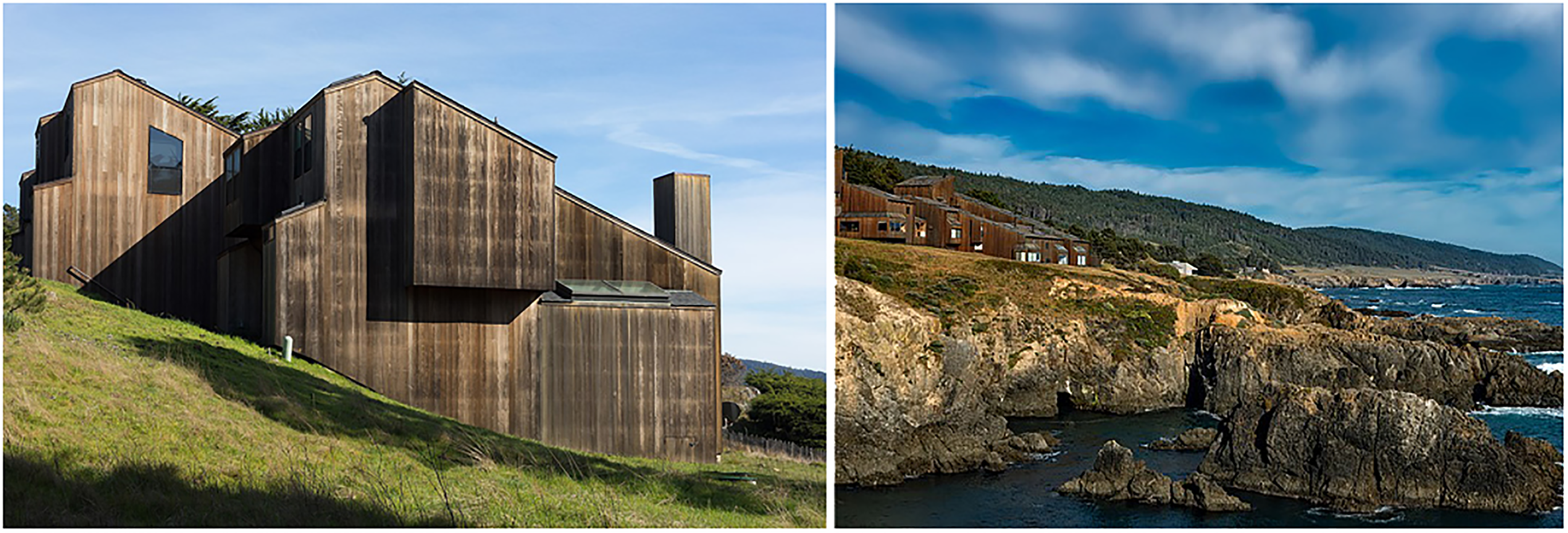
The design of the Sea Ranch, and specifically its first building phase ‘Condominium One’ (1964), was inspired by the weathered facades of local barns and the architectural intention was to assimilate to the landscape. Photographs downloaded from Wikipedia Commons and published under the license by CC-BYSA-4.0.
The interviewees approached building traditions as adjustable to present concerns and lifestyles. Interestingly, they merged traditions with sustainability. Both architects perceived sustainability more broadly than conventionally in boxes of standards, regulations and design guides. Such regulations often represent a reductionist approach to sustainable design that ignores contextual matters and may lead to simplification (Williamson et al., 2003). Norin, a craftsman before becoming an architect, was familiar with traditional details and joints. He found his way to barn architecture through theories of ecological design, which emphasised the functional and economical shape that is often inherent in agricultural buildings. ‘There are more questions than energy’, he noted and explained how traditional buildings perhaps were less efficient in terms of short-term energy consumption but often were healthy and long-lasting. This aligns with a resource perspective on sustainability in buildings mentioned earlier.
Buildings can be sustainable only if they have the material ability to be sustained, repaired, mended and carried on, and the architects appreciated these qualities. To carry on previous generations’ work by exhibiting old, hand-carved details in the new composition or using traditional methods or components in the new design ensures continuity. The simplicity of the secondary turns into architectural possibilities; it allows bold moves while the continuity of the old building is ensured and made relevant for a contemporary context. The barn's shape, more generally as a building type, served as an inspiration and was suitable for contemporary architecture. Norin combined the simple volume with a glazed porch, which is characteristic for traditional Swedish residential houses. One of the reasons for using wood was its quality and ability to be maintained, mended and repaired, which we would argue are fundamental elements in building traditions. Persson said that one could find ‘genuine material’ and ‘really good quality’ in every period and he questioned the sustainability of demolishing 30–50 years old buildings to replace them with green buildings. For both the aim was to create long-lasting and adaptable structures in line with Williamson et al. (2003) conception of sustainable architecture, performing a ‘beautiful act’ as an architect makes a building that sustains the test of time, carries on, and can be reused in a future that is not seen simply as a linear extension of the present. Future people might have other plans for the buildings we leave for them.
Reading the references
Reuse and reinterpretation are both vernacular and future-oriented practices. While reuse was a conventional practice in vernacular construction, it was somewhat concealed rather than emphasised (Kalakoski and Huuhka, 2018). This characteristic disconnects traditional reuse from contemporary one, highlighting the contrast between the new and the old as seen in the raised roof and plywood interior in Persson's summerhouse at Nannberga. This dualism, visually combining reused materials with contemporary design, is a typical architectural approach to reuse projects. In Scandinavian or Central-European barn conversions, the neat and modern interior accentuates the contrast with the robust old façade. Persson could deliver a new house with ‘something from the old’ by merging these two qualities. He described the Nannberga house design process as a negotiation between the old and new references and claimed that working with something existing influences the architect in unpredictable ways.
Asquith and Vellinga (2006) claim that too much emphasis has been put on vernacular buildings’ historical and typological interpretation. Instead, vernacular buildings should be examined as resources for creative treatment, active reuse and reinterpretation. Farm buildings are not initially intended to impress, and their simple and functional shapes tolerate alterations and reinterpretations. Despite their modesty, they withhold handmade details and patina of age, which offer contemporary architects a welcome opportunity to practice decoration and engage with nostalgia (Kalakoski and Huuhka, 2018; Figure 8).
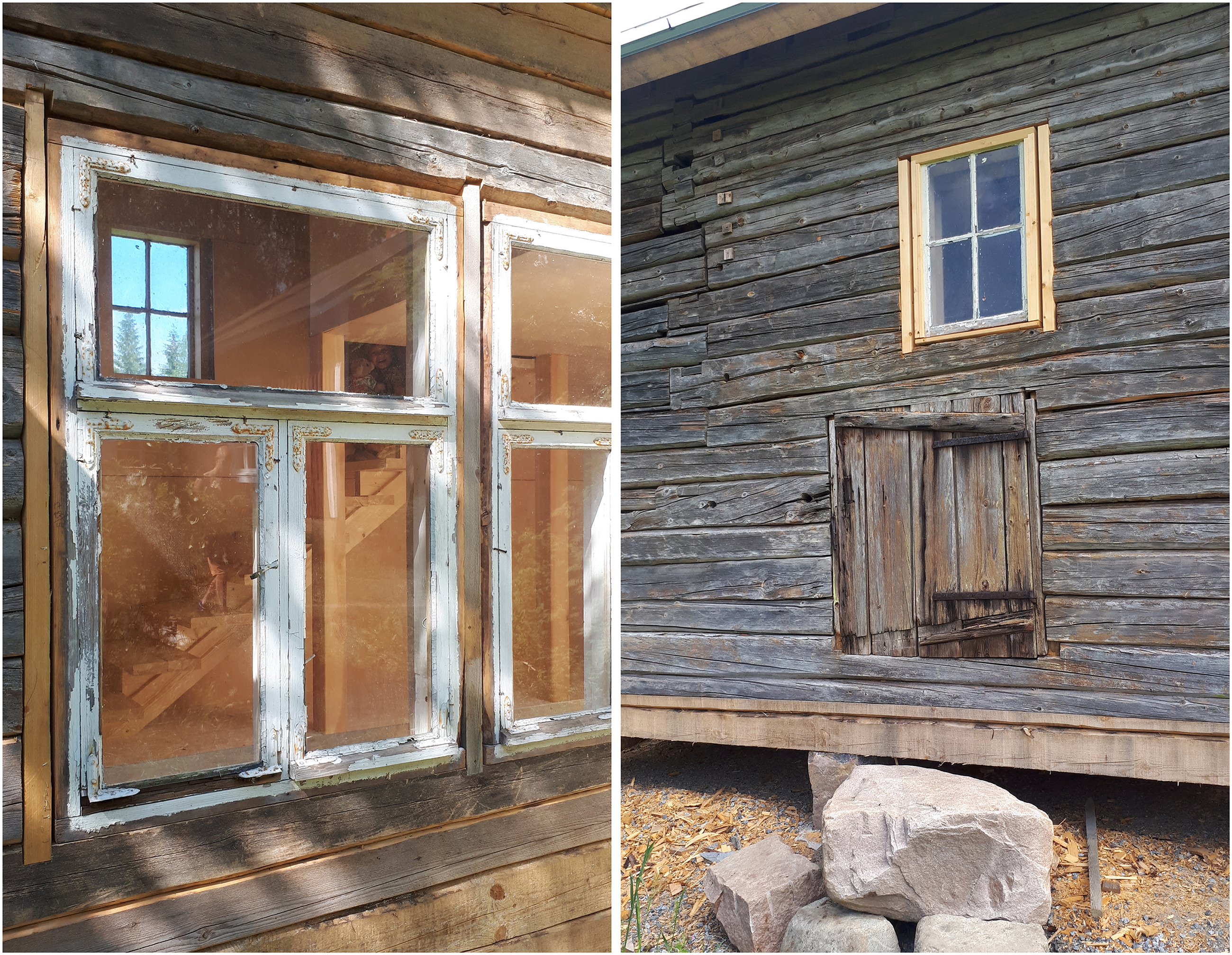
Old and weathered materials and hand-carved details serve a decorative function and are contrasted with the contemporary interior of the converted barn by architects Iida Kalakoski and Mikko Siitonen in Western Finland (2020). Photographs © Iida Kalakoski
On the other hand, the strictures and limitations of the existing structures inspired the architects who repurposed old buildings (imagined or real) and building materials. According to Norin, it was ‘incredibly fun to work with certain perimeters and discover new things’. Adapting to given conditions and combining old and new materials invoked modest creativity and humility. For Persson, the character of a ‘basic, archetypical house’ and the ‘extremely reduced’ barn volume were inspiring. The two fundamental elements, the timber frame and the pitched roof set limitations that were not considered restricting but, on the contrary, liberating; there was nothing else to consider: ‘no windows, no style’. Persson furthermore identified a specific value in working with a secondary building rather than with a residential or ‘primary’ structure, as the secondary ‘doesn't propose a way of living in it’. The open plan and the lack of openings offered freedom to organise the plan, facades and interiors. The old frame was completed with new materials to implement contemporaneity to the project without losing the qualities of the old.
While the two architects enjoyed working with the existing buildings, they also questioned the ethics of reuse as a form of heritage preservation. Persson assumed that heritage professionals would not see any value in conversions like the Nannberga house since the building, its location and context had been altered. This hesitation originates from the general idea that the integrity of a building is impaired by the removal and reuse of building parts. Dating back to John Ruskin and the 19th-century preservation movement, it still influences how preservationists and the whole building culture consider reuse and repurposing as marginal (Leifeste and Stiefel, 2018: 185) and problematic when the restoration is seen as spoiling the building's authenticity (Forster, 2010a: 97).
Authenticity, as ‘a cultural construct of the modern Western world’ (Handler, 1986: 2), is, however, open to different interpretations in different situations (Van Leeuwen, 2001). Whereas conservation aims at preserving authenticity, barn architecture as an emotional reconstruction (Zumthor and Landing, 2018) aims at keeping pastness. Here, pastness refers to a heritage object's capacity to evoke feelings of continuity and familiarity, belonging to the past rather than its actual age or heritage value (Holtorf, 2013: 431–2). Persson and Norin's uncertainty about their right to use vernacular references and historical building materials explains their marginal usage in modern architecture. Vellinga (2006: 83) has also stated that the vernacular is often represented as ‘picturesque and charming’ but at the same time as ‘out of date and irrelevant’ (Vellinga, 2006: 83).
Requirements for authenticity are present in both contemporary architectural design and conservation, and they correlate with what is considered an honest approach. Within the discourse of heritage, preservation of the built environment often aims at protecting an authentic state of the building (Jones and Yarrow, 2013: 5). That involves new additions to be recognisable from the old fabric, and each addition to be carefully considered, undisputed and genuine (Forster, 2010b). One possible interpretation for ‘honesty’ in architectural design is that the architectural work should remain truthful to the time of its creation and express contemporary style and building technique. When the reuse of old building parts was a self-evident phase in their lifespan, they tended to make their way down in the hierarchy of buildings, from houses to barns, not vice versa (Kalakoski and Huuhka, 2018: 13). Barn architecture reuses vernacular buildings but reverses the principles of vernacular reuse practice. Reversed hierarchy can also be pursued in architectural influences: in barn-inspired architecture, secondary structures influence the architecture of the primary buildings.
Despite its ambiguity, it doesn’t seem easy for a contemporary architect to work with historical references without defining their relationship with honesty and authenticity. Both interviewees brought up the topic with slight discomfort. Norin explained how he dealt with this topic when choosing massive construction instead of modern material combinations. He justified using old methods through their functionality but highlighted that the use of traditional methods needed to be consequential and purposeful. This approach to building traditions in contemporary architecture aligns partly with the ethic of integrity in conservation, where the ‘integrity of a structure as a whole is of prime importance and can be achieved with the adoption of suitable craft skills and utilisation of replacement of materials on a like for like basis’ (Forster, 2010a: 96).
The discourse on western vernacular architecture focuses on documentation, classification and dating instead of seeing it as a resource for future-oriented practices like architecture (Asquith and Vellinga, 2006: 5). Barn conversion as adaptive reuse is theoretically a combination of the two approaches: architectural conservation and architectural design. In terms of such practice, the concept of readability is more convenient than the ambiguous concept of honesty. Readability refers to the possibility of identifying different historical layers of a building. The objective of readability leads architects to leave the difference between old and new designs and materials recognisable. For example, in the Nannberga house, new additions are distinguishable, especially in the interior and the façade. At the same time, the house stands independently as a contemporary architectural piece. While barn architecture imitates traditional barns’ forms, dimensions and characteristics, it remains on a certain level of abstraction to express its era.
Building on Graham and Thrift's (2007: 5) perception of failure as a mechanism that produces improvisation and learning, we understand vernacular architecture as a product of continuous learning and adaptation. Its forms, dimensions and working methods have been optimised through generations to meet the local conditions, resources and functional needs. Barns are textbook examples of vernacular architecture: they are utilitarian, timeless and, within a specific region, uniform. They are adjusted to meet the requirements of particular locations and functions (Canizaro, 2007: 159; Oliver, 2006: 13; see also Rudofsky, 1964).
Barns as situated architecture
‘Cultural landscape’ is a key concept in barn architecture. Barns are parts of rural landscapes, and preserving their qualities can take different forms, from conservation to reuse and reinterpretation. Their archetypical shape and status in the landscape can be more significant than their materiality. Despite the global interest in barn architecture, the image of archetypical barns and their role in the cultural landscape depends on the designer's cultural background, as Bradecki and Uherek-Bradecka’s (2019) analysis of their barn-inspired architecture reveals. What is barn-inspired for the Polish architects is hardly recognisable barn architecture to Scandinavians. Our observations on archdaily.com indicated that Scandinavian barn architecture frequently referred to tradition, to barns belonging to local culture but to another time. The smaller-scale, neglected and disappearing structures were more prominent as inspiration for architecture than contemporary agricultural barns. Therefore, referring to barns in architecture is an expression of regionalism. Regionalism specifically refers to architects’ response to vernacular architecture (Canizaro, 2007: 157). While heritage informs the present and the future, regionalism has a similar purpose (Canizaro, 2007: 166). Built heritage can be carried on to the future through preservation, conservation, reconstruction and reinterpretation. In regionalism or barn architecture, reinterpretation plays a significant role.
Persson expressed his care for the landscape in the Nannberga house project and noted that it had an essential role in the design process. The idea was not to stick out but rather blend into the landscape as a matter of care for the nearby people. Norin also tended to the passersby's perspective and the building's relationship with the environment. Not only did barns inspire architecture, but they also determined certain qualities of the design. The most significant advantages of the building type for Norin were the simple shape and repetition of specific solutions. The disadvantage, in turn, was the narrow and long volume. However, this made it easy to implement in the traditional landscape.
‘We wanted to relate to the Swedish countryside’, Persson expressed about the Nannberga project. As Norin pointed out, farm buildings ‘could play a very important role in the landscape or the picture of the countryside views’. When working in rural landscapes, the architects considered various perspectives on the building: from within, outside, close up, and afar. They discussed how they wanted to imitate the layout of the traditional Swedish landscape with red houses and secondary buildings, to rehabilitate the landscape with small, almost invisible gestures. This reflects the aesthetics of modesty and humility discussed earlier and aligns with thinking of it as mending the landscape and its ecologies.
Discussion: Barn architecture as mending
Based on our observations, we have identified that, turned to the past, barn architecture aims primarily at preserving building traditions and the material and scenic qualities of the barns. Turned to the future, it is fused with an environmental ethos of preserving material resources and sustainable building traditions. These preservation objectives are parallel to architectural conservation, but barn architecture uses a broader range of methods to achieve these goals. We considered barn architecture as a form of mending that refers to making something usable again, through transforming it to fit a different context and function. Durrani (2019: 104–105) classifies menders based on their experience and attitudes. We adopted, and interpreted freely, two of these categories, re-doers and restorers, to understand the ethics and aesthetics of barn architecture – and barn architects. Durrani (2019) describes ‘re-doers’ as experimental and risk-taking menders who prefer to mend visibly but could also mend invisibly. ‘Restorers’, in turn, are more conservative, highly experienced menders who prefer invisible repair. In architectural conservation, re-doers prefer visible additions to historical fabric, whereas restorers use traditional methods to accomplish unrecognisable additions.
Another way to distinguish qualities of repair is to analyse them based on the objectives. According to Sennett (2009: 200) (see also Martinez, 2019: 9), a repair can be either ‘dynamic’ or ‘static’. By static repair, Sennett (2009) refers to conventional repair where the malfunctioning object is restored to its former state. Dynamic repair, in turn, changes the object's current form or function. When applied to buildings, mending is a creative act that covers a broad scope of heritage, including masses of unlisted and abandoned buildings. As valuing heritage or traditions often requires a certain timely and functional disconnection, conventional conservation is about working with this gap. Repair, in turn, can occur for purely practical reasons without even questioning or redefining the value of its object. Mending, as defined here, is aware of the disconnection, but works with a broader scope of methods and heritage, than conventional conservation.
Matero (2006: 87) states that conservation starts from a work of art and ends with one through a series of culturally and socially constructed processes. This description also enables different interpretations inspired by Durrani’s (2019) and Sennett’s (2009) classifications. In ‘static repair’, in ‘invisible mending’, or in conventional ‘architectural conservation’, the work of art supposedly remains the same. However, in ‘re-doers’ hands, the artwork becomes a new work of art through a dynamic mending process. As barn architecture, the Nannberga house has become known as General Architecture's oeuvre, whereas conserved buildings remain creations of their original designers. The Nannberga house goes beyond architectural conservation and plays with the tangible and intangible dimensions of built heritage. In most cases, the architects valued the vernacular heritage and ‘the work of unknown craftsmen’ (Oliver, 2006, 10), but they interpret its characteristics creatively in their design.
As Yarrow (2018: 4) states, architectural conservation ‘is not simply a way of recognising existing qualities’ but about constructing and valuing them in specific ways. The five barn architecture strategies formulated earlier helped us to identify three main characteristics the barn architecture aims to preserve: farm buildings (a) as material entities, (b) as expressions of building traditions and (c) as elements of the cultural landscape. In other words, barn architecture is about the reinterpretation of traditional buildings, building traditions and traditional landscapes, executed with care and thorough consideration. In the first approach, barns are reused, and in the second approach, they work as an inspiration for contemporary architecture. The third approach widens the scope of repair from individual buildings to the mending of the cultural landscape, where historical or material authenticity is less significant than the measures and location of the building. In all approaches, referencing secondary structures rather than primary ones offers freedom to ‘mend’ rather than restore. This spectrum of practices and expressions that go ‘beyond conservation’ enables an understanding of barn-architecture as an alternative conservation practice that aims to prolong the lifespan of historical buildings or preserve some of their qualities, allowing them to carry on and stay relevant.
Conclusion
Architectural design and conservation alike entail correspondences between the past, present and future, between different professions and stakeholders, and they both take part in shaping physical environments through building, unbuilding and rebuilding. Highlighting empirical observations from the field of contemporary architecture and insights from masses of leftover, unlisted buildings we joined a conversation about sustainability and interventions to natural and built environments. Aligned with conservation's imperative of continuity (Yarrow, 2018: 1), architectural mending is an attempt to extend the life of buildings and building traditions through reacting to failures, leftovers and timely or functional gaps. Barn architecture worked for us as a notion that introduced the need for a new concept to describe practices, ethically similar to architectural conservation but using different methods, that could be useful for a broader scope of buildings and other matters of care when faced with an uncertain future.
The barn-inspired architecture challenges the paradigm of high-tech green architecture with an idea of learning from the rational and modest principles of vernacular architecture. Transformation and the adaptive reuse of traditional farm buildings showcase the resilient nature of vernacular: over the course of history, existing structures and building types have been appropriated depending on need, and they still can meet current and future needs and aesthetic requirements. This allows for understanding their modifications and reinterpretations as an integral part of their lifespan or their continuous process of becoming. In barn architecture, combining reused materials or traditional details with the new design is an important quality that links it with other fields of maintenance and repair. The architectural experiments of our interviewees are what Jackson (2014: 234) calls hopeful approaches to a broken world. Contemporary architecture can be considered a regime of care and a care-taking activity, especially if the appreciation of existing material and imaginary resources is fostered with ecologically and culturally sustainable consideration of local conditions, traditions and history. Understanding the common objectives of heritage preservation and sustainable design (Leifeste and Stiefel, 2018) is probably one of the most important insights from barn architecture. Indeed, all activities from maintenance to mending and conservation have the same purpose: they take on the responsibility to prolong the lifespan of the object or cultural landscape.
Footnotes
Acknowledgements
First, we want to thank our interviewees, architects Jonte Norin and Erik Persson, for inspirational discussions. We also thank the following persons for valuable inputs that led to the formulation of this paper: professor Olli-Paavo Koponen at Tampere University, docent Ingrid Holmberg, senior lecturers Elena Bogdanova and Katarina Saltzman at Gothenburg University, colleagues Sini Saarimaa, Minna Kulojärvi, Jenni Poutanen and Satu Huuhka at Tampere University, old colleagues Ulla Salmela, Pekka Lehtinen, Robin Landsdorff and Mikko Härö at Finnish Heritage Agency and colleague Eysteinn Ari Bragason at the University of Iceland.
We also thank the two anonymous reviewers of the paper and the editors of the journal. We are grateful to the following individuals and parties for providing us help with imagery that has acted as the research material and illustrations of the article: Olli-Paavo Koponen, Hampus Berndtson, Kannustalo, Arvesund, ArchDaily, Cabin Porn and General Architecture.
Declaration of conflicting interests
The author(s) declared no potential conflicts of interest with respect to the research, authorship, and/or publication of this article.
Funding
The author(s) disclosed receipt of the following financial support for the research, authorship, and/or publication of this article: This work was supported by the Jenny ja Antti Wihurin Rahasto, Swedish Research Council, and Finnish-Swedish Cultural Foundation. Moreover, Kalakoski's research is a part of her work as a university instructor but has previously been funded by the Jenny and Antti Wihuri Foundation and The Finnish-Swedish Cultural Foundation. Thorgrimsdottir's work is a part of the research project ‘Maintenance matters: Exploring common contexts of heritage (e)valuation’, funded by the Swedish Research Council.
