




Abstract
Through the cultural perspective of the Mistissini Cree of northern Quebec, this article investigates how, between the 1940s and 2012, they transformed their technology and material culture to meet their needs for well-being, against the increasing reach of colonial forces affecting them. In a broader perspective, understanding the complex social roles of Aboriginal technology and material culture in recent history helps to redefine contemporary conceptions of Aboriginal healing and well-being as material, bodily and ideological phenomena, in which technology and material culture have become a cultural heritage essential for their well-being.
Introduction
During the 1940s–1970s, the Mistissini and the other East Cree of Quebec (Iiyiyuu-Iinuu) experienced the most intense period of social and material transformations of their history. Under the growing influence of colonial forces, such as missionaries, traders, governments and resource developers, they rapidly abandoned their semi-nomadic lives of hunters, trappers and fishers to become sedentary village-dwellers. Their yearly cycle alternating between the bush, where they lived in small groups of two to five families, and the trade posts, where they gathered in the summer (Rogers, 1963: 45–57; Tanner, 1979: 22–23) would be no more by the end of the period. The animistic ideology organizing the relationships between human beings, animals, spirit beings and their material world would also be altered by the growing place of Christianity in their lives, and especially of Pentecostalism (Morantz, 2002: 80–96; Preston, 2010a: 390–396). In the course of these transformations, their material culture, technology and their social meanings would also be deeply affected.
This article revisits the changes that took place in the 20th-century Mistissini society and technology to challenge contemporary theory about Aboriginal healing and well-being. This theoretical body has depicted Aboriginal well-being and healing as essentially symbolic and cognitive processes (Adelson, 2000; Kirmayer et al., 2009), thus overlooking the material bonds that Aboriginal people have maintained with their world. Through a phenomenological perspective inspired by the works of Ingold and Hallam (2007), Latour (1997) and Viveiros de Castro (2012), the complex relationships between minds, bodies and material environments involved in technology are resituated as fundamental elements of the healing and well-being of Aboriginal peoples.
Aboriginal technologies and material cultures
In anthropology, the historical transformations of the technologies and material cultures of Aboriginal peoples have often been associated with their assimilation to the Euro-Canadian society (Buchanan, 2006: 101). 1 Assimilation implied that Aboriginal peoples increasingly depended on the outside world to meet their material needs (Gélinas, 2007: 60–61). The general association between material transformations and assimilation in the anthropological imagination may also be linked to a form of technological determinism. In this perspective the material world is conceived as a ‘powerful and autonomous agent that dictates the patterns of human social and cultural life’ (Pfaffenberger, 1988: 239). As a result, anthropological and archaeological theories influenced by technological determinism reduced societies to their materials and evacuated human agencies from technological processes (Dobres, 2000: 10–45).
In reaction against materialist perspectives, some anthropologists have preferred to define Aboriginal technologies exclusively through their cognitive constituents. For Robin Ridington (1982: 470–471, 479, 1983: 57–58, 1988: 107, 1999: 169–181), an ethnographer who extensively published about Aboriginal societies of the Canadian Subarctic, technology is technical knowledge held in minds, which provides individuals with the necessary autonomy to carry out independent existences. The materials of these technologies only are the burdening products of knowledge, which truly provide for the needs of Subarctic Aboriginals. In the same way, Richard J Preston, who worked with the Waskaganish Cree on the East coast of James Bay (Figure 1), argued that materials did not make any significant contribution to their existences in the bush. It was their mental dispositions, or ethos called ehntohowatwiiwin (Preston, 2010b: 217), which included spiritual and practical knowledge, that sustained the livelihoods of bush-based individuals (Preston, 2002: 209–238, see also 2010a: 391). Cognitivist views of technology are still influential in contemporary anthropology and pose specific problems when examining the past and contemporary contributions of technology to Aboriginal societies, such as the Mistissini Cree.
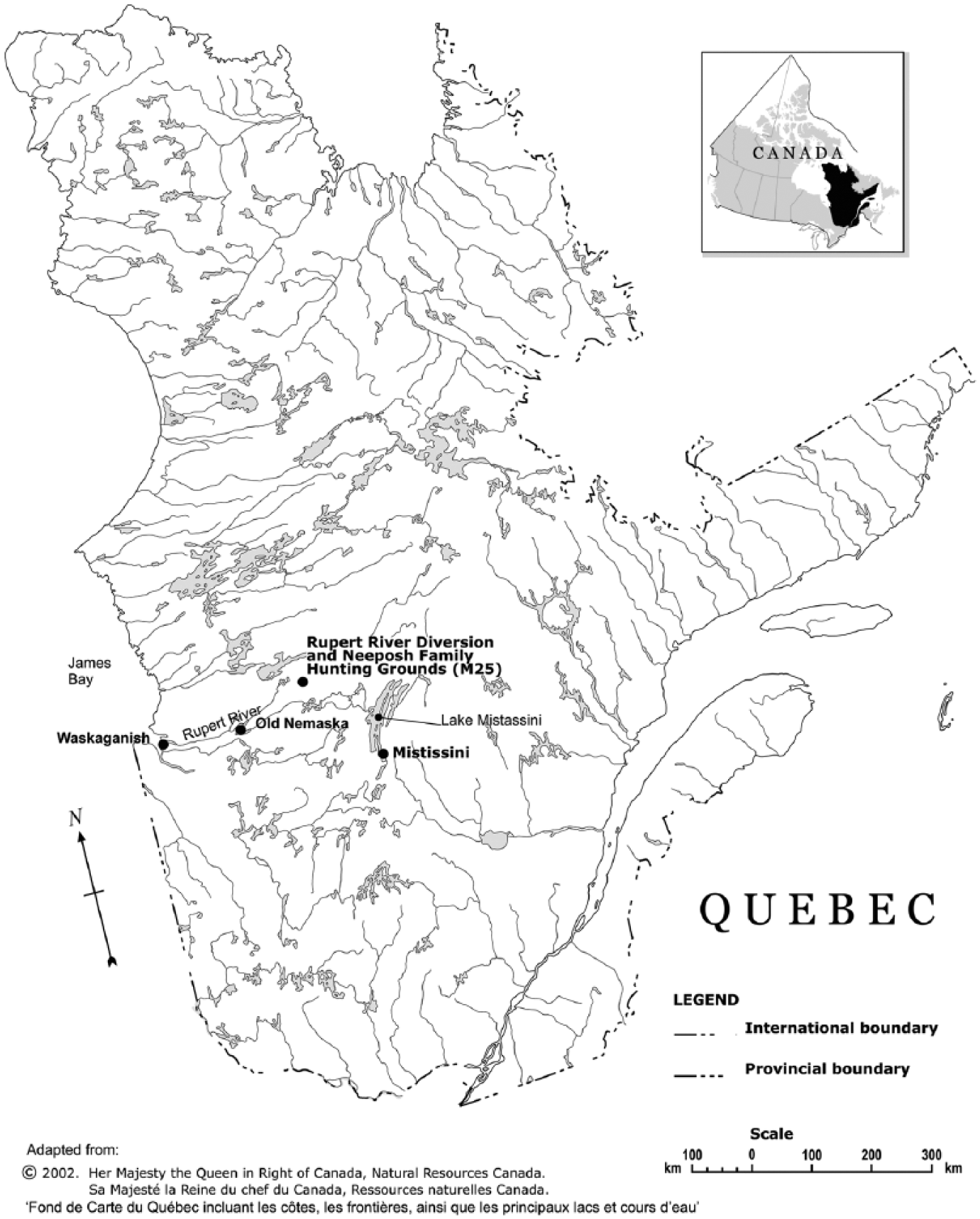
Map of the province of Quebec showing the principal localities mentioned in the text.
In recent decades, anthropological theories about technology and material culture have gained increasing awareness that the two phenomena are enmeshed in more complex relationships than cognitivist and materialist perspectives suggest. The definition proposed in this article reflects recent theoretical developments. The notion of technology may more accurately be understood as a body of materials and embodied skills that, together, materialize (Bell and Geismar, 2009: 4–8) and sustain worldviews, identities, social relations and life-ways (see also Dobres, 2010: 106; Gell, 1995: 53–7; González-Ruibal et al., 2010: 2; Ingold, 2000: 345–348; Pfaffenberger, 1992: 507–508, 1999: 152–153, 160, 2001: 78–84). 2
This perspective is also closer to what the Mistissini may conceive as their technology, which they refer to as maamaahtaaukaschihtaau. The expression finds its closest equivalent in English with ‘resourcefulness’, expressing how the Mistissini conceive their own agency, as an embodied capacity to operate autonomous choices in tension between the materials and the social values organizing their technology. Maamaahtaaukaschihtaau thus encapsulates the complex relationships existing between the ideational and material constituents of what Westerners know as technology (see also Lemonnier, 1993: 3–15).
During my 2010–2012 fieldwork, in the village of Mistissini (see Figure 1), the expression frequently surfaced in conversations with people collaborating in my research. It became fairly clear to me that maamaahtaaukaschihtaau, or resourcefulness, was a cultural disposition with considerable value in the eyes of many Mistissini, and especially for elders who had lived in the bush and who were maamaahtaaukaschihtaau peoples themselves. Investigating the concept provided me with a way into their conception of technology, their capacity in transforming it over time and into the intimate role that technology has played in the well-being of this society, against the colonial influences affecting them. The connection between technology and well-being is not, however, so obvious when considering contemporary theories concerning Aboriginal well-being and must, therefore, be introduced before delving into the subject.
Aboriginal well-being
Since at least the 19th century, Aboriginal peoples have experienced a variety of government programmes, such as children’s welfare, the Indian Act and territorial displacements, to name only a few (Kirmayer et al., 2009: 8–13; Lederman, 1999: 60–76; MAINC, 1996: vol. 3). These programmes have shaped the oppressive colonial conditions in which Aboriginal peoples lived and are responsible for what is now called a ‘social suffering’ (Adelson, 2009: 273; Tanner, 2009: 249). The on-going oppression by the Canadian society (Lederman, 1999: 60–76; MAINC, 1996: vol. 3) has brought many Aboriginal peoples to lead unhealthy and socially dysfunctional lives, which younger generations acquire while growing up and then maintain into adulthood. The youth that grows up seeing parents and peers living in a state of hopelessness, apathy and self-destruction is a particularly fragile segment of the Aboriginal communities (Kirmayer et al., 2009: 3). Too often, young people grow up in a context of cultural ignorance and, therefore, acquire the negative sense of self of their parents (MAINC, 1996: vol. 4; Roué, 2006: 19).
Aboriginal communities, their institutions and their elders are conscious of these problems and have developed diverse strategies targeting the healing of the youth and of their communities as a whole. Healing, as it is understood by many Aboriginal peoples, such as the Mistissini, is a holistic concept referring to: … personal and societal recovery from the lasting effects of oppression and systemic racism experienced over generations. Many Aboriginal people are suffering not simply from specific diseases and social problems, but also from a depression of spirit resulting from 200 or more years of damage to their cultures, languages, identities and self-respect. The idea of healing suggests that to reach ‘whole health’ [i.e. well-being], Aboriginal people must confront the crippling injuries of the past. (MAINC 1996: vol. 3)
In addition, Aboriginal peoples often refer to healing as a life-long process metaphorically represented by a journey that individuals take by dedicating themselves to improving mind, emotions, soul and body (Adelson and Lipinski, 2008: 27–8; Waldram, 2008: 6; Waldram et al., 1995: 102). Healing the self also refers to a reconnection with family, friends, community, land and cultural heritage (Waldram, 2008: 6). Healing from the disruptions of colonialism is thus a process in which selves acquire a new sense of ‘being’ defined in continuity with the past, but also in relation with the land and others. The various relations that the healing self develops strengthen identity and community ties, hence healing and transforming entire societies (Kirmayer, Brass and Valaskakis, 2009: 445–447; Kirmayer, Tait and Simpson, 2009: 19).
In the Cree context, what healing ultimately aims to achieve is ‘well-being’. Following the definition of Naomi Adelson (2000: 3–15), the Cree concept of well-being is a holistic notion of health incorporating physical bodies, social relations, cultural heritage and cultural identity. The Cree expression for well-being is miyupimaatisiiun, which translates literally into ‘being alive well’ and is inseparable from Cree culture and identity. It implies a capacity to pursue traditional activities, eat quality bush food and stay warm. Miyupimaatisiiun expresses an ideal of Cree existence defined in response to the challenges imposed by colonialism.
Prevailing theories on Aboriginal healing, though, acknowledging that selves and bodies have fundamental roles to play in the process, tend to stress the role of its cognitive and symbolic components. For Kirmayer, Brass and Valaskakis (2009: 441–442, 447), healing is a transformation that is essentially symbolic and which consists of changing perceptions about the self, others and community. The channels through which the meanings of this symbolic experience are conveyed consist of narrations (pp. 449–456). Naomi Adelson (2000: 15, 106–108) also supports the idea that healing should be understood through cognitive terms by suggesting that narrative practices, such as prayers and healing circles, are the true conveyors of Cree identity and of what is ‘being alive well’. This view suggests that the transformation of ‘being’ mentioned above is essentially a cognitive and symbolic process. In these views, the embodied performances and the materials involved in these performances would have a limited role to play in the healing and well-being of Aboriginal peoples. However, confining the healing of Aboriginal peoples to the symbolism conveyed by narrative practices considerably reduces the complexity of the relational aspect of healing through which minds, bodies and worldly relationships are transformed.
To better understand Aboriginal healing, it is necessary to develop a perspective integrating a whole field of worldly relationships through which individuals evolve and define their way of being (Ingold and Hallam, 2007: 7–8; Latour, 1997: 187–191; Viveiros de Castro, 2012: 70–77, 153). This requires paying attention to ideas, bodies, the past, material heritage, land, and so on through which they create their own sense of what is ‘being alive well’.
The following discussion provides critical elements to challenge anthropological understandings of Aboriginal technologies and well-being. Through the particular case of the Mistissini, this article suggests the existence of intimate connections between technology and the well-being of Aboriginal societies which historically mobilized the former as the fundamental resource to achieve the latter.
Technology and well-being from an Aboriginal perspective
My research stems from the salvage work of the Cree Regional Authority’s (CRA) Archaeology Cultural Heritage Programme (ACHP) implemented between 2006 and 2009 in preparation for the flood of the lands affected by the Hydro-Quebec’s Rupert River Diversion (see Figure 1). 3 The archaeological and ethnographic investigations concentrated upon the hunting grounds of one Mistissini family – the Neeposh – which was particularly affected by the Diversion. I – a Quebecois archaeologist – recorded with them the archaeological heritage and memories associated with meaningful places of their hunting grounds, officially designated as M25 in the regional land registry. Over the years, I developed friendly relationships with the family and I am now proud to count many of them among my dearest friends. Conducting my own research, building upon the results of the ACHP, has been a way for me to stay in touch and to continue learning about their ways, language, bush skills, and their past.
The collection of artefacts gathered by the ACHP on campsites occupied by the family between the 1940s and the 1970s has been core to my research. In total, 1403 items were analysed using archaeological methods recording traces of use-wear, traces of modifications and material constituents. Taking inspiration from sensory ethnographic methods (Arigho, 2008: 207; De Leon and Cohen, 2005: 201; Philips, 2008: 199–203; Stewart, 1999: 17–19), the artefacts also served to stimulate conversations with the five elders (Figure 2) whom I interviewed during the summers of 2010 and 2011. Our meetings usually began by identifying the objects, their functions, and commenting upon the technical features observed during the archaeological analyses. These initial exchanges also inspired accounts of the daily life of the elders focusing on embodied skills, technological concepts, and how they learned these notions. Also, importantly, the elders frequently insisted on the persistence of their technology in their contemporary lives. They explained that their technology was not a phenomenon pertaining to a bygone past, but an on-going element of their contemporary lives. In this perspective, they often brought to the interviews personal items to help them discuss aspects of their past and contemporary technology that they judged important. They encouraged me to participate in various cultural activities organized by their community in which technological activities were also performed. This is how, in the summers of 2010 and 2011, I conducted participant-observation at the Traditional Cree Fishing & Chisheinuu Chiskutamaachewin Project (TCF&CCP), a local institution dedicated to the teaching of various technological skills. I also interviewed various community members about the place of the local technology in their lives to broaden my understanding of the subject.
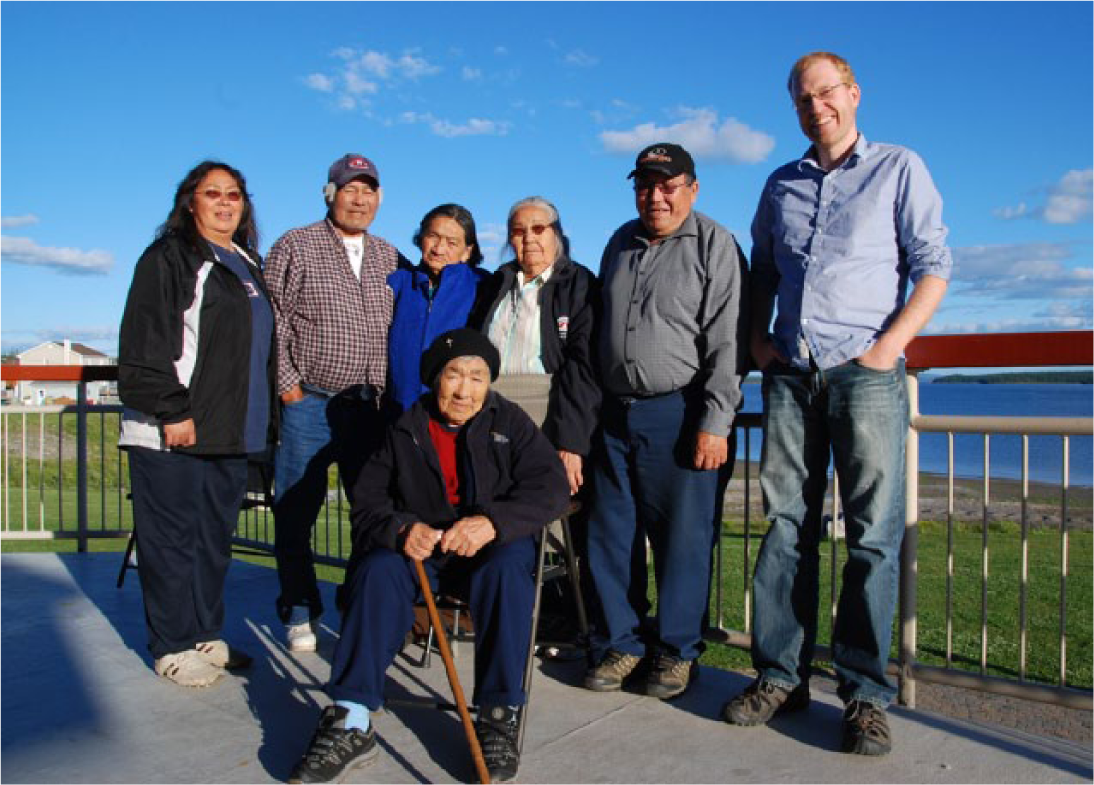
Research collaborators with, from left to right, the interpreter Charlotte Blacksmith, Johnny Husky Swallow, Charlotte Husky Swallow, Mary Swallow, Abel Swallow, François Guindon and Kitty Neeposh at the front. © Photograph: François Guindon.
Ultimately, collaborating with Mistissini people helped produce a vision of recent technological and social changes (1940 to present) integrating their cultural perspective. This approach, emphasizing the cultural perspective of my Aboriginal partners, also relates to an emerging trend in postcolonial archaeology that promotes the integration of indigenous worldviews in the interpretation of their past and heritages (Colwell-Chanthaphonh and Ferguson, 2008: 10; Fordred Green et al., 2003: 378–389; Nakata and David, 2010: 436–437, 440; Nicholas and Hollowell, 2007: 63–64, 70). The results of this investigation are discussed in two steps, firstly, focusing on the recent historical transformations of the local technology and well-being and, secondly, on the contemporary interactions between these two phenomena in Mistissini society.
Recent historical transformations (1940s–1970s)
The Mistissini, not unlike other East Cree groups, most likely had access to European goods even before they had direct contact with the first explorers at the beginning of the 17th century (Francis and Morantz, 1983: 16–18). During the 20th century, however, access to foreign goods dramatically increased. Traders diversified their stocks and roads reached some Cree communities, such as Mistissini, during the 1970s, easing access to southern retail stores (Smith, 2001: 521–522). Hence, items such as rifles, canvas-covered canoes, steel traps, tenting canvas, harness dogs, Western clothes, Western food, outboard motors, chainsaws and snowmobiles became common possessions of the Mistissini and other East Cree during the period (Knight, 1968: 20; Richardson and Ianzelo, 1974; Scott, 1989: 98).
For the anthropologists who discussed these material transformations, the process assumedly involved the general substitution of local materials by foreign ones (George and Preston, 1987: 449; Rogers, 1967: 5, 124; Skinner, 1911: 19). It was also often assumed that imported materials were adopted for their superior efficiency over the local ones (George and Preston, 1987: 452–3; Morantz, 2002: 282; Ouellette, 1977: 9–10; Rogers, 1967: 125–126; Rogers and Leacock, 1981: 170–171; Smith, 2001: 521–523). The rapidity of the process, during the 20th century, would have ultimately left the local technology in a diminished state. The Mistissini and their neighbours, according to the anthropologists, found themselves incapable of producing the goods that they needed and came to depend on foreign goods. In contrast, the ACHP collected a range of items demonstrating the creative uses and transformations that the Mistissini found for them throughout the 1940s–1970s. For instance, old files provided quality steel, which they transformed into a variety of implements, including knives, chisel blades and claws to recover nails driven in wood (Figure 3). Sections of drilling cores discarded by prospectors also apparently made good whetstones (Figure 4). Composite objects amalgamating local and imported materials were also created, such as the primer punch shown in Figure 5. This object, used to remove primers off reusable shotgun shells, was made from a young tree trunk or branch and a metal stem, most likely taken from the rim of an old lard pail. The list of these creative practices could be much longer, yet, they suggest that the Mistissini acquired foreign goods for the potential uses, reuses and transformations that they perceived in them rather than for the functions originally intended by Western manufacturers. This impression was reinforced, during the interviews, when the elders named the objects with original terms emphasizing the material qualities that they valued in them, e.g. pimii (oily substance) for cod liver oil, pihkuteuhtaau (ashes) for flake lye, or chiistaaskwaan iiyischisin (nail boots) for working boots with studded soles. The qualities vested in foreign items were not necessarily superior to the local ones and both types of goods often coexisted in the material culture of the Mistissini. They coexisted as mutual alternatives on which families living in the bush relied. The material additions that the Mistissini performed did not lead them to depend on foreign sources because local goods and productive skills persisted. Material transformations, in this context, sustained the productive practices and resourceful existences of Mistissini men and women rather than leading to dependency and disempowerment.
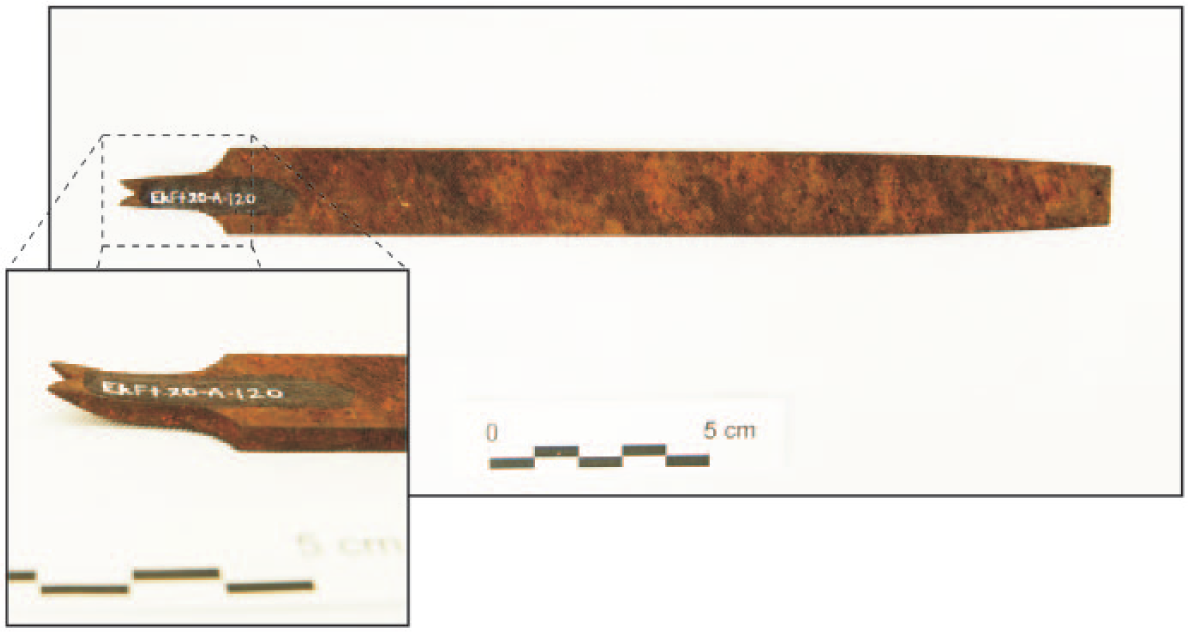
File with handle transformed into a claw for recovering used nails.
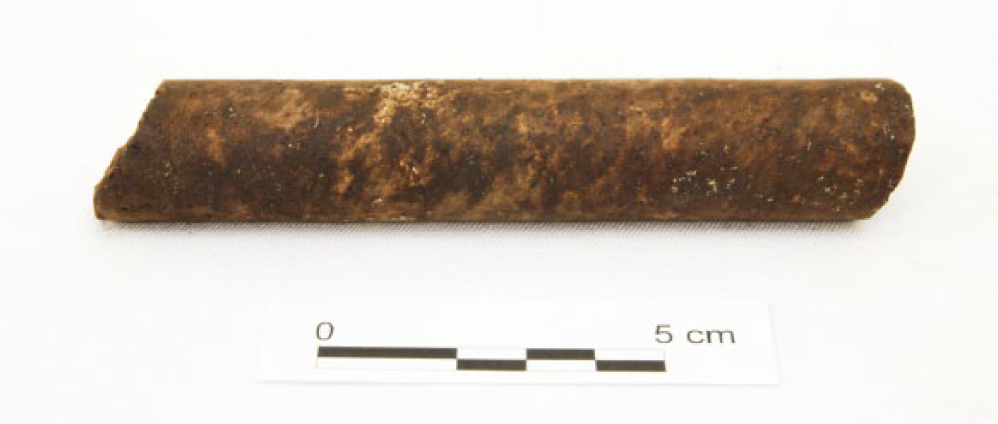
Section of drilling core possibly reused as whetstone.
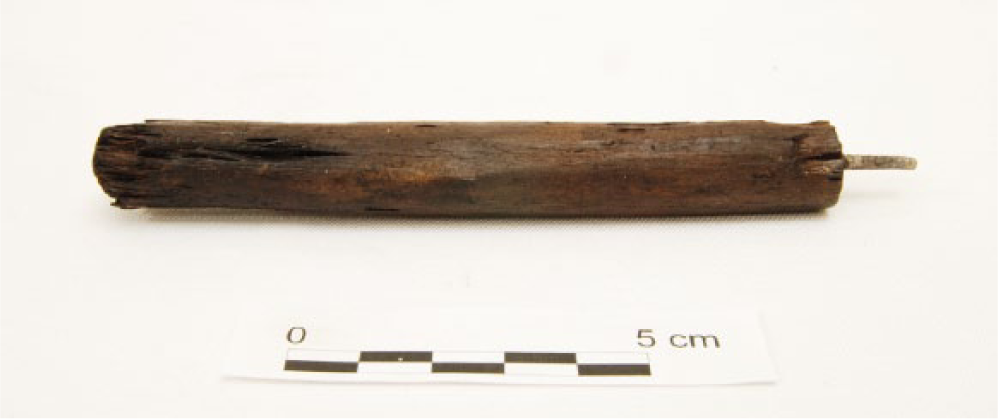
Primer punch made of local (wood) and imported (metal) materials.
Perhaps the most striking case of the creative appropriations documented with the five interviewed elders involved cod liver oil (Figure 6). After the Second World War, the Canadian Government distributed the substance as a fortifier to counter the frequent starvations and epidemics affecting the health of the East Cree. The Mistissini initially followed the use instructions provided by Government agents, but rapidly developed original uses for cod liver oil. Women such as Mary Swallow realized that its oily texture was perfect for softening moose hides before the tanning process. She poured an entire bottle into a basin filled with water and oats and then soaked her hides in this mixture. Mary also recalled that her late father, Tommy Neeposh, had found another original use for cod liver oil. As an experienced trapper, he knew that the fishy smell of the oil could attract bears and therefore used it as a scent by pouring the content of one bottle over each trap he set (Mary Swallow, Mistissini, interview 14 July 2010). Johnny
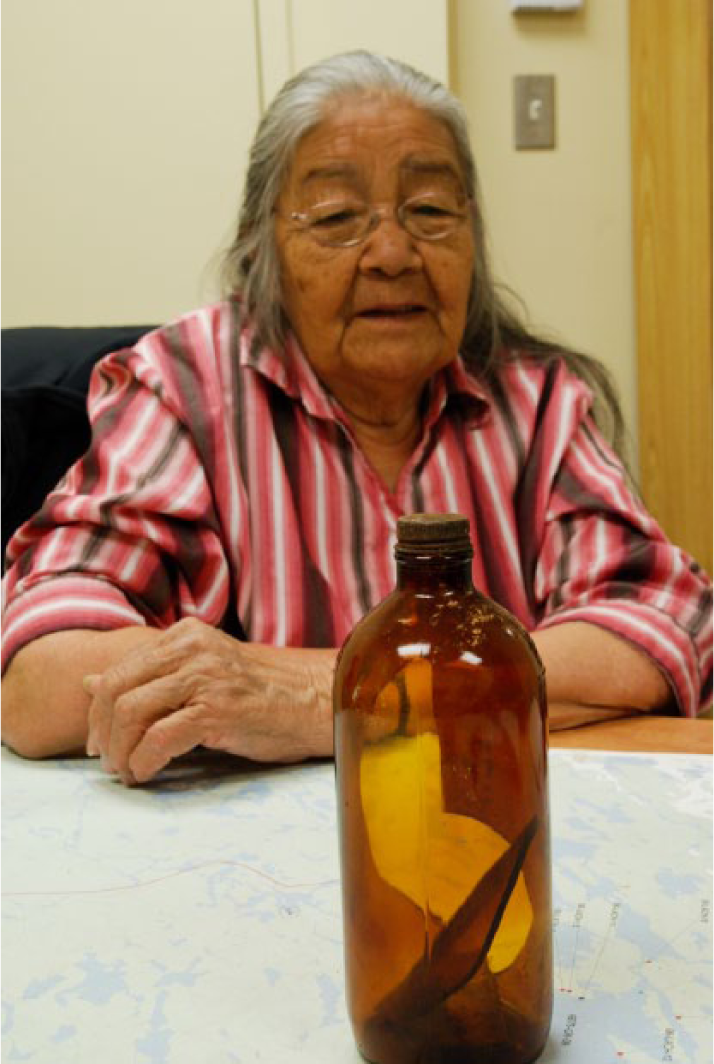
Mary Swallow with a broken bottle of cod liver oil. © Photograph: François Guindon.
Husky Swallow also recalled that some men used cod liver oil to lubricate their outboard motors when motor oil supplies were exhausted. ‘It really worked!’ he said, but the smell would get stronger and stronger as the motor warmed up and heated the oil (Johnny Husky Swallow, Mistissini, interview 18 June 2010).
The Mistissini who lived in the bush always kept an eye open for good primary materials to use and transform. Abandoned storage sites and camping grounds represented good sources of such materials. This is how Abel Swallow found a gun barrel with a percussion system when living on the Neeposh hunting grounds in 1955. Abel recognized in no time the quality of the metal and knew he could do something with it, so he brought it back to his camp. When the archaeological team found the barrel in the fall of 2008, the gun had been cut in half and only the proximal section remained (Figure 7). The other had gone away with Abel when he left this place for his spring camp. Abel mentioned that he kept the object, which he had turned into a very good and long-lasting ice chisel (Abel Swallow, Mistissini, 16 June 2010).

Base of Abel Swallow’s gun barrel with percussion cap system, filed at mid-section.
In one of his many other stories, Abel Swallow also recalled that, upon the closure of Old Nemaska village (Figure 1), he had been hired to clean the place with a group of men. Old Nemaska had been visited for millennia by the Cree and their ancestors. The eroded beaches of the village often exposed all kinds of materials with which people came into contact when moving around. This is what happened to Abel when he came across a small piece of brass sticking out of the ground. Attracted by this shiny material, he picked it up and had a good look at it. Right away, he said, he started thinking about what he could make with it and left the piece aside for a while. Seeking inspiration, he went back to it from time to time, having another careful look at the material and pondering its potential. Abel often made snowshoe lacing needles (amahkw) out of various metals, such as round metal stems, utensils (Figure 8, bottom), nails (Figure 8, middle) and old files. He thus knew that the piece of brass could make a beautiful snowshoe lacing needle (amahkw) and, thus, undertook to make one for his wife Mary (Figure 8, top) (Abel Swallow, Mistissini, 30 June 2010).
Mary Swallow’s snowshoe lacing needles made by her husband, Abel Swallow.
In sum, foreign goods, such as cod liver oil, brass pieces and gun barrels, adopted distinct social lives and meanings as they were acquired, but especially through the following technological processes in which they came to be used (Gosden and Marshall, 1999: 170–199; Pfaffenberger, 2001: 77–80). Within these embodied engagements, people judged the qualities of the materials they encountered and vested them with their own values or, more specifically, use-values. The Mistissini, therefore, did not passively experience change, but actively shaped the process through their skills and values. The things that they adapted to their tastes and skills, used, reused and transformed in many outstanding ways to make them valued products of their material culture, were all tangible manifestations of their resourcefulness.
The Mistissini apparently maintained this embodied attitude through educational practices fostering the acquisition of skills, values and identities. Learning in a bush-based context was an on-going process beginning with infancy and continuing through old age, but particularly intense during childhood and teenage. Consequently, for young people who acquired new knowledge every day, new material goods provided opportunities of learning new skills. But for mature people, who had well-developed skills in practices that they knew well, novelties sometimes challenged their statuses as knowledgeable persons, their productive capacities, and their ability to teach their skills to the youth. They often resisted novelties for this reason. This attitude towards new goods may be interpreted as a form of conservatism, yet beneficial to them and their society. Controlling the number and the types of goods that made their way into their lives maintained their statuses, productive skills and their capacity to teach them to the youth. Resistance to material change maintained the social order necessary for the continuity of their resourcefulness and, ultimately, their capacity to lead prosperous existences in the bush. The material transformations affecting their existences throughout the 1940s–1970s thus sustained the way of life of the Mistissini and empowered them through these unsettling times as long as changes remained under their control.
Other events occurring during the period, however, would dramatically alter the Mistissini’s capacity to perpetuate their way of life. The rapid transition to sedentary village life and the Residential School System caused important disruptions, which hindered their capacity to perpetuate the skills, attitudes and values (see also Ohmagari and Berkes, 1997: 207) associated with their resourceful existences in the bush.
In the Neeposh family, most of the children of the interviewed elders experienced an extensive period of school education aiming to assimilate them to Euro-Canadian society (Miller, 1996: 185–188). They were forced into this system between the 1940s and 1960s, along with the majority of the East Cree children (Morantz, 2002: 213–215; Roué, 2006: 16). The education that they received, away from their families, dramatically affected their capacity to learn, participate in productive activities, and to develop strong identities as Mistissini persons. The Residential School System affected an entire generation of East Cree children who, besides growing up in an alienating environment, frequently experienced psychological and physical abuses (Miller, 1996: 289–342). The return home during their mid-teens was also a destabilizing experience as children attempted to make sense of their new lives and to understand who they really were after growing up away from their families. Conflicts of identity were also worsened by the possibility of living in the village and carrying-out livelihoods learned in schools. Many never recovered from this episode and eventually passed on health and identity problems to their own children (MAINC, 1996: vol. 4).
The Mistissini are now determined to tackle this ‘social suffering’ (Adelson, 2009: 273) with their own means. Various local institutions recently developed programmes aiming to heal their community as a whole. Many elements of their cultural heritage, including their technology, now participate in these efforts.
The contemporary technology of the Mistissini
After the 1970s, following the transition to village settlement, the technology of the East Cree adopted new social functions. Anthropologists studying the subject after the 1970s observed that the local technology, although still supporting bush activities, had largely become a production of commercial handicrafts (see, for instance, Graburn, 1978: 54; Lévesque, 1976: 117–125, 1986: 9–11, 220). These studies contributed to inform Government programmes supporting handicrafts as sources of economic development for East Cree communities. This perspective, however, narrowed down the effective contribution of technology to the social lives of East Cree groups. The material productions of the Mistissini were, and still are, more than just handicrafts. The institutional promotion of traditional technological activities in Mistissini alongside community well-being suggests that these activities are also important in the social life and health of the community.
The association of cultural heritage and well-being is locally explained by the negative impact of residential schooling that disconnected community members from their cultural heritage. Re-discovering their heritage is, for them, the fundamental condition for leading meaningful existences, healing and overcoming their marginalized status in the contemporary world (Bonnier Viger, 2010: 229; MAINC, 1996: vol. 4).
Amongst other institutional initiatives, the Traditional Cree Fishing & Chisheinuu Chiskutamaachewin Project (TCF&CCP) provided an exceptional opportunity for investigating the relationship between Mistissini technology and healing processes in a contemporary context. 4 The TCF&CCP results from the fusion of pre-existing programmes that have come to share the same infrastructure and goals over the past 10 years. The project now offers community members with a space to practise and learn various technological skills with cultural importance, including wood carving, sewing, fishnet weaving, hide tanning, herbal medicines, cooking and resource harvesting. The TCF&CCP takes place in two seasonal locations, at the periphery of the village, near Mistassini Lake. In both cases, the facilities are reminiscent of bush camp environments with large canvas-covered tents hosting most of the activities. I spent 10 weeks studying and participating in the activities of the summer camp in 2010 and 2011 (Figure 9).
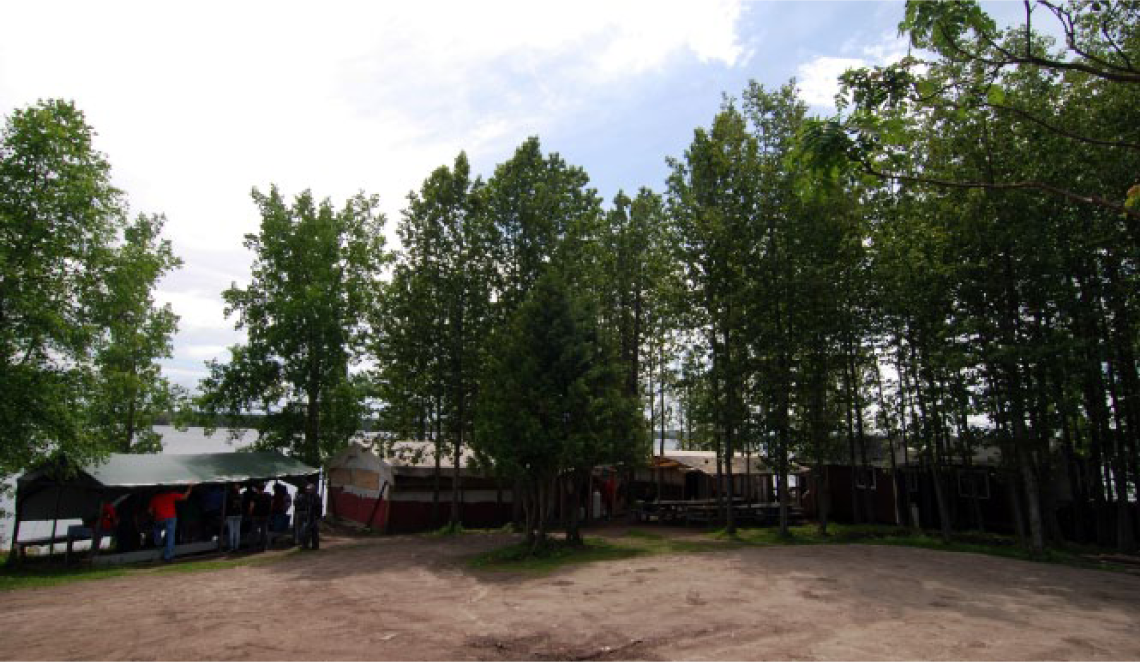
The summer camp of the TCF&CCP at Elders’ Point, Mistissini. © Photograph: François Guindon.
Proximity to the village is an important feature of the programme as it promotes the practice and transmission of technological skills in an urban context, rather than in the bush. Mistissini is one of the fastest developing villages of the Cree territory and many community members are too busy with work to spend prolonged periods in the bush. The TCF&CCP does not consequently aim to turn every village dweller into an experienced bush hunter, but to provide them with easy access to the teachings of elders and other resourceful persons. These ‘urban campsites’ are open to any person willing to participate and, consequently, also foster exchanges with non-Aboriginal visitors of various origins, including tourists, workers and researchers, wanting to know local members of the community and positive aspects of their cultures. At the same time, the peaceful environments of the camps, the spiritual support of the elders and practising valued skills provide a temporary escape from personal difficulties and a chance to reflect upon healthier ways of living.
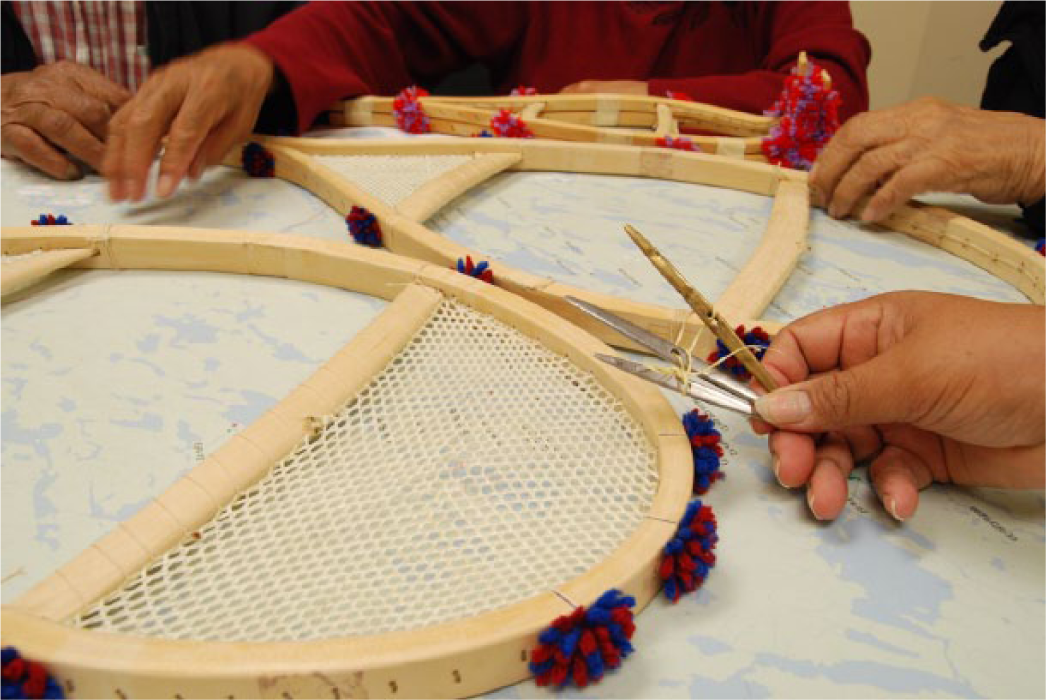
The participants generally assemble in small groups practising similar activities, which occupy most of their days at the TCF&CCP. Elders act as inspiring models through their attitudes and skills, which apprentices learn by watching and following their example. The products of their activities, shared with the rest of the village through communal meals, medicinal clinics and the sale of some crafts, also convey a sense of their skills and values outside the TCF&CCP, to Aboriginal and non-Aboriginal persons (Figures 10 and 11). As the participants learn to transform raw materials they also experience a transformation of selves by adopting more active lifestyles, more outgoing attitudes and pride for the persons they become. In sum, skilled practices and their material products generate whole new fields of relationships reconnecting selves to their world and redefining their existences in a process of holistic healing.
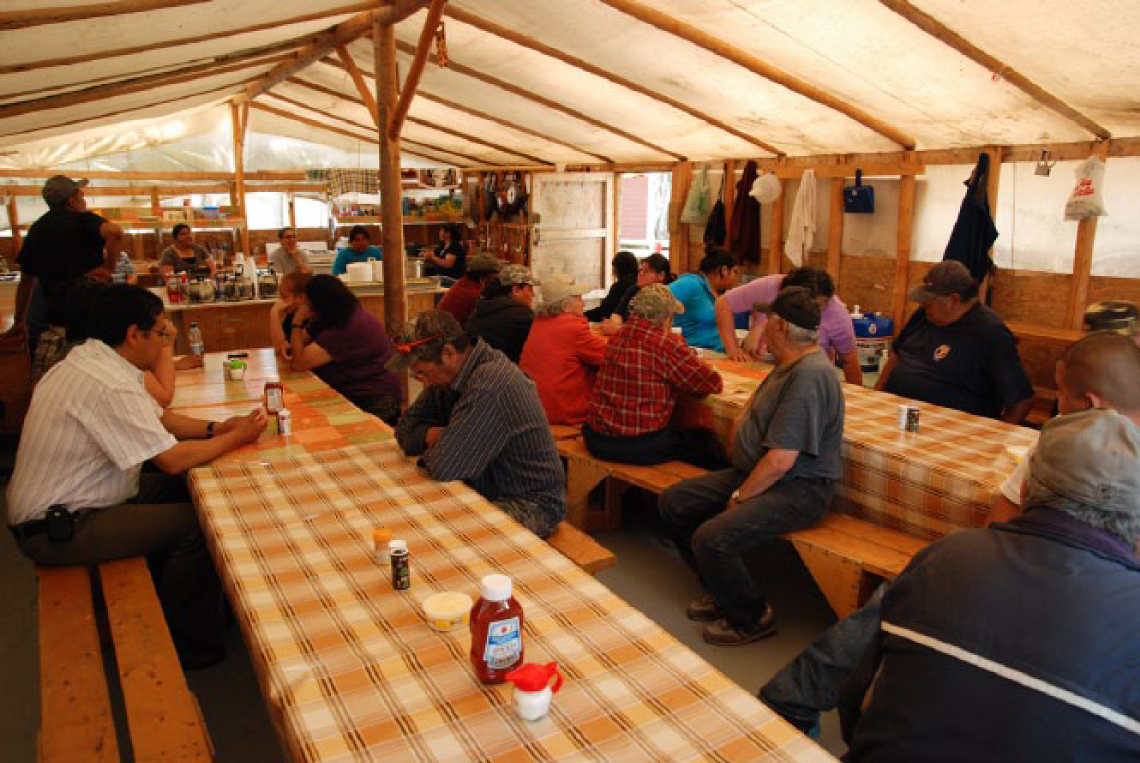
Visitors and participants assembled in the kitchen of the TCF&CCP for the evening meal. © Photograph: François Guindon.
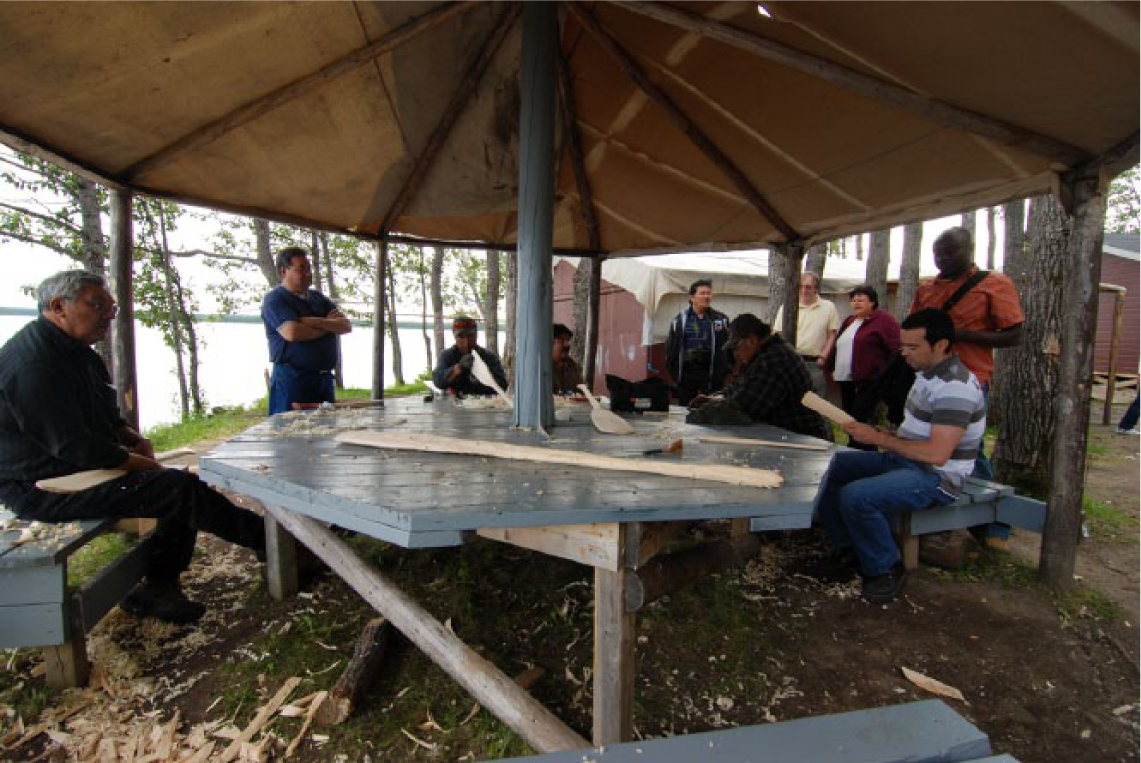
Group assembled around one of the carving tables of the TCF&CCP. © Photograph: François Guindon.
In a series of informal interviews conducted with various people in Mistissini, I also realized that technological skills and cultural values may also sustain a contemporary form of resourcefulness. School education remains an important source of empowerment in the process but cannot alone provide for all the needs of the Mistissini. This resourcefulness is, today, an essential component of the lives and works of local administrators, policemen, entrepreneurs, politicians and bush hunters. Without this fundamental disposition, healthy ways of living seem to remain out of reach for the majority of the Mistissini, even those with professional occupations. Mary Voyageur (Figure 12) – coordinator of the Cultural Affairs Division at the Cree Nation of Mistissini since 2008 and resource person for the TCF&CCP – helped establish this matter of fact: For me, it is very important to know who I am, what my rules are and it’s important to tell the young where they come from so they don’t get lost when they grow up … I believe that you can adapt to another culture, but you can never really let go of your own. You’ll always have to come back to it in order to survive … It provides you courage and strength. (Mary Voyageur, Mistissini, interview 27 June 2011)
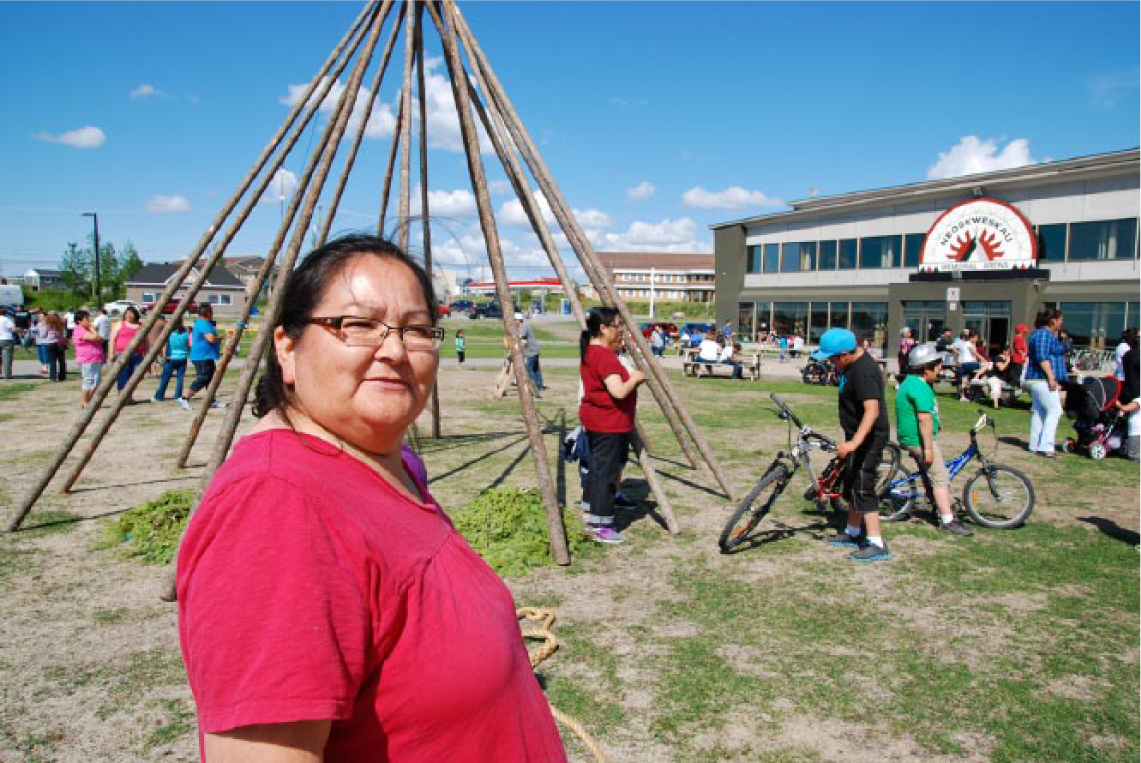
Mary Voyageur, coordinator of the Cultural Affairs Division at the Cree Nation of Mistissini and resource person for the TCF&CCP, at the 2011 Aboriginal Day in Mistissini. © Photograph: François Guindon.
This actualized form of resourcefulness now provides the necessary guidance to heal and carry out flourishing lives. It is the cultural foundation from which individuals can make important life choices and creatively meet their needs and aspirations as Mistissini persons. The TCF&CCP, as well as other cultural institutions of the village, provide the spaces that people need to develop this fundamental disposition today. The five elders who participated in my research did so with a similar intention: to provide the youth with cultural knowledge and experiences that can guide them in their lives. By reconnecting with their cultural heritage, it is generally thought in Mistissini that everyone can find their own way of feeling better about themselves, and develop healthier relations with their community and the world. Being a Mistissini person thus implies a necessary relationship with the local heritage and developing this relationship is accessing the resources that can make them more resilient against the challenges of the contemporary world. The technology of the Mistissini, far from being reduced to commercial crafts, has thus remained as one fundamental means through which people can reach a state of well-being.
Conclusion
In this review of the recent historical transformations of the Mistissini Cree technology, I have argued that Aboriginal technologies are intimately connected to the healing and well-being of their societies. Recent influential theories on healing and well-being (chiefly, Adelson, 2000; Kirmayer, Brass and Valaskakis, 2009) have, however, largely overlooked the role of the physical world and, thus, defined the two processes as essentially cognitive. This theoretical body consequently excluded technology from processes of Aboriginal healing and well-being. By contrast, a phenomenological perspective inspired by the works of Ingold and Hallam (2007), Latour (1997) and Viveiros de Castro (2012), has helped to shed light on how Aboriginal technologies participate in complex processes of healing and well-being.
More specifically, investigating the 20th-century transformations of the Mistissini technology has brought forth the complex web of relationships existing between minds, bodies and material environments in Aboriginal processes of healing and well-being. The materials, cultural values and embodied skills of the Mistissini technology historically acted as fundamental sources of empowerment, or resourcefulness, providing resilience against colonial processes and, consequently, serving for their well-being. The role of the local technology in the welfare of the Mistissini has remained to this day and since at least the 1940s, when colonial forces began most intensely affecting their life-ways.
The possibility that other Aboriginal peoples of Canada similarly defined and shaped their experiences of colonialism through their technologies and relationships with their material world should also be considered. Therefore, the association between technological skills, materials and concepts, such as ‘resourcefulness’ (maamaahtaaukaschihtaau), foregrounded in this article, provides fertile grounds to rethink Aboriginal technologies as sources of social agency in which a broad range of factors have participated and still participate. Taking into account the cultural perspective of Aboriginal peoples to define their technologies can help challenging well-established anthropological perspectives and contribute to decolonizing their histories. Also, importantly, understanding the role played by Aboriginal technologies in healing processes may provide guidance for Government policies currently underestimating the intimate relationship between the two phenomena and, as a result, providing little support to Aboriginal technological practices. Aboriginal technologies are capable, like other indigenous cultural heritages (Clifford, 2004: 7–8; Coombe, 2009: 404–5; Harding, 1999: 300–340; Hodder, 2010: 870–877; Meskell, 2010: 853), of enhancing the capabilities and well-being of these societies.
Footnotes
Funding
This work was supported by the Royal Anthropological Institute’s Firth Award; the British Association for Canadian Studies’ Prix du Québec; The University of Aberdeen’s Angus Pelham Burn Awards, Principal’s Excellence Fund, CASS Open Funding, and SORSAS Award. The article is based on my PhD research conducted between 2010 and 2013 at the Department of Archaeology and the Department of Social Anthropology of the University of Aberdeen. It is also the result of on-going relationships with the Neeposh family and its elders who have been a major source of inspiration in my work. I could not thank them enough for their support and their friendship. I am also indebted to my co-supervisors and many more people in Mistissini who gave me advice and guidance throughout the PhD. The Cree Regional Authority has also provided precious logistical support and allowed me to access its collections during the summer of 2010, when I interviewed the elders. A number of Mistissini institutions also assisted me and supported me in various ways during fieldwork. This article has also benefited from the constructive comments of two anonymous reviewers. To all of them I say mista miikwehch.