




Abstract
Hardiness, a psychological resilience trait comprising commitment, control, and challenge, has been widely studied in high-stress occupational groups. However, limited research has evaluated the psychometric properties of the Dispositional Resilience Scale-15 (DRS-15) in low- and middle-income contexts. This study investigated the psychometric of the DRS-15 in a sample of South African first responders (n = 429). Psychometric paradigms used included Classical Test Theory (CTT), Mokken scale analysis (MSA), and Rasch modeling. MSA and confirmatory factor analyses supported a unidimensional structure for the DRS-15. Item 4 exhibited poor psychometric performance across Rasch, MSA and CTT indices. The DRS without item 4 demonstrated strong internal consistency, satisfactory item-total correlations and factor loadings. The DRS without item 4 is a reliable and valid measure of psychological hardiness among South African first responders. Findings highlight the utility of integrating various complementary psychometric paradigms.
Introduction
Hardiness is an attitudinal style or worldview associated with resilience and well-being under stressful conditions. Although resilience and hardiness are closely related constructs that both describe adaptive responses to stress, they capture different aspects of this process. Kobasa (1979) in a study of stress and health, conceptualized hardiness as a multi-dimensional construct comprising three components namely commitment, control and challenge. Commitment refers to a tendency to engage fully in life’s activities and to find meaning and purpose in one’s experiences. Individuals high in commitment view their work, relationships, and challenges as worthwhile and significant instead of viewing them as burdensome or meaningless. Control reflects the belief that one can influence events and outcomes in their life through their actions, rather than feeling helpless or at the mercy of external forces. This sense of personal agency facilitates coping with stress and adversity. Challenge involves perceiving change and new experiences as opportunities for growth and learning rather than insurmountable obstacles.
Hardiness reflects a dispositional tendency to perceive adversity as meaningful, manageable, and an opportunity for growth. Resilience, on the other hand, is generally understood as a broader, dynamic process that encompasses the ability to withstand, recover from, or adapt positively to adversity over time. While resilience includes dispositional elements, it also incorporates contextual, relational, and environmental resources that support effective coping. Hardiness can therefore be viewed as one of the psychological foundations that facilitates resilient outcomes: individuals high in hardiness are more likely to interpret stressors in adaptive ways, draw on coping resources, and maintain functioning under pressure, thereby contributing to overall resilience. Hardiness develops early in life and remains relatively stable over time. Individuals with hardiness are characterized as possessing a strong commitment to both life and work, a heightened sense of control, and a willingness to engage with change and confront life’s challenges (Bartone, 1995; Kobasa, 1979).
A substantial body of evidence suggests that hardiness serves as a protective resource that enhances resilience. Research has demonstrated that hardiness moderates the relationship between stress and symptoms of depression and anxiety (Bartone et al., 2022) and predicts neuroimmune responses to stress (Sandvik et al., 2013). It is also associated with improved mental health outcomes in clinical populations, including women with breast cancer (Senewiratne et al., 2025). Furthermore, hardiness is linked to healthy adaptation to grief and loss (Bartone et al., 2025), greater adaptive problem-solving ability (Abdollahi et al., 2018) and enhanced occupational performance (Bartone et al., 2013; Bekesiene et al., 2023; Senewiratne et al., 2025). Regarding personality traits, it shows negative associations with neuroticism, rumination, worry, and anxiety, and positive associations with mindfulness, adaptive problem-solving, and hopefulness (Chuning et al., 2024; Kowalski and Schermer, 2019).
The Dispositional-Resilience Scale (DRS-15: Bartone, 1995) is the most widely used measure of hardiness. The instrument has demonstrated sound psychometric properties, which have been validated across diverse population groups, including Korean adults (Ko et al., 2018), adult patients in Brazil (Solano et al., 2016), Chinese women (Wong et al., 2014), treatment-seeking patients with obsessive-compulsive disorder (Holm et al., 2019), Norwegian university students (Hystad et al., 2009) and Persian military personnel (Mohsenabadi et al., 2021). The instrument has been translated into various languages including Italian (Picardi et al., 2012), Korean (Ko et al., 2018), Norwegian (Hystad et al., 2010) and Croatian (Nada et al., 2012). Although the psychometric properties and criterion-related validity of the DRS-15 have been examined in several studies, comparatively less attention has been given to its factor structure, and the findings from existing research have been inconsistent (Nada et al., 2012).
Hardiness was originally conceptualized as a multi-dimensional construct comprising three interrelated components, namely commitment, control and challenge (Kobasa, 1979; Maddi, 2002). However, questions remain about whether it should be viewed as a single, unified construct or as three distinct yet interrelated dimensions. Some studies have provided support for a three-factor structure and highlighted that the control and commitment components are highly interrelated, while the challenge component has demonstrated weak relatedness to the other two constructs (Bartone et al., 2013; Funk, 1992; Hystad et al., 2010). These findings have led to suggestions that the challenge component may not be essential to the conceptualization of hardiness (Funk and Houston, 1987; Nada et al., 2012). Furthermore, several researchers have reported that only the commitment and control components demonstrate strong psychometric properties and consistent associations with health outcomes (Arendse et al., 2020). However, a meta-analysis of 180 samples found that, while commitment appears to be the strongest predictor of various outcomes, each of the three components contributes uniquely to explaining variance in these outcomes (Eschleman et al., 2010). This suggests that all three dimensions may play a meaningful role in the overall conceptualization of hardiness.
The differing findings regarding the construct of hardiness are further reflected in the inconsistencies observed in the instrument’s factor structure across studies. A prior South African study reported acceptable internal consistency reliability for the scale, but failed to replicate the original factor structure (Arendse et al., 2020). Some researchers have found evidence of a unidimensional factor structure (Nada et al., 2012), while others have proposed a four-factor (Dixon and Bares, 2018) and four-cluster solution (Johnsen et al., 2014). The lack of clarity in the literature regarding the structural model that underpins the DRS-15 underscores the need for further research on the scale.
The current study aimed to contribute to the existing body of research by investigating the psychometric properties of the DRS-15 among a sample of South African first responders through the application of both Classical Test Theory (CTT) and Item response theory (IRT: Rasch and Mokken analyses). The DRS-15 has been widely used in research involving first responder populations, particularly among military personnel (Bartone et al., 2013; Johnsen et al., 2014), law enforcement officers (Soccorso et al., 2019), and seafarers during and after maritime operations (Van Wijk, 2023). These studies have helped establish the scale’s utility in high-stress occupational contexts where individuals are routinely exposed to potentially traumatic events. However, much of this research has been conducted in well-resourced contexts and there remains a gap in understanding how the construct of hardiness, and the measurement thereof, applies in low-and middle-income settings with distinct socio-cultural dynamics and stressors.
The application of CTT and IRT offers a comprehensive evaluation of the scale’s reliability and validity. CTT allows for the assessment of internal consistency, item-total correlations, and the overall factor structure, providing insights into how well the items measure the underlying construct of hardiness. IRT further enhances the psychometric evaluation by assessing the scalability and hierarchical structure of the items, determining whether the items can be meaningfully ordered along a latent trait (Franco et al., 2022; Mokken, 2011). Together, these methods provide a robust analysis of the DRS-15 and offer valuable insights into its dimensionality, reliability, and potential applicability across diverse populations.
Materials and method
Participants and procedure
The sample consisted of 429 first responders, including 309 police officers and 120 paramedics. Due to the constraints of South Africa’s Protection of Personal Information Act, a random sampling approach was not feasible. As such, participants were recruited through convenience sampling. An electronic survey was developed using Google Forms, and—with permission from the administrators—an invitation to participate, along with the survey link, was posted on relevant Facebook groups for first responders. Additional approval was obtained from the South African Police Services (reference: 3/34/2, 27 June 2023) and the Western Cape Department of Health (reference: WC_202307_041, 15 September 2023), allowing research assistants to visit police stations and hospitals to recruit participants in person. Slightly more than half of the participants were men (55%), and the vast majority (92.3%) resided in urban areas. The mean age of the participants was 39 years (SD = 9.93), with an average of 13.24 years (SD = 9.65) of service as first responders.
Measures
Participants completed a brief demographic questionnaire along with the following psychometric instruments:
Dispositional Resilience Scale-15 (DRS-15: Bartone, 1995):
The DRS-15 is a 15-item measure of psychological hardiness, with responses recorded on a 4-point scale ranging from 0 (not at all true) to 3 (completely true). Higher scores indicate greater hardiness. The scale includes three subscales: commitment, control, and challenge (5 items each). Sample items include: “Most days, life is really interesting and exciting for me” (commitment), “When I make plans, I’m certain I can make them work” (control), and “I enjoy the challenge when I have to do more than one thing at a time” (challenge). Bartone (1995) reported subscale reliability coefficients ranging from 0.70 to 0.77, and 0.83 for the total score, with evidence of criterion-related and predictive validity.
Connor-Davidson Resilience Scale-10 (CDRISC-10: Campbell-Sills and Stein, 2007):
This 10-item scale assesses resilience using a 5-point scale from 0 (not true at all) to 4 (true nearly all the time), with higher scores reflecting greater resilience. A sample item is “I am not easily discouraged by failure.” Campbell-Sills and Stein (2007) reported a reliability coefficient of 0.85, and findings supported the scale’s validity in relation to psychiatric symptoms and childhood maltreatment. Pretorius and Padmanabhanunni (2022) also confirmed the unidimensional structure, reliability, and validity of the CD-RISC-10 in the South African context.
General Self-Efficacy Scale (GSES: Schwarzer and Jerusalem, 1995):
The GSES comprises 10 items measuring perceived self-efficacy—the belief in one’s ability to manage challenges and adversity. Items are rated on a four-point scale from 1 (not at all true) to 4 (exactly true). A sample item is “I can solve most problems if I invest the necessary effort.” Reported reliability coefficients range from 0.75 to 0.91 across various studies, with substantial evidence supporting convergent and discriminant validity (Schwarzer et al., 1999).
Ethics
Ethical clearance was granted by the Humanities and Social Sciences Research Ethics Committee of the University of the Western Cape (Ethics Reference: HS23/2/4, 23 May 2023). The study was conducted according to the guidelines of the Declaration of Helsinki. Participants provided informed consent on the landing page of the electronic link.
Data Analysis
Mokken scale analysis (MSA)
To assess the dimensionality of the DRS-15, Mokken Scale Analysis (MSA) was conducted using the “mokken” package (Ark, 2012) in R (R Development Core Team, 2020). The automated item selection procedure (AISP) was used to determine whether the three theorized subscales (commitment, control, and challenge) could be identified. AISP assigns items to dimensions, with unidimensionality indicated if all items are grouped together. Unscalable items are also flagged.
Scalability is quantified using the H-coefficient. A scale-level H > 0.50 indicates strong scalability; H between 0.40 and 0.50 indicates moderate scalability; and H < 0.40 indicates weak scalability (Wind, 2017). Each item receives an item-level coefficient (Hi), with values < 0.30 suggesting poor fit (Mokken, 2011).
MSA also tests the assumption of monotonicity, that is, the likelihood of endorsing an item increases as values of the latent trait increases. Violations are flagged using the number of violations (#vi), statistical significance (#zsig), and the Crit value. A Crit > 80 is considered a serious violation (Sijtsma and van der Ark, 2017). MSA also provides MSrho as a reliability index.
Rasch analysis
Following MSA, Rasch analysis was performed using Winsteps version 5.8 (Linacre, 2023). Infit and outfit mean square (MnSq) values between 0.50 and 1.50 indicate acceptable item fit. Rasch also provides item/person separation indices and reliabilities. An item separation index > 3 and reliability > 0.90 suggest a clear item difficulty hierarchy. A person separation index > 2 and reliability > 0.80 indicate the scale’s ability to differentiate between individuals with different levels of the latent trait. Differential Item Functioning (DIF) was assessed to evaluate measurement invariance across gender and occupational groups, with DIF values > 0.50 that is statistically significant (Rasch-Welch probability), indicating that the items do not measure the same constructs across different groups. Rasch analysis also provides a Wright map which plots the ordering of persons in terms of levels of the latent trait together with the ordering of items in terms of agreement/endorsement of the item. An important assumption of the Rasch analysis is local independence which means that a person’s response to one item should be independent of their response to another item and this was examined with correlations of the standardized residuals (after the Rasch dimension was removed).Linacre (2023) suggest that standardized residual coefficients greater than 0.70 reflects substantial local dependence.
Classical test theory (CTT)
CTT analyses were conducted in IBM SPSS Version 30. Item characteristics included inter-item correlations, means, standard deviations, factor loadings, and item-total correlations. Cronbach’s alpha and McDonald’s omega were used to estimate internal consistency. Inter-item correlations should range from 0.15 to 0.85, with an average between 0.15 and 0.50 (Clark and Watson, 2019). Item-total correlations > 0.40 indicate adequate item contribution (Wolfinbarger and Gilly, 2003).
The Kaiser–Meyer–Olkin (KMO) measure and Bartlett’s test of sphericity were used to determine the suitability of the data for factor analysis. KMO > 0.50 and a significant Bartlett’s test indicate adequacy (Shkeer and Awang, 2019). Exploratory factor analysis (EFA) using principal components analysis and a forced one-factor solution was conducted; items with factor loadings > 0.50 were considered meaningful (Hair et al., 2010). The forced one-factor solution was part of the examination of item functioning within a unidimensional solution with a view to examining the relationship between the latent construct of hardiness and its indicators.
Confirmatory Factor Analysis (CFA)
CFA was performed using IBM Amos Version 28 to assess the fit of a one-factor versus a bifactor model. In the one-factor model, all items load onto a single latent factor; in the bifactor model, items load onto both a general factor (total scale) and three specific factors (hardiness dimensions). Model fit was evaluated using the following indices: χ2, relative χ2 (χ2/df: 1–3 desirable), comparative fit index and the Tucker-Lewis index (CFI and TLI: >0.95), standardized root mean square residual (SRMR: <0.08), root mean square error of approximation (RMSEA:<0.06), and AIC for model comparisons (Arbuckle, 2012; Hu and Bentler, 1999; Kline, 2015). Lower AIC values indicate better fit.
To evaluate the meaningfulness of subscale scores in bifactor models, ancillary indices were calculated. These included:
Explained Common Variance (ECV): Proportion of item variance explained by the general factor and ECVs for subscales.
Omega Hierarchical (ωH): Proportion of total score variance attributable to the general factor.
Omega Hierarchical Subscale (ωHS): Proportion of reliable variance in subscale scores after accounting for the general factor (Reise et al., 2013).
Values of ECV > 0.70, ωH > 0.80 (Rodriguez et al., 2016), and ωHS < 0.50 (Schmitt et al., 2018) suggest that a scale is essentially unidimensional, even if a bifactor structure fits well.
Multi-group CFA was also used to examine measurement invariance across gender and type of first responder and included configural, metric, and scalar invariance. The invariance testing happened in sequence with increasing constraints added to the model. Configural invariance is essentially a test of whether the factor structure holds across groups and is the baseline model. In metric invariance factor loadings are constrained to test whether items are understood in the same way across groups. In scalar invariance factor loadings and intercepts are constrained to examine whether items intercepts are invariant across groups. If scalar invariance is met it indicates that if respondents across groups have the same score on the latent variable, they would choose the same response option for a given item of the scale (Campbell et al., 2008). Significant changes in χ2 (Δ χ2) from one model to the next would be indicative of non-invariance. However, since these are nested models it is suggested that the change in CFI (ΔCFI) should also be considered with ΔCFI less than 0.01 indicating invariance (Cheung and Rensvold, 2002).
Concurrent validity
To examine concurrent validity, correlations between hardiness, resilience, and self-efficacy were assessed. These constructs are conceptually related and have been described as coping or resistance resources (Hovland, 2025; Khademi and Kaveh, 2024).
Results
The results of the Mokken analysis of the DRS-15 are presented in Table 1.
Results of Mokken analysis of the Dispositional Resilience Scale-15.
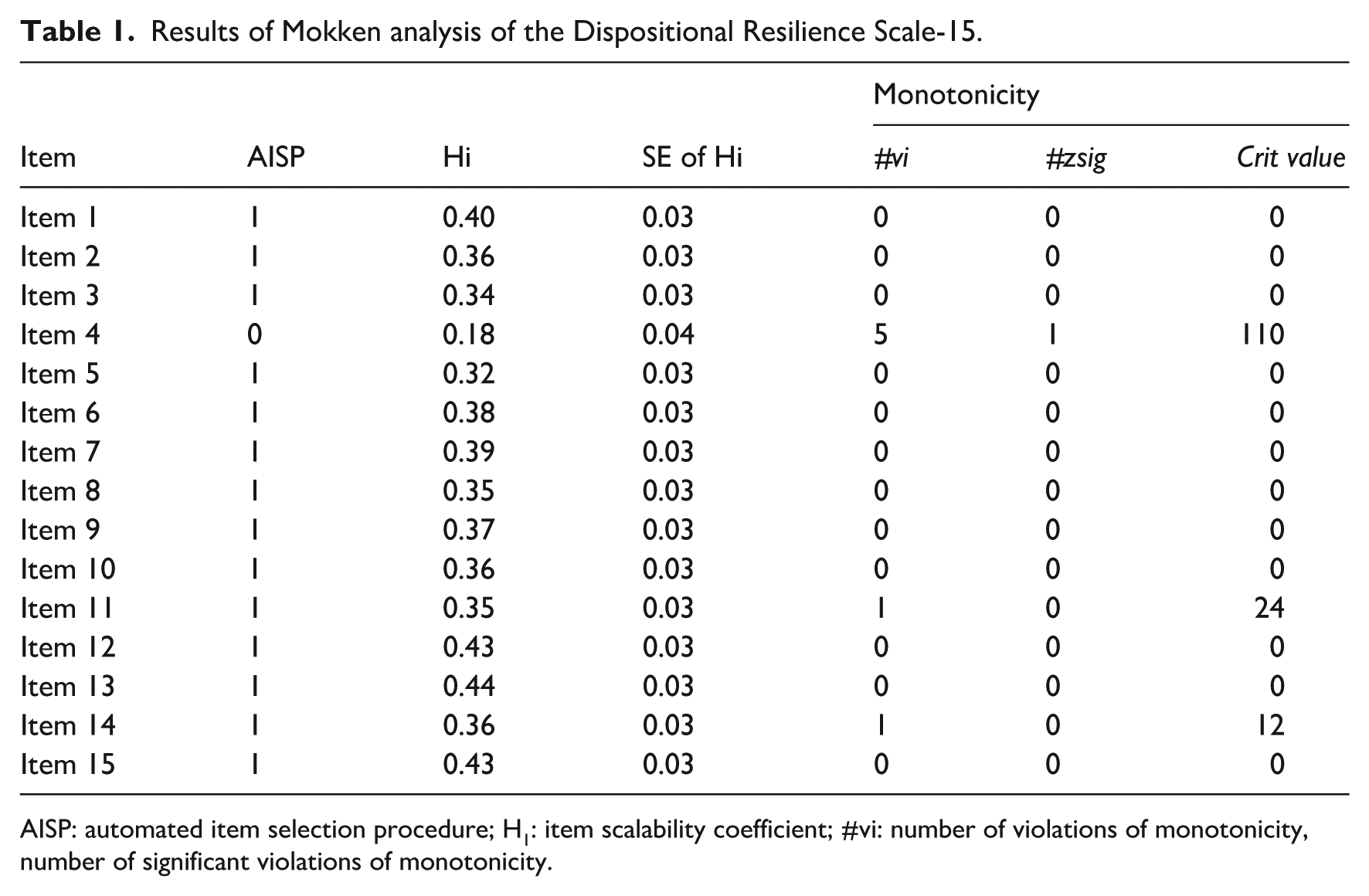
AISP: automated item selection procedure; H1: item scalability coefficient; #vi: number of violations of monotonicity, number of significant violations of monotonicity.
The Automated Item Selection Procedure (AISP) indicated that all items loaded on a single scale (AISP = 1), except for Item 4, which was unscalable (AISP = 0). As shown in Table 1, Item 4 was the only item with a scalability coefficient (Hi) below the acceptable threshold of 0.30 (Hi = 0.18). It was also the only item with a significant violation of monotonicity and a Crit value exceeding 80, suggesting poor item performance.
As item 4 was unscalable, CFA was conducted to examine one-factor and bifactor models for the DRS-15 as well as for models that did not contain item 4. The model for the DRS-15 is depicted in Figure 1.
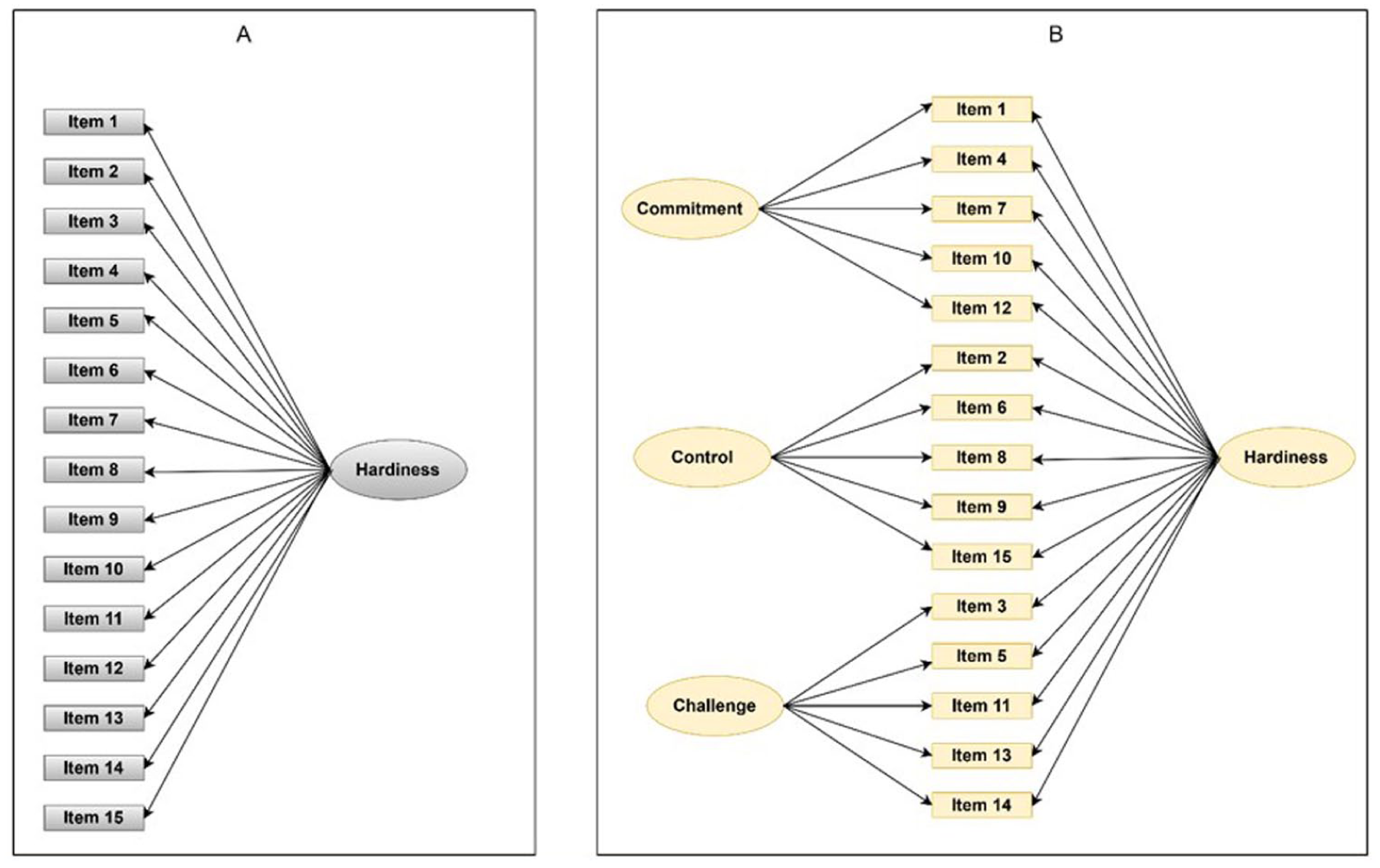
Two models of the factor structure of the Dispositional Resilience Scale-15.
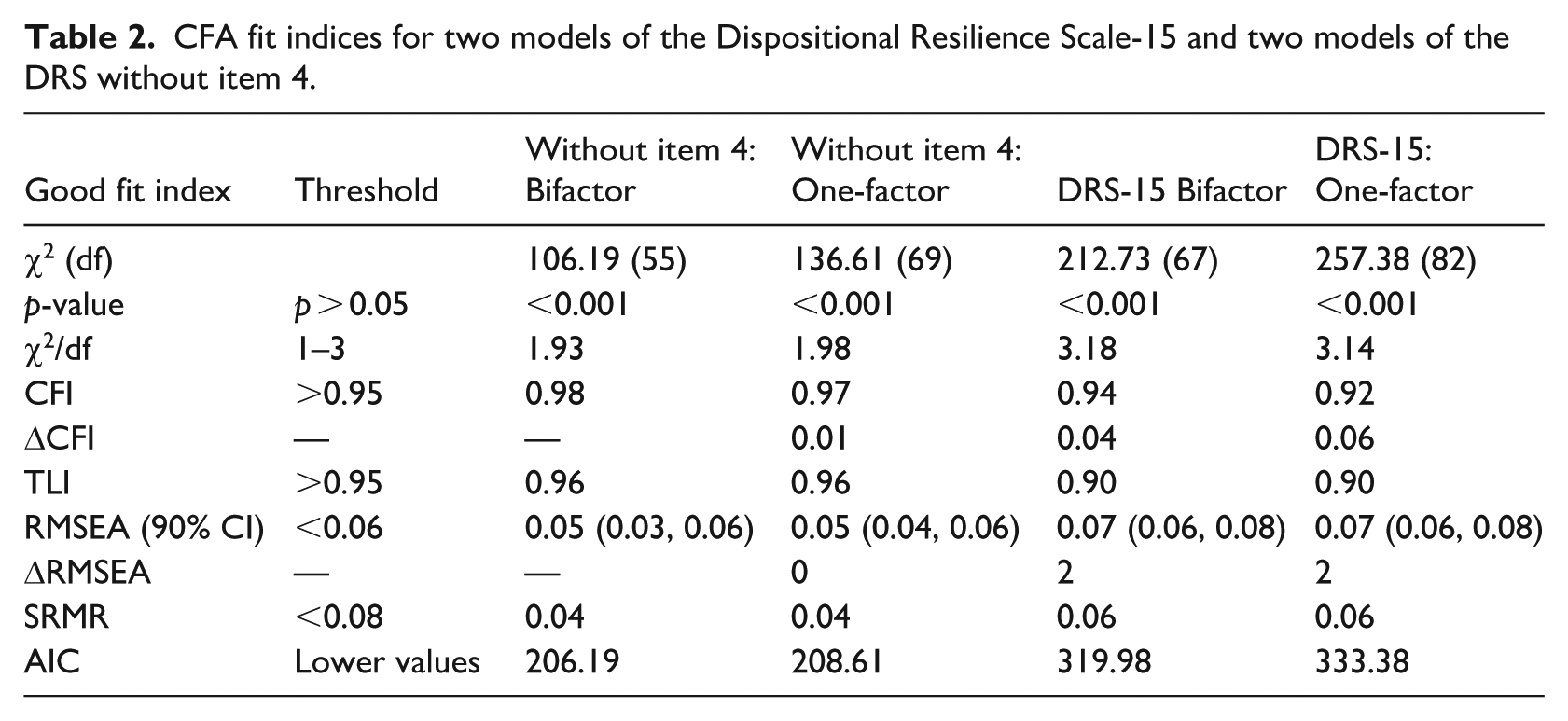
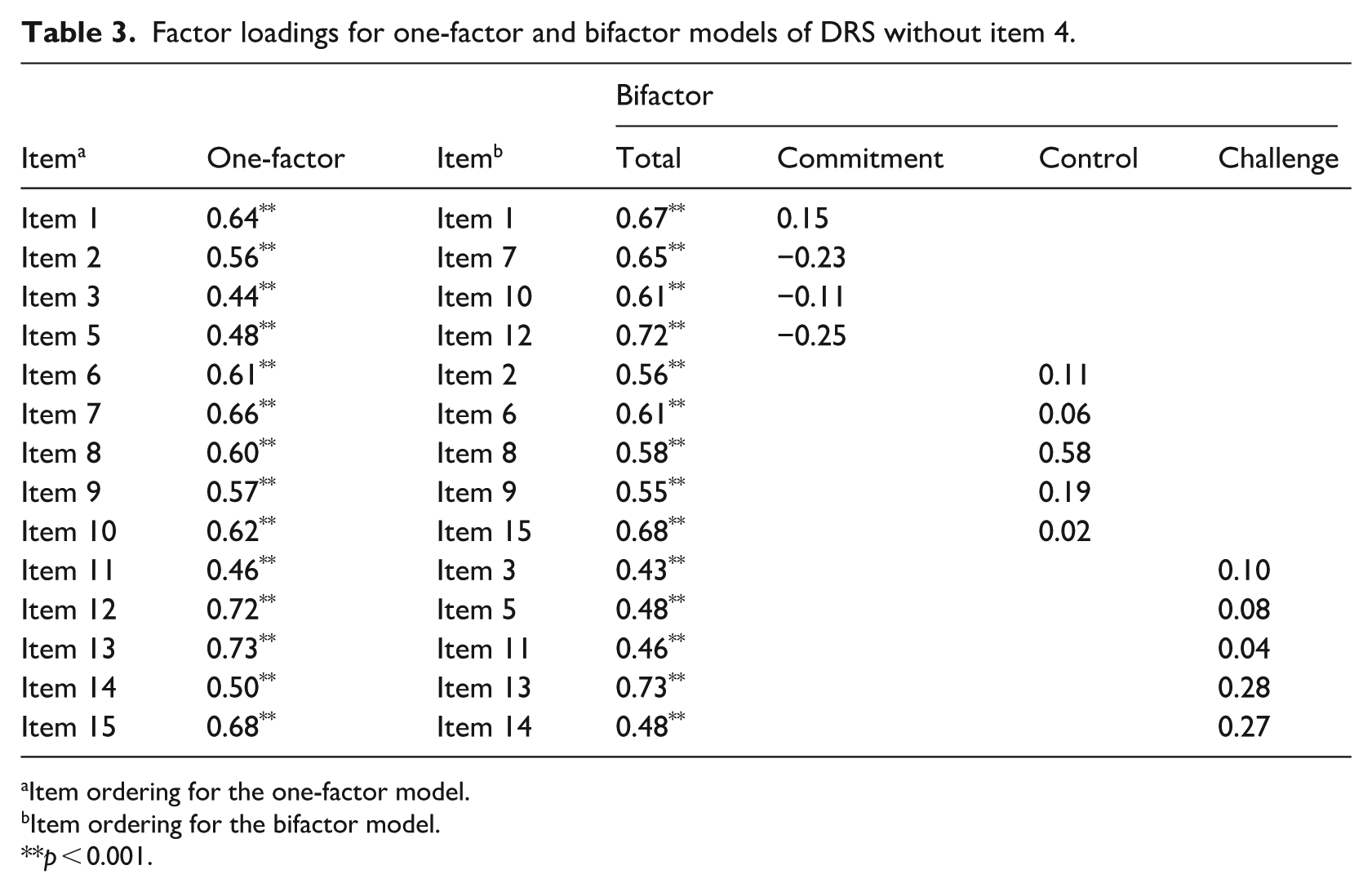
Fit indices for all four models are reported in Table 2, with standardized factor loadings for the DRS without item 4 reported in Table 3.
CFA fit indices for two models of the Dispositional Resilience Scale-15 and two models of the DRS without item 4.
Factor loadings for one-factor and bifactor models of DRS without item 4.
Item ordering for the one-factor model.
Item ordering for the bifactor model.
p < 0.001.
Table 2 shows that both the one-factor and bifactor models that excluded item 4 demonstrated excellent model fit, with all indices exceeding recommended thresholds. In contrast, fit indices for the DRS-15 were poorer; only the SRMR met the threshold for acceptable fit. Factor loadings for the two models that excluded item 4 are shown in Table 3.
All items in the one-factor model that excluded item 4 had significant loadings above 0.40 (range = 0.44–0.73). In the bifactor model without item 4, the general factor displayed loadings similar to the one-factor model (range = 0.43–0.73), all statistically significant. However, loadings for the three specific factors (commitment, control, and challenge) were generally weak, mostly below 0.40, and some were negative.
Ancillary bifactor indices were used to determine whether the specific factors contributed meaningful variance beyond the general factor. ECV for the general factor was 0.873, while values for the specific factors were low (ECV_commitment = 0.027, ECV_control = 0.070, ECV_challenge = 0.030). Omega hierarchical for the general factor was 0.87, whereas for the specific factors it was much lower (ωH_commitment = 0.02, ωH_control = 0.07, ωH_challenge = 0.06). Since ECV for the general factor was above 80%, ωH for the general factor above 0.80, and ωH for the specific factors below 0.50, the ancillary bifactor indices supports the interpretation of the DRS without item 4 as essentially unidimensional.
Given the MSA and CFA confirmation of unidimensionality, CTT, Mokken, and Rasch indices were calculated at item level for the DRS-15 as a unidimensional scale. These results are summarized in Table 4.
Classical test theory, Mokken and Rasch indices for the items of the Dispositional Resilience Scale-15.
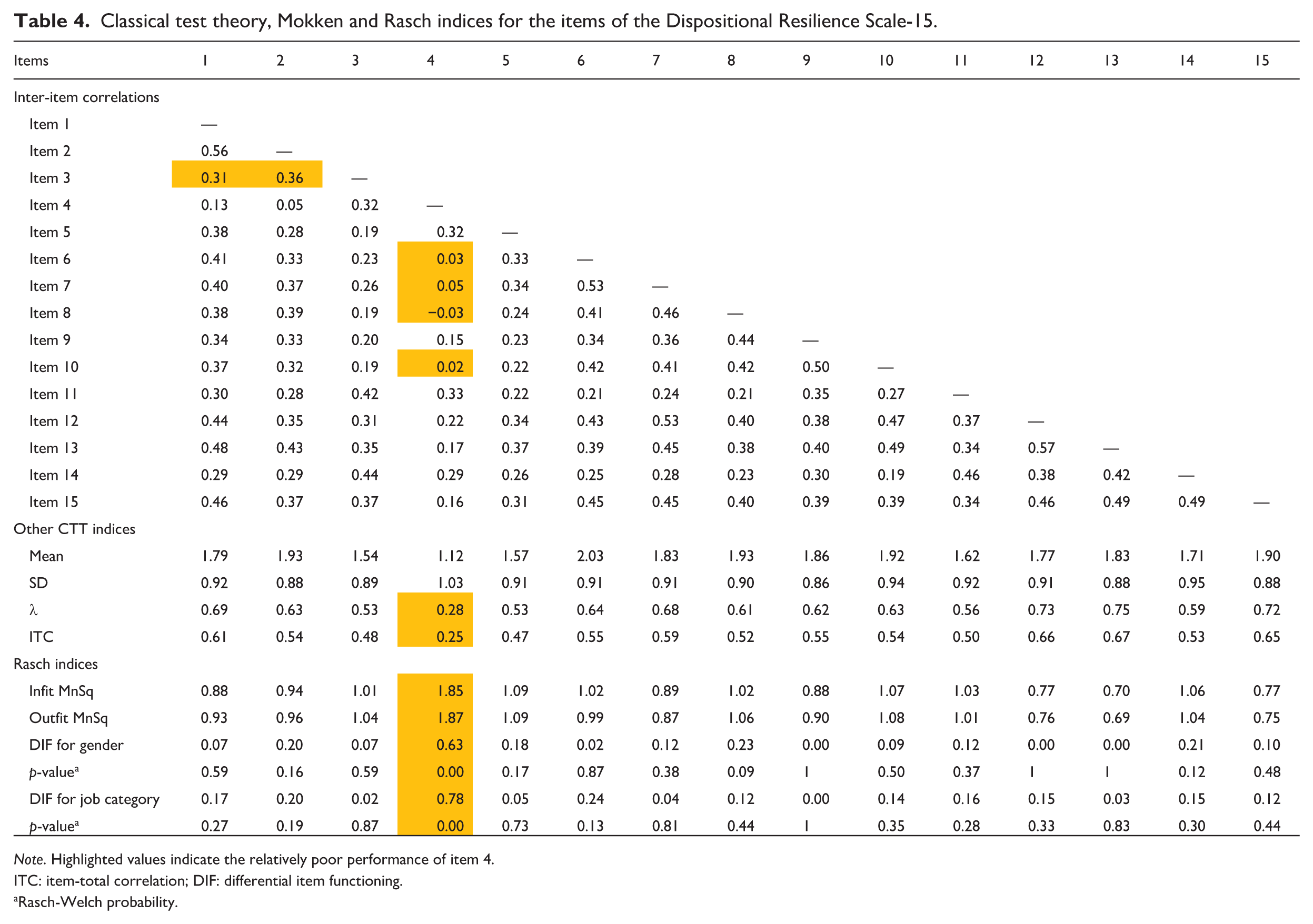
Note. Highlighted values indicate the relatively poor performance of item 4.
ITC: item-total correlation; DIF: differential item functioning.
Rasch-Welch probability.
Table 4 shows that, excluding Item 4, all items demonstrated acceptable psychometric properties across CTT and Rasch frameworks. Inter-item correlations for the DRS without item 4 ranged from 0.19 to 0.57, within the recommended range of 0.15–0.85, with an average inter-item correlation of 0.36. Factor loadings were obtained with EFA, using principal components analysis with varimax rotation and a forced one-factor solution. In this regard EFA only served to supply factor loadings for a unidimensional solution. Prior to the EFA, we obtained a KMO value of 0.92 and a significant Bartlett’s Test (p < 0.001) which indicates that the data was suitable for factor analysis. Factor loadings for the DRS without item 4 ranged from 0.53 to 0.75, all exceeding the recommended minimum of 0.50. Item-total correlations ranged from 0.47 to 0.67, also above the recommended threshold of 0.40. In terms of local dependence, an inspection of the correlations of the standardized residuals, found local dependence between items 1 and 2 (r = 0.25), item 6 and 7 (r = 0.23), as well as item 9 and 10 (r = 0.25). However, these coefficients were well below the suggested criteria of 0.70, thus reflecting that local dependence was not severe. Rasch infit and outfit MnSq values were within the acceptable range of 0.50 to 1.50 (0.75–1.09). Differential Item Functioning (DIF) analysis showed minimal differences across gender (0.00–0.23) and job category (0.00–0.24), remaining below the recommended cut-off of 0.50.
In contrast, Item 4 performed poorly. It showed several inter-item correlations below 0.15 and even a negative correlation with Item 8 (r = −0.03). Its factor loading (0.28) and item-total correlation (0.25) fell below acceptable levels. Rasch analysis indicated misfit, with MnSq values exceeding 1.50 (infit = 1.85, outfit = 1.87), and DIF values for gender (0.63, p < 0.001) and job category (0.78, p < 0.001) exceeded the recommended threshold.
The means in Table 4 shows that item 4 was mostly endorsed at the lower level of the scale (
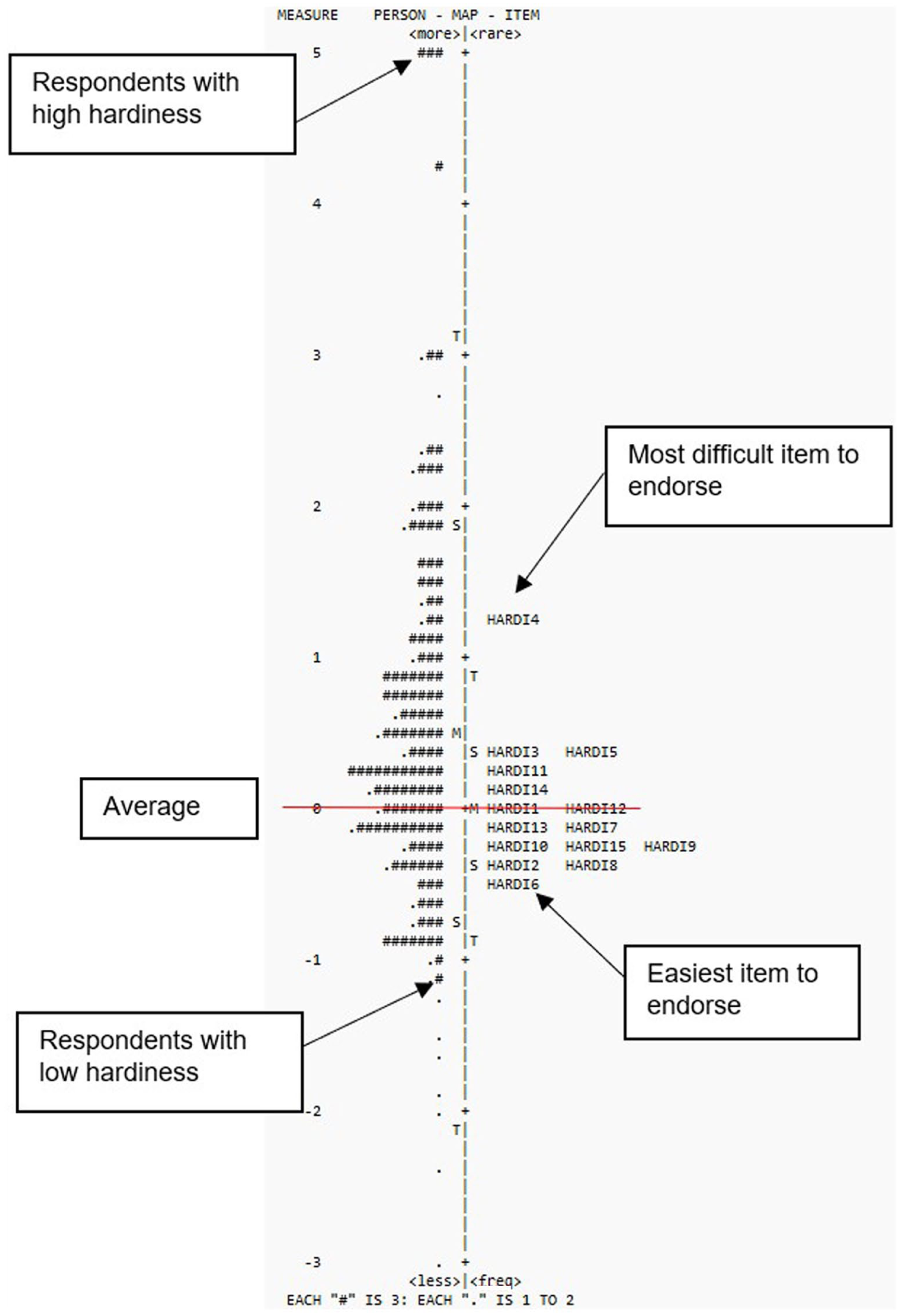
A wright map with persons plotted on the left side of the vertical line and responses to items on the right side of the vertical line.
CTT, Rasch, and Mokken indices at the scale level for both the DRS-15 and a DRS version without item 4 are presented in Table 5.
CTT, Rasch, and Mokken Indices for the DRS-15 and a DRS version without Item 4 at scale level.
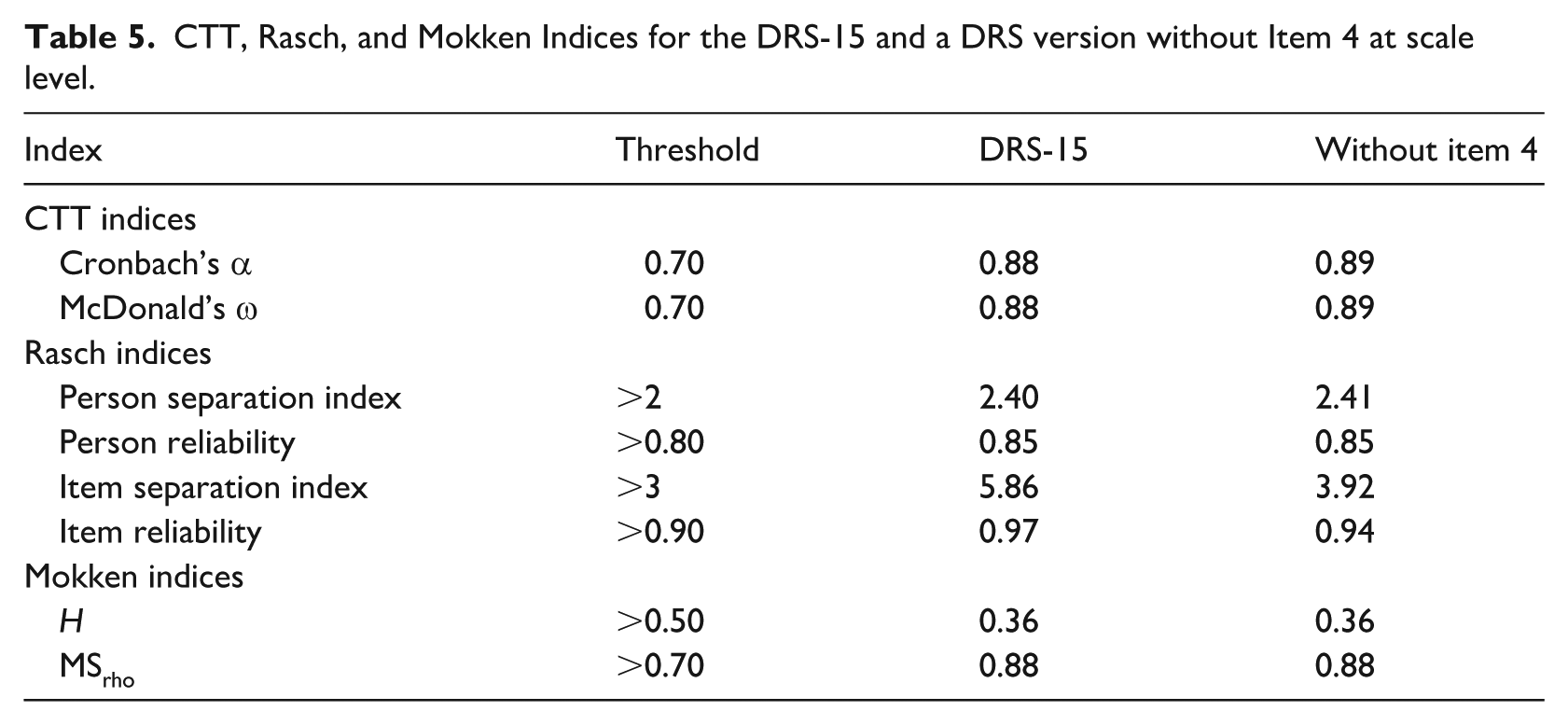
Both versions showed acceptable reliability and measurement properties across CTT and Rasch indices. Cronbach’s α and McDonald’s ω were 0.88–0.89 for both versions. Rasch person and item separation and reliabilities indices exceeded recommended thresholds. However, the Mokken H-coefficient for both scales was 0.36, suggesting a weak Mokken scale.
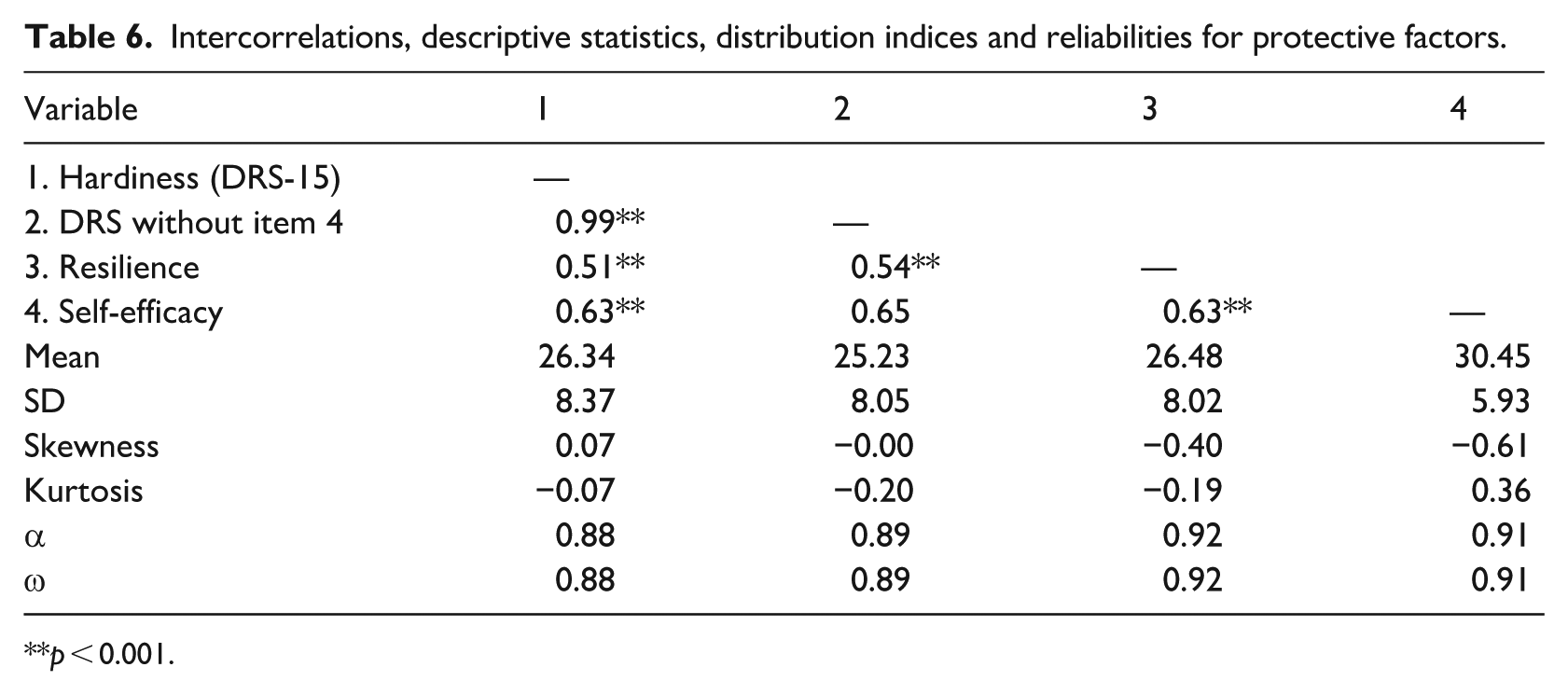
To assess concurrent validity, correlations between hardiness and other protective constructs are reported in Table 6.
Intercorrelations, descriptive statistics, distribution indices and reliabilities for protective factors.
p < 0.001.
Skewness (−0.61 to 0.07) and kurtosis (−0.20 to 0.36) values were within an acceptable range indicating that the data is approximately normally distributed. Both the versions of the DRS were significantly and positively correlated with resilience (DRS-15: r = 0.51, p < 0.001; DRS without item 4: r = 0.54, p < 0.001) and self-efficacy (DRS-15: r = 0.63, p < 0.001; DRS without item 4: r = 0.65, p < 0.001). In all cases, these correlations reflect large effect sizes. The DRS without item 4 demonstrated marginally stronger correlations with these constructs compared to the DRS-15.
The results of the multi-group CFA examining measurement invariance in the DRS without item 4 are reported in Table 7.
Results of measurement invariance testing across groups.
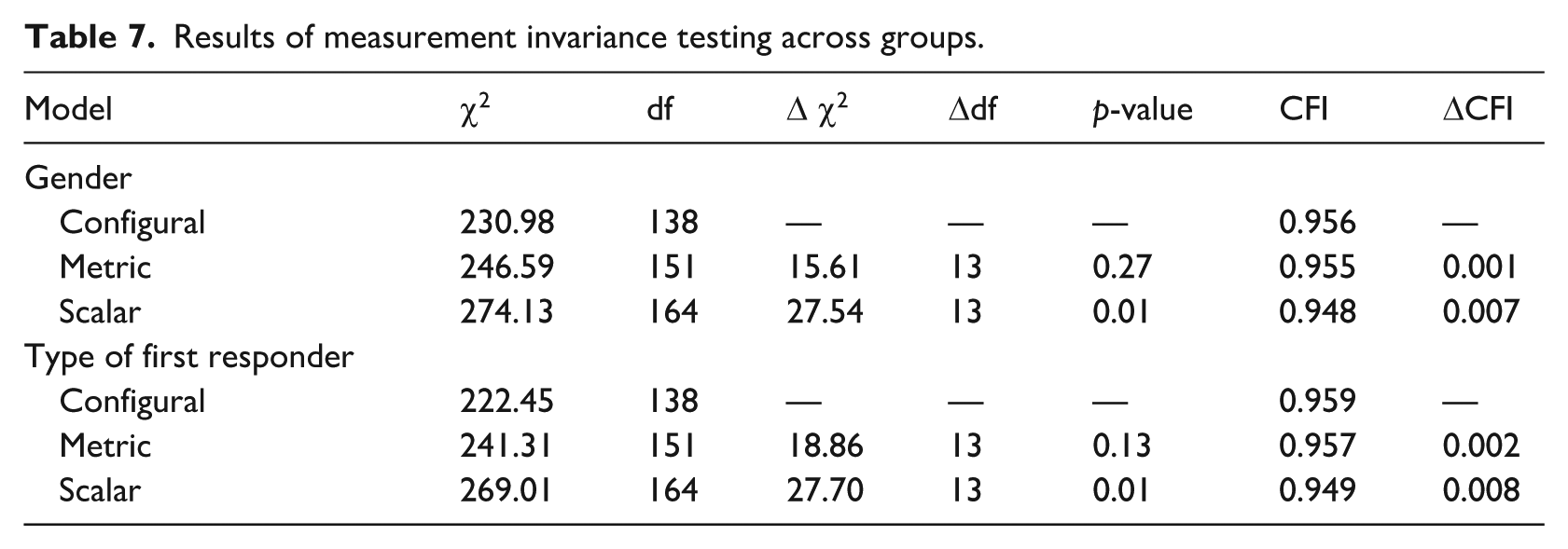
The results in Table 7 provide unambiguous support for configural and metric invariance (Δ χ2 = non-significant, ΔCFI < 0.01) for both gender and type of first responder. However, there was only partial support for scalar invariance for both gender and type of first responder as Δ χ2 was significant, while ΔCFI was less than 0.01.
Discussion
The present study aimed to evaluate the psychometric properties of the DRS-15 in a South African first responder sample using CTT, Mokken analysis, and Rasch modeling, and to assess the dimensionality of the scale through both AISP in MSA and confirmatory factor analysis. Overall, the findings support the use of the DRS without item 4 as a more psychometrically robust measure of psychological hardiness in this context.
Mokken analysis revealed that while most items formed a coherent and scalable set, Item 4 performed poorly across multiple metrics. It failed to meet the minimum scalability threshold and showed violations of monotonicity. These findings were consistent with its weak performance in CTT and Rasch analyses, where it showed low inter-item and item-total correlations, poor factor loading, and misfit in Rasch analysis. Furthermore, Item 4 demonstrated substantial DIF across gender and job category, suggesting it may function differently for subgroups within the sample. This evidence strongly supported its exclusion from further analyses.
The DRS, in the absence of item 4, demonstrated strong psychometric properties. Item-level statistics indicated that all items had satisfactory inter-item correlations, item-total correlations, and factor loadings. Rasch analysis further supported its psychometric soundness, with all items showing acceptable infit and outfit statistics and minimal DIF across demographic subgroups. The DIF results in Rasch analysis were further supported by the results of multi-group CFA that provided evidence for configural and metric invariance, and to some extent also for scalar invariance. These results suggest that the DRS without item 4 functions reliably and fairly across gender and job categories within the sample.
The unidimensional solution found with the AISP in MSA was further confirmed through CFA. The DHS, with the exclusion of item 4, exhibited excellent fit in both the one-factor and bifactor models, while the original DRS-15 showed weaker model fit. This reinforces the decision to exclude Item 4. Notably, while the general factor in the bifactor model demonstrated strong loadings and accounted for a substantial portion of the variance, the specific factors (commitment, control, and challenge) showed weak and inconsistent loadings. Ancillary bifactor indices further supported the unidimensionality of the DRS without item 4, indicating that the general factor accounted for the majority of the variance, and that the specific factors contributed minimal unique information.
Convergent validity was evidenced by significant and large positive correlations between both versions of the scale and measures of resilience and self-efficacy. The DRS scale without item 4 showed slightly stronger correlations with both constructs, suggesting that the 14-item version may provide a more accurate representation of the hardiness construct in this sample. These findings align with prior research that has demonstrated the relevance of hardiness in predicting psychological outcomes such as resilience and self-efficacy, particularly in high-stress occupational settings.
Despite the strengths of the DRS scale without item 4, the Mokken scalability coefficient for both versions of the scale was below the threshold typically considered indicative of strong hierarchical structure. This finding, while consistent with some prior studies, suggests that the modified scale may function more as a flat rather than a strongly ordered scale. Future research could explore whether refinements to item wording or the inclusion of new items might enhance the hierarchical properties of the measure.
In sum, the current study provides provisional empirical support for the modified DRS scale as a reliable and valid unidimensional measure of hardiness among South African first responders. However, this is tempered by the weak scalability coefficient which impacts the structural validity of the scale. These findings contribute to the broader literature on hardiness by affirming its utility in an underrepresented context and providing a more concise tool for assessing resilience-related traits in high-risk occupational groups.
The need for a hardiness-specific measure remains important even in the presence of well-established resilience scales. Although resilience and hardiness are conceptually related, they are not interchangeable. The personality-based components that constitute hardiness influence how individuals appraise stressors, engage with demanding environments, and utilize coping resources (Kobasa, 1979). As such, the DRS may potentially add value in contexts where understanding stable, trait-like stress-buffering characteristics is essential, complementing rather than duplicating what broader resilience measures capture.
The findings of this study have several important theoretical and practical implications. From a theoretical standpoint, the results contribute to the ongoing debate regarding the dimensionality of the hardiness construct. While hardiness was originally conceptualized as comprising three distinct but related components, the current study provides empirical support for a predominantly unidimensional structure, particularly within the context of South African first responders. This finding does not necessarily contradict hardiness theory, as the original formulation conceptualized these components as synergistic orientations toward stress rather than independent traits. The present results suggest that, in high-stress occupational contexts, these orientations may coalesce into a single, higher-order disposition reflecting a global capacity to engage adaptively with adversity. Attempts to impose a strict three-factor model may represent theoretical over-specification rather than an accurate reflection of the latent construct, particularly in applied or non-Western contexts.
The superiority of the unidimensional solution in this sample may be theoretically meaningful in the context of chronic, trauma-exposure in the work environment. For first responders, the orientations traditionally separated as Commitment (staying engaged), Control (perceiving agency), and Challenge (approaching change as growth) may operate as an integrated, functional stance toward threat that supports rapid appraisal and adaptive action under recurrent demands. In such settings, these components may be continuously co-activated and mutually reinforcing, making them difficult to empirically disentangle as distinct latent dimensions. At the same time, a predominantly general factor may also be partly attributable to cultural–measurement considerations. In South Africa, structural constraints (e.g. resource limitations) could reduce meaningful variability in “control” as it is operationalized in Western measures, while cultural norms around stoicism, duty, and collective responsibility may shape the expression of commitment and challenge in ways that blur their separability. Thus, the observed unidimensionality can be interpreted as both a context-sensitive consolidation of hardiness into a higher-order disposition under chronic stress, and a signal that the classic three-component specification may be over-partitioned or partially culture-bound in applied Global South occupational settings. This underscores the need for targeted cross-cultural construct refinement rather than assuming structural equivalence.
The consistent poor performance of Item 4 across psychometric paradigms warrants particular attention. Item 4 is theoretically anchored in the commitment dimension of hardiness, which emphasizes sustained engagement, purpose, and involvement in one’s work. In high-stress emergency service contexts, however, commitment may be influenced by fluctuating organizational conditions, burnout, and systemic pressures rather than stable dispositional tendencies. As a result, the way commitment is experienced and expressed by first responders may not align with the assumptions embedded in the item’s wording. The misfit of Item 4 may therefore reflect a contextual incongruence in the operationalization of commitment rather than a deficiency in the broader hardiness construct. The consistent misfit of Item 4 may also plausibly reflect linguistic and cultural nuance rather than a substantive absence of the underlying trait. This suggests that future adaptations should prioritize
Practically, the DRS without item 4 offers a brief, reliable, and valid tool for assessing psychological hardiness among first responders, a group that is frequently exposed to chronic stress and trauma. In high-pressure work environments such as emergency services, the ability to identify and strengthen resilience-related traits like hardiness is essential for promoting mental health and occupational functioning. Although further validation in more diverse samples is warranted, the DRS without item 4 shows sufficient promise to be applied in research and selected applied contexts, for example, in exploratory psychological screening, preliminary needs assessments, resilience-focused programs, and intervention evaluations. Moreover, its demonstrated correlations with resilience and self-efficacy further support its utility in programs aimed at fostering psychological strengths in first responder populations. However, more South African research in different populations are needed to clarify whether the poor functioning of item 4 is sample specific or is more general in this context. Future research should also focus on establishing normative benchmarks, examining subgroup differences, and determining whether stable thresholds can be identified to guide decision-making in operational contexts.
The study had certain limitations including the use of self-report measures, which are subject to social desirability and recall bias. The study was also conducted in a distinct geographical location and among two categories of first responders, which impacts the generalizability of the findings. The cross-sectional design also preludes any conclusions about causality.
Conclusion
This study provides strong psychometric support for a revised 14-item version of the DRS in a South African first responder sample. The modified DRS without item 4 demonstrated excellent reliability, structural validity in some respects, and measurement invariance across gender and occupational groups in terms of DIF, configural and metric invariance, while scalar invariance was only partially supported. The findings support the conceptualization of hardiness as a primarily unidimensional construct and offer a validated tool for assessing this trait in high-stress professional contexts. Future research should explore the scale’s predictive validity in relation to mental health outcomes and performance indicators, and its applicability across other cultural and occupational groups.
Footnotes

Ethical considerations
Ethical approval for the study was granted by the Humanities and Social Sciences Research Ethics Committee of the University of the Western Cape (Ethics Reference: HS23/2/4, 23 May 2023) and was conducted in line with the Declaration of Helsinki. Informed electronic consent was obtained on the landing page of the survey.
Consent to participate
Informed consent was obtained electronically from all individual participants included in the study.
Consent for publication
Consent for publication is not applicable to this article as it does not contain any identifiable data
Author contributions
TP and AP: conceptualization, investigation, writing – original draft, writing – review and editing. TP: methodology, data curation, formal analysis. AA: supervision, project administration. All authors have read and approved the final version of the manuscript.
Funding
The authors received no financial support for the research, authorship, and/or publication of this article.
Declaration of conflicting interests
The authors declared no potential conflicts of interest with respect to the research, authorship, and/or publication of this article.
Data availability statement
The raw data supporting the conclusions of this article will be made available by the authors without undue reservation.