



Abstract
This study investigates the emotional and psychological underpinnings of addictive-like eating behaviours in young adults through the lens of attachment theory. A total of 545 individuals aged 18 years and older participated in the study, completing demographic forms and validated self-report measures, including the three-Dimensional Attachment Styles Scale, the Food-Mood Scale, and the Addictive Eating Behaviour Scale. Significant gender differences were observed, with females scoring higher in secure attachment (p < 0.05), while males demonstrated higher appetite drive and greater levels of addictive-like eating behaviours (p < 0.001). In addition, participants reporting well-balanced diets exhibited lower food-related mood scores, suggesting an association between diet quality and emotional well-being that may reflect underlying emotion regulation processes linked to attachment styles. Overall, the findings indicate that attachment styles are associated with eating behaviours and that these associations vary by gender. These results highlight the importance of considering emotional factors and gender-specific characteristics when developing nutrition-focussed interventions targeting addictive-like eating behaviours.
Keywords
Introduction
Attachment theory, originally developed by Bowlby (1969) to explain early caregiver-child bonds, has since evolved to encompass adult attachment styles that reflect enduring patterns in close relationships (Bartholomew and Horowitz, 1991). Attachment processes are also central to romantic relationships in adulthood (Hazan and Shaver, 2017). Since adult attachment is shaped by early relational experiences, it tends to remain stable and influences how individuals manage emotions and connect with others (Walker et al., 2022). Individuals with insecure attachment styles are more likely to experience emotional dysregulation and adopt maladaptive coping strategies, such as using food for comfort (Hazarika and Bhagabati, 2018; Özmen and Güzel, 2022; Alexander and Siegel, 2013). These behaviours may include emotional and binge eating, which share psychological and neurobiological features with substance use disorders (Schulte et al., 2015). According to Cortés-García et al. (2019), insecure attachment patterns developed throughout childhood may worsen and persist into adulthood, creating negative emotional states including anxiety, loneliness, and stress, which in turn trigger these behaviours. However, findings across studies are not fully consistent; while some studies have reported strong associations between insecure attachment and maladaptive eating patterns, others have observed weaker or no associations (Carfagno et al., 2024; Naor Ziv, 2025; Ritz et al., 2025). This inconsistency highlights the need for further research. Recent studies also suggest that insecure attachment mediates the relationship between childhood maltreatment and disordered eating among university students and that emotion regulation difficulties are significantly linked with disordered eating behaviours in adolescents and young adults (Ritz et al., 2025; Zhou et al., 2020). Although global emotion regulation was not directly measured, food-related emotional responses were examined as potential behavioural reflections of affective regulation processes. University students often face elevated stress, lifestyle changes, and identity-related challenges, which can contribute to maladaptive eating behaviours such as emotional or compulsive (Deforche et al., 2015; Han and Kahn, 2017). While clinical eating disorders are well-studied, subclinical patterns like addiction-like eating and food-related emotional dysregulation are increasingly recognised in non-clinical populations (Racine et al., 2017; van Strien, 2018). In addition to clinical eating disorders, recent research is now focussing on subclinical settings such as addiction-like eating and emotional dysregulation related to food among university students (Rafraf et al., 2023; Zuhair et al., 2024). However, the role of individual differences, such as attachment styles, in shaping these behaviours remains underexplored.
Moreover, gender differences in attachment and eating behaviours have been inconsistently addressed: females often report more emotional eating, whereas males may respond more to external eating cues (Racine et al., 2017; van Strien, 2018). Exploring whether attachment operates differently across genders may offer insight into gender-sensitive risk factors and intervention approaches.
Therefore, the present study aims to investigate the associations between attachment styles specifically secure, anxious, and avoidant and food related emotional states as well as addictive-like eating behaviours in a non-clinical sample of university students. In addition, we examine whether these associations vary by gender, given prior evidence of gender differences in both attachment patterns and eating behaviour. The findings may contribute to a better understanding of individual differences in eating-related emotional responses within non-clinical populations.
Methods and materials
Topics and approach
This cross-sectional descriptive study included undergraduates aged 18 years and older enrolled at a private foundation university in Istanbul. The study was conducted at Yeditepe University during the 2023–2024 academic year, with ethical approval obtained from the Marmara University Non-Interventional Clinical Research Ethics Committee. All study procedures were conducted in accordance with the principles of the Declaration of Helsinki. Participants were recruited from multiple undergraduate programmes. A minimum sample size of 376 participants was required to achieve a 95% confidence interval and a 5% margin of error, assuming an effect size of 0.50. A total of 545 undergraduate students were randomly approached from the general undergraduate population and included in the study if they met the inclusion criteria and agreed to participate, exceeding the minimum required sample size to enhance the robustness of the findings. Data were collected through face-to-face interviews. Prior to participation, all individuals were informed about the purpose and procedures of the study, and voluntary informed consent was obtained.
Measures
Participants’ anthropometric measures (height, weight, and body mass index) and demographic details (age, gender, etc.) were all collected for this study. Alcohol consumption data were collected as exploratory lifestyle variables to provide additional context on factors that may influence attachment and eating behaviours. Body mass index (BMI) was calculated as weight (kg) divided by height squared (m2). Based on the World Health Organisation criteria, BMI values were classified as normal weight (<25 kg/m2) or overweight/obese (⩾25 kg/m2).
To achieve the goal of the study, three validated measures were used to assess how the patterns of attachment to one’s parents affected the emotional states and addictive eating habits of the participants.
Three-dimensional attachment styles scale (TDASS)
Ainsworth (1979) developed TDASS and Erzen (2016) translated it into Turkish. Its purpose is to measure the different attachment styles that people acquire during infancy and continue to use throughout their lives. There are a total of 18 items on the scale, with 7 indicating an avoidant attachment (AvA), six an anxious-ambivalent attachment (AxA), and five a secure attachment (SecA; Erzen, 2016). Items are scored on a 5-point Likert scale (1 = strongly disagree to 5 = strongly agree), and there are no reverse-scored items. Higher scores on each subscale indicate stronger endorsement of that attachment tendency. For statistical analyses, subscale scores were treated as continuous variables representing attachment dimensions, rather than categorical classifications. Cronbach’s alpha coefficients indicated acceptable internal consistency: 0.71 for AxA, 0.69 for SecA, and 0.80 for AvA. An individual’s dominant attachment style was determined based on the highest score obtained among the subscales. In the present study, attachment styles were analysed dimensionally rather than categorically. Although individuals may show high levels of both anxiety and avoidance (indicative of fearful-avoidant tendencies), no classification into attachment subtypes was performed. Instead, anxiety and avoidance scores were treated as continuous variables.
Addiction-like eating behaviours scale (AEBS)
AEBS was developed by Ruddock et al. (2017) to assess individuals’ addiction-like eating behaviours. Its validity and reliability in Turkish were established by Demir et al. (2021) to determine whether eating habits have characteristics like addiction. The scale consists of 15 items, and 2 sub-scales Items are rated on a 5-point Likert scale (1 = never/strongly disagree to 5 = always/strongly agree), with 5 items reverse-scored. Total scores range from 15 to 75, and higher scores indicate more pronounced addictive-like eating behaviours. According to Demir et al. (2021) the subscales with the greatest possible scores are appetitive drive (30), and low diet control (45). With Cronbach’s alpha values higher than 0.70, the scale and its subscales are shown to be reliable.
Food-Mood Questionnaire (FMQ)
Begdache et al. (2019) developed FMQ and Aslan Çin et al. (2021) translated it into Turkish to determine the effect of food on mental anguish. The Turkish version includes 22 items grouped into five components: mental distress, healthy eating patterns, breakfast consumption patterns, Western dietary intake, and supplement habits, with an overall Cronbach’s alpha of 0.63. For the purposes of the present study, we used the six-item mental distress subscale to evaluate eating-related mood. Items were scored from 0 (never) to 4 (always), yielding subscale scores ranging from 0 to 4 and a total score ranging from 0 to 24. Scores of 0 indicate no distress, 1–5 low distress, 6–10 moderate distress, and 11–24 severe mental distress (Aslan Çin et al., 2021).
Statistical analysis
Excel was used to process research data, while SPSS 29.0 was used for analysis. Histogram, Q-Q plot, skewness, and kurtosis graphs were used to check if the data followed a normal distribution. If the data were normally distributed, we used the mean and standard deviation to represent it. If it was not normally distributed, we used the median, minimum, and maximum values. The Mann-Whitney U test was used for data that did not conform to the normal distribution, whereas for data that did, the Independent Sample T-test was used to compare the two groups independently. In cases where the data did not conform to normality, the Kruskal-Wallis Test was applied; in cases where there were more than two groups to compare, ANOVA was used. The Pearson Correlation Test was used for normally distributed data to evaluate the relationship between numerical variables, whereas the Spearman Correlation Test was used for non-normally distributed data. Additionally, multiple regression analysis was conducted to examine the predictive relationships between independent variables and selected outcome variables. For statistical significance, a p-value lower than 0.05 was used.
Results
Descriptive statistics and reliability analyses
This section presents the descriptive characteristics of the participants and the psychometric properties of the study variables. To provide a general overview of the sample, descriptive and reliability analyses were performed before the main analyses. Attachment was analysed dimensionally rather than categorically, using TDASS subscale scores. High scores on each subscale indicate a stronger tendency towards that attachment pattern. The reported mean values (Secure: M = 19.66, SD = 3.09; Avoidant: M = 15.02, SD = 4.91; Anxious-Ambivalent: M = 13.88, SD = 4.62) reflect the relative strength of each attachment dimension, not group differences. Descriptive comparisons among attachment dimensions were conducted for descriptive purposes only, and all attachment variables were analysed as continuous scores in subsequent analyses. Eating behaviour indicators also varied notably across the sample: food-mood (M = 11.27, SD = 4.62), appetitive drive (M = 22.48, SD = 7.16), and addictive-like eating behaviours (M = 40.10, SD = 10.40). These findings are consistent with prior research suggesting that secure attachment is associated with better control over food intake and may be linked to improved emotional balance (Cassidy et al., 2013; Cortés-García et al., 2019).
Internal consistency coefficients (Cronbach’s α) showed moderate reliability for secure attachment (α = 0.60–0.80), and high reliability for the avoidant, anxious-ambivalent, and eating behaviour scales (α = 0.80–1.00). These reliability coefficients indicate that the measurements are accurate and meet the standards recommended by previous studies (Tavakol and Dennick, 2011). Data are normally distributed when skewness and kurtosis values are between −1.5 and +1.5 (Tabachnick and Fidell, 2013). Skewness and kurtosis values, AvA, and AxA, total score on the FMQ, total score on the AEBS, and its subscales were found to meet the assumption of normal distribution (Table 1).
Descriptive statistics and psychometric properties of scales.
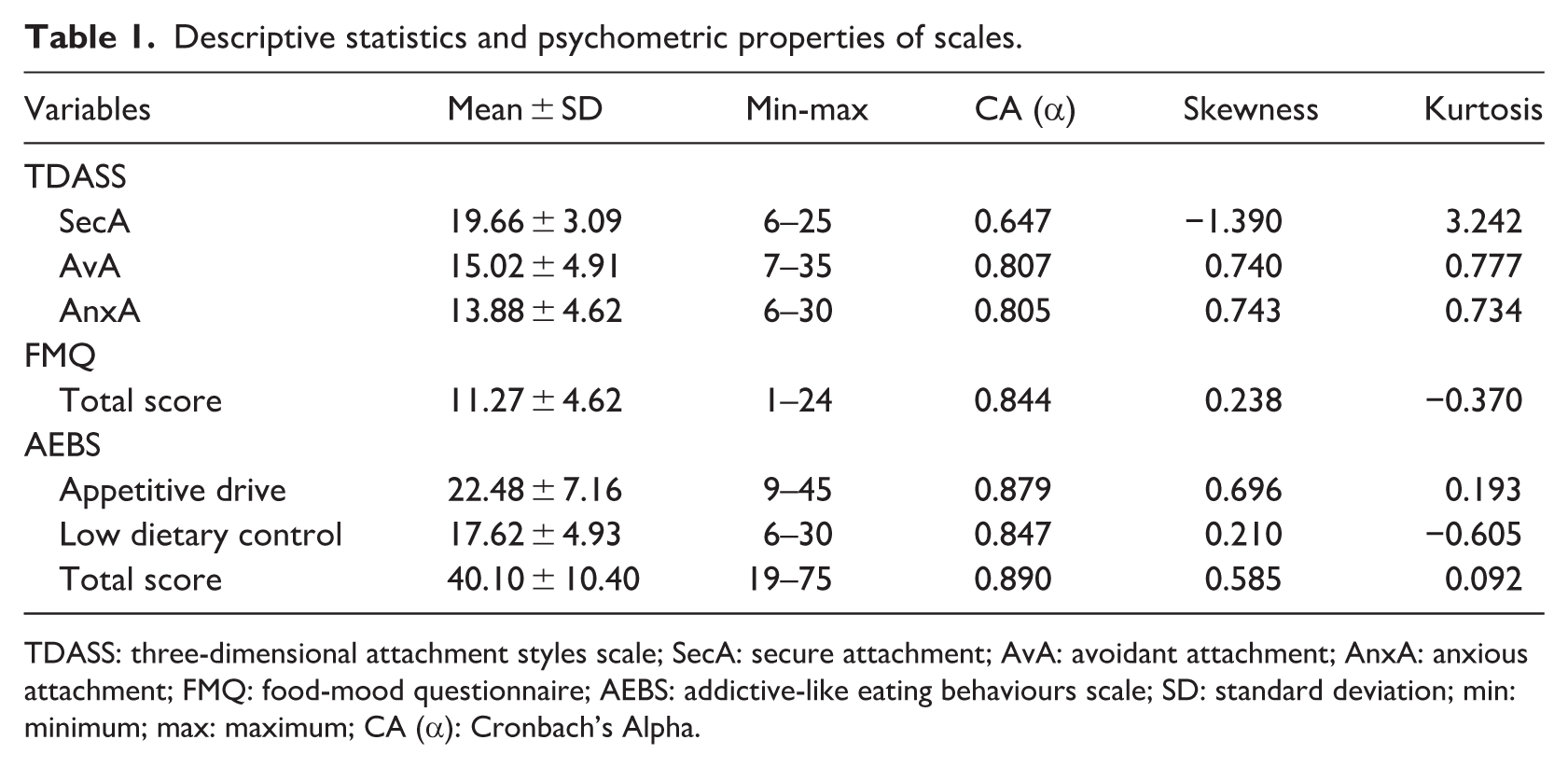
TDASS: three-dimensional attachment styles scale; SecA: secure attachment; AvA: avoidant attachment; AnxA: anxious attachment; FMQ: food-mood questionnaire; AEBS: addictive-like eating behaviours scale; SD: standard deviation; min: minimum; max: maximum; CA (α): Cronbach’s Alpha.
The average participant age was 21.45 (SD = 2.60); 81.1% were female. The majority (86.2%) reported making their own food choices, and 52.3% perceived their eating habits as healthy. Mean BMI was 21.77 (SD = 3.42; Table 2).
Sociodemographic characteristics, lifestyle habits, and anthropometric measurements of the participants.
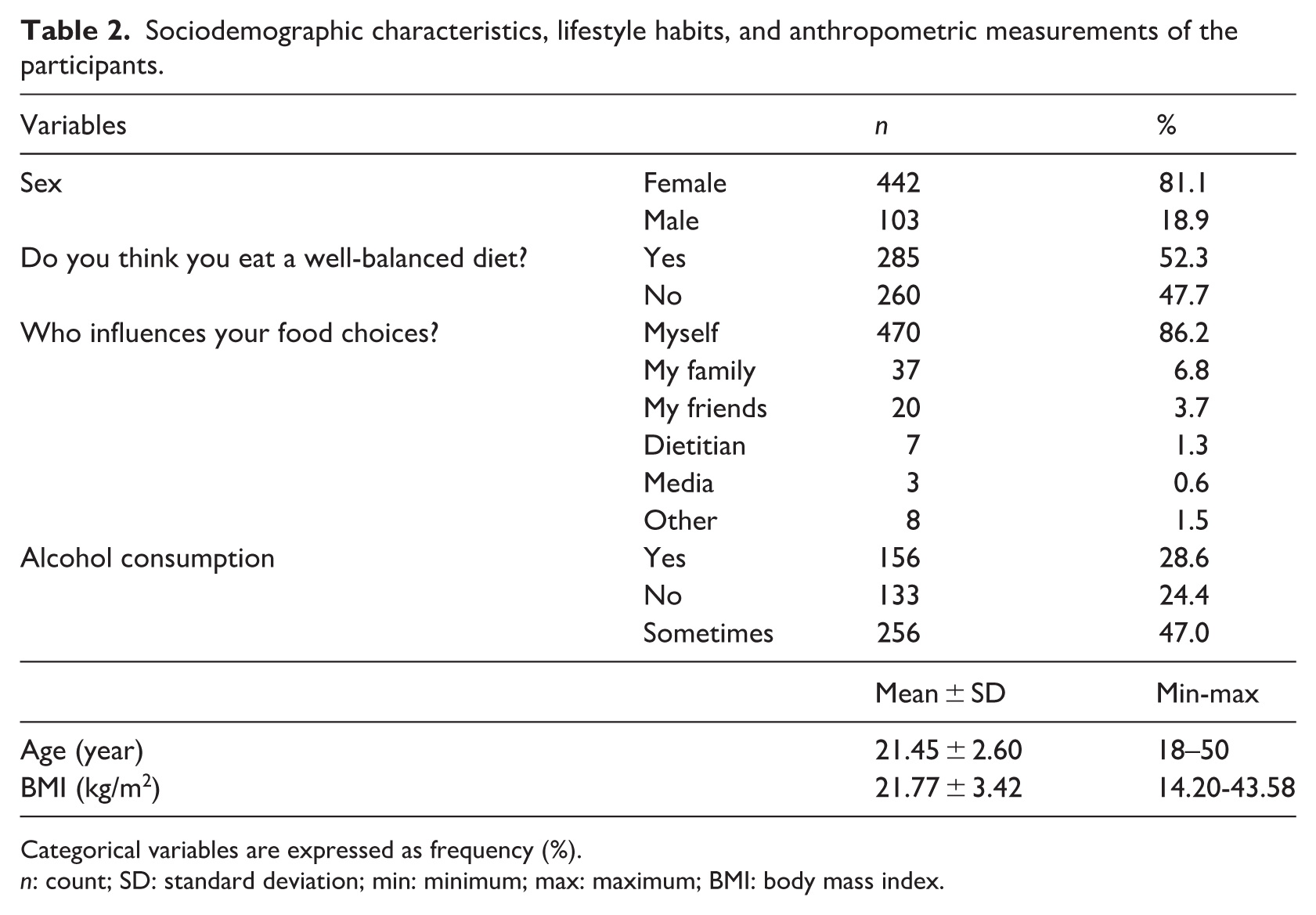
Categorical variables are expressed as frequency (%).
n: count; SD: standard deviation; min: minimum; max: maximum; BMI: body mass index.
Attachment dimensions by sociodemographic and lifestyle factors
This section examines how attachment dimensions vary across demographic and lifestyle characteristics such as sex, diet quality, and food choice influences. Female participants reported significantly higher secure attachment scores (Median = 20, range = 6–25) compared to males (Median = 19, range = 7–24), U = 2939, p = 0.003. They also had lower avoidant attachment scores (M = 14.80 ± 4.83) than males (M = 16.00 ± 5.15), t = 2.248, p = 0.025, whereas no significant sex difference was observed for anxious-ambivalent attachment (p = 0.591; Table 3). Participants who reported eating a well-balanced diet showed significantly higher secure attachment scores (Median = 21, range = 6–25) than those who did not (Median = 20, range = 6–25), U = 3.242, p < 0.001. Conversely, anxious-ambivalent attachment scores were higher among participants reporting no balanced diet (M = 14.42 ± 4.61) compared to those reporting a balanced diet (M = 13.39 ± 4.58), t = 2.595, p = 0.010. No significant differences were found in avoidant attachment between these groups (p = 0.223). Food choice influencers were not significantly associated with secure, avoidant, or anxious-ambivalent attachment scores (all p > 0.05).
TDASS by demographic, nutritional, and lifestyle characteristics.
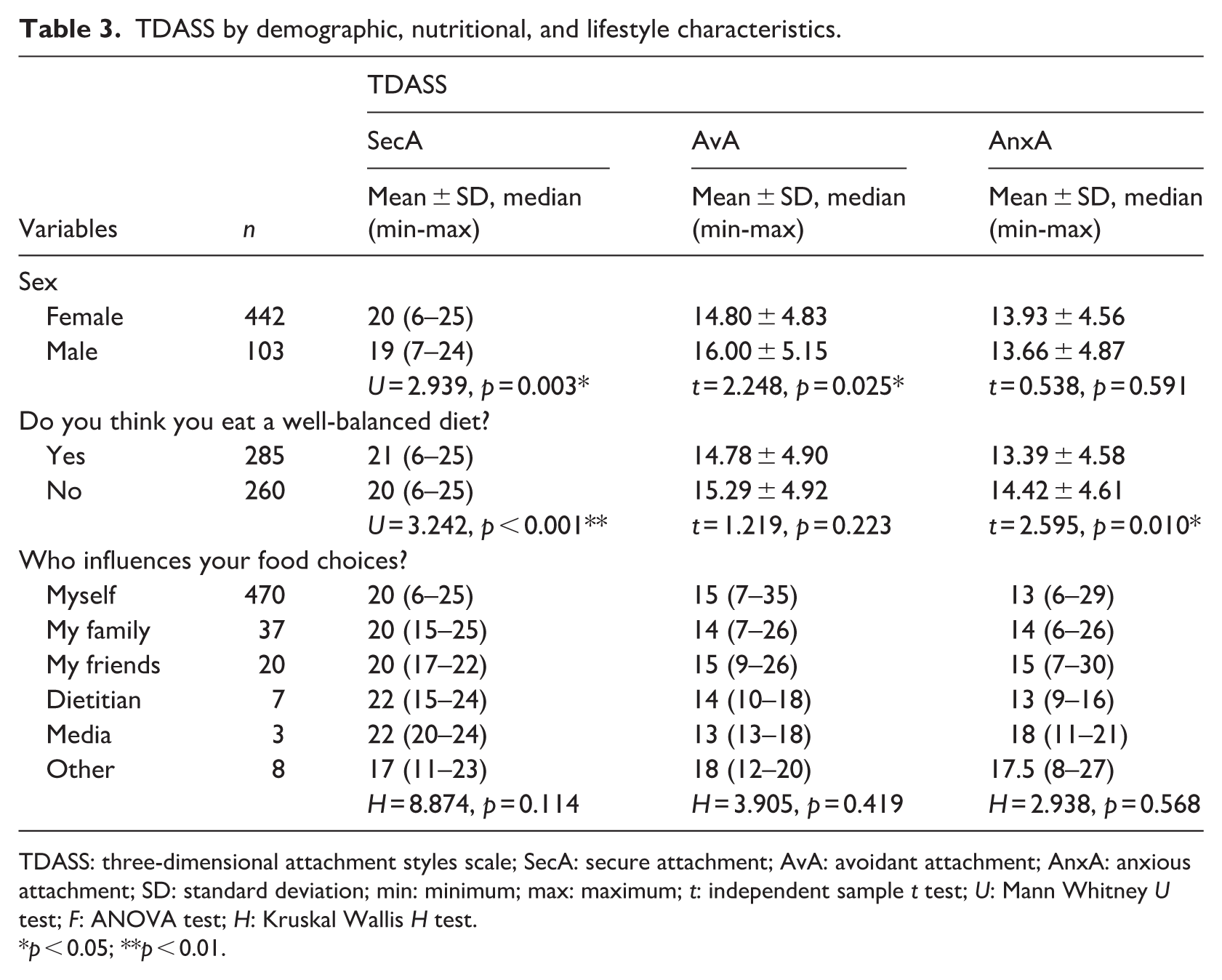
TDASS: three-dimensional attachment styles scale; SecA: secure attachment; AvA: avoidant attachment; AnxA: anxious attachment; SD: standard deviation; min: minimum; max: maximum; t: independent sample t test; U: Mann Whitney U test; F: ANOVA test; H: Kruskal Wallis H test.
p < 0.05; **p < 0.01.
Addictive-like eating behaviours by sociodemographic and lifestyle factors
This section examines how addictive-like eating behaviours vary across demographic and lifestyle factors such as sex, perceived diet quality, and food choice influences. Female participants reported significantly lower appetitive drive (t = 4.699, p < 0.001) and total AEBS scores (t = 3.732, p < 0.001) than males, while no sex difference was observed for low dietary control. Participants who believed they ate a well-balanced diet had significantly lower scores on appetitive drive (t = 5.018, p < 0.001), low dietary control (t = 15.110, p < 0.001), and total AEBS (t = 10.250, p < 0.001). Food choice influencers were associated with low dietary control (H = 11.163, p = 0.048), with higher scores among those influenced by media compared to family and friends (Table 4). No significant group differences were found for appetitive drive or total AEBS scores by food choice influencers.
AEBS by demographic, nutritional, and lifestyle characteristics.
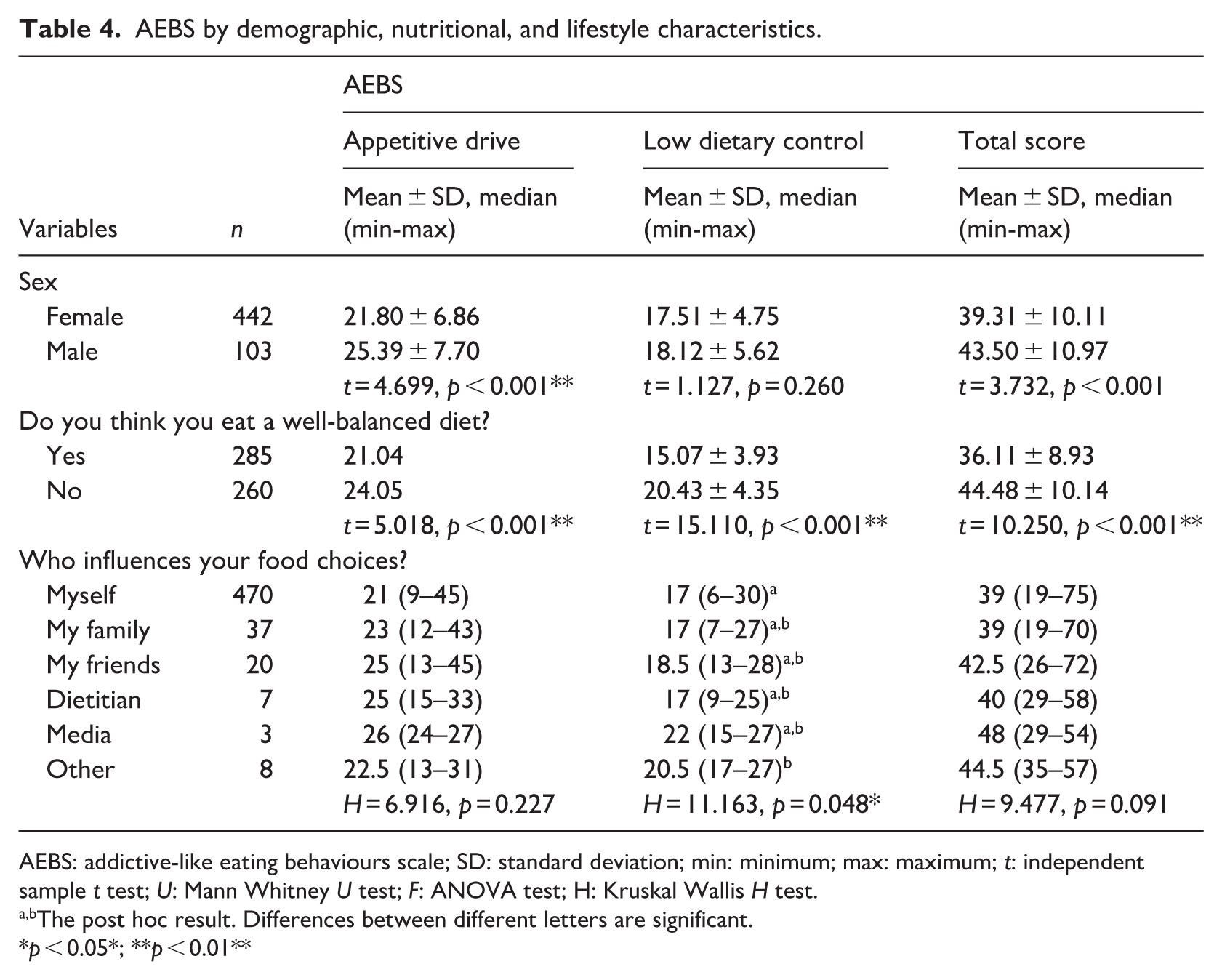
AEBS: addictive-like eating behaviours scale; SD: standard deviation; min: minimum; max: maximum; t: independent sample t test; U: Mann Whitney U test; F: ANOVA test; H: Kruskal Wallis H test.
The post hoc result. Differences between different letters are significant.
p < 0.05*; **p < 0.01**
Food-related mood by sociodemographic and lifestyle factors
This section explores differences in food-related mood across demographic and lifestyle characteristics to better understand the emotional aspects of eating behaviour. Female participants reported significantly higher food-related mood scores compared to males (t = 2.154, p = 0.032). Participants who perceived their diet as well-balanced reported lower food-related mood scores (t = 3.921, p < 0.001; Table 5). Food choice influences also differed significantly (H = 13.850, p = 0.017), with participants who primarily made their own food choices reporting lower food-related mood scores than those influenced by others.
Food-mood questionnaire by demographic, nutritional, and lifestyle characteristics.
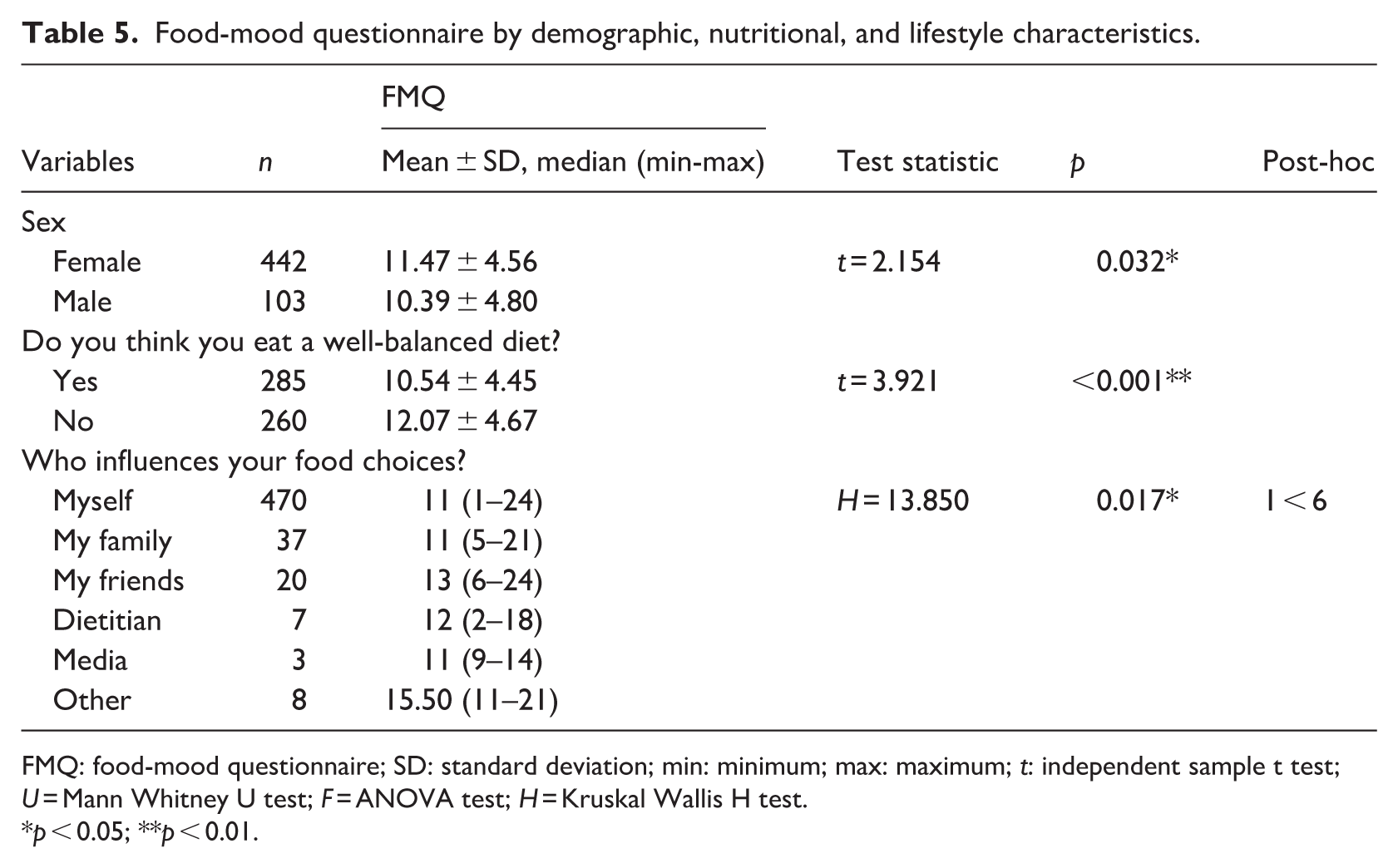
FMQ: food-mood questionnaire; SD: standard deviation; min: minimum; max: maximum; t: independent sample t test; U = Mann Whitney U test; F = ANOVA test; H = Kruskal Wallis H test.
p < 0.05; **p < 0.01.
Correlations between attachment, eating behaviours, and food-related mood
This section examines the relationships between attachment dimensions, food-related mood, and addictive-like eating behaviours (Table 6). Secure attachment was negatively correlated with avoidant attachment (r = –0.260, p < 0.001), anxious-ambivalent attachment (r = –0.260, p < 0.001), and food-related mood (r = –0.219, p < 0.001). Avoidant attachment showed a positive correlation with anxious-ambivalent attachment (r = 0.323, p < 0.001) but was not significantly related to food-related mood (p > 0.05). Anxious-ambivalent attachment was positively correlated with food-related mood (r = 0.365, p < 0.001). Finally, food-related mood was positively associated with addictive-like eating behaviours (r = 0.233–0.281, all p < 0.001), indicating that individuals reporting higher emotional distress related to food also displayed stronger addictive-like eating patterns.
Correlations between attachment styles, food-related mood, and addiction-like eating behaviours.
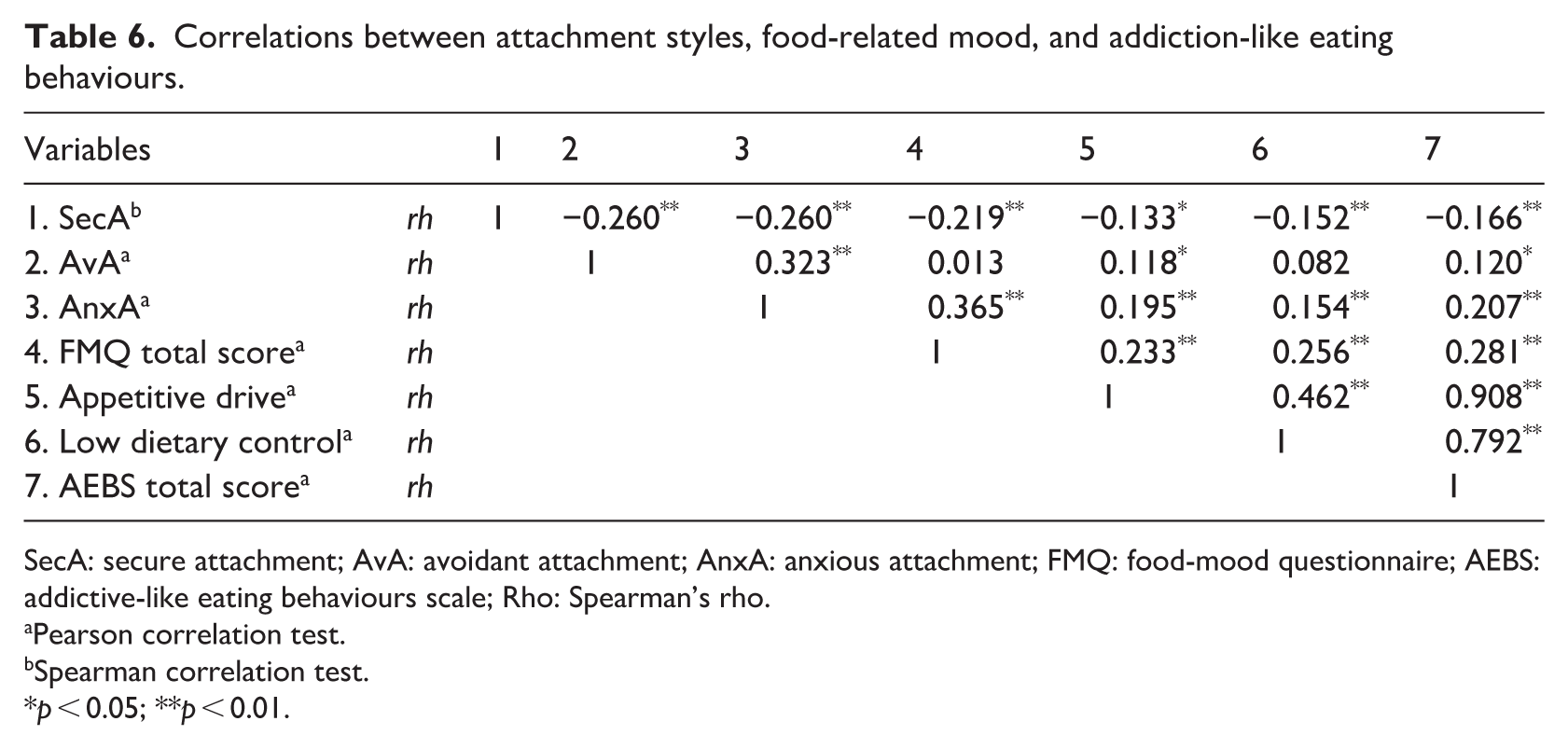
SecA: secure attachment; AvA: avoidant attachment; AnxA: anxious attachment; FMQ: food-mood questionnaire; AEBS: addictive-like eating behaviours scale; Rho: Spearman’s rho.
Pearson correlation test.
Spearman correlation test.
p < 0.05; **p < 0.01.
Table 7 presents the correlations between BMI and attachment dimensions, revealing weak but significant relationships with secure attachment (r = –0.103, p = 0.016) and avoidant attachment (r = 0.100, p = 0.019), but no significant correlation with anxious-ambivalent attachment (r = 0.057, p = 0.186).
Correlations between BMI and attachment styles.
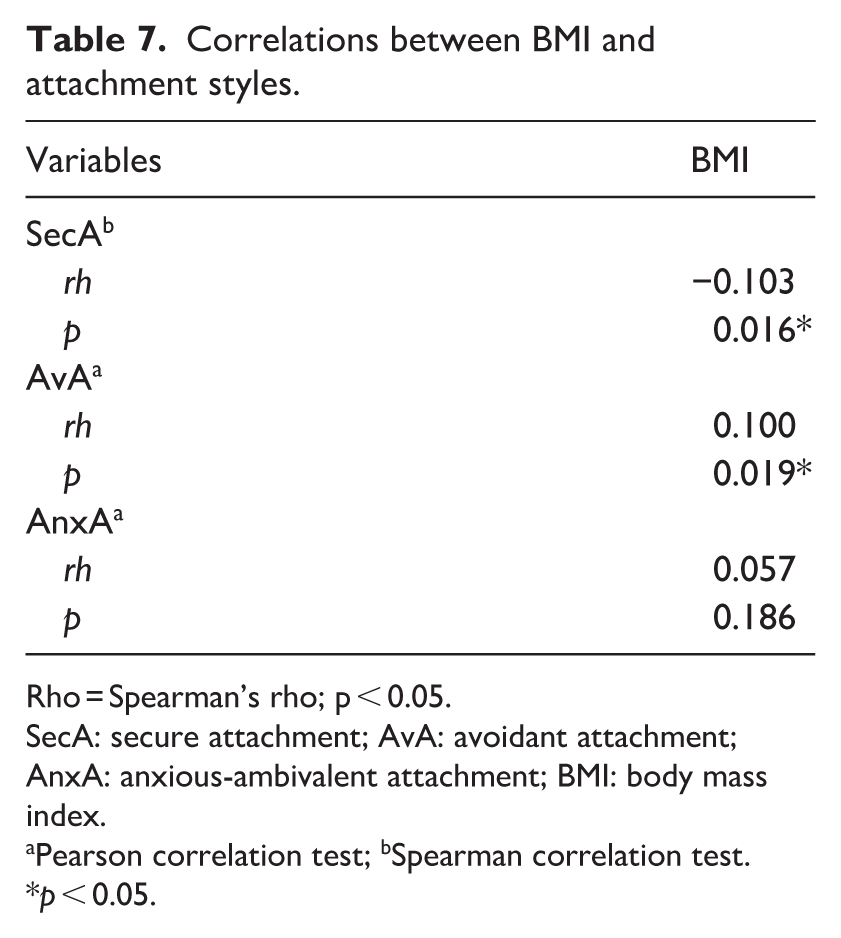
Rho = Spearman’s rho; p < 0.05.
SecA: secure attachment; AvA: avoidant attachment; AnxA: anxious-ambivalent attachment; BMI: body mass index.
Pearson correlation test; bSpearman correlation test.
p < 0.05.
Regression analyses predicting eating-related outcomes
This section presents multiple regression analyses conducted to determine whether attachment dimensions predict food-related mood and addictive-like eating behaviours. Table 8 presents the multiple regression analysis examining the effects of secure, avoidant, and anxious-ambivalent attachment styles on food-related emotional distress. It was found to be generally significant (F = 27.384, p < 0.001) and explained 16.9% of the variance in FMQ (R2 = 0.169). Gender is significant (β = –0.090, p = 0.024); men’s FMQ scores are 1.06 points lower than women’s. Further, SecA (β = –0.148, p < 0.001) and AvA (β = –0.149, p < 0.001) showed a negative effect on the FMQ; the food-mood effect was found to be weaker in individuals with high levels of secure or avoidant attachment.
Multiple regression analysis of SecA, AvA, and AnxA predicting FMQ scores.
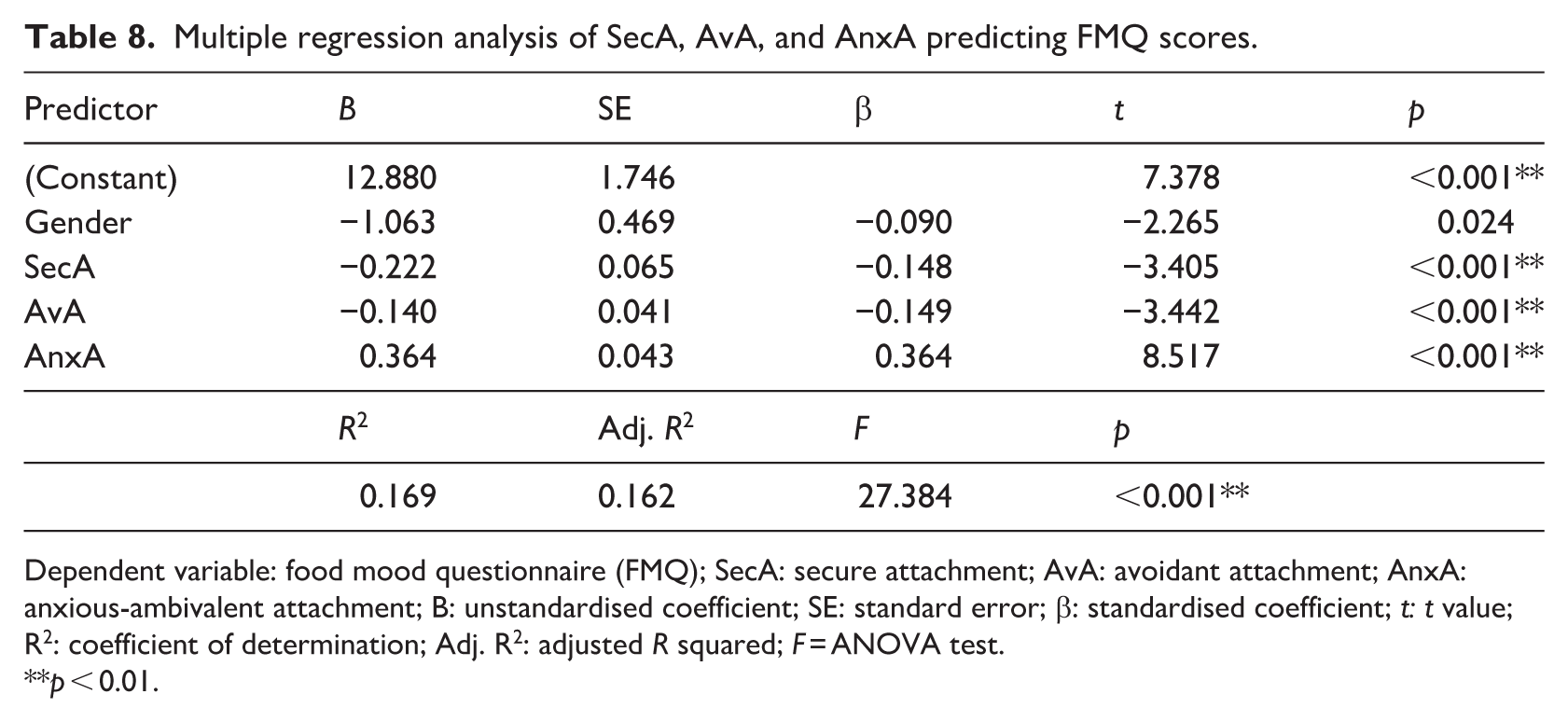
Dependent variable: food mood questionnaire (FMQ); SecA: secure attachment; AvA: avoidant attachment; AnxA: anxious-ambivalent attachment; B: unstandardised coefficient; SE: standard error; β: standardised coefficient; t: t value; R2: coefficient of determination; Adj. R2: adjusted R squared; F = ANOVA test.
**p < 0.01.
Table 9 presents the multiple regression analysis examining the effects of secure, avoidant, and anxious-ambivalent attachment styles on addictive-like eating behaviours. The model is significant (F = 10.956, p < 0.001) and explains 6.8% of the variance in AEBS (R2 = 0.075, Adjusted R2 = 0.068). Gender (β = 0.150, p < 0.001) and anxious-ambivalent (AnxA; β = 0.181, p < 0.001) are significant predictors of AEBS. Males’ AEBS scores were found to be higher than females’, and addiction-like eating behaviour was observed to be stronger in individuals with high levels of anxious-ambivalent. In contrast, SecA and AvA were not significant predictors (p > 0.05). Additional analyses are presented in Supplementary Table S1.
Multiple regression analysis of SecA, AvA, and AnxA predicting AEBS.
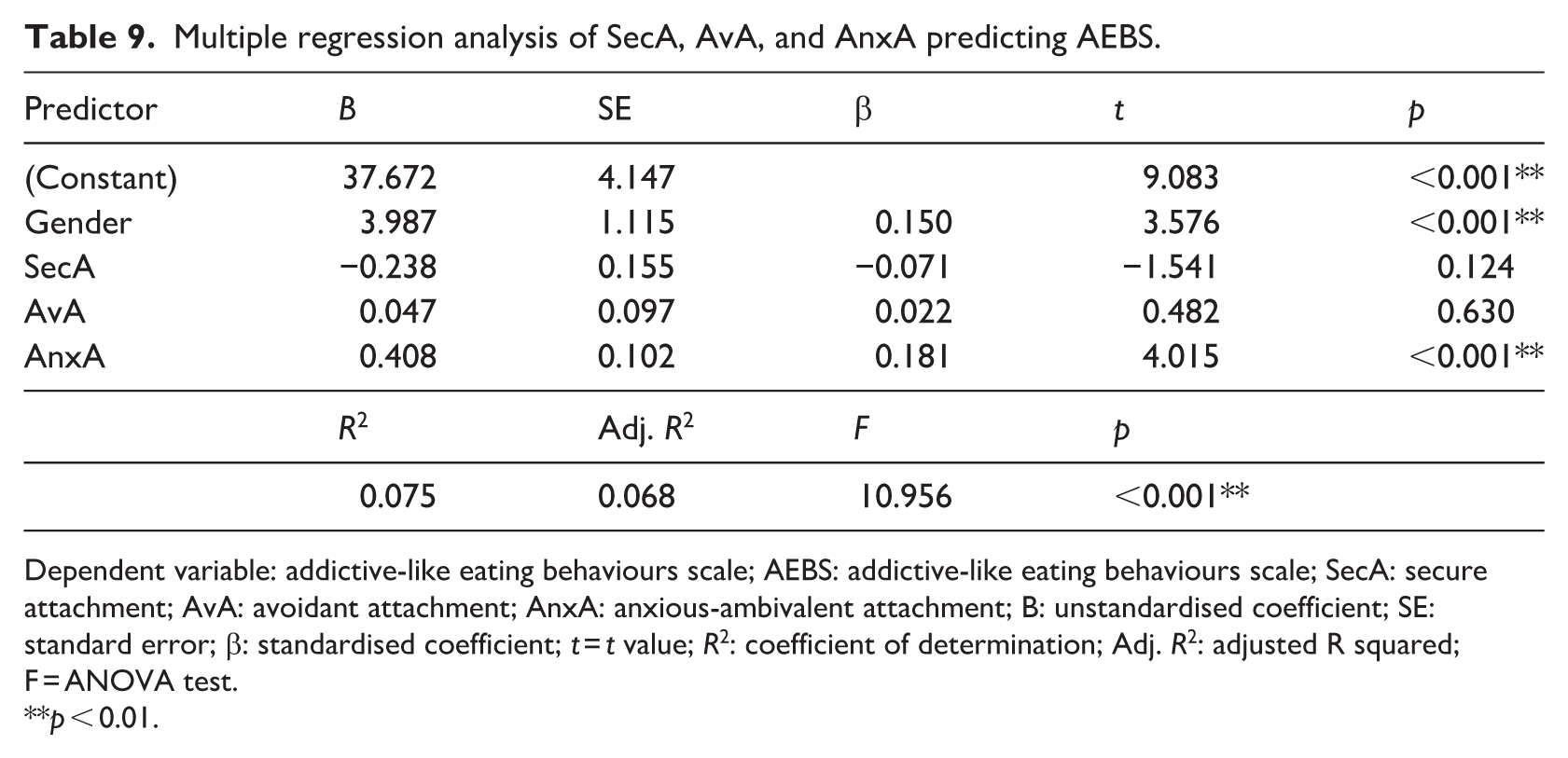
Dependent variable: addictive-like eating behaviours scale; AEBS: addictive-like eating behaviours scale; SecA: secure attachment; AvA: avoidant attachment; AnxA: anxious-ambivalent attachment; B: unstandardised coefficient; SE: standard error; β: standardised coefficient; t = t value; R2: coefficient of determination; Adj. R2: adjusted R squared; F = ANOVA test.
**p < 0.01.
Discussion
College students’ eating habits and emotional responses to food are examined in the present study, which adds substantially to the existing knowledge by investigating the impact of different types of parental attachment. Secure attachment may support better emotional balance, which could contribute to healthier and more stable eating patterns. While emotion regulation offers a useful theoretical lens for interpreting these findings, it was not directly assessed in the present study. Since they may experience more difficulty managing emotional responses, those with anxious-ambivalent or avoidant attachment styles are more likely to engage in emotional eating and develop food addiction tendencies. Our results further highlight that attachment-based approaches could be beneficial in interventions targeting eating behaviours. Therapies should involve attachment-based techniques, as the findings highlight the major impact of attachment patterns on eating behaviours. Cassidy et al. (2013) and Cortés-García et al. (2019) found that secure connections encourage healthy eating habits, which are supported by these data.
Gender differences were also observed. Females appear to be more emotionally secure and more likely to create secure attachments, as their secure attachment scores are higher and their avoidant attachment scores are lower compared to males. The present literature on gender differences in attachment types is consistent with this finding (Levy and Kelly, 2010; Weber et al., 2022). According to Del Giudice (2019) men are more likely to show avoidant attachment and shy away from emotional intimacy, whereas females tend to have more secure connections.
Healthy eating behaviours were associated with secure attachment and emotional stability. Results showed that secure attachment ratings were higher and anxious-ambivalent attachment scores were lower in people who maintained healthy eating habits. According Faber and Dubé (2015) and Pasztak-Opiłka et al. (2020) when people have a secure bond, they are more likely to have secure emotional states and better eating habits. Evidence like this points to the possibility that healthy eating and a nurturing atmosphere may work together to promote secure attachment patterns and mental well-being.
Alcohol consumption was also linked to attachment patterns. According to our findings, there is an exploratory association between drinking and the avoidant attachment style. This finding suggests that alcohol may help regulate emotions and manage stress, especially for people who have trouble forming secure attachments. Previous studies have shown that individuals with anxious and avoidant attachment styles may use alcohol to alleviate emotional pain, which can lead to long-term substance use problems (Levitt and Leonard, 2015). Many people turn to alcohol to cope with stressful or anxious emotions (Vornlocher and Shiota, 2024).
Gender differences were also reflected in food-related emotions. Our research indicates that females are more attuned to the emotional impact of food than men, which is supported by significantly higher scores for females on the “food-mood” questionnaire. Researchers who looked at how emotional eating manifests in eating habits, females may use food more frequently than men to control their emotions (Evers et al., 2010). Further studies have shown that emotional eating is more common in females, particularly during times of high stress, low mood, or worry. According to these studies, females use food as a means of emotional regulation more often than males do; this is supported by significantly higher scores for females on the “food-related mood ” questionnaire. The results of the food-related mood questionnaire tend to be lower for people who maintain healthy eating habits, according to the available research (Begdache et al., 2019). A healthy diet may have a beneficial effect on mental health. Emotional stability and the reduction of mental health problems, such as depression, are promoted by healthy eating habits, according to research by Gómez-Donoso et al. (2020). Muth and colleagues report on the significance of healthy eating and its positive impact on emotional well-being as a lifestyle choice (Muth et al., 2022). Furthermore, a meta-analysis by Toczko and colleagues indicates that healthy dietary changes and patterns are associated with a reduction in negative mood states (Toczko et al., 2022).
Social influences emerged as another important factor. People whose dietary choices were affected by others tended to have higher “food-related mood” ratings. Prior research emphasises that social environments greatly influence eating habits. Those who are sensitive to social events and food advertisements are more likely to have intense cravings and engage in emotional eating (Verzijl et al., 2018). Similarly, Cruwys et al. (2015) and Higgs (2015) reported that social influences and contacts have a direct impact on emotional eating tendencies.
In our study, male participants scored higher on appetitive drive and total addictive-like eating behaviours than females. These findings may suggest stronger eating impulses in men; however, the differences were modest and could partly reflect the unequal group sizes, as female made up most of the sample. While both sexes can develop food addiction, the slightly higher scores among men may be consistent with previous research showing that men often display more impulsive eating and a stronger preference for high-calorie processed foods (Hussenoeder et al., 2022). Biological differences in the reward system could explain these findings, as men have a stronger dopaminergic response to food, which may lead to dependence on high-calorie foods and addictive-like eating (Hussenoeder et al., 2022).
Diet quality also played a protective role. A balanced diet had a positive effect on hunger regulation and reduced addictive-like eating behaviours. This is consistent with prior studies showing that healthy diets improve eating habits and reduce emotional (Gearhardt et al., 2014; Schulte et al., 2015). Processed, calorie-dense meals may disrupt hunger control and increase the risk of disordered eating. Consistent with these findings, Hauck et al. (2017) demonstrated that healthier dietary patterns are associated with improved appetite regulation and eating-related outcomes (Hauck et al., 2017).
Social factors were further associated with self-control over food intake. Participants exposed to external stress had less control overeating habits, consistent with Cruwys et al. (2015), who found that social factors can harm self-regulation of food intake.
Our results also revealed a significant link between alcohol consumption and compulsive eating. Alcohol may amplify addictive-like eating behaviours through dopaminergic pathways in the brain (Hoover et al., 2023). Common pathways of addiction could explain the link between alcohol consumption and food management. Researchers found that drinking makes addictive-like eating behaviours worse, which has a negative impact on food regulation. Thus, alcohol consumption can worsen eating patterns and impair food regulation (Sampedro-Piquero et al., 2022), and these exploratory findings provide additional insight into lifestyle factors that may interact with attachment and eating behaviours.
Secure attachment was negatively associated with maladaptive eating patterns, including avoidant, anxious-ambivalent, and addictive-like eating behaviours. People with a secure attachment style tend to have better emotional and eating control and are less likely to use food to cope with stress or negative emotions (Sampedro-Piquero et al., 2022). This attachment pattern appears to support improved regulation of overeating and a more positive relationship with food (Bekmezci and Çağatay, 2024; Cortés-García et al., 2019). Emotional regulation and healthy eating habits are generally strengthened by secure attachment, whereas insecure attachment increases the likelihood of emotional eating (Faber et al., 2018).
Our findings also showed that BMI was weakly inversely related to secure attachment and positively related to avoidant attachment. These results are consistent with previous research (Bernard et al., 2019; Maras et al., 2016). Secure attachment may help maintain a healthy BMI through better eating control, while avoidant attachment can contribute to weight gain due to difficulties in emotion regulation and the use of food as a coping mechanism (Pareek and Joshi, 2018). However, it is also possible that this relationship operates bidirectionally. Individuals with higher BMI may experience body dissatisfaction or weight-related stigma, which could undermine attachment security and interpersonal trust (Huang et al., 2024; Timkova et al., 2024). Future longitudinal research is warranted to clarify the directionality of this association.
Limitations
While the study achieved the target sample size and yielded notable findings, several limitations should be acknowledged. Due to its cross-sectional design, it is not possible to fully understand the directionality or causality of the relationships between variables. One limitation of the study is the use of a dimensional approach to attachment without identifying specific attachment style categories such as fearful avoidant. While this allows for a more nuanced analysis of individual variation, future research may benefit from categorising attachment profiles to explore subgroup-specific effects. The study did not collect data on participants’ living arrangements, which may influence eating behaviours differently depending on whether individuals live with family, alone, or on campus.
Although the age range of participants was 18–50 years, the majority were young adults, which may limit the generalisability of the findings to older age groups. In addition, although participants were randomly approached from the general undergraduate population, departmental proportionality was not controlled. Despite potential academic differences across programmes, all participants were full-time students sharing similar university environments and academic calendars, which may have helped to minimise variation related to this factor. Furthermore, participation was voluntary, which may have introduced self-selection bias and may limit the generalisability of the findings.
BMI was calculated based on self-reported anthropometric data, which may have introduced reporting bias and affected the precision of the results. Gender-based findings should also be interpreted with caution, as data collection relied solely on binary gender categories (“male” and “female”). Contemporary perspectives recognise that gender identity extends beyond a binary framework; therefore, future research would benefit from incorporating more inclusive gender options such as non-binary and prefer not to specify. Another limitation is that mental health factors, such as depression, anxiety, or stress, were not directly assessed. Additionally, although the discussion referred to emotion regulation as a possible explanatory mechanism, this construct was not directly assessed in the present study. Finally, longitudinal designs are recommended for future studies to examine how these relationships evolve over time and to investigate the underlying mechanisms.
Conclusion
The effects of attachment styles on eating habits, BMI, and compulsive overeating were the focus of this research. People who were able to form secure attachments were better able to control their food intake and less likely to develop eating disorders. In contrast, people who had an avoidant attachment style were more likely to have a high body mass index and engage in eating habits that resembled addiction. Problems with emotional regulation and avoidant or anxious attachment styles may lead to compulsive overeating. The results show that people are less likely to develop an eating addiction or gain weight if they have a secure attachment style, but those with an insecure attachment style are more likely to engage in unhealthy eating habits. Nutritional interventions should be more specifically tailored to address the unique needs of each gender due to the significant differences in attachment styles and addictive-like eating behaviours between the sexes. These differences are crucial in understanding the impact of biological, psychological, and sociocultural factors on eating behaviours.
Supplemental Material
sj-docx-1-hpq-10.1177_13591053261427217 – Supplemental material for Attachment and appetite: How parental bonds influence college students’ eating habits and food-related moods
Supplemental material, sj-docx-1-hpq-10.1177_13591053261427217 for Attachment and appetite: How parental bonds influence college students’ eating habits and food-related moods by Açelya Gül Koyuncu and Yaren Aray in Journal of Health Psychology
Footnotes
Abbreviations
BMI: Body Mass Index
TDASS: Three-Dimensional Attachment Styles Scale
AvA: Avoidant Attachment
AxA: Anxious-ambivalent Attachment:
SecA: Secure Attachment
FMQ: Food-Mood Questionnaire
AEBS: Addictive-like Eating Behaviours Scale

Ethical considerations
Ethical approval was required for this study in accordance with institutional and journal requirements. The study was conducted in line with the principles of the Declaration of Helsinki and was approved by the Marmara University Faculty of Health Sciences Non-Interventional Research Ethics Committee (approval date: 28 December 2023; approval number: 146).
Consent to participate
Informed consent was obtained from all participants prior to participation, either electronically or in written (hard copy) form.
Consent for publication
Consent for publication is not applicable to this article as it does not contain any identifiable data.
Author contributions
Funding
The authors received no financial support for the research, authorship, and/or publication of this article.
Declaration of conflicting interests
The authors declared no potential conflicts of interest with respect to the research, authorship, and/or publication of this article.
Data availability statement
The datasets generated and/or analysed during the current study are available from the corresponding author on reasonable request.*
Supplemental material
Supplemental material for this article is available online.