




Abstract
While social support is widely recognised as a protective factor against loneliness and other health concerns, research findings remain inconsistent. Discrepant findings can result from heterogeneous conceptualisation and measurement of social support, which is often viewed as a broad, undifferentiated resource. This narrative review synthesises definitions and measures of social support, constructing a robust new taxonomy. Searches of three major research databases found numerous papers describing taxonomies and questionnaires assessing social support. A synthesis of the most highly cited papers included 10 distinct taxonomies and questionnaires. The new taxonomy comprises five core dimensions: (1) Emotional support (sympathetic listening, affection, and esteem support), (2) Social contact and companionship, (3) Belonging support (4) Information and guidance support, and (5) Tangible support. Detailed descriptions of specific behaviours corresponding to each support dimension are provided. These can help guide the design and assessment of social support interventions across clinical, organisational, and educational settings.
Introduction
Social support is a well-established determinant of physical and psychological health, with two primary theoretical models explaining its benefits. The direct effects model assumes social support enhances overall well-being, while the buffering model suggests it mitigates stress by strengthening coping and resilience (Cohen and Wills, 1985). Empirical evidence consistently links higher perceived social support to lower morbidity and mortality (Vila, 2021), improved mental health, and better stress adaptation (Thoits, 2011).
In much research, there has been a tendency to regard support as a single or unified process without differentiating specific supportive behaviours. This approach hinders the ability to identify the mechanisms through which support improves health and well-being. A review of meta-analyses including 26 measures of social support, reported that multidimensional measures were the strongest predictors of reduced disease and mortality risk (Vila, 2021).
Inconsistencies in labelling, defining, and measuring support dimensions complicate research syntheses (Gariépy et al., 2016; Scott et al., 2020; Stopford et al., 2013). Studies vary widely in their conceptual focus, with some emphasising emotional and instrumental support (Shakespeare-Finch and Obst, 2011) and others including only tangible support (Uzuki et al., 2020). These discrepancies reduce the accuracy of cross-study comparisons and generalisability.
To strengthen social support theory, a robust taxonomy is required which elucidates the primary types of support and defines the specific behaviours through which support is perceived or enacted. This would inform interventions and development of updated measures. Early taxonomies of support (e.g. Cohen et al., 1985; Cutrona and Russell, 1987; House et al., 1985) advanced support theory by distinguishing specific types of support such as emotional, instrumental (tangible help), and informational (advice and guidance). Each support type addresses specific needs; for example, emotional support fosters feelings of being cared for, while tangible or instrumental support assists with practical tasks. These frameworks helped progress theory by identifying relevant and discrete behaviours, to enable theory-informed intervention strategies.
More recent papers including taxonomies tend to cite earlier influential taxonomies without adding new features (e.g. French et al., 2018; Heaney and Israel, 2008). Later papers describing support types are more likely to include social contact and companionship than earlier ones (Pearce et al., 2023; Varga and Zaff, 2018) and have highlighted network support enhancing social contact and belonging (Rains et al., 2015) and support groups providing a sense of community for people with chronic illnesses (Ussher et al., 2006).
Many widely used questionnaires were developed decades ago (Winemiller et al., 1993) and may not capture contemporary support dynamics, such as digital communication (Rains et al., 2015) or culturally diverse contexts (Chen et al., 2015; Dambi et al., 2018). Their relevance to populations with specific needs - such as people with chronic illnesses (Al-Dwaikat and Hall, 2017) or those experiencing loneliness (Cruwys, 2023) - remains unclear.
To address these gaps, this paper focuses on constructing a comprehensive, updated taxonomy of social support types by reviewing widely cited taxonomies and measures. We synthesise evidence to:
Identify core categories of support defined in previous influential taxonomies and measures,
Map specific supportive behaviours and communication patterns underlying each core type of support,
Review evidence linking specific support behaviours to health outcomes.
Methods
Literature search strategy and selection process
Given the vast number of published papers on social support taxonomies and measures, this review focussed on influential works to ensure a manageable yet comprehensive analysis. We prioritised:
Seminal taxonomies and descriptions of social support types.
Frequently cited social support questionnaires.
Systematic and narrative reviews of social support measures and research.
Data sources and search protocol: Three parallel searches were conducted in APA PsycInfo, Ovid Medline, and Embase using the following filters: (a) English-language publications (b) publication dates January 2000–December 2024, and (c) full-text availability (conference abstracts excluded).
The search targets were (a) taxonomies: papers reporting unique categorisations of social support, (b) questionnaires: studies developing or validating social support measures and (c) reviews which included social support instruments and taxonomies. We used the following search terms in titles and abstracts to locate papers for screening:
Taxonomies ‘Social support AND types OR patterns OR taxonomy’,
Questionnaires ‘Social support AND measure OR questionnaire OR scale’,
Reviews ‘Social support AND systematic review OR review’.
For each search, the first author reviewed the titles listed and selected the papers for full text download based on the abstract. The first author read the full text papers and selected a provisional list of papers for inclusion. The second author reviewed this provisional list for relevance. To capture foundational works, we supplemented these searches with influential pre-2000 papers, identified from the reference lists in papers located. We searched Google Scholar citation counts for the selected taxonomies and questionnaires to identify the most influential papers. Google Scholar citations are highly correlated with expert judgements of scholarly impact and are easily located and more inclusive than Web of Science and Scopus (Waltman, 2016). The two authors then discussed the final selection list and agreed on the papers selected for inclusion. For questionnaires, inclusion criteria were intended for adults, general support measures (e.g. not specific to chronic illnesses or physical activity), contained a unique item set, covered perceived or received support or satisfaction with support, and the complete item set with response options was included or available online.
Further details for the paper selection procedures, with detailed inclusion and exclusion criteria, are described in Supplemental File 1.
Papers selected
Taxonomies: From 106 papers reviewed and 97 papers describing a taxonomy, 10 were selected based on: (a) the taxonomy was unique, (b) it included descriptions of support components, and (c) had a high citation count (>1000 Google Scholar citations).
Questionnaires: From 140 papers reviewed and 105 papers describing a specific measure, 50 papers were identified describing a unique set of questionnaire items measuring social support. The questionnaire items of the 10 most highly cited papers (>1000 citations) were selected.
Reviews: From 157 papers reviewed, content from 70 systematic or narrative reviews was analysed. Systematic reviews listing social support measures (N = 17) confirmed identification of the most frequently cited papers describing unique questionnaires.
Data analysis
Textual data from the taxonomy descriptions and questionnaire items were analysed inductively (Thomas, 2006) using NVivo 12 software. The coding process focussed on: (a) Identifying core categories of social support (b) mapping specific behaviours and communication patterns, and (c) providing examples of evidence linking support types to health outcomes. The full analytic protocols and tables showing details of papers reviewed and categorisation of descriptions and questionnaire items are included in Supplemental File 1.
Ethical review
All the documents from which data were used are in the public domain. No ethical review was required.
Results
Social support taxonomies and questionnaires included in review
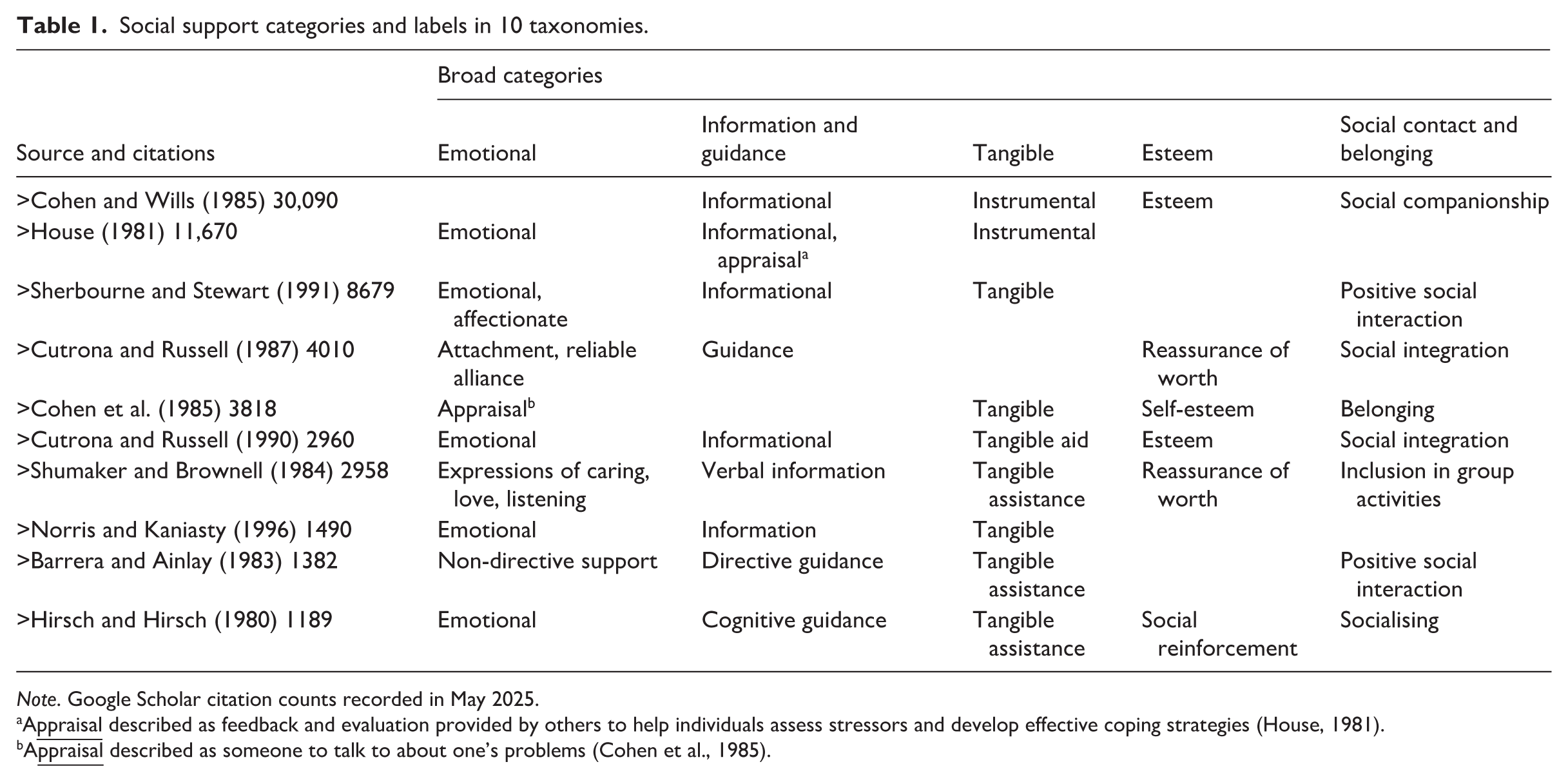
Table 1 shows the 10 highly cited papers with their distinct social support taxonomies, illustrating categorisation and label usage. Three key areas of divergence were evident.
Social support categories and labels in 10 taxonomies.
Note. Google Scholar citation counts recorded in May 2025.
Conceptual Divergence: There was significant variation in how taxonomies conceptualised and labelled support types. For example, the term appraisal was used to refer to different types of support (Table 1) in two taxonomies (Cohen et al., 1985; House, 1981).
Taxonomy purposes: In five papers the taxonomy guided development of support measures (Barrera M and Ainlay, 1983; Cohen et al., 1985; Cutrona and Russell, 1990; Norris and Kaniasty, 1996; Sherbourne and Stewart, 1991). Four papers developed taxonomies in a literature synthesis. (Cohen and Wills, 1985; Cutrona and Russell, 1990; House, 1981; Shumaker and Brownell, 1984). One study derived a taxonomy from natural support networks (Hirsch and Hirsch, 1980).
Categories: Most taxonomies identified 4–5 support types. Two papers reported six categories (Cutrona and Russell, 1987; Shumaker and Brownell, 1984).
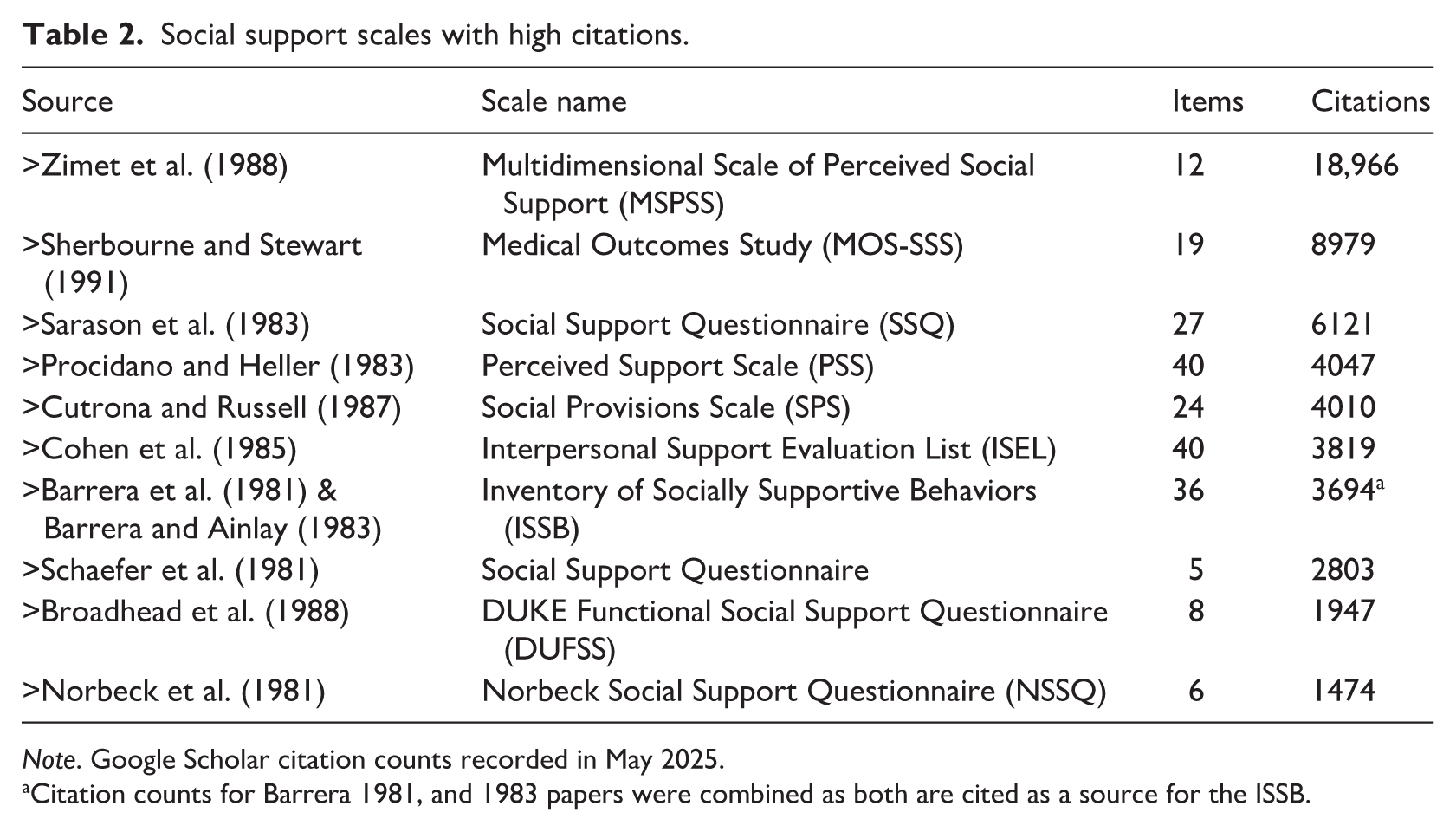
The 10 highly-cited questionnaires are shown in Table 2. Each reported a unique questionnaire. Some included reviews of social support functions (e.g. Cohen et al., 1985; Cutrona and Russell, 1987) and most included reliability and validity data.
Social support scales with high citations.
Note. Google Scholar citation counts recorded in May 2025.
Citation counts for Barrera 1981, and 1983 papers were combined as both are cited as a source for the ISSB.
All questionnaires are for adults and ranged from 5 to 40 items. Three assessed received support (Barrera and Ainlay, 1983; Broadhead et al., 1988; Norbeck et al., 1981), one measured both perceived and received support (Schaefer et al., 1981), one assessed satisfaction with support (Sarason et al., 1983), and the remaining five focussed on perceived support. Four targeted specific types of support (Cohen et al., 1985; Cutrona and Russell, 1987; Norbeck et al., 1981; Sherbourne and Stewart, 1991). Two restricted support to particular sources: such as family and friends (Procidano and Heller, 1983; Zimet et al., 1988).
New social support taxonomy
Five primary dimensions of social support were identified. Each was assigned a label that captured core meanings. A similar process was used for the items in the questionnaires included in each dimension. The support dimensions are shown below.
Emotional support
Emotional support was the most frequent type identified and included in all the taxonomies. The label ‘emotional support’ was used in 5 out of 10 taxonomies. Other labels were non-directive support (Barrera and Ainlay, 1983), affectionate support (Sherbourne and Stewart, 1991), attachment (Cutrona and Russell, 1987), esteem support (Cohen and Wills, 1985), and appraisal support (House, 1981). (Supplemental Table S4 includes details of the labels and descriptions for emotional support).
All 10 questionnaires included emotional support items. The proportion of items ranged from 5% to 93% across the 10 questionnaires. Three questionnaires had less than 35% of items on emotional support (Barrera et al., 1981; Cohen et al., 1985; Cutrona and Russell, 1987) thus measuring different aspects of support from the other instruments (See Supplemental Table S5 for details).
Emotional support comprised two broad components: (1) opportunities for confiding and sympathetic listening, and (2) caring including affectionate support, esteem support, being there for someone and comforting touch (Table 3).
Emotional support components from descriptions and questionnaire items.
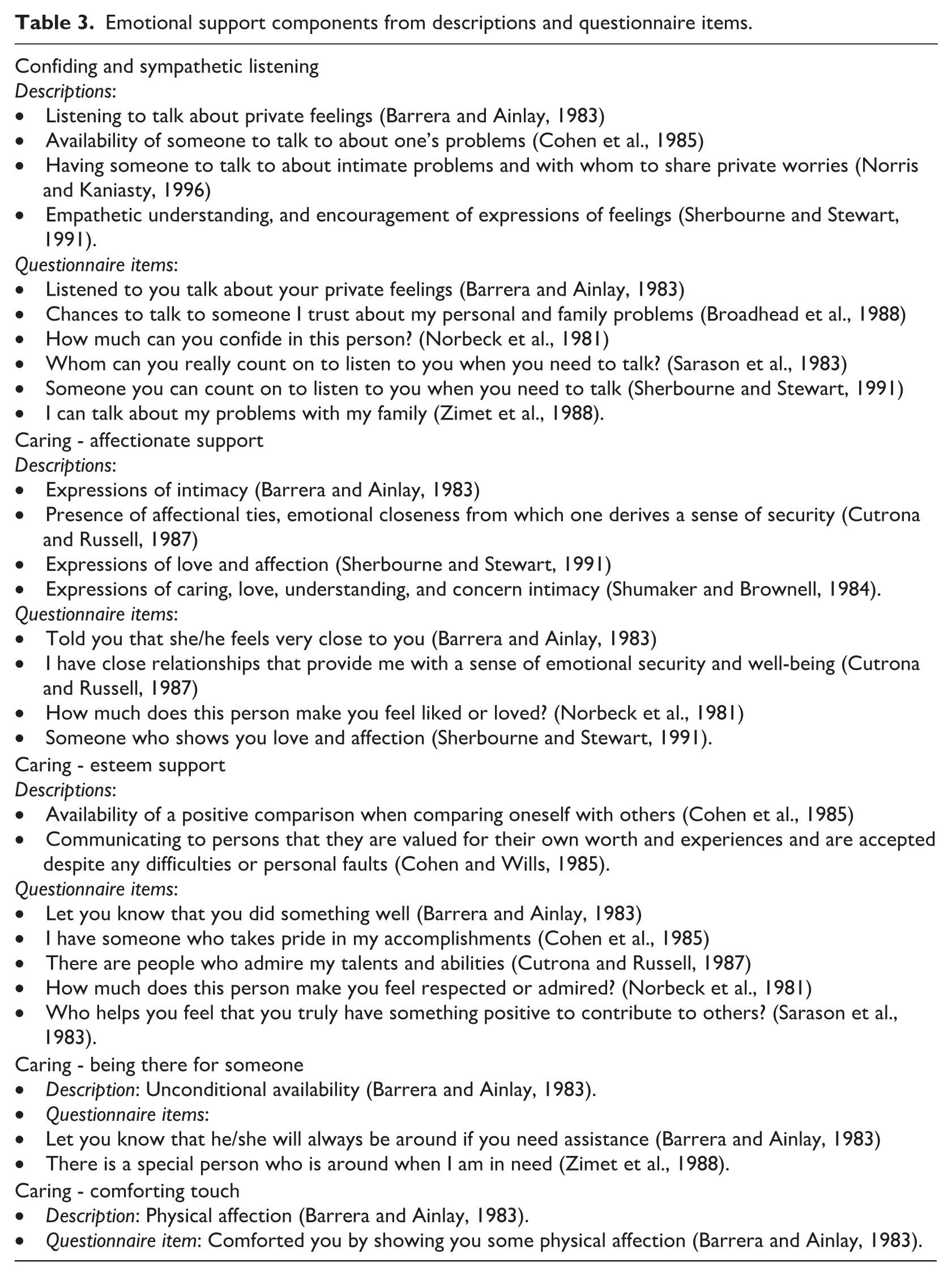
Confiding in others, through opportunities to talk about feelings, was usually labelled as emotional support (Barrera and Ainlay, 1983; Cutrona and Russell, 1990; Sherbourne and Stewart, 1991; Wills and Shinar, 2000). Confiding in others reduces distress by allowing people to express and work through their emotions and to develop a better understanding of an event (Burleson and Goldsmith, 1998; Itzchakov et al., 2023). Research on listening has clearly demonstrated the therapeutic and well-being outcomes from the availability of sympathetic listeners with whom one can confide (Bodie, 2023; DeMarree et al., 2023; Itzchakov et al., 2023; Lee et al., 2024). People in specific occupations such as hairdressers, lawyers, doctors and staff in bars and cafes, can act as supportive listeners, providing informal support, particularly for people who have few other opportunities to express their feelings (Epstein and Beach, 2023; Page et al., 2022).
Caring behaviours include affectionate support, esteem support, being there for someone, and comforting touch. Showing of affection, caring and love is typically included as part of emotional support (Barrera and Ainlay, 1983; Cohen and Wills, 1985; Cutrona and Russell, 1987; Cutrona and Suhr, 1994; Sherbourne and Stewart, 1991; Shumaker and Brownell, 1984).
Esteem support is part of emotional support (MacGeorge et al., 2011; Nick et al., 2018), described as ‘support that is provided to enhance how recipients feel about themselves and their attributes, abilities, or accomplishments’ (MacGeorge et al., 2011: 338). Observational studies with couples have described two esteem support behaviours: compliment (emphasise abilities, say positive things), and validation - agree with and take other’s side (Cutrona and Suhr, 1994). Some papers see esteem support as separate from emotional support (Cutrona and Russell, 1990; Cutrona and Suhr, 1992) or include esteem support but not emotional support (Cohen et al., 1985; Cohen and Wills, 1985).
Being there for someone is described as unconditional availability (Barrera and Ainlay, 1983) and someone to talk to about one’s problems (Cohen et al., 1985). People coping with chronic illnesses or recovering from mental health problems, typically need someone they can count on (Teo et al., 2020). Being there can refer to sharing positive experiences (Vangelisti, 2009) such as graduations, receiving an award or other special occasions. Parents being there for children during an important activity or achievement (Duncan et al., 2005) is particularly important for developing a positive identity, a sense of worth, and self-efficacy.
Comforting touch has been neglected in support research: only one paper included this component (Barrera and Ainlay, 1983). The benefits of touch include physical affection, promoting bonding and part of the comforting process (Cekaite and Kvist Holm, 2017; Gallace and Spence, 2010). Comforting touch can buffer the effects of stressful events and reduce stress responses (Dreisoerner et al., 2021; Jakubiak and Feeney, 2017). Touch helps reduce depression (Buschmann et al., 1999) and lower blood pressure among older adults (Lee and Cichy, 2020). Pets can provide comforting touch (Hui Gan et al., 2020). The omission of physical comforting from emotional support is likely a legacy effect from taxonomies and questionnaires developed in the 1980s.
Some types of emotional support may be invisible to recipients ((Bolger and Amarel, 2007; Howland and Simpson, 2010; Zee and Bolger, 2019). Also called non-directive support (Barrera and Ainlay, 1983; Kowitt et al., 2017), it includes support provided in a subtle or skilled way, which is unobtrusive and non-directive (Howland and Simpson, 2010). It includes sympathetic or supportive listening, being there for someone, and physical touch. It may be particularly evident in cultures in which talking openly about personal feelings may be considered inappropriate (Benjamin et al., 2021; Chen et al., 2015).
Emotional support is commonly associated with well-being (House et al., 1985), particularly longevity (Vila, 2021), decreased loneliness and reduced depression (Heponiemi et al., 2006; Stansfeld et al., 1998). Among Dutch older people, having adequate emotional support reduced both cognitive decline and loneliness (Ellwardt et al., 2013).
Social contact and companionship
Social contact support, covering social interaction and being in the company of others, was included in five taxonomies (Table 4). It is also described as socialising (Fiore et al., 1986) or companionship (Lauzier-Jobin and Houle, 2021; Rook, 1987; Wills and Shinar, 2000). Four questionnaires included social contact items (Barrera et al., 1981; Broadhead et al., 1988; Cohen et al., 1985; Sherbourne and Stewart, 1991).
Social contact descriptions and questionnaire items.
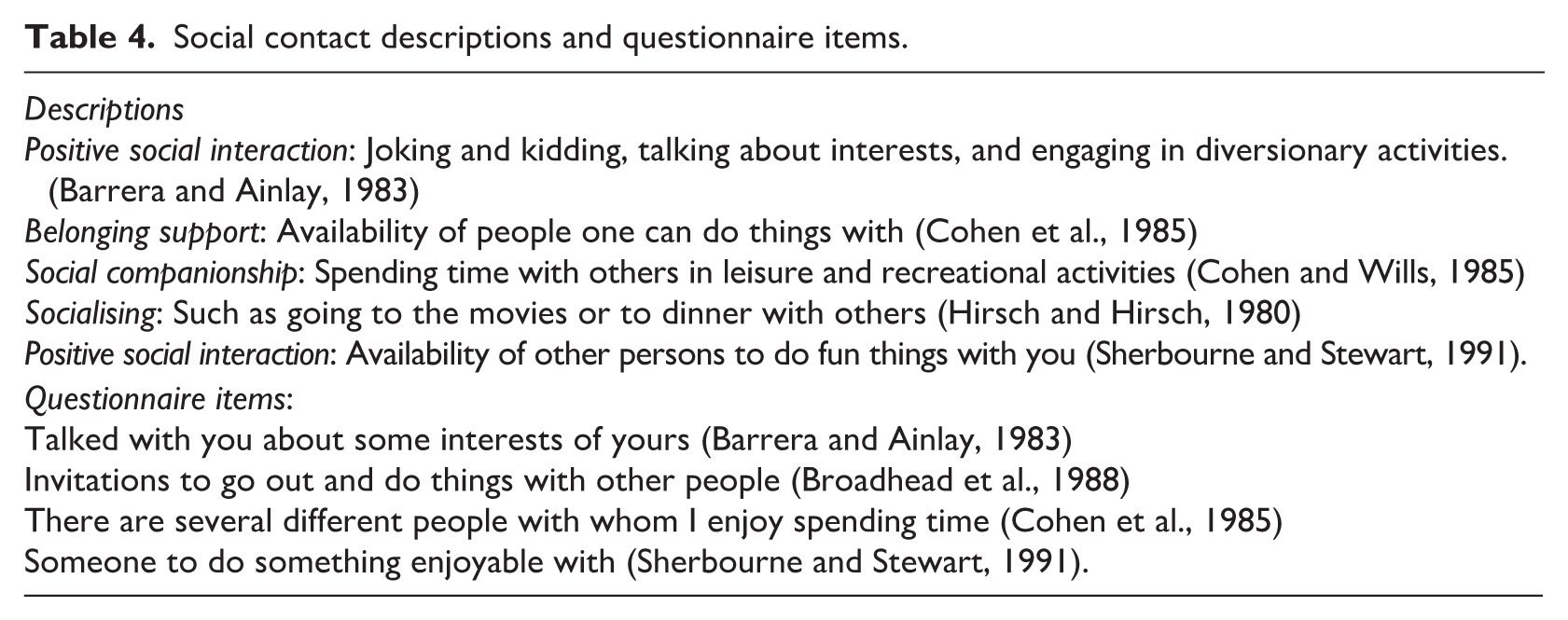
Social contact occurs in multiple settings such as cafes, bars, local neighbourhoods, and leisure settings. It includes face-to-face contact with others, telephone conversations, and online contact via electronic devices (Meng et al., 2017). Social contact does not necessarily involve a provider and recipient of support (Rook, 1987). It can be non-directive (Kowitt et al., 2017), and invisible to recipients as a form of support (Bolger and Amarel, 2007).
Social contact is a core part of wellbeing. Pleasant daily social interactions lead to more happiness, and less sadness, tiredness, and pain (Bernstein et al., 2018). Having daily quality conversations, such as catching up, meaningful talk, joking around, showing care, and listening, leads to higher levels of wellbeing including less loneliness and anxiety, and greater positive affect and social connexion (Hall et al., 2025). Lack of social contact is a risk factor for loneliness and depression (Santini et al., 2020; Stevens et al., 2021). Social contact has direct impacts on wellbeing, and can be a precursor for other supportive interactions, such as belonging and information support. It can occur with people not in one’s social network. It is omitted from questionnaires focussed only on support from specified groups such as family, friends and significant others (Zimet et al., 1988).
Belonging support
Sense of belonging has been extensively researched in settings such as schools (Craggs and Kelly, 2018) and universities (Dias-Broens et al., 2024). It is not necessarily present in social contact, hence the distinction between these two types of support.
Three taxonomies covered belonging and two questionnaires included items (Table 5). Several reviews have described belonging as a specific type of support (e.g. Cohen and McKay, 1984; Thoits, 2011). It has also been labelled as network support (Cutrona and Suhr, 1994) and companionship support (Wills and Shinar, 2000).
Belonging support descriptions and questionnaire items.
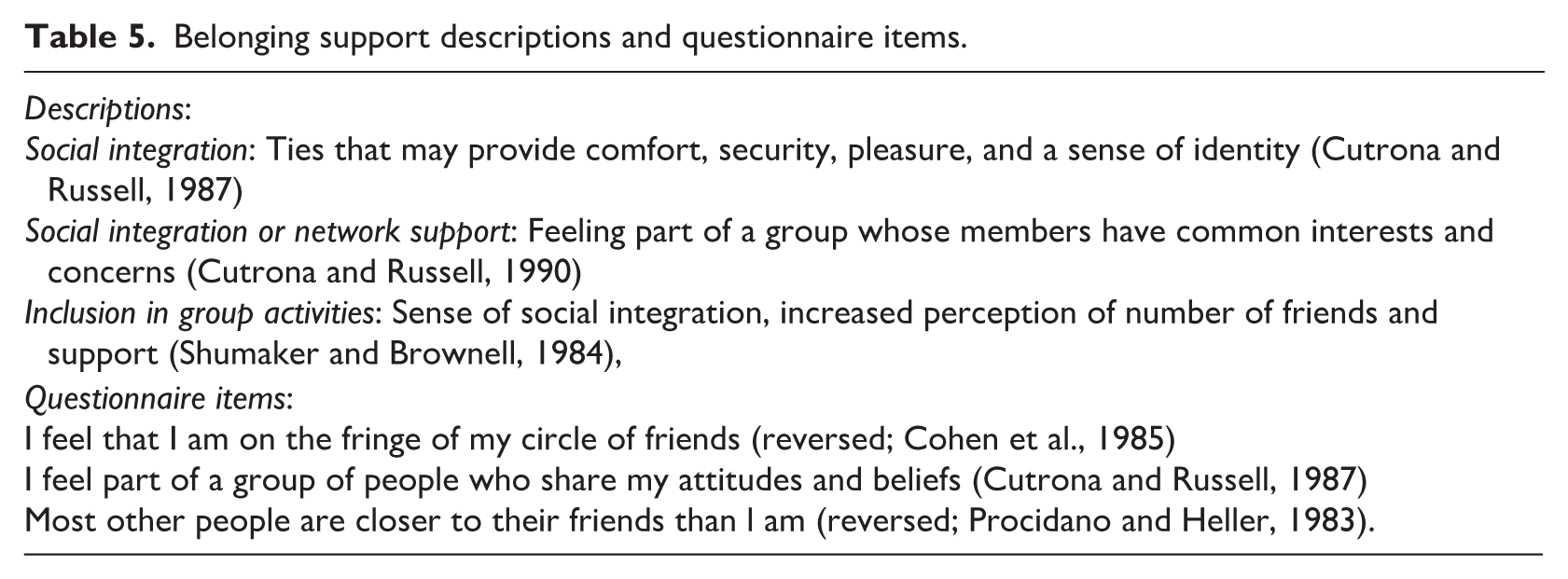
The omission of social groups and belonging from many early social support taxonomies and questionnaires reflects an individualism bias (Felton and Berry, 1992). Social support is often framed as being between individuals, not including participation in social groups and informal social settings (e.g. Procidano and Heller, 1983; Zimet et al., 1988).
An extensive research literature on sense of belonging, group memberships, and social identity has documented benefits for wellbeing (Jetten et al., 2015). Participation in group activities creates opportunities for supportive social interactions (Hendry et al., 2022; Stevens et al., 2021). Identifying as a member of one or more groups is associated with more effective social support and enhanced well-being (Cruwys et al., 2014; Haslam et al., 2022).
Information and guidance support
All 10 taxonomies included descriptions related to information and guidance support. The most common label was information support, although several labels included the term ‘guidance’ (Table 6). This category was labelled as information and guidance support. Features include receiving information on how to do something, how to understand a situation, receiving suggestions as to how to respond, providing feedback, or appraisal or reappraisal of a situation.
Information and guidance descriptions and questionnaire items.
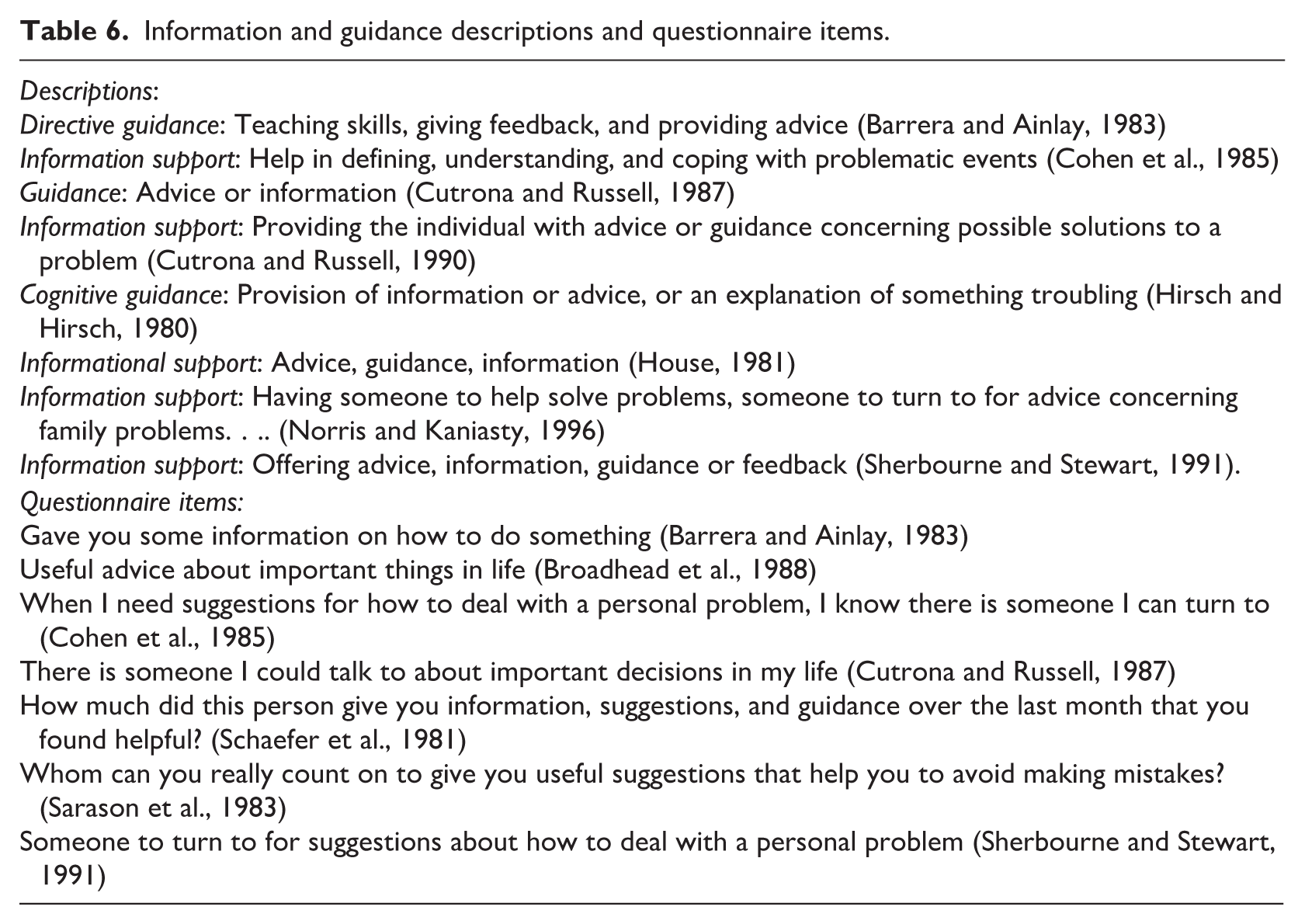
Among the questionnaires, seven included information and guidance items - Table 6 (see also Supplemental Table S8). Most items covered advice and guidance, with few focussed on information.
Providing information to others may not necessarily involve advice and persuasion, such as providing information about access to medical services or the benefits of behaviours that enhance health and well-being (Cohen, 1988). Social media platforms may provide extensive information. Exchange of information can foster a shared identity: people who regularly share information feel a sense of togetherness and a sense of separation from others (Bingley et al., 2022).
The recipient’s relationship to the advice-giver affects responses to advice and perceived options for acting on it. The higher the directiveness of the advice, and the greater the perceived costs of taking the advice, the more it is likely to elicit lower compliance. Directive advice, reducing recipients’ sense of efficacy can lead to resistance (MacGeorge et al., 2016). Non-directive advice that provides options for action and maintains recipients’ choices is more likely to have positive outcomes, such as reduced depression (Kowitt et al., 2017).
Provision of information to others typically involves partiality and selection: information and guidance occur along a continuum from non-directive to directive. More directive advice and persuasion, even if intended as supportive, can be experienced as negative for recipients (Harber et al., 2005; Kowitt et al., 2017).
Tangible support
All taxonomies included tangible support (Table 7) which was also labelled as instrumental support. The label tangible support was preferred for its clear meaning, as instrumental support is sometimes associated with other features of support such as informal support providers (Schultz et al., 2022) or providing advice (Evans et al., 2012).
Tangible support descriptions and questionnaire items.
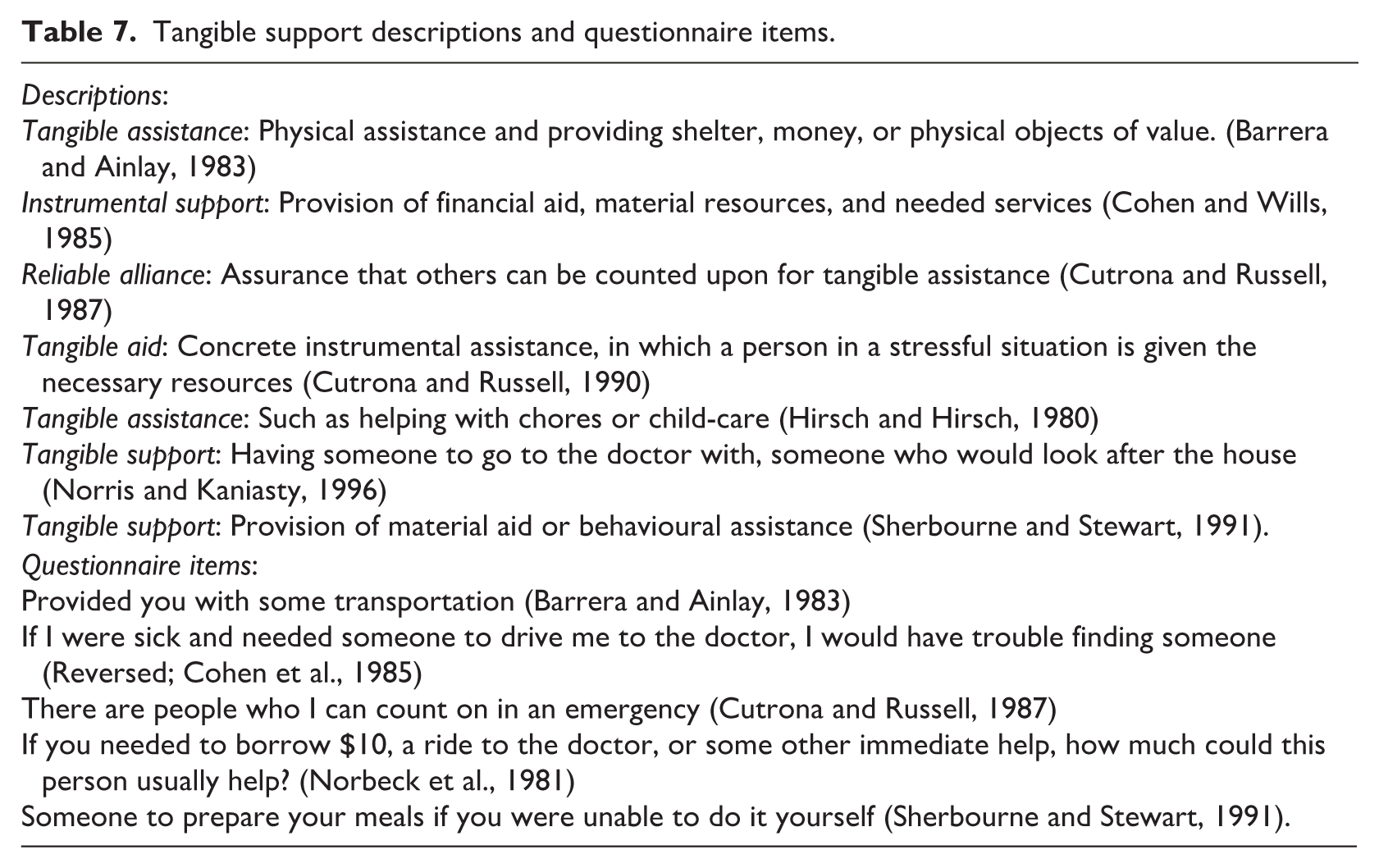
Six questionnaires included tangible support items. Tangible support typically covers provision of physical resources, goods, or practical assistance. It can involve help or assistance such as with housework, child-minding, providing transport, loan of money or goods, physical assistance with tasks, offering food or accommodation, or shifting house (Gottlieb and Bergen, 2010; House et al., 1985; Wills and Shinar, 2000). Providing tangible support can lead to other types of support.
Discussion
The new taxonomy comprises core components included in the taxonomies reviewed but differs in providing a more comprehensive framework for future social support research and interventions. The inclusion of affectionate support (Sherbourne and Stewart, 1991), attachment and reliable alliance (Cutrona and Russell, 1987) and esteem support (Cohen and Wills, 1985) as part of emotional support clarifies the overall scope of this complex component. The inclusion of both social contact and belonging confirms their importance, demonstrated in recent research. These components are evident in earlier taxonomies as positive social interaction (Barrera and Ainlay, 1983; Sherbourne and Stewart, 1991), social companionship (Cohen and Wills, 1985), and as belonging (Cohen et al., 1985) and social integration (Cutrona and Russell, 1987; Shumaker and Brownell, 1984). They were omitted in some influential taxonomies (House, 1981; Norris and Kaniasty, 1996). None of the taxonomies reviewed included both social contact and belonging.
Elaborating the behaviours and processes inherent in specific types of social support can assist selection and adaptation of questionnaires. Existing questionnaires show diversity in item content. For example, the proportion of emotional support items varies from 5% to 93%. These questionnaires are therefore measuring quite different aspects of support.
Conceptualising specific types of support as invisible or non-directive (Howland and Simpson, 2010; Kowitt et al., 2017; Zee and Bolger, 2019), has implications for measuring support. Low visibility support items covering behaviours such as everyday social contact, listening to people, and feeling a sense of belonging, are typically not covered.
Knowledge of specific supportive behaviours is crucial to inform supportive interventions. It underpins assessing support needs and personalising interventions to ensure interventions meet recipients’ needs. For example, loneliness is likely to be reduced through provision of three types of support: social contact, emotional support and developing a sense of belonging (Haslam et al., 2022; Rook, 1987; Yi et al., 2018). Identification of specific supportive behaviours has not always been evident in interventions for improving social support for people facing mental health issues (Heaney and Israel, 2008; Hogan et al., 2002; Stopford et al., 2013).
Strengths and limitations of the review
This review makes several important contributions. To our knowledge, it is the first review to systematically analyse both descriptions of types of social support and questionnaire items. The usefulness of the taxonomy of social support categories developed here will be determined by its utility in guiding development of measures of support and for planning support interventions (cf, Thompson et al., 2022).
This review has several limitations. The main analyses included only highly cited social support taxonomies and questionnaires. Potentially relevant papers on social support, using different questionnaire items and formats, may not have been included. While Google Scholar citations provided an indicator of influence, comparison with other indicators of influence would be useful. Papers in languages other than English were not included in the review.
Few papers describing support questionnaires published after 2000 qualified for inclusion in the review. These require a separate review. More domain-specific measures of support are becoming evident such as online social media, technology mediated communication and support needed for people with chronic illnesses such as diabetes (e.g. Litchman et al., 2020; Rains et al., 2015; Stopford et al., 2013). Domain-specific measures were not covered in detail in the current review.
The review used a qualitative, inductive analysis, based on the authors’ interpretations of the information contained in the papers reviewed. Other researchers starting with different assumptions may make different interpretations and reach different conclusions. It was beyond the scope of this review to systematically investigate how well specific questionnaires or types of support predict well-being outcomes. This requires a separate review.
Conclusions
This taxonomy of social support identified five core types: emotional support, social contact and companionship, belonging support, information and guidance, and tangible support. Emotional support included sympathetic listening, and caring - which included affectionate support, esteem support, being there for someone and physical touch. Understanding the full range and complexity of the different aspects of social support is crucial when designing interventions to boost support and well-being and tools to measure social support. None of the questionnaires examined for this review covered all five core social support types.
Supplemental Material
sj-docx-1-hpq-10.1177_13591053251412946 – Supplemental material for A new taxonomy of social support: Clarifying supportive behaviours and measures
Supplemental material, sj-docx-1-hpq-10.1177_13591053251412946 for A new taxonomy of social support: Clarifying supportive behaviours and measures by David R. Thomas and Ian D. Hodges in Journal of Health Psychology
Footnotes

Ethical considerations
All data used are in the public domain. No ethical review was required.
Consent to participate
Consent to participate is not applicable to this review article as no data were collected from participants.
Author contributions
DRT Conceptualisation, methodology, data analyses, writing original draft. IDH Writing, reviewing, and editing. Both authors read and approved the final manuscript.
Funding
The authors received no financial support for the research, authorship, and/or publication of this article.
Declaration of conflicting interests
The authors declared no potential conflicts of interest with respect to the research, authorship, and/or publication of this article.
Data availability statement
Not applicable. All data sources used are in the public domain.
Supplemental material
Supplemental material for this article is available online.