



Abstract
This study examined the post-traumatic growth (PTG) experiences of mental health professionals affected by the February 6, 2023, earthquakes in Türkiye. Using a phenomenological approach, semi-structured interviews were conducted with 27 mental health professionals. Thematic analysis identified five key themes: close relationships, new opportunities, resilience, spiritual change, and valuing life. Social support emerged as a crucial factor, fostering emotional resilience and deeper personal connections. Participants reported increased empathy, professional growth, and shifts in life priorities. Coping strategies included psychological support, routine regulation, and crisis management. Spiritual changes varied, with some strengthening their beliefs while others experienced stagnation. An enhanced appreciation for life led to lifestyle changes and relationship reprioritization. This study contributes to the literature on PTG in trauma-exposed professionals, emphasizing the role of support, adaptive coping, and self-reflection.
Keywords
Introduction
On February 6, 2023, two major earthquakes struck Türkiye, with their epicenter in Kahramanmaraş and affecting 11 provinces. The earthquakes caused over 50,000 deaths and widespread destruction according to official figures (Disaster and Emergency Management Authority (AFAD), 2023; World Health Organization (WHO), 2023). The earthquakes created a profound physical, social, and psychological trauma that will be remembered for generations in Türkiye. As a result of this disaster, mental health professionals found themselves torn between providing psychological support to individuals and coping with their own traumatic losses and grief.
Although studies have been conducted on the psychosocial effects of traumatic losses on individuals after the disaster, no research has been carried out on the impact and consequences of the traumatic losses experienced by mental health professionals during this disaster. This dual exposure significantly increases the risk of intense professional pressure, secondary traumatic stress, and burnout (Cieslak et al., 2014), while also carrying the potential for post-traumatic growth (PTG)—positive psychological changes in areas such as personal strength, relationships, life values, new possibilities, and spirituality following a traumatic experience (Tedeschi and Calhoun, 2004).
Traumatic events can have negative effects on individuals but may also positively influence them by being instructive and transformative (Uğur and Sarı, 2022). Calhoun et al. (2000) define PTG as the positive changes that emerge following life crises. According to Tedeschi and Calhoun (2014), loss can lead to gain. Achieving this gain requires cognitive and emotional reprocessing, along with reconstructing one’s life narrative (Calhoun et al., 2010). While PTG has been referred to as “stress-related growth” (Joseph, 2011; McMillen and Fisher, 1998), “adversarial growth” (Linley and Joseph, 2004), “benefit finding” (Joseph, 2011; Tennen and Affleck, 1998), “growth after adversity,” “personal transformation,” and “development” (Joseph, 2011), PTG is the most commonly used term in the literature (Joseph, 2011; Tedeschi et al., 1998). PTG does not imply a return to the previous state but rather involves a profound transformation process (Şimşir et al., 2021).
According to Tedeschi and Calhoun (2004), PTG occurs in various dimensions and differs depending on individual characteristics, the features of the traumatic event, and social support factors. In their 1996 study, Tedeschi and Calhoun presented PTG as a three-dimensional structure encompassing changes in self-perception, interpersonal experiences, and life philosophy. In a functional-descriptive model, they identified that this three-dimensional structure consists of five factors: developing relationships with others, new possibilities, personal strength, spiritual/religious transformation, and appreciating life (Tedeschi et al., 2018). Following trauma, individuals often experience significant positive changes across five dimensions: Changing relationships with increased empathy, compassion, and re-evaluation of connections. New Possibilities emerge as people chart new life paths and seize opportunities. Personal Strength grows, fostering resilience and self-confidence (“If I survived this, I can handle anything”). Spiritual Change involves questioning or deepening beliefs, values, and life’s meaning. Finally, Appreciation of Life intensifies, focusing on valuing each moment, finding joy in small things, and reassessing priorities (Calhoun and Tedeschi, 2006; Tedeschi and Calhoun, 1996; Tedeschi et al., 2017).
The role of mental health professionals in trauma
After traumatic events, individuals may face challenges in adapting to life. Psychological support interventions led by mental health professionals are often needed to help individuals navigate these difficulties (Gökahmetoğlu, 2021). Figley and Kleber (1995) noted that mental health professionals are also indirectly exposed to trauma. Past traumatic memories from their own lives may exacerbate the stress and difficulty of working with trauma (Kavaklılar, 2023). While professional competency can serve as a protective factor for their psychological resilience, it also makes mental health professionals more sensitive to traumatic events.
During the February 6 earthquake, mental health professionals, while dealing with their own traumatic experiences, simultaneously worked to support the broader community. Those involved in disaster relief efforts perceived themselves as more capable because of their contributions to others, which may have affected their likelihood of experiencing PTG (Erdener, 2019).
The current study
On February 6, 2023, at 4:17 AM, a 7.7 magnitude earthquake occurred in the Pazarcık district of Kahramanmaraş, Türkiye, followed by a second 7.6 magnitude earthquake at 1:24 PM centered in Elbistan. Over 45,000 aftershocks were recorded in the region. These earthquakes led to at least 53,537 fatalities and 107,213 injuries in the Kahramanmaraş district. Many individuals were evacuated to safer provinces (Republic of Turkey Ministry of Interior, 2024).
Given the recent occurrence of the February 6, 2023, earthquakes, studies addressing related topics remain limited. Qualitative research focusing on PTG among mental health professionals working in major disasters remains relatively limited (Shakespeare-Finch and Barrington, 2012). The use of a phenomenological design within qualitative methodology allows for an in-depth exploration of participants’ perceptions of the earthquake and their experiences of growth. Yet, understanding the PTG experiences of this specific group is critically important—not only to support their long-term psychological resilience and professional sustainability (Manning-Jones et al., 2017), but also to build a prepared and resilient mental health response workforce for future disasters. Existing studies on PTG typically focus on earthquake survivors (primary victims) or professionals who provide support in the aftermath. This research is the first phenomenological study to examine mental health professionals who have experienced a dual role—both as disaster survivors and as helpers in the Kahramanmaraş earthquakes. Moreover, this study distinguishes itself from most of the existing literature by examining the processes of PTG during the early stages of the disaster. The transformative dynamics of this period have not yet been systematically explored.
From the cultural perspective, Western PTG models (e.g. Tedeschi and Calhoun, 2004) do not encompass culture-specific dynamics such as communal solidarity, religious rituals, and collective mourning practices found in Turkish culture which may balanced independence with connectedness as Kagitçibasi (1996) suggest. This research is among the first studies to reveal the PTG in cultures that handle both individualism and collectivism such as Türkiye.
The aims of this study were to investigate the experiences of mental health professionals during the PTG process following the Kahramanmaraş earthquake. The primary research questions were as follows:
What changes occurred in the close relationships of mental health professionals who experienced the earthquake?
What opportunities emerged in the lives of these professionals, which would not have been possible under normal circumstances?
What characteristics enabled mental health professionals to cope with the trauma of the earthquake?
How were their spiritual and existential thoughts affected following the earthquake?
How did the earthquake influence their perspectives on life?
Methods
Research design
This study employs a qualitative research design to explore the perspectives of mental health professionals who experienced the Kahramanmaraş earthquakes regarding PTG. Qualitative research involves collecting data from natural settings, focusing on participants’ detailed perspectives, and presenting findings in a holistic manner. These studies adopt inductive and deductive patterns and themes to analyze data collected from environments sensitive to the individuals and places being studied (Creswell, 2013). The phenomenon in question here is the perception of PTG by mental health professionals who experienced the Kahramanmaraş earthquake. To examine their PTG-related experiences in-depth, a phenomenological design was adopted.
Study group
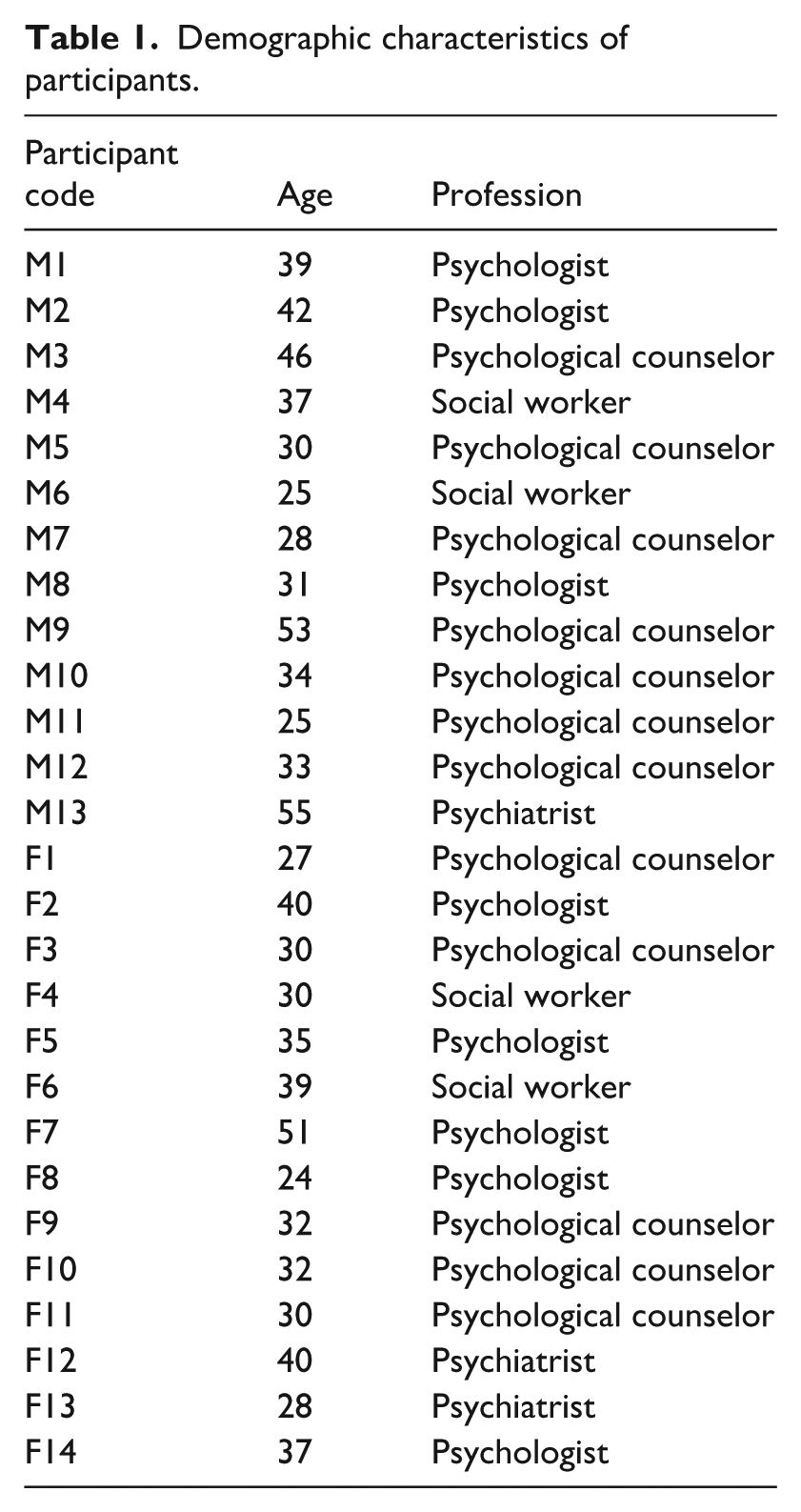
The study group consists of mental health professionals (psychiatrists, psychologists, psychological counselors, and social workers) who were working in regions affected by the Kahramanmaraş earthquake. A total of 27 participants, including 13 males and 14 females, participated in the study. The interviews were conducted months after the earthquake, guided by expert input. Criterion sampling, a purposive sampling method, was used to form the study group. This method involves selecting individuals, events, objects, or situations that meet predefined criteria (Büyüköztürk et al., 2012). The inclusion criteria were: (1) experiencing the February 6, 2023 earthquake and (2) being a mental health professional. Table 1 presents demographic information about the participants, with male participants coded as “M” and female participants coded as “F.”
Demographic characteristics of participants.
Semi-structured interview technique
A semi-structured interview technique was employed to collect data. The interview form was developed by the researchers through a comprehensive literature review. This technique allows participants to articulate their perceptions and thoughts in their own words (Merriam, 1998). The form consists of two sections: (1) demographic information and (2) PTG-related information. Feedback from four experts—having doctorate degree in the field of Psychological Counseling—was obtained to validate the interview form. Necessary adjustments were made based on this feedback. Subsequently, pilot interviews were conducted with three mental health professionals who met the criteria, and the form was finalized.
Data collection
Before data collection, ethical approval was obtained from the institutional ethics committee (by decision no. 2023/383 dated 8/9/2023). The interviews were conducted face-to-face and online. Participants were first briefed about the study’s purpose and interview duration through an “Informed Consent Form.” They were also provided with a “Voluntary Participation Approval Form,” and written consent was obtained. The interviews were conducted both online and face-to-face. Interviews lasted approximately 30–45 minutes. Audio recordings were taken with participants’ permission, securely stored, and transcribed for analysis. In accordance with ethical procedures, the researcher assured participants that psychological support would be provided in the event they experience any psychological distress during the interview process. The data were collected between September and November 2023.
Data analysis
A combination of thematic and content analysis methods was employed, integrating inductive and deductive approaches. Direct quotations were included to present participants’ perspectives authentically. Themes were first identified using descriptive analysis. For unexplored or ambiguous themes, content analysis was applied. Deductive content analysis structured data collection around theoretical objectives, while inductive content analysis involved repeated readings of the data, coding, and grouping codes into categories or themes (Sağlam and Kanadlı, 2019). Codes assigned to data segments helped form categories (Merriam, 1998). Transcriptions were analyzed, coded, and categorized into themes that were then refined and validated by experts—having a doctorate degree in psychological counseling and researcher in qualitative studies. In some themes, sub themes and categories were created.
Validity and reliability
Participant confirmation was used to enhance validity. Statements from participants were verified during the interviews. Expert feedback was obtained to validate themes and categories derived from the interviews. This feedback was crucial in assessing the relevance of the research questions, codes, categories, and themes to the study’s objectives (Tutar, 2022). The data collection and analysis processes were detailed comprehensively. The semi-structured interview form was based on a literature review of the PTG concept. Feedback from four experts with a doctorate degree in the field of Psychological Counseling was incorporated, and pilot interviews with three mental health professionals were conducted. Data coding and thematic categorization were carried out by the researchers and refined with expert input. To ensure reliability, quotations from participant responses were included.
Findings
This section presents the results obtained from the transcriptions of semi-structured interviews conducted with 27 participants. The theme of close relationships is divided into sub-themes of personal resilience and valuing life. The themes of new opportunities and spiritual change are not divided into sub-themes. While presenting example statements related to the categories, male participants are coded with the letter “M” and female participants with the letter “F.” Additionally, participants’ ages are indicated.
Close relationships theme
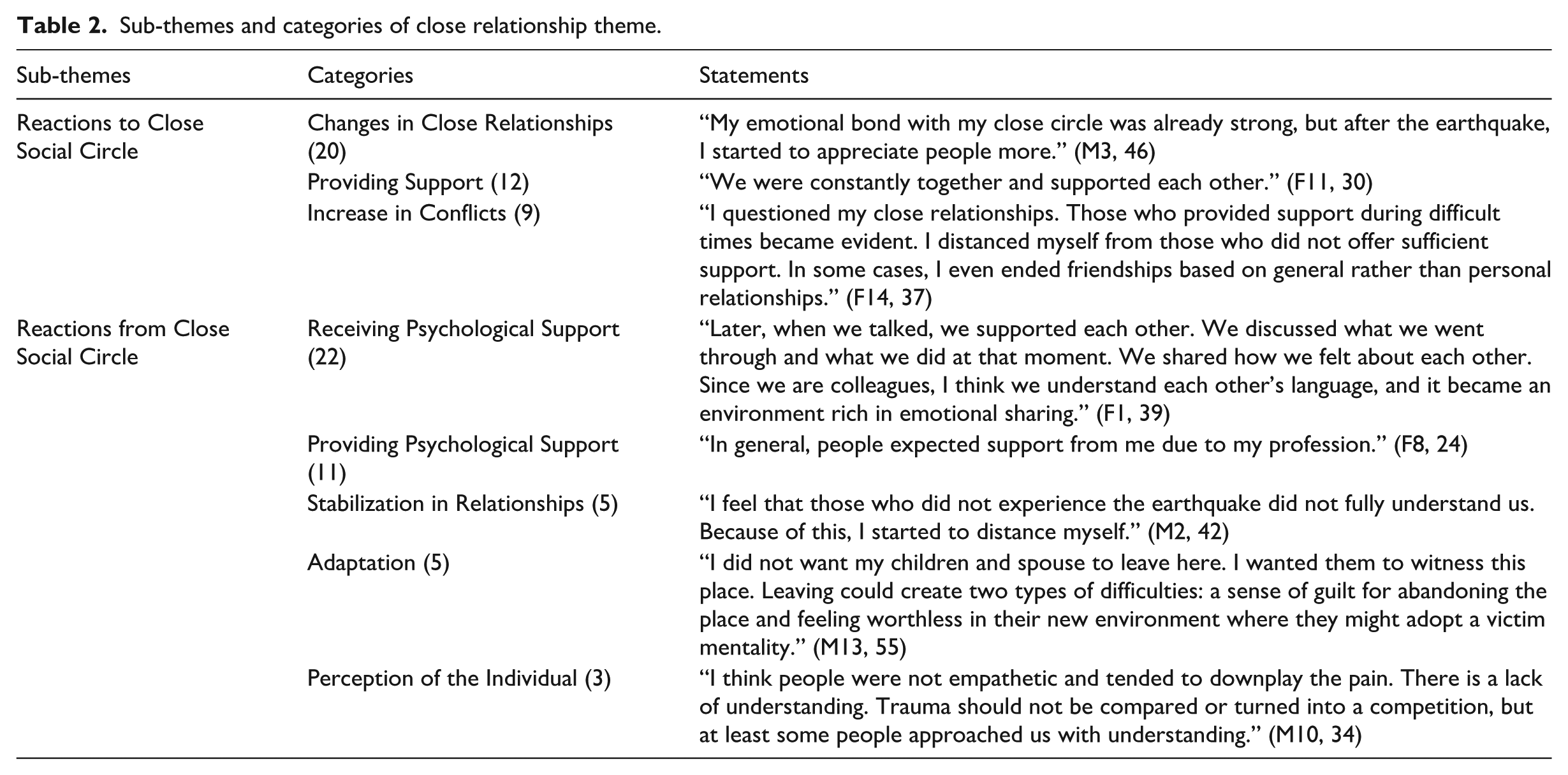
The sub-themes and categories related to the close relationships theme, along with example statements, are presented in Table 2.
Sub-themes and categories of close relationship theme.
New opportunities theme
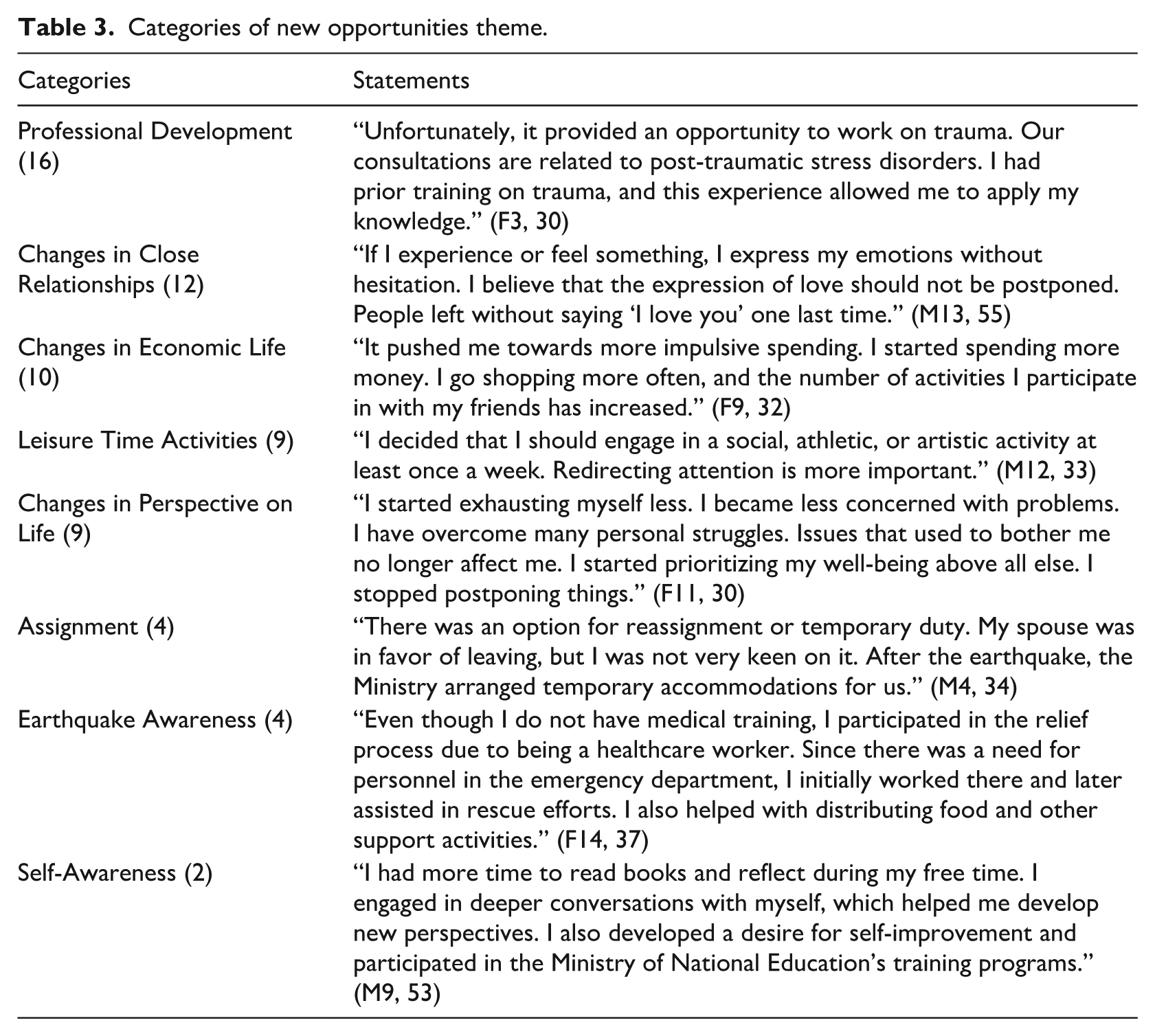
The categories and example statements related to the theme of new opportunities are presented in Table 3.
Categories of new opportunities theme.
Resilience theme
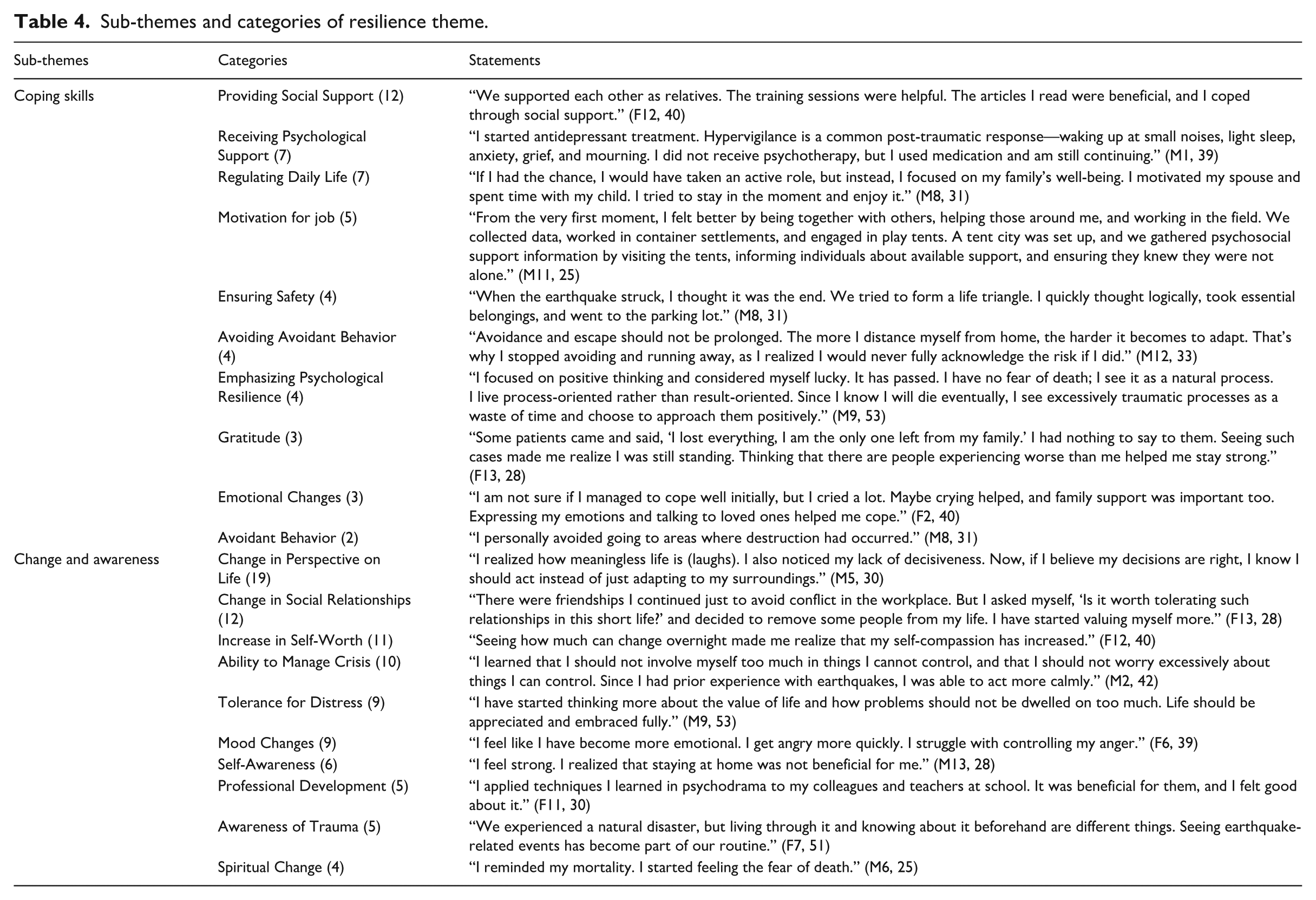
The sub-themes, categories, and example statements related to the theme of resilience are presented in Table 4.
Sub-themes and categories of resilience theme.
Spiritual change theme
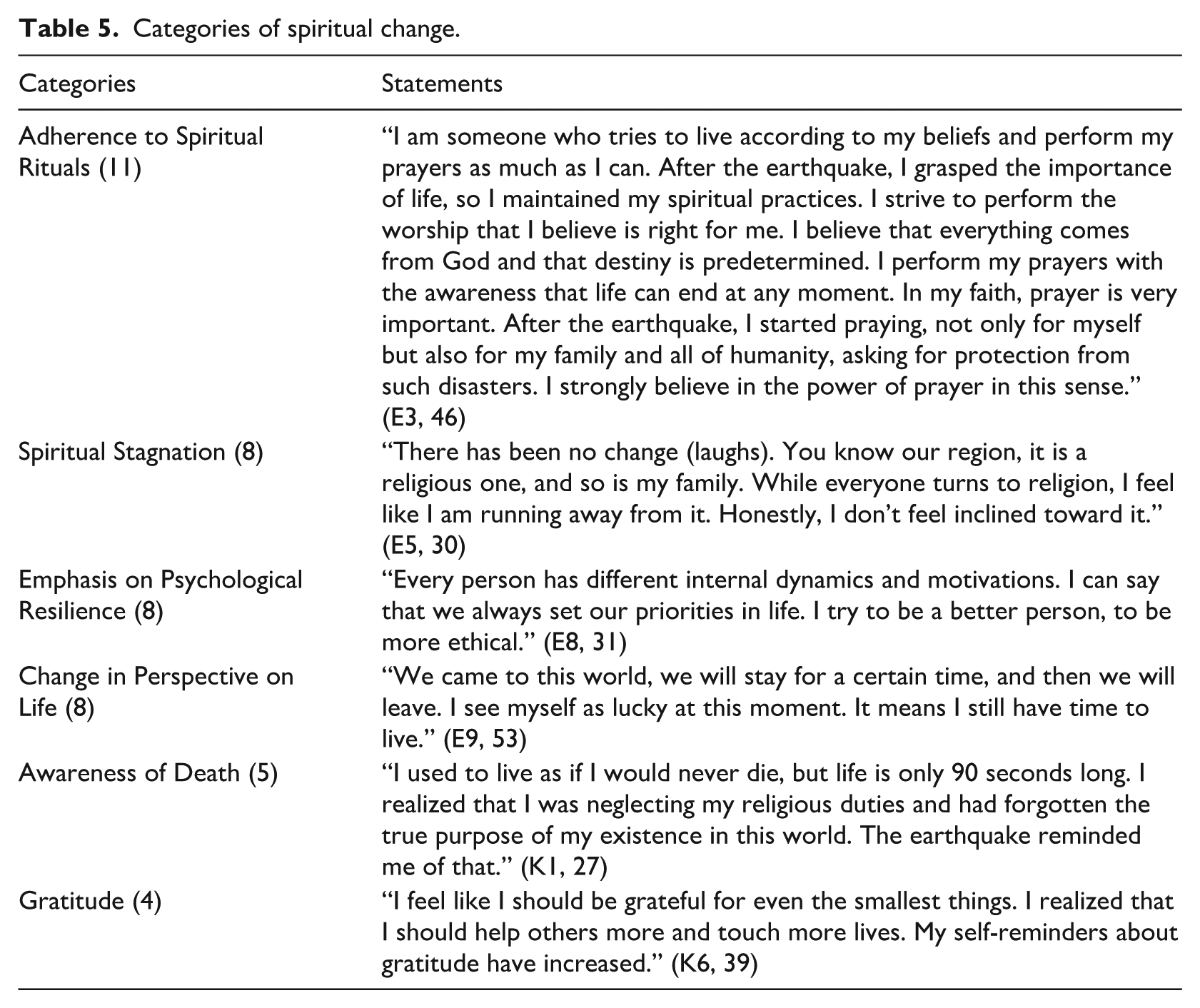
The categories and example statements related to the theme of spiritual change are presented in Table 5.
Categories of spiritual change.
Valuing life theme
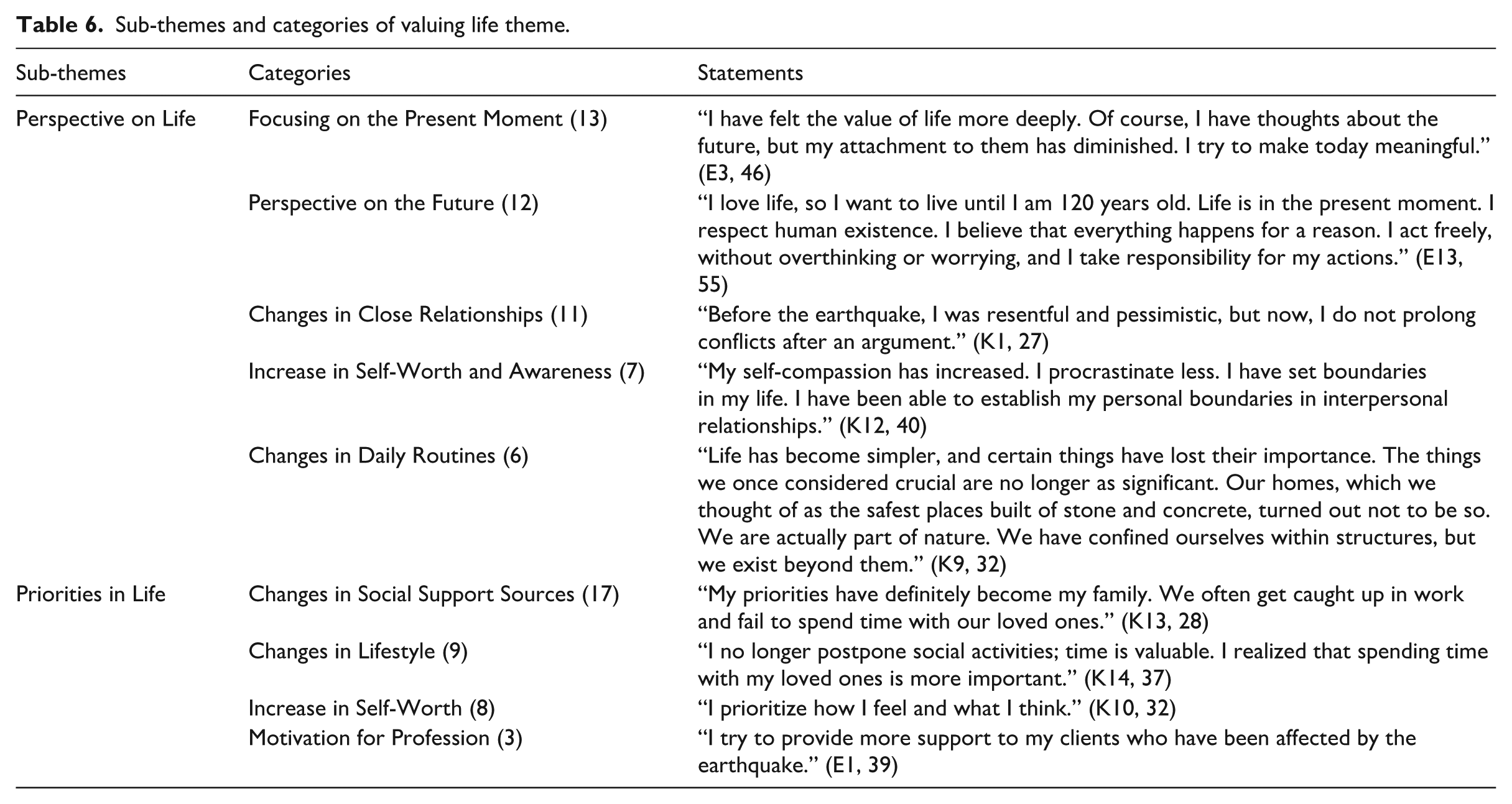
The sub-themes, categories, and example statements related to the theme of valuing life are presented in Table 6.
Sub-themes and categories of valuing life theme.
Discussion and conclusion
In this study, the concept of PTG in mental health professionals exposed to earthquakes was examined using a qualitative approach. The results of the study revealed five main themes: close relationships, new opportunities, resilience, spiritual change, and valuing life. When compared with the existing literature, these themes align with the functional-descriptive model of PTG (Tedeschi et al., 2018). The findings indicate that the mental health professionals experienced similar changes across different dimensions of PTG, and these subdimensions are interconnected. The participants’ feedback was consistent with this framework. The findings can be interpreted within the framework of Tedeschi and Calhoun’s (2004) PTG theory. In particular, participants’ reflections align with the five core domains of PTG, including the strengthening of interpersonal relationships (e.g. “My emotional bond with my close circle was already strong, but after the earthquake, I started to appreciate people more”), a deeper sense of meaning in life (e.g. “I have felt the value of life more deeply”), and spiritual transformation (e.g. “After the earthquake, I grasped the importance of life, so I maintained my spiritual practices”). These expressions support the theoretical foundations of PTG.
According to the findings, the theme of close relationships includes individuals’ responses to and from their social circles, such as changes in relationships, support, and conflict. These dynamics indicate that social support plays a key role in PTG. A review of the literature confirms the relationship between social support and PTG (Henson et al., 2021; Karakoç and Faraji, 2022; Schmidt et al., 2012; Şimşir, 2017). Various studies on PTG show mixed findings regarding social support: Fariz et al. (2021) found family and close social support significantly predict PTG among healthcare workers during the pandemic, while others (e.g. Gökahmetoğlu, 2021; Moğulkoç, 2014) reported no or limited effects of perceived social support. Research on earthquake survivors (Çapar, 2016; Güven, 2010) highlights positive links between PTG and factors like social support, emotional expression, and communication with close individuals. When examined within the framework of attachment theory, Mikulincer and Shaver (2007) propose that adults with preoccupied attachment tend to employ hyperactivating strategies and remain highly sensitive to attachment-related environmental cues. In contrast, securely attached individuals use deactivation strategies. Therefore, secure attachment experiences can help individuals better manage stress related to trauma, thereby contributing to PTG. Discussing these results from a cultural perspective, Türkiye is characterized as a strongly collectivist culture (Hofstede et al., 2010; Triandis and Gelfand, 2012). But, Kagitçibasi (1996) highlights that in Türkiye, individualism does not oppose collectivism but coexists with emotional interdependence. Kagitçibasi’s (1996) Family Change Theory suggests that individuals in developing societies can simultaneously experience autonomy and maintain close family ties, balancing independence with connectedness. Building on this understanding, it is important to note that in collective traumas such as earthquakes, family attachment dynamics play a crucial role in shaping individuals’ recovery processes (Karaırmak and Figley, 2017).
The new opportunities theme is categorized into professional development, changes in close relationships, changes in economic life, leisure activities, changes in perspective on life, reassignment, self-awareness, and earthquake awareness. The findings suggest that individuals experience PTG through opportunities that gained significance after the earthquake. According to Tedeschi and Calhoun’s (2004) functional-descriptive model, individuals reconstruct their life narratives and become open to new experiences after distressing events. Supporting studies (e.g. Costa and Pakenham, 2012; Tarım, 2019) show that people may transform loss into personal growth and benefit from both internal efforts (e.g. self-improvement, stronger relationships) and external resources (e.g. financial or social support) during PTG. In addition, from the perspective of Frankl’s (2018/1946) concept of the search for meaning, a human’s primary motivation is to find meaning in life. Traumas such as earthquakes often lead individuals to question their existence. In this study, participants’ descriptions of PTG through new opportunities can be interpreted through Frankl’s theory and are particularly significant.
The resilience theme consists of two sub-themes: coping skills and change and awareness. These include various psychological and behavioral responses such as seeking support, maintaining daily routines, personal growth, and shifts in perspective. Overall, the findings indicate that PTG occurs through individuals’ resilience, coping strategies, and increased self-awareness after trauma. Tedeschi et al. (2018) argue that in the functional-descriptive model, individuals achieve wisdom by developing psychological resilience, enhancing coping strategies, preparing for future traumatic events, and making sense of their experiences. The literature supports these findings (Akyel, 2023; Avşaroğlu and Koç, 2019; Aydın and Kaya, 2022; Cadell and Sullivan, 2006; Davis et al., 2007; Dilmaç and Yılmaz, 2019; Haspolat, 2019; Karaman and Tarım, 2018; Pamuk and Gökce, 2020; Scrignaro et al., 2011; Şimşir et al., 2022). Yanar (2019) conducted a qualitative study on PTG in children from divorced families, concluding that participants saw themselves as stronger, experienced changes in perspective, and improved social relationships. Tarım (2019) found that individuals coping with grief without professional support tended to recall positive memories of the deceased, which contributed to their psychological resilience and PTG. Barrington and Shakespeare-Finch (2013) discovered that mental health professionals working with refugees consciously modified their thought processes, engaged in self-care, and utilized perceived social support to find meaning in trauma-related work.
The spiritual change theme includes adherence to spiritual rituals, spiritual stagnation, emphasis on psychological resilience, changes in perspective on life, awareness of death, and gratitude. The findings indicate that individuals experience PTG through existential and religious changes. In the functional-descriptive model, individuals may experience either a decline in religious beliefs or increased religiosity following traumatic events (Calhoun and Tedeschi, 2013). Similar findings have been reported in the literature (Barrington and Shakespeare-Finch, 2013; Karanci et al., 2012; Prati and Pietrantoni, 2009; Ruini and Vescovelli, 2013; Shaw et al., 2007; Uğurluoğlu and Erdem, 2019). Post-traumatic spiritual transformation can be understood within the framework of Yalom’s (2011/1980) theory of existential anxiety. Confrontation with death compels individuals to embrace life more fully, often resulting in increased gratitude and a shift in perspective. This process contributes to the domain of spiritual growth within PTG, as described by Tedeschi and Calhoun (2004). Similarly, these results are consistent with Wong’s (2010) “Meaning Therapy,” which integrates the traditional existential emphasis on “suffering and the search for meaning” with the positive psychology focus on “strengths and well-being.” In the present study, some participants reframed the trauma of the earthquake (purpose), attributed meaning to the experience, and, through a sense of responsibility, engaged more frequently in spiritual rituals in pursuit of a more meaningful life.
The valuing life theme includes changes in life perspective and priorities, such as focusing on the present, shifting future outlook, enhanced self-worth, and lifestyle adjustments. These changes reflect how individuals experience PTG by reevaluating life’s value.. According to the functional-descriptive model, individuals undergoing PTG often reassess their life priorities and the things they value (Calhoun and Tedeschi, 2013). Similar results have been observed in the literature (Aras and Topkaya, 2022; Asgari and Naghavi, 2020; Aslantürk, 2022; Başarıkan, 2022; Özyanık and Tarlacı, 2022; Şimşir-Gökalp and Haktanir, 2022). Howard (2010) found that vicarious PTG is facilitated through participation in trauma-related professional services, suggesting that trauma-exposed professionals view their profession as a safe base. The same study highlights that self-care skills serve as a protective factor against negative changes. Mental health professionals working with trauma survivors tend to experience positive changes in their psychological support process, leading to PTG.
Notwithstanding its contributions, key limitations warrant acknowledgment: the exclusive focus on professionals within Türkiye constrains cross-cultural generalizability; potential self-selection bias may overrepresent individuals with pronounced PTG experiences; the homogeneous sample lacks diversity in professional roles, trauma proximity, and demographic variables; reliance on retrospective self-reports introduces possible recall biases; the absence of pre-trauma baselines hinders causal attribution of changes; and the singular qualitative methodology limits quantitative validation of emergent themes. Consequently, future research should prioritize longitudinal designs tracking PTG trajectories across disaster recovery phases; cross-cultural comparative studies examining sociocultural mediators of growth; mixed-methods approaches quantifying domain-specific PTG manifestations; investigations into institutional factors (e.g. workplace support systems, supervision frameworks) influencing professional resilience; intervention trials testing trauma-informed support protocols; intersectional analyses of how professional identity, personal trauma history, and role demands interact; and explorations of client-outcome linkages to ascertain how provider PTG impacts therapeutic efficacy.
Policymakers are urged to implement evidence-based structures—including mandatory resilience training, systemic psychological decompression mechanisms, and trauma-informed organizational policies—to sustain mental health workforces in disaster-prone regions. This study did not examine the role of psychopathological factors in the PTG process of mental health professionals. Therefore, no inferences can be made regarding the relationship between growth and psychopathology. Future research may employ mixed-method designs to investigate the dynamic interplay between PTG and psychopathological processes (e.g. depression, anxiety, PTSD).
In conclusion, this study explored PTG perspectives among Turkish mental health professionals following the Kahramanmaraş earthquakes, revealing five interconnected growth domains aligning with Tedeschi and Calhoun’s functional-descriptive model. Participants reported growth in close relationships (manifested through mutual support and relationship dynamics), embraced new opportunities (including professional, personal, and life perspective changes), developed resilience (via enhanced coping skills and increased awareness), underwent spiritual change (involving existential reappraisal and rituals), and gained a renewed appreciation for life (reflected in shifting priorities and perspectives). These findings highlight PTG as a multidimensional process where social support networks, cognitive restructuring, resilience-building, and existential reevaluation interact synergistically following trauma. The results underscore the applicability of the PTG model to this professional group and emphasize the complex, interrelated nature of growth dimensions.
Footnotes
Acknowledgements
This article was derived from the master’s thesis defended in 2024 in the Counseling Psychology program at the Institute of Educational Sciences, Necmettin Erbakan University.

Ethical considerations
This study was reviewed and approved by the Necmettin Erbakan University Social Sciences and Humanities Scientific Research Ethics Committee (Approval No: 2023/383) on September 8, 2023. Prior to data collection, a preliminary interview was conducted to inform participants about the study’s purpose and interview duration.
Consent to participate
Participants received a detailed explanation of the study through an Informed Consent Form, and their voluntary participation was confirmed via a Voluntary Participant Consent Form, provided both verbally and in writing. Written informed consent was obtained from all participants before their inclusion in the study.
Consent for publication
Submissions containing any data from an individual person (including individual details, images, or videos) have been granted informed consent for publication by the participant(s).
Author contributions
Gamze Tunçez: Conceptualization, Data Curation, Formal Analysis, Investigation, Methodology, Project Administration, Resources, Validation, Visualization, Writing—Original Draft Preparation, Writing—Review & Editing. Hatice İrem Özteke Kozan: Conceptualization, Data Curation, Methodology, Project Administration, Resources, Supervision, Validation, Visualization, Writing—Original Draft Preparation, Writing—Review & Editing.
Funding
The authors received no financial support for the research, authorship, and/or publication of this article.
Declaration of conflicting interests
The authors declared no potential conflicts of interest with respect to the research, authorship, and/or publication of this article.
Data availability statement
The data supporting the findings of this study are available upon request from the corresponding author. Due to privacy and ethical considerations, the data are not publicly accessible.