



Abstract
Autism Spectrum Condition (ASC) brings distinct experiences for families, especially around social communication and understanding certain behaviours, which may require tailored support and approaches. Best practice guidelines emphasise the need for timely post-diagnostic support for parents. This study explores parents’ experiences and perceived impact of a multidisciplinary psychoeducational workshop designed for parents of children with ASC, conducted in a child and young people’s mental health service in the east of London, UK. Using a qualitative design with Thematic Analysis, semi-structured interviews were conducted with 29 parents and carers who had attended the workshop within the past year. Findings revealed that parents found the workshop valuable, both for acquiring practical strategies to support their child and for fostering a sense of community. Some participants expressed a desire for earlier intervention and emphasised the need for follow-up support. Overall, parents reported increased understanding of their child’s condition, which contributed to greater acceptance and improved family dynamics. The findings suggest that such interventions may enhance parental confidence, reduce household stress, and positively impact both child and parent wellbeing. These insights highlight the importance of accessible, ongoing support for families navigating ASC-related challenges.
Plain Language Summary
When a child is diagnosed with Autism Spectrum Condition (ASC), it can be a confusing and emotional time for parents and carers. They may have questions about what the diagnosis means, how to support their child, and what help is available. Feeling uncertain and isolated is common. This study looked at a special workshop that aimed to support parents after their child received an autism diagnosis. The workshop was run by a team of professionals, including psychologists and other specialists at a children's mental health service in East London. To understand how helpful the workshop was, researchers interviewed 29 parents and carers who had attended it in the past year. The conversations showed that the workshop made a big difference. Parents said they learned useful ways to support their child at home and gained a better understanding of autism. Just as importantly, they found comfort in meeting other parents going through similar experiences. Many said they no longer felt alone. Some parents said they wished the workshop had been offered sooner, and others felt that more follow-up sessions would be helpful. Still, most reported feeling more confident, better able to manage challenges, and more connected as a family after attending. This study shows that group workshops like this can be a powerful way to help families navigate an autism diagnosis. They not only provide helpful information but also offer emotional support and connection. Services that support children with autism should consider offering timely, accessible sessions like this to help families feel more prepared, less stressed, and more hopeful for the future.
Keywords
Introduction
Autism Spectrum Condition
Autism Spectrum Condition (ASC) is described as a neurodevelopmental difference, characterised diagnostically by difficulties with social communication and interaction, and restricted, repetitive patterns of behaviour, interest, or activities (American Psychiatric Association [APA], 2013). It is estimated that around one in 100 children has ASC worldwide (World Health Organisation, 2023). The impact of these clinical features varies across individuals from a mild to severe impact; however, this often has a significant influence across the lifespan on a person’s wellbeing, functioning, and development (Leadbitter et al., 2022). It is common for individuals diagnosed with ASC to also be affected by a comorbid condition, such as other neurodevelopmental conditions (e.g., attention-deficit hyperactivity disorder), mental health needs (e.g., obsessive-compulsive disorder or anxiety), and sleep and eating difficulties (Leyfer et al., 2006).
Parenting a Child with ASC
Following a child’s diagnosis of ASC, families can have challenges in adapting and supporting the needs of their child (Leadbitter et al., 2022). After their child receives the diagnosis, many parents seek support and want to learn more to understand how they can best parent their child.
Parents can also experience stigma and judgement from others around the diagnosis, impacting their relationships and support from family and friends. Parents can experience a range of different emotions in response to a diagnosis, from grief and disempowerment to feelings of relief and validation (Fernańdez-Alcántara et al., 2016).
A study by O’nions et al. (2018) found that parents of children with ASC often struggle to know how to best respond to their child’s emotional and behavioural needs and report using lenient management strategies, which may result in ongoing behavioural problems and increased parental stress levels (Osborne et al., 2008). Rodrigue et al. (1990) suggested that some parents report experiencing decreased belief in their ability to successfully parent their child following the diagnosis. Parents may also experience conflict between wishing to hold on to their original hopes and expectations for their child and their new reality (Boss, 2004).
Research highlights that there is a gender differentiation in parents’ thoughts and feelings regarding their child’s diagnosis of ASC, with fathers feeling more unsupported (Potter, 2017), and having a greater struggle in coming to terms with the diagnosis than mothers (Milshtein et al., 2010). Additionally, studies focusing on multiculturalism and ASC indicated that there were cultural differences in accepting and caring for a child with ASC, with families from ethnic minority backgrounds in the Global North often seeking a diagnostic assessment later due to several reasons (Seach, 2021) including but not limited to difficulties accessing healthcare (Miller-Gairy & Mofya, 2015), medical costs (Begeer et al., 2009), social stigma (Rivera-Figueroa et al., 2022), self-blame (Gordillo et al., 2020) and language barriers (Corbett & Perepa, 2007).
Mental Health of Parents with a Child with ASC
It is estimated that 20-50% of parents with a child diagnosed with ASC show clinically significant levels of mental health need (e.g., depression and anxiety), within both the post-diagnostic period, and on an ongoing basis (Casey et al., 2012; Davis & Carter, 2008; Estes et al., 2009; Hamlyn-Wright et al., 2007). The above studies found that parents also report experiencing higher stress levels compared with parents of neurotypical children. In multiple studies, parents also report a sense of being overwhelmed and face many challenges that affect not only their own wellbeing, but the whole family’s quality of life (Ardic & Cavkaytar, 2019; Baker et al., 2011; Kuhlthau et al., 2014). Downes et al. (2021) found that parents’ relationships are often impacted post-diagnosis due to the impact on their daily lives of supporting their child’s specific needs, especially if parents have differing opinions about how to parent their child.
Needs of Parents With a Child With ASC
In a systematic review, Legg and Tickle (2019) found three distinctive areas of post-diagnostic need—information, relationships, and emotions—based on UK parents’ perspectives of their child’s ASC diagnosis. Hinton and Wolpert (1998) suggested that acceptance of the ASC diagnosis aids parents' understanding and ability to manage their child, reducing blame that inadequate parenting is the reason for their child’s emotional and behavioural difficulties. Furthermore, a systematic review conducted with 26 articles by Meleady et al. (2020) investigated positive experiences of parents with a child with ASC. They reported that parents who had an older child, belonged to an ethnic minority group, were mothers, had greater mental wellbeing and individual resources, were content in their romantic relationship, were getting assistance from others, and were engaging in narrative writing reported more positive experiences with their child with ASC.
Psychoeducational Workshops for Parents of Children with ASC
Best practice guidelines recommend timely post-diagnostic support for families (NICE, 2011, 2013). Psychoeducational groups for parents with a child diagnosed with ASC have been found to be cost-effective within National Health Service (NHS) ASC services and have been shown to increase parental confidence in their ability to parent their child with ASC (Roughan et al., 2019) and to improve parental mental health (MacKenzie & Eack, 2022).
Research suggests that parents who participate in a psychoeducational intervention following their child receiving a diagnosis of ASC experience decreased stress levels (Ardic & Cavkaytar, 2019; Iadarola et al., 2018; Kalalo et al., 2021; Kasari et al., 2015; Patra et al., 2015; Tarver et al., 2019) and a reduction in both trait and state anxiety (Guler, 2021; Zhou et al., 2019). Decreased parental stress levels following attendance in a psychoeducational intervention was observed in families with children diagnosed with ASC transitioning into adulthood (Siracusano et al., 2021) and families with newly diagnosed toddlers (Turner-Brown et al., 2019).
Psychoeducational interventions for parents have been shown to improve parental wellbeing, leading to positive effects on family and child wellbeing, and result in long term benefits for both the caregiver and their child (Green et al., 2022; Leadbitter et al., 2022). Other benefits for parents following attendance in a psychoeducational workshop include a significant increase in empowerment-oriented outcomes for both the parents (Magaña et al., 2017) and the family unit (Banach et al., 2010). Parents report an increase in their overall wellbeing and quality of life (Merriman et al., 2020; Turner-Brown et al., 2019), improved perception of their parental competence (Iadarola et al., 2018; Zhou et al., 2019) and parenting skills (Ho & Lin, 2020), and an increased perception of social support available to them (Ardic & Cavkaytar, 2019). Additionally, parents report gaining an improved knowledge of ASC following attending a psychoeducational intervention (Patra et al., 2015; Reliani et al., 2022).
Psychoeducational interventions for parents have also been found to have multiple positive effects on children’s behaviours, including decreased behaviours that challenge (Iadarola et al., 2018; Kalalo et al., 2021; Tarver et al., 2019), decreased hyperactivity (Tarver et al., 2019), improved adaptive functioning (Siracusano et al., 2021), improved emotional development (Ho & Lin, 2020), and improved social communication skills (Turner-Brown et al., 2019).
Culturally adapted psychoeducational programs for parents with a child diagnosed with ASC may replicate these beneficial effects, including increasing parents’ knowledge of ASC; reducing parental stress; increasing parental confidence and empowerment; and improving children’s behaviour and social skills. These benefits have been evidenced across different countries, including France (Cappe et al., 2021; Ilg et al., 2018), Saudi Arabia (Hemdi & Daley, 2017), India (Patra et al., 2015), Ethiopia (Tekola et al., 2020), and within different cultures, including Latina families (Magaña et al., 2020; Rios et al., 2021) and Black families (Kaiser et al., 2022) in the United States.
Introduction to the Service
Emotional Wellbeing Mental Health Services (EWMHS) are Child and Young People’s (CYP) services within the NHS in the United Kingdom. They offer a range of psychologically informed therapies to children, young people, parents, carers, and families. One of these interventions is a multidisciplinary psychoeducational workshop designed for parents and carers of children diagnosed with ASC. This workshop is collaboratively delivered by the EWMHS Psychology Team, Child Development Centre (CDC), and the Local Authority in East London, UK.
Introduction to the Workshop
The current workshop draws on the clinical and empirical foundations highlighted in existing literature and NICE guidance (2011, 2013), which recommend timely, multidisciplinary post-diagnostic support for families.
The primary aim of the workshop was to increase parents’ knowledge and understanding of ASC, offer an opportunity for reflection, enhance their confidence, and provide strategies to support their children. The workshop used a logic-of-change model whereby improved parental understanding and coping skills would lead to greater parental self-efficacy and reduced stress, thereby supporting interactions with their child (Ardic & Cavkaytar, 2019; Iadarola et al., 2018; Kalalo et al., 2021; Kasari et al., 2015; Patra et al., 2015; Tarver et al., 2019). Secondary outcomes included enhancing access to relevant resources and facilitating connections with other parents to reduce perceived isolation (Leadbitter et al., 2022; MacKenzie & Eack, 2022). Overall, by improving parental knowledge using multidisciplinary guidance, it was hoped that this would influence both parent and child outcomes over time.
The workshop’s multidisciplinary structure, drawing on clinical psychology, speech and language therapy, occupational therapy, nursing, and local authority expertise, was designed to equip parents with complementary perspectives and strategies, supporting both immediate help and longer-term improved outcomes for families.
The Origins
The workshop was originally conceived during the early phase of the COVID-19 pandemic (spring–summer 2020), in response to a recognised need for timely post-diagnostic support for families. Its development was led by clinicians from clinical psychology, speech and language therapy, occupational therapy, and nursing backgrounds, in collaboration with local authority colleagues. Each professional contributed material from their own discipline, combining clinical expertise with current evidence-based practice. While the workshop was not formally co-produced with parents, its design was informed by recurring questions and challenges identified through clinical work with families.
The Structure
Workshops are offered online via Microsoft Teams over two half-day sessions (09:30–13:00). Each day combines expert presentations with opportunities for questions, reflection, and peer discussion. This format encourages interaction between families and professionals and facilitates the sharing of experiences among parents. Additionally, workshops are available in three age-specific versions: - Preschool (under 5 years) - Primary school (5–11 years) - Secondary school (11–17 years)
Parents and carers are referred to the workshop by the CDC, schools, or other local services once their child receives a diagnosis of ASC. Prior to attendance, they are contacted to confirm their interest and consent, and following attendance, they receive an information pack summarising workshop materials in their preferred language.
Each workshop is run every three months, ensuring that families can access post-diagnostic support within a short period following their child’s assessment. Initially, the workshop was only open to families who received a diagnosis recently in the last three months. However, families who received the diagnosis privately and were not referred to this NHS workshop initially, families moved from other boroughs and were not offered a similar resource in their previous EWMHS/CAMHS, and parents/carers who could not attend when initially invited were subsequently also accepted to the workshop.
The Content
Presentations Delivered in the Workshop
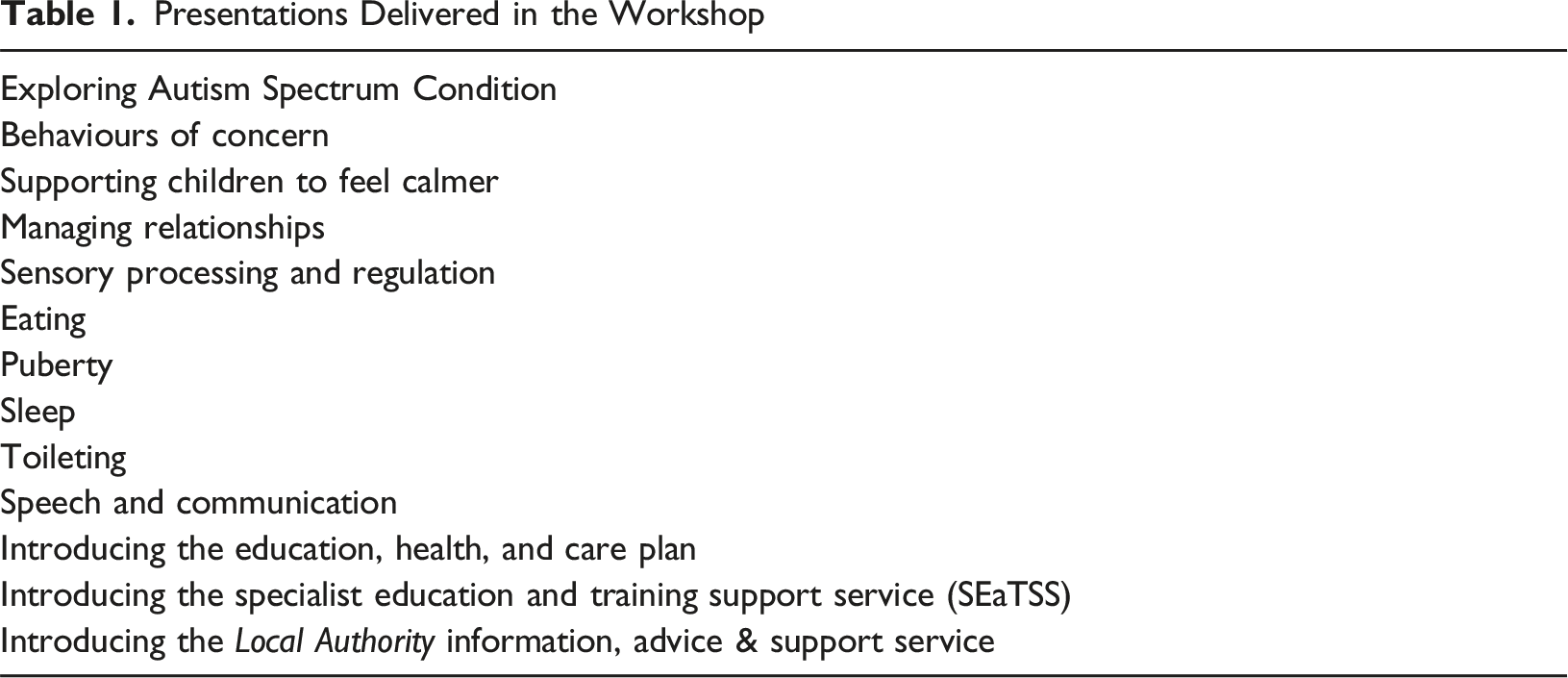
Exploring Autism Spectrum Condition
Introduction to ASC, focusing on strengths-based perspectives, cultural experiences of diagnosis, gender differences, and how to discuss the diagnosis with the child and the wider family. The session also incorporates reflections from parents about receiving and adapting to their child’s diagnosis. Delivered by the EWMHS Psychology team.
Behaviours of Concern
How to manage behaviours that challenge: Definition and functional understanding of behaviours of concern, use of ABC (Antecedent–Behaviour–Consequence) charts, exploration of stimming and sensory needs, and proactive strategies for behaviour management (using the RAG—Red, Amber, Green—framework). Delivered by the EWMHS Psychology team.
Supporting Children to Feel Calmer
Managing anxiety in different age groups. Delivered by the EWMHS Psychology team.
Managing Relationships
Exploration of neurodivergent communication styles, the impact of masking or camouflaging, supporting play and social interaction, and using social stories to aid understanding of social situations. Delivered by the EWMHS Psychology team.
Sensory Processing and Regulation
Understanding sensory profiles and implementing strategies to support sensory regulation and daily functioning. Initially delivered by Occupational Therapy, and then offered by the EWMHS Psychology team.
Eating
Covers healthy eating, food exposure, nutrition (vitamin D, iron), sensory differences related to food, and how repetitive interests and preferences for sameness may influence eating habits. Delivered by specialist nursing staff.
Puberty
Overview of puberty and expected changes in growing children, delivered by the specialist nursing staff.
Sleep
Sleep, sleep hygiene, and sleep difficulties commonly seen in neurodivergent children and adolescents, delivered by the specialist nursing staff.
Toileting
Toileting problems and how to gently encourage age-appropriate toileting in neurodivergent children, delivered by the specialist nursing staff.
Speech and Communication
Overview of communication differences in ASC and practical strategies for supporting effective communication and interaction. Delivered by the Speech and Language Therapy team.
Introducing the Education, Health, and Care Plan
Introduction to local authority provisions and processes for educational health and care planning. Delivered by the Local Authority Education and Inclusion Team.
Introducing Specialist Education and Training Support Service (SEaTSS)
Introduction to a specific local authority provision accessed through schools, delivered by SEaTSS team.
Introducing Local Authority Information Advice & Support Service
Overview of the service and their offer which includes impartial information, advice, support and advocacy for parents, carers, children and young people with special educational needs or disabilities, helping them navigate education, health, social care, planning, appeals and meetings.
The Philosophy
The content detailed above is grounded in Cognitive Behavioural Therapy (CBT), Positive Behaviour Support (PBS), and systemic family principles. At the same time, the content and the delivery were embedded within a neuroaffirmative, culturally sensitive, accessible, and developmentally appropriate approach. For instance, the sections on Behaviours of Concern and Relationships drew on the evidence base for Positive Behaviour Support (PBS) and emerging research at that time on masking and camouflaging in ASC. By adapting a neuroaffirmative framework, the workshop referred to autism as a condition rather than a disorder, and used a difference model that highlighted strengths and diversity rather than deficits. Parents were invited to share what their children were good at, promoting narratives of difference, capability, and hope while also acknowledging the realities and challenges faced by families.
Cultural sensitivity and inclusivity were central to delivery: facilitators encouraged open discussions about how ASC is perceived in different communities, and ethnically diverse facilitators shared experiences from their own cultures. The sessions addressed misconceptions such as ASC being a ‘White condition’ and explored how to engage extended families and community networks in understanding and support.
Accessibility was ensured through offering the workshop in an online format, and the use of professional interpreters, sometimes with up to five translators present in some workshops to support non-English-speaking parents/carers, completely free of charge.
Content was tailored to developmental stages, making the workshops age-appropriate—for example, toileting and early communication were discussed in preschool sessions, while socialisation and peer relationships were emphasised in primary and secondary school sessions.
These elements, integrated within a multidisciplinary format, aimed to make the workshop distinctively enabling, inclusive, and reflective of best practice in culturally responsive and neurodiversity-affirming care.
Aims
The aim of the current study was to explore parents’ experiences and perceived usefulness of the above workshop conducted in a diverse East London borough for parents and carers with a child diagnosed with ASC, specifically focusing on parents’ views of ASC following the workshop and to inform future iterations and potential co-production of the intervention.
Research Questions
(1) Did the parents who attended the EWMHS post-diagnostic psychoeducational workshop for parents with a child diagnosed with ASC find it useful? (2) Did the parents who attended the EWMHS post-diagnostic psychoeducational workshop think they needed additional information or support post-workshop? (3) What was the parents’ understanding of ASC after attending the EWMHS post-diagnostic psychoeducational workshop?
This study, therefore, does not aim to establish causal effects or measure clinical outcomes. Instead, it offers a process-oriented qualitative exploration of parents’ perspectives and experiences following participation in a multidisciplinary, neurodiversity-affirmative psychoeducational intervention. By examining perceived usefulness and implementation experiences, this study aims to contribute to the growing literature on post-diagnostic psychosocial interventions for families of children with ASC and highlights implications for service development and delivery.
Method
Design and Method of Analysis
The study was a qualitative design using
Instruments
Interviews
Semi-structured telephone interviews were conducted with parents/carers. Interview questions asked parents/carers to describe their experience of attending the workshop, how useful they found the workshop, as well as any other information they would like to have received from the workshop.
Interview questions were emailed to parents who expressed interest in participation but did not have time to attend an interview at their request.
Data Collection and Storage
Interviews were held via conference call, with two Assistant Psychologists (one leading the interview, the second one assisting) and the participant. In line with the Trust’s information governance requirements, interviews were not audio recorded. Detailed simultaneous notes were typed by the second Assistant Psychologist present during each interview. This note-based approach is an accepted qualitative method, especially where recording is not permitted, and evidence suggests that they are not inferior to audio recording (Rutakumwa et al., 2020). Notes were expanded immediately after each interview to ensure completeness and accuracy.
Data collectors called the participants from confidential spaces, and participants were also recommended to complete the interviews in a private setting. The interviews lasted approximately 30 minutes.
Parents and carers who were unable to complete the interview via phone were offered the chance to respond via writing. One parent sent written responses via email. Whilst a number of people opted in for this, only one parent responded via email.
The transcribed interviews and the emailed interview answers were anonymised and stored on password protected on the NHS Trust’s secure network drive.
Recruitment
In line with Braun and Clarke’s (2013) recommendations for a medium-sized thematic analysis, 29 parents/carers were recruited. Eligible participants were those who had attended both days of the post-diagnostic ASC workshop between one and six months prior to the time of the recruitment. Following an opportunity sampling approach (Colman, 2009), assistant psychologists at EWMHS contacted all eligible parents by telephone, provided information about the purpose of the study, and invited them to participate. All parents who met the criteria were invited, of whom approximately 40% accepted and completed an interview. Individuals who initially expressed interest in emailing the answers but did not respond to follow-up contact, or did not attend their scheduled interview, were not included in the sample size. No remuneration was provided for participation.
Ethics
This project was conducted as a service evaluation and clinical audit within the NHS. In the NHS, clinical audits are governed by local Research and Development (R&D) departments rather than university or national Research Ethics Committees. The present audit was reviewed and approved by the relevant Trust’s R&D Department in 2020, and subsequently, was given the audit registration number 4349. Following completion of data collection, analysis, and reporting to the Trust in 2023, the Trust’s R&D evaluated the written report and granted approval for publication on 20 March 2025.
All service users within the Trust provide general consent for their anonymised data to be used for service evaluation and audit purposes at the point of registration. In addition, this study’s participants were provided with a written information sheet outlining the purpose and procedures of this specific audit via email and were asked for their explicit consent to participate. Parents were also contacted by telephone, informed about the aims and procedures of the study, and asked whether they consented to take part. Those who provided verbal consent were noted as ‘consented’ in their clinical file, and an interview date and time were subsequently arranged. Parents were reminded of their right to withdraw at any time without consequence to their care.
Data Analysis
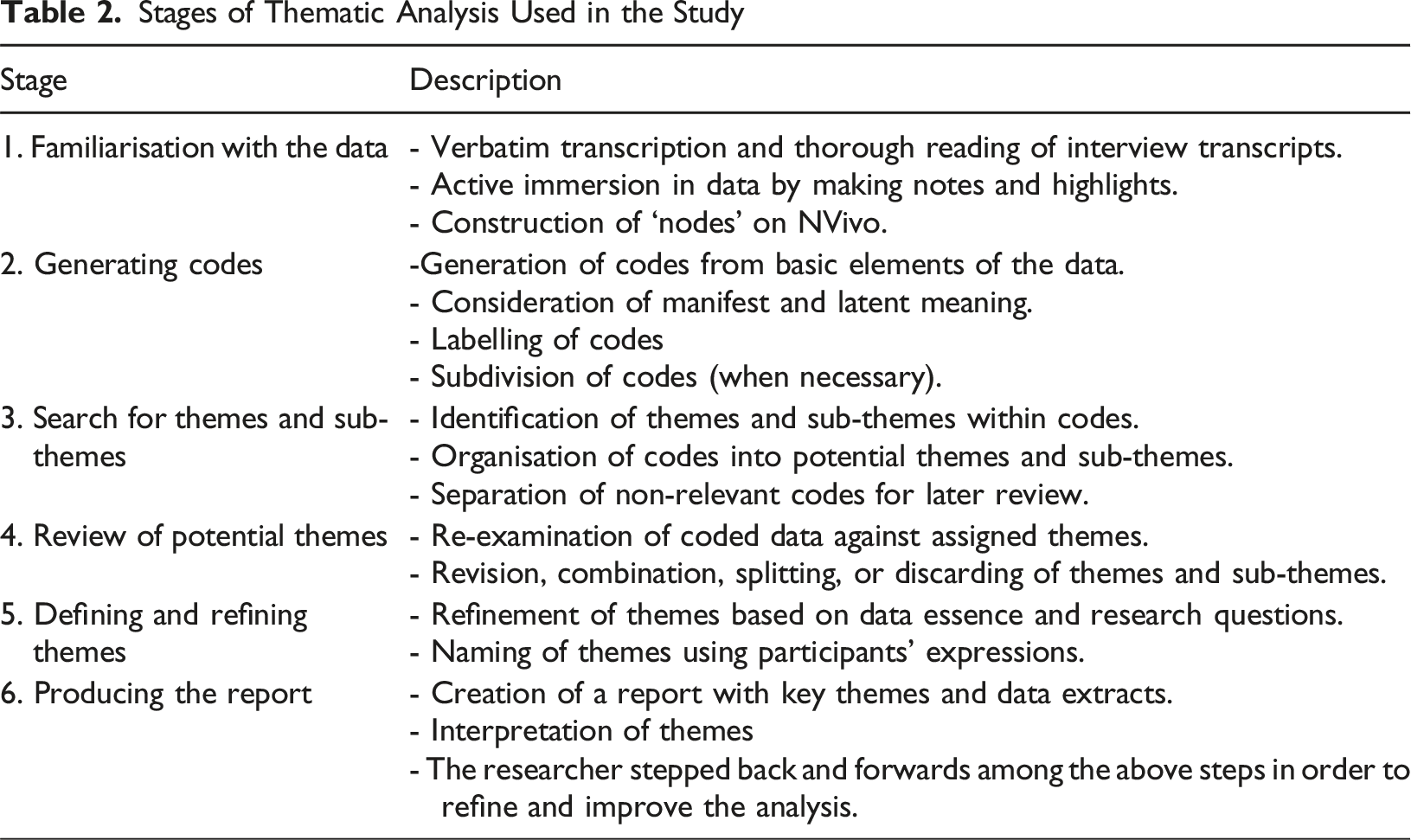
Stages of Thematic Analysis Used in the Study
Coding Sample
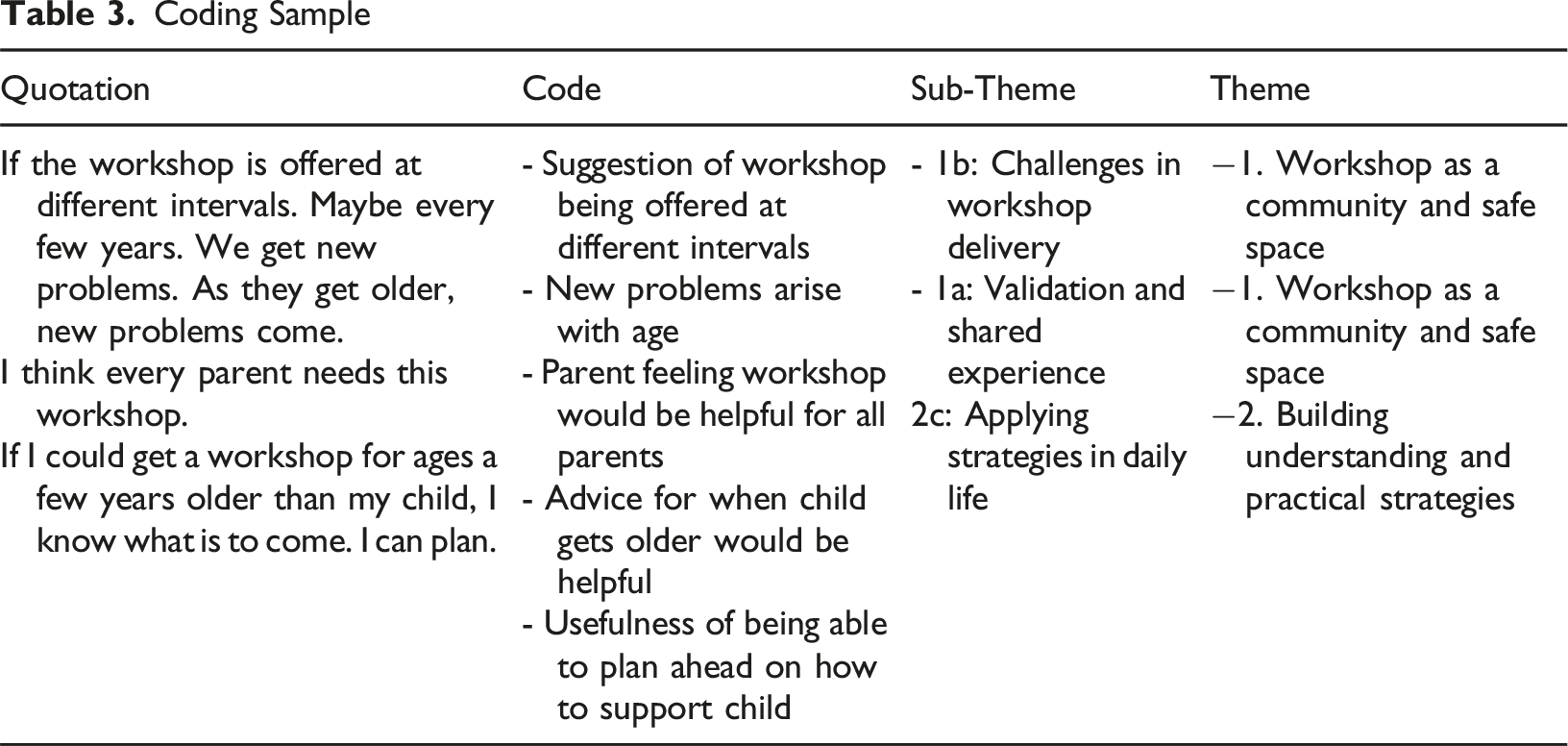
TA supports the systematic identification and organisation of themes within a dataset, providing a flexible approach for exploring patterns of meaning (Braun & Clarke, 2006). In this study, the analysis was conducted by the third author and involved a structured process of coding, reviewing, and refining the data to ensure that themes accurately captured participants’ accounts and addressed the research questions. To maintain reflexivity, the researchers kept a written journal, notes were taken whilst coding the data and working on the manifest and latent meanings. Regular supervision sessions were held by the first author to help the third author with the TA principles, while avoiding ‘consensus coding’, and rather aiming for the third author to produce their own analysis and argument about the data.
Results
Demographics
Demographics of the Sample’s Children With ASC
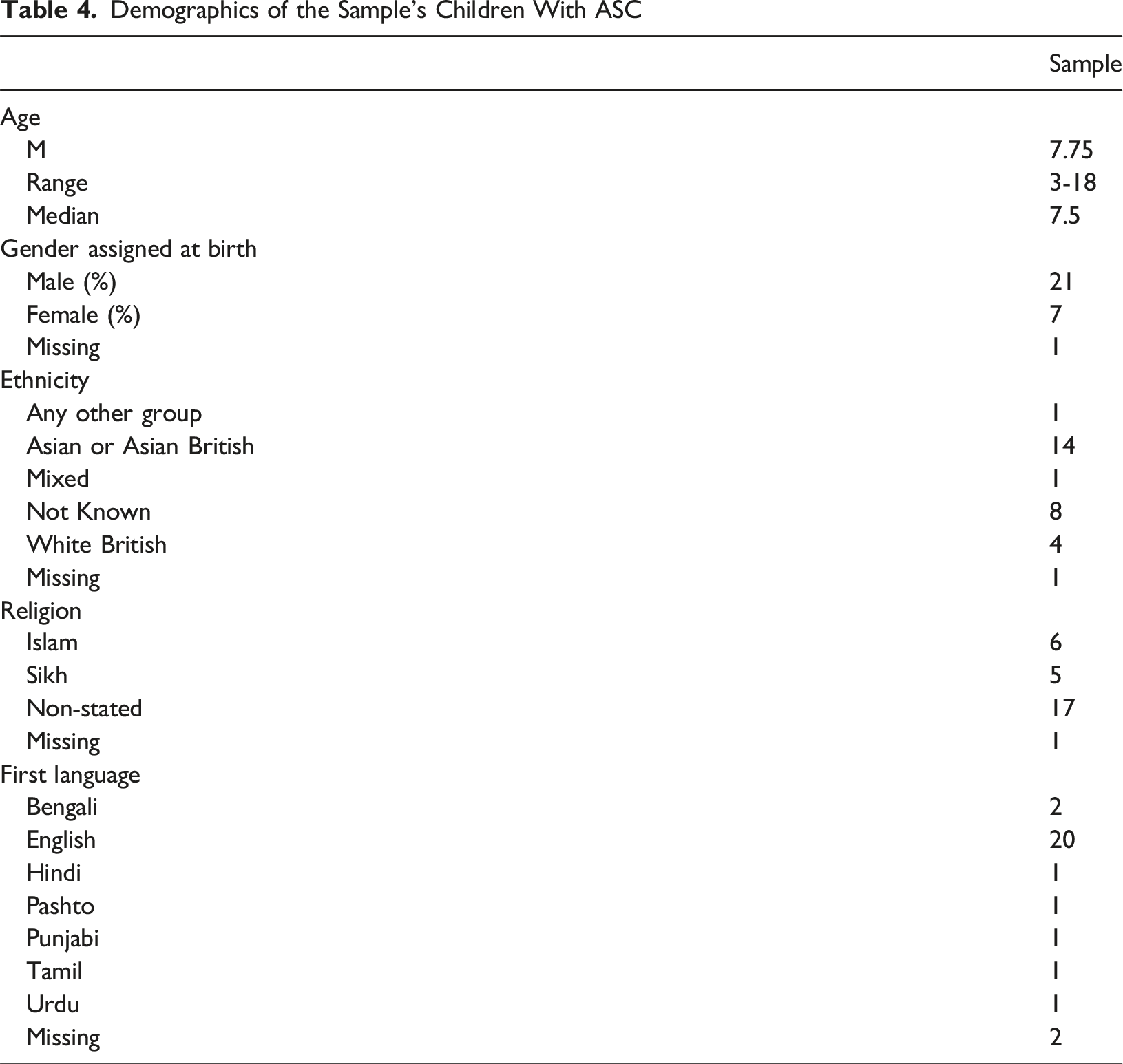
Of the total 29 participants, 8 attended the workshop for aged 0-5, 10 attended for aged 6-11, and 10 attended for aged 12-17. The age group information for one participant is missing.
Analysis
Main Themes and Subthemes
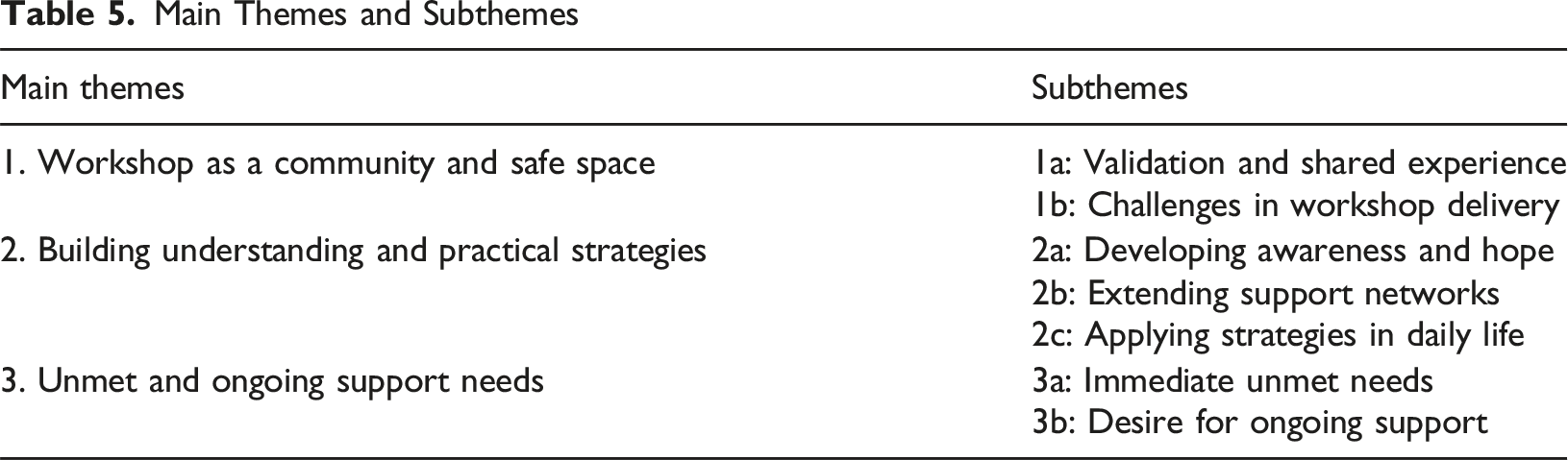
Theme 1: Workshop as a Community and Safe Space
Parents consistently described the workshop as a valuable space to learn about ASC and to share experiences with others in similar situations. This sense of validation and community was particularly important for parents who felt isolated or judged by extended family and friends. The workshop thus provided not only information, but also emotional support.
Sub-Theme 1a: Validation and Shared Experience
Parents valued hearing others’ stories and strategies, which helped normalise their own challenges and reduce feelings of isolation. For many, the workshop offered reassurance that they were not failing but facing common experiences.
Participant 22 stated, “There were so many parents sharing their experiences. There were so many stories that helped me with both of my children.”
Parents contrasted the workshop space with the stigma they had experienced elsewhere:
Participant 21 stated, “Other parents’ children that are doing well may be making fun of us when we share, but the parents during the workshop know what it’s like to have a child with autism.”
Sub-Theme 1b: Challenges in Workshop Delivery
All parents reported that some element of the workshop was positive; however, some did state that certain aspects of the workshop structure retracted from their experience. Some parents reported that there was too much content to be covered in two days and subsequently found the information hard to retain:
Participant 18 stated: “There was too much content in two days... It’s very hard to learn all of that information in two days.”
This is linked to some parents stating they could not remember much about the workshop, as it was so long ago. Additionally, even though some parents found the online format helpful for practical reasons such as childcare and work commitments, some found the online format difficult, with technology issues limiting interaction. Some also felt the workshop was better suited to families of newly diagnosed children, and would have preferred to access it sooner:
Participant 17 stated: “A lot of these things were repetition […]it did consist of important information […]I had lots of the information previously. So, if the workshop was offered earlier, I think it would have been more useful.”
These experiences highlight that while the content and community were valued, the timing and format of the workshop shaped parents’ experiences.
Theme 2: Building Understanding and Practical Strategies
Parents described the workshop as transformative in how they understood ASC and their child’s behaviour. They also highlighted its practical impact, as strategies were taken from the sessions and applied at home.
Subtheme 2a: Developing Awareness and Hope
For many parents, the workshop represented their first opportunity to learn about ASC in depth. Several reported that before attending, they had little or no understanding of the diagnosis. The information provided helped them reframe their child’s behaviour, particularly around sensory needs, and gave them optimism about the future:
Participant 18 stated: “Before the workshop, honestly, I did not have a clue about what autism is […] after the workshop, we learned that he is not alone. There are ways to help him in the future […] there are ways we can help him with the condition. It was very helpful.”
Participant 2 stated, “Autism was very new to us then, we had just got the diagnosis, so obviously the information given to us was very, very helpful”
Parents also explained that learning why their child behaved in certain ways helped them to feel more patient and less frustrated. These shifts demonstrate how the workshop fostered both cognitive change, as parents developed a greater understanding of ASC, and emotional change, as they reported increased optimism in their ability to support their child in the future.
Subtheme 2b: Extending Support Networks
The benefits of the workshop extended beyond the sessions themselves. Parents described sharing what they had learned with partners, siblings, friends, and other relatives, which broadened the circle of understanding and support around their child.
Participant 27 stated: “It changed for the better. We realised we were not in it by ourselves. There are other parents and organisations that can help.”
Participant 19 stated: “I passed on bits of advice to our child’s father and sister. I think sharing some of what I learnt afterwards was helpful.”
Some parents also described passing on information to others in their community who had children with ASC, creating a ripple effect where strategies were shared beyond the workshop group.
Subtheme 2c: Applying Strategies in Daily Life
All parents reported that they took the strategies learnt in the workshop and used them outside of the workshop to support their children. For example, one parent found that implementing the sleep strategies led to their child’s sleep quality improving.
Participant 22 stated: “… issues with his sleep. I spoke to one of the specialists at the workshop, and they gave me ideas. I have been able to put them in, and he’s sleeping better.”
Other parents found that communication strategies were easy to implement and led to their child finding it easier to follow instructions. Parents also noted the helpfulness of toileting, diet and emotional regulation strategies. Some parents reported taking time to try every strategy taught in the workshop. Parents were able to practically apply the knowledge learnt in the workshop to support their child:
Participant 12 stated: “I have learned a couple of things about toilet training, food and these kinds of things. I tried doing what they said (the presenters) to talk, how to behave, how to handle them when they are angry/frustrated”
Theme 3: Unmet and Ongoing Support Needs
While parents valued the workshop highly, many highlighted gaps in the information provided and emphasised the importance of continued provision. Some reflected on areas where they had wanted more guidance at the time of attending the workshop, while others looked ahead and anticipated new challenges that would emerge as their child grew older.
Subtheme 3a: Immediate Unmet Needs
Parents identified areas where they would have liked more guidance during the workshop itself. These included speech and language development, behaviour management, and strategies for managing ‘meltdowns’. For some, self-injurious behaviour was a particularly pressing concern.
Participant 6 stated: “I’d want to know how I can stop her when she’s irritated […] things very hard and hits her head against the wall […]I want more help with that.”
Many parents reported the need for further advice and support. This included their desire for more guidance on improving communication with their children, behaviour management and addressing speech and language difficulties:
Participant 17 stated: “Regarding speech. My son talks now, but I would like something to support sentence structure and grammar.”
Participant 12 stated: “It would be very helpful if we are told about speech improvement at home.”
These reflections suggest that while the workshop provided a useful foundation, some parents left with important questions unanswered and would have welcomed more targeted guidance at the time.
Subtheme 3b: Desire for Ongoing Support
In addition to these immediate unmet needs, parents recognised that their child’s difficulties were likely to change as they grew older.
Participant 28 stated: “If the workshop is offered at different intervals […] As they get older, new problems come. I think every parent needs this workshop. If I could get a workshop for ages a few years older than my child, I know what is to come. I can plan.”
They expressed a desire for follow-up workshops and ongoing provision that could address emerging challenges at later developmental stages. Parents felt that repeated access to support would help them to plan ahead and respond effectively to new issues.
Participant 18 stated: “A follow-up would have been helpful. Like what strategies have we tried to implement and how that’s going.”
This demonstrates that parents were not only reflecting on the value of the initial workshop but also advocating for a model of ongoing, developmental support that would evolve alongside their child’s needs.
Summary of Findings
Overall, the analysis suggests that parents valued the workshop both as an informative resource and as a supportive environment. Benefits included increased understanding of ASC, the validation of shared experiences, greater optimism for the future, and practical strategies that could be applied in daily life. Importantly, the workshop was also described as a rare safe space, counteracting isolation and stigma.
However, parents also identified challenges and limitations, including information overload, issues with online delivery, and the need for more individualised support. In particular, they reported immediate unmet needs in areas such as communication, behaviour management, and managing meltdowns, alongside a strong desire for ongoing provision to help them prepare for new challenges as their children grew older.
Overall, the findings highlight that while post-diagnostic workshops can be highly beneficial, their long-term effectiveness may depend on flexibility in format, attention to timing, and the availability of both additional and ongoing support.
Discussion
This study set out to explore three core questions: whether parents found the multidisciplinary workshop useful, whether additional information or support was needed, and how parents understood ASC following their participation. The findings strongly indicate that parents experienced the workshop as both informative and emotionally supportive, aligning with wider literature on the value of psychoeducational interventions for families of children with ASC (Ardic & Cavkaytar, 2019; Leadbitter et al., 2022; MacKenzie & Eack, 2022).
Research indicates that parents of children with ASC may experience significant stress, uncertainty, and difficulty navigating their child’s needs, particularly in the post-diagnostic period (Legg & Tickle, 2019; Osborne et al., 2008). Consistent with this evidence, Theme 2, ‘Building understanding and practical strategies’, demonstrated that parents gained a clearer, more hopeful understanding of ASC after the workshop, shifting from confusion or self-blame toward greater acceptance and confidence. Parents also described applying practical strategies from the sessions, such as sleep routines, communication methods, and emotional regulation techniques, which they perceived as beneficial in daily life. This reflects research showing that psychoeducational content can enhance parental competence and reduce stress (Kasari et al., 2015; Turner-Brown et al., 2019) and parents can better manage hardships that come with raising a neurodiverse child in a society that is predominantly structured for neurotypicals.
Importantly, Theme 1, ‘Workshop as a community and safe space’, indicates an additional and somewhat unexpected finding: the profound value of the workshop as a safe, validating community space. Parents repeatedly emphasised that being with others “in the same situation” reduced isolation and stigma, a point under-represented in existing research but highly salient in this diverse, multilingual East London context. Peer learning and emotional validation emerged not as secondary benefits but as central mechanisms of impact, suggesting that community-building may be as crucial as educational content in post-diagnostic support. This is particularly noteworthy given that group interventions are often cited due to their cost-effectiveness; and sometimes criticisms would be directed suggesting group interventions are only on offer for economic reasons and not designed with service user’s benefit in mind. However, the findings here indicate that groups offer therapeutic benefits in their own right by providing connection, normalisation, and a sense of belonging that individual interventions may not replicate.
Parents also expressed diverse views on timing, pace, and delivery format. While some valued the online structure for accessibility, others felt the online format limited interaction. Some also mentioned the content was overwhelming within two half-day sessions, or wished they had been invited earlier. This highlights that ‘one-size fits all’ interventions may not fully match all families, and that flexibility in timing and structure may strengthen engagement and retention.
Implications for Service Development
A key contribution of this study lies in identifying specific gaps in content. Parents requested more guidance on speech and language development, behaviour that challenges (including self-injury), and communication strategies. These findings echo the broader evidence that communication development in children with ASC, especially minimally speaking children, remains an ongoing concern for families.
Theme 3, ‘Unmet and ongoing support needs’, further highlighted parents’ desire for sustained, developmental support as their child grows older. Parents explained that new challenges emerge with age and wanted follow-up workshops or refresher sessions to help plan ahead. This aligns with the developmental nature of ASC and the evidence that family needs change substantially across childhood and adolescence (Leadbitter et al., 2022).
Taken together, these findings may suggest several practice implications: Embedding structured follow-up opportunities or booster sessions may better support families across developmental transitions. Increasing content on speech, language, and communication via specialist SALT teams may be beneficial. Making more space to discuss self-injurious behaviour may better support families. Maintaining or enhancing peer-interaction elements is essential, given the significance of community and solidarity expressed by parents.
Contribution to the Wider Literature
This study adds to the evidence base by providing one of the few qualitative examinations of a multidisciplinary, neuroaffirmative, culturally responsive, and accessible workshop delivered within the NHS. It extends existing findings in three important ways: (1) It highlights community-building as a core mechanism of change, not merely an incidental benefit. (2) It foregrounds culturally diverse parents’ experiences, contributing insight into how stigma, language, and cultural conceptualisations of ASC shape help-seeking. (3) It identifies the limits of one-off post-diagnostic interventions, underscoring the need for ongoing models of support.
Future Directions for Research
The findings offer several recommendations for future development and evaluation. These include: Implementing pre- and post-intervention measures consistently to assess changes in parental knowledge, confidence, stress, and wellbeing. Exploring the long-term maintenance of skills and understanding, ideally through longitudinal designs. Examining whether community-building elements predict outcomes, such as reduced isolation or improved resilience. Investigating how culturally diverse families experience and access support, particularly where language barriers or stigma play a role.
Such research would provide a richer understanding of whether and how parental gains translate into sustained improvements for families.
Strengths and Limitations
This study has several strengths. First, the use of qualitative methods enabled an in-depth understanding of parents’ lived experiences, capturing nuance beyond what quantitative measures could offer. Second, the participant sample was ethnically and linguistically diverse, reflecting the community served and addressing the lack of diversity commonly noted in psychology research (Schulson, 2020). This is particularly important as ASC is considered a “white condition” due to how it is displayed in public discourse through multiple media such as television shows and internet videos (Heilker, 2012). Third, the workshop content and analysis were multidisciplinary, allowing exploration of the intervention as it is delivered in real-world clinical practice. Fourth, the workshop content was clearly explained to allow replication.
However, there are also important limitations. Although all eligible parents were invited, there remains a possibility of selection bias: parents with more positive experiences or greater confidence may have been more willing to participate. Additionally, some parents may not have attended the original workshop due to barriers such as language, time constraints, or discomfort with online formats, meaning their perspectives are not included in the sample.
Second, the study was conducted within a single NHS service, which can lead to discussions around generalisability even though qualitative research does not seek such a notion per se (Polit & Beck, 2010).
Third, interviews were recorded through detailed note-taking rather than audio-recording, in line with information governance policies, which may have limited the granularity of the data despite efforts to ensure accuracy.
Conclusion
Overall, this study demonstrates that multidisciplinary, culturally sensitive, neuroaffirmative, developmentally appropriate, and accessible psychoeducational workshops can play a valuable role in supporting parents of children with ASC, improving understanding, fostering community, and equipping families with practical strategies. The findings highlight that parents’ needs are not static and that ongoing opportunities for support across developmental stages are crucial. Individuals with autism have a variety of strengths and, in the right environments, can thrive, living fulfilling lives, positively contributing to society and family life. Setting up and maintaining such postdiagnostic psychoeducation workshops may contribute to individuals being more likely to experience supportive and neuroaffirming environments from the very beginning of their postdiagnostic journeys.
Footnotes
Acknowledgments
The authors thank Aishah Madinah, Candelaria Martinez Sosa, Alice Grieve, and Priya Buchanan-Carr for their contributions during data collection, and the North East London NHS Foundation Trust Research & Development (R&D) team for their support during this study. The authors would also like to thank specialist nursing, Occupational Therapy, and Speech and Language Therapy teams at the borough's Child Development Centre; Local Authority Education and Inclusion team, Local Authority RIASS team, and Local Authority SEaTSS team for their ongoing support for the workshops.

Ethical Considerations
Ethical clearance was sought and obtained from North East London NHS Foundation Trust (NELFT) R&D Department following audit guidelines. The study was reviewed and approved by the NELFT R&D Department in 2020 and subsequently was given the audit registration number 4349. Following completion of data collection, analysis, and reporting to the Trust in 2023, the Trust’s R&D evaluated the written report and approved for publication on 20 March 2025. NHS Research Ethics Committee Application was not required per Health Research Authority and NELFT R&D guidelines.
Consent to Participate
All participants agreed participating in the study and for the results to be disseminated anonymously by presenting written and verbal informed consent.
Author Contributions
AA: Conceptualization, Methodology, Formal Analysis, Investigation, Writing – Original Draft Preparation, Writing – Review & Editing
ER: Investigation, Writing – Original Draft Preparation, Writing – Review & Editing
RM: Formal Analysis, Investigation, Writing – Original Draft Preparation, Writing – Review & Editing
HT: Investigation, Writing – Original Draft Preparation, Writing – Review & Editing
AT: Conceptualization, Writing – Review & Editing
DE: Conceptualization, Writing – Review & Editing
ZH: Conceptualization, Methodology, Investigation, Writing – Review & Editing
Funding
The authors received no financial support for the research, authorship, and/or publication of this article.
Declaration of Conflicting Interests
The authors declare no potential conflicts of interest with respect to the research, authorship, and/or publication of this article.
Data Availability Statement
The datasets generated and/or analysed during the current study are not publicly available due to NELFT policies.