



Abstract
Background
The Child Safety Behaviour Scale (CSBS) has been used in children and adolescents who have experienced a traumatic event and measures post-traumatic safety-seeking behaviours.
Objective
This study aimed to examine the rates of PTSD in children and adolescents exposed to a Turkish earthquake and to adapt the CSBS to Turkish culture and test its validity and reliability.
Method
The research sample consisted of 265 children and adolescents who experienced the 6 February 2023 earthquakes that took place in Hatay, Türkiye. Exploratory structural equation modelling (ESEM) and confirmatory factor analysis (CFA) were used to determine the construct validity of the adapted CSBS scale. In addition, direct and indirect relationships between safety-seeking behaviours and posttraumatic stress symptoms were evaluated by network analysis.
Results
We found that more than half of the children and adolescents had moderate-high severity PTSD symptoms. The model created with CFA fits the data structure better and has high reliability values compared to ESEM, and it was concluded that the use of the scale in Turkish culture is valid and reliable. CFA and ESEM confirmed the two-factor model comprising “strategic hypervigilance” and “affective suppression” as key safety-seeking behaviours involved in PTSD. In addition, network analysis revealed that hyperarousal was the most important symptom linking PTSD symptoms and safety-seeking behaviours and was directly related to affective suppression.
Conclusions
Even two years after the earthquake, the prevalence of moderate and high PTSD symptoms among children and adolescents was observed. The use of the CSBS for the assessment of safety-seeking behaviours emerging after trauma was found to be valid and reliable in Turkish culture. It was seen that hyperarousal was the central symptom among PTSD symptoms and was directly related to emotional suppression among safety-seeking behaviours.
Plain Language Summary
The earthquakes that struck Hatay, Türkiye on February 6, 2023, had a severe impact on children and adolescents. Experiencing such a disaster can lead to ongoing psychological difficulties, including post-traumatic stress disorder (PTSD). This study explored how common PTSD symptoms are among young people after the earthquake and tested a tool designed to measure how children try to cope with trauma, called the Child Safety Behaviour Scale (CSBS). A total of 265 children and adolescents who experienced the earthquake participated in the study. We examined whether the CSBS works well in Turkish culture by testing its validity and reliability. We also looked at how safety-seeking behaviours—such as avoiding reminders of the earthquake or hiding emotions—are connected to PTSD symptoms by using a network analysis approach. The results showed that even two years after the earthquake, many children and adolescents continued to experience moderate to severe PTSD symptoms. The CSBS was found to be a valid and reliable tool for assessing safety-seeking behaviours among young people in Türkiye after trauma. Our findings also highlighted that “hyperarousal”—symptoms such as being easily startled, constantly on edge, or having trouble sleeping—was the most central PTSD symptom. Hyperarousal was closely linked to emotional suppression, which means children tried to hide or block their feelings as a way to cope. These results underline the importance of early psychological support for children and adolescents after traumatic events like earthquakes. By better understanding how young people react and cope, professionals, families, and schools can provide more effective help and prevent long-term psychological difficulties.
Introduction
Trauma is the experience of an extraordinary event that has the potential to severely disrupt an individual’s or society’s ability to adapt (Brewin et al., 2025). While it is known to be highly prevalent worldwide (Kessler et al., 2017), a study conducted by Benjet et al. (2016) found that 70% of the populations in the countries examined had been exposed to at least one traumatic event, with trauma exposure rates varying between 29% (Romania) and 83% (Peru) across different nations. Additionally, a significant proportion of children experience trauma before the age of 18 (Copeland et al., 2007; Lewis et al., 2019), with reports indicating that more than two-thirds have encountered at least one traumatic event by the age of 16 (Copeland et al., 2007). In this regard, the lifetime prevalence of trauma exposure appears to be remarkably high (Koenen et al., 2017).
Exposure to trauma can lead to various mental health issues, including depression (Silwal et al., 2018; Zhou & Wu, 2019), suicidal tendencies (Chong et al., 2024), anxiety (Li et al., 2020), social anxiety disorder (Bjornsson et al., 2020), dissociation (Černis et al., 2022), and difficulties in emotion regulation (Ehring et al., 2010; Seligowski et al., 2015). However, perhaps one of the most severe consequences of trauma exposure is post-traumatic stress disorder (PTSD) (Kessler et al., 2017; Koenen et al., 2017). PTSD is the most extensively studied mental health disorder among those that develop as a result of trauma exposure (Xu et al., 2021). PTSD has been conceptualized the DSM-5, defines PTSD as a disorder characterized by symptoms that arise within a month of exposure to a traumatic event, including re-experiencing the trauma, avoidance of stimuli, negative alterations in cognition and mood, and changes in arousal and reactivity (APA, 2013).
Not every individual exposed to trauma develops PTSD, and even among those who do, the symptom trajectory varies. Longitudinal studies indicate that PTSD symptoms can gradually change over different post-trauma stages, sometimes diminishing over time (Zhang et al., 2011), while in some individuals, the effects persist for years, following a chronic course (Steinert et al., 2015; Thakur et al., 2022). Since children and adolescents cannot foresee dangers, they are more vulnerable to the effects of trauma and have a higher risk of developing PTSD (Rezayat et al., 2020). Koçak et al. (2025) revealed that more than half of the children experienced severe trauma and sleep disorders after two earthquakes in Turkey. Rezayat et al. (2020) evaluated the prevalence of PTSD in children and adolescents after earthquake and flood disasters and found that PTSD in children and adolescents was 19.2% one month after the disaster, 30.0% after two months, 24.4% after three months and 20.4% after four months. Qi et al. (2020) found that 46.3% of adolescents exposed to the 7-magnitude earthquake in Jiuzhaigou County in Sichuan province of China in 2017 had PTSD, 64.5% had depression and 39.2% had concurrent PTSD/depression symptoms.
Trauma-exposed individuals employ cognitive or behavioral strategies to alleviate distress related to trauma, minimize internal threats, or avoid them altogether (Thompson et al., 2018; Weinberg et al., 2014). Behaviours aimed at preventing, avoiding, or managing distress in anxiety-inducing situations are referred to as safety-seeking behaviours. In the context of trauma, an example of a safety-seeking behaviour might be a person with PTSD sitting with their back against a wall in a crowded restaurant to feel more secure and temporarily alleviate trauma-related distress (Albanese et al., 2024). Additionally, individuals may use alcohol or drugs to suppress distressing memories or keep themselves excessively busy to prevent re-experiencing trauma (Blakey & Abranowitz, 2016). In this sense, safety-seeking behaviours that emerge in the context of PTSD involve situational hypervigilance and avoidance related to external threats (Blakey et al., 2020; Foulser et al., 2024).
Safety-seeking behaviours are functionally linked to anxious beliefs and may seem rational even when unnecessary (Blakey & Abranowitz, 2016). While these behaviours can be adaptive in the presence of a real threat, engaging in them when no actual danger exists is unnecessary and may even intensify distress or prolong existing anxiety (Helbig-Lang & Petermann, 2010). In the context of trauma, safety-seeking behaviours may provide short-term relief from trauma-related distress but ultimately sustain the disorder by reinforcing misperceptions of threat (Blakey et al., 2020; Foulser et al., 2024). Accordingly, the presence of safety-seeking behaviours has been associated with the development and maintenance of various anxiety disorders, including PTSD. In the cognitive model of PTSD (Ehlers & Clark, 2000) safety-seeking behaviours are considered to play an important role in the maintenance of the disorder, as they prevent disconfirmation of maladaptive trauma-related appraisals (e.g. “everyone is dangerous”, “I cannot cope”).Therefore, treatments targeting anxiety disorders have been found to be beneficial when incorporating the reduction of safety-seeking behaviours as a therapeutic component (Bedford & Schmidt, 2023).
The use of safety-seeking behaviours and their links to functional impairments have largely focused on adults, and less is known about safety-seeking behaviours in children and adolescents (Piccirillo et al., 2016). In parallel, much less is known about the use of safety-seeking behaviours in children and adolescents in the context of trauma (Chapman & Rapee, 2022; Qasmieh et al., 2018). However, it is known that safety-seeking behaviours are also commonly emerging in children and adolescents exposed to trauma. It is particularly important to pay attention to safety-seeking behaviours given that the reduction of safety-seeking behaviours in children and adolescents is associated with better treatment outcomes and may be an important mechanism of change, for example in exposure-based CBT treatments (Kennedy & Ehrenreich-May, 2019; Meiser-Stedman et al., 2016).
In this context, the aim of this study was twofold (1) to examine the rates of PTSD in children and adolescents who were exposed to the February 6th 2023 Kahramanmaraş earthquake and (2) to evaluate the validity and reliability of the CSBS in a Turkish sample of young people and evaluate the relationships between PTSD symptoms and safety-seeking behaviours.
Methods
Participants
The sample of the research consists of children and adolescents between the ages of 7-17 years who were earthquake survivors living in in Hatay, one of the places where the biggest destruction occurred during the 6 February 2023 earthquakes, which recently occurred in Kahramanmaraş in Turkey. In order to collect data, firstly, after obtaining the necessary permissions, school administrators in the Hatay region were contacted and after briefly introducing the purpose of the research, it was ensured that suitable students were identified to be included in the research with the following criteria: • Exposure to Kahramanmaraş earthquakes and residence in the Hatay region, • Aged 7-17 years, • Fluent in Turkish, • Having any electronic device (phone, tablet, etc.) to fill in the online data collection form
The exclusion criteria were: • Having any developmental or learning impairments • Exposure to other traumatic situations (loss, mourning, etc.)
Demographic Information of Participants
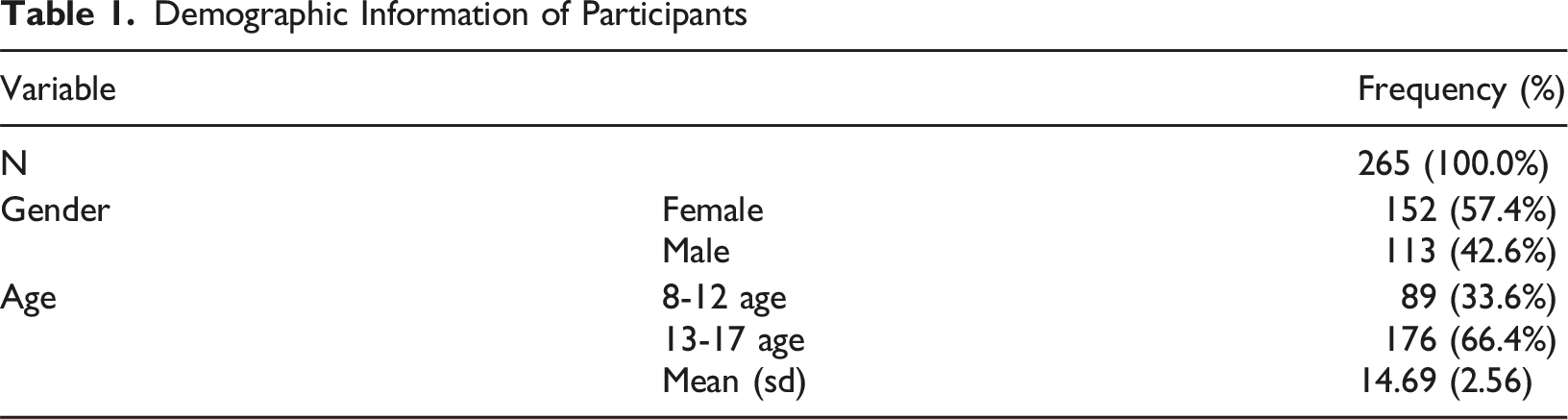
Measures
Child and Adolescent Trauma Screen-2 (CATS-2)
The scale developed by Sachser et al. (2021) to screen posttraumatic stress symptoms in children and adolescents between the ages of 7-17 makes measurements in accordance with both DSM-5 and ICD-11 diagnostic criteria. There are 25 items on a 4-point Likert scale asking the participants to indicate what they have experienced in the last four weeks. The Cronbach’s alpha coefficients examined in the evaluation of the reliability of the scale were also reported to be high (α = .90), and as a result, it was reported that the use of the scale in Turkish culture is valid and reliable (Çimen & Seçer, 2025).
The Child Safety Behaviour Scale (CSBS)
The scale developed by Alberici et al. (2018) for use in children and adolescents who have experienced a traumatic event and measures post-traumatic safety-seeking behaviours. The scale, which has 13 items in 4-point Likert type, has two sub-dimensions, namely “strategic hypervigilance” and “affective suppression”. In the validity and reliability analyses, it was reported that the scale had a good fit and showed good internal consistency. Turkish adaptation of the scale was carried out within the scope of this study.
Data Analysis
In the study, data analyses were performed step by step and first confirmatory factor analysis (CFA) was performed to evaluate the factor structure and reliability of the CSBS scale. In addition to CFA, exploratory structural equation modelling (ESEM) was also used in the evaluation of construct validity. Subsequently, network analysis was conducted to examine the direct and indirect relationships between posttraumatic safety-seeking behaviours and trauma symptoms. CFA/ESEM and network analyses were conducted separately because CFA/ESEM focuses on evaluating the construct validity and factor structure of the CSBS, whereas network analysis assesses the dynamic, symptom-level relationships between PTSD symptoms and safety-seeking behaviours.
Factor Structure
In CFA, model fit was evaluated by examining Confirmatory Fit Index (CFI), Root Mean Square Error of Approximation (RMSEA) and Standardised Mean Square Residual (SRMR) values. Accordingly, RMSEA below 0.06, SRMR below 0.08 and CFI and TLI estimates greater than .90 indicate acceptable fit, while CFI and TLI estimates above .95 indicate good model-data fit (Hox et al., 2017). The rationale for including ESEM is that, in cases where items with overlapping content naturally cross-load on multiple factors, ESEM offers a more flexible framework by combining the strengths of CFA and EFA. It allows theoretically expected cross-loadings while preserving confirmatory testing. This makes it particularly suitable for psychological constructs such as safety-seeking behaviors, where multidimensionality and conceptual overlap are theoretically anticipated. CFA is more restrictive than ESEM in this respect, fixing secondary factor loadings to zero and therefore may not provide an accurate view of the relationships between complex latent constructs. This can produce biased model fit statistics, inflated factor loadings and factor correlations. It may lead to a false rejection of an acceptable model (Marsh et al., 2014; Perry et al., 2015).
The fit indices in ESEM are the same as CFA. In comparisons between ESEM and CFA, if the ESEM model fits the data better than the equivalent CFA model (ΔCFI, ΔTLI ≤ .010; ΔRMSEA ≥ .015) and factor correlations are lower than CFA factor correlations, the ESEM model is preferred. In cases where these criteria are not met, the more stringent CFA model is preferred (Marsh et al., 2014). MPlus version 8.10 was used for ESEM and CFA analyses. The maximum likelihood (ML) estimator was used in the analyses and estimations were made using the target rotation procedure, which allows all cross-loadings to be as close to zero as possible and ensures that they are only used for confirmatory purposes (Asparouhov & Muthén, 2009). Therefore, in the constructed models, all primary loadings on the factors were freely estimated, while all cross-loadings were constrained to be close to zero (Morin et al., 2015). Bayes Information Criterion (BIC; Raftery, 1995) was not examined in the comparison of the models because it directly includes the sample size in the calculation. Instead, Akaike Information Criterion (AIC) values, which is the most well-known statistic in ML estimation (Akaike, 1974), were preferred. In model comparison, the model with the smallest AIC value is considered to have the highest probability of replication and is considered to have a better fit compared to competing models with fewer free parameters (Kline, 2016).
Post-hoc model modifications were applied based on theoretical considerations to improve model fit without compromising the construct validity of the scale (Hayduk, 1990). Specifically, error covariances between items were allowed when there was a strong conceptual justification, such as item pairs reflecting closely related aspects of safety-seeking behaviour. These modifications were implemented carefully to ensure they were consistent with the theoretical structure of the CSBS and did not artificially inflate factor loadings or correlations.
In addition, the construct validity of the CSBS scale was examined with the CATS-2 inventory. In this context, the relationship between the CSBS scale and its sub-dimensions and CATS-2 scale and its sub-dimensions was examined by Pearson correlation. For the reliability of the scale, the internal consistency coefficient (Cronbach’s alpha) and McDonald’s omega values were examined. Cronbach’s alpha and McDonald’s omega values greater than 0.70 reflect adequate internal consistency (Nunnally, 1978).
Network Analysis
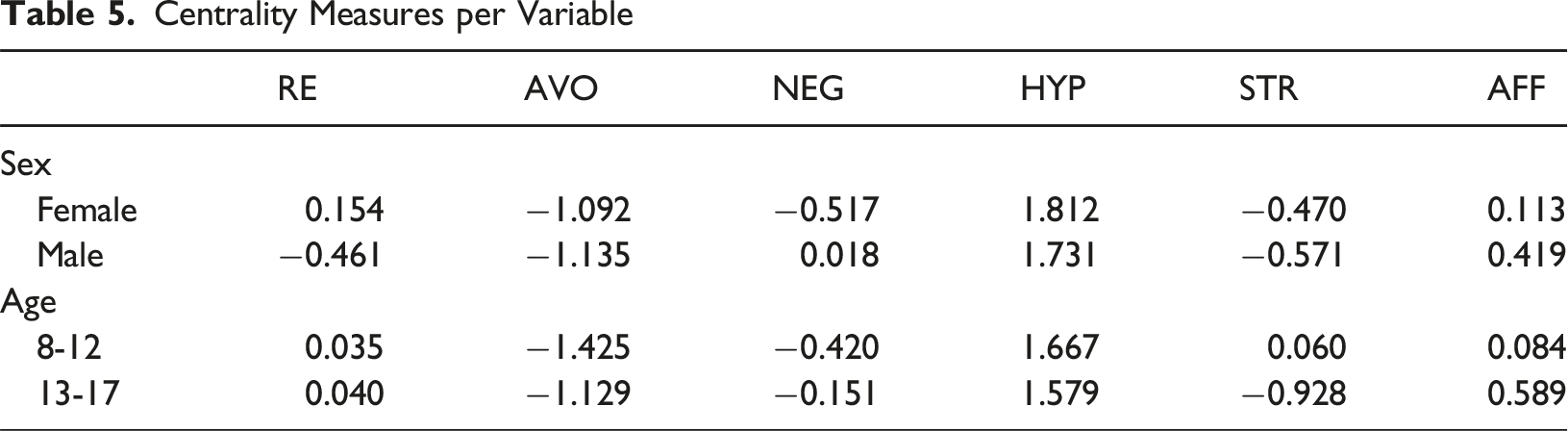
Network analysis was used to examine the network structure of safety-seeking behaviours. Network analysis was performed in JASP 0.11.1.0 (JASP Team, 2019) using the Extended Bayes Information Criterion (EBICglasso) with the least absolute shrinkage and selection operator and the adjustment parameter λ = 0.50. Centrality indices were examined to analyse the structural aspects of the network models. Centrality indices were examined to analyse the structural aspects of network models. Although there are different centrality indices for this purpose, in this study, the expected effect centrality index, which is reported to provide a more appropriate value among other centrality indices for use in psychopathological networks, was examined. Expected Effect refers to the sum of the connections between a node and other nodes in the network, while a high expected effect value reflects the importance of the node in the network (Bringmann et al., 2019).
In addition to the estimation of the network structure, network comparison was conducted to evaluate whether posttraumatic safety-seeking behaviours differed between boys and girls. Network Comparison Test (NCT) package programme was used for network comparison. Network Invariance Structure (M) and Global Strength (S) values were examined to determine whether there were significant differences between the two networks. While M represents whether the overall structure of the network is the same between the groups, S represents the degree of similarity in the overall connectivity of the nodes between the networks, regardless of whether the network structures are similar.
Results
Before proceeding to the data analysis stage, it was examined whether the data set was normally distributed and whether it was suitable for analysis. It was seen that the data showed normal distribution and were considered suitable for analysis (skewness < |3| and kurtosis < |10|; Kline, 2016). (Appendix Table S1).
Participants were recruited from an earthquake-exposed sample. Within the criteria given as reference in the CATS-2 measurement (Sachser et al., 2021), 69 of the 265 participants (26.0%) exhibited moderate (15-20) trauma symptoms, while 116 people (43.8%) had high (≥ 21) posttraumatic stress symptoms. The remaining 80 participants (30.2%) in the sample had only mild or no PTSD symptoms
Factor Structure
Turkish and English Items of CSBS Scale
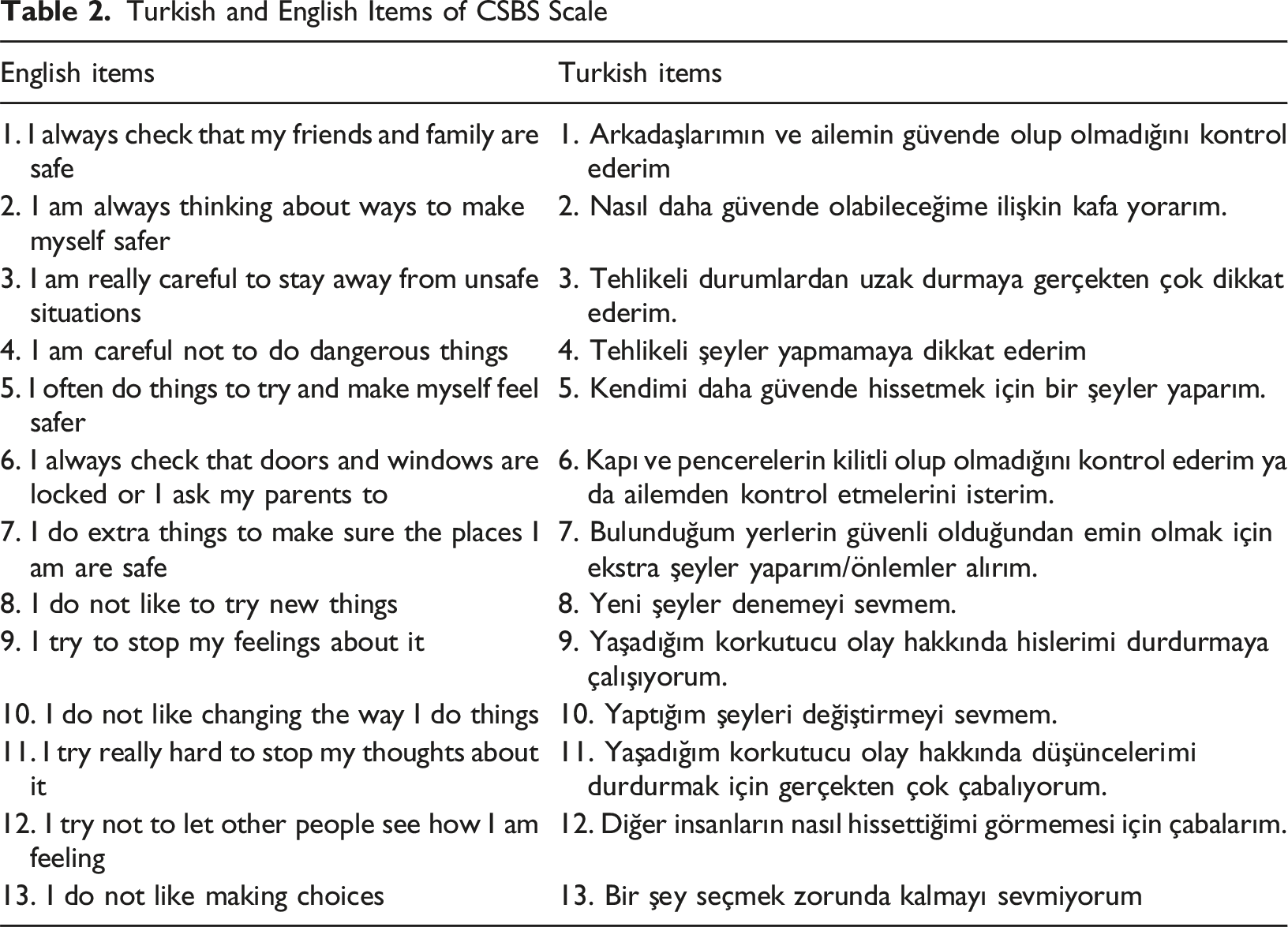
The CFA and ESEM results for the evaluation of the factor structure of the CSBS measure are given in Figure 1 and the goodness of fit index values obtained are given in Table 3. CFA (Left) & ESEM (Right) Results Goodness-of-Fit Index Values for the Models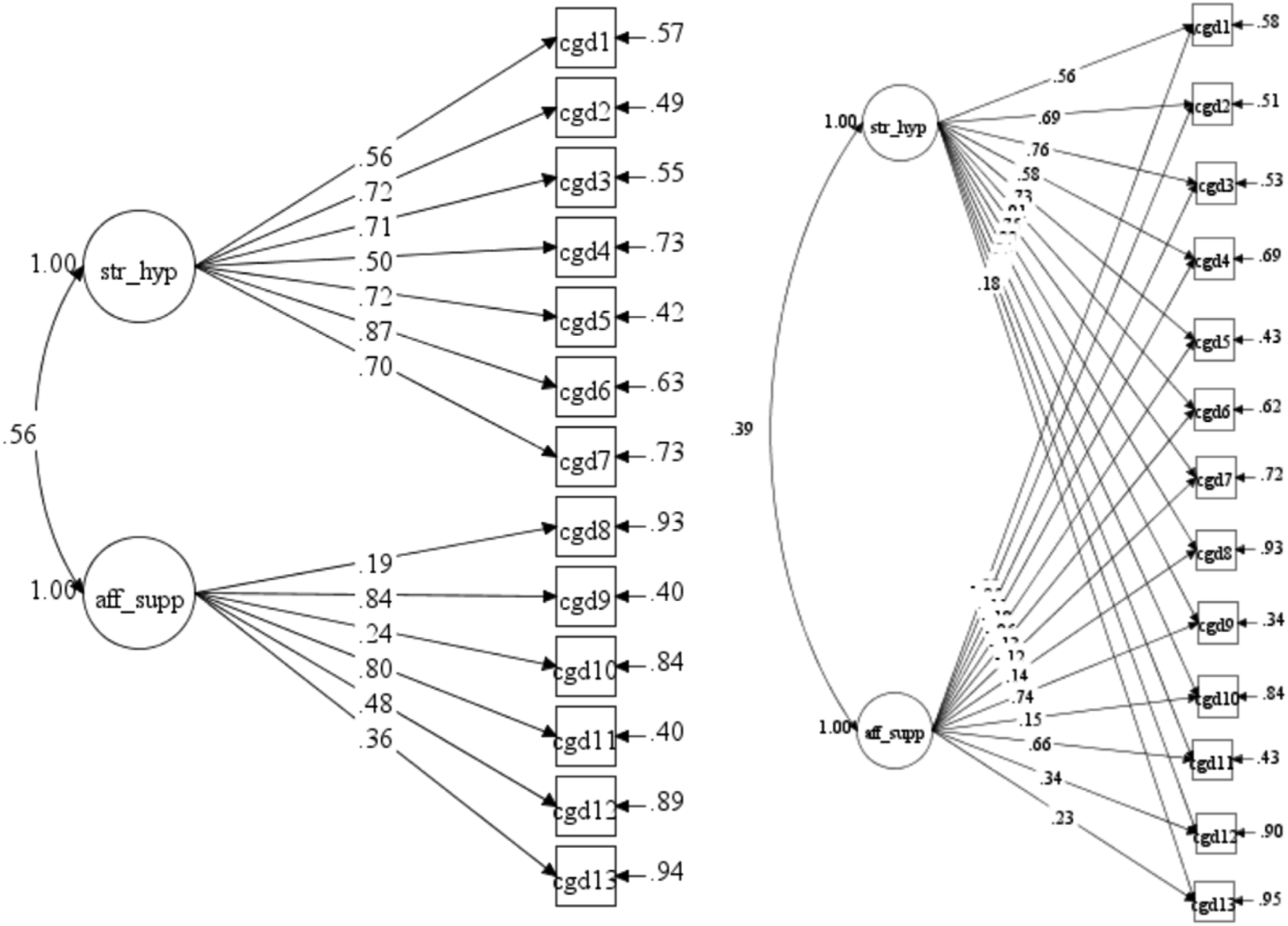

When the CFA and ESEM models were analysed for the measurement of CSBS, no superiority of the ESEM model over the CFA model was found. However, the fit index values of both models were not within the acceptable range (CFI and TLI < .90; RMSEA ≥ .06). Since the ESEM model does not have better model fit and the AIC value is lower in CFA, it can be evaluated that the more restrictive CFA model is preferable than the ESEM model. Modification modification were examined to improve model fit and only modifications with strong theoretical justification were applied to the model. The model obtained by applying modifications (item3-item4 and item8-item10) to increase the model fit in CFA can be seen in Figure 2. CFA Results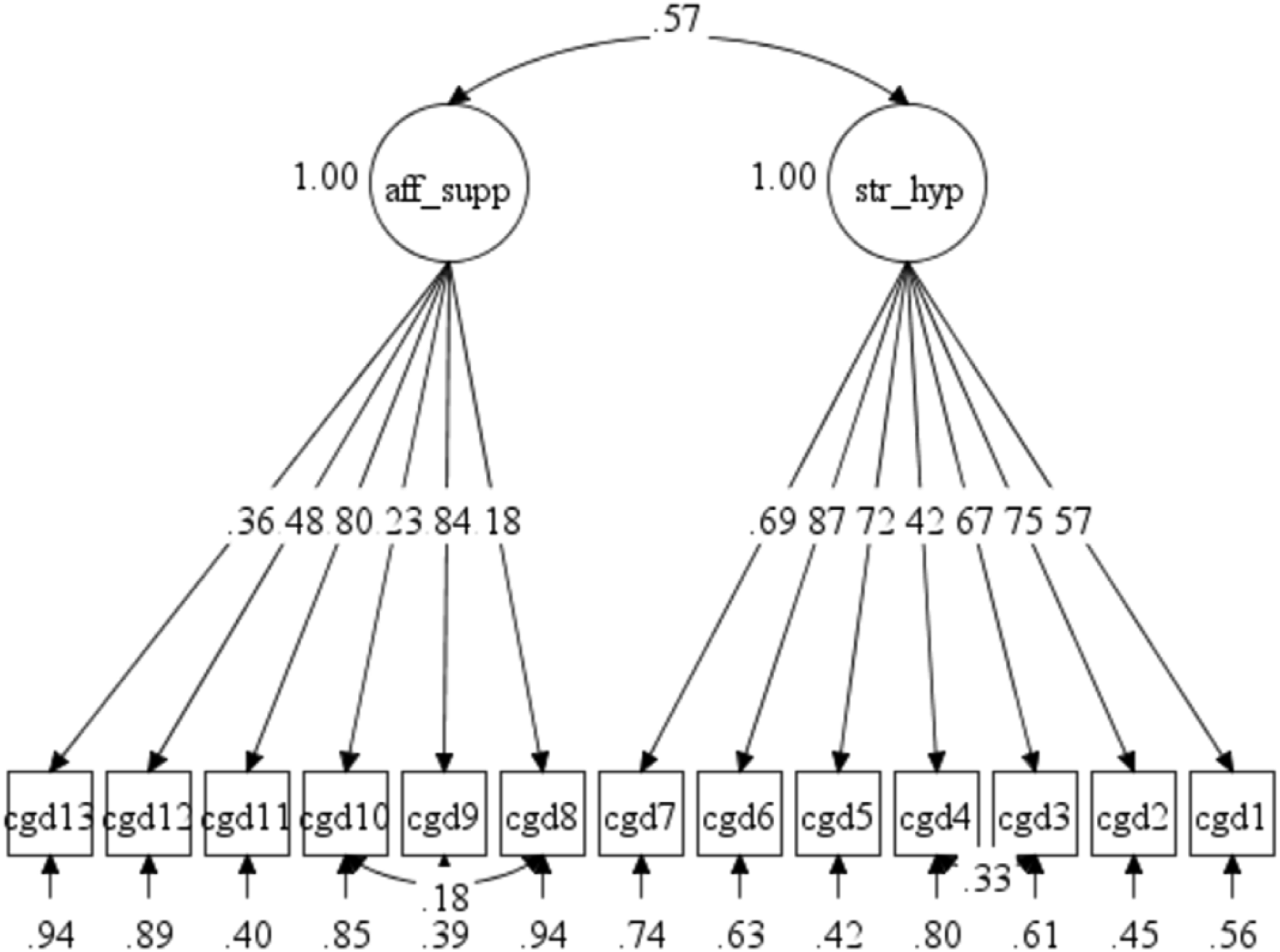
With the addition of the predicted modifications to the model, it was observed that the model fit improved and the structure showed a good fit [X2/df: 1.71, CFI: .95, TLI: .94, RMSEA: .05, SRMR: .04, AIC: 9049.35].
Reliability
When the Cronbach alpha internal consistency coefficients (α) of the scale were examined within the scope of the research, it was seen that the value of Affective Suppression sub-dimension was .84, the value of Strategic Hypervigilance sub-dimension was .64 and the value of the whole scale was .82. When McDonald’s omega coefficients (ω) were analysed, it was seen that the value of Affective Suppression sub-dimension was .81, the value of Strategic Hypervigilance sub-dimension was .62 and finally the value of the whole scale was .80. When the reliability values of the scale were analysed, it was seen that the scale had sufficient reliability values (ꞷ and α ≥ .60) (Dalyanto, 2021; Haynes et al., 1995).
Demographic Comparisons
It was determined whether post-traumatic safety-seeking behaviours differed according to demographic characteristics. For this purpose, firstly, whether post-traumatic safety-seeking behaviours differ according to gender was examined by t-test. As a result of the analyses, it was seen that there was a significant difference between the participants’ post-traumatic safety mean scores and their gender (t[263]) = 2.75, p < .01, Cohen’s d = 0.343). In this regard, when the mean scores were analysed, it was seen that the mean posttraumatic safety scores of girls (M = 19.82, sd = 7.18) were higher than the mean scores of boys (M = 17.26, sd = 7.87). In order to examine the effect of age on posttraumatic safety-seeking behaviours, Spearman’s rho correlation for age and CSBS was calculated. As a result of the analysis, it was found that there was no significant relationship between CSBS and age (r = −.030, p = .622).
Specificity
Pearson Correlation Values for the Relationship Between Variables
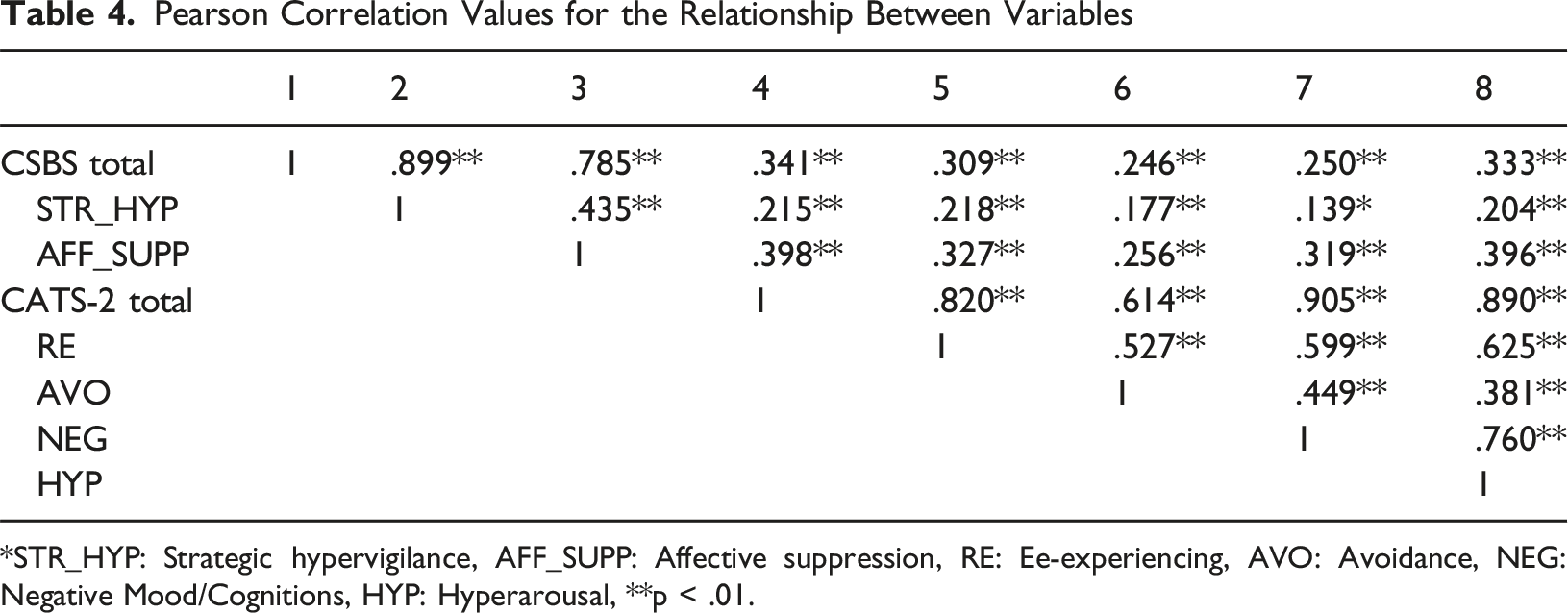
*STR_HYP: Strategic hypervigilance, AFF_SUPP: Affective suppression, RE: Ee-experiencing, AVO: Avoidance, NEG: Negative Mood/Cognitions, HYP: Hyperarousal, **p < .01.
Network Analysis
The network structure and centrality indices of the CSBS measure by gender and age are shown in Figure 3. Network Representation of CSBS Items. *STR: Strategic hypervigilance, AFF: Affective suppression, RE: Ee-experiencing, AVO: Avoidance, NEG: Negative Mood/Cognitions, HYP: Hyperarousal. Network representation of CSBS items [female (upper left) and male (upper right)/8-12 age range (bottom left), 13-17 age range (bottom right)]. Network Centrality Indices. Blue edges indicate positive relationships between nodes. Thicker and darker edges represent stronger connections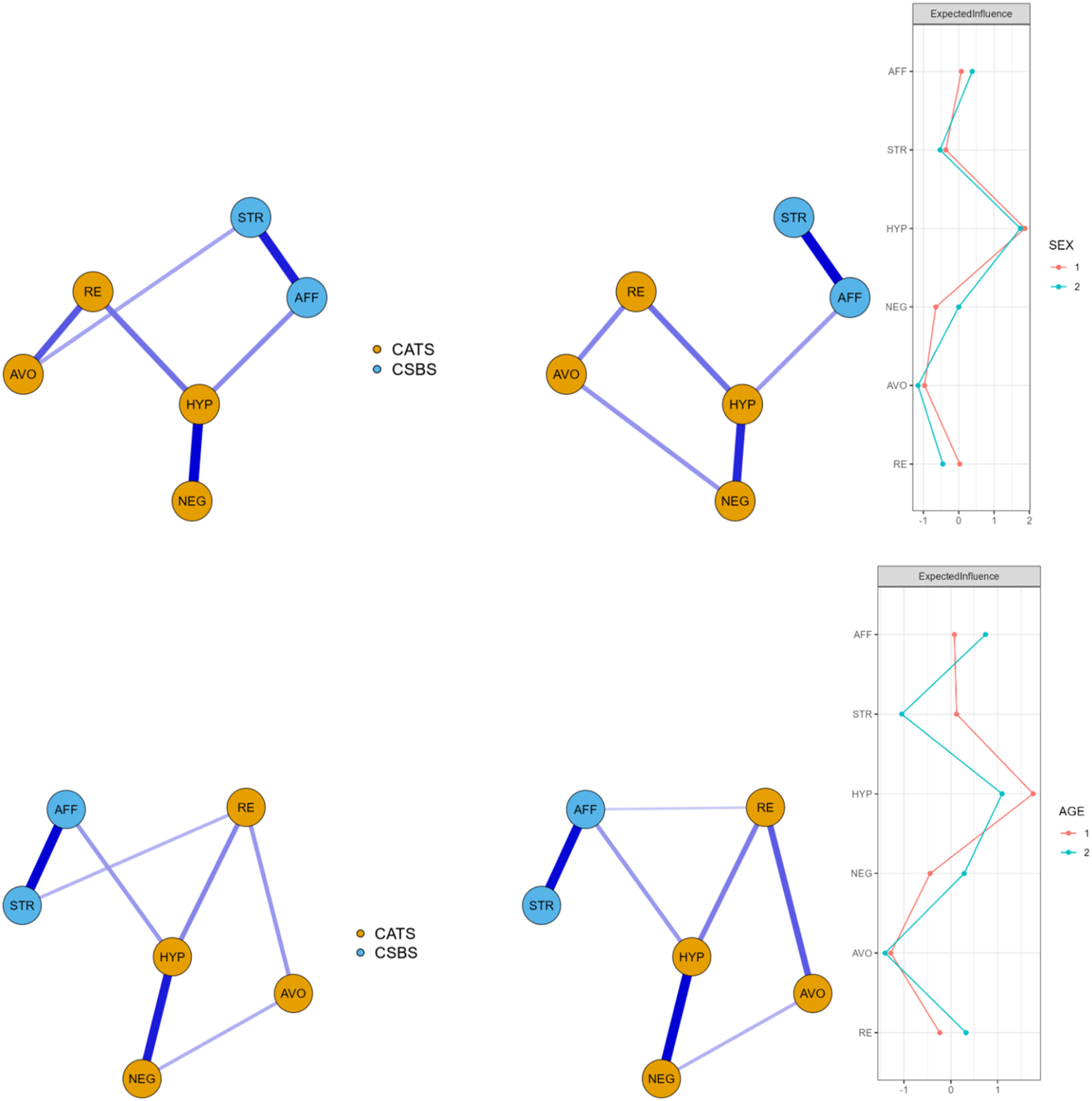
Centrality Measures per Variable
Discussion
In this study, PTSD rates in children and adolescents who were exposed to earthquakes were examined and it was observed that moderate and high severity PTSD symptoms were prevalent (69.8%) in children and adolescents even two years after two major earthquakes. Consistent with this finding, Yakşi and Eroğlu (2024) reported that the prevalence of PTSD was 80% five months after the earthquakes, and Koçak et al. (2025) reported that more than half of the children had severe PTSD symptoms four months after the earthquake. Earthquakes, as the most destructive natural disasters, have the potential to cause serious physical and psychological damage to the individuals in the region they affect. In this sense, various mental health problems, especially PTSD, are common among earthquake survivors (Zhang et al., 2015). Jin et al. (2018) found that the prevalence of PTSD among adolescent survivors was 13.1% three years after the Ya’an earthquake in China, Marthoenis et al. (2019) found that the prevalence of PTSD was 58.3% after the earthquakes in Indonesia, Fujiwara et al. (2016) found that the prevalence of PTSD was 33.8% 2 years after the Great East Japan Earthquake. However, Wang and You (2022) reported that the most severe psychological trauma was experienced approximately 12-18 months after the earthquakes. When PTSD rates are analysed, it is seen that there is a great difference between countries. Although large and destructive natural disasters such as earthquakes are potentially important traumatic events, individual and environmental factors may have a protective effect on PTSD symptoms along with event-related characteristics such as the severity of the earthquake, the way of exposure to the earthquake, the time elapsed since the event, the social support received after the earthquake, and the psychological resilience of the individual (Dai et al., 2016; Sirotich & Camisasca, 2024; Özgün Öztürk, 2024). The children and adolescents included in this study are located in Hatay province, where two earthquakes affecting 11 provinces in Turkey caused the most severe destruction. Although Hatay province was not the centre of the earthquakes on 6 February, it was the province where the greatest destruction occurred. In this sense, approximately half of the total number of casualties and destroyed buildings announced in 11 provinces occurred only in Hatay province (Mistikoğlu, 2024). The severity of the situation likely accounts for the high PTSD rates obtained two years after the earthquake.
Another important finding of the study is that there is a significant relationship between PTSD symptoms and safety seeking behaviours. Consistent with this finding, Alberici et al. (2018) demonstrated in their study on children and adolescents that safety-seeking behaviours are significantly associated with PTSD symptoms. Similarly, research by Blakey et al. (2020) and McClure et al. (2019) has shown that trauma-related safety behaviours are linked to higher levels of PTSD symptoms. This finding aligns with cognitive models of post-traumatic stress disorder (PTSD). According to these models, excessively negative appraisals of trauma exposure maintain a persistent sense of threat, prompting individuals to engage in various cognitive strategies and behaviours that contribute to the maintenance of PTSD symptoms (Blakey et al., 2020; Foulser et al., 2024).
Another key finding of this study is the direct and indirect relationships between PTSD symptoms and post-traumatic safety behaviours. The analyses revealed that among PTSD symptoms, hyperarousal is the most central symptom within the network and is directly associated with affective suppression, a key component of the measure of safety-seeking behaviours used here. When the literature is examined, it is seen that the finding obtained is in parallel with the studies conducted in England. In the study conducted by Alberici et al. (2018) in children and adolescents in England, it was reported that affective suppression (one of the sub-dimensions of the CSBS sub-scales) was more related to PTSD symptoms than the strategic hypervigilance subscale. Again, in the study conducted by Chiu et al. (2023), it was found that adolescents with Complex PTSD exhibited more safety-seeking behaviours, especially affective suppression, compared to healthy adolescents. In this sense, it is reported that affective suppression increases psychological and physiological arousal in individuals who develop PTSD symptoms and leads to overstimulation (Henschel et al., 2021).
Affective suppression leads to overstimulation (Henschel et al., 2021) and increases PTSD symptoms (Weiss et al., 2018). A study by Henschel et al. (2021) found that experiential avoidance partially mediates the relationship between affective suppression and hyperarousal. Similarly, McClure et al. (2019) demonstrated that safety-seeking behaviours, including affective suppression, are particularly associated with heightened post-traumatic arousal and reactivity symptoms. The suppression of negative cognitions and emotions following trauma may lead to maladaptive coping behaviours, which, in turn, can increase subjective distress (Patronick et al., 2025). In the long term, this process may reinforce both safety-seeking behaviours and avoidance symptoms (McClure et al., 2019).
Affective suppression has been associated not only with PTSD symptoms but also with depression, anxiety, and somatization (Chung et al., 2016, 2021) and has been reported to contribute to lower quality of life (Chervonsky & Hunt, 2017). Thus, adequate emotional expression is recognized as a key indicator of resilience among trauma-exposed children (Echeburúa & Amor, 2022; Buser et al., 2022). In this context, clinical interventions for treating PTSD symptoms in children and adolescents should emphasize internal processes such as affective suppression, which are more difficult to detect than observable behaviours (Alberici et al., 2018).
Strengths and Limitations
This study aimed to adapt the CSBS to Turkish culture and demonstrated that the scale is a valid and reliable tool for assessing safety-seeking behaviors in children and adolescents within this cultural context. As far as the researchers are aware, this study provides the first measurement tool for evaluating trauma-related safety-seeking behaviours in Turkish children and adolescents. While the study has significant strengths, it also has notable limitations. One major limitation is that the sample only includes children and adolescents exposed to an earthquake, a natural disaster-related traumatic event. In addition, only the symptom severity section of the CATS-2 measurement was used as a data collection tool in the study and no information was collected on whether the participants experienced different trauma situations. Therefore, it is important for future research to examine the validity and reliability of the scale in children and adolescents exposed to different types of traumatic events. Additionally, the study was conducted on a specific group of traumatized children and adolescents, resulting in a relatively small sample size. Future studies should investigate the psychometric properties of the scale in larger and more diverse samples to enhance its generalizability.
Supplemental Material
Supplemental Material - Psychometric Evaluation of the Turkish Adapted Posttraumatic Safety-Seeking Behaviours Scale (CSBS) and Network Analysis of PTSD Symptoms in Earthquake-Exposed Children and Adolescents
Supplemental Material for Psychometric Evaluation of the Turkish Adapted Posttraumatic Safety-Seeking Behaviours Scale (CSBS) and Network Analysis of PTSD Symptoms in Earthquake-Exposed Children and Adolescents by Fatmanur Çimen, İsmail Seçer, Alice Alberici, Richard Meiser-Stedman in Clinical Child Psychology and Psychiatry
Footnotes

Ethical Considerations
This study was approved by the University of Atatürk’s Human Research Ethics Committee (approval no: E-91397109-640-2500031285, 28.01.2025).
Funding
The authors received no financial support for the research, authorship, and/or publication of this article.
Declaration of conflicting interests
The authors declared no potential conflicts of interest with respect to the research, authorship, and/or publication of this article.
Data Availability Statement
Supplemental Material
Supplemental material for this article is available online.
Author Biographies
References
Supplementary Material
Please find the following supplemental material available below.
For Open Access articles published under a Creative Commons License, all supplemental material carries the same license as the article it is associated with.
For non-Open Access articles published, all supplemental material carries a non-exclusive license, and permission requests for re-use of supplemental material or any part of supplemental material shall be sent directly to the copyright owner as specified in the copyright notice associated with the article.
