




Abstract
This study explores how former child soldiers in Colombia narrate identity repair following their experiences of conflict. Twenty-five adolescents and young people (aged 14–19) participated in participatory life-history workshops using a creative auto/biography (CAB) method. A narrative analysis of over 200 first-person multimodal texts identified four recurring plots— the Struggler, Learner, Advocate, and Survivor—each reflecting distinct, non-sequential pathways of self-reconstruction, emotional processing, and social re-engagement. These plots show how young people reimagine self and negotiate belonging amid stigma, rupture, and transition. The study proposes a Narrrative Identity Repair Compass comprising six interrelated domains: narrative coherence, self-concept (self-image and self-worth), self-efficacy (capacity to act on and shape circumstance), temporal orientation, relational positioning, and cognitive processing (narrative work integral to change). This multidimensional model conceptualises identity repair as fluid, non-linear, and relational. Post-traumatic growth (PTG) defined here as positive psychological change emerging from the struggle with major adversity is reframed as a contingent possibility shaped by reflection, relationships, and creativity. This framework offers a developmentally appropriate and context-sensitive approach to understanding how former child soldiers reconstruct meaning, repair identity, and move toward psychosocial integration following experiences of armed violence.
Plain Language Summary
Stories of Survival and Growth: Young People Rebuilding Themselves After War: This study explores how young people who were formerly recruited by armed groups in Colombia begin to heal and rebuild their sense of self after experiencing violence and trauma. Rather than focusing only on psychological symptoms or diagnoses, the research looks at how these young people tell their life stories:what they choose to remember, how they make sense of difficult experiences, and how they imagine their future. Using a creative method called Creative Auto/Biography(CAB), 25 participants wrote, drew, and reflected on their past, present, and future. The research analysed over 200 pieces of writing/illustration and other creative artefacts to understand how young people process trauma and express growth through storytelling. The study found that while not all participants showed signs of growth, many developed new ways of thinking about themselves and their lives. These changes were often fragile, incomplete, and coexisted with pain, but they also reflected hope, purpose, and transformation. The research identified four narrative plots or identity types: Strugglers, whose stories were marked by confusion and unresolved trauma; Learners, who showed new insight and growing self-awareness; Advocates, who used their experiences to help others and imagine new futures; Survivors, who developed more stable and integrated identities despite past harm. From these stories, the study developed a model with six areas of growth: self-worth, emotional expression, narrative coherence, relational connection, moral repair, and future orientation. These findings can help social workers, therapists, and reintegration programmes better understand where young people are in their healing journeys and how to support them. By listening to their stories and recognising growth as uneven, we can support young people not just to recover, but to reimagine who they want to become.
Keywords
Introduction
The psychological and physical harms experienced by former child soldiers are well documented, with elevated rates of PTSD, anxiety, and aggression (Bayer et al., 2007; Derluyn et al., 2004; Kohrt, 2007). Trauma-focused research has often framed these young people as ‘morally damaged’ (Wessells, 2006) or defined by ‘fragmented’ selves (Peréz-Sales, 2010). While such perspectives illuminate the profound impact of armed violence, they risk underplaying these youths’ capacity to actively engage in their own recovery. In contrast, this study foregrounds narrative identity repair (Adler, 2012) and how former child soldiers mobilise storytelling to reclaim coherence, reassert agency, and author new meanings after disruption.
This emphasis on self-authored recovery aligns with the concept of post-traumatic growth (PTG), which recognises that highly distressing experiences of violence may not only cause harm, but can also prompt reflection, re-evaluation and psychological development (Tedeschi & Calhoun, 1996, 2004). PTG constitutes positive psychological change emerging from the struggle with major adversity—in this case, the aftermath of violent conflict and the challenges of reintegration marked by stigma, mistrust, and limited opportunities for belonging and livelihood. It entails qualitative shifts in worldview, identity, and functioning that go beyond recovery or resilience (Tedeschi & Calhoun, 1996, 2004). While resilience refers to maintaining or regaining prior levels of functioning, PTG implies a transformation to new ways of thinking, feeling, and relating. It has become an influential construct, but the theoretical and methodological foundations of PTG remain contested. Despite its emphasis on change beyond restoration, critics argue that PTG is sometimes conflated with coping and note its cultural specificity and reliance on self-report measures vulnerable to recall bias and social desirability (Zoellner & Maercker, 2006; Hobfoll et al., 2007). In post-conflict settings such as former child soldiering, these concerns are amplified: reintegration often hinges on presenting socially valued change, and narratives of growth or moral repair may be shaped as much by strategic self-presentation as by personal reflection.
Although Tedeschi and Calhoun (2004) acknowledged that PTG is constructed through cognitive and emotional struggle, much research continues to treat it as a fixed outcome. This risks missing how growth is developed and reconstructed over time. Viewing PTG as an evolving process invites closer attention to the developmental dynamics—particularly in adolescence—that shape how growth is initiated, sustained, and reworked.
Adolescence is a period of heightened identity exploration, emotional reactivity, and social reorientation (Erikson, 1968; Steinberg, 2005). These developmental features can magnify trauma’s impact, but also open unique pathways to growth (Kilmer, 2014). Evidence suggests that children and adolescents can experience PTG in ways similar to adults, though developmental stage and social context shape how it unfolds (Meyerson et al., 2011).
The fluidity of the adolescent self-concept can enable adaptive narrative reconstruction, particularly when supported by relational, symbolic, and reflective processes. For former child soldiers, identity repair is conceptualised as a developmental process through which these young survivors of conflict reconstruct meaning, self-concept, and social positioning after violence. PTG is framed not as that process itself, but as one possible—though not inevitable—trajectory within it.
Method
The study adopts a narrative analysis to explore the lived experiences of participants. Data were collected using the CAB (Creative Auto/Biography) method, a participatory life-history approach developed by the author through work with former child soldiers and young offenders. CAB supports the co-creation of first-person narratives using artistic forms such as writing, photography, video, and audio over extended periods.
Grounded in narrative inquiry, the method assumes that identity is constructed through storytelling (Bruner, 2004; McAdams, 2001; Polkinghorne, 1991). The process of ‘emplotment’ (Ricoeur, 1984) links life events into meaningful wholes, enabling sense-making and self-recognition. CAB provides a supportive, reflexive space to explore past, present, and future selves.
The material produced through the CAB method was intentionally multi-layered. Alongside narrative texts, participants created poems, lyrics, photographs, drawings, and symbolic imagery—forms integral to their storytelling processes. These artistic outputs enabled expression when words felt insufficient to convey emotional complexity.
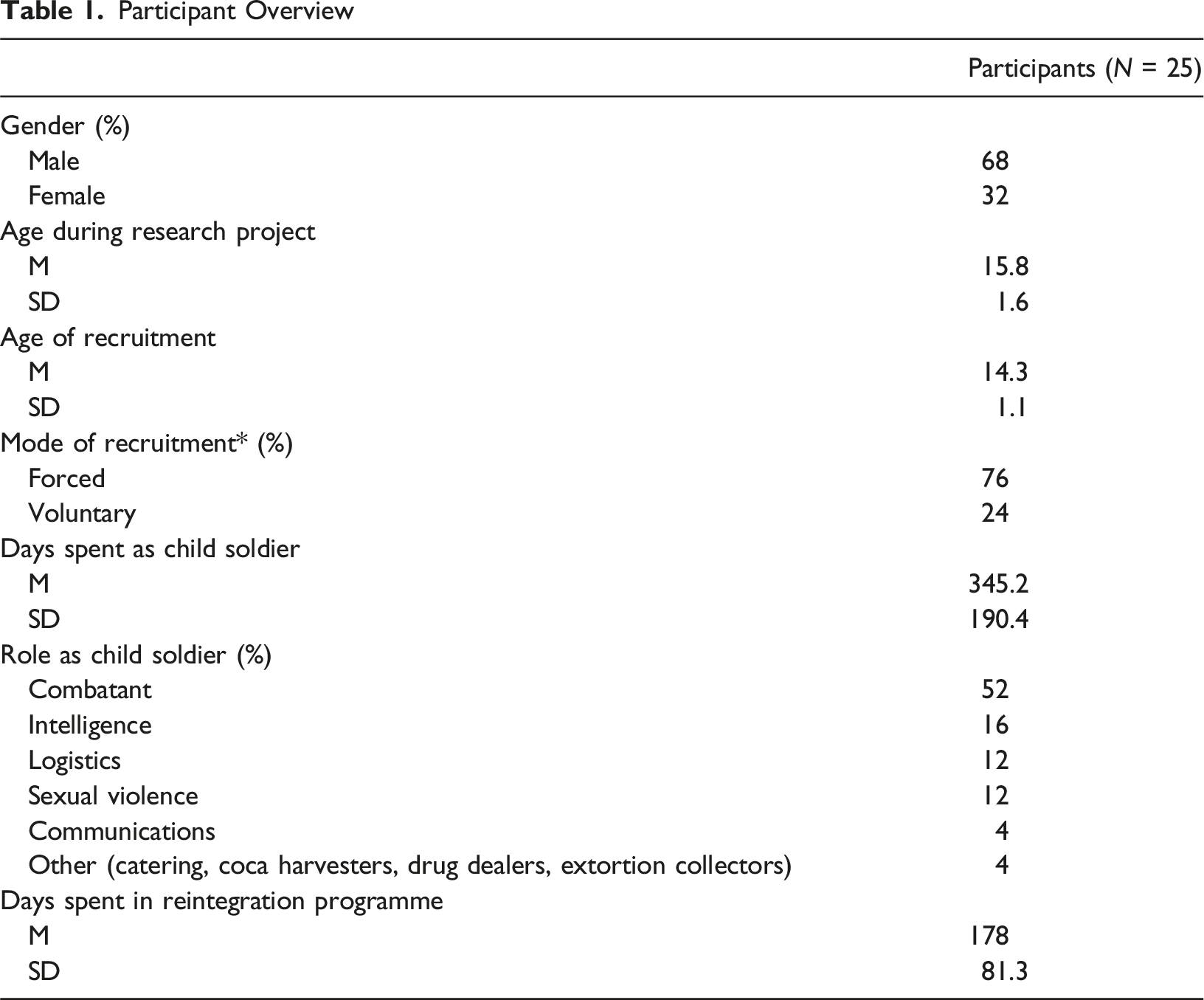
Participants
Participant Overview
Data Collection
Participants took part in ten two-day workshops over three months. Workshops scaffolded reflection and narrative development through creative activities including object elicitation, mapping, and storytelling. CAB is designed to yield ‘autobiographic vignettes’ rather than comprehensive life histories (Charles & Fowler-Watt, 2020). These fragments reveal emotional insights, turning points, and shifts in perspective, often emerging non-linearly across sessions.
Data Analysis
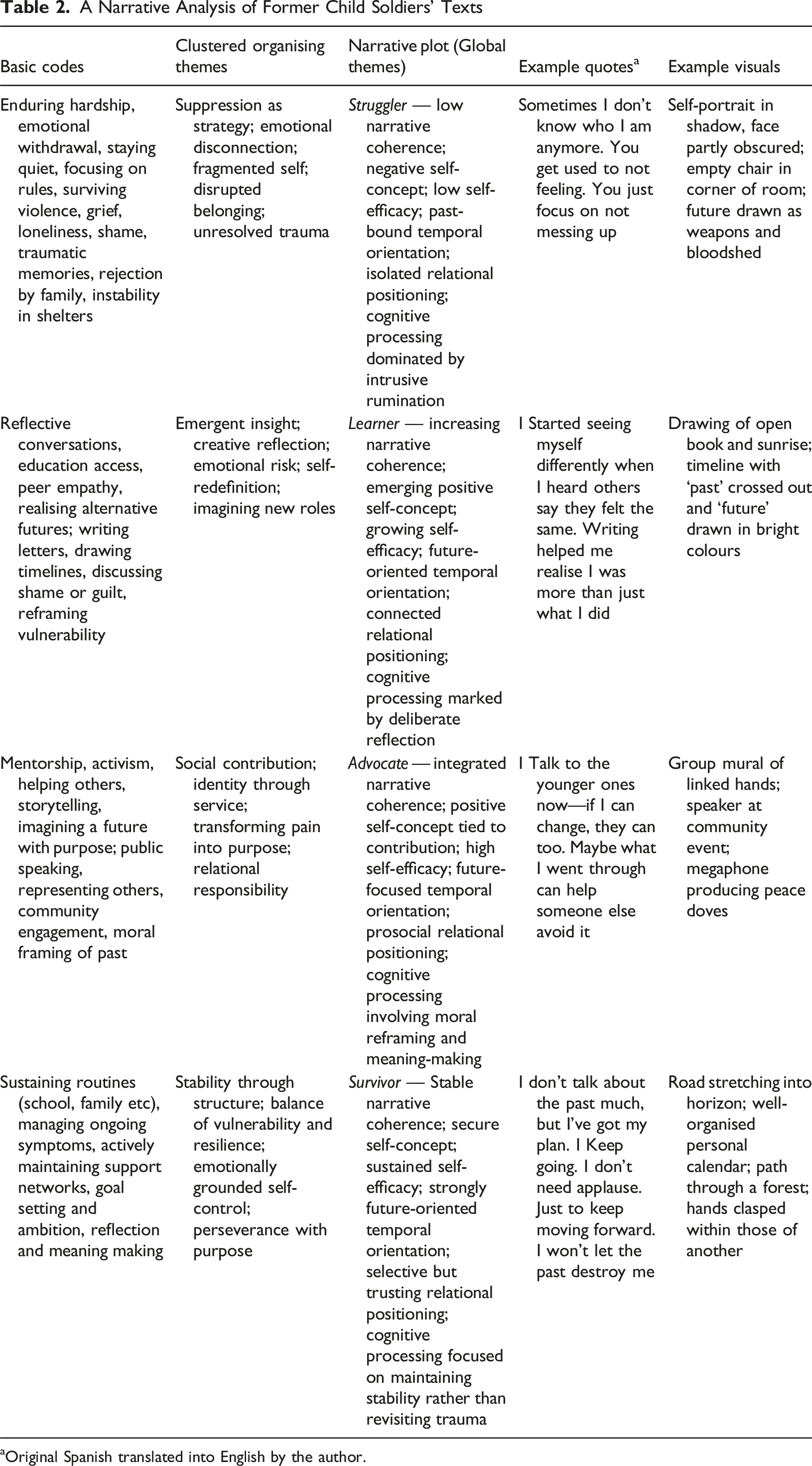
A Narrative Analysis of Former Child Soldiers’ Texts
aOriginal Spanish translated into English by the author.
Initial codes and definitions were established collaboratively through joint review of a subset of data; once guidelines were agreed, coders worked independently to apply and refine these into basic and organising themes before reconciling differences to calculate agreement rates prior to consensus. Plot membership was assigned when at least three distinct contributions (text and/or visual) matched a plot’s defining features. This threshold was set a priori to ensure recurrent rather than incidental alignment; multiple memberships were retained when criteria were met for more than one plot.
Visual and multimodal materials were analysed alongside texts using interpretive visual methodologies (Rose, 2000; Levy, 2015), including compositional analysis, metaphor/symbol coding, temporal cue identification, and emotional tone assessment (Table 2). Convergence was confirmed when narrative and visual modes expressed the same organising or global theme; divergences were re-examined in subsequent coding rounds to explore whether they reflected complementary meanings, indicated the need for theme refinement, or revealed new interpretive possibilities.
The research team comprised the author and four trained undergraduate research assistants. Rigour was supported by double-coding 40 texts (20% of the dataset) for basic themes and plot assignments (discrepancies resolved through discussion), alongside reflexive journaling, member checking, and iterative team debriefs to co-construct meaning and mitigate social desirability effects.
Results
The narrative analysis of participants’ contributions identified four recurring plots, illustrating divergent overlapping experiences of identity repair: the Struggler, Learner, Advocate, and Survivor (Table 2).
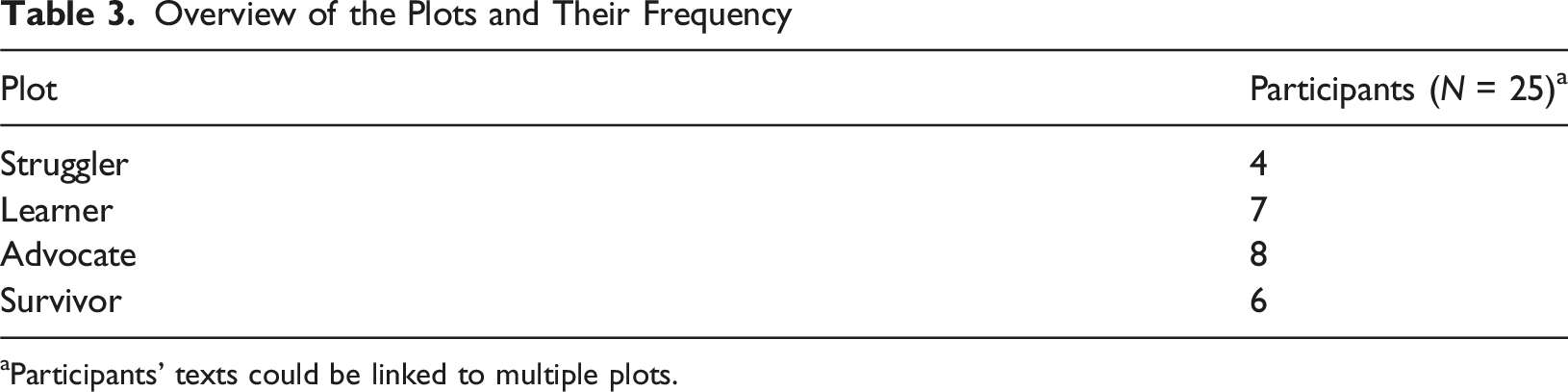
Overview of the Plots and Their Frequency
aParticipants’ texts could be linked to multiple plots.
Participants often moved between or inhabited more than one plot simultaneously, reflecting the non-linear nature of identity repair. This narrative hybridity reinforces how the four plots are not fixed stages or endpoints but rather flexible configurations of identity work.
While certain experiences—particularly sexual violence—were strongly gendered, participants’ responses to these experiences still aligned with the four narrative plots, underscoring how each one captures variability in meaning-making rather than fixed, gender-specific pathways. Furthermore, while each plot intersects with grief and loss through mourning of people, roles, and futures, they represent neither sequential grief stages nor uniform steps toward PTG.
Plot 1: The Struggler (Fragmentation and Ambivalence)
Struggler narratives revealed the emotional and narrative complexity of recovery. These incoherent narratives reflected confusion, disorientation, and unresolved emotional weight. While some explored self-expression through imagery or dialogue, many remained unsure of their identity or future. These accounts challenge assumptions about linear progress, illustrating how repair can remain suspended or deeply conflicted, with resilience still out of reach.
Plot 2: The Learner (Reflection and Redefinition)
Learner narratives centred on introspection and efforts to reconfigure identity. Participants confronted shame, guilt, and past harm, moving through cycles of emotional struggle and tentative insight. Vulnerability was reframed as a source of strength, with creative practices like writing or dialogue used to construct new self-understandings. Though uncertain, these stories showed a shift from survival to meaning-making.
Plot 3: The Advocate (Social Transformation)
Advocate narratives portrayed a shift from individual survival to collective purpose. Participants reimagined past suffering as fuel for social action, becoming mentors, storytellers, or community leaders. These stories projected clarity of mission and a strong relational drive. Even where pain remained unresolved, participants used contribution as a vehicle for self-renewal—indicating transformation not only in role but in worldview. Growth, here, involved more than bouncing back; it reflected a reorientation toward others grounded in moral agency. However, for some, the advocate role risked masking unresolved pain, offering external recognition without full emotional integration.
Plot 4: The Survivor (Integration through Endurance)
The Survivor plot represented the most integrated form of personal growth. These narratives emphasised perseverance, emotional regulation, and the gradual reconstruction of life after conflict. Turning points led to self-control, future orientation, and selective trust. Survivors drew on inner strength to rebuild with purpose and clarity.
While age was not the focus of analysis, narrative trends suggested that older participants (aged 17–19) more often expressed elements of the Advocate or Survivor identities, whereas younger adolescents tended to align more closely with Learner or Struggler plots. This may reflect developmental differences in self-reflection, emotional regulation, and future orientation across adolescence (McLean et al., 2010). However, these trends were not uniform or prescriptive, and movement between plots occurred in multiple directions as meaning evolved.
Evidence of Growth
PTG Among Former Child Soldiers
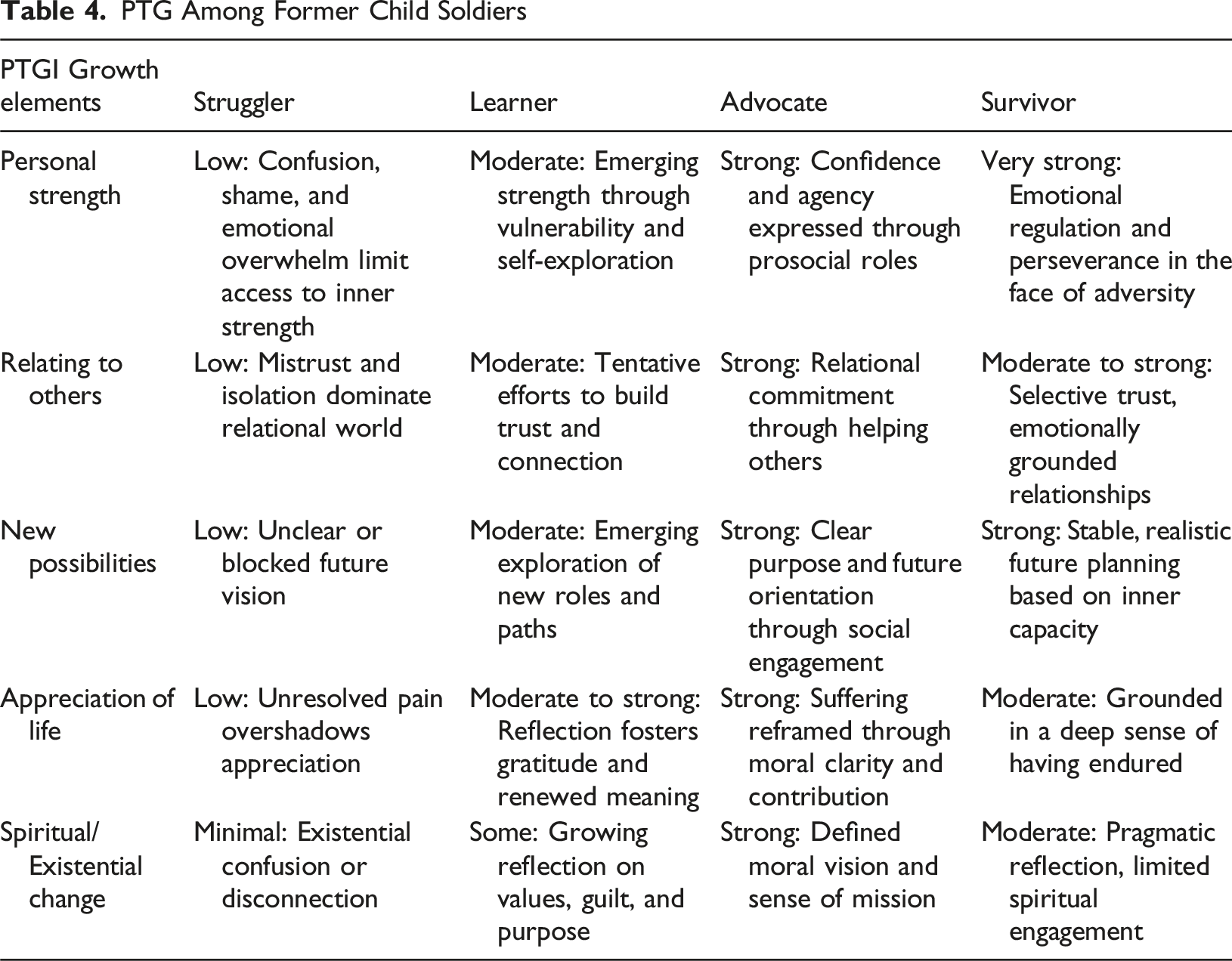
Conversely, the Struggler plot revealed the limits of growth. Participants in this group conveyed disorientation, pain, and narrative fragmentation. Rather than refuting PTG, these stories show that growth is not inevitable nor linear, and that recovery may be slow, contradictory or incomplete. In this sense, PTG is best understood as a fragile, uneven and contingent process.
Cross-Cutting Themes: Settings, Characters, and Epiphanies
The four narrative plots were shaped by cross-cutting elements that influenced narrative direction and depth. These included the settings in which participants lived, the relationships that surrounded them, and the moments of personal insight or epiphanies that reoriented their sense of self. Together, these factors acted as either enabling or undermining influences, shaping whether participants were able to move toward transformation or remained caught in ongoing struggle.
Settings: Institutional, Social, and Symbolic Spaces
Narrative Settings and Their Frequency
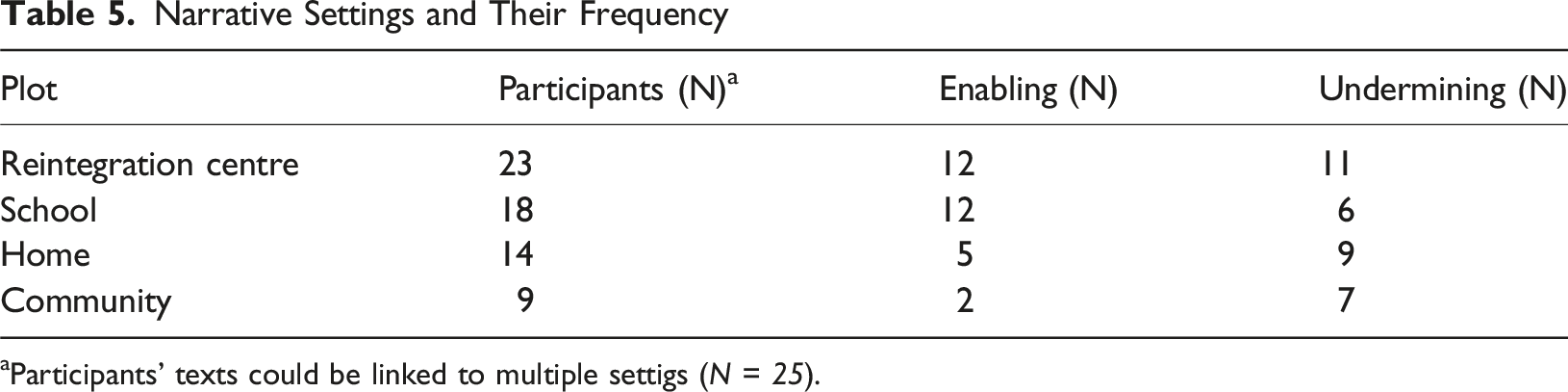
aParticipants’ texts could be linked to multiple settigs (N = 25).
The reintegration centre was often experienced ambivalently—as a space of both control and safety. Its structured routines and psychosocial support provided some participants with early opportunities to reflect and rebuild.
Schools offered normalcy but also the risk of judgment, making them sites of both belonging and retraumatisation.
The home, though not physically returned to during reintegration, remained a powerful symbolic setting. For some, it evoked love, memory, or longing; for others, it was associated with neglect, violence, or complicity in their recruitment. As such, the home functioned as an affective landscape tied to both early vulnerability and ongoing desire for care.
The community—particularly urban neighbourhoods where participants were placed—could be disorienting and unsafe. Many came from rural areas and experienced reintegration into cities as alienating and hostile (Denov & Marchand, 2014). However, some found support in local initiatives such as church groups or artistic collectives, which offered opportunities for connection without directly confronting past trauma.
Characters: Present and Absent Figures
Characters and Their Frequency
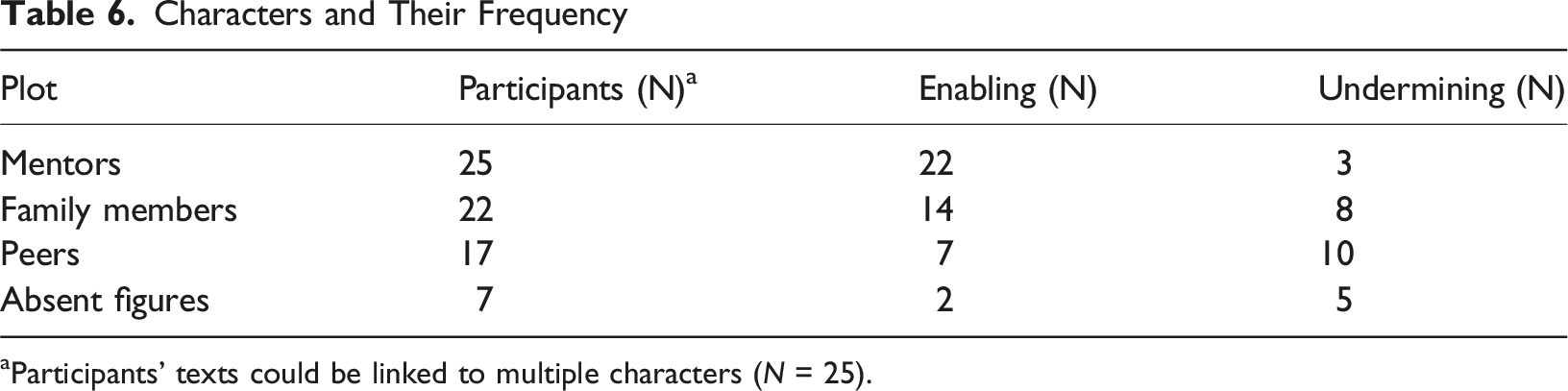
aParticipants’ texts could be linked to multiple characters (N = 25).
Mentors and psychosocial staff appeared across the majorioty of plots as stabilising influences, offering support, guidance, and alternative models of adulthood. Their presence often marked a turning point in participants’ capacity for self-reflection and narrative integration.
Family members were depicted in more conflicted and emotionally complex ways. Some were anchors of affection, especially grandmothers or siblings. Others were a source of profound pain—either due to abandonment, complicity in recruitment, or rejection upon return.
Peers, particularly those who had also exited armed groups, generated belonging and mutual understanding. These connections reduced isolation and provided a safe context in which to explore identity without fear of stigma. However, not all peer relationships were positive. In some cases, peers had played a role in recruitment, contributing to feelings of betrayal and deep mistrust.
Absent characters - including parents, siblings, or recruiters - were often referenced obliquely. These figures shaped internal landscapes but were rarely explored, reflecting unresolved ties. Their absence created gaps that revealed struggles with loss, betrayal, or closure.
Epiphanies: Turning Points in Narrative Reconstruction
Epiphanies and Their Frequency
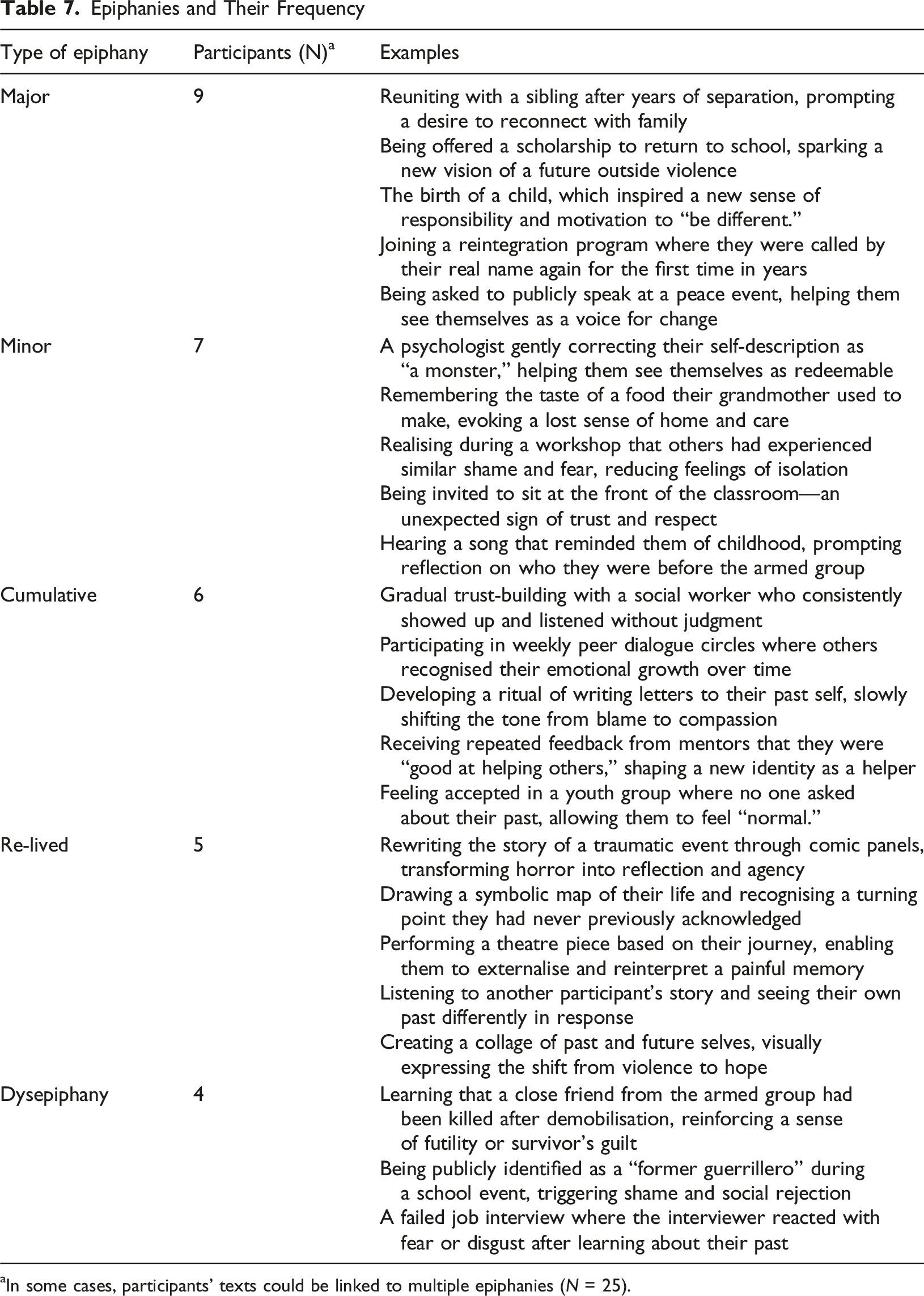
aIn some cases, participants’ texts could be linked to multiple epiphanies (N = 25).
Following Denzin’s (2017) typology, participants described: Major epiphanies that marked transformative turning points; Minor epiphanies, where specific memories or realisations helped reframe prior experiences, often linked to safety, care, or unexpected connection; Cumulative epiphanies, emerging gradually through supportive relationships that fostered self-acceptance and narrative coherence; and Re-lived epiphanies, enabled through the CAB process, where participants used storytelling or symbolic imagery to reinterpret difficult past events.
These moments catalysed emotional and cognitive shifts and often signalled the beginning of identity reconfiguration (McDonald, 2007). Not all led to growth; some ‘dysepiphanies’ were destabilising, revealing unresolved pain or trauma participants were unprepared to confront (Chappell, 2022).
Domains of Growth and Repair
Participants revealed diverse patterns of engagement with trauma, identity, and possibility across the four narrative plots. While each plot illustrated a distinct narrative position, cross-case analysis highlighted recurring tensions and shifts in how participants narrated themselves in relation to the past, others, and the future. Six interrelated domains were developed and identified as key to understanding the ongoing process of identity repair among participants: Narrative coherence refers to the degree to which individuals could organise their experiences into a structured, meaningful story. Self-concept captures participants’ sense of who they are—their self-image and self-worth—ranging from feelings of shame or damage to emerging self-acceptance. Self-efficacy reflects their perceived capacity to act on and shape their circumstances and future direction. Temporal orientation concerns whether their narratives were past-bound, present-focused, or future-oriented. Relational positioning describes how they positioned themselves in relation to others—whether isolated, mistrustful, connected, or prosocial. Identity Repair and PTG Among Former Child Soldiers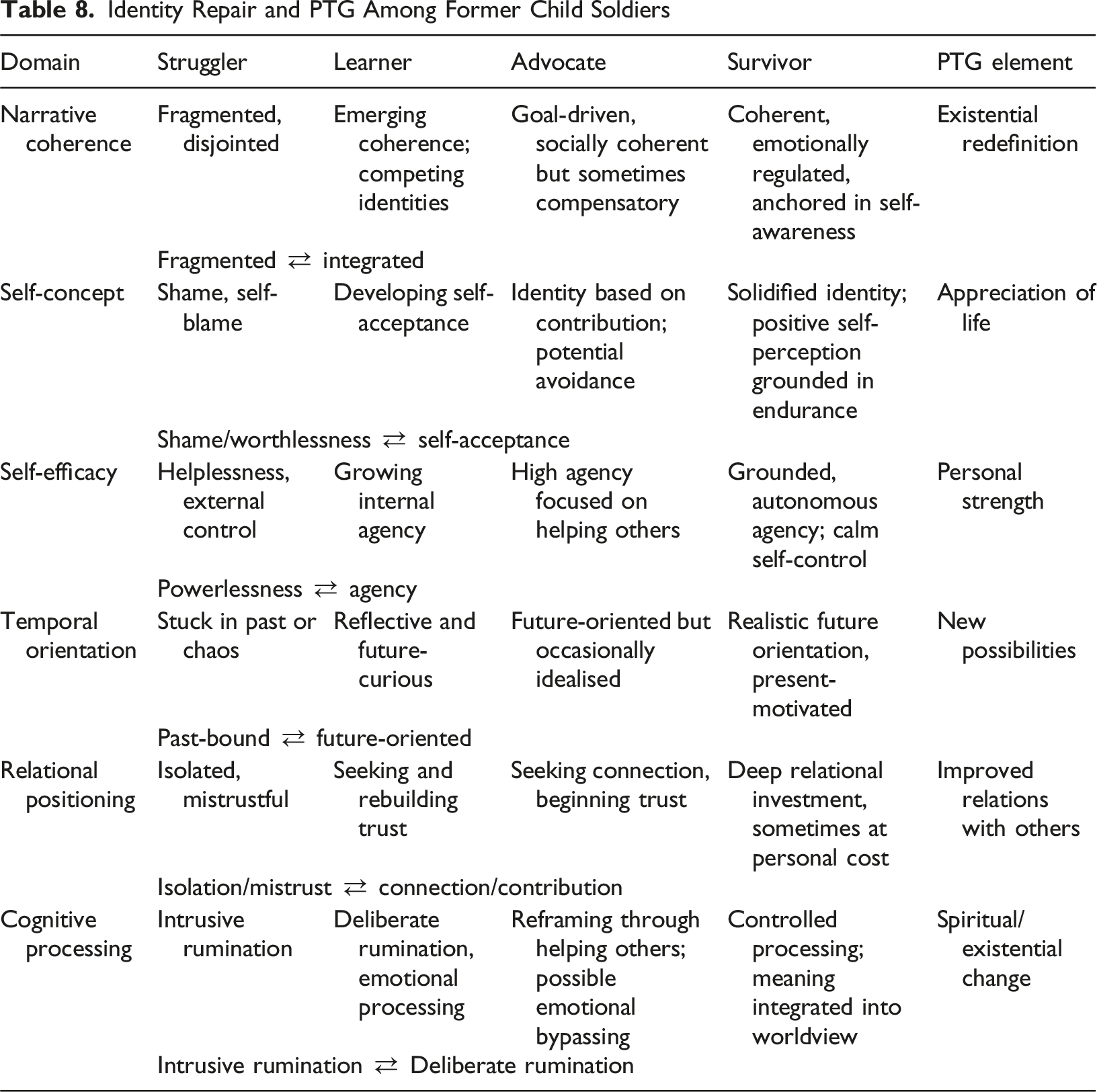
Rather than fixed categories, these domains capture a set of narrative and psychosocial continua - movement through which was often nonlinear, fluid, or contradictory. Relationships, settings, and symbolic resources acted as both anchors and catalysts for change.
Discussion
The four plots identified offer insight into participants’ shifting self-understandings and the psychosocial conditions shaping their narrative positions. Many entered armed groups having already experienced major disruptions—loss of schooling, unstable caregiving, exposure to violence—that eroded narrative coherence, self-worth, and relational security. On return, these vulnerabilities were compounded by stigma, mistrust, and exclusion from education or work. Identity repair in this context addresses not only conflict-related trauma but also the cumulative erosion of belonging, opportunity, and agency across the life course. For former child soldiers, this is not simply “telling a better story” but actively re-authoring the self through relational dialogue, symbolic expression, and reclaiming disrupted moral and social identities.
Some plots resonate with prior research. The Advocate plot echoes Muldoon et al.’s (2023) concept of collective PTG, where moral agency and prosocial roles support social identity reconstruction. The Struggler plot aligns with Borinca et al.’s (2025) findings that war-related memories and perceived dehumanisation disrupt belonging—though here, such fractures were sometimes repaired through symbolic expression, relational connection, and narrative reframing, often catalysed in CAB workshops.
This typology highlights how reflection, rumination, and epiphanies can reconfigure self-understanding, as supported by research on deliberate rumination (Cann et al., 2011; Durkee et al., 2021). Turning points often arose in liminal spaces where old identities were unsettled but not yet re-stabilised, creating openings for re-authoring the self.
Importantly, these plots represent fluid orientations that participants could move between—or inhabit simultaneously—depending on relational, emotional, and contextual conditions. A young person might articulate a Struggler narrative when reflecting on isolation at home, and an Advocate narrative when describing community activism, with both stories co-existing. These recursive, hybrid positions challenge linear models of development. While identity repair remains a developmental process—shaped by age, memory, reflection, and context—it is not stage-bound. The Narrative Repair Compass (Figure 1) reflects this by mapping growth as dynamic and multidirectional, rather than a singular path to resolution. Narrative Repair Compass: Identity repair and PTG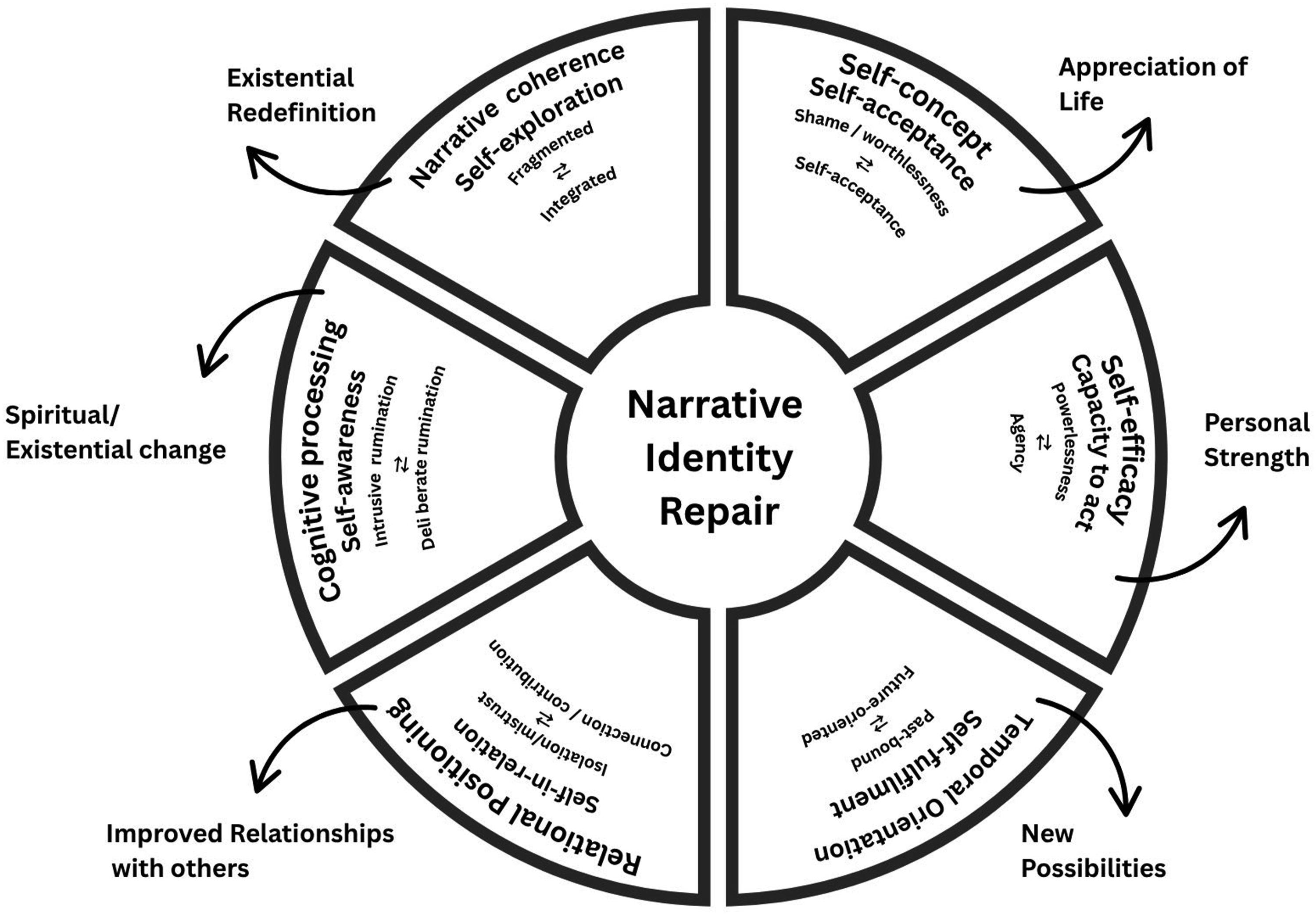
The Narrative Repair Compass maps six interconnected domains of self-process each linked to a core element of PTG. It illustrates how identity repair unfolds as a dynamic, relational, and non-linear process, offering direction through the challenges of reintegration after conflict. These domains align with (Wang et al., 2018) self-processes—self-exploration, self-acceptance, self-worth, and fulfilment—while also highlighting the self-in-relation. Within the plots, PTG emerged not as a fixed state but as a fluid, self-constructed possibility shaped by internal and external conditions. This reflects Adler's (2012) finding that narrative coherence and agency language predict well-being over time, and McLean and Syed's (2015) view that repair is socially embedded and culturally shaped.
Unlike PTSD models focused on symptom clusters and clinical recovery, the compass model maps identity repair as relational and developmental. It foregrounds meaning-making, agency, and coherence across six interrelated domains, recognising that change may be recursive, multimodal, and culturally embedded rather than a linear shift from pathology to health.
The model has practical implications for reintegration. For practitioners, recognising a young person’s narrative position is key to tailoring support: Strugglers may require relational safety and trust-building; Learners benefit from structured reflection and skills-building; Advocates need opportunities to channel agency into prosocial action while processing pain; and Survivors may require flexible support to sustain integration. While PTG begins as an internal process, it can be nurtured through consistent support that reinforces agency and connection. Repair is not only about symptom reduction but reclaiming power, rebuilding trust, and reconstructing meaning. From a Power Threat Meaning Framework perspective (Johnstone et al., 2018), this means understanding threats and power imbalances, and the meanings attached to recovery. Relational positioning—how young people see themselves in relation to others—should be a core therapeutic and social goal.
Recent work reinforces the link between social integration and recovery. McMahon et al. (2024) found that social integration mediated the relationship between childhood trauma and physiological stress responses. This underscores the importance of relational and contextual supports, which the present analysis complements by showing how trust, connection, and symbolic recognition shape how youth narrate and enact growth. In practice, reintegration should foster participation, peer connection, and culturally resonant storytelling—conditions that enable both narrative repair and sustainable belonging.
By foregrounding symbolic expression, relational scaffolding, and the coexistence of multiple narrative positions, this study offers a dynamic, contextually grounded understanding of identity repair after armed conflict—acknowledging both its fragility and its potential.
Limitations and Future Directions
The sample size of this study was small and context-specific, limiting the generalisability of results. Longitudinal research would be needed to understand the sustainability of identity repair and how PTG solidifiess or dissipates over time. It is also important to consider performative dimensions of narrative. In reintegration contexts, growth-oriented accounts may be shaped by cultural scripts or perceived expectations. While the multimodal nature of CAB allowed for indirect expression that could bypass such pressures, social desirability effects cannot be ruled out.
Future research should explore the impact of different support systems on the growth process. There is also a need for comparative studies across post-conflict contexts to better understand how culture and environment shape the expression of PTG as one possible manifestation of repair.
Footnotes

Ethical Considerations
The study secured institutional ethical approval from the University of Leeds in the UK, reference FAHC19-090.
Consent to Participate
Informed consent was obtained from all participants, and for those under the age of 18, consent was additionally provided by a parent or legal guardian.
Consent for Publication
Consent for the publication of anonymised data and quotations was obtained from all participants and, in the case of minors, also from their parent or legal guardian.
Funding
The author disclosed receipt of the following financial support for the research, authorship, and/or publication of this article: This study was part of a lerger project funded by the UKRI Arts and Humanities Reseacrh Council, reference AH/V004212/1.
Declaration of Conflicting Interests
The author declared no potential conflicts of interest with respect to the research, authorship, and/or publication of this article.
Data Availability Statement
Due to the nature of the research and to protect the identity of the participants for security reasons, supporting data is not available.