




Abstract
It is becoming increasingly common for frontline clinicians to see children and teenagers struggle with their mental health. Since mental health issues have increased over the past ten years in the UK, they are now the leading cause of disability and cost the British economy £105 billion annually. The review discusses the evidence base underpinning the effect of yoga on children’s mental health and summarises the results of 21 research papers. The Cumulative Index to Nursing and Allied Health Literature, PsycINFO, ERIC, Web of Science, PubMed, Medline and Cochrane Library were searched through Ovid from January 2008 until May 2022. The keywords 'yoga OR mindfulness – AND school AND children OR child OR youth OR adolescent' were used. The search was limited to studies in the English language. The quality of each study was rated against Version 2 of the Cochrane risk-of-bias tool for randomised control trials and a set of inclusion and exclusion criteria. The evidence for yoga therapies in children is encouraging, although studies include methodological flaws such as small sample sizes and sparse information on interventions. This review has highlighted that yoga interventions may be implemented in schools as a preventative and therapeutic measure for mental health issues.
Background
The National Health Service (NHS) reported that 10.8% of children aged between 5 and 16 in England suffered at least one mental disorder in 2017. The incidence has since risen to 16.0% in July 2020 across age, gender, and ethnic groups during the Covid-19 pandemic (Newlove-Delgado et al., 2021). With the rise of mental health problems in the United Kingdom (U.K.) in the last decade, it is now the single most significant cause of disability and costs the U.K. economy £105 billion a year, which is almost the entire cost of the NHS (NHS, 2018). Mental health problems in children in the U.K. are seen in children as young as 2 years, and each month almost 50,000 children and adolescents are referred for mental health interventions or treatment by the NHS (NHS, 2018). It is a problem worldwide; for example, according to the World Health Organization (WHO, 2020b), approximately one million school children aged between 11-15 years have some form of mental health disorder, such as feeling low and anxious. In particular, increasing numbers of children across the European Region have reported poor mental health. The WHO report claims that children are more prone to mental health conditions as they age. Some causes of mental health in children are multiple physical, emotional and social changes, such as exposure to poverty, abuse, or violence leading to emotional disorders such as depression or anxiety, irritability, frustration or anger. Symptoms can overlap across more than one emotional disorder with rapid and unexpected changes in mood and emotional outbursts; adolescents may also develop emotion-related physical symptoms such as headaches or stomach aches (WHO, 2020a). Stress experienced in childhood includes sexual, physical or emotional abuse, neglect, parental mental illness, parental divorce or separation, exposure to violence, substance abuse, and low socioeconomic status.
Stress during child development can lead to cognitive consequences in adult life (Britton et al., 2014). Mendelson et al. (2010) highlighted that some of the significant risk behaviours in children include teenage pregnancy/parenting, unsafe sex, crime and violence, drug/alcohol use and abuse, underachievement, or school failure. Many adolescents experience symptoms of anxiety and depression that can lead to adverse outcomes on social and family functioning, as well as demographic factors, such as sex, ethnic group, family functioning, parental mental health, qualification status of the parent, marital status of the parent, family type (Eva and Thayer, 2017).
It is becoming increasingly common for frontline clinicians to see children and teenagers struggle with everyday pressures such as dealing with parental mental health, intense pressure at school, bullying and being bombarded by social media with what is normal. These are the biggest drivers of mental health in children.
However, studies suggest that resilience, for example, managing and coping with stress, can decrease the negative consequences of trauma (Ortiz and Sibinga, 2017). Therefore, the pre-adolescent period is an opportunity for interventions to help prevent the development of poor health outcomes in later adulthood, such as comorbid metabolic and cardiovascular dysfunction and mental health.
The Healthy Child Programme by Public Health England (PHE) suggests that early intervention is paramount for children, especially those living in social difficulties impeding child development (PHE, 2018). The autonomic nervous, endocrine, and immune systems are connected to the brain and body; they work together to facilitate adaptation to stress. Young children and adolescents from disadvantaged communities who experience early and chronic life stressors may affect brain development, this can negatively influence cognitive function and emotional regulation, and may in turn increase the risk of adverse emotional and behavioural outcomes (Dariotis et al., 2016a).
Yoga originated in India. Yoga comes from the Sanskrit word ‘Yuj’, which means “union of the individual consciousness or soul with the Universal Consciousness or Spirit” (Perfect and Smith, 2016). Yoga is a practical philosophy; it aims to unite the body, mind and spirit for health and fulfilment, leading to happiness and well-being (Bhavanani, 2011). The first mention of yoga was documented in ancient Hindu scripture and written in 2000 BCE (White, 2009), though yoga is as old as civilisation itself (Wallace and Benson, 1972). Yoga is made up of 3 key intervention components: physical activity (‘asanas’), breathing techniques (‘pranayama’), and mindfulness meditation (Tamilselvi and Mala, 2016).
Mental health may be addressed by introducing yoga interventions as a prevention and treatment solution (Tamilselvi and Mala, 2016). Kim et al. (2016) study found that the practice of a 12-week school-based yoga project showed positive body image in children through controlled breathing, meditation, and calming the mind. However, some educators in their study raised concerns about the lack of confidence in teaching yoga to students. They do not know how to instruct or lead yoga sessions or do not have the time because of tight curriculum schedules (Kim et al., 2016).
Despite yoga’s popularity in some schools, it is not widely used and may be due to the perception of yoga as associated with Hinduism (White, 2009). Therefore, it is crucial to share evidence-based research on the effects of teaching yoga to children in schools and the community without associating it with Hinduism. One way this may be addressed is through meetings, newsletters, or conversations with parents. In White’s (2009) study, schools changed the terminology from pranayama to “bunny breathing” or meditation to “time in.” Chaya et al. (2012) yoga intervention was modified for the children; for example, children were asked to close their eyes during deep inhalations and exhalations and count 20–0 backwards.
Yoga is accepted as a holistic system of practices that includes many techniques, such as physical postures, various breathing exercises, and relaxation techniques (Khalsa and Butzer, 2016), and have shown promise in improving children’s physical (Kongkaew et al., 2018) and mental health (Miller et al., 2020). Studies have attracted interest in developing and applying meditation and yoga-based interventions in schools worldwide (Khalsa and Butzer, 2016). Some researched benefits of practising yoga are higher energy levels, fine motor coordination, muscle tone, flexibility, postural alignment, and cardiovascular fitness (Felver et al., 2020). Also, yoga requires limited space and no equipment; it is easy to learn and has been accepted worldwide (Mehta et al., 2012), and appeared in the U.K. in the early 1970s; approximately 500,000 people practise yoga each week in the U.K. (Wood, 2020).
Yoga with children can allow them to redirect energy positively, helping them calm their minds and bodies, especially during anxiety periods. It may be helpful for those who can be destructive and aggressive. Yoga may increase a child’s well-being, enhance self-worth, and promote fewer negative behaviours. The implementation of yoga in class is fun, easy, and cost-effective, according to Khalsa and Butzer’s (2016) review.
Wolff and Stapp (2019) argued that teachers have an invaluable role in implementing yoga in schools. They found that the breathing techniques acquired during yoga increased the ability to self-regulate and improve attention. In a pilot study, Butzer et al. (2015) found that ten weeks of yoga intervention on children aged between 7-9 years old showed statistically significant cortisol concentration changes, social interaction, attention span, stress coping, confidence, time on task, academic performance, and improved mood.
This systematic and narrative review aimed to examine the effect of yoga on children’s mental health.
Methods
A systematic and narrative review was conducted, which followed the PRISMA reporting guidelines (Page et al., 2021). PROSPERO was searched for ongoing or recently completed systematic reviews to avoid duplication of systematic reviews. The systematic review protocol was prospectively registered on PROSPERO (CRD42020171943). The systematic review included only RCT studies evaluating intervention processes. This systematic review aimed to compare the effectiveness of different interventions and estimate how much difference the intervention is likely to make if applied in practice. The findings of the included studies were brought together in a narrative synthesis.
Search strategy
A search was performed for published papers using the Cumulative Index to Nursing and Allied Health Literature (CINAHL), PsycINFO, ERIC, Web of Science, PubMed, Medline and Cochrane Library searched through Ovid. Results were searched from January 2008 until May 2022. Searching for papers between 2008 ensured that the maximum number of papers were found. Preliminary searches found that most RCTs were carried out between 2010 to 2021, and this may be due to the increased awareness of child mental health and/or yoga in high income countries, primarily as most papers found were based on studies carried out in the USA.
The keywords ‘Yoga OR mindfulness – AND school AND children OR child OR youth OR adolescent’ were used. The search was limited to studies in the English language. However, the word mindfulness was used to capture the most research articles possible, as some studies had used mindfulness as a secondary outcome. No mental health search terms were used because the study outcomes were diversely measured and used various languages.
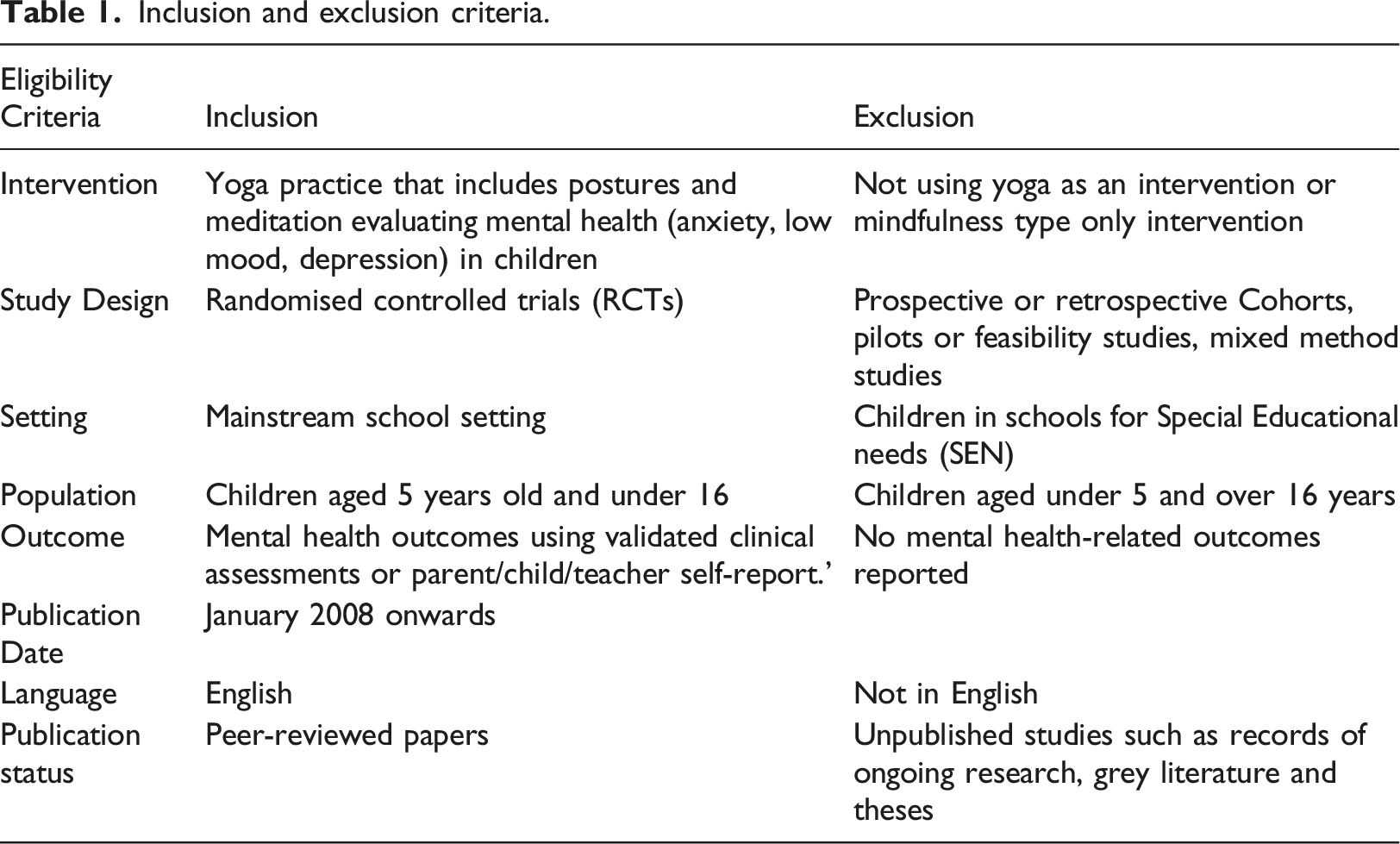
Studies were selected in line with the predefined PICOS:
Inclusion and exclusion criteria.
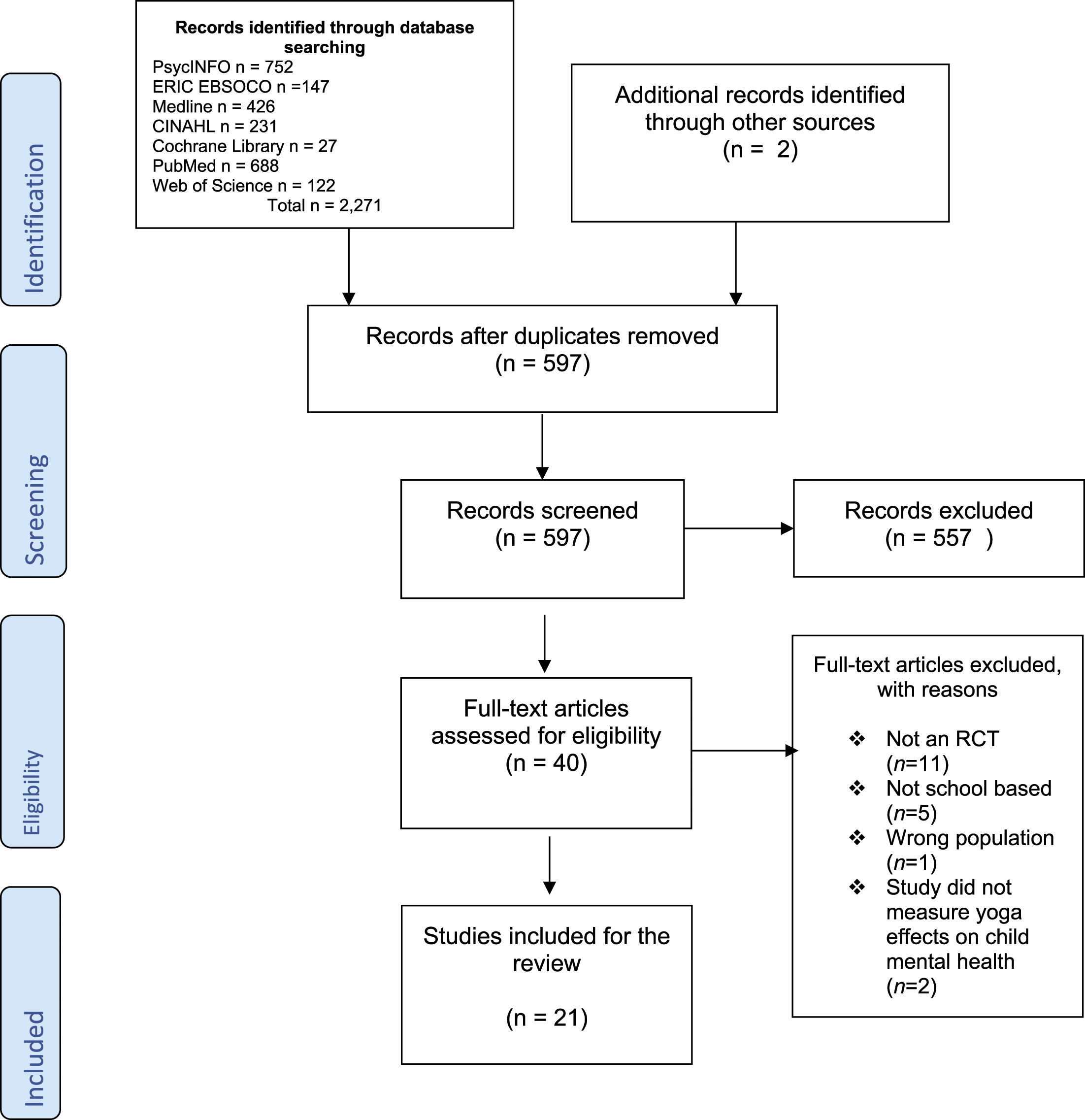
PRISMA 2009 Flow Diagram.
Studies that included SEN children or where yoga was practised in school but did not measure mental health outcomes were excluded from the review. Studies were also excluded if they were carried out on children aged 17 or older, as the rationale for the review was to summarise the effects of yoga on mandatory school-aged children (5–16 years).
Data extraction
Literature search results were uploaded to EndNoteX9, which served as a screening record against the selection criteria and was also used to remove duplicate results. Those not relating to yoga and schoolchildren were excluded from the literature review. 2271 records were screened, and 597 papers were further perused. The title and abstract of 597 papers were screened and obtained full-text journals for all papers that appeared to meet the inclusion criteria. Forty potential results remained, of which a further 19 were excluded following applying the set-out inclusion and exclusion criteria. Finally, 21 papers were included in the review. Figure 1 summarises the selection process of the included papers.
Quality assessment
Systematic review included studies and data extracted from randomised control trials.
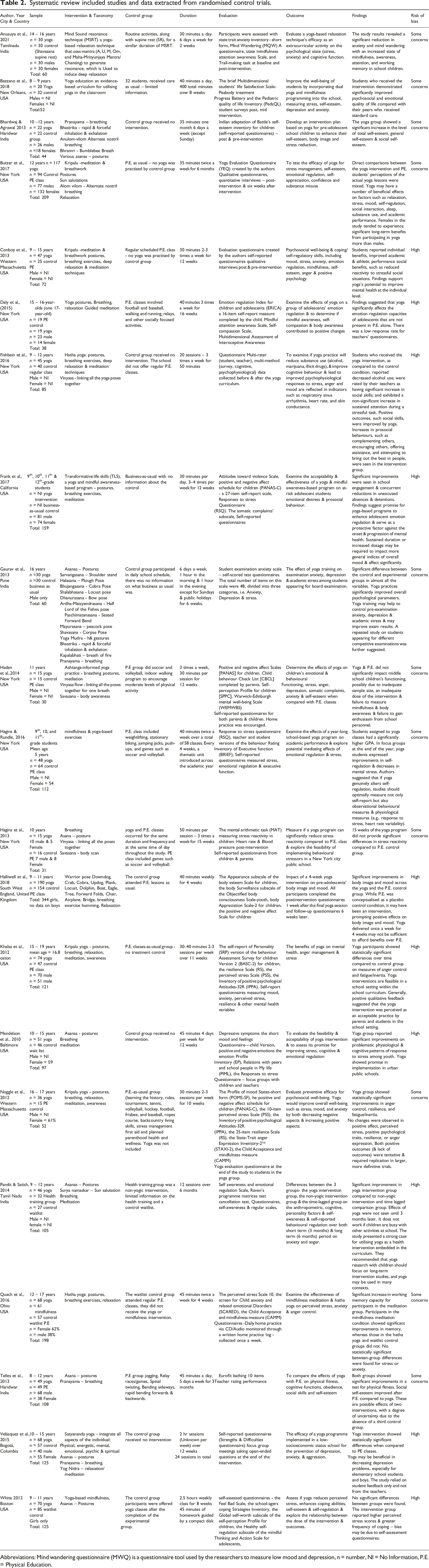
Abbreviations: Mind wandering questionnaire (MWQ) is a questionnaire tool used by the researchers to measure low mood and depression, n = number, NI = No Information, P.E. = Physical Education.
Narrative synthesis
A meta-analysis was not possible due to the heterogeneity of the studies, as the outcome measures varied across all studies and not all studies examined anxiety or depression as an outcome. The findings of studies on children with common mental health problems are presented in Table 2. Where studies reported comparable findings on mental health, potential similarities in the intervention were provided, including duration and timing of the intervention were also summarised.
The findings of studies measuring expected mental health outcomes were presented, and findings were synthesised according to the trial comparator group. For example, yoga intervention in the control group was hypothesised to improve mental health outcomes. The findings were grouped by those researchers reporting consistent findings, such as improvements or no change. Where studies reported consistent findings, similarities between them in terms of setting, nature of intervention and outcome measures were examined. Due to the small number of RCTs included in the review high risk of bias from synthesis was not excluded.
Results
Characteristics of included studies
The search strategy identified 597 potential outputs, of which 21 were included in the review. Each stage of the inclusion process is shown in the PRISMA flow diagram in Figure 1. Most of the RCTs were carried out in the USA (n = 14), India (n = 5), Columbia (n = 1) and the UK (n = 1).
The trials' sample size ranged from 30 (Haden et al., 2014) to 344 participants (Halliwell et al., 2018). The yoga interventions in all 20 studies were heterogeneous, from the duration to the frequency of yoga sessions. These ranged from 30 minutes daily over five weeks to a once-a-week session over a year. The included studies are summarised in Table 2.
All the trials examined a face-to-face yoga intervention in the school setting. All the trials recruited students from the school they were attending. Most trials compared yoga intervention to an active comparator like P.E. (12 trials) but gave basic information about the P.E classes. Where information was available, the authors have included this in an extra column about the control group in Table 2. None of the control groups received yoga intervention except for White (2012), however the control group participants in their study were offered yoga classes after the completion of the experimental group. There was limited information regarding when the intervention was offered. Five trials compared yoga to a waitlist comparator, and four trials compared yoga to a regular class comparator. Only two trials had two comparator groups to a yoga intervention (Pandit & Satish, 2014; Quach et al., 2016). These trials are reported separately in the narrative synthesis.
Common mental health problems
Sixteen trials investigated the effects of practising yoga on stress, thirteen on anxiety and five trials on self-esteem (Bhardwaj and Agrawal, 2013; Butzer et al., 2017; Conboy et al., 2013; Telles et al., 2013; White, 2012), twelve trials on depression symptoms (mood) (Bazzano et al., 2018; Butzer et al., 2017; Conboy et al., 2013; Fishbein et al., 2016; Frank et al., 2017; Gaurav et al., 2013; Haden et al., 2014; Halliwell et al., 2018; Khalsa et al., 2012; Mendelson et al., 2010; Noggle et al., 2012; Velásquez et al., 2015), ten trials on anger/self-regulation and five trials on body awareness (Bhardwaj and Agrawal, 2013; Butzer et al., 2017; Daly et al., 2015; Halliwell et al., 2018; Khalsa et al., 2012). Ten trials were classified as having a high risk of bias, and twelve trials with some concerns. No trial scored low for risk of bias.
Narrative synthesis of yoga intervention
One trial examined Mind Sound Resonance Technique (MSRT), which involved closing the eyes and experiencing internal vibrations and resonance developed whilst chanting the syllables A, U, M, Om, and Maha-Mrityunjaya Mantra for 30 minutes. In contrast, the control group performed supine rest (S.R.) for the same duration (Anusuya et al., 2021).
(Pandit and Satish, 2014) trial had two comparators. The first was the health training group that, practised simple exercises that mimicked the yoga intervention, comprising 5 minutes of jogging, deep breathing and relaxation, and the second was a waitlist. Quach et al., (2016) trial compared yoga intervention to mindfulness control and a waitlist control group.
All the included studies had at least one form of pranayama (breathing) and several asanas (yoga postures). Although not all the studies where clear what type of pranayama was used. Four trials used Kripalu yoga (Butzer et al., 2017; Conboy et al., 2013; Khalsa et al., 2012; Noggle et al., 2012); Bazzano et al. (2018) used Yoga Education Ashtanga Vinyasa (Bazzano et al., 2018), two trials used Hatha Yoga (Fishbein et al., 2016; Quach et al., 2016), Velásquez et al., (2015) used the Satyananda Yoga tradition. Frank et al. (2017) used Transformative Life Skills (TLS), a yoga and mindful awareness-based program. Haden et al. (2014) used Ashtanga-informed yoga practice that consisted of physical postures, breathing practices, and relaxation techniques, including short meditation practices and class rules that reflected yoga’s moral and ethical components. Nine trials incorporated a manualised yoga-based intervention that contained both a combination of asanas and pranayama (Bhardwaj & Agrawal, 2013; Daly et al., 2015; Gaurav et al., 2013; Hagins & Randle, 2016; Hagins et al., 2013, Halliwell et al., 2018, Mendelson et al., 2010, Pandit & Satish 2014; White, 2012).
Sixteen trials evaluated yoga intervention using self-reported quantitative questionnaires with the school children. One trial used qualitative interviews (Conboy et al., 2013), three studies included teacher questionnaires (Daly et al., 2015; Fishbein et al., 2016; Telles et al., 2013), two studies included parent questionnaires (Haden et al., 2014; Hagins et al., 2013), one study used focus groups with the children at the end of the intervention (Velásquez et al., 2015).
Narrative synthesis Stress
Fourteen trials reported a reduction in stress following yoga practice, and four trials found no reduction in stress (Haden et al., 2014; Hagins et al., 2013; Hagins and Rundle, 2016; White, 2010). Both Haden et al. and White observed increased rates of stress in the yoga group compared to the P.E. classes.
Anxiety and Anger
Eleven trials saw a reduction in anxiety following yoga, whereas three saw no reduction in stress following yoga intervention (Haden et al., 2014; Khalsa et al., 2012; White, 2010). Five trials reported a reduction in anger following yoga practice (Conboy et al., 2013; Fishbein et al., 2016; Khalsa et al., 2012; Pandit & Satish, 2014; Velásquez et al., 2015); however, Haden et al. found no difference in anger.
Depression (Mood)
Nine out of twenty-one trials saw a reduction in depressive symptoms such as mood. However, Haden et al., Bazzano et al., Bhardwaj et al., Butzer et al., Conboy et al., and Telles et al. did not find any significant reduction in depressive symptoms.
Self-esteem
Haden et al., Bazzano et al., Bhardwaj et al., Butzer et al., Conboy et al., and Telles et al. found that the practice of yoga increased self-esteem. While, White et al. found no significant difference in self-esteem but found yoga practice provided positive coping abilities.
Other symptoms
Butzer et al., Daly et al., Hagins & Rundle et al. found positive results in emotional regulation in children following yoga. Bhardwaj et al., Daly et al., Hanwell et al., Khalsa et al., Pandit & Satish found positive results in body awareness in children practising yoga. Conboy et al. and Dally found that children had more self-compassion in the yoga group. Conboy et al. also reported that children in the yoga group presented with healthier behaviours. Haden et al. trial found no statistical significance between yoga and the P.E. group regarding social problems, somatic complaints, and emotional and behavioural function, whereas Telles et al. found positive results in academic performance, social skills and child obedience in the yoga group.
Discussion
This is the first systematic review to have included only RCTs that focus solely on the effects of school-based yoga intervention on mental health outcomes. Previous systematic reviews have focused on a broader range of outcome measures and included a broad range of trials, making it difficult to compare the current findings with the previous literature reviews.
This review has highlighted a need for U.K.-based RCTs as most studies were in the USA or India. The studies were also limited to small sample sizes (Bhardwaj & Agrawal 2013; Daly et al. 2015; Haden et al. 2014; Hagins et al. 2013) ranging from 30 – 44 participants and possibly the reason for the negative outcomes; for example, none of these trials were representative. There was much heterogeneity in all trial participants. Few studies collected the socioeconomic backgrounds of participants; if this information was collected, it might have been beneficial in determining the social backgrounds of families, highlighting any deprivation.
Most trials compared yoga intervention to an active comparator like P.E. but gave only basic information about the comparator, and therefore the authors included as much detail as possible regarding the control group in Table 2.
While all the studies used similar yoga interventions, none used identical evaluation measures, perhaps contributing to the different findings (Conboy et al. 2013; Noggle et al. 2012; Haden et al.2014). However, most included studies suggested the positive effects of yoga in schools. Although some quantitative studies found little statistical significance between yoga compared to the control P.E. group (Haden et al., 2014; Hagins et al., 2013), other studies found that post-yoga intervention had a negative effect (Haden et al., 2014) and increased perceived stress (White, 2012).
The findings of Conboy et al. (2013) qualitative study on yoga in schools were similar to that of (Butzer et al. 2017), Hagins & Rundle (2016), Hagins et al. (2013), Mendelson et al. (2010), and Noggle et al. (2012). However, during qualitative interviews in Conboy’s study, the students who enjoyed the active nature of P.E. said they disliked having yoga. Like Conboy et al. (2013), and Butzer et al.’s (2017) RCT, yoga was offered to 7th-grade students in the U.S. They recruited 149 students randomly assigned to participate in a 32-session yoga intervention in place of their P.E. class or regular P.E. class. Students in both groups completed pre- and post-intervention questionnaires assessing. Students reported mixed feelings about yoga enjoyment and missing P.E. class, similar to Conboy et al. (2013) and preferred to choose between yoga and P.E. and noted that athletic male students had negative opinions about replacing P.E. at school for an extended period. Therefore, when conducting such intervention studies, it may be essential to consider participant expectations at the onset of the study.
Although they found that students made positive reference to breathing techniques; however, they did not include school staff interviews, which could have provided student and school staff perceptions of the yoga intervention. Future studies could consider this to create a complete body of research. Conboy et al. (2013) reported no reduction in stress in the qualitative interviews, but positive effects reported by the children in the focus groups. This may be due to peer pressure and children needing to say positive things about the intervention.
Findings from White (2012) and Haden et al., (2014) U.S. trials revealed no significant differences between the yoga and P.E. control group. Hagins et al. (2013) trial yoga participants in their study were not too pleased doing yoga when it was apparent that some students assigned to a P.E. class had more active sports. These feelings may have influenced the outcome of their study. Therefore, future studies should consider the mechanics of RCTs and manage student expectations early on during the study design stage.
Although both groups in White’s trial reported greater self-esteem and self-regulation, the control group reported higher perceived stress scores. White believed that the adverse outcomes of the research might have been due to the incorrect use of psychometric tools and that participant awareness of stress may have facilitated coping skills. The increased awareness of stress may have resulted in more stress. In contrast, Hagins et al. (2013) stated that when students were submitted to stressor tasks in their yoga intervention, it did not reduce stress reactivity more than in the P.E. classes.
The uncertainty in trials may be due to methodological and statistical problems. Inadequate sample sizes, some variability in the types of yoga taught, short duration of yoga sessions, and inappropriate yoga postures for children may have contributed to the non-statistical significance of the results. However, these results differ from Khalsa et al. (2012), who suggested yoga can improve anger control and mood (Noggle et al., 2012) and emotional regulation (Daly et al., 2015).
Quach et al. (2016) and Pandit and Satish (2014) were the only trials to have three comparators. Pandit and Satish (2014) recruited 178 school children in 2 city schools in India and were randomly assigned to 3 conditions; 1. systematic yoga intervention, 2. non-yogic intervention, and 3. time-lagged comparison group. On the other hand, Quach et al. compared yoga practice to mindfulness and had a third waitlist group. They found significant reductions in both the yoga and mindfulness control groups.
Only two studies completed focus groups (Mendelson et al., 2010; Conboy et al., 2013). Mendelson et al. (2010) conducted three focus groups with three to seven intervention children. They found that children had positive yoga experiences and reported learning new skills that helped them daily. They were the only trial to conduct a focus group with teachers to evaluate children’s behaviour changes. Most teachers supported using yoga in class. The yoga intervention also had absences. The teacher focus group revealed that some teachers had prevented students from attending the intervention classes to punish poor behaviour in class. This might have had a negative impact on the results of this trial. If interventions are to work, schoolteachers must know the importance of the children attending the intervention.
On the other hand, Velásquez et al. (2015) trial heavily relied on students’ reports of their own and their peers’ behaviour. They did not use teachers' and parents’ evaluations because they feared it would have been biased. However, they recommended that future research use observational data to complement the students’ view of yoga practice.
The evidence regarding yoga interventions in children shows promise; however, it has methodological limitations, including small samples and little detail regarding the intervention. In some studies where the yoga practice was beneficial for the students, the study sessions were short or condensed and lasted 30 minutes (Anusuya et al., 2021; Conboy et al., 2013; Frank et al., 2017; Haden et al., 2014; Noggle et al., 2012). The recommended time for yoga is 45 minutes to 1 hour (Pandit & Satish, 2014). Almost all the studies included comparing yoga practice’s effects to P.E., and almost all observed similar results. Using different intervention groups with a different control group might be beneficial.
Future studies should investigate the long-term effects of yoga on self-esteem in children from different populations from different socioeconomic statuses and include the same protocol on large populations with follow-ups. Researchers should incorporate more waves of data collection and evaluate if the positive effects of yoga remain after the intervention has ended. As highlighted by Pandit and Satish (2014), yoga interventions do not work if initiated when children are caught up in many other academic activities. Within the developmental spans, the timing of the intervention is a crucial factor, for example, during exam time or the beginning of the academic year/end of the academic year. As (Pandit and Satish, 2014) found the effects practising yoga do not emerge until after three months of a yoga intervention. Therefore, future research should consider this and provide yoga interventions for more than 12 weeks.
Overall, the included studies have demonstrated promising results regarding yoga enhancing mental health among children and adolescents in the school setting. The review highlighted the effectiveness of yoga in helping school-aged children cope with the challenges of mental health disorders. The benefits of yoga can be disseminated to a larger population. Children will not need to depend on medical intervention when they experience stress, as they will be equipped with coping mechanisms.
Limitations of the review
Due to the heterogeneity in the studies identified for inclusion, a meta-analysis was not possible. In addition, due to the limited information regarding yoga intervention, pranayama and asana could not be looked at separately, and not all the articles explained the intervention in full.
Conclusion
This review has examined whether school-based yoga effectively promotes mental health in school-aged children by analysing 21 peer-reviewed RCT trials. All the studies measured mental health in children following interventions. Even though every study has validated the use of yoga in schools, there is still some ambiguity because there are so few high-quality RCTs available, and some of the results of the study were contradictory.
This review has highlighted the positive effects of school-based yoga interventions on children’s mental health. However, future research needs to be standardised, incorporate participants' wishes, and consider the views of parents and teachers, for example, the type of yoga suitable for children. Given the growing rates of child mental health, there is an urgent need for systematic examination and evaluation of yoga interventions that promote mental health.
Footnotes
Declaration of conflicting interests
The author(s) declared no potential conflicts of interest with respect to the research, authorship, and/or publication of this article.
Funding
The author(s) received no financial support for the research, authorship, and/or publication of this article.
