




Abstract

A 49-year-old woman presented with a chief complaint of chronic, postprandial abdominal pain. Her symptoms markedly progressed over time leading to food avoidance and weight loss. She had a consultation with gastroenterology with an unremarkable workup, but on physical examination a reticular, hyperpigmented diffuse abdominal rash was identified (Panel A). This finding, in combination with a high titer antinuclear antibody test, prompted referral for evaluation of a vasculitis. Rheumatologic evaluation was unrevealing and the patient was found to have no additional stigmata of vasculitis. Computed tomographic angiography of the abdomen and pelvis, inflammatory markers, urine studies, complete blood count, comprehensive metabolic panel, and hepatitis B and C serologies were within normal limits, as were all additional rheumatologic serologies, including: lupus anticoagulant, beta-2 glycoprotein-1 and anti-cardiolipin antibodies, antineurophilic cytoplasmic antibody (ANCA), cryoglobulins, and cold agglutinins, as well as anti-double-stranded DNA, anti-Smith, anti-ribonucleoprotein, anti-centromere, and anti-SCL-70 antibodies. Upon direct questioning, the patient revealed she applied hot water bottles to her abdomen for pain relief. This information, paired with the characteristics of the dermatosis, led to the diagnosis of erythema ab igne.
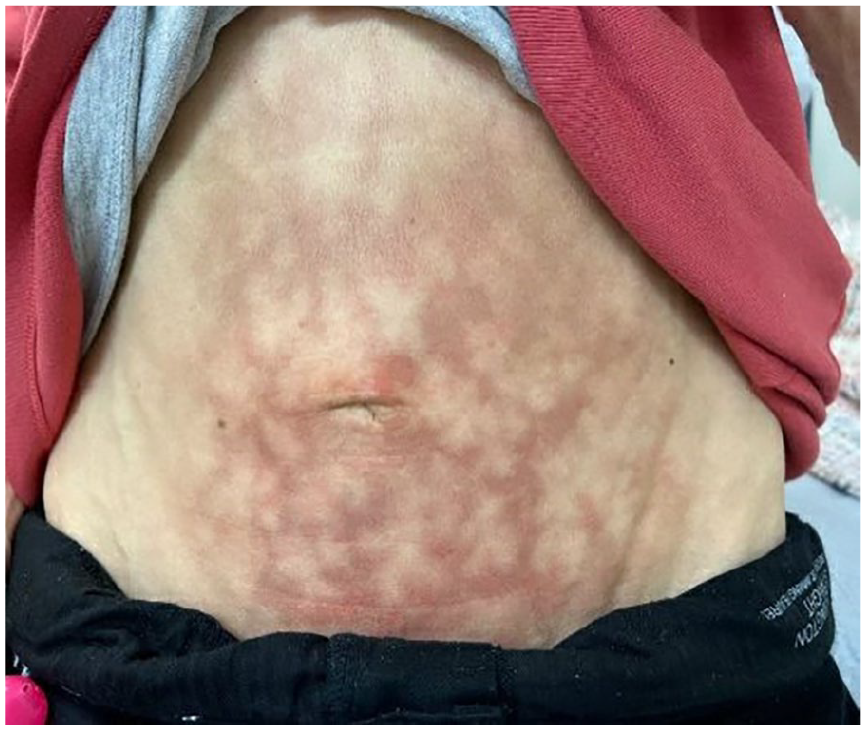
Erythema ab igne is a reticulated, erythematous and hyperpigmented dermatosis that results from chronic, repeated exposure to heat below thresholds for thermal burn. 1 The location and distribution of the lesion reflects the source and direction of heat used, resulting in dilation of the dermal vascular plexus with hemosiderin deposition. For example, historically this was a common condition seen on the legs of individuals who sat close to an open fire before the advent of central heating, and now is more often seen through repeated direct application of a heat source, such as heating pads to treat chronic musculoskeletal pain or laptop computers. 1 Importantly, this lesion may be confused for a vasculitis given its appearance and infrequent presentation. The patient was counseled to cease direct heat application to the abdomen, as it is expected the dermatosis will regress with time. 2
Footnotes
Declaration of conflicting interests
The authors declared no potential conflicts of interest with respect to the research, authorship, and/or publication of this article.
Funding
The authors received no financial support for the research, authorship, and/or publication of this article.
