




Abstract

Chronic venous disease (CVD) is a progressive disease and the presence of incompetent perforator veins (IPVs) contributes to its progression. Different techniques may be considered to eliminate incompetence and reflux, including subfascial endoscopic perforator surgery (SEPS).1,2 Herein we report complications after SEPS due to foreign body reaction to surgical clips.
A 56-year-old female developed an inflammatory reaction in her left leg and a persistent medial peri-malleolar venous ulcer. About 10 years ago the patient underwent a bilateral sapheno-femoral crossectomy and SEPS for complicated CVD. The patient reported stinging pain evoked by walking and palpation, about 10 cm above the left medial peri-malleolar ulcer, where she reported to perceive the presence of metal clips used in previous SEPS procedures. The persistence of two incompetent Cockett’s perforating veins was showed on venous echo color Doppler examination and the presence of five tight clips on the medial side of the leg was showed on a leg X-ray (Panel A).
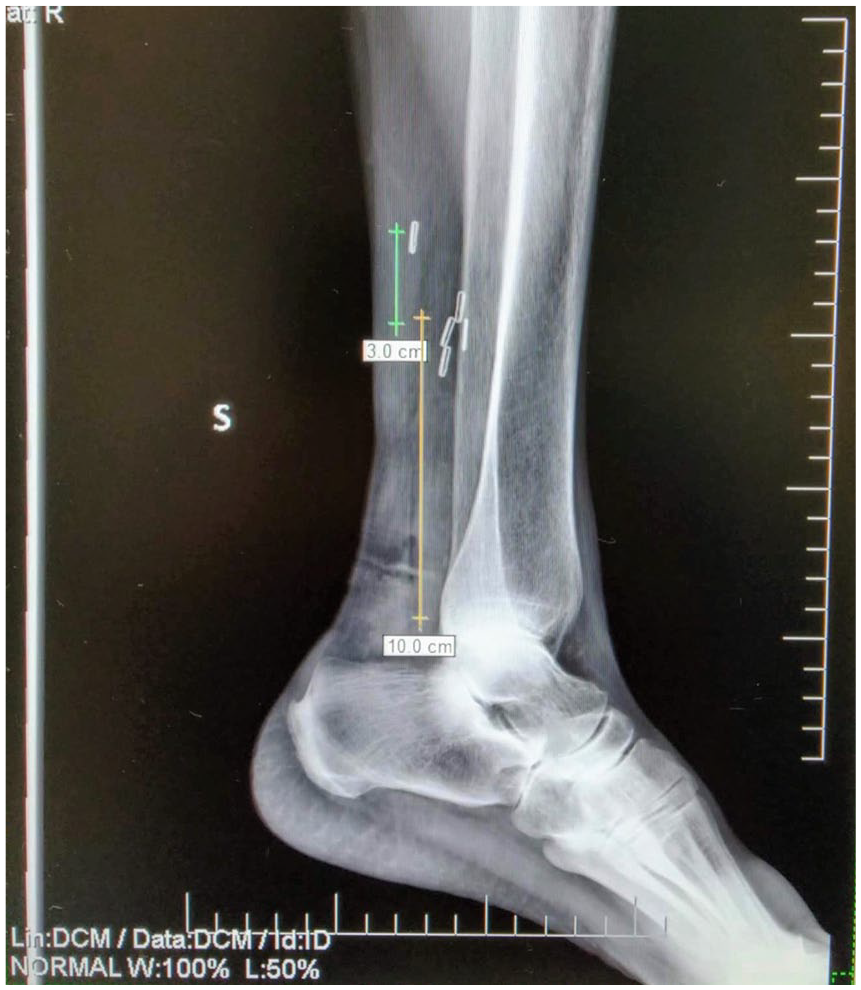
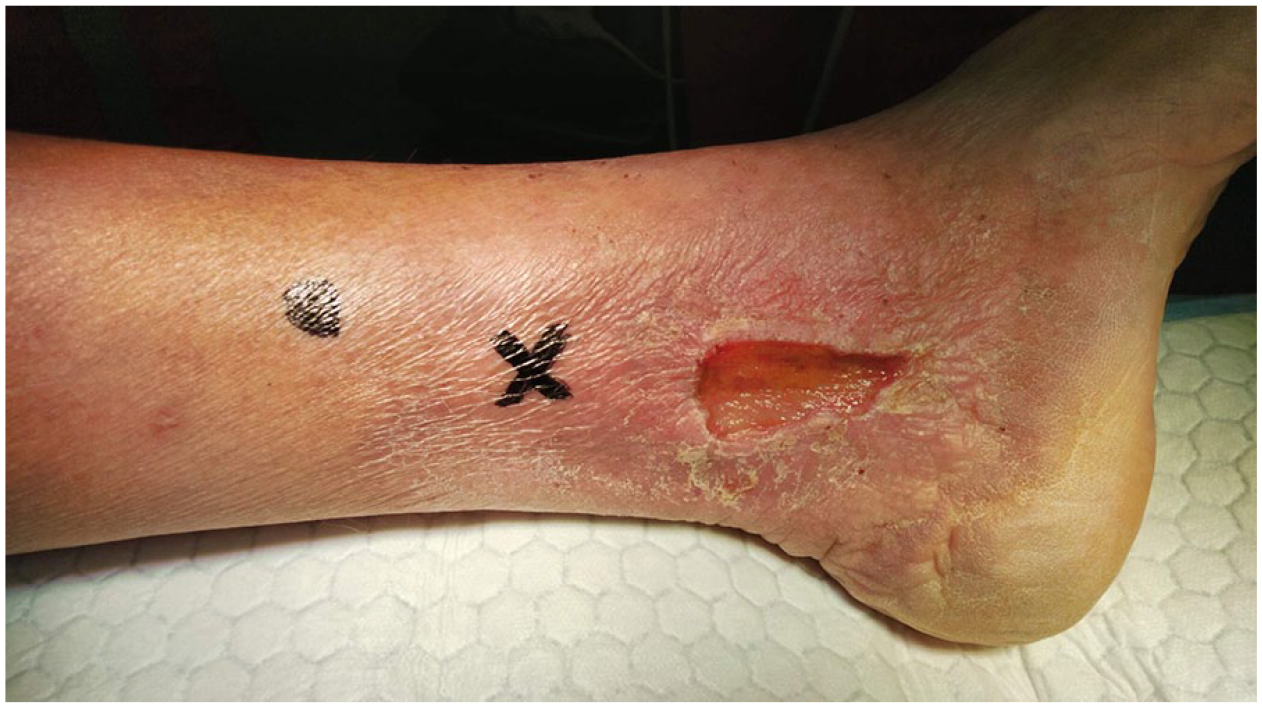
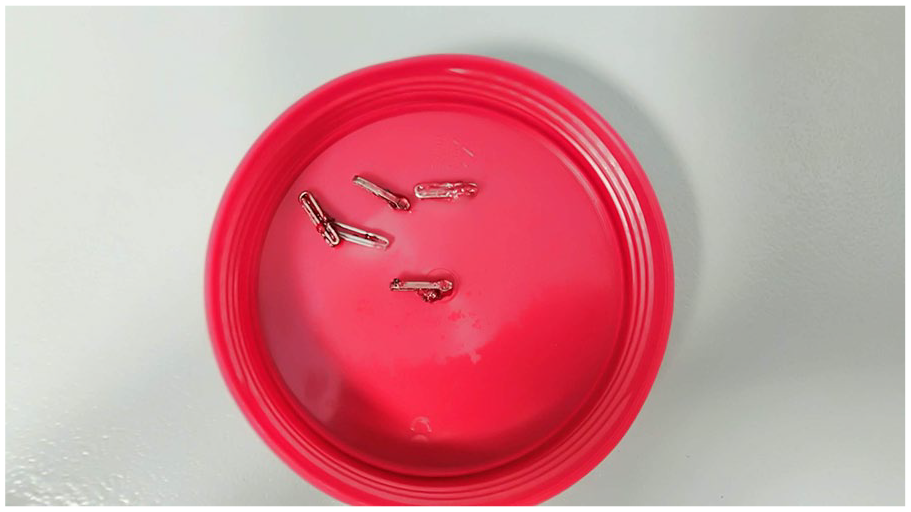
In the operating room, the position of the clips identified by X-ray and as reported by the patient were marked with an “x” and a “dot” on the skin, respectively (Panel B). Under local anesthesia, the clips, which were attached to soft tissue but not to venous structures, were removed (Panel C) and the two incompetent Cockett’s perforating veins were tied with silk threads and cut.
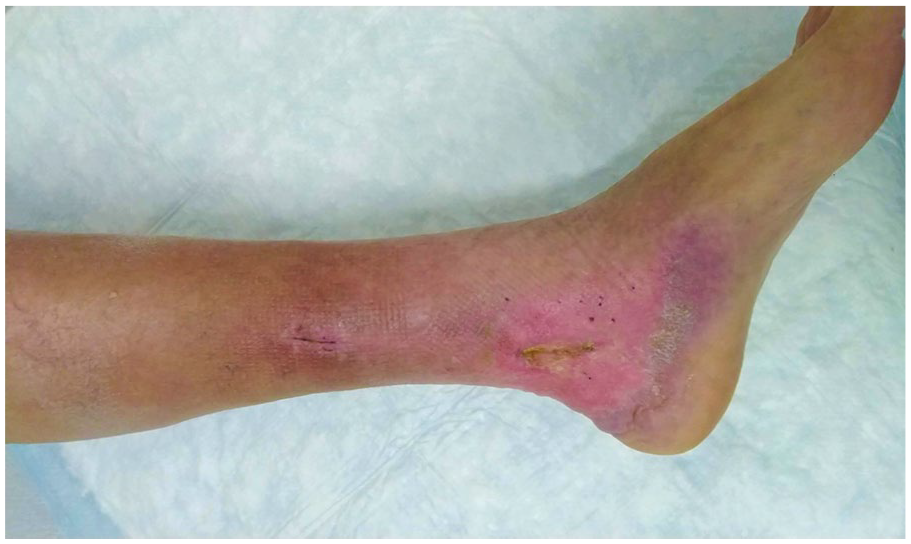
The patient was medicated with advanced dressings and compression bandages. On the 45th postoperative day, the surgical wound and the ulcer were healed (Panel D), and class 1 compression elastic knee-high socks were prescribed.
SEPS entails the subfascial interruption of incompetent perforators using endoscopic instrumentation through small incisions in areas of intact skin. A lower incidence of complications with SEPS has been demonstrated compared to the open procedure. 2 Our report shows how a group of clips in a very small area can cause a local inflammatory reaction. An allergic reaction was excluded considering the presence of clips in both limbs in the face of a unilateral and well localized issue. We hypothesize that the simultaneous presence of several metallic clips close together with consequent friction during walking and the stasis determined by the two IPVs may have caused an inflammation process.
In conclusion, this report describes a foreign body reaction to surgical clips as a possible complication of SEPS. This complication should be considered especially in cases of very close perforating veins.
‘Images in vascular medicine’ is a regular feature of Vascular Medicine. Readers may submit original, unpublished images related to clinical vascular medicine. Submissions may be sent to: Heather Gornik, Editor in Chief, Vascular Medicine, via the web-based submission system at http://mc.manuscriptcentral.com/vascular-medicine
Footnotes
Declaration of conflicting interests
The authors declared no potential conflicts of interest with respect to the research, authorship, and/or publication of this article.
Funding
The authors received no financial support for the research, authorship, and/or publication of this article.
