




Abstract

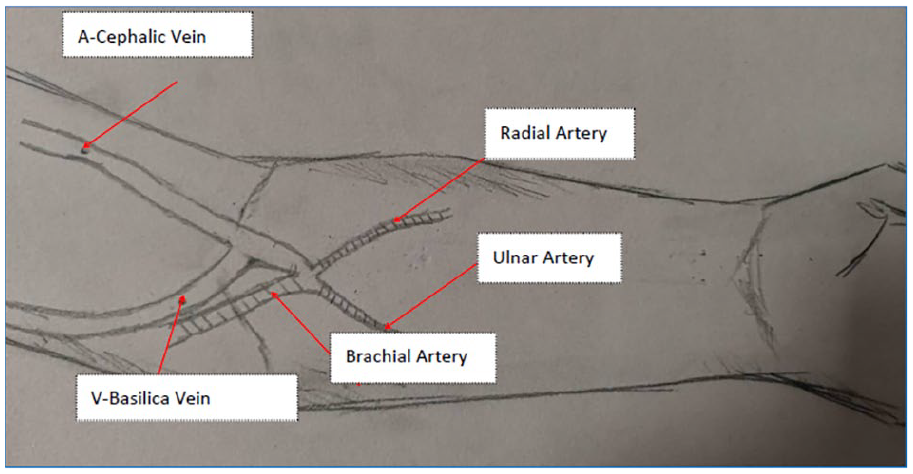
A 50-year-old woman with end-stage renal disease on hemodialysis over the last 8 months via left brachial-cephalic arteriovenous fistula (AVF) (Panel A), presented with 2 months of worsening left shoulder pain during dialysis sessions. The pain began 6 months prior to presentation; dialysis sessions were reduced to 3.5 hours with no improvement in her symptoms.
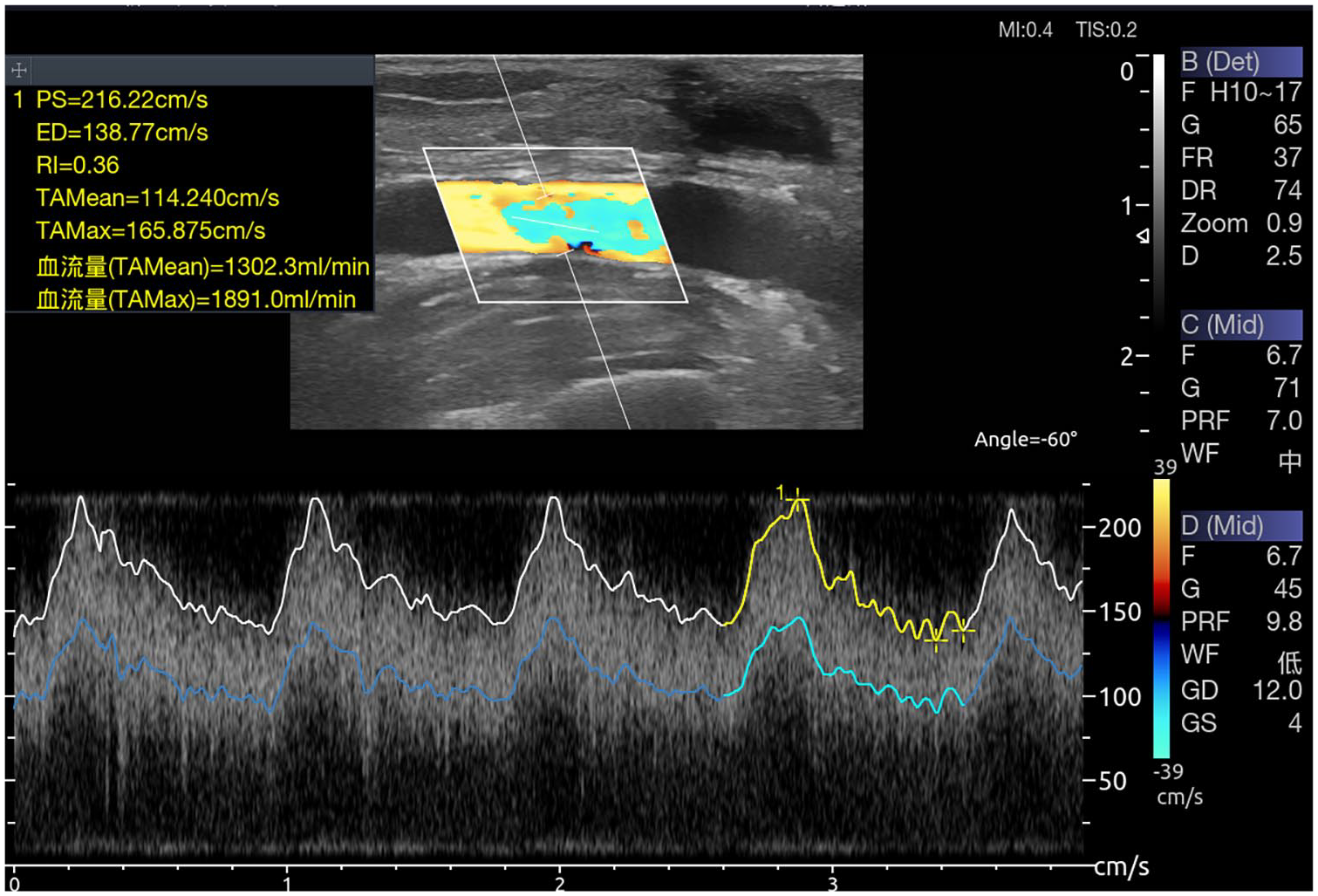
Duplex ultrasonography demonstrated mean flow volume within the left brachial artery of 1302 mL/min (Panel B). Digital subtraction angiography was pursued via right femoral approach, demonstrating a patent fistula. Rapid flow was observed into the left axillary artery from the left subclavian artery, with no flow observed in the thoracoacromial artery (Panel C, arrow) and anterior and posterior circumflex humeral arteries. The basilic vein (Panel C, middle star) branch was significantly larger than the cephalic vein (Panel C, right-hand star) branch. The fistula was partially blocked, revealing the thoracoacromial artery and partially filling the anterior circumflex humeral artery (Panel D, arrow). Finally, the fistula was completely occluded, which allowed filling of the thoracoacromial artery (Panel E: arrow) and anterior and posterior circumflex humeral arteries (Panel E: star and triangle, respectively). The findings were consistent with dialysis-associated steal syndrome (DASS). The basilic vein was ligated to limit flow through the anastomic stoma of the fistula, allowing for resolution of the patient’s shoulder pain.
Note: This image is in color online.
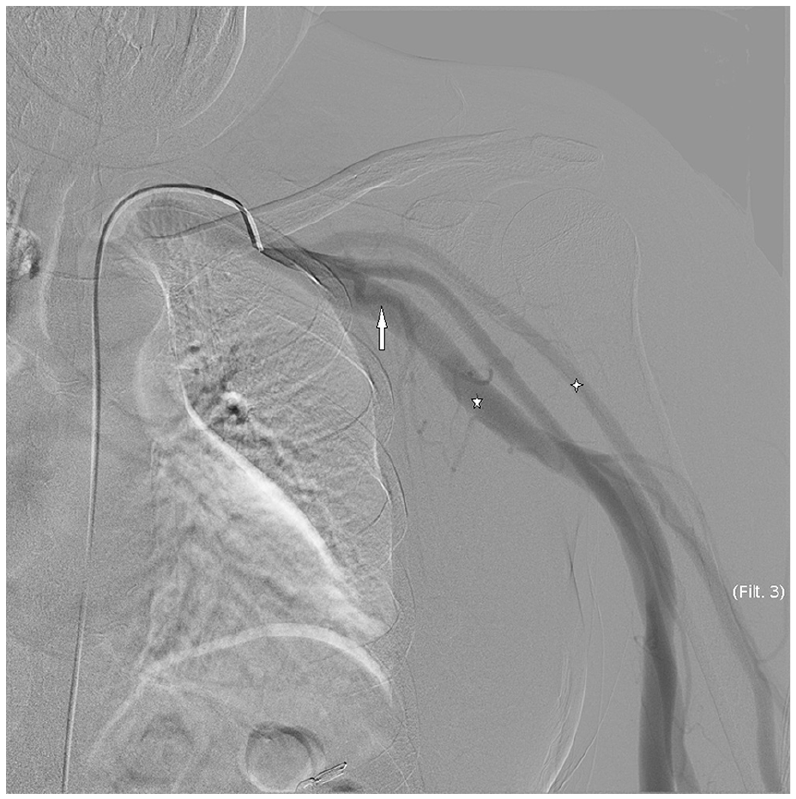
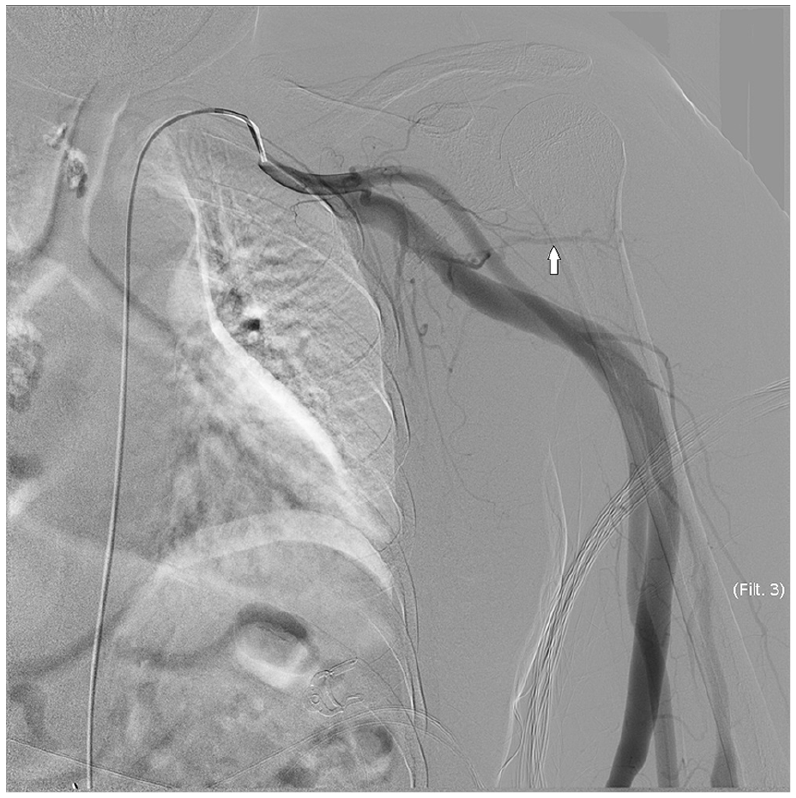
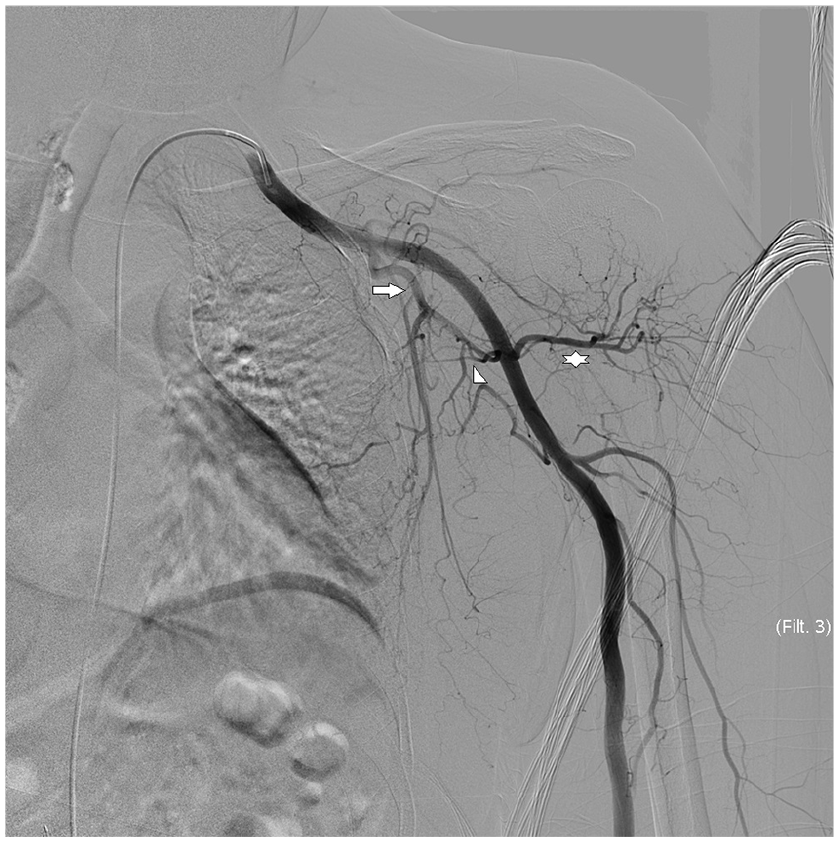
DASS refers to ischemic symptoms within the hand due to insufficient arterial flow after AVF surgery and accounts for 1% of postoperative complications in brachiocephalic AVF.1,2 This patient had the unusual presentation of shoulder pain rather than distal hand ischemia, which has not been previously reported. Through digital subtraction angiography imaging, we were able to visualize an absent thoracoacromial artery, as well as anterior and posterior circumflex humeral arteries with patent AVF. The symptoms improved with occlusion of the fistula, confirming the presence of arterial steal from the shoulder by the high-flow AVF. Although rare, DASS should be considered in patients with upper extremity AVF presenting with shoulder pain.
‘Images in vascular medicine’ is a regular feature of Vascular Medicine. Readers may submit original, unpublished images related to clinical vascular medicine. Submissions may be sent to: Heather Gornik, Editor-in-Chief, Vascular Medicine, via the web-based submission system at http://mc.manuscriptcentral.com/vascular-medicine
Footnotes
Declaration of conflicting interests
The authors declared the following potential conflicts of interest with respect to the research, authorship, and/or publication of this article: the views expressed in the submitted article are her own and not an official position of the institution or funder.
Funding
This work was supported by the Medical Science and Technology Project of Zhejiang Province (item no. 2020zh072).
