




Abstract
This study aimed to investigate the expression and diagnostic value of miR-106b-5p in asymptomatic carotid artery stenosis (CAS) patients, and further explore its predictive value for the occurrence of cerebral ischemic events (CIE). A total of 58 asymptomatic CAS cases and 61 healthy controls were recruited. Quantitative RT-PCR was applied for the measurement of the miR-106b-5p level. The receiver operating characteristic (ROC) curve was plotted to assess the diagnostic value of miR-106b-5p for CAS. Kaplan–Meier methods and Cox regression analysis were performed to assess the predictive value of miR-106b-5p for the occurrence of CIE. In patients with asymptomatic CAS, miR-106b-5p was highly expressed. The miR-106b-5p level showed a significant association with dyslipidemia, hypertension, and the degree of carotid stenosis. miR-106b-5p had a relative accuracy in differentiating patients with asymptomatic CAS from healthy individuals, with a sensitivity of 89.7% and specificity of 83.6% at the cutoff value of 0.198. Patients with high miR-106b-5p expression experienced more CIE. miR-106b-5p was highly expressed in patients with asymptomatic CAS. Our present results provide evidence for miR-106b-5p as a promising biomarker for CAS diagnosis, and for predicting the risk of future CIE in patients with asymptomatic CAS.
Introduction
Carotid artery stenosis (CAS) is one of the major causes of cerebral ischemic events (CIE). 1 It may be because of the cerebral hypoperfusion caused by high-grade CAS, or the frequent emboli release from an unstable carotid plaque irrespective of stenosis degree.2–4 In recent years, the prevalence of asymptomatic CAS has increased year by year. 5 Patients with asymptomatic CAS can proceed silently from the simple thickening of the intima–media layers to symptomatic stenosis. Ischemic stroke (IS) is the first clinical manifestation of CAS, which can be fatal. 6 The goal of treatment for CAS is to minimize the risk of CIE and related deaths. Therefore, to develop a reasonable treatment plan and reduce the risk of CIE, the identification of high-risk patients with asymptomatic CAS is of great significance in clinical practice.
MicroRNA (miRNA) is a class of short noncoding RNA molecules, serving as post-transcriptional negative regulators through inhibiting target gene expression. 7 The dysregulation of miRNAs, as a potential biomarker and modulator in disease prediction and treatment, has made great progress.8,9 Many miRNAs have been identified to be aberrantly expressed in human carotid plaques, such as miR-100, miR-125a, and miR-127, suggesting their potential regulator role in the development of CAS. 10 Moreover, miRNAs seem to play a crucial role in the etiology and pathology of IS, and circulating miRNAs have been regarded to be both potential biomarkers and mediators of CIE.11,12 Wang et al. have reported that miR-106b-5p is aberrantly expressed in acute stroke patients, and it might be a novel biomarker for the early detection of acute stroke. 13 The latest research on the coexpression pattern of miRNAs in plasma of patients with atherosclerosis has also suggested that miR-106b-5p shows the most significant difference and plays an important role in the regulatory network of atherosclerotic gene expression, revealing its crucial role in atherosclerosis. 14 However, the role of miR-106b-5p in CAS, as well as CAS-related CIE, has not been reported.
In the present study, we investigated the expression and diagnostic value of miR-106b-5p in patients with asymptomatic CAS, and further explored its predictive value for the occurrence of CIE.
Materials and Methods
Study population and sample collection
Between April 2012 and July 2013, 58 asymptomatic patients with CAS from Taihe Hospital were enrolled in the study. CAS refers to a > 50% stenosis of the extracranial internal carotid artery (ICA), which was confirmed by computed tomography angiography (CTA), with stenosis severity estimated using the North American Symptomatic Carotid Endarterectomy Trial method. 15 An asymptomatic status was confirmed by a review of the patient’s history, a physical examination, and the numeric National Institutes of Health Stroke Scale. 16 The asymptomatic patients had no history of stroke or transient ischemic attack, carotid revascularization, prior myocardial infarction, valvular heart disease, cardiomyopathy, severe pulmonary disease, or arrhythmia. A total of 61 healthy individuals were recruited as the control group, who visited the hospital for usual health screenings. Individuals who had inflammatory diseases, cardiovascular diseases (CVDs), diabetes, hypertension, hyperlipidemia, autoimmune disease, cancer, and pregnancy were excluded from the study. All blood samples were collected immediately on patient admission to the hospital, and were allowed to coagulate for 30 minutes; they were then centrifuged and finally the serum was stored at –80°C for further experiments.
This study was approved by the Ethical Committee of Taihe Hospital, and the written informed consent was collected from each participant.
Definitions
Hypertension was defined as a systolic blood pressure of ⩾ 140 mmHg, or a diastolic blood pressure of ⩾ 90 mmHg, or use of antihypertensive drugs. Diabetes mellitus was defined as a fasting blood glucose level of ⩾ 126 mg/dL or current use of oral antidiabetic drugs or insulin. Hyperlipidemia was defined as a total cholesterol level of ⩾ 200 mg/dL. According to the results of the CTA examination, the CAS patients were divided into two groups. 17 Moderate CAS was defined as a stenosis of 50–69%, and severe CAS as a stenosis of 70% or greater.
Follow-up survey
The enrolled asymptomatic patients were followed-up for 5 years. The primary endpoint was the occurrence of ipsilateral CIE, including strokes, transient ischemic attack (TIA) or sudden death.
Quantitative real-time polymerase chain reaction (qRT-PCR) assay
Total RNA was extracted using TRIzol Reagent (Invitrogen, Carlsbad, CA, USA), and reverse-transcribed to complementary DNA (cDNA) using a High-Capacity cDNA Reverse Transcription qRT-PCR kit (Applied Biosystems, Foster City, CA, USA). The SYBR Green I Master Mix kit (Invitrogen) was applied for the quantification of miR-106b-5p expression. RT-PCR reactions were designed as follows: initial denaturation at 95°C for 5 minutes; 35 cycles of a94°C for 30 seconds, 57°C for 30 seconds, and 72°C for 30 seconds; a final extension at 72°C for 10 minutes. The miRNA expression level was normalized to U6. The relative expression of miR-106b-5p was determined using the comparative delta CT (2−ΔΔCt) method. The sequence of primers for miRNA analysis was as follows: miR-106b-5p forward, 5’-CGGTAAAGTGCTGACAGTGCACGAT-3’ and reverse, 5’-CTCAACTGGTGTCGTGGA-3’; and U6 forward, 5’-GCCTGCTCCGGCAGCAC-3’ and reverse, 5’-GAGGTATTCGCACCAGAGGA-3’.
Statistical analysis
All the data were analyzed using SPSS, Version 18.0 (SPSS Inc., Chicago, IL, USA) and GraphPad Prism, Version 5.0 (GraphPad Software, La Jolla, CA, USA). Differences between groups were compared using the χ2 test, or one-way analysis of variance (ANOVA). Kaplan–Meier methods and Cox regression analysis were performed to assess the predictive value of miR-106b-5p for the occurrence of CIE. A receiver operating characteristic (ROC) curve was plotted, and the area under the curve (AUC) with 95% CI was calculated to assess the discrimination ability of miR-106b-5p expression between patients with asymptomatic CAS and healthy controls. Statistical significance was defined as p < 0.05.
Results
Clinical characteristics of the study population
In the study, a total of 61 healthy controls and 58 patients with asymptomatic CAS were recruited, with the mean age of 61.20 ± 7.78 and 61.78 ± 8.95, respectively (Table 1). There was no significant difference for age, sex, BMI (body mass index), smoking status, total cholesterol, HDL (high-density lipoprotein), LDL (low-density lipoprotein), triglycerides, and SBP (systolic blood pressure) between the two groups (all p > 0.05). The levels of fasting glucose and DBP (diastolic blood pressure) were higher in patients with asymptomatic CAS than the healthy group, and the differences reached a significant level (p < 0.05).
Comparison of the baseline data between healthy and patient groups.
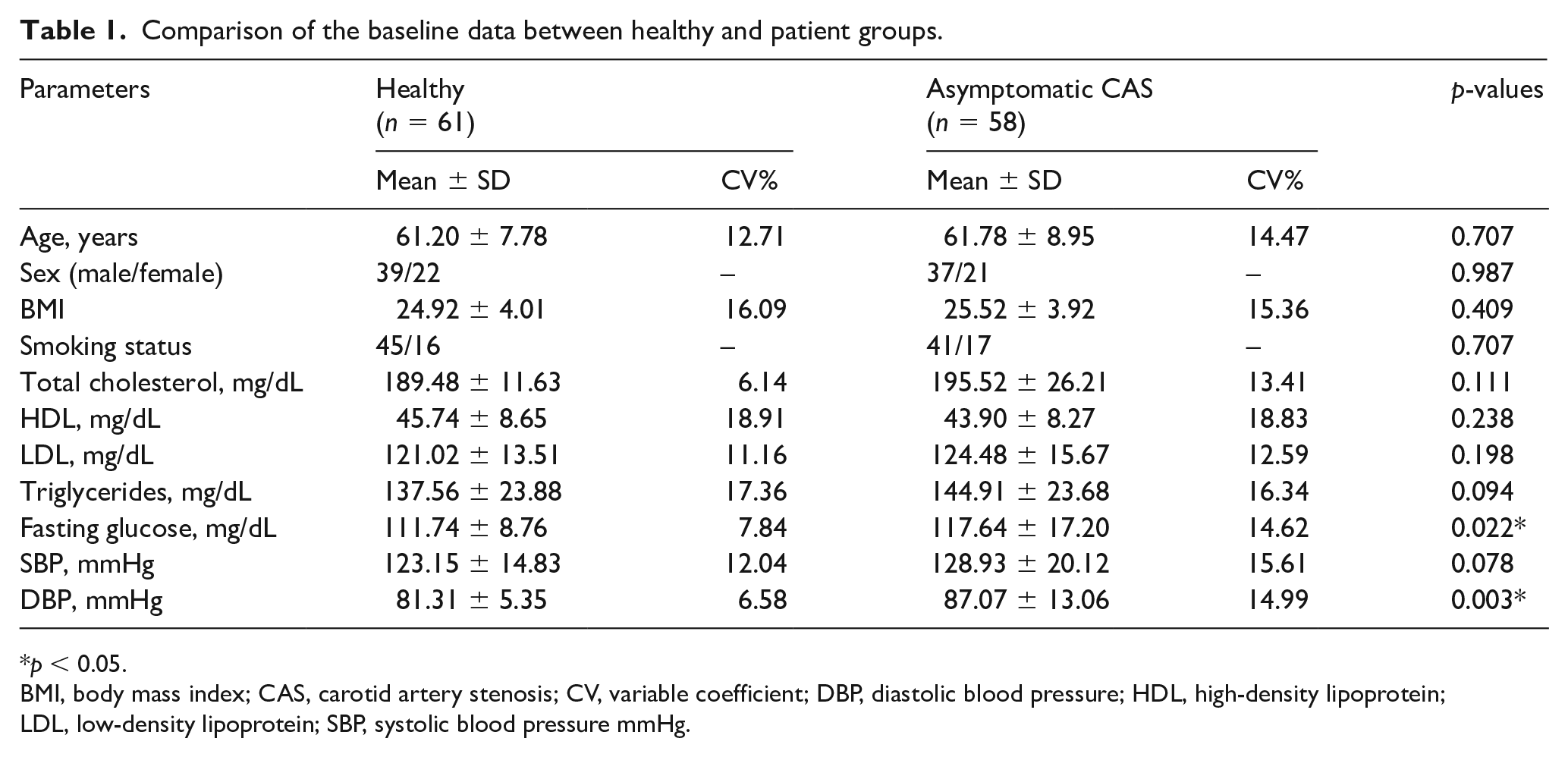
p < 0.05.
BMI, body mass index; CAS, carotid artery stenosis; CV, variable coefficient; DBP, diastolic blood pressure; HDL, high-density lipoprotein; LDL, low-density lipoprotein; SBP, systolic blood pressure mmHg.
Serum level of miR-106b-5p in patients with CAS
Quantitative RT-PCR was applied for the measurement of miR-106b-5p in patients with CAS and healthy controls. As shown in Figure 1, it was observed that the miR-106b-5p expression increased significantly in the asymptomatic CAS group compared with the healthy group (p < 0.001).
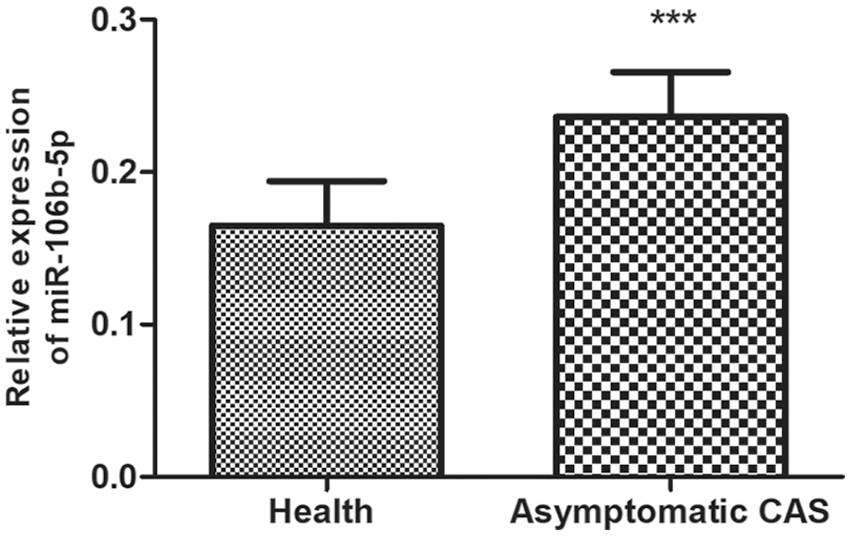
The serum expression level of miR-106b-5p in patients with asymptomatic CAS and healthy controls was measured using qRT-PCR. In the asymptomatic CAS group, miR-106b-5p expression increased significantly compared with the healthy group.
Correlation of miR-106b-5p expression with clinicopathological parameters of patients with CAS
The association of miR-106b-5p and clinicopathological parameters was further explored, and all patients with asymptomatic CAS were divided into a low expression group (n = 26) and a high expression group (n = 32) according to the mean value of the miR-106b-5p expression level. As shown in Table 2, the miR-106b-5p level showed a significant association with dyslipidemia, hypertension, and the degree of carotid stenosis (all p < 0.05). Nevertheless, no significant association was found between miR-106b-5p expression level and age, sex, BMI, smoking status, and diabetes (all p > 0.05).
Association of miR-106b-5p with the clinical parameters in asymptomatic patients with CAS.
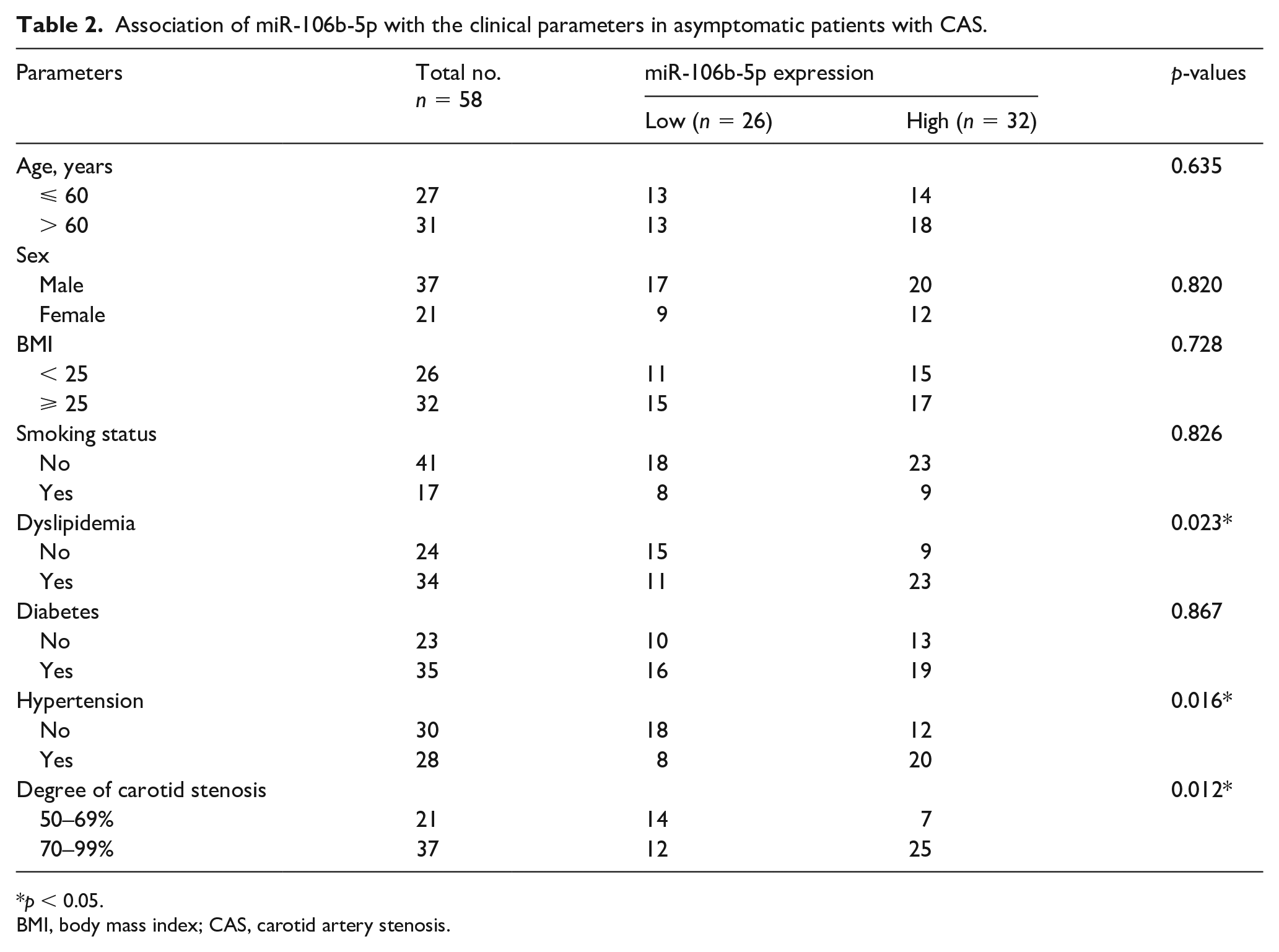
p < 0.05.
BMI, body mass index; CAS, carotid artery stenosis.
Correlation of miR-106b-5p expression with the degree of carotid stenosis in patients with CAS
According to the degree of carotid stenosis, all patients were divided into a moderate stenosis group (n = 21) and a severe stenosis group (n = 37). Logistic regression analysis was used to assess the correlation of different variables with the degree of carotid stenosis in patients with CAS. The results indicated that upregulation of miR-106b-5p was an independent factor for the high degree of carotid stenosis in patients with CAS (odds ratio (OR) 6.582, 95% CI: 1.549–27.963, p = 0.011; Table 3). We concluded that miR-106b-5p was a better indicator of the high degree of carotid stenosis in patients with asymptomatic CAS.
Association of different variables with the degree of carotid stenosis in patients with asymptomatic CAS.
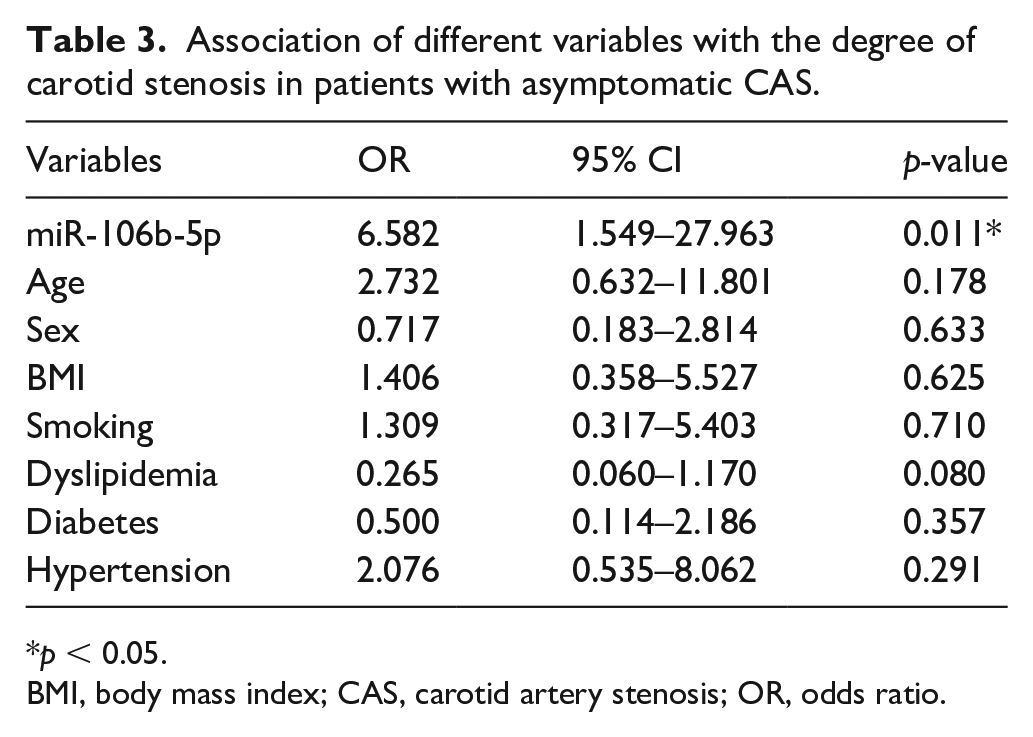
p < 0.05.
BMI, body mass index; CAS, carotid artery stenosis; OR, odds ratio.
Diagnostic value of miR-106b-5p expression for patients with CAS
The ROC curve was established to estimate the diagnostic value of miR-106b-5p in patients with asymptomatic CAS (Figure 2). It was observed that the AUC curve was 0.911, with a sensitivity of 89.7% and specificity of 83.6% at the cutoff value of 0.198. These data suggested that miR-106b-5p had a relative accuracy in differentiating patients with asymptomatic CAS from healthy individuals.
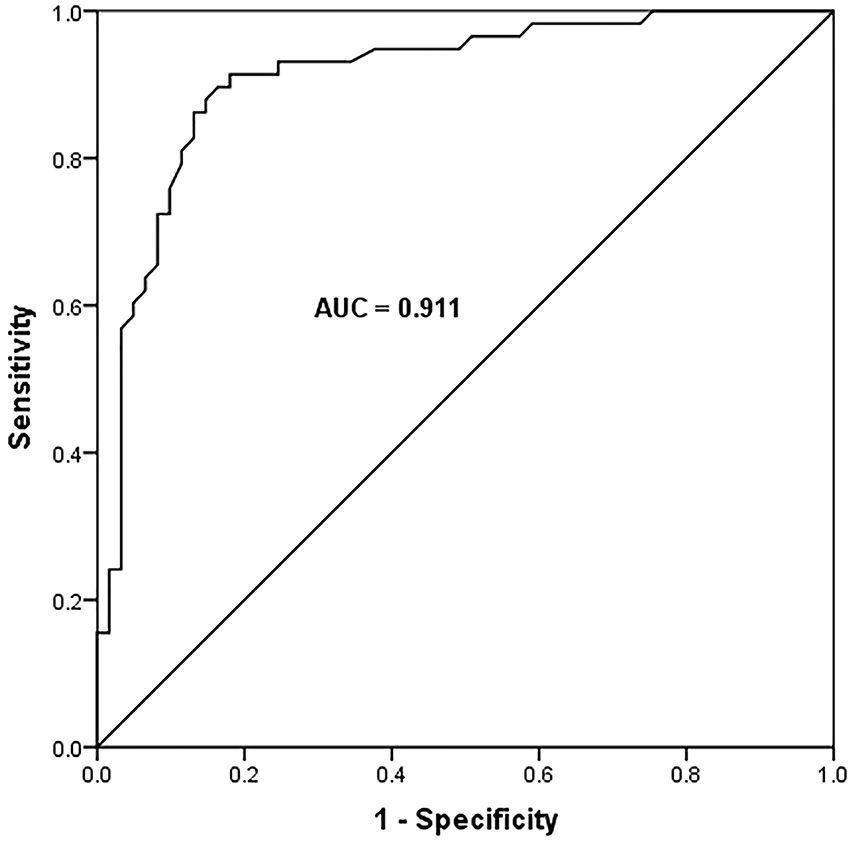
The curve for asymptomatic patients with CAS and healthy controls. The AUC was 0.911, with a sensitivity of 89.7% and specificity of 83.6% at the cutoff value of 0.198.
Prognostic value of miR-106b-5p expression for patients with CAS
To explore the predictive value of miR-106b-5p for the occurrence of CIE, the Kaplan–Meier survival curve was conducted. A total of 58 patients with asymptomatic CAS were followed up for 5 years, and neither death nor contralateral ischemic events occurred. During the follow-up, a total of 23 patients suffered CIE, including 14 TIAs and nine strokes. Among 23 patients, five cases were in low miR-106b-5p expression and 18 cases were in high miR-106b-5p expression. The Kaplan–Meier survival curve demonstrated that patients with high miR-106b-5p expression experienced more CIE (log-rank p = 0.020; Figure 3). To determine the influence of the clinical parameters on the occurrence of CIE, multivariate Cox analysis was performed. As shown in Table 4, more CIE were observed in patients with high miR-106b-5p expression (hazard ratio (HR) 5.431, 95% CI: 1.592–18.520, p = 0.007) and a high degree of carotid stenosis (HR 3.115, 95% CI: 1.119–8.669, p = 0.030).
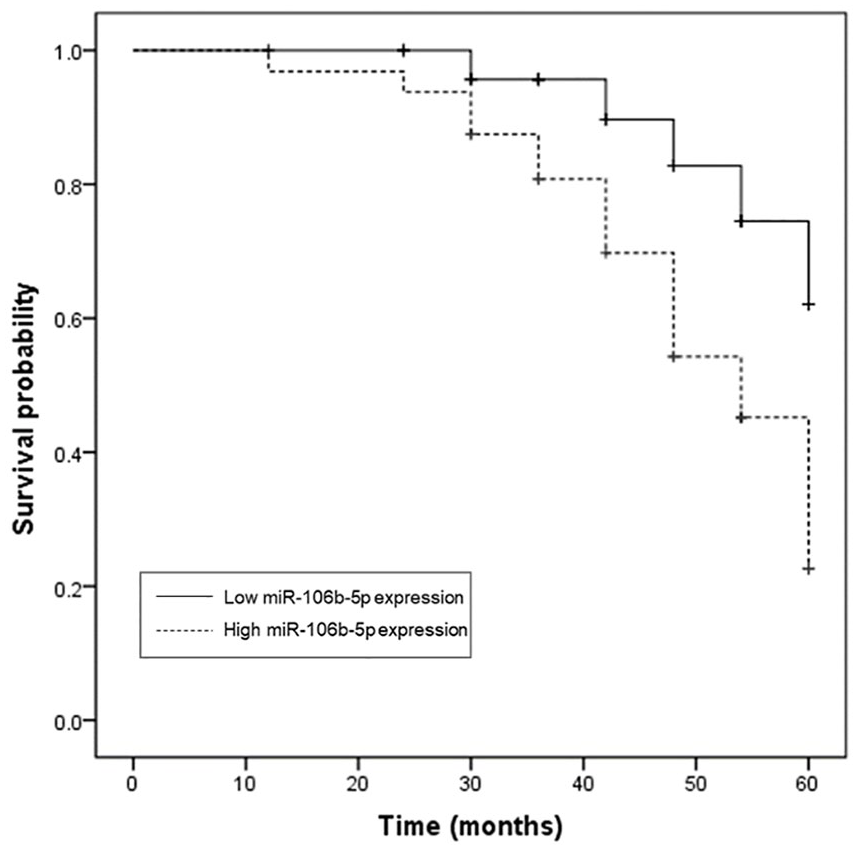
Kaplan–Meier analysis was conducted to assess the predictive value of miR-106b-5p for the occurrence of CIE in asymptomatic patients with CAS. Patients with high miR-106b-5p expression experienced more CIE (log-rank p = 0.020).
Multivariate Cox regression analysis for miR-106b-5p in asymptomatic patients with CAS.
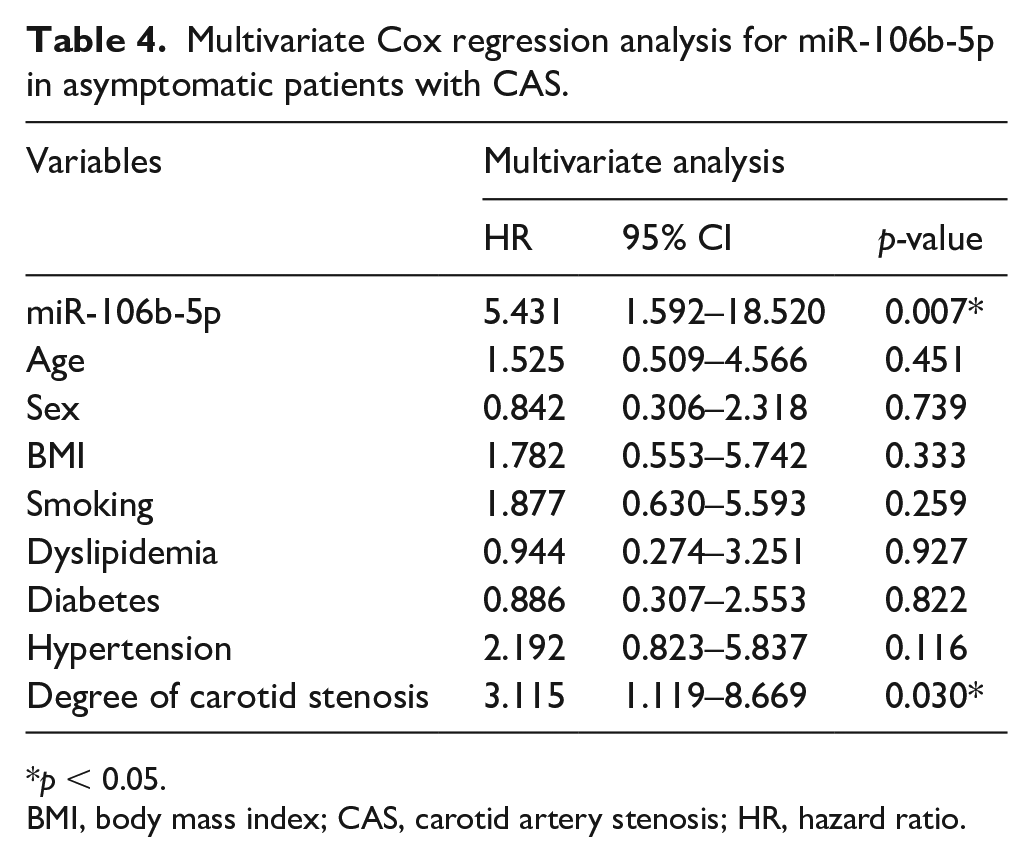
p < 0.05.
BMI, body mass index; CAS, carotid artery stenosis; HR, hazard ratio.
Discussion
CAS refers to narrowing or blockage of the lumen of arteries because of intravascular plaque formation. Asymptomatic CAS is diagnosed in patients who had no history of ipsilateral carotid territory ischemic stroke or TIA and had no presence of focal neurologic symptoms, including amaurosis fugax, contralateral weakness, numbness of an extremity or the face, dysarthria, or aphasia. 18 As a result of the aging population and a high prevalence of vascular risk factors, including hypertension, diabetes, hypercholesterolemia, and cigarette smoking, the incidence rate of asymptomatic CAS is increasing.19,20 CAS is a known risk factor for the development of ischemic cerebrovascular disease. During the asymptomatic period, the progress of CAS is silent, and stroke is always the first clinical manifestation, which is fatal. Early identification of patients with CAS in an asymptomatic population can prevent the occurrence of CIE.
Serum-based circulating miRNA screening is a novel and important diagnostic tool. Because it is noninvasive, the diagnostic value of miRNAs in various human diseases has attracted great concern in recent years. For example, a high level of miR-372 in peripheral blood samples has proved to be a potential biomarker to screen patients with ulcerative colitis from healthy controls. 21 In human cancers, several miRNAs have been identified to be candidate biomarkers for noninvasive screening, such as miR-520f, miR-1290, and miR-21.22–24 Recent researches suggest the potential role of several miRNAs in the pathogenesis of CAS, which may be involved in the evolution of carotid plaque toward growth, instability, and rupture. 25 Another study has compared miRNA expression profiles in atherosclerotic plaques from human carotid arteries and healthy arteries, and several miRNAs are identified to be aberrantly expressed in plaque tissue and associated monocytes. 10 In the present study, the miR-106b-5p expression was proved to be upregulated in patients with asymptomatic CAS compared with healthy controls, providing evidence for miR-106b-5p as a potential circulating biomarker for clinical diagnosis in the early stage of CAS. miR-106b-5p has been reported to be aberrantly expressed in stroke patients, and the latest study on atherosclerosis suggests the crucial role of miR-106b-5p in the regulatory network of atherosclerotic gene expression.14,26 All evidence supported our present results. miR-106b-5p belongs to the miR-106b-25 cluster, which also includes miR-25, miR-93-5p. As the previous study reported, miR-25 is highly expressed in patients with coronary artery disease, and could regulate the proliferation of vascular smooth muscle cells. 27 It is known that the members of the miRNA cluster are typically coregulated. However, in the present study, only miR-106b-5p was concerned. The interaction of other members in the miR-106b-25 cluster is interesting and needs further study in future research.
Clinically, we further confirmed the diagnostic value of miR-106b-5p in patients with asymptomatic CAS. It was noted that miR-106b-5p can differentiate patients with asymptomatic CAS from healthy individuals with relatively high sensitivity and specificity. The clinical value of miR-106b-5p has been widely reported in previous studies. For example, in Parkinson’s disease (PD), miR-106b-5p may provide discrimination between PD and progressive supranuclear palsy (PSP). 28 Another study in bladder cancers has demonstrated that miR-106b-5p can categorize p53-like bladder tumors into more and less favorable prognostic groups. 29 In the present study, we proved the significant diagnostic value of miR-106b-5p to identify high-risk patients with asymptomatic CAS. Then we further determined the association of miR-106b-5p expression with the clinicopathological features in patients with asymptomatic CAS. It was proved that the expression level of miR-106b-5p was related to dyslipidemia, hypertension, and the degree of carotid stenosis. Dyslipidemia is a well-known risk factor for CAS, and shows close association with the occurrence and progress of CAS. 30 Our present results indicated that in patients with dyslipidemia, there are more cases with high miR-106b-5p expression, suggesting that the high expression of miR-106b-5p might be positively associated with the occurrence of dyslipidemia. Dávalos has reported that miR-106b could regulate the cholesterol efflux via targeting the ATP-binding cassette transporter A1 (ABCA1), and participate in cholesterol-related pathologies. 31 Another study about the cholesterol-lowering effects of statins has suggested that miR-106b-5p is involved in statins therapy in vivo. 32 Hypertension is an important risk factor for CAS, as well as the development of unstable carotid plaques. 33 In the present study, we found that more hypertension patients were observed in cases with a high miR-106b-5p level. The results indicated the potential role of miR-106b-5p in both dyslipidemia and hypertension, which shows a significant association with the development of CAS. However, further studies are needed to explore its underlying mechanism. Additionally, the logistic regression analysis was performed to assess the correlation of miR-106b-5p with the degree of carotid stenosis in patients with CAS. The results indicated that the upregulation of miR-106b-5p was an independent factor for the high degree of carotid stenosis. This evidence may provide some theoretical basis and support for the involvement of miR-106b-5p in the pathogenesis of CAS.
Considering the crucial role of miR-106b-5p in CAS, as well as CAS-related diseases,13,31 we further investigated its predictive value for the occurrence of CIE in patients with asymptomatic CAS. The enrolled patients were followed up for 5 years, and the results demonstrated that high miR-106b-5p expression was associated with the incidence of future CIE in patients with asymptomatic CAS, and miR-106b-5p expression was an independent predictor associated with the risk of future CIE. The potential prognostic value of miR-106b-5p in other human diseases was also proposed by other investigators. In renal cell carcinoma (RCC), high miR-106b-5p expression has been proved to be related to shorter overall survival, and miR-106b-5p expression serves as an independent risk factor for predicting the prognosis of RCC patients. 34 Another study in bladder cancers has revealed that miR-106b-5p can categorize p53-like bladder tumors into more and less favorable prognostic groups. 29 Our present results provided evidence for miR-106b-5p as a promising biomarker for predicting the risk of future CIE in patients with asymptomatic CAS. However, further studies are needed to explore the concrete role of miR-106b-5p in CAS, as well as its underlying mechanism. Additionally, information of miR-106b-5p in an exosome fraction or microparticles, or bound to RNA binding proteins, would be interesting and significant for the understanding of the mechanism.
Conclusion
In conclusion, miR-106b-5p was determined to be highly expressed in patients with asymptomatic CAS. Our present results provide evidence for miR-106b-5p as a promising biomarker for CAS diagnosis, and for predicting the risk of future CIE in patients with asymptomatic CAS.
Footnotes
Declaration of conflicting interests
The authors declared no potential conflicts of interest with respect to the research, authorship, and/or publication of this article.
Funding
The authors received no financial support for the research, authorship, and/or publication of this article.
