




Abstract
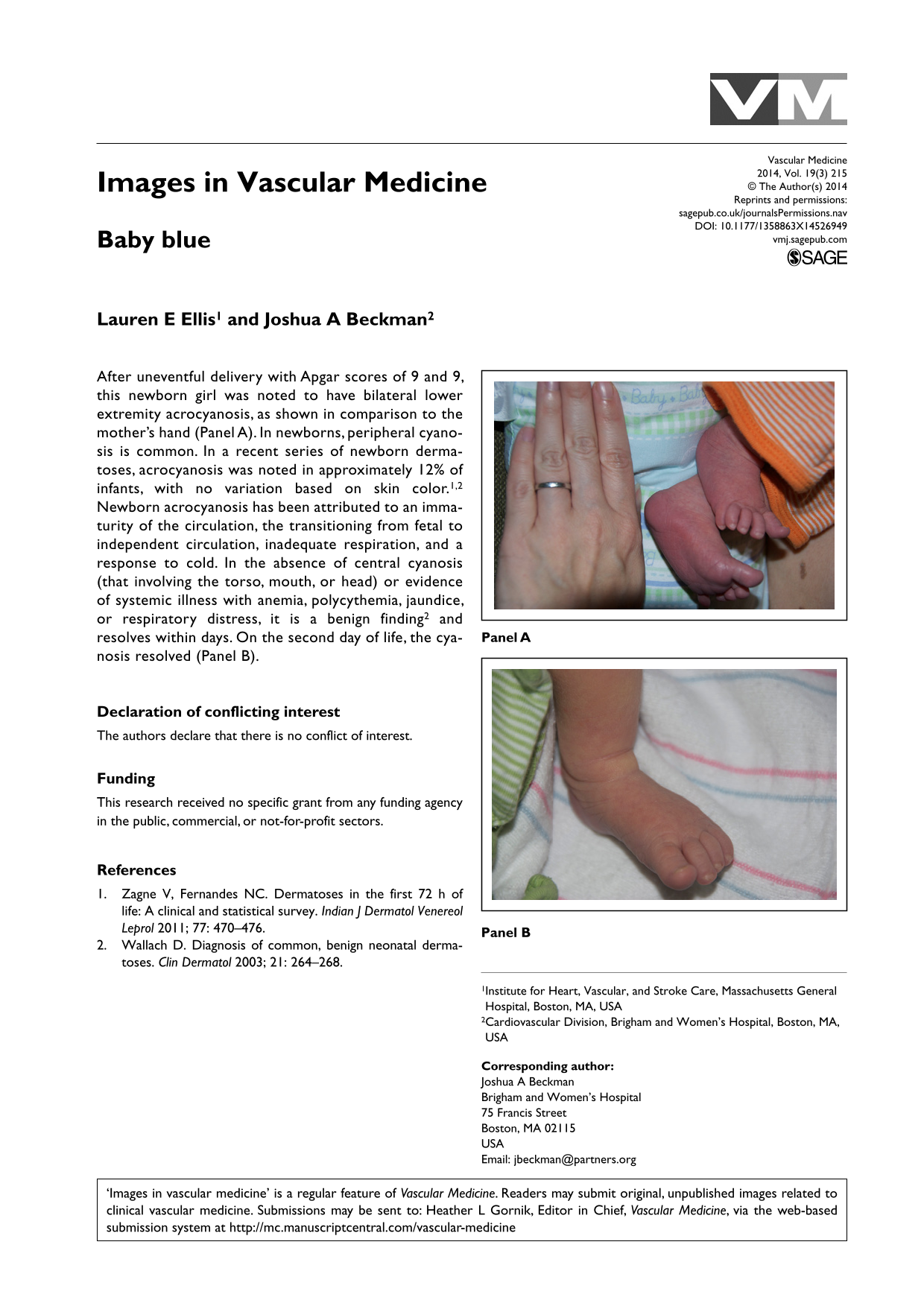
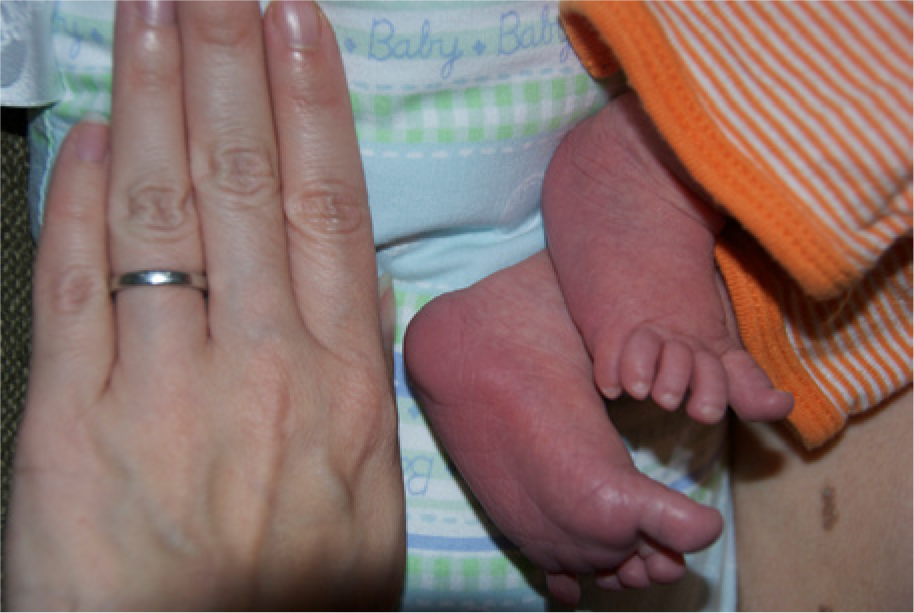
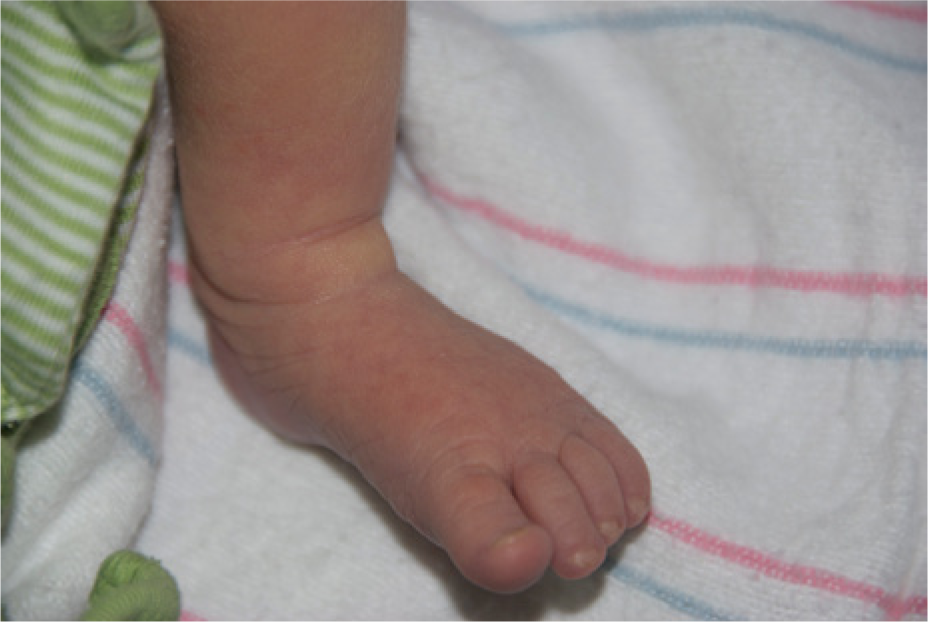
After uneventful delivery with Apgar scores of 9 and 9, this newborn girl was noted to have bilateral lower extremity acrocyanosis, as shown in comparison to the mother’s hand (Panel A). In newborns, peripheral cyanosis is common. In a recent series of newborn dermatoses, acrocyanosis was noted in approximately 12% of infants, with no variation based on skin color.1,2 Newborn acrocyanosis has been attributed to an immaturity of the circulation, the transitioning from fetal to independent circulation, inadequate respiration, and a response to cold. In the absence of central cyanosis (that involving the torso, mouth, or head) or evidence of systemic illness with anemia, polycythemia, jaundice, or respiratory distress, it is a benign finding 2 and resolves within days. On the second day of life, the cyanosis resolved (Panel B).
‘Images in vascular medicine’ is a regular feature of Vascular Medicine. Readers may submit original, unpublished images related to clinical vascular medicine. Submissions may be sent to: Heather L Gornik, Editor in Chief, Vascular Medicine, via the web-basedsubmission system at http://mc.manuscriptcentral.com/vascular-medicine
Footnotes
Declaration of conflicting interest
The authors declare that there is no conflict of interest.
Funding
This research received no specific grant from any funding agency in the public, commercial, or not-for-profit sectors.