




Abstract
Visitor health and safety are vital concerns in the tourism industry, particularly in relation to hazardous locations such as beaches and waterways. These locations often require the communication of perceived hazards to visitors via various forms of communication channels (i.e. videos, websites, on site signage, etc.) to reduce safety risks. This is a particularly salient concern for international visitors who are often vulnerable to beach hazards due to their unfamiliarity with remote beach locations and language barriers that can hinder safety communication. This research thus investigates international visitor perceptions of beach risks, effective beach safety communication and factors influencing precautionary swimming measures. This is achieved through an exploratory and confirmatory mixed methods study design using qualitative interviews and physiological data collection (eye tracking) to understand international visitors’ responses to beach safety messaging. Findings provide message framing recommendations to attract higher attention to safety communications and improvements in precautionary behaviours.
Keywords
Introduction
Beach and waterway tourism attracts a sizable visitor market globally (Phillips and House, 2009). In Australia, beach tourism holds significant economic and cultural value, with its iconic coastlines serving as key attractions for both domestic and international visitors. In 2019, approximately 71% of international visitors to Australia visited a beach, underscoring Australia's strong appeal as a global beach tourism destination (TRA, 2020a). That same year, beach-related tourism contributed an estimated $24.7 billion in expenditure from 28.3 million trips (TRA, 2020b). Beaches are equally popular among domestic visitors, who contributed an additional $3 billion in tourism expenditure, further emphasising their pivotal role in the broader tourism economy.
While beaches are predominantly associated with leisure and relaxation, they also present numerous potential hazards, including tidal movements, undercurrents, riptides, dangerous marine life, and boating accidents. Drownings as a result of these hazards is the third leading cause of unintentional injury and death worldwide, accounting for 7% of all injury-related deaths (WHO, 2023). Although beach protection agencies, such as Surf Lifesaving Australia in Australia, have invested in communicating potential hazards and risks to beach visitation, drownings are still occurring at alarming rates, with 125 lives lost in 2022–2023 along Australian coastlines, due to hazardous swimming or wading (SLSA, 2023).
Visitor health and safety is a major concern for the tourism industry and one that warrants constant investigation due to the importance of safety and security on visitor decision making and their wellbeing (Page, 2009). Understanding how beach visitation and risks are perceived by visitors, and what factors influence the adoption of precautionary behaviours to mitigate these risks is essential to safeguarding visitors. International visitors are more vulnerable to risks than domestic residents because they often visit remote and unfamiliar locations that are potentially considered hazardous (McInnes et al., 2002). For example, research on beach safety has identified that international tourists are three times less likely to make safe swimming location choices away from rip currents than domestic residents (Williamson et al., 2012). International visitors may also face language/cultural barriers which affect the interpretation of visitation safety messages such as warning signage next to beaches and waterways (Wang et al., 2019).
These studies highlight the need for targeted interventions in beach safety messaging to effectively influence the precautionary behaviours of international visitors at beach locations. Currently, the literature offers limited insight into the efficacy of such safety messages in reducing unintended injuries or fatalities. Furthermore, there is a notable gap in research exploring the specific messaging cues that best convey safety information to vulnerable groups, particularly international visitors. To address these gaps, this study draws on social marketing literature, message framing theory, and social identity theory to examine the effectiveness of beach safety communication. Building on these theoretical foundations, the research investigates how communication cues – such as framing, narrative styles, and cultural alignment – affect the comprehension and precautionary behaviours of international beach visitors. For instance, message framing theory emphasises the importance of gain-framed messages, which highlight the benefits of safe behaviour, and loss-framed messages, which underscore potential hazards, in shaping behavioural responses (Gallagher and Updegraff, 2012; Rothman and Salovey, 1997). Similarly, social identity theory (Ellemers et al., 1999) underscores the role of cultural and social cues in enhancing message resonance and engagement by aligning with individuals’ self-perception and group identity. By integrating these frameworks, this study advances our understanding of how tailored communication strategies can improve beach safety outcomes for international visitors.
This research adopts an exploratory and confirmatory mixed-methods design comprising three interlinked studies: an exploratory laboratory experiment (Study 1) that examines visitor attention and preferences toward existing beach safety message cues; an exploratory qualitative interview (Study 2) to identify key messaging factors for designing interventions; and a final confirmatory experimental study (Study 3) that tests the effectiveness of these interventions. Both studies 1 and 3 integrate physiological measures – eye tracking – to provide a more nuanced understanding of participants’ cognitive responses to safety messages. By integrating these physiological data with survey and interview findings, the studies enhance the reliability and depth of their conclusions regarding message effectiveness.
Literature review
Effective communication of beach safety is crucial for beachgoer well-being and reducing incidents related to water and coastal hazards. Beach safety messaging plays a vital role in educating visiting tourists, raising awareness, and influencing behaviour. However, the efficacy of these messages often depends on the clarity, relevance, and salience of the cues they employ. Message cues, including visual symbols (i.e. imagery) and textual warnings, serve as the critical link between the message source (e.g. lifeguards) and the target audience. This discussion explores how the messaging framing of cues can influence message receptivity, while also exploring how social cues (i.e. images of crowds of people – as often seen in beach safety communications) shape the reception and effectiveness of beach messaging. Further, the role of social identity of the audience receiver of these messages cues is examined to account for cultural differences that can be encountered by international audiences in forming attitudes and eliciting behaviour. Understanding these cues is essential for developing communication strategies that resonate with intended audiences and that can account for differences in cultural background and familiarity with beach environments.
Message framing in beach safety messaging
Message framing theory elucidates that the way in which a message is framed, affects the amount of persuasion it elicits (Smith and Petty, 1996), and has been examined in a wide range of consumer communication contexts such as, charitable giving (Beldad et al., 2023), recycling behaviour (White et al., 2011), green innovation consumption (Qin et al., 2024) and healthy eating (Garg et al., 2021). The format and structure of a message can influence receivers’ information processing abilities and attitudes (Cappella, 2006). This is particularly salient in relation to information aimed at behavioural change.
In adopting message framing theory, messages can be framed either to emphasise the benefits of adopting a behaviour (gain-frame) or the costs of failing to adopt a behaviour (loss-frame) (Rothman and Salovey, 1997). While both messages promote behavioural change, the persuasiveness may vary based on the audience and context. For example, a message depicting the dangers of not swimming between the flags (i.e. drowning) is considered a loss-frame, while one highlighting the positive outcomes (i.e. a fun day at the beach) is considered a gain-frame. Gain-framed messages are often used to promote ‘prevention behaviours’ (e.g. skin cancer prevention, physical activity, dental problems, and vaccination) (Gallagher and Updegraff, 2012), while loss-framed messages often encourage ‘detection behaviours’ (e.g. mammography, breast self-examination) (O’Keefe and Jensen, 2007).
Message framing also encompasses how information is relayed in messages, in that it can be communicated by adoption a factual-based or a narrative-based format. When applied to a context such as healthcare messaging, a factual-based message could be considered a as a statistical summary on case numbers effected by a health conditions, while narrative messages could present a compelling story describing a healthcare setting or episode. Narrative-based messages are often viewed as more effective in conveying messages which reflect natural forms of interaction that enhance comprehension (Shen et al., 2015), for emotionally engaged audiences (Green, 2006), or when there is a need to generate stronger cognitive and affective responses (McQueen et al., 2011). Narrative-based messages have also been shown to have a stronger influence on audience intentions (Zebregs et al., 2015) by evoking affective responses, while conversely, factual framed messages then to impact beliefs and attitudes more (Trafimow et al., 2004). Moreover, narrative messaging has been found to be more effective in influencing risk feelings than non-narrative messaging (Janssen et al., 2013). This effectiveness is attributed to the mediating effect of ‘ease of imagination’, which enhances issue involvement (Broemer, 2004).
Interactional framing effects have also examined including the combined effect of visual imagery and loss versus gain message framing. For example, Seo et al. (2013) investigated how the presence or absence of imagery impacted the persuasive effects of message framing, specifically related to behavioural change in flossing and sunscreen use. They observed a significant interaction effect only in loss-framed conditions when visual imagery was involved. Similar findings were noted in other studies related to quitting smoking (Bansal-Travers et al., 2011) and the development of cigarette warning labels (Zhao et al., 2014).
Crowding effects in beach safety messaging
The presence of crowds, and the density of crowds, emerged in the tourism literature in the 1970s and is mainly discussed in relation to how tourists react to social aspects of destinations (Dogru-Dastan, 2022). Crowding is defined as one's perceived negative assessment of density levels within a certain physical environment (Shelby and Heberlein, 1984). Maeng et al. (2013) also defined social crowding as a large group of people gathered, so that an individual's personal space becomes increasingly violated. This personal space violation can activate human defences and trigger specific emotional states such as fear and anxiety (McNaughton and Corr, 2004), thus eliciting an avoidance response (Maeng et al., 2013). This is based on the appraisal of an unfavourable social or physical condition, which can lead to stress, anxiety, and reduced decision-making capabilities (Jacobsen et al., 2019).
Perceived crowding, or reduced interpersonal distance, has received little attention in the precautionary behaviour or travel safety literature, with previous research concentrating more on leisure or social outcomes, such as tourism destination attractiveness (e.g. Yin et al., 2020), visitor satisfaction (Ruiz et al., 2021), overtourism issues and crowding-out effects on tourists (e.g. Jacobsen et al., 2019; Schuckert and Wu, 2021). Understanding how perceived crowdedness influences safety behaviour decisions is of interest in beach safety messaging, particularly as these messages tend to communicate through imagery the safer places to swim (i.e. crowds of people gathered on the beach between the lifeguard flags). These insights are vital for developing effective messages aimed at increasing compliance with safety protocols in crowded environments for tourists.
Social identity and safety message communication
While the density of the crowd is one messaging cue which has the potential to influence message effectiveness linked to beach safety, a tourist's social identity can also play a role given that social identity theory consists of salient group classifications, which affect how individuals classify themselves into different social categories, such as nationality, race, affiliations, and memberships (Palmer et al., 2013). This theory has been used to examine important connection between individuals and the social structure (Nunkoo and Gursoy, 2012). Literature has discussed three components of identify, including (1) cognitive awareness of one's membership in a social group, (2) self-esteem evaluation related to group value, and (3) emotional commitment to the group (Ellemers et al., 1999).
In the context of message cues presented in safety communication (i.e. symbols, colours, images of people, language), people from different ethnic backgrounds (e.g. Eastern vs. Western) are likely to categorise themselves into distinct social groups based on nationality, cultural values, and collective identity (Lee et al., 2021). This self-categorisation can shape how individuals perceive and interpret safety messages. For example, Eastern cultures, with a focus on collectivism, may view message cues through a communal lens, while Western cultures, emphasising individualism, may interpret them as personal responsibility (e.g. Xiao, 2021). Furthermore, the values of oneself attached to a social group shape the level of trust and receptivity towards safety messages. Also, individuals with a strong emotional bond to their social group are more likely to adopt safety behaviours prescribed within safety communications hat align with group norms (Burchell et al., 2013).
In safety communication, understanding individuals’ emotional connections to their cultural or ethnic (social) identity is essential for creating messages that align with their values and commitments. Despite its significance, current research in social marketing and safety messaging has largely overlooked this dimension. This study aims to address this gap by investigating how social identity influences the effectiveness of beach safety messaging in driving precautionary behaviour change.
Collectively, message framing and social messaging constructs such as crowding and perceptions of social identity are often applied as messaging cues in beach safety communication. While we understand how these cues can be used independently in a range of social marketing contexts (Jacobsen et al., 2019; Maeng et al., 2013) to gain individual's attention and to influence attitudes and behaviours, little to no research has been conducted on how effective these cues are in a beach safety context, and particularly from the perspective from one of our most vulnerable tourist groups – international visitors.
Eye-tracking measures and attention studies in tourism
There is a growing demand for more advanced approaches to better understand tourist behaviour. Recent developments in physiological data collection techniques have enabled continuous monitoring of real-time biological response with reduced bias (Li et al., 2015; Walters et al., 2023). Eye-tracking, one of the most widely used methods for measuring physiological responses in visitor research, helps identify specific stimuli that attract visual attention (Li et al., 2024), This technique reveals where individuals direct their focus (Meißner and Oll, 2019), thereby enhancing insights into visitor attention and decision-making.
Eye-tracking measure effectively identifies areas of interest of external stimuli (e.g. words or images) that capture attention, making it suitable for studying how beach safety messages attract visitor attentions. It complements traditional methods like surveys and interviews by revealing real-time viewing patterns (Li et al., 2024). A taxonomy in organisational research outlines attention processes (bottom-up and top-down), memory effects, eye-tracking metrics (e.g. fixations, saccades, pupil diameter), and psychological outcomes (e.g. cognitive load, emotional arousal) (Awh et al., 2006; Meißner and Oll, 2019). This study examines fixation count, visitation duration, and attention heat maps to provide deeper insights on beach safety message cue effectiveness. Thereby adopting an objective mechanism through which to measure visitor attention and their physical responses to safety messaging, offering empirical evidence beyond traditional self-reported processes.
Existing studies have applied eye-tracking in various fields, such as analysing consumers’ visual attention to hotel webpages and restaurant menus (e.g. Chen et al., 2020; Kuo et al., 2021) and examining how viewing patterns affect choice behaviour (Schwebler et al., 2020). Additionally, eye-tracking has been used to explore travel decision-making with online travel agencies and consumer interest in social responsibility and sustainability (Babakhani et al., 2020). However, its use in social marketing and safety messaging is limited. Utilising this method can provide valuable and novel insights into visitors’ attention and decision-making processes, enriching other forms of data analysis.
Methodology
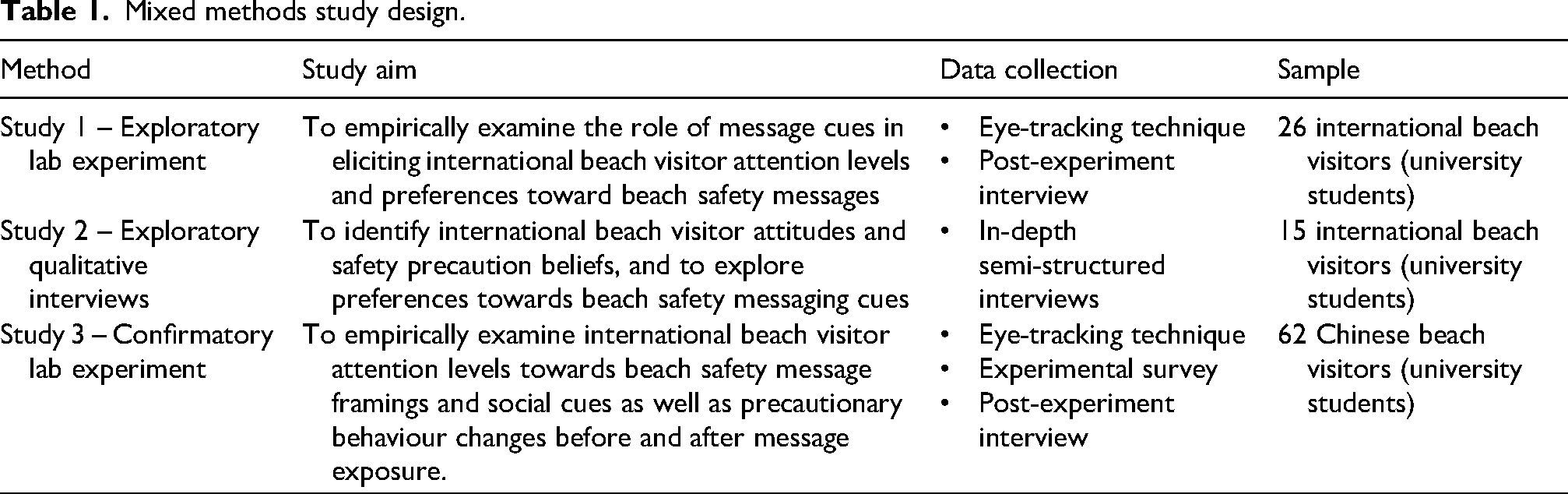
To examine the effectiveness of beach safety message cues in attracting attention and evoking precautionary behaviour in international visitors, this research adopted an exploratory and confirmatory mixed-method study design (see Table 1). The first study was an exploratory laboratory experiment designed to empirically examine the role of beach safety message cues (as provided by Surf Life Saving Queensland (SLSQ – one of Australia's leading surf lifesaving organisations), in relation to beach visitor attention. The second study was an exploratory qualitative interview study (Study 2) conducted with international beach visitors, which sought to identify the most salient messaging cues that could be used to design beach safety message interventions for Study 3. Study 3 was a confirmatory experimental study aimed at empirically testing the effectiveness of key messages cues and their impact on message attention and international visitor precautionary behaviour change. Within studies 1 and 3, a physiological measure (e.g. eye-tracking technique) was applied to measure participant attention related to message cues and pre- /post-experiment survey and post-experiment interviews were conducted for biometric data triangulation and interpretation.
Mixed methods study design.
Participant recruitment
Australia's beaches and waterways are attractions to both domestic and international visitors alike however, these coastal areas pose risks to visitors, including drowning. Vulnerable visitor groups have a higher proportion of drowning and include those from culturally and linguistically diverse backgrounds such as international visitors (Peden et al., 2016). This research enlisted international visitors to Australia as the main sample population across all three studies. Specifically, international university students, who were identified as ‘international visitors’ to Australia were recruited through convenience sampling and snowball sampling techniques. These international visitors were recruited from a leading Queensland university and were identified as having had, or were intending to, swim at Queensland beaches. In Study 3, we primarily targeted Chinese international students because China is the top-ranked international inbound market for Australia. The focus on international visitors from one single country – China – also allowed for the development of various beach safety messages in Mandarin to investigate the impact of native language on safety messaging evaluations.
Study 1: Laboratory experiment
Study 1 aimed to empirically investigate international beach visitors’ attention levels to existing beach safety communication messages and their perceptions of different message types and cues. An experimental design (lab environment) was adopted with the use of physiological measures (Li et al., 2015), namely eye-tracking measures, to capture tourists’ level of attention to various message cues.
To measure visual attention levels, participant's eye movements (fixation and gaze patterns) were tracked using a Tobii TX300 desktop eye tracker at 300 Hz. The stimuli for this study consisted of seven different static images of beach safety messages. These messages were sourced from SLSQ's ‘On the Same Wave Program’ beach safety brochure, which included, three beach safety messages, containing visual message cues and imagery – ‘beach signs and flags’, two messages containing imagery and text cues – ‘beach images with slogans’, and two messages containing imagery cues only – ‘lifeguards and information sign’ (see Appendix A for all images). A within-subject experiment design was conducted, with 26 participants exposed to all seven beach safety message stimuli (randomly presented). A post-experiment interview was conducted to further evaluate their perceptions towards the beach messaging stimuli. These questions sought to examine participants’ risk perceptions and precautionary behaviours before and after message exposure and their likeability of different types of beach safety messages.
Study 2: Qualitative interviews
In this study, we sought to explore international visitor's broader beach hazard precautionary beliefs and attitudes, as well as their impressions of beach message cues, and suggestions for enhancements. A total of 15 semi-structured interviews were conducted (averaging 30–40 min) which involved showing one of the beach safety messages used in Study 1 from SLSQ (see Appendix B). Interview questions were asked in relation to participants’ knowledge and attitude towards beach safety cues (i.e. images of flagged safe swimming areas), and participant's impressions of the presented beach safety message and suggestions for improvements in messaging related to various cues. All participants were identified as an international visitor to Australia who had visited the beach in the last six months to swim. Participants reported a range of swimming abilities (from very poor to very good) and were comprised of a range of nationalities (e.g. Chinese, Vietnamese, Singaporean, Saudi Arabian, and Indian), reflective of the university's international student cohort demographics.
Study 3: Laboratory experiment
Study 3 utilised an experimental design to extend the insights from the previous two studies. It focused on crafting new beach safety messages to evaluate the attention of international visitors and assess intended precautionary behaviours after the exposure to different safety messages stimuli which manipulated key message cues gleans in studies 1 and 2. In total, nine new versions of static beach safety messages were developed which applied various message cues to a baseline (control group) message stimuli (the most liked message stimuli reported in Study 1 as shown in Appendix A-5 – Beach Slogan 2). This baseline message showed a beach scene with images of beach visitors staying between the designated red and yellow beach safety flags and featured the words – ‘If we can’t see you, we can’t save you’. The primary goal of this message was to promote swimming between the red and yellow flags. The creation of the additional beach safety messages adopted variations message cues – that is, message framing (gain vs loss; narrative vs factual; text vs images). Additionally, messages were manipulated based on (a) social identity theory (different (European) vs similar (Asian) people pictured on the beach), and (b) crowdedness (less vs more people pictured on the beach). See Appendix C to view examples of these messages.
For the experiment, all newly formed messages were divided into two groupings to which participants were randomly assigned (see Table 2). In addition to the six manipulated beach safety messages, each participant viewed one control message as well as three manipulated messages translated into Mandarin, given that all participants in this study were Chinese (see Appendix D for all manipulated safety messages). Thus, each participant viewed 10 messages in total (one control + six manipulations + three Mandarin versions). This sought to account and control for any language effects. The gain/loss message frame manipulation was checked by asking participants to report about what would be gained (lost) if they stayed (did not stay) between the red and yellow flags. The factual/narrative message manipulation was checked by asking participants whether the message contained numbers or not.
Message manipulations and groupings.
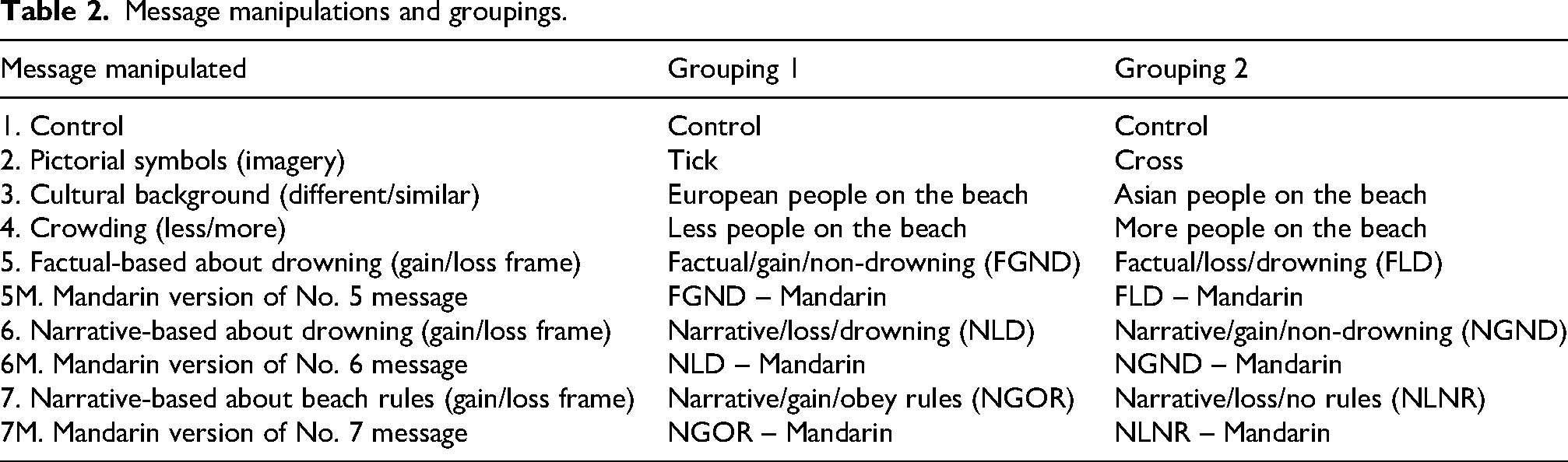
A total of 62 participants completed Study 3 (i.e. 31 participants randomly assigned to each grouping). Participants initially completed a self-report questionnaire on their beach precautionary behaviour (i.e. intentions to swim between the flags). They were then exposed to one of the two groupings of 10 beach safety messages. To measure visual attention levels, participant's eye movements were tracked using a Tobii TX300 desktop-mounted eye tracker and participants’ fixation and gaze patterns were recorded at 300 Hz using infra-red eye tracking methodology. Participants then answered a series of questions after being exposed to each message (during the experiment) in relation to their likeability, understandability, precautionary behaviours, and questions to check the message cue manipulations. The beach messages within each grouping were manually rotated to minimise accumulated effects from a fixed order. At the end of the experiment, a brief interview was conducted to further explore the specific message cues and elements participants responded to.
Results
Study 1 results: Attention to beach safety messages
This study sought to investigate international beach visitors’ attention levels to beach safety messages. The results first report findings from the analyse of participant's attention levels to the series of static beach safety messages (from SLSQ) presented, followed by an overview of the participants’ perceptions of safety messages reported via post-experiment interviews.
Attention levels in response to safety messages
Participants’ attention levels were reported via eye tracking measures across the seven static beach safety messages. Figure 1 shows the fixation duration mean scores (seconds) for each message stimulus; the longer duration depicts longer attention paid to the stimulus. Figure 2 shows the fixation count mean scores (number) for each stimulus; the higher the counts, the more attention paid, or interest shown. Through these two Figures and the incorporation of the post-experiment interview, it was found that stimuli ‘Beach Slogan 1’ and stimuli ‘Beach Slogan 2’ generated the shortest attention as they were reported to be easy to understand and interpret, with clear imagery and messaging. While the stimuli ‘Flags’, ‘Beach Signs’, and ‘Beach safety flags’ received relative higher fixation duration and fixation counts, these results reflected a longer reading and processing time for participants to understand the key messages on these stimuli. Among these three stimuli, participants expressed a stronger preference for the ‘Beach Signs’ stimuli as it featured visual imagery and conveyed clear meanings.
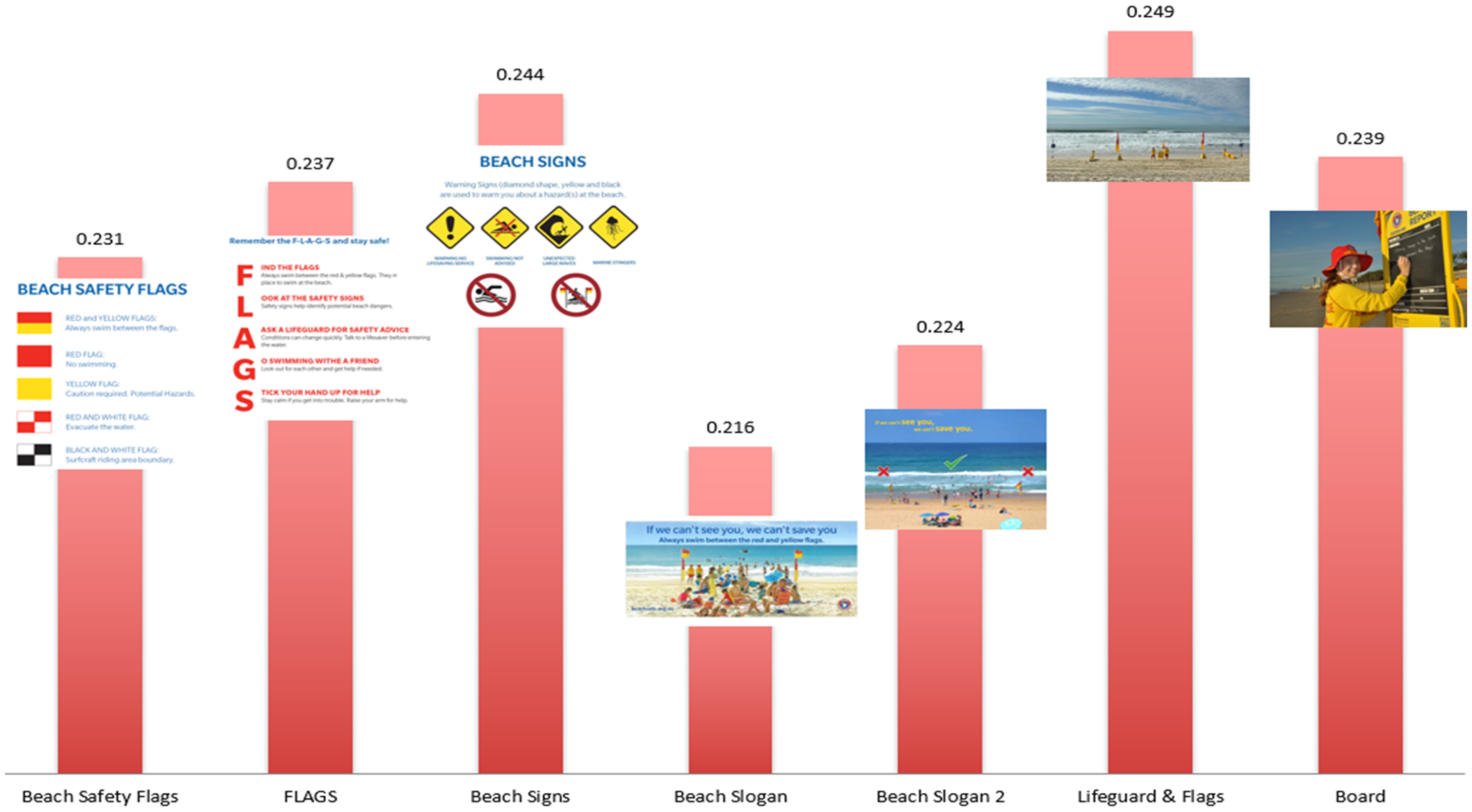
Fixation duration mean – seconds (all seven stimuli).
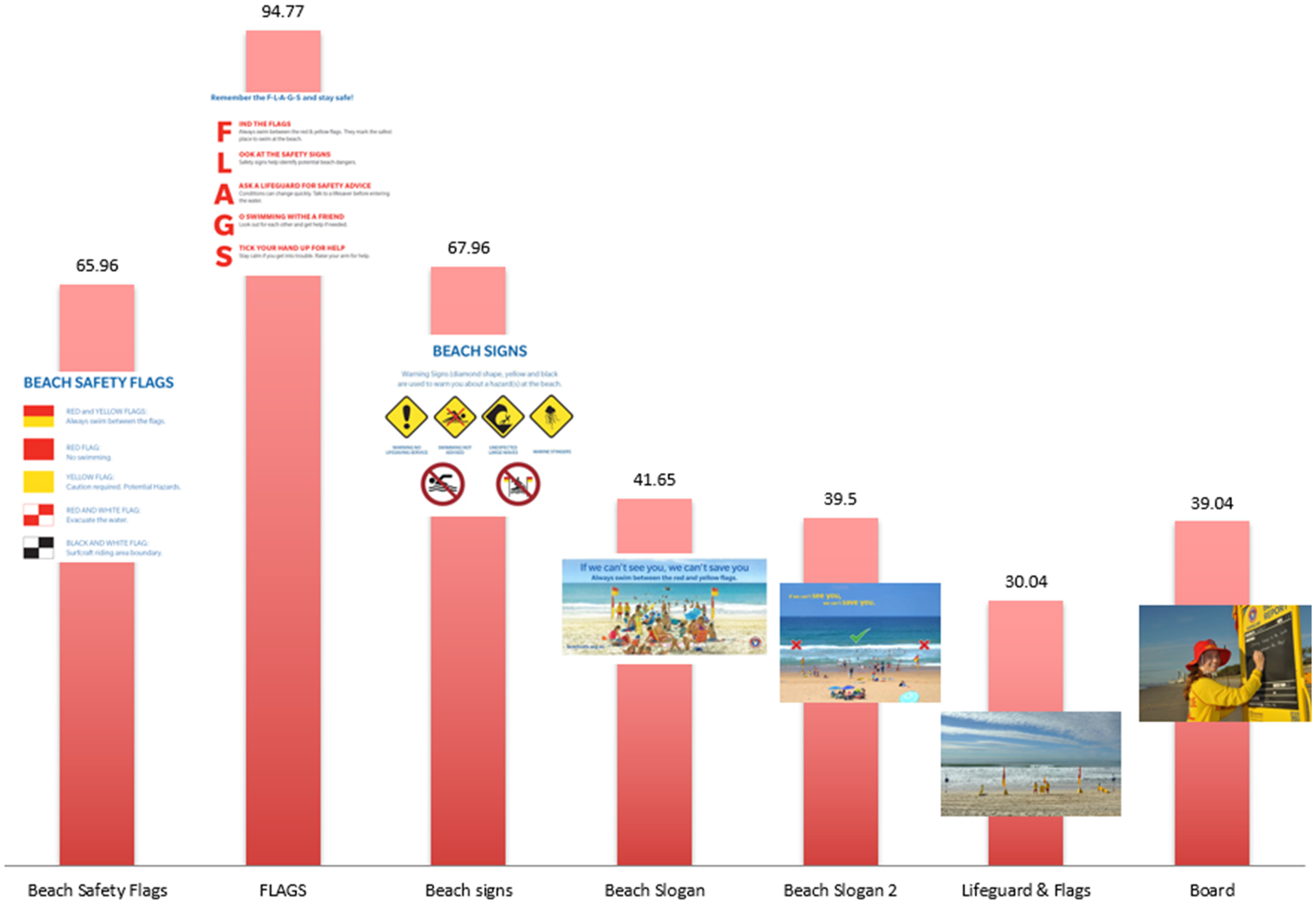
Fixation count mean – counts (all seven stimuli).
Furthermore, heat maps as key data output, provide a representation of the dynamic process of cognitive attention. Those message cues which were highest in value (participants’ visual attention) were given a ‘hot’ colour (i.e. red), while those that were lower in value were given a ‘cold’ colour (i.e. green) (Farnsworth, 2023). Figures 3 and 4 illustrate the visualised heat map of participants’ attention towards stimuli ‘Beach Slogan 1’ and stimuli ‘Beach Slogan 2’. Some of the key ‘image’ cues in these stimuli were related to the images of flags and symbols, however the heat maps indicated that these were often not looked at as participants spent more of their time reading the text instead. An inference of this effect is that text should be reduced in size so as not to unduly draw people's attention away from key imagery and symbols. Overall participants showed higher likeability for shorter text and images.
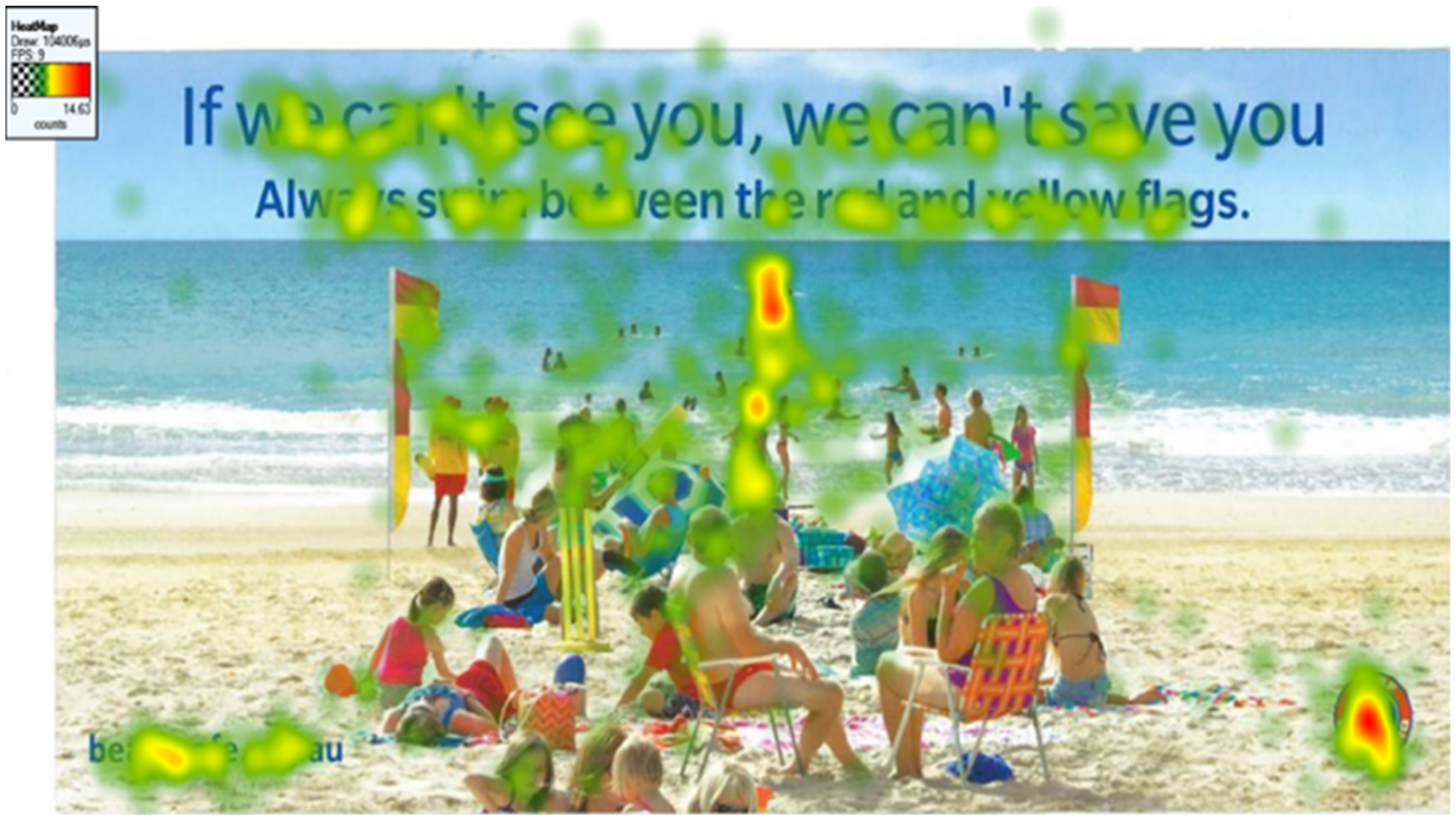
Eye-tracking heat map of ‘Beach slogan 1’.
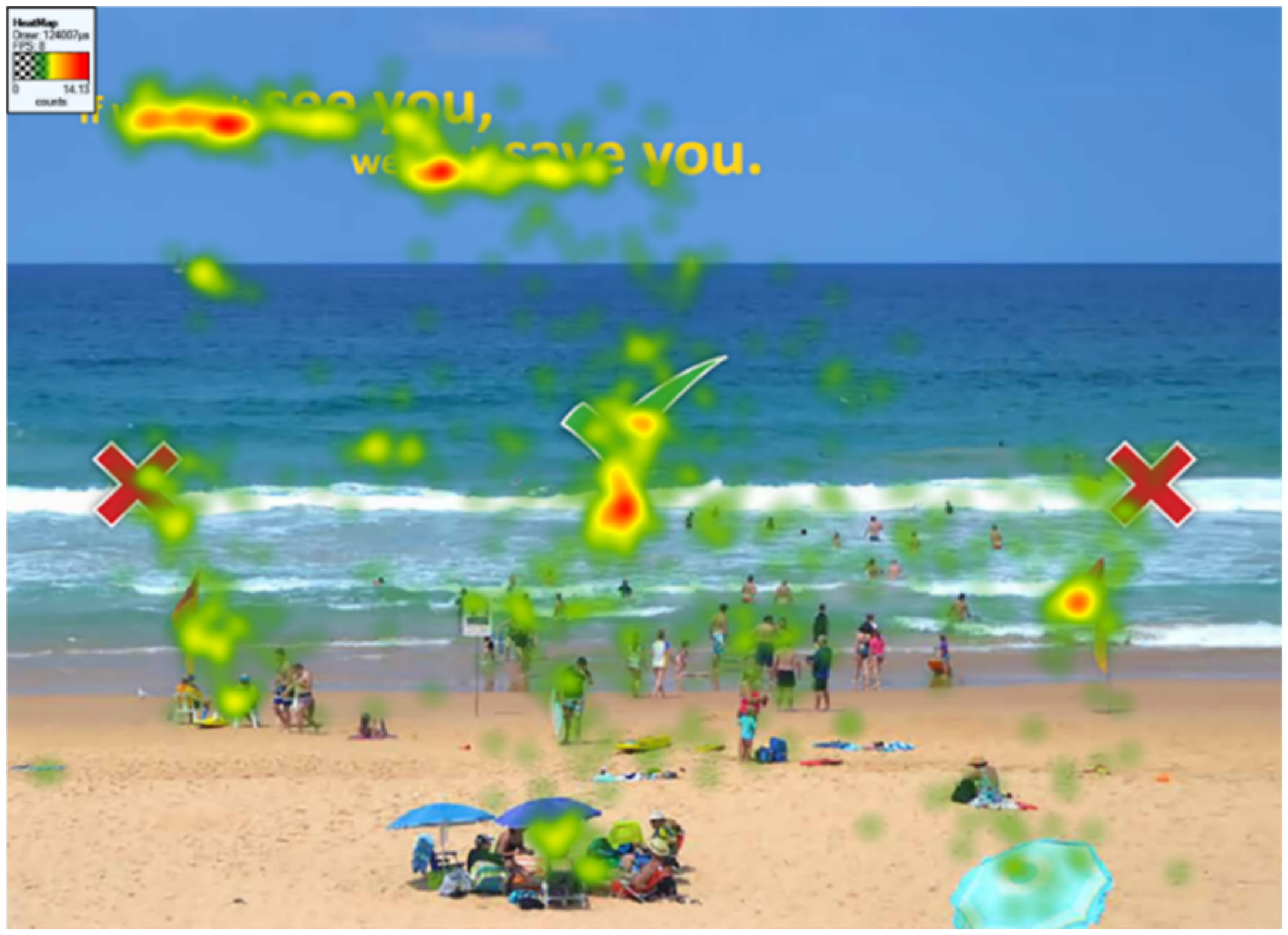
Eye-tracking heat map of ‘Beach slogan 2’.
Beach safety message perceptions
In response to viewing the seven static beach safety message stimuli (see Appendix A), participants were asked to report their stimuli perceptions in post-experiment interviews. Participants reported liking ‘Beach Slogan 2’ the most (Appendix A5), followed by ‘Beach Slogan 1’ (Appendix A4) and ‘Beach Signs’ (Appendix A3). While some participants liked ‘Beach Safety Flags’ (Appendix A1) for its clarity and easy readability, others found it to contain excessive information that might not be easily recalled. According to post-experiment interviews, more participants liked the image of ‘Beach Slogan 2’ because it clearly showed the safe and unsafe areas to swim. Participants commented on this stimulus that ‘even children can understand’. However, some participants suggested that the flags were too small, and expressed confusion about the tick and cross images and recommended providing more information to explain why people should stay between the flags. Given the overall likeability of this stimuli, ‘Beach Slogan 2’ was adopted in Study 3 as a baseline message stimulus.
Study 2 results: Beach safety attitudes and safety message perceptions
International visitor participant responses to the semi-structured interviews revealed some key beach safety attitudes and beach safety perceptions.
Optimism bias towards beach and waterway hazards
The following insights were gleaned around key beach and waterway risks. Interestingly, all participants – regardless of their swimming level – reported feeling not vulnerable to beach and waterway hazards. Average and poor swimmers reported this lack of vulnerability to be due to their lack of swimming ability, coupled with higher precautions around not taking risks to put themselves in danger; while good swimmers showed confidence in their swimming ability and reported faster reactions to risks, resulting in them feeling less vulnerable to hazards and risks. As one participant stated: ‘Due to my confidence in swimming and my ability to look out for potential risks … I do enjoy myself [in the water] but if a life-threatening risk or something risky were to pop out, I would be one of the first few people to react to it’. Furthermore, some participants mentioned that they were less vulnerable to risks because they have higher knowledge of dangers so they could avoid the risks: ‘I will be less likely [to the risks] because I know what I can do and what I cannot. I have basic knowledge of the activities’. These perceptions relayed an ‘optimism bias’ for international visitors who underestimate their likelihood of experiencing negative events compared with others (Endo et al., 2022).
Impressions of message cues in beach safety messaging
Participants’ initial impressions of the beach safety stimuli they were shown (see Appendix B) were mostly negative. When reflecting on various messaging cues – such as the beach and waterway safety flag signs, only half of the participants knew the meaning of the red and yellow surf lifesaving flags and the safe areas to swim. In examining the imagery of the beachgoers in the message, participants predominately purported that they felt that it was too crowded between the flags and that the meaning and purpose of the red and yellow flags was very unclear.
Participants who recognised the flags also highlighted reasons that deterred them from swimming between the flags. They noted the limited mobility (over-crowdedness) in the flagged areas and loss of fun incurred by those in the image as others surrounded them: ‘I think the area is pretty narrow, a lot of people are swimming within this area’. Further, some participants also considered the flagged areas as having ‘still’ water which may restrict the water activity choices (i.e. novel experience): ‘if they’re looking for the thrill, like waves, surfing, or anything, they don’t find it really comfortable for them to be in between the flags due to the fact there's lots of people swimming here’.
Finally, a lack of privacy was identified another barrier by participants to swimming in the flagged area as they are under the supervision of lifeguards and other people: ‘Sometimes we just want to find the place with nobody else, just ourselves. So maybe it's quieter and we can just enjoy ourselves further’. These statements revealed that participants’ leisure experience needs tended to override their concern for potential risks, especially when their risk index was perceived as relatively low due to optimism bias. These findings indicated a need for beach safety messages to better balance communicating risks with international visitor leisure perceptions.
Participants suggested several improvements to the message cues (both imagery and text), that they felt would assist in clarifying the beach safety messaging. For example, it was suggested to have fewer people sitting between the flags and clearly explain why it is important to swim between the flags. Further, it was suggested that the imagery could be changed to show extremely negative consequences (i.e. drownings) of not swimming between the flags to enhance the warning for precautions. Also, participants noted that Australia is a diverse country, emphasising the need to represent various nationalities in the beach safety imagery, including Asian people, ‘I’d change the people to reflect a mixed culture because it caters to international students, and Australia is an international destination’.
In relation to text messaging cues, participants suggested using evidence, such as affirming statement, as well as beach incident statistics to highlight why swimming between the flags is important, ‘[with statistics], it is more specific and highlighting the risk of dying if swimming outside the flags’. While affirming statements such as, ‘please swim between the red and yellow flags if you want to have a better or safer swimming condition’ were suggested to make people feel less stressed. In addition, using different (foreign) languages to communicate the key safety messages to international visitors was suggested as a means of increasing message effectiveness, ‘maybe for some multilingual signage just between the flags or just beside the flags’.
The outcomes of both studies 1 and 2 collectively provided insights into how international visitors perceive beach safety messages. These findings were synthesised with exiting literature to develop research propositions to guide the message stimuli design of Study 3: Proposition 1: Images of ‘crowding’ in beach safety messages, can influence beach visitor perceptions of beach hazards and their precautionary behaviours. Proposition 2: The social identify (cultural background) of people depicted in imagery for beach safety messages can influence beach visitor perceptions of beach hazards and their precautionary behaviours. Proposition 3: The framing of beach safety messages – gain- or loss-framed – can influence beach visitor perceptions of beach hazards and their precautionary behaviours. Proposition 4: The use of factual versus narrative framed text in beach safety message can influence beach visitor perceptions of beach hazards and their precautionary behaviours. Proposition 5: The use of pictorial symbols in beach safety messages can influence beach visitor perceptions of beach hazards and their precautionary behaviours. Proposition 6: The use of native/foreign language in beach safety messages can influence beach visitor's understandability and perceptions of beach hazards as well as their precautionary behaviours.
Study 3 results: Message effects and precautionary behaviour change
Based on the aforementioned research propositions, new beach safety messages stimuli were crafted to empirically assess enhanced international visitor perceptions and precautionary behaviour change. We primarily targeted Chinese international visitors because China represents Australia's largest international inbound market, and as such, these visitors are particularly vulnerable to beach safety issues.
Eye-tracking – fixation data and visualisation heat map results
The eye-tracking data captured in Study 3 was first analysed to assess the participants’ attention towards messaging cues. Commonly used eye-tracking measures for attention are fixation duration, fixation count, and total visit duration (Wang and Sparks, 2016). Fixations are moments during which the eye is relatively still, typically lasting around 200–500 ms. Information extracted during fixations eventually contributes to understanding effects of interest such as learning (memory), preference formation, and choice (Wedel and Pieters, 2008: 124). Eye-tracking data provide valuable insights into overall message engagement and highlight specific areas that capture attention. Fixation counts (n) and total visit duration (s) results for Study 3 are presented in Table 3.
Eye-tracking data of fixation counts and visit duration.
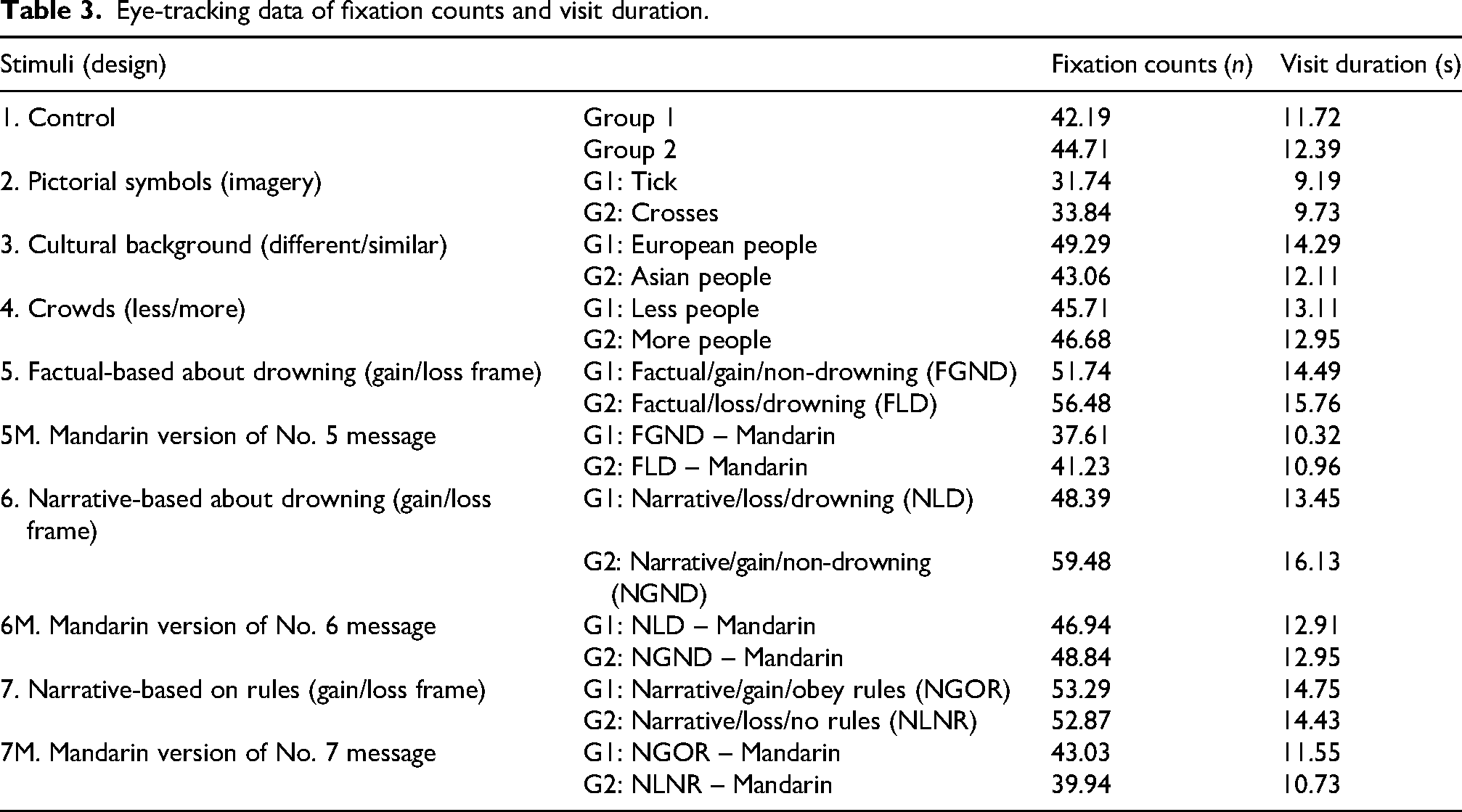
These results demonstrate that all Mandarin messages had relatively low fixation counts, and duration compared with their English counterparts. This can be attributed to an ease of interpretation effect given that these stimuli were shown in the Chinese participant's first language. Some participants mentioned that they could skim read in Mandarin but need to read every word in English to make sure they understood it correctly. The results also showed that beach safety messages with symbols (ticks and crosses) were also faster to process than text-based messages with much shorter visit durations (<10 s) and fewer fixation counts (<35) recorded.
In relation to the analysis of the duration time, when other information was the same, the information processing time was shorter for factual-based message than narrative-based message. For example, the visit duration was shorter for FGND (14.49 s) than NGND (16.13 s), as was the same for the Mandarin version; FGND-M (10.32 s) and NGND-M (12.95 s). When considering the gain-loss message framing effect, it was interesting to find that gain-framed information was easier to understand when it was paired with statistics, while loss-framed information was easier to understand when was used with narrative stories. Overall, visitors preferred to see ‘fact-based’ messages (e.g. risk of drowning if swimming outside the flags, or enjoy the experience between the flags) rather than ‘rule-based’ messages (e.g. lives are lost by disobeying the rules, or please obey local swimming rules). Some respondents reported negative feelings when reading the rule-based messages, perceiving them as restrictive and specifically targeted at international visitors, which did not come across as friendly advice. Additionally, participants often could not understand the reasons behind these rules due to a lack of context and explanation, which made the rules seem ungrounded in practical concerns.
Higher likability of message stimuli was reported by participants for message 5 (the gain-frame FGND), message 6 (the gain-frame NGND) and their Mandarin versions (FGND-M and NGND-M) from both the experiment-embedded survey, and the post-experiment interviews. This reflects participants’ preference towards viewing positive outcomes in beach safety messaging that is gain-framed by swimming between the flags. This is consistent with previous findings, noting it is important to balance the leisure aspect of visitor experience while communicating risk-related messages in social marketing (Hall, 2014). The heat maps of messages FGND and NGND (and their mandarin versions) are provided in Appendix C.
Precautionary behaviour between ‘others’ and ‘themselves’
In addition to eye-tracking data, participants were asked to report their precautionary behaviours both before and after viewing the beach safety message stimuli. Participants were asked to both self-report their own precautionary behaviour and that they felt ‘others’ would report. Overall, the mean score of participants reported precautionary behaviour of ‘themselves’ was higher than the precautionary behaviour of ‘others’. This discrepancy may reflect optimism bias, where individuals believe they are more cautious than those around them (Rittichainuwat et al., 2018). This perception can lead to inflated self-assessments of precautionary behaviours, suggesting that while participants recognise the importance of safety measures, they may underestimate their vulnerability to risks, influencing their reported intentions.
There was a significant difference in participants reported precautionary behaviours regarding swimming between the flags, specifically in response to the pictorial symbol (tick vs crosses) imagery message, between groups 1 and 2. Whereby, the ‘cross’ message's effect on the precautionary behaviour of others to swim between the flags was significantly higher than the ‘tick’ message (Mm2 crosses PB1 = 5.48, Mm2 tick PB1 = 3.92, t (60) = −5.799, p < .000*). Also, the ‘cross’ message's effect on self- precautionary behaviour to swim between the flags was significantly higher than the ‘tick’ message (Mm2 crosses PB2 = 6.13, Mm2 tick PB2 = 5.29, t (60) = −3.095, p = .003*). Some participants reported that the ‘tick’ message performed better at directly communicating the message; however, other participants, with little prior knowledge of the red and yellow flags, were confused by the ‘tick’ in the centre without any further explanation.
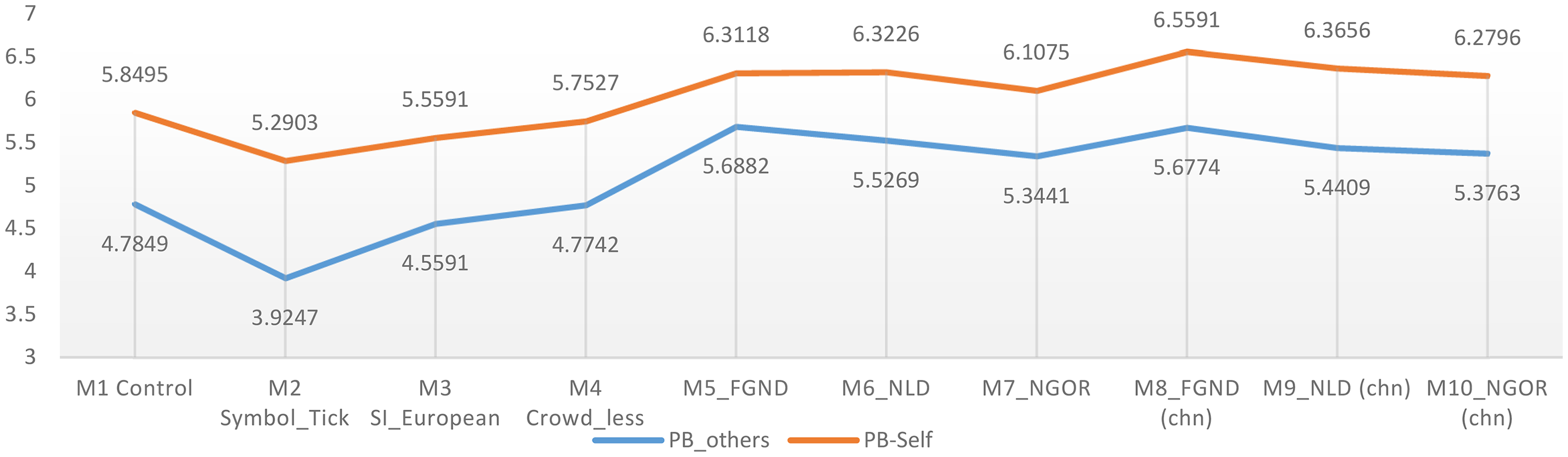
Precautionary behaviour change – mean (Group 1).
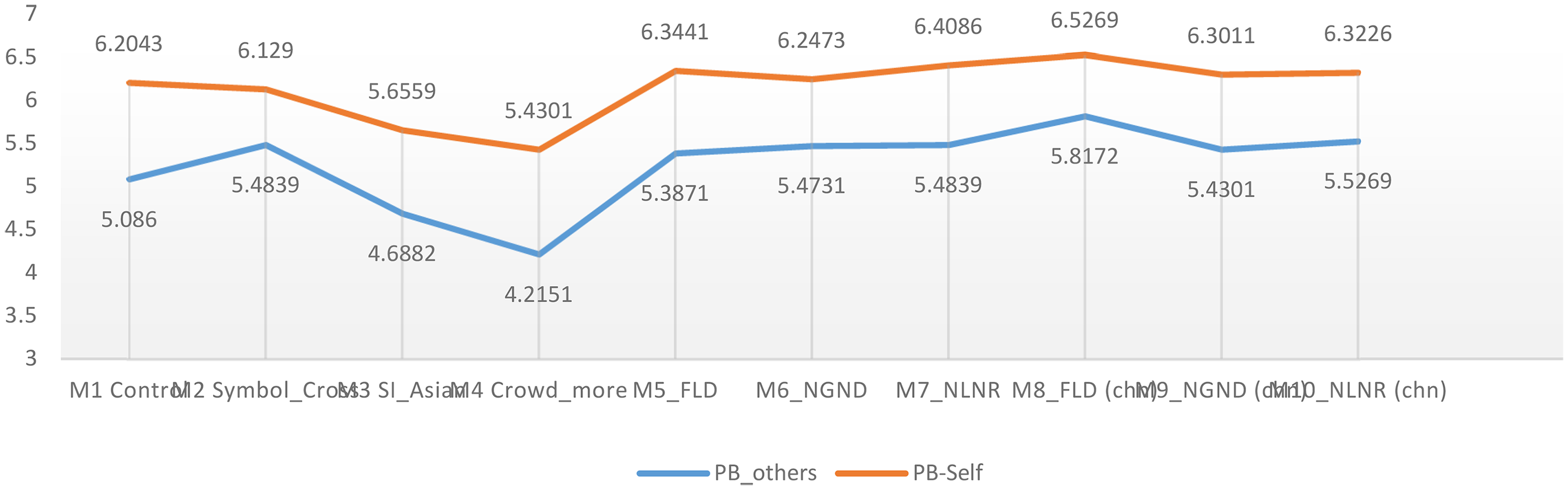
Precautionary behaviour change – mean (Group 2).
Discussion and conclusion
Theoretical implications
This research advances our understanding of how social marketing and communication theories can be applied to enhance beach safety for vulnerable populations, particularly international visitors. Building on principles of message framing theory and social identity theory, our findings emphasise the nuanced ways in which communication cues – such as framing, imagery, language, and cultural alignment – affect the comprehension and behavioural responses of international beachgoers to safety messages. The overarching findings for our research are presented in Table 4, which addresses each of our research propositions. The collective findings of this research extend knowledge in the field give that research to date has not addressed multiple elements in safety messaging for visitors.
Key findings of beach safety messaging cue perceptions and intentions.
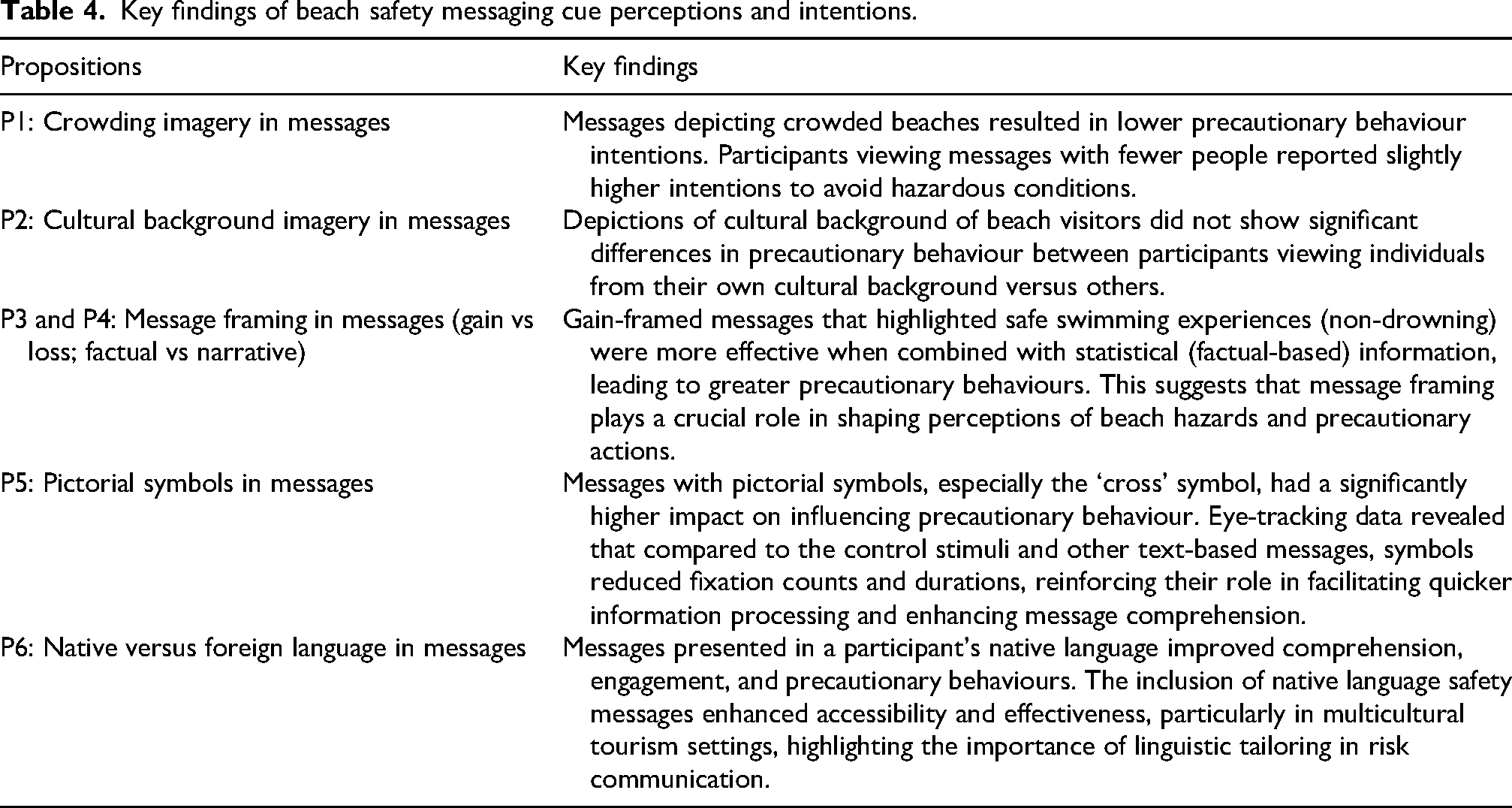
Message framing emerged as a critical determinant of message effectiveness, reinforcing existing theories on its influence in shaping attitudes and behaviours (Rothman and Salovey, 1997; Smith and Petty, 1996). Our findings align with prior research that gain-framed messages (e.g. emphasising positive outcomes such as safe swimming experiences) are effective in encouraging prevention behaviours (Gallagher and Updegraff, 2012). Conversely, loss-framed messages (e.g. emphasising the dangers of drowning) were more effective in eliciting precautionary behaviours in detection-oriented scenarios, consistent with their use in contexts such as health screenings and smoking cessation (O’Keefe and Jensen, 2007). Notably, our study also identified that the combination of message framing with content format – whether factual or narrative – plays a pivotal role in engagement. Factual, data-driven messages paired with gain-framing were particularly impactful, as they aligned with participants’ preference for concise, evidence-based information. This finding supports Trafimow et al. (2004), who suggested that factual framing impacts beliefs and attitudes more effectively.
Furthermore, narrative loss-framed messages demonstrated an ability to evoke stronger emotional and physiological responses, as observed in heightened fixation counts and durations from eye tracking. This aligns with the literature highlighting the persuasive power of narratives in contexts requiring affective engagement, such as safety and health messaging (Janssen et al., 2013; McQueen et al., 2011). The ease of imagination facilitated by narrative messages likely enhanced issue involvement and comprehension (Broemer, 2004), particularly in scenarios depicting vivid consequences of non-compliance. Additionally, the interaction between visual imagery and message framing proved significant; for instance, loss-framed messages combined with stark imagery (e.g. drowning incidents) yielded greater attention and arousal. This finding aligns with Seo et al. (2013), who identified the interactional effects of visual imagery and framing in driving behavioural intentions.
Our findings challenge the application of social identity theory (Ellemers et al., 1999) in the context of beach safety messaging, as cultural background did not lead to significant differences in precautionary behaviour. Specifically, while participants responded faster to the image featuring travel groups of their own ethnic background, this did not translate into differing levels of precautionary action compared to visuals depicting European groups. This is not aligned with research suggesting that individuals’ self-categorisation affects their trust and receptivity to communication cues (Lee et al., 2021). However, the inclusion of native language in safety messages significantly improved comprehension and engagement, emphasising the importance of linguistic tailoring in multicultural tourism settings (Karidakis et al., 2022).
This research also highlights the interplay between cognitive biases – such as optimism bias – and message effectiveness. Participants exhibited a higher perception of personal safety compared to others, which aligns with previous studies on risk underestimation (Rittichainuwat et al., 2018). This underscores the importance of addressing such biases in the design of precautionary messages to bridge the gap between perceived and actual vulnerability. By integrating insights from social marketing, message framing, and identity theories, this study provides a robust theoretical foundation for crafting effective communication interventions that promote safety in high-risk tourism environments.
Finally, the incorporation of physiological measures, such as eye-tracking, provides novel insights into the cognitive and affective mechanisms underpinning attention to safety messages. This approach not only validates theoretical models of message processing but also enriches our understanding of attention dynamics in real-world contexts. For instance, fixation data revealed that visual simplicity and the strategic use of symbols (e.g. crosses and ticks) enhance message salience, which supports the broader literature on visual attention in safety communication (Wang and Sparks, 2016).
Practical implications
The practical implications of our research offer tangible guidance for enhancing beach safety messaging to increase precautionary behaviour in international visitors. This research suggests that tourism stakeholders must consider tailored messaging strategies that strike a careful balance between ‘enjoyment’ and ‘precaution’ when addressing precautionary cognitive deficiencies and optimism bias prevalent in visitor markets. Beach safety communication signs or brochures needs to include message cues such as, visually appealing graphics and simple, easy-to-understand language that conveys the relevant safety information without detracting from visitors’ positive beach experience and leisure expectations. For example, our findings underscore that effective beach safety messages, such as those featuring ‘two red crosses outside flagged areas’, demonstrate visual simplicity.
Furthermore, loss-framed messaging (highlighting negative outcomes) proves to be more persuasive in eliciting desired behaviour change intentions, which is suggested for beach safety messaging campaigns. In designing beach safety messages for international visitors, it is also recommended that native languages are utilised in conjunction with message cues such as imagery to aide information processing, or if gain-framed messages are used, that these incorporate factual messages to relay the seriousness of behavioural consequences. Notably, this research identified specific message types, such as ‘factual-gain-non-drowning’ and ‘factual-loss-drowning’, and their Mandarin versions, as particularly effective in promoting precautionary behaviours in international visitors. These practical insights provide a roadmap for crafting effective beach safety messages that resonate with international audiences and ultimately contribute to a safer beach environment. Downstream benefits of this research, in addition to saving lives, could be operational efficiency for lifesaving organisations. For instance, in 2022–2023 there were 40,574 first aid treatments, 9297 rescues, 1,921,916 preventative actions and 1,414,947 volunteer patrol hours at Queensland coastlines alone with most drowning deaths being vulnerable groups (SLSQ, 2023).
Limitations and future research
This study acknowledges several limitations that should be taken into consideration in future research. The sample for Study 3 was only focused on international visitors from China, with a comparative analysis between Chinese and English messages. Consequently, it is crucial for subsequent studies to further investigate the impact of cultural and linguistic factors on message comprehension and adherence, particularly within multicultural destination settings (Karidakis et al., 2022). Additionally, the research should expand its scope to encompass other vulnerable beach visitor segments, such as people with disabilities, migrants, and elderly individuals, to gain a more comprehensive understanding of beach (and destination) risk contexts (Dadashzadeh et al., 2022).
Furthermore, future inquiries could explore the integration of immersive technologies, such as augmented reality or mobile applications, to enhance the delivery and reception of safety messages (Jayawardena et al., 2023). Examining the long-term effects on sustained behaviour change among visitors would also be a critical area for further investigation, including field testing the most promising messages identified in this study. Finally, as recent studies have highlighted, a stronger theoretical lens in experimental design is needed to better reveal the underlying processes of emotion elicitation (Walters et al., 2023). Future beach safety communication research could explore the interplay between cognitive deficiencies, optimism bias, and the effectiveness of message formats and sources, to inform more impactful safety interventions (Dolinski et al., 2022).
Footnotes

Funding
This research was funded by the Faculty of Business, Economics and Law, University of Queensland, and Surf Lifesaving Queensland (SLSQ).
Declarations of conflicting interest
The authors declared no potential conflicts of interest with respect to the research, authorship, and/or publication of this article.
Appendix A: Study 1 – Beach safety messaging stimuli
Appendix B: Study 2 – Beach safety message stimuli
Appendix C: Study 3 – Most ‘liked’ messages and heat maps
Appendix D: Study 3 – Message stimuli