




Abstract
This article aims to contribute to country branding using market segmentation principles relying on the perceptions of citizens about a country brand. An online survey research in the form of a structured questionnaire was utilized in this study, yielding a useable purposive sample of 405 citizens from a single country, Botswana. Findings show that citizens perceive the country’s brand unfavourably based on brand equity, identity, strength and satisfaction. There is also a lack of homogeneity in the perceptions that citizens have about the country brand except for the cultural environment that was perceived as a crucial element of brand identity across all segments. Five segments labelled as inspired enthusiasts, uninspired experts,enlightened spectators, exposed spectators and uninvolved spectators emerged in the study. Most respondents emerged as passive spectators who had minimal engagement with the country brand. This study provides deeper insights into the diversity of the internal audience through market segmentation and a comprehensive conceptualization of country branding tapping on brand equity, identity, strength and satisfaction. This study suggests ways in which tourism marketers and policymakers could engage citizens in strategies for branding a country as a tourist and investment destination to increase its competitive advantage.
Keywords
Introduction
Research on country brands has accumulated because a strong country brand attracts tourism, foreign investors, skilled labour and immigration; increases international political influence; as well as stimulates exports and international partnerships (Fetscherin, 2010; Hao et al., 2019; Miyamaru et al., 2023). These numerous country brand outcomes enhance a country's competitive advantage which is achieved through differentiation and relevance (Fan, 2006). Areas of interest studied by country branding researchers and marketers include strategies for building strong country brands (Kaneva, 2011; Novčić et al., 2012; Steenkamp, 2021), reaching out to internal stakeholders (Hay et al., 2022; Vasudevan, 2008) and enhancing competitive advantage among diverse external audiences (Che-Ha et al., 2016; Herstein, 2012). However, country brands have been described and measured using various dimensions such as brand image (Lala et al., 2008; Yousaf, 2016), brand equity (Coelho et al., 2022; Pike, 2007), brand strength (Fetscherin, 2010) and brand identity (Che-Ha et al., 2016; Novčić et al., 2012). The persistent application of fragmented dimensions across studies corroborates scholars who have described country branding as a complex and multi-dimensional concept (Hao et al., 2019; Kaneva, 2011, Steenkamp, 2021).
Previous studies often include both internal and external audiences (Novčić et al., 2012; Yousaf, 2016) for a holistic brand strategy. It is critical for tourism marketers and policymakers to embrace a more participatory process including both external audiences and citizens who contribute to image perceptions of external audiences such as tourists and foreign investors (Hao et al., 2019; Miyamaru et al., 2023; Steenkamp, 2021). However, there is a notable concern over the limited role that citizens play in country branding (Hay et al., 2022) in countries such as India (Vasudevan, 2008), Spain (Compte-Pujol et al., 2018), Malaysia (Che-Ha et al., 2016) and Botswana (Lenao, 2023). An understanding of citizens’ perceptions of country brands recognizes that they play an instrumental role in the development, communication and legitimization of a country brand (Che-Ha et al., 2016; Hay et al., 2022). As perceptions of citizens are rarely homogeneous (Kaneva, 2011), tourism marketers and policymakers can leverage enthusiastic citizens, enhance connections and engagement with the less inspired citizens and spectators for strategic brand management when attracting tourists, investors, exports and immigration (Hao et al., 2019; Hay et al., 2022). This will also enhance competitive advantage when seeking to increase international partnerships and political influence (Fetscherin, 2010).
The current study follows the limited stream of literature pursuing the internal perspective of perceptions about the country brand and its specific focus is on segmenting the internal market in Botswana. A dedicated branding strategy has been put in place by policymakers to market Botswana as an attractive destination for tourism and foreign direct investment (Brand Botswana, 2020). The country brand strategy embraces tangible elements such as a country name, logo, slogan and the establishment of a unit that coordinates strategic efforts with the aim to strengthen the country brand and enhance competitive advantage internally, regionally, as well as globally. Initial branding efforts for attracting tourists in Botswana targeted external audiences. However, the government has shifted its focus to residents to improve local participation through various incentives such as high volume and dynamic pricing strategies resulting in an all-inclusive tourism environment (Lenao, 2023). To the best of our knowledge, little has been published about participatory country branding efforts used by Botswana government. When citizens are unaware of a country's branding efforts it lowers their motivation to identify with the brand, communicate and legitimize the brand (Hay et al., 2022; Vasudevan, 2008), and this may weaken the potential to attract tourism and foreign investors. To appeal to tourists and foreign investors effectively, Botswana needs the support of its citizens. Two questions are addressed by this study: (i) How is Botswana as a country brand perceived by its citizens? (ii) Do citizens’ perceptions represent a single identity? Insights into citizens’ perceptions about a country brand from a market segmentation approach will enable tourism marketers and policymakers to assess whether citizens perceive some aspects of the country's brand as critical or have a single identity which will enhance participatory country branding efforts designed to position a country as a tourist and investment destination. The active assessment of citizens’ perceptions about Botswana as a country brand is a source of competitive advantage.
Therefore, the objective of the current study is to identify a set of homogeneous groups of citizens in Botswana using a market segmentation approach that focusses on perceptions that they hold about a country brand along with four key dimensions country brand equity, identity, strength and satisfaction. This study also examines differences in perceptions across segments based on demographic characteristics and awareness of branding efforts to gain more insights into country branding.
This article features the country branding and market segmentation literature. Then the research methodology used in this study is discussed, followed by the analysis and findings. The discussion, contribution to theory, practical implications and future research avenues are presented in the final section.
Country branding literature
There is a surge of conceptual publications (Hao et al., 2019; Hay et al., 2022; Steenkamp, 2021) that have offered different debates about country branding, synthesized the literature and revealed knowledge gaps that could be addressed. Their conclusion is that there is no single conceptualization of country branding, and consensus regarding what it really means. Therefore, country branding is often regarded as a complicated construct with diverse interpretations (Fan, 2006; Fetscherin, 2010) as it embraces multiple domains, dimensions, elements and levels and is addressed across numerous disciplines (Hao et al., 2019; Novčić et al., 2012; Pike, 2007).
From the marketing perspective, country branding is defined as the process of applying marketing communication techniques to stimulate and manage a country image (Fan, 2006). Country branding is often regarded as the active management of perceptions and strategic efforts to stimulate specific meanings in people's minds about a country by policymakers and organizations in the country in question (Steenkamp, 2021). Additionally, it is perceived as a strategic tool that is adopted by policymakers and organizations in various countries to (i) enhance the country's competitive advantage (Coelho et al., 2022; Yoo et al., 2000; Yousaf, 2016), (ii) stimulate the attraction of tourists, foreign investors, exports, donors, international students and citizens (Hao et al., 2019; Herstein, 2012; Steenkamp, 2021), as well as (iii) improve the economic, political and social conditions of the country (Che-Ha et al., 2016).
Diverse definitions confirm that there are numerous domains of country branding, including (i) country brand strategy, (ii) country brand image, and (iii) outcomes of country branding. By focusing on perceptions about a country brand, the current study resonates with the marketing perspective which contends that country branding is about creating, altering, monitoring, evaluating and proactively managing the country's brand image (Fan, 2006; Miyamaru et al., 2023; Steenkamp, 2021). Country brand image refers to perceptions that the target market has about a country brand as reflected by the associations held in the memory (Aaker, 1991; Keller, 1993).
Country brand: Definition and conceptualization
A country brand is defined as a network of meanings in people's minds based on visual, verbal and behavioural expressions of a country (Steenkamp, 2021) or a total sum of all perceptions about a country in the minds of people (Fetscherin, 2010). Diverse dimensions have been utilized to conceptualize perceptions about country brands such as country image of Pakistan (Yousaf, 2016), country identity of Malaysia (Che-Ha et al., 2016) or Serbia (Novčić et al., 2012) and country equity of Australia as perceived by tourists from Chile (Pike, 2007), as well as country strength among diverse countries (Anholt, 2002). These dimensions are usually studied independently in a single study at a time, confirming that country branding is a multi-dimensional concept that attracts fragmented conceptualizations (Hao et al., 2019). These scholars have called for studies that utilize a wider range of dimensions because country branding does not focus on a single dimension as people make judgments about a country using multiple dimensions.
Therefore, in this study, the assessment of a country brand is based on a multi-dimensional perspective that adopts four dimensions country brand equity, identity, strength and satisfaction. These dimensions provide a comprehensive analysis of a country brand because they provide insights into the character, value and performance of a country brand which are in the form of the perceived benefits that a country brand offers to its target market (Fan, 2006). The conceptualization of country branding through multiple dimensions employed in this study recognizes the complexity and robustness of the construct. This also acknowledges that for a practitioner, country branding requires brand consistency, protecting sources of brand equity, leveraging brand identity and ensuring that marketing programmes are aligned with the unique value propositions of the country (Yoo et al., 2000).
Country brand equity: This is one of the most studied aspects of country branding because it is useful for assessing the performance of the country (Hao et al., 2019; Pike, 2007), the meaning and value of the country brand (Fetscherin, 2010; Yoo et al., 2000) or its success, uniqueness and attractiveness (Coelho et al., 2022). Its significance stems from the fact that it is a rare strategic asset that yields competitive advantage or differentiation beyond physical elements associated with the country (Steenkamp, 2021; Yoo et al., 2000).
Drawing insights from Keller (1993), Pike (2007) offered a comprehensive perspective on country brand equity where emphasis was placed on four dimensions being brand salience, perceived quality, image and loyalty. Considering Yoo and Donthu (2001), three dimensions of brand equity were used being brand awareness, brand loyalty and perceived quality (Coelho et al., 2022). Irrespective of these differences, customer-based brand equity is usually assessed as perceptions based on multiple dimensions including brand awareness, associations, quality and loyalty in line with Aaker (1991). Consistent with Yoo et al. (2000), the current study relied on the conceptualization by Aaker (1991).
Brand awareness is concerned with the strength of the brand in the consumer’s mind, and it covers recognition and recall. Brand associations represent the meaning that consumers link to the brand which emanates from experiences drawn from exposure to communications or brand personality. According to Keller (1993), associations can be of different types, such as those about attributes, benefits and attitudes. Perceived quality focuses on consumers’ evaluation while brand loyalty addresses the emotional attachment linked to the brand.
Country brand identity: There is no consistency regarding the specific elements applicable in the conceptualization of country identity. However, brand identity reflects people's perceptions of what a place is (Hay et al., 2022) which bind them together (Fan, 2006). Self-perceptions are assessed along with key elements deemed pertinent in a country. For instance, seven elements being economic conditions, conflict, political structure, vocational training, work culture, environment and labour were used to describe the identity of Mexico using residents (Lala et al., 2008). In another study, brand identity of Serbia was conceptualized using six elements being people, obsolescence, negative media bias, recommendable tourist destination, culture and rich national treasury, with people emerging as the most important characteristic that best describes the Serbian identity (Novčić et al., 2012). According to Coelho et al. (2022), elements such as heritage, architecture, history, traditions, culture and commerce are critical in providing insights into how stakeholders identify with a destination. Country identity is essential for strategic efforts that are designed to encourage support among citizens (Kaneva, 2011) to ensure the stability, sustainability and success of the country brand (Coelho et al., 2022). In this study, country brand identity is conceptualized based on six elements being people, quality of life, culture, economic environment, political environment and values.
Country brand strength: Although country brand strength has attracted less academic attention, it is a critical dimension because a strong brand often leads to country image (Anholt, 2002) and reinforces country perceptions which stimulate tourism, exports, investment and immigration (Fetscherin, 2010; Steenkamp, 2021). The current study conceptualizes country strength in terms of citizens’ perceptions of how strongly the country is performing in exports, foreign direct investment, immigration, governance, tourism, culture & heritage and people, which deviates from Fetscherin (2010) who employed objective approach.
Country brand satisfaction: It is a behavioural characteristic concerned with citizens’ overall satisfaction with the country that is based on how the performance of a brand is perceived in relation to expectations. It is imperative to include brand satisfaction in a study that focusses on citizens’ perceptions about the character, value and performance as it captures whether bonds that bind citizens together or patronage have been achieved (Kaneva, 2011). For instance, when citizens have an elevated level of satisfaction with a place, they are likely to have high perceptions about its value, possess positive word-of-mouth and be more committed (Coelho et al., 2022), and this is likely to stimulate interest among tourist and investors (Insch and Florek, 2008). When satisfied citizens are included in place branding efforts, it can enhance the value of the place as a brand, its brand image and competitive advantage because such citizens will become brand ambassadors (Coelho et al., 2022; Hay et al., 2022).
Country branding from citizens’ perceptions
The literature is replete with empirical studies that have examined country branding from the external perspective relying on perceptions of international tourists (Lwoga and Maturo, 2020; Nduna and van Zyl, 2020; Sánchez-Fernández et al., 2019). This approach is worthwhile because strategic efforts for country branding are designed with the external markets in mind (Vasudevan, 2008). However, residents have been disregarded in country branding initiatives in places such as Spain (Compte-Pujol et al., 2018), India (Vasudevan, 2008) and Malaysia (Che-Ha et al., 2016). Hay et al. (2022) noted the concerns that have been raised about the lack of involvement of internal stakeholders in country branding and cautioned that when internal stakeholders, particularly citizens, are ignored in country brand-building strategies, they will feel alienated and may disengage.
The internal perspective of country branding remains pivotal despite emphasis on the external orientation. This perspective advocates for the engagement of citizens in country brand management through communicating the brand to them and reinforcing perceptions that emanate from their personal experience (Pike, 2007; Vasudevan, 2008). The engagement of citizens is a more participatory approach for stimulating and managing perceptions of country identity from both external audiences and citizens who contribute to image perceptions of external audiences (Hao et al., 2019; Miyamaru et al., 2023). Citizens’ role in country branding includes sharing the stories that connect them to the brand, serving as ambassadors for the country through word-of-mouth communication and providing legitimacy to a country brand by engaging in brand management (Hay et al., 2022). Residents are also valuable because they are part of the place and can recommend it to potential visitors, investors or new residents (Coelho et al., 2022; Insch and Florek, 2008). Che-Ha et al. (2016) have purported that successful country branding needs to start with citizens so that the country brand is nurtured inside their minds to instill loyalty. The involvement of citizens in all phases of the marketing process is a critical step for increasing the effectiveness in the marketing of countries as tourist and investment destinations (Hay et al., 2022). Leveraging citizens’ engagement in country branding is important in that they form part of the audience receiving brand messages and can influence tourists’ and investors’ perceptions about a country brand.
Research on citizens’ perceptions about a country brand is underlined by the Stimulus-Organism-Response Theory that contends that environmental factors stimulate the individual's emotions and cognition, which translate into certain behavioural outcomes (Mehrabian and Russell, 1974). Such studies assume that a country brand strategy serves as a stimulus of perceptions about a country brand in the minds of the citizens (organism) which translate to competitive advantage through the attraction of tourists and increased foreign investors (response). The focal point of the current study is the organism. Its point of departure is that it is the first attempt to contribute to the understudied area of internal country branding by applying the principles of market segmentation. The current study deviates from past studies that are descriptive (Compte-Pujol et al., 2018; Novčić et al., 2012) or analytical (Che-Ha et al., 2016; Coelho et al., 2022). For instance, Barcelona was perceived positively by its residents as cultural, creative, cosmopolitan, touristic, entertaining and friendly, as well as negatively as being unsafe, faced with high unemployment and uncertainty (Compte-Pujol et al., 2018). Residents perceived Serbia favourably based on talented people who celebrate life, a great destination with good cuisine, rich archaeological sites, natural beauties and distinctive culture (Novčić et al., 2012). Nonetheless, negative perceptions included obsolescence and unfavourable foreign media reports. Elements such as human capital, culture & heritage and politics were described as important in fostering positive emotions among citizens in Malaysia, while exports, human capital and politics were considered key for perceived competitive advantage (Che-Ha et al., 2016). Identification, attachment, image and satisfaction were found to have positive and significant effects on brand equity for residents from Coimbra in Portugal while heritage, authenticity and optimal distinctiveness did not (Coelho et al., 2022).
Market segmentation
The concept of market segmentation has gained immeasurable consideration in marketing as the process of facilitating the identification and accessibility of the target market as well as the process of identifying opportunities in segments that have been untapped (Sánchez-Fernández et al., 2019). It is commonly defined as the process of dividing a heterogeneous market into subsets of homogeneous groups based on distinctive characteristics, needs or behaviours, which is the cornerstone of choosing viable segments to serve with the relevant marketing mix (Duque and Riera-Prunera, 2022; Lwoga and Maturo, 2020). An analysis of trends and motivations in key target markets is one of the critical steps for building strong brands as it provides insights into strengths and weaknesses (Steenkamp, 2021).
Two perspectives underpin the study of market segmentation being a priori and post hoc (Sánchez-Fernández et al., 2019). The post hoc segmentation approach, which is followed in this study, dominates literature. This approach deviates from a priori segmentation, which stresses the segmentation of the market based on demographic characteristics relying on the assumption made by the researcher that a significant correlation exists between them and the behaviour of consumers. Post hoc segmentation assumes market heterogeneity, and the determination of homogeneous segments is data-driven based on the responses to a survey. Under a post hoc market segmentation, it is critical to make a choice of relevant bases for segmentation. Hence, a decision to segment citizens based on their perceptions along with four key dimensions of country branding. Although a segmentation based on perceptions has not been applied in the context of internal country branding, it is not unique to this study as it has been used in past studies that seek to understand segments of tourists (Duque and Riera-Prunera, 2022; Sánchez-Fernández et al., 2019). Its application stems from the fact that Kaneva (2011) has cautioned that national communities are hardly homogeneous.
Diverse segments emerged in various contexts according to the segmentation variables employed. However, the current study borrows insights from the literature on market segmentation conducted in tourism and hospitality. For instance, four segments of international tourists to Tanzania were identified as follows: multiple experiencers, authenticity learners, nature seekers and passive based on their motives for visiting the destination (Lwoga and Maturo, 2020). Another set of four segments of international tourists to the Mediterranean basin was identified based on the level of perceived sustainability and labelled as those having high level of perceived sociocultural sustainability, low level of sustainability, medium level of economic sustainability and high level of perceived environmental sustainability (Sánchez-Fernández et al., 2019). Two segments of tourists to Mpumalanga province in South Africa were identified based on benefits sought and labelled as nature-escapist and cultured-naturalist tourist (Nduna and van Zyl, 2020). While clearly there is no one best variable for segmenting markets, findings from previous studies provide insights into framing market strategies that are aimed at appealing to unique purchasing behaviour among segments of consumers.
Botswana as a country brand
Country branding studies often concentrate on an assessment of perceptions of people about a particular country (Che et al., 2016; Coelho et al., 2022; Compte-Pujol et al., 2018). The tendency is to assess a single country brand because country branding is context-dependent focusing on the active building and management of the brand of a country in question by policymakers and organizations (Fan, 2006).
Each country has a current image be it strong or weak, clear or vague (Fan, 2006). Botswana provides an interesting study context for country branding as a tourist and investment destination. Most global economic indicators have rated Botswana as a middle-income country that is peaceful, democratic, stable politically and economically. Botswana is also one of the fastest-growing economies with an annual growth rate of approximately 5%, which is attributable to diamonds and tourism (World Bank, 2023). The tourism sector in Botswana has emerged as a major contributor to Gross Domestic Product at 11.6% in 2023 (World Travel & Tourism Council, 2023). The sector has facilitated economic diversification, natural resource conservation and helped improve local livelihoods (Basupi et al., 2017).
In 2008, policymakers in Botswana engaged in dedicated brand-building efforts aimed at positioning the country as a tourist and investment destination (Brand Botswana, 2020). For instance, a country brand coordinating unit was established within the Botswana Investment and Trade Centre for overseeing strategies to brand Botswana as a tourist and investment destination (Brand Botswana, 2020). The country developed a conspicuous pride mark consisting of a uniquely crafted country name that bears the national colour, a sun-shaped logo that projects meanings of beauty, discovery and light, as well as a two-pronged tagline “our pride, your destination” seeking to unify the citizens around a single identity and position the country as an attractive place to visit, invest and live to the external audiences. The country's brand strategy sought to invigorate citizens around a single identity using various advertising campaigns and public relations strategies that it is believed will translate to stronger communities, culture and heritage, a profound sense of pride and community engagement. One notable initiative is the pusha-bw campaign that seeks to stimulate the spirit of self-sufficiency and ethnocentrism amongst Batswana by promoting the development and uptake of local products. Another initiative is the living your brand campaign that engages citizens in branding efforts such as the brand ambassadorship programme that encourages influential citizens such as Isaac Makwala to tell the Botswana story as well as the formeforBW, which encourages ordinary citizens to promote Botswana while cultivating a shared sense of national pride.
On the tourism front, the policy review has facilitated a shift from wildlife conservation to areas such as cultural and sustainable community-based tourism (Stone et al., 2017). There is heightened advocacy for sustainable and community-based tourism which is designed to attract more citizen participation (Mmeko et al., 2023) through ownership of hotels, lodges, resorts, camping sites, guest houses, as well as bed and breakfast leading to improved livelihoods and employment creation in tourist destinations (Stone et al., 2017). Through backward linkages, tourism has afforded citizens an opportunity to provide other needed goods and services such as restaurants, entertainment, transport, retail and wholesaling. While initial branding efforts for attracting tourists were dedicated to international tourists, the Botswana government has shifted its focus to residents to improve local consumption through various incentives such as high volume and flexible pricing strategies resulting in an all-inclusive tourism environment (Lenao, 2023). However, little attention has been given to community participation in tourism initiatives in Botswana due to lack of funding and capacity building, limited involvement, unclear policy framework, as well as low awareness (Mmeko et al., 2023).
A proactive country branding strategy is pivotal to ensure that Botswana maintains differentiation and relevance as a tourist and investment destination. However, an attempt to position Botswana as an attractive tourist and investment destination presents two challenges for tourism marketers and policymakers. It demands the use of multiple elements and associations to appeal to tourists and foreign investors which are unrealistic because it may negatively affect brand recall (Herstein, 2012). It also calls for a strong, differentiated country brand to effectively communicate and deliver diverse perceived benefits to the targeted markets as well as to develop separate branding efforts for tourists and foreign investors which require more marketing resources (Steenkamp, 2021). Another challenge that tourism marketers and policymakers face is the need to track the trajectory of the country brand over time, to assess whether the specific perceptions of a single identity have been successfully stimulated and reinforced in the minds of citizens. This is important in the context of Botswana since when citizens identify with the country brand, its promotion as a tourist and investment destination becomes a joint effort by the tourism marketers, policymakers and the public at large.
Research method
A cross-sectional survey research design in the form of a structured questionnaire was used in this study. Past studies that are empirical and survey-based in nature are numerous in the literature on country branding (Che-Ha et al., 2016; Duque and Riera-Prunera, 2022; Nduna and van Zyl, 2020).
Sampling
Two non-probability sampling techniques being convenience and snowballing were used to recruit study participants online using various digital media platforms despite the known limitation of lack of generalizability of results. As in previous studies (Che-Ha et al., 2016; Sánchez-Fernández et al., 2019), these techniques were necessary because sampling frames of the adult population are often not accessible owing to data protection requirements. Data was collected from a sample of citizens aged 18–65 years.
Data collection
Data was collected through an online structured questionnaire as employed by Che-Ha et al. (2016) using google form for a period of five months between May and September 2022. Initially, the University institutional email was used to reach out to a targeted convenience sample of 500 citizens. The response rate was below the targeted sample size and extensive follow-up efforts and constant reminders were employed. To mitigate the poor response rate, respondents were also asked to share the google form with their contacts, hence attaining the snowballing effect. Also, personal social media platforms, LinkedIn and WhatsApp were used for administering the questionnaire. Although the initial targeted sample was 500, in total, 405 usable questionnaires were completed. This was considered adequate as published studies that have focused on perceptions of country brands (Che-Ha et al., 2016; Coelho et al., 2022; Compte-Pujol et al., 2018) and market segmentation (Nduna and van Zyl, 2020; Sánchez-Fernández et al., 2019) have used sample sizes that are within the range of 300 to 450.
The questionnaire had 39 items used to measure the four dimensions of country brand equity, adapted from Aaker (1991). Similarly, 40 items were used to tap into the six dimensions of country identity, adapted from Novčić et al. (2012). Drawing insight from Fetscherin (2010)'s perspective of country strength, 13 items were used. Items for brand equity and identity were anchored on a five-point scale, where 1 = strongly disagree and 5 = strongly agree while the scale for brand strength ranged from 1 = very poor to 5 = very good. A single yes or no item was used to gauge the overall level of awareness of marketing communication efforts adapted from Yoo et al. (2000). Another single item anchored on a five-point scale where 1 = completely dissatisfied and 5 = completely satisfied was used to measure brand satisfaction inspired by Insch and Florek (2008). Demographic characteristics were also included in the questionnaire.
Data analysis
Data analysis proceeded as follows: First, frequency tabulations were performed to analyze the sample's demographic profile. Second, Exploratory Factor analyses with a Varimax rotation were employed to test for the dimensionality of country brand equity and identity. Guiding principles for retaining dimensions such as choosing those that produced Eigen values that are greater than 1, eliminating items that loaded proportionately in more than one dimension and retaining those that attracted factor loadings that are higher than .30 were applied. Additionally, the Kaizen–Meyers–Olkin (KMO) and the Barlett test of sphericity were assessed for sample adequacy. This was followed up with a test of the reliability using Cronbach alpha. The rule of thumb for retaining dimensions that projected good reliabilities that are equal to .70 owing to Nunnally’ s (1978) proposal or any dimension with an acceptable reliability that is within the range of .60 to .70 in line with Slater (1995) was adopted. Third, Inter-item correlations with Cronbach alpha were used to test for the uni-dimensionality of country brand strength. Fourth, K-Means cluster analysis which was followed by analysis of variance (ANOVA) and Scheffe Post Hoc comparisons were used to identify segments. Then, Cross Tabulations with Chi-Square were used to assess differences that exist among segments based on demographic characteristics and awareness of marketing communication efforts.
Findings
Profile of the sample
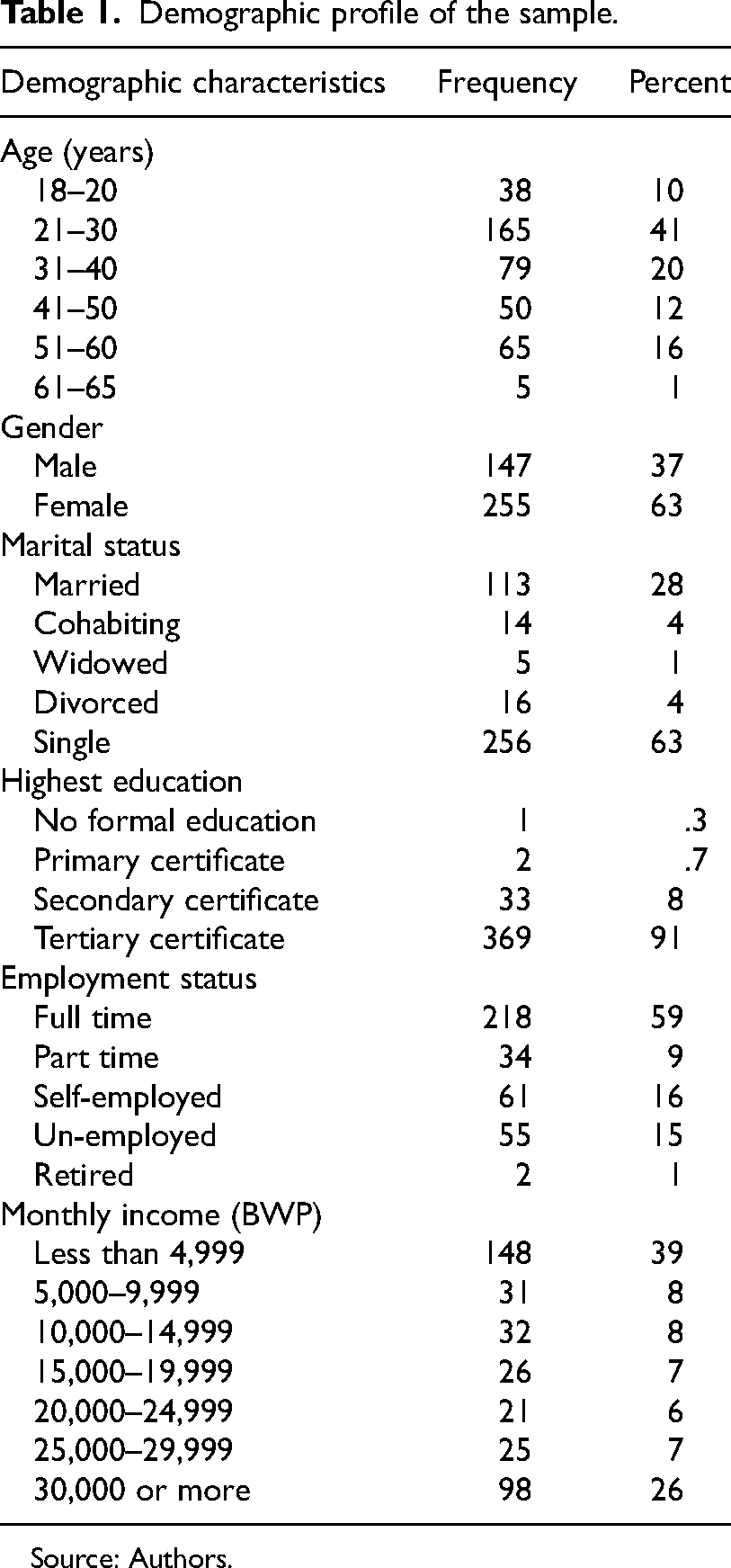
The demographic profile of the sample employed in this study is presented in Table 1. The results indicate that about half of the respondents (51%) are younger as they fall between the ages of 18 and 30 years. The remaining proportion of the respondents are in the middle-aged group whose ages range from 31 to 50 years (32%) or older marked by ages that fall above 51 years (17%). Most respondents are female (63%) compared to male who constitute only 37% of the sample. At 63%, the single respondents are highly represented in the sample, followed by those who are married at 28%, while the remaining 9% includes those who are cohabiting, widowed or divorced. The highest educational qualification achieved by the respondents is tertiary certificate including certificate, diploma and degree, at 91%. Most respondents are in full-time (59%), self (16%) or part-time (9%) employment, with the remaining 16% being unemployed or retired. The respondents are widely spread among the various income brackets, the dominant being less than P4,999 (39%) followed by P30,000 or more (26%). Overall, the sample characteristics correspond to population census statistics describing the population of Botswana as dominated by youthful, female, highly educated, unmarried and middle-income earners.
Demographic profile of the sample.
Source: Authors.
Dimensionality and reliability
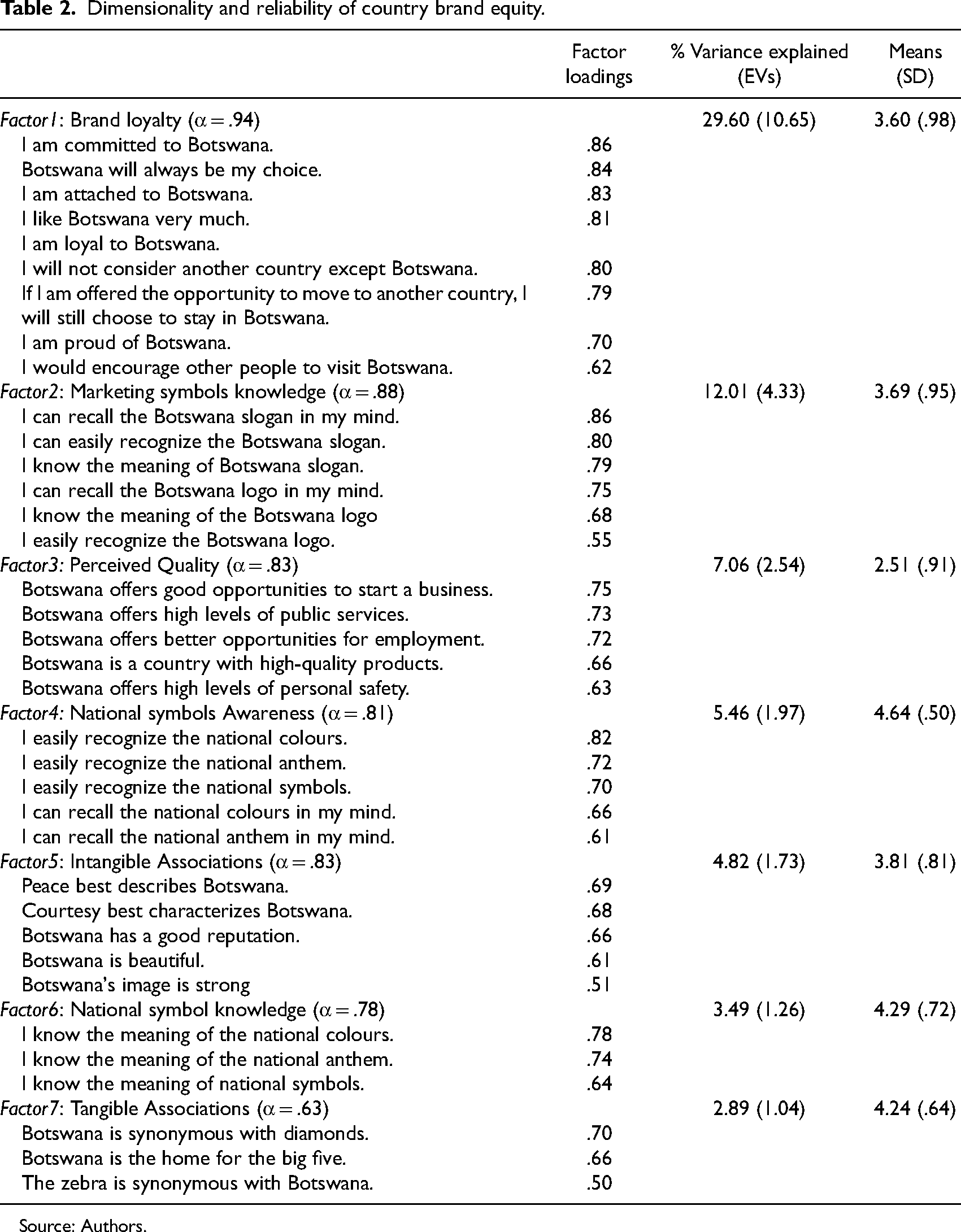
Country brand equity: The KMO of .91 and significant Barlett test of Sphericity of 8426.13, p = 0.001 was achieved which signifies sample adequacy. As shown in Table 2, the final-factor solution for country brand equity resulted in seven dimensions. Seven dimensions that generated a total variance explained of 65.32% were derived based on 36 retained items. They were labelled as follows: brand loyalty, marketing symbols knowledge, perceived quality, national symbols awareness, intangible associations, national symbols knowledge and tangible associations. Brand loyalty contributes the most to the description of country brand equity based on the percentage variance explained. All the dimensions achieved good reliability above the score of α = .70 except for tangible associations. Its reliability score of α = .63 was deemed acceptable in line with the argument made by Slater (1995).
Dimensionality and reliability of country brand equity.
Source: Authors.
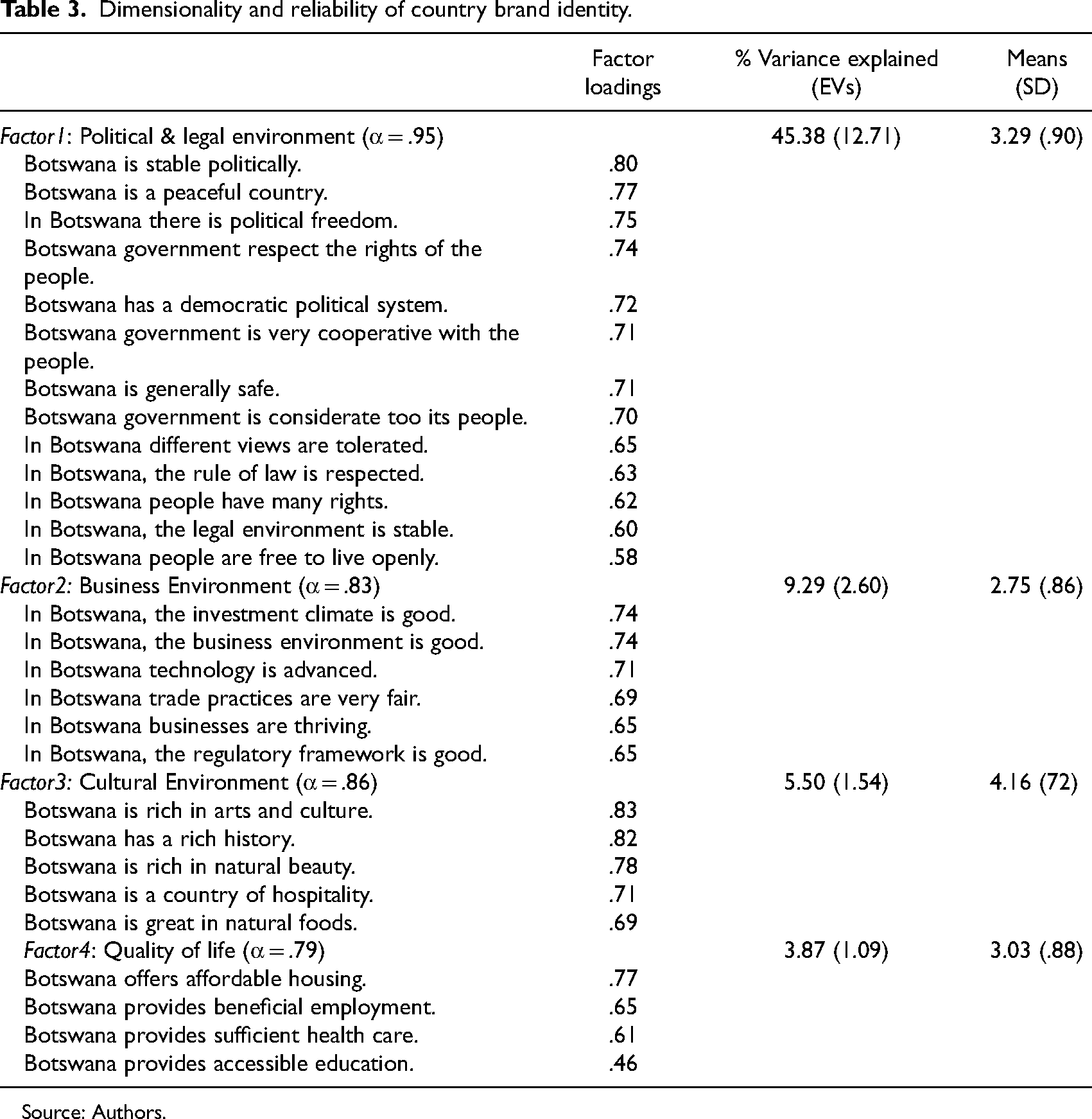
Country brand identity: A KMO of .95 and significant Barlett test of Sphericity of 7616.14 at p = 0.001 was achieved. The final factor structure depicted in Table 3 comprised 28 items that generated four dimensions. The four dimensions produced a total variance explained of 64.04%. The political and legal environment emerged as the most important dimension for describing brand identity in Botswana with a variance of 45.38%. The other dimensions were labelled as the business environment, cultural environment and quality of life. Good reliability scores that ranged from α = .79 to α = .95 were achieved.
Dimensionality and reliability of country brand identity.
Source: Authors.
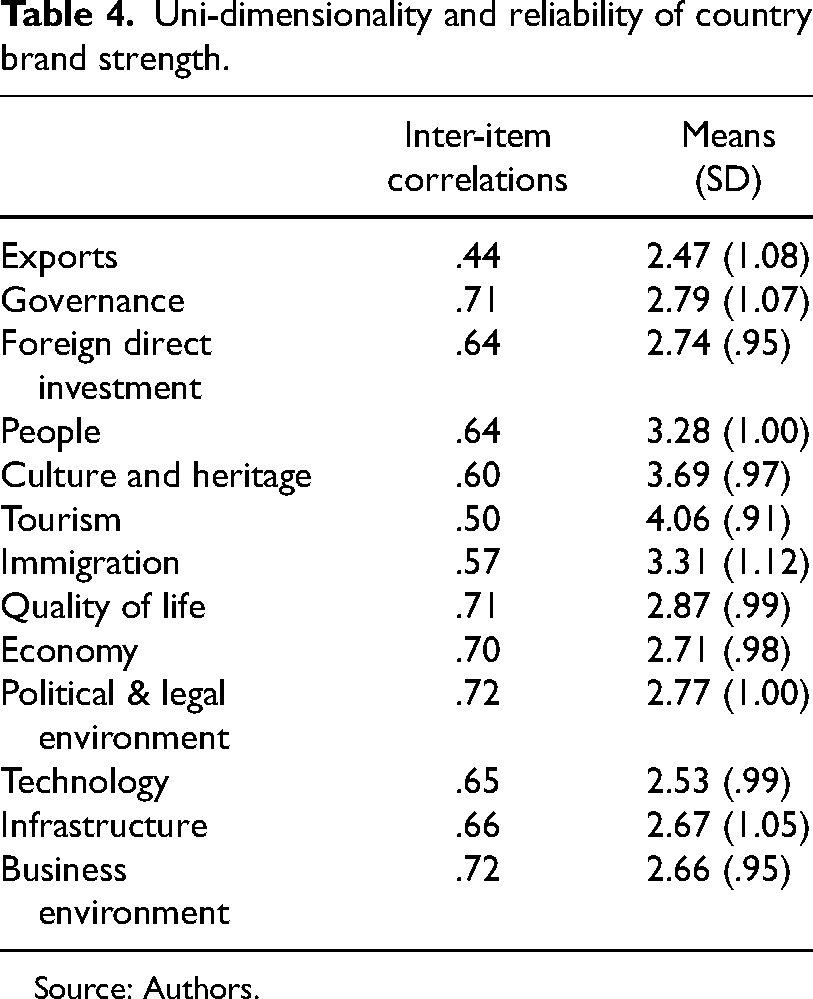
Country brand strength: The inter-item correlations that ranged from .44 to 72 with a Cronbach alpha of α = .91 in Table 4 demonstrate that country brand strength is unit-dimensional, with good reliability.
Uni-dimensionality and reliability of country brand strength.
Source: Authors.
A market segmentation approach to country branding
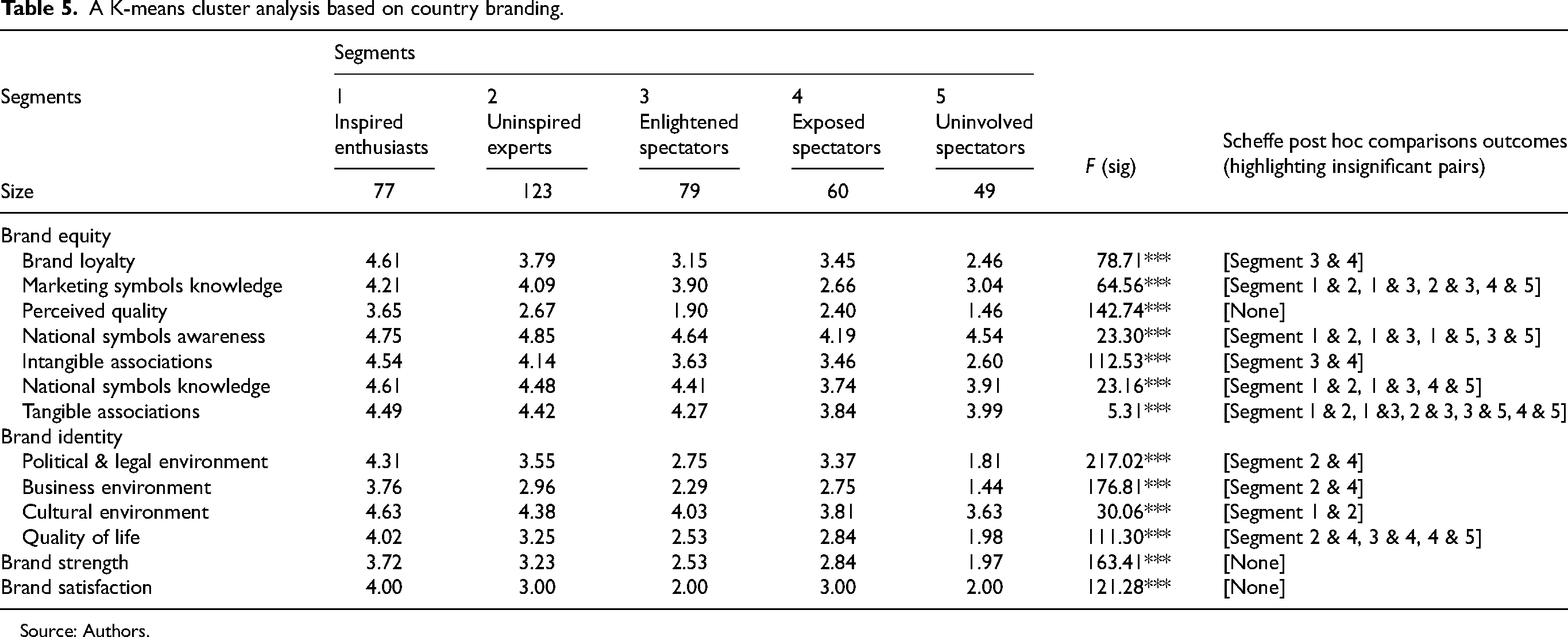
In applying the K-means clustering technique, a series of explorations were made from 4 to 6 clusters, and the five clusters solution was deemed the most meaningful. The five segments were labelled as Inspired enthusiasts, Uninspired experts, Enlightened spectators, Exposed spectators and Uninvolved spectators. The results of cluster analysis and the ANOVA followed by Scheffe Post Hoc comparisons are captured in Table 5:
– The Inspired enthusiasts represent 20% of those who responded, which is the third largest segment. They perceive Botswana as a favourable country brand, recording elevated levels of country brand equity, identity, strength and satisfaction. – Uninspired experts are the largest segment representing 32% of the respondents. This segment projected high awareness of marketing and national symbols, high perceptions of tangible and intangible associations and moderate brand loyalty with weak perceptions of quality. This segment also perceives the country identity to be unfavourable with respect to the business environment and quality of life, with the cultural environment being the only characteristic that stood out as favourable. Additionally, the perceptions of country brand identity based on the political and legal environment, strength and satisfaction in this segment are average. – Enlightened spectators constitute 20% of the respondents. It is distinctively characterized by high levels of awareness and knowledge of national symbols as well as strong tangible associations. However, this segment projected weak perceptions regarding brand loyalty, perceived quality, intangible associations, political and legal environment, business environment, quality of life, brand strength and satisfaction. – Exposed spectators represent 15% of the respondents. It possesses unfavourable perceptions about Botswana in terms of country brand equity, identity and satisfaction except for high levels of awareness of the national symbols, which signal some level of exposure about the brand. – Uninvolved spectators constitute 13% of the respondents. The segment features the most unfavourable perceptions with respect to all the dimensions of country branding. While this segment attracted strong perceptions of awareness of national symbols, they projected the weakest perceptions in brand loyalty, strength, perceived quality, intangible associations and all the five elements of the country identity.
A K-means cluster analysis based on country branding.
Source: Authors.
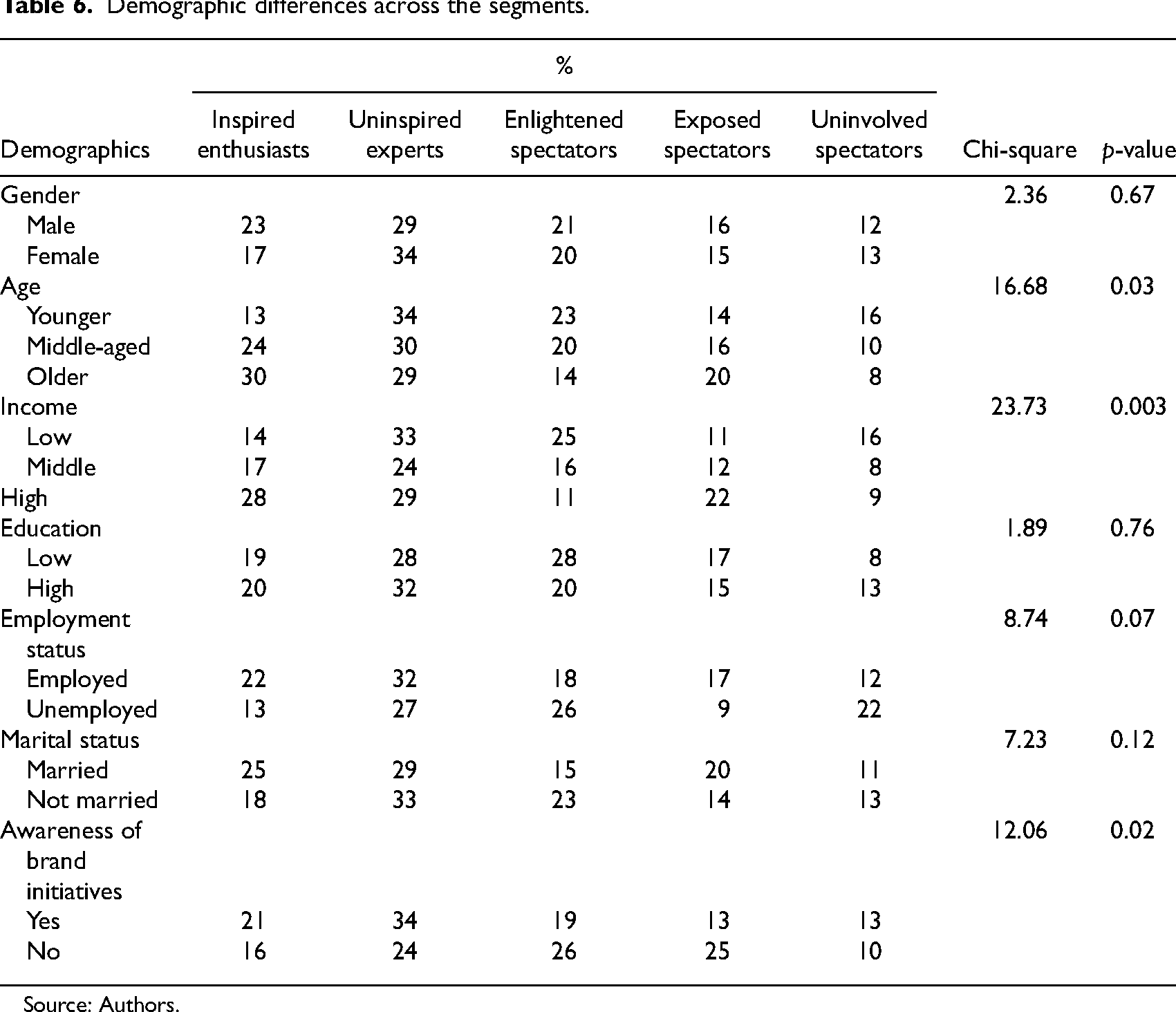
Demographic differences across the segments.
Source: Authors.
Further insights based on the ANOVA that was followed by Scheffe Post hoc comparisons in Table 5 confirmed that the segments are heterogeneous with very few overlaps found amongst some pairs especially based on awareness and knowledge of national symbols, awareness of marketing symbols and quality of life. Further differences between segments were observed in terms of demographic characteristics as shown in Table 6. The Inspired enthusiasts are older, employed, males and high-income earners who are quite aware of the efforts to market the country brand. Uninspired experts are dominated by younger, females who earn low incomes, yet they are highly educated, single and are also quite aware of marketing efforts designed to market Botswana as a brand. Enlightened spectators have an equal proportion of male and female respondents, low-income earners, low education, unemployed, married and young to middle-aged people who are not aware of efforts to market the country. There is an equal proportion of male and female in the segment of Exposed spectators, high-income earners although the level of education is low, married, older people who are unaware of efforts to market the country. Regarding the Uninvolved spectators, they are represented by both male and female, younger, low-income earners, highly educated, unemployed and single yet they are aware of the marketing efforts to market the country.
Discussion and implications for theory
From the findings of the market segmentation approach, diverse segments were derived based on citizens’ perceptions of the country brand. This implies that there is no single identity as perceived by citizens. This corresponds to past studies that followed a market segmentation approach that produced diverse segments of tourists (Duque and Riera-Prunera, 2022; Lwoga and Maturo, 2020; Nduna and van Zyl, 2020). Weak perceptions regarding the country brand were also confirmed in this study because only one-fifth of the citizens who responded to the survey fell under the segment that displayed a high level of enthusiasm for the brand along with all four dimensions. Further results indicated that this segment is represented by those who are older, high-income earners, highly educated, employed, males and are aware of efforts to market the country brand. The remaining segments being the Uninspired experts, Enlightened spectators, Exposed spectators and Uninvolved spectators that represent four-fifth of the respondents projected moderate to low level of enthusiasm with the country brand. Overall, findings suggest that tourism marketers and policymakers have not been successful in creating a favourable response to its brand among citizens because most of them do not live the brand. Unfavourable perceptions that emerged alongside some favourable ones in the current study correspond to those reported in previous studies (Compte-Pujol et al., 2018; Novčić et al., 2012).
The lack of a sound theoretical foundation in the literature on country branding has been well documented (Fan, 2006; Fetscherin, 2010; Hao et al., 2019). In response to this challenge, the current study draws insights from the Stimulus-Organism-Response theory to offer an empirical, multi-dimensional and comprehensive perspective to the study of country branding focusing on perceptions. This deviates from past related studies that have relied on one dimension at a time (Che-Ha et al., 2016; Novčić et al., 2012; Yousaf, 2016). This study also extends knowledge on country branding by following few studies that have responded to some recent calls (Hay et al., 2022; Miyamaru et al., 2023) to embrace an internal perspective for a more participatory approach to country branding strategy. Using a post hoc market segmentation approach further complements previous studies that are descriptive (Compte-Pujol et al., 2018; Lala et al., 2008; Yousaf, 2016), analytical (Coelho et al., 2022) or conceptual (Hao et al., 2019; Kaneva, 2011; Steenkamp, 2021). Market segmentation serves as a foundation for participatory country branding. Its exceptionality is the ability to identify the most enthusiastic citizens that participatory country branding efforts can leverage and the least enthusiastic that warrant more attention in terms of stimulating a connection with the brand to enhance branding efforts for appealing to tourists and investors. This underscores the importance of performing a segmentation exercise before engaging citizens in branding efforts, which will facilitate proper alignment between participatory strategies and citizens’ behaviour.
Implications for tourism marketers and policymakers
Findings of this study provide insights that can stimulate strategies designed by tourism marketers and policymakers to encourage support among citizens in the promotion of a country as a tourist and investment destination. For instance, Inspired enthusiasts embrace the brand and thus provide a great opportunity to support a country's branding efforts. This segment has great potential to rally behind the country brand serving as brand ambassadors thereby authenticating efforts to attract tourists and investors through positive word-of-mouth. The most meaningful approach to this segment is to reinforce support by communicating consistently to ensure awareness of marketing efforts and actively engaging them in country branding efforts. It is also important to constantly track and monitor its response to the brand over time to ensure sustainable impact. This approach will be more effective for those who are high-income earners, employed, highly educated and males. The Uninspired experts are the largest segment. While this segment is disloyal, dissatisfied and holds weak perceptions, interestingly it depicts a high level of familiarity with the country brand. Thus, this segment does not embrace the brand while possessing ample knowledge about marketing efforts and is dominated by young, females, who earn low incomes although they are highly educated. While country slogans are an important vehicle for the development of country brand awareness or knowledge, there is no amount of branding through logos or catchy slogans, that can translate to perceived quality or loyalty if a country is perceived as lacking critical elements. To stimulate a sense of identity which will increase their connection to the country brand, it is important to leverage the high level of awareness, knowledge and strong associations while addressing the elements of brand identity that the segment deems as unfavourable yet important.
For the remaining segments of spectators representing half of the respondents it is important for the tourism marketers and policymakers to modify the country brand through changing what the country does, produces and how it performs before engaging them in branding efforts. Engagements efforts can include increasing their interaction with the country brand and using them to provide feedback. For example, Enlightened spectators possess favourable awareness and knowledge of national symbols, tangible associations and weak perceptions of all the remaining dimensions. These experiences could be personal as the segment has no awareness of the marketing efforts. Addressing the weak elements that describe the country, communicating about the brand using appropriate platforms and leveraging awareness and knowledge of national symbols as well as the tangible associations will be instrumental to stimulate a connection to the country brand in this segment. The Exposed and Uninvolved spectators have lost hope about the country brand with the Uninvolved spectators being in the extreme. Before engaging in efforts to communicate the desired brand to these segments, the tourism marketers and policymakers need to ensure that it is politically stable, legally friendly, has a favourable business environment, ensure uniqueness in cultural values and address unemployment. This should target older people who are unaware of marketing efforts or younger people who are highly educated yet unemployed with low incomes.
While a significant proportion of the citizens hold unfavourable perceptions on most of the aspects of the country brand, interestingly there are favourable perceptions of national symbols awareness and knowledge, tangible associations, cultural environment and tourism as performing strongly in the country. The cultural environment in terms of rich arts and culture, rich history, natural beauty, hospitality and natural foods was perceived favourably as a critical aspect of the country's identity in all the segments. This implies that tourism marketers and policymakers could leverage the favourable perceptions by intensifying efforts to engage citizens in branding initiatives aimed at positioning Botswana as a hospitable, culturally diverse and rich destination when appealing to tourists. Visitors who have authentic experiences of the Botswana culture can be converted into investors.
Limitations and future research
This study has some limitations that are worth noting. First, it is based on a single country, cross-sectional survey research and non-probability sampling procedures owing to the lack of research funds and inaccessibility of sampling frames, respectively. While these methodological choices continue to dominate the literature (Che-Ha et al., 2016, Coelho et al., 2022; Compte-Pujol et al., 2018; Sanchez-Fernandez et al., 2019), they could minimize the generalizability of the findings. Since there is evidence of sample bias towards young, female and highly educated citizens, there is need to ensure a proportionate representation by age, gender and education in future studies to improve the accuracy of the findings from cluster analysis. However, the key lessons that could be learnt from the Botswana context is that citizens do not represent a homogeneous market, and it is important for a country's participatory branding strategy to leverage on such differences. Second, a deliberate decision was taken in this study to focus on citizens who reside in the country, excluding those outside the country and residents. Although this has been criticized as myopic (Novčić et al., 2012), because it overlooks significant differences that provide a more comprehensive perspective to country branding, this was necessary to control such differences. Longitudinal studies that tap on probability sampling procedures could help to track the perceived character, value and performance of the country brand overtime while making comparisons on how perceptions differ across multiple audiences in the future. As a critical area of study to contribute to participatory country branding, future studies could explore citizens’ perceptions about the effectiveness of initiatives undertaken by Botswana government to engage them in branding efforts. Future empirical research could also probe further on the multi-dimensionality of country branding using Confirmatory Factor Analysis. Studies based on conceptual frameworks concerned with testing the relationships among dimensions with the aim of identifying antecedents, mediators, consequences and moderators using structural equation modelling are also needed in the future.
Footnotes
Declaration of conflicting interests
The author(s) declared no potential conflicts of interest with respect to the research, authorship, and/or publication of this article.
Funding
The author(s) received no financial support for the research, authorship, and/or publication of this article.
