




Abstract
This study investigates whether the relationships among dimensions of wine destination brand equity differ between New- and Old-World wine countries, and how wine involvement moderates these relationships. A cross-country, cross-cultural analysis compared Chinese wine tourists in a New-World wine country (Yantai, China) with Western wine tourists in an Old-World wine country (Crete, Greece). Using convenience sampling, 258 Chinese and 230 Western wine tourists were surveyed. Results show that brand awareness has a stronger impact on brand quality, and brand associations have a stronger impact on brand loyalty for Chinese wine tourists compared to Western tourists. The moderating role of wine involvement was observed only in the Chinese sample. As Chinese tourists’ wine involvement increases, the impact of brand quality on brand loyalty strengthens. Higher levels of involvement among Chinese tourists leads to a negative relationship between brand associations and brand loyalty, while lower involvement leads to a stronger positive relationship.
Keywords
Introduction
Place brands recognize that wine often reflects local heritage, emphasizing its importance, uniqueness, and symbolic value (Kladou et al., 2020). Wine can support the well-being of communities (Sigala, 2020), and, thus, is key for branding initiatives (Lee et al., 2022). Besides, wineries highlight the wine region to emphasize the quality and uniqueness of wines, given the significant impact of the terroir of the local wine region on wine characteristics and quality (Charters et al., 2017). Wine is, in fact, a major terroir product whose distinctive quality are influenced by both the geographical characteristics of the place (e.g., soil, climate), as well as the philosophical capital such as the culture and heritage of the place (Charters et al., 2017; Spielmann and Charters, 2013). As such, building on Slocum and Ingram (2020), this study argues that places (may) use wine to intentionally incorporate wine culture to tourism initiatives and construct relevant cultural and place-based narratives.
In spite of growing interest from both academics and global practitioners on global wine tourism ranging from old-wine countries such as France, Italy, and Spain (Cusin and Passebois-Ducros, 2015; Festa et al., 2020; Gómez et al., 2015b; Kirova, 2021) to emerging new-wine countries such as China, Chile, and Australia (Gu et al., 2018, 2020; Qiu et al., 2013; Sigala, 2020; Torres et al., 2021), a new theoretical framework that would integrate the effects of destination brand equity with a cross-cultural perspective remains to be developed. Several researchers (Gómez et al., 2015b; Kladou et al., 2020; Mitchell et al., 2012) have advanced unabashedly positive effects of wine destination brand equity to attract wine tourists. Yet, extant wine tourism literature (Gómez et al., 2015b; Mitchell et al., 2012) offers little empirically supported direction on the effects of destination brand equity between wine tourists from emerging new-wine countries and wine tourists from traditional old-wine countries. There is still a void in theoretical understanding whether there are differences between these two wine tourist groups, the role of wine involvement in forming such differences, and a likely different effect on wine destination brand equity. Such explorations are significant for those marketers who embark on global wine tourism initiatives and campaigns to attract more diverse global wine tourists and need to better understand the relationship between wine destination brand equity and wine tourists’ behavior, and whether there are any differences between wine tourists from Old-World wine tourists and New-World wine tourists. This article attempts to address this void. Thus, this study evaluates and interprets relationships among popular concepts in wine and place branding literature (i.e., involvement and brand equity respectively), and seeks to answer the following research questions:
Does the established relationship between brand equity dimensions (Boo et al., 2009; Lee et al., 2022) stand at a cross-country, cross-cultural level, regardless of the Old-/New-World wine country classification of the place? Does tourists’ involvement with wine moderate the relationships between brand equity dimensions in both Old- and New-World wine countries?
To address these questions, the study advances Mitchell et al.'s (2012) earlier work by employing a cross-country, cross-cultural analysis between “Chinese wine tourists in a New-World wine country” (hereafter NW) and “Western wine tourists in an Old-World wine country” (hereafter OW) (i.e., Yantai, China, and Crete, Greece respectively), which leads to three key contributions. First, it addresses a significant theoretical gap in wine tourism literature by empirically examining whether the relationships among wine destination brand equity dimensions differ between NW and OW. This comparison offers valuable cross-cultural insights, as most wine tourism studies focus on Western tourists and data from Western countries (e.g., Afonso et al., 2018; Garibaldi et al., 2017; Gómez et al., 2019). Second, it integrates wine involvement as a moderating factor, extending the theoretical framework of wine destination branding and addressing a critical element that influences wine tourists’ perceptions and behaviors. Third, the study offers practical implications for tailoring wine destination branding strategies to diverse market segments, highlighting the importance of cultural and regional nuances in global wine tourism.
Literature review
Archaeological findings relate viticulture and wine making to various places since the antiquity (Li et al., 2018). Wine culture continued throughout the ages in some countries (e.g., Greece, Italy), thereby justifying their identification as “Old-World” wine countries (Johnson and Robinson, 2014). This classification to “Old” versus “New” world countries (e.g., South Africa, Australia) facilitates identifying which countries “imported” wine culture more recently—often due to colonization. Yet, dynamics in the process of time, meant that some places with early wine culture (e.g., China; Li et al., 2018) developed an everyday lifestyle exclusive of wine culture, only to (re-)discover and (re-)establish their connection with wine culture in light of tourism development and sustainability prioritizations. Despite efforts to reconceptualize the worlds of wine (Banks and Overton, 2010), the classification of Old-/New-World wine countries and its rationale influences wine studies from two inter-related angles: First, because important factors influencing wine culture and tourism behavior (e.g., motivation, involvement) might differ. Second, because the Old-/New-World wine country status might influence positioning, branding efforts, corresponding entrepreneurial approaches, and subsequent brand equity. Whatever the case, places may turn to different approaches of wine tourism branding in an effort to pursue a lasting competitive advantage (Gómez et al., 2015b). Studies investigating destination brand equity and wine tourists’ profiles and preferences emerge as significant, while scholars seek to contribute to both scholarly knowledge and practitioners’ understanding.
Destination brand equity can be defined as “the set of unique attributes and assets linked to a place brand that add or subtract from the value that place actors provide and perceive when co-creating the place experience” (Kladou, 2022: 837). Adequate conceptualization in the development of the study and the destination brand equity instrument, paired with suitable methodological choices, can shed light on two key areas. First, whether the relationships between brand equity dimensions (Boo et al., 2009; Lee et al., 2022) hold across countries, regardless of the Old-/New-World wine country classification. Second, the effectiveness of these relationships when addressing diverse profiles of wine tourists (i.e., low or high involvement with wine).
Focusing on wine destination brand equity: Old- and New-World wine countries
Research remains minimal in analyzing wine destination brand equity from a cross-country or cross-cultural perspective, despite the significance of brand equity to enhance the competitiveness of wine regions (Gómez et al., 2015b). Given that wine tourists participate in wine tourism not only to taste and buy wine, but also to experience the wine region, local culture, gastronomy, landscape, and heritage (Quintal et al., 2015), understanding the impacts of wine destination brand equity is crucial: wine destination brand equity encompasses the intangible assets of the wine tourism destination brand such as awareness of the destination and, as such, the image and quality of the destination affect wine tourists’ choice of a wine tourism destination along with their future intentions.
The rich body of wine tourism research has, so far, mainly focused on wine tourists’ behavior ranging from attitudes (Galloway et al., 2008), motivations (Byrd et al., 2016), wine tourists satisfaction (Lee et al., 2016), intention to attend wine festivals (Yuan et al., 2005), and the effects of wellness on intent of participating wine tourism (Duan and Ma, 2025) to wine tourists segmentation (Charters and Ali-Knight, 2002; Marzo- Navarro and Pedraja-Iglesias, 2012; Nella and Christou, 2014b). Prior research (Lee et al., 2016) provides evidence attesting to the notion that when wine tourism is essential to boost sales, wineries overcome obstacles relating to their smaller size by forming vertical or horizontal alliances or by co-creating the tourism experience regardless of the winery location (e.g., Buhalis and Park, 2021; Pucci et al., 2020). The coordinated effort of smaller wineries or the focused one of larger wineries might influence experiences, branding efforts, and subsequent evaluations at the wine destination level (Mitchell et al., 2012). Yet, such comparisons and cross-country brand equity studies remain limited (e.g., Dedeoğlu et al., 2019). Among relevant brand equity studies from the destination and place perspective, wine is associated with the culture of the country where the wine consumer “belongs to” (Lee et al., 2016; Mitchell et al., 2012; Sigala, 2019), thereby passing the baton to wine experience as a driver of demand for wine and wine tourism. Besides, the larger/smaller size of businesses is a factor already put in the scope in terms of its influence on sustainability (Slocum and Ingram, 2020).
Researchers, including (wine) tourism ones, build on Aaker (1991, 1996) and Keller (1993, 2003) and employ various dimensions to assess consumer-based brand equity (CBBE). In fact, Tasci (2021) reveals the use of around 40 different dimensions in tourism and hospitality. In some cases, some of these components may not be seen as integral CBBE dimensions. In detail, awareness, quality, loyalty as evaluated pre-, during-, and post-visit are the components of Nella and Christou's (2014a) early study on wine destination CBBE in Greece. A few studies focus on Spain to evaluate the influence of destination image and designation-of-origin brand image (which in 2015 is seen as denominations of origin) on three components of wine destination CBBE, namely awareness, perceived value, and loyalty (Gómez and Molina, 2012; Gómez et al., 2015a, 2015b). Brochado and Oliveira (2018) and Madeira et al. (2019) focus on Portugal: the former investigates the components of awareness, associations, quality, and loyalty to test a model of CBBE in the case of green wine brands. In the latter, the study focuses on motivation and consumer experience and their CBBE model reflects awareness, consumer value, image, and satisfaction. Typically, the main dimensions which CBBE embraces include brand awareness, brand image/associations, brand quality, brand loyalty, and brand value (Rahman et al., 2021; Tasci, 2018), although Lee et al.’s (2022) only recent study focusing on wine CBBE in China excludes the latter.
Efforts to support a wine destination are expected to positively influence brand awareness (i.e., the ability to recall and recognize the brand as in Ferns and Walls, 2012), but there is currently no clear evidence on how this influence stands across places and consumer profiles. Recently, Tasci and Back (2025) tested a comprehensive CBBE model in wine tourism destinations in the United States and globally (France, Italy, New Zealand, and Greece). Although results shed light mostly on Western wine tourists, their study contributes with one of the few cross-country studies in wine CBBE. Still, both New- and Old-World wine countries seem eager to harvest potential benefits of wine tourism (e.g., Afonso et al., 2018; Lee et al., 2022). Chinese wine regions, for instance, seek to benefit from the growing popularity of wine and (re-)connect with their early wine culture while building a sense of luxury (Li et al., 2018). On the other hand, smaller wineries dominate Old-World wine regions and prioritize the relationship of wine heritage with everyday culture, place, and family heritage (e.g., Kladou et al., 2020).
Since a destination brand represents a place, which is associated with a variety of attributes and images, a specific destination image exists in travelers’ minds (Konecnik and Gartner, 2007). Wine destination image is, in fact, the dimension which wine tourism studies often investigate (e.g., Bruwer and Lesschaeve, 2012; Bruwer et al., 2018). Loyalty, defined as the intention to revisit the wine destination and word-of-mouth intentions (Prayag, 2012), is of primary interest as well. Some exploration of the similarities and differences across wine countries and travelers’ profile is evident in the literature (e.g., Mitchell et al., 2012). Relevant empirical evidence further highlights the significance of image/associations for the decision-making process, post-purchasing decisions and behavior, and of perceived quality for retaining customers (e.g., Han and Kim, 2010). Still, the focus is commonly not on the relationship of image with loyalty, quality, or brand equity.
Extant winery studies confirm the importance of associations/image and quality for boosting loyalty both at the winery (Back et al., 2021) and the wine destination levels (Lee et al., 2022). For instance, the aforementioned Western wine tourists from Northern America appear more comfortable visiting wine regions producing the wine brands they are familiar with (Brown and Getz, 2005; Charters and Ali-Knight, 2002), because of associating the wine region with certain image and quality characteristics, and with familiar place culture and traditions. Such preference makes sense anyway, taken the importance of the place of origin for tourists and consumers alike (Kladou et al., 2014; Melewar and Skinner, 2020).
While a plethora of research have advanced our understanding of wine tourism, the impact of destination brand equity on wine tourism remains minimal and usually sees into specific wine tourist profiles or destinations. Relevant wine studies investigate concepts and relationships in both New- (i.e., mainly Australia, United States, Canada, and New Zealand) and Old-World wine countries (e.g., Gómez et al., 2019; Tasci and Back, 2025). However, each study employs different measures and study instruments, therefore does not facilitate cross-country and cross-cultural validation. Furthermore, there may be differences in terms of destination and country image and in terms of matching wine tourism and destination image in a country context (Kladou et al., 2014). The key premise of this branch of research is that wine tourists from New-World wine countries, such as Chinese wine tourists, who are newer to wine tourism (compared to Western tourists) and have relatively a short history of wine tourism, tend to value more the educational aspect of wine tourism such as learning new wines, wine cultures, and regions, whereas Western wine tourists originating, for instance, from the US or western European wine countries where wine is ingrained into their lives, focus more on a hedonic perspective of wine tourism which entails drinking, tasting and buying wines (Marzo-Navarro and Pedraja-Iglesias, 2012; Wu et al., 2024).
Focusing on the Wine tourists: Wine culture and involvement
Wine tourism provides the opportunity to experience the winery brand and heritage, as these connect to both the winery and the wine destination. Researchers argue that wine tourists look for holistic experiences, which they achieve by emerging into the lifestyle of the wine region, experiencing the local gastronomy along with wine and the scenery of the region (Beverland, 2006; Rachão et al., 2021), thereby exhibiting a varying importance on regional tourism development (Festa et al., 2020). Beverland (2006) particularly suggests that wine tourists value experiences that help them understand the heritage of the winery, the unique method of production and the terroir of each wine region, although not all wineries equally invest in communicating heritage in their branding efforts (Kladou et al., 2020).
Despite the increasing number of wine studies, cross-cultural explorations are rare (Gómez et al., 2019); research commonly builds on Western wine tourists and data mainly collected from Western countries (e.g., Afonso et al., 2018; Garibaldi et al., 2017). Recognizing the importance of cultures and tourists’ characteristics (e.g., motivations, involvement), researchers have called for research looking into branding efforts of different wine regions and wine tourist groups’ behavior (e.g., Afonso et al., 2018). Generalizing the findings of extant literature into the wine tourists from emerging Asian countries can be problematic as the wine tourists’ behavior, culture, motives, and involvement differ significantly compared to Western wine tourists (Lee et al., 2016). For instance, wine is still new to many Chinese wine tourists, who drink wine on special occasions and feel that wine is a Western alcoholic beverage which requires knowledge (Hu et al., 2024; Zhao, 2016). On the other hand, Western wine tourists have been exposed to wine more in their everyday life, wine is integrated in the culture and local gastronomy of most Western European countries, and visiting a winery is an established leisure activity among Western wine consumers (e.g., Alonso et al., 2022; Testa et al., 2019).
Relevant to how integrated wine may be in Western or Asian culture, early research suggests that consumers’ and wine travelers’ involvement with wine at a personal level may lead to different behavior (Lockshin and Spawton, 2001). Extant studies further confirm that less involved wine tourists are unlike to search for holistic experiences at the winery and the wine region (Alebaki et al., 2015; Gu et al., 2018; Nella and Christou, 2014b). Involvement plays a significant role for wine tourists, whether Asian or Western ones. Gu et al. (2018) identified four segments of Chinese wine tourists based on involvement. In specific, segments that are less involved with wine and wine tourism seek supplementary service when visiting a winery and value more generic travel experiences during wine tourism. On the other hand, the Chinese wine segments that are more involved with wine value core wine tourism activities (e.g., wine tastings and purchasing new wines). Alebaki and Iakovidou (2011) compared extant approaches on market segmentation in wine tourism, whereas Nella and Christou (2014b) particularly examined segments of wine tourism using involvement in wine as a segmentation variable among Greek wine tourists. More recently, Alonso et al. (2022) confirmed that increased wine tourism involvement boosts travelers’ interest and motivation, at least in Italy and Spain.
Conceptual model and hypothesis development
Taken the above literature review and call for internationally validated studies, the first part of the conceptual model builds on those brand equity dimensions common across destination branding studies to evaluate the branding efforts of places to further develop their tourism potential (see Figure 1). This study posits that the impacts of wine destination brand equity might differ between OW and NW, due to the characteristics of both the destination branding efforts and the wine tourists.
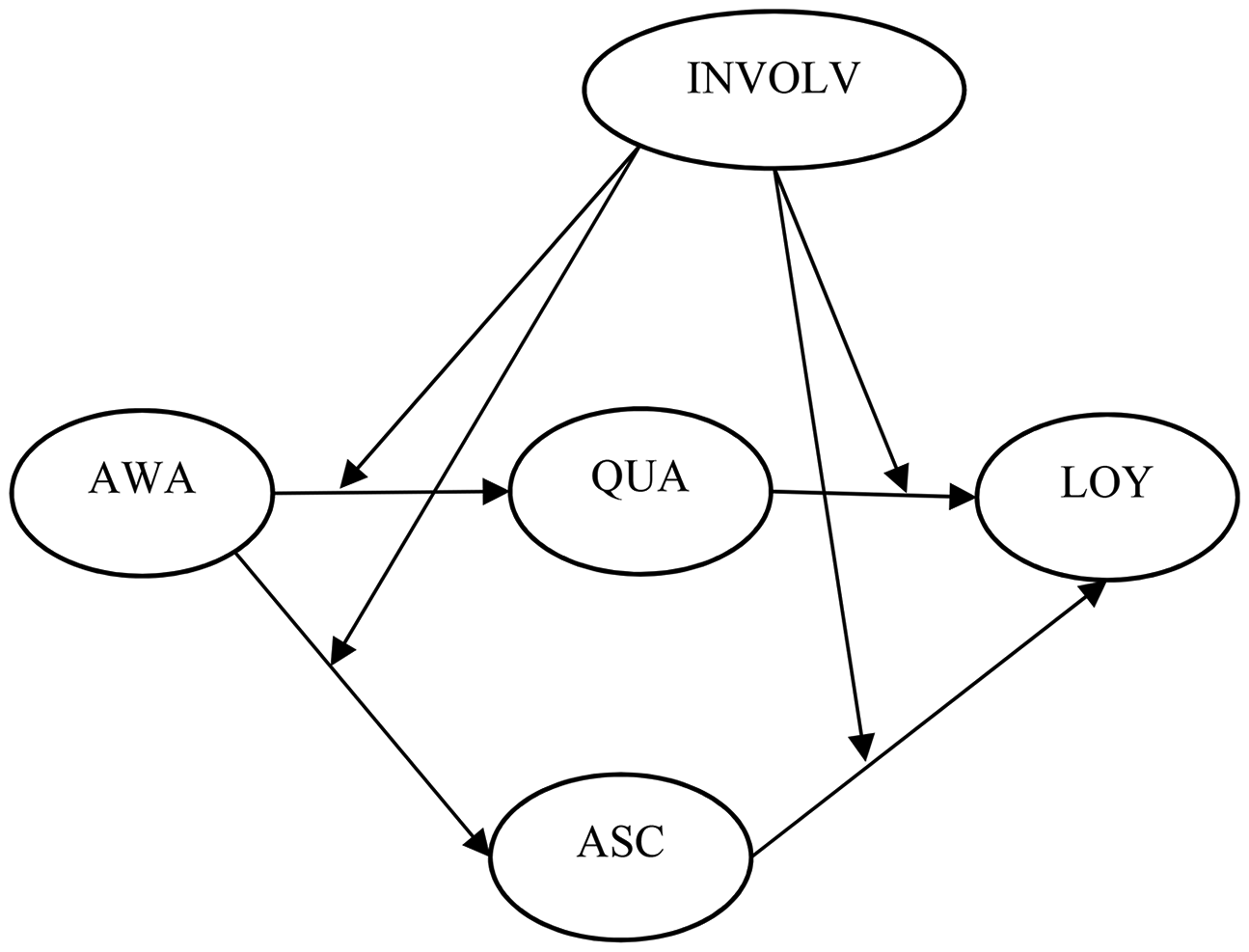
Conceptual model. AWA: brand awareness; ASC: brand associations; QUA: brand quality; LOY: brand loyalty; INVOLV: wine involvement.
“Old” wine regions gradually start embracing wine tourism more consistently in recent years. For instance, in the Mediterranean, where wine has long had a strong cultural significance, there are increasingly more wine routes and wineries open for visitation (Alebaki et al., 2015; Gómez et al., 2019). Challenging factors in their macro-environments paired with stable or declining consumption in those countries where wine is traditionally established (e.g., Spain, Italy, France), reinforce branding efforts and motivate wineries to turn into wine tourism. Although wine tourism initiatives in old-wine countries generally address wine tourists, relevant wine destination brand assets (i.e., which commonly embrace the winery and wine tourism offering) often develop around Western travelers’ interests. This contributes to extant studies investigating Western wine tourists’ desires, motivation, and behavior in relation to established brand equity dimensions (e.g., Gómez et al., 2019) and makes particular sense in the aftermath of the COVID-19 pandemic, as early research highlights the wine travelers’ desire for more engagement in their region (Alonso et al., 2022).
Brand awareness reflects brand familiarity in consumers’ minds; familiarity and destination awareness boost relevant associations that constitute brand image and relate to value perceptions. In fact, according to Tasci and Back's (2025) recent review of CBBE in tourism research, awareness is typically the initial component of CBBE models which impacts the other four common CBBE dimensions, namely associations/image, perceived quality, value, and loyalty. When referring to a wine destination, associations incorporate image attributes significant for a wine region (e.g., authentic wine experience), as well as quality perceptions that reflect the holistic judgment based on excellence or overall superiority (e.g., the experience increasing the visitor's knowledge on wine culture) (Bigné et al., 2005; Lee et al., 2022). Although image and quality perceptions are important for both Western and Chinese wine tourists in Old- and New-World wine countries (e.g., Alonso et al., 2022; Lee et al., 2022), differences might occur when seeking to compare the varying significance for each group. This is because Chinese wine tourists visit wine regions to better understand wine culture and wine regions (Maguire and Zhang, 2017; Wine Intelligence, 2013), whereas Western wine tourists visit those regions producing the wine they consume in their everyday life (Brown and Getz, 2005). Thus, the following hypotheses are proposed:
Studies highlight the significance of image/associations for loyalty and specifically the decision-making process, post-purchasing decisions, and behavior (e.g., Han and Kim, 2010). When loyalty reflects the intention to revisit the destination and word-of-mouth intentions (Prayag, 2012), image is expected to positively influence loyalty (e.g., Zins, 2001). Quality is equally important, taken its positive impact on loyalty through satisfaction, also in the case of wine destinations (e.g., Lee et al., 2022). Wine tourism development in some New-World wine countries (e.g., China) often communicates specific quality and image attributes in response to the rapid expansion of local wealthy elites and burgeoning middle classes (Banks and Overton, 2010). The Chinese view wine tourism as lifestyle tourism (Zhao, 2016) providing them with the opportunity to learn about wine and experience the wine culture, whereas wine consumption and experiences reflect a particular status and social class (Maguire and Zhang, 2017). Therefore, Chinese wine tourists might be more interested in the wine destination image and quality of the wine region when selecting wine tourism regions, compared to Western counterparts (Zhao, 2016) and the following hypotheses are proposed:
Brand equity and its aforementioned dimensions are quite popular in destination branding literature (see Kladou, 2022) and attract increasingly more interest in wine branding as well (e.g., Lee et al., 2022). Still and despite Lockshin and Spawton's (2001) early exploration of the role of wine involvement for building brand equity, rarely wine destination brand equity studies incorporate wine involvement and investigate how different levels of involvement might cater for varying effects on brand equity. Focusing explicitly on wine tourists and consumers originating from non-English speaking New-World wine countries is rare. Yet, preliminary findings reveal characteristics in wine tourist behavior which call for further exploration and comparison of wine tourists and wine consumers preferring Old-World wine countries (e.g., Afonso et al., 2018; Gómez et al., 2019). Researchers have looked into the segments of Chinese wine consumers to uncover any segments who drink beyond special occasions (e.g., Gu et al., 2018) and, overall, the role of involvement (e.g., Nella and Christou, 2014b). Specifically, wine tourist and wine consumer typologies and segmentation often build on involvement (Barber et al., 2007; Famularo et al., 2010; Gu et al., 2020; Wu and Liang, 2020). Given that wine tourism entails financial and time commitment, particularly in the case of international traveling, involvement plays an even more crucial role for engaging in wine tourism (Gu et al., 2020). Consistent with Gu et al. (2018) and Nella and Christou (2014b), wine tourists with limited wine involvement attribute importance on the experience itself rather than visiting wineries for tasting and purchasing wines.
On the other hand, taken the significance of retaining loyal and heavy customers (Sheth and Koschmann, 2019), in general Western wine tourists, who are more involved with wine tasting and purchasing at the cellar door, are the main focus during wine tourism (Alebaki et al., 2015). As wine consumption in China and Chinese consumers’ interest on wine increases, wine tourism emerges as a relatively new pattern of leisure activities among Chinese wine tourists and seems consistent with prior studies (Alebaki et al., 2015; Charters and Ali-Knight, 2002; Sparks, 2007): the primary motivation of participating in wine tourism among high involvement Chinese wine tourists is learning, tasting, and purchasing new wines as well as experiencing new-wine regions (Gu et al., 2018; Lee et al., 2016; Maguire and Zhang, 2017). On the other hand, low involvement Chinese wine tourists tend to consider visiting a winery and a wine region as an incidental activity of their trip (Gu et al., 2018). Interestingly, language, time, and transportation constraints do not affect high involvement Chinese tourists’ intention to visit a wine region and wineries whereas language, time, and transportation are the major barriers that discourage low involvement Chinese wine tourists to participate in wine tourism (Gu et al., 2020).
Brown and Getz's (2005) study had similarly revealed that time constraints, but also constrained financial resources, were the major hurdle for Western wine tourists, particularly Canadian wine tourists who live far away from major wine regions. Lockshin and Spawton (2001) assert that low involved wine consumers usually do not process product information cognitively. Instead, low involved wine consumers tend to rely on price, wine region, and wine varietals, whereas highly involved wine consumers seek more complicated cues such as wine style and vintage in purchasing wine. Lockshin and Spawton (2001) provide some insights shedding light on the relationship between specific brand equity dimensions and involvement. According to them, given the incorporation of perceived quality, brand name, price, and awards may have a greater influence on low involvement buyers’ perceived quality, whereas high involvement buyers focus more on the region, the winemaker, wine writer reviews, and recommendations. Moreover, well-trained and knowledgeable staff will have a greater effect on high involved wine consumers who are also more likely to think of brand associations (e.g., linking a wine brand to a wine region and its characteristics) (Lockshin and Spawton, 2001). Sengupta et al. (1997) postulate that consumers’ attitude in low involved situations are more likely to be influenced over the time by peripheral cues related to the product category such as brand name instead of central cues related to the product such as key product attributes.
Taken limited theoretical support of whether the moderating effect of wine involvement differs across destinations and/or cultures, this study proposes that the moderating effect of wine involvement on the relationship between brand equity dimensions are similar for both NW and OW. Thus, the following hypotheses emerge:
Methodology
Measures
The constructs used in this study are based on destination brand equity dimensions (Aaker, 1991) and wine involvement (Figure 1). Boo et al.'s (2009) four-dimensional scale provides the basis to measure the dimensions of destination brand equity. Some minor verbal modifications to the scales better reflect the assessment of wine destinations. Thus, a total of 20 items were adapted to measure the four wine destination brand equity dimensions. As indicated in Figure 1, wine involvement serves as a moderator on the relationships between the dimensions of destination brand equity. To measure wine involvement, four items were adopted from previous research (Gu et al., 2018; Wu and Liang, 2020).
All items were rated using 7-point Likert-type scale. The original questionnaire was developed in English and translated into Chinese by a bilingual Chinese professor. Back-translation was achieved by another professor who is fluent in both English and Chinese (Brislin, 1970). While the English questionnaire was used for OW sample (Crete, Greece), the Chinese questionnaire was implemented for NW sample (Yantai, China). After making some minor modifications, the pilot study confirmed that the questionnaire is ready for full implementation.
Sample and data collection
Convenience sampling helped collect data simultaneously through a self-administered questionnaire at Yantai, China and Crete, Greece. While Western wine tourists were sampled in Crete, the target population for Yantai was Chinese wine tourists. Wine tourists all had the chance to complete the questionnaire in person, right after they completed their summer visit to wineries, prior to the onset of the COVID-19 pandemic, thereby ensuring that the data collected were not influenced by pandemic-related disruptions or changes in wine tourist behavior. Although a researcher was discretely available in situ in case questions or problems arose, the only questions ever posed concerned tourists’ overall interest on wine and the wine destination, rather than matters relevant to the study or the questionnaire. The wineries participating in this project prefer synergies (in Crete via the Wines of Crete network) to develop wine tourism. On the other hand, one larger winery (in Yantai) leads tourism development. Cretan and Yantai efforts differ from Mitchell et al.’s (2012) methodological approach because of the grape varieties (i.e., mainly local vs. international respectively) integrated in the wines produced.
For the NW sample, the questionnaires were distributed to wine tourists at the Changyu winery in Yantai. This winery was appropriate for data collection as one of the oldest wineries and the largest wine producer in China (Qiu et al., 2013), leading branding and development by addressing Chinese wine tourists and having built its wine product portfolio through the integration of grape varieties imported right after its foundation in the late nineteenth century. A survey was conducted among 311 Chinese wine tourists visiting Yantai, resulting in 258 useable questionnaires for data analysis. For the OW sample, all small wineries, members of the Wines of Crete (2024) network were approached, but only seven wineries agreed to support data collection. These wineries may integrate some international grape varieties in their wines but they largely choose to emphasize local varieties and place and family heritage characteristics in their production and communication (Kladou et al., 2020). A total of 230 Western wine tourists from 18 countries were surveyed in Crete, Greece. The incorporation of a question on the respondents’ ethnic background ensured that Western wine tourists surveyed in Crete did not include respondents with an Asian background. Of these 230 questionnaires, 14 included excessive missing data and thus 216 questionnaires were used.
Data analysis
Partial least squares-structural equation modeling (PLS-SEM) was employed due to the multivariate non-normality of the data. Multivariate normality was assessed by computing multivariate skewness (Yantai = 6.30, p = 0.000; Crete = 6.51, p = 0.000) and kurtosis (Yantai = 48.22, p = 0.000; Crete = 48.42, p = 0.000), revealing a violation of multivariate normality for both samples. In such cases, PLS-SEM is more appropriate as it does not require normally distributed data (Usakli and Rasoolimanesh, 2023).
The required sample size was calculated based on statistical power using G*Power software. The results show that a minimum of 107 respondents is needed for each sample (power = 0.95, ƒ2 = 0.15, α = 0.05). Following Ringle et al.'s (2014) advice to double this for a more consistent model, at least 214 respondents for each sample was necessary for the study. Based on both G*Power results and Ringle et al.'s (2014) suggestion, it was concluded that 258 (OW—Yantai, China) and 216 (NW—Crete, Greece) are acceptable sample sizes for the study.
A full collinearity test was assessed to analyze the common method bias (CMB). The full collinearity test showed that the variance inflation factor (VIF) for each construct is lower than the cutoff value of 3.3 (Kock, 2017), indicating that CMB is not an issue. For data analysis, the reliability and validity of the measurement model was first established, followed by an assessment of measurement invariance using measurement invariance of composite models (MICOM). After that, the structural model was evaluated. Finally, multi-group analysis (MGA) and interaction moderation analysis were conducted for hypothesis testing.
Findings
Respondent profile
The respondent profile across two destinations was similar in terms of gender, age, and education. Of the 258 respondents in Yantai, 53.9% were female, 60.9% were 30–50 years old, and 77.5% were university graduates. Of the 216 respondents in Crete, 52.1% were female, 66.6% were 30–50 years old, and 61.5% were university graduates. Respondents were primarily leisure travelers (85.7% in Yantai and 93.5% in Crete). While more than half (60.5%) were repeat visitors to Yantai, a great majority of respondents were first-time visitors to Crete (89.8%). Almost half of the respondents in Yantai have been drinking wine for at least 10 years (48.1%) and visiting five wineries per year, whereas most respondents in Crete have been drinking wine for at least 10 years (71.1%) and visiting three wineries per year. All respondents in Yantai were Chinese domestic visitors. Only 6.5% of the respondents in Crete were Greek domestic visitors. While 19% of the respondents in Crete were North American visitors, the remaining majority (74.5%) were European visitors coming from 15 different countries.
Assessment of measurement model
The measurement model was initially tested. All loadings for the NW sample and most of the loadings for the OW sample were above 0.70 (Table 1). Only two items in the OW sample loaded between 0.605 and 0.615. These two items were not excluded as they were above 0.50 and subsequent analyses revealed no negative effects on the composite reliability (CR) and convergent validity. Thus, indicator reliability was established. CR values were well above 0.70, indicating that all constructs had strong internal consistency. To test the convergent validity, average variance extracted (AVE) estimates were examined. As all AVE estimates were above 0.50, convergent validity was established. Discriminant validity was tested using the heterotrait–monotrait (HTMT) ratio of correlations (Hair et al., 2019). The findings indicate that each of the two models tested for NW and OW samples possesses acceptable discriminant validity (Table 2). Nevertheless, an additional discriminant validity check was performed by using the HTMT-based inference test. The 95% bias-corrected HTMTinference confidence intervals did not include 1 (ranging from 0.161 to 0.921 for the NW sample and from 0.056 to 0.935 for the OW sample). Thus, discriminant validity was established.
Assessment of measurement model.
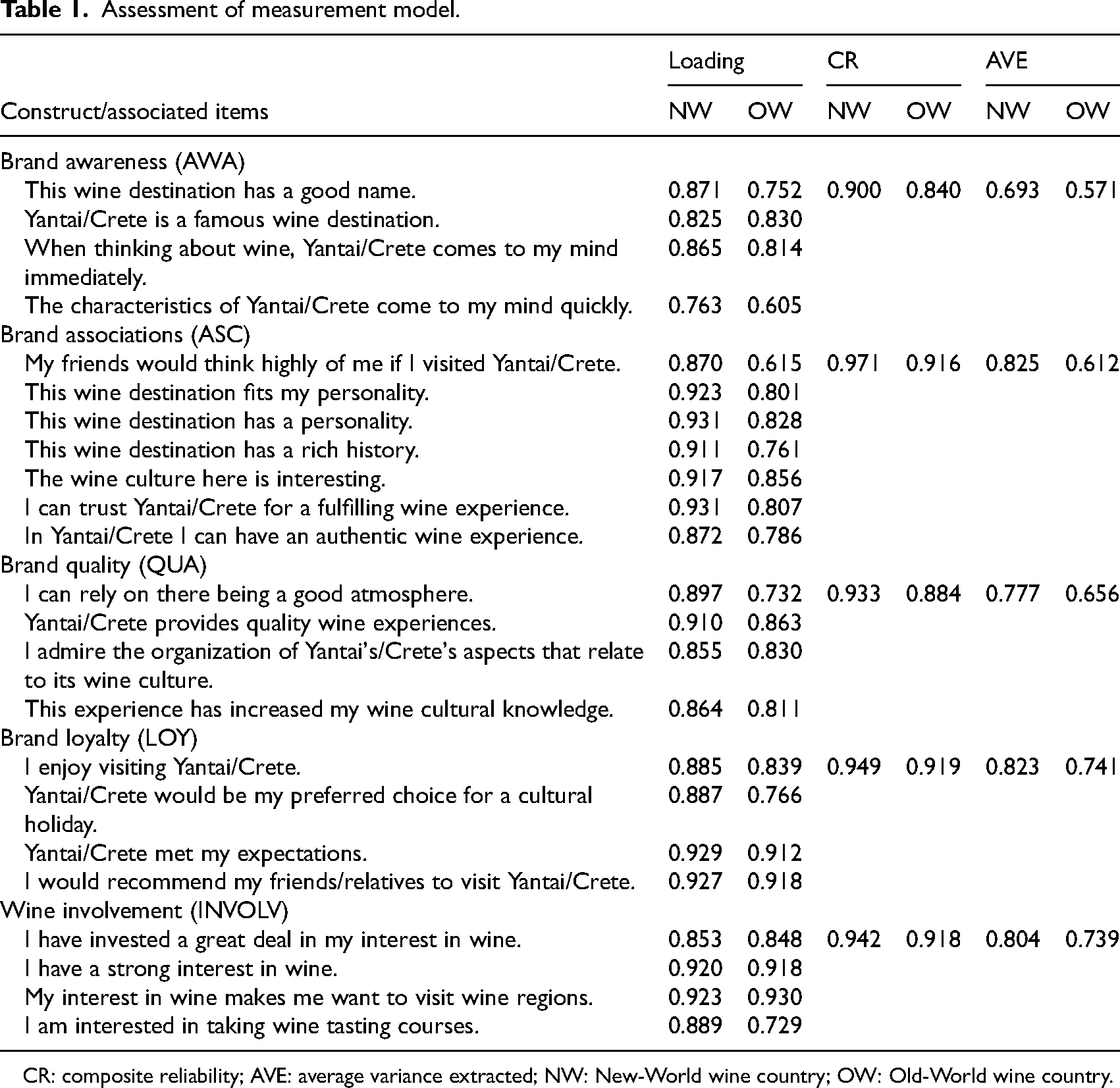
CR: composite reliability; AVE: average variance extracted; NW: New-World wine country; OW: Old-World wine country.
Discriminant validity (HTMT criterion).
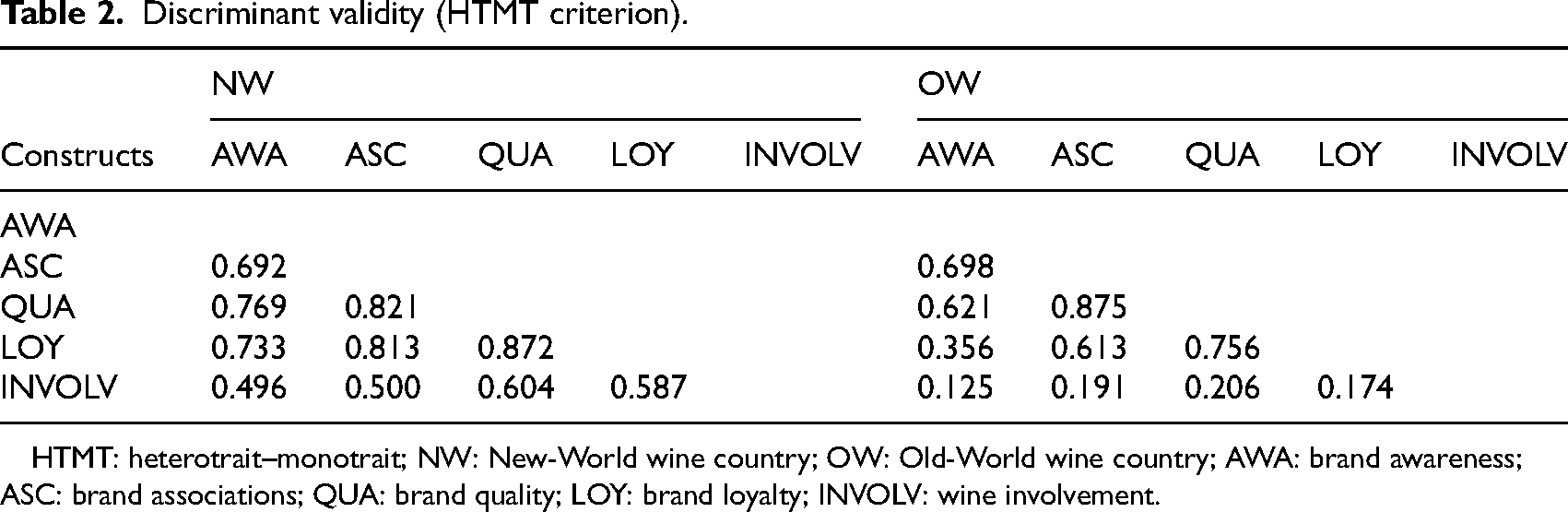
HTMT: heterotrait–monotrait; NW: New-World wine country; OW: Old-World wine country; AWA: brand awareness; ASC: brand associations; QUA: brand quality; LOY: brand loyalty; INVOLV: wine involvement.
Assessment of structural model and MGA
Because this study compares two samples (i.e., OW vs. NW), measurement invariance is necessary before performing MGA. The measurement invariance was assessed using the MICOM method developed by Henseler et al. (2016). It was found that partial measurement invariance exits across the two samples. Subsequently, the potential multicollinearity problem was examined. Since all VIF values were lower than 3 (max. 2.862 in Yantai and max. 2.440 in Crete), no multicollinearity problem was found (Hair et al., 2019). Then, the explained variance of endogenous constructs (R2) and the predictive relevance (Q2) of the structural model were evaluated. As shown in Figure 2, the predictive accuracy (R2) and the predictive relevance (Q2) of the structural model was greater in the NW sample than the OW sample.
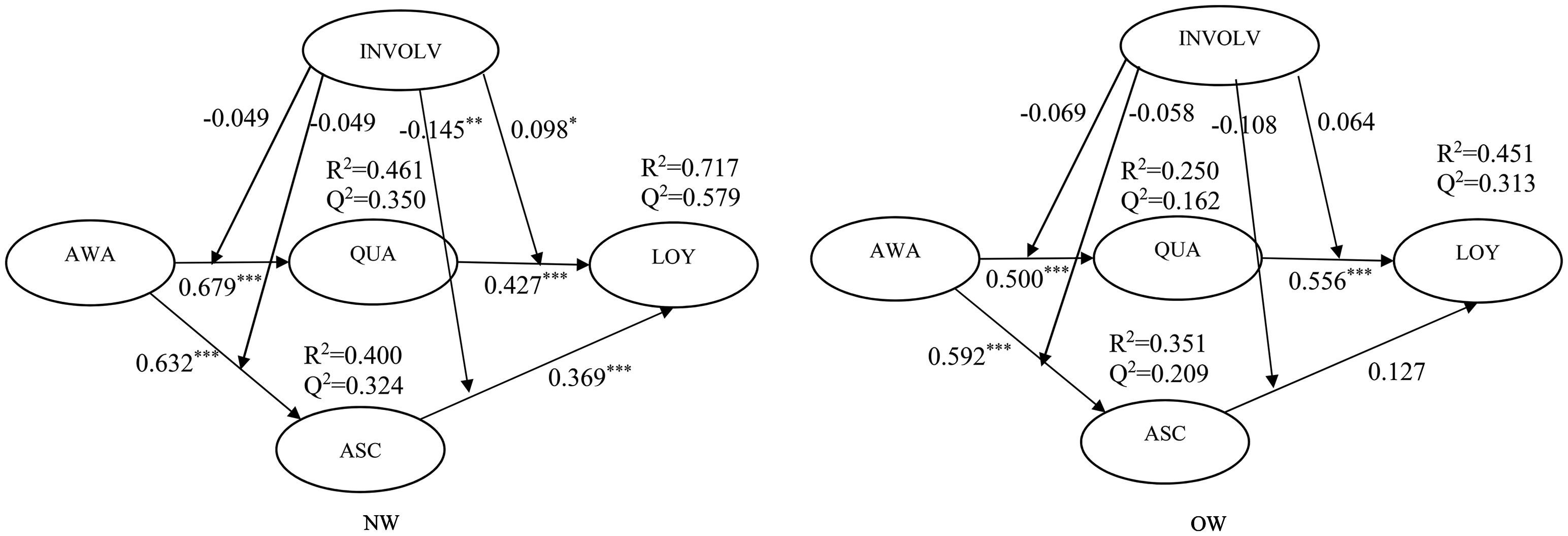
Structural model results. *p < 0.05, **p < 0.01, ***p < 0.001.
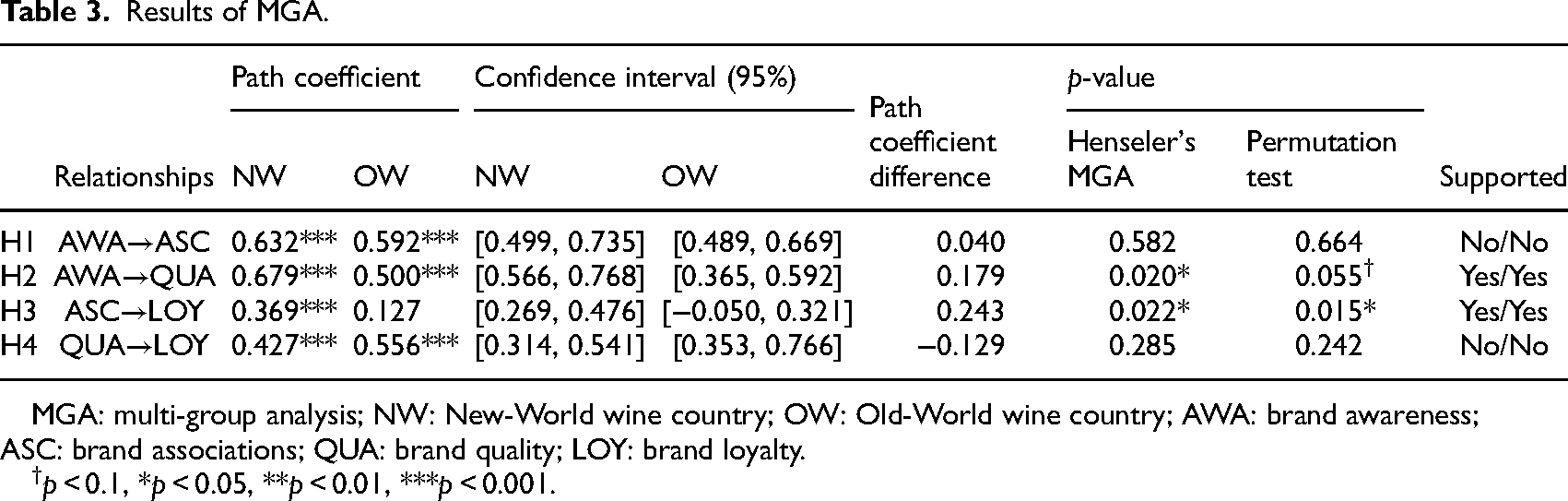
Table 3 shows the path coefficients and the results of MGA. Hypotheses 1–4 propose that the impacts of wine destination brand equity are stronger for NW (Yantai, China) than OW (Crete, Greece). To test these four hypotheses, a multi-method approach was employed, utilizing MGA through two different non-parametric methods: Henseler's bootstrap-based MGA (Henseler et al., 2009) and the permutation test. These two have been considered as the most conservative PLS-SEM methods to compare path coefficients between two groups (Sarstedt et al., 2011). By using two different methods, a multi-confirmation of the findings was provided. A total of 5000 bootstrap re-samples were used for the Henseler's MGA and 5000 permutations were conducted for the permutation test. The results reveal several significant differences between NW and OW (Table 3).
Results of MGA.
MGA: multi-group analysis; NW: New-World wine country; OW: Old-World wine country; AWA: brand awareness; ASC: brand associations; QUA: brand quality; LOY: brand loyalty.
p < 0.1, *p < 0.05, **p < 0.01, ***p < 0.001.
As shown in Table 3, the impacts of awareness on quality (H2) and associations on loyalty (H3) were found to be stronger (positive) for NW than OW. Thus, H2 and H3 are supported. However, the results do not support a significant difference between NW and OW with respect to the effects of awareness on associations (H1) and quality on loyalty (H4). Therefore, H1 and H4 are rejected.
Interaction moderation analysis
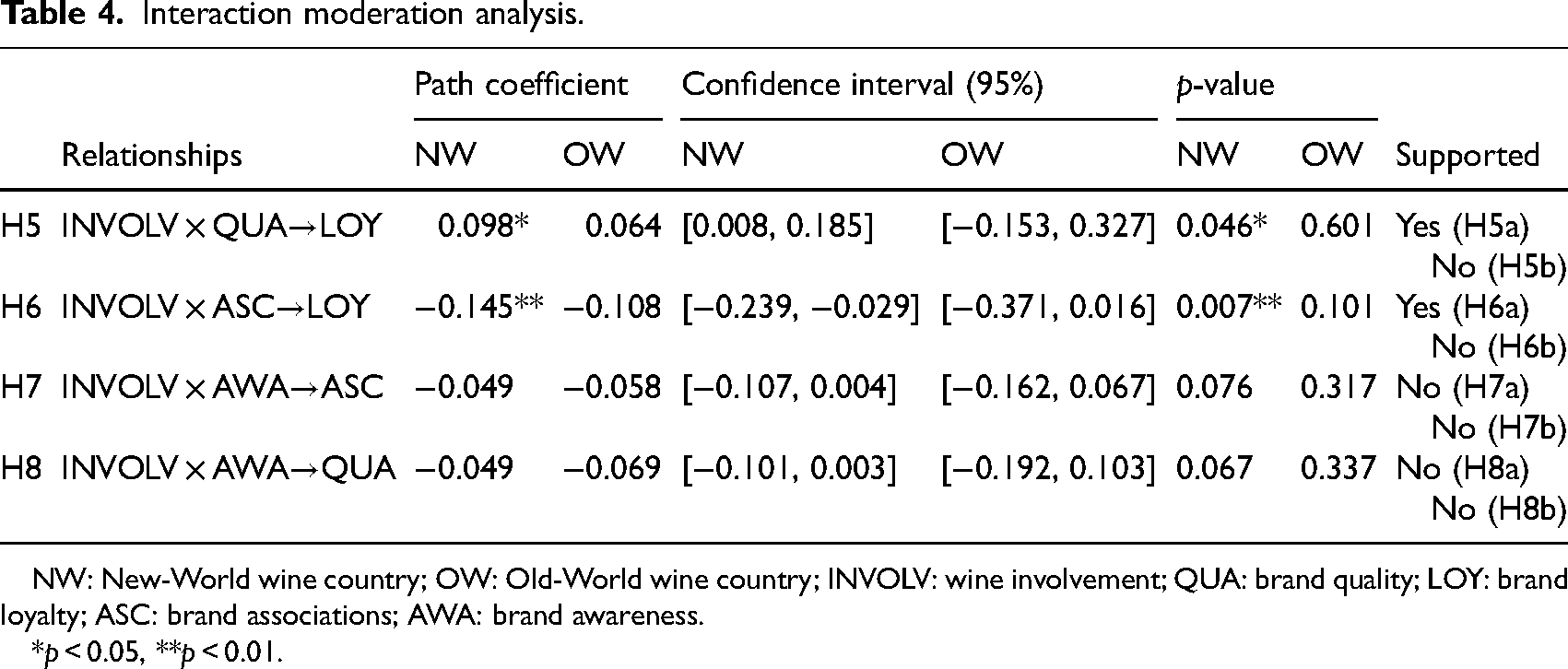
Hypotheses 5–8 deal with the moderating role of wine involvement in the relationships between the four dimensions of wine destination brand equity. Because wine involvement is a continuous variable measured with four items, an interaction moderation analysis was performed. The two-stage approach was used to create the interaction term. Results show that wine involvement moderates the impacts of both quality on loyalty, and associations on loyalty for NW (Table 4), indicating that H5a and H6a are supported. Specifically, wine involvement positively moderates the relationship between quality and loyalty for NW (β = 0.098, p = 0.046) but negatively moderates the relationship between associations and loyalty for NW (β = −0.145, p = 0.007). No moderating effect of wine involvement was found for the remaining relationships. Therefore, H5b, H6b, H7a, H7b, H8a and H8b are rejected.
Interaction moderation analysis.
NW: New-World wine country; OW: Old-World wine country; INVOLV: wine involvement; QUA: brand quality; LOY: brand loyalty; ASC: brand associations; AWA: brand awareness.
*p < 0.05, **p < 0.01.
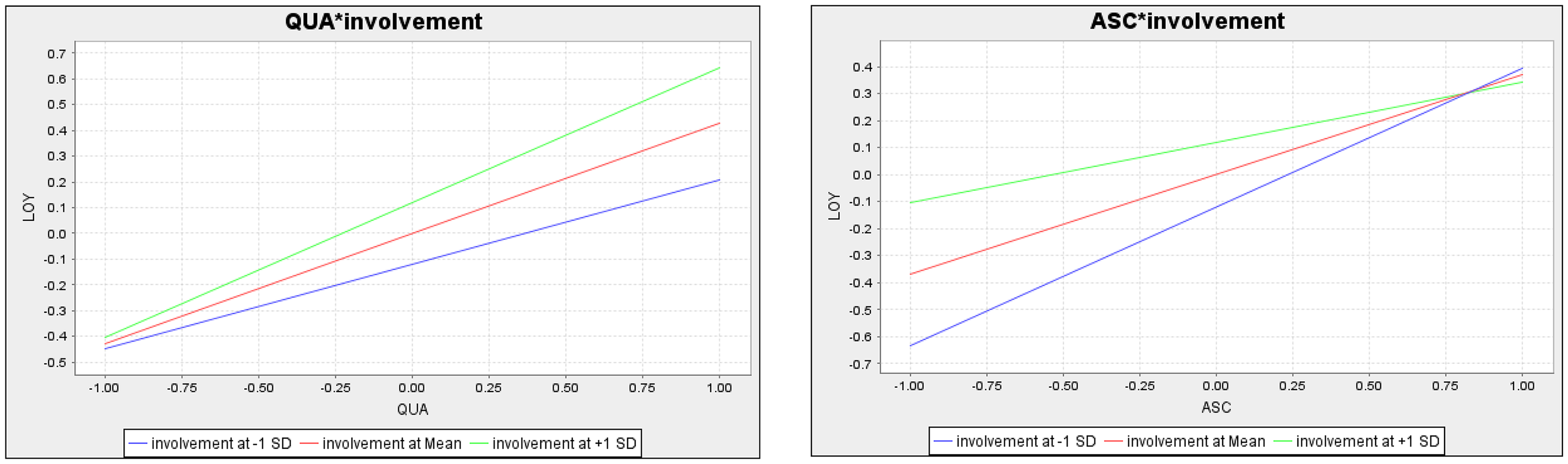
Simple slope analysis helps comprehend the moderating role of wine involvement for NW. As illustrated in Figure 3, the effect of quality on loyalty is stronger for NW tourists with higher involvement levels than for NW tourists with lower involvement levels. That is, as the wine involvement of NW tourists increases, the effect of quality on loyalty increases as well (H5a). The simple slope analysis revealed an interesting result with respect to the moderating role of wine involvement on the relationship between associations and loyalty. Interestingly, it was found that higher wine involvement levels of NW entail a negative relationship between associations and loyalty, while lower levels of wine involvement lead to a stronger and a positive relationship between associations and loyalty (H6a).
Simple slope analysis (NW—H5a and H6a). NW: New-World wine country.
Conclusions and discussion
This study explored the role of wine involvement for branding wine destinations and evaluates whether efforts for branding and wine tourism development can be generalized and equally successful regardless (1) the Old-/New-World wine country classification of the place, and (2) places prioritizing diverse wine traveler profiles. As a result, this study is one of the first cross-national studies in wine tourism that compare emerging wine tourists from NW context with experienced OW context.
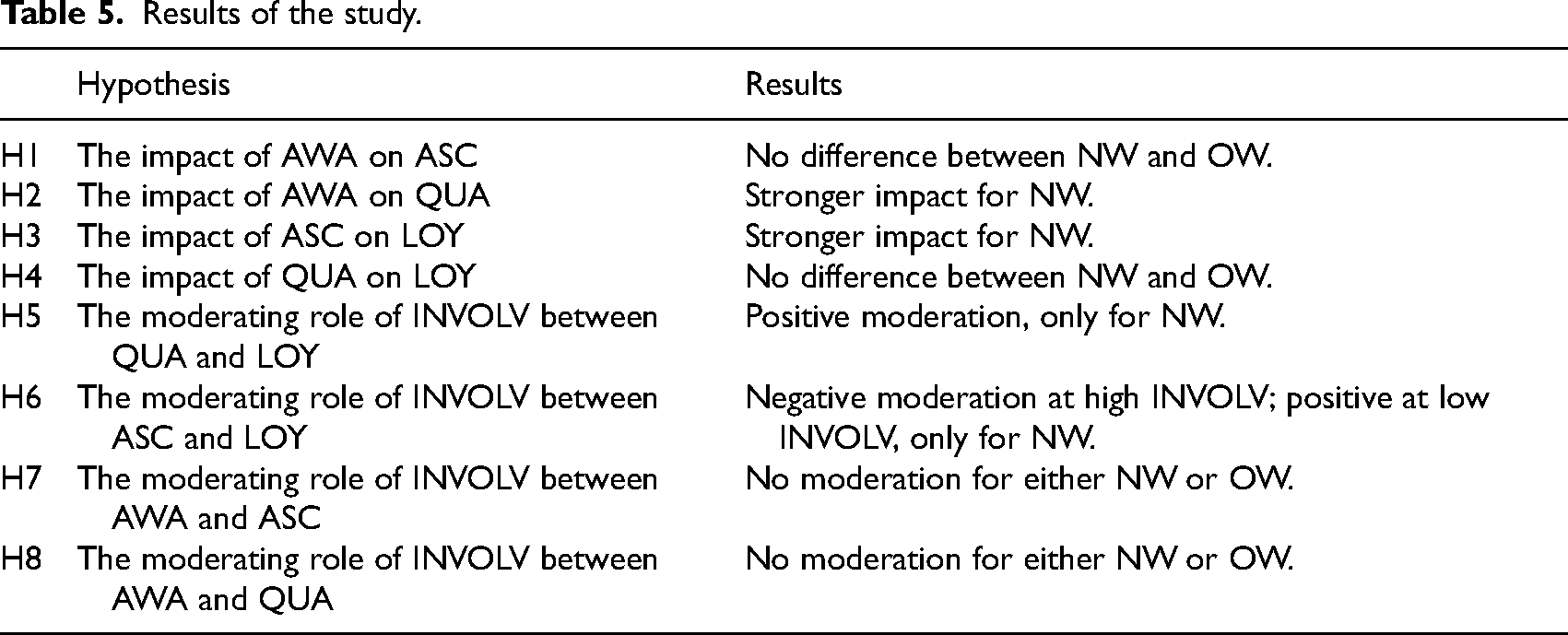
Table 5 summarizes our key findings and the context (i.e., country/consumer profile) for which each hypothesis stands or not. Findings highlight and interpret similarities and differences among NW and OW. Yantai and Crete are both places that acknowledge the potential of synergies among businesses and place branding (e.g., Ingram et al., 2020; Kladou, 2022; Melewar and Skinner, 2020), and thus prioritize tourism development, and a sense of place proliferating on wine. Sector dynamics (i.e., large and wealthy in China vs. small, family wineries joining forces through synergies in Greece) and their classification as a New- and an Old-World wine country respectively lead the regions to different branding approaches developed to address primarily Chinese tourists in Yantai and Western tourists in Crete. Analysis first confirms that the established relationships between brand equity dimensions (Lee et al., 2022; Tasci, 2021) stand across new-/old-wine country classifications and wine destination brand developments. If brand loyalty is the ultimate objective of place branding efforts (Tasci, 2018), then wine destination branding can be successful regardless of wine tourism being developed through initiatives of larger corporations or the cooperation of smaller ones (Ingram et al., 2020).
Results of the study.
In detail, results indicate that brand awareness positively influences brand associations for both NW and OW; this aligns with previous studies (e.g., Lee et al., 2022; Tasci, 2021) and implies that the causal relationship stands across destinations and different wine tourist groups. However, there is no statistical evidence whether or not this impact is stronger for one of these two tourist groups (H1 not supported). Looking into the items making up awareness and associations allow us to justify this finding. To be specific, brand associations help Chinese wine tourists evaluate the extent to which Yantai fits their personality and would contribute toward their friends thinking highly of them because of having visited the region. Thus, positive brand awareness (e.g., a good name of the wine destination brand) assists Chinese wine tourists develop brand associations that relate to self-identity, an element that they value (Maguire and Zhang, 2017). Along the same lines, Western wine tourists attribute positive brand awareness to Crete (e.g., recognize Crete as a famous wine destination that comes to mind when thinking about wine), which positively influences specific brand associations (e.g., acknowledging that Crete has an interesting wine culture). As a result, differences might exist across tourist groups and branding approaches, yet the positive impact of awareness on associations may stand without more attributed importance for Chinese to Western wine tourists, because of the effect specific aspects of brand awareness have on items measuring positive brand associations.
On the other hand, brand awareness influences quality (Lee et al., 2022; Tasci, 2021) and has a more profound impact on wine destination brand quality for NW compared to OW (H2 supported). Due to pandemic restrictions, limited tourism experiences and opportunities, Chinese wine tourists might value more familiar and prestigious wine destinations. High destination brand awareness creates to the Chinese consumers a positive feeling which significantly affects destination brand quality. This result aligns with prior studies exploring the impacts of brand and country of origin on the perceptions of wine quality among Chinese wine consumers (e.g., Balestrini and Gamble, 2006). The results of Balestrini and Gamble's study indicate that Chinese wine consumers place more importance on brand and the country of origin in gauging the quality of wine in comparison with the price of wine. Wines produced from well-known wine countries, such as France, are associated with the quality of wine (Balestrini and Gamble, 2006). Yantai and the Changyu winery have been selected for this study as the most appreciated winery region and establishment in China; therefore, results suggest that Balestrini and Gamble's (2006) importance of origin and quality for Chinese wine tourists may extend not only to countries and imported wines but also to domestic regions and wines, as long as these are associated with certain high-quality cues.
Similarly, the results confirm that wine destination brand associations impact loyalty (Lee et al., 2022; Tasci, 2021) and have a stronger impact on brand loyalty of the wine destination for NW than OW (H3 supported). On the contrary, brand quality positively influences brand loyalty for both NW and OW, but there is no evidence whether or not this influence is stronger for one of these two tourist groups (H4 not supported). Chinese wine tourists often relate wine and wine tourism into a preferred Western lifestyle and elitism (Qiu et al., 2013). Crete may be more established as a leisure rather than a wine destination, but wineries often emphasize local varieties and wine heritage (Kladou et al., 2020). Still, rather than the functional benefits of wine tourism (e.g., purchasing rare wines not available anywhere else and tasting a variety of wines), the emotional attachment to the wine destination is more impactful to the Chinese wine tourists’ loyalty toward the wine destinations.
The results of this study further confirm the role of wine involvement and indicate that wine involvement moderates the effect of brand quality on brand loyalty for NW (H5a supported). This means that as wine involvement increases, the effect of brand quality on brand loyalty increases for Chinese wine tourists. On the other hand, this moderating effect of involvement between brand quality and brand loyalty is not the case for OW (H5b not supported). One probable reason might be that wine and wine culture have been entrenched into the daily lives of many Western wine consumers through visiting local wineries, drinking wines with meals at home or restaurants, including Greek restaurants serving local wines, a dining alternative widespread in Western countries (Mouret et al., 2013). Average Western consumers are involved with wine anyway and already visit (wine) destinations they are familiar with (Marzo-Navarro and Pedraja-Iglesias, 2012).
Along the same lines, wine involvement does not moderate the effects of brand association on brand loyalty for OW (H6b not supported), but moderates the effect of brand association on brand loyalty for NW (H6a supported). This finding is important for wine destination scholars and practitioners, since the impact of brand loyalty is negative for Chinese tourists with high wine involvement and positive for Chinese tourists with low wine involvement. Earlier studies have discussed the importance of wine for Chinese tourists’ lifestyle, self-identity, and social class (Maguire and Zhang, 2017). This study assessed the role of Chinese tourists’ involvement in the context of a New-World wine country. Thus, it is assumed that because Chinese wine tourists with high wine involvement have a deeper knowledge of well-known image aspects of wine regions (Wu and Liang, 2020), their decision to visit a New-World wine country destination is not reinforced. Furthermore, the results of this study show that wine involvement does not moderate the impact of brand awareness on brand associations (H7a and H7b not supported) or the impact of brand awareness on brand quality (H8a and H8b not supported) for both NW and OW.
Implications and future research
Findings provide scholars with some valuable implications. First of all, they contribute to the discussion on the importance of sense of place for place branding efforts (Melewar and Skinner, 2020). Taken how important culture and heritage are for sustainable tourism development (e.g., Canavan, 2016), this study confirms the importance of culture (namely reflected on wine) for “associating the place with stories about the place” (Kavaratzis and Ashworth, 2005: 512), for boosting the sense of place and, thus, for effective place branding. On the other hand, the impact of some wine destination brand equity dimensions on others is more important for NW compared to OW. Zooming in (wine) involvement and its role to link quality and associations with wine destination brand loyalty further contribute to the call to investigate such concepts in other wine regions to gain a broader spectrum of wine tourist behavior (Afonso et al., 2018).
This study also advances Mitchell et al.'s (2012) early exploration on cultural systems and the wine tourism product and validates the established relationships between brand equity dimensions. Analysis validates these relationships, which stand across old-/new-wine country classifications and branding approaches when building a wine-centric narrative. Analysis confirms that these relationships stand at a cross-country, cross-cultural level, yet different familiarity and knowledge of Chinese and Western wine tourists connect to varying approaches to wine culture and tourism, and thereby influence the importance of specific brand equity dimensions and involvement.
At the practitioners’ level, the study sheds light on the need for developing a distinctive branding strategy to target Chinese wine tourists compared to Western wine tourists. Results suggest that competitive destination branding strategies are key drivers for attracting and retaining Chinese wine tourists. Besides, wine tourism reflects a growing segment, taken the rising number of middle-class wine consumers who are interested in learning wine (Maguire and Zhang, 2017; Zhao, 2016). Key destination brand equity dimensions (e.g., brand awareness, brand associations, brand quality) influence Chinese's loyalty toward the wine destination significantly compared to their Western wine tourist counterparts. Regional wine tourism organizations, and individual wineries who collaborate together to develop competitive destination branding strategies highlighting the wine region's tradition, heritage, and scenery has an edge over competitors to target Chinese wine tourists.
As a result, the Chinese domestic wine regions might develop non-wine tourism attractions, congruent with wine destination image. For example, annual cycling via vineyards of Bordeaux in France is a good example illustrating how wine destinations can create more non-wine tourism attractions to add value if they are to target tourists with lower involvement with wine (Gu et al., 2018; Nella and Christou, 2014b). Another example might be that an interactive wine museum adopting cutting-edge technology using, for instance, sensory and visual technological devices could help low involvement wine tourists to experience wine and the wine region in a more engaging manner (Kirova, 2021). For example, La Cite du Vin in Bordeaux is a good example of how Bordeaux draws interest from global wine tourists using a wine museum equipped with new interactive technologies which help co-create value for Bordeaux as a wine destination brand (Kirova, 2021). In a similar vein, New-World wine destinations such as Yantai, China, which have invested in creating a museum but their wine destination brand is not yet established compared to Old-World wine countries, could adopt new technologies, such as virtual wine tastings, to spur interest among destination brand awareness and to draw more interest among wine tourists (Gastaldello et al., 2024). Similar efforts to adopt technological features might also benefit Old-World wine areas, such as Crete, which may be well-established as leisure destinations but their collaborative branding efforts are the ones putting them on the map as wine destinations. As long as such developments remain consistent to the sense of the place (e.g., taken that cycling is a traditionally popular method of transport in China, and wine harvesting a traditional social and cultural activity in Crete), such enriched wine tourism development might help wine regions come closer to sustainability (e.g., by reducing ecological footprint impacts and boosting locals’ attachment to the communicated sense of place) (Melewar and Skinner, 2020; Slocum and Ingram, 2020). Besides, the importance of quality cues of domestic wine destinations for Chinese wine consumers extends Balestrini and Gamble's (2006) early study and provides some hope for wine tourism in case of crises, such as the pandemic, during which international travel is restricted.
Despite the insights derived from this empirical analysis, limitations provide motivation for future research. First, this study compares NW with OW. Thus, data and implications should be read with caution, as segmentation and differentiation strategies nowadays see beyond demographic characteristics and generic place classifications. Future studies might expand the methodological choices, as these two groups may not reflect all Chinese and Western wine tourists, and not equally contribute to the assessment of tourism developments in all Old- and New-World wine countries.
From a conceptual point of view, involvement adopts previously established measures (Gu et al., 2018; Wu and Liang, 2020), although future research could also investigate whether the number of winery visits relates to different levels of wine involvement or seek to update the involvement scale to particularly assess the role of wine lifestyle. For example, although in Old-World wine countries the wine lifestyle may be embedded in everyday culture, wine consumption and experiences in China reflect a particular status and social class (Maguire and Zhang, 2017). Thus, an enriched involvement scale could be in position to reflect the role of wine lifestyle for wine consumers in New- and Old-World wine countries. Furthermore, the research instrument built on well-established and widely accepted scales to assess destination brand equity. Still, a future study would be interesting to consider Tasci's (2020) investigation of the relationship between financial-based brand equity and CBBE, in order to return to Kladou and Kehagia's (2014) model of incorporating brand assets into the CBBE model and update Lee et al.'s (2022) approach to the latter by adding further adequate and financial measures which will complete Aaker's (1991) original approach to brand equity in the case of wine destinations.
Another avenue for future research is a cross-national study delving into the impacts of destination brand equity on wine tourists’ service quality perceptions at the winery and looking into authenticity and sense of place (i.e., the core element of tourism development, see Slocum and Ingram, 2020) both at the micro (winery) and macro (destination/place) levels. While some extant research relates to branding and authenticity (Melewar and Skinner, 2020) and explores the impacts of service quality received at a winery on wine tourists’ loyalty toward the winery (Carlsen, 2011; Nella and Christou, 2014a), there are almost no studies focusing particularly on authenticity as a bridge among the micro and macro levels and exploring how wine destination brand equity relates to wine tourists’ perceived service quality.
This paper paves the ground toward this direction by exploring the “bigger picture” of brand equity at different international contexts and by providing insights into the role of wine involvement for enhancing loyalty, that is, the desired outcome of branding efforts. Using cross-country, cross-cultural research, the study reveals new insights into the (wine) tourism phenomenon, in the quest of sustainability.
Footnotes
Declaration of conflicting interests
The authors declared no potential conflicts of interest with respect to the research, authorship, and/or publication of this article.
Funding
The authors received no financial support for the research, authorship, and/or publication of this article.
