




Abstract
This study examines key socio-cultural factors that influence Saudi tourists’ decisions to travel abroad. The paper utilises qualitative data collected through semi-structured interviews with males and females, whose views remain under-researched. It explores how Saudi Arabia's deeply embedded religious and tribal value systems and structures shape tourists’ destination choices and travel behaviours. The findings show that social norms and cultures of surveillance, alongside social obligations, act as push factors, decreasing the appeal of domestic tourism. Moreover, data suggest that seeking personal space and freedom, and the ability to engage in norm-breaking practices, are pull factors that make international destinations, especially those with fewer co-nationals, appealing. Practically, the study helps to identify marketing strategies that domestic and international destinations can adopt to target and accommodate Saudi tourists more effectively. Theoretically, the findings help to conceptualise a middle ground between what we call ‘extensionist’ and ‘rejectionist’ views of cultural influence and to appreciate the cumulative, intersecting impacts of socio-cultural imperatives.
Introduction
There has been significant growth in research exploring the behaviours and attitudes of tourists from Islamic countries (Hall and Prayag, 2019; Hassani and Moghavvemi, 2019; Jafari and Scott, 2014; Moufakkir, 2020; Michael et al., 2020; Slak Valek and Almuhrzi, 2021). A key limitation of this body of work is the heterogeneity of Islamic and Arab tourists, and the risk of viewing them as homogenous (Arasli et al., 2021; Rasul, 2019); another is the scope and focus of research on Saudi Arabian tourists. Research on Saudi tourists has often considered perceptions and attitudes towards domestic tourism (Mansour and Mumuni, 2019; Mohammad, 2021) or on their behaviour at the tourist destination, for example, their food choices, accommodation, activities and use of halal facilities (Almuhrzi et al., 2017; Arasli et al., 2021). Saudi travellers’ motivations and factors that drive outbound travel have received relatively less attention (e.g. Alghamdi, 2007; Mumuni and Mansour, 2014).
The significance of outbound tourism patterns amongst Saudi tourists has been highlighted in official statistics from the country's Ministry of Tourism (2022), which showed that Saudi tourists preferred to spend their holidays in foreign destinations. Commercial market research also suggested that outbound travel demand was estimated to grow even further, to destinations with strong Islamic cultures, including Malaysia, Turkey and the United Arab Emirates, but also to destinations that represent disparate socio-cultural norms and value systems, including Switzerland, the United States and the United Kingdom (Renub Research, 2022). Given the financial size of the market and the risks of economic leakage to the Saudi tourism economy, it is therefore important both for domestic destination managers and for outbound destination marketers to understand the drivers of Saudi's holiday choices. Moreover, given the distinct character and influence of social, cultural and religious norms in Saudi Arabia, it is essential to examine how these shape travel decisions amongst Saudi tourists.
Aldraehim et al. (2012) observed that Saudi culture is based on two main principles. The first stems from the Islamic religion, which sets the moral foundations of the society; and the second is the tribal system, which strongly influences people's choices, values and behaviours. Cassell and Blake (2012) described Saudi Arabia as high in power distance, high in uncertainty avoidance, collectivist within the in-group (tribe or extended family) and individualists with the out-group (non-kin and guest workers). Saudi Arabia's religious-based cultural doctrines limit some activities, such as gender mixing and public displays of affection, which contradict Islamic teachings and societal norms. Furthermore, the strong social bonds that characterise life in Saudi Arabia, which are fundamentally shaped by the tribal structure of society, limit personal space for individuals. Mutual surveillance and commitment to conservative social norms are pronounced. This study examines the influence of these socio-cultural norms.
In sum, the restricted scope of research on Saudi tourists’ motivations and behaviours more generally, coupled with their proclivity for outbound tourism, and the limited knowledge regarding the underlying dynamics of their destination decisions represent the core challenges driving this study. Moreover, the somewhat paradoxical situation where deeply embedded influence of social and religious norms in Saudi Arabia is widely recognised, but little is known about how these shape Saudis’ destination-related decisions, represents a further significant research problem at the heart of the study. Consequently, these social and cultural factors provide a focal lens for this research, which assesses how these potentially influence destination choices.
Furthermore, examining the destination choices of this national group has enabled us to problematise a wider set of theoretical assumptions regarding the role of social and cultural norms in shaping travel behaviour more generally. Specifically, we use the findings to differentiate between and critique ‘extensionist’ and ‘rejectionist’ views of socio-cultural influence. We argue that extensionist perspectives, exemplified in research on halal tourism, are built on the principle that the social norms and value systems that tourists are immersed in at home are transferred comprehensively to their practices when they travel abroad, and thus continue to shape their destination choices and behaviours abroad (Al-Ansi and Han, 2019; Lee et al., 2015; Moshin et al., 2020; Oktadiana et al., 2016). We contrast this with ‘rejectionist’ conceptions that view international mobility in terms of its liminal qualities and the potential for travellers to cast-off norms and values whilst in foreign destinations (Bristow and Jenkins, 2020; Chylińska, 2022). Our data enable us to identify an alternative perspective, which recognises the cumulative, intersecting impacts of socio-cultural imperatives, where norms and values emerge in some domains of tourist behaviour but in negotiated and discontinuous ways.
Finally, it is important to note that, in addressing the limitations of existing knowledge, this study incorporates the voices of female tourists (alongside those of males). Past research has stressed that travel behaviours are gendered and that women's experiences in destinations are often different to those of men (Khoo-Lattimore and Wilson, 2017). Importantly, gender intersects with various other factors, including culture and ethnicity, in shaping tourism-related practices for female travellers (Osman et al., 2020; Yang et al., 2017). Furthermore, emerging research has shown that travel behaviours amongst Muslim women are evolving, prompting the need to pay closer attention to their perspectives (see e.g. Hall et al., 2022; Tavakoli and Mura, 2015). Women are often underrepresented in research on Muslim travellers (Brown and Osman, 2017; Oktadiana et al., 2020; Tavakoli and Mura, 2021), and even less is known about the specific experiences and perspectives of Saudi women. Our attempts to include Saudi women's perspectives in this research represent another distinct dimension of the study and a further set of important debates to which the current study contributes.
Literature review
The influence of push-and-pull factors in tourism
A fundamental framework for understanding the factors driving travel and those shaping destination-related choices focuses on push-and-pull factors (Iso-Ahola, 1982; Michael et al., 2017, 2020, 2022). Push drivers are the stimuli that motivate tourists to leave their places of origin, whilst pull ones are those that motivate tourists to select a destination. Push factors are tourists-specific, forming internally and driven by psychological, personal and interpersonal forces. However, beyond the individual, it is important to recognise the role of social and cultural contextual factors insofar as they influence tourists’ values and attitudes, and as social and cultural norms drive decisions to travel (Sharpley, 2018). Pull factors are destination-specific, which form externally, and are underpinned by destination characteristics, its attractions and marketing messages. However, the two are interconnected (see e.g. Mehmetoglu, 2011; Michael et al., 2017, 2020, 2022).
A review of the push-and-pull factors in tourism literature suggested that the factors differ from one tourist to another and from one destination to another (Pesonen et al., 2011). Push factors may include seeking knowledge and education, prestige enhancement, novelty, relaxation, and development of family relations; but the need to escape social and cultural imperatives of everyday life, mundanity and alienation can also play an important role (Chylińska, 2022; Cova et al., 2018; Sharpley, 2018). Pull factors can include place-specific attributes such as attractions, cultural aspects, nature and landscapes but may also extend to functional issues such as service quality (Mehmetoglu, 2011; Sharpley, 2018). However, the list of factors varies, and others can be identified by different tourists and for different destinations, which reinforces the value of examining the motives and destination decisions of specific (sub-)segments of travellers rather than viewing tourists as being homogenous.
Critics have argued that a limitation of such an approach is that it does not account for how tourists prioritise different factors (Lohmann and Netto, 2016). However, this depends on how the framework translates into an empirical strategy. Push–pull approaches remain widely used in studies of tourist behaviour (see e.g. Michael et al., 2022; Roy and Sharma, 2021). This focus on push–pull factors provides a versatile sensitising framework for examining tourist behaviours. It acts as an initial guiding framework to structure qualitative data, whilst enabling subsequent analysis of the findings to expand alternative theorisation from the data, as we have been able to do in the context of this study. Moreover, it remains open regarding possible (intrinsic or extrinsic) explanations for decision and behaviours and is not restricted to a single disciplinary focus, that is, from psychology, anthropology or sociology (Sharpley, 2018).
With specific reference to Muslim travellers and destinations, Mohammad and Som (2010) found that the push factors motivating international tourists to visit Jordan included prestige enhancement and the need for social interactions, whilst pull factors included the variety of Jordan's offerings, for example, heritage and natural attractions, food and culture. Similarly, Yousefi and Marzuki (2015) used the push-and-pull framework and found that visitors to Penang, Malaysia were pushed by novelty and knowledge seeking, ego-enhancement alongside rest and relaxation, whilst being pulled to the destination by its environment and safety, cultural and historical attractions, and the variety of tourism facilities catering for their needs.
Given the pervasive outbound patterns amongst Saudi tourists, coupled with the unique character and influence of Saudi society, a push–pull perspective provides a particularly apt framework for examining drivers of foreign tourism and the attraction of international destinations. In order to apply these perspectives empirically, the next sections provide a more detailed discussion of societal and religious influences on tourist behaviours to help contextualise the study and its focus. In combination, these areas help to appreciate the influence of social, cultural and religious pressures, and why tourists’ decisions may be seen as distinct responses to those pressures.
Influence of society
Although tourists globally share some of the broad categories of motives (e.g. escaping routine environments), these motives are influenced by different factors depending on tourists’ socio-cultural backgrounds (Azali et al., 2023; Reisinger and Crotts, 2022). One of the few studies that referenced the influence of the social environment of Arab tourists was by Moufakkir and AlSaleh (2017). Their study noted that tourists travelled to escape socio-cultural constraints, for example, restrictions on romantic practices and clothing. Arab culture, particularly in Saudi Arabia and Gulf Cooperation Council (GCC) countries, is governed by strong social norms and religious restrictions regarding social contacts and self-presentation.
Social norms, the informal conventions governing group behaviour, are important components of cultures (Bicchieri et al., 2018). Researchers view social (and cultural) norms as major drivers of consumer behaviour (Wasaya et al., 2022). Consumers often take expectations and behaviour of others into consideration during their decision-making processes. This influence becomes more relevant in societies with stronger social bonds, where people do not only choose for themselves but also show concern for others in their society. Nevertheless, although researchers recognise this influence (Melnyk et al., 2010), understanding how social norms shape decisions, especially in the context of Saudi tourists’ behaviours is limited.
Research on social norms and their influences has grown in recent years (Esfandiar et al., 2020; Wang and Zhang, 2020 Wasaya et al., 2022). However, many of these studies focused on issues such as pro-environmental behaviours. Moreover, research referencing the influence of social norms on tourists from Saudi Arabia is scarce. This study addresses these limits to existing knowledge by focusing on how social-cultural norms and practices influence the choices of Saudi tourists. The study's findings will help researchers understand how the religious lifestyle and the tribal structure of Saudi Arabia shape tourists’ holiday destination choices. In order to do this, the next section examines the role of religion in tourists’ behaviours.
Influence of religion
The growth in the number of tourists from Muslim countries has driven growing interest from researchers to understand their perspectives (Fajriyati et al., 2020; Dabphet, 2021). Despite this growth in research, the scope in these studies was mostly concerned with Islamic religious tourism (Almuhrzi and Alsawafi, 2017; Zamani–Farahani and Henderson, 2010), halal tourism and Shariah-compliant services (Battour and Ismail, 2016; Battour et al., 2010, 2011; Mohsin et al., 2016, 2020; Oktadiana et al., 2016; Stephenson, 2014) and the experiences of tourists in Muslim countries (Brown and Osman, 2017; Taheri, 2016). Moreover, although many of these studies referenced the influence of Islamic religion on tourist behaviour, authors have also stressed the need to recognise that Islamic tourists from different cultures have diverse behaviours (Almuhrzi et al., 2017; Hall and Prayag, 2019; Hall et al., 2022; Jafari and Scott, 2014). Therefore, although Muslims worldwide share the same religion, but with different sects, the degree to which the Islamic religion influences their behaviour is not the same. This points to the importance of addressing the different impacts of the Islamic religion on tourists from different cultures.
The Islamic religion has a strong influence over people's lives. In particular, religion's effects surpass promoting spiritual beliefs, values and traditions, and encompass within its scope the development of practices that should be embedded within the way of life, finance, economics, social structures and politics. As Saudi Arabia is the birthplace of Islam, its influence on people's behaviour is substantial. This extends to their travel-related decisions and practices; consequently, tourism and hospitality service providers in Saudi Arabia have responded by adopting Islamic principles. For example, the country's law requires all hotels and restaurants in Saudi Arabia to provide only halal food and prohibits alcoholic drinks. Service providers have also adapted to social and religious restrictions, for example, by providing gender-segregated venues and female-only nights in leisure parks. Nevertheless, despite such influence of the Islamic religion in Saudi culture, there is inadequate current knowledge regarding how it influences Saudi tourists’ outbound travel and destination-related choices.
Saudi women in society and tourism
With the launch of the Saudi Vision 2030 initiative, the status of women has evolved dramatically. Vision 2030 concentrated on empowering women through legislation, developing their talents and investing in their productive capabilities to strengthen their future and expand their contribution to Saudi society and the economy (Vision: 2030, https://www.vision2030.gov.sa/). Reports on the Saudi Vision 2030 outline how traditions have evolved in Saudi Arabia, which has coincided with the opening of the country for tourists (Visit Saudi, 2022). Female tourists can increasingly travel alone across Saudi Arabia, without needing permission from anyone or any institution. However, with tourism planning focusing on inbound tourists, limited information is known about outbound Saudi female travellers. Therefore, including women in the current study's sample and analysis makes an important contribution to knowledge regarding their behaviours and experiences.
Researchers have noted that women are often underrepresented in research on Muslim travellers (Brown and Osman, 2017), and Oktadiana et al. (2020) reinforced the need for research on Muslim female travellers, arguing that it is a continuously growing market with different segments and characteristics. Until recently, Saudi women were unable to travel outside Saudi Arabia without a male relative companion. Although this was primarily a socio-cultural requirement, it was rooted in Islamic traditions. Nonetheless, since 2015, Saudi women have begun to see significant changes to their lives, with several royal decrees that allowed them to drive cars, work in all jobs and to travel without male relatives (Arab News, 2019). Although these governmental initiatives are expected to persuade more Saudi women to travel, socio-cultural norms are highly likely to continue to influence their travel decisions, hence the need to examine how these factors shape their perceptions and expectations in the context of outbound travel.
Research methods
Recruitment and sampling
The study adopted a combination of criterion and snowball sampling approaches. The essential inclusion criterion was that participants had to have experience of travel outside Saudi Arabia for leisure. As a secondary important consideration, the study sought to capture the perspectives of females, because their experiences and views remain under-researched and poorly understood. Gender segregation in Saudi culture influenced the study's design, and specific adaptations were made to reach and interview female contributors. Participants were recruited using social networking platforms (Telegram Messenger and Facebook), and an invitation was distributed with a short online form to record potential participants’ details.
However, after two rounds of recruitment, only two women showed interest in participating in the study. This can be attributed to two main factors: the limited cross-gender communication in the Saudi culture, and the type of information the recruitment form collected (contact number, email, place of residence). Most women on Telegram were reluctant to share their contact details online and were found to be more cautious than men, especially because a male was conducting the study. Therefore, a level of trust had to be built with potential female participants before their participation. As a result, a snowballing technique was adopted to recruit more women. This approach allowed participants to share their experiences with nominees and eventually build trust with the researcher. It helped overcome the challenges a male researcher faces when recruiting and interviewing women in Saudi Arabia. It also helped to recruit participants from across Saudi Arabia. Moreover, the use of snowballing allowed the trust that was established with early female participants to be transferred to nominees. During the recruitment process, seeds or sources communicated their experiences to their nominees and helped to initiate future interviews by conveying positive perceptions of the researcher.
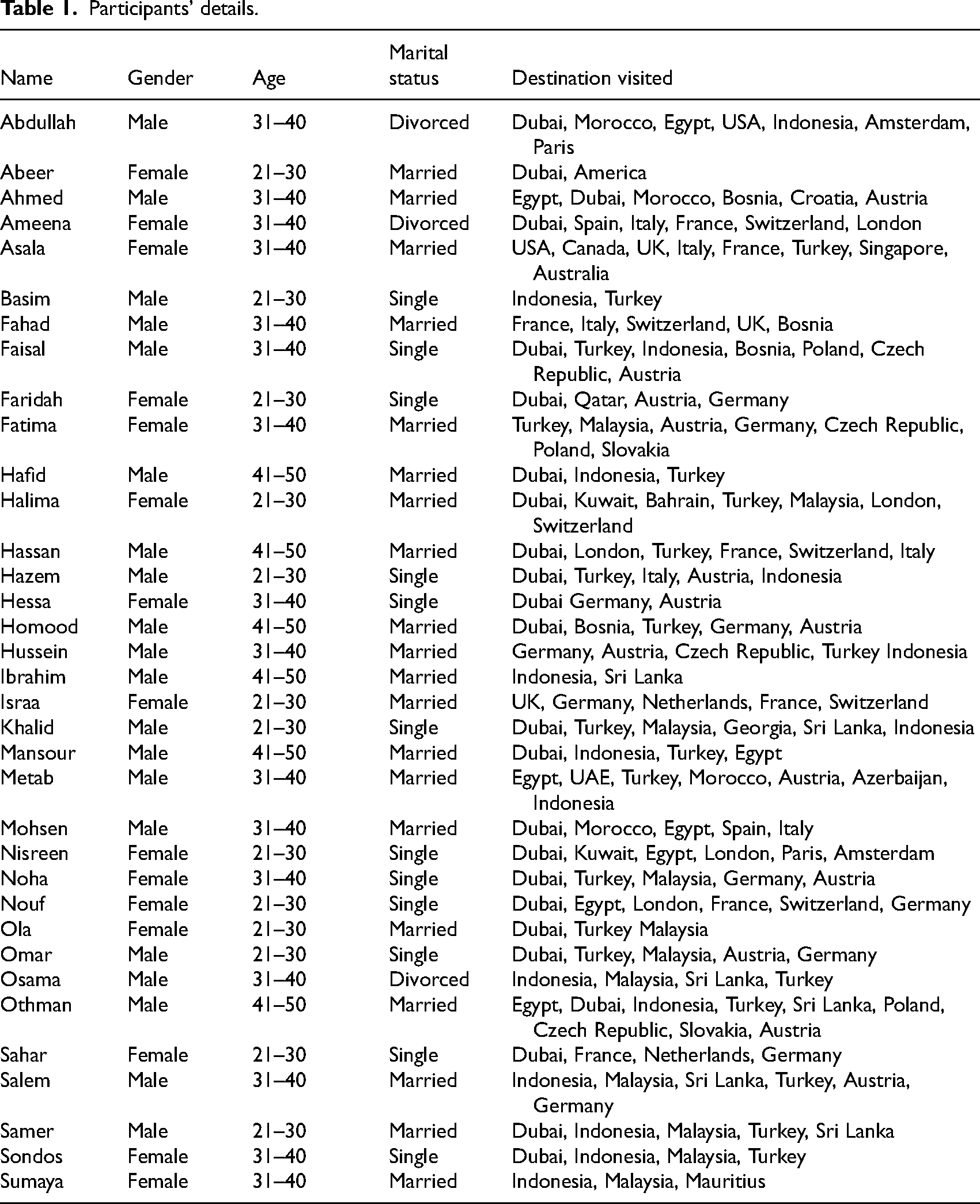
The final sample included 35 participants from across Saudi Arabia, 20 men and 15 women (see Table 1 for details). As with analogous interview-based studies, the analysis was conducted in conjunction with data collection, rather than sequentially. This embedded analysis highlighted that key issues (especially concerning push-and-pull factors) were being repeatedly mentioned by respondents, and therefore it was felt after approximately 25 interviews that the data provided rich, meaningful and ‘patterned’ insights (Braun and Clarke, 2013). Nevertheless, a further 10 interviews were conducted to help assure the team that the data and the findings we identified therein were sufficiently informative, relevant and coherent to help conceptualise our conclusions about the group and phenomena (Braun and Clarke, 2013).
Participants’ details.
Data collection
This study followed an investigative strategy according to the broad constructivist tradition (Lincoln and Guba, 2013) to expand the evidence base on Saudi tourists in general and their holiday choice behaviour in particular. Semi-structured interviews were used within this qualitative approach to help generate rich narrative data, based on people's personal experiences and unique perspectives. The flexible, semi-structured format allowed the data collection to maintain a certain level of focus, that is, in this study, on travel motives and destination decisions, whilst allowing the interviewees to explore unanticipated issues.
The interviews were structured around four core questions: (1) which destinations have you visited for leisure?; (2) why did you choose these destinations?; (3) why did you decide to spend your holiday in an outbound destination?; and (4) would you choose to spend your next holiday domestically? These questions were complemented by follow-up questions based on participants’ answers, which allowed the interviewer to expand and clarify points or focus the conversation whilst enabling the interviewees to identify issues deemed important to them. For example, one respondent was asked the following question: ‘You seem to repeat your visits to most destinations you have visited, can you tell me why?’ Another mentioned restriction on clothing in Saudi Arabia. Hence, she was asked whether she meant the Hijab or Abaya.
Interviews were conducted both face to face (with men) in Jazan, Riyadh, and Jeddah and using online audio calls (with women). Although both settings generated rich data, interviews using digital media technologies allowed women to speak more freely, especially because only audio calls were used. In contrast, face-to-face interviews allowed the interviewer to note facial expressions and reactions to questions, but many participants were sometimes less comfortable. A possible explanation can be related to the social structure of Saudi society as male participants felt that their identities were exposed during interviews. However, although audio interviews provided more a comfortable setting for interviewees than face-to-face interviews, they did not allow noting facial reactions, albeit some vocal reactions were noted, for example, one participant hesitated before answering some questions regarding Hijab. Therefore, a combination of both face-to-face and audio calls was a useful practice. The duration of interviews ranged from 40 min to 1 h, depending on the interviewee and the communication medium.
Data analysis
The data were transcribed in the original language of the interviews. Quotes were subsequently translated into English by the first author. To ensure that the translation process did not compromise the quality of the data, for example, misinterpretations or loss of meanings, the use of back translation was adopted. In some incidents, the translation process did not focus on providing a literal translation but on communicating the essential meanings due to the absence of equivalent terms. Quotes were translated first by the researcher into English, and then the translated texts were translated again into Arabic.
These data were analysed thematically, in line with Braun and Clarke's (2013) flexible, reflexive qualitative framework, involving familiarisation, coding, and the reduction and reordering of data into subthemes, which were collated into broader thematic areas. Familiarisation was embedded from the start of the research process as the first author collected, transcribed and translated the interviews. These were read and re-read by all three authors, who made independent notes on ‘noticings’ (Braun and Clarke, 2013) – initial points of interest in the data. This initial cycle of data analysis primarily used open coding. However, the interview questioning, especially concerning choices of destinations and attitudes towards domestic tourism already provided a broad sensitising framework for coding key drivers of outbound travel and factors that shaped their attitudes and behaviours towards domestic life and tourism destinations. As noted above, the push–pull perspective provided a flexible way to order the data initially, which enabled us to extend our analysis within those two broad domains of push-and-pull factors.
Subsequent cycles of coding were, therefore, more selective (as opposed to the total coding of the data set; Braun and Clarke, 2013) and focused, that is, on specific issues such as social obligations, cultural norms and cultures of surveillance were identified within push factors. Similarly, the capacity to experience perceived freedom and to engage in behaviours that were seen to challenge or transgress those obligations and norms were categorised within pull factors. As Braun and Clarke (2013) recommended, we used visual mapping to help understand the interrelationship between these key codes, subthemes and themes in an overarching framework. Figure 1 provides a summary of the thematic map that we used to help decide how to present the findings. Visual mapping was complemented by the creation of matrices to display the findings in hierarchical, thematic terms (see e.g. Table 2). The visual maps and matrices informed our subsequent team discussions regarding the findings and their interpretation in relation to past literature.
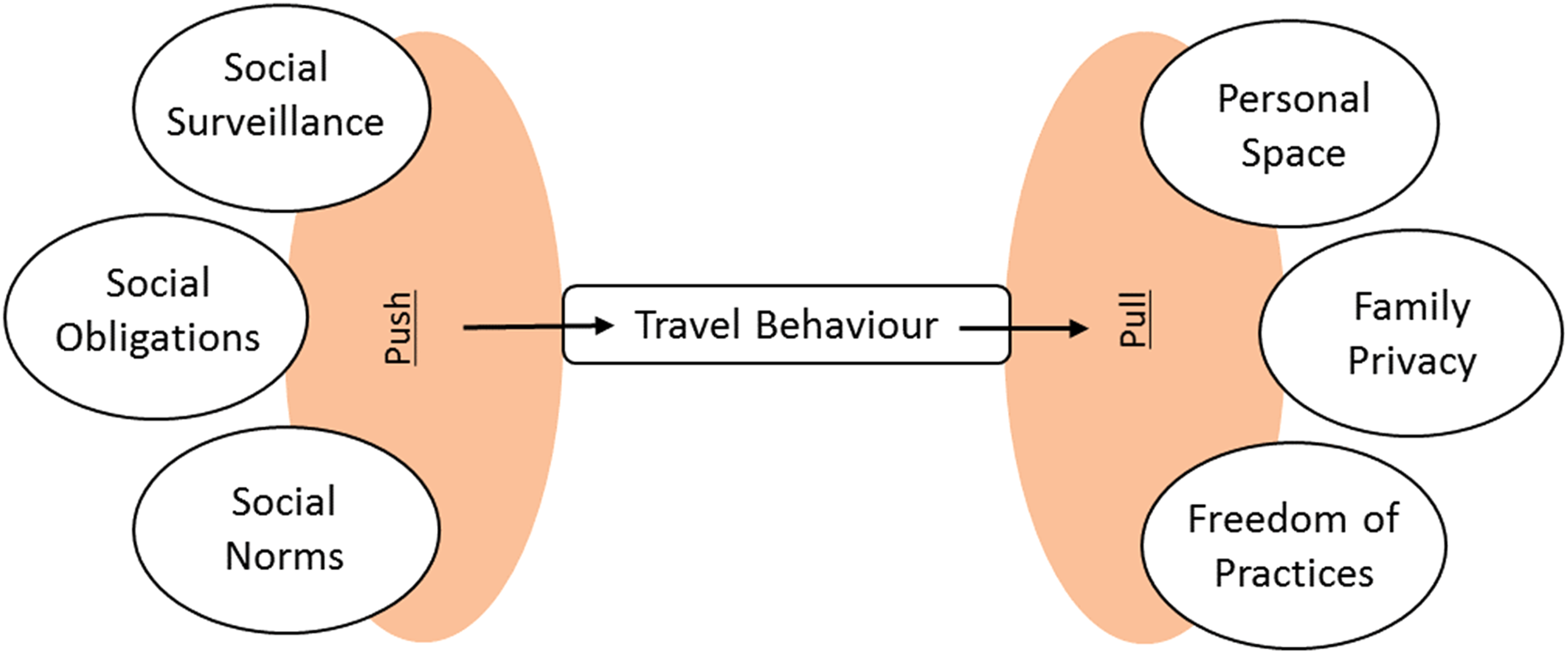
Socio-cultural drivers of outbound tourism behaviour amongst Saudi Arabian travellers.
Example analysis matrix.

Findings and discussion
Escaping social obligations, norms and surveillance
Figure 1 summarises the key socio-cultural push-and-pull factors driving outbound tourism identified in the data and explored in further detail below.
Many of the participants were found to have spent their annual holidays in outbound destinations and even those who did not travel annually had experience of visiting several international and national destinations. More significantly, almost all participants held negative perceptions of domestic tourism in Saudi Arabia. Furthermore, the data analysis suggested that there was a relationship between the perception of domestic tourism shared amongst the participants and their desire to spend holidays in outbound destinations.
Statistics from the Ministry of Tourism (2022) showed that Saudi tourists preferred to spend their holidays in outbound destinations, which was also reflected in this study's data. However, the findings of the current study extend knowledge of these patterns by identifying the potential underlying drivers of their attitudes and behaviours. Socio-cultural restrictions featured heavily in respondents’ explanations of their negative attitudes to domestic tourism. These observations exemplified these attitudes: It is boring. There is nothing to do in the summer except going to shopping centres, restaurants, sleeping the day and waking the nights and attending weddings and social gatherings. (Faisal)
There are many social commitments like attending weddings. I escape these commitments by travelling outside the country. (Khalid)
These quotes highlight an important driving factor that motivated Saudi men to escape their ‘home culture’. Social obligations resulting from the strong connectivity of Saudi society were found to be a major issue for men particularly. The social structuring and cultural norms of Saudi society are tied to numerous social events. Although these events can be entertaining, their regularity added pressure on individuals to fulfil social requirements.
Weddings in Saudi Arabia are open ceremonies where a wide group of relatives, extended family, friends, colleagues and acquaintances are invited. In several regions, male attendees (especially close ones) provide financial support to the groom whilst female friends and relatives provide gold gifts to the bride. It is a long-standing Arab tradition meant to support newly married couples and their families (Bristol-Rhys, 2007). Although this is considered a form of social solidarity, it presents substantial financial and social pressures for attendees. Several male participants stated that they tried to avoid staying in the country during summer to avoid such social commitments.
Moufakkir and AlSaleh (2017) found similar issues when studying travel motivations amongst Kuwaiti tourists, arguing that social commitments played a role in decisions to holiday abroad. However, our findings help to stress the underpinning role of Saudi society's social dynamics, built on strong tribal traditions and characterised by dense social ties, which explain how deeply embedded structural factors may perpetually drive outbound tourism. As one respondent commented: The routine is killing in the summer. We attend weddings, go to family meetings and seeing the same people every day. (Hassan)
It is interesting to note that negative attitudes towards obligatory event participation were expressed by males in the sample. In contrast, no female participant said they escaped weddings by travelling or considered them a boring activity. This may be the result of the smaller number of women included in the sample. However, Van Tubergen et al. (2016) proposed an alternative explanation for such differences between the perception of men and women. They argued that women in Saudi Arabia had smaller social networks compared to men and hence had fewer social commitments. Although it is important to remain critical and to avoid oversimplifying Saudi culture and women's positionality and agency, these findings continue to reflect the critical role of embedded culture in shaping travel decisions. Moreover, in a primarily male-dominated society, their desire to escape culturally prescribed social obligations may have exerted a substantial influence on holiday and destination choices.
Importantly, the influence of social norms for women manifested in other ways. For example, this type of observation was typical amongst the respondents: When outside the country, I feel I have fewer restrictions and more privacy with the family… I mean no one looks at you or care about what you do. (Samer)
Many participants specifically referred to social and cultural pressures as serious constraints to their leisure activities. Key socio-cultural issues included fear from social judgement, gender segregation in leisure activities and hospitality services, and women's inability to remove the Abaya or Hijab.
As noted previously, women generally experience more restrictions in Saudi culture than men and these restrictions are both of a religious and social nature. In public places, women are culturally expected to wear an Abaya that covers her dress and entire body, and a Hijab or Niqab (which is the most common form of Hijab in Saudi Arabia). Other forms of restrictions included displays of romantic gestures in public, such as couples holding hands or showing affection, which were mentioned by male and female participants. For example: There are a lot of restrictions, and I will not enjoy my time with full freedom like I do when I am outside the country… most girls I know are not happy with the restrictions on our clothes… most of us prefer to travel to outbound destinations to enjoy something different. (Sahar)
These findings echo those of Moufakkir and AlSaleh (2017), in relation to Kuwaiti tourists. It is interesting to note that in 2018 and 2019 the government of Saudi Arabia introduced several initiatives aimed at improving the leisure experiences of Saudis and inbound tourists. These included the removal of gender segregation in leisure and hospitality venues, a new dress code that allowed women to remove the Hijab and Abaya, but remain modest, and an anti-harassment law to provide protection for women. However, despite these initiatives, the embedded practices of surveillance and regulation continued to be seen by respondents to influence leisure experiences, particularly for women and families. For example, as one woman observed: If I decide to remove Hijab while playing in the water parks, people will look at me and that will cause trouble… my husband may get annoyed and start a fight or so. (Asala)
Importantly, these cultural practices were important in shaping their decisions to engage in outbound travel.
Leisure and Water Parks in the GCC region, for example, UAE, Kuwait and Bahrain, also have designated ‘ladies only’ days in order to give Arab and Muslim women the space they require. These women-only days are an outcome of the gender segregation norms pervasive in Arab cultures. However, although ‘ladies only’ days and nights in leisure parks may be a suitable solution for many women and families in Saudi Arabia and the GCC region to enjoy themselves away from men, interviewees often claimed that they felt unable to enjoy their time with the presence of their husbands and other male members of the family. As one respondent commented: Sometimes we go to amusement parks, but we just let the children play, we cannot enjoy it with people watching us. (Abeer)
Others raised similar concerns, which seemed to stem from deeply embedded cultures of surveillance. I like water activities, but inside Saudi Arabia, it is not possible for me because if I get wet, my body gets exposed, and people here look at you. Outside the country, all people are alike, nobody looks at you because it is not something weird. (Ameena)
Most of the female participants expressed that women's activities were limited in the Saudi tourism industry, and hence they preferred to spend their holidays in outbound destinations so they could enjoy the freedom they lacked at home. Many participants engaged in mixed-gender leisure activities in outbound destinations, and men also expressed their desire to engage in outbound travel to escape these restrictions. Several of the male participants stated that they would ‘tolerate’ the idea that their female relatives did not wear a Hijab or Niqab outside the country, but not inside it. This indicated that, although this issue has its roots in religious teachings, it is now more closely linked to cultural practices rather than strictly religious ones. Moreover, these findings suggested that tourism-based practices were not necessarily viewed as comprehensive rejections of home cultural norms; rather, outbound tourism spaces provided opportunities to contextualise certain behaviours and to negotiate how their meanings were interpreted in those contexts. Nevertheless, it is also important to recognise how travelling with male relatives could potentially shape how women (re)interpreted these cultural norms, and thus the relative freedoms they could experience in outbound destinations. Saudi men's presence embodied and thus projected value systems and identity-related expectations from home in these tourism settings. Consequently, conceptions of gender and power relations stemming from Saudi culture continued to shape how social and cultural obligations translated into perceptions, attitudes and behaviours.
Although women experienced stronger restrictions on their outfits, men also experienced restrictions and were expected to follow the norms of Saudi society in their appearance and behaviour. Importantly, the influence of social norms on men's experiences continued to be linked to their behaviour in the context of females, even if they were relatives. Despite the absence of formal rules forbidding husbands and wives to hold each other's hands, in many regions of Saudi Arabia it may be considered contrary to accepted social norms. Therefore, couples often avoided showing affection and romantic practices in public at home. Moreover, as most women were obliged to cover their faces with a Niqab, it limited their leisure experiences as families. Outbound travellers remained conscious of these social conventions, but tourism provided opportunities to dampen their influence within the destination context.
Seeking personal space and freedom
Outbound destinations were often viewed as facilitators of liberating experiences that directly contrasted those available in domestic destinations, and more generally in domestic leisure spaces. For example, as one woman noted: As a newly married couple, I think we need to go somewhere romantic, somewhere we can celebrate without being afraid of people talk. I think my husband would like to see me all the time, in Saudi Arabia, I am covered, but during my honeymoon in Bali, I did not cover and was all free to enjoy myself. (Sumaya)
It is important to recognise that the notion of ‘freedom from’, that is, the removal of negative pressures, stemming from surveillance and judgement, is related to but different from ‘freedom to’, which refers to actors’ enactment of agency and individuality (Berlin, 2002). The tribal structure of Saudi culture means that a large number of people have common ancestry and share the same last name. This makes it easy to identify people's origins, relatives and geographic location, which can reinforce structural power relations in which individuals are embedded. Some participants said that when they travelled to outbound destinations, they chose to visit places that were less popular amongst other Saudi tourists. For example, Salem said: Turkey and Indonesia are full of Saudis during Summer…there is no privacy, and my wife does not feel comfortable.
The instrumental selection of outbound destinations removed or lessened such social and psychological risks. As one respondent observed: …we need to go somewhere romantic, somewhere we can celebrate without being afraid of people talk. (Sameera)
Similarly: One of the most important reasons for me to travel is to get away from the society and its restrictions, no one is watching me when I am outside the country. I do what I want without having people watching me. In our society, I feel people watch each other. (Hazem)
Travelling to outbound destinations afforded Saudis greater personal space and increased opportunities to exercise their agency. This did not necessarily result in extreme norm breaking, but it certainly enabled them to experiment with alternative expressions of their identities. For example, whilst the majority of women said they continued to wear a Hijab in outbound destinations, most of them said they did not cover their faces as they do in Saudi Arabia. These acts were seen as liberating practices. As Ameena observed: I do not wear Hijab when I am outside the country, I like to enjoy myself. People there do not know me, so what is the point of wearing it.
Other women made similar observations: People are afraid of the society; I know many people that tolerate their wives removing Hijab outside the country but not inside. They travel outside the country to have privacy and enjoy their time away from the society. (Homood)
One of the few studies that previously discussed the influence of personal freedom on outbound travel was by Gholipour et al. (2014). In their research, they used data from 80 countries around the world to test the relationship between the limitations to personal freedom in the tourist country of origin and the rise of outbound tourism. Their study suggested that a lower level of personal freedom in a country increased outbound tourism. However, although their study included Saudi Arabia in the sample, their perspective on personal freedom was different to the one adopted in the current research. In their study, personal freedom was linked to the level of democracy, and government legislations limiting people's freedom. The findings of the current research show more specifically and explicitly how social norms and commitments that limit personal freedom for Saudi tourists translated into drivers of destination-related decisions.
Other research on the influence of social norms on tourists has focused on deviant behaviour where tourists travel to practice illegal and/or immoral activities (Lugosi, 2019). For example, Mura and Khoo-Lattimore (2011) argued that tourists in outbound destinations felt freed from the constraints of their home cultures and therefore less obliged to comply with the law. Whilst practices, such as removing the Hijab, wearing clothes that were less restrictive, showing affection in public and engaging in mixed-gender activities, may not be viewed as deviant in many cultures, they can be so from religious and social perspectives of traditional Saudi society. For Saudi tourists, embodied expressions of self could also be considered performative enactments of freedom that were directly facilitated by outbound destinations, which then drove their destination choices.
Conclusion
Although multiple factors influence holiday choices, the lifestyle of Saudis, their social structure and strong norms particularly appeared to operate as an intersecting set of factors, cumulatively driving their destination choices and in-destination behaviours. In most cases, participants viewed outbound destinations as places in which they could enjoy a greater sense of personal space and higher levels of perceived freedom away from social surveillance. Therefore, for many of them, outbound travel was a necessity to facilitate experiences that were inaccessible domestically. The desire to remove the Hijab/Niqab and Abaya and engage in leisure activities without worries about criticism and harassment from co-nationals was clear amongst many female participants. Similarly, men wanted to enjoy more privacy with their families, whilst also seeking to avoid, or at least minimise, pressures to engage in culturally prescribed social rituals and events such as weddings. These findings provide unique insights into factors that potential shape attitudes and behaviours amongst Saudi tourists towards domestic and outbound destinations. These are important contributions to knowledge considering, first, the limited information available on Saudi tourists provided by past research (Alghamdi, 2007; Mansour and Mumuni, 2019; Mohammad, 2021), and second, the continuing dominance of outbound travel amongst Saudi tourists. It is also worth stressing that this study attempted to give a more prominent voice to female tourists, recognising their distinct needs and the unique challenges they face in domestic spaces and how these translate into destination-related attitudes and behaviours.
The data suggested the need to appreciate how escape motives in particular drive Saudi tourists’ destination decisions and behaviours. Similar issues were identified by Moufakkir and AlSaleh (2017) and Michael et al. (2022); however, their work focused on Kuwaiti and Emirati tourists, respectively. The current study showed how escape issues were relevant for Saudi tourists in particular.
In principle, the push-and-pull factors identified in this study may be relevant for analysing a wide variety of tourist segments, especially in scenarios where there is a substantial distance between the cultures of destinations and those of tourists’ places of origin. However, the findings show how the impacts of these distinctions are particularly striking amongst Saudi tourists, whose values and social practices are shaped by notions of obligation, propriety, pervasive surveillance coupled with self-disciplining, and sanctions for perceived deviance. The data highlighted the importance of cultural norms, societal expectations, and related but separate religious value systems in shaping these escape motivations. Finally, the findings stress the usefulness of appreciating the subtle but important conceptual distinctions between factors reflecting ‘freedom from’ certain pressure, which act as drivers away from destinations, and those reflecting ‘freedom to’ engage in behaviours, which become pull factors, shaping destination attractiveness.
Implications for theory
At a conceptual level, the findings of this study help to reconsider how social, cultural and religious norms intersect to shape tourists’ choices and behaviours, especially for Saudi travellers. As Figure 2 illustrates, socio-cultural norms and practices inevitably shape attitudes and behaviours of all tourists. These are embedded in tourists’ home cultures, and travel is a specific social domain in which they can perpetuate, negotiate or actively reject those socio-cultural norms in the context of outbound destinations. For Muslim tourists, these norms and practices are clearly prescribed through religious institutions and social conventions. However, for Saudi tourists, religious values and norms also intersect with specific socio-cultural factors, including dense networks and strong ties, based on tribal structures and affiliations, mutual surveillance and social conservatism. Arguably, these factors can amplify religious pressures through a cumulative effect, creating powerful socio-cultural imperatives that shape travel-related decision making and behaviour that may not be present in the same way for other Muslim tourists. This is important because, conceptually, it challenges researchers to avoid thinking of Muslim and Saudi tourists as being homogenous or analogous, and conceiving them as subjects of static cultural value systems (Arasli et al., 2021; Rasul, 2019).
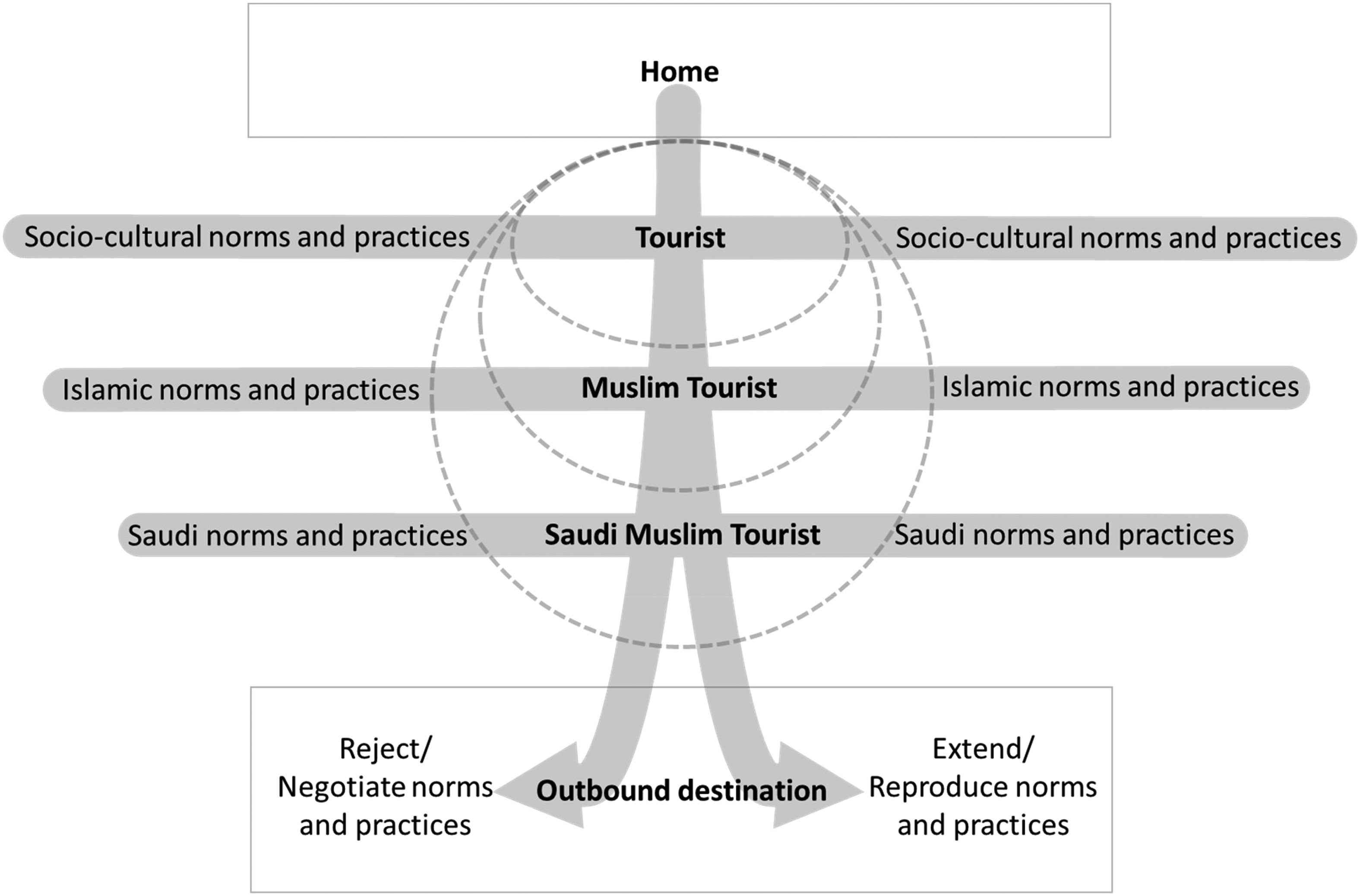
The cumulative effects of socio-cultural norms and practices for Saudi Muslim tourists.
Moreover, leisure consumption can be thought of in spatial terms, as distinct life spheres within which conceptions of self, notions of belonging and power relations linked to socio-cultural norms are reinterpreted. The findings of this study stress the potential diversity of Saudi tourists, and the data foreground their agency in how they use spatial mobility to negotiate the complex cumulative effects of socio-cultural imperatives. In doing so, this study's findings shift the conceptual emphasis from psychological concerns with values and attitudes as fixed characteristics to anthropological and geographical conceptions of consumers that emphasise the dynamic and contextually defined performative processes through which they engage with socio-cultural imperatives.
The growing body of work on halal tourism is underpinned by what we may call a ‘cultural extensionist’ assumption. Studies that examine the motivations and expectations of Muslim tourists, or the outcomes of their experience, that is, satisfaction (e.g. Han et al., 2019; Suhartanto et al., 2021), are designed on the principle that tourist attitudes and behaviours in destination are fixed, stable and extensions of those they adopt at home (Al-Ansi and Han, 2019; Moshin et al., 2020). Following Lee, Scott and Packer (2015), this is built on an explanatory model in which tourists’ habitus transfers into their destinations. In contrast, studies of tourism more widely, arguably conceive it as liminal or liminoid phenomenon, where tourism practices and experiences are conceived as contrasting everyday norms and practices (cf. Bristow and Jenkins, 2020; Chylińska, 2022). These may be called ‘cultural rejectionist’ positions. Tourism and tourist destinations are thus conceived as spaces of transgression and deviance (Lugosi, 2019). The findings of this study show how outbound destinations and their affordances, in terms of minimising the pressures of surveillance, normativity, sanctions etc., are entangled in practices of cultural negotiation. More specifically, the value of destination experiences may not necessarily lie in extreme acts of transgression or subversion of social and cultural norms. Nevertheless, destinations provide opportunities for situational negotiation, subtle redefinition or selective suspension of social and cultural norms that are deeply embedded in tourists’ everyday practices and entrenched in domestic spaces. Such practices of negotiation in destinations recognise social and cultural norms, so they are not wholly abandoned, nor are they fully extended. Recognising this subtle middle ground of practice between cultural rejection and reproduction provides a sensitising framework for future research on how these negotiations are understood and enacted by tourists. Exploring what aspects of social and cultural practices are open to negotiation, how they are negotiated, either psychologically or behaviourally, and how they shape destination-related choices could provide a useful way to understand the drivers of travel decisions amongst Saudi and Muslim tourists, but also those from other conservative societies. However, foregrounding tourists’ capacity to negotiate social and cultural norms, simultaneously extending some, abandoning others, whilst translating and reconfiguring specific ones in different practice domains (e.g. eating, drinking, socialising, etc.), provides a sensitising framework for analysing various tourist segments. This forces researchers to view push-and-pull factors, not as fixed and all-encompassing variables that explain tourists’ reasons to travel and select destinations, but rather as dynamic reference points in their decision making before, during and after destination experiences. Approaching push-and-pull factors in this way recognises the fluid and relational nature of decision making, and tourists’ agency in negotiating their engagement with social and cultural norms in the context of tourism spaces and touristic practices.
Implication for practice
Understanding which factors represent push drivers to escape, and which pull factors translate into destination attractors have practical implications for service development and destination promotion, in the Saudi context specifically and so-called halal tourism more widely. Importantly, the findings have different implications for Saudi agencies responsible for tourism or destination management, especially because of the leakage this segment potentially represents, and for wider destination marketers seeking to target this lucrative outbound market segment.
Policymakers, accommodation or attraction operators and destination marketing organisations focusing on domestic tourism clearly need to appreciate Saudi tourists’ motives and develop tourism products and services that meet their needs. Hotel, food service or entertainment venue operators, and agencies serving domestic tourists, can focus marketing communication and promotion messages on reassuring prospective Saudi travellers of the relative freedoms they can enjoy in domestic attractions. The findings of the current study suggest that the goals of domestic venue designers and operators and marketers should be to reduce culturally embedded tensions of surveillance and judgement. This may continue to use spatial and temporal segregation to avoid gender mixing. However, such operational strategies could make greater use of technologies to anticipate and manage demand for services conforming to halal expectations, as also advocated by Vargas-Sánchez and Moral-Moral (2019). However, this may take more radical forms in facilitating certain activities including gender mixing in selective domains of practice, for example, in food service outlets, even if not in swimming areas. The aim here is for domestic destinations and venues to lessen the perceived differences between international and domestic tourism experiences to challenge the perceived attractiveness of outbound destinations.
Destinations and operators may be able to capitalise on wider political attempts at liberalisation, although the impacts of these may remain limited. Nevertheless, if certain attractions within Saudi Arabia represent more ‘liberal’ spaces, marketing could utilise multiple data sources (e.g. social media behaviour and network analysis) to segment the population based on tendencies towards conservatism or liberalism. Segmentation based on this type of psychographic variable can then underpin positioning and targeting strategies, thus helping to ensure that venues facilitating less restrictive social practices, for example, gender mixing, attract sufficiently homogenous groups of visitors who are tolerant towards certain forms of cultural norm breaking, for example, removing a Hijab.
However, it is also important to recognise that domestic destinations and venues may continue to stress their halal credentials and target conservative segments. Promotional messages for these segments could foreground the social, cultural and psychological safety afforded by domestic tourism consumption, which implicitly signals the risks associated with international destinations.
However, travel agencies and marketers focusing on Saudi tourists can also use this research to improve their product development and destination promotion activities. For example, given the strength of escape from societal and cultural norms as motivators amongst the research participants, it can be hypothesised that group packages may be less desirable amongst Saudi tourists as they perpetuate contact with fellow nationals, alongside mutual surveillance and self-regulation. Consequently, developing independent travel packages and promoting destinations that accommodate desirable activities, for example, liberal dress codes and gender mixing, but still catering to some demands such as halal food provision, could appeal to Saudi travellers seeking escape from domestic social and cultural norms. Related to this, destination marketers can also use positive consumer word-of-mouth, utilising Saudi ‘micro-influencers’ to directly engage their dense social networks, through specialist peer-to-peer communication platforms such as Telegram, to promote destinations that facilitate certain levels of norms breaking attractive to those segments.
Limitations and recommendations for future research
The current study was based on a relatively small sample and the use of snowball techniques to recruit female participants had the potential to reduce heterogeneity in the sample profile, especially in terms of the attitudes towards social and cultural norms. Future studies could therefore adopt a wider approach to criterion sampling and recruitment to ensure the respondents are more representative of wider Saudi society. For example, in addition to the key criteria adopted here (i.e. outbound experience and gender), future studies could add age and family status as additional criteria in a stratified quota strategy.
The study actively sought to include women's voices. However, the male gender of the primary researcher restricted the ability to recruit women and explore their perspectives more extensively. Future studies could therefore adopt a team-based recruitment and data collection strategy to give women a greater voice in research, particularly if this included females from diverse age categories and family statuses.
Methodologically, the use of interviews also had the potential to introduce desirability bias as respondents were identifiable, despite assurances of their anonymity. Using anonymous digital platforms to collect qualitative or quantitative data could help overcome some of these issues, although it may compromise the quality and trustworthiness of the data. Following an anonymised, quantitative strategy, using surveys for example, may also help to broaden the sample size and also enable respondents to be more candid in their responses about the types of behaviours they engage in, and which drive their holiday choices. A survey strategy could also be used to capture and assess which of the push/pull factors are critical to their decision making in either abandoning certain domestic destinations or choosing international ones. This could help to understand which products and services could be redesigned or better promoted, for example, to reassure travellers to choose a domestic destination or to attract them to an outbound destination. Finally, analysis of social Saudi tourists’ social media content and engagement could help to capture anonymised, ‘naturalistic’ data regarding attitudes towards home and foreign cultures, and how these shape their holiday choices and travel behaviours.
Footnotes
Declaration of conflicting interests
The author(s) declared no potential conflicts of interest with respect to the research, authorship, and/or publication of this article.
Funding
The author(s) received no financial support for the research, authorship, and/or publication of this article.
