



Abstract
Tourist engagement (TE) has gained prominence in academia and industry. While previous studies have focused on exploring TE in tourism and hospitality, no consolidated empirical study has been conducted. We conducted a comprehensive meta-analysis using data from 73 independent studies retrieved from 72 papers, with a total sample size of 41,757. Our analysis, using meta-analytic structural equation modelling, tested a conceptual framework and found that tourist experience and TE individually mediate tourists’ satisfaction, emotion, behavioral intention, and loyalty. Additionally, cultural (e.g., power distance, individualism, uncertainty avoidance, indulgence) and economic (e.g., human development index) moderators influence TE. Our findings also suggest that popular global destinations enhance the relationship between tourist experience, engagement, and behavioral intention.
Keywords
Introduction
Customer engagement (CE) gained prominence in 2010 and has been defined by various perspectives (Harrigan et al., 2017; Kumar et al., 2019; So et al., 2014). Van Doorn et al. (2010) addressed CE from the perspective of customer behavior, while Brodie et al. (2011) and Hollebeek (2011) defined CE from the psychological state of customers, and Vivek et al. (2012) described CE based on customer involvement and connection with brands. Marketers are particularly interested in CE because it can help build long-term associations with customers, increase their satisfaction, and improve their loyalty, making it an essential part of relationship marketing practice (Kumar, 2020; Kumar et al., 2022; Lim et al., 2022a, 2022b; Lim and Rasul, 2022). The Marketing Science Institute (2018, 2020) placed CE at the top of their priority list for 2018–2020 and 2020–2022 to assist marketers in establishing long-term sustainable engagement with their customers. CE research encompasses a range of areas, including brand attachment, commitment, community, engagement, involvement, loyalty, satisfaction, trust, and value cocreation, all with the goal of enhancing the customer experience (Ahn and Back, 2018; Bowden et al., 2017; Khan et al., 2020; Nysveen and Pedersen, 2014; Rasul et al., 2023; So et al., 2014; Verhoef et al., 2010; Vivek et al., 2012).
Tourist engagement (TE) is based on the foundation of CE (Huang and Choi, 2019) and refers to a tourist's proactive interaction with an event or a location (Loureiro and Sarmento, 2019). Effective TE is critical in improving tourists’ overall experience (Chen and Rahman, 2018; Teng, 2021) and their behavioral intention to revisit a destination (Rasoolimanesh et al., 2019; Rather, 2020). TE has been extensively studied in tourism and hospitality-related studies in contexts such as cultural heritage sites, destinations, festivals, and online reviews (Bryce et al., 2015; Chen and Rahman, 2018; Fang et al., 2020; Moro and Rita, 2018; So et al., 2014, 2016). Global travel and tourism brands have also recognized the importance of TE as per Econsultancy's (2010) survey of 1000 organizations in the travel industry. Similar to CE, TE can be seen as a unidimensional or multidimensional variable in research (Rasoolimanesh et al., 2019; So et al., 2014, 2016).
CE has garnered significant attention from scholars and practitioners alike. Filep (2008) offered seminal insights into CE's manifestation in tourism and hospitality. Since then, numerous systematic reviews and bibliometric analyses have been published to enhance our understanding of this phenomenon (Chen et al., 2021; Hao, 2020; So et al., 2020; 2021a). However, contradictory findings within the context of TE research have been observed. While some studies emphasize the critical role of TE as a determinant of tourist behavior and underscore its significance for destination marketers (Chen and Rahman, 2018; Rasoolimanesh et al., 2019), others suggest that the relationship between TE and various outcomes is complex, requiring a nuanced understanding (Cheng et al., 2020; Kankhuni and Ngwira, 2021; Melón et al., 2021; So et al., 2016; Teng, 2021). These contradictory findings underscore the need for a comprehensive meta-analysis of TE to provide a deeper understanding of its antecedents and consequences. While meta-analyses are not uncommon in tourism and hospitality research (Kanjanakan et al., 2023; Zhu et al., 2022), to the best of our knowledge, no study has utilized a meta-analytic approach to quantitatively synthesize the results of multiple studies and analyze TE in this context. Recognizing this gap, we believe that studying TE using a meta-analysis is important and valuable for several noteworthy reasons.
To begin, TE has been identified as a critical factor in shaping how tourists behave (Chen and Rahman, 2018; Rasoolimanesh et al., 2019), and thus, understanding the key antecedents and consequences of TE is crucial for destination marketers to develop effective marketing strategies that enhance TE. Furthermore, COVID-19 has significantly impacted the tourism and hospitality industry (Lim and To, 2022), ushering in new challenges and opportunities, and thus, making it imperative to provide critical insights for destination marketers on how to adapt to the new normal and build long-term sustainable TE. Moreover, conducting a meta-analytic study of TE is crucial to lay a strong foundation for future destination marketing strategies—from a methodological perspective, a meta-analysis is a powerful technique for evaluating the robustness of effects and identifying conflicting results, relevant reasons, and possible design-related issues (Cheung, 2015; Grewal et al., 2018; Jak, 2015; Santini et al., 2020a); from a theoretical perspective, a meta-analysis on TE will go beyond direct effects and unpack mediating and moderating factors to provide a deeper understanding of the underlying mechanisms that drive TE (Kraus et al., 2022); and from a managerial perspective, a meta-analysis on TE should strengthen confidence in recommendations to foster TE given its importance in the tourism and hospitality domain (Cheung, 2015; Grewal et al., 2018; Jak, 2015).
We aim to develop a comprehensive and integrated framework of TE, by conducting a meta-analysis of studies published on this topic, providing insights on the antecedents, mediators, moderators, and consequences of TE. Through this analysis, we seek to make several valuable contributions. First and foremost, we present a framework that consolidates findings from past studies, providing generalizable insights on TE. The integration of insights herein espouses a theory synthesis and thus constitutes a legit form of theoretical contribution (Jaakkola, 2020). In addition, we show how TE can be influenced using various direct, mediating, and moderating mechanisms, thereby showing the range of strategies for shaping TE. This is another important contribution from this study, wherein conditional peculiarities are delineated to scope the boundaries of observed effects. Last but not least, we provide strong evidence to support our framework, using a robust meta-analytical technique known as meta-analytic structural equation modelling (MASEM), which, unlike other meta-analytical techniques that typically focus on a single dependent variable (e.g., multilevel meta-analysis typically focus on a single dependent variable at each level while standard meta-analysis is typically a univariate analysis using a single dependent variable), is capable of handling complex models involving multiple variables and thus capturing the full complexity of the relationships between the studied variables (Steinmetz and Block, 2022).
We organize the rest of the article as follows. We begin the next sections by explaining the study's conceptual foundation, followed by the study's methodological procedure and analytical findings before we conclude with the implications, limitations, and future directions for TE from this study.
Conceptual background
Tourist engagement
The concept of “engagement” first emerged in business research as “personal engagement” referring to employee engagement (Kahn, 1990) and gained wider attention in marketing research after publications by Kumar et al. (2010) and Verhoef et al. (2010), leading to the development of the concept of CE. Understanding the fundamentals and the evolution of CE is important before focusing specifically on TE, which refers to tourists’ active involvement with an event or a location (Huang and Choi, 2019; Loureiro and Sarmento, 2019). While most agree that CE is multidimensional, the dimensions tend to differ across studies. For example, Harrigan et al. (2017), Hollebeek et al. (2014), and Taheri et al. (2014) found that CE consists of cognition, emotion, and behavior, whereas Van Doorn et al. (2010) and So et al. (2014, 2016) proposed different dimensions, including valence, modality, scope, nature of impact, customer goals, as well as identification, attention, absorption, enthusiasm, and interaction, respectively.
Although CE has been defined from various perspectives, researchers agree that CE should be viewed as a whole, rather than just as a collection of discrete traits (Brodie et al., 2011; Hollebeek, 2011; Kumar and Pansari, 2016; Vivek, 2009). In this regard, CE, regardless of its multidimensional variant and when extrapolated to TE, represents the active interaction between a tourist and the destination, wherein the focus on “interaction” is consistent with the most recent definition of engagement provided by Lim et al. (2022b). More importantly, it is imperative to note that engagement is distinct yet related to other constructs such as involvement and commitment (Brodie et al., 2011; Lim et al., 2022b). Specifically, involvement refers to the psychological state of perceived relevance and interest a tourist has with a destination, acting as a precursor to engagement, whereas commitment denotes the enduring desire to maintain a valued relationship, which, in tourism, translates into repeated visits and positive referrals (Bryce et al., 2015; So et al., 2021b; Taheri et al., 2014). Therefore, while involvement is the affective and cognitive recognition of a destination's significance, and commitment is the long-term bond, engagement encompasses the active interactions stemming from this recognition and can result in loyalty.
Understanding tourists’ levels of engagement and emotional reactions is essential for predicting future trip planning and, by extension, destination loyalty (Taheri et al., 2014). Engagement has been studied from various perspectives, including destination branding and loyalty, tourist participation, and experience (Lin et al., 2019; So et al., 2016). Effective TE can result in memorable tourism experiences, increased satisfaction and loyalty, and positive word-of-mouth (Chen and Rahman, 2018; Moro and Rita, 2018; Rasoolimanesh et al., 2019). Similar advantages of guest or visitor engagement have also been recognized in hospitality-related studies (Ahn and Back, 2018; Rather and Hollebeek, 2019).
Different scales have been adopted or adapted and used to measure TE. For instance, So et al. (2014) proposed a five-factor scale (i.e., enthusiasm, attention, absorption, interaction, and identification), which was later revised by Harrigan et al. (2017) into a three-factor structure for tourism-related social media contexts. Taheri et al. (2014) developed a scale with eight indicators to measure the level of TE with destinations alongside three other factors (i.e., cultural capital, multiple motivations, prior knowledge). Similarly, Kumar and Pansari (2016) proposed a four-dimensional scale (i.e., own purchases, incentivized referrals, social influence, and knowledge sharing) and Hollebeek et al. (2014) proposed a three-dimensional scale (i.e., cognitive, affective, and behavioral), which were adopted by tourism and hospitality researchers to measure TE with destinations and attractions (Chen et al., 2020; Li, 2021; Li et al., 2021). However, these approaches yielded contradictory findings. Therefore, a comprehensive meta-analytic analysis that reports the antecedents, mediators, moderators, and consequences of TE is required to arrive at a consensus of said effects.
An integrated framework for TE
We develop a conceptual framework by focusing on the conceptual nuances of TE. Our framework builds upon the conceptual framework of CE developed by Pansari and Kumar (2017). The framework consists of three parts. First, we identified five antecedents of TE. Second, we considered tourist experience and TE as individual mediators. Third, we identified two consequences of effective TE, namely, tourist behavioral intention and destination loyalty (Figure 1). To address the inconsistencies in earlier TE models, we selected three sets of moderators in the proposed framework. The next sections describe the antecedents and consequences of TE, possible moderators, and the role of tourist experience and TE as individual mediators.
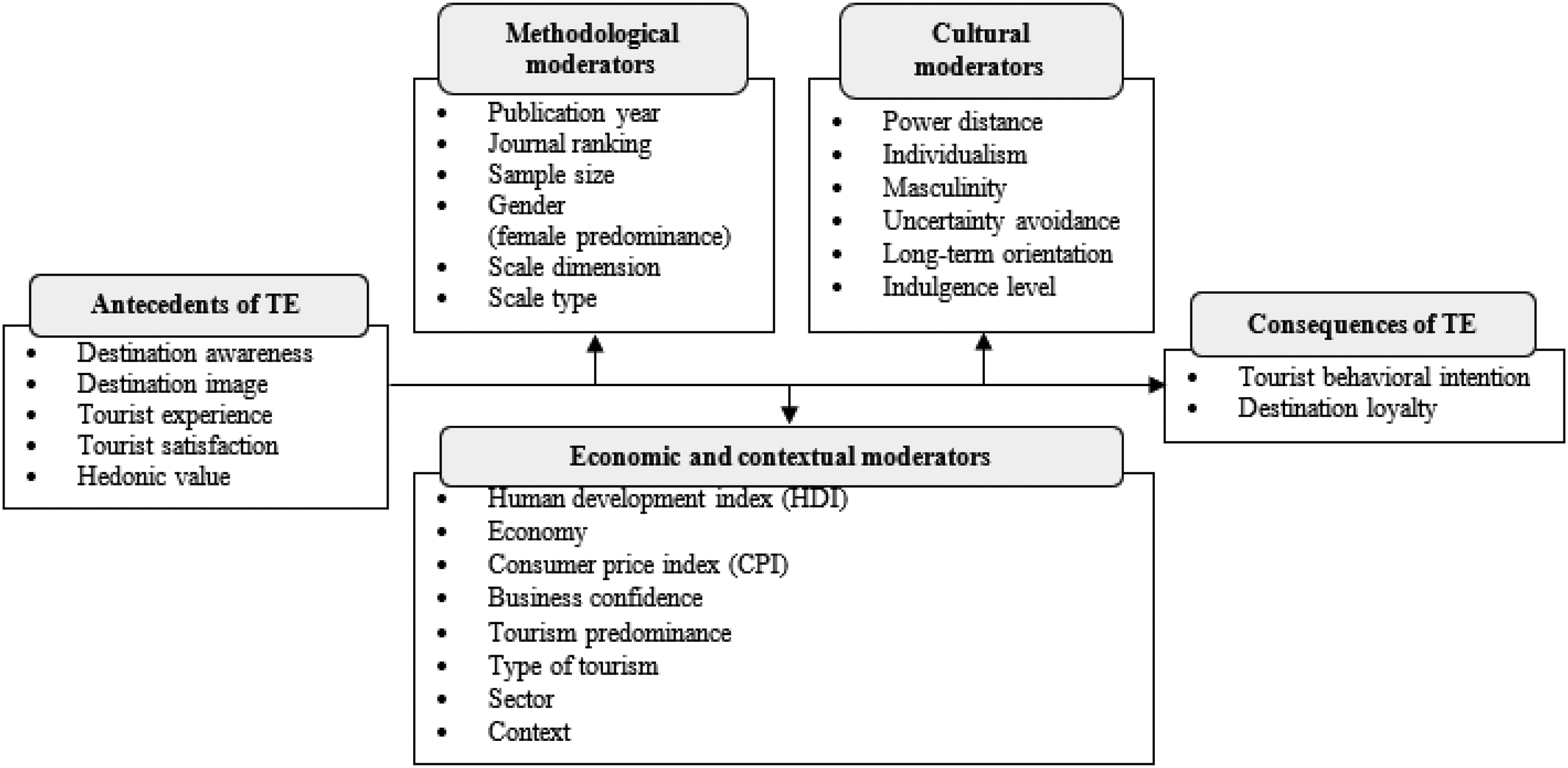
An integrated framework for TE.
Antecedents of TE
In the previous section, we identified five antecedents of TE, each with at least three effect sizes (Hedges and Olkin, 1985). These antecedents are destination awareness, destination image, tourist experience, tourist satisfaction, and hedonic value. In the following section, we will provide a brief discussion of these antecedents. For more detailed information on the antecedents and consequences of TE, please refer to Web Appendix A.
Destination awareness refers to an individual's understanding or perception of a particular destination (Konecnik and Gartner, 2007). Destination awareness is deemed to be an essential aspect of traveling to a tourist destination (Chi et al., 2020; Vila et al., 2021) and can be informed by different information sources (Kalantari et al., 2023). For instance, various studies have shown that information sharing through different channels can contribute to an individual's general and cultural learning, which, in turn, shapes their destination awareness and affects their overall travel experience (Davidson-Hunt and Berkes, 2003; Li, 2000). Conversely in other studies, tourists’ awareness of an unknown destination has been shown to reduce anxiety and positively influence their travel experience (Carvalho, 2022; Shi et al., 2022). Therefore, a positive relationship is expected between tourists’ destination awareness and their experience.
Destination image refers to an individual's mental picture of a destination based on their knowledge, beliefs, sentiments, and overall emotions towards it (Fu et al., 2016; Yacout and Hefny, 2015). Previous research has linked the destination image with brand loyalty, the value of the destination, and tourists’ behavioral intention for future trips or revisit intentions (Gallarza et al., 2002; Zhang et al., 2014). Studies have also found that the brand image of a tourist destination significantly affects the experience that tourists have there (Kim, 2018; Zhang et al., 2018). Therefore, a positive destination image is expected to have a direct influence on the tourist experience.
Tourist experience refers to the subjective reactions of tourists to activities, places, or events (Packer and Ballantyne, 2016). Nowadays, customers seek brands that provide them with an experience rather than just practical benefits (Lee and Kang, 2012; Touni et al., 2020). Numerous studies in tourism and hospitality have reported a positive relationship between a tourist's engagement with a destination and their accumulation of experiences (Ahn and Back, 2018; Chen and Rahman, 2018; Rasoolimanesh et al., 2019), as well as between positive customer experiences and higher satisfaction levels (Le et al., 2021; Wu and Gao, 2019). Hedonic value, which entails the pleasure and enjoyment derived from purchasing or experiencing a product or service (Pinto et al., 2022), has been found to be influenced by customer experience (Yim et al., 2008). A positive tourist experience is also known to enhance tourists’ overall happiness (Le et al., 2021; So et al., 2013), and thus, we predict that the tourist experience will have a positive impact on both tourist satisfaction and hedonic value.
Tourist satisfaction refers to the psychological or emotional state that occurs when there is a difference between what an individual—as a tourist—expects from a good, service, or event and what they receive (Mano and Oliver, 1993). Enhancing satisfaction levels can increase CE value according to established marketing literature (Brodie et al., 2013; Kumar et al., 2010). Previous research in tourism and hospitality has also established a strong connection between the level of customers’ satisfaction and engagement (Cantallops and Salvi, 2014; Ye et al., 2011). Satisfied tourists or guests are more likely to display enthusiasm and pleasure, strengthening their engagement behavior (Chathoth et al., 2016; So et al., 2016). Therefore, we predict that the satisfaction of tourists has a positive influence on their engagement.
Hedonic value refers to the emotional state of an individual who experiences pleasure or excitement from a product (Babin et al., 1994; Hirschman and Holbrook, 1982). Prior research in marketing has shown that positive emotions or pleasurable experiences of customers contribute to their high hedonic perception of a brand and their engagement behavior (Cuny et al., 2015). Similarly, in the context of tourism and hospitality, it has been established that a brand's offline and online provision of enjoyable, pleasurable, and delightful experiences leads to increased CE (Cheung et al., 2015; Fang et al., 2017). Therefore, we predict that hedonic value has positive influences on TE.
Consequences of TE
The assessment of the relevant literature revealed two potential consequences of TE: tourist behavioral intention and destination loyalty. These consequences are discussed briefly in the following sections.
Tourist behavioral intention refers to an individual's desire to travel to a destination and engage in touristic activities there (Baker and Crompton, 2000; Jang et al., 2009). Previous studies have suggested that CE has a positive effect on behavioral intentions (Brodie et al., 2011; Hollebeek et al., 2014). Similarly, several studies have reported a positive relationship between TE with a destination and their intention to revisit (Ahn and Back, 2018; Fang et al., 2017; Rasoolimanesh et al., 2021a). However, some studies have reported no (Kumar and Kaushik, 2020) or weak relationships between these two constructs (Seyfi et al., 2024). Therefore, our meta-analysis aims to investigate the relationship between tourists’ engagement and their behavioral intention in order to address inconsistencies reported in previous findings.
Destination loyalty refers to a tourist's intention to return to a destination or recommend it to others (Myagmarsuren and Chen, 2011; Pike and Bianchi, 2016). While CE has been found to have a positive effect on brand loyalty in marketing (Bergel et al., 2019; Brodie et al., 2013; Harrigan et al., 2017), the findings on the relationship between TE and destination loyalty are mixed in tourism and hospitality. While some scholars have found a positive relationship between TE and loyalty (Chen et al., 2020), others have reported weak or indirect relationships (Khan et al., 2020) or no relationship at all (Li et al., 2020; Zhong et al., 2021). To clarify these inconsistencies, our meta-analysis aims at the relationship between TE and destination loyalty.
Mediators
In our conceptual framework, we considered destination awareness and destination image as antecedents of tourist experience, and tourist satisfaction and hedonic value as antecedents of TE. We predict that the tourist experience could mediate the relationship between destination awareness and destination image with tourist satisfaction and hedonic value. This is in line with Pansari and Kumar (2017), who suggested that a positive experience will lead to positive emotions (e.g., hedonism, satisfaction). Furthermore, we expect TE to mediate the relationship between tourist satisfaction and hedonic value with tourist behavioral intention and destination loyalty. Previous studies reported positive relationships between tourist satisfaction and hedonic value with tourist behavioral intention and future trips (e.g., Albayrak et al., 2016; Huang et al., 2015), likely due to the positive evaluation and emotional connection developed through tourism activities (Mukherjee et al., 2018). Therefore, we posit that positive tourist experiences evoke positive engagement and potentially positive behavioral intentions (Santini et al., 2020a).
Moderators
In meta-analysis research, moderators are variables that are frequently used to explain the heterogeneity of effect sizes and provide an overall meaningful conclusion (Morris and DeShon, 2002). In the context of this study, moderators are needed to understand how tourists engage in various circumstances (Rosenblad, 2009), as evidenced by the differing effect sizes in research on TE. Thus, we will examine the impact of moderators such as methodological, cultural, economic, and contextual variables commonly found, which may impact the strength of direct relationships and explain how effect sizes are produced (Blagova and Korkova, 2018; Hunter and Schmidt, 2004), as shown in Web Appendix B. This analysis will help to fill gaps in the TE literature and address inconsistencies in previous studies.
To ensure methodological rigor and increase the accuracy of our findings, we examined six key variables that may impact effect sizes (Fern and Monroe, 1996). The first variable we considered was the year of publication, as the publication year can affect effect sizes over time (Nakagawa et al., 2022). We also analyzed the journal ranking (A* or A) of the publications, as this has been found to be important in relation to understanding studies’ effect sizes (Luceri et al., 2022). Sample size was another variable we examined, as studies with small sample sizes can overestimate effect sizes due to homogeneity is the sample (Bitencourt et al., 2020; Fern and Monroe, 1996). To analyze sex as a moderating variable, we analyzed the proportion of female participants in each study (Nardi et al., 2019). We also investigated whether the scale used to measure TE was unidimensional or multidimensional, as well as the source of the scale (scale type).
We also considered cultural, economic, and contextual moderators to better understand how tourists engage in different circumstances. To explore cultural disparities in data collection methods, we utilize Hofstede's six dimensions of culturalism, which include power distance, individualism, masculinity, uncertainty avoidance, long-term orientation, and indulgence level (Hofstede, 1984). Applying these cultural dimensions (Web Appendix B) and in line with previous research (Buhler et al., 2023; Luceri et al., 2022), we can determine the influence of culture in moderating the focused relationships. In addition, we analyzed four economic moderators, including the Human Development Index (HDI), the economy, the Consumer Price Index (CPI), and business confidence, as well as four contextual moderators, including tourism predominance, type of tourism, sector, and context of study, which have been previously identified as significant factors (Nardi et al., 2019; Santini et al., 2023a). Further details on the definitions and descriptors of these moderators can be found in Web Appendix B.
Methodology
Data curation
To gather literature on TE for our meta-analysis, we conducted a thorough search across various electronic databases, including Scopus and Web of Science. Using a broad set of keywords such as “customer engagement,” “consumer engagement,” and “brand engagement,” in combination with “tourism,” “tourist,” “travel,” “visitor,” “hotel,” and “hospitality,” we compiled an initial list of potentially relevant articles. We also used “tourist engagement” and “traveler engagement” as additional keywords. Additionally, we searched Google Scholar using the same keywords to ensure no relevant empirical studies were missed. To expand our search, we also checked the references of relevant literature reviews and empirical articles. When access to full text was unavailable, we reached out to the corresponding authors of the original articles. The initial search returned a total of 471 articles.
To refine the initial search results, we applied several inclusion criteria. Each study was required to: (i) empirically investigate TE within tourism or hospitality; (ii) report Pearson's correlation coefficient (r) as the effect size; (iii) be published in English; and (iv) be indexed in the Australian Business Deans Council (ABDC) list, specifically as A*/A-ranked journals, to ensure a focus on high-quality publications in line with the recommendation by Paul et al. (2021). Furthermore, we established (v) 31 December 2021 as the cut-off date, aligning with the guidelines of Kraus et al. (2022) and previous studies in the field (Lim et al., 2021, 2022b). Adhering to these criteria, the number of relevant articles was narrowed down to 72 (Web Appendix C1), consistent with established review protocols such as PRISMA (Moher et al., 2009), widely used in business-related studies (Bergmann et al., 2023; Buhler et al., 2023; Ladeira et al., 2023; Santini et al., 2023b), and SPAR-4-SLR (Paul et al., 2021). The complete list of studies included in our meta-analysis is available in Web Appendix C2.
Data coding
We systematically coded the final set of 72 articles in accordance with the coding procedure we established at the beginning of the study. Two independent coders used the same definitions presented in Web Appendix B, with an intercoder agreement of 0.96, to ensure minimal ambiguity. Inconsistent codes were resolved through discussion and agreement. When studies reported multiple effect sizes for the same relationship, we calculated the average. The same method was used when TE was measured using a multidimensional scale. To capture the antecedents and consequences of TE, we identified a total of 307 different variables and treated substantially similar constructs with different names as equal, which were included in the proposed framework (Figures 1 and 2). We used Pearson's r as the effect size and also considered other information such as the proportion of female participants and the investigated country. We manually coded and classified the moderators into categories and subcategories, though only a subset of studies were coded for each moderating variable, where appropriate.
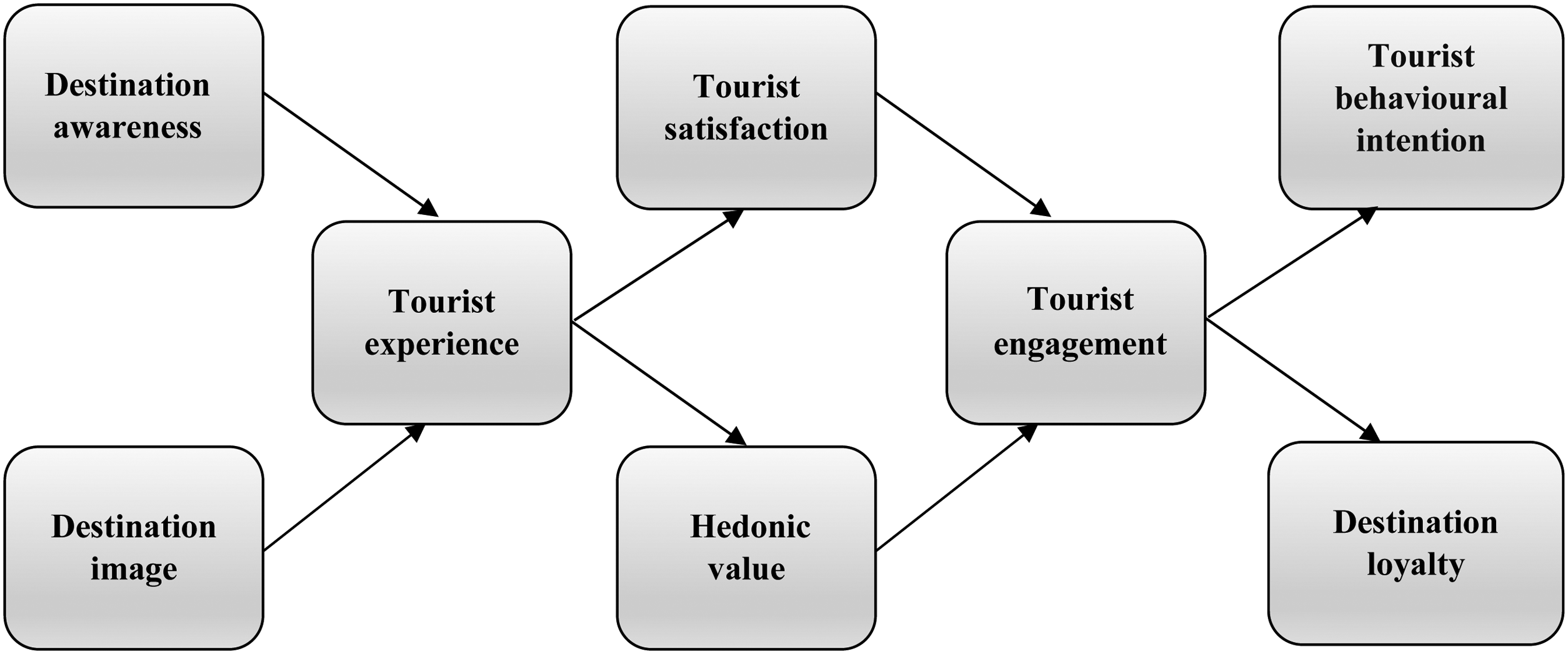
The TE framework for empirical testing.
Data analysis
We utilized various meta-analytic methods to test the proposed framework shown in Figure 2 (Grewal et al., 2018). Bivariate analysis (Arts et al., 2011; Hunter and Schmidt, 2004) was employed to examine the antecedents and consequences related to TE while moderation analysis (Grewal et al., 2018) was conducted to evaluate the influence of methodological, cultural, economic, and contextual factors on the relationships tested. Additionally, we applied MASEM to test the direct and indirect effects presented in our framework, drawing on methods from Bergh et al. (2016), Cheung (2015), Cheung and Chan (2005), and Jak (2015).
Bivariate relationships
We tested the bivariate relationships using the procedure suggested by Hunter and Schmidt (2004), which has been applied in previous meta-analytic studies (Santini et al., 2017). We adjusted the effect size using Pearson's correlation coefficient (r) and only included studies that reported correlation effects to reduce potential conversion bias (Atit et al., 2021). When TE was measured by a multidimensional scale, we computed the mean effects from the different dimensions, which is consistent with other meta-analyses (Babić Rosario et al. 2016; Santini et al., 2020a). We used random effects models, as suggested by Hunter and Schmidt (2004), to determine the correlation effect size because they are more generalizable to studies with heterogeneous sample sizes (Rosenthal, 1979).
We also assessed the bivariate relationships by calculating the 95% confidence interval index, which estimates the mean range of corrected weighted correlations (Hunter and Schmidt, 2004). To determine the heterogeneity of each relationship, we conducted the Q and I2 tests (Cooper et al., 2009; Huedo-Medina et al., 2006) and reported the failsafe number (FNS) based on Rosenthal's parameters. The FNS calculates the number of nonsignificant or unpublished studies that would be necessary to overturn the findings of this study (Hunter and Schmidt, 2004; Rosenthal, 1979). Additionally, we used Egger's test and funnel plot to check for evidence of publication bias and ensure that our data distribution was representative of TE rather than asymmetric (Egger et al., 1997; Thornton and Lee, 2000). The Egger regression measures the degree of funnel plot asymmetry by intercepting the regression of standard normal deviates against precision (Egger et al., 1997; Higgins et al., 2003). All analyses were conducted using the metafor package in R (Viechtbauer, 2010).
Moderation analysis
In our current study, we conducted meta-regression to test potential moderators, which is important as it allows for the exploration of potential sources of heterogeneity and the identification of subgroups that may respond differently to an intervention or exposure (Bijmolt and Pieters, 2001). To ensure adequate sample size, we limited the moderator analysis to relationships with at least 20 observed effect sizes (López-López et al., 2014). Consequently, we performed moderation analysis on two relationships: (1) tourist experience and TE and (2) TE and tourist behavioral intention. For each moderation variable, we divided the data into two levels (low vs. high) using the median of each index, a commonly used procedure in meta-analytical moderation analysis (Santini et al., 2020a). We performed the moderation analysis using the metafor package in R (Viechtbauer, 2010) and applied robust variance estimation to account for dependent effect sizes (Tanner-Smith and Tipton, 2013).
Structural equation modelling
We used MASEM to test the direct and indirect relationships presented in our conceptual framework (Figure 2). MASEM enables researchers to extract all available data from a chosen research stream (Bergh et al., 2016; Cooper et al., 2009; Jak, 2015). To conduct MASEM, we used the two-stage approach (Jak, 2015) for the metaSEM package in R (Cheung, 2015). In the first stage, we combined correlation matrices into a pooled correlation matrix (Arts et al., 2011; Babin et al., 2021). The pooled correlation matrix was used to fit the structural equation model in the second stage. We used likelihood-based confidence intervals (Neale and Miller, 1997) at the level of 95% and the weighted least squares estimation method (Cheung and Chan, 2005) in the second stage.
MASEM is a technique that uses standard structural equation modelling estimation to perform meta-analytic analysis of the covariance structure (Cheung, 2015). We used the 4 × 4 pooled correlation matrix and variance-covariance matrices to fit the path model. To assess the model fit, we followed common guidelines, with acceptable model fit indices of CFI and TLI ≥ 0.90 and RMSEA ≤ 0.08 (Cheung, 2015; Jak, 2015). All analyses were conducted in R Studio, using the metaSEM package (Cheung, 2015) and OpenMx 2.0 (Neale et al., 2016).
Results
Bivariate meta-analytic correlation
Table 1 displays the results of the antecedents of TE from the literature. All antecedents of TE showed positive and significant effect sizes and a high level of heterogeneity. However, four out of five relationships involving destination awareness, destination image, tourist experience, and hedonic value were found to have asymmetry problems according to Egger's intercept test (p < .05). In these cases, we applied the trim and fill process to correct for publication bias (Duval and Tweedie, 2000a, 2000b). To ensure the robustness of our findings, we conducted a sensitivity analysis by removing unusually large studies and repeated the publication bias tests. After the removal of these studies, Egger's test was no longer significant for any of the relationships (i.e., destination awareness: t = .62, p = .54; destination image: t = .87, p = .39; tourist experience: t = .70, p = .48; hedonic value: t = .61, p = .54). As a result, the effect sizes for these relationships were corrected to r = .028 for destination awareness, r = .38 for destination image, r = .25 for tourist experience, and r = .02 for hedonic value. It is important to note that the effect-size adjustments made on the relationship between destination awareness and TE changed the hedonic value and TE to nonsignificant as reported. Conversely, the relationship between tourist satisfaction on TE was found to be consistent (r = .540, FSN = 20,424).
Antecedents of TE.
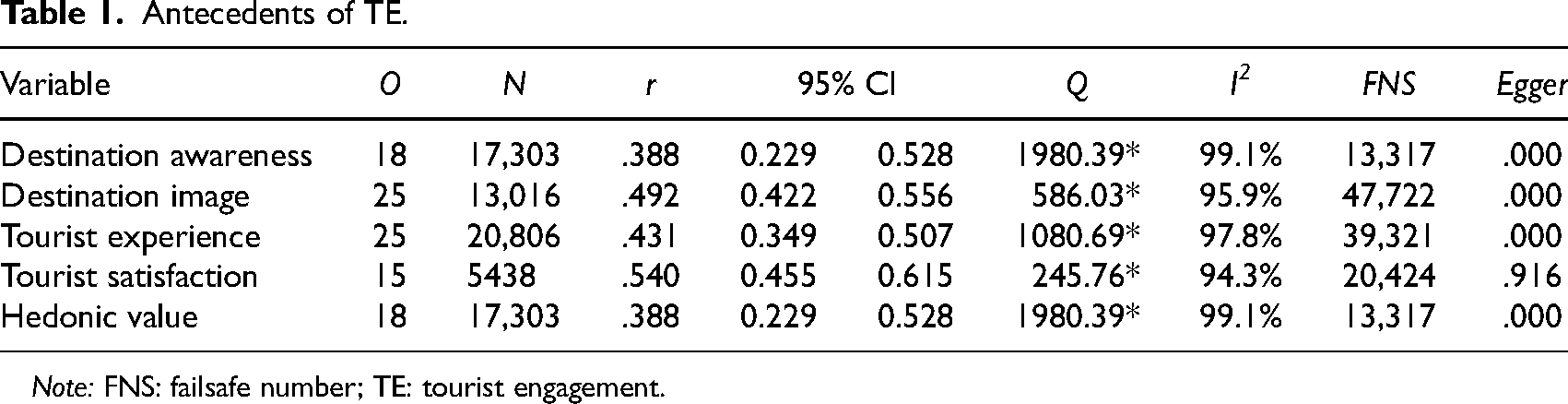
Note: FNS: failsafe number; TE: tourist engagement.
Table 2 illustrates the consequences of TE, including two relationships: (1) TE and tourist behavioral intention and (2) TE and destination loyalty. As with the antecedent relationships, both consequences presented issues with asymmetry, and we applied the trim and fill process to correct for potential bias (Duval and Tweedie, 2000a, 2000b). The adjustments in effect sizes resulting from the trim and fill process were significant for both TE and tourist behavioral intention (r = .28, Egger: t = .77, p = .44) and TE and destination loyalty (r = .18, Egger: t = 1.15, p = .25). It is important to note that the failsafe number was once again higher than 10,000. The forest and funnel plot (Begg and Mazumdar, 1994) of all relationships, including antecedents and consequences, is available in Web Appendix D.
Consequences of TE.

Note: FNS: failsafe number; TE: tourist engagement.
Moderation
We conducted a moderation analysis on all constructs related to TE. Specifically, we evaluated the possible moderators related to the methodological settings of the primary studies, such as publication year, journal ranking, sample size, sex, and scale dimension on the relationships of interest. Our analysis revealed that four of the seven direct relationships, namely destination awareness–TE, tourist experience–TE, TE–tourist behavioral intention, and TE–destination loyalty, were significantly affected by sample size moderation. In these cases, studies with small sample sizes produced stronger effects on the direct relationships than studies with large samples.
We also investigated Hofstede's six cultural dimensions as moderators on the relationships related to TE. We found that only Tourist satisfaction–TE and hedonic value–TE did not present any significant cultural dimension moderators. Power distance had a negative significant effect on destination awareness–TE (β = −.010, t = −2.64, p < .01) and tourist experience–TE (β = −.006, t = −3.44, p < .001) and a positive influence on destination image–TE (β = .003, t = 2.52, p < .01). Individualism had a positive effect on all significant relationships: destination awareness–TE (β = .005, t = 2.26, p < .05); tourist experience–TE (β = .003, t = 3.03, p < .01); and TE–tourist behavioral intention (β = .002, t = 1.90, p < .01). Uncertainty avoidance also had a significant effect on the relationship between TE and destination loyalty, being stronger in cultures with high levels of uncertainty avoidance (β = .005, t = 2.08, p < .05). In terms of long-term orientation, we found one relationship with significant effect (destination awareness–TE), where the effect was negative (β = −.005, t = −2.41, p < .01). Finally, we found that indulgence level positively affects the relationships destination awareness–TE (β = .011, t = 3.67, p < .001) and tourist experience–TE (β = .005, t = 5.53, p < .01).
In our investigation of moderators related to economic and contextual settings, only the relationship between tourist satisfaction and TE did not reveal any significant moderators. We first looked at the HDI, where our data showed conflicting results. While the relationship between destination image and TE was negative (β = −.653, t = −2.01, p < .01), the relationship between TE and destination loyalty was positive (β = 1.46, t = 3.86, p < .001). Similarly, with regards to countries’ economic moderators, we found that the relationship between destination image and TE was strong in nondeveloping countries (β = −.074, t = −1.78, p < .01), but the relationship between TE and destination loyalty was strong in developing countries (β = .182, t = 4.34, p < .01). The CPI also produced conflicting findings. While the effects on destination awareness and TE (β = .335, t = 2.84, p < .01) and tourist experience and TE (β = .185, t = 2.68, p < .01) were positive, the relationships between destination image and TE (β = −.003, t = −2.27, p < .05) and hedonic value and TE (β = −.000, t = −2.34, p < .05) presented negative effects. We found a positive effect of countries’ business confidence on the relationship between destination image and TE (β = .001, t = 2.21, p < .05). Additionally, we found that knowledge of a destination had a significant moderating effect, with the relationships Tourist experience–TE (β = .261, t = 3.68, p < .001) and TE–tourist behavioral intention (β = .225, t = 2.28, p < .05) being stronger in places that were famous around the world (compared to locally well-known places). Finally, we found stronger effects on the relationship between TE and tourist behavioral intention in tourism research than in hospitality research (β = .169, t = 2.25, p < .05). Table 3 summarizes all results of the moderation analysis.
Moderation Results.
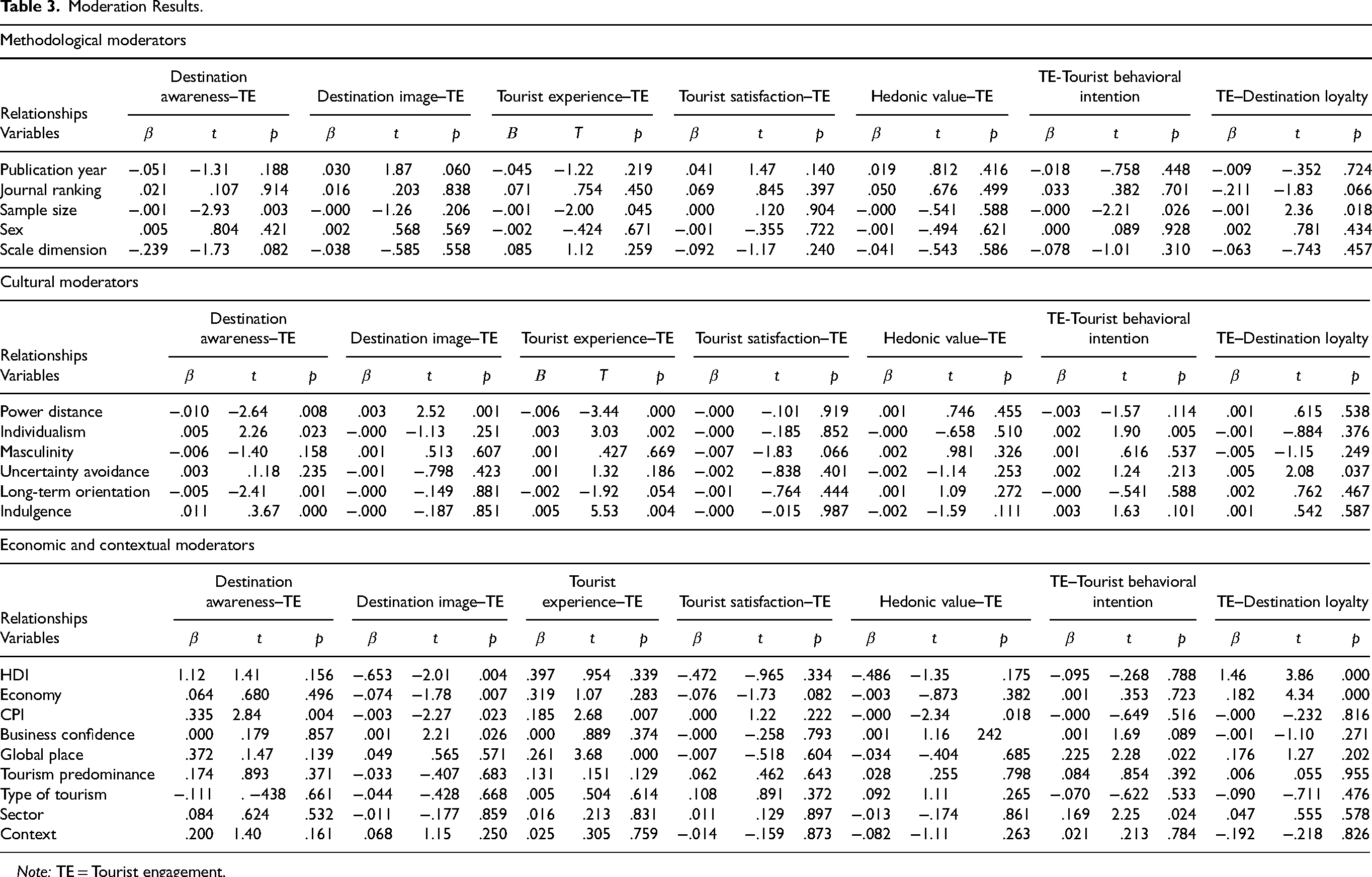
Note: TE = Tourist engagement.
Structural equation modelling
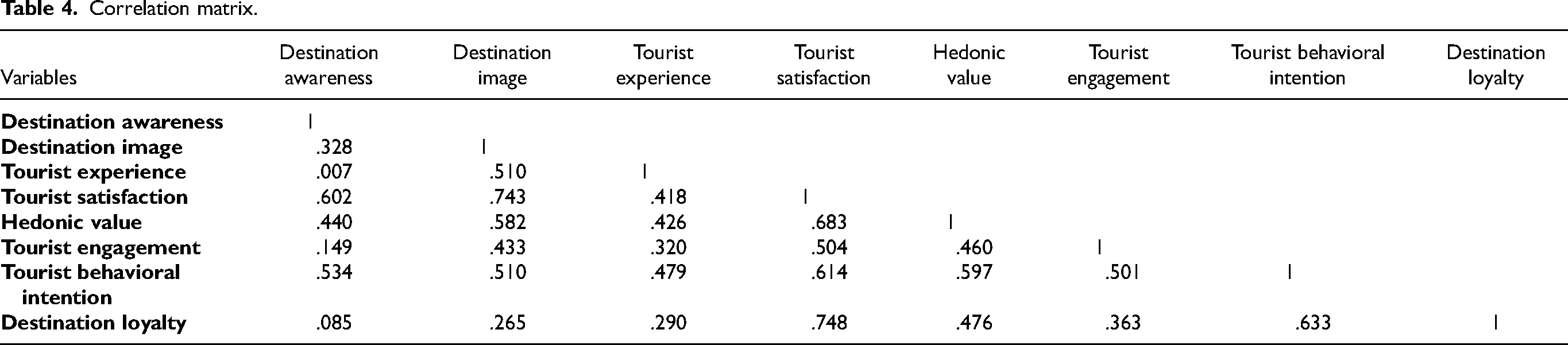
We used MASEM to test the direct and indirect effects of our conceptual framework. The results showed reasonably good model fit indices (χ2 = 437.24, df = 20, CFI = .90, RMSEA = .02) (Hair et al., 2019; Hogreve et al., 2017). Table 4 presents the correlation matrix of each construct used in our model.
Correlation matrix.
First, we tested the direct relationship between (1) destination awareness and tourist experience and (2) destination image and tourist experience. Both antecedents of tourist experience had strong positive and significant effects on tourist experience: destination awareness → tourist experience (β = .887, p < .05) and destination image → tourist experience (β = .741, p < .05) (Figure 3). Next, we tested the direct influence of tourist experience on tourist satisfaction and hedonic value, and found very solid results for both paths: destination awareness → tourist experience (β = .859, p < .05) and destination image → tourist experience (β = .514, p < .05). We also evaluated the influences of tourist satisfaction and hedonic value on TE, and found positive and significant effects: Tourist satisfaction → TE (β = .496, p < .05) and hedonic value → TE (β = .432, p < .05). Finally, we evaluated the TE consequences related to tourist behavioral intention and destination loyalty, and found solid and consistent positive effects: TE→ tourist behavioral intention (β = .694, p < .05) and TE → destination loyalty (β = .821, p < .05). Therefore, all direct effects tested by MASEM were positive and significant.
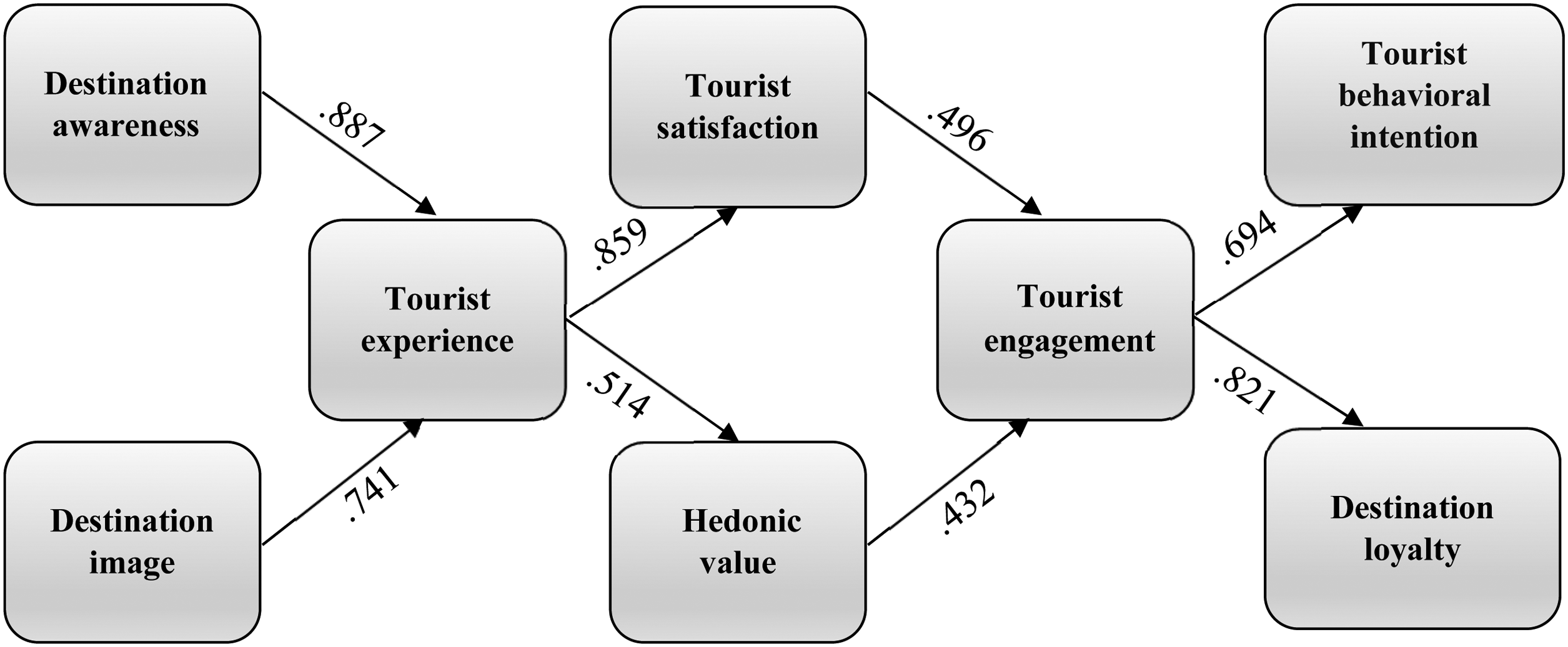
Meta-analytic structural equation model of TE.
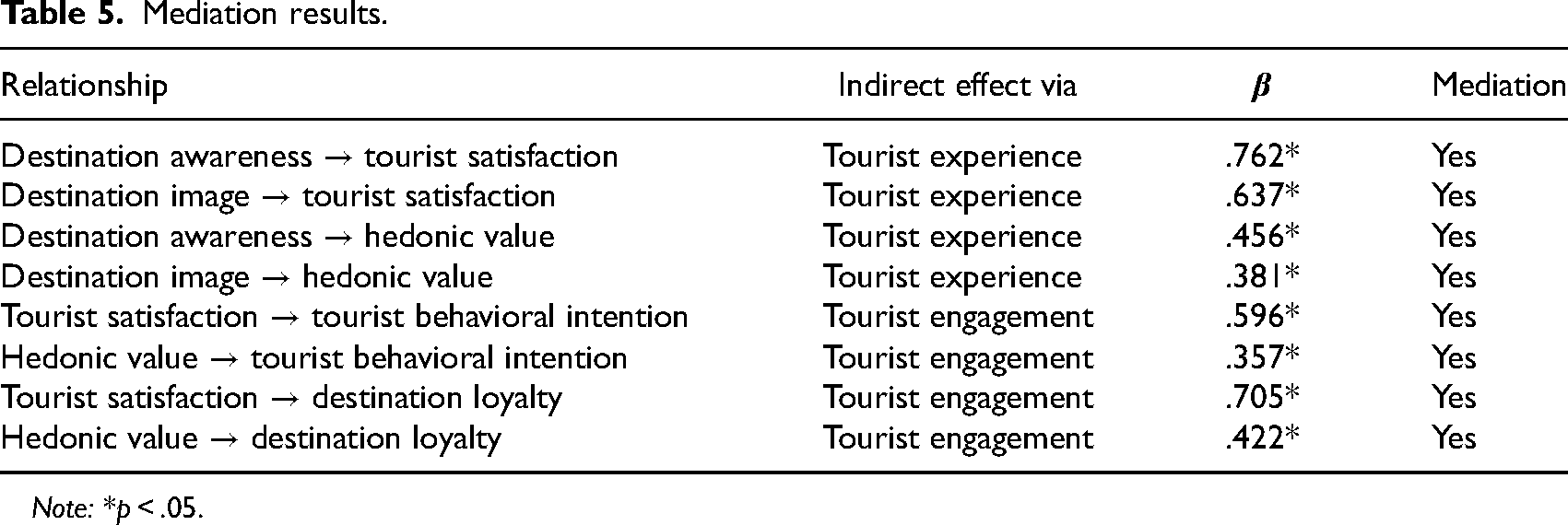
Our analysis also tested for possible mediation effects of tourist experience and TE. We followed Jak's (2015) and Cheung's (2015) procedure, which provided bias-corrected maximum likelihood-based confidence intervals to test indirect effects. Our conceptual framework posits that destination awareness and destination image impact tourist satisfaction and hedonic value indirectly through the tourist experience. The indirect effect of tourist experience on the relationship between (1) destination awareness and tourist satisfaction (β = .762, p < .05) and (2) destination image and tourist satisfaction (β = .637, p < .05) was significant, wherein the significant indirect effects herein signal that the presence of partial mediation (Jak, 2015). Besides that, the direct effects of destination awareness (β = .880, p < .05) and destination image (β = .851, p < .05) on tourist satisfaction were positive and significant, signaling the presence of partial mediation (Jak, 2015). The same logic applied to the mediation effects of tourist experience on the relationship between (1) destination awareness and hedonic value and (2) destination image and hedonic value, where the indirect effects (β = .456, p < .05; β = .381, p < .05, respectively) and the direct effects (β = .415, p < .05; β = .352, p < .05, respectively) were significant, thereby signaling the presence of partial mediation (Jak, 2015).
In our mediation analysis, we also examined the indirect effects of TE on the relationship between (1) tourist satisfaction and tourist behavioral intention and (2) hedonic value and tourist behavioral intention. We also investigated the indirect effects of TE on destination loyalty in the same vein. The results showed significant mediation effects in all cases, confirming the hypothesized model (β = .596, p < .05; β = .357, p < .05; β = .705, p < .05; β = .422, p < .05, respectively). All direct effects were also significant, indicating the presence of partial mediation (tourist satisfaction–tourist behavioral intention: β = .633, p < .05; hedonic value–tourist behavioral intention: β = .256, p < .05; tourist satisfaction–destination loyalty: β = .566, p < .05; hedonic value–destination loyalty: β = .380, p < .05). The details of all indirect effects are summarized in Table 5.
Mediation results.
Note: *p < .05.
Conclusion and discussion
In the past decade, there has been considerable research investigating TE across different contexts in tourism and hospitality. In this study, we have synthesized existing empirical findings to offer a comprehensive understanding on the main antecedents and consequences of TE, while also exploring the heterogeneity found in primary studies through the investigation of various moderators such as methodological, cultural, economic, and contextual moderators from more than 25 countries and four continents (America, Asia, Oceania, and Europe). Finally, we used MASEM to identify potential indirect effects of TE on the relationship between antecedents and tourists’ behavioral intentions. Our meta-analysis provides an updated and generalized perspective of TE (Fern and Monroe, 1996). Web Appendix E summarizes the key findings and implications of our study.
Theoretical implications
Our meta-analysis contributes to tourism and hospitality literature by generalizing the empirical findings on the strength of the antecedents and consequences of TE and testing moderators across countries and studies. We also explored how tourist experience and engagement can act as mediators to destination awareness, destination image, tourist satisfaction, and hedonic value with tourist behavioral intention and destination loyalty, offering six contributions to the tourism and hospitality literature.
First, we consolidated the knowledge by identifying five key antecedents of TE from primary research studies. Our findings showed that tourist satisfaction, destination image, and tourism experience were the most significant constructs that elicit TE. We reconciled conflicting results from previous studies (Dewnarain et al., 2021; Lee et al., 2021) on the relationship between awareness and engagement, finding a positive and consistent effect size (r = .388, FSN = 13317) between destination awareness and TE.
Second, we examined the benefits of TE for the tourism and hospitality sector. Our results demonstrated a consistent positive relationship between TE and both tourist behavioral intention and destination loyalty. This finding reconciles ongoing debates in primary research on the effectiveness of engagement for tourism and hospitality outcomes, setting the tone for a consensus on the positive effects of engagement.
Third, we identified significant methodological moderators for TE, and found that smaller sample sizes overestimating the effect size due to homogeneity (Fern and Monroe, 1996). Direct relationships were resistant to differences in publication year, journal ranking, sex, and scale dimension/type. Our results found no differences in these methodological features, which can support future researchers in making informed decisions.
Fourth, our analysis of cultural moderators showed significant results, with power distance having a direct link to hierarchy and inequalities. Power distance had a negative impact on the relationships between destination awareness and TE and between tourist experience and TE, but a positive impact on the relationship between destination image and TE. Countries with high power distance are more tolerant of this phenomenon (Hofstede et al., 2010), where customers are perceived as “king” (Kim and Aggarwal, 2016). Customers in high power distance cultures tend to give low evaluation scores to service providers (Ladhari et al., 2011). Our results reinforce this assumption of negative moderation. Our results indicate a positive correlation between destination image and TE. Given the strong association between destination image and social expectations (Roth, 1995), it is plausible that high power distance cultures would prioritize perceptions of prestige and superiority (Hofstede, 1984) when visiting new hospitality venues or tourism locations, leading to an enhanced fit between destination image and TE.
Moreover, we found that long-term orientation had a significant negative moderation effect on the relationship between destination awareness and TE. People with high long-term orientation prioritize future benefits, while those with low long-term orientation focus on immediate feelings. In contrast, short-term cultures value their memories and the past, which relates to tourist experience attributes (Hofstede, 2001; Hofstede et al., 2010). These cultural differences in temporal orientation appear to affect the accumulation of experiences that are identified as attributes of the tourist experience (Ahn and Back, 2018). In addition, our study found a positive moderation effect of individualism and indulgence on the relationships between destination awareness-TE and tourist expectation-TE. Individualism, which prioritizes personal goals over collective ones, is associated with an increased focus on pleasurable experiences and stronger CE with brand-related content (Hofstede, 1984; Kitirattarkarn et al., 2019; Steenkamp and Geyskens, 2006). Indulgence, which emphasizes gratification and enjoyment, has characteristics similar to the tourist experience (Hofstede et al., 2010), further supporting our findings.
Fifth, we found significant moderators related to cultural and economic characteristics, with similar results to cultural power distance. Nondeveloping countries with weak HDI, economy, and CPI showed negative effects on destination image-TE, while HDI and the economy had positive effects on TE and destination loyalty. High CPI had positive effects on destination awareness–TE and tourist experience–TE, suggesting that tourists in countries with high CPI prioritize nonessential hospitality and tourism offerings to enhance their experience (Steinhoff et al., 2023). This implies that countries with high CPI may limit access to consumption, leading tourists to prioritize tourism and hospitality offerings. Our findings highlight the importance of considering cultural and economic characteristics to enhance the tourist experience and TE (Fernando, 2022; Steinhoff et al., 2023). Our study found that global destinations had a stronger effect on the relationship between tourist experience and both TE and behavioral intention than local destinations. This is because global destinations evoke higher consumer expectations. Moreover, our analysis revealed that research on the relationship between TE and behavioral intention tends to focus more on tourism than hospitality, possibly due to higher consumer expectations in the tourism industry. This suggests that higher consumer expectations may be associated with tourist experience and behavior.
Sixth, in our analysis, MASEM showed a good fit for our conceptual framework, with all relationships being statistically significant. Destination awareness had a greater impact on the tourist experience, while tourist satisfaction had a greater impact on TE. TE consistently and positively affected both tourist behavioral intention and destination loyalty. We also identified interesting mediation effects of tourism experience and engagement on the relationships in our framework.
Managerial implications
Our meta-analysis provides valuable insights for tourism and hospitality practitioners, as we have identified the key drivers of engagement and the factors that may moderate and mediate them. As shown in Web Appendix E, our research contributes to the field in six distinct ways, offering practical implications to industry professionals.
The first insight is that tourist satisfaction has a positive effect on TE. Therefore, it is important for managers to monitor tourist satisfaction to enhance other relationship variables such as trust and commitment. To achieve customer satisfaction, the American Hospitality Academy recommends implementing four pillars, including (1) providing a great guest experience, (2) monitoring customer satisfaction through surveys, (3) following through on promises made to guests, and (4) catering to their needs.
The second insight is that hedonic perceptions also enhance TE. A good example of this is Disney World, which leverages emotional value perceptions in its parks. Tourists who visit Disney World enjoy the sensory atmosphere created by the music, color, and characters, which adds to their overall experience.
The third insight implies that managers should strive to evoke tourism destination attributes such as awareness and image, as they have been found to significantly impact engagement. Good public policies can play a vital role in enhancing the destination image, which, in turn, could impact destination attributes. However, COVID-19 has demonstrated how unforeseen circumstances can negatively affect destination attributes. For instance, studies by Yang et al. (2021) and Rasoolimanesh et al. (2021b) have shown that media coverage and the number of active COVID-19 cases and deaths have negatively impacted a country's destination image and the trust perception of the country's health system, consequently influencing potential visitors’ travel intentions. In order to overcome the negative impacts of such unforeseen situations, managers should constantly monitor destination attributes and make necessary adjustments.
The fourth insight for tourism and hospitality practitioners is to evoke tourists’ feelings to generate experience. Countries and companies can use slogans that connect with tourists and evoke emotional experiences to create a memorable trip. For example, the Philippines’ slogan “It's more fun in the Philippines” evokes a sense of fun and adventure, while Slovenia's “I feel Slovenia” promotes citizenship behavior and connects tourists to the country. India's “Incredible India” could be connected to tourists’ involvement, encouraging them to explore and engage with the country's rich culture and history. Evoking emotions and creating a memorable experience, tourism and hospitality companies can potentially increase engagement and positive behavioral intentions among tourists.
The fifth insight from our study's moderation effects indicates that managers in tourism and hospitality must embrace a culturally sensitive approach. Recognizing the impact of cultural differences on TE is crucial, urging managers to develop global strategies that acknowledge and leverage these differences. Such an approach not only broadens the appeal to a diverse tourist base but also potentially enhances their engagement with the company or destination. To deepen the practical implications of cultural variations, managers ought to amplify their initiatives by engaging in comprehensive cultural training. This will ensure an understanding and respect for the diverse backgrounds of their clientele and guarantee that all staff exhibit cultural sensitivity. Additionally, implementing personalized marketing strategies and service adaptations (Chandra et al., 2022) will cater to the unique cultural needs and preferences of different tourist groups. Tailoring aspects like food options, entertainment, and providing language support are pivotal. Utilizing customer data insights and marketing analytics (Basu et al., 2023) for continuous refinement of these strategies will further enhance TE, fostering a more inclusive and attractive global strategy. Such dedicated efforts to comprehend and integrate cultural nuances should elevate the competitiveness and success of businesses in the tourism and hospitality sectors.
The sixth insight is that well-known global destinations have a stronger effect on the relationships between tourist experience and TE, as well as TE and tourist behavioral intention. This implies that managers of local well-known places should focus on dissemination strategies to increase their popularity. One effective strategy is celebrity endorsement (Roy et al., 2021), which has been used by various countries, such as Barbados with singer Rihanna and Korea with actor Bae Yong-Joon. Hospitality managers should also be innovative in creating a distinctive atmosphere that can facilitate engagement, considering that the tourism industry offers ample opportunities to connect with visitors.
Limitations and directions for future research
The current study has limitations and suggests some areas for future research. First, our conceptual framework included eight main constructs, and while we were unable to include other variables due to a lack of cross-correlation effects, future studies could explore the conceptual model while incorporating new variables such as destination quality and word of mouth. Additionally, further variables could be added to promote a new meta-analysis of TE that tests extended models. Second, we did encounter little-investigated theories/variables such as destination authenticity, tourist citizenship behavior, and destination congruity, which could be further explored in future studies on TE. Third, few primary studies have examined TE from the cultural or economic perspective of a country (Dai et al., 2019), which we addressed in this meta-analysis. Further studies that reflect the cultural and economic contexts as possible moderators to some direct relationships with TE remain necessary. Fourth, the mediation effects of TE could also be explored in future research since there have been only a few past primary studies (e.g., Rather, 2021) that considered this construct as a mediator. Fifth, this meta-analysis did not include qualitative studies since meta-analysis is based on quantitative data. However, a review with only qualitative TE studies could be conducted in the future. Sixth, the current study selected articles exclusively from ABDC A* and A-ranked journals. This choice inherently implies a limitation, as it potentially excludes high-quality journals recognized by other ranking systems, thereby narrowing the scope of the research. Additionally, the exclusion of unpublished, experimental, or longitudinal studies may further constrain the comprehensiveness of the analysis. Future research can therefore include other potentially relevant articles that may have been overlooked in the present study. Seventh, this study acknowledges the dynamic nature of certain moderators, like CPI and HDI, which evolve over time. By anchoring the analysis herein to the metrics of a single year (2022), which is a common practice in meta-analytical studies (Bainbridge et al., 2012; Bitencourt et al., 2020), this study might overlook the longitudinal impacts and trends. This temporal limitation suggests an avenue for future research, which could employ alternative methodologies, such as longitudinal surveys, to capture the evolving dynamics of these moderators. This approach could potentially provide a more nuanced understanding of TE as the studied phenomenon. Eighth, future studies could investigate TE through experimental research using eye tracking, electroencephalogram, and Facereader to capture different tourism and hospitality stimuli.
To this end, this meta-analysis is a starting point for promoting deeper knowledge of TE theory, and the synthesis presented here will help scholars focus on the overall findings while pointing out areas in need of further research.
Supplemental Material
sj-docx-1-jvm-10.1177_13567667241238456 - Supplemental material for Tourist engagement: Toward an integrated framework using meta-analysis
Supplemental material, sj-docx-1-jvm-10.1177_13567667241238456 for Tourist engagement: Toward an integrated framework using meta-analysis by Tareq Rasul, Fernando de Oliveira Santini, Weng Marc Lim, Dimitrios Buhalis, Haywantee Ramkissoon, Wagner Junior Ladeira, Diego Costa Pinto and Mohd Azhar in Journal of Vacation Marketing
Supplemental Material
sj-docx-2-jvm-10.1177_13567667241238456 - Supplemental material for Tourist engagement: Toward an integrated framework using meta-analysis
Supplemental material, sj-docx-2-jvm-10.1177_13567667241238456 for Tourist engagement: Toward an integrated framework using meta-analysis by Tareq Rasul, Fernando de Oliveira Santini, Weng Marc Lim, Dimitrios Buhalis, Haywantee Ramkissoon, Wagner Junior Ladeira, Diego Costa Pinto and Mohd Azhar in Journal of Vacation Marketing
Supplemental Material
sj-docx-3-jvm-10.1177_13567667241238456 - Supplemental material for Tourist engagement: Toward an integrated framework using meta-analysis
Supplemental material, sj-docx-3-jvm-10.1177_13567667241238456 for Tourist engagement: Toward an integrated framework using meta-analysis by Tareq Rasul, Fernando de Oliveira Santini, Weng Marc Lim, Dimitrios Buhalis, Haywantee Ramkissoon, Wagner Junior Ladeira, Diego Costa Pinto and Mohd Azhar in Journal of Vacation Marketing
Supplemental Material
sj-docx-4-jvm-10.1177_13567667241238456 - Supplemental material for Tourist engagement: Toward an integrated framework using meta-analysis
Supplemental material, sj-docx-4-jvm-10.1177_13567667241238456 for Tourist engagement: Toward an integrated framework using meta-analysis by Tareq Rasul, Fernando de Oliveira Santini, Weng Marc Lim, Dimitrios Buhalis, Haywantee Ramkissoon, Wagner Junior Ladeira, Diego Costa Pinto and Mohd Azhar in Journal of Vacation Marketing
Supplemental Material
sj-docx-5-jvm-10.1177_13567667241238456 - Supplemental material for Tourist engagement: Toward an integrated framework using meta-analysis
Supplemental material, sj-docx-5-jvm-10.1177_13567667241238456 for Tourist engagement: Toward an integrated framework using meta-analysis by Tareq Rasul, Fernando de Oliveira Santini, Weng Marc Lim, Dimitrios Buhalis, Haywantee Ramkissoon, Wagner Junior Ladeira, Diego Costa Pinto and Mohd Azhar in Journal of Vacation Marketing
Supplemental Material
sj-docx-6-jvm-10.1177_13567667241238456 - Supplemental material for Tourist engagement: Toward an integrated framework using meta-analysis
Supplemental material, sj-docx-6-jvm-10.1177_13567667241238456 for Tourist engagement: Toward an integrated framework using meta-analysis by Tareq Rasul, Fernando de Oliveira Santini, Weng Marc Lim, Dimitrios Buhalis, Haywantee Ramkissoon, Wagner Junior Ladeira, Diego Costa Pinto and Mohd Azhar in Journal of Vacation Marketing
Footnotes
Declaration of conflicting interests
The authors declared no potential conflicts of interest with respect to the research, authorship, and/or publication of this article.
Funding
The authors received no financial support for the research, authorship, and/or publication of this article.

Supplemental material
Supplemental material for this article is available online.
References
Supplementary Material
Please find the following supplemental material available below.
For Open Access articles published under a Creative Commons License, all supplemental material carries the same license as the article it is associated with.
For non-Open Access articles published, all supplemental material carries a non-exclusive license, and permission requests for re-use of supplemental material or any part of supplemental material shall be sent directly to the copyright owner as specified in the copyright notice associated with the article.
