



Abstract
This study evaluated (a) the feasibility and acceptability of a gamified physical education (PE) intervention among 9- to 10-year-old children and (b) intervention effectiveness on emotional intelligence (EI), motor competence (MC), basic psychological needs (BPNs) and motivational regulations. A mixed-method, single-group, pre-post trial was conducted in three primary schools in North West England. Classroom teachers taught a 10-week gamified PE unit (one 60-minute lesson per week). Researcher logs recorded recruitment, retention, adherence and attrition; feasibility and acceptability were assessed via semi-structured teacher interviews (n = 3) and three focus groups with children (n = 18). Children completed questionnaires assessing EI, BPNs and motivational regulations. MC was measured with the Körperkoordinationtest für Kinder and the Motor Competence Assessment. Three teachers and 63 children were recruited. Adherence was good (26/30 lessons taught), and participant retention was excellent (0% attrition). Qualitative findings indicated the intervention was feasible and acceptable: lessons were easy to follow, well-structured, inclusive, fun, and promoted teamwork. Challenges were mainly logistical (set-up time and equipment). Improvements were observed from pre- to post-test in EI (F = 38.02, p < .001), MC (p < .05), intrinsic motivation in PE (F = 10.08, p = .002), and identified (F = 11.84, p < .001) and external regulation (F = 4.15, p = .046) for physical activity. However, EI outcome measurement posed challenges (child comprehension/scale structure), highlighting the need for child-appropriate tools. Overall, findings support trial feasibility and intervention acceptability, with promising effects, warranting a larger controlled trial.
Introduction
Emotional intelligence (EI) is a set of skills that enable the recognition and regulation of emotions and support adaptive behaviour (Petrides et al., 2016). Acquiring EI skills such as social and self-awareness in childhood – particularly preadolescence (ages 9–12) – is crucial for holistic development and psychological well-being (Lea et al., 2019). High EI correlates positively with physical activity (PA) (Amado-Alonso et al., 2019), motivation in physical education (PE; Rico-González, 2023) and motor competence (MC; Mohammadi Orangi et al., 2023). Thus, cross-sectional evidence underscores EI's importance for holistic development, but experimental studies are needed to establish causality and mechanisms.
PE is considered a key learning environment for developing EI (Castillo-Viera et al., 2020; Rico-González, 2023). Lessons expose children to stressful situations that help them learn intrapersonal competencies, including self-control and emotional expression (Castillo-Viera et al., 2020). PE also develops interpersonal competencies – such as social skills and prosocial behaviours – through communication, co-operation, and problem-solving with peers (Opstoel et al., 2020).
PE is also a primary context for developing MC, defined as an individual's proficiency in executing a broad range of movement skills (Utesch and Bardid, 2019). MC is positively associated with PA participation (den Uil et al., 2023) and is hypothesised to promote lifelong PA (Stodden et al., 2008). Furthermore, MC is positively associated with mental health (Hill et al., 2024) and negatively associated with unfavourable psychosocial outcomes, including poor social skills, depression and anxiety (Mancini et al., 2016).
Few studies have explored the association between MC and EI. Mohammadi Orangi et al. (2023) found a strong positive association across three age groups (5–11 years old, 12–17 years old, and 18–21 years old). These findings suggest that, even from a young age, children with low MC may have lower EI than peers with higher MC. The relationship between MC and EI can be elucidated by the Elaborated Environmental Stress Hypothesis (EESH; Cairney et al., 2013). The EESH posits that low MC is a primary stressor that exposes children to secondary stressors such as limited social interaction and peer conflict (Cairney et al., 2013). These experiences can harm self-esteem, well-being, and participation in PE. EI acts as a protective resource against stress, helping to prevent internalising issues (Davis et al., 2019). Improving MC increases success across activities, which is linked to stronger self-perceptions and confidence and, in turn, sustained participation in PA (Niemistö et al., 2023). Greater participation affords children opportunities to develop EI through experiences of winning and losing, helping them manage emotions and behaviours in social contexts (Rico-Gonzalez, 2023).
Gamification, defined as the use of game-like elements in non-gaming contexts (Deterding et al., 2011), is a viable pedagogical approach in PE (Fernández-Rio et al., 2020). Gamification incorporates strategies such as narratives, relationships, challenges, levels, rules, feedback and points (Werbach and Hunter, 2015). Unlike traditional teacher-centred approaches, gamification is student-centred and seeks to boost motivation, engagement and problem-solving (Kapp, 2012). In PE, sustaining children's motivation and engagement is essential for MC development (Saiz-González et al., 2024). According to Self-Determination Theory (SDT), intrinsic motivation, which is positively linked to persistence and performance in PE (Vasconcellos et al., 2020), occurs when children's basic psychological needs (BPNs) for autonomy (control of one's actions), relatedness (connection to others), and competence (mastery in one's actions) are met (Ryan and Deci, 2020). Evidence shows that gamified PE interventions improve BPNs and intrinsic motivation among primary school-aged children (Fernandez-Rio et al., 2020; Sotos-Martinez et al., 2024). Blain et al.’s (2022) theoretical framework illustrates how gamification strategies support BPNs. For example, levels afford decision-making (autonomy), teamwork fosters peer connection (relatedness), and progressively more difficult challenges promote skill development (competence).
Gamified interventions in PE (Fernández-Vázquez et al., 2024) and home settings (Davies et al., 2024) have positively impacted MC. These improvements may reflect the incorporation of strategies – progressive difficulty, structured challenges, and feedback – proposed to support motor learning (Guadagnoli and Lee, 2004). While no gamified PE interventions have directly targeted EI in children, a 14-week gamified teaching programme improved psychological well-being, including EI, in university students (Navarro-Mateos et al., 2024). Gamified PE programmes also increase moderate-to-vigorous and total PA in primary school children (Guijarro-Romero et al., 2024). Based on the EESH (Cairney et al., 2013), which links PA opportunities and MC development to EI, gamification may offer a viable approach to improving EI via MC. However, evidence in primary PE is limited; further research should evaluate the effects of gamification on both MC and EI.
Co-developing interventions with school stakeholders can enhance the feasibility, acceptability, sustainability, and relevance through their direct involvement (Reed et al., 2021). In our previous study, 91 children and four classroom teachers from three primary schools in North West England took part in co-development workshops to create context-specific gamified PE interventions to increase MC and, in turn, EI (Rice et al., 2025). The present study examined whether the co-developed intervention and the trial procedures were feasible and acceptable for children aged 9–10 years old. Feasibility testing indicates whether processes such as recruitment and data collection can be replicated in a larger, definitive trial (Thabane and Lancaster, 2018). Assessing feasibility from both teacher and child perspectives is critical to ensure the intervention is practical, relevant, and implementable in schools (Leahy et al., 2021). Accordingly, the primary aim was to evaluate feasibility and acceptability; the secondary aim was to explore preliminary effects on EI, MC, BPNs and motivational regulations.
Methods
Study design
This study employed a single-group pre-post design (Pearson et al., 2020). The gamified PE lessons were taught between April and June 2023. Headteachers provided gatekeeper consent to integrate the lessons into the PE curriculum; thus, all children participated in lessons, while only consenting children completed assessments. Measures were collected at baseline (T0: March 2023) and post-intervention (T1: July 2023), though some MC assessments were collected only at T1 due to equipment delays. Feasibility and acceptability data were gathered from consenting children and teachers after T1. The intervention programme was reported per Hastie and Casey's (2014) guidelines. Institutional ethical approval was obtained (23/SPS/008), and reporting followed Consolidated Standards of Reporting Trials (CONSORT) guidelines (Schulz et al., 2010).
Sample size
Feasibility studies generally do not require a formal power calculation (Eldridge et al., 2016), as analyses are preliminary. Recommended sample sizes range from 30 to 50 participants (Beets et al., 2021). Accordingly, the study aimed to recruit 60 children to allow for attrition.
Recruitment and participants
A convenience sample of three schools and three teachers were recruited for the study. Schools were recruited as part of the co-development study, following headteacher consent (Rice et al., 2025). All schools were in areas of low socio-economic status, indicated by the index of multiple deprivation (Noble et al., 2019), with 33%–63% of children eligible for free school meals. Children were eligible for the study if they were in Year 5 (aged 9–10 years old); teachers were eligible if they taught PE. Informed consent was obtained from teachers and parents; children provided assent. All three teachers were female, White British, non-specialist PE teachers (Mage = 42 years), with 5–20 years’ teaching experience; two were PE leads.
Intervention programme
Prior to delivery, teachers attended a two-hour Continuing Professional Development (CPD) workshop to re-familiarise themselves with the lesson plans (Goodyear, 2017) created as part of phase one of the wider research programme (Rice et al., 2025). The lessons were designed to be taught once a week for 60 minutes, over a 10-week period. Lessons focused on different themes each week (e.g. Week 1: throwing and catching) and integrated a minimum of four gamification strategies (Rice et al., 2025). Each school used a distinct narrative: School A – A quest through time (a teleportation journey from Ancient Greece, with activities in each lesson bringing them closer to the present day); School B – The American Dream (a route from New York across US states with activities linked to each state's geography); School C – Treasure Island (tasks to earn crystals to save the island). Two example weeks are provided in Supplemental File A.
Primary outcomes
Trial feasibility
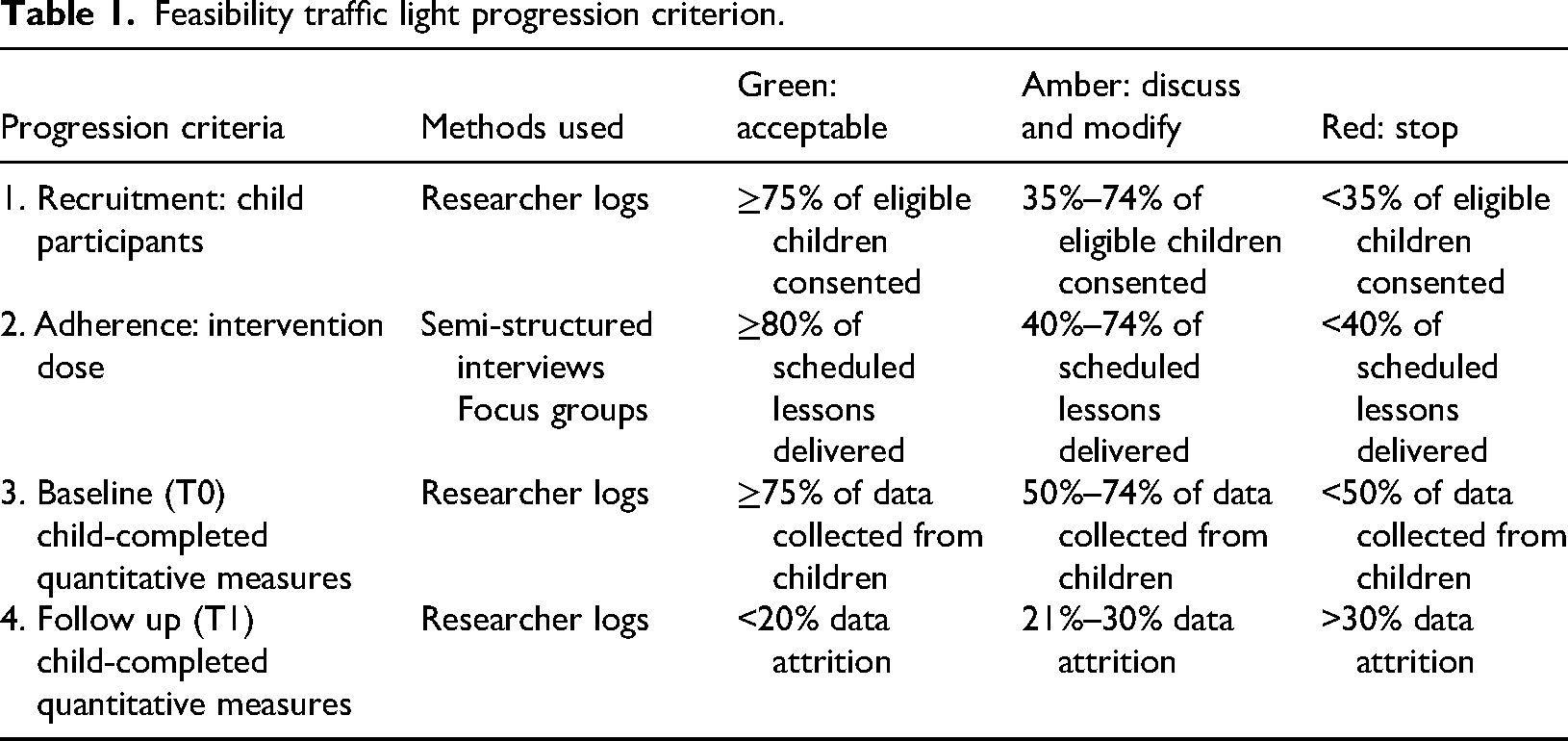
Table 1 presents the traffic light criteria (Avery et al., 2017), informed by previous work (Fairclough et al., 2024), used to assess feasibility (green = acceptable, proceed; amber = discuss and modify; red = do not proceed, re-design). Recruitment (returned parental consent and child assent), adherence (lesson dose), and retention (completion of pre-post assessments) were evaluated using researcher and teacher logs and qualitative interviews.
Feasibility traffic light progression criterion.
Implementation acceptability
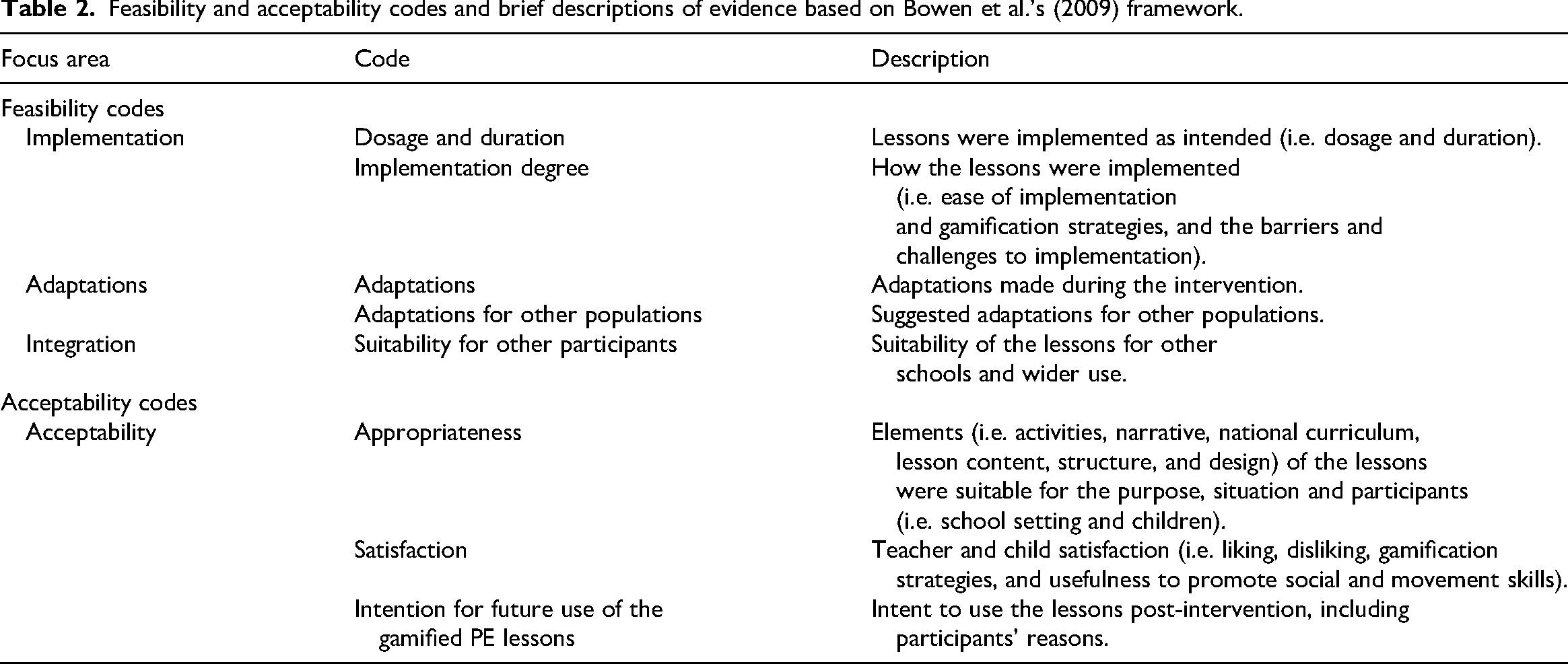
Implementation of the gamified PE lessons was explored through semi-structured interviews with each teacher (n = 3) and focus groups with a subsample of six children per school (three boys, three girls; total n = 18), randomly selected by the lead author. Topic guides were informed by Bowen et al.'s (2009) framework (see Table 2), and all data collection was conducted by the lead author (see Supplemental Files B and C for full interview schedules). Teacher interviews were held on Microsoft Teams, lasting 39–53 minutes. Child focus groups followed published protocols (Adler et al., 2019), took place in a quiet classroom during curriculum hours, and lasted 15–35 minutes.
Feasibility and acceptability codes and brief descriptions of evidence based on Bowen et al.’s (2009) framework.
Secondary outcomes
Emotional intelligence
EI was assessed using the Schutte Self-Report EI Test (SSEIT; Schutte et al., 1998), a 33-item scale rated from 1 (‘strongly disagree’) to 5 (‘strongly agree’). The SSEIT has been used with children (e.g. Mohammadi Orangi et al., 2023; Williams et al., 2009), but its structural validity has been questioned (e.g. Petrides and Furnham, 2000). The SSEIT includes four subdomains (optimism and mood regulation, appraisal of emotions, utilisation of emotions, social skills), but alternative factorial structures have been proposed (e.g. Gignac et al., 2005; Lane et al., 2009; Ng et al., 2010). In line with the feasibility aims of this study, we trialled the SSEIT to explore its reliability and sensitivity to change in primary school-aged children, using both original and alternative structures.
Motor competence
The Körperkoordinationtest für Kinder (KTK3+; Coppens et al., 2021) comprises four test items: jumping sideways, moving sideways, eye–hand coordination and balancing backwards. For the first three items, two trials are summed for the item score. Balancing backwards includes three trials on each beam (6.0 cm × 4.5 cm × 3.0 cm); the final score is the total number of steps counted (maximum 72 steps; 8 per trial). The KTK3+ is valid and reliable in children aged 6–19 years old (Coppens et al., 2021).
The Motor Competence Assessment (MCA; Luz et al., 2016) comprises six subscales: shifting platforms and jumping sideways for stability; 4 × 10 m shuttle run and standing long jump for locomotor; and ball throwing velocity and ball kicking velocity for object control. Participants completed two trials for shifting platforms, jumping sideways, and the shuttle run, and three trials for the standing long jump, ball throwing velocity, and ball kicking velocity; the best trial provided the item score. The MCA is valid and reliable in children aged 7–10 years old (Luz et al., 2016).
Needs satisfaction
The BPN Satisfaction and Frustration Scale was used (Van der Kaap-Deeder et al., 2020). Following prior PE applications (e.g. Vlachopoulos et al., 2011), the stem was adapted from ‘how you feel in general’ to ‘how you feel in PE’. The scale comprises 24 items on a 5-point Likert scale (1 = ‘completely not true’ to 5 = ‘completely true’), assessing BPN satisfaction and frustration. The scale is valid and reliable in children aged 7–11 years old (Vlachopoulos et al., 2011).
Motivational regulations in PA
The Behavioural Regulation in Exercise Questionnaire (BREQ; Mullan et al., 1997), adapted for PA (Sebire et al., 2013), was used to measure students’ motivation for PA. The scale comprises 12 items on a 5-point Likert scale (1 = ‘not true for me’ to 5 = ‘very true for me’) covering intrinsic, identified, introjected and external regulation. The questionnaire has been shown to be valid and reliable with children aged 7–11 years old (Sebire et al., 2013).
Motivational regulations in PE
The BREQ (Mullan et al., 1997), adapted for PE, was used to assess students’ motivation for PE. The scale comprises 12 items on a 5-point Likert scale (1 = ‘not true for me’ to 5 = ‘very true for me’) covering intrinsic, identified, introjected and external regulation. The questionnaire has been shown to be valid and reliable with children aged 7–11 years old (Sebire et al., 2013).
Analysis
Quantitative analysis
Analyses were conducted in IBM SPSS Statistics (Version 29). Internal consistency was assessed with Cronbach's α, interpreted as: unacceptable <.50, poor .50–.59, questionable .60–.69, acceptable .70–.79, good .80–.89, and excellent ≥.90 (Tavakol and Dennick, 2011). Two-way mixed analysis of variance (ANOVA) tests examined intervention effects on child-level outcomes, with time (pre, post) serving as the within-subject factor and gender (girls, boys) as the between-subject factor. Effect sizes are reported as partial eta-squared (η2p; Miles and Shevlin, 2001). All statistical assumptions were met (Judd et al., 2017). The scores were normally distributed (Shapiro–Wilk test, p > .05), and inspection of Q–Q plots revealed no deviations. No outliers were detected (SD ± 3), and there was homogeneity of variances (Levene's test, p > .05) and covariances (p > .001). Statistical significance was set at p < .05 (Di Leo and Sardanelli, 2020). For brevity, results for gender differences and Gender × Time interactions are provided in Supplemental File D.
Qualitative analysis
This study took a relative ontological view, acknowledging that reality is not fixed but instead subjectively experienced (Guba and Lincoln, 2005). Semi-structured interviews and focus groups were audio recorded and then transcribed verbatim. The transcripts were uploaded to NVivo for analysis. The lead author deductively coded the transcripts using key concepts from the definitions of Bowen et al.’s (2009) feasibility and acceptability framework. Table 2 presents a list and description of the feasibility and acceptability codes used. Sections of the transcripts were then allocated to the codes and then analysed to identify subthemes. The process aligned with the six-phase reflexive thematic analysis approach (Braun and Clarke, 2019). Letters and numbers were assigned to participants to maintain confidentiality and differentiate the teachers and children from the three schools. For example, a teacher from school A and a child from school A were coded as Teacher A and Child A, respectively.
Results
Quantitative findings are presented first to evaluate trial feasibility and implementation dose and duration against the predefined progression criteria (Table 1). This is followed by the qualitative findings, which are organised deductively using Bowen et al.'s (2009) framework: implementation, adaptations, integration, and acceptability.
Quantitative findings
Trial feasibility
Figure 1 presents a CONSORT flow diagram for participants through the study. Of 91 children invited to participate, 69.3% (n = 63; Mage = 9.43 ± 0.05 years; 28 males) of children provided informed consent (progression criterion 1 = amber). Consent rates were: 54% (School A), 55% (School B) and 100% (School C). At T0, 100% (n = 63) of children completed the child-level measures (progression criterion 5 = green), except for the MCA, which was only administered at post-test due to equipment delivery delays. Attrition at T1 was 0% across all child-level measures, indicating high retention. For the KTK3+ and the MCA, test duration was between 20–30 and 30–50 minutes, respectively, depending on the group size (n = 5–8). For the EI, BPNs and motivational regulation questionnaires, test duration was 10 minutes per questionnaire, with a class of 30 children. Minor comprehension issues were observed with some items on the EI measure.
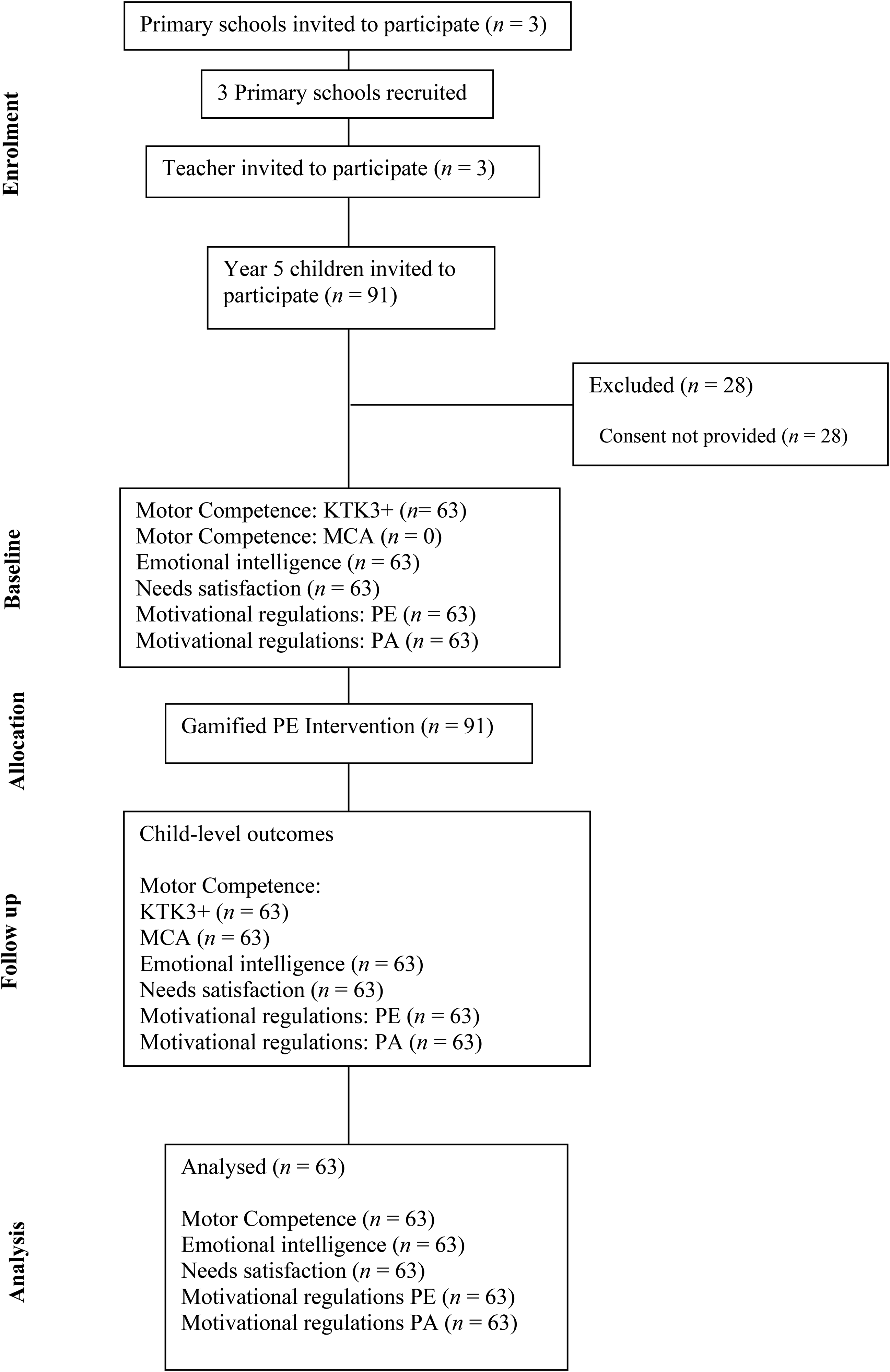
CONSORT flow diagram of participants throughout the study.
Qualitative findings
Implementation
Dosage and duration
Classroom teachers taught 26/30 scheduled gamified PE lessons (86.7%; progression criterion 3 = green). Schools A and B taught 8/10 lessons each (80%), and School C taught 10/10 lessons (100%). Missed lessons (n = 4) were due to a school inspection (n = 1; School B) and school commitments (e.g. school trips; n = 3 across Schools A and B). Children reported that 20/30 lessons had been taught (66.7%; progression criterion 4 = amber): School A = 2/10 (20%), School B = 8/10 (80%) and School C = 10/10 (100%). Child-reported reasons for missed lessons included non-teacher delivery (School A), school trips, and a sports day (School B).
Implementation degree
Ease of implementation
Teachers reported the lessons were easy to implement, and subthemes related to resources and lesson structure: ‘the teaching resources were easy to follow’ (Teacher B), ‘the diagrams made it easier, and were helpful for setting up and showing the children’ (Teacher C); and ‘the structure of the lessons were clear, so I knew what I needed to teach’ (Teacher A). Furthermore, teachers emphasised the importance of the CPD workshops for re-familiarisation with the lessons: ‘we went over the lessons and it made it easier to then deliver them’ (Teacher C) and implementation of the gamification strategies: ‘the workshops beforehand helped me to understand what the strategies were, and how we could implement them’ (Teacher A).
Challenges to implementation
Subthemes concerned the clarity of lesson diagrams: ‘…I think Miss [teacher] was a bit unsure on the set-up sometimes’ (Child C) and behavioural issues: ‘some people have ADHD, and some people mess around making it hard for Miss [teacher]’ (Child B). Teachers did not report major challenges or barriers but noted set-up time and equipment demands as occasional issues, which they felt were manageable with organisation. One teacher also cited limited indoor space: ‘our hall is tiny, when we had to come inside because of the weather, there isn’t much space’ (Teacher A).
Adaptations
The most commonly reported subthemes for adaptation during implementation were related to special educational needs (SEN): ‘I adapted the height of the hurdles [jumping and landing lesson] for the children with SEN, as I could see them struggling’ (Teacher A), and child competence: ‘we stayed on specific parts [levels] for longer if they were struggling and would bypass levels they found easier’ (Teacher B). Teachers stressed that knowing pupils’ needs made adaptation easier. They judged the lessons transferable to other schools, recommending early discussion of class needs, equipment availability, and practical PE space.
Integration
Suitability of the lessons for wider use
Subthemes most frequently reported by teachers were inclusivity: ‘they [the gamified PE lessons] appeal to a range of students and teachers and are really inclusive’ (Teacher C); the novelty of gamification: ‘it is a novel concept, and something both teachers and children will enjoy’ (Teacher B); and increased participation as factors that would make the lessons suitable for other schools. Participation was also commonly reported by children: ‘for people who do not like PE it is fun, and [child's name] joined in, and never normally does’ (Child B). Other subthemes frequently reported by the children were the enjoyability of the lessons: ‘they will enjoy them’ (Child C) and the gamification strategies: ‘…like you can do States [intervention theme] in the classroom but we did them in PE with the levels and challenges’ (Child C).
Acceptability
Appropriateness of the lesson content
Common subthemes were the variety of activities: ‘the variety worked well, there were lots of activities’ (Teacher A), volume of content: ‘it was good to have a lot planned, sometimes I was unsure on how the children would react’ (Teacher C) and the range of skills: ‘the children got to develop different skills’ (Teacher B). Other subthemes noted by both children and teachers included that the intervention was easy to follow, well structured and planned. Children particularly emphasised the importance of the narrative: ‘the PE lessons had a storyline you followed, and you completed activities to move on to the next’ (Child C). A few children felt that some lessons were either too easy or too difficult.
Appropriateness of the narrative
Children commonly attributed the narrative to be appropriate due to their previous input (co-development process) and the link between the narrative and activities: ‘all the activities linked to the story’ (Child A). The latter subtheme was also commonly reported by teachers: ‘they understand the activities because it's related to the narrative’ (Teacher A). Another common subtheme reported by teachers was the novelty: ‘it was something the children hadn’t done before’ (Teacher C) and coherency of the narrative: ‘the children understood and were familiar with the narrative concepts’ (Teacher B). However, a child indicated that the narrative (escaping Alcatraz as a prisoner) could be considered ‘controversial’, suggesting: ‘It's a bit controversial, if they learn violence from it, since you know cops, if prisoners don’t listen, they try to inflict violence’ (Child B).
Overall, teachers reported that the lessons aligned with the English National Curriculum for PE: ‘It covered learning aims for now, and previously for PE’ (Teacher B), and linked to other curriculum areas: ‘the PE lessons linked to other areas of the curriculum’ (Teacher C).
Satisfaction
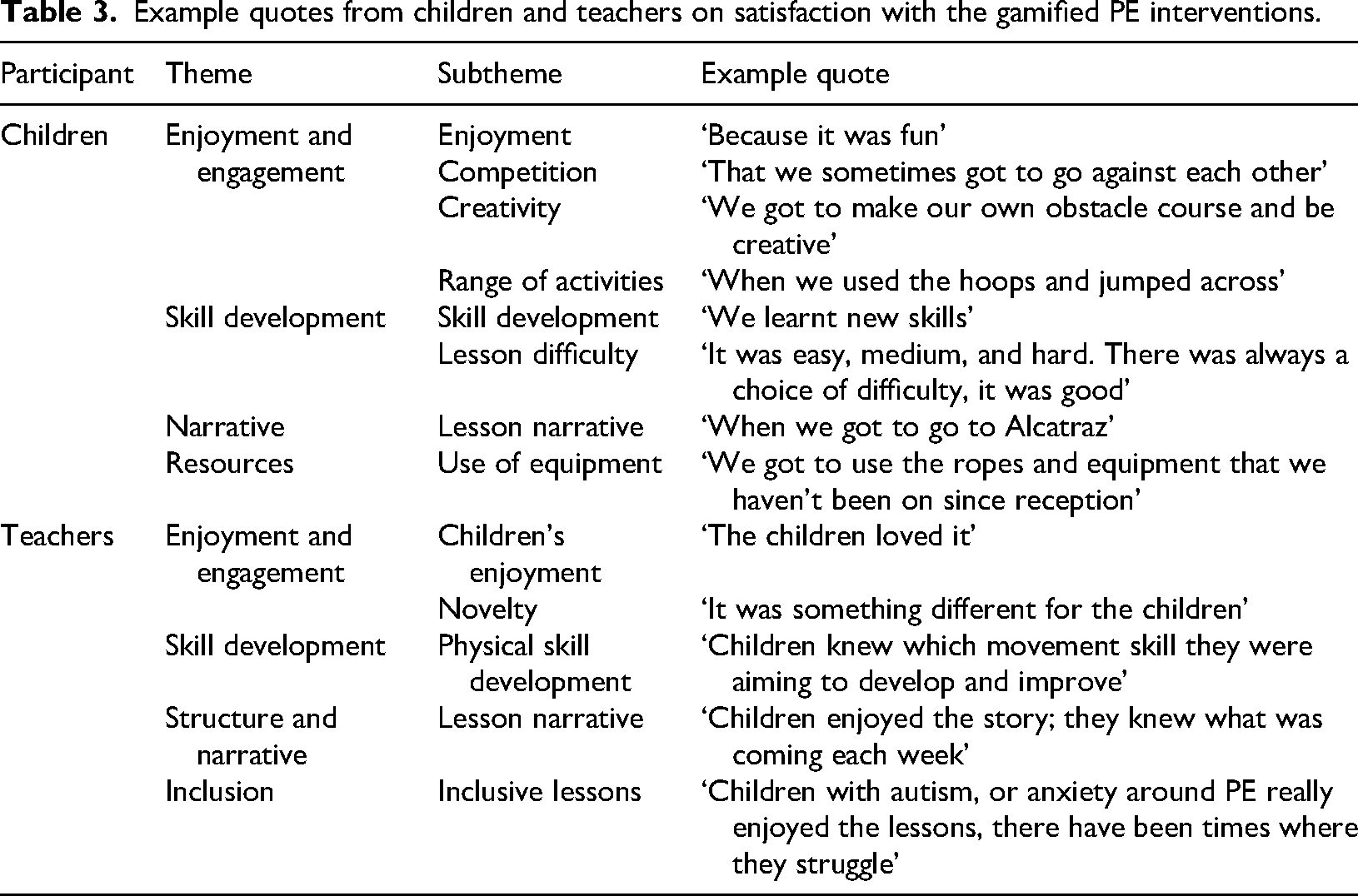
As shown in Table 3, teachers and children reported high satisfaction. The most commonly expressed subthemes from both teachers and children were high satisfaction with the obstacle course lessons: ‘I enjoyed seeing all the children working together’ (Teacher C); the gamification strategies: ‘I loved using gamification, it's easier to deliver something when you enjoy it’ (Teacher B); and the intervention generally: ‘sometimes I find PE un-fun, but this was fun’ (Child C). Children's examples of gamification strategies are provided in Supplemental File E.
Example quotes from children and teachers on satisfaction with the gamified PE interventions.
Usefulness of the lessons in promoting social and movement skills
Teachers reported the usefulness of the lessons in promoting different skills. The most expressed subthemes were teamwork, peer encouragement, and positive leadership. Other subthemes included increased participation: ‘one child usually just stands on the side, but they joined in’ (Teacher B). Children also noted the promotion of social skills. Commonly expressed subthemes were kindness, due to the reduced competition: ‘people were kinder to each other because there aren’t winners and losers’ (Child B); co-operation: ‘I worked with people I don’t usually and got better at it’ (Child C) and teamwork: ‘we worked better as a team’ (Child B). Another subtheme expressed by children was that the lessons helped them improve specific movement skills: ‘throwing and catching, now I can catch the ball, and it doesn’t just go in my face’ (Child C).
Dissatisfaction
A minority of children indicated dissatisfaction. Common subthemes included lesson difficulty: ‘it needed to be harder’ (Child B); specific skills: ‘I didn’t like how you had to land when you jumped’ (Child C); lesson pace: ‘it needed to be faster’ (Child B); unclear rules: ‘the rules needed to be clearer’ (Child C) and peers’ behaviour: ‘people didn’t listen properly’ (Child B).
Intention for future use
Two out of three teachers demonstrated intent to continue using the gamified PE lessons. Teacher A reported: ‘I have loved doing it, I plan to try it next year with a new class’. Teacher C indicated plans to use it for either (a) cross-curricular teaching: ‘we can use different parts of the curriculum for areas of learning in different subjects’ or (b) specific skill development: ‘I can use the curriculum if the children are struggling on a specific skill’. One teacher demonstrated no intent to use the curriculum: ‘no, I am moving down to Year 1, and the skill level and narrative wouldn’t be appropriate for that age’ (Teacher B).
Secondary outcomes
At T0 and T1, 63 children (n = 28 boys, n = 35 girls; 9.43 ± 0.05 years) completed all pre-post assessments and were included in complete case analyses of intervention effects. Table 4 presents descriptive statistics.
Mean and standard deviation (SD) from the raw scores for each child-level outcome at pre (T0) and post (T1) intervention (n = 63).
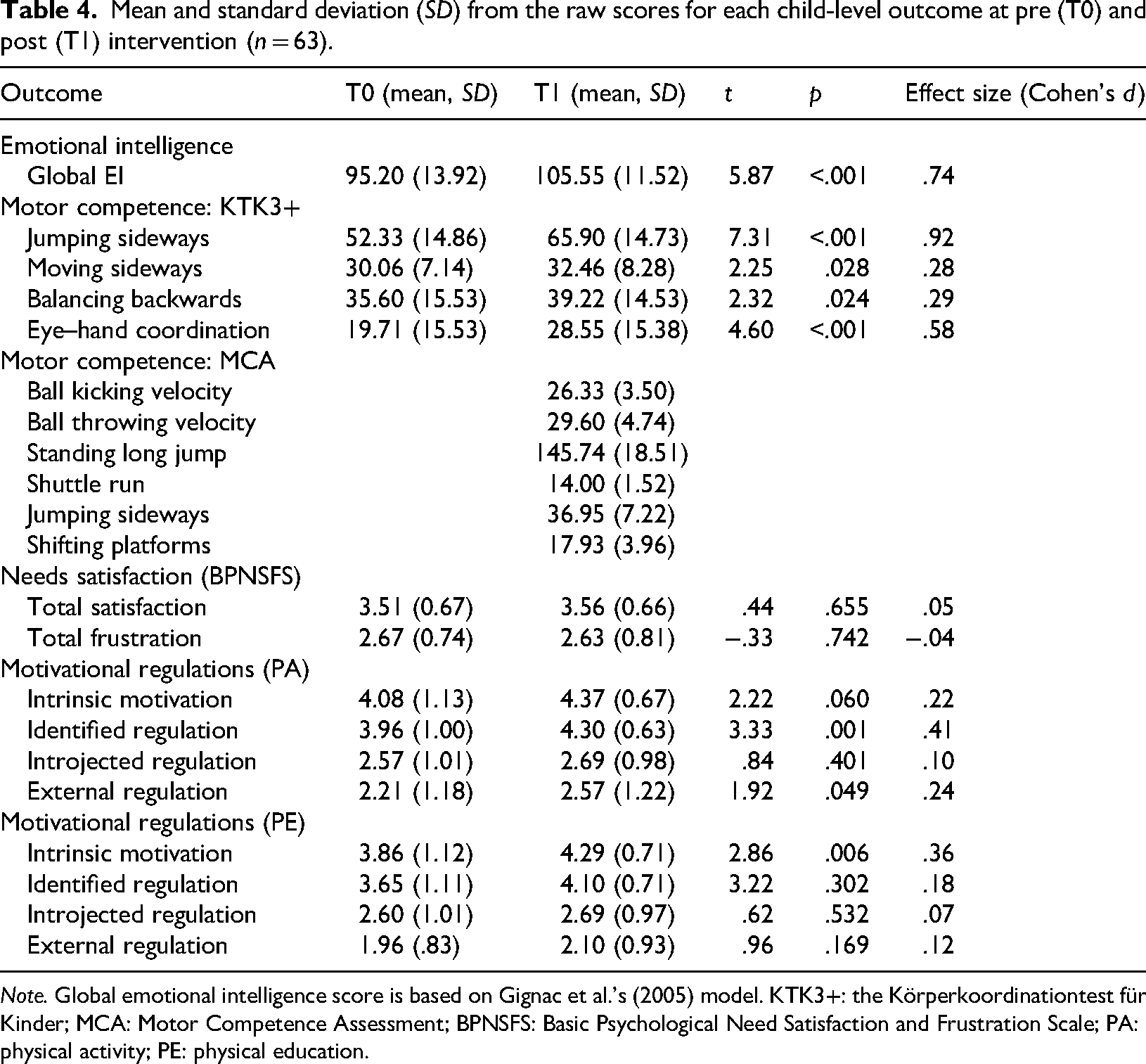
Note. Global emotional intelligence score is based on Gignac et al.’s (2005) model. KTK3+: the Körperkoordinationtest für Kinder; MCA: Motor Competence Assessment; BPNSFS: Basic Psychological Need Satisfaction and Frustration Scale; PA: physical activity; PE: physical education.
Emotional intelligence
The SSEIT had poor internal consistency for the majority of the subdomains, both under the original Schutte structure and alternative structures (Cronbach's α = .21–.60; see Supplemental File F for detailed results). The global EI score derived from the Gignac et al. (2005) model demonstrated good reliability (α = .80) and was retained as the primary outcome. Global EI significantly improved from pre-test to post-test: F(1, 61) = 38.02, p < .001, η2p = .384, with scores higher at post-test.
Motor competence
KTK3+ scores significantly improved from pre-test to post-test for jumping sideways: F(1, 61) = 51.55, p < .001, η2p = .458; moving sideways: F(1, 61) = 5.38, p = .024, η2p = .075; balancing backwards: F(1, 61) = 4.96, p = .030, η2p = .075; and eye–hand coordination: F(1, 61) = 19.87, p < .001, η2p = .246. As the MCA was administered only at T1, only descriptive statistics are presented.
Needs satisfaction
The BPN satisfaction and frustration scale had good internal consistency: ≥.80. No significant pre- to post-test differences were observed for needs satisfaction: F(1, 61) = .224, p = .638, η2p = .005 and needs frustration: F(1, 61) = .131, p = .719, η2p = .002.
Motivational regulations (PA)
The BREQ adapted to PA had good internal reliability: ≥.80. Increases from pre-test to post-test were found for identified regulation: F(1, 61) = 11.84, p < .001, η2p = .386, and external regulations: F(1, 61) = 4.15, p = .046, η2p = .064.
Motivational regulations (PE)
The BREQ adapted to PE had good internal consistency: ≥.80. Increases from pre-test to post-test were found for intrinsic motivation: F(1, 61) = 10.08, p = .002, η2p = .142. No significant increases from pre-test to post-test were found for identified regulation: F(1, 61) = .712, p = .402, η2p = .012, introjected regulation: F(1, 61) = .712, p = .402, η2p = .012, and external regulation: F(1, 61) = 1.51, p = .223, η2p = .024.
Discussion
This study investigated the feasibility, acceptability and preliminary effectiveness of a co-developed, gamified PE intervention. To the best of our knowledge, this is the first study in England to investigate these specific aims, with only one other study conducted in Spain (Fernandez-Rio et al., 2020). In addition, this is the first gamified PE intervention targeting both MC and EI. Findings suggest the study trial to be feasible in a primary school context, with excellent child recruitment and retention rates, indicating that scale up to a definitive experimental trial is feasible. These recruitment and retention findings are consistent (Fairclough et al., 2024) or better (Johnstone et al., 2019) than those previously reported for school-based interventions. High recruitment and retention could be attributed to the schools’ previous involvement in the co-development phase (Rice et al., 2025) and clear communication of the research programme and benefits during recruitment, which likely minimised attrition. Attrition rates, which are typically high in school-based research (Henneberger et al., 2023), were excellent in this study, likely due to the co-development of the intervention (Rice et al., 2025), flexible scheduling, and advance notice of data collection. Adherence rates were good, with missed lessons communicated to the first author via email. However, it remains unclear whether one school taught the lessons, due to reporting discrepancies between the teacher and children. This may reflect challenges faced by the teacher, possibly due to external pressures or time constraints. To address this, weekly evaluation logs should be provided to the teachers to triangulate data (Wong et al., 2022).
The findings indicated that the gamified PE lessons were feasible. Teachers attributed this to the high-quality teaching resources, which are important indicators of intervention feasibility, as they can increase children's participation and learning (Jago et al., 2019). Teachers also highlighted the importance of the CPD workshops, which enhanced their pedagogical practice to provide optimal learning conditions (Morgan et al., 2013). These findings strengthen the argument that high-quality PE is supported by CPD that focuses on pedagogy (i.e. gamification), to further children's engagement and enjoyment (Morgan et al., 2019). While findings suggest implementation was not overly complex, some logistical and behavioural challenges were present, consistent with previous research (Quarmby et al., 2019). Adaptations were feasible, particularly for those with SEN, contrary to the notion that PE neglects such students (Maher, 2018). Furthermore, teachers’ willingness to adapt the lessons suggests their competence and confidence in implementing the lessons (Bowins and Beaudoin, 2011). Findings also indicated that the gamified PE lessons could be implemented in other schools due to their inclusive and enjoyable nature (Fernandez-Rio et al., 2020).
The findings also demonstrated acceptability. Teachers expressed the novelty of using gamification in PE, and the quantity of strategies did not increase their workload, as previously reported (Fernandez-Rio et al., 2020), further supporting the decision to include a minimum of four strategies per lesson (Rice et al., 2025). The children particularly valued teamwork, supporting the idea that gamification has the potential to foster social interaction (Gil-Madrona et al., 2022). Given that children develop MC and EI through social interactions (Holloway and Long, 2019), these findings are important. Teachers also noted that the interventions were effective in promoting both physical and social skills (Abusleme-Allimant et al., 2023). However, some children expressed dissatisfaction with unclear rules, lesson difficulty and disliking of specific skills (Mclellan et al., 2022), necessitating rule adjustments in future studies. While some teachers expressed the intention to continue using the lessons post-intervention, one teacher considered them unsuitable for their new Year 1 class (aged 5–6). This is unsurprising given differences in expected age-related movement skill development and difficulty of the respective activities (Bolger et al., 2018).
A key consideration in interpreting our EI findings was the suitability of the SSEIT. Although the SSEIT has previously been used with children (e.g. Mohammadi Orangi et al., 2023; Williams et al., 2009), analyses revealed the subdomains across both the original and alternative structures were unreliable in this sample, consistent with previous critiques (Petrides and Furnham, 2000). In contrast, the global EI score derived from the Gignac et al. (2005) model demonstrated good reliability and was retained as the primary outcome. Findings revealed a significant improvement in global EI from pre- to post-test, suggesting that the intervention had a positive impact. This improvement could possibly be attributed to the increased social interaction facilitated by the gamification strategies (i.e. narrative and relationships) embedded in the intervention. Previous evidence has indicated these strategies as beneficial for improving EI in other populations (Navarro-Mateos et al., 2024).
In contrast to a previous gamified intervention that showed only an effect on balance (Fernández-Vázquez et al., 2024), the present study found a positive effect on children's MC, as indicated by the KTK3+ results. These findings are encouraging, as pre-test scores were significantly below the normative values for the KTK3+ (Coppens et al., 2021). However, at post-test, scores for jumping sideways and eye–hand coordination were higher than the normative values for children aged 9 and 10, while scores for moving sideways and balancing backwards were close to the normative value (Coppens et al., 2021), suggesting a regression to the mean. There are two plausible explanations for this increase in MC. Firstly, the gamified PE interventions in the current study were explicitly designed to target MC, and PE interventions specifically designed to target MC are more effective than standard PE interventions (Foweather and Rudd, 2020). Second, gamification strategies, such as levels and challenges, may have contributed to the improvements since they theoretically support competence need satisfaction (Blain et al., 2022). These gamification strategies were either absent or not clearly described in the intervention by Fernández-Vázquez et al. (2024), which could explain the lack of observed effects in their study, as well as a potential ceiling effect in young adults.
An increase in needs satisfaction and a decrease in needs frustration were also observed, although these changes were negligible, possibly due to inconsistent lesson delivery. Consistent with Ferriz-Valero et al. (2020), we observed a significant increase in external regulation in PA, which could be attributed to the use of points. While external rewards can reduce autonomous motivation, such tangible elements are important for the successful implementation of gamification (Fernandez-Rio et al., 2020). Importantly, and consistent with previous research (Fernández-Río et al., 2020; Sotos-Martinez et al., 2024), a significant increase in intrinsic motivation in PE was also observed, suggesting the gamified intervention supported more self-determined forms of motivation, despite the presence of points. These findings are positive, as more autonomous forms of motivation have been positively associated with affective (enjoyment) and behavioural (effort) outcomes in PE (de Bruijn et al., 2023). A significant increase in identified regulation for PA was also observed, possibly reflecting a change in personal importance and conscious valuing of PA (Vasconcellos et al., 2020). However, as Lonsdale et al. (2011) suggest, children may struggle to differentiate between what they enjoy (intrinsic) and what they value (identified), providing some context to these findings. Overall, preliminary findings are encouraging (Dowling and Barry, 2020), but a comparison group is needed in a future study to determine causality.
Limitations and future directions
Although this study demonstrates valuable findings, there are also limitations. As this was a single-group design, there was no control group, so we are unable to determine if the improvements were related to the gamified PE lessons or other unaccounted factors, such as growth and maturation (Lopes et al., 2020). A future pilot study should examine the relative impact of the gamified PE lessons through a randomised controlled trial. Furthermore, the data collection was carried out with a small sample, so a future definitive study should include a larger sample to ensure generalisability of findings. The MCA data were only collected at post-test, limiting interpretations of intervention effectiveness on MC. Finally, while the SSEIT has been used in previous studies (e.g. Williams et al., 2009), our analyses indicated that the subdomains were not reliable in this sample. This highlights an important feasibility finding: the SSEIT may not be suitable for measuring specific EI domains in primary school-aged children. Future work should therefore prioritise validating EI measures in this population in line with COSMIN guidance (Mokkink et al., 2018), and consider alternative instruments where available (e.g. TEIQue-Child; Mavroveli et al., 2008).
Conclusion
Our findings suggest a full-scale trial would be feasible. The findings demonstrated the gamified PE lessons to be feasible and acceptable, and it is encouraging to see that they could be implemented by non-specialist PE teachers. In addition, preliminary data showed favourable changes in children's EI and MC following participation in the intervention. Future studies including a control group and a larger sample size are needed to evaluate the effectiveness. Specifically, a cluster randomised controlled trial, comparing gamified vs. traditional PE, is recommended to isolate intervention effects. Furthermore, to enhance intervention adherence and fidelity, weekly logs and video observation (n = 3 over the 10 weeks) would need to be implemented in the full trial.
Supplemental Material
sj-pptx-1-epe-10.1177_1356336X251388628 - Supplemental material for Feasibility, acceptability and preliminary effectiveness of a gamified physical education intervention on motor competence and emotional intelligence
Supplemental material, sj-pptx-1-epe-10.1177_1356336X251388628 for Feasibility, acceptability and preliminary effectiveness of a gamified physical education intervention on motor competence and emotional intelligence by Jenna Rice, Lawrence Foweather, Ceriann Magill, Jonathan Foulkes, An De Meester, Matthieu Lenoir, David Stodden and Katie Fitton Davies in European Physical Education Review
Supplemental Material
sj-docx-2-epe-10.1177_1356336X251388628 - Supplemental material for Feasibility, acceptability and preliminary effectiveness of a gamified physical education intervention on motor competence and emotional intelligence
Supplemental material, sj-docx-2-epe-10.1177_1356336X251388628 for Feasibility, acceptability and preliminary effectiveness of a gamified physical education intervention on motor competence and emotional intelligence by Jenna Rice, Lawrence Foweather, Ceriann Magill, Jonathan Foulkes, An De Meester, Matthieu Lenoir, David Stodden and Katie Fitton Davies in European Physical Education Review
Supplemental Material
sj-docx-3-epe-10.1177_1356336X251388628 - Supplemental material for Feasibility, acceptability and preliminary effectiveness of a gamified physical education intervention on motor competence and emotional intelligence
Supplemental material, sj-docx-3-epe-10.1177_1356336X251388628 for Feasibility, acceptability and preliminary effectiveness of a gamified physical education intervention on motor competence and emotional intelligence by Jenna Rice, Lawrence Foweather, Ceriann Magill, Jonathan Foulkes, An De Meester, Matthieu Lenoir, David Stodden and Katie Fitton Davies in European Physical Education Review
Supplemental Material
sj-docx-4-epe-10.1177_1356336X251388628 - Supplemental material for Feasibility, acceptability and preliminary effectiveness of a gamified physical education intervention on motor competence and emotional intelligence
Supplemental material, sj-docx-4-epe-10.1177_1356336X251388628 for Feasibility, acceptability and preliminary effectiveness of a gamified physical education intervention on motor competence and emotional intelligence by Jenna Rice, Lawrence Foweather, Ceriann Magill, Jonathan Foulkes, An De Meester, Matthieu Lenoir, David Stodden and Katie Fitton Davies in European Physical Education Review
Supplemental Material
sj-docx-5-epe-10.1177_1356336X251388628 - Supplemental material for Feasibility, acceptability and preliminary effectiveness of a gamified physical education intervention on motor competence and emotional intelligence
Supplemental material, sj-docx-5-epe-10.1177_1356336X251388628 for Feasibility, acceptability and preliminary effectiveness of a gamified physical education intervention on motor competence and emotional intelligence by Jenna Rice, Lawrence Foweather, Ceriann Magill, Jonathan Foulkes, An De Meester, Matthieu Lenoir, David Stodden and Katie Fitton Davies in European Physical Education Review
Footnotes

Funding
The authors received no financial support for the research, authorship, and/or publication of this article.
Declaration of conflicting interests
The authors declared no potential conflicts of interest with respect to the research, authorship, and/or publication of this article.
Supplemental material
Supplemental material for this article is available online.
Author biographies
References
Supplementary Material
Please find the following supplemental material available below.
For Open Access articles published under a Creative Commons License, all supplemental material carries the same license as the article it is associated with.
For non-Open Access articles published, all supplemental material carries a non-exclusive license, and permission requests for re-use of supplemental material or any part of supplemental material shall be sent directly to the copyright owner as specified in the copyright notice associated with the article.
