



Abstract
The recent emergence of primary school generalist teachers with physical education (PE) expertise has addressed calls for some form of specialisation in primary PE provision in Ireland ( Marron et al., 2018). It was hoped that these teachers could advance the quality of PE taught within schools, through their own teaching and by supporting colleagues ( Ní Chróinín, 2018). Despite PE specialism graduates (PESGs) developing teaching orientations and high self-efficacy to teach PE during their professional socialisation, it is unclear how their skills are applied within schools. This study examined the organisational socialisation of PESGs through a micropolitical lens, drawing on the research of Kelchtermans and Ballet (2002a, 2002b). Adopting a critical realist approach enabled us to explore teachers’ complex teaching realities. Semi-structured interviews were conducted with 11 graduates of the four-year Bachelor of Education with a major specialism in PE. Reflexive thematic analysis of interview data identified that PESGs had limited opportunities to apply their PE skills due to the conflicting custodial orientations of their schools. Due to PESGs’ professional interests, they were more likely to assimilate with the existing school culture as early career teachers, even if it overlooked their PE expertise. The outsourcing of PE provision to external coaches, and PESGs’ identity as novice teachers, also undermined their potential contribution as PE experts. Although some PESGs have positively used their knowledge to direct whole-school PE provision, more structured opportunities may be necessary to support the continued development of PESGs as teachers and leaders of PE.
Introduction
Physical education (PE) is positioned within a continuously changing landscape of social, cultural, and political agendas, presenting a challenging environment for teachers to navigate (Carse et al., 2018). There has been much debate regarding who is best placed to teach PE within this complex ecosystem, with the benefits of generalist and specialist teachers argued for in different contexts (Jones and Green, 2017). The Irish primary PE curriculum suggests that generalist teachers are best placed to deliver a balanced PE programme, supporting integration between PE and other curricular areas (Government of Ireland, 1999). These generalist teachers are responsible for teaching all curricular areas, including the recommended 60 minutes of weekly PE (Government of Ireland, 1999). While the new curriculum framework has recommended an increased time allocation for PE (National Council for Curriculum and Assessment, 2023), this may need to be approached with caution.
PE teaching in Ireland remains ‘largely influenced by the experience and interests of the individual teachers’, and the frequency, duration, and content delivered varies greatly (Ní Chróinín, 2018: 208). Although teachers are developing more teaching-oriented views, PE continues to reflect ‘the dominant aspects of wider physical culture in Ireland’, such as sport and health (Coulter and Ni Chroinin, 2013: 838). This is reflected in the perpetuating cycle of games-dominated delivery (Woods et al., 2023) and the prevalence of programmes such as the Active School Flag (ASF), promoting physical activity participation and the self-evaluation of PE curriculum delivery (Bowles et al., 2017). While recent findings suggested that children received an average of 85 minutes of PE per week in 2022, the content was heavily skewed towards the games strand (Woods et al., 2023). Primary PE provision in Ireland has followed the international trend of outsourcing the teaching of PE to external coaches (Jones and Green, 2017; Mangione et al., 2020). Schools often recognise external coaching as PE curriculum time, displaying a preference for sport-specific knowledge, even though it may not align with the curriculum (Mangione et al., 2022). While Gaelic games 1 ‘should be given particular consideration as part of the games programme’ within the curriculum (Government of Ireland, 1999: 4), it is often taught throughout the year, with teachers accepting coaches’ services uncritically, satisfied it meets the needs of children (Bowles and O'Sullivan, 2020). These coaches are given freedom to shape the content provided, with teachers conceding that the coaches are ‘better positioned to make relevant content decisions’ (Mangione et al., 2022: 13). The reduced teacher involvement in PE facilitates a lack of accountability for the quality of teaching (McVeagh et al., 2022), and may contribute to the imbalanced delivery of the curriculum (Woods et al., 2023).
Following calls for some form of specialisation in the provision of Irish primary PE, a major specialism in PE has been included in the four-year Bachelor of Education (BEd) degree since 2012 (Marron et al., 2018). All generalist teachers engage in approximately 30–50 hours of PE training during their four-year undergraduate degree (Ní Chróinín, 2018). Through the PE specialism, less than 6% of these teachers (approximately 55 per year) get the opportunity to engage in an additional 90–150 hours of PE modules during their degree (Ní Chróinín, 2018). The PE specialism provides generalist teachers with further opportunities to develop content knowledge and engage in practical teaching experiences, supporting the development of teaching orientations and self-efficacy to teach PE (Brennan et al., 2021; Brennan et al., 2023). Given the additional expertise of PE specialism graduates (PESGs), they have been identified as potential leaders and change agents in the teaching of Irish primary PE (Marron et al., 2018). As well as directly impacting the quality of PESGs’ teaching of PE, stakeholders hoped that it may have a ripple effect, improving the standard of PE taught across schools (Ní Chróinín, 2018). The model of in-situ teachers with specialist expertise mentoring their colleagues has enhanced the provision of other curricular areas, such as music (Barrett et al., 2019). Informal leadership practices in PE also have the potential to enhance teaching and learning, and PESGs could be suitably equipped to fulfil these roles (Clohessy et al., 2021). Considering the novelty of the specialism programme, it is unclear if PESGs’ entry into the workforce can be a catalyst for improved PE practices. PESGs constitute a small proportion of primary teachers in Ireland, with expertise in a highly contested subject landscape (Griggs and Randall, 2019). It is important to understand how PESGs navigate their teaching contexts as generalist teachers with expertise in PE.
Teacher socialisation
Grounded in occupational socialisation theory, teacher socialisation explains how teachers establish professional expectations and practices through the ‘social and political processes that frame their experience’ (Richards et al., 2019: 86). Teachers negotiate a variety of influences during this dialectical process, predominantly presented within three phases: acculturation, professional socialisation, and organisational socialisation (Richards et al., 2019). Acculturation includes teachers’ experiences and interactions before entering the profession, through which they develop a subjective warrant about the ‘nature and goals of a physical education teacher's work and the advantages, for them, of carrying out such work’ (Curtner-Smith, 2016: 34). As teachers’ beliefs develop, they can be positioned on a continuum from teaching-oriented, placing a value on the educational experience, to coaching-oriented, prioritising competitive sports participation over curricular PE (Richards, 2015). Teachers with coaching orientations are also more likely to have custodial orientations, maintaining the status quo, while those with teaching orientations are more likely to adopt innovative approaches in schools (Curtner-Smith, 2016). Findings have shown that many PESGs experienced a limited delivery of the PE curriculum, and entered teacher education with beliefs that aligned more closely with coaching orientations (Brennan et al., 2023). Professional socialisation comprises teachers’ subsequent experiences from their enrolment in teacher education to graduation. It can play an essential role in helping teachers to reflect on their understanding of PE, moving beyond their acculturation and preparing them for their teaching realities (Lawson, 1983; Richards et al., 2019). However, this is sometimes recognised as the weakest phase within teacher socialisation, as teachers actively accept or reject the values, skills, and knowledge presented based on their prior orientations (Richards et al., 2020). Evidence has suggested that professional socialisation through the PE specialism can expand PESGs’ understanding of PE, developing teaching orientations (Brennan et al., 2023). Organisational socialisation includes teachers’ experiences while practising as qualified teachers, developing their understanding of teaching within the school context (Richards et al., 2019). Despite the positive indications during PESGs’ professional socialisation, it is unclear if this impacts their subsequent practices in schools, with survey findings suggesting that PESGs predominantly undertook roles supporting physical activity and school sport, rather than supporting the teaching of PE (Brennan et al., 2021; Brennan et al., 2023). PESGs are also entering Irish primary schools where the emphasis on literacy and numeracy ‘has created barriers for teachers to fully implement the PE curriculum’ (Coulter and Woods, 2012; Ní Chróinín, 2018: 210). As a result of social interactions within the school environment, teachers sometimes adjust their practice and engage in strategic compliance (Richards et al., 2018). The reality shock faced by teachers in custodial school environments can result in the washout of knowledge and skills (Blankenship and Coleman, 2009; Zeichner and Tabachnick, 1981). Kelchtermans and Ballet's (2002a) concept of ‘micropolitical literacy’ provides a theoretical lens to explore teachers’ organisational socialisation in greater detail.
Micropolitical literacy
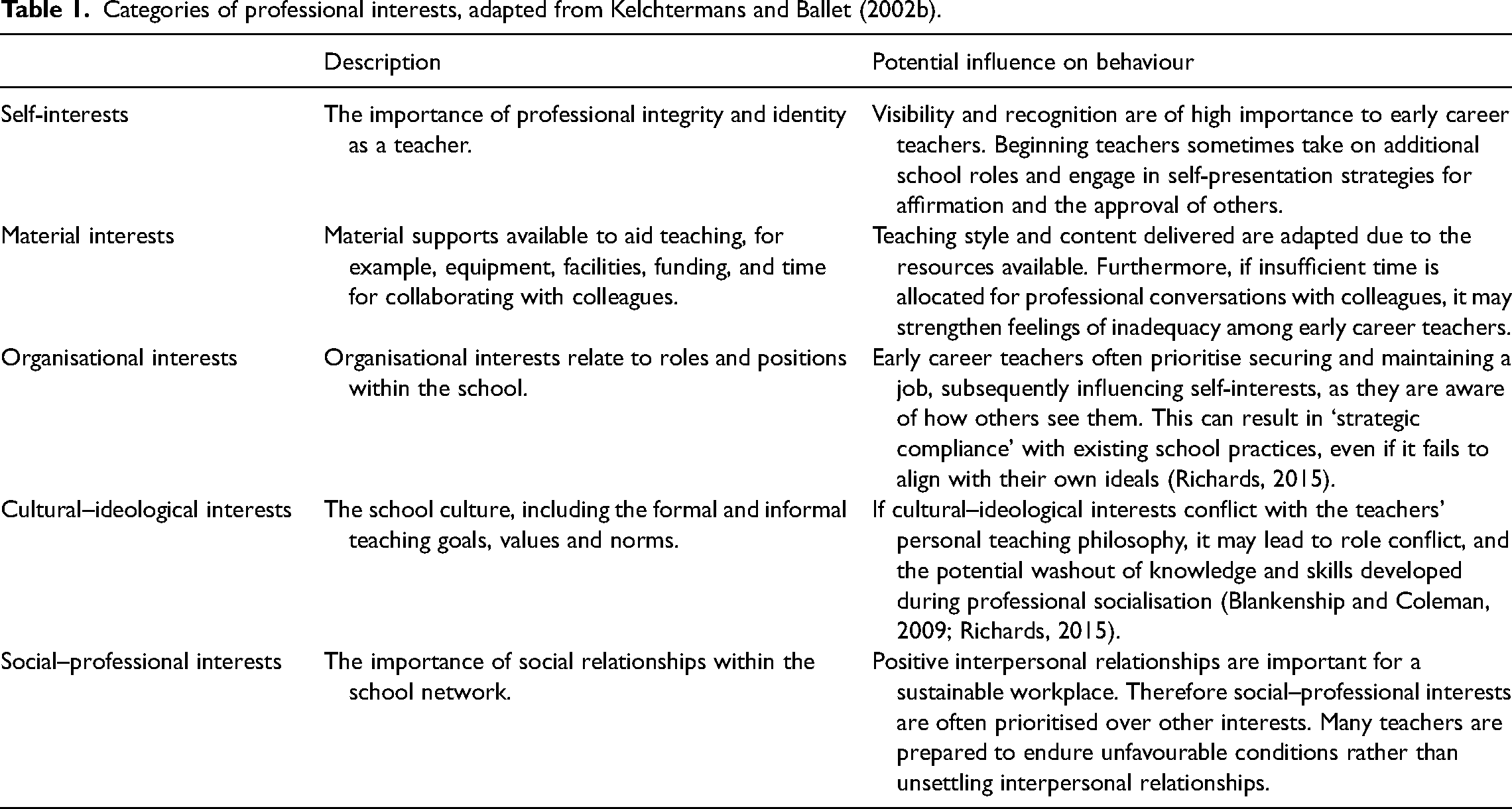
Micropolitical literacy was chosen to examine the dialectical nature of teachers’ socialisation, as they negotiate the socialising factors within their environment (Richards et al., 2019). When analysing the school network under a micropolitical lens, it reveals the ‘formal and informal power’ that may inhibit or encourage leadership and knowledge sharing (Blase, 1991: 11). Teachers’ micropolitical literacy enables them to understand the micropolitics of their schools and establish themselves effectively within this network (Kelchtermans and Ballet, 2002a). If novice teachers struggle to recognise and address socialising factors, ‘reality shock and washout are likely to occur’ (Mellor et al., 2021: 43). Micropolitically literate teachers can ‘acknowledge, interpret and understand’ situations, and effectively apply strategies to ‘establish, safeguard or restore desirable working conditions’ (Kelchtermans and Ballet, 2002a: 765). Interdependent professional interests shape teachers’ behaviours and practices in schools, particularly during their integration into the workplace (Kelchtermans and Ballet, 2002b). These interests can determine whether teachers’ practices are influenced by their teacher education experiences or other elements of their socialisation, such as prior experiences of PE from their acculturation (Curtner-Smith, 2016). These professional interests and the potential implications of these interests on teachers’ practices are presented in Table 1.
Categories of professional interests, adapted from Kelchtermans and Ballet (2002b).
If PESGs engage in self-presentation strategies to support job prospects, it can result in them actively promoting their skills to other school staff, as suggested by Kelchtermans and Ballet (2002a). If these strategies are applied to promote PESGs’ additional PE knowledge and expertise, it could create opportunities for informal leadership practices (Clohessy et al., 2021). The opposite, however, is also true. If teachers lack the micropolitical literacy to navigate their contexts, the pressures of the institutional press can result in them abandoning their PE skills, and assimilating with existing school practices (Richards, 2015; Zeichner and Tabachnick, 1981). The introduction of the Droichead induction programme has shown the potential to facilitate a professional learning culture and knowledge sharing within Irish schools (Smyth et al., 2016). Through this model, newly qualified teachers (NQTs) are mentored by a school-based professional support team and engage in additional professional learning activities (Smyth et al., 2016; The Teaching Council, 2017). The Droichead framework aims to support NQTs based on their learning needs as they are socialised into the teaching profession (The Teaching Council, 2017). As part of this socialisation process, it is important to investigate the micropolitical landscape within PESGs’ school contexts, including the factors that facilitate or inhibit their development. Due to the marginalised status of PE within schools (Richards et al., 2018), PESGs are presented with a challenging environment to navigate. To apply their PE expertise, PESGs may have to overcome barriers such as the outsourcing of PE provision, limited access to facilities, and varied understandings of PE within schools (Ní Chróinín, 2018).
This study explored the organisational socialisation experiences of PESGs through a micropolitical lens. Much research has investigated the socialisation of early career specialist PE teachers (Ensign and Woods, 2017; Richards and Templin, 2011; Westerlund and Eliasson, 2021) and the socialisation of generalist teachers in international contexts (Morgan and Hansen, 2008). However, the socialisation of this unique cohort of teachers presents different challenges. Despite their PE expertise, PESGs have the same responsibilities as their generalist colleagues. Their integration as teachers and leaders of PE is multifaceted, and this study aimed to provide valuable insights into the structures, power dynamics, and relationships that influence PE provision within Irish primary schools. Developing a greater insight into PESGs’ teaching realities can support the development of the specialism programme in Irish and international contexts. It can also add to the evidence base informing professional development programmes, ensuring teachers are equipped to use their skills effectively. This study investigated:
How PESGs’ skills are being used in schools. How PESGs have navigated their micropolitical landscapes as generalist teachers with expertise in PE.
Methods
Participants
This study was part of a broader investigation into the socialisation of PESGs. Ethical approval was attained from the university's research ethics committee, prior to commencement (Ref: A19-048). A volunteer sample of 11 graduates of the four-year BEd with a major specialism in PE participated in this study. We invited PESGs to participate in the study during a previous survey investigation (Brennan et al., 2021), which included approximately 36% of all PESGs (n = 80) from 2016 to 2019. The eligibility criteria for the present study required that all teachers had at least one year of teaching experience in a primary school, in the Republic of Ireland. Table 2 shows the sample of graduates from both higher education institutions that offer the PE specialism. Participants were graduates from 2016 to 2019, including generalist teachers and special education teachers (SETs). SETs do not have class teaching responsibilities within mainstream settings and are responsible for supporting children with identified special educational needs (Department of Education and Skills, 2020). Therefore, SETs do not have PE teaching responsibilities. PESGs were predominantly positioned within urban schools (n = 9), while only one participant taught in a Delivering Equality of Opportunity in Schools (DEIS) school, which provides support to address socio-economic exclusion. Due to the complex positioning of PE within schools (Carse et al., 2018), Table 2 also provides an insight into the school contexts that PESGs were navigating, presenting details related to physical activity and sports engagement within the schools.
Participant information and school data.
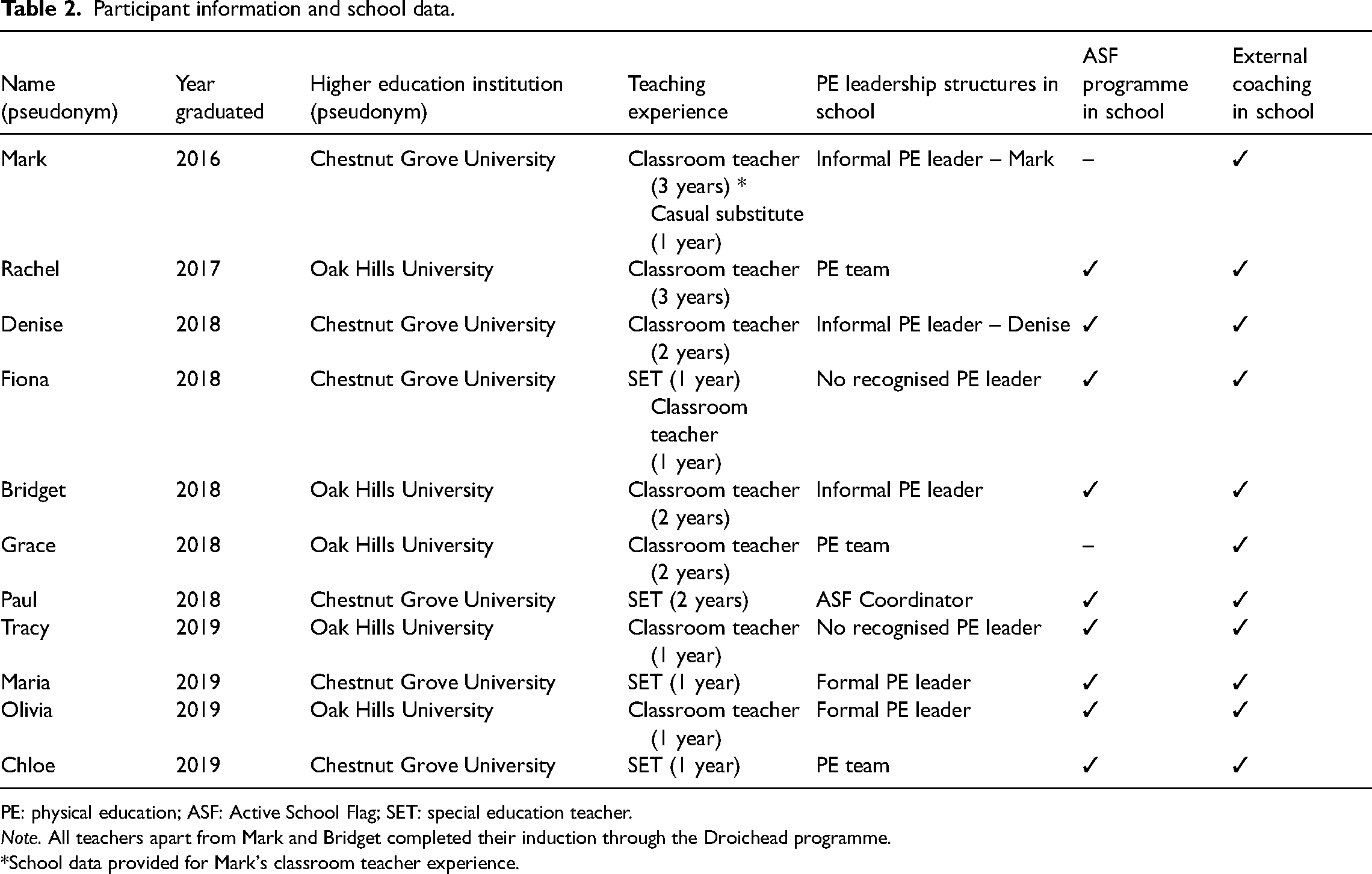
PE: physical education; ASF: Active School Flag; SET: special education teacher.
Note. All teachers apart from Mark and Bridget completed their induction through the Droichead programme.
*School data provided for Mark's classroom teacher experience.
Critical realism was the paradigmatic approach employed for this study, recognising that although there is an independent reality, we are accessing a mediated reflection of this reality through interactions with participants (Ryba et al., 2022). While critical realism acknowledges that reality exists beyond the observable data, it also facilitates the investigation of the causal structures and stratified nature of PESGs’ behaviours (Ryba et al., 2022). For example, although elements of PESGs’ socialisation may not be measurable, these aspects are also recognised as real. While our understanding of these unobservable aspects is based on inference, this research process can help to understand the variety of influences that shape PESGs’ socialisation. Critical realism complemented our investigation of the multifaceted micropolitical landscapes. It acknowledged that, as researchers, we are part of the sociocultural presentation of reality and therefore cannot produce a completely objective reality (Braun and Clarke, 2021).
Data collection
We carried out semi-structured online interviews via Microsoft Teams with participants in Summer 2020. It is important to note the potential influence of the COVID-19 pandemic on teachers’ realities at this time, as it may have magnified existing barriers to PE provision (Howley, 2022), particularly for 2019 graduates. Remote teaching was in place from March 2020 until the end of the school year, and some schools may have emphasised the ‘physical’ elements more than the ‘education’ elements in PE (Coulter et al., 2023). We chose interviews for this study as they can ‘illuminate the ways in which societies and cultures shape personal experience, meaning, decisions, values, motivations’ (Smith and Sparkes, 2016: 108). The use of interviews helped us to provide an insight into the micropolitical landscape of primary PE in Ireland and PESGs’ teaching realities. The principal author conducted the interviews and was a former classmate of three participants. While this positioned the interviewer as an insider researcher, with an understanding of the topic and a rapport with participants, researcher reflexivity was imperative to inhibit interviewer bias (Berger, 2013). As recommended by Berger (2013), it was important that the interviewer rigorously reflected on how they shaped the conversations, to maintain separation. This separation was supported by basing questions on the interview guide and the subsequent participant responses. As presented later in this section, tools such as interviewee-aided sociograms helped participants to direct the interview content (Ryan et al., 2014).
Interviews were audio recorded and lasted for 62 minutes, on average. Parts of these interviews investigated PESGs’ understanding of quality PE, and these findings have been presented in an earlier study (Brennan et al., 2023). This paper focused on PESGs’ integration into the school community as generalist teachers with expertise in PE. Therefore, questions explored the existing leadership structures within the school, the school's approach towards PE, how PESGs applied their skills within schools, and how PESGs can be supported in their leadership of PE. Questions were guided by Kelchtermans and Ballet's (2002a, 2002b) analysis of the micropolitics of teacher induction, teacher socialisation literature (Richards et al., 2019), and recent survey findings from PESGs (Brennan et al., 2021). The interview guide provided a framework for the interviewer, while also creating opportunities for curiosity-driven questions to probe participants’ responses and develop a deeper understanding of their experiences (Smith and Sparkes, 2016). Examples of planned questions included: Who do you see as leaders in the school environment? How do you feel PE is treated in your school, and how does this compare to your own understanding? Are other teachers in your school aware that you have completed the PE specialism? As a further stimulus, we invited PESGs to complete interviewee-aided sociograms during interviews (Ryan et al., 2014), to examine the whole-school approach to PE. This facilitated a form of ‘autobiographical self-thematisation’ as PESGs reflected on how they navigated their school contexts (Kelchtermans and Ballet, 2002b). Teachers rated factors understood to influence the teaching of PE within their schools on a scale of 1–10. These factors included: school culture, facilities, equipment, time allocation, external coaches, continuous professional development, and an ‘other’ category if PESGs wanted to include an additional influence. Interviewees awarded ratings to each category based on their perceived influence on PE provision within their school, awarding the most influential factors the highest ratings. These ratings visually portrayed participants’ views (see Figure 1), and were used as a discussion prompt rather than as a secondary data source. Categories were determined based on the aforementioned literature, and the sociograms helped to reduce the risk of interviewer bias, maintaining a balance of involvement and detachment (Elias, 1978). Although the interviewer is involved in the production of data with participants throughout semi-structured interviews (Perry et al., 2004), interviewee-aided sociograms supported some level of detachment for the interviewer. PESGs were empowered to direct the interview content based on the visual representations they created (Ryan et al., 2014). Participants took ownership of the discussion and reflected on how they navigated the influences within their micropolitical landscape (Norris et al., 2020). It also created opportunities for curiosity-driven questions based on participant responses, such as: ‘How do you feel about that approach? So you mentioned the value of external coaches and that they are important, how would you like to see them used?’ The use of interviewee-aided sociograms allowed the study to ‘benefit from insider knowledge restrained by degrees of detachment’ (Perry et al., 2004: 146).
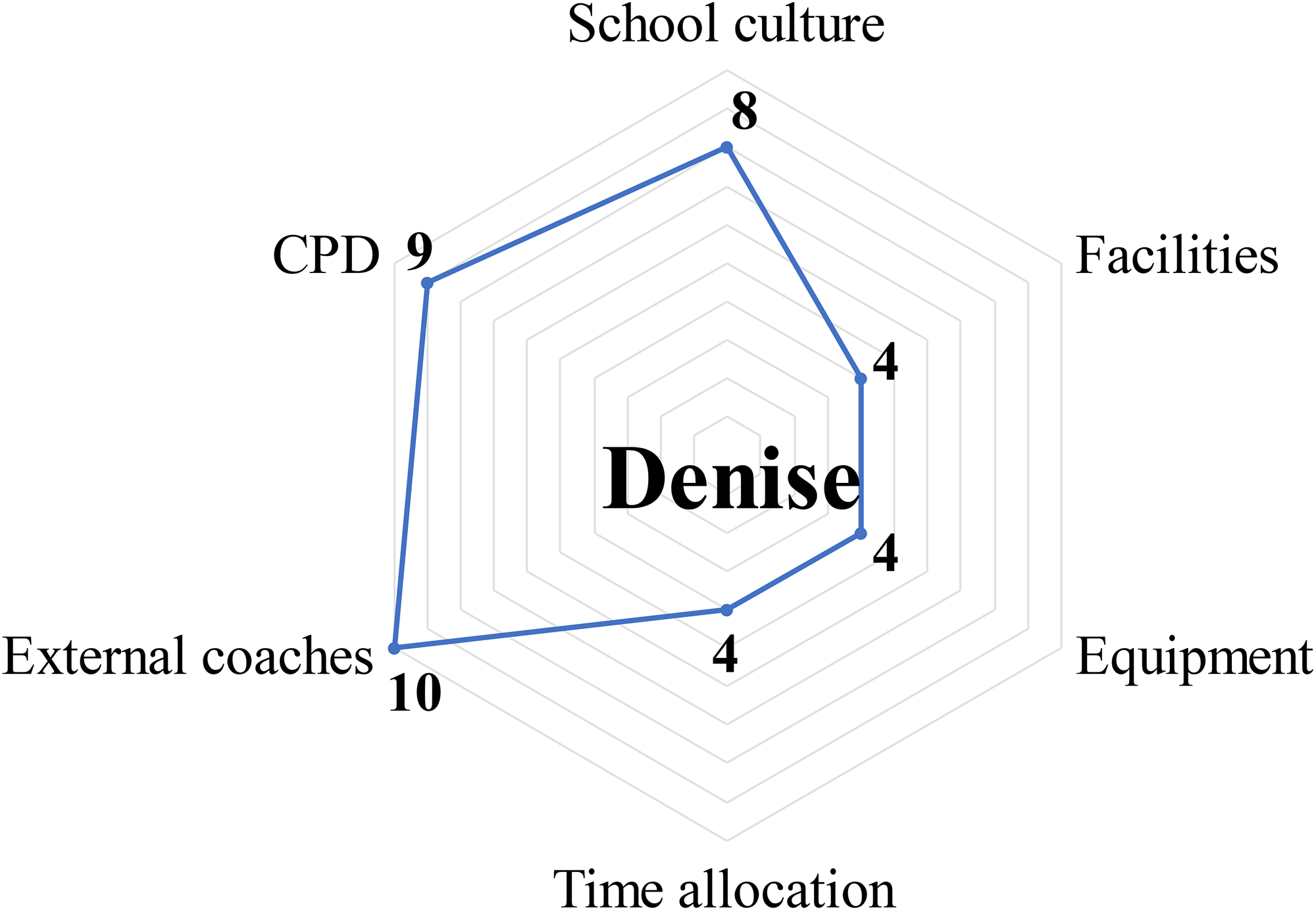
Sample of interviewee-aided sociogram. Note. Denise did not select an additional influence within the ‘other’ category. CPD: continuous professional development.
Data analysis
We chose Braun and Clarke's (2021) reflexive thematic analysis to analyse the interview data, recognising the researcher as part of knowledge formation within the critical realist approach. This reflexive approach allowed the analysis to be guided by relevant research, positioning the socially constructed realities of PESGs within the broader landscape of PE provision. The principal author conducted the analysis and engaged in regular discussions with the co-authors to maintain reflexivity throughout the analysis.
Following audio transcription, data familiarisation supported the identification and critiquing of possible patterns within the data (Braun and Clarke, 2021). The first phase of coding subsequently took place, inductively generating meanings relevant to the research questions within participant responses. These codes were reviewed, before they were collated based on meaningful shared patterns identified within the dataset, to construct initial themes. These initial themes highlighted PESGs’ cautious integration into the school community, as they prioritised alignment with existing practices over sharing their PE skills. It became clear that, although PESGs were applying micropolitical strategies, they were predominantly guided by the demands placed upon them as vulnerable, early career teachers rather than their PE expertise. After reviewing these initial themes, a more deductive analysis took place, which involved examining the impact of the school culture in greater detail, developing the themes further. Given the varied micropolitical landscapes presented, we reanalysed each transcript to determine how PESGs’ practices reflected the school context. Guided by centrally organising concepts, we constructed three main themes that were subsequently refined, defined, and named, as presented in Table 3. These themes presented PESGs’ micropolitical landscapes in greater detail, illustrating how they navigated these school contexts and applied their skills. While it was evident that school cultures presented challenges to PESGs in applying their PE expertise, contrasting practices were evident within these networks that facilitated or inhibited their development. Throughout the writing process, we modified the themes, and the finalised themes are presented in the summary table.
Theme summary table.
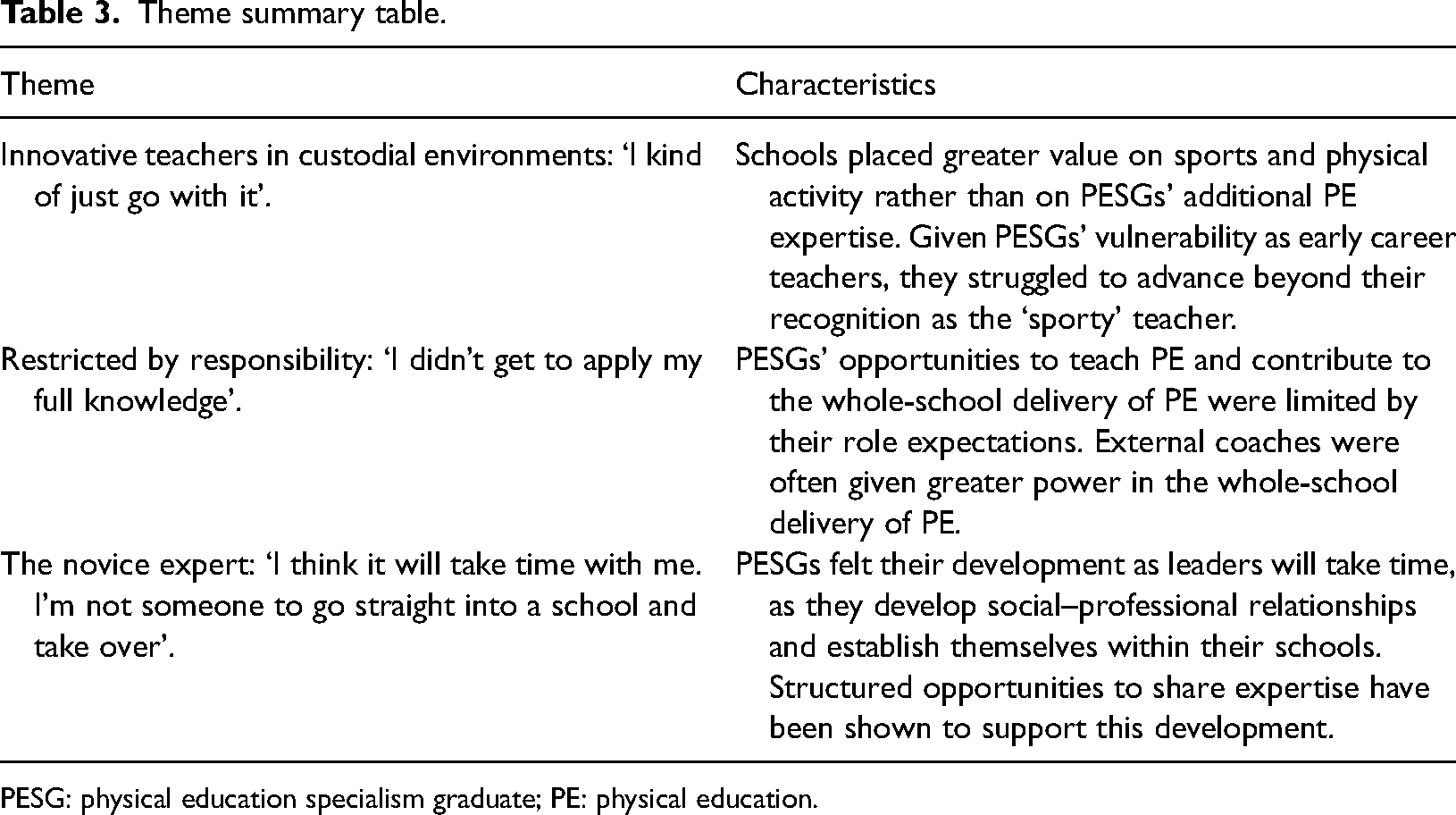
PESG: physical education specialism graduate; PE: physical education.
Findings and discussion
Due to PESGs’ professional interests and their vulnerability as early career teachers, many of them appeared to assimilate with existing practices, despite limiting the potential application of their PE expertise. While some PESGs had opportunities to assume PE leadership roles and support the whole-school provision of PE, this was not common practice across schools. The roles undertaken reflected schools’ cultural–ideological interests. PESGs’ integration is presented across three main themes as outlined in Table 3: (1) Innovative teachers in custodial environments: ‘I kind of just go with it’; (2) Restricted by responsibility: ‘I didn’t get to apply my full knowledge’; and (3) The novice expert: ‘I think it will take time with me. I’m not someone to go straight into a school and take over’.
Innovative teachers in custodial environments: ‘I kind of just go with it’
It appeared that cultural–ideological interests made PESGs’ integration into schools more challenging due to custodial orientations that overlooked PESGs’ expertise, and prioritised sport and physical activity. Guided by their organisational interests and desire for acceptance within schools, PESGs aligned with the existing school practices, restricting their potential influence as PE leaders.
Some schools, such as Chloe's, placed an emphasis on PE: ‘we have to teach it and we have to teach it well’. This valuation of PE was not widespread, however, and was reflected by the material and cultural–ideological interests within schools. For example, despite having access to PE facilities in her school, Tracy's principal sometimes notified teachers ‘hall not in use today’, due to a bake sale or school photographs, without offering alternatives for PE provision. Although PESGs did not agree with such practices, they were uncomfortable challenging them: ‘I kind of just go with it’ (Olivia). As early career teachers, many PESGs had short-term contracts that did not extend beyond the academic year. They were eager to make a positive impression, and ‘you nearly jump at any opportunity to help out and be shown to be involved in the school’ (Rachel). Self-interests and organisational interests led to some PESGs undertaking supplementary roles in areas such as digital learning, music, and science, technology, engineering, and mathematics (STEM) education. While some of these teachers also had an interest and expertise in these areas, the treatment of PESGs’ PE expertise highlighted the marginalised status of PE within schools (Richards et al., 2018). PESGs entered schools where their skills and expertise were not fully understood or appreciated: ‘I had mentioned it in my interview last year [the PE specialism], but it was kind of just, you know, ticked and thrown under the rug’ (Grace). This disregard for PESGs’ skills has the potential to accentuate reality shock. Teachers may conform with existing school practices based on this perceived mattering, resulting in washout (Ensign and Woods, 2017).
It appeared that school expectations for PE in Ireland continue to be rooted in sports and physical activity (Ní Chróinín et al., 2019), which clashed with the teaching orientations developed during PESGs’ professional socialisation (Brennan et al., 2023). PE leadership approaches varied in schools, as seen in Table 2. If PE leaders had been established, their responsibilities would have been more closely associated with organisational tasks rather than supporting learning in PE. Reflecting on previous findings by Clohessy et al. (2021), there were limited leadership practices to support PE content knowledge, pedagogies, and innovative practices. Although some PE committees supported whole-school planning for PE and knowledge sharing, this was not common practice. The conflation of sport and PE was evident from a principal's recommendation to ‘just bring them out for a run about or a quick game of football’ (Grace). As seen in Table 2, active initiatives such as the ASF were prevalent across nearly all schools, and some PESGs were concerned that it can lead to a lack of clarity between physical activity and PE. Olivia felt colleagues ‘were thinking, “Oh brilliant, we’re doing a running challenge now”, but like is that, is that PE? Not really’. PESGs moved beyond custodial perceptions from their engagement with the PE specialism (Brennan et al., 2023), but they were often confronted by these orientations again upon graduation, challenging their newly developed views. This was reflected in the roles undertaken by PESGs. All graduates from 2016 to 2018 were actively involved in school sports coaching, apart from Grace, who was a member of the sports committee and helped to plan a virtual sports day. Although no 2019 graduates had assumed school sports roles, their contributions may have been curtailed due to the enforced school closures due to COVID-19 during the year. Given PESGs’ sports-dominated acculturation (Brennan et al., 2023), the influence of school expectations needs to be monitored carefully to guard against washout (Richards et al., 2018). It has previously been noted that custodial school cultures can rekindle dormant coaching orientations and create role conflict (Curtner-Smith, 2016; Richards, 2015).
Interestingly, recognition as the ‘sporty teacher’ created PE leadership opportunities for some PESGs such as Denise and Mark, who played Gaelic games at an elite level. Both PESGs used this authority to apply their PE expertise and support whole-school PE provision. For example, Mark prepared a whole-school plan for PE and engaged in class swapping, teaching PE for other teachers in his school. Interestingly, Denise applied her skills differently, as she was positioned as a knowledge source for PE within the school, sharing ideas and resources with other staff, particularly for strands they were not as confident to teach. Her role as the ASF and Gaelic Athletic Association (GAA) Flag coordinator helped to establish this recognition, but required careful navigation of the cultural–ideological interests of the school community. Denise described correspondence from parents who were encouraging the principal to increase Gaelic games delivery to benefit their sons’ teams, at the expense of the PE curriculum: Dance was for girls only, just for girls, and gymnastics was just for girls as well. So even in my class, the amount of notes I got saying they were withdrawing their child from participating in dance, which I thought was absolutely ridiculous.
Many primary teachers in Ireland believe Gaelic games can fulfil children's PE needs (Bowles and O'Sullivan, 2020), and there is a danger that other parts of the curriculum suffer at the expense of this approach. Despite being ‘all for the GAA’ herself, Denise was aware of the damaging impact these custodial approaches could have on pupils’ development. Her navigation of this complex interaction was helped by supportive school leadership that valued PE (Ensign and Woods, 2017), giving Denise the confidence to remain steadfast in her teaching of the curriculum: We [Denise and the school principal] were saying dance and gymnastics is part of the curriculum, and that it was compulsory for all students, you know, there was no option. Now some parents then backed down from that and said, ‘Okay, we’ll give the child the opportunity’, but then like the boys, they wouldn’t hold hands with the girls for dance and, oh it was just… it was messy. (Denise)
Although the leadership roles of Mark and Denise may have been influenced by their sporting status, they demonstrated the confidence and micropolitical literacy to support PE provision within their schools. The custodial expectations held by most schools, however, could narrow the potential impact of other PESGs. In addition, not all PESGs will be recognised as the ‘sporty teacher’, evident from Tracy's experience of being overlooked as a member of the ASF team: The new NQT boy was sitting beside me, and she [ASF Coordinator] was like to the boy, ‘oh, would you join the active team?… because I know you play GAA’. (Tracy)
Tracy subsequently made the ASF coordinator aware of her expertise and also joined the ASF team, where she was given responsibility for organising the school PE equipment. However, this school's approach demonstrated how the custodial expectations of school leaders can limit PESGs’ knowledge sharing (Richards, 2015).
Given their professional interests, many PESGs were not prepared to disrupt traditional PE practices on a whole-school level. In addition, their wide-ranging roles as generalist teachers created difficulties in sharing their PE expertise without a designated role: ‘you kind of feel like other things are more important as well’ (Bridget). Conflicting expectations presented the challenge of ‘how do you pass that [additional knowledge] on to somebody else that isn’t interested in the area of PE?’ (Maria). To enhance PESGs’ perceived mattering and overcome marginalisation within schools, establishing a shared educational vision may be necessary, creating a more welcoming micropolitical landscape (Jess et al., 2016).
Restricted by responsibility: ‘I didn’t get to apply my full knowledge’
PESGs faced further challenges in applying their PE expertise, due to limited PE teaching opportunities as SETs or the prevalence of external coaches. The power dynamics within these micropolitical landscapes resulted in many PESGs’ subject expertise being overlooked. External coaches were presented with greater opportunities to contribute to whole-school PE provision.
Upon graduation, some PESGs undertook SET roles and therefore did not have PE teaching responsibilities, which are associated with the mainstream generalist class teacher (Department of Education and Skills, 2020). While SETs such as Chloe could apply some PE expertise within her role, ‘covering a base of FMS [fundamental movement skills]’ when working with children with additional gross motor needs, there were limited opportunities to teach PE to a full class, or contribute to the whole-school provision of PE. Another SET, Paul, did get an opportunity to share ideas and assist his class teacher for PE. The class teacher conceded that they struggled with classroom management in PE, and therefore Paul was given responsibility for teaching half of the students in the class. Despite recognising a ‘toxic atmosphere during PE’ due to an overemphasis on competition, Paul noted: ‘essentially like, I felt like, you know, I just hadn’t the, it wasn’t my place to say anything’. Although Paul felt the class teacher's PE lesson failed to meet children's needs, he needed greater guidance to apply his skills within this micropolitical landscape. This was an opportunity to share his PE expertise, but Paul's social–professional interests, and the power dynamic with a more experienced staff member, resulted in strategic compliance (Richards et al., 2018). In the absence of supportive mentoring relationships (Ensign and Woods, 2017), PESGs may require greater assistance in applying micropolitical strategies to establish desirable working conditions (Kelchtermans and Ballet, 2002a).
PE teaching time was also reduced for many classroom teachers due to the embedded nature of external coaching within Irish primary schools (Mangione et al., 2022). Due to time restrictions, limited facilities or curriculum demands, schools often recognised external provision as PE curriculum time, meaning: ‘I didn’t get to apply my full knowledge, if that makes sense’ (Mark). External coaches were present within all schools, providing a range of activities throughout the school year, including Gaelic games, rugby, soccer, aquatics, dance, gymnastics, athletics, badminton, and basketball. PESGs acknowledged that these coaches could offer some expertise in the delivery of PE, particularly for strands in which they are not as confident to teach (Mangione et al., 2020). Although this is sometimes due to the conflation of PE and sport (McEvilly, 2022), PESGs acknowledged ‘they’re good and they’re bad, depending on how they’re implemented’ (Chloe). For example, conversations between Denise and her principal ensured that if coaches entered the school, they had to align with the strands of the curriculum. Given the lack of leadership responsibilities among most PESGs, however, there were limited opportunities to engage in these conversations regarding external coaches (Griggs and Randall, 2019). The content continued to be dominated by games-focused activities, while ‘the other things [strands of the curriculum] are neglected a bit’ (Bridget). While PESGs recognised the importance of a broad and balanced PE curriculum from their teacher education (Brennan et al., 2023), their teaching contexts presented immediate barriers to challenge this.
Positively, nearly all PESGs actively assisted with the external providers, rather than relinquishing control to them. Predominantly assuming co-teaching or assistant roles, PESGs had the opportunity to regulate the coaches’ provision and observe children more closely in PE, ensuring their needs were met. Despite these positive signs, some PESGs assimilated with existing school practices, and utilised the time for administrative tasks such as correcting children's schoolwork. As an NQT, Tracy aligned with the practices of other class teachers in her school, handing over 30 minutes of PE curriculum time to the external coach, with no teacher involvement. It exposed the power dynamic between coach and teacher, which can sometimes undermine teachers’ expertise and perpetuate a lack of confidence to deliver PE (McVeagh et al., 2022). Tracy felt the external coach ‘knew my kids like, more than me’, and given her limited experience of Gaelic games, she viewed the external coach as more knowledgeable: ‘I knew she was doing it right’. There is a danger that the safety net provided by external coaches could result in the deskilling of teachers: If you’re in third class for two years, and if the same badminton coach is coming back the second year, I think that's just such a waste […] the teacher hasn’t learned because they feel like they don’t have to learn. (Paul)
Collaboration and shared planning are necessary to support all stakeholders to work towards a shared educational agenda (Jess et al., 2016; Ní Chróinín and O’Brien, 2019). PESGs recognised that, within schools, ‘there's not enough kind of communication [with external coaches], or maybe the teachers aren’t paying attention to what's going on’ (Bridget). Although Mark felt his influence as a PE leader was limited by the presence of external coaches, it was positive to see him assert his authority to monitor the quality of coaching in his school. Following consultation with the coaches, they agreed that class teachers should contribute more to support the teaching of lessons, while coaches had to make greater efforts to differentiate, to meet students’ educational needs. When a coach shared his concerns about the quality of Gaelic games skills in the school, Mark explained, ‘you’re going to have to just change your drills then really’. If pursuing this model, co-teaching could capitalise on external coaches’ content knowledge and teachers’ pedagogical and curriculum knowledge. PESGs’ sporting biographies and pedagogical knowledge could position them to act as intermediaries, uniting the key stakeholders in PE provision (Carse et al., 2018). This, however, is dependent on the responsibilities PESGs are given within these power dynamics.
Many PESGs had limited opportunities to apply their additional expertise as qualified teachers: ‘I don’t feel like there is a lot of room to get involved’ (Rachel). The COVID-19 pandemic further influenced these opportunities: ‘it was kind of a loss last year that I didn’t get to use it’ (Maria). Providing opportunities to apply professional knowledge is essential for teachers to reach the ‘secure stage’ of their development as teachers (Randall, 2020). The potential for washout during this transient window, however, is recognised by PESGs: ‘if you leave it go too long, you’ve lost a lot of your content knowledge if it's not being used’ (Olivia). Suitable professional development may be necessary to ‘get you thinking about PE again’ (Paul), ensuring the ‘lost years’ described by teachers do not become lost skills and expertise.
The novice expert: ‘I think it will take time with me. I’m not someone to go straight into a school and take over’
While there were some positive indications of PESGs’ leadership potential, this development as a PE leader will take time for many teachers. The juxtaposition of PESGs’ identity as novice teachers and potential PE experts presents a challenging conflict. PESGs may require greater organisational support to share their expertise within these micropolitical landscapes.
Despite previously demonstrating high self-efficacy to teach PE (Brennan et al., 2021), PESGs’ confidence to lead PE within schools will require further development: I think it will take time with me. I’m not someone to go straight into a school and take over, but, I’m going to keep trying each year to do more I guess. (Bridget)
Undertaking a PE leadership role was not a priority for many PESGs, who placed greater value on establishing themselves within the school community and completing their induction. Grace acknowledged, ‘I was happy enough with workload I had haha’, while Maria explained that her school advised her to ‘just focus on the Droichead, so they weren’t giving any extra kind of jobs to do with that, thank God’. Attempting to balance the demands of an early career teacher can result in other aspects being prioritised at the expense of PE (Blankenship and Coleman, 2009; Ensign and Woods, 2017). Structures within PESGs’ micropolitical landscapes facilitated or inhibited their desire to share their PE expertise.
Organisational barriers such as job security and PESGs’ status as novice teachers also restricted their potential impact. Despite Fiona expressing a desire to lead the GAA 5 Star Centre initiative within her school – which promotes physical activity and Gaelic games participation (Mangione et al., 2020) – she was unable to do so, as she did not have a permanent contract. This initiative aligned with the school's cultural–ideological interests, but the organisational structures and Fiona's vulnerable job status inhibited her potential to lead: The kind of uncertainty of being there year on, year off… you would feel a bit brazen nearly to come out and make a point of ‘I want to be the PE leader’, when your place isn’t even secured in a school. (Fiona)
The introduction of Droichead created the potential for reciprocal exchanges between novice teachers and their support team (Smyth et al., 2016), but it appeared that PESGs have a limited contribution within this ‘exchange’. This was influenced by Droichead's focus on teachers’ learning needs (The Teaching Council, 2017). For example, Olivia wanted to teach a PE lesson when being observed during her Droichead, but ‘they wanted to see my core subjects, which was fine like, I understand that too’. While this reflected the cultural–ideological interests as presented in the first theme, it also suggested that the focus on PESGs’ learning needs neglected their development as PE teachers and leaders. If utilised effectively to facilitate mentoring relationships that align with teachers’ subject interests, however, Droichead could further PESGs’ development as PE experts (Ensign and Woods, 2017). These organisational interests have the potential to inhibit or accentuate washout, depending on how they influence PESGs’ perceived mattering (Blankenship and Coleman, 2009). For example, the PE leader in Bridget's school invited her to attend a virtual sports day workshop, before working alongside her to implement the sports day: ‘I don’t know if I would have done it myself if she hadn’t kind of spurred me on and helped out’ (Bridget). Despite having additional PE expertise, these informal mentoring interactions helped Bridget to apply her skills (Richards and Templin, 2011). While PESGs acknowledged that their development as PE teachers and leaders would take time, organisational structures could help accelerate this process.
Other barriers to PESGs’ development as leaders included their social–professional interests. Relationships within their micropolitical landscape influenced their confidence to lead: Maybe next year as I become more familiar with the school and more friendly with the staff and develop those relationships, maybe it might be something I might look into. (Fiona)
Social interactions informed teachers’ practices, and it is essential that positive, supportive staffroom environments are developed (Christensen, 2013). Some PESGs’ felt that ‘maybe in a smaller school […] maybe I would have been more confident to put myself out there in a role’ (Rachel). Interestingly, Denise had a head start in developing these relationships, having previously completed a school placement in her current school: ‘I kind of felt I was in the school already when I first came [as an NQT]’. These relationships and support from her principal aided Denise in initiating her PE leadership role, where she feels her skills are ‘being best used the way they are at the minute’. Social–professional relationships, however, continued to shape her actions: They’d always come to me for ideas, because I feel I don’t want to be going to them, because it might look like that they’re struggling or something like that. (Denise)
PESGs were worried about ‘bombarding teachers with ideas’ (Bridget) and damaging social–professional relationships, which reinforced their hesitance to share their expertise in a marginalised subject (Richards et al., 2018). PESGs were more comfortable sharing their expertise on a smaller scale, usually with other early career teachers or teachers at a similar class level within their school. Familiarity with these staff who were aware of their PE expertise helped PESGs to support teachers who ‘maybe weren’t perhaps as confident’ to teach PE (Olivia). PESGs are keen to avoid experiences of marginality as early career teachers. These social–professional interests have the potential to diminish their perceived mattering and could delay their development as PE leaders (Richards et al., 2018).
To facilitate PESGs’ growth as PE leaders and overcome the barriers identified, it is necessary to recognise their potential contribution to the whole-school delivery of PE, through structured leadership approaches (Marron et al., 2018). Chloe stated, ‘you have the experience, you might as well share it with everyone’. As mentioned in the first theme, Denise and Mark's ‘sporty’ identity helped their development as leaders, but their schools’ distributed leadership structures also facilitated this growth. Class swapping already took place in Mark's school, and Denise's school actively encouraged knowledge sharing between staff. Clohessy et al. (2019) have already shown how informal leadership practices such as class swapping can support teachers’ leadership of PE and enhance pupil learning. This approach, however, is not always feasible within schools: ‘I didn’t feel like it would be acceptable for me to say, “will you teach my crowd drama, and I’ll teach your class PE?”’ (Olivia). Clarity is needed in the leadership of PE within schools (Griggs and Randall, 2019), and recognising PESGs as an asset in this role could empower them as future leaders (Westerlund and Eliasson, 2021). PESGs predominantly recognised leadership as a formal responsibility within the school (Clohessy et al., 2021), undermining the informal contributions to the provision of PE within schools. With a new curriculum currently in development (National Council for Curriculum and Assessment, 2023), PESGs could support positive changes in the teaching of PE, if given the opportunity. They have demonstrated their potential to enhance PE provision within schools, but greater guidance may be required to help them navigate their micropolitical landscapes as PE leaders (Kelchtermans and Ballet, 2002a). This could include collaborative efforts between teachers, teacher educators and schools to create more supportive school environments. For example, greater preparation to navigate these landscapes during teacher education (Richards and Templin, 2011), or supportive mentoring for novice teachers in their area of expertise (Ensign and Woods, 2017). Despite their PE expertise, PESGs must continue to be supported as novices on their journey as PE teachers and leaders, ensuring the impact of the PE specialism is not undone.
Conclusion
This study provides an important insight into PESGs’ journeys as generalist teachers with expertise in PE, and how they navigated their complex micropolitical landscapes. Schools appear to reflect the varied understandings and applications of PE within the primary context (Carse et al., 2018). While PESGs engaged in micropolitical strategies, they were predominantly guided by their self-interests, organisational interests, and social–professional interests, eager to make positive impressions as vulnerable teachers. Schools’ contrasting cultural–ideological interests resulted in PESGs suppressing their PE expertise to assimilate with school cultures, as they felt more comfortable fitting in than attempting to stand out as PE leaders. Continued investigation of PESGs’ long-term development is important to determine if this strategic compliance results in washout (Richards et al., 2018). When situated in custodial schools, PESGs’ contributions have predominantly been narrowed to sports coaching and physical activity promotion. In contrast, innovative school cultures positively supported PESGs’ leadership of PE. More appropriate formal and informal learning opportunities that align with PESGs’ expertise may be needed within induction programmes (Christensen, 2013; Richards and Templin, 2011). PESGs’ current status as novice teachers, and the positioning of external coaches within schools, generated a challenging power dynamic to overcome. It is important that the contribution of teachers as the primary deliverers of PE is recognised, with all stakeholders working towards a shared vision (Jess et al., 2016). The combination of PESGs’ sporting biographies and PE expertise could position them as suitable candidates to unite these stakeholders. Schools must also demonstrate a willingness to change, however, with an emphasis on PE leadership (McVeagh et al., 2022). The aftermath of the COVID-19 pandemic and the upcoming new curriculum present an everchanging landscape of primary PE in Ireland. While it is ambitious to expect novice PESGs to lead PE within schools immediately, it would be remiss to disregard their potential contribution in the evolution of Irish primary PE.
Footnotes
Declaration of conflicting interests
The authors declared no potential conflicts of interest with respect to the research, authorship, and/or publication of this article.
Funding
The authors disclosed receipt of the following financial support for the research, authorship, and/or publication of this article: Cillian Brennan was supported by a Departmental Assistantship from Mary Immaculate College, Limerick.
