



Abstract
Although the educational intentions of content and language integrated learning (CLIL) seem to be perspicuous, how to put them into practice in different subjects is not so clear-cut. In addition, critical voices within the physical education (PE) arena claim that CLIL may jeopardise the subject. Therefore, CLIL needs to be adjusted in order to remain on the PE agenda. Currently, PE specialists embrace the models-based practice framework, which may involve new educational objectives (e.g. language learning). This paper seeks to fill this gap by advocating CLIL as a pedagogical model within the models-based practice framework. In this sense, CLIL may benefit from the advantages of a well-established approach in PE, bridging the gap between the general theory of CLIL and the practice of PE. The article follows the structure of previous advocacies for pedagogical models in PE and presents criteria, theoretical tenets, teaching and learning implications, a specific teacher profile, essential elements and guiding principles of the CLIL in PE model, as well as research evidence and field-testing experiences. In conclusion, such a framework depicts the interdependence of learning, teaching, subject content, language and context, presenting a work that could become a turning point for PE specialists to see CLIL in a new light.
Introduction
Physical education (PE) practices and research are constantly evolving and advancing through innovation (Casey, 2019). Currently, a widespread innovative trend encourages PE teachers to integrate content from different fields (Marttinen et al., 2017), for example, including new methodological approaches that enable such integration. Consequently, it would be appropriate for both researchers and practitioners to better understand these approaches and their desired outcomes before attempting to put them into practice. In this sense, it is a ‘make or break’ moment for the content and language integrated learning (CLIL) approach, and there is a need to reframe it according to the specific context of PE in which it may be implemented (Brüning and Purrmann, 2014; Van Kampen et al., 2020). To re-establish a frame of reference that facilitates and guides practical applications of CLIL in the specific context of PE, this work builds on the models-based practice framework to advocate for CLIL as a pedagogical model. Such a framework depicts the interdependence of learning, teaching, subject content and language, requiring teachers and students to cultivate a genuine commitment regarding the fundamentals of the model if they are to implement it successfully.
The idea of considering CLIL in PE as a pedagogical model is based on the premise that only after a prototypical model has been widely implemented and revisited theoretically can it be categorised as one (Casey, 2019). To achieve this goal, this article follows the same structure used in previously published studies advocating for ‘new’ pedagogical models (e.g. Barker et al., 2018; Chiva-Bartoll and Fernández-Rio, 2021). First, we problematise CLIL's ambiguity and justify why considering CLIL as a pedagogical model within the models-based framework may be a sensible idea. Second, we outline the CLIL in PE model, presenting the following points: essential criteria of the models-based framework, theoretical tenets that support the CLIL approach, teaching and learning implications, the teacher profile for the CLIL in PE model, essential elements and guiding principles, and field-testing and research evidence. Finally, we add some concluding remarks.
All in all, to legitimate CLIL as a suitable approach in PE and to provide an architecture that guides CLIL-specific practices in this subject, the present paper is committed to the models-based approach and aims to provide a framework to outline concrete guidelines and features for the proper implementation of CLIL in PE.
A way out of the dilemma of CLIL's ambiguity: The models-based practice framework
At a time when language learning has become an essential need for global citizenship, CLIL has been gathering momentum in the educational sector over the past two decades as a way of incorporating language learning into non-linguistic subjects (Lopes, 2020). Against this backdrop, policy-makers in several countries have been pushing for the implementation of such an approach, meaning that it is becoming commonplace in most European educational systems (Pérez-Cañado, 2018a). However, ‘there is often a marked gap between CLIL specialists’ or policy-makers’ perceptions about what CLIL pedagogies should consist of and those involved with its day-to-day implementation’ (Van Kampen et al., 2020: 856). That is to say, due to its urgent (and often forced) execution and, thus, its quick uptake, CLIL might be becoming a ‘fashion’ in which many of its applications lack a clear frame of reference.
While the underlying educational intentions of CLIL seem to be perspicuous, how to put them into practice in different subjects and educational levels is not so clear-cut. Different handbooks have attempted to contribute from a general perspective; nevertheless, in real day-to-day applications, bilingual education often just means subject lessons taught through an additional language, where there is little integration and proper application (Morton and Llinares, 2017). Moreover, as Van Kampen et al. (2020: 856) emphasise: Much has been published about what CLIL teaching approaches and activities (‘CLIL pedagogies’) ought to consist of (e.g. see Coyle, Hood, and Marsh, 2010), however, in practice, CLIL includes many variants depending on the specific context in which it is implemented.
Although CLIL can be applied in a number of curricular areas, Brüning and Purrmann (2014: 335) argue that ‘if we want to successfully implement CLIL, we need to look at it from different perspectives and disciplines without the fear of losing territory’. Therefore, in order to allow the CLIL agenda to advance strongly and steadily, it is necessary to develop an understanding that is sufficiently fine-grained to be meaningful on the level of classroom pedagogy as well as noticeably connected not only to language education but also to the specific frameworks of reference inherent to the different subjects that adopt it (Dalton-Puffer et al., 2018).
CLIL is often timetabled as subject matter lessons, and one of the curricular areas that has adopted such an approach is PE (Coral et al., 2020; Devos, 2016; Salvador-Garcia et al., 2017). This means that PE teachers are expected to take on an additional role by teaching their subject in a foreign language. They therefore face challenges related to changes in the teaching and learning process that the proper use of CLIL inevitably involves (Coyle, 2015).
Often, CLIL has been perceived as a language teaching approach rather than an educational approach. Consequently, content teachers (who do not teach language subjects) tend to be rather sceptical and fear the invasion of languages into their fields (Brüning and Purrmann, 2014). In fact, content teachers may perceive that CLIL is anchored in the world of linguistics and language education (Dalton-Puffer et al., 2018) and, therefore, they see it as a transgressive outsider intruding on their subjects. In PE, critical voices claim that CLIL may jeopardise the subject's idiosyncrasy by blurring its content, altering its basic features and entailing losses in motor learning (Coral et al., 2020; Martínez and García, 2017). Furthermore, the requirement of paying attention to language and methodological change, preparing new materials with few resources or a general lack of support seems to lead PE teachers to feel unprepared to think and operate considering these new dimensions that CLIL comes with (Ó Ceallaigh et al., 2017; Salvador-Garcia and Chiva-Bartoll, 2017). Thus, for CLIL to become a pedagogic rather than a linguistic phenomenon, it should be adapted to the specificities of every subject (Coyle, 2018), as in the case of PE. Responding to these claims, the present paper offers a new approach to CLIL that is merged with PE through the models-based framework. Such a proposal provides a proper architecture guiding good CLIL practices in this context (Fernández-Barrionuevo and Baena-Extremera, 2018).
Outlining a CLIL model for PE
PE is a large, rich, complex field of practice that aspires to achieve a wide range of educational outcomes (Kirk, 2013). For more than 30 years, PE has been reframed in search of a more outcomes-focused approach that better realises the potential of the subject in terms of students’ integral learning (Jewett et al., 1995; Kirk, 2010; Metzler, 2017). During this time, models-based practice has been enthusiastically embraced as a lever for change to replace traditional teacher-led PE (Casey, 2014). The models-based framework allows teachers and students to concentrate on a manageable number of learning objectives. In addition, from this perspective, PE teachers are encouraged to adopt a range of pedagogies and tailor teaching methods considering specifically the content they are focusing on (Aggerholm et al., 2018). According to Kirk (2013: 979): A models-based approach to physical education would make use of a range of pedagogical models, each with its unique and distinctive learning outcomes and its alignment of learning outcomes with teaching strategies and subject matter, and each with its non-negotiable features in terms of what teachers and learners must do in order to faithfully implement the model.
In this sense, pedagogical models connect theory and practice by providing concrete guidelines in terms of what physical educators and learners must do to accomplish the pre-established objectives of the model implemented (Casey, 2014; Kirk, 2013). Therefore, pedagogical models attempt to align: (1) students’ learning and interests, (2) educators’ teaching and expectations, (3) subject-specific curriculum and (4) particular features of the context.
Currently, PE teachers have several pedagogical models at their disposal, including Sport Education (Siedentop, 1994), Teaching Games for Understanding (Bunker and Thorpe, 1982), Cooperative Learning (Dyson and Casey, 2012), Service-Learning (Chiva-Bartoll and Fernández-Río, 2021) and Teaching Personal and Social Responsibility (Hellison, 2011), among others. However, Casey and MacPhail (2018) argue that the models-based framework still needs to expand to fit a wider frame of reference and cover novel educational objectives (e.g. language learning) to foster the integral development of the learner and the promotion of global citizenship. This is therefore the gap that CLIL could fill in PE.
Several years ago, Coyle (2015: 87) wondered whether CLIL was ‘a top-down approach to learning or a bottom-up’ one. In the PE arena, CLIL has often been imposed by school administrators and public officials (Fernández-Barrionuevo and Baena-Extremera, 2018), pushing teachers to face new challenges and leaving them feeling underprepared (Escobosa et al., 2019; Salvador-Garcia and Chiva-Bartoll, 2017). At the same time, despite the increase in research in this field, little is specified regarding planning and how CLIL lessons should be implemented specifically in PE (Bruton, 2013; Lamb and King, 2020). In light of this, we argue that there seems to be a disconnect between theory and practice in the field of PE with CLIL. ‘The congruence between top-down and bottom-up approximations to CLIL is crucial for its success-prone implementation’ (Pérez-Cañado, 2011: 395); therefore, there is a need to fill the theory–practice gap to ensure that CLIL is used properly in PE.
Considering this, advocating for CLIL in PE as a pedagogical model may be useful for two reasons: (1) CLIL as a pedagogical model may be perceived as an approach that is merged with PE and, thus, it would be more welcome by PE specialists; and (2) CLIL as a pedagogical model may benefit from the advantages of a well-established approach such as models-based practice and bridge the gap between the general theoretical foundations of CLIL and day-to-day PE practices.
Criteria of the models-based approach
All pedagogical models should adhere to a series of criteria to be part of the models-based framework. Therefore, CLIL is also expected to fulfil them in order to be considered a proper pedagogical model in PE. Pedagogical models bring together context and subject matter, as well as teachers’ and students’ expectations and behaviours, and they are conceived as a whole construct (Casey, 2019). Together these components serve as the basis on which to establish the organisation of PE teaching and learning, bearing in mind the processes of planning, executing and evaluating PE activities (Haerens et al., 2011). That is to say, a pedagogical model puts forward an all-purpose plan to design programmes based on a conceptual framework including not only a range of learning goals but also a selection and systematisation of sequenced programme content (Jewett et al., 1995).
Constructing a prototype of a pedagogical model entails meeting a series of requirements (Haerens et al., 2011). These criteria will be presented in different sections throughout the paper to show how CLIL may fulfil and be connected to each of them. First, the suggested model must be based on sound and well-grounded ‘theoretical tenets’ that help outline the conceptual boundaries, the pedagogical standpoints and the basic rationale or major idea of the model, which Metzler (2017) defined as the means of reconciling the relationships between the various domains involved. Based on the fundamentals of CLIL for the models-based framework, a range of specific ‘teaching and learning implications’ emerge. Teaching and learning procedures must faithfully consider the theoretical and scientific assumptions to put into action suitable programmes, engagement patterns for learning, teacher and student roles, tasks and responsibilities, and assessment. Furthermore, reflection on practice is needed to help evaluate whether the implemented procedures are faithful to the model (Haerens et al., 2011; Jewett et al., 1995). In this sense, defining a specific ‘teacher profile for the CLIL in PE model’ and establishing ‘essential elements and guiding principles’ of the model will enable teachers to implement it faithfully. Subsequently, ‘research evidence and field-testing’ are considered basic criteria to support the effectiveness of the proposed model. Existing pedagogical models are supported by publications and empirical results that analyse their practical enactment, development and/or learning effects. Therefore, the steady development of the model in educational institutions may endorse its use. The following sections will present these indispensable elements for CLIL in PE to be considered as a pedagogical model within the models-based framework.
Theoretical tenets that support the CLIL approach
CLIL was launched two decades ago as a response to the European need for enhancing second-language education and bilingualism, and it has gained in popularity since then (Pérez-Cañado, 2018c). Despite the varied descriptions and interpretations of this approach, a widely recognised definition is that provided by Coyle et al. (2010: 1), who consider CLIL to be ‘a dual-focused educational approach in which an additional language is used for the learning and teaching of both content and language’. Besides this landmark definition, it is interesting to mention the PE-specific definition of CLIL presented by Coral and Lleixà (2016: 108), who assert that: PE-in-CLIL should be understood as a holistic approach that uses the principles of learning by doing to teach motor contents through the medium of a foreign language and, at the same time, fosters cognition and citizenship. It takes into consideration pupils’ motivation for movement and provides language support to achieve both motor and language goals.
CLIL has its roots in several pedagogical traditions and theories. To begin with, CLIL was grounded in social justice and equity-related principles because its establishment in mainstream education was expected to provide a greater range of students with opportunities for linguistic development that they were previously denied (Fortanet, 2013). Nowadays, this is in line with the Agenda 2030 for Sustainable Development Goals, particularly with its fourth goal, quality education, because it aims to ensure inclusive and equitable education for all (Fortanet, 2013).
In addition, from a methodological standpoint, CLIL is expected to come with a thorough revision of how language and content teaching are envisaged. This means carefully considering the roles adopted by teachers and students in day-to-day lessons. Teachers need to become facilitators and mediators of learning (De Graaff et al., 2007). CLIL approaches the teaching and learning process through the lens of constructivist principles (Pérez-Cañado, 2018b). It should provide students with the opportunity to understand and assimilate content, bearing in mind their characteristics, previous knowledge and interests. Moreover, CLIL favours the Deweyan tenet of ‘learning by doing’, which requires students to take an active role in the class (Coyle et al., 2010). They should be the main actors in lessons, where the teaching and learning process promotes their autonomy, participation and interaction (Pérez-Cañado, 2018b).
This is clearly aligned with the models-based framework, which endorses situated learning and emphasises constructivist tenets that consider students as active, social and creative learners (Dyson et al., 2004). In other words, the emphasis is placed on active learning to encourage students’ involvement in the processes of decision-making, social interaction and cognitive understanding. Therefore, the current ideals of PE make it a context in which students can practise and experience language while they are provided with multisensory input and physical engagement with the target language, and they are encouraged to become ‘community learners’ based on social constructivist principles (Devos, 2016).
The Graz Group (2014) developed a pluriliteracies approach to CLIL focused on developing literacies for purposeful and appropriate meaning-making in subject disciplines, which not only attempts to enable students to purposefully communicate, but also to promote the essential role of language in shaping their thinking and learning. This model emphasises the integrated nature of CLIL teaching by empowering students to make connections between the conceptualising continuum and the communicating continuum of learning (see Figure 1) (Meyer and Coyle, 2017). All in all, CLIL entails realigning teaching with updated educational practices such as the pluriliteracies approach to foster its potential as a pedagogic tool (Coyle, 2018), in line with the models-based approach to teaching and learning (Metzler, 2017). Therefore, advocating for CLIL in PE seems to be a sound option to foster deeper learning and students’ comprehensive development.
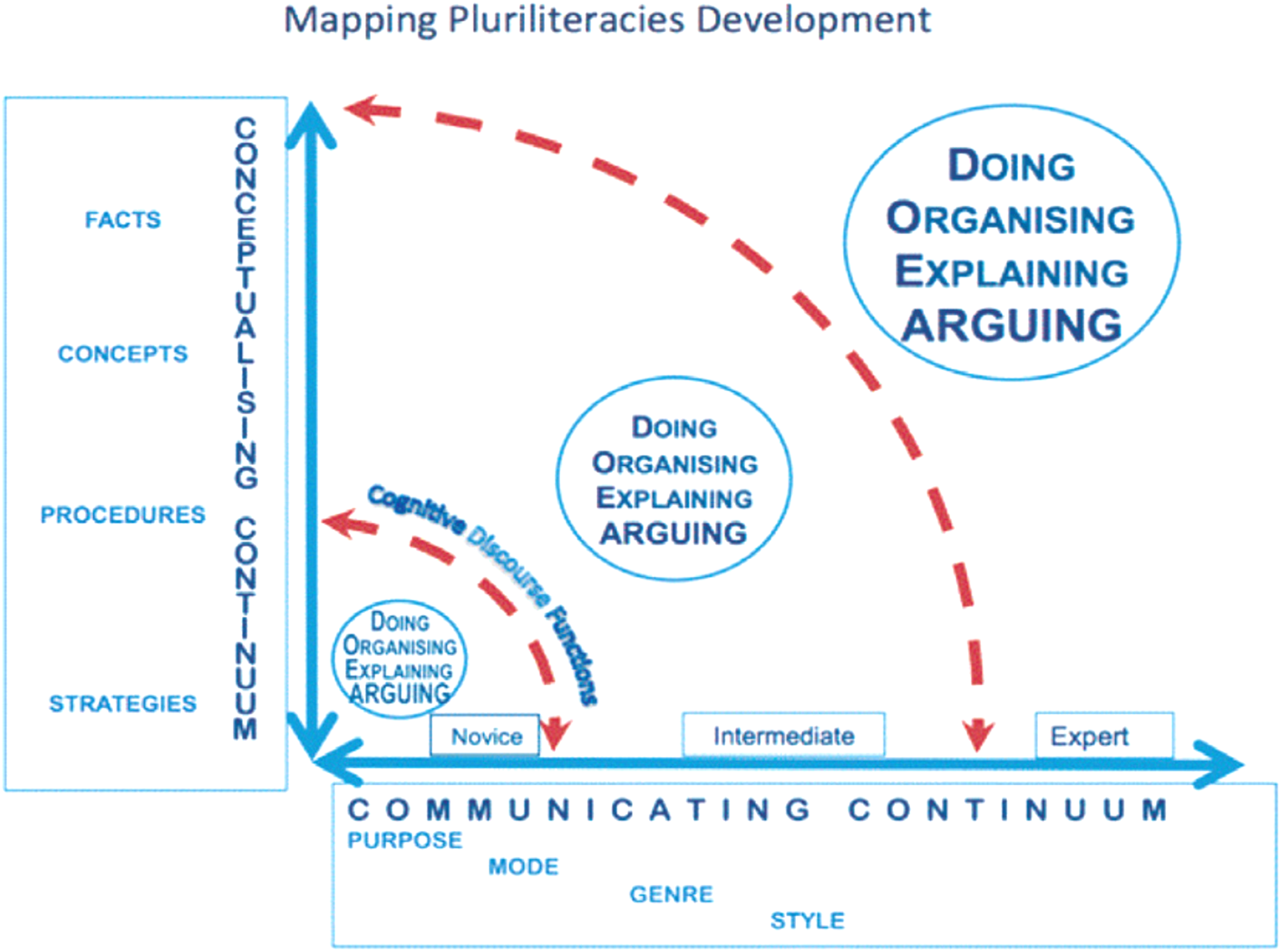
The Graz Group’s pluriliteracies model (The Graz Group, 2014).
The overarching idea behind the CLIL in PE model encompasses the intentional combination of PE learning (fostering physical, social, personal and cognitive skills) and language learning without forgetting the specific literacies of PE so that students are able to ‘do’, ‘organise’, ‘explain’ and ‘argue’ in the context of PE to promote deep learning. Integration lies at the heart of CLIL because non-linguistic content is used to provide students with meaningful exposure to the target language (Coyle, 2018). The objective of integration is to draw on aspects of content and language teaching optimally in the classroom to achieve learning (Van Kampen et al., 2020). Therefore, CLIL entails the fusion of curricular elements that used to be fragmented and requires teachers to forego their respective mindsets grounded in a single subject and pool their skills and knowledge (Coyle et al., 2010).
In this sense, the rationale for CLIL in PE as a pedagogical model should foster the pre-established objectives of PE promoted within the models-based framework: enhancing physical, social, personal and cognitive skills (Dyson et al., 2004). To do so, it should promote meaningful communication, enhancing students’ communicative competence while paying careful consideration to the cognitive demands that students must face as well as the cognitive discourse functions, which are key to bridging subject and academic literacies (Dalton-Puffer et al., 2018). Increasing cultural awareness is another essential aspect of CLIL (Brüning and Purrmann, 2014), and many PE-specific content areas are closely connected to intercultural education (Grimminger-Seidensticker and Möhwald, 2017) or social values such as sportspersonship (Strand et al., 2018). Thus, the CLIL in PE model may provide an optimal scenario in which students can grow integrally and learning is perceived as a meaningful whole instead of isolated curricular elements (Lamb and King, 2020). All in all, in CLIL, gains in PE learning and language learning should be balanced and mutually beneficial (Lopes, 2020). Hence, the major idea of the CLIL model should stress successful integration of PE content, PE literacies and language learning.
Teaching and learning implications
Pedagogical models need to fulfil certain indispensable conditions to have any chance of working, such as teacher expertise and student readiness (Metzler, 2017). In this sense, a CLIL in PE model should provide PE teachers with well-defined guidelines to accomplish its major idea and ensure its practical implementation. PE teachers have proficiency in the field of PE, but they should also effectively contribute to target language development. However, research on bilingual PE identifies that teachers tend to struggle to integrate language properly in PE lessons (Ó Ceallaigh et al., 2017; Salvador-Garcia and Chiva-Bartoll, 2017), and using an additional language without proper consideration may limit content learning (Bruton, 2013). Based on the five elements that De Graaff et al. (2007) considered essential for CLIL teaching, we will now present an adaptation of how PE teachers can effectively embed language pedagogy in their lessons and embrace the pluriliteracies teaching for learning approach (Coyle, 2015; 2018), since this construct may be instrumental for teachers to really acknowledge the language used in the lessons. The key issue here is that teachers should be conscious of how learning happens and how language is essential in promoting subject literacy development and deep learning (Meyer and Coyle, 2017).
Exposure to input at a (minimally) challenging level. This means that, before a lesson, the PE teacher is expected to choose and tailor the input resources to be used to make these resources challenging but comprehensible for students to ensure knowledge construction. This task should be prepared bearing in mind the conceptualising continuum and the communicating continuum of learning while focusing both on content and/or language of the input material and on content and/or language of teacher talk. Considering the former, PE teachers may use sheets with explanations of the activities, the presentation of rules for the games, descriptions of techniques to practise, peer and self-assessments, flashcards, videos, etc. (Coral et al., 2020). With regard to the latter, it is important to consider aspects such as essential vocabulary that students should understand (e.g. domain-specific expressions and technical vocabulary), whether these words are similar in their first language (e.g. is there a cognate word that students may know?), synonyms to use, how instructions and explanations of games can be as clear and direct as possible, how to rephrase them, etc. (Lin and Wu, 2015; Van Kampen et al., 2018). Meaning-focused processing. In this respect, PE teachers are expected to propose tasks in which students need to make sense of the input received because mere exposure to language is not enough (De Graaff et al., 2007). To check whether students are correctly understanding the input received, teachers may tell a student or group of students to perform the game or task that has been explained as an example or to explain it to the rest of the students to engage them in the verbalisation of their thoughts and ideas, integrating content and language. Teachers may also emphasise correct and relevant identifications of meaning by providing feedback (Ó Ceallaigh et al., 2017). Form-focused processing. Despite CLIL's focus on meaning rather than correctness (Pérez-Cañado, 2018b), De Graaff et al. (2007) assert that form-focused activities may enhance learner hypothesis formation on language structure. Connected with this assumption, PE teachers may incorporate tasks aimed at raising awareness of language form to draw students’ attention to specific language features. Some examples may entail adapting or setting new rules for games, reaching group agreements in problem-solving tasks (using a particular linguistic structure or key vocabulary), giving instructions on how to perform an activity correctly, etc. Opportunities for output production. PE teachers should provide students with opportunities to communicate. This may be achieved not only through teacher–student interaction but also between students through interactive formats such as group or pair work. In order to avoid compromising the time students spend doing physical activity (Coral et al., 2020; Martínez and Garcia, 2017), these types of tasks could be introduced in waiting periods through the use of referee teams where students justify their decisions, by embedding language into the tasks but avoiding activities that slow down the pace of the game, or by embedding language in a motor game (Coral and Lleixà, 2016). Use of strategies. This last element requires that PE teachers should be able to assist students to overcome possible problems in the communication process. In this sense, scaffolding strategies may be particularly useful (De Graaff et al., 2007). For example, PE teachers could use verbal explanations accompanied by body language (Salvador-Garcia et al., 2020) as well as different resources. Regarding verbal explanations, PE teachers may consider using synonyms, periphrasis, reiterations, ‘echoing’, questioning, rephrasing or even partially employing the native language (Lin and Wu, 2015; Yakaeva et al., 2017). Considering body language, among others, they may resort to gesturing while explaining an activity, modelling the way to perform a task or providing visual demonstrations, which are also very conducive to PE instruction (Ó Ceallaigh et al., 2017). With regard to other resources, PE teachers may support communication with visual aids such as videos, posters or flashcards with the PE material or actions to perform (Coral and Lleixà, 2016; Coral et al., 2020).
Teacher profile for the CLIL in PE model
Having presented the teaching and learning implications of the CLIL in PE model, this section focuses on the characteristics that PE teachers should fulfil to adopt CLIL properly. In this sense, conspicuous efforts have been made to map out teacher profiles regarding both PE (Leo et al., 2022) and CLIL (Pérez-Cañado, 2018c). However, these profiles tend to be constructed from a general perspective, and being able to put the CLIL in PE model into practice properly requires teachers to possess a series of specific skills. In fact, Dalton-Puffer et al. (2018) argue that it is necessary to define the profile of CLIL teachers according to the specific areas that embrace this approach. Based on the competencies of CLIL teachers developed by Mehisto et al. (2008), we present an adaptation focusing on what PE teachers should be able to do to provide them with a set of ordered and applicable ideas taken from the specialised literature.
Integrate content and language. As has been pointed out, the major idea of the CLIL in PE model consists of successfully integrating PE content, PE literacies (students’ ability to ‘do’, ‘organise’, ‘explain’ and ‘argue’ in the context of PE to foster deep learning) and language learning. PE teachers are therefore expected to consider not only the subject-matter content in question but also the language to be used in a balanced way (Ó Ceallaigh et al., 2017). In other words, teachers should possess methodological skills that allow them to successfully merge PE strategies and organisation with techniques that promote language learning. In this sense, Coral and Lleixà (2016) found that for successful integration to occur, not only cooperative activities or team sports games could be adapted, but also more traditional PE class organisation, such as small groups in relay competitions and motor games. Create a rich learning environment. PE teachers should be able to create and maintain a safe and motivating atmosphere in the lessons while ensuring the explicit incorporation of the language (Fernández-Barrionuevo and Baena-Extremera, 2018). In this way, physical educators must be able to give students opportunities to improve their communicative competence while still providing them with abundant and valuable PE learning in a suitable environment in order to progress along the conceptualising and communicating continuums (Coyle, 2018). To achieve this, Baena-Extremera et al. (2018) consider that PE teachers should create contexts that stimulate freedom of choice. Furthermore, these authors assert that letting students express their feelings may promote motivation for learning. In addition, teachers may use routines, follow a similar structure in every session and consider students’ opinions, interests and expectations (Mehisto et al., 2008). Make input comprehensible. Every subject has specific literacies, precise terminology, domain-specific expressions and technical vocabulary, and PE is no exception. All these linguistic elements should be used in any CLIL session in a way that the students can understand. Therefore, PE teachers should be able to identify this essential language and incorporate it into the lessons effectively, ensuring that students understand it, for example, by means of scaffolding strategies, multimodal pedagogical affordances (Coral et al., 2020; Salvador-Garcia et al., 2020) or making use of technology in an appropriate way (Villarreal and Bueno-Alastuey, 2022). Use ‘teacher talk’ effectively. The PE teacher should have a good command of the oral language (Emmanouilidou and Laskaridou, 2017) and good linguistic competence in general (Pérez-Cañado, 2018c). However, this knowledge is not enough. Teachers should also recognise the typical purposes, modes, genres and styles of PE in order to guide students to identify and use them, but PE teachers should be able to simplify their language and avoid excessively long speeches and explanations in doing so (Van Kampen et al., 2018). Within PE, in particular, this competence is critical to ensure enough time for students to be active in lessons in terms of motor practice and physical activity (Coral et al., 2020; Martínez and Garcia, 2017) and cognitive engagement (Dalton-Puffer et al., 2018). Promote extended student output. In order to facilitate language learning, PE teachers should be able to plan activities that intentionally incorporate language (Coral and Lleixà, 2016). These tasks should pose questions involving different levels of cognitive demands, incorporating both lower- and higher-order thinking skills (Dalton-Puffer et al., 2018) and using the cognitive discourse functions construct as a framework may be useful to organise students’ engagement in verbalising their ideas (Coyle, 2018). At a practical level, this may be accomplished by promoting group work organisation (e.g. whole group, small group, and pairs) and providing students with the required scaffolding resources (Coral and Lleixà, 2016; Lamb and King, 2020). Attend to diverse learner needs. Each student is different and, therefore, may have diverse needs. For this reason, it is necessary to adapt the teaching–learning process to their motor, cognitive and linguistic characteristics to optimise their learning. In this sense, different didactic resources, including technology, may be used alongside the CLIL in PE model, and assessment is critical. According to Pérez-Cañado (2018b: 372), ‘assessment within CLIL should be diversified, formative, and holistic’ to provide teachers and students alike with enough information to ensure that learning objectives are attained, adapting the teaching and learning process if needed. Attend to continuous growth and improvement in accuracy. Even though meaningful communication is more important than correctness in CLIL (Pérez-Cañado, 2018b), PE teachers should also try to promote the improvement of the latter among students. In this sense, it may be appropriate to use different feedback techniques (De Graaff et al., 2007; Ó Ceallaigh et al., 2017) as well as engaging learners in peer-evaluation and self-evaluation, considering not only PE-related content, skills and attitudes but also concerning language (Mehisto et al., 2008).
All in all, specific CLIL teacher training should promote these competencies among PE teachers to enable them to put the CLIL in PE model into practice successfully.
Essential elements and guiding principles
This subsection highlights a number of essential elements of the CLIL in PE model in order to provide guidelines for its correct implementation. This compendium of elements is built on ideas derived from both general CLIL publications (Coyle et al., 2010; Mehisto et al., 2008; Pérez-Cañado, 2018b) and reference works on PE and sport pedagogy (Coral and Lleixà, 2016; Salvador-Garcia et al., 2017). They all refer to a range of essential elements that should exist to ensure that the essence of CLIL is successfully put into practice. According to Metzler (2017), every pedagogical model has critical components that can be verified. Therefore, to examine whether the CLIL in PE model is faithfully implemented, Figure 2 presents a 14-item checklist with benchmarks representing its major features. These 14 elements attempt to help practitioners and researchers identify their strengths and weaknesses when adopting CLIL, thus offering basic criteria to help them improve and feel confident. They are divided into the four broad categories that the models-based framework attempts to align: the teacher, the students, the proposal and the context. We could conclude that if these items are well implemented, the proposal under evaluation is close to achieving what CLIL in PE looks like when its essence is fulfilled.
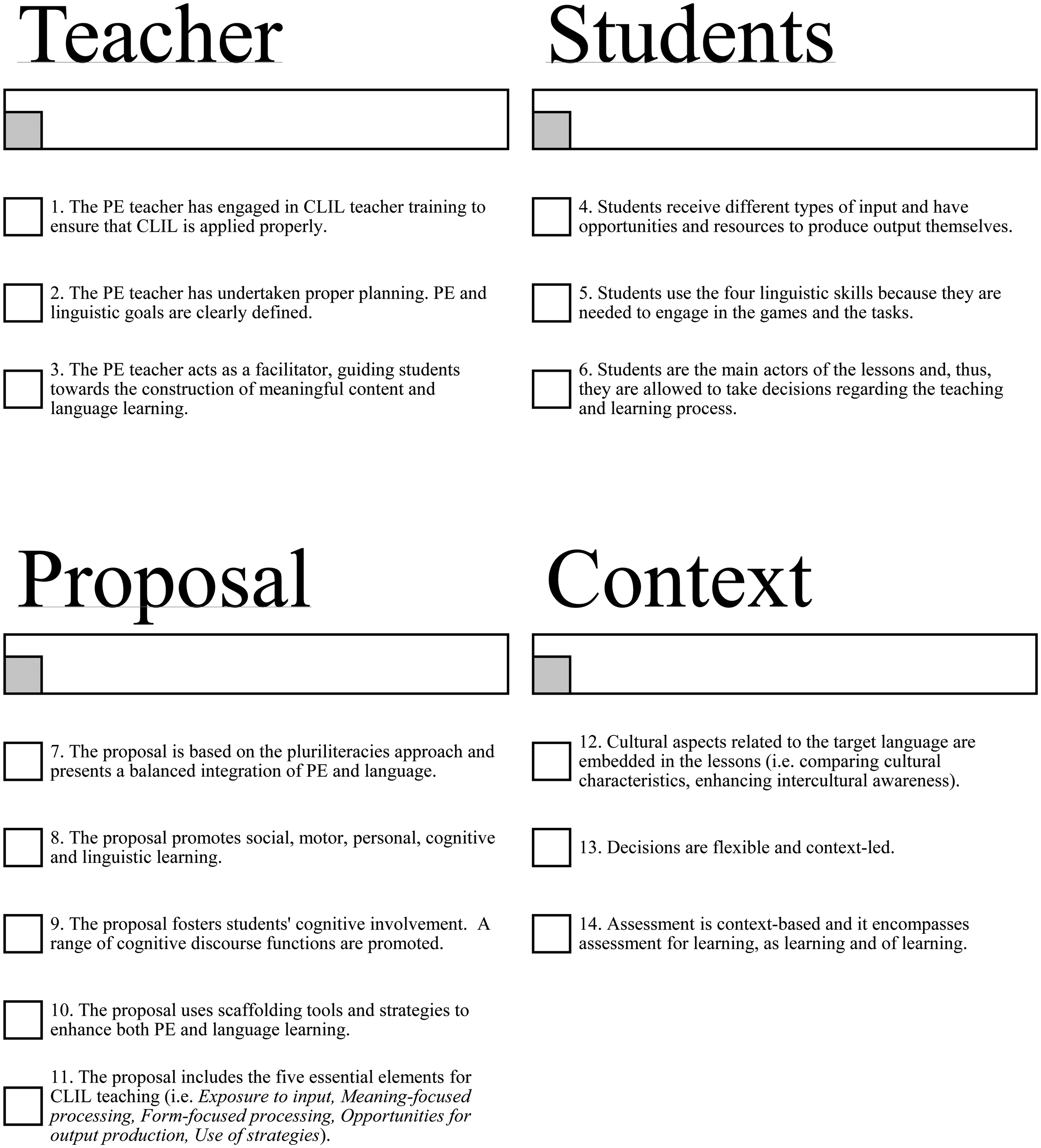
Content and language integrated learning (CLIL) criteria from the models-based framework approach.
Field-testing and research evidence: what do we know?
The research literature around CLIL both within and outside PE and sport pedagogy portrays it as a widespread educational approach. The increase in CLIL practices over the last two decades has sparked research interest at different educational levels and concerning various academic disciplines (Pérez-Cañado, 2018c). Regarding the specific field of PE, Salvador-Garcia et al. (2017) and Gil-López et al. (2021) have conducted systematic reviews on the use of this subject to learn an additional language, and they reported an exponential growth in the number of articles published in recent years, most of them using the CLIL approach. However, these authors also warned that CLIL proposals and research methodologies were very diverse and, in some cases, not thoroughly described. Thus, there seems to be a need for a unified framework in PE, which is the gap that this paper attempts to fill by providing specific guidelines for CLIL in PE to be considered a pedagogical model within the models-based practice framework.
According to the literature, it seems that PE offers an optimal context in which the communicative competence of participating students can be improved because of the social relationships and activities it involves. In this sense, according to Ó Ceallaigh et al. (2017), CLIL may enhance PE students’ confidence in terms of competence in language use. Furthermore, research has found significant improvements in both students’ oral skills, since they seem to show greater willingness to take risks in the context of PE lessons (Coral and Lleixà, 2016; Lamb and King, 2020), and written skills, because teachers become more aware of the role of language in the lessons when applying CLIL (Forey and Cheung, 2019).
In this sense, the use of an additional language in the sessions seems to come with a series of methodological changes affecting the teaching style of physical educators. To favour communication, teachers tend to apply more participative teaching styles (Salvador-Garcia and Chiva-Bartoll, 2017), as well as methodologies and strategies that encourage dialogue and oral comprehension (Coral and Lleixà, 2016; Salvador-Garcia et al., 2020). These changes may be useful for PE, since encouraging students to verbalise thinking is key to linking content and language and promoting deep learning (Coyle, 2018). Moreover, cooperative work and collaborative learning have been reported to take on greater importance in PE contexts that integrate the learning of an additional language (Lamb and King, 2020; Salvador-Garcia and Chiva-Bartoll, 2017). Therefore, CLIL could potentially push PE teachers to use more student-centred approaches and enhance the quality of PE.
Motivation is another critical aspect that has been considered from both qualitative and quantitative approaches. Regardless of the methodological approach used, the results point in the same direction. The studies carried out provide evidence of a potential increase in students’ motivation (Lamb and King, 2020; Ó Ceallaigh et al., 2017). In addition, promoting learners’ autonomy seems to enhance their satisfaction with bilingual PE (Baena-Extremera et al., 2018). However, motivational perceptions on the inclusion of an additional language in PE may vary slightly depending on the gender of the students (Fernández-Barrionuevo and Baena-Extremera, 2018).
The literature has also examined the impact that CLIL might have on the essentials of PE. Qualitative studies based on PE teachers’ opinions generally agree that the use of CLIL does not hinder the subject or diminish curricular learning (Hernando et al., 2018; Salvador-Garcia and Chiva-Bartoll, 2017). Quantitative approaches have tended to focus specifically on the physical activity that students were engaged in when applying CLIL and they show conflicting results (Gil-López et al., 2021). Some studies concluded that levels of moderate to vigorous physical activity were not lower when CLIL was applied, probably because students paid more attention and the PE teacher relied on additional communicative strategies (Salvador-Garcia et al., 2020). Other investigations, though, warn that motor-engaged time in PE with CLIL lessons did not reach the general recommendations (Coral et al., 2020; Martínez and Garcia, 2017). In any case, there is general agreement that more specific CLIL training for physical educators is needed so that they can successfully face pedagogical challenges (Coral et al., 2020; Martínez and Garcia, 2017; Ó Ceallaigh et al., 2017). Therefore, it is necessary to design a comprehensive framework in order to unify perspectives as well as conceptualise and systematise effective practice. Such a framework aspires to guide how to integrate PE and language objectives properly. In addition, further research should focus on how PE may benefit from the use of CLIL (e.g. the use of multimodality, body language and embodied approaches, promotion of deep learning thanks to the verbalisation of thinking acts, integration of PE with other curricular areas so that it is not perceived as an isolated subject).
Concluding remarks
This paper provides a starting point for the sound implementation of CLIL within PE by linking theory to practice through the models-based framework, an arena that had been hitherto neglected. In this sense, this work may become a turning point for PE specialists to see CLIL in a new light. In addition, the criteria of the CLIL in PE model will offer rigorous and clear guidelines for this type of educational proposal, potentially leading to better practical implementations and research.
According to the ideas presented here, we argue that CLIL meets the requirements to become a pedagogical model in PE. Its major idea, successful integration of PE content, PE literacies (skills that enable students to ‘do’, ‘organise’, ‘explain’ and ‘argue’ in the PE context) and language learning, brings together new perspectives on teaching and learning in PE, potentially promoting students’ integral development and preparing them for the globalised world in which we live today. However, putting CLIL into practice is not without difficulties, since it breaks with many of the traditional conceptions of education, pushing teachers and students to step out of their comfort zone. Research on CLIL continues to grow and empirical results will show whether this approach may be considered a true pedagogical model. Therefore, it is critical to continue examining CLIL to keep on learning about the CLIL in PE model and adjust it, if necessary, to be useful in any PE setting. Only in this way will CLIL offer optimal learning experiences for all students, going beyond ‘learning to move’ and providing a context for ‘moving to learn’ (Lamb and King, 2020), while enhancing their opportunities to develop essential skills for the twenty-first century.
Footnotes
Declaration of conflicting interests
The author(s) declared no potential conflicts of interest with respect to the research, authorship, and/or publication of this article.
Funding
The author(s) disclosed receipt of the following financial support for the research, authorship, and/or publication of this article: This work was supported by the Generalitat Valenciana, Conselleria d’Innovació, Universitats, Ciència i Societat Digital (grant number CIGE/2021/019).
