




Abstract
Muscular fitness (MF) is an important modifiable factor to improve overall health. Schools offer a unique opportunity to deliver MF activity during physical education (PE) and develop competence to engage in various activities across the life course. However, the implementation of school-based MF activity may be impaired by some teachers reporting a lack of expertise and low confidence in the delivery of MF activity. Understanding teachers’ thoughts and perceptions regarding the delivery of MF in schools may help guide future research and policy to support MF delivery in UK schools. Following ethical approval, a survey of secondary school PE teachers across the UK was distributed via Twitter. Survey responses were analysed and reported descriptively and thematically. Completed surveys were returned by 194 teachers (61.9% male) from England, Scotland, Wales, and Northern Ireland. Relative to less experienced teachers, those with at least five years’ service were 2.2 times more likely to have completed continued professional development (CPD) in MF activity (OR = 2.16; ß = 0.77; 95% CI: 1.25-3.74; p < 0.01), and 1.8 times more likely to use assessments of MF to inform PE programme decision-making (OR = 1.83; ß = 0.60; 95% CI: 1.18-2.82; p < 0.01). Despite the promising contribution school-based PE may have to developing MF, we report a poor understanding of MF activity amongst UK-based PE teachers. CPD is warranted to deliver successful MF interventions in a school setting.
Introduction
Physical activity (PA) guidelines for the UK and other countries recommend children and young people engage in a minimum of 60 minutes of moderate to vigorous intensity PA per day, averaged across the week with three days to incorporate muscle and bone strengthening exercise to develop movement skills, bone strength, and muscular fitness (MF) (Davies et al., 2019; WHO, 2020). Despite the growing body of evidence (García-Hermoso et al., 2019) supporting the health benefits of MF activity (e.g. improvements in metabolic function, bone health, and mental health) (García-Hermoso et al., 2019; Smith et al., 2014), much of the focus is towards aerobic-based PA such as walking and team sports (Bennie, Smith, et al., 2021). Throughout the last 50 years, MF levels have declined across countries, including the UK (Dooley et al., 2020; Sandercock and Cohen, 2018). Recent European data suggest that most adolescents do not achieve the recommended dose of PA to develop MF (Bennie, Faulkner, et al., 2021), with declining adherence to MF activity recommendations reported elsewhere (Bennie, Smith, et al., 2021). This presents a potentially missed opportunity to develop MF in childhood which is associated with reductions in type 2 diabetes, metabolic disorders, and all-cause mortality in adulthood (Fraser et al., 2019; Grontved et al., 2015; Ortega et al., 2012)
Schools have a role in offering a diverse physical education (PE) curriculum that supports participation in a range of physical activities across the life course, yet there is still a disproportionate global focus on traditional team sports (Hulteen et al., 2016; Kennedy et al., 2018). Furthermore, team sports are not representative of adolescents’ physical activities during the transition to adulthood and throughout adulthood, with adults favouring activities such as cycling, running, and gym-based activities (Hulteen et al., 2016; Sport England, 2019). Moreover, some evidence suggests a disconnect between the physical activities adolescents want to participate in and the physical activities offered in the PE curriculum (Corder et al., 2013; Cox et al., 2021). Where MF activity is included in the PE curriculum, there is evidence of its effectiveness in improving MF outcomes. Such success has been reported in Australian adolescents considered ‘at risk’ of obesity based on PA and screen time behaviours (Lubans et al., 2016). Following a 20-week school-based intervention, Lubans and colleagues (Lubans et al., 2016) reported sustained positive changes in resistance training skill competency, motivation for school sport, and reduced screen time. Additionally, MF activity delivered twice a week for one year during timetabled PE classes resulted in improved body composition amongst Dutch adolescents (Ten Hoor et al., 2018). Together, these findings further support the hypothesis that the school environment, particularly PE, is an appropriate setting for MF intervention programmes to improve adolescent health (Cox et al., 2020).
Schools are suitable settings to promote MF activity and develop MF (Cohen et al., 2015; Cox et al., 2020; Faigenbaum and McFarland, 2016; Lloyd et al., 2014; Pichardo et al., 2019; Ten Hoor et al., 2016). Schools have the facilities and the PE curricula to embed health promotion programmes irrespective of students’ backgrounds (CDC, 2012; Love et al., 2019). Unfortunately, it has been reported that some PE teachers are discouraged from implementing MF activity due to perceived barriers, including a lack of facilities, teacher confidence, and time (Kennedy et al., 2021; Nathan et al., 2018; Naylor et al., 2015). Such perceived barriers can be overcome through the correct application of MF activity, such as utilising plyometric training, which requires little to no equipment and has been proven effective for improving MF when delivered during school-based PE (Cox et al., 2020). Moreover, recent qualitative research revealed a perceived lack of opportunity for adolescents to participate in school-based MF activity, despite a willingness to engage in this popular, health-enhancing form of PA (Cox et al., 2021; James et al., 2018). To support PE teachers in delivering MF activity, foundational knowledge and ongoing professional development are required to ensure safe and developmentally appropriate practice (McGladrey et al., 2014).
A recent qualitative study suggested a lack of research into the knowledge levels of PE teachers and their subsequent suitability to teach health-related PE, including those focused on MF activity (Santiago and Morrow, 2021). Evidence from the United States (McGladrey et al., 2014) indicates that PE teachers and university PE students lack the knowledge to safely and appropriately design and deliver MF activity. Furthermore, it has been reported that when school-based MF interventions are implemented, their efficacy may be impaired by a lack of competence and low confidence in the delivery of MF-orientated PA (Kennedy et al., 2021; Nathan et al., 2018; Naylor et al., 2015). This is further compounded by negative perceptions regarding the safety and feasibility of MF activity in young people (i.e. MF activity can stunt growth, requires a gym and specific equipment) (Steele et al., 2017). These findings demonstrate a need to identify knowledge gaps in current practice to inform subsequent professional development research opportunities.
In Australia, efforts to support teachers in developing their understanding of MF activity have been successful (Kennedy et al., 2018, 2019). Kennedy and colleagues, for example, conducted one-day workshops with teachers from across 16 secondary schools to equip them with the necessary theoretical and practical knowledge to deliver MF activity. Although this research suggests teachers can be effectively supported to deliver MF activity, there is a lack of evidence regarding PE teachers’ MF knowledge and the extent to which perceived knowledge and experience influence school-based MF activity delivery.
Activities to develop MF are often considered highly gendered, and as such, there could be differences in the delivery of MF activity between male and female PE teachers (Anderson, 2010; Preece and Bullingham, 2020). However, the degree to which teacher gender influences the delivery of MF is presently unknown and requires further investigation. Furthermore, there is a lack of evidence regarding the perceived opportunities PE teachers have in delivering MF activity, allowing for reflective practice and the opportunities to engage with professional development. It is deemed necessary to conduct teacher-focused research to understand perceived barriers and facilitators to programme implementation to enable the adoption and widespread dissemination (Bauman et al., 2006; Nathan et al., 2018). Further understanding of the contextual factors that either support or undermine adoption of school programmes into regular practice is an important area of enquiry (Bauman et al., 2006; Kennedy et al., 2018).
Therefore, this study aimed to (1) understand PE teachers’ perceived knowledge and understanding regarding the delivery of MF in PE, (2) investigate PE teachers’ perceived professional development requirements in the delivery of MF activity during PE, and (3) understand how PE teacher gender and teaching experience influences the delivery of MF activity.
Methods
Survey development and distribution
The first phase of the study involved the development of a web-based pilot survey to gather information on teachers’ MF activity teaching experiences, perceptions, and professional development needs. The Checklist for Reporting Results of Internet E-Surveys (CHERRIES) was used to develop the pilot survey (Eysenbach, 2004). The University Ethics Committee granted ethical approval for the pilot and main survey. Participant information and consent forms were embedded into the survey platform. Participants were permitted to download the information sheet detailing the research project and retain an electronic copy for their records. Additionally, to fully ensure participants understood the research content and what they were consenting to, three questions were included at the beginning of the survey to assess participant reading and recall of participant information. This method of obtaining informed consent avoids limiting the response options (‘I agree’ only), providing opportunities to demonstrate that agreeing is more complicated than simply clicking or marking a checkbox (Barrera et al., 2016). Documenting how well participants understand the details of participation through the use of three questions in addition to a traditional ‘I agree’ tick box provided an opportunity to clarify misunderstandings or concerns about participating in the survey (Barchard and Williams, 2008). This method of obtaining informed consent is well recognised and ensures maximum participation (Barrera et al., 2016; Hokke Id et al., 2018; Kadam, 2017; Krotoski and Oates, 2017; Markham and Buchanan, 2012; Sugiura et al., 2017).
A pilot survey was undertaken to examine the face and content validity of the survey (Ball, 2019). Fifteen PE teachers (66.6% male, aged 37.4 ± 4.3 years) from five secondary schools in North West England were approached to provide feedback on the pilot survey's usability and content. The pilot survey comprised 21 questions organised into four sections that gathered information about: (1) the respondents and their schools, (2) their policies and practices with regard to the promotion of PA and MF, and their views and perceptions of these, (3) their professional training, and finally (4) their suggestions and thoughts regarding MF (survey questions can be viewed in supplementary file 1). Survey questions were informed by previous school-based PA research and adapted to reflect MF activity (Cale et al., 2016). Twenty of the questions were closed with finite answer options (i.e. ‘Do you feel as though activity to enhance MF is an important element of PE?'). Of the 20 closed questions, there were four opportunities to expand on closed responses (i.e. ‘other (please specify)’) (O’Cathain and Thomas, 2004). There was an additional open response question (‘Please provide any further comments regarding MF delivery in secondary PE’) to conclude the 21 questions, allowing respondents to provide further context to their closed responses.
The pilot survey received a 73% completion rate. Feedback was provided by the respondents, allowing the authors to review and make amendments to improve the clarity of the survey. Following pilot survey feedback, further details regarding survey content and completion time were provided in the participant information sheet. Additionally, the survey amended the postcode requirement to explicitly state the school postcode and not the respondents’.
Main survey distribution and participant recruitment
A combination of convenience and purposeful sampling was used to recruit secondary school PE teachers from the UK to participate in the web-based survey. The web-based survey was administered via Survey Monkey. A study recruitment message detailing the nature of the study, eligibility criteria, and a link to the web-based survey was posted and pinned on the first author's Twitter feed. This tweet was re-sent several times, ‘tagging’ the second and third authors and key PE, PA, and school sport organisations, inviting them to retweet, as well as directly to school PE departments. PE professionals have been reported to perceive Twitter to be highly valuable for connecting with others in the profession, learning from others, and sharing ideas (both within schools and more broadly) via a convenient, usable form of technology, thus enhancing the potential reach and distribution of this survey (Harvey and Hyndman, 2018).
Data collection
Data collection took place between November and December of 2020. In the first round of Twitter posts, a picture of the survey cover letter was ‘tagged’ with people who had recent Twitter activity associated with the following hashtags ‘PE, PHYSED, PEDEPT, and PECHAT’. Prominent PE and PA organisations, including the Association for PE, PE Scholar, PE4Learning, and Youth Sport Trust, were also tagged within tweets, resulting in subsequent retweets. The first author asked individuals to retweet the link to ensure a wider group of PE professionals were informed about the survey. Additionally, all authors retweeted the survey link on their respective personal Twitter accounts. The tweet impressions totalled 43,103, with 747 organic engagements and 63 retweets. The survey was closed on 23 December 2020 after at least two days without any new respondents. The survey completion duration was 10–15 minutes (mean = 13.43 minutes). This timeframe is suggested as suitable to enhance response rates (Fan and Yan, 2010).
Analysis of survey data
The survey generated qualitative and quantitative data. Seven incomplete surveys were omitted from the analysis, and after survey IP address checking identified two potential duplicate entries, these were also omitted from further analysis (Eysenbach, 2004). Descriptive data and frequencies of participant responses were generated, and frequency with relative percentages was calculated.
Quantitative analysis
Quantitative analyses were conducted using SPSS v. 24 (SPSS Inc.; Chicago, IL), and statistical significance was set at p < 0.05. To address study aim 3, a series of logistic regression analyses examined the relationship between sample subgroups (i.e. teaching experience and gender) and survey responses. The teaching experience reference group was teachers with less than five years’ experience, and the gender reference group was female teachers.
Qualitative analysis
Qualitative analyses were conducted in NVivo12 (Version 12.6.0; QSR International Pty Ltd, Victoria, Australia). To address study aims 1 and 2, free text responses were pooled together to explore and expand upon the closed survey responses.
A thematic content analysis approach was undertaken consistent with the procedures outlined by Braun and Clarke (2006). After becoming familiar with the data (reading and re-reading pooled open text data), the first author adopted an inductive analytical approach and, in doing so, generated a series of codes that are relevant to study aims 1 and 2. Codes were clustered together to identify higher-level themes and subsequent sub-themes without fitting them to a pre-existing coding frame (Braun and Clarke, 2006). Codes and themes were refined in iterative steps of (a) re-reading the pooled data, (b) identifying codes and subsequent themes, and (c) refining the codes and themes with the second author (Braun and Clarke, 2006). The second author reviewed the coding process and provided suggestions to ensure that the coding was representative of the data and the study aims. This process was repeated until the two authors reached a minimum 90% agreement level (McAlister et al., 2017; O’Connor and Joffe, 2020; Roberts et al., 2019).
We then undertook a frequency count of identified quotes to establish the consistency of themes. The higher- and lower-order themes, frequency counts, and participant quotations were subsequently displayed in a diagrammatic format using the pen profile approach. The inclusion of verbatim quotations provides context and verifies participant responses (Smith and Caddick, 2012). Another strength of the pen profile approach is that it provides an accurate and concise way of illustrating the consistency of qualitative data themes [as represented by the n = value], rather than over-representing minority participant views. As such, the approach is commonly adopted in PA and PE qualitative research (Cox et al., 2022; Goss et al., 2022; Mackintosh et al., 2011; Ridgers et al., 2012) due to it being accessible to researchers with an affinity for both qualitative and quantitative research (Clark et al., 2020). The iterative approach we took to thematic analysis (Braun and Clarke, 2006) and the audit trail we have presented above detailing and justifying the methodological decisions we took throughout this aspect of the study provides transparency and trustworthiness allowing for future replication (Nowell et al., 2017).
Results
Survey closed response results
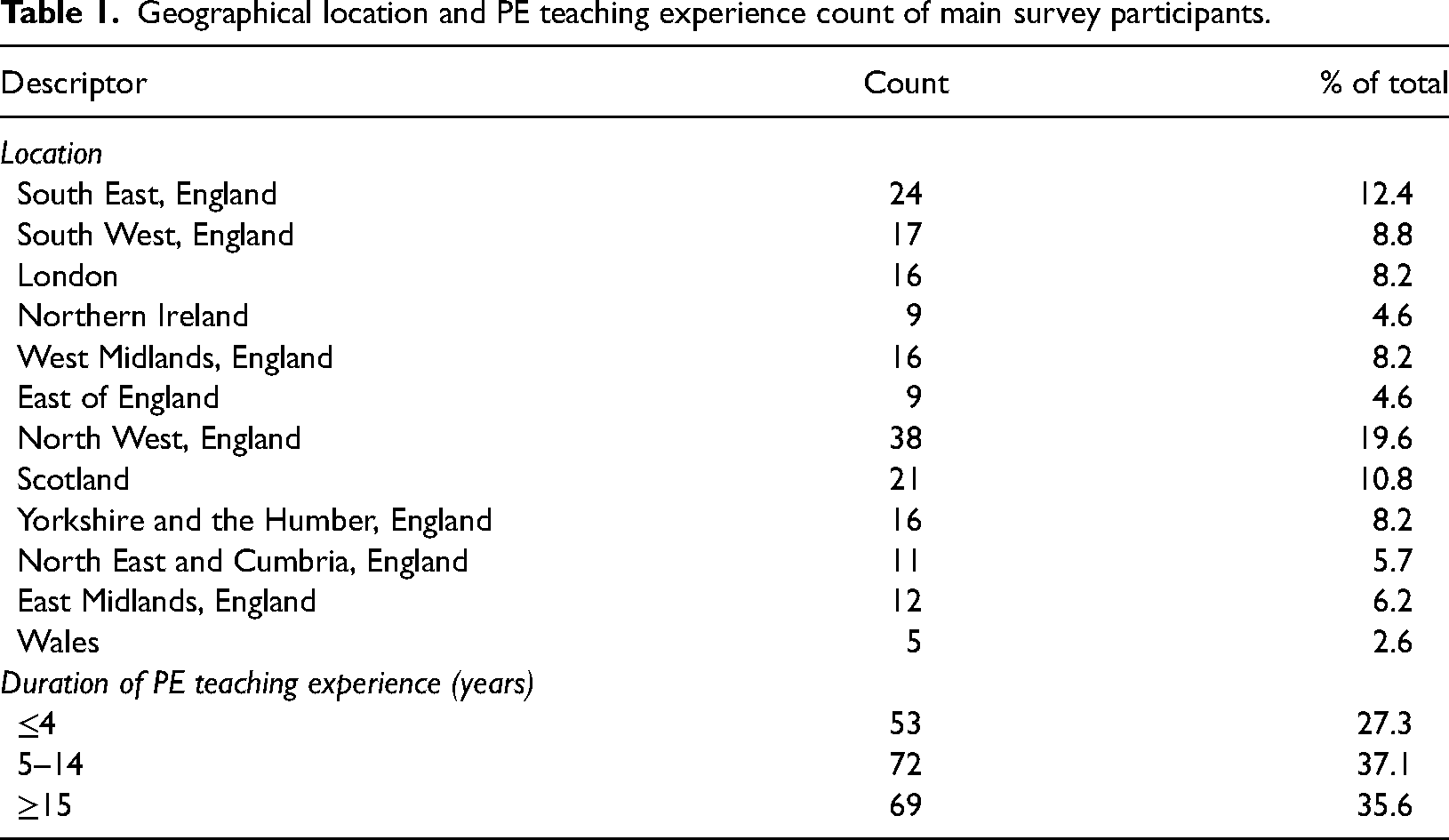
Completed surveys were returned by 194 teachers (61.9% male) from England, Scotland, Wales, and Northern Ireland with a broad range of experience. Location and experience count can be seen in Table 1.
Geographical location and PE teaching experience count of main survey participants.
To address study aim 3, a series of binomial logistic regressions were performed to examine gender and teaching experience differences in survey responses. Having at least five years’ teaching experience was associated with an increased feeling of PE being valued by colleagues (OR = 2.07; ß = 0.73; 95% CI: 1.41–3.05; p <0.01). Further, greater teaching experience was significantly and positively associated with the likelihood of conducting MF activity in the current term (OR = 1.57; ß = 0.45; 95% CI: 1.08–2.28; p = 0.01) and planning to conduct MF activity in the next school term (OR = 2.23; ß = 0.80; 95% CI: 1.51–3.31; p < 0.01).
Relative to less experienced teachers, those with at least five years’ service were 2.2 times more likely to have completed continued professional development (CPD) in MF activity (OR = 2.16; ß = 0.77; 95% CI: 1.25–3.74; p <0.01), and 1.8 times more likely to use assessments of MF to inform PE programme decision making (OR = 1.83; ß = 0.60; 95% CI: 1.18–2.82; p <0.01). Compared to female PE teachers, males were 2.02 times more likely to be planning to deliver MF in the next school term (OR = 2.02; ß = 0.70; 95% CI: 1.09–3.76; p = 0.02) and 2.75 times more likely to have conducted some form of CPD in MF activity delivery (OR = 2.75; ß = 1.01; 95% CI: 1.11–6.81; p = 0.02).
MF activity knowledge
Free text responses from open comments were analysed, and pen profiles were constructed to illustrate themes and sub-themes. Participants’ perceived knowledge of MF activity is presented in Figure 1 and contains four themes: programme implementation, conceptual, safety, and professionalism. Positive (+ve) and negative (−ve) themes were identified during the analysis. There were 10 sub-themes identified: design −ve (n = 16), design +ve (n = 10), testing and evaluation +ve (n = 5), gender differences −ve (n = 4), activity type −ve (n = 3), growth and maturation −ve (n = 12), health benefits +ve (n = 6), injury −ve (n = 6), teaching and coaching +ve (n = 3), personal bias −ve (n = 8).
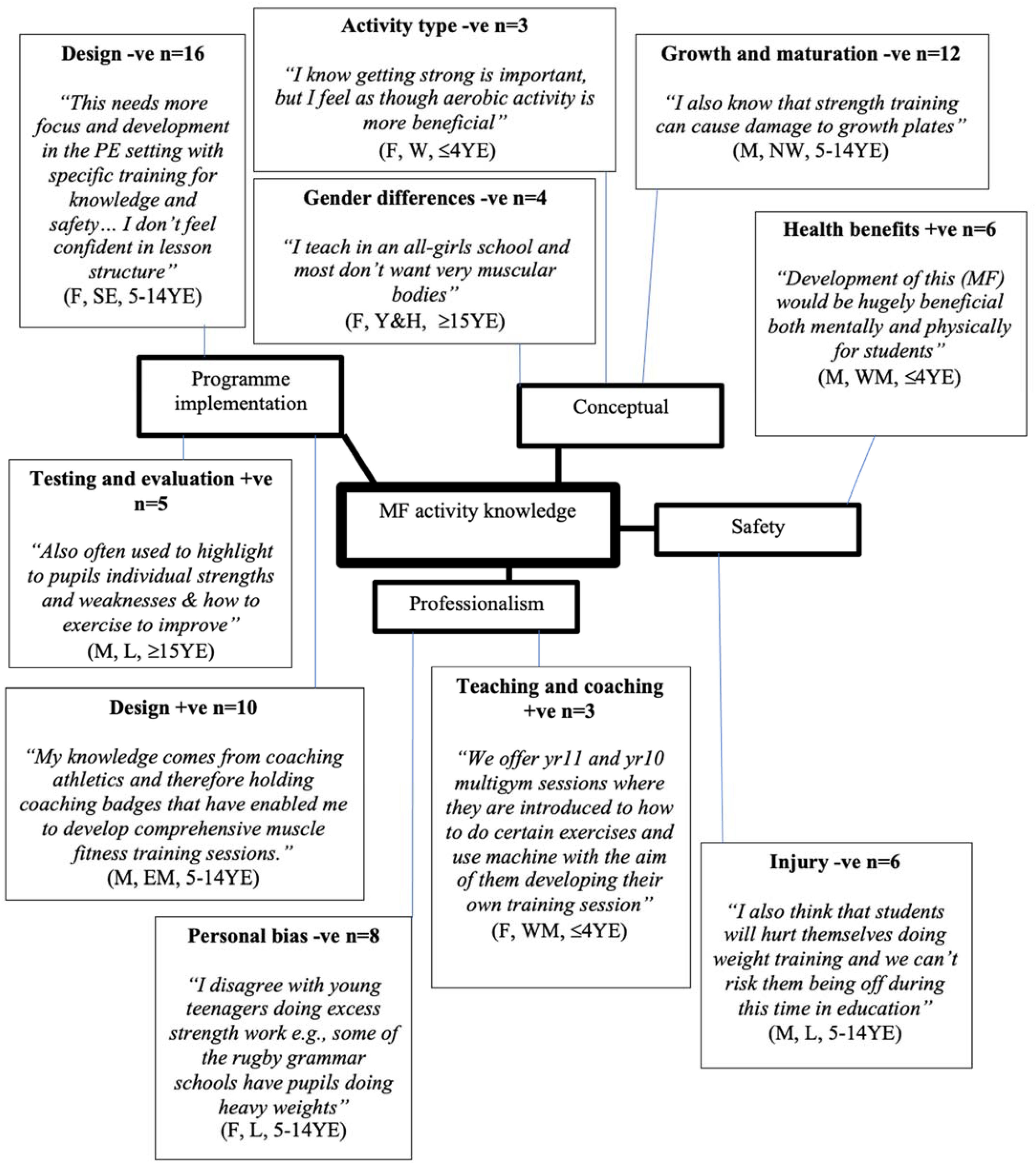
MF activity knowledge. +ve = positive; −ve = negative. M = male; F = female. SE = South East England; SW = South West England; L = London; NI = Northern Ireland; WM = West Midlands, England; EE = East of England; NW = North West, England; Y&H = Yorkshire and the Humber, England; S = Scotland; NE = North East and Cumbria, England; EM = East Midlands, England; W = Wales. YE = years’ experience.
Barriers to conducting MF activity
Participants’ free text responses regarding perceived barriers to conducting MF activity are presented in Figure 2, with four themes: school related, parent related, student related, and teacher related. There were 10 sub-themes identified: facilities +ve (n = 9), facilities −ve (n = 16), funding −ve (n = 2), funding −ve (n = 7), priority −ve (n = 18), time −ve (n = 7), fitness −ve (n = 4), motivation −ve (n = 5), misconceptions −ve (n = 4), professional development −ve (n = 25).
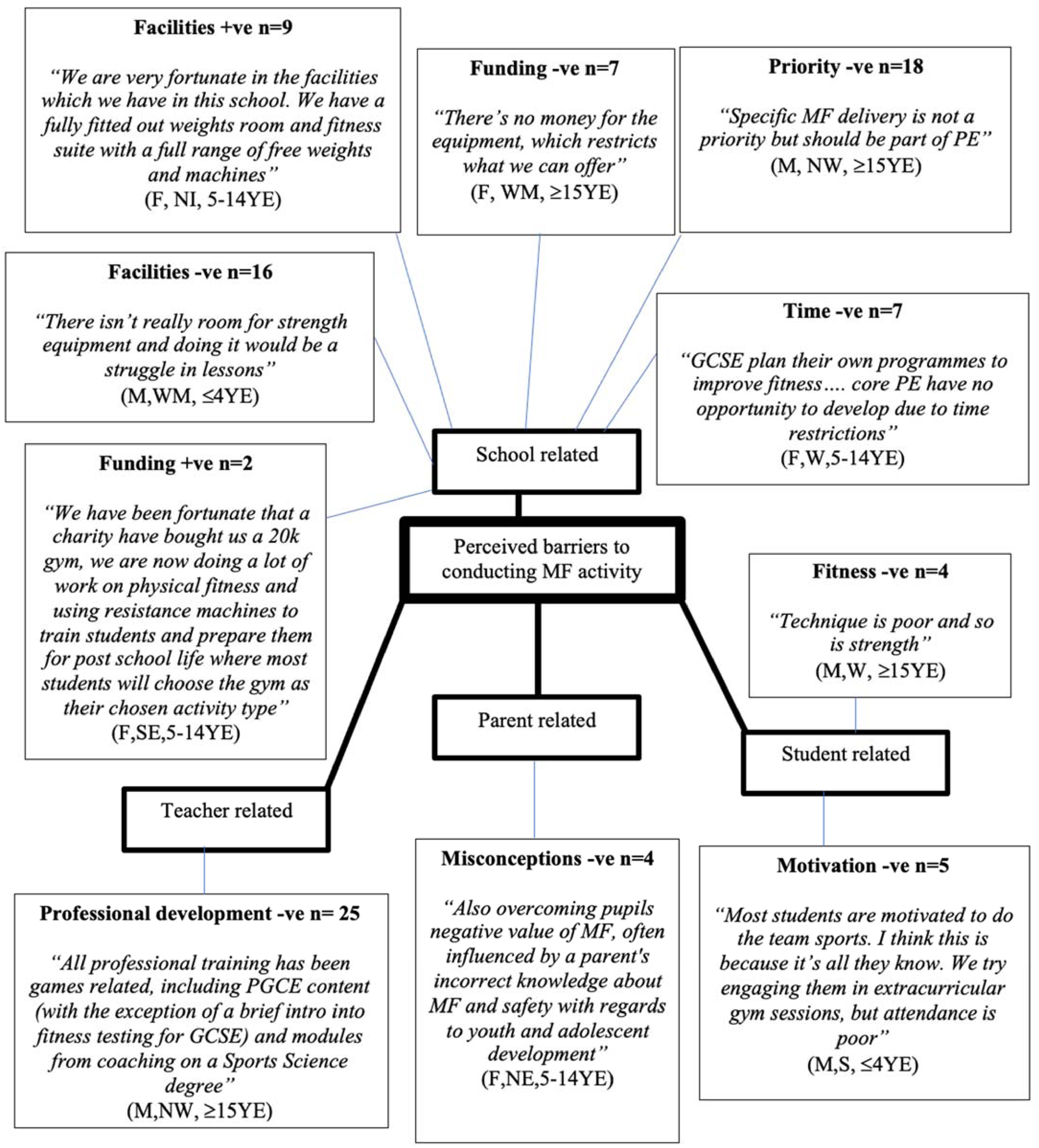
Perceived barriers to conducting MF activity. +ve = positive; −ve = negative. M = male; F = female. SE = South East England; SW = South West England; L = London; NI = Northern Ireland; WM = West Midlands, England; EE = East of England; NW = North West, England; Y&H = Yorkshire and the Humber, England; S = Scotland; NE = North East and Cumbria, England; EM = East Midlands, England; W = Wales. YE = years’ experience.
Discussion
This study aimed to: (1) understand PE teachers’ perceived knowledge and understanding regarding the delivery of MF in PE, (2) investigate PE teachers’ perceived professional development requirements in the delivery of MF activity during PE, and (3) understand how PE teacher gender and teaching experience influences the delivery of MF activity. Contextual data revealed a perceived lack of emphasis and priority on MF activity in the PE National Curriculum and individual schools. Additionally, teachers reported limited knowledge and understanding of MF, with programme design highlighted as an area for development. A lack of knowledge was supported by a desire to engage in more MF CPD. Additionally, quantitative data revealed that knowledge surrounding the delivery of MF was more likely to be present amongst more experienced teachers. Furthermore, male teachers were more likely to have attended MF CPD and to be planning MF delivery than female PE specialists.
PE teachers' perceived knowledge and understanding
Participants’ perceived knowledge of MF activity was predominantly acquired outside of their day-to-day roles. For example: I do coaching at an athletics club and we do strength work there. That's where I got my skills, during my UK Athletics coach qualification [Female, South West, 5–14 years’ experience].
This may be due to an emphasis on team sports, games, and dance placed upon in-service teacher CPD (Armour and Makopoulou, 2012). However, the extent and source of the knowledge acquired outside of the PE profession are unclear. Furthermore, although some participants believed their knowledge was adequate, misconceptions and personal biases still prevented MF activity from being conducted. For example: I wouldn’t know where to start. I know that if I got it (MF) wrong, I would damage their growth plates [Male, Scotland, Under 5 years’ experience] There is no requirement for kids to do this (MF). The kids enjoy the games and they will get strong as they grow naturally [Male, London, 5–14 years’ experience].
The lack of awareness regarding knowledge gaps may result in teaching practices receiving minimal modification and failing to address contemporary health issues facing young people (Clarke and Hollingsworth, 2002), such as declining MF (Sandercock and Cohen, 2018).
Despite preconceived misconceptions and personal biases regarding the safety and necessity of MF activity in adolescents, 87% of participants conducted MF assessments in school. However, only 27% of participants used MF assessments to inform practice. Safe and effective MF activity relies on accurate and appropriate assessment to ensure the correct type, volume, and intensity of MF activity is delivered (Suchomel et al., 2018). Previously, some parents have greeted fitness assessments in schools with trepidation (Cohen et al., 2015) and our findings suggested that some PE teachers perceive this as a barrier to conducting assessments of MF. Furthermore, our results suggested that PE teachers have reservations about MF assessments which may explain the lack of implementation or the intention to implement such assessments. Improving teachers’ knowledge of MF assessments may improve teachers’ understanding of programme implementation, which may enhance the quality of MF activity provision in PE.
Whilst study participants understood the health benefits associated with MF activity, there were concerns regarding the adverse effects on growth and development amongst adolescents as a result of conducting MF activity. These concerns are unfounded and based on outdated misconceptions (Faigenbaum and Myer, 2010) and demonstrate a lack of current knowledge. Moreover, the perception that a range of complex and specific equipment is needed to conduct MF activity was evident, thus demonstrating a lack of pedagogical content knowledge. Indeed, whilst some types of MF activity may require specialist equipment, such as weightlifting, other types of MF activity, such as bodyweight activity (e.g. push-ups, sit-ups, pull-ups, squats) and plyometric activity, are not reliant upon specific equipment. Our findings highlighted a lack of awareness of the broad range of activities available to develop MF. Future CPD should focus on developing a broad understanding of what age-appropriate activities can enhance MF safely in the school environment. For example, adolescence provides a period during which plyometric activity may be undertaken and elicit positive results (Radnor et al., 2017, 2018). However, individual variability in biological age, training age, skill, and coordination will dictate plyometric activity frequency, volume, and intensity (Fort-Vanmeerhaeghe et al., 2016; Peitz et al., 2018) and would therefore require teachers to be suitably knowledgeable in this area. Overall, our findings suggest a lack of knowledge in programme design and implementation underpinned by a limited conceptual understanding of conducting MF activity with adolescents.
PE teachers' perceived professional development requirements
Opportunities to participate in MF activity CPD were perceived as limited, supporting the overall lack of PE teacher CPD reported in recent literature (Tannehill et al., 2021). There was a perceived high level of self-assessed understanding of MF activity, but a lack of actual understanding was evident in free text responses. Additionally, many of the teachers had not participated in any formal CPD. This concurs with reported concerns regarding what sources of information inform the delivery of MF activity in PE (Ward and van der Mars, 2020). Research conducted in the United States revealed that PE teachers would be interested in receiving training about policy and practice to improve and guide PA delivery (Cox et al., 2011). This is consistent with our findings, which highlighted a desire to engage in MF activity CPD.
Of the UK nations included in this study, Scotland is the only one reported to have a compulsory obligation for PE teacher CPD (Tannehill et al., 2021). However, despite Scottish PE teachers being mandated to participate in CPD, no differences in CPD between UK nations were reported, which may be attributable to a lack of focus on PE CPD until relatively recently (Tannehill et al., 2021). Additionally, a lack of obligation to engage in and complete CPD may explain the low levels of CPD engagement reported in this study. Furthermore, where an opportunity for CPD was offered, it focused on team sports. Our findings suggest current CPD opportunities are rare and not reflective of activities that adolescents are likely to partake in as adults, such as MF and gym-based activity. Moreover, participants also highlighted a need for CPD that covers a broader range of activities. For example: Most training is around sports and dance. Any CPD we do is usually internal, and we cover any changes in policy to conducting the typical lessons like football, netball and rugby. It would be useful to do fitness type CPD, but we don’t really have the knowledge to share. We all go the gym, but what we can do with the pupils isn’t really clear. [Female, South East England, Over 15 years’ experience].
In our study, lack of CPD was regarded as a barrier to the delivery of MF activity. For example: It (MF) is not really a priority for PE. Even if it (MF) was a priority I don’t think we would do much, we just don’t have the knowledge and I wouldn’t feel confident. We need the right training to let us do it safely [Male, North West England, 5–14 years’ experience].
The reported lack of CPD is paradoxical to the evidence suggesting that school-based MF interventions are efficacious for developing MF amongst adolescents (Cox et al., 2020; Lubans et al., 2020). The declining levels of youth MF in the UK may benefit from a more structured focus in PE (Kennedy et al., 2017; Pichardo et al., 2019). Thus PE teachers’ knowledge should remain current with the latest developments in pedagogy and practice (Tannehill et al., 2021).
To facilitate the implementation of school-based MF activity, our findings suggest that MF activity CPD is required to ensure safe and effective delivery that caters for teachers’ time demands in and out of formal curriculum time. Medical and health professional education programmes have adopted online delivery formats to account for increasing time pressures, external professional and personal demands and to reduce training costs (McDonald et al., 2018). Teachers may benefit from similar online training that allows for flexible learning. The benefits of online teacher CPD may include cost-effectiveness and increased accessibility, flexibility, interactivity, self-direction, and self-efficacy in learning (Cook and Dupras, 2004; Myers et al., 2012). However, such online CPD interventions for upskilling PE teachers in the delivery of MF are yet to be conducted.
Experience and gender differences
Our findings suggested that PE teachers less experienced in teaching years were less likely to assess, deliver, and plan to deliver MF activity. The lack of intent to deliver MF activity early in their teaching careers could be attributed to secondary school PE teachers’ initial training focusing on traditional team sports (Capel et al., 2009; Green, 2014). Furthermore, despite the emphasis on the role of schools in PA promotion, teachers with less than five years of experience felt senior leadership were likely to reduce PE provision and allocate protected time to other subjects such as Maths and English. The reported reduction in PE provision may impact the ability to deliver a diverse curriculum which includes MF activity. For example: It's hard to run those types of sessions (MF) when timetabled PE gets reduced to one session per week during GCSE years. GCSE PE get more, but the others swap PE for extra intervention English, Maths and Science, they take priority [Female, North West England, less than 5 years’ experience].
Such differences in the provision of PE may reduce exposure to MF activity for adolescents and reduce the chance for teachers to deliver, reflect on, and adapt teaching practice. Moreover, if teachers are not provided with MF activity knowledge early in their careers, the acquisition of knowledge based upon the process of continuous learning through reflective practice may be compromised (Capel et al., 2009; Griffin et al., 2013; Tant and Watelain, 2016). Despite our findings suggesting early career teachers are less likely to deliver MF activity, all teachers, irrespective of experience, stated their knowledge of MF activity required development. This demonstrated a need to provide CPD opportunities to all teachers throughout their careers to ensure current levels of knowledge to help inform appropriate and safe MF activity delivery.
Our findings contrast with previous research whereby activities perceived as more masculine, such as power and strength-based activity, were likely to be delivered by male teachers (Anderson, 2010; Preece and Bullingham, 2020). Our findings revealed no gender differences in the delivery of MF activity during term time. However, we found that female PE teachers were less likely to plan MF activity and less likely to have attended MF CPD. Gender differences in access or motivation to engage in MF CPD may explain the lack of MF activity planning amongst female PE teachers. Efforts should be made to ensure gender equality regarding access to CPD across all PE activities.
The lack of gender differences in term time delivery of MF activity may be attributable to the increased participation of females in sports and exercise that were previously male dominant (Cowley et al., 2021). For example, activities such as weightlifting (i.e. snatch, clean, and jerk) to improve MF have been promoted by initiatives such as ‘This Girl Can’ (Diaper, 2015), to reduce gender bias in the participation and prescription of activities that have been previously regarded as masculine. Overall, our findings revealed a lack of gender bias in MF activity teaching practice, which may positively impact student engagement in MF activity (Sánchez-Hernández et al., 2018). However, close attention and further investigation into the barriers and facilitators for female participation in MF CPD is warranted to ensure female PE teachers take up and maintain effective and safe delivery of MF activity in PE.
Strengths and limitations
Limitations of this study relate to the imbalanced sample between the four UK home countries, and the risk of self-selection bias. However, some steps were taken to limit such bias, including survey piloting and the adherence to a recognised set of guidelines specifically for web-based surveys (Eysenbach, 2004). Furthermore, findings from this study should be interpreted with caution as the cross-sectional design cannot claim causality and the sampling methods mean that the results were not representative of the UK. Arguably, the sample size for the quantitative analysis was modest and as such, statistical power may have been lacking. However, the mixed methods approach to data collection allowed for added context to support the quantitative data.
Conclusion and recommendations
This is the first survey investigating UK secondary school PE teachers’ perceived knowledge and understanding of MF activity and teacher CPD requirements for its delivery in PE. Teachers delivering PE from across the UK believe their knowledge of school-based MF activity needs development, and this lack of knowledge reflected a limited understanding of programme design and concepts of MF activity. Furthermore, we observed that preconceived biases surrounding the safety and efficacy of MF activity exist amongst UK PE teachers. There is a perceived lack of priority to conduct MF activity in schools, highlighting the need for further work with policymakers and stakeholders to ensure a diverse PE curriculum is on offer to adolescents. Finally, CPD to improve teachers’ knowledge and understanding of MF activity is warranted to overcome the perceived barriers to MF activity delivery and ensure implementation fidelity.
Supplemental Material
sj-docx-1-epe-10.1177_1356336X221134067 - Supplemental material for PE teachers’ perceived expertise and professional development requirements in the delivery of muscular fitness activity: PE Teacher EmPOWERment Survey
Supplemental material, sj-docx-1-epe-10.1177_1356336X221134067 for PE teachers’ perceived expertise and professional development requirements in the delivery of muscular fitness activity: PE Teacher EmPOWERment Survey by Ashley Cox, Robert J. Noonan and Stuart J. Fairclough in European Physical Education Review
Footnotes
Declaration of conflicting interests
The author(s) declared no potential conflicts of interest with respect to the research, authorship, and/or publication of this article.
Funding
The author(s) received no financial support for the research, authorship, and/or publication of this article

Supplemental material
Supplemental material for this article is available online.
Author biographies
References
Supplementary Material
Please find the following supplemental material available below.
For Open Access articles published under a Creative Commons License, all supplemental material carries the same license as the article it is associated with.
For non-Open Access articles published, all supplemental material carries a non-exclusive license, and permission requests for re-use of supplemental material or any part of supplemental material shall be sent directly to the copyright owner as specified in the copyright notice associated with the article.
