




Abstract
Assessing children's movement competence (MC) offers numerous benefits for academics, practitioners, clinicians and children, allowing individuals to meet children's developmental needs and improve their MC. Yet, there is concern that currently available assessment tools only provide a single plane (fundamental movement skills) perspective of a child's MC. The aim of this study was to elicit the expert opinion of a mixture of academics and practitioners from a variety of fields (research, education, sport, physiotherapy, athletic therapy) to design a tool to measure both the fundamental and functional movement skills of children aged 8–12. A three-round Delphi poll with an international panel of 17 academics (n = 8) and practitioners (n = 9) was conducted. The consensus was that the assessment should assess (a) object manipulation, (b) locomotor, and (c) stability MC and the assessment layout should be dynamic, incorporating a hybrid model of stations and a circuit. Expert consensus was that most skills were to be performed using the dominant and non-dominant side, with object manipulation skills assessed using process and product criteria. The consensus was also that the assessment should have varied ‘layers’ of marking criteria to cater for varying assessor expertise and have a series of ‘add-on” elements to provide a more detailed evaluation should it be needed. These findings present the foundation and content validity of an assessment which takes a dualistic view of children's movement skills, that could be used across several environments (schools, sports clubs, clinical settings, etc.) and could be suitable for use with a large group of children.
Keywords
Introduction
Movement competence (MC) is defined as the development of skill proficiency to ensure successful performance in a range of physical activities (Bisi et al., 2017). Developing appropriate levels of MC is critical in developing physical literacy (PL), mediating physical activity (PA) and other positive health trajectories across the lifespan (Robinson et al., 2015; Stodden et al., 2008). PL can be defined as ‘the motivation, confidence, physical competence, knowledge and understanding to value and take responsibility for engagement in physical activities for life’ (Whitehead, 2013: 29). In children and adolescents, PL research has primarily focused on the development and assessment of fundamental movement skills (FMS) (Barnett et al., 2016). FMS are described as the basic building blocks of more advanced complex movements that support successful engagement in sports and PA (Logan et al., 2018). FMS are typically classified into three areas: locomotor (running, jumping, etc.), object control (also termed object manipulation, such as kicking, catching, etc.), and stability skills (balance) (Gallahue et al., 2012). Children are thought to have the potential to master most of these movement skills by six or seven years of age (Gallahue and Ozmun, 2006), after which they enter a transition phase whereby they combine these FMS into more complex skills (Gimenez et al., 2012). Children refine and combine FMS as they acquire more advanced or specialised movement skills, that are used in a range of sports and/or PA (Clark and Metcalfe, 2002), with increased MC proficiency leading to increased PA participation in children (Barnett et al., 2009; Cliff et al., 2009; Logan et al., 2015). Research also highlights that a lack of MC proficiency can lead to reduced levels of PA participation (Jaakkola et al., 2016). Such findings are cause for concern as inadequate levels of PA are reported to contribute to an estimated 6–10% of the major non-communicable diseases of coronary heart disease, type 2 diabetes, and breast and colon cancers worldwide (Lee et al., 2012).
Functional MC relates to the body's use of multi-planar and multi-joint movements, specifically those activating the core musculature region (e.g. bodyweight squat, lunge, push/pull exercises) (Abraham et al., 2015). Similar to FMS, functional movement has been shown to have a positive relationship with PA as well as having a significant negative correlation with weight status (body mass index) in children (Duncan et al., 2013; Duncan and Stanley, 2012). Research also demonstrates that low levels of functional MC in children may lead to orthopaedic conditions (e.g. arthritis, low back pain, osteoporosis) in later life, resulting in difficulty completing tasks of daily living, in turn, decreasing an individual's quality of life (Duncan et al., 2013). Cliff et al. (2012) previously compared the mastery of 12 FMS and skill components between a treatment-seeking sample of overweight/obese children and a reference sample from the United States. They found that, as well as the prevalence of mastery being lower across all FMS in the sample of overweight/obese children, many of the movement patterns in which this sample exhibited the greatest deficiency in mastery were functional movement components (e.g. difficulties in bending the knees to lower the body), suggesting that a proficient level of functional movement is required in order for children to perform FMS well (Cliff et al., 2012).
Consequently, the meaning of MC is broadening to reflect the diversity of movement skills utilised in all PA pursuits (O’Brien et al., 2021), and research is emerging that examines the relationship between both fundamental and functional movement skills (Lester et al., 2017; O’Brien et al., 2021). This broader view of MC is warranted, considering that both fundamental and functional MC have previously been used to define MC (Basman, 2019), and viewing a child's development through one lens presents a single plane perspective of MC, whereas a dualistic mode of assessment (examining functional and fundamental movement skills together) has the potential to provide a richer, more extensive source of a child's MC status to inform subsequent intervention. It is clear that the assessment of children's MC is beneficial, and can allow individuals who work with children to better meet children's developmental needs (Platvoet et al., 2018), identify children with low MC and allow for early intervention (Lopes et al., 2021).
There is a strong concern that currently available assessment tools only provide a single plane perspective of a child's MC and do not consider the risk of injury in their protocols (Miller et al., 2020). For example, a disadvantage of product-based (e.g. Körperkoordinationstest für Kinder (KTK)) (Kiphard and Schilling, 1974, 2007) MC assessments is the inability to identify movement or technique errors and high-risk movements, such as knee valgus (when the knee collapses inwards, a risk factor in knee injuries), associated with musculoskeletal injury (Hulteen, True and Pfeiffer, 2020; Miller et al., 2020). Opposed to product-based assessments, process-based assessments describe the quality of the movement patterns (Logan et al., 2017). Despite capturing movement quality, few process-based tools consider functional movement patterns or injury (Miller et al., 2020). This is potentially due to the range of specific purposes such tools are designed for, or indeed the environment in which they are designed (i.e. physical education (PE), athletic therapy, etc.). Regardless, failure to consider injury in the current MC assessments can result in children adopting compensatory movement patterns which can occur when limitations in mobility, stability, motor control or functional movement patterns prevent proper motion from occurring which may result in an increased risk of injury over time (Coker and Herrick, 2021). These compensatory movements may inhibit FMS mastery and negatively influence perceived MC, impeding PL development (Coker and Herrick, 2020).
The strength of association between process and product-based assessments appears to vary depending upon the skill and the assessment, suggesting that each mode can provide unique information relating to a child's MC. Several MC assessments (both fundamental and functional movement-based) are currently available and designed for a range of environments (schools, sports clubs, clinical settings, etc.) (Bardid et al., 2019). Each of these tools has been designed for a range of purposes (e.g. mass surveillance, talent identification, evaluation of programs, injury prevention, etc.) and have varied functions (Bardid et al., 2019), making it increasingly difficult for users to identify which assessment is best suited for them (Klingberg et al., 2019). These tools also have varying amounts of empirical evidence supporting their use in terms of feasibility, validity and reliability (Bardid et al., 2019; Eddy et al., 2020; Klingberg et al., 2019). Eddy et al. (2020) recently conducted a systematic review to evaluate the suitability of current FMS assessment tools with a particular focus on the school environment. This research highlighted a range of determinants and barriers that prevent such assessments from being used, such as feasibility (Bardid et al., 2019; Klingberg et al., 2019), not measuring all FMS components (typically balance) (Rudd et al., 2015) or a lack of reliability/validity research conducted as outlined in the COSMIN guidelines (Bardid et al., 2019; Mokkink and Terwee, 2010). They concluded that there is a need to develop low-cost, reliable and valid assessment tools that are suitable for testing children at scale (Eddy et al., 2020; Morley et al., 2021). Furthermore, the literature has outlined a number of additional barriers around the feasibility of current tools for use in many ‘real-world’ settings (e.g. schools or sports clubs) (Lander et al., 2017), such as complex marking criteria, time/cost involved (Cools et al., 2009; Hoeboer et al., 2018; Wiart and Darrah, 2001) and a lack of fun for participating children (Lander et al., 2015), likely due to the static nature of many assessments (e.g. Test of Gross Motor Development (TGMD)). In response to the aforementioned limitations, more practical (i.e. FUNMOVES) (Eddy et al., 2021) and dynamic modes of assessment have been developed in recent times (i.e. The Canadian Agility and Movement Skill Assessment (CAMSA), The Dragon Challenge) (Longmuir et al., 2017; Tyler et al., 2018), creating a more ecologically valid form of assessment. Nevertheless, these tools are also not without their limitations (e.g. lacking stability components and having an imbalanced scoring system) (Tyler et al., 2018), highlighting the need to build on and further progress MC assessment tools. It has been proposed that rather than developing new assessments, researchers should seek to investigate and adapt existing tools (Hulteen, True and Pfeiffer, 2020) however, in order to maintain consistency in layout, performance and scoring of skills, there remains a strong argument for developing complete tools.
Thus, despite the fact that there is a proliferation of MC assessment tools available, it is evident that the majority are not suitable for use in many settings (Bardid et al., 2019; Eddy et al., 2020; Klingberg et al., 2019), many only provide a narrow view of MC (e.g. some just measure FMS/a component of FMS or do not consider injury) (Miller et al., 2020; Rudd et al., 2015) and many are designed specifically for 4–7 years of age and therefore do not have the complexity to effectively challenge children as they exhibit more specialised and complex movement skill patterns (Gimenez et al., 2012). These findings suggest that although plentiful, current MC assessment tools fail to satisfy the variety of needs that academics, practitioners and clinicians have for them. It is also evident that having one tool that could assess MC in multiple environments (including education, sports, clinical and research) and that meets the needs of assessors in each would have wide-reaching benefits both nationally and globally (Bardid et al., 2015).
In recognition of these inadequacies in the field, the aim of this study was to elicit the expert opinion of a mixture of academics and practitioners from a variety of fields (including research, education, sport, physiotherapy, and athletic therapy) to design a new movement assessment tool to measure both the fundamental and functional movement skills of children aged 8–12. Drawing upon the extant literature, a key focus within this design would need to be on practicality for use with a large group of children, transferability across multiple environments (schools, sports clubs, clinical, etc.) and implementation by users of varying levels of experience and expertise.
Methods
This study involved two main phases: (a) pre-Delphi questionnaire and (b) Delphi poll, as explained below. Ethical approval was granted by the Dublin City University Research Ethics Committee (REC/2020/003).
Pre-Delphi questionnaire
An important aspect of MC assessment tool development is content validity, defined as ‘the degree to which the content of an instrument is an adequate reflection of the construct to be measured’ (Mokkink et al., 2010: 743). To establish content validity, it is recommended that assessments are developed with input from experts in the field, alongside literature reviews and importantly, with the involvement of the target population (i.e. the assessment users) (Mokkink and Terwee, 2010). Therefore, the first stage of the tool's development was to gauge the desire for its development, identify the main barriers preventing individuals from using existing assessments and identify key features that users desired to be included in the new tool. These data were gathered via an online questionnaire.
Content
Questionnaires consisted of 21 open- and closed-ended questions with an estimated completion time of 6–10 minutes. All items were reviewed by the research team and piloted prior to dissemination. The research team consisted of a PhD candidate, and four senior members of the university, with on average 12 + years’ experience supervising postgraduate students, writing grants and extensively publishing in top-tier journals. Questionnaires looked to examine the following: (1) how important it is for children to develop fundamental and functional movement skills (both were clearly defined for participants) within each respective environment (e.g. schools, sports clubs, clinical, research), (2) whether assessing these skills is important in the course of the participant's professional work with children, (3) what currently available movement assessments are individuals familiar with, (4) what barriers are preventing them from using currently available assessments, (5) what characteristics (i.e. time efficient, space efficient, cost effective, etc.) would they like a new movement assessment tool to have, and (6) demand (i.e. if one was made available for them would they use it?).
Recruitment and participants
Questionnaires were disseminated via email invitation to primary school teachers with a specialism in PE, post-primary PE teachers, and sports coaches (coaching 8–12-year-olds or responsible for youth development at a sports club) from all sports recognised by Sport Ireland who have a national governing body (Sport Ireland – NGBs), researchers/academics with expertise in the relevant fields, athletic therapists and physiotherapists from selected domains. The questionnaire garnered 370 responses. Respondents who wished to be eligible for selection to the Delphi panel were given the opportunity to express this interest at the end of the survey.
Delphi poll
Recruitment and participants
Participants were identified as experts and invited to the study if they were: (a) an academic with expertise in developing and/or assessing children's FMS or functional movement skills, (b) a coach with experience in children's movement development, (c) a primary school teacher with experience in developing movement-based resources, (d) a physiotherapist with experience developing children's movement, movement assessments and/or expertise in working with children, or (e) an athletic therapist with experience developing children's movement, movement assessments and/or expertise in working with children.
A search of electronic databases (PubMed and MEDLINE) was conducted to identify academics who: (a) authored peer-reviewed papers and/or (b) authored textbooks or chapters within textbooks. The search was directed with the keywords ‘FMS’, ‘functional movement skills’, ‘MC’, ‘motor proficiency’, ‘injury screening,’ and ‘movement assessment’. Due to teachers, coaches, physiotherapists and athletic therapists not being detectable through this search strategy, potential experts in these areas were identified through existing professional and research networks as well as those who expressed an interest through the pre-Delphi questionnaire. Shortlisted experts were identified by fulfilling the recommended criteria outlined by Alarabiat and Ramos (2019), in that experts should: (a) have first-hand background knowledge and experience in the topic under investigation, (b) provide useful contributions, (c) be willing to allocate a substantial amount of time to participate and (d) be respected and well known in the respective fields (Alarabiat and Ramos, 2019). Potential panel members (N = 20) were invited from Ireland, Northern Ireland, England, Japan, the United States and Australia via email. This correspondence also contained an information package detailing the project as well as a timetable outlining when rounds (questionnaires) would be sent out and expected to be completed by.
Delphi process
The Delphi method is a group facilitation technique that seeks to achieve consensus on the opinions of ‘experts’ through a series of structured questionnaires (commonly referred to as rounds) (Hasson et al., 2000). The questionnaires are completed by a group of experts anonymously to one another (Day and Bobeva, 2005). As a part of the process, the responses from each questionnaire are fed back in summarised form to the expert panel (Jünger et al., 2017). The responses from one round then influence the questions posed in the next (Jünger et al., 2017). This continues for a number of rounds until consensus is achieved.
Within this study, three rounds of questions were deemed appropriate over a relatively short period of time in order to maximise respondent retention and reduce potential fatigue (Trevelyan and Robinson, 2015). Rounds one and two were designed to take no more than 30 minutes with round three taking around 45 minutes to complete. Panellists had one week to complete each round. Results of each round were distributed to the panel one week after responses were collected, with the following round being distributed three weeks later. Surveys were developed and distributed to panellists via a commercial survey provider (SurveyMonkey Inc, CA, USA). The use of an online poll with a combination of qualitative and quantitative questions has the potential to make this poll a more rigorous validation than more traditional Delphi techniques (Colton and Hatcher, 2004).
Prior to the commencement of polling, it was determined that for Likert-scale type questions, consensus would be achieved if 67% of panellists rated the question as ‘Strongly Agree’ or ‘Agree’ or if over 67% of panellists selected the inclusion of an item (e.g. a skill) in a multiple-choice style question. This value of consensus was chosen as it was the median reached in other similar studies (Francis et al., 2016; Morley et al., 2019; Okoli and Pawlowski, 2004; Robertson et al., 2017; van Rossum et al., 2021).
Each round of questions consisted of four main areas: (a) ‘The Skills’ looked to establish the movement skills (i.e. the tasks that the children will perform within the assessment, for example, run, catch, etc.) which the experts felt should make up the assessment, how the selected movement skills would be performed, and the order that they should be performed in, (b) ‘Assessors Experience’ aimed to establish how the assessment could be developed to cater for the different environments (schools, sports clubs, clinical, research) it could be used in, as well as the varying levels of experience users/assessors would have in order to make the tool as practical as possible to use, whilst still achieving the goals in which each environment would demand from it, (c) ‘Practicalities of the Assessment’ looked to establish the layout and how the skills would be marked, (d) ‘Settings’ examined the needs each group of assessors would have for this assessment and looked to find solutions on how to design a tool that works for all. Summaries of each round were also coupled with several short Likert-style questions to confirm the group's opinions on findings from each round. These questions were designed to take 1–5 minutes to answer.
Round one
Consisting of 21 questions, the aims of round one were to: (1) begin to establish which skills should be included in the assessment, (2) establish whether children should be assessed on both their dominant and non-dominant sides, (3) establish what elements of the assessment should be adapted to cater for the varied levels of the assessor, (4) begin to develop the layout of the assessment, and (5) establish whether the assessment should be product-based, process-based or a mixture of both. To begin, panel members were presented with a list of movement skills drawn from a review of existing movement assessments (TGMD (Ulrich, 2004, 2016), Athletics Skills Track (Hoeboer et al., 2016), Bruininks-Oseretsky Test of Motor Proficiency (BOT) (Bruininks, 2005), CAMSA (Longmuir et al., 2017), Canadian Assessment of Physical Literacy (Longmuir et al., 2018), Get Skilled Get Active (Ryde, 2000), KTK (Kiphard and Schilling, 2007), Movement Assessment Battery for Children (MABC) (Henderson et al., 2007), Functional Movement ScreenTM (Cook et al., 2014)) and suggestions from the research team. With this, they were asked to select which skills they felt were the most important to include in an assessment for 8–12-year-old children. Due to the developmental stage of skill acquisition children of this age should be at (Gimenez et al., 2012), the panel were then asked whether they felt that some skills should be combined to form more complex movement tasks. They then provided their feedback on which skills they felt should be combined, if any. The remainder of the round consisted of a range of open- and closed-ended questions looking to establish the panel’s views on whether the assessment should (a) be designed with the aim of being suitable in a range of environments, (b) be adapted in some way to cater for varying levels of assessor experience and expertise across the environments, and how they would do this, (c) have a specific layout or structure (e.g. circuit/stations), (d) follow a specific ordering of skills, (e) perform all skills in the same continuous session or not, (f) assess children on both their dominant and non-dominant sides and finally (g) use process-oriented criteria or product, or a combination of both (Figure 1).

Flow chart outlining the stages of development of the tool.
Round two
Consisting of 45 questions, the aims of round two were to: (a) establish whether the list of skills reaching consensus from round one was a complete list of the skills needed to capture the MC of an 8–12-year-old child, (b) determine whether the assessment should be divided into subsections or independent parts, (c) establish whether developing a series of optional ‘add-on’ assessments was desirable, (d) develop the number of ‘layers’ and features of the adapted marking criteria, and (e) establish the layout of the assessment. Based on the opinions provided in round one, as well as taking practicality (time taken, ease of use, etc.) into account, the research team summarised that the assessment should consist of three main categories as described by Gallahue et al. (2012): locomotor, object manipulation and stability. It was also important that categories could be examined independently from one another if the assessor so wished. This rationale was presented back to the panel to allow them the opportunity to consider these deductions at the commencement of round two. Considering that the assessment would be sub-divided into three sections (locomotor, object manipulation and stability), the panel were then asked whether the list of skills established for each of these sections in round one would adequately capture a child's MC or whether they would add to this list.
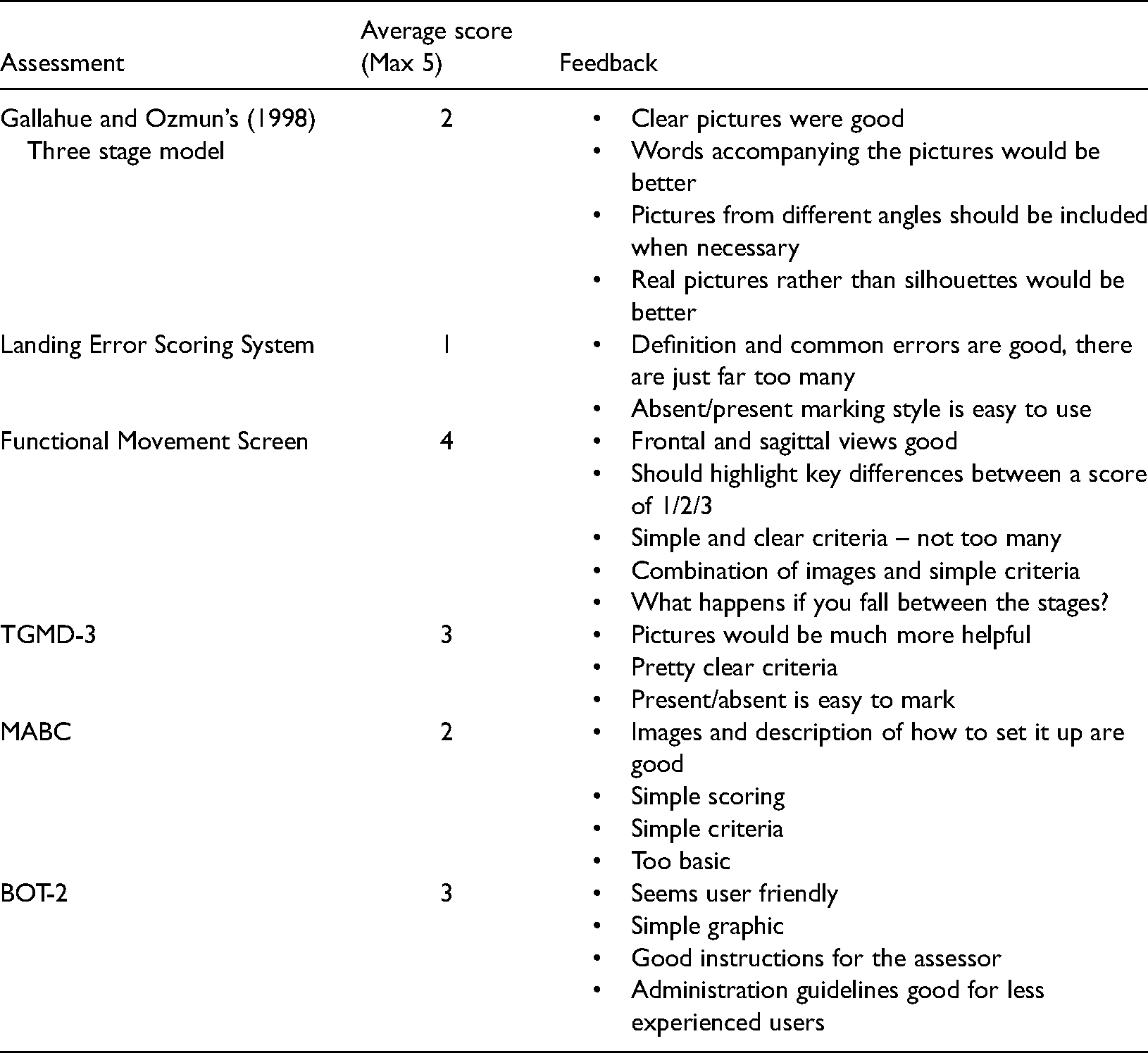
It was also evident from round one that users from each environment (schools, sports clubs, clinical, research) desire different levels of detail or have different goals for the assessment. To accommodate this, the research team proposed developing several ‘add-on’ assessments. These would be optional functional movement tests that an assessor might use to attempt to diagnose the source of a child's movement deficiencies more accurately. For example, if a child performs poorly in several skills or in a certain combination of skill criteria, the assessment tool would ask the assessor to use a certain ‘add-on’ assessment which may identify the source of the problem. This rationale was again presented to the panel for their expert opinion. Round one also established that the assessment should be adapted to cater for the varied levels of experience/expertise assessors may have, and adapting the marking criteria was the best way to do so. Panellists were subsequently asked how many ‘layers’ (versions of the marking criteria with different ‘layers’ of detail) of marking criteria would be desirable, as well as what features each layer should have. To do so, panellists were presented with a range of examples of marking criteria from existing functional and fundamental movement skill assessments. They rated each, provided comments and expressed which features of each should be considered in the design of this assessment tool (Table 1). The remainder of the round sought to establish consensus on (a) the layout/structure of the assessment, (b) whether all or some skills should have both process and product-oriented criteria, and (c) other key features of the marking criteria.
Panel feedback on existing assessment marking criteria.
Round three
Consisting of 36 questions, the aims of round three were to: (a) finalise the layout of the assessment, (b) finalise both layers of marking criteria, (c) finalise how all skills should be performed and in what order, and (d) establish the weighting product criteria would have in comparison to process criteria. From the first two rounds there was no consensus as to the preferred layout/structure of the assessment. Consequently, based on the information gathered in the first two rounds, the research team developed a proposed layout. For the object manipulation section, this layout consists of a simple, square layout where participants travel to the corners, gather equipment and travel back into a central zone where all the skills are performed. As for the locomotor and stability sections, they also consist of a simple square layout, where participants travel around the outskirts and into the middle of the zone performing various skills in each section. This was then presented back to the expert panel to review. Two layers of marking criteria were also developed based on the information gathered from the previous two rounds. These were also presented to the panel to review. The remainder of the round aimed to clarify matters surrounding how the skills are performed, and the weighting of process versus product criteria within the proposed scoring system. To establish content validity (Robertson et al., 2014), follow up questions accompanied round three with the aim to further clarify the content (skills) and the assessment criteria for each of the skills. These follow-up questions were Likert-scale type questions with answers ranging from ‘Strongly agree’ to ‘Strongly disagree’.
Results
Pre-Delphi questionnaire
In total, the questionnaire gathered 370 responses (50.55% female). Respondents felt that it was important that all children develop good functional and FMS, rating that importance at 4.75/5 and 4.8/5, respectively. A significant proportion (85.66%) of respondents said that assessing both fundamental and functional movement skills was important in the course of their professional work with young people; however, only 58% of respondents were familiar with any form of movement assessment. Time constraints, not understanding how to use them and feeling they do not have the expertise to use them were the main barriers found to prevent people using assessment tools in their work. If a new tool could be created 86.7% of respondents said that they would like to use it; however, ease of use (3.91/5), time efficiency (3.51/5), low cost (2.92/5) and not using much equipment (2.74/5) would have to be key considerations in its design.
Delphi poll
Participants
A total of 20 experts (academics n = 10 and practitioners n = 10) were invited to take part in the study, with 17 participating in round one (academics n = 8 and practitioners n = 9), a sample size considered appropriate based on previous research (Day and Bobeva, 2005; Okoli and Pawlowski, 2004). Of the 17 panellists completing round one, 17 completed round two, a 100% retention rate from the previous round. Of the 17 panellists who responded in round two, 16 completed round three (94% response rate, 94% retention rate from round one). This overall retention was significantly higher than the threshold of 70% described by Walker and Selfe (1996) for the findings to be valid.
Round one
The run, catch, overarm throw, kick, skip, landing technique, hop and strike (with a bat or implement) as well as skill combinations of the catch and throw, run and dodge/cut, run and kick, vertical jump and land, and catch and strike all reached the level of consensus needed to be included in the assessment (Figure 2). A large percentage (94%) of panel members felt that it was important to design a tool that could be used across multiple environments. A high level of consensus was achieved (81%) in relation to the assessment being adapted to cater for the different levels of expertise assessors will have across these environments and that adapting the marking criteria (69%) was the most suitable way of doing this. Consensus was not achieved on the layout the assessment should take (56% stations, 19% circuit, 25% combination). Consensus was also not achieved on whether the ordering of skills mattered (56% does matter, 44% does not matter) or whether all skills should be performed in the same session (50%) or over more than one session (50%). Panel members reached a high level of consensus (81%) stating that children should be assessed on both their dominant and non-dominant sides as part of the assessment. Finally, consensus was also reached (75%) that the assessment should use a mixture of process and product-oriented assessment criteria.
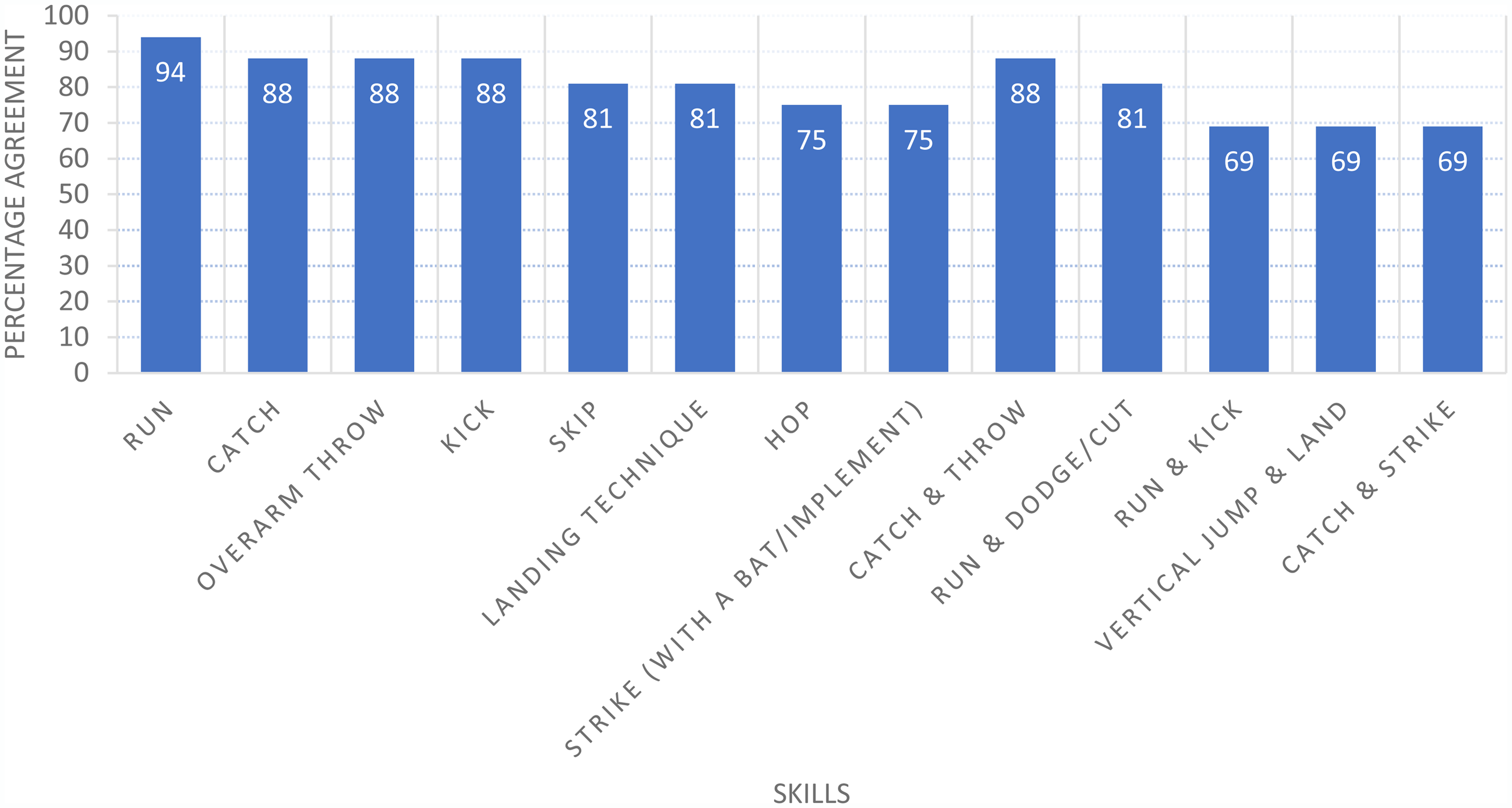
Skills reaching consensus for inclusion in round one.
Round two
All panellists felt that the assessment should be divided into three independent sections as presented to them based on the findings from round one (locomotor, object manipulation and stability). There was a high level of consensus (85%) regarding the development of a series of optional ‘add-on’ assessments which would provide more detail to the assessment should the assessor wish to gather that information. Consensus was not reached on how many layers of marking criteria should be developed, subsequent to round one's findings (14% 2, 50% 3, 7% 4, 29% other). For the most basic layer of marking criteria the panel preferred a traffic light system with illustrations or videos with three simply worded, clear criteria (67%). The marking scheme for the Functional Movement Screen™ received the highest average score from the panel (Table 1). Once again, when presented with the three sections for the assessment, the expert panel could not reach a consensus on whether it should be implemented using stations (58%) or a hybrid of stations and a circuit style (42%). Consensus was reached (67%) that only some skills should be assessed using both process and product criteria. Skills reaching the required 67% for this were the kick (83%), throw (75%), strike (75%) and catch (67%).
Round three
Prior to the commencement of round three, feedback from the expert panel regarding the number of layers of marking criteria was analysed by the research team. Some opinions suggested that two layers may be the most suitable to ease comparisons between studies, whilst still having something easy to use in a practical setting and detailed enough for other environments. Considering this, the research team proposed two layers of marking criteria for round three. All panellists felt the design of the two layers of marking criteria was suitable and that they should meet the needs of any level of assessor in each environment (schools, sports clubs, clinical, research). A high degree of consensus (93%) suggested that the proposed layout presented was a suitable solution across the environments. All of the panel also felt that the proposed size of the area required (10 × 10 m2) for the assessment was appropriate. Consensus (71%) also established that the proposed target was a suitable measure of product for the agreed skills (kick, throw and strike). Panellists reached a consensus (71%) that for the skill of the strike, children should strike a ball once with the forehand and once with the backhand to assess both sides; however, consensus was not reached on whether the ball should be on a tee (21%), self-bounced (36%) or other (43%). To increase the complexity of the beam balance, panel members also agreed (71%) that participants should perform a 360-degree turn on the balance beam. A high level of consensus (93%) among the expert panel selected Option A (single leg balance similar to the one in the BOT-2 assessment) as the most appropriate single leg balance to include. The panel could not reach a consensus on the ceiling time that participants should hold the balance for during the assessment (10 s 43%, 15 s 14%, 20 s 29%, other 14%). Finally, the panel agreed (71%) that a product skill criterion should carry the same weight of marks as a process criterion.
Discussion
The aim of this study was to elicit the expert opinions of a mixture of academics and practitioners from a variety of fields (including research, education, sports, physiotherapy, and athletic therapy) to design a new movement assessment tool to measure both the fundamental and functional movement skills of children aged 8–12. Key foci for this design were (a) practicality of use with a large group of children, (b) transferability across multiple environments (schools, sports clubs, clinical, research) and (c) implementation by users of varying levels of experience and expertise. Following this three-round Delphi poll with a panel of international expert academics and practitioners, the findings highlight that a novel tool could be created. According to consensus reached within the study, the tool would assess the three movement types of locomotor, object manipulation and stability, use a simple, dynamic layout and assess children bilaterally. The tool would also have unique features such as various ‘layers’ of marking criteria as well as optional ‘add-on’ assessment elements to afford differentiated access for users in multiple environments.
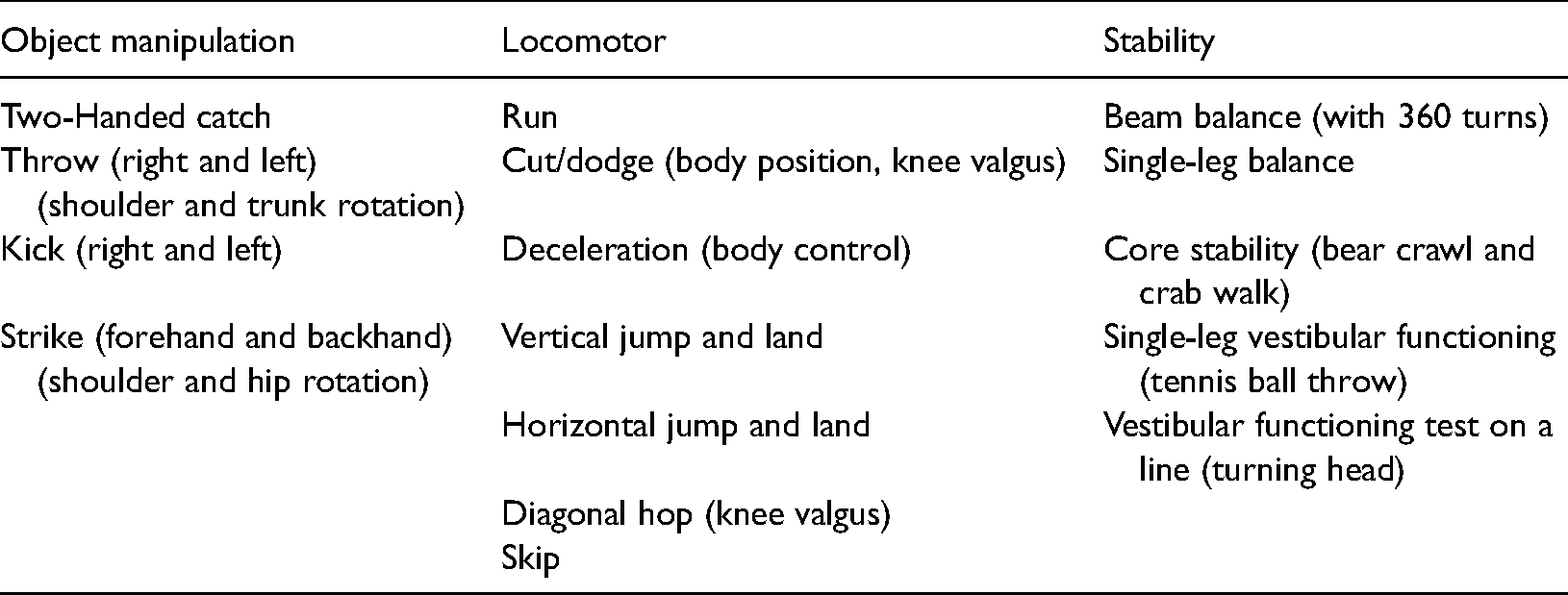
The first novel aspect of this tool is the skills included. It was established that the assessment should contain skills from each FMS construct: locomotor (n = 7), object manipulation (n = 4) and stability (n = 6) (Table 2). This emphasises the importance of assessing each FMS construct in order to provide a more comprehensive measurement of MC that is not currently quantified in other established MC assessment tools (e.g. TGMD does not assess stability) (van Rossum et al., 2021). This is also in line with research that indicates that stability should be assessed independently from locomotor and object manipulation skills (Rudd et al., 2015). The selection of such a range of static and dynamic stability exercises by the expert panel makes this tool unique, as stability has been shown to have a significant relationship to functional movement patterns (Yıldız, 2018), sporting performance (Hrysomallis, 2011), lower body asymmetry (Sannicandro et al., 2014) and injuries (Hrysomallis, 2007). These findings also correspond to a number of selected locomotor movements which are associated with injury and performance, namely: running (Kelly et al., 2018), cutting technique (Fox, 2018), jumping (Fort-Vanmeerhaeghe et al., 2020; Ozmen, 2016) and hopping (Butler et al., 2003). In contrast to other tools (e.g. TGMD), this tool includes only four object manipulation skills. These skills are the most commonly assessed object manipulation skills across a range of assessments (Eddy et al., 2020), as well as being some of the most commonly used skills in many physical activities and sports.
Final list of assessment components.
Asymmetry is a factor which has been linked to increased musculature and non-contact-related injuries when partaking in sports and other physical activities (Abraham et al., 2015). For example, Chalmers et al. (2017) demonstrated that the presence of ≥2 asymmetrical subtests of the Functional Movement ScreenTM was associated with a threefold increase in the risk of injury that caused a missed game in 237 elite junior male Australian football players (Chalmers et al., 2017). It has also been linked to physical performance in a range of sports (Fort-Vanmeerhaeghe et al., 2016; Fousekis et al., 2010). The ability to perform skills using both sides of the body is a desirable feature for many activities, which can significantly aid performance (Mclean and Mpe, 1993). To the best of the researchers’ knowledge, the fact this assessment will measure children's skill performance on both their dominant and non-dominant sides is a unique feature of this proposed assessment tool. This advancement should significantly improve the identification of asymmetries and facilitate subsequent targeted corrective intervention.
Whether to examine the movement pattern and/or outcome of a skill is a key consideration in the methodology of any movement assessment. Currently available MC assessments can be categorised as either using a ‘process’ or ‘product-oriented’ methodology (Logan et al., 2017). Product-oriented assessments evaluate the outcome of a movement or skill (how fast/how many). This offers an objective evaluation of the outcome of a task, but not on how it was achieved (Bisi et al., 2017). These forms of assessment are feasible as assessors do not require an extensive understanding of MC to administer the test (Hands and Larkin, 1998) and the test can be performed with a large group of children quite quickly (Hands, 2002). Alternatively, process-oriented assessments analyse how a movement or skill is performed, but do not examine the outcome (Logan et al., 2017). Although more time-consuming and often deemed quite static, process-based forms of assessment provide users with specific information on children's MC, which can be useful when providing feedback or for the design of interventions. The expert panel in this study established that all skills should be measured using process-oriented criteria. Consensus also established that object manipulation skills should be measured using both process and product-oriented criteria. Robinson et al. (2015) concur with this notion, reporting that combined use of process and product-oriented measures can provide a more comprehensive assessment of MC (Robinson et al., 2015). The product measure deemed most appropriate to use for this assessment by the expert panel was accuracy. Other possible product outputs such as speed, velocity or distance have been used in other assessments; however, given the age range under scrutiny, such product outputs could be influenced by maturation (Sheehan and Lienhard, 2019). For example, force-producing capacities are lower in younger children when compared to older children or adolescents, due to the structure (O’Brien et al., 2010), size (Dotan et al., 2012), activation patterns (Dotan et al., 2013) and function (Waugh et al., 2013) of a child's muscle. Of all product measures, maturation has the most limited influence on accuracy and precision, resulting in those outcomes being the most objective measure for inclusion in this assessment tool.
Although combined use of process and product-oriented measures can provide a more comprehensive assessment of MC (Robinson et al., 2015), it can also make an assessment more time consuming and less feasible for assessors. The expert panel in this study sought to mitigate these concerns by dividing the assessment into three sections: locomotor, object manipulation and stability. This feature gives assessors more control over the testing, meaning less-confident assessors must only focus on a limited number of skills at a time, whilst also making it more time efficient to use with a larger group. This feature also allows for assessors to use a certain component of the test, focus their intervention to improve said components for a certain time, then move on to another component. The dynamic layout of this assessment (whereby children are constantly in motion or performing skills when moving from one part of the assessment to the other) also contributes to its time efficiency, as well as the ecological validity of the skills being performed. Many assessment methods used can be considered static, where skills are performed following an iterative sequence of instruction and performance (Bardid et al., 2019). Circuit-based assessments (e.g. CAMSA (Lander et al., 2017) or the Dragon Challenge (Tyler et al., 2018)) have recently emerged as a dynamic method to assess MC using a sequence of different motor tasks, which children have to complete without interruption (Bardid et al., 2019). The expert panel in this study decided that a hybrid model was the best fit, whereby children move through the assessment performing the required skills with breaks after each skill performance where participants are moving to another area, regathering equipment or performing other skills to allow the assessor sufficient time to score the performance before the next skill is performed and assessed. This design has shown promising early signs of being suitable and time efficient. When trialled during the Delphi with two groups of children (Group 1 – n = 6, age range 8–12 years. Group 2 – n = 3, age range 8–11 years) the time taken to complete each section was suggested to be significantly lower than many current assessments (locomotor: 2:26, object manipulation: 2:18, stability: 2:06 (in minutes) (time includes scoring time and was conducted by a field expert)). These preliminary findings show promise in this assessment tool being a feasible option for use with a large group of children within a restricted time; however, further research must be conducted to investigate this.
Another feature which contributes to the feasibility of this tool is the varied ‘layers’ of marking criteria. It is evident that many non-experts such as primary school teachers lack the confidence to measure or deliver effective lessons to develop MC (Fletcher and Mandigo, 2012; Harris et al., 2012; Lynch and Soukup, 2017). The expert panel felt that developing a more basic and a more complex level of marking criteria for the assessment tool would allow all levels of assessor to use the tool effectively (Figure 3). Future stages of this tool's development will look to examine this feasibility and inter-rater reliability as per the COSMIN guidelines (Mokkink and Terwee, 2010).
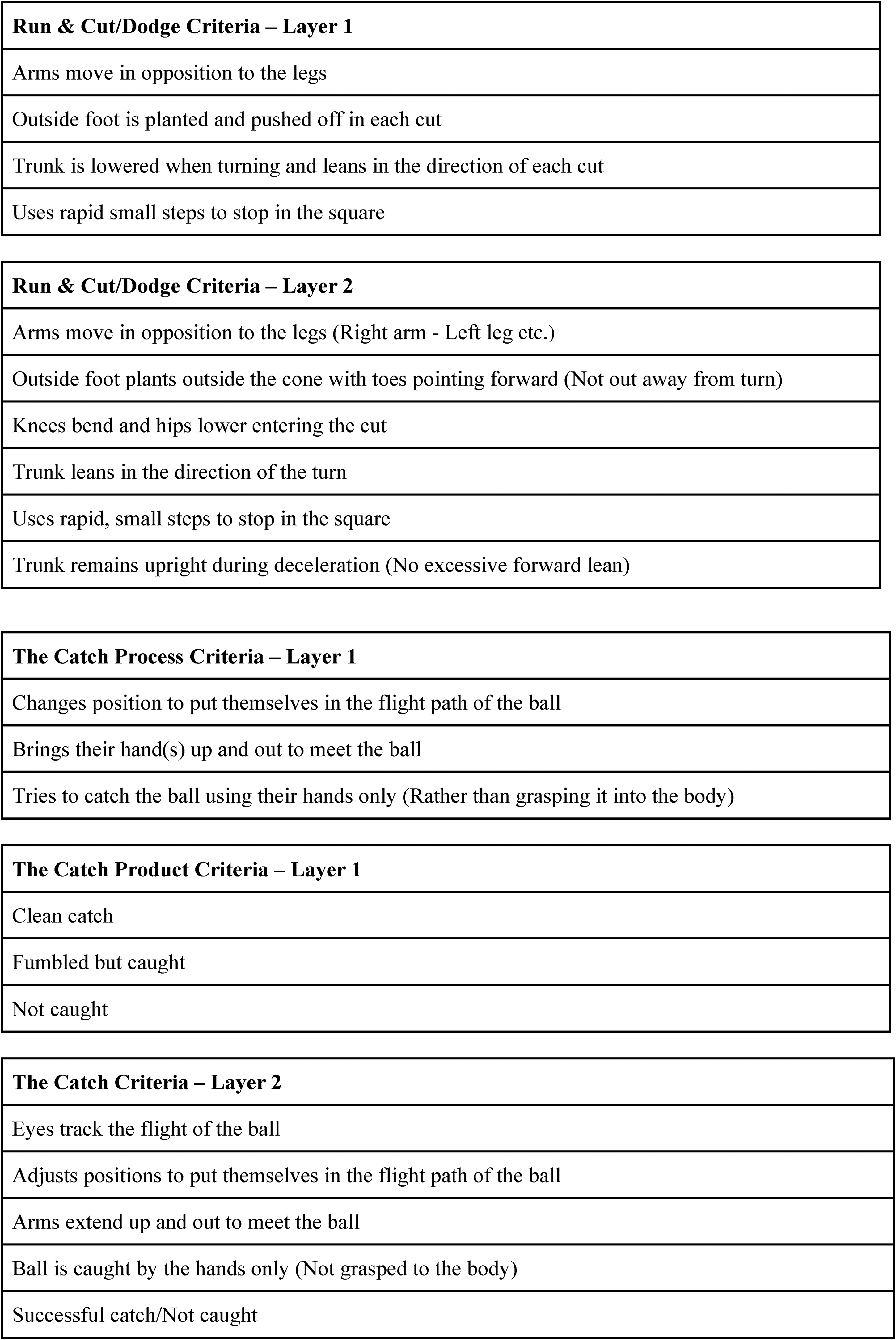
Example of marking criteria (layer 1 and 2 for the run and cut/dodge and the catch).
Arguably, the most significant feature of this tool is its potential ability to be used in a range of environments (schools, sports clubs, clinical, research). Features that have been mentioned previously (consideration of injury in marking criteria, comprehensive stability section, asymmetry, process and product criteria, time efficiency, space efficiency, minimal equipment, ‘layered’ marking criteria) would significantly contribute to what users in education, coaching and research would require from an MC assessment tool (Bardid et al., 2019). Clinicians, however, can require a more detailed screening tool (Bennett et al., 2017; McCunn et al., 2016). Although there are functional movement components included for all skills, the ‘add-on’ functional tests of this assessment tool are a feature that, based on a child's performance in the assessment (e.g. failing to achieve certain criteria from a range of skills), will intuitively recommend that clinicians use a certain ‘add-on’ assessment (e.g. single-leg squat) to identify the source of a child's movement deficiency more accurately. This feature will be further developed and refined following trialling of the main assessment.
Conclusion
By achieving consensus from a panel of international expert academics and practitioners from a range of environments, these findings provide content validity for a new, innovative, dualistic MC assessment tool for children aged 8–12. These findings also provide the key features that comprise a proposed tool such as the layout, structure, marking criteria, equipment required and additional features such as optional ‘add-on’ assessments. The purpose of this study was to develop a valid, reliable, feasible, practical and user-friendly tool that can be used in a range of environments to act as an assessment for learning tool by teachers, coaches, physiotherapists and athletic therapists to develop children's MC. Future research should now focus on the consideration of all components of the COSMIN guidelines during the tool's construction to ensure this is a reliable, feasible and valid tool (Mokkink and Terwee, 2010).
Footnotes
Acknowledgements
The research team would like to offer our sincere thanks to the expert panel involved in this study for their incredible contributions to the creation of this new assessment tool.
Declaration of conflicting interests
The authors declared no potential conflicts of interest with respect to the research, authorship, and/or publication of this article.
Funding
The authors received no financial support for the research, authorship, and/or publication of this article.
