



Abstract
In the Norwegian curriculum for physical education (PE), health is one of several topics students should learn about. However, the way in which many educators conceptualize health can impact both what students learn and how health is taught in PE. According to Mong and Standal (2019), differences in terms of the conceptualizations of health can also lead to differences in teachers’ didactical approaches. This article is based on an action research project in which the overall goal was to investigate how didactic work can contribute to developing the teaching of health in PE. The project included an action research phase and qualitative interviews. The project, conducted in Norway, lasted almost one school year and was divided into two units. One teacher and 48 students aged 14–15 years participated in the action research project, which included eight lessons. We conducted qualitative interviews with the teacher and six students after the completion of the action research phase. In our analysis, we identified three topics addressed by both the students and the teacher, namely ‘the use of logbooks as a method for reflection’, ‘awareness of health as a knowledge object’ and ‘developing confidence in how to teach health’. Through the use of a didactic approach to health, both the students and teacher developed new reflections on and awareness of health. The findings indicate that it was professional development which subsequently impacted didactic decisions, dialogues about how health was taught and the teacher’s confidence in teaching health.
Introduction
In many countries, health has in some way framed the history of physical education (PE) (Augestad, 2003; Kirk, 1992; Tinning and McCuaig, 2006), and PE has often been aligned with medicalized notions of health (Fitzpatrick and Tinning, 2014). Currently, health is a subject in formal education and is considered an important aspect of PE (Cale, 2020; Schenker, 2018; Stolz, 2014). In some countries, the connection between health and PE is so close that the two subjects are formally linked – for instance, in the naming of the subject as Health and Physical Education. 1 While health is considered an important aspect of PE and health concerns continue to be a central reason for the promotion of PE (Harris, 2021), various positions exist regarding how health should be conceptualized and taught in PE. More specifically, there are differences between biomedical and alternative perspectives (i.e. a salutogenic approach and socio-critical approaches) in terms of how the content taught in PE, the teaching processes and learning outcomes should be aligned (Mong and Standal, 2019). Tinning (2015) identifies two distinct groups with differing perspectives regarding how health is approached in PE. The first group, which he labels the ‘instrumentalists’, argues that PE should mainly instruct students on how to develop their health and provide them with tools with which to prevent obesity. Tinning (2015) explains that advocates of the instrumentalist position tend to use interventionist strategies focused on PE to promote increased levels of physical activity. It is widely accepted that there is a positive association between increased levels of physical activity and health benefits (Kerr et al., 2018; McKenzie et al., 2016; Trost, 2004). Given this widely accepted relationship, advocates of this position stress the importance of promoting physical activity in school to enhance the health of young people. Research has documented that increased levels of physical activity in the school setting have benefits beyond those for physical health (Kolle et al., 2020; McKenzie et al., 2004; Resaland et al., 2011). While research on physical activity has indicated positive results, the association between physical activity and health is only one aspect of health. Therefore, the second group, the ‘educationalists’, embrace a broader sociocultural view of health and argue for the need for a more educational approach to health in PE (Fitzpatrick and Russell, 2015; Kerner et al., 2018; Powell, 2014; Quennerstedt, 2019b; Simovska et al., 2020; Tinning, 2015). Those who adopt the educationalist position are critical of the instrumentalist approach and argue that the purpose of PE should be fundamentally educational and not merely related to the promotion of health (Fitzpatrick and Tinning, 2014; Leahy et al., 2016; Leahy et al., 2013; Simovska et al., 2020; Quennerstedt, 2019b).
In the Scandinavian countries, the salutogenic approach to health has been presented as a means of encouraging broader discussions about health. Quennerstedt (2008, 2019b) describes an alternative view on health, one in which it is viewed in terms of physiology, relationships and pedagogy. Quennerstedt (2008) also suggests that the salutogenic approach could be a suitable means by which to promote a broader discussion of what health is and how it could be taught in PE. In Norway, the salutogenic approach can be identified in how health is described in the PE curriculum (Borgen et al., 2020; Moen and Rugseth, 2018). The salutogenic approach was developed by Antonovsky (1979). He challenged the pathogenic view, which he argued limits one to viewing health and disease as a dichotomy wherein an individual is either sick or well (Antonovsky, 1979). In addition, he described the pathogenic approach as placing excessive emphasis on risk and risk factors, whereas the salutogenic alternative is more concerned with how people create meaning and quality of life in their individual health and illness situations.
A key characteristic of salutogenesis is that this perspective encourages conceptualizing health as a dialectic process wherein the relationship between the individual and their surroundings is important (Antonovsky, 1979). Therefore, health is described as existing on a continuum between health on one end and disease on the other (Lindström and Eriksson, 2005). Movement on this continuum occurs as a result of a learning process in which individuals reflect on what creates health for them, their prospects and which aspects in life they should emphasize to improve their quality of life. Movement on the continuum is influenced by people's sense of coherence, their quality of life and how they cope with the stressors that occur throughout life (Antonovsky, 1996).
An important issue in the implementation of the salutogenic approach to PE is that the understanding of health should be directed towards strengthening the resources of all students rather than focusing solely on the preventive aspects of physical activity directed particularly at those deemed ‘at risk’ (Quennerstedt, 2019b). From this perspective, a key task for PE teachers is to teach students that health is not a fixed endpoint or an individual concern but rather a relational and sociocultural one (Quennerstedt, 2019b). Brolin et al. (2018) suggest that PE consider health as an ongoing process that occurs between the individual and their environment. Instrumentalists, as categorized by Tinning (2015), often have a pathogenic understanding of health wherein the questions asked are tied to how physical activity can prevent disease and promote health. Through focusing on what creates health, the salutogenic approach emphasizes the resources and strengths of the individual and dissolves the dichotomy between ‘sick’ and ‘well’ as the only aspects of health (Antonovsky, 1979, 2012).
Health as a didactic phenomenon
In this project, we considered health as a didactic phenomenon. Both the salutogenic approach to health and didactics are relational and sociocultural processes, and both learning and becoming healthy depend on the relations between the individual, the context and the processes they engage in (Quennerstedt, 2019b). Didactics is, broadly speaking, ‘both a theory and practice that takes teaching and learning as its starting point’ (Gundem, 2000: 236). Amade-Escot (2006) defines didactics as the study of content and its function in the interactive teaching–learning process between student and teacher. Didactics thus concerns the practice of teaching and its methods, either in general and/or in relation to a specific subject. From the didactic perspective, the general elements of teaching are depicted in the form of a triangular and irreducible relationship between content, teacher and student (Amade-Escot, 2006). The irreducible relationship between these three elements means that any study of one part of the didactic triangle cannot have meaning without considering the other two parts. Thus, the focus of the didactic triangle is on the dynamics and evolution of didactic interactions between students and teachers in relation to the content knowledge in the learning environment (Amade-Escot, 2006). Therefore, when health is considered as the content in PE and a didactic approach is adopted, teachers and students both play an important role in determining what content is taught and how the students understand this content.
When discussing the why, what and how of health as a topic in PE, it is important to bear in mind that the teaching of health is a social practice where the questions being asked are related to oneself, to others and to the world we live in (Simovska et al., 2020). Therefore, when planning the content and teaching of health, teachers should discuss the purpose, desired outcomes and content of the teaching. Bildung is a central concept in Klafki's didactic theory and can be used to highlight some of the issues in this respect (Simovska et al., 2020). Bildung relates to the question of what it means to be a cultivated human being and how education can respond to this question (Klafki, 2000). Bildung is defined through three dimensions: self-determination, co-determination and solidarity. Klafki (2000, 2001a) argues that Bildung is about learning to engage with conflicting interests and individual interests. Given that we understand health as a social practice and view Bildung as part of didactic decisions, then education concerning health should include ethical, relational and critical discussions rather than predetermined knowledge transfer and individual behaviour regulation (Simovska et al., 2020).
Klafki (2000) also describes didactic analysis as the core of preparation for teaching. Analyses of didactic processes are often guided by questions such as the following: What is learned? How is it learned? Why is it taught? By whom is it taught? (Amade-Escot, 2006; Caldeborg et al., 2019; Quennerstedt and Larsson, 2015). These questions are relevant when investigating different educational practices (Quennerstedt and Larsson, 2015), such as our focus on the interrelated dependencies between the teacher and students when the subject matter is health in PE. Primdahl et al. (2018) consider it important to consider all these questions, as doing so will prompt us to engage in more critical teaching of health.
In this project, in which health is based on a salutogenic approach, there is a need to ask questions other than those asked in a pathogenic approach (Antonovsky, 1979; Simovska et al., 2020). The questions should be connected to health resources or barriers to health development rather than risk avoidance (McCuaig and Quennerstedt, 2018; Quennerstedt, 2019b). For instance, instead of asking, ‘How much physical activity do we need?’, one might ask, ‘How do we use movement, physical activity and sport to strengthen students’ resources in order for them to live good lives?’ (McCuaig et al., 2013: 121). With the latter question, the intention is to identify how physical activity, for example, can provide meaning for the individual and whether it could strengthen their resources.
This article is based on an action research project in which the overall goal was to develop teaching units on health in PE based on a salutogenic perspective. More specifically, we investigate how didactic work can contribute to developing how health should be taught in a more educational way. The research question investigated in this article is as follows: How can didactic work contribute to developing how health is taught in PE?
Method
Action research is a circular process with steps that include planning, development and reflection with the aim of changing an already established practice (Kemmis et al., 2013). Casey (2018) describes action research as a method used ‘to shed light on a situation and change it’ (p. 13). A fundamental assumption in action research is that it is conducted with people rather than on them (Lewin, 1946) through helping people improve what they do (Kemmis, 2009). Conducting research with people means that rather than being objects of study, practitioners are fully involved as co-constructers in the entire research process (Casey, 2018). The present project involved collaboration between Mats (a pseudonym), a teacher, and the first author. In action research, an important aspect of development is that practitioners are invited to understand their practice better and, through a process of critically analysing themselves, change what they say, what they do and how they relate to different concepts of teaching (Kemmis, 2009). In this project, this process means an invitation to transform what the teacher as well as the researcher think and say about teaching health in PE; the didactic decisions made before, during and after class; and how the teacher relates to students, other individuals and his own circumstances.
In this project, we followed the five steps of the action research cycle described by Casey (2018): think, plan, act, evaluate and rethink. Casey (2018) argues that these steps take place on numerous levels and several times during the course of a project. The current project should be viewed as consisting of multiple cycles – that is, as cycles within cycles (Casey, 2018; Figure 1). In this project, the two units can be described as two separate cycles, and every lesson in each unit is its own cycle, meaning that there are several cycles in each unit (Casey, 2018). The first author and the teacher worked together over one academic year; more specifically, they collaborated for two semesters and with one unit of four lessons in each semester. The units lasted for approximately four weeks. The first unit was conducted in September, and the second unit was conducted in February. After each lesson, we held a meeting in which we evaluated that day's lesson and started planning for the next lesson. The planning and development of the two units were completed in collaboration between Mats and the first author.
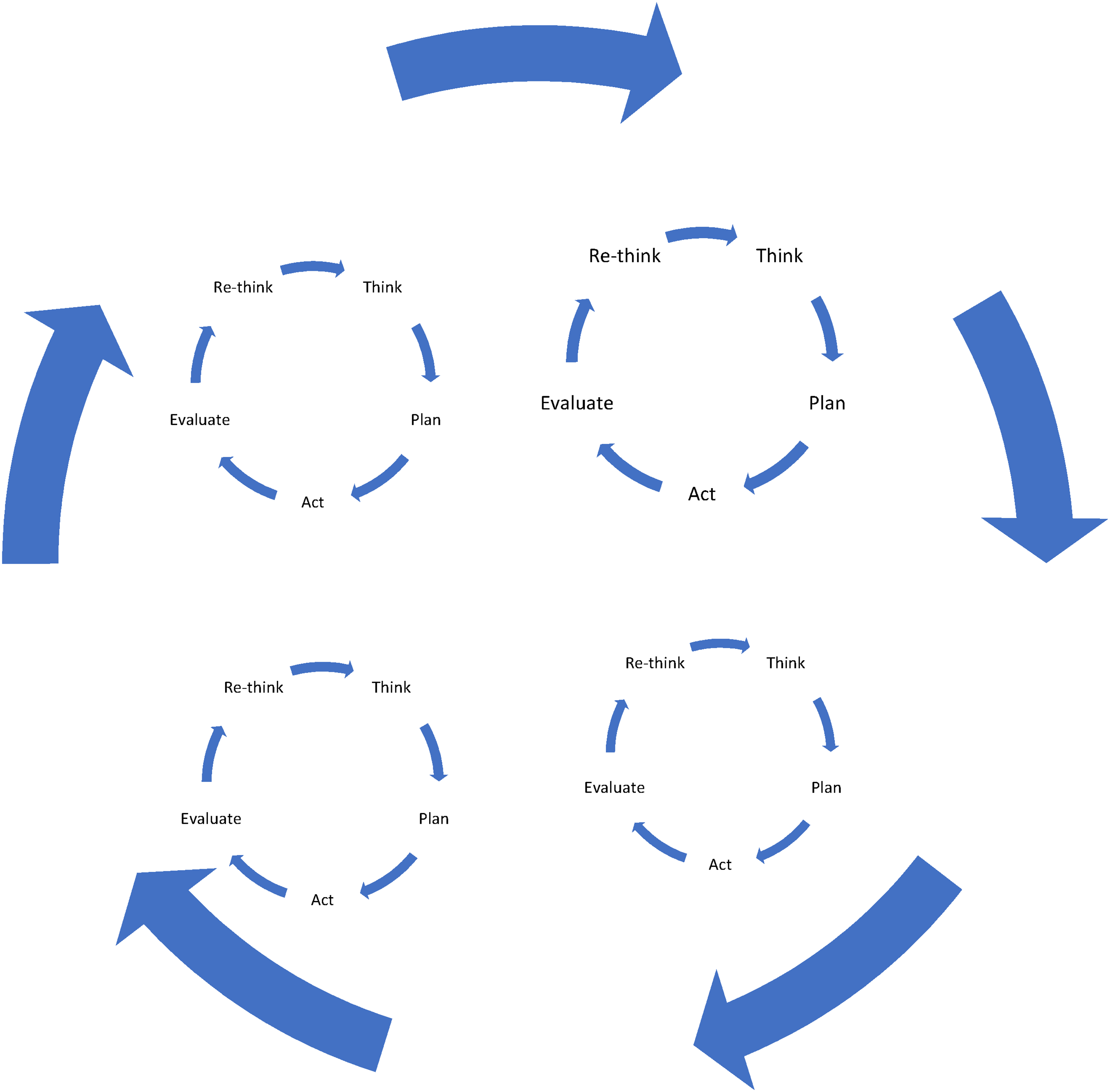
A conceptualization of the multiplicity and longevity of action research as cycles within cycles (Casey, 2018).
Participants
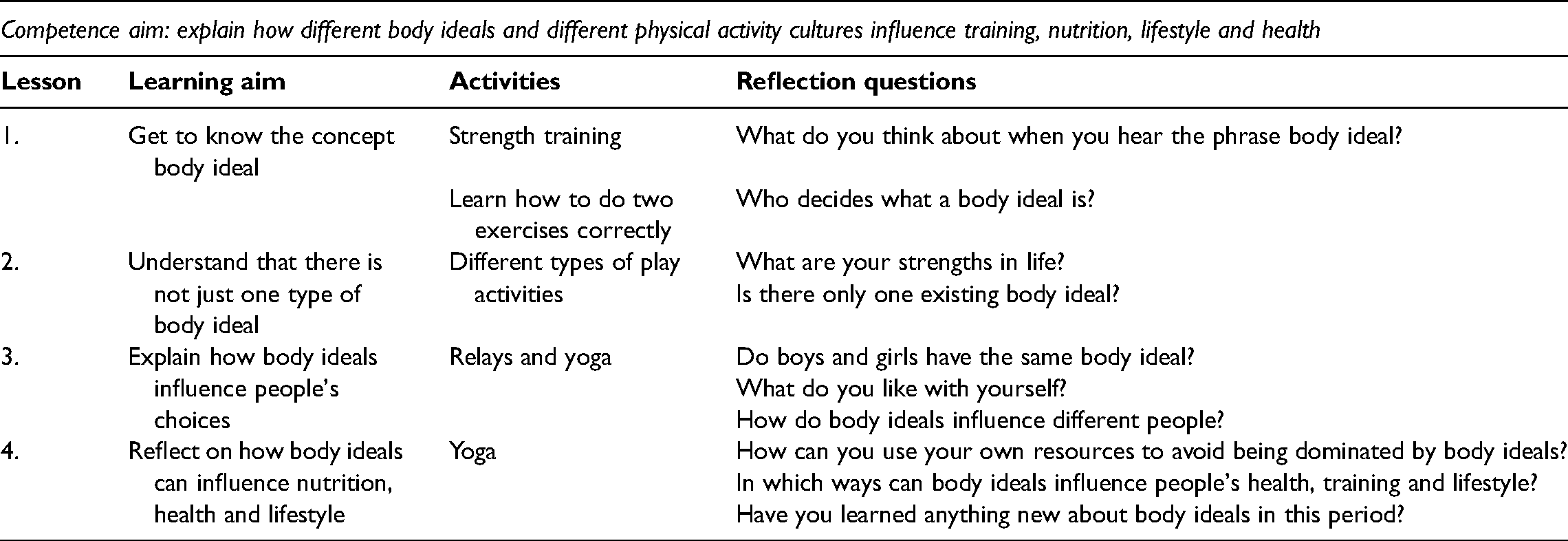
Mats, the participating teacher, was strategically selected based on his interest in and willingness to participate in this project. Our professional collaboration started when he participated in one of the other qualitative studies conducted for the first author's PhD-project (Mong, 2019). The initial interview provided directions and guidelines for the further development of the action research project. The Norwegian curriculum is competence based; this means that it identifies specific competencies which students should achieve at specific stages in their academic careers. In Norway, the primary purpose of PE is to inspire physical activity in all aspects of life and lifelong enjoyment of being physically active. The subject should also contribute to helping children and young people to establish a sense of awareness, a positive perception of the body and their own developing identity (Norwegian Directorate for Education and Teaching, 2015). More specifically, concerning PE, at the time of this study, there were aims for years 4, 7, 10, 11, 12 and 13 (Norwegian Directorate for Education and Teaching, 2015). In this project, the aims for after year 10 are relevant. In the first interview, Mats identified two competence aims in the curriculum which he found difficult to include and emphasize in lessons. The competence aims Mats found difficult were ‘Elaborate on the relationship between different physical activities, lifestyles and health’ and ‘Explain how different ideal body types and different physical activity cultures influence training, nutrition, lifestyle and health’ (Norwegian Directorate for Education and Training, 2015: 8). He found these aims difficult to teach, and he therefore seldom addressed them in his lessons. He was also concerned about saying something inappropriate, especially when teaching sensitive subjects. Therefore, we decided to base the action research project on these competence aims. The first unit was based on the first competence aim, while the second unit was based on the second aim. Table 1 presents the overarching plan for the teaching in the first period (see Table 1).
Plan for the second action research unit.
The school where the project took place is situated in a part of a large city in Norway characterised by high socioeconomic status. The school is located in one of the more affluent areas of the city. In Mats’ PE classes, there were 59 ninth-grade students aged 14–15 years. The students were from two different classes, but they had PE lessons together. All of the students in Mats’ classes were invited to participate in the action research project, and 48 of them gave their consent to participate in either the entire project or parts thereof (i.e. either interviews and/or logbooks; see below).
Data collection tools
The data were collected from the researcher's fieldnotes, the students’ logbooks and the qualitative interviews conducted after the completion of the second period. Hanne, the first author, was present in every lesson observing the teaching. The research fieldnotes were based on observations and thoughts from the teaching and from discussions with Mats. They also included didactic thoughts and suggestions that came to the first author between the lessons.
The logbooks were an important tool in this project, as they were used to record the students’ reflections. Prior to the lessons, we developed reflection questions in line with each lesson's learning aim. Examples of these questions include ‘What are your strengths in life?’ and ‘How can your resources and strengths help you to feel healthy in ways other than through aiming for a specific body ideal?’ The students wrote in the logbooks in every PE lesson that was a part of the action research (for more examples, see Table 1).
All of the interviews were individual and semi-structured. The interviews with the students lasted approximately 45 minutes each, whereas the one with the teacher lasted 75 minutes. In the interviews, we focused on the participants’ experiences and learning from the action research stage of the project, for example, ‘has your understanding of health in PE changed during the action research stage of the project?’. The students were strategically selected to participate in the interviews based on their logbooks (e.g. if they had written something we did not understand or provided interesting reflections). Six students – two boys and four girls – who had given their consent participated in individual interviews after the second period. Therefore, the student interviews included both questions on the action research stage and their experiences with the logbooks, for example, ‘how have you experienced the use of logbooks as a reflection tool in the PE lessons?’
Data analysis
In action research, analysis takes place at two levels: an ongoing analysis conducted during the two units and an overall analysis of the project (Casey, 2018).
The ongoing analysis during the project
During the action research process, we (the first researcher and Mats) analysed the lessons together. After each lesson, we evaluated and reflected on the teaching, including how the lesson progressed, whether the learning aims were productive and whether we had managed to establish a clear connection between the learning aims and the content. As mentioned previously, this project adopts a salutogenic approach to health. When we developed the teaching component, we had this approach in mind and attempted to focus specifically on how the students’ individual strengths and resources could help them to learn about health and understand themselves as healthy individuals (Brolin et al., 2018).
The researcher's fieldnotes served as a starting point for the discussions in which we identified any changes we had to make. These notes included questions and thoughts that arose during, after and between lessons. We also read the logbooks together. These readings gave us an impression of how the students had responded to and understood the questions and how their answers could be signs of learning. If their reflections indicated insecurity and ambiguity, we started the next lesson with a discussion in which we attempted to resolve this ambiguity together with the students.
We utilized our reflections and discussions as a starting point for determining how to further develop our lessons. During our analysis, we used the didactic triangle (Gundem, 2000; Künzli, 1998) and the didactic questions (Amade-Escot, 2006; Quennerstedt and Larsson, 2015) as our framework and as guides during discussions of how to develop the teaching components further. The elements in the triangle (content, student and teacher) were central when we discussed the lessons, and the didactic questions were used as a framework for determining how to plan and refine the teaching further. Our analysis and interpretations from the first period revealed that we had to plan the next period more thoroughly and that we needed to forge a clearer connection between the lessons and the questions in the logbook.
The overall analysis of the project
After the action research process had been completed, the interviews were analysed to determine whether and how the changes had impacted the teaching of health in PE. Throughout the analysis of the interviews with the teacher and the students, we followed the six steps of thematic analysis: familiarisation, coding, theme development, refinement, naming and writing (Braun et al., 2016). The first author read all of the interviews in detail, and, in the first two phases of analysis, the teacher and student interviews were analysed separately. The data were read analytically, and interesting and critical aspects were marked and labelled. More specifically, during phases 1 and 2, 149 codes were labelled in the student interviews and 75 in the teacher interview. Following the coding process, the codes were grouped into initial themes. At the end of phase 3, six initial themes had been identified: ‘logbooks’, ‘critical to the competence aims’, ‘more planning’, ‘different content’, ‘cooperation’ and ‘little learning, more awareness’. During these phases, the first author discussed the codes and establishment of themes with the second author. He provided useful comments that led to us identifying new nuances in the data, and together we discussed possibilities in terms of codes and themes. After identifying the initial themes, the first author went back to the set of codes and reread them several times to further develop and adjust the themes. We then applied didactic theory (Amade-Escot, 2006; Klafki, 2000) to move the themes from a semantic level based on what the participants had said to a latent level based on the ideas that underpinned what the participants had said (Braun et al., 2016). In this process, the themes were refined and readjusted. In this phase, we also attempted to identify themes that were addressed by both the teacher and the students. After several rounds of generating themes and rereading the codes and initial ideas, we defined three themes: ‘the use of logbooks as a method for reflection’, ‘awareness of health as a knowledge object’ and ‘developing confidence in how to teach health’.
Findings
The objective of this article was to investigate how didactic work could contribute to developing the way in which health is taught in PE. The analysis revealed the three themes mentioned above: (1) the use of logbooks as a method for reflection, (2) awareness of health as a knowledge object and (3) developing confidence in how to teach health. We found that these themes related to the research question since they describe how didactic considerations led to both personal development on the part of the participants and professional development on the teacher's part regarding how health is taught in PE.
The use of logbooks as a method for reflection
Using logbooks as a method for reflection allowed students to reflect individually on various questions. For both the students and teacher, this was a novel method to use in PE. Prior to the project, we discussed the use of logbooks as a method and opportunity for students to reflect on different questions regarding health and practise critical thinking. One of the reasons why we wanted to include this method was Mats’ insecurity regarding the best way of teaching health in a way he felt was good. With logbooks, we intended to provide the students with an opportunity for individual reflection. We developed questions which were related to the learning aims, and, at the end of each lesson, the students would answer three to five questions. During the project, we discussed what we would do should the students respond negatively to the logbooks, but this did not occur. While the students had some questions at the beginning, they demonstrated that they were able to reflect on the questions they were provided with.
Mats stated in the interview that the use of individual logbooks was an easier and more positive way to encourage reflection on the part of all students when compared to oral, group reflections. Were the whole class to reflect together at the same time, he did not believe it would be productive. He said, ‘I don’t think we can expect [that] those discussions with 60 students sitting on the floor in a gym will be the best solution for everyone’. He considered it possible that some students may not have wanted to participate in large-scale discussions and that others may not have wished to speak out loud in whole-class situations. Therefore, he stated that ‘I think it is important that the logbook is an individual task they shall solve’.
During the action research process, we discussed whether the logbooks should be used to assess the students. We decided that, for research purposes, it was preferable that the logbooks not be used for assessment, as that might cause students to change their reflections according to how they believed their teacher wanted them to answer. In addition to research purposes, this decision was also based on pedagogical reasoning. Mats was concerned that the students’ idea of a ‘correct’ answer would not be the same as their genuine thoughts and reflections. In the interview, Mats commented on how he might assess the student reflections in the future and noted that doing so might prove difficult: My intuition is that when we say that these should be assessed, I think [the students] will search for the right answers … Then it becomes more an assessment of their written work, how they manage to put words to things, more than it is to listen to what they think and how they understand different concepts.
For Mats, the most important aspects of the use of logbooks in PE were that the writing was connected to the content of lessons and that students reflected on and stated their opinions regarding a set of specific questions. He emphasized again the importance of making the questions clear so that the students could understand that their reflections and thoughts are valuable. The questions we used were connected to the learning objectives for the lesson, and Mats asserted that it is important to set aside an adequate period of time in which to develop the learning objectives.
The feedback from the students regarding the use of the logbooks was initially that they did not have a strong opinion. After we inquired in more detail, however, some responded negatively about the logbooks, stating that they were not ‘real PE’. Paul, for instance, said, ‘When we are supposed to have PE, I just want to have PE’. For Paul, PE was about being physically active, and writing was not an activity he associated with PE lessons. In addition, health as a part of PE was new to him, but he expressed that he much preferred to do what the students ordinarily did. Other students responded more positively to the opportunity to reflect and put their experiences into words. They described reflecting as ‘interesting’ but also said that they sometimes found the questions difficult to answer. Hannah expressed her impressions regarding the interesting yet difficult nature of engaging in reflection when she said, ‘The questions we got … They are not difficult to answer, but how shall we answer them? There isn’t always one right answer’. Furthermore, some of the students found writing in their logbook an ‘eye-opener’. Mary said that it was interesting to answer the questions since she had to determine what she truly thought and put her own opinions into words. Liza described having the opportunity to consider her own thoughts while also hearing what her classmates thought as ‘interesting’; as she said, ‘We do talk together about these topics’. Hannah also highlighted a challenge associated with writing at the end of the lesson: ‘I think it was okay [to write in the logbooks]. But, sometimes, when I am tired and am ready to take a shower, I remember I have to write in the logbook, and that is boring’.
Awareness of health as a knowledge object
The analysis of the empirical data suggests that initiating didactic development required a different way of planning, and, as a consequence of both planning and teaching differently, both the students and teacher became more aware of the range of approaches to health and body ideals. The students confirmed Mats’ statement that health and body image had not been explicit topics in PE prior to this project. However, some of them did remember learning about health in the subject of food and nutrition. Although discussing the concept of health under these circumstances was a novelty for them, they reacted positively to the topic becoming a part of PE. Interestingly, several of the students stated that they did not learn anything new in the sense that they did not receive any new information about health or body image. Hannah, for instance, said, ‘Perhaps I would have learned more if we have had more theory about it’. However, the students stated that they had become more aware of these topics. When the interviewer asked what they meant by saying that they had not learned but had become more aware, Liza and Paul indicated that they had become more aware of their own thoughts and opinions regarding health. They also realized that their understanding had developed and changed as they transitioned from children to teenagers. Social media – Instagram in particular – was mentioned as a source that influences the students through both images and writing. Hannah said, ‘I have been more aware of what influences me. But also, that body ideals are … that people easily get influenced by body ideals’. Amanda said she was grateful that writing the log allowed her to reflect and develop her own opinions on different topics. She said, ‘I had the opportunity to say what I mean … and I think I managed that really well … Yes, and you can learn more and reflect and find the right answer’. In this statement, Amanda describes her experiences and reflection as a form of learning. Thus, with the exception of Amanda, while the students were asked about learning, most of them expressed that they had not learned anything new but rather that they had become more aware and developed a better understanding of the issues associated with the competence aims we worked with.
Mats noted that participating in this project impacted his understanding of health and body ideals, stating, ‘I’m not sure if my understanding has changed, but I am now better about looking at health from different angles’. After the project, he was more aware of the possibilities in terms of teaching health as a topic than he was previously. Interestingly, similarly to the students, Mats was unsure whether he had learned anything new but stated he had become more aware of his own understanding and attitudes. This awareness is related to the next theme in the analysis.
Developing confidence in how to teach health
The findings also indicate that Mats became more confident in teaching health in PE. While Mats expressed that he had not learned anything new, the analysis showed development in his confidence regarding how to teach health. At the end of the action research stage, he was still sceptical about the competence aims, but, as opposed to before the action research, he now incorporated them into his teaching. Prior to the project, he had been concerned that students would misunderstand him when he spoke about body ideals, and he therefore preferred not to talk about delicate topics in his lessons. He stated that ‘The difficult part is that it can be easy to just jump into it and say the wrong things, to not think through the topic enough before the teaching starts … and then describe things in an unnuanced way’. In addition, he was unsure as to whether students in secondary school were mature enough for this topic. Instead, he wondered if this competence aim would be more suited to high school, asking ‘Do [secondary school students] need this stimulus now?’ In the interview, it became clear that before introducing the topics to students, he was particularly aware of what he said and how he described and discussed delicate topics. In addition, he ensured that the logbook questions we developed would not cause any misunderstandings. For him, the value of the logbooks was that they prompted individual reflections from students on issues he felt difficult to handle orally in large groups.
Even though the decision to implement logbooks as part of the teaching stage was made collectively, Mats reported some scepticism prior to the start of the project. Similarly to some of the students, his scepticism was related to logbooks being an unfamiliar tool in PE. He was uncertain as to how to use the logbooks and how writing would be received by his students. However, throughout the project, he became more open to writing in PE, stating, for instance, ‘I have learned that it is possible to write logs in PE … I didn’t think they could manage to do it properly, but it seems like they handled that well’. Despite his earlier scepticism, the logbooks had a positive impact on Mats’ teaching, and the extent of this impact was greater than he had anticipated. In particular, he believed that the way in which we used the logbooks was a beneficial method of incorporating writing into PE: ‘I am positively surprised over how good [the students] have been [at writing]. I really thought that … there would be many more of them who did not want to write the log … and that they would be more negative about it’. Mats also stated that the preparation and time we devoted to developing the questions were among the reasons why the logbooks worked so well.
Despite his scepticism, Mats believed that we have developed a beneficial teaching method and have struck an appropriate balance in terms of how we present, describe and teach these topics. He said that ‘I believe I have worked more with the two competence aims during this project than ever before’. He had more time to discuss and understand these competence aims and how he could incorporate them into his lessons. These discussions made him more confident in terms of how he could teach these topics. This project has thus helped Mats to better incorporate these competence aims into his teaching, which he had not done previously. In addition, given that he attained more knowledge of health, it became important to him that the lesson content introduced the students to more than just one perspective on health. He also described health as an important theme in the curriculum: ‘I no longer question whether health should be included as a topic in PE, but instead thinks [sic] about how I should include it’. Overall, during this project, Mats came to appreciate that with good planning and preparation, it is indeed possible to teach health well.
Discussion
In arguing for broader and healthier PE, Quennerstedt (2019b) notes that teachers must have time for the didactic analysis needed to develop their teaching. By engaging in this action research project, Mats devoted more time to professional development and discussing professional issues than he normally would. Based on our analysis, we argue that this additional time devoted to planning and reflection was important in terms of leading to didactic change. In the continuing analysis of and planning for the teaching, we engaged with the didactic questions related to what is learned (in terms of content), how it is taught (the teaching and learning aspect) and why it is taught (the aim of the teaching; Amade-Escot, 2006; Gundem, 2011; Quennerstedt and Larsson, 2015; Quennerstedt, 2019a). According to Quennerstedt (2019b), when planning lessons in PE, teachers often start with what; for Quennerstedt, however, it is important to determine why, the aim of the teaching, prior to planning what. Klafki (2001b) similarly asserts that preparation is an important element in cultivating a fruitful approach to education and that the first step in preparing lessons is to determine the aim of the teaching process which should be connected to the curriculum to be taught.
In this project, the aim was to develop teaching units focused on health that were in line with a salutogenic approach. Changing the approach to teaching health in the way we did in this project could be considered a response to the why question (Klafki, 2000). When there is a change in one of the didactic questions, the others also change. This means that when the learning objectives shifted, what the students were meant to learn changed as well (Gundem, 2011). This led to a change in content from a focus on health concerned primarily with increased physical activity and correct nutrition (i.e. prevention of disease) to an emphasis on the students’ individual health development (McCuaig et al., 2013). Despite that shift, however, we acknowledge that curriculum change is a complex process (Macdonald, 2003; McCuaig et al., 2013) which requires more time than we had in this project. However, based on the present study, the manner in which we engaged with the didactic questions have changed, and the findings indicate that a salutogenic approach can be an appropriate alternative to providing more educational and healthier PE.
The second step of the methods used for planning teaching relies on didactic analysis. It depends on the topic and is concerned with the how of teaching (Klafki, 2000). The use of logbooks as a method in this project was connected to the content and meaning of the lessons; it allowed students to reflect in writing on questions and statements related to the learning objectives. In the Norwegian education system, writing is one of five skills defined as essentials for learning, work and social life 2 (Norwegian Directorate for Education and Training, 2012). It is expected that these basic skills are included in every subject in compulsory education. The students who participated in this project were likely accustomed to expressing their thoughts through writing in other subjects, but this was not a skill commonly utilized in PE. Through the use of the logbooks, we implemented more writing in PE than both Mats and the students were accustomed to. The findings indicate that the students had mixed experiences with writing in PE, and some of them described it as ‘not real PE’, while others found it to be interesting but also difficult. The phrase ‘not real PE’ could indicate that the students are accustomed to an instrumental approach to PE in which students are instructed to develop their health and encouraged to engage in increased levels of physical activity (Tinning, 2015). Nevertheless, if ‘writing is a tool for developing one's own thought in the learning process’ (Norwegian Directorate for Education and Training, 2012: 10), students should have the same opportunity to do so in PE as they do in all of their other classes. It appears, however, that a challenge associated with the reflective questions was striking an appropriate balance between open-ended questions that invite students to answer freely and questions that guide them in specific directions. Including the logbooks in PE allowed the students to experience what writing could be in PE.
The findings indicate that the students were ambivalent towards their own learning in the project. Initially, most of them indicated that they had not learned anything new. However, they also stated they had become more ‘aware’ of health and body image. These findings indicate ambivalence in their statements, and the same ambivalence can be identified in Mats’ statement about his learning. This ties in with research, both that conducted internationally (Black et al., 2003; Larsson and Karlefors, 2015; Nyberg and Larsson, 2014) and in Norway (Leirhaug and Annerstedt, 2016), which suggests that learning objectives are not communicated to students, that the knowledge objects are unclear and, indeed, that learning something is not a concern. Although the students who participated in this project maintained that they had not learned anything new, they described having become more aware of issues concerning body ideals. If we interpret awareness and becoming more aware as forms of learning, then it would appear they had learned things from the lessons. Thus, we would argue that in this project, we have, at least to some extent, caused a shift from considering health as something that is automatically promoted in PE as a result of participating in physical activity (Mong, 2019), to becoming an educational topic in PE.
During this project, the teacher suggested that he spent more time engaging in professional discussions and development. When he had more time to do so, he became more confident in terms of how to teach health. However, his insecurity became clear when he elaborated on the difficulties he encountered in assessing the logbooks. He was uncertain as to whether the students would answer questions honestly, as opposed to searching for the ‘right answer’. This insecurity is in line with research by Bezeau et al. (2020), who assert that PE teachers often find it more difficult to assess the health component of PE than other aspects of the subject. The purpose of assessment for learning is to promote student learning through integrating assessment and learning (Black et al., 2003). Therefore, since the students were not accustomed to writing in PE, the feedback Mats provided to the students did not have to relate to providing the ‘right’ answer. Instead, feedback could be used to help students understand whether they have managed to clearly describe their thoughts and understanding of the questions as well as how they could better express their ideas and thoughts through writing. Once students become familiar with this type of writing, the approach to assessment could be developed.
The competence aim for the second period was connected to body image. This can be a sensitive topic, especially for youths of this age. The findings show that the sensitivity of the topic was the reason why Mats was sceptical of this competence aim. With this in mind, we attempted to approach this topic carefully. We worked diligently in planning and preparing the teaching content and ensured that we were discreet in what we said and did and in how we developed the questions in the logbook. The intention was to present the topic in a way in which the students could become familiar with the topic that did not involve us saying anything that could harm the participants. While it is understandable that teaching topics concerning teenagers’ experiences of their own bodies can be challenging, research highlights that stress related to body dissatisfaction is an issue for many young people. In addition, given that critical thinking about body ideals and body image is indeed a competence aim, it must be included as part of PE. What this project may have contributed to is, on the one hand, highlighting the use of logbooks as a reflective tool for learning and, on the other hand, pointing out that changes in terms of how health as a topic is included the teaching will require investments in form of planning.
As a result of adopting the action research approach, we conducted research ‘with’ rather than ‘on’ the participants (Casey, 2018). In this project, Mats contributed in different ways. First, he provided the researchers the opportunity to get to know him, his teaching and his students. Second, he contributed to and participated in the planning of the teaching and the development of the reflection questions. We developed the questions and the aims for each lesson together, but he developed the content. Third, he participated in the qualitative interview and shared his experience of participation in this project. While he did not participate in developing the findings, he was an important contributor to the results of this project.
Although the findings of this project are mostly positive, this study was subject to some limitations. First, the sample was small, as it consisted of one teacher and his students. In addition, the teacher was strategically selected and a willing participant. One may wonder how the project's outcomes may have differed with a more traditional PE teacher and a larger sample size. However, the action research was performed collaboratively between the participants and researchers, and we worked together over the course of a year and had several discussions about teaching and didactics. We successfully contributed to the teaching of health in PE for this class, and the teacher became more confident in terms of how to teach health in PE. The teaching benefitted from the time we used on didactic discussions. Second, the student interviews were conducted after the second and final period of the project was completed, and, as a result, several of the students did not remember exactly what we had done during the lessons and which topics were discussed during the first period. Had these interviews been conducted earlier or had we held interviews after both units, the content of the interviews as well as the findings of this study may have differed.
The starting point of this action research project was viewing health as a didactic phenomenon and basing the didactic work on a salutogenic approach, thus presenting health as a dynamic and relational concept. The perspective of health as a didactic phenomenon impacts how didactic questions can be negotiated and answered by the action researcher, the teacher and the students. More specifically, since earlier research has demonstrated that the biomedical perspective is the most dominant in teaching, this action research project is an example of how an alternative approach to health functions in real-world settings (Mong and Standal, 2019). The findings of this project indicate that the professional discussions that took place in this project could have been facilitated by a salutogenic approach to health. When health is based on a salutogenic approach and different questions are asked, there is reason to believe that the didactic questions and negotiations between the teacher, the action researcher and students will change. Following the argument advanced by Quennerstedt (2019a, 2019b), if the emphasis in PE is on learning health, we would argue that a good place to start would being paying greater attention to the didactic aspects of teaching health.
Footnotes
Declaration of conflicting interests
The authors declared no potential conflicts of interest with respect to the research, authorship, and/or publication of this article.
Funding
The authors received no financial support for the research, authorship and/or publication of this article.
