




Abstract
Physical activity at school can be beneficial to children’s psychosocial well-being. To realise this potential, a school environment that supports physical activity is crucial. Self-Determination Theory provides the basis for one approach, namely to focus on pupils’ need to feel competent, autonomous and related. The purpose of this study was to investigate how pupils experienced a school physical activity intervention based on Self-Determination Theory and to assess whether the components developed for the intervention appeared to increase the pupils’ sense of competence, autonomy and relatedness, thereby furthering their psychosocial well-being. Two schools were selected to take part in a qualitative case study, with one grade four (ages 9–10) and one grade six (ages 12–13) class selected for closer monitoring. Ten semi-structured focus group interviews were carried out, involving 36 pupils, combined with 28 days of participant observations. The data were analysed based on the principles of deductive content analysis, using competence, autonomy and relatedness in the categorisation matrix. Findings showed that the pupils’ sense of relatedness was central to well-being and influenced their sense of competence and autonomy. Changing the physical activity climate to focus on mastery and learning instead of competing and performance was challenging, but in some instances brought about more positive experiences, especially for pupils with limited motivation in school physical activity. Finally, while being given influence and choice evidently promoted the sense of autonomy, some pupils felt uncomfortable choosing activities on behalf of the group.
Keywords
Introduction
It is well documented that regular participation in physical activity (PA) has a positive impact on many aspects of children’s health (Janssen and LeBlanc, 2010). In the past decade, research has focused increasingly on understanding the connection between children’s PA and their mental health (Biddle and Asare, 2011; Eime et al., 2013; Lubans et al., 2016). The majority of this research has centred on preventing or treating mental illness, rather than promoting positive mental health. In the area of mental illness in children and young people, PA has been shown to have positive effects, particularly in reducing depression and anxiety. In promoting positive mental health, PA has shown positive effects in increasing self-esteem and cognitive function (Ahn and Fedewa, 2011; Biddle and Asare, 2011; Liu et al., 2015). Furthermore, Liu et al. (2015) found that the school environment was the most effective setting in which to improve mental health outcomes. This is consistent with the general view of the school setting as meaningful and effective for stimulating and supporting all children in being more physically active (Ahn and Fedewa, 2011; Bailey, 2006; Carson et al., 2014; Hills et al., 2015; Naylor and McKay, 2009). For instance, the implementation of Comprehensive School Physical Activity Programs (CSPAP) in the USA reflects an extensive and holistic approach to complying with the recommendation that children should participate in at least 60 minutes of PA every day in order to improve their health and well-being (NASPE, 2008). A review of the implementation of CSPAP to date indicates that a ‘whole school’ approach is useful for complying with recommendations for PA. Nevertheless, there is also a need for further theoretically-based models to guide the interventions that might allow for adjustment to particular school settings (Hunt and Metzler, 2017).
The Danish ‘Move for Well-being in Schools’ (MWS) research programme discussed here was established to develop, implement and evaluate how school PA can improve psychosocial well-being in all children. Special attention was given to children with limited or no motivation for PA (Smedegaard et al., 2016). The research programme includes an intervention, based on Self-Determination Theory (SDT), which includes physical education (PE), in-class activity breaks and break-time PA.
SDT proposes three basic human needs that underlie psychological growth and well-being: the need for autonomy, for competence and for relatedness. Fulfilling these conditions increases the motivation for a given activity (Deci and Ryan, 2000). Against this background, our hypothesis is that positive experiences of PA can contribute to improved pupil self-esteem and, in turn, enhanced general well-being (Biddle et al., 2000). This hypothesis is supported by Lubans et al. (2016), who point to SDT as one approach to support this endeavour. Translated into the school PA setting, ‘autonomy’ refers to the pupils’ experience of choice and free will that can make it more meaningful to engage in specific activities. ‘Competence’ refers to the feeling of being capable of mastering tasks and developing skills within a given context. Finally, ‘relatedness’ refers to the perception of belonging and feeling connected both to fellow pupils and to educators. Research findings have shown that when the school environment is able to support pupils’ need for autonomy, competence and relatedness, its activities are associated with positive cognitive, physical and social experiences (Chatzisarantis et al., 2003; Liu et al., 2016; Niemiec and Ryan, 2009; Ntoumanis and Standage, 2009; Sun et al., 2017; Van den Berghe et al., 2014).
The majority of previously reported findings are based on cross-sectional studies, using quantitative measurement methods, and mainly self-reported questionnaires. Furthermore, prior research has predominantly been focused on PE and PE teachers’ ability to incorporate the concepts of SDT in practice. In contrast, this study set out to create a scenario that allowed children a greater say when carrying out interventions that influence them, according to the ‘new paradigm of childhood’ (Eder and Corsaro, 1999; James and Prout, 1997). Studying pupils’ experiences of participating in a PA intervention based on SDT, such as MWS, can be of great value for the refinement of an SDT framework and for its application to PA in future interventions and practice. Moreover, this knowledge can provide improved understanding of ways in which PA can be rolled out at recommended levels in school.
Purpose of the study
The purpose of this study was to investigate how pupils experienced a school PA intervention based on SDT, and whether the developed components of the intervention appeared to improve their feelings of competence, autonomy and relatedness, thereby furthering their psychosocial well-being.
Method
Case design and participants
The research adopted a case study design approach (Flyvbjerg, 2010) with the aim of developing a picture of the real-lives of the pupils involved by building an understanding of their lived experiences and actions. For the case study, two of 12 schools involved in the intervention were selected as in-depth cases. These two schools were located in smaller towns within the same municipality, both with predominantly middle class, native Danish-speaking residents. Overall, the two schools represented typical Danish schools in organisation, size and environment and they were similar in the total number of pupils and their grade point average (ranked close to the national average). At each school, two year groups, one grade four (ages 9–10) and one grade six (ages 12–13), were selected to be more closely monitored, to represent their respective age range. Monitoring two different classes at two different schools provided opportunities to gain insights into both the variety of classes and the school culture.
Introduction to the ‘Move for Well-being in Schools’ research programme
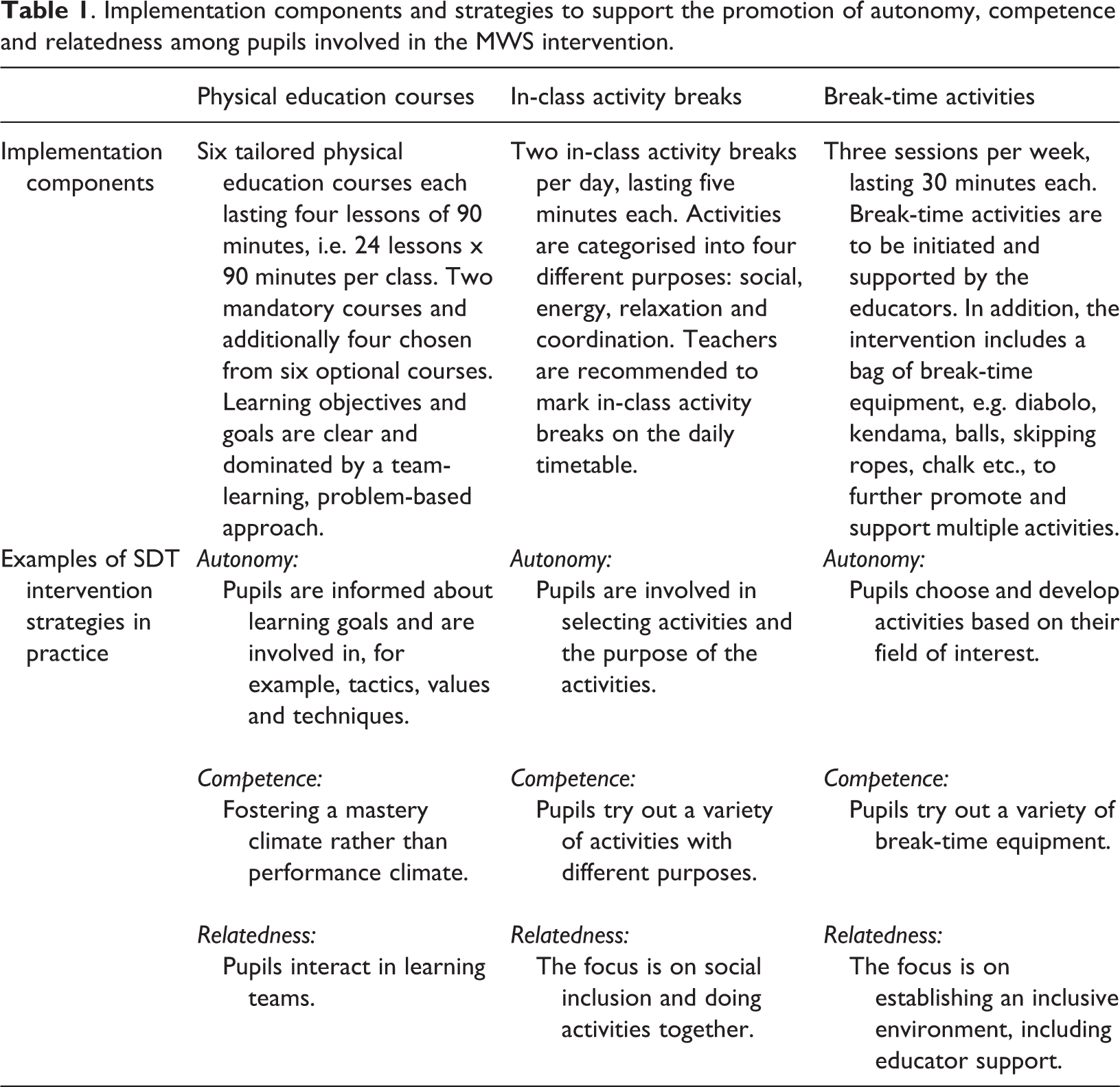
This case study is part of a broader research programme, the design and implementation of which is based on the British Medical Research Council’s framework for the development of complex interventions (Craig et al., 2008). The MWS programme comprised 24 schools randomly assigned to either intervention or control. In total the study population consisted of 3124 children, who were followed over a period of nine months. A detailed description of the research programme has been published elsewhere (Smedegaard et al., 2016; Smedegaard et al., 2017). The MWS intervention was developed to meet the three key components included in SDT: autonomy, competence and relatedness. These three basic components were integrated into the intervention through three areas of school-based PA: PE lessons, in-class activity breaks, and break-time activities, as presented in Table 1. The intervention programme was designed as a ‘whole school’ approach involving all pupils and all members of staff at the intermediate stage (grade four to grade six). As a part of the programme, educators were equipped with a Tailored Activity Programme (TAP), including lesson plans and teaching materials. These materials were also available on the project website. In addition, a Competence Development Programme (CDP), consisting of three interactive workshops, was delivered in order to enhance the educators’ skills in implementing the components of the intervention. The agendas for the interactive workshops were focused on the underlying theory of the intervention, that is, SDT concepts, knowledge translation and mutual inspiration, and on trying out core activities described in the TAP. One workshop served as a launch or ‘kick-off day’ at each school (12 in total) at the beginning of the intervention, involving educators and pupils, with a focus on trialling a variety of break-time activities, break-time equipment and in-class activities. In addition, this workshop was supported by three theme days arranged for both educators and pupils during the school year, and designed to address overall well-being related issues such as social inclusion/exclusion and how to build class cohesion through class meetings. The TAP materials and the CDPs were designed in a way that allowed schools and educators to tailor the programme to the local setting. A local coordination group was established at each school to support the implementation and handle coordination between the schools and the research team.
Implementation components and strategies to support the promotion of autonomy, competence and relatedness among pupils involved in the MWS intervention.
Qualitative data collection
The first author of this article (A-D Holt) collected qualitative data during the intervention period (November 2015 to May 2016). Given that focus groups combined with participant observations have been proven to be an effective way to generate data amongst children (Darbyshire et al., 2005; Horner, 2000), this combination of methods was chosen.
Focus groups
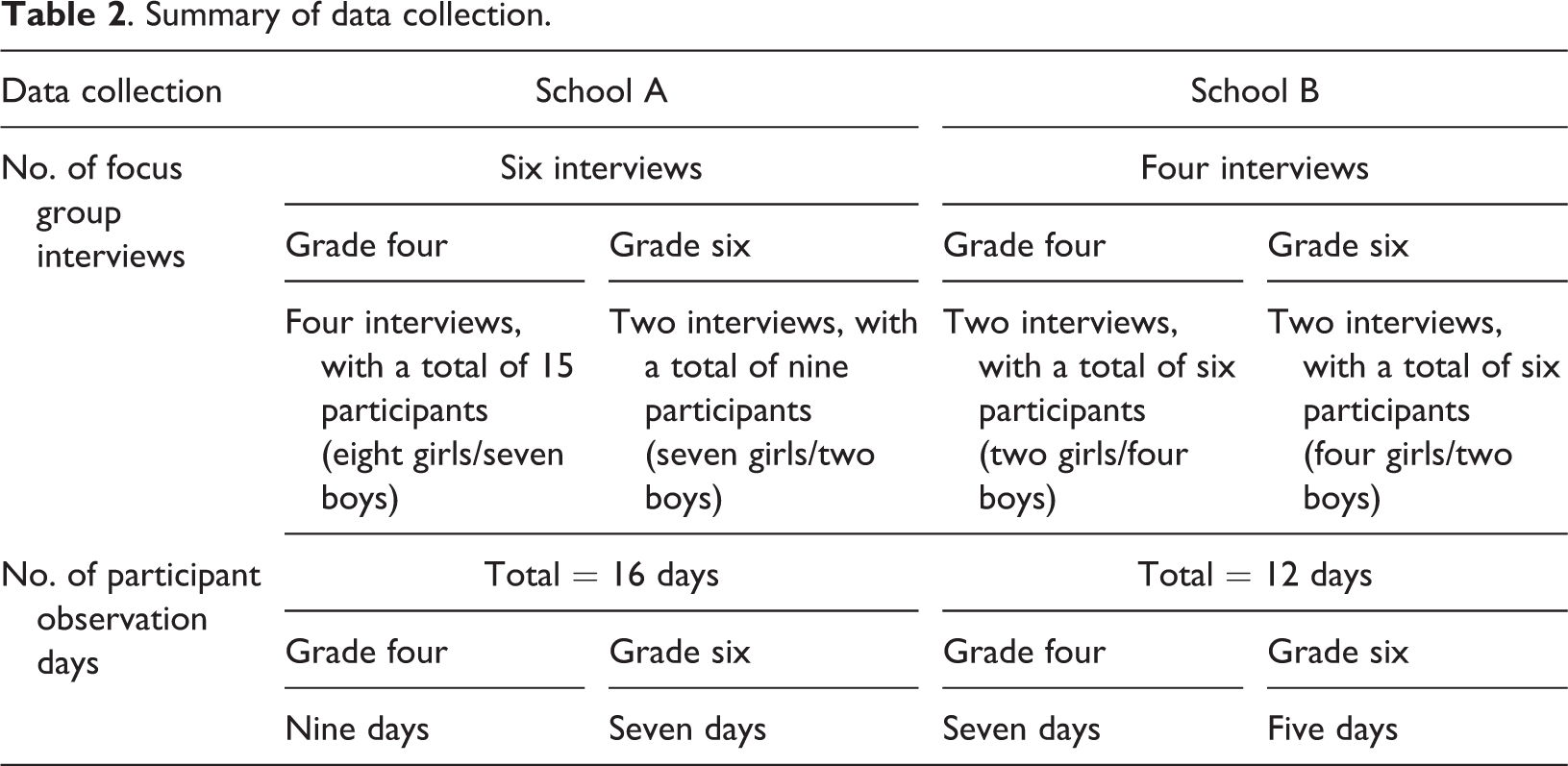
Because one of the goals was to gain insight into the various experiences of the participating pupils, all pupils from the four selected classes were invited to take part in focus group interviews. In total 36 of 79 potential pupils agreed to participate, based on written consent. Ten interviews were conducted in total, with group sizes ranging from three to five participants (Table 2). Class teachers were asked to form the groups with the purpose of enabling group discussions in which all pupils felt confident. Interviews were held by class and groups were gender mixed. The interviews lasted for approximately 25–45 minutes and took place during school hours in designated group rooms. A semi-structured interview guide was used as a framework to ensure the inclusion of discussions related to the three intervention areas and exploration of the theoretical elements: autonomy, competence and relatedness. In addition, the interview guide was formed with predominantly open-ended questions intended to give pupils optimal opportunities to freely express their views, beliefs and values (Kvale, 2007). For example: ‘If you were asked to explain to someone who does not know what ‘Move for Well-being in Schools’ is about – what would you tell that person?’ or ‘How do you like being in learning teams during PE lessons?’. Using probing questions and asking for examples was a way to encourage pupils to go into further detail (Kvale, 2007).
Summary of data collection.
Participant observations
Field notes from participant observations made up a data source supplementing the focus group interviews (Emerson et al., 2011). During the data collection period, the first author (A-D Holt) spent a total of 28 days at the two schools, spending 16 and 12 days at each respectively (see Table 2). School visits were carried out frequently during weekdays, and included PE lessons, in-class activity breaks and break-times. As a result, participant observations took place both during teacher-controlled activities within lessons and also during voluntary activities during break-times. By revisiting the schools at various intervals, the author concerned developed relationships and trust with the pupils, which were felt to enhance the quality of the focus group interviews. Observations prior to the focus groups helped qualify the interview guide, while observations subsequent to the focus groups gave a better understanding of the pupils’ statements. The frequent visits provided a broad-based picture of how the activity components were implemented over the school day.
Ethical considerations
The school principal and teachers were invited to a meeting about the case study procedure. In addition, an information letter was sent to all parents of the grade four and grade six pupils, explaining the details of this element of the study. Every pupil invited to take part in the focus group interviews was required to submit written parental consent in order to participate. Further, an explanation was given to all pupils of how the interview would be conducted, and it was emphasised that participation was voluntary. In cases where the pupils introduced sensitive topics, for example, social inclusion/exclusion or bullying, the author concerned tried to keep the discussion neutral and to create an atmosphere that accommodated the pupils’ feelings. The study has been approved and registered by the Danish Data Protection Agency (2014-54-0693); has been reported to the Danish Health Research Ethics Committee, where no formal approval was found to be required; and has been registered at the ISRCTN registry (DOI 0.1186/ISRCTN12496336).
Data processing
Analysis began with a verbatim transcription, performed immediately after each school visit, of both audio-recorded interviews and the supplementary field notes from the participant observations. In this way data collection and processing were an ongoing task during the intervention period. This progressive working procedure led to improvements in the subsequent data generation; for example, initial participant observations led to refinements of the interview guide used for the focus group interviews. Furthermore, findings and observations were frequently discussed within the research group during data collection. A systematic data analysis was carried out in three main steps based on the principles of deductive content analysis (Elo and Kyngäs, 2008). The first step was to develop a categorisation matrix based on SDT – that is, on the three basic needs, for autonomy, competence and relatedness. The next step was to code the data according to the categories. Thereafter, the codes were compared and related to the three intervention areas: PE lessons, in-class activity breaks, and break-times. To ensure consistency, the author concerned independently coded and analysed all 10 interviews manually. In order to protect pupils’ identity, pseudonyms were used in the presentation of the findings.
Results and analysis
In accordance with the purpose of the study, the following sections present the main findings regarding pupils’ experiences of autonomy, competence and relatedness in relation to the three intervention areas: PE lessons, in-class activity breaks and break-time activities. The purpose of doing so is to illustrate visually how the three basic needs are correlated.
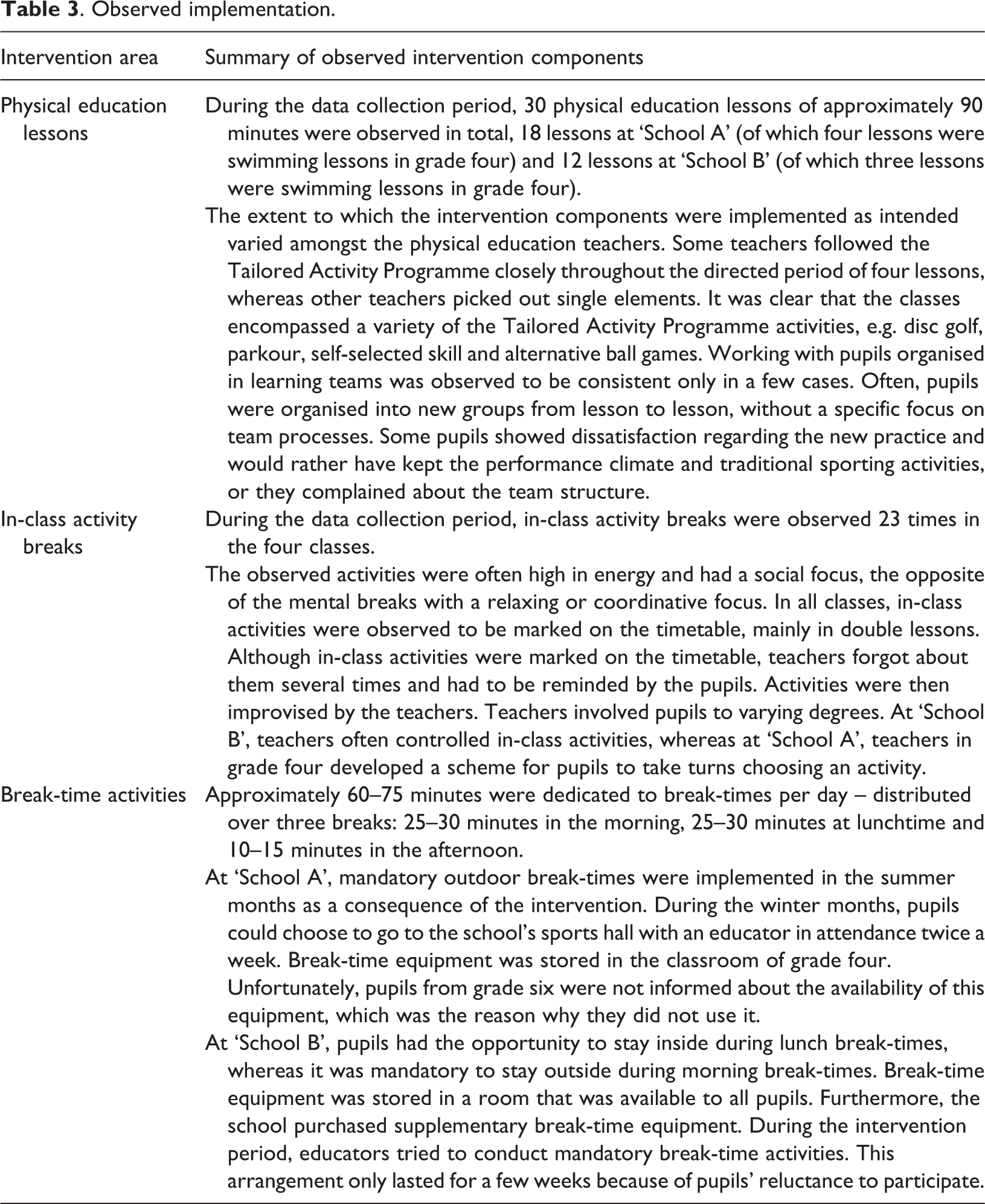
There is a specific focus on how the pupils experienced the components of the intervention, which should be seen in light of the observed implementation presented in Table 3.
Observed implementation.
Pupils’ experiences of PE lessons
In accordance with SDT’s identification of the role of autonomy in motivation, most pupils felt that having an influence on tasks and being offered a choice were of great value. As examples, they explained that they felt more dedicated to tasks they had formed on their own. In addition, they were more likely to involve themselves when they were able to choose activities they were interested in and for which they felt responsible. The following quotations illustrate how two boys in a focus group talked about their autonomy being supported when practising parkour. They regarded this PE course to be highly motivating for them:
Making our own parkour track, that was fun! And also, we had to work on ideas of what to do on the track.
Sometimes they [the teachers] tell us to build a track where we can practise the dive roll. They put out some mattresses and other gymnastic equipment and then we have to build a track on our own. (Focus group, School A, grade four)
Lessons in which the teachers successfully framed conditions for PE lessons experienced by the pupils as supporting autonomy, as in the parkour example, were not commonly observed. Several pupils said that a feeling of autonomy was related to freely choosing activities. In addition, pupils reflected on the connection between their own choice of activity and the feeling of doing well and feeling competent. As one pupil explained:
When your teacher decides for you, it is often something you don’t like and something you might not understand. If you can decide on your own, then you have positive thoughts about it and you think you can manage it. (Focus group, School A, grade four)
This point is important in explaining why some pupils felt that the features of the intervention did not increase their opportunity to be involved in decision making and thereby did not enhance their sense of autonomy. In fact, some had the opposite feeling. This should be seen in light of the ‘traditional practice’ in PE lessons, where some teachers were often willing to take pupils’ suggestions on board. As a result, the most athletic pupils often determined the activities, placing emphasis on competitive elements at the expense of the inclusiveness of the whole class. Being competitive was mentioned as an element that led to conflict, but it was also highlighted as a stressful factor with regard to the practice of improving one’s skills (mastery climate). In the following quotations from a focus group interview, two girls express their frustration at the way swimming lessons were organised (not part of the TAP). They discuss and give an explanation of how, in their way, swimming lessons could be organised:
It feels like we are swimming a race. It’s really hard for me to concentrate.
It would be much more fun if they [the teachers] would let us swim one at a time.
Or perhaps we could bring more focus on getting better instead of just swimming back and forth all the time. If we all are sent off to swim at the same time, it feels like a race, which makes it hard to concentrate on practising.
Maybe you do it wrong then, just because you want to be fast. If you fall behind the others, then you just think about how to catch up. (Focus group, School A, grade four)
In general, being good at PE was related to high status amongst pupils. They also identified it as being of particular significance to the experience of well-being and explained it as a feeling of ‘being skilled’. PE was seen as a subject with the potential to increase well-being, because it offers opportunities to experience feelings of competence and success when you master a demanding challenge, as can be seen from the following exchange:
How important is it that you exercise and do sports with regard to well-being in school?
It’s very important! Because you should feel good about yourself. Through sports and exercise, you can get the ‘YES’ experience when you do well. You just have to try it.
Understanding and acceptance of the diversity of classmates’ skills or motivational levels in PE were low among some of the interviewed pupils. One pupil expressed his dissatisfaction with the skill and motivation shown by one of his classmates, even though they were good friends:
There is a boy in our class, he is not good at PE. He thinks that it’s too hard to do squats or training exercise for the back. He can’t even manage to do just one repetition! Well, actually he is a friend of mine, but I think he is kind of a loser when it comes to sports. He doesn’t even try! Why should there be ‘special rules’ for pupils like him? Why shouldn’t they participate like the rest of us? They’re just lazy! (Focus group, School B, grade four)
The observations revealed that receiving this kind of negative feedback led to pupils withdrawing from participating in PE lessons and to a negative atmosphere in the class, as the example from a dodgeball lesson below illustrates. The sports hall is divided into four dodgeball fields. In every field, ten pupils (five against five) stand ready – waiting for the teacher to call the kick-off for the dodgeball-tournament. The match starts. At field No.1 the first ball thrown hits Thea. Her team member Sebastian clutches his head and states, annoyed: ‘I knew this would happen!’ Thea starts crying and runs towards the locker room. Meanwhile, the teacher calls for a tournament time out and the pupils start chattering. (Field notes, School B, grade four)
When you get on a team and there is someone else on the team who isn’t good at it, then you can get a little grumpy. (Focus group, School A, grade six)
Typically, this dissatisfaction was expressed openly after the teachers’ announcement of the team structure. When asking whether the structures of the learning teams had any good points, several pupils said that they were surprised how the feeling of being related to each other in the team developed during the lessons:
When Joanne and I got to know our team, we just thought that many of them were not that sporty. Well, actually we thought it was a crap team! But then we got to know each other. It was like we created a bond. In that way, we came to talk to others who we didn’t usually hang out with. (Focus group, School A, grade six)
Dividing pupils into learning teams throughout an entire PE course developed a wider, mutual understanding amongst team members. However, using learning teams was not a success in all classes. Creating an environment that could support social relationships and bonding between pupils required teachers to keep to the structure of the learning teams, as well as be explicit about the learning objectives. It was sometimes observed that, when teachers encountered pupils complaining about malfunctioning teams, they were inclined to re-organise the teams instead of being persistent in trying to support the team in a positive direction.
Pupils’ experiences of in-class activity breaks
Pupils reported that they had compliant and non-compliant teachers with regard to incorporating in-class activity breaks, even if they were scheduled on the timetable. It was evident from the focus groups that teachers often used academic objectives and time constraints as excuses not to respect in-class activity breaks:
When we ask our teachers for an in-class activity break, well, they want us to learn something! So they might think: ‘Oh, not again!’ They just seem to get annoyed with us.
What do you think? What is your teacher’s opinion of doing in-class activity breaks?
They probably think it takes too much time away from teaching! But they don’t know what it’s like to sit a whole day looking at a screen without getting ‘air’. (Focus group, School A, grade six)
Finding the right timing for in-class activity breaks was observed to be a challenge for the teachers. Pupils differed in their abilities to retain concentration and, while some pupils expressed a need for many breaks, others felt the class was disrupted by the breaks:
I prefer to continue with the tasks rather than having in-class activity breaks. Well, that’s my opinion.
Can you elaborate why you prefer that?
Because they [in-class activity breaks] disrupt the lessons. I feel hyperactive afterwards and then I can’t concentrate.
So you don’t like having a break?
Only during break-times.
I don’t feel like he does! (Focus group, School B, grade four)
The quotations above exemplify that it can be a challenge for the teachers to consider different pupils’ needs, and to direct their increased energy levels following an activity break back to on-task behaviour. The time it takes to establish a culture for in-class activity breaks should therefore not be underestimated. To meet pupils’ need for a sense of autonomy, it was recommended that pupils were involved in selecting and instructing in-class activities, but a minority of pupils did not feel comfortable doing that. Performing in front of classmates caused feelings of embarrassment for some:
Imagine that I had chosen an activity and then everybody else voted against it. It’s just not fun being the person making the ‘wrong’ decision. (Focus group, School B, grade six)
The observations revealed that both a group of grade six and grade four pupils were reluctant to select activities and express their preferences for particular activities due to a fear of not being accepted by their classmates. ‘It’s time for today’s in-class activity, grade four!’ The teacher turns her head towards the blackboard and continues: ‘Ahh, I can read it’s Tina’s turn to choose the activity today?’ Before Tina grasps the teacher’s announcement she has a crowd of class members standing at the back of her chair trying to influence her decision. She takes an uneasy look around and hesitates to give her answer. (Field notes, School A, grade four)
Do you do something special in your class to ensure that everybody is feeling well?
We have class meetings!
What does that mean to you?
That you can tell the class what you are sad about or perhaps something positive. It means that you can share it with everybody else. If you are sad, then it’s good to say it out loud. It’s the only way that others can help you. (Focus group, School A, grade four)
Pupils at ‘School B’, who were not used to such class meetings, expressed a desire to have more of these, believing that they could lead to a better atmosphere amongst pupils.
The topic of building class cohesion and acceptance through class dialogue was a component of the TAP on the theme days. Providing an inclusive environment and supporting the social climate contribute to the improvement of pupils’ connection, empathetic actions and positive behaviour, which are in line with the relatedness component of SDT.
Pupils’ experiences of break-times
Break-times are characterised as pupils’ free time to be with friends of their own choosing. All focus groups stressed that having friends in school was the most important factor related to well-being:
What does well-being in school mean to you?
That you get along with your classmates.
That you have friends in school. You shouldn’t be enemies.
Or even be angry with each other or sad.
When everybody can join in, that’s well-being. (Focus group, School B, grade six)
Furthermore, when it came to PA as part of break-times, the children said that having friends and feeling related to others contributed to their participation in activities. Most pupils reported PA as something that ‘you do together’ and that it was a way of ‘establishing friends’. Thus, PA was seen as a way to strengthen social relationships because of the shared experiences it provided and the strong social relationships it could forge.
The pupils also discussed what consequences there could be when someone was excluded from the social community. Although this was a more sensitive topic, pupils were acutely aware of issues of lack of relatedness to others. One thing that was mentioned as having a negative impact on social relationships and PA was the formation of cliques:
We have always been divided into cliques in our class. And these cliques have not been quite friendly towards each other.
What does it mean to you that the class is divided into cliques?
Well, I’m fine with it because I always have someone to play with. (Focus group, School B, grade four)
Cliques caused concern in the class, especially when they were equated with symbols such as ‘BFF’ (Best Friends Forever). Forming cliques was interpreted as behaviour that promoted exclusion and led to further division: cliques were mostly visible during break-times, and could result in the exclusion of pupils in break-time activities. A component of the MWS intervention was to encourage educators to be attentive towards social interaction during break-times and to ensure that all pupils had activities to engage in with someone else. Some pupils said that it helped them to get into activities when teachers paid attention to what was going on during break-times and promoted an inclusive environment that supported relatedness:
Are the pupils in your class aware of whether everybody feels included?
No, not always! Sometimes our teachers ask us if everybody has someone to be with, because they noticed someone had just gone alone. Then they asked us if someone could invite that person to participate in our break-time activities.
What do you think about that?
Well, that’s fine. Then that person is not alone. Nobody should be alone. Sometimes they are afraid to ask if they can participate. What if someone tells them that they can’t participate or even that they are annoying? (Focus group, School B, grade four)
For pupils who felt they were excluded, competitive activities were experienced as a particular barrier to their participation in break-time activities. In several cases, the desire to win was an element that disrupted and spoiled break-time activities. A substantial number of pupils in the focus groups made it clear that being competitive often led to conflict as a result of disagreement and dominance by some pupils:
Sometimes the activity is spoiled when people concentrate too much on winning. Then people react in unfriendly ways and some run away from the activity. (Focus group, School A, grade six)
To solve the problem, pupils suggested removing the focus on ‘being the best’ by bringing other qualities of PA into play, such as teamwork. In contrast, other pupils found it difficult to see how PA could be fun without an element of competition:
Sometimes when we play rounders [a baseball-style game], people are so focused on winning. It’s not much fun! Maybe we could do some activities that aren’t so focused on competition.
Well, all sports are sort of competitive!
Then maybe we should do fewer sports and play some games instead. Or we could do some activities where we have to cooperate to win. (Focus group, School A, grade six)
The topic of competition was the source of many disagreements during the focus group interviews. For some, the element of competition represented an important factor in their motivation for participating in PA, whilst other pupils simply did not like competition in PA and made every effort to avoid competitive situations.
Discussion
As noted above, the purpose of this study was to investigate how pupils experienced a school PA intervention based on SDT, and whether the components developed for the intervention appeared to improve their sense of competence, autonomy and relatedness, thereby furthering their psychosocial well-being.
In summary, the results and analysis, grounded in views voiced by pupils, showed that having influence and being offered a choice were crucial for the pupils’ experience of autonomy. Participating in developing their own tasks was felt to be a good opportunity to follow their interests, which in turn enhanced the pupils’ feelings of competence. In contrast, too great an emphasis on competition in PA was felt by some pupils to be stressful and a barrier to developing their competences. Furthermore, the majority of pupils stated that competition in PA often led to conflict because of limited tolerance and understanding of classmates’ different capabilities. In this respect working in learning teams was experienced as an approach that promoted relatedness, because pupils could establish a greater connectedness with their team. However, a prerequisite for the pupils was that they had a strong sense of trust in each other: in the absence of that sense of trust, performing in front of classmates could cause feelings of embarrassment and withdrawal.
From the view voiced by pupils, it seems that the intervention programme has the potential to positively affect pupils’ psychosocial well-being. However, the results and analysis presented illustrate that a variety of child-centred factors influenced the implementation and hypothesised effect of the programme. By drawing on theory and previous studies, the following discussion seeks to explore these factors.
Promoting an inclusive environment is crucial for self-determination
The relatedness component of SDT implies that individuals strive to feel a mutual connection to others in their circle in order to experience social and emotional satisfaction (Ryan and Powelson, 1991). The focus group interviews seemed to indicate the centrality of relatedness to pupils’ well-being in school. This refers both to peer relationships (‘having friends’) and to the relationship between pupils’ and educators’. The pupils’ voices in the current study revealed that educators’ awareness of the social climate in the classroom is of crucial significance – for instance, by prioritising class meetings. The importance of promoting social relationships and an inclusive environment was consistent with previous research (Allen and Kern, 2017; Wentzel and Ramani, 2016). Skinner et al. (2008) found that the provision by teachers of a social context with interpersonal involvement amongst pupils was associated with positive interpersonal peer relationships and empathetic actions. Equally, our study also demonstrated how a challenging social climate had a negative effect on some pupils’ opportunities to act autonomously. This was visible when some pupils were reluctant to express their feelings about PA, because they were anxious about the response from classmates. Similar findings were noted by Mitchell et al. (2015), who found that performing in front of more able peers caused feelings of embarrassment. According to Ryan and Powelson (1991), the experience of social cohesion is based on the perception that the autonomy of the individual is respected and supported by others. This means that relatedness is nourished when others are tolerant, interested and responsive to who you are (Ryan and Powelson, 1991).
Competence support through learning teams and mastery climate
Aligned with previous research (MacPhail et al., 2004), the intervention programme described in this study was designed to turn attention away from a performance climate and focus instead on a mastery climate, teamwork and social cohesion to support competence and relatedness. Some pupils reported that the learning team process provided a social structure that changed their negative views about classmates’ competence and laid the ground for new friendships and mutual respect, by working through challenges. These findings are consistent with those of MacPhail et al. (2004) who reported benefits from pupils interacting with the same teammates over time. Findings by Ntoumanis (2001) also support the link between participating in cooperative learning settings and perceived relatedness. That said, learning teams in PE did not always work smoothly in our study, and team construction was a process where issues related to social response between pupils surfaced – for instance when pupils were not satisfied with their team. Some pupils showed a performance-oriented attitude by focusing primarily on how they could be the best and win. By doing so, they placed the less-skilled pupils in a difficult position, which could make these less-skilled individuals feel unaccepted and less competent.
Choice of activity and pupils’ influence is essential for autonomy support
Our study showed that a learning environment that supports autonomy and creates space for pupils’ interests has a direct positive impact on their competence and personal experiences. The importance of incorporating interest-based activities within the school context in order to support feelings of autonomy and competence is not new: it was highlighted more than 30 years ago by Deci and Ryan (1985). This is due to the fact that interest-based activities represent and match one’s personality (Deci and Ryan, 1985). If pupils have the opportunity to engage in interest-based activities, their belief in themselves can strengthen and in turn contribute to their motivation and further engagement. This was especially evident in our study during break-times, where the additional opportunities for activities, such as diabolo, kendama, rope-skipping or dance classes, gave some pupils increased motivation to engage. Furthermore, for those pupils who felt they lacked in competence in traditional activities, the introduction of non-traditional activities proved to be advantageous because, to a large extent, these provided opportunities for pupils to participate on equal terms. In PE, the extended choice of activities was also present in one of the PE courses, where the pupils worked on improving a self-selected skill. However, in the other PE courses the activity was chosen in advance, which actually diminished some pupils’ experience of autonomy. According to Ryan and Deci (2006), supporting autonomy does not simply mean providing pupils with an abundance of choices; rather, it is more about increasing pupils’ experience of having influence. In MWS the pupils’ increased influence was evident in ‘how’ they worked with the learning activities during PE, and not ‘what’ specific activity they engaged in. Sierens et al. (2009) state that the delivery by teachers of instructions and expectations in ways that support pupils’ autonomy is positively related to pupils’ self-reflection on their competence. The increased influence was also apparent during in-class activity breaks, where pupils took turns in choosing the activity. In general, it was observed that some pupils felt insecure with this increased influence and responsibility, which is why educators should be very precise in determining structure, transparency and predictability in the PA setting, in order to build a sense of security (Curran and Standage, 2017; Jang et al., 2010; Reeve, 2006).
Changing the culture
According to SDT, rewards and punishments should be avoided when trying to develop intrinsic motivation; however, in our study teachers were commonly observed using in-class activity breaks to control the pupils’ behaviour. In previous research, teaching situations have also been found to be associated with controlling instructions, where teachers employ rewards or punishment in learning climates to ensure that learning occurs (Niemiec and Ryan, 2009; Taylor et al., 2009). Moreover, teachers’ use of controlling strategies has been explained by Ntoumanis and Standage (2009) and Van den Berghe et al. (2014) as a response to the external pressure placed on them. In our study, pupils reported that a majority of their teachers focused mainly on academic achievements and evaluations due to fear of not being able to cover the stated curriculum. As a result there was little time for improving the social climate in the classroom or working with pupils’ involvement; this can lead to a vicious circle where pupils consequently lose interest and motivation and teachers must rely on external control (Niemiec and Ryan, 2009). Changing the existing culture is a big step for some schools and teachers, and such change cannot be expected to take place overnight.
Implications for physical activity practice
The findings of this study have several practical implications for the promotion of relatedness, competence and autonomy through PA in schools. Relatedness seemed to be most important for pupils and crucial for the development of autonomy and competence. This study indicates that relatedness can be promoted through teachers articulating desired behaviour and organising activities involving teamwork. Class meetings and theme days were obvious methods for framing inclusion and exclusion issues related to PA, with these leading to better understanding and mutual acceptance among pupils. If the social environment focuses on mastery, learning goals and individual improvements, increased feelings of competence can result. Diverse and alternative activities, such as disc golf and parkour, provided an opportunity for pupils to become acquainted with new and different activities and made them understand and acknowledge that improving their skills was more important than ‘being the best’. To promote autonomy in PA, it is important to communicate a clear structure, transparency and predictability when involving pupils. This gives them a chance to prepare and helps them to feel more comfortable with their increased influence and responsibility. Furthermore, providing a range of options was a way of creating more space for pupils’ interests and preferences.
Strengths and limitations
The current study used a combination of qualitative data collection methods and the first author (A-D Holt) made frequent visits to the participating schools. The days for school visits were chosen in order to gain a broad picture of the pupils’ experiences of the implementation components. This study was focused on the applicability of SDT with regard to PA in a Danish school context. This potentially increases the analytical depth and external validity of the findings, but it is important to be aware of the risk of becoming narrow-minded in search of confirmation of a hypothesis. It is also important to bear in mind that individuals are likely to express their experiences of autonomy, competence and relatedness differently. The results presented in this paper are based on focus groups with grade four and grade six pupils from two schools. Thus, the findings do not represent pupils from a diversity of schools and it is not possible to determine the level of generalisability.
Another limitation was that only 36 out of 79 invited pupils consented to attend a focus group, and this could be due to practical issues of obtaining parents’ active consent, or to some pupils’ lack of confidence about attending such an interview. This study focused on the pupils’ experiences and perceptions and did not include the perspectives of teachers, school management or parents. The inclusion of other informant groups would have supplemented the findings. However, the fact that we maintained a narrow focus on the pupils’ experiences could equally be considered a strength, since young people’s voices are often overlooked. Pupils’ views and their involvement are clearly important when conducting interventions in schools, as has been highlighted in the ‘new paradigm of childhood’ (Eder and Corsaro, 1999; James and Prout, 1997).
Conclusions
The findings from the current study support the basic principles of SDT, and point to some practical challenges in implementing an SDT-based PA intervention in a Danish school setting. A socially inclusive environment was found to be crucial to pupils’ well-being at school, and influenced the sense of both competence and autonomy. The degree to which the teachers led the way in framing an inclusive environment amongst pupils (e.g. by prioritising class meetings and by supporting learning team affiliation in PE) was shown to be important for positive and respectful peer relationships. The performance climate was very evident both during PE and break-times, and this caused some pupils to withdraw and also made it hard for the teachers to promote a mastery climate. Choosing interest-based activities and providing enhanced influence clearly increased autonomy and motivation for the majority of pupils. However, some pupils felt insecure when they were offered choices and influence without being given sufficient instructions, or when they felt peer pressure. Changing the existing culture requires time for both educators and pupils, and must be routinely prioritised. In addition, professional development programmes, as well as teacher educator preparation programmes, should focus on helping current and future educators bridge the theory-to-practice gap and utilize strategies designed to apply SDT as a resource to meet pupils’ needs. Having educators and pupils engaged in the nine month intervention is a first important step of many in changing the PA culture in schools.
Footnotes
Acknowledgements
The authors would like to express their thanks to the schools, teachers and children that participated in this study.
Declaration of Conflicting Interests
The author(s) declare no potential conflicts of interest to exist with respect to the research, authorship and/or publication of this article.
Funding
The author(s) disclosed receipt of the following financial support for the research, authorship, and/or publication of this article:The study was funded by a donation from TrygFonden, Denmark: the funder has no role or authority in conducting the research project, except in agreeing adjustments to the research plan.
Availability of data
The data collected during the current study are available from the corresponding author upon reasonable request.