




Abstract
This article discusses the domestication of remote-controlled sex toys within the online multiplayer sex game 3DXChat (SexGame Devil 2012) after their partnership with Lovense (Hytto) in May 2021. Under the title ‘Virtual pleasure made real’, both companies re-branded longstanding promises for the ‘future of sex’ for their consumers by converging different kinds of technologies and influencing sex-playing practices. In order to understand players’ perspectives, I primarily analyzed publications posted on 3DXChat official forum related to the partnership, which were complemented by other materials and participant observations of a two-year-long online ethnography within the sex game. The findings suggest that players were surprised and sceptical about the success of domestication. There was limited data supporting a modification of sex-playing practices, though they speculated who would benefit the most. In sum, it seems that the consumption and domestication of sexual objects in a technological setting were not as impactful as was expected, particularly in a sociocultural context of a global pandemic, which encouraged the interrelation of play and sex.
Introduction
3DXChat is a subscription based, PC/laptop, massive multiplayer online game set in a virtual environment developed and published by SexGame Devil (SexGame Devil, 2012 hereafter SGD), released on December 4, 2012, and marketed as a ‘sex game’, ‘lewd game’, ‘porn game’, and ‘adult game’. Functioning as a social simulation reminiscent of Second Life (Linden Lab, 2003), 3DXChat centres on sexual play as its primary appeal, with mechanics and avatar actions designed to facilitate intimate interactions. The game fosters a community built around sexual expression, including themed parties, DJ-hosted clubs, roleplaying, and interactive building environments.
In May 2021, SGD and the Bluetooth-enabled sex toy brand Lovense (Hytto), announced a partnership, releasing a promotional video titled ‘Virtual pleasure made real’. This showcased the integration of Lovense remote-controlled vibrator with the 3DXChat platform (Image 1). The video combined internal recordings from the game with scenes of two people – one female and one male – using the vibrators, the purpose was to highlight the sensorial and sexual benefits of converging these technologies. Should players wish to purchase (or make use of) the vibrators and synchronize them to the game, the Lovense remote-controlled vibrators would respond to the mechanics of sex animation within the game’s interface. Such technological dynamics have been a ‘novelty’ for decades, using terms such as ‘teledildonics’, ‘technodildonics’, or ‘sextech’ (e.g. Nixon, 2018; Rheingold, 2000). What is notable about the partnership between SGD and Lovense is that it aimed to ‘create a new form of sexual playfulness’ that made ‘sex tech’ accessible or appealing to everyone. Tropical beach from the game featured in the advertisement (left) and a frame from the advertisement (right). Source: Author.
This article explores players’ perspectives on this partnership by examining this new structural dynamic, and how it potentially challenged existing practices of sexual play on the platform. By examining the responses of 3DXChat players to the partnership, the article explores the ways in which players perceived this structural shift and commercial alignment. Using data from the official 3DXChat forum, partnership advertisements, and game updates, supported by the rich contextual understanding developed through 2-years of fieldwork in 3DXChat, I analyze how the partnership reflects broader trends in the production and consumption of digital sex play artifacts (D’Acci, 2004). Drawing on frameworks of convergence, domestication, and symbolic meaning of sex toys (Mayr, 2022a), I explore how players perceived the promotion of heteronormative sexual practices and felt a disconnect between the companies’ profit-driven goals and their own evolving play needs. The findings reveal that the partnership, while intended to innovate sexual play, failed to resonate with many players who felt that it prioritized commercial interests in a manner that made their community-driven interactions unsustainable. Concerns over becoming a ‘porn game’ reflected deeper anxieties about the game’s future direction, as players questioned whether their preferred social and sexual dynamics would be preserved.
Methodology
This article draws from materials that are part of an online ethnographic research project 1 which took place in the game 3DXChat between 2020 and 2022. The methodological decision was inspired by previous research conducted in online gaming environments, both generally (e.g. Boellstorff, 2008; Pearce, 2009; Taylor, 2006; Boellstorff et al., 2012) and focused on sexual practices (e.g. Brown, 2015; Sundén and Sveningsson, 2012). Here, I focus on players’ perspectives about the partnership between 3DXChat and Lovense.
In order to reflect on players’ perspectives, I have primarily drawn on players accounts of their experiences in posts on the official 3DXChat forum, which was chosen – in addition to informativeness – for practical reasons. First, the relative lack of concrete data provided by the partnered companies. Neither of them provides an estimate of the number of people who have connected their Lovense sex toys to their 3DXChat accounts. Therefore, it is difficult from a researcher’s standpoint to have any insight into player adoption of sex toys. Moreover, as user rates would only represent quantitative data, it was crucial to find another way for tracking experiences and perceptions of the use of sex toys within 3DXChat. The forum allowed me to grasp and include players’ perspectives without needing to adopt additional methods for data collection. Lieberman (2017) used a similar approach to comprehend ordinary, middle-class, women, from United States attitudes towards sex toys between 1974 and 1989 by using an archive of Eve’s Garden customers response letters, offering insight into peoples’ relations with sex toys, masturbation and sexuality.
During my participant observation, I had close contact with people who openly disclosed 2 their ownership and use of Lovense in the game and for sexual playing. As a player, I also had a chance to use Lovense vibrators in the game and to play. Coincidentally, I had purchased their products 1 year before the partnership announcement and since the partnership occurred during my fieldwork, I could observe modifications (if any) and test the vibrators that were integrated, which allowed me to confirm or contest some of the data. Instead of an autoethnographic approach, however, I chose to design the present study around the more diverse forum data.
Forums were thus explored to learn from diverse opinions from the same community or group. I was aware that 3DXChat forum was a relevant platform for players and non-players, for example, as a source of information. Therefore, it was the best place to retrieve insights from players. Secondary data (such as advertisements, game instructions, social media publications, etc.) and my participant observations balanced the analysis. Forums might over-represent the opinions of those who post on them, but on the 3DXChat forum, forum posters would often also include the opinions of their friends and partners. I did not approach the data quantitively, for which questions like the ratio of forum members, active users, and players are not addressed.
I will continue using ‘player(s)’ combined or not with the name of the game (3DXChat) as the term to identify everyone who commented on the forum (or not) and players who used the Lovense to play (or not). I am not making a clear-cut distinction between these different groups because the article brings a general depiction of players.
With that being said, I disclose my position in relation to the forum within the context of ethnography. Unlike the active position I adopted while playing 3DXChat, in the forum, I was a mere observer, accessing and reading it as a guest and not posting anything. The interpretation process (as in this article) was informed by my identity as a ‘researcher-player’ working on a project about sexual play and, trying to have a sexually honest and open engagement with the people and environment whilst being conscious of the limitations of such involvement and truth to disciplinary practices. For the most part of this research, forum and playing accounts were independent from each other, but this changed afterwards. Thus, a former player of the game could maintain contact with active players through the forum, upcoming players could ask questions to others before committing to paying to play, and, of course, some people misused the structure by creating multiple accounts for trolling and to avoid punishments.
I did not engage with the forum discussions as a participant because I was concerned about the exposure and safety. Throughout my research, the game and forum became inaccessible on different occasions because of distributed denial-of-service attacks (DDoS). These attacks are relatively common, but during the COVID-19 pandemic they increased. 3DXChat proved not only to be vulnerable to such cyberattacks but was also slow in responding to them. This security issue meant that I needed to avoid being in a situation where I could be exposed to harassment or worse.
The data sample in this article came from 3DXChat’s official forum, which is publicly available to read and search. To participate in the forum people are required to agree with the publicization of their opinions including the amount of personal information about themselves and others they want to disclose, and they also must use an alias. There are ethical issues about how to use such data and its consequences. To minimize any potential impact on the already pseudonymised forum posters, I am omitting the names and links to the forum from where the posts were manually retrieved. Furthermore, I have avoided direct quoting from the forum posts, instead paraphrasing what was said, except in cases where a phrase was important, and in these cases the phrases themselves are isolated from the text of the larger post, making it less likely that the original source can be identified. The forum names that users adopted to preserve their anonymity and any other mention of identity markers such as age, race, disability etc. are also removed during the paraphrasing process. The gendered pronouns used by posters and their self-disclosed sexuality is retained because this information is relevant in considering gender perspectives regarding sex toys.
The partnership and implementation occurred in the second week of May 2021, but I collected the material in August and October 2021. By postponing the collection, both 3DXChat players-Lovense users and non-users had some time to express their point of view on the 3DXChat forum regarding the official announcement and (sex toy-sex game) implementation. I used the forum search tool to find forum posts, and responses that contained the keyword ‘Lovense’, and the terms ‘sex toy’ and ‘VStroke’ emerged as correlated words. I located 729 forum posts containing the keyword, which I manually collected (metadata and posts) and organized in a spreadsheet.
My analysis was not based on thematic or content analysis, which are widely used. I avoid relying on vague terms to describe what and how I engaged in the analysis (something that frequently happens in qualitative research, see Humble and Radina, 2024); instead, I describe the process as it happened.
Once the amount of forum posts was delimited by search results, I read all of the textual material to get familiar with the data and filter what would compose the material for analysis. After this, many posts were excluded because of their lack of context or relevance and the final sample consisted of 477 forum posts. I did not use data processing software, but preferred organizing the data with text processing software, printed documents, and handwritten notes.
During the second round of reading, I paraphrased the original comments in a separate text document by using single sentences containing their main points. Some of these commentaries, however, were either not reduced to one sentence or kept as in the original, because modifications could significantly change their meaning. In the third round of reading, I formatted key words of these sentences in bold, so that in the following reading I could colour code and group similar comments. After this grouping, I wrote a summary with the most relevant takes that helped me assess which references and theories could be used to frame the discussion and create a draft for the article. All of these modifications were done in a single text document which had 12 356 words (approx. 25 pages).
Throughout the process, I identified direct references to secondary materials. They included, videos, images/screen captures, social media publications, press releases, instructions to use the vibrators in the game, descriptions from updates, as well as my experience as player and researcher. For images and videos, I made textual notes about relevant aspects, selected what could be included in the article (e.g. frames from videos), and edited information that needed to be anonymized (e.g. game handles).
Analysis
The forum posts offer perspectives on players’ attitudes about the attempted domestication of remotely controlled vibrators embedded in 3DXChat in May 2021. They are examples of how people talk about their decisions, meaning, uses, and experiences with human and non-human actors. As a method of analysis, I integrated the forum data to my multimodal ethnographic engagement and reflected on it against the understanding of 3DXChat culture I had developed as a participant of the game. To present the findings, I have organized the posts into three subjects of intensive discussion. The first describes the posts where existing users of 3DXChat felt alienated by the attempt to broaden the platform’s user base. The second outlines the posts that recount various attitudes of ambivalence toward integrating vibrators into gameplay. The third, discusses the posts which saw the partnership as threatening the game’s community-focus by opening the platform to monetization and sex work.
Vibrators for whom?
SDG and Lovense are sex related businesses with potential overlaps, thus the partnership has obvious potential for growing both partners consumer-base by – for example – co-design joint strategies to attract new consumers. The forum posts, however, showed that many of 3DXChat players did not feel like they were the targets of the upcoming modification. For example, they wondered about a separation between current/old and new players, as well as vibrator users and non-users.
Every 3DXChat player was once a newcomer that needed tutoring and acclimation, but the existing players quickly developed recognizable archetypes in their discussions about the new players bought to the platform through the Lovense promotion. Based on the posts the new players were organized by forum posters into three archetypical groups based on their alleged interests and motivations: ‘perverts’, ‘couples’, and ‘real females’. The perverts were associated with a priority for having sex, and these users were jokingly referred to as ‘masturbators’ and as a ‘dildo gang’. Even though 3DXChat is a sex game, overtly sexual behaviour and approaches were considered to deviate from the norm, something players must learn from the community when they sign in. The couples would match the partnership advertisement, which focused only on cis-heterosexual partnerships. They were expected to not necessarily be familiar with sex games yet interested in joining the game to play together and/or with others by, for example, threesomes involving, preferably, two women and one man – FMF in the game’s slang. The real females speak of anxieties related to gendered and sexual performances in online spaces. The need to identify and interact with ‘real women’ stems from disappointments and uncertainties about who the other players are. Self-exploration and deconstruction of sociocultural and gendered norms have been part of online imaginary, and these experiences can be particularly positive to queer players (e.g. Ruberg and Shaw, 2017; Sihvonen and Stenros, 2018). However, some of 3DXChat players are not supportive of such performative fluidity, preferring – if not outright enforcing – gender and sexual norms articulated in terms of ‘biology’.
Sexual expectations based on gender were organized around double standards and were exemplified by forum members’ reactions to the advertisement ‘Virtual Pleasure Made Real’ made for the introduction of the Lovense vibrators to 3DXChat structure (Image 2). The advertisement showed a woman masturbating to in-game sexual interaction, which was valued as exciting. When her avatar was presented as part of the visual and sexual stimulation, forum-users reacted that it was ‘weird’. I suggest that they felt confronted by the role of avatars as a mediators of intimate pleasure experiences. This is unrelated to any uncanniness with virtual depictions, but a confusing sensation that stems from observing their intimate practices (here sexual play in a sex game using avatars) being portrayed or described by others. Montage of captures from the advertisement. Source: Author.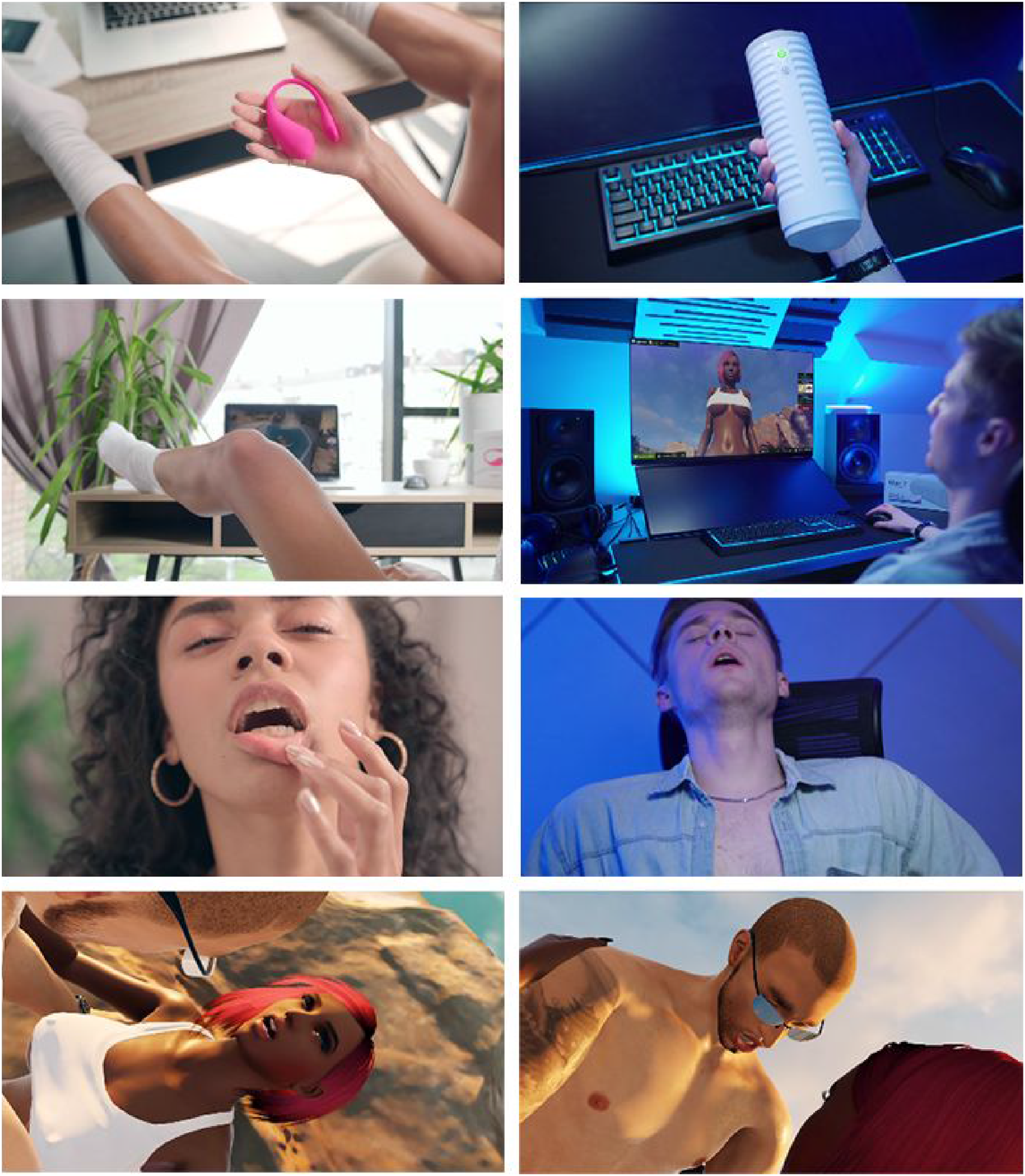
Seeing the man getting aroused and using the sex toy to please himself was also described as ‘cringe’, (see Image 2) though predictable as the depiction of male masturbation and ways to sense pleasure, for example, are considered ‘undesirable’ even by those working on the sex toy market (Ronen, 2021). From players’ perspective the gender and assumed sexual orientation needed to be aligned to their expectations about who was more desirable to watch and imagine masturbating, and who could masturbate to avatars and virtual interactions.
Still, on the gender and sexual expectations, women were supposed to be sexually available while simultaneously downplaying their sexual interests and experiences. According to players, they were considered sexually naïve and portrayed as having a low threshold to sexual explicitness. Consequently, to avoid making a bad first impression and ‘driving women away’, players suggested implementing word filters and enforcing punishments on those who deviated from these rules. SDG did not implement any modification or proactive moderation to create this sensation of ‘safe and welcoming’ space.
Posters wondered if the new partnership was creating an experience that had been expressed by them, and if they even wanted to play according to the advertisement’s suggestions. According to the posts, vibrators have not been among the desirable upgrades they expected to see implemented to the game when they were asked to express their options about the state of the game (the exception will be discussed in the following subsection). Therefore, by introducing vibrators, those responsible for the game development – referred to as ‘devs’ – appeared being less interested in internal feedback (or what players/consumers wanted) than their business aims.
The Lovense-3DXChat’s aimed to broaden user/consumer base, but existing players felt alienated, questioning if the changes designed to bring new member to the community would allow existing practices to continue to flourish. Players perceptions about the SDG plans for the future of 3DXChat were mixed: some players expressed flexibility and understanding of their motivations, and others hoped that the partnership would ultimately improve the game and would, at some point, reconnect with their personal interests. But many players were also concerned that the game would continue to develop without listening to their input or considering their needs and ultimately pushing them away. A tension between players before the first in-game party (Image 3) reinforced the sense of disappointed
3
of a group of players because they felt their contributions to the game were not recognized by SGD and other players. Promotional image of the first in-game party of the collaboration. Source: Author.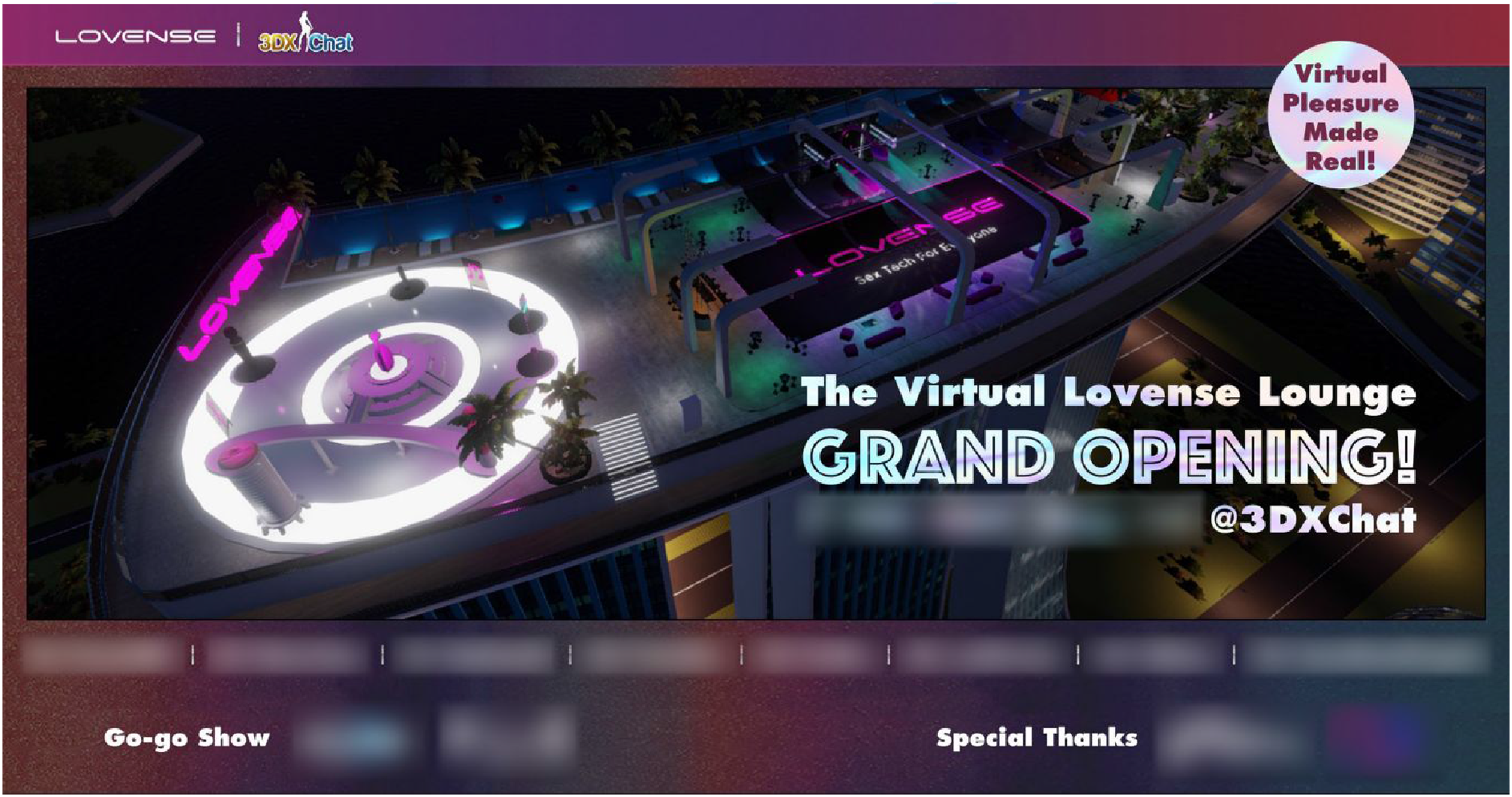
Failed uses of sex toys within 3DXChat
Players discussed their experiences with vibrators, masturbation, intimacy, and technology on the forum. VStroke (Kiiroo) was the first sex toy advertisement made by SGD in 2013. A year later, the first posts on the topic were made by male players about their experiences with penis vibrators within sex games. According to these posts, within all games on the market with the same technological support during that period, the most positive experiences were with 3DXChat. One forum member shared a long description about his sensorial and pleasure-seeking journey. However, his excitement over the ‘future of sex’ (or the sextech) entailed signs of frustration and resentment because he compared ‘real’ and ‘virtual’ sexual experiences and wished for ‘real life’ fulfilment instead of only achieving pleasure through mediated devices.
Before the partnership in 2021, Lovense was mentioned by 3DXChat players as their preferred sex toy brand. They are one of many commercialized remote-controlled vibrators but are easily recognizable by the public due to their commercial strategies and popularization across online sex platforms, including camming sites, porn-video aggregator sites, and sexual wellbeing resources. The official announcement of the partnership was made on 07 May 2021, 4 and implementation was completed 3 days later. Players wanted to know if anyone was using the vibrator within the game who was willing to share their experience on the forum; specifically, they wanted to know how it felt and how it worked. One player was disappointed with the lack of testimonials and assumed that the ‘virtual pleasure made real’ experience was not that good – otherwise, there would be praises.
Even though the lack of endorsement could imply bad performance by the campaign and collaboration, researchers have shown that people have several reasons for not talking about their experiences with sex toys and/or of masturbation, regardless of their gender, sexuality, or preference (e.g. Fahs and Swank, 2013; Mayr, 2022b). In this case, neither the anonymity of a forum nor an interest in playing a sex game and using vibrators motivated people to share their experience. People may have mixed feelings about making their sexual interests and the means of fulfilling them public. Yet, among the very few posts where the Lovense was directly discussed players’ feelings and sensations were confused and mixed. One person described it as ‘slightly more stimulating’ than other vibrators they had used but reflected that it may just have seemed more stimulating than the others because they were using it for the first time. So, was convergence or novelty more significant? A recent player of 3DXChat and 1-year user of the Nora
5
vibrator said that the sex effects – ejaculation or moaning – triggered a temporary stronger vibration, which is another description of functionality (Image 4). The player had initially misunderstood from where the vibrations were coming from or how they were designed to work. The system was intended to be bidirectional. Partners were meant to feel the same sensations at the same time and with the same intensity. But the player wanted a way for it to operate also as a unidirectional system.
6
For example, when being about to or having an orgasm, the player wanted to be able to communicate this through clicking the ‘sexual effects’, with only the partners feeling the vibration. 3DXChat player screen with avatar and bot having sex. Source: Author.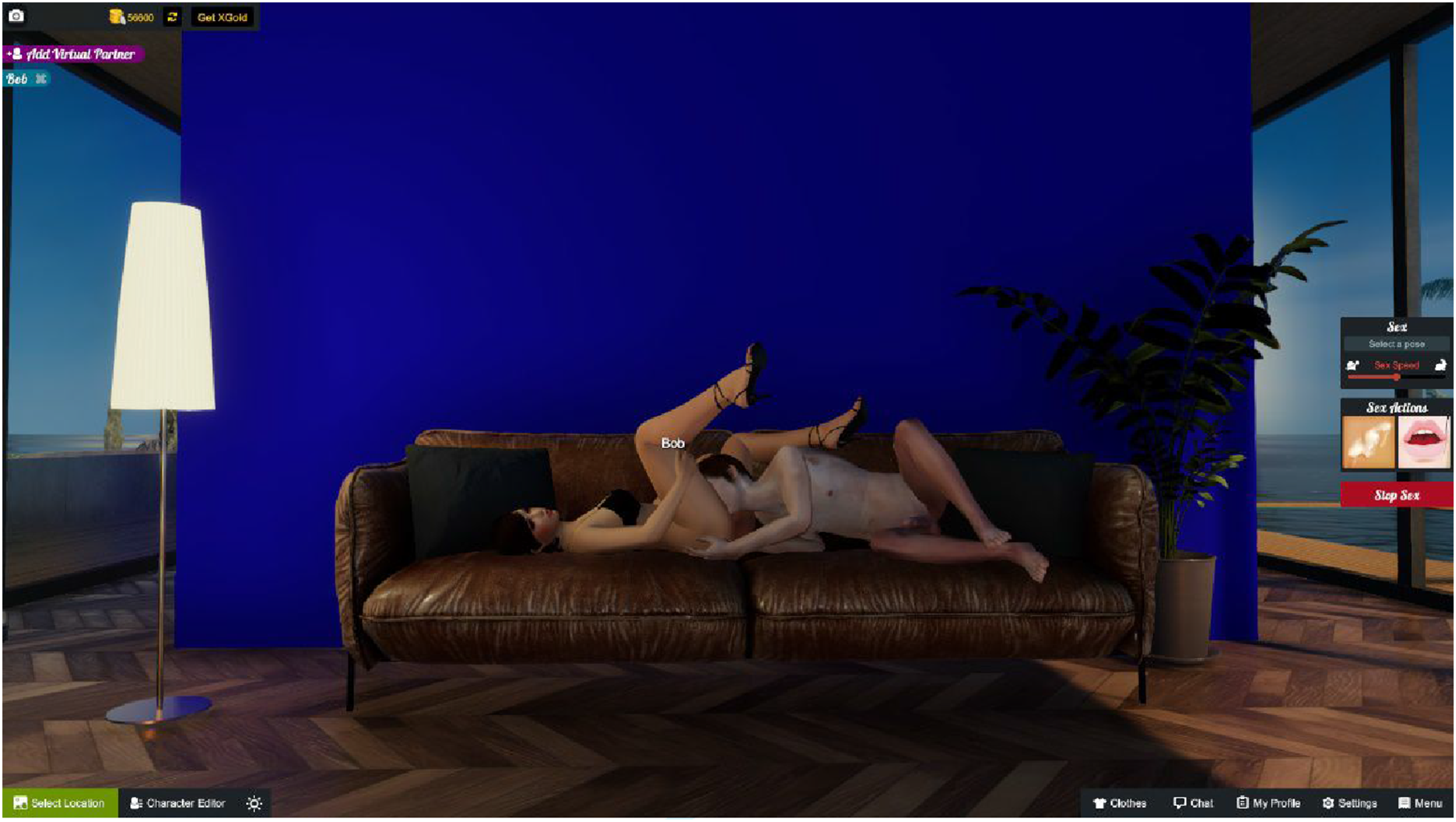
Besides technical expectations, incorporating vibrators into sexual play is challenging, and even players who owned Lovense vibrators might not want to use them to play. One 3DXChat player, for instance, had three Lovense vibrators – two penile and one anal. Connectivity and usability were tested while the person held the vibrators in the palm of his hand. This test was performed with the help of an in-game bot (see Bob in Image 4) because he had not had any interest in trying it while playing. His listed reasons for this lack of desire were the associated unpleasant routine and not engaging in sexual play. Vibrators require maintenance and preparation to be used – including applying lubricants, cleaning, and charging, for example – and, because of this, the player preferred not to use them. Clearly, integrating vibrators into sexual play requires additional routines and negotiations beyond simply adding basic functionality.
The few relevant posts mainly focused on functionality. In terms of usability, it is a fairly simple process. However, an aspect of convergence that was largely overlooked by players was the need to connect so many different devices – computers/laptops, mouses/trackpads, vibrators, mobiles, and accounts – and why. Only one person asked why was it necessary to include mobile devices if it was a PC game? According to a Lovense representative response, this was for security reasons, but no additional information was offered, and there is no way to know whether that was accurate or not. So, security did not appear to be an issue for players. In fact, some wished companies would explore all sorts of data points for marketing and business purposes – for example, how long people stay in game or how long they use sex toys and which of them are more popular. Moreover, it opens the question if and how sexual playfulness may be impacted by data-driven trends.
Ambivalent reactions and rejections of vibrators in 3DXChat
Ambivalent reactions and rejections to what was proposed by the partnership revolved around the centrality of women in managing sexual possibilities being it in heterosexual partnered settings, explorations of gendered-power kink dynamics, reservations about fictional and actual sex work online, and possible modifications in sex play.
The development and marketing of sex toys have expanded greatly by associating itself with womanhood (e.g. Comella, 2017; Ronen, 2021). They were stimulated and validated in their sexual pursuits, but even if ‘daring’ vibrators are still promoted in a normative manner that assumes they will be used by heterosexual couples (e.g. Fahs and Swank, 2013; Mayr, 2022b). One female player described on the forum that she would have benefited from the partnership had it been earlier. When VStroke (a penis masturbator) was promoted on the 3DXChat forum in the early 2010’s, she had asked if Lovense vibrators were also supported because she and her partner had just subscribed to the game and were in a long-distance relationship. The negative response spoiled her expectations, but she left the game before Lovense implementation, and she simply decided to share that her past player-self would have enjoyed the experience more.
Personal stories like this one correlates with the experiences of other women. For example, Mayr’s (2022b) participants had also stories about female masturbation and sexual consumption and the symbolic meaning of these objects were full of anxiety and excitement. Generally, women happen to become responsible for the sexual maintenance, which involves being sexually innovative.
The invisibility of non-heterosexual performances from both 3DXChat and Lovense when presenting sex play and vibrators underlaid the commentary of one self-identified lesbian player. Despite her limited knowledge about the products commercialized by Lovense and their functions, she assumed that pairing vibrators for same-sex interactions was impossible. This suggests not only a misinterpretation on the part of the player but more importantly a conception of what the companies imagined as their target consumers, and which play practices were subsequently presumed and endorsed. Lovense, as other sex brands, present itself as a ‘diversity ally’ but this situation is a micro example of how convenient is for sex brands to ignore sexual diversity when it is not commercially convenient for their branding. In addition, SGD makes little to no public effort in presenting their sex game as a diverse space and passing the responsibility for players.
Despite companies’ selective thoughtlessness, profiles across the spectrums of femininity and submission, such as players identifying as women, femme, and bottomish, 7 were said to be using Lovense (or any other vibrator remotely controlled) while playing before the partnership. One player said that this information was included in avatar’s profiles and links shared with sexual play partners. I did not find any examples of this during my fieldwork, but it is not possible to comprehensively map sexual playing dynamics in this game. Moreover, players change their profile descriptions as they wish, and there is no information about the ‘last update’ to know when changes happened. And I talked with people who have engaged in power-exchange play both in and out of the game’s structure, which would include the control of vibrators.
Such sex play diversity (pre or post partnership) might impact the expectations of sexual availability. The vibrators also contributed to players’ sexual anxiety in a sense that the object could become a pre-requirement for interaction, or players might be pressured to activate and use them by their playing partners. Therefore, the partnership feels as a proposal disconnected from some players dynamics and desires.
Players value personality, common interests, communication skills, flirtation, and creating time together to bond. Within this process, they gain trust, generate intimacy, and establish boundaries, all of which help facilitate sexually rewarding experiences. Conversations happen in the chat, which can be set as private, restricted to a set number of people and/or a location, or general to all of those connected to the game. Some players derive pleasure from writing and reading sexual pieces. These can be more or less detailed, written in the first or third person, and use English or another language.
These exchanges are mediated through textual interactions, an element of the platform that is often overlooked by both SGD and players. It seems as if the ‘chat’ is less relevant than the three dimensionality of animated sex, which contrast with the game’s name 3DXChat. It is the combination of scripted animated sex – and some sounds – with communication abilities that a generic sexual experience turns into a singular sexual playful experience. Players can have preferred scripts and descriptions, but these are more akin to kinetic templates, because other players join and contribute to the story as it unfolds. Therefore, vibrators are not necessarily central to dynamic and pleasurable experiences, and they are felt virtually as real.
The last ambivalent reaction is related to fictional sex work. 3DXChat players use ‘escort’ as an umbrella term for fictional sex work playing performances, which is predominantly presented by female avatars and this gendered sex-working rationale is similar to what has been depicted in games (e.g. Ruberg, 2019).
Players speculated how the inclusion of vibrators would change the dynamics of sexual play with fictional sex workers due to in the following ways: those playing with vibrators would attract more players than others and charge 8 more for the interaction; they could be gifted vibrators with the promise of control exchange – this gift could be gained through wish lists, pressure, and free will; escorts’ sexual play could include mutual or one-sided remote control; or they could reject having any interaction involving vibrators.
Whereas escorts were considered the group of players who would benefit most from the partnership, others felt that their sexual play dynamics were affected in less positive ways. Players often posted that they felt pressured to be sexually available or to adhere to some expectation of sexual play because they joined a sex game. And these negative perceptions were the underlying criticism behind a position of rejection of the partnership, particularly, among those who have been playing 3DXChat for many years and prioritize the social aspects of the online environment. One long-lasting 3DXChat player suggested that the social aspects had not been promoted and developed by SGD in comparison with its sexualization. Others were a bit simpler in their wording and suggested that 3DXChat was moving away from being a ‘sex game’ to become a ‘porn game’.
Discussion
This discussion considers the introduction of the Lovense partnership to 3DXChat user through the frameworks of convergence, domestication, and symbolic meaning of vibrators to understand its role as an immersive virtual environment for sexual play. The convergence of gaming and sex toys reveals a disconnect between corporate ambitions in the sextech industry and the complex desires and practices of users. Through domestication, players negotiate personal boundaries, comfort levels, and community norms, underscoring the tension between marketing expectations and actual user practices in virtual sex games. The Lovense-3DXChat partnership reshaped the symbolic meaning of in-game sexual play, but players resisted, prioritizing community-driven, non-commercial interactions over the platform’s shift toward regulated, physicalized experiences. The Lovense-3DXChat partnership promoted monetized, commercialized forms of virtual sexual play, threatening to reshape the user-driven social space into a regulated, commodified environment.
Convergence of technologies for sexual play
The convergence of sex toys and VR technologies has been widely anticipated in popular media. Sex toys have been discussed as part of the VR experiences that anticipate the ‘future of sex’ since early 1990s (Campbell, 1992; Golding, 2019; Nixon, 2018; Rheingold, 2000), regardless of the incongruency between the sensorial experiences of disconnection and self-awareness (Strain, 1999), that this convergence may imply. But, ultimately, the technological development of the VR headset, hardware, and software for domestic use has been led by the games industry (Harley, 2020). Still, both VR and sex toys are projected by sextech industry as being ‘the next level’ of technologically mediated sexual experiences.
The ‘Next Level’ status of the 3DXChat platform for the sextech industry is demonstrated in the BBC/Channel 4 documentary ‘The Virtual Reality Virgin’ (2016). The documentary explored the potential for VR technology to ‘change how people thought about sex’ (BBC, 2016). It was released in the wake of the hype surrounding the acquisition of Oculus by Facebook (current Meta) for US$2 billion in 2014 (see Egliston and Carter, 2022, 2023). It examined a wide range of new sex tech beyond the Oculus, including the use of sex dolls, vibrators, and – briefly – 3DXChat. With the help of a male-player, the documentary host had his ‘first time’ in an online multiplayer sex game though none of the gameplay inserts were sexual (Image 5). Afterwards, the host described the experience as ‘not very immersive because it is just on a computer. And, it just makes me think, well if both the things around there the headset technology and these virtual sexual worlds then it seems much more exciting to me to merge them together’ (BBC, 2016). This demonstrates that even if the platform failed to live up to the presenters’ expectations 3DXChat was considered as an example of the convergence between sextech and virtual online games at this time (between 2014 when the Oculus was acquired and 2016 when the documentary was published). Screen capture of documentary. Source: YouTube.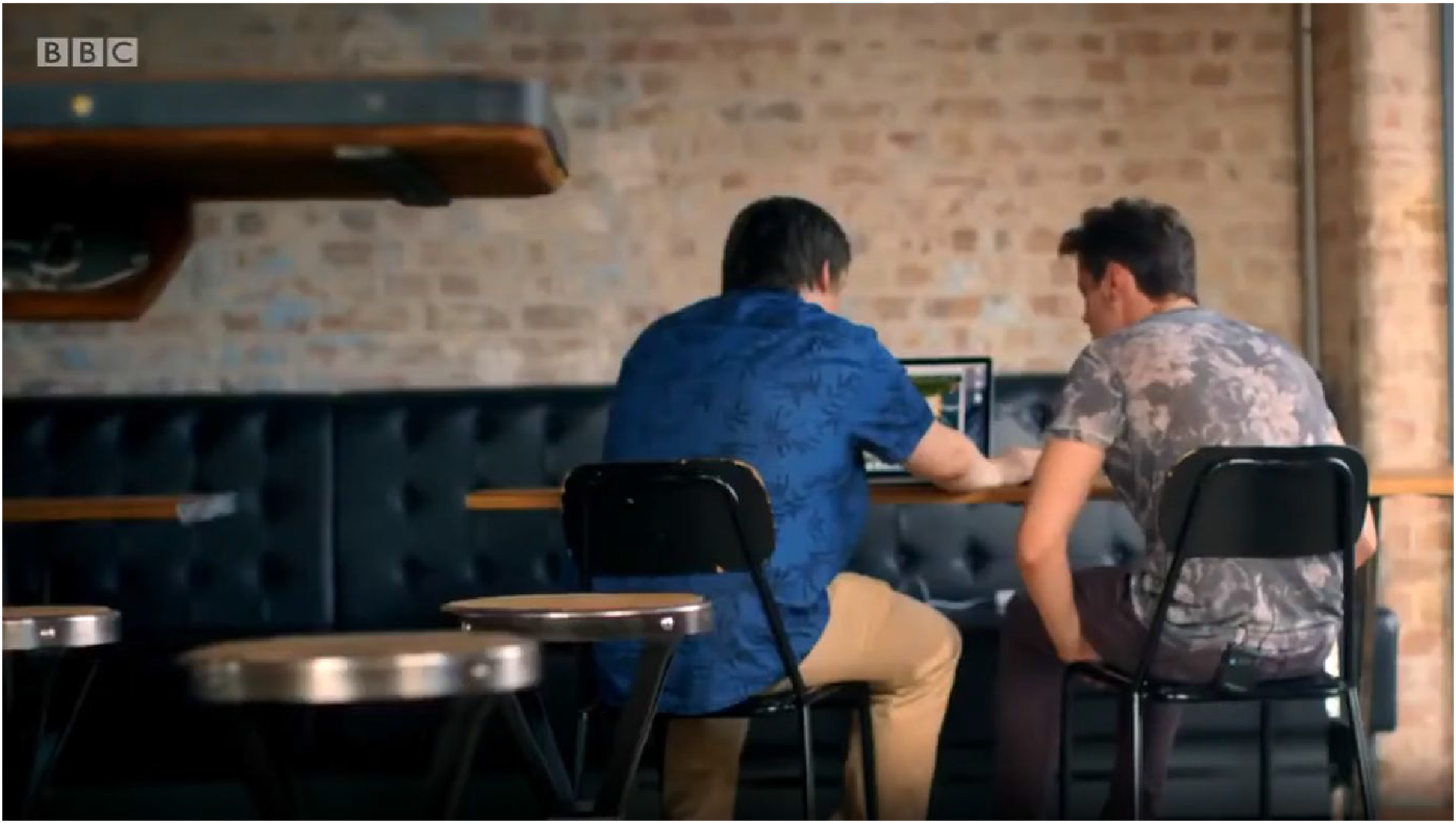
3DXChat exemplified early attempts at technological convergence between VR and sex toys, though its actual user experience did not fully meet what some users had anticipated. In the development of the platform the integration of vibrators and VR was technically achieved several years before the documentary was made. During its first years, 3DXChat promised a vibrant environment with multiple updates for the purposes of customization, the creation of environments, and altering the technical limits of play (Newman, 2012). The first step towards technological convergence that promised to improve sexual experiences was the introduction of software update making the platform compatible with the VStroke vibrator (Kiiroo) and the Oculus VR. The updates occurred over July-August 2013 and were documented in the 3DXChat blog (Image 6). Screen captures of publications about sex toys and VR technologies. Source: 3dxchat.com.
3DXChat positioned itself as a forward-looking platform compatible with VR and vibrator technologies, yet this stance did not necessarily align with players’ actual practices. The Kiiroo vibrator was compatible with 3DXChat before the ‘The Virtual Reality Virgin’ was produced, but it is likely that this was not an official partnership. It is telling that when the documentary crew visited Kiiroo’s headquarters in Amsterdam where no connection was made between SGD and Kiiroo in the interview. In any case, the introduction of compatibility with the VStroke (Kiiroo) in 2013 was largely ignored by the user base already exploring sexual playfulness in 3DXChat. Players on the 3DXChat forums said that they had not met anyone who had used the vibrator during play, and player-initiated discussion threads on the details of the support 9 structure for the vibrator were met with silence.
The Lovense/3DXChat partnership mutually positioned both technologies among the leading entities in sextech, although it did not align fully with the interests of 3DXChat’s player base. For the corporate entities the Lovense/3DXChat collaboration suggests a mutually beneficial, reciprocal arrangement between the partners, where users of both platforms would benefit from the implied possibilities of the partnership. They were both positioned as leading players in the future of sex tech-games, with an immediate interest in explaining how technical features worked, stimulated consumption, and supported more diverse sexualities. However, some 3DXChat users were displeased with the business-oriented focus of the partnership and urged SGD to resolve security issues that the Lovense partnership introduce to the platform.
Lovense was a brand that some 3DXChat players associated with online sex work. Lovense is a well-known brand in the sex industry and is integrated with several camming platforms. The cross-branding relationship was sometimes criticized on the forum as suggesting that 3DXChat was a ‘porn game’. Players saw the association with porn games as undermining the community aspects of 3DXChat that were created by the players, as for them ‘porn games’ prioritized mediated sexual interactions and purely transactional sexual encounters.
While 3DXChat players and Lovense customers share an interest in digital and online environments that allow mediated sexual experiences it remains unclear if the partnership could make both consumer audiences converge through the partnership. The convergence of VR and sex toys, though promoted as a breakthrough in immersive sexual experiences, reflects a disconnect between corporate aspirations in the sextech industry and the actual desires and practices of users articulated in the 3DXChat forums, who view these technologies through complex social, personal, and community-based lenses.
Domestication and sexual play
The novelty of the integration of 3DXChat and Lovense vibrators is less in the technical achievement – 3DXChat has supporting various vibrators since 2013, at least – rather the innovation stems from the domestication of vibrators through the game. Domestication theories explore practices, uses, and relations made possible by the consumption of information, technologies, objects, and media (Haddon, 2007; Silverstone et al., 1992). The theory explores the processes of adaptation, negotiation, resistance, and rejection involving humans and non-humans, processes which can be often oversimplified – for example, by marketing (Haddon, 2006; Silverstone, 2006). Domestication is a critique of technological determinism that allows for the analysis of frictions, malfunctions, irresponsiveness, complexities, and all sorts of unexpected events (Silverstone et al., 1992). Analytically, domestication extends from appropriation to objectification, incorporation, and conversion.
Appropriation occurs when technologies are purchased and owned (Silverstone et al., 1992). In this case, SGD and Lovense ownership logics are significantly different. SGD ‘lends ownership’ and access to their online environment through subscription and players must agree with the volatile and unfinished nature of the game. For example, players complained about the lack of a responsive support service, and clear communication when issues appeared. These functions were eventually informally assumed by players with the creation of a server status, for example. Lovense, has a substantially different business model, it sells physical products that are shipped to various countries, and once the package arrives the consumers become owners in the conventional sense.
The subjective and individual connections with the things one own are objectification. Sex games and vibrators tend to be displayed and engaged with in private and their use varies according to gender and sexual practices. 3DXChat players appreciate and find comfort in the anonymity of their playing habits, so it is unlikely that they would bring the game to a conversation with people who are not explicitly interested in this game genre. The Lovense partnership offer them a new way to express their connections with the game by demonstrating support, ambivalence, or rejection towards the partnership based on how it impacted the ways in which they had previously use 3DXChat to live their sexual subjectivity.
Before the COVID-19 pandemic, vibrators were incorporated into mainstream with the help of media, access to more information about sexual practices, medical and therapeutical recommendation (Döring et al., 2021). Sex games, in stark contrast have never been substantially promoted and normalized, and are generally considered an ‘underground’ practice, despite their massive growth in recent years (Lankoski et al., 2023; Lankoski and Välisalo, 2023). In the public-facing discussion the partnership was established to stimulate the mutual incorporation of the sexual practices through convergence and pursue of pleasure. But based on the comments on the 3DXChat forum it was unclear to what extent players would incorporate the Lovense vibrators to their play practices. A key factor contributing to the palpable hesitation among users to incorporate Lovense use was related to the lack of forum discussion that corroborated overwhelming sensorial stimulation suggested in the advertising materials of the partnership. The lack of user validation may reflect that people were uncomfortable disclosing that they used sex toys on, or while using, 3DXChat. The few examples that did refer to vibrators did not suggest they wanted to use as if they added a new and distinctive sexual function to the platform, suggesting that from the perspective of many 3DXChat players that the mechanics of the sex game should not extend outside of the online platform.
The Lovense/3DXChat partnership highlights how in the domestication process players negotiate potential and practical limitations as well as personal boundaries and preferences while deciding if and how to incorporate sex toys into virtual sex games. Particularly salient is the reluctance of 3DXChat users to openly discuss vibrator use, which reflects a broader taboo about extending virtual sexual play into physical domains, underscoring the tension between the marketing expectations of SGD and Lovense and players’ actual comfort levels and practices.
Symbolic meanings: vibrators, sex game or porn game
On 3DXChat sexual play includes various sexual practices, which both follow and challenge game design and players norms. Whether sexual playfulness is transgressive, normative, or marginalized, is context dependent. The corporate discourse of the partnership suggests that SGD and Lovense desired to cultivate specific attitudes towards sexual playfulness among users, in ways which did not resonate with some of the forum-users. The attitudes included an openness to control exchange over (genital and anal) sensorial pleasure. By privileging players’ bodies, the collaboration endorsed self-centred playing (Paasonen, 2018), ‘sensation centric locomotor play’ (Stenros, 2018), and, in certain contexts, a form of queerness at play (Sihvonen and Stenros, 2018).
However, there is an underlying idea behind this incentive towards sensations that needs to be questioned. The partnership slogan: ‘virtual pleasure made real’ suggests that virtual pleasure (playing a sex game) becomes real (physical sensation) with the use of vibrators. Some forum posts illustrated reservations about the introduction of the Lovense because they did not see how this supported the game remaining a special space for sociability and sexuality. Players on the forum reported both feeling uncomfortable with the prospect of not finding playing partners unless they were willing to use a vibrator, and concern that the player basis would become overly worried about ‘having sex with vibrators’. Setting new expectations for what counted as a ‘real’ experience in the game, overlooked and undervalued the pleasure players took in their existing sexual play practices.
The association of ‘sex as play’ relies on the hegemonic ideas of play as something that is fun and voluntary (Stenros, 2018) which is similar or related to leisure sex (Attwood, 2005) and associated mainstream commercial presentation of sexual objects (Comella, 2017; Smith, 2007). Still, these widespread perspectives occur concomitant to the negotiation of personal and collective values and boundaries to include or exclude sexualized influences (Fahs and Swank, 2013; Juffer, 1998; Mayr, 2022a). The Lovense-3DXChat partnership offers evidence-based challenges to some common assumption of the future of sex orientation, as it has been presented elsewhere (Nixon, 2018: 208; Rheingold, 2000) that take the discourse of sextech entrepreneurship on face value, losing sight of the disputes and negotiations of meanings taking place among users which are part of domestication.
The framing of vibrators as a ‘post-feminist toy’ (Mayr, 2022a) offers several useful trajectories for exploring the symbolic meaning of vibrators in the context of the Lovense-3DXChat partnership. Mayr (2022a) suggests that vibrators today are primarily understood as products of empowerment and self-pleasure and lack the overt feminist messages they held in the past (thus ‘post-feminist’). Mayr’s work highlights convergence of multiple – even contradictory – influences from consumer culture and pro-sexual, pro-pleasure, sex-positive ideas from gender and sexuality movements that centre the symbolic meaning of the vibrator as playful technological consumption (Mayr, 2022a: 173–176). This perspective aligns not only with the partnership between SGD and Lovense, but to what sex play has been for 3DXChat players. Players consume the ideas of a private, anonymous sexual freedom allowed by technology with an emphasis on heterosexual pleasure.
Players were constructing their meanings for sexual toys in ways that blended both individual and collective positions; thus, I made a different appropriation of Mayr’s (2022a) framework. The individual desire for control or to be controlled is only possible with a collective consent and negotiation with other players. A minority of players were already engaging in power exchange through remote control of vibrators as a sexual play practice, without the explicit encouragement of the partnership promotion. For the ‘sex game-tech’ configuration anticipated by the partnership, women and female presenting avatars were implicitly presented as the parties responsible for these negotiations, and regulating how the collective conducted sexual play with vibrators. Women and women-presenting avatars were perceived as most vulnerable of sexual harassment and yet had the power to determine when and how pleasure would be allowed, as in the case of the heterosexual couples entering the game and the fictional sex workers relationships with their player clientele. The symbolic meaning of the sex toys to the people playing with female avatars in 3DXChat (which can belong to any gender and sexual orientation) is therefore likely be impacted by the promotion of sex play with the Lovense vibrators.
Even in sociocultural contexts like 3DXChat that (allegedly) support sexual liberation, vibrators and sex games can be complex symbolic objects of consumption because of moral judgements that can be made in connection to them. Among the players there was an obvious reluctance to discuss the vibrators (and ultimately masturbation). Furthermore, the lack of disclosure from 3DXChat about the introduction of the partnership became a challenge for domestication, convergence, consumption, and change of attitude because concealing this information itself delimits the levels of intimacy and social distance afforded to users (Mayr, 2022b: 12).
While the promotion and collaboration were focused on how ‘realistic’ the integration of sex toys to the mechanics of sex play based on extending the intimate play to physical sensations, existing users were focused on the functionality of the process. The sensibility was to a certain extent desexualized as using vibrators during gameplay became less about actual sexual excitement and more about testing the mechanics using their hands, and/or by playing with bot avatars or with familiar in-game partners they’d interacted with many times. Testing the functionality thus removed some of the element of sexual tension and excitement that was suggested to come from the variety of new or unknown sexual partners the collaboration created. Having many potential partners can add to the sense of excitement and unpredictability, particularly when players can ‘exchange control’ of the vibrators. However, by keeping their testing experiences repetitive or limited, some players missed out on the more dynamic, varied, and ‘real’ sensations that the game was intended to provide.
Players who were openly opposed to, or at least sceptical about, the partnership were so for several reasons. Some were not interested in sexual play; others did not have Lovense vibrators because they never felt the need to buy them and/or they were too expensive; not wanting to use them with people they did not trust and preferring to only interact via avatar and chat; feeling pressured to perform hypersexuality because they are in a sex game, are part of groups that emphasize sex, are in a partnership that they feel compels them to be sexually available; and/or feeling pressured to engage in sexual dynamics they are unsure about due to their personal willingness and/or boundaries.
Players distinguished a ‘sex game’ from a ‘porn game’. Forum post indicated that a ‘sex game’ was a virtual anonymous space where people would have sex among other social interactions. Players felt having access to a more social form of sexual play was particularly important, and it felt that ‘adult games’ (another term for sex games) could become part of mainstream sexual and gaming consumption. The pandemic served as an important justification for this, as the widespread use of such games would permit people to engage in sexual activities while limiting physical contact and thus protecting them from a new form of virus as well as sexually transmissible infections while also providing a space where people can experiment with their sexuality without having to be confronted by negative stigma. Consequently, it seemed an ideal place for people who are risk avoidant or have a low tolerance to negative experiences, to name a few.
However, sex games have a limit of acceptability. There was an undefined threshold where a ‘sex game’ became a ‘porn game’. No player expressly articulated what or when such process of differentiation happens, but it is implicitly related to SDG prior partnership attempts with camming platforms and Lovense strong ties with the sex industry (including both camming and porn production). SDG established a timely collaboration with a (now deactivated) camming platform to promote 3DXChat. When the partnership with Lovense was announced, 3DXChat also extended its operations to the popular camming site Chaturbate, gain permission for cammers to livestream the game. While these activities did not directly threaten the practices of the community, some users felt ambivalent or negatively about the possibility of the game being used as an online sex-working platform and thus becoming ‘pornified’. I suggest that this was not caused by prejudice toward sex workers as there was no implicit or explicit rejection of their presence in the game, rather the anxiety about 3DXChat becoming pornified reflected the players feelings about the precarities and instabilities involved in their own sexual play. Players did not subscribe to this game with the intention of having to pay for sexual interactions. Their expectation was that the game would connect them with other people who were also interested in non-commercial sexual play, and this was considered one of the most attractive factors of this environment. Any factors which suggested monetization raised questions around the value of those experiences, and existing players wonder if it would still be worth it for them to participate in the environment.
The Lovense-3DXChat partnership attempted to redefine the symbolic meaning of in-game sexual play, yet many players resisted, valuing community-driven, non-commercial interactions over the platform’s shift toward regulated, physicalised experiences. The partnership was viewed as impacting all players of the game, not just those who used or wanted to use vibrators. The changes caused by the partnership were seen as making some of the communities’ everyday sexual practices difficult or even impossible to continue. While players’ sexual practices do not depend on commercial interests, they also felt that they were being unwelcomely influenced or made impossible by them. By representing the possibilities of vibrator used as attractive, establishing technical boundaries around how vibrators would function within the game’s structure, and making Lovense the official compatible option, the partnership embodied an attempt to normalize, regulate, and limit forms of play already taking place within, and valued by, the community.
Conclusion
The Lovense/3DXChat partnership started during COVID-19 pandemic and highlights a complex interplay of technological ambition, marketing, and everyday sex-playing practices. While the partnership sought to innovate sexual play by merging virtual and physical experiences (convergence), players perceived a gap between corporate aspirations and their own sexual play expectations (domestication). Players posts on 3DXChat forum approached the new tools selectively, negotiating comfort levels, practical limitations, and community norms. The symbolic meaning of this integration (vibrators) became a central issue, as many players felt it signalled a shift from an inclusive, community-driven ‘sex game’ to a commercialized ‘porn game’, prioritizing regulated experiences over user-defined interactions and social dynamics. The partnership underscores the complex dynamics of virtual intimacy, particularly in platforms finding a balance between user agency and commercial interests, which pretty much characterize the challenged faces by ‘sex tech’ companies, enthusiasts, users, and their discourses.
Footnotes
Declaration of conflicting interests
The author(s) declared no potential conflicts of interest with respect to the research, authorship, and/or publication of this article.
Funding
The author(s) disclosed receipt of the following financial support for the research, authorship, and/or publication of this article: This work was supported by the Suomen Kulttuurirahasto (The inclusion of the period (2021-2023), Opetushallitus, and Research Council of Finland.
