




Abstract
In line with international trends, increasing numbers of children in Australia use streaming video platforms to watch television on-demand from extensive catalogues. Child viewers thus tend to negotiate platform interfaces organised by algorithmic curation to select content, rather than accessing content via scheduled linear TV. The deeper implications of this substantial shift in child audience habits around television have yet to be robustly reckoned with across scholarly and national policy approaches. Indeed, policy settings in Australia have not kept pace with these transformations, one result of which has been that 84% less Australian content was aired on free-to-air commercial broadcasters in 2022 compared to 2019. Key producer bodies fear the sector is in serious peril and may not withstand the current instability. Given that local children’s television meets Australian children’s best interests by situating them within their own socio-cultural context, the issue has become a site of significant policy, industry, and cultural concern. At this precarious time for the Australian children’s television sector, this article outlines key findings of a mixed method study with Australian children aged 7–9 (n = 37) and their adult guardians to illustrate how children understand, identify, and discover ‘local’ and ‘children’s’ content on streaming platforms. This child audience research contributes to current policy and scholarly debates around the ‘routes to content’ audiences develop in the streaming era. A focus of our analysis is how and if children find Australian content. Our aim is to shed light on how ‘discoverability’ issues compound the current state of turmoil for the sector. We elucidate children’s digital fluencies with platform interfaces but highlight their limited cultural literacies with the content itself, which poses significant implications for industry and policy strategy around local content discoverability for child audiences on streaming platforms.
Keywords
In line with international trends (Ofcom, 2022), increasing numbers of children in Australia use streaming video platforms to watch television on-demand from extensive catalogues. Child viewers thus tend to negotiate platform interfaces organised by algorithmic curation to select content, rather than accessing content via scheduled linear TV. Our national research with parents finds that US-based global services Netflix and YouTube are the most popular with Australian children (Burke et al., 2022). Internationally, Ofcom finds that 96% of children aged 3–17 use video sharing streaming platforms (Ofcom, 2023: 11). The deeper implications of this substantial shift in child audience habits around television have yet to be robustly reckoned with across scholarly and national policy approaches. For instance, while streaming video services have rapidly transformed children’s viewing habits and restructured television distribution models, policy settings in Australia have not kept pace with these transformations. In 2020, the Federal Government abolished quotas for local children’s television on commercial TV networks, describing this major policy change as an emergency ‘red tape reduction’ response to the pandemic (Balanzategui et al. 2020; Knox, 2020). However, this policy setting was subsequently made permanent, and there are thus currently no concrete requirements for any TV broadcasters or streaming services to invest in or screen Australian children’s TV. As a result, 84% less Australian content was aired on free-to-air commercial broadcasters in 2022 compared to 2019 (ACMA, 2023). Key producer bodies fear the sector could be ‘wiped out’ within 2 years (Ward, 2022). The current state of peril is attracting global attention: The New York Times reported that ‘the future of children’s television in Australia is far from assumed’ (Frost, 2022). Given that local children’s television has a critical ‘public value’ function, meeting Australian children’s ‘best interests’ by situating them within their own socio-cultural context (Potter, 2015: ix), the situation has become a site of significant policy, industry, and cultural concern.
At this precarious time for the Australian children’s television sector, this article outlines key findings of a mixed methods study with Australian children aged 7–9 (n = 37) and their adult guardians to illustrate how children understand, identify, and discover both ‘local’ and ‘children’s’ content on streaming platforms. This child audience research was carried out in partnership with the Australian Children’s Television Foundation – the national children’s television production, policy, and advocacy organisation – and fills an important gap in contributing to current policy and scholarly debates around the ‘routes to content’ audiences develop across streaming platforms and devices (Johnson et al., 2020). A focus of our analysis is how and if children find Australian content. Our aim is to shed light on how ‘discoverability’ issues – the ability of audiences to find content – compound the current state of turmoil for the sector. As Johnson, Dempsey and Hills note in one of the few audience studies of streaming habits, ‘despite discoverability and prominence emerging as crucial to contemporary industry and policy debates in relation to television, there remains relatively little rich, qualitative data about how contemporary TV audiences discover content’ (2023: 2). As well as issues of discoverability, we illuminate more broadly children’s platform fluencies and how an interplay of cultural, familial, and platform factors impact their ‘routes to content’.
By contributing new knowledge to this area of policy and industry concern, we also address the pressing scholarly need to understand ‘how users actually respond to recommendation algorithms on a daily basis’ (Khoo, 2022: 292). This ‘gap in our knowledge’ (Turner, 2019: 222), due to ‘surprisingly little empirical research on audience attitudes to discoverability’ (Lobato and Scarlata, 2022: 222), is particularly pronounced in relation to children. We elucidate children’s digital fluencies with platform interfaces, recommender systems, and content catalogue architectures, but highlight their limited cultural literacies with the content itself. This tension between platform fluency and cultural literacy poses significant implications for industry and policy strategy around ensuring local content is discoverable for child audiences on streaming platforms.
In addition, these findings shed new light on emerging scholarship around issues of ‘exposure diversity’ in relation to streaming video platforms, which ‘looks at the audience dimension of media diversity’ to question to what extent ‘diversity of content and supply actually results in a (more) diverse programme consumption’ (Helberger, 2012: 67). While much public debate has focused on reductions in the overall production of Australian children’s television in the streaming era, little attention has been directed at whether child audiences are able to find and access local content amongst the vast array of international options on the streaming platforms available in Australia. Indeed, it has been suggested that algorithmic distribution and prioritisation processes and the dominance of US content across streaming platforms ‘may limit consumers’ and citizens’ exposure to cultural diversity’ (Shao, 2023: 31), with consumer social science research contending that the popularity of US-based global subscription video on demand (SVOD) services in Australia has restricted exposure diversity to the extent that a strong US culture has formed to the detriment of Australian culture (Shao, 2023: 33). By elucidating how such issues of exposure diversity impact Australian children, this research advances considerations of how local screen entertainment cultures are being impacted by the US-global hegemony of the SVOD sector.
Issues of discoverability on streaming platforms
Children do not tend to be considered in scholarship on how streaming video content is delivered to audiences, or ‘distributive logics’ (Cunningham and Silver, 2013; Lobato, 2019; Lobato and Ryan, 2011; Lotz, 2017), which presumes an adult viewer. Yet, in the current context in which policy and industry strategy is lagging behind the rapid uptake of streaming services amongst children, it is vital that child audience behaviours around the selection and preferencing of content is better understood. Indeed, our national surveys and interviews with parents found that children tend to drive their own content choices (Burke et al., 2022). Given streaming interfaces are ‘a new and evolving locus of media circulation power’ (Hesmondhalgh and Lotz, 2020: 393), it is crucial to better understand how children navigate and comprehend the ‘distributive logics’ (Lobato and Ryan, 2011) of streaming platforms and how this undergirds their ‘routes to content’ (Johnson et al., 2020).
Questions and concerns around agency over algorithms that have been identified in qualitative audience studies of adults (Evens et al., 2024; Johnson et al., 2020; Lüders and Schanke Sundet, 2022) become even more important in relation to child audiences. Young children are not equipped with the same level of experience and critical literacy as adults, and do not reflect in the same ways upon how platform mechanics pave their routes to content. Furthermore, while audience research about streaming platform viewing remains limited, evidence is emerging that the dominance of market-leading SVODs, particularly Netflix, is influencing audience expectations and behaviours around platform navigation, content choices, and discoverability. Johnson, Dempsey and Hills’ research found that in the perceptions of the young adults interviewed, Netflix was taking the traditional place of national public service broadcasters (PSBs) and being used as a default option (2020: 15). Netflix for these audiences is thus ‘the go-to television’, and is associated with access to a diverse and wide-range of content (Johnson et al. 2020: 15). These are qualities traditionally associated with PSBs like the BBC and ABC (British and Australian Broadcasting Corporations). Netflix is also seen by young adults as the option most well-suited to younger audiences (Johnson et al., 2020: 15). Qualitative research with children and families also indicates how Netflix is re-shaping what audiences perceive as suitable ‘family’ viewing (Baker et al., 2023). Such developments involve but extend beyond the role of algorithms. Frey’s research with adult viewers indicates that algorithms ‘typically constitute just one small piece of a multistage, iterative process’ which include recommendations from family, friends and external reviews (2021: 10, 22, 133, 170, 210, 213; see also Johnson et al., 2023: 15–16). Therefore, as Lobato and Scarlata point out, the various elements that constitute discoverability ‘interact in complex ways which cannot be reduced to a catch-all term such as “algorithmic”’ (2022: 211). Unlike the adults interviewed and surveyed by Johnson et al. (2020) and Frey (2021), child audiences do not carry with them memories of the video hire store, nor attachments to broadcast television scheduling (Johnson et al. 2020: 1, 11). Rather, contemporary children have grown up with on-demand streaming, and we should not assume that adult routes to content necessarily work in the same way for child viewers.
Issues of platform and content discoverability are tied to the tectonic market shifts associated with the rise of streaming across local and global dimensions. Local providers like the ABC’s broadcast video on demand (BVOD) platform iView do not have the resources of Netflix nor the longstanding proprietary management required to deliver sophisticated personal algorithmic recommender systems. They also do not have jurisdiction over how their content is organised in platform catalogues or search/recommendation functions when licensing titles for local or global distribution via Netflix and other market-leading SVODs. As Lobato, Scarlata and Schivinski’s research finds in the Australian context, local providers like iView are also not typically afforded the level of prominence on smart television home-screens or remotes as major global players like Netflix and Disney+ (2023: 18–23), a result of lucrative deals with television manufacturers. Thus, the playing field is not a level one when it comes to content discoverability and prominence for local providers. It is for this reason that the Federal Government is currently developing new legislation to ensure that local providers are given prominence on the ‘primary user interface’ – the main home-screen – of internet-connect smart televisions on the market in Australia (Australian Government, 2024: 4). Lobato, Scarlata and Schivinski’s research found that across smart televisions available in Australia, there was ultimately ‘patchy visibility for BVOD services, compared to high visibility for major US services’, with all manufacturers pre-installing Netflix, YouTube, Amazon Prime Video, and Disney+, meaning that these services were available without the user having to download the apps (2023: 16). This level of prominence and discoverability was not afforded to the local providers (2023: 16). Such challenges impact the availability of local content for children, given that as Potter notes, the ABC, particularly through its BVOD apps iView and ABCME, has in the on-demand era ‘become an increasingly important source of funding, and a key platform, for Australian children’s television’ (2020: 4). Our research with children sheds light on the implications of this situation for local content discoverability amongst young audiences.
Child audience research in the streaming era
Streaming services have their own extensive datasets about their customers’ viewing habits, yet as Gray notes, ‘their information is largely inaccessible to us’, such that we know ‘embarrassingly little about contemporary audiences’ (2017: 81, 83). Furthermore, a crucial gap in this data is that the streaming companies cannot know who is actually in the room watching and making decisions around content (Baker et al., 2023). Subscription services, as opposed to other television providers that involve advertising, have little reason to publicly share their viewer information (Johnson, 2019: 140), 1 and indeed have many strategic reasons not to disclose such data (Siegel and Porter, 2021).
In response to this knowledge gap, a revival in audience studies in the streaming era initially focused on binge-viewing (Flayelle et al., 2020; Panda and Pandey, 2017; Rubenking and Campanella Bracken, 2018; Walton-Pattison et al., 2018), and gradually expanded to include additional approaches such as technological affordances and adult perceptions of audience discoverability behaviours and choices (Johnson et al., 2023: 11–12; Lüders and Schanke Sundet, 2022), teen streaming behaviours among 13 to 17-year-olds (Evens et al., 2021), and young adult perceptions of streaming diversity (Lind, 2023). The most extensive study of streaming audiences thus far was conducted by Frey (discussed above), who surveyed 2123 adult Netflix viewers in the UK and 1300 in the US, combined with 34 interviews (2021: 123).
However, little research has been conducted on the streaming video platform viewing habits of children, who exhibit streaming behaviours informed by different sets of literacies and media memories than adult audiences. Mittell argues that scholars need to examine ‘the actual practices of children to understand their relationship to and use of television’ (2015: 126). Furthermore, as Balanzategui (2020) asserts, ‘especially when dealing with child viewers, it is important not to make assumptive connections between the affordances of a platform and the way that they will be co-opted by users’. More broadly, in relation to audiences in general, Johnson, Dempsey and Hills note that ‘there remains relatively little rich, qualitative data’ about ‘how people find and decide what television to watch’ (emphasis in original, Johnson et al., 2023: 2). In parallel with Balanzategui’s points in relation to child audiences, Johnson, Dempsey and Hills advocate moving beyond assumptions about ‘imagined routes to content’ in favour of qualitative audience research that illuminates the specificities of behaviours, routine patterns, and perspectives (Johnson et al., 2023: 6, 17), a call that our present study seeks to address in relation to child audiences.
Intervening in this area, Baker, Balanzategui and Sandars interviewed children aged 6–17 and their families about Netflix and found that both adults and children initiated family viewing choices (2023: 121), with these choices impacted by age, sibling and household dynamics, and exposure to paratexts (182). In an Australian industry study from 2017, a survey of ‘1463 Australian parents, carers and guardians’ indicated that ‘for programs made specifically for children… the data shows that children do not discriminate on the basis of the provenance of a program’ (ACMA, 2017: 14). Limitations of this study include the focus on parental reporting rather than direct observation and interviews with children themselves. As such, through studying their streaming behaviours and routes to content, the current research aims to uncover the ways children aged 7–9 discover content on streaming platforms, including their levels of awareness of the national and cultural identity of the programs they watch, and how this impacts their decision-making.
Methods
This mixed methods study involved 44 child participants aged 7–9 and one (occasionally two) of their parents. 2 In this article, 37 of these participants are captured in the sample, as we only included participants in which full video-recordings and other data components were available, including a level of audio quality in interviews acceptable for precise transcription and analysis. The study was carried out at the Swinburne University of Technology BabyLab in Hawthorn, a facility specially designed to study children’s media use in tandem with their psychological development. Given the location of this facility in inner suburban Melbourne, most of the children lived in a capital city (80%), some in a metropolitan centre with over 100,000 residents (14.3%), with one participant from a rural and one from a remote rea. There was an almost equal split of female (48.6%) and male (51.4%) participants, and most of the children were in Year 2 (42.9%) with a median age of 8 years. The majority of participants identified as white (82.9%), but there were also mixed race (8.6%), South Asian (5.7%), and Maori (2.9%) participants. English was the first language of all children. The majority of the children came from relatively high earning income households ($100,000–$199,999: 48.6%), with remaining participants spread across a household income under $49,999 (9.6%), under $99,999 (11.4%) or above $200,000 (25.7%). In most cases the parent joining the session was the mother (88.6%), with all remaining being the father (11.4%). 3
As well as traditions in screen audience research including interviews and ethnographic observation (Buckingham, 1995; Gray, 1992; Morley, 1992), the study adapts approaches used in child psychology to examine children’s use of digital platforms. This work illuminates the limited currency of children’s media-use guidelines – such as screen time recommendations – which are built around video on television, rather than the particular affordances of touchscreen and other highly interactive devices (Huber et al., 2018: 73). The current study adapts structured observation methods used in such child psychology work, in which children’s media use is observed using structured or ‘scripted’ procedures, video-recorded, and then analysed according to a set of key criteria (codes) to understand children’s practices around digital platforms and their content, and to identify developmental norms around such stimuli (Huber et al., 2018, 2020). This interdisciplinary approach builds upon studies integrating media and child psychology to examine how children engage differently with digital and material play (Balanzategui et al., 2018; Guy et al., 2019). While the current research is buttressed by screen and digital media studies methodologies, theories, and analytical approaches, by adapting methods used in child psychology we were able to gather findings around children’s competencies and capabilities in the 7–9 age range.
This interdisciplinary approach responds to key gaps in understanding children’s streaming habits identified by Balanzategui (2020), who calls ‘for the integration of traditions in screen studies – namely, audience research and genre analysis – with approaches to platform analysis drawn from digital media studies’ in order ‘to illuminate how new children’s genres have formed in the streaming video ecology and how these genres circulate culturally, including how children engage with these content types’ (250). The structured observation of children’s streaming platform use in this study was video-recorded and also live-streamed to enable real-time observation by the researchers, with detailed analysis via coding subsequently taking place using the video footage. This combination of observational approaches enabled the researchers to develop coding strategies based on initial findings and hypotheses from the real-time observational analysis.
Each child was observed streaming first alone for approximately 10 minutes (notably, they were not told how long they would be watching), and then with a parent present for the same duration, to enable comparison between the children’s level of platform fluency and choice of content when streaming alone and independently versus jointly with a parent. We also conducted semi-structured interviews with both the children and their parent, first separately, and then together, to capture independent, collaborative, and negotiated responses between children and their parents, a model successfully used in Baker, Balanzategui and Sandars’ Netflix study (Baker et al., 2023). The child’s use of the streaming platform was also recorded via screen-recording of the touchscreen tablet they used to select and watch content, to capture a detailed picture of their platform fluencies and routes to content via the platform’s interface. The interview with the child directly followed their independent streaming session, and the researcher invited the child to show them what they had been watching and explain more about their platform/content preferences using the touchscreen tablet device. This ‘show and tell’ interview structure aided children’s descriptions of the platform interfaces, catalogues, and recommender systems. This strategy was particularly important given many children, and indeed often their adult guardians, do not possess the specialised language necessary to articulate the specifics of their routes to content (i.e. ‘discoverability’, ‘algorithmic/personalised recommendation’). This interview was used as the basis for the child to explain to the researcher what content they chose and how they selected the content, as a means of sparking broader discussion about their typical streaming habits, genre preferences, and navigation practices. (see Figure 1). On the tablet children used to stream, all the major entertainment-focused streaming video services available in Australia identified in recent national research with parents as popular with children were available (see Burke et al., 2022). This included the ABC’s BVOD platforms iView, ME, and Kids, platforms that feature user-generated content YouTube and YouTube Kids, as well as the major subscription services, Netflix, Disney+, and Amazon Prime. Child ‘showing and telling’ the researcher how they find content using the touchscreen tablet.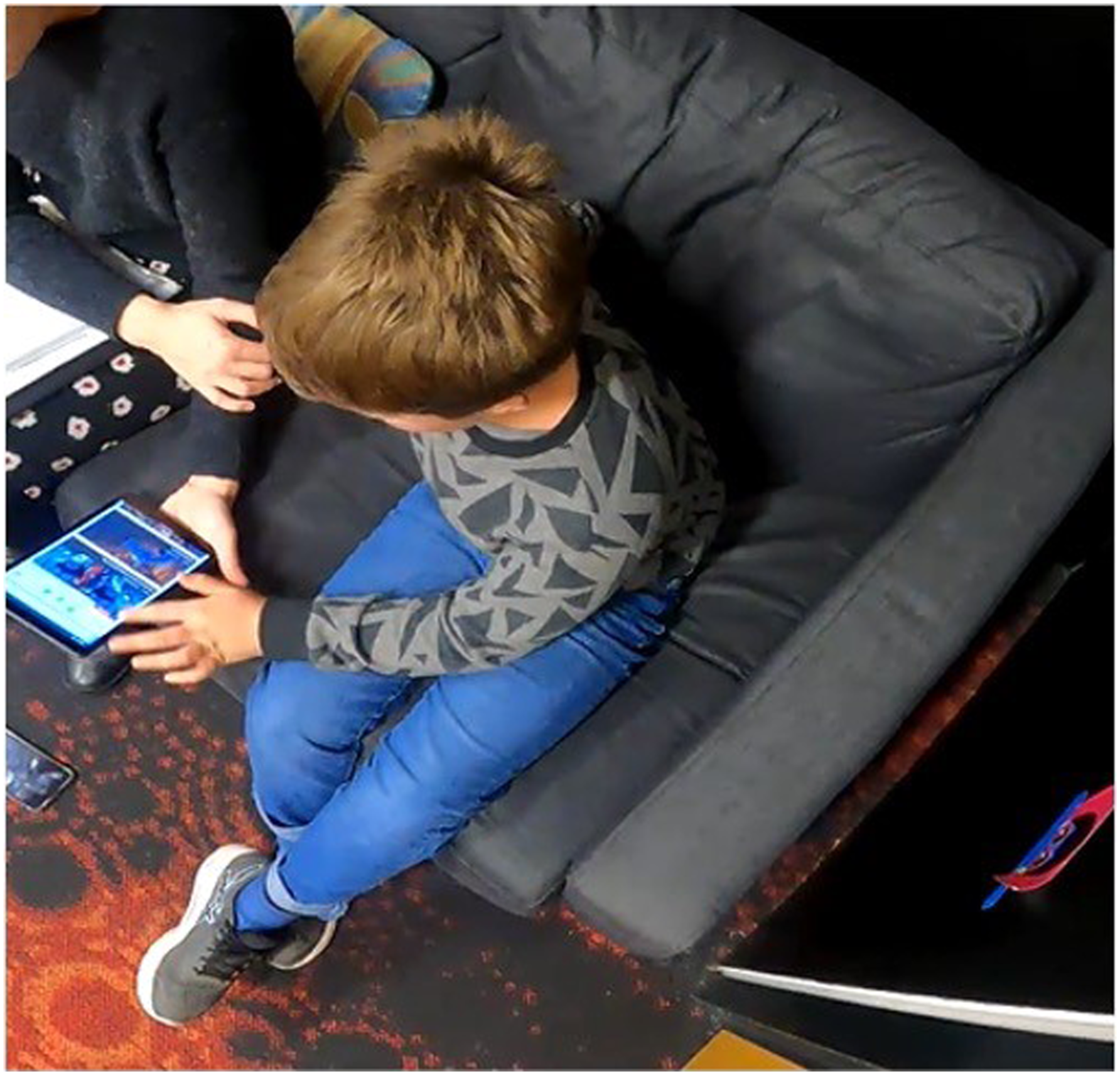
While elements of the methods were adapted from child psychology in order to capture a detailed picture of children’s interactions with and understandings of the platforms, the study integrates ethnographic approaches to children’s online video and internet use (Livingstone et al., 2014; Marsh, 2016) in ways that build on digital platform focused studies of parental mediation (Leaver, 2017) and children’s use of interactive digital media (Nansen, 2015). As Graeme Turner notes, the revival of audience studies in the streaming era ‘is not… just about a return to ethnography; it is also about asking new sorts of questions’ (2019: 228), as we have endeavoured to achieve in this study’s interdisciplinary approach. In the field of user-experience design, researchers have explored young children’s gestural capabilities to inform child-friendly platform design principles (Buckleitner, 2011; Hourcade et al., 2015). Such researchers have used the term ‘minimum user competency’ in order ‘to characterise the lowering of usability thresholds to ever-younger populations of users for gestural touchscreen interfaces – down to approximately 12 months of age, from the previous two-and-a-half years for keyboard and mouse interfaces’ (Nansen and Wilken, 2019: 62). The increased availability of touchscreen media in the home has habituated young people to interactive device use, with and without adult caregivers (Nansen and Wilken, 2019: 65–66, 69). By ‘learning through doing’, on their own and with guidance, such research shows that children quickly develop digital competency, and in turn product developers draw on child research to make their products more useable for children (Nansen and Wilken, 2019: 71–72).
Building on such ethnographic, digital platforms and user-experience work, the ‘show and tell’ structure of observation in this study adapts elements of the ‘walkthrough method’ (Light et al., 2016; Ruiz-Gomez et al., 2021), in which relationships between platform functionality and usage cultures are understood via analysis of real-time platform navigation. The walkthrough method provides ‘a way of engaging directly with an app’s interface to examine its technological mechanisms and embedded cultural references to understand how it guides users and shapes their experience’ (Light et al., 2016: 882). While the walkthrough method was originally designed to be used by researchers to analyse platform interfaces, we had the children themselves conducting the platform ‘walkthroughs’, exhibiting their routes to content while making and explaining their content choices across various streaming platforms. As Ritter has argued, ‘direct observations of everyday practices provide critical insights into how tacit knowledge and local meaning-making are constituted’ (Ritter, 2022: 917). In this way, ‘the integration of the walkthrough method with participation observation’ enables systematic observation of how communities of users engage with interface affordances (Ritter, 2022: 918). The current research also builds on Balanzategui’s contention that we must recognise ‘the importance of understanding not just how child audiences engage with new types of content on streaming video platforms, but how they interact with the architectures and interfaces of the platforms through which this content is delivered’ (2020: 254) (See Figure 2). Child streaming independently as captured by the BabyLab’s in-room camera.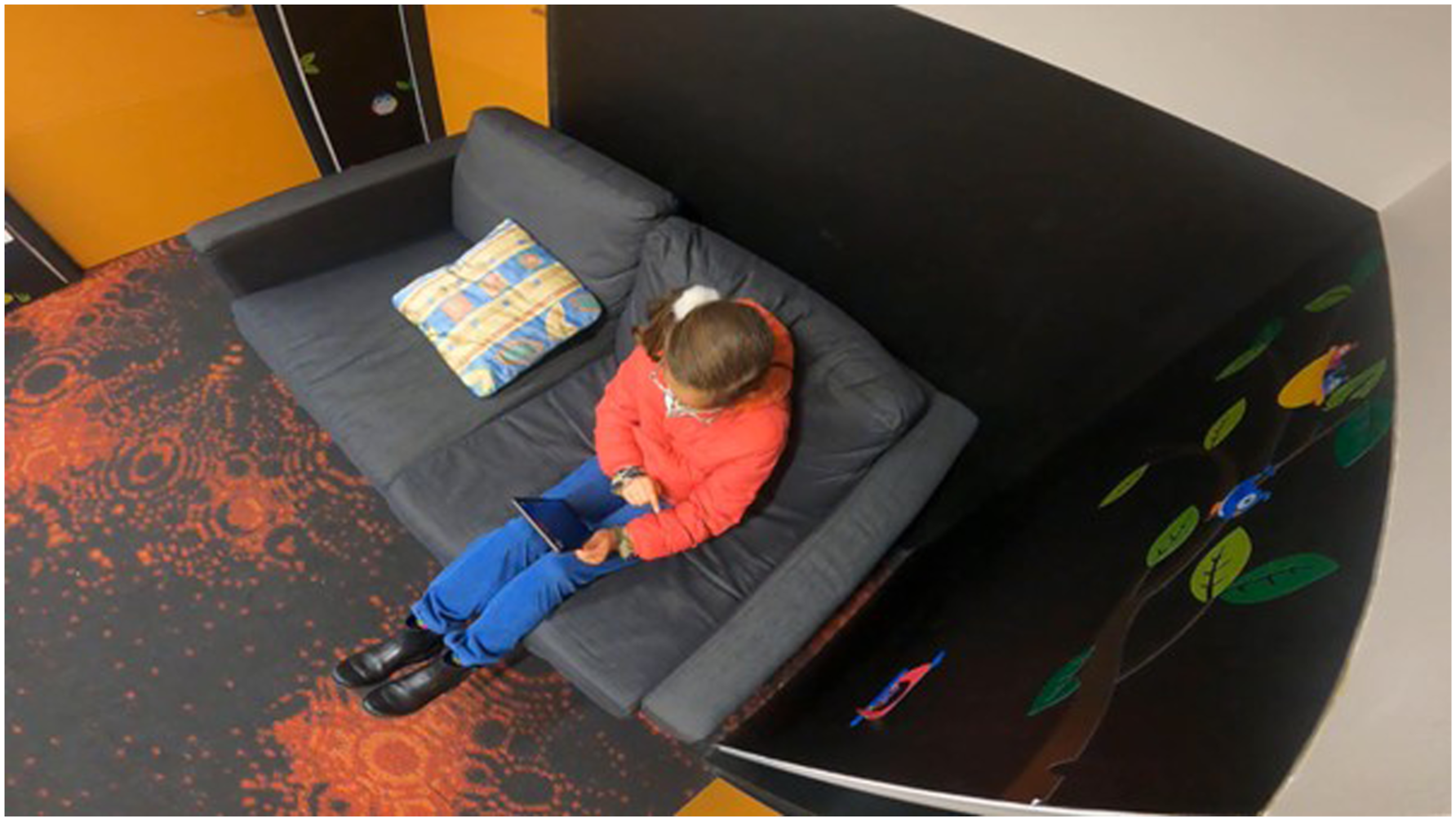
The analysis in this article focuses on the video-recorded observation sessions. After coding these sessions, the results were analysed using R statistics software, with interview materials incorporated to complement and shed further light on the observational findings. We analysed the video interview footage in addition to the transcripts when incorporating interview data. These mixed methods have been adopted with the rationale that ‘multiple approaches can generate more complete and meaningful understanding’ (Greene, 2007: xxii). Furthermore, as Jonathan Bignell and Faye Woods note, qualitative ‘interviews provide many kinds of evidence, and not all of it concerns the actual content of the answers to questions. Hesitations, misunderstandings of a question and apparently irrelevant digressions can be revealing about the interviewees’ attitudes to the topic they are being asked about’ (2023: 220). In the case of our interviews with children, body language and facial expressions captured in video footage constitute powerful, illuminating (and in some cases amusing) forms of evidence around child viewer attitudes and degrees of cultural literacy that can be analysed in addition to their spoken words. In approaching the interview and observational data in this way, we have sought to respond to Johnson, Dempsey and Hills’ call for ‘rich, qualitative data about how contemporary TV audiences discover content’ (Johnson et al., 2023: 2).
Findings and discussion
Platform preferences: Netflix as children’s ‘go-to’ platform
Descriptive statistics for in-lab streaming sessions.
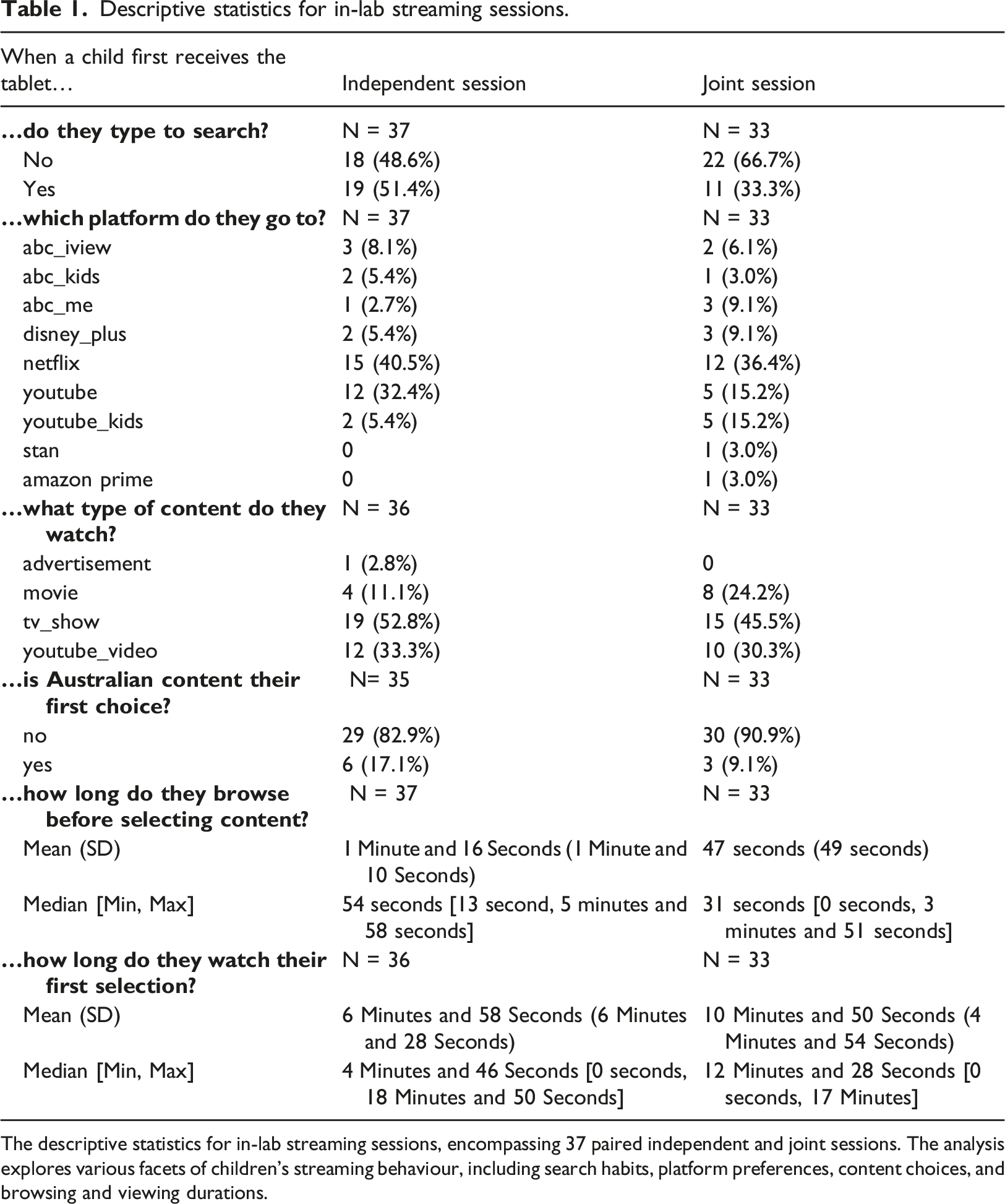
The descriptive statistics for in-lab streaming sessions, encompassing 37 paired independent and joint sessions. The analysis explores various facets of children's streaming behaviour, including search habits, platform preferences, content choices, and browsing and viewing durations.
These findings also align with Johnson et al. (2023) findings that Netflix has replaced PSBs in the public consciousness of younger audiences as the ‘go-to’ or ‘default’ option when it comes to locating a wide range of high-quality content. In our interviews, children often identified Netflix as the platform with the most useful and sophisticated interface and catalogue organisation to aid their content search and selection. Children identified Netflix’s aesthetics, profile display set-up, recommender system, and personalised algorithmic distribution logics as well aligned with their viewing practices, as opposed to a platform like ABC iView, on which they had to rely on ‘searching’ for content by typing in key titles rather than being able to select based on interface images and ‘more like this’/‘continue watching’ recommendations. Children often pointed to Netflix’s fluid ‘continue watching’ auto-play feature as a useful aid to their viewing practices. These results suggest that Netflix has set children’s expectations around content discovery, selection, and user-friendly environments, posing challenges for Australian platforms like SVOD platform Stan and BVOD ABC iView that do not have the same level of resources. –8-year-old boy and his father [Child explaining and showing the researcher how he would typically select content on Netflix, his preferred platform]
–
7-
year-
old boy
Indeed, when children explained why they do not preference platforms like ABC Kids, they sometimes related this to the lack of recommendations such as fluid, personalised ‘more like this’ suggestion features. By contrast to Johnson, Dempsey and Hills’ findings around audience’s concerns about algorithmic intervention into personal choices (2020; 2023), children in our study sometimes described the lack of such features in relation to the limiting of their choice. This suggests that children view algorithmic and personalised recommendation as key to aiding and empowering their personal choices: ABC Kids I don’t think we can get anymore and also because it has lots of things that we don’t really watch. And also we don’t get to choose on ABC ME. It just shows random shows. So it’s like, Oh I like this one! Oh it ended…now it’s Peppa Pig. [slumps back disappointed in chair]
–8-year-old boy
Australian children’s access to local content is likely limited by Netflix’s status as the ‘go-to platform’ for children in this age group, an issue compounded by children’s perception that Netflix sets the standard and norms they expect of a streaming video experience. Catalogue research has found very low rates of local content on Netflix, with a 2019 review finding that only 1.7% of titles were Australian, the least of the three services analysed (Lobato and Scarlata, 2019). Thus, children’s preferences for Netflix and YouTube may be a factor in their low rates of opting for Australian content, as will be further detailed. Netflix and YouTube are also the most well-integrated and prominent platforms on smart TV devices in Australia, which may be contributing to their popularity over local services, particularly given research with parents highlights that the TV device remains by far the most common way for children to watch television (94%), even though it is usually streamed (Burke et al., 2022: 8). Lobato and Scarlata’s research shows that Australian ‘BVOD content is generally poorly integrated into search results on smart TVs’ which presents a discoverability challenge for Australian broadcasters and audiences (2023: 22–23). Integrated search functions currently often prioritise YouTube and subscription apps through commercial arrangements, and they are also prioritised via interface placement (Lobato and Scarlata, 2023: 18). This issue is exacerbated by self-preferencing, in which certain models like Sony and TCL TVs position YouTube above other services in search results (23).
Children’s use of local platforms
Notably, however, Australia’s national PSB the ABC was the third most popular choice amongst children when all associated platforms are combined, with 16.2% of children opting for one of these three platforms in the independent streaming session, and 18.2% selecting one of them in the joint session. Children selected the mainstream ‘adult’ version of the platform, iView, and ME, the version for older children (ages 7–18), slightly more frequently than the ‘Kids’ platform. Our interviews revealed that the children tended to consider the ‘Kids’ platform as skewing too young for them (even if they did sometimes use it), and often described vacillating between ABC platforms to select content. I don’t use [ABC Kids] but I use [hesitation] I don’t use it often because it’s more younger. But Bluey’s an older kind of one, for older people. So I only watch that from ABC Kids, I guess. –9-year-old girl
Even the ABC platform for older children, ME, was sometimes associated with an age-group too young for the children. –9-year-old boy
During their independent session, no children opted to look for content on Stan, Australia’s major local SVOD service – a finding that has further implications for discoverability of local content. Catalogue research found that Stan had the highest proportion of local content in its catalogue when compared to major US-based competitors Netflix and Amazon Prime Video (Lobato and Scarlata, 2019: 2). Stan has flagged its ‘ongoing commitment to deliver more world-class, locally produced original films and series’ (Jaspan, 2021), including a recently launched Australian children’s film fund in partnership with the Australian Children’s Television Foundation. As Lobato and Scarlata point out, Stan’s acquisition and production of local content specifically for Australian audiences ‘serves as a key differentiator between Stan and Netflix’ (2019: 9), and their research found that Australian children’s content constituted 27% of all Stan’s local television titles (Lobato and Scarlata, 2019: 9). No children selected Amazon Prime in their independent session either, but in the joint session, Stan and Amazon Prime were selected by one child/parent dyad each. Thus, we can infer that neither of these services were embedded in the children's regular viewing habits nor held much appeal to children, particularly when they were browsing for content without adult/parental supervision. These results are consistent with our national surveys of parents around their children’s television habits, which found that platforms like Amazon Prime that do not have a well-organised or clearly demarcated kids’ section are not as frequently used (Burke et al., 2022: 11). The only child that did access Stan during the joint session with their parent explained that the reason they opted for Stan was to check it out given they do not have this platform at home:
–
8-
year-
old boy and his mother
Disney+ and domestic contextual factors in routes for content: family co-viewing movie nights
In our national parents’ survey, Disney+ was identified by parents as one of the most popular choices amongst their children (56%) (Burke et al., 2022: 11), a result consistent with the family-friendly and child-centric brand identity of this platform (Baker and Balanzategui, 2023). However, children did not often gravitate to this platform in the independent (5.4%) or joint sessions (9.1%) in the current study. This discrepancy could be explained by the specific contexts in which families use Disney+, highlighting the domestic contextual factors in children’s streaming behaviours. The previous national parents survey found that this platform was particularly popular for co-viewing and family movie night sessions (Burke et al., 2022: 18–19), a finding which was reinforced in our interviews, in which children regularly spoke about the ritual of using Disney+ for special occasion or weekly family viewing nights. Netflix remained their preferred ‘go-to’ platform for routine television viewing, in line with Johnson et al. (2020) findings.
–7-year-old boy
Upon its international and Australian launch in 2019, Disney+ was predicted in popular press and industry commentary to become Netflix’s biggest competitor for child audiences due to its distinctive family focus (Bonomolo, 2019; Ellingson, 2019). Yet, we found that Disney+ is used by children and their families to locate specific movies they want to watch for such ‘movie nights’ and other co-viewing on key nights of the week, rather than to structure their daily viewing habits, as is the case with Netflix and YouTube. Furthermore, as Baker and Balanzategui have established (2023), Disney+ does not structure the user-experience around personalised recommendations in the way that Netflix does, instead having distribution logics, catalogue organisation, and interface design that emphasises the Disney brand and its subsidiary entertainment brands. This could also be a factor in its lack of popularity amongst children in the independent session, given it was a slightly more popular choice in the joint session (9.1%).
Furthermore, it is notable that the predominant choice of content across both independent and joint sessions was TV shows, constituting 52.8% and 45.5% of selections respectively. Interestingly, children exhibited a greater inclination towards watching movies (24.2%) when accompanied by their parent than when streaming independently (11.1%). This reinforces that movies and platforms like Disney+ are more associated with co-viewing rituals and behaviours, particularly given Disney+ was more likely to be selected in the joint session.
YouTube: Child-appropriate content and parental digital literacy
YouTube was a popular platform amongst the 7–9 year olds in the independent session (32.4%), more so than the version of the platform specifically designed for this age-group, YouTube Kids (5.4%), which is notable given that the late 2010s and early 2020s have seen numerous controversies around YouTube’s lack of suitability for children (Balanzategui, 2021; Nansen and Balanzategui, 2022). This resulted in a $170 million US fine imposed on YouTube by the US Federal Trade Commission in 2019 related to child user and privacy concerns, the largest of its type in history (Kelly, 2019). YouTube’s counter argument during this period was that the main version of the platform is not tailored for children, who should instead use the Kids’ platform (see Balanzategui, 2021). In light of the FTC fine, YouTube has made major changes to the divisions between children’s and adults’ content on the platform, yet ambiguities in what classifies as ‘children’s’ content persist despite these platform content categorisation and functionality changes (Nansen and Balanzategui, 2022).
In the interviews, parents often expressed their discomfort with their children’s use of YouTube. For instance, one parent identified a particular ‘dark’ version of Thomas the Tank Engine in which Thomas the train seemingly commits suicide. This is an example of a content type popular on YouTube that has sparked controversy in which popular children’s TV shows are edited to carry disturbing and dark implications (Balanzategui, 2021; Burgess, 2018). The parent explained that her son had become fixated with this troubling video. She had initiated conversations with him about why it was not a good choice for him and had subsequently blocked the video from his YouTube account. In his independent observation session, the son quickly found and selected this video to watch in his free viewing time - notably, on this occassion the child found the video on YouTube Kids rather than the main platform through the strategic use of video recommendations on an official Thomas and Friends video, a route to content that he had used to find this video before. He was reluctant to stop watching it when the researcher commenced the interview phase of the study. This example showcases that YouTube Kids, despite being designed and curated for child audiences, also harbours problematic content.
More broadly, parents seemed aware of the risks involved in their children’s use of YouTube, but rather than relying on the child-friendly version, they instead described using a range of parental mediation strategies including timed and supervised usage of YouTube, or blocking or restricting certain content types in an ad-hoc way, as with the above example. The issue with YouTube is that your imagination is your search engine. So, that’s what we have to limit, what he’s looking at. So, if we can direct him in a certain area or find something and say ‘have a look at this’, or he tells us about something, we have to make sure it’s suitable.
–Mother of
7-
year-
old
boy
Furthermore, even some parents who described themselves as particularly protective of their children’s TV viewing and streaming habits were surprised to learn of the existence of YouTube Kids when their children told them about it. This highlights how children themselves often act as the ‘media brokers’ of their families (Katz, 2010: 298–315), introducing the household to new content types and platforms, a phenomenon also observed in prior research on Netflix and family television (Baker et al., 2023: 121–122).
–7-
year-
old boy and his father
Our analysis also revealed noteworthy disparities in the usage patterns between the main YouTube platform and YouTube Kids across the independent and joint session. As outlined, we found a clear preference for the main YouTube platform (32.4%) over its child-specific counterpart (5.4%) among children streaming independently. However, in joint streaming sessions, standard YouTube and YouTube Kids were accessed equally, with each platform accounting for 15.2% of selections. This suggests a more balanced usage of the targeted children’s platform when children are accompanied by a parent/caregiver, and are thus potentially influenced by their guidance or understanding of what is expected of them. It also suggests that children may be aware of their parents’ disapproval of the main YouTube platform and their concerns around inappropriate content, but nevertheless will take opportunities to access it when not under parental supervision.
The popularity of YouTube amongst 7–9 year olds also has implications for classification regulation designed to ensure children access age-appropriate content. As a video sharing platform featuring a wealth of user-generated content, YouTube is not governed by classification frameworks. The Stevens Review into Australia’s Classification Framework (published in 2023 but completed in 2020), highlights ‘deficiencies with current classification arrangements’ and offers recommendations around ‘significant changes to take into account the increase in content available online and the convergence of media platforms’ (2023: 8). The Stevens Review asserts: ‘Minors should be protected from content likely to harm or disturb them’ (8). The Review highlights that YouTube is one such problematic arena, given it does not have classifications at all, yet ‘it would be unrealistic to expect all YouTube content to be classified’ (40). Yet, the Review points to initiatives in the UK and Netherlands that have experimented with user-driven classification content on video sharing platforms like YouTube (40).
On subscription platforms featuring professionally produced film and television content governed by Australian classification regulation, children often did use platform architectures like Kids’ Profiles and classification display systems in sophisticated ways to ensure access to age-appropriate content. We found that this is often a complicated process for parents and children, as children must learn to navigate a wide range of different interfaces. In tandem, they must become adept at interpreting different means of labelling and separating children’s content from adult content.
Children demonstrated that they have developed highly individualised workarounds to navigate classification display systems across the interfaces of different platforms and on smart television devices. Thus, while we found that children have a great deal of independence and agency with streaming platforms and content choices, this agency tended to be enacted within the bounds of well-established parental rules and guidelines with the support of classification display systems on streaming platforms (see Figure 3). Child demonstrating how they find classifications on Netflix and ABC iView. Usually I can choose myself, but sometimes if my Mum and Dad’s not there I have to choose ‘G’ or something that I’ve watched before so that I know it definitely isn’t too scary for me.
–
8-
year-
old girl
While we acknowledge that children of this age may be aware of the need to perform expected behaviours during the interviews, at the same time their comments indicate a high level of understanding and internalisation of parental and industry standards around classifications and suitable content, as well as parental expectations around their use of YouTube.
Search versus scroll and the importance of algorithmic recommendations
During the independent streaming sessions, 51.4% of children initiated their browsing experience by typing to search for a desired title, suggesting that they used this time to try to locate a desired title/s on their platform of choice, and thus approached their content selection with intentionality. Yet, these findings also highlight how important ‘scrolling’ is in children’s routes to content (48.6%), with an almost even spread of scroll versus search behaviours to find content. This again highlights the importance of platform interfaces and aesthetics, catalogue organisation, and recommendation systems to children’s content selection practices. In the joint session with their parent/s, the children were much more likely to scroll (66.7%) than search (33.3%), which suggests that co-viewing between children and their parents is underpinned by platform architectures, as content choices are negotiated across generations.
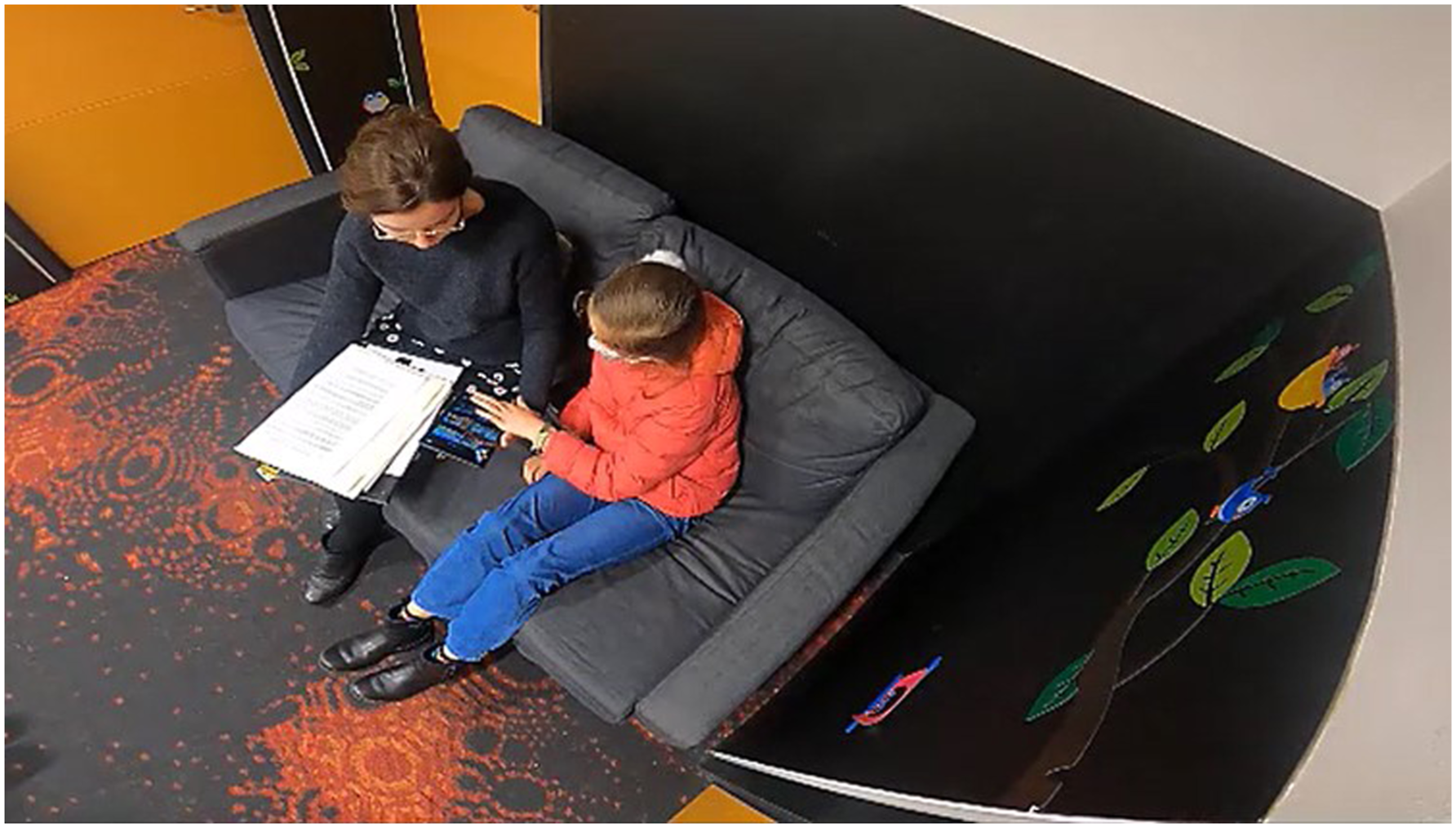
The duration of browsing before selecting content varied between independent and joint sessions as well. On average, children spent 1 min and 16 s (SD = 1 min and 10 s) browsing independently, compared to 47 s (SD = 49 s) when accompanied by a caregiver. Similarly, children watched their first selected content for an average of 6 min and 58 s (SD = 6 min and 28 s) independently, and 10 min and 50 s (SD = 4 min and 54 s) with a caregiver. These findings indicate longer browsing, yet shorter viewing durations when children stream independently, perhaps a result of the lack of parental mediation of and intervention in their choices, and also a factor of children seeking to harness their independent streaming time to locate content they would like to watch alone. Notably, children and parents often explained that they had selected a beloved, oft-watched content type that they knew they both liked in the joint session (see Figure 4). Child and parent streaming together in the joint session.
– 9-year-old girl and her mother
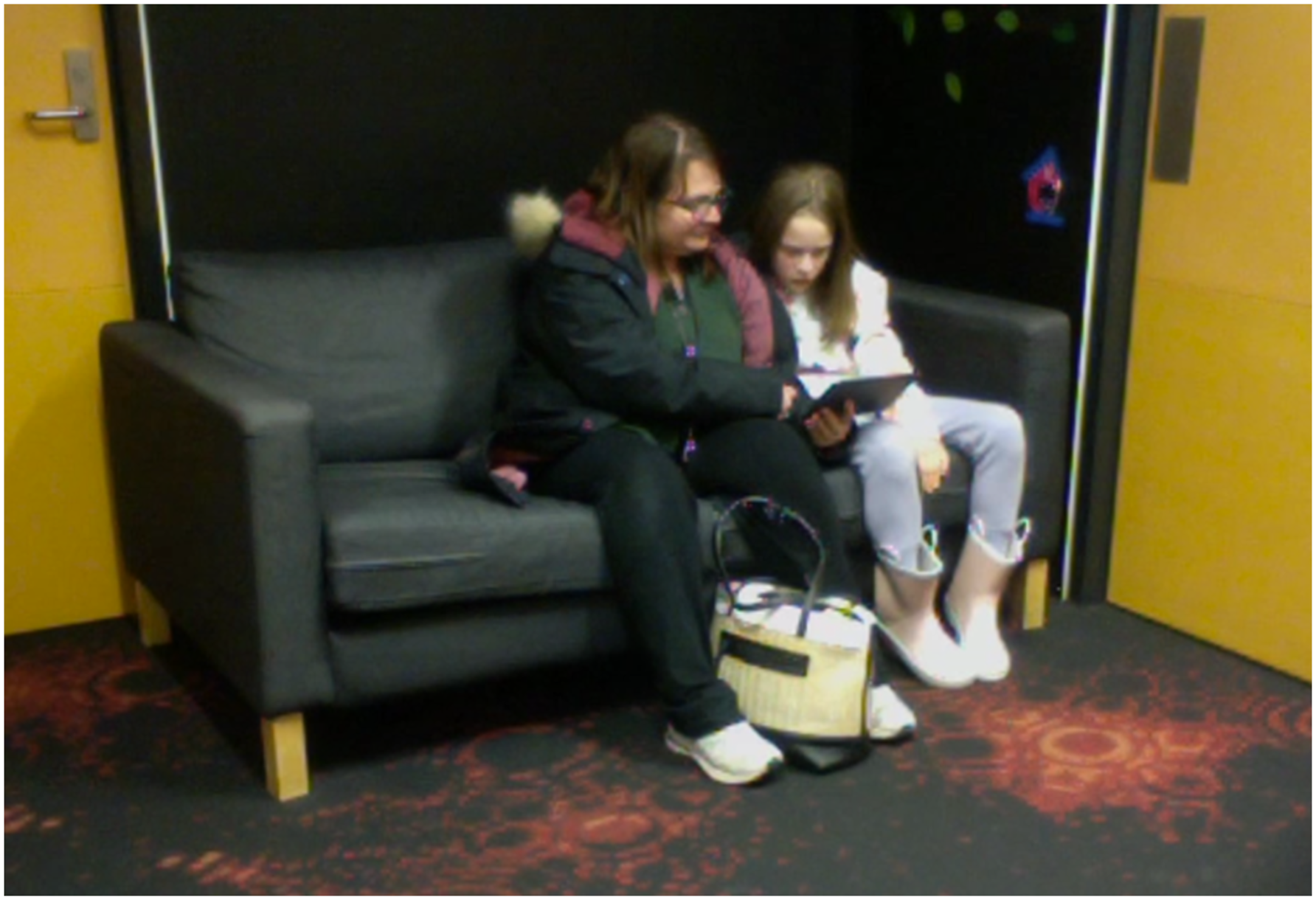
When selecting a second piece of content independently (N = 23), 39.1% of children viewed recommended content presented by an algorithm. Thus, while children were slightly more likely to use search functions to find a desired piece of content across platforms at the beginning of their independent session, if they moved on to another piece of content, they were more likely to be reliant on algorithmic recommendations rather than searching a specific title or browsing through interface tiles. In contrast, only 21.4% of children opted for algorithmically recommended content when accompanied by a caregiver (N = 14).
Australian content discoverability issues
Australian content was not the primary choice for most children, with only 17.1% opting for it independently and even fewer (9.4%) doing so in joint sessions. This suggests a preference for international content amongst this 7–9 year old age group. Children often did express their desire to see more Australian content, but noted that it was difficult for them to find. Children explained that they struggle to locate Australian content on the platforms they most often used, Netflix and YouTube, and highlighted the dominance of North American content. [Netflix and YouTube] don’t have much Australian shows […] I try looking for Australian shows and when I recognize it’s not Australian I just turn it off instantly. And then I’ll find another Australian show.
–
7-year-old boy
Yeah because most of them are like, American, and when I was 6 or 7 I would just watch all the American stuff. And then I started to say ‘diaper’ and then my Dad kept correcting me. […] They would say ‘gas station’ instead of ‘petrol station’ and stuff like that.
–
9-year-old girl
Well, there’s not much Australian things on my things [TV and iPad]. But yeah, I do [like watching Australian shows]. Bluey is Australian. I’m not sure about the other ones ’cause most of the things that are on the TV or on iPad they’re not much Australian. Unless I look up ‘Australia’.
–
9-year-old girl
–
8-year-old girl
Children associated the ABC platforms with Australian content, and while they tended to express preferences for Netflix’s platform architecture, they did note that the ABC platforms made it easier for them to find and identify Australian content.
–
9-year-old girl
Children expressed difficulty not just with the discovery of Australian content, but the ability to identify which content was Australian on platforms dominated by international and particularly North American content. Unless the program tile on the streaming interface displayed Australian animals or what children often termed ‘the Australian Outback’, children regularly struggled to identify which shows were Australian. This led to confusion about the cultural identity of shows. [Later in the interview, child identifies InBESTigators and Little Lunch as two shows they most enjoy after seeing them in a streaming interface]
–
7-year-old boy
[Later in interview]
–
8-year-old boy
This child’s surprise in their misrecognition of content origin was manifested in a full bodily reaction, as they recoiled on the sofa and then stared at the researcher in a moment of shocked pause. Reflecting upon this later in the interview led the child to articulate a desire for more overt information around provenance when finding programs. This sheds further light on industry research with parents that found that children do not care about the provenance of content (ACMA, 2017): our research found that they do value Australian content, but may not realise they are watching it, nor know how to find it. As is the case here, both parents and children often articulated the need for clearly demarcated ‘Australian’ children’s sections on their smart TVs or streaming platforms, or clearer labelling of Australian content. There is a separate section for ‘Australian content’ on one of the platforms, but I don’t think it’s on all. So it would help to have ‘home-grown’ or something like that on all so you can easily look and browse through.
–
Mother interviewed with
9-
year-
old daughter
–
Father interviewed with 9-
year-
old-
daughter
speaking about difficulties of navigating smart TV interfaces.
–
Mother interviewed with
9-
year-
old
son
This research finds that initiatives around the clearer labelling and catalogue organisation of Australian content would make it more discoverable for children. Such platform interface and catalogue strategies would respond to the suggestion of the national screen body, Screen Australia, that discoverability is a ‘fast-evolving policy area’ becoming ‘more crucial as time passes. It is important that audiences are presented with Australian options, including for content that algorithms may not necessarily present’ (2022: 19).
Conclusion
Ultimately, this research finds that children have high levels of digital fluency with streaming platforms. Indeed, in some cases, children may even seek to downplay their fluencies or modulate their content choices when their parent/caregiver is present, particularly around their YouTube use. However, despite their fluency with streaming platforms, children’s cultural literacy with the national identity of the programs was often low. Children described challenges in both identification and discoverability when it came to local Australian content. Notably, a key Action in the Australian Federal Government’s new National Cultural Policy is to ‘invest in digital and media literacy to empower Australian children and young people to become critical, responsive and active citizens online’ (Australian Government Office for the Arts, 2023 85, 105). Our research shows that to implement this Action in regard to children and streaming, Australian children’s content needs to be easier for children to identify and discover across smart TVs and streaming platform interfaces. This research also highlights the implications of Netflix and YouTube operating as ‘go-to’, default streaming platforms for children, which further disadvantages local providers as children expect streaming video environments to replicate their experiences with these platforms. Issues and challenges of exposure diversity are thus pertinent here, yet are revealed to be more complex and broader in scope than specific mechanisms of algorithmic distribution, recommendation, and prioritization on each platform, the focus of previous research. Furthermore, as Sakr and Steemers point out, discourse around how the ubiquity of digital distribution is transforming children’s engagements and relationships with television typically does not consider geo-cultural specificities related to distribution inequalities, diversity of available options, policy, and industry contexts (2021: 222-3). Beyond unveiling such geo-culturally specific implications of the mainstreaming of the streaming sector, our findings also highlight the highly contextual and contingent nature of children’s routes to content. These routes shift when co-viewing with family, and during daily routine versus special, ritualised viewing. While children may not critically self-reflect on the role of algorithms or global market forces on their viewing habits, they are aware of the different affordances and strengths of the various platforms, and they operationalise routes to content in thoughtful and intentional ways.
Footnotes
Declaration of conflicting interests
The author(s) declared the following potential conflicts of interest with respect to the research, authorship, and/or publication of this article: The Australian Children's Television Foundation was consulted on the design and aims of the research study, which responds directly to current Australian policy concerns and sought to provide new data for Government and industry decision-making. The organisation was not involved in the conduct nor analysis of results for the study.
Funding
The author(s) disclosed receipt of the following financial support for the research, authorship, and/or publication of this article: This research was funded by the Australian Children's Television Foundation, the national children's screen policy, advocacy and production organisation. This study was carried out as part of this broader funded Australian Children's Television Cultures project (Chief Investigators, Jessica Balanzategui, Djoymi Baker, Liam Burke and Joanna McIntyre).

Notes
Demographics.
Demographic information
Freq (Overall N = 37)
Percentage
Location
Capital city
28
80.0%
Large rural centre (area with 25,000 to 99,999 residents)
1
2.9%
Other metropolitan centre (a city with over 100,000 residents)
5
14.3%
Other remote centre (area with under 5000 residents)
1
2.9%
Child gender
Female
17
48.6%
Male
18
51.4%
School year level
Year 1
7
20.0%
Year 2
15
42.9%
Year 3
8
22.9%
Year 4
5
14.3%
Child racial identity
Māori
1
2.9%
Mixed race (please select as many other options as apply)
3
8.6%
Unspecified
1
2.4%
South Asian (e.g. Bangladeshi, Indian, Sri Lankan)
2
5.7%
White
29
82.9%
Is English the child’s first language?
Yes
35
100%
Does the child experience atypical development?
No
28
80.0%
Yes
7
20.0%
Does the child experience hearing/visual impairments?
No
30
85.7%
Yes, hearing impairment
1
2.9%
Yes, visual impairment
4
11.4%
Annual household income
$100,000 to $199,999
17
48.6%
$25,000 to $49,999
2
5.7%
$50,000 to $74,999
4
11.4%
$75,000 to $99,999
2
5.7%
Above $200,000
9
25.7%
Under $25,000
1
2.9%
Participating caregiver racial identity
Māori
1
2.9%
Mixed race (please select as many other options as apply)
1
2.9%
Undisclosed
2
5.7%
South Asian (e.g. Bangladeshi, Indian, Sri Lankan)
3
8.6%
White
28
80.0%
Participating caregiver gender
Female
31
88.6%
Male
4
11.4%
Participating caregiver education
Bachelor’s degree
12
34.3%
Doctoral degree
3
8.6%
High school or equivalent
5
14.3%
Master’s degree
10
28.6%
Some university
1
2.9%
Trade/technical/vocational training
4
11.4%
Is English the participating Caregiver’s first language?
No
3
8.6%
Yes
32
91.4%
Relationship of participating caregiver to child
Father
4
11.4%
Mother
31
88.6%
Child age in years
Mean (SD)
7.74 (0.780)
Median [min, max]
8.00 [7.00, 9.00]