



Abstract
Public engagement, digital or in-person, is mostly adult-centric and ableist, often universalising the experience of participation of a narrow demographic (white, older and middle class). In Mindset Revolution we combined arts-based and creative methods with civic tech to co-design participatory spaces with a diverse group of young people, where to discuss and influence mental health policy and practice. The paper examines the digital element of the project, where young people, supported by a team of academics and digital designers, used the Decidim civic tech platform to engage with their peers and policymakers. This co-design work helped inform changes to the platform towards more accessible and margin-responsive participation that can better support active engagement of traditionally excluded groups. The young people evaluated their own participation and social impact, challenging assumptions about youth participation. The flexibility afforded by the digital platform was crucial to sustain engagement. However, although often branded as digital natives, the young people we worked with perceived digital participation as an enabler but not a central element of their work on social change. Follow-up work on the platform is shaping it as a space for collective oversight, with opportunities for open-ended dialogue between young people, the community and policymakers to identify and navigate barriers to implementation of young people’s proposals.
Keywords
Introduction
Mindset Revolution co-designed spaces of participatory policymaking with young people (16-25 years old) to influence mental health policy and practice. It combined arts-based and participatory research methods and a digital participation process. The aim was to enable young people to shape novel participatory assemblages (DeLanda, 2016) that helped them build a collective voice. The paper examines the digital component of the project, a youth-led digital participation process on mental health that used the civic tech Free/Libre Open-Source software technology (FLOSS) platform Decidim (‘We Decide’ in Catalan). It presents and discusses findings of the project, reflecting on how young people engaged in and developed digital participatory activities and strategies, and which measures they used to evaluate their own work.
There is a multiplicity of public engagement arenas, digital or in-person, but they tend to be adult-centric, often conceived as discrete participatory events, with limited space for building and sustaining skills and social capital. Whereas adults often feel there are many opportunities for young people to participate, the latter consider them inadequate or superficial (Forde et al., 2017). Perry-Hazan Lotem (2016) notes the difficulty in creating spaces where young people’ views can be taken ‘seriously’ and incorporated into policymaking (see also Stenvall et al., 2023), or in providing adequate infrastructure to support oversight and scrutiny following a project to monitor implementation of their recommendations.
Technological developments and rapid digitalisation have provided new opportunities for citizen participation that might support scaling-up of participatory processes. The Covid pandemic further escalated digitalisation with the rise of participatory platforms (Aragón et al., 2017; Russon-Gilman and Peixoto, 2019; Sorce and Dumitrica, 2023), but increasing reliance on digital can also exacerbate existing inequalities and create new divides. Young people are often described as ‘digital natives’ (Prensky, 2009) and one could assume they might be more likely to engage in digital initiatives, but the gap in access and digital literacy across groups along class, gender and racial lines remains large, irrespective of age (Francis and Weller, 2022). Even when citizens have access to the internet and are able to use platforms effectively, there may be disparities in broadband speed that may exclude certain users (Strandberg and Gronlund, 2013: 412). Furthermore, the ‘learning digital divide’ is often overlooked but is as important as the more obvious gaps in access to the technology itself. Digital skills are those that allow us to use, appropriate and participate in the design and development of new technologies; the digital skills gap often reproduces existing social, economic, political, and cultural inequalities, which are likely to influence the quality of democratic participation (Lythreatis et al., 2022). It is worth mentioning here the gender digital gap (Mariscal et al., 2019) also noting the lack of data and studies on the inclusion of dissident gender identities in digital participation. Thus, not only do digital skills allow people to use technologies but also to participate in their development. Unequal access to such digital literacy can condition the position of certain groups, such as women and minority ethnic and racialised groups, in the digital world, relegating them to the role of mere recipients of new technologies.
Digital is today primarily used in instrumental and extractive ways, as user data informs solutions ‘from above’, often geared towards profit-making. Efforts are being made to reconceptualise digital engagement from the bottom-up along more socially beneficial lines and towards deepening democracy through concepts such as ‘civic tech’. Russon-Gilman and Peixoto (2019) define ‘civic tech’ as technology to deepen democratic participation, distinguishing it from platforms that purport to be participatory, but which are in fact driven by private interest, such as various Smart City initiatives, rooted in a neoliberal conception of citizenship (Cardullo and Kitchin, 2019). Civic tech has specific design features such as open code, data and content (see Gil-Garcia et al., 2015), but whether or not a given technology can be described as ‘civic’ might depend on the values underpinning its use more than its design. Russon-Gilman and Peixoto (2019: 105-118) describe technology as ‘civic’ if it enhances ‘public participation in governance decision making [and is] explicitly designed and leveraged to increase and deepen democratic participation’. They link this definition to Graham Smith’s notion of ‘democratic goods’ (Smith, 2019) 1 that is, inclusiveness, popular control, considered judgement, and transparency.
Mindset Revolution experimented with flexible and creative spaces of participation online and in-person with the ambition to develop an embedded participatory process, shaped by the young people involved and grounded in the concept of the Commons (Bollier and Helfrich, 2019) and local grassroots action, and to foster an open-ended dialogue between young people, their community, and state institutions. The project started in November 2022 and ended in August 2023; the digital component started in January 2023 until July 2023. Young people used the Decidim platform to run a participatory process on youth mental health and co-design policy proposals through youth-led dialogues with their peers, mental health services and policymakers. The digital platform also aimed to support other components of the projects, which use in-person arts-based and creative methods. The paper explores how diverse youth, 2 who might not otherwise engage in public participation, made creative use of the civic tech and helped rethink the boundaries of digital participation, with a strong focus not just on agenda-setting but also scrutiny and oversight. Decidim is a free, open-source digital platform for citizen participation, designed to facilitate democratic engagement and maintained by an active international community. It is used by public institutions, as well as NGOs and educational organisations, supporting diverse deliberation and voting activities (Barandiaran et al., 2024).
The next section provides an overview of the literature on digital participation, with a focus on young people. The following sections present and discuss findings on the digital component of Mindset Revolution, based on a participatory evaluation co-led with the young people to explore their own experience of participation and social impact. We examine how young people appropriated and creatively used digital innovations for social change. Their work and unique perspective have contributed to the Decidim platform’s development to support better margin-responsive and culturally adaptive digital participation. The paper contributes to existing literature on strengthening inclusion of youth in health policymaking (Yamaguchi et al., 2023) and digital participation (Pawluczuk et al., 2020) through co-design and co-creation (Ansell et al., 2023), and it reflects on potential and limitations of a bottom-linked approach to participatory policymaking.
Digital participation, the commons and young people: an overview of the literature
Recent literature shows evidence that digitalisation can help scale up civic participation and offer more opportunities to citizens to influence policymaking (Dean 2023). Participatory platforms have facilitated a range of new experiments, from new models of public consultation to online participatory budgeting, supporting ‘policy jams’ and ideas competitions (Dean 2023; Mergel and Desouza, 2013; Noveck, 2010). However, the very affordances of digital platforms, which allow for remote, asynchronous, and at times anonymous participation, making it less resource intensive and more convenient, also limit opportunities for the same collective experience as in-person participation. Engagement tends to be an individual experience, more akin to ‘civic online shopping’ (Dean 2023: 3570). Thus, overall these forms of participation might end up sacrificing community mobilisation and deliberation (ibid).
One crucial challenge raised by digital participation is the lack of required analytical and administrative capacity to process the higher volume of citizen proposals, which might contribute to perceptions of participation as tokenistic (Bussu et al., 2022a). Developments in digital participation have occurred at a time of sustained reductions in public budgets. Increasing inputs through digital platforms, when limited resources mean that public officials cannot adequately process them, affects implementation, fuelling further distrust and disengagement (Dean 2023). Some scholars thus suggest that digital participation might have greater potential for citizen oversight, including through anonymous reporting, where citizen auditors could support or even replace certain state regulatory agencies (Dean 2023; Margetts and Dunleavy 2013).
Scholars establish a basic distinction between government-centric (‘top-down’ digital solutions created by public institutions) and citizen-centric civic tech (where its development and use are led by civil society). Skaržauskienė et al. (2020) identify a recent increase in solutions to address social issues and concerns implemented by civil society organisations and communities. Although these civic tech initiatives rely on global digital network dynamics, the local focus is crucial for analysing its adoption and impact (Mello, 2021). Poblet and Plaza (2017) highlight the complexity of scaling-up civic participation by mere technological progress, and the need for integral approaches where trade-offs between institutional and public involvement should address other values beyond digital participation per se. In parallel to open government initiatives, the current landscape of civic tech includes a long trend of community-led tools and platforms, developed and used by a myriad of actors: social movements, NGOs, solidarity economy organisations and open-source contributors, who usually share similar democratic, commons-oriented goals and philosophy (Certomà, 2021). FLOSS-based platforms, such as Decidim, rely on these loose communities of stakeholders that take care of software commons (Mello, 2021: 8).
There is a growing body of literature exploring the potential of digital technologies to foster participation and complex problem-solving when guided by the principles of civic tech. These platforms should be studied not as mere technological tools but also as complex ‘socio-technical systems’ with an evident political dimension (Deseriis and Vittori, 2019). Here digital technologies are often grounded in a larger canvas of social struggles and the practices of the Commons (Corsín Jiménez and Estalella, 2023; Corsín Jiménez and Curto-Millet, 2023). These can be described as a ‘robust class of self-organised social practices for meeting needs in fair and inclusive ways’, which can prefigure ethical and democratic forms of social organisation (Bollier and Helfrich, 2019: 4). This connection between technologies and ‘knowledge commons’ was picked on by Eleonor Ostrom herself, when she noted the importance of focussing ‘on the design of digital infrastructures, and not just their modes of governance, as central to their nature as commons’ (Hess and Ostrom, 2007, cited in Corsín Jiménez and Estalella, 2023: 189).
Young people, digital participation and mental health policymaking
Young people are perceived as a vulnerable group in society, whose voice in policymaking often goes unheard. However, they can be equal contributors to social change (Pawluczuk et al., 2020; Richards-Schuster and Pritzker, 2015). The European Commission recognises the importance of ensuring that young people are ‘involved in the decisions which concern them and in general the life of their communities’ (Loncle et al., 2012: 2). As digital technologies increasingly influence and shape young people’s lives, they can become active digital participants and ‘doers’ (Ito et al., 2013).
Kligler-Vilenchik and Literat (2018) note that digital participation is often understood as a tool of opportunities for young people in areas such as learning and professional development (e.g. Ito et al., 2013), self-expression and identity exploration (e.g. Renninger, 2015), social connection (e.g. Weinstein, 2018), and civic and political participation (e.g. Kligler-Vilenchik and Literat, 2018). As noted by Mackrill and Ebsen (2017: 1) there is still limited research on how to assess the impact of digital technologies on youth work. There is no clear evidence on whether online opportunities may (or may not) achieve meaningful benefits for young people (Livingstone et al., 2015), or their impact on youth democratic skills and participation for social change (on this see Ho et al., 2015; Pawluczuk et al., 2020).
In their review of the literature on young people’s digital participation, Pawluczuk et al. (2020) bring attention to two main aspects of digital youth projects: ‘firstly, that current understanding of the value of youth digital participation could be enhanced with the implementation of youth participatory techniques; and secondly, that impact measurement processes should be holistic and user-centred’ (ibid, p. 12).
They argue that collaborative methodologies for knowledge co-creation can allow young people to evaluate their own projects and define their own measures of development. Rather than ‘adults allowing children to share their perspective’, more collaborative and youth-led approaches can foster an environment where young people design and evaluate their own participatory environment (Jennings et al., 2006). To this aim, some scholars argue that adults should refrain from depicting youth as ‘human potential, moulded and shaped by positive and negative influences’ (Percy-Smith and Thomas, 2009: XXI). Young people can collaborate in digital participatory settings (Fitton et al., 2016) and be active participants in many initiatives of digital coproduction (Buccieri and Molleson, 2015).
There is also increasing interest in children and young people’s involvement in policymaking and research, particularly on mental health, co-creation and creative methods (Yamaguchi et al., 2023; Muddiman et al., 2019). The rationale is to strengthen young people’s empowerment and ownership of interventions; bring diverse perspectives together to inform holistic approaches to mental health challenges; break down stigma surrounding mental illness by fostering open dialogue; and build capacity. However, a lack of diversity among participants means that intersectional experiences of mental illness are not fully captured (Yamaguchi et al., 2023), whilst resource constraints tend to limit the scope of projects and policy impacts.
This paper offers an original contribution to this rich literature. Firstly, Mindset Revolution put participatory and creative research methods and civic tech in dialogue, as young people were given the opportunity to design and evaluate a digital space on Decidim that supported their ideas of participation in mental health policymaking, as emerged through the combination of online and in-person sites (see also Mello, 2021). 3 Secondly, the diversity of the group, as detailed in the next section, shed light on intersectional experiences of mental health challenges, highlighting the limitations of a mental health system that too often universalises white, middle class and heteronormative approaches to mental health support.
Methodology and use of the Decidim Platform for the Mindset Revolution project
Methodology
We combined legislative theatre (Boal, 1998) with a digital participatory process and participatory research methods. Legislative theatre is a participatory approach to improve people’s lives by co-developing new policy and practice through a play based on participants’ lived experience of systemic oppressions. The partnership included three academics, a legislative theatre practitioner, two charities – one using arts-based methods to work with young people on improving mental health, one supporting youth participation in policymaking – a foundation of digital participation designers, a community radio, and 23 young people (16-25 years old). Mental health is a high priority for the organisations involved, as increasing numbers of young people are experiencing poor mental health and support is limited. 4 Four of the 23 young people had worked with some of the partners on a previous legislative theatre process on youth mental health. The remaining 17 were selected from a pool of respondents to an ad circulated by partners and the local university, to ensure a diverse group, along ethnicity, 5 gender and socio-economic background. Several young participants identified as LGBTQ + or non-binary. All had direct experience of mental illness, either personally or through family members; several were unemployed and/or from lower socio-economic background. This diversity translated into a strongly intersectional perspective that is reflected in the proposals on change to mental health policy developed by the young people throughout the project.
The four young people joining us from the previous project trained as legislative theatre facilitators and created a play with six new peer actors representing their collective experience of mental health stigma. The play explored mental health through the intersectional lens of a black, poor, non-binary student navigating the labels imposed on them by the school, family and various mental health services, as they tried to deal with complex mental health challenges. As part of the performance, participants co-developed policy solutions with an audience of community members and policymakers that, invited by the peer facilitators, interacted with the play as ‘spect-actors’ to challenge existing rules by imagining different scenarios.
The digital component of the project, which this paper specifically focuses on, involved six young people as digital co-designers. The aim was to support in-person participation by providing a digital hub to a) share resources; b) involve young people and organisations within and beyond the project in a digital participatory process on youth mental health; and c) help monitor progress on implementation of the policy proposals coproduced with the young people. A participatory evaluation, led by seven young people with support from academics, was embedded in the project from its offset. All the young people participating in this project were paid transport costs and an hourly stipendiary above the living wage.
The qualitative participatory evaluation, based on participatory action research (Freire, 1996), was an important aspect of our co-design approach. Participatory processes are mostly designed and evaluated top-down, which contradicts the ethos of participatory democracy (Bussu et al., forthcoming). Through this work, we aimed to centre young people’s lived experience and perspectives to develop better understanding of how to do ethical and non extractivist participation with them. Over the course of the project, the seven peer researchers conducted four rounds of focus groups with all young participants, coproduction workshops with young people and with partners, and one to one and group interviews (5) with partners. The research questions and interview schedules were co-developed with the peer researchers, with a focus on young people’s experience of participating in the process and their perceived social impact. Participatory observations were also carried out throughout the project, as peer researchers attended legislative theatre rehearsals and digital design sessions with the other groups. To reflect on what they were observing, they chose playful evaluation methods, such as podcasts, blogs, voice notes, drawings, poetry, and this helped rebalance adult-youth hierarchies of power, allowing for more equal ownership of the research agenda, as the project progressed. Participatory data interpretation and analysis (Nind, 2011) were carried out with the peer researchers in one whole-day coproduction workshop. We used anonymised interview and focus group transcripts, as well young people’s notes and drawings, to reflect collectively on the project and identify strengths and limitations of the approach. This was followed by a series of online discussions to coproduce the final evaluation playbook (see Figure 1).
Co-designing the Mindset Revolution digital space
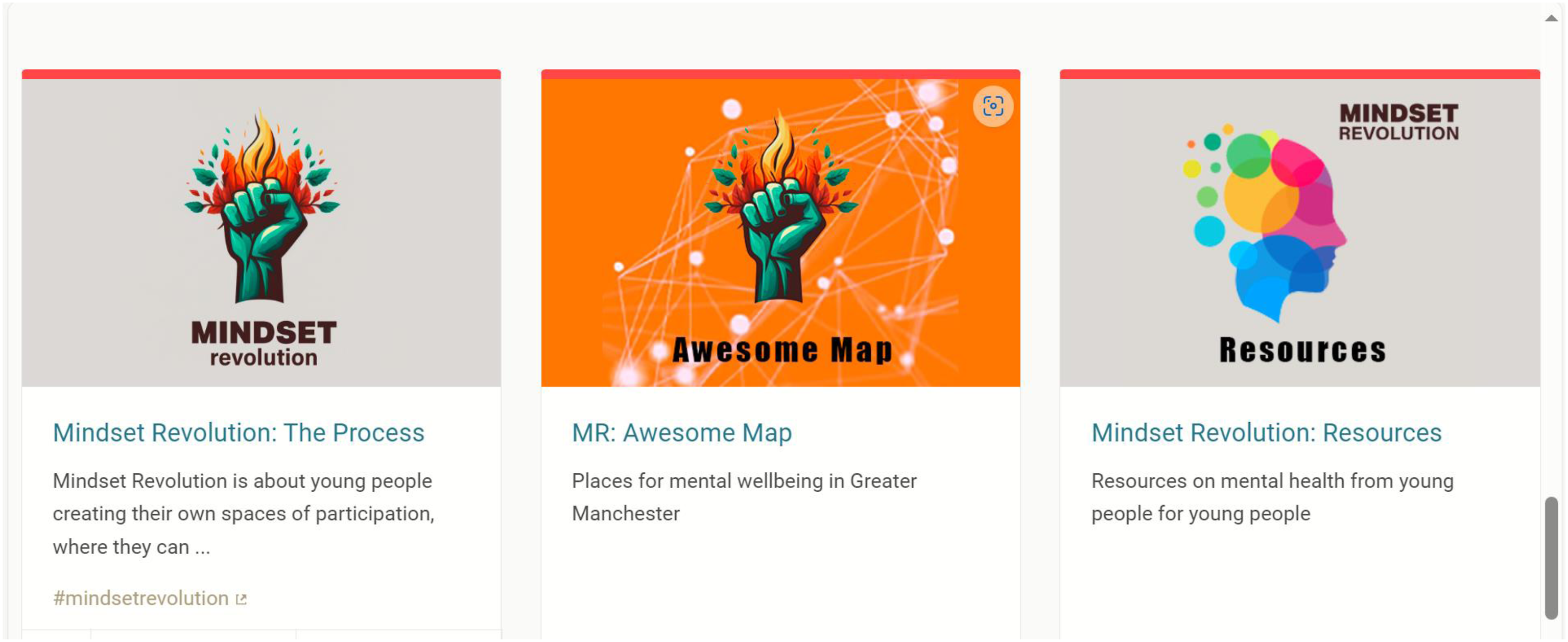
Between January and July 2023, six young people, with no previous experience of digital participation design, met in person weekly with support from the academic team and, connecting remotely from Barcelona, civic tech designers. Decidim allows participants to create and engage in digital collaborations, by using a series of components, including surveys, proposals, citizen initiatives and online dialogues. Mello (2021) notes that, among civic tech platforms, Decidim best integrates online and in-person public participation, both facilitating digital deliberation and enabling uploading of in-person participation outcomes to support open-ended dialogue and involvement of those unable to attend face-to-face events. Figure 2 below shows the Mindset Revolution platform.
The young people initially engaged in a series of in-person dialogues facilitated by academics to think about what part the digital space might play within the wider project, what it would be used for, by whom and how. Neither the young people nor the adults in the room had ever used Decidim, and this allowed for creative experimentation. We were keen to develop an online space that brought together the work of the other groups in the project (legislative theatre and participatory research) and reached out to other interested young people across Greater Manchester and grassroots organisations working on youth mental health. Establishing and supporting such cross-organisational connections proved extremely challenging, as explored in the next section. The digital space slowly started to take shape as a virtual hub where anyone in the team could create and share resources on youth mental health (e.g. blogs, podcasts, etc.). Through long discussions in person and via a dedicated WhatsApp group, we designed a participatory process
6
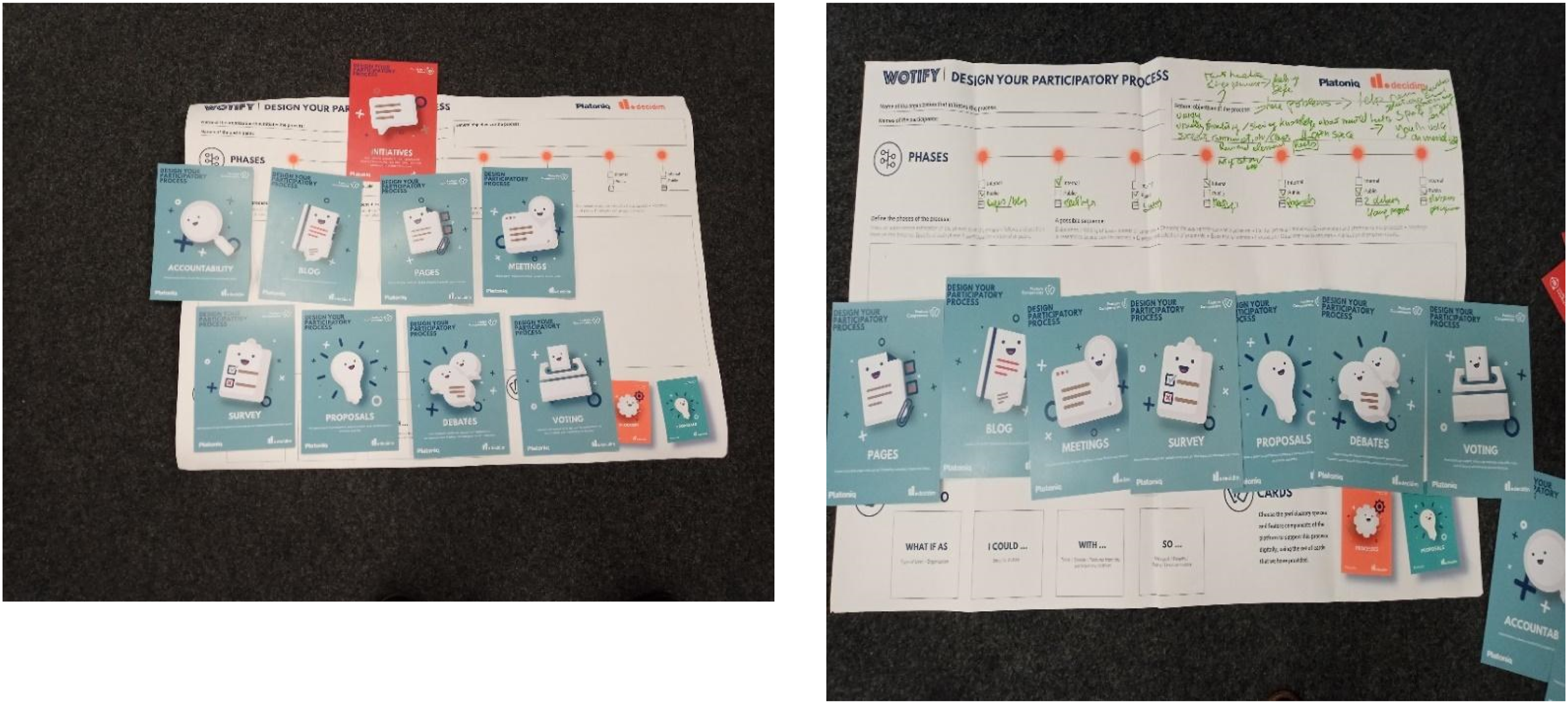
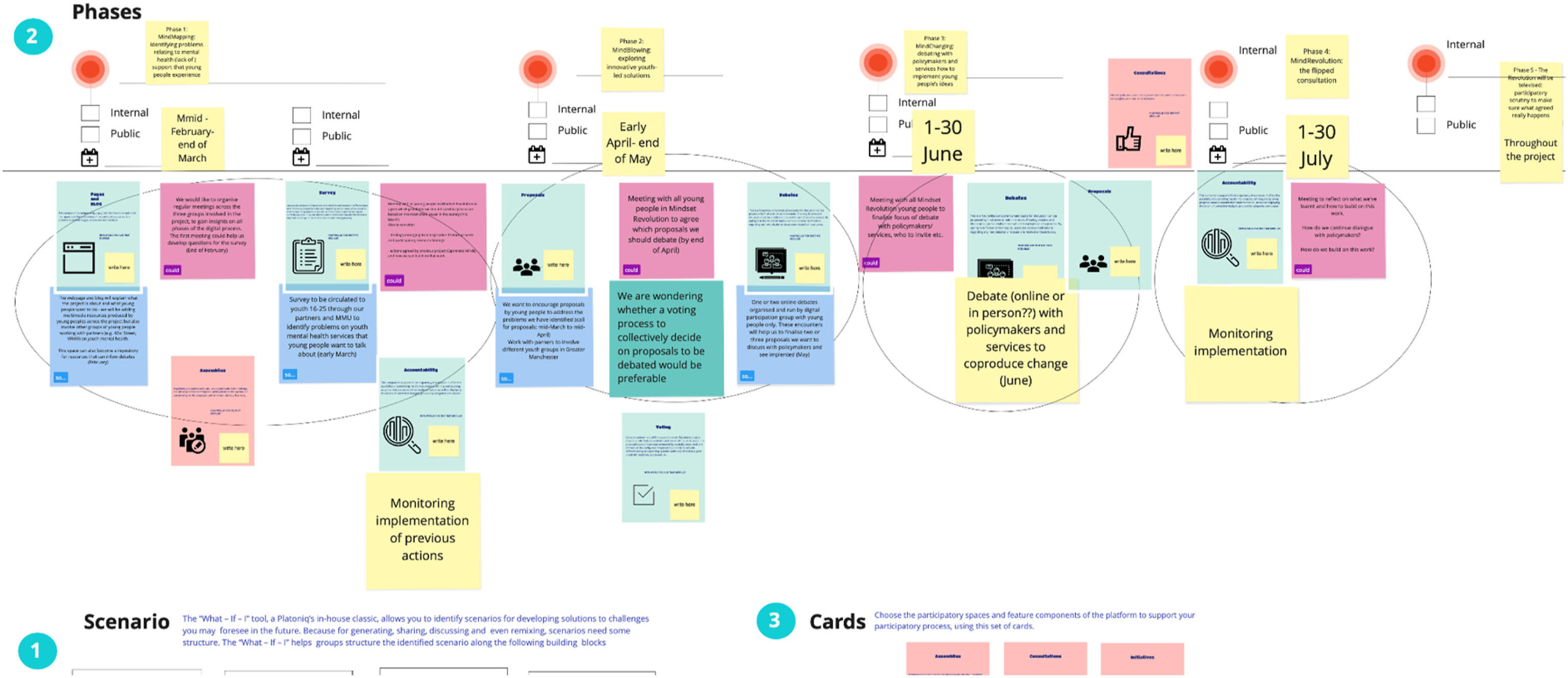
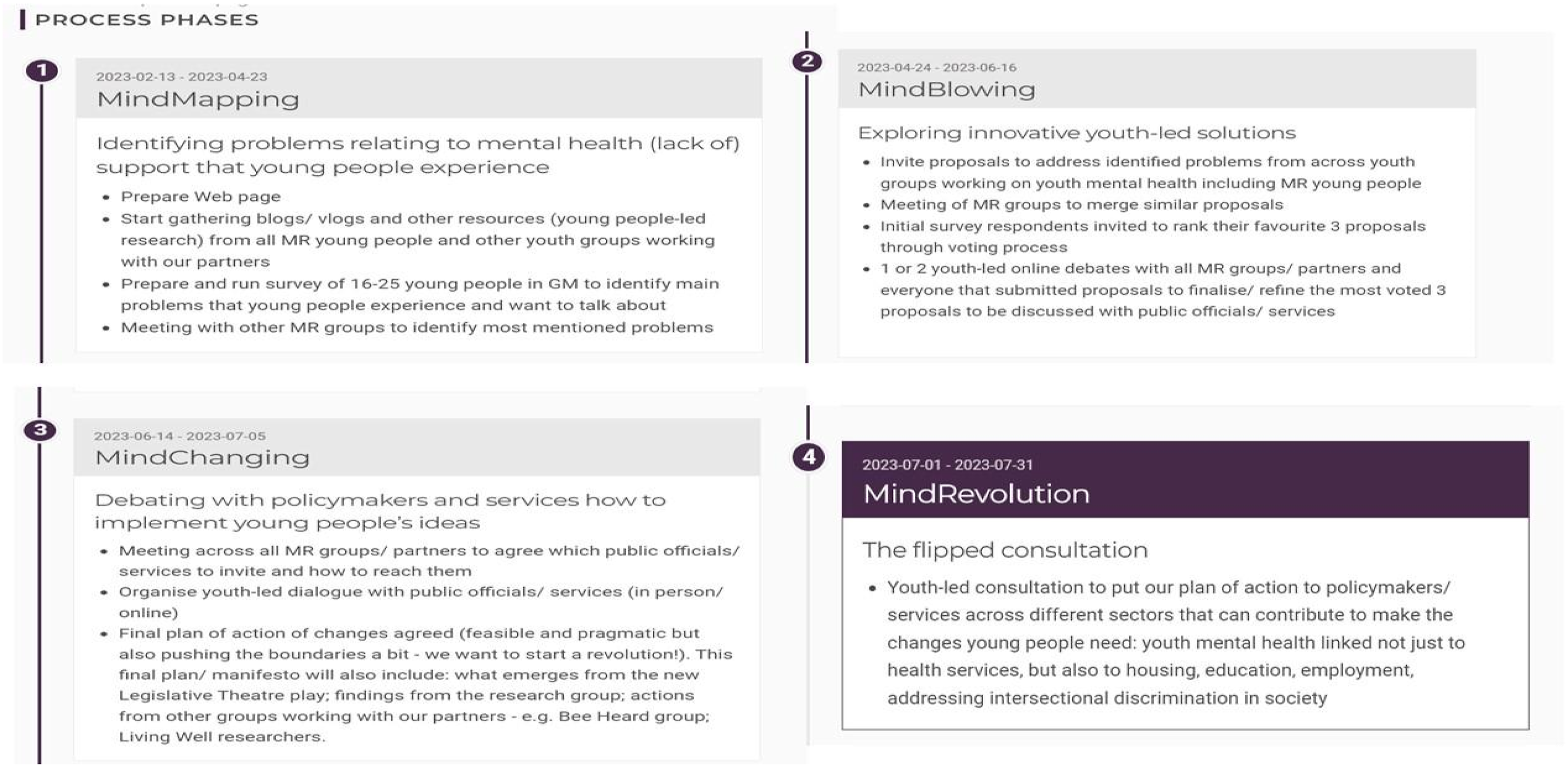
articulated into different phases in order to: map problems surrounding mental health that young people wanted to talk about; create proposals to address these problems; and discuss and vote for proposals through facilitated online dialogues on Zoom, where we would invite young people, partners in the project and policymakers. Figures 3–5 detail the design process; Figure 6 summarises the main phases of the digital participatory process. The Mindset Revolution project. The Mindset Revolution platform. Canvas to support design of the digital process. Imagining the Mindset Revolution participatory process - card game. Imagining the Mindset Revolution participatory process – Miro Canvas. Phases of the Mindset Revolution digital participation process.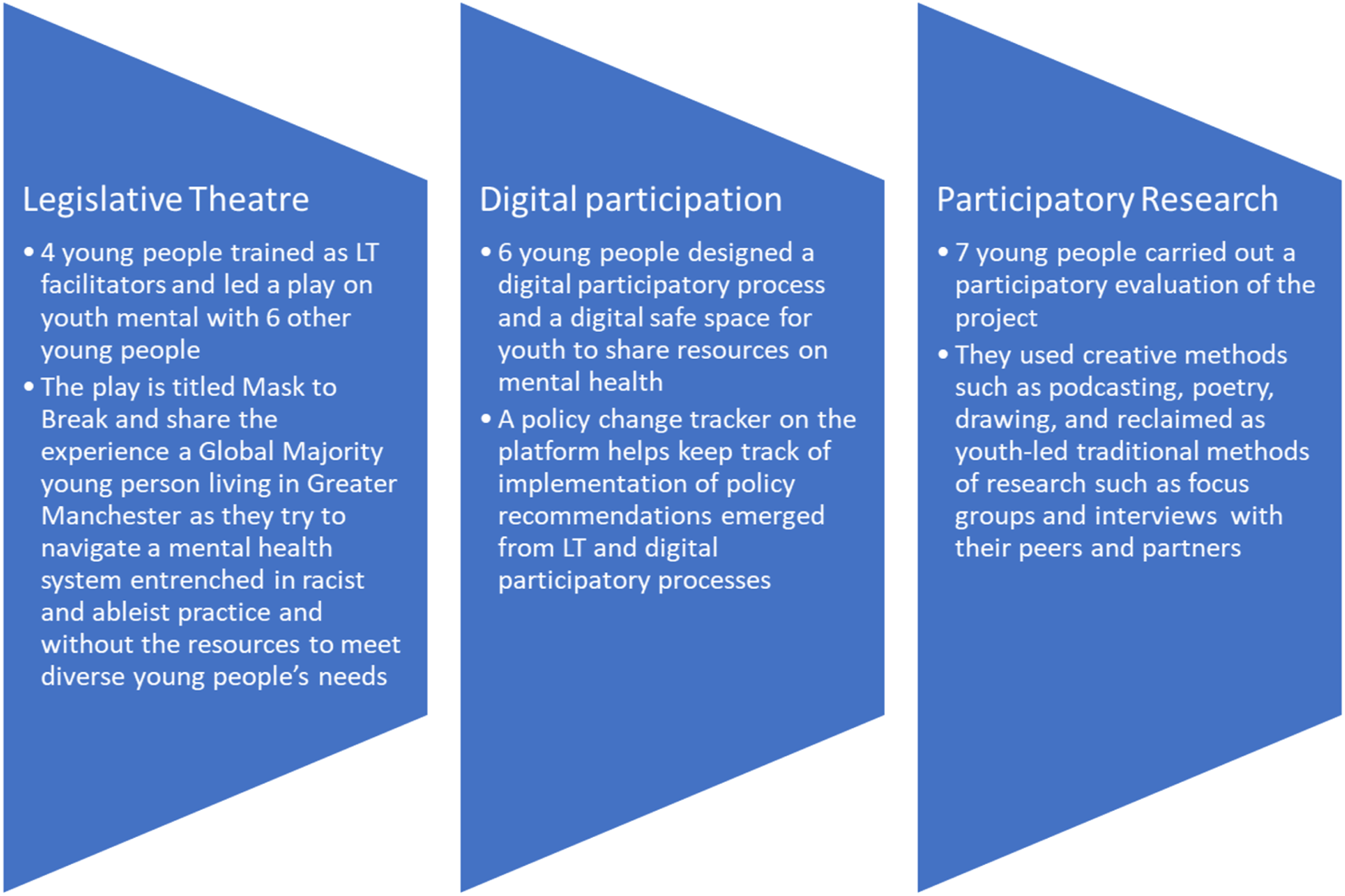
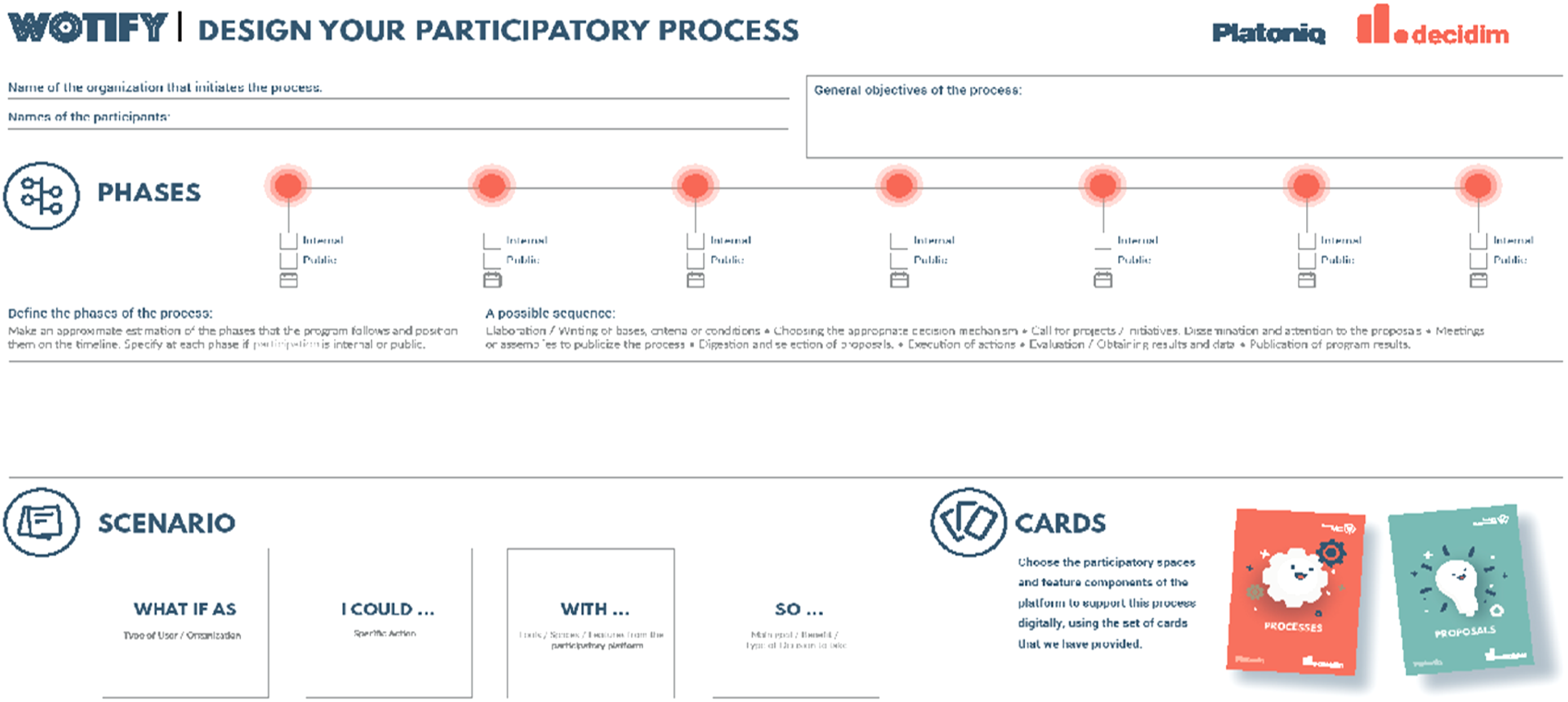
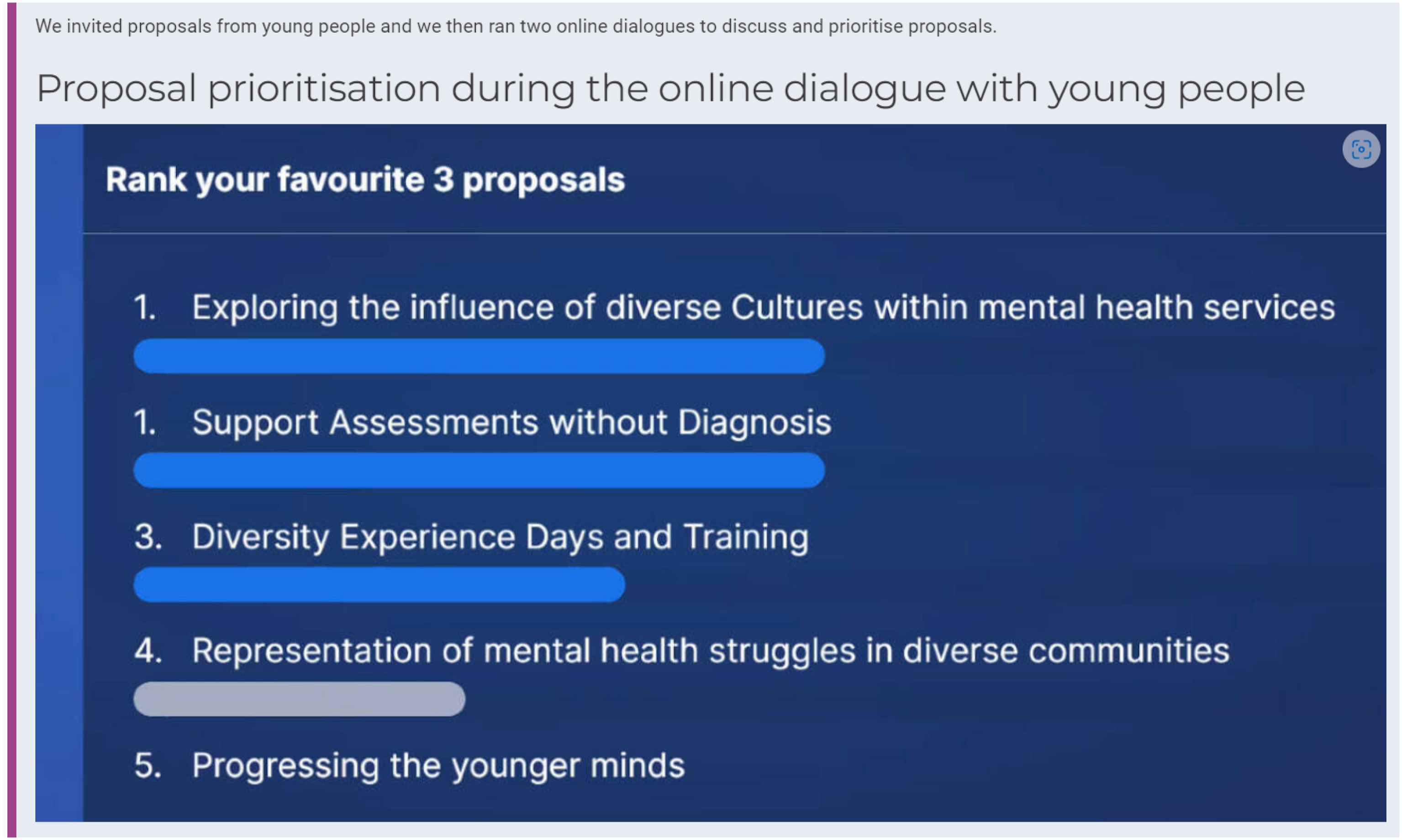
The young people made creative use of the components available on Decidim and proposed strategies to address some of what they perceived as limitations of the platform to achieve their vision. For example, submission and voting on proposals through the platform privileges individual action over collaborative thinking. Instead, the peer designers planned a synchronous Zoom dialogue with other young people to discuss proposals before opening the voting process to rank priorities. Following the vote, they planned further work in break-out rooms to discuss and refine the three most popular proposals. A separate Zoom dialogue involving policymakers as ‘critical friends’ allowed for group reflection on feasibility issues and which policy actors should be targeted to implement the proposals. The final proposals were added to the Mindset Revolution Manifesto, which also includes recommendations co-developed through the LT process. 7 The platform has a component that facilitates live note-taking 8 during synchronous activities, which the team used to keep a record of the online dialogues. These conversations reflect the concerns of young people experiencing intersectional discrimination within the mental health system, where their diverse experiences are not adequately recognised and validated.
The accountability component
9
on the Decidim platform, which the young people renamed ‘policy change tracker’ (Figure 7), can support them, the partners in the project, and the wider community in monitoring implementation. This shifts the emphasis from policymakers providing feedback on their own terms to young people claiming their right to follow-up and accountability, with support from the wider community and partners acting as brokers between them and institutions. By working closely with community organisations, the ambition of the project was to ensure work would be grounded in the locality and thus continue beyond limited funding cycles, with local partners taking ownership of different elements and integrating these into ongoing activities. This is not always a straightforward process, as organisations might suffer from limited resources, they might need visibility for new flagship projects to attract funding, or they draw different conclusions on the long-term utility of a project; thus, long-term collaboration efforts can be easily jeopardised by new emerging priorities. The policy change tracker on the mindset revolution platform.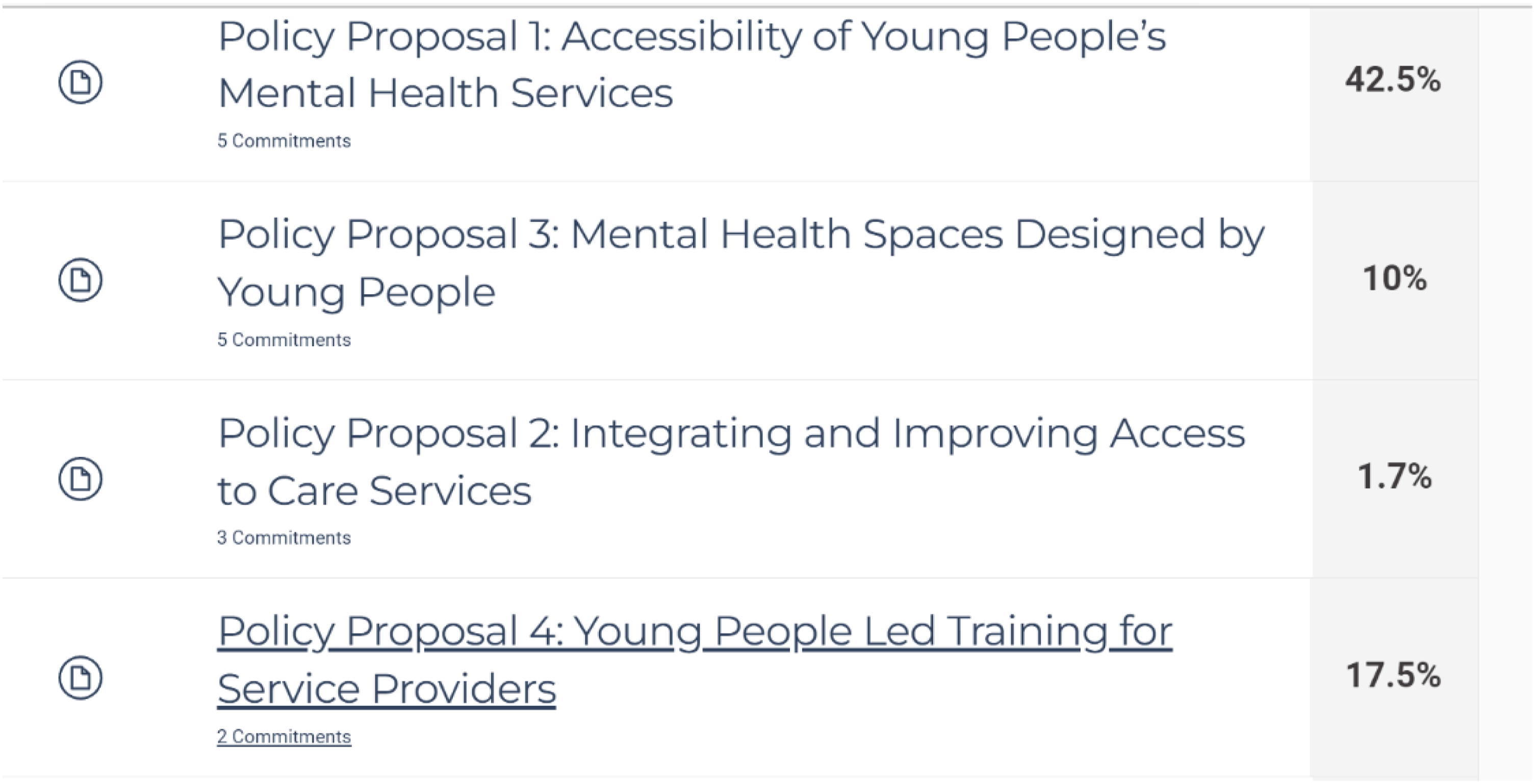
Youth-led digital participation in the Mindset Revolution project: Analysis of the findings
This section presents the most relevant findings based on the participatory self-evaluation carried out by the young people. The section is articulated into different themes to reflect on the impact and the challenges of a bottom-linked approach to participatory policymaking, with a focus on the role of digital.
Strengthening democratic skills
Within a complex participatory project, with several groups involved in different activities, the digital component was the most difficult for partners and young people to understand and engage with initially. This was because no one, other than the digital developers in the team, was familiar with civic tech platforms and neither the young people nor the academic team had significant expertise in digital participation design. The group of co-designers initially struggled to envisage how they could use the various components. We used a card game and a Miro board designed by partners (Figures 4 and 5) to facilitate the discussion on the aims of our work and what the digital participatory process could help us achieve. By the same token, this lack of knowledge about the digital space opened an opportunity for genuine experimentation, also fostering a more equal relationship between the young people and the adults in the project. The group’s curiosity and creativity meant that, in somewhat unorthodox fashion, we designed a process that used most of – and reinvented the use of some of – the Decidim components available. As we progressed in our journey, we kept adding and experimenting with new components. This bottom-up and experimental approach also helped the group create a more democratic environment in which the young people supported each other through the learning process and by exploring new ideas together. This helped us navigate more easily adult–young people power dynamics.
A few months into the project, the peer designers had a discussion about being involved in this collaborative process: I feel like we work together as a collective. I feel like over the past weeks, as we've seen development, seen what we've actually done and put into play, I think, it's quite good to see it visually as well as see the actual parts working together. Being able to put your own words onto a blog and create these resources. It gives a different perspective on people's actual lived experiences. I feel the project incorporates many things, and it is quite pioneering. I agree. We give space to different opinions, for instance through the recent survey we ran. We went out to ask other students and young people in Manchester to get their opinions on mental health. I like what we’re doing and I hope we can do it again in other places (Focus group with peer digital designers, led by the peer researchers, April 2023).
The autonomy and decision-making power in shaping the design of the participatory process, but in the knowledge that support was available when needed, increased young people’s ownership of this space and strengthened their perceived self-efficacy: I think it was a really interesting experience to be given so much autonomy because in the work environment, you're almost expected to do what they say, following a sort of orthodox route of getting work done. And we were treated more like adults as opposed to just sort of factory workers. I think it was really, really nice to be part of something where we were given so much autonomy (Peer digital designer, June 2023). Creating a digital platform has been a positive thing. I believe it’s been a positive thing because we've been able to come together as people to share ideas. We worked well as a group, even having different experiences, but we also had the right guidance, because if we didn't have that kind of guidance, we'd just be going in circles (Peer digital designer, June 2023).
Bridging between different ways of doing and knowing
Initially there was limited interest in the platform from the other groups of young people working on either Legislative Theatre or participatory research. All the groups were informed about the digital work and were involved at different points of the design process, from voting for the project logo to providing feedback on the website write-ups and agreeing to the process phases. Some of the peer researchers visited the digital group and participated in their sessions several times, as part of participatory observation methods. Other groups contributed blogposts, podcasts and other resources that were uploaded to the platform, and we responded to the groups’ suggestions of creating dedicated pages for the different activities in the project. However, there was scarce engagement on the platform because young people are often already ‘spread thin across too many social media’, as one of the peer researchers put it. Engagement started to improve during the synchronous online dialogues when the peer designers helped participants register on Decidim. The cross-group in-person and online sessions allowed the different groups to gain better understanding of each other’s work and how these diverse participatory methods could interact more and better (Figure 8). It was really important to meet up with the other groups, to be in that same space and then we all sort of had the same ideas anyway. So it was kind of good that there wasn't conflict, that like we all sort of had, I guess the same visions and proposals of like, how we wanted to see the project shaped and how it will actually help young people (Peer researcher, July 2023). Session bringing together all groups of young people, May 2023.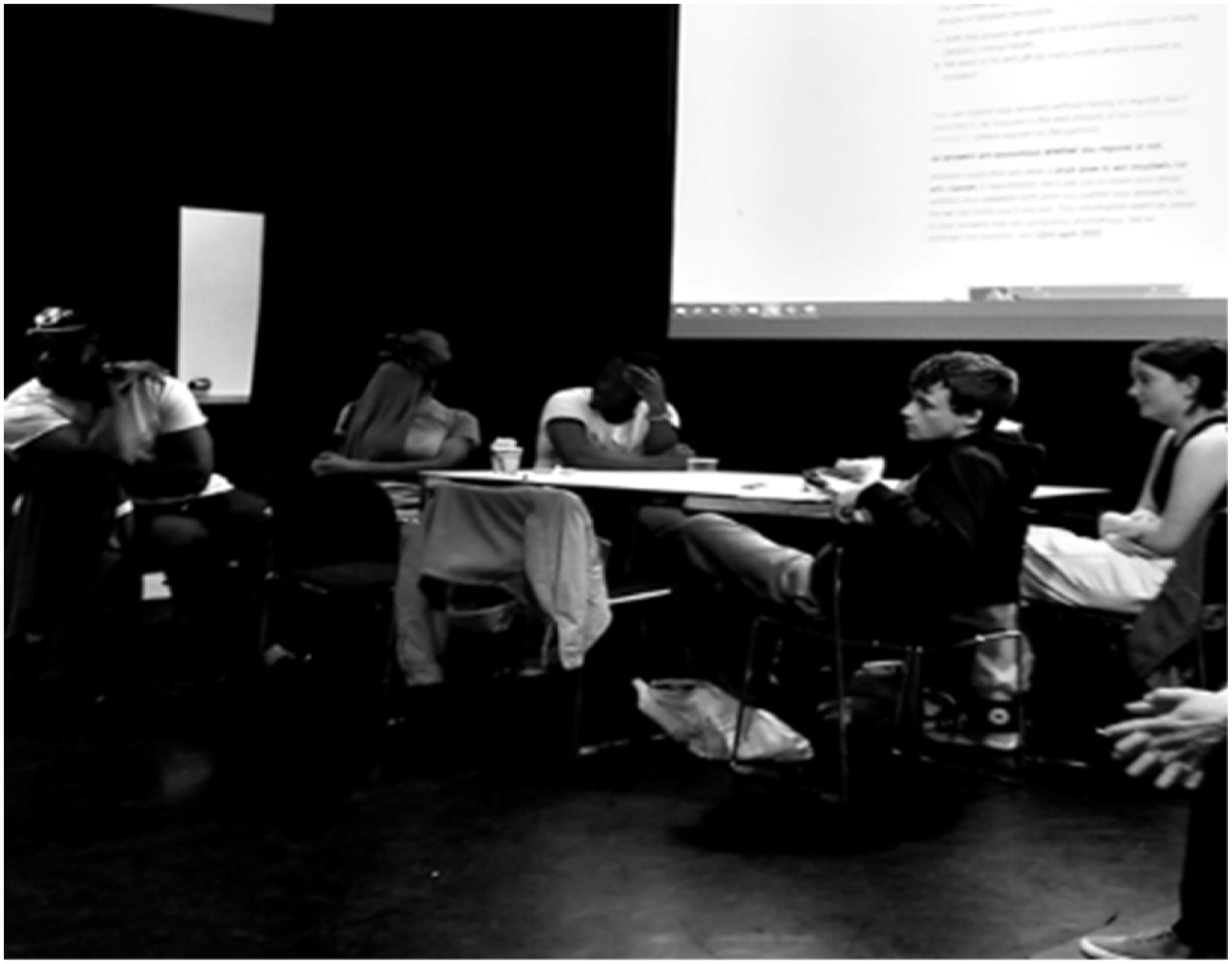
The range and diversity of groups and activities has been a strength but also a weakness of the project, as some young people and partners remarked upon: I think there's a lot of moving pieces in this project. There's a lot of groups. There's a lot of moving pieces, and it's just logistically hard for everyone to understand what's going on. And, also, the groups obviously feel a connection with the work that they are doing. So, then it's hard for them to understand sometimes how to get involved with the other groups. So, I wonder, you know, how there could be fewer moving pieces or a little bit more, you know, both more united and fewer moving pieces of all of those threads (Partner, June 2023). You know, we've had loads of different elements and groups. So it's been nice to see everyone’s involvement in the project and also to see the platform that we've been creating progress over time. To see things getting added on there when it comes together, like with blogs, with links to images, it's been really nice to see the process develop, like, like a little baby (Peer designer, June 2023).
All the groups eventually engaged with the different phases of the digital participation process, from the survey to map problems surrounding mental health to the submission of proposals to address the problems identified. However, it was the synchronous participation through the Zoom dialogues that generated greater online engagement. One of the partners commented: So [working with young people and seeing how they are using the platform] is very, very interesting [also combined with Legislative Theatre] which is also why we are here, to learn. And we do believe [digital participation] has to do with bridging [the digital] and physical world. […] [During the online dialogues] I was really impressed by the quality of the conversation. How you position yourself… The type of questions which make [the process] more powerful. [How you are using the platform] as a public square, which is basically the digital platform for me. So I think I was very impressed. And I, this is where we learn the most because we're missing that type of very intensive emotional preparation of what the participation space is. So, I'm very thankful. (Partner, June 2023).
Youth-led platform development
At the beginning of the process, partners and young people raised concerns about safeguarding measures online. These prompted several discussions also involving the young co-designers. We prepared parental consent forms available on the site and agreed ways to ensure ongoing moderation, tapping into, and building on, the wealth of experience within the partnership: So this is the first process [that we host] that is from outside our organization, a very interesting process. And so I think that it's the first step for us to have our Open Spaces [platform] really as an open space for organizations that maybe cannot afford, or [if it’s not] necessary for them to have a platform like this, but they need [to run a process]. (Partner, June 2023).
Beyond ensuring higher requirements of anonymity and protection, the way the young people interacted with the platform, as designers and participants, inspired several developments aimed at strengthening a sense of belonging. The digital participatory process was initially articulated in sequential phases, because of how the Decidim platform’s components are generally used. A survey
10
developed by the peer digital designers and mapping problems surrounding youth mental health was followed by submission of proposals to tackle the most frequently cited problems (Figures 9 and 10). Youth-facilitated online dialogues served to discuss and refine these proposals with peers and policymakers (Figure 11). This was perceived as something finite, with a beginning and an end, but the young people were more interested in continuity and establishing the platform as a hub to support and strengthen a collective movement on youth mental health. The digital participatory process. Survey on youth mental health. Ranking of proposals.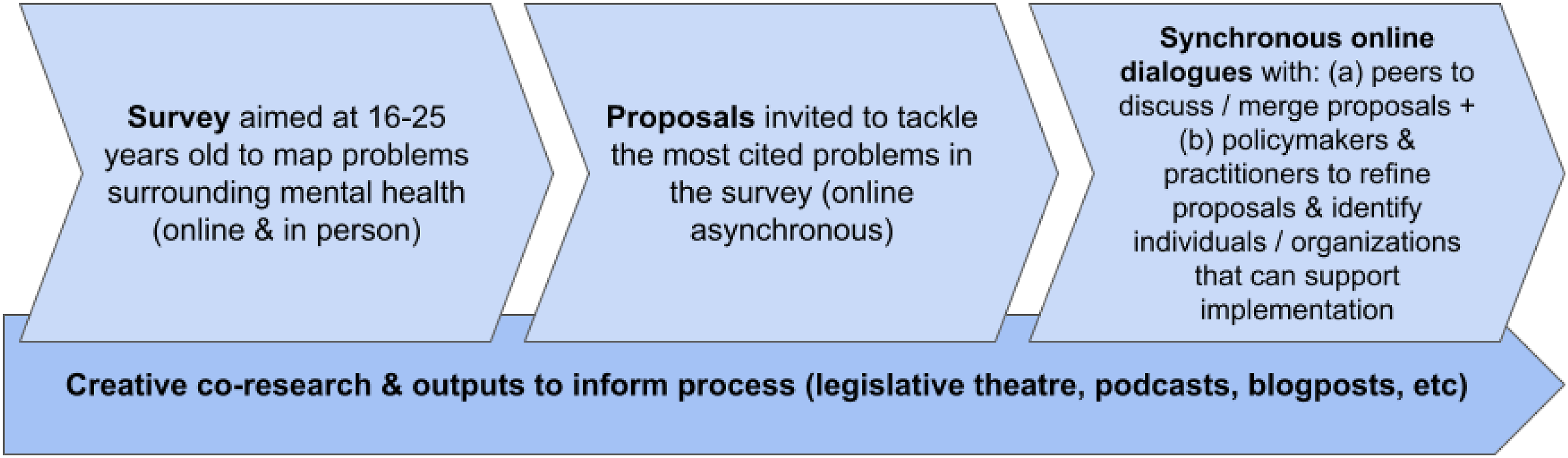
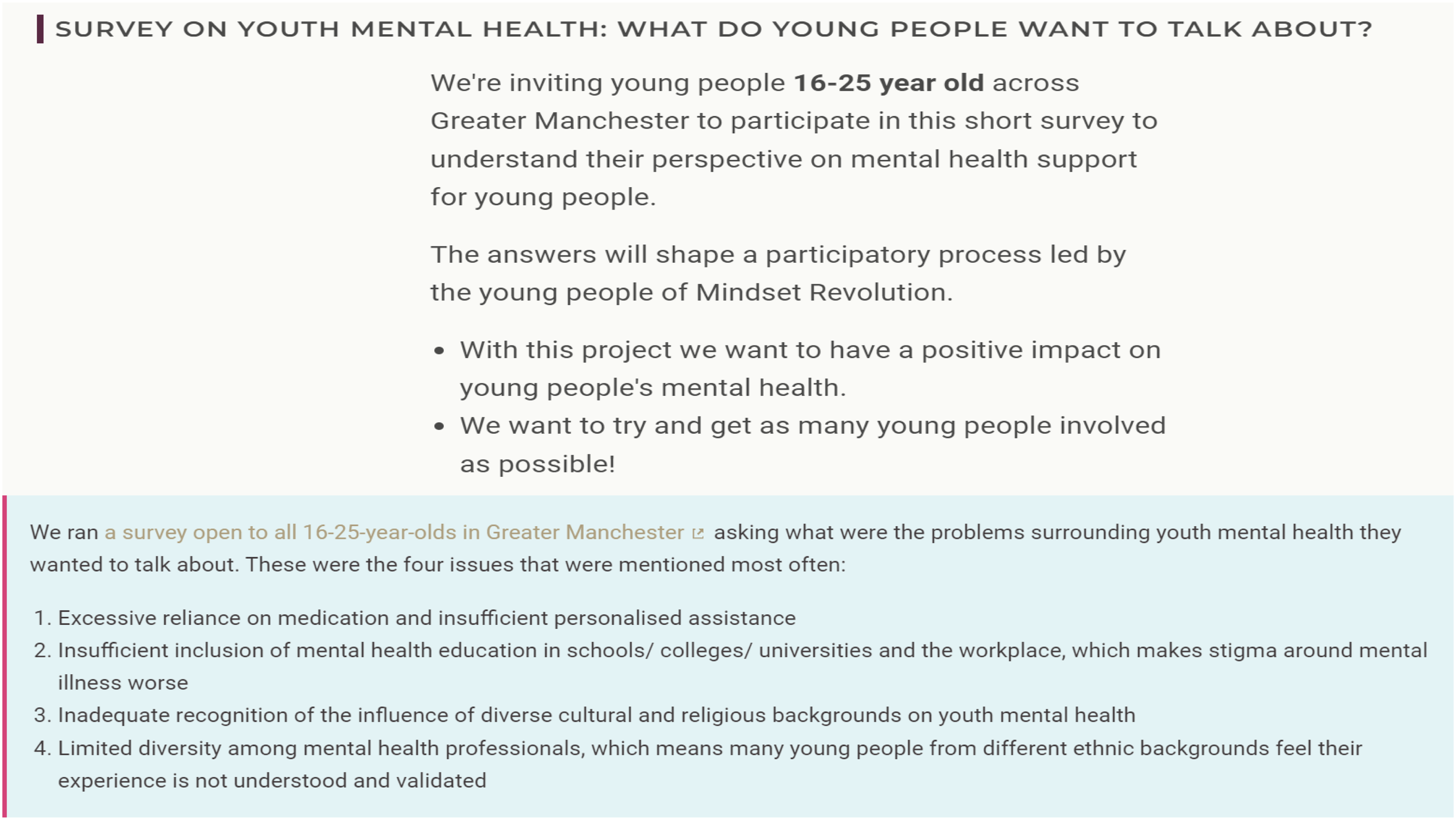
The peer digital designers often pushed the team to reimagine Decidim’s components through creative usage. To incentivise responses to the survey on youth mental health, they suggested a raffle, with prizes promoting local youth-led businesses. The groups developed interactive content, such as the ‘awesome map’
11
of non-medical places across Greater Manchester that are safe for young people feeling stressed and anxious. They integrated other activities, such as a podcast series, into the digital process, as tools to enrich the online participatory dialogues and inform the policy proposals. Eventually, the digital element of the project was recognised as an important resource to support and amplify in-person participation, by both partners and the other groups of young people. We will definitely continue to explore the digital engagement element as well. I don't think that we've given it enough focus this time around (Partner, June 2023).
Visual aspects regarding the platform’s look and feel were particularly important to young people; pictures, colours, videos, project logos that would convey what the group and project were trying to achieve were the focus of long and nuanced discussions. Beyond just the digital participatory process, the platform became a space where young people could create and share resources on youth mental health.
One of the challenges of this work has been the ambition to combine diverse spaces of participation and co-design them with different groups of participants. We construed these different spaces (digital or in-person and related to different strands, whether the digital participatory process, legislative theatre, or participatory research) as assemblages of ‘instrumentalities’ (Ostrom, 1990: 182), which are partially interconnected and may at times operate through analogous forms. For instance, all these strands converged to collaboratively produce the text content of the Manifesto of policy proposals on youth mental health. However, using Decidim to accommodate the creative outputs of legislative theatre or participatory research, circumventing the design limitations of the platform components, was complex to implement. With mixed success, we tried to integrate these different strands, ensuring the digital participatory process did not feel like a separate project all together. We were also keen to develop this space in an open and flexible way that could be built on by the local charities involved in the partnership and incorporated into their current and future work with young people. This also meant embracing some degree of messiness and serendipitous developments, where new components and pages were iteratively added to the platform. This process of hit and miss has inspired ambitious thinking that will inform future iterations of this work, for instance by co-designing with different stakeholders new imaginative possibilities to visualise data and policy ideas as creative data narratives, in order to respond to different ways of communicating and understanding issues.
‘Digital participation on its own will never be enough’
Although belonging to a generation often labelled as ‘digital natives’ (Prensky, 2009), the Mindset Revolution young people privileged in-person interactions, and the platform was understood as a tool to support participation and connections beyond the project, rather than being central to it. Assumptions that young people always feel more comfortable in digital spaces and instinctively know how to navigate them gloss over inequalities of access and skills. Our peer designers, coming from diverse and often disadvantaged backgrounds, were very aware of these digital gaps, which they often experienced directly. During the mapping phase informing the digital participatory process, they suggested that the online survey should be complemented with face-to-face interviews, which they would carry out with peers at their university or in the workplace. We always offered the option to join weekly ‘design’ meetings online and such flexibility was welcome, but most young people preferred attending in person.
Decidim is mostly used for asynchronous participation to submit and vote on proposals, but young people tried to integrate synchronous participation whenever possible, for instance through dialogues between young people and policymakers via synchronous videoconferencing. The live note-taking function on the platform enabled us to keep a record of these conversations revealing young people’s deliberative capacity, but also growing confidence and assertiveness vis-à-vis policymakers. Young participant: Should assessment of diversity awareness be based on patient experience? Particularly young people from diverse backgrounds… Young participant: We need to focus on follow-up: how do we assess that training has actually made a difference?
The dialogues were well planned and timed, but good facilitation requires much practice and a lack of experience combined with connection issues affected at times the quality of the online deliberation. A young participant (July 2023) reflected: The online dialogues were too short to discuss each policy idea in depth [with policymakers]. More time and more in-person meetings [with policymakers] would have been good.
One of the peer researchers shared some overall reflections on the digital participation process: I think the choice to do the meeting [dialogue] a video [Zoom] call had some pros and cons. It was useful, as I figure most people interacting with the website being presented could do so more easily on their own computers and systems which they were used to. However, as all video meetings do it was prone to issues. Issues of general connectivity, microphone feedback, difficulty with interrupting one another, and people present being less confident to speak.
Ultimately, as the young people wrote in their own evaluation playbook (Ahmed et al., p. 29): Digital participation on its own will never be enough. Young people are said to be digital natives, but we need human connections. A Participatory Digital Platform can be fun and a useful tool to share resources and ideas across many people and spaces. But it can only work as part of something that also happens in person. It can help build relationships that already exist, to keep us connected when we can’t meet physically. We also learnt that it takes time for people to feel familiar with a new digital tool and actually use it, as part of their life.
Addressing the risk of tokenism: how young people self-evaluate their social impact and the role of the platform
The peer designers and the other young participants stated at different points that, while they enjoyed the process and were proud to have demonstrated they can design and run a participatory process in creative and effective ways, the focus for them was also on policy impact. They have personal experience of barriers to mental health support and intersectional oppressions in their day-to-day life; what motivated them was not simply an opportunity to learn and build new skills, but the hope to make a difference to their own life and their peers’. The online dialogue with policymakers as critical friends and the Legislative Theatre performance provided opportunities for encounters between young people and policymakers, as part of our ‘flipped consultation’ strategy, where policymakers were invited to youth-led spaces and asked to co-design policy ideas, share advice, and commit to actions that could support implementation. Young participant: The suggestion around pledges and following up is really important. How do we hold people accountable? And I definitely think that kind of like follow-up on the impact with young people. There's something about mapping over time and young people's like experiences and responses of did you feel included? Race ethnicity was like acknowledged, respected and kind of upheld in your therapeutic sessions? Policymaker: GM was one of the pilot sites for PCREF [Patient and Carers Race Equity Framework] so they could advise on some of the ideas for implementing it in other services (online dialogue, June 2023)
However, there was clear frustration at policymakers’ limited engagement in the process and impatience at the slow and nonlinear pace of change in policymaking. I think it's gonna be really interesting to see what comes of the sort of policy tracker […] But you know, people who work for policies often like to say things and not follow through. But yeah, I think it's gonna be really interesting to see what comes of the last sort of section of it all to actually see whether our ideas and our sort of proposals policy proposals actually come into fruition (Peer digital designer, June 2023). It's just like very frustrating to kind of like be putting your whole into talking about these incredibly important things which are really emotionally, taxing for you and to see how like, how like passionate other people are and how much is taken out of them to kind of be in this situation. And when they kind of have somebody be like, well, you know, ‘I only work on Wednesdays […] what can you expect me to do?’ So for me, I guess it's kind of like, I guess, kind of going forward how I feel about it is I've evolved as a part of it, but I do feel like a bit frustrated (Young participant, June 2023).
While at the time of writing some partners continue to support side activities to cement impact, inevitably others are less involved, and all recognise the structural limitations of these micro action research projects to achieve genuine social change. In Freire’s terms (1996, p. 129) these projects might serve as ‘false generosity’ to oppressed groups, as institutions will only superficially, if at all, engage with the claims they raise. While acknowledging the challenges of working within the neoliberal political economy of project funding and knowledge production and in the context of complex policy environments (Bell and Pahl 2018), most young people saw this as part of a long-term process of change through collective action. They and partners still involved use a WhatsApp group to share new opportunities for action on mental health and new projects that build on this work.
In this respect, a crucial role for the platform is being shaped as a space for oversight of implementation of young people’s proposals, through strengthening the functionalities of the ‘policy change tracker’ on Decidim. This could enable channels for open-ended dialogue with policymakers to keep exploring barriers to implementation and how these could be navigated. Civic tech can thus facilitate ‘participatory scrutiny’ or collective oversight, to help maintain attention high on the issues raised by the young people, mobilising supportive action from grassroots partners and the wider community, and thus bridging between participatory democracy and campaigning. Some of the partners are exploring how the platform could bring together elements and ideas that have emerged from various projects on youth mental health in the region. Many among the policymakers involved in the project at various points have shifted their attention elsewhere, but other institutional agendas have become (more or less intentionally) synergic with the Mindset Revolution outcomes. As an example, the young people have been invited to participate in new regional initiatives strengthening youth voice on shaping the curriculum of mental health trainee practitioners, which was one of the proposals included in the Manifesto.
One of the last few sessions of the project was dedicated to reflecting with young people on their experience of being part of the project and their perceived social impact. This work informed the final write-up of the evaluation playbook, where the young people noted: We need to embed this work for sustainable, transformative change. We have learned that it takes a long time for policies to change and progress can be slow. We have demonstrated in Mindset Revolution that young people can contribute to decision-making in mental health – or any other policies! But we need an ongoing process to create the culture change we need for decision-makers to get used to the idea that young people can and should propose ideas for change. The Mindset Revolution movement is only just starting. (Ahmed et al., 2023: p.30)
The Mindset Revolution digital hub might thus continue as a space of experimentation and subversion of youth-adult and citizen-policymaker hierarchies. The poem by one of the peer researchers, as they tried to make sense of Decidim and its role within the project, poignantly captures the spirit of this platform. We’re open We are creating, curating and innovating meaningful conversations An intimate syndicate, A voice for a generation That for many years was left to rot in waiting, A system of vindication Were not lying when we say the whole ordeal is frustrating So we’ve built a platform with a new blueprint that’s a little less invalidating Where we will have open dialogue on our solution It’s a Mindset Revolution
[Extract from Poem by Mindset Revolution peer researcher to describe the Mindset Revolution platform]
Discussion: strengthening youth agency and participation
The literature has broadly acknowledged the importance of youth participation in the digital era (Ambrosino et al., 2023; Cohlmeyer, 2014; Mihailidis, 2015; Quinlan, 2015). Scholars such as Stornaiuolo and Thomas (2017) have looked at how young people use online tools to fight for social justice. However, youth are often ‘observed, measured, tested and enumerated’ by external evaluators (Checkoway and Richard-Schuster, 2003: 24), positioning them ‘as passive social impact evaluation actors, deprived from a real opportunity to analyse and/or engage with their experiences’ (Pawluczuk et al., 2020: 9).
Mindset Revolution rethinks young people’s agency within public participation, by not only co-designing with them spaces of participation but enabling them to evaluate their work and impact, as we recognise that young people have unique expertise, skills and knowledge, and unique perspectives when evaluating the initiatives and tools that serve them (Checkoway and Richard-Schuster, 2003; Holden et al., 2004: 615). This paper has considered the digital component of the project, where young people embraced experimentation, reinventing the ways in which civic tech platforms such as Decidim are used. This process of co-design has contributed to informing the developments of the Safe(r) spaces framework. 12 This is envisaged as (1) a toolkit to help evaluate and monitor digital and hybrid participatory spaces and their inclusiveness in the inception and design phases and the aftermath of such projects, processes, or events; (2) a way to help think more creatively to consider inequalities along race/ethnicity, class and gender lines, as well as nationality and beliefs when organising digital participatory processes; (3) a check-in on the health of a project and process to reflect on some possible aspects to take into account when co-creating a public agenda with different communities. Furthermore, inspired by young people’s inventiveness the digital designers are working on new components that can support more creative digital participation, such as deliberative podcasting and data narratives. The overall aim is to allow for the creation of more accessible tools and margin-responsive collaborative spaces to support participation of excluded groups.
The young people understood the platform less as a finite project and more as an ongoing process of change through the creation and sharing of resources that could raise awareness and open a continuous dialogue with policymakers and wider society, bringing their intersectional perspective on both mental health and participatory policymaking to the fore. This also encouraged collective construction of a political culture that explored a new affective legitimacy of democracy, beyond the initial design choices expected (Bobbio, 2019). To this end, creativity and the right of young people to participate in public affairs are fundamental factors in the design and monitoring of public policies and the democratic spaces where these are decided.
By centring young people’s perspective, this work helped challenge some underlying assumptions about youth digital participation. Assumptions that all young people are inherently digital natives might exacerbate exclusions, as the gap in digital access and skills continue to overlap with class, gender and ethnicity and the relation among them, irrespective of age. Assumptions that young people prefer digital participation over in-person participation glosses over the need for in-person interactions to foster mutual trust, connection and a sense of belonging, and collective creativity, as well as overlooking growing digital fatigue (Liu and He, 2021). This supports other literature (Robinson, 2018) noting how connectivity gaps affecting disadvantaged youth shapes negative digital identities that engender feelings of shame, frustration and even stigmatisation.
Future research could reflect on how civic tech platforms can be developed to be more adaptive to different communities and cultures, and better integrated with in-person participation, to sustain the latter rather than becoming an alternative to it. How do we translate, communicate and enhance the playful and experimental collective action that emerges from arts-based and creative approaches such as Legislative Theatre on a participatory platform? And how do we build on in-person participation to inform a more inclusive, engaging and interactive online participatory experience? Participants’ unique perspective should be central to these design developments. Furthermore, as noted by Dean (2023) digital participation can support a citizen oversight role. To date this role has mainly relied on individual monitoring and reporting. FLOSS and civic tech platforms might instead enable participatory scrutiny that is also embedded in the practice and work of the Commons, thus fostering more collective forms of oversight that can also encourage ongoing dialogue between communities and policymakers, beyond (ant)agonistic relationships.
Conclusion
This paper considers the value of co-designing digital participatory spaces with a diverse group of young people as part of a project on youth mental health that combined digital innovation with arts-based participation and creative research methods. Through a reflective process with the participants/co-designers, who also self-evaluated their involvement in the project, we drew out several lessons on doing political participation with young people.
Firstly, co-designing with a diverse group not just the policy outcomes but the process and space of participation helped reimagine how civic tech can work better for groups whose voice is marginal within the digital realm. This initial work will inform new developments to Decidim to strengthen safety, creative visualisations and responsiveness to different cultures and ways of understanding participation, as we continue to work with different marginalised groups. Bringing these diverse perspectives into a space still occupied for the most part by white, middle class, male designers can support work towards more intersectionally inclusive digital participation.
Secondly, the role of digital within an assemblage of different modes of participation was recalibrated as auxiliary of in-person participation and with a growing focus on its function for collective scrutiny. This is an important and often overlooked aspect of participatory processes that tend to focus on developing recommendations, with limited attention to follow-up.
Thirdly, managing expectations is crucial. Citizens participate in these processes because they expect change, but policymaking is complex and impact is hardly ever linear. Most projects of this kind benefit from small pots of funding and there is limited attention from funders to building institutional leadership to strengthen downstream impact. The risk is that these projects are increasingly perceived as tokenistic, fuelling disengagement. We tried to approach this work as a long-term process, thinking about follow-up and scrutiny from the very beginning and looking for synergies across different funding streams and organisations to embed participation in the longer term and sustain the fragile social capital being built. By working with local partners, we tried to strengthen opportunities for embedding youth participation. Inevitably partners’ stretched resources and diverse (and always evolving) goals and aspirations might also become barriers to a more long-term approach. The various elements of the project are already developing in different directions, as the young people become involved in new, related research and employment. It will be important to check how the digital space will also change in response to these developments, who will continue to use it and how.
Footnotes
Acknowledgements
We are very grateful to the reviewers for their extensive and constructive feedback, INLOGOV colleagues at the University of Birmingham, and project partners for their valuable comments on previous drafts of this paper. We are indebted to all the partners participating in this project and in particular to all the young people whose work, dedication and insights have been inspiring for all of us.
Funding
The author(s) disclosed receipt of the following financial support for the research, authorship, and/or publication of this article: This work was supported by the UKRI/RSA.
