




Abstract
The digitalization of culture and creative industries has presented both challenges and opportunities. To effectively engage audiences and ensure their constant interest, these industries must continually adapt their circulation strategies. The objectives of this study are threefold: 1) analyze the strategies employed by the Marvel Cinematic Universe (MCU) to engage with the fan community; 2) examine the interplay between fiction and reality based on the relationships between characters and actors, as shown in social network posts; and 3) determine how the discourse in the film ‘Spider-Man: No Way Home’ is reconstructed on TikTok, leveraging its particular ‘affordances’ (Gibson, 1979). A mixed methodology approach was utilized, combining the use of Analisa.io software to provide a comprehensive view of the Spider-Man official account’s activities and user engagement with a detailed analysis of the thematic, multimodal, and discursive aspects of TikTok videos published by the account. The findings reveal that the MCU employs TikTok as a marketing tool for the new movie, utilizing three main strategies that align with the characteristics of transmedia storytelling and enhanced audience engagement: 1) strategic selection of publication moments for the growth of follower engagement; 2) extensive use of teasers; and 3) leveraging the presence of actors as a key element to facilitate fan identification.
Keywords
Introduction
Cultural and creative industries (CCIs) are nowadays an umbrella term that broadly refers to sectors whose activities are based on cultural, heritage-related, or artistic values and expressions, ranging widely from news media, TV, radio, movies, newspapers, magazines, music, and advertising to the performing arts (e.g., EY, 2015; Hesmondhalgh, 2019). They have gained significant relevance for research and policy over the past few decades, while also experiencing notable growth and socioeconomic interest (Campbell et al., 2019; Casey and O’Brien, 2020). However, along with these opportunities, the digitalization era has also presented challenges for CCIs, particularly in terms of adapting circulation strategies to effectively reach and engage audiences with their produced texts or other products (Hesmondhalgh, 2019). Among various CCIs, Marvel stands out for its evolution from a comic book publisher to the Marvel Cinematic Universe (MCU). It is an enormous transmedia franchise that extends across multiple media platforms and channels (Jenkins, 2006; Kinder, 1991) and generates an estimated US$23.28 million annually (McLoughlin, 2023). As a medium of circulation for the MCU, TikTok is a social media that enables users to create and share short videos. It emerged in 2016 and has rapidly become one of the most popular platforms worldwide, experiencing significant growth during the COVID-19 pandemic and subsequent lockdowns in many countries (Kale, 2020). Its user base more than doubled from 291.4 million in 2019 to 655.9 million in 2021 (Yuen, 2023). Currently, TikTok boasts over one billion monthly active users (Statista, 2023), particularly appealing to a young audience, with users’ average age ranging between 11 and 24 years (Kolsquare, 2022).
Numerous companies and cultural institutions have a presence on TikTok, which, as a unique social media platform, has transformed the dynamics of CCIs beyond the platform itself (Kaye et al., 2022), influencing CCI production, distribution, and consumption practices (Duffy et al., 2019; Van Dijck and Poell, 2013; Vázquez-Herrero et al., 2022). However, studies examining how CCIs engage with TikTok remain limited (Abidin, 2015, 2016, 2021; Vázquez-Herrero et al., 2022; Wahid et al., 2023). This article uses the Spider-Man movie’s official TikTok account (@spidermanmovie) as a case to understand how the MCU adapted its discourse on the platform over time. To do so, we first consider how it adapted its discourse in response to the level of engagement from its community of users. Second, we examine their adaptation to the platform’s affordances (Gibson, 1979). Affordances, in a basic sense, consider users’ perception of the utility and support that an environment (e.g., TikTok) provides them. These adaptations are mediated by the combination of two different processes: narrative strategies inherent to transmedia artifacts, within a participatory culture and the proliferation of nostalgia in all types of cultural products. Both processes are amplified, in the context of TikTok, with the affordances of visibility, editability, and persistence. Therefore, we can analyze not simply TikTok’s technological or technical features in an abstract sense, but also how users perceive TikTok’s features for different action possibilities. From a sociocultural and constructivist perspective, this approach helps understand how CCIs understand and employ affordances to effectively circulate their texts to their desired audiences. Specifically, this study aims to: 1) analyze the strategies employed by the MCU on TikTok that are directly oriented toward the fan community, considering the date of posting and follower engagement level; 2) examine the interplay between fiction and reality within a social media, particularly in relation to the fusion of (super)heroes and other film characters with the actors and actresses who represent them; 3) identify how the discourse surrounding the Spider-Man movie is reconstructed on TikTok, in line with the platform’s affordances.
Theoretical background
CCIs and marvel
Although the term ‘CCI’ continues to be ‘the subject of extensive debate’ (Casey and O’Brien, 2020: 444) and different related terms are used, two key ideas are already embedded in the original conceptualization of CCIs: the industrialization and commodification of culture. Adorno and Horkheimer (2002) coined the term ‘cultural industry’ to critique the rise of ‘mass culture’ with the advent of industrialization, where culture became accessible to the masses through inventions such as the radio and gramophone. They argued that this cultural production was not a result of the masses themselves but rather something produced for them, leading to the term ‘culture industry’ replacing ‘mass culture’. In other words, the concept connotes that cultural production underwent industrialization, involving mechanized production with a division of labor, thus permitting mass production. Meanwhile, cultural products were transformed into commodities that could be bought, sold, and exchanged (commodification of products), thereby making them available to the masses (Hesmondhalgh, 2019; Moore, 2014).
Hesmondhalgh (2019) added another key characteristic of CCI: marketization. He explained that industrialization and commodification are closely associated with it. As capitalism developed, cultural products became subject to market conditions, as the market became the space where the exchange of these products took place. This is a key element in this study. With marketization, CCIs can no longer survive and thrive on good cultural products alone, but also need to effectively circulate their texts to interested audiences. According to Hesmondhalgh (2019), the products essentially act as ‘texts’ that carry messages to be interpreted by audiences. He even suggested that circulation has garnered more attention from CCIs than production itself: ‘Cultural industries have to find audiences for the texts that symbol creators produce. Usually, this is not a matter of finding the greatest possible mass audience for a product. Different groups of people tend to have different tastes, so much of the work of cultural industry companies attempts to match texts to specific audiences, to find appropriate ways of circulating texts to those audiences and to make audiences aware of the existence of particular texts. This is a risky business. Many texts fail, even those that companies expect to succeed. The upshot of these processes is that cultural industry companies keep a much tighter grip on the circulation of texts than they do on their production’ (Hesmondhalgh, 2019, p. 11, emphasis added).
Consequently, CCIs continuously struggle to find and update their circulation methods to reach and attract audiences to their texts. Digitalization has further complicated this struggle since the 1990s. While it has facilitated the commodification and marketization of texts, thus enabling industry expansion, it has also presented ‘major challenges of revenue, growth, and profitability’ (Hesmondhalgh, 2019: 86) due to the increased accessibility of products on the Internet, which is difficult to control. Moreover, the rise of social media platforms, often referred to as the platformization of cultural products, has transformed their circulation, as well as production and marketization (e.g., Duffy et al., 2019). Therefore, CCIs need to pay closer attention to appropriate circulation methods and understand the evolving logic of social media platforms (Van Dijck and Poell, 2013) as new ones, such as TikTok, emerge (Lacasa, et al., 2022). Therefore, this study focuses not only on evaluating cultural products themselves, specifically the Spider-Man films, but also on the circulation of CCI’s (i.e., Marvel’s) messages and audiences’ reactions to them.
Marvel serves as a successful example of how CCIs are in a constant state of evolution to attract audiences. Originally established as a comic book publisher in 1939, Marvel has since developed the MCU, a transmedia franchise (Jenkins, 2006; Kinder, 1991) that extends across films, network television, streaming series, and comics (e.g., Scott, 2017). Jenkins (2007) popularized the concept of transmedia storytelling, which refers to stories that unfold across multiple media platforms, with each medium making distinct contributions to our understanding of the world. From an economic perspective, the construction of transmedia story worlds primarily considers the audience as consuming subjects, as their comprehension of the characters’ world expands with increased product consumption (Freeman, 2017). Transmedia franchises have come to dominate the current creative landscape, with the MCU often cited as one of the most prolific and profitable examples (Von Stackelberg, 2018a).
(Super)heroes and participatory culture
CCIs have undergone significant transformations by adapting to new media and platforms, with the transmedia franchise model playing a major role since the latter part of the 20th century. This evolution has not only shaped CCIs but has also influenced our understanding of the heroic figure, often portrayed by fictional characters and the broader cultural world they inhabit. Analyzing these changes requires considering two critical aspects. First, the perspective through which the (super)hero is approached in diverse cultural products, such as comics, movies, and video games, has changed substantially in the 20th and early 21st centuries. Second, it is essential to consider the rise of transmedia products within the context of prevailing participatory culture.
Jenkins (2008) identifies three key phases in the representation of heroes and superheroes. During the Golden and Silver Ages (1940s–1960s), comic book franchises revolved around recurring characters with limited narrative flexibility. The 1970s introduced continuity between older and newly created content, giving rise to the concept of the DC Comics and Marvel universes. As discussed in our article, audiences currently engage with ‘multiple versions of the same franchise, each offering different character perspectives and exploring various moments in their lives’ (Jenkins, 2008: 4–5).
These evolutions directly respond to modern audiences’ demands for new (super)heroes who resonate with the complexities of globalized, multicultural societies (Cawelti, 1986; Jenkins, 2008) and reflect the humanization process such figures have undergone (Busquet-Durán, 2012). For example, Spider-Man, along with other fictional characters, such as Bugs Bunny and Mickey Mouse, operate as if they were actors or celebrities, enjoying fame and recognition comparable to that of ‘ordinary’ individuals frequently showcased in the media (Busquet-Durán, 2012). This allows them to feature in various mediums such as TV series, video games, and movies, with each representation contributing to the characters’ overarching narrative (Uricchio and Pearson, 1991).
As of 2020, there was an increase in the number of Spider-Man accounts on TikTok, as well as other content creators (e.g., @straw_hat_goofy, @jstoobs, @emily.the.enginerer) who recognized the platform’s potential for presenting transmedia products, including MCU films (Bacon, 2021). This represents an engagement model that views the audience ‘(…) as a collective of active agents whose work may generate alternative forms of market value’ (Jenkins et al., 2013: 116), particularly on a platform focused on content virality. This concept of spreadable media (Jenkins et al., 2013) in relation to the audience aligns with the development of transmedia storytelling, which involves the integration of fictional elements across multiple channels for very different audiences (Jenkins, 2006; Jenkins et al., 2013). In this technology-mediated context, the narrative is crucial. Following Papacharissi (2015:5), our sensitivities about the world around us are transformed “into stories that we tell, share, and add to, the platforms we use afford these evolving narratives their own distinct texture, or mediality”.
At this point, it is worth noting the relationship between persistence, as one of the affordances of TikTok, and the concepts of spreadable media (Jenkins et al., 2013), participatory culture (Jenkins, 2006), and their impact on transmedia storytelling. According to Treem and Leonardi (2013), persistence refers essentially to the degree of the ability of a post to remain accessible. Its importance lies in that it opens possibilities for the content to be the basis for new uses and practices of communication, as well as for sustaining knowledge. These features align with Jenkins et al. (2013: 196) regarding content ‘with a higher potential for spreadability’, that is, content that is available when and where audiences want it, editable by the audience, reusable, relevant to multiple users, and viral. Spreadability and persistence can thus largely explain the rise of transmedia storytelling, by enabling content and stories to circulate and endure across numerous media and platforms. In the same way, they generate dynamics of participation, which can boost the depth and scope of transmedia artifacts and experiences.
TikTok’s affordances
To analyze TikTok as a medium for the circulation of CCIs, we adopt the affordance theory. We depart from Gibson’s concept and take a sociocultural and constructivist view, adopting the perspectives of social media scholars on the topic (Davis, 2020; Evans et al., 2017; Ronzhyn et al., 2023; Treem and Leonardi, 2013). Initially introduced by Gibson (1979: 127), ‘affordance’ refers to what an environment offers or affords to an organism. In other words, it pertains to the utility or support that the environment is perceived to provide for different action possibilities, depending on the characteristics, features, behaviors, and postures of the organism. The concept of affordance transcends the subjective-objective dichotomy and helps us understand its inadequacy because it is neither solely an objective nor a subjective property, but encompasses both aspects (Gibson, 1979: 121).
The affordance theory has been widely applied in analyzing the social practices of new technologies, including social media (e.g., Evans et al., 2017; Norman, 1988; Ronzhyn et al., 2023; Treem and Leonardi, 2013). In that process, some authors detected ‘inconsistencies’ (Evans et al., 2017) or ‘blurriness’ (Ronzhyn et al., 2023) in the way the concept has been adapted. Evans et al (2017) and Ronzhyn et al. (2023) clarified that affordances are not technological features (e.g., privacy settings, or templates or filters to create content) or outcomes of technology use (e.g., privacy, or posts created and published on the site). We adopt the views of Evans et al (2017), Ronzhyn et al. (2023), and Treem and Leonardi (2013) that affordances are variable and dynamic abilities that emerge from the relationship between the user and the object. This view of affordances and the application of the theory in the analysis of social media have in common with the sociocultural and constructivist views of affordances (e.g., Arriagada and Siles, 2023; Literat and Kligler-Vilenchik, 2021, 2023). This follows Norman’s (1988) understanding of affordances, which popularized the use of the concept in design and human-computer interaction research. He underlines the importance of perception, acknowledging that the affordances could vary based on the needs or perceptions of the actor. In addition, we consider the argument by Nagy and Neff (2015: 2) that affordances could be “imagined” by the users, arising from their expectations “that are not fully realized in conscious, rational knowledge”.
From the framework above, the basic feature of TikTok is that it allows users to present a multimodal discourse in the form of short videos and engage with other users. TikTok provides various resources, such as filters and templates, to facilitate the creation of original videos. Another key feature of TikTok lies in its algorithmic nature, particularly the ‘For You’ page/function, which has contributed to its popularity (e.g., Bhandari and Bimo, 2022; Schellewald, 2021). The algorithm behind the platform promotes ‘content without context’, where videos detach from their creators and are promoted based on algorithmic categorization and calculations
Reflecting on the platform’s key features, the essential real affordances that TikTok provides to its users are visibility, editability, and persistence. Treem and Leonardi (2013: 150), who are well-known for the classification of social media affordances, define visibility as ‘social media afford users the ability to make their behaviors, knowledge, preferences, and communication network connections that were once invisible (or at least very hard to see) visible to others’. In combination with the embedded algorithmic functions, TikTok provides content creators with significant visibility, allowing them to reach many unfamiliar audiences in a short period (see also the concept of virality by Zeng and Abidin (2021:1) and that of spreadability by Jenkins (2013) as discussed above). Further, editability refers to individuals’ ability to dedicate time and effort to craft a text before sharing it with others and to modify or revise it once it has been communicated (Treem and Leonardi, 2013). What is relevant for TikTok is that, for one, it does allow a user to modify or revise the content before it is published, but once it has been posted it loses this affordance. On the other hand, users can use the content published by others on the platform or elsewhere and create new content, in the form of memes and remixes, as most relevant to the study. Finally, persistence refers essentially to the degree of the ability of the post to remain accessible (Treem and Leonardi, 2013), as discussed above. This affordance is particularly relevant to the strategies used by Marvel on the Spider-Man account on TikTok, as we elaborate in the results section. Its importance lies in that it opens possibilities for the contents to be the basis for new uses and practices of communication and sustaining knowledge.
From a sociocultural and constructivist perspective, real affordances are not the only essential affordances, but also the perceived or even ‘imagined’ affordances. TikTok is perceived – or simply ‘imagined’ – to encourage visibility of particular sociocultural contents that appear to have more legitimacy (Davis, 2020), such as comedic and ‘fun’ content (e.g., Matamoros-Fernández, 2023; Schellewald, 2021, 2023), memes (e.g., Gentry, 2022; Han and Kuipers, 2021; Kaye et al., 2022; Zeng and Abidin, 2021; Zulli and Zulli, 2020) or relatable content (e.g., Kennedy, 2020; Schellewald, 2021). The significance and visibility (or spreadability) of mimesis – imitation and replication – on the platform has mainly been seen as TikTok’s original affordance. Zulli and Zulli (2020) and Gentry (2022) argue that TikTok’s logic and design infrastructure encourage mimesis, as users remix or repeat popular videos, sounds, or images rather than creating original videos, as it is faster and easier to gain visibility (Gentry, 2022). As a result, TikTok has promoted different types of memes, including challenging memes, which Marvel also employed, which are unique to this platform (Bonifazi et al., 2022; Literat and Kligler-Vilenchik, 2019; Vizcaíno-Verdú and Abidin, 2022; Vizcaíno-Verdú and Aguaded, 2022).
Furthermore, we consider that simply identifying the affordances is insufficient, whether actual, perceived, or imagined. In line with Davis (2020), it is crucial to understand how the technologies afford for whom and under what circumstances. This idea also relates to the widely accepted notion that affordances are relational and contextual (Evans et al., 2017; Ronzhyn et al., 2023). Therefore, while examining the circulation of cultural products by CCIs, we focus on determining which affordances CCIs value and how they employ them to effectively circulate their texts to their desired audiences, paying meticulous attention to the context and the circumstances in which they do so.
Method
The advent of multi-platform digital contexts has effected transformative changes in research processes, particularly in data acquisition and analysis. Within the realm of cultural industries, Marvel, for instance, proactively generates and disseminates content on social media platforms, aiming to engage with its followers and leverage the diverse multimodal resources offered by the online sphere (Lu and Shen, 2023). From a methodological standpoint, this situation requires the integration of quantitative analyses, relying on substantial amounts of data (Manko, 2021; Montgomery, 2015; Sun and Huo, 2021), with qualitative approaches (O’ Halloran, 2023; O’Halloran et al., 2018). This seeks to unravel the meanings built into the contexts from which these messages originate. A mixed method approach is adopted, the qualitative method contributing to illustrating and further developing the results obtained from the quantitative analysis (McCrudden et al., 2021). In addition, this two-fold approach helps to refine and develop the objectives of the research (Younas et al., 2023).
Scraping social media and TikTok participation
Drawing on insights from mixed methods (Younas et al., 2023) and data visualization (Dougherty and Ilyankou, 2021), this study explores cultural industry practices on TikTok. In this context, scraping social media allows media marketing to investigate several analysis perspectives. Within the area of social sciences, three main approaches are proposed: descriptive, used to comprehend what occurs in reality; predictive, utilized to anticipate future outcomes; and prescriptive, aimed at determining how to enhance reality (Sivarajah et al., 2017). Descriptive studies focus on correlations rather than causation and deductive processes, such as hypothetical-deductive reasoning (Dwivedi et al., 2021; Haig, 2020). This study takes a descriptive approach, designed to depict the dynamics when an industry such as Marvel uses TikTok to promote one of its featured products, the movie ‘Spider-Man: No Way Home’ (2021). To access the data generated from the @spidermanmovie TikTok account (full name Spider-Man Movie) and conduct an initial analysis of the contextual setting, we used the Analisa software. 1 It is a web application used to extract data from the web to obtain marketing information (Boegershausen et al., 2022).
The social media marketing perspective allows us to investigate two key domains, as highlighted by Dwivedi et al. (2021). The first is the context defined by user responses, which are objectively revealed on TikTok through metrics such as engagement rate; it is defined considering factors such as the number of followers, shares, and comments on each post. The second are the marketing strategies employed by the industry to promote its product; this encompasses the timing of message delivery and the potential connections established between them, and are facilitated by various metrics accessible through scraping social media techniques.
Thematic, multimodal, and discourse analysis
Scraping web data has both advantages and disadvantages. One of the benefits is the ability to access data that would otherwise be inaccessible, like all posts on a specific social media account or hashtag. However, one disadvantage is that it becomes challenging to discern the intention and meaning behind the messages. This highlights the need to complement this perspective with other approaches traditionally present in the social sciences. In this case, we draw inspiration from approaches related to reflexive thematic analysis and multimodal discourse analysis (O’Halloran et al., 2018).
The technique of thematic analysis (Braun and Clarke, 2006, 2021) combines both inductive and deductive approaches to capture and encode the intention and meaning of the messages. The aim is to identify a set of themes that allow for coding, moving beyond isolated categories, and enabling the construction of coherent and meaningful interpretations from the data (O’ Halloran, 2023; O’Halloran et al., 2018). Determining these themes requires a process of analysis and interpretation by the researcher. In this study, the thematic analysis proposed is complemented by a multimodal analysis perspective (Jewitt, 2014; Kress, 2010), which considers different modes of communication and representation beyond verbal language. Various studies have conducted multimodal analytics of TikTok videos (Rettberg, 2017; Schellewald, 2021, 2023; Vázquez-Herrero et al., 2022; Vizcaíno-Verdú and Abidin, 2022; Vizcaíno-Verdú and Aguaded, 2022; Wang, 2021). They have analyzed, for example, body movement, hand gestures, facial expressions, spatial relationships, props and costumes (Wang, 2021), or images, audio, and text (Vizcaíno-Verdú and Abidin, 2021). Similarly, this study conducts a contextualized, holistic analysis of TikTok activities, particularly videos published by an account whose meanings are adapted to a target audience and context (i.e., the TikTok platform; Lee and Abidin, 2023).
Discourse analysis is concerned with recognizing that language is social, has a propositional function, and implies consequences for the activity involved. Gee (2014) indicates that meaning is an integration of the ways of saying (informing), doing (action), and being (identity). It is necessary to consider not only the text itself but also the features that contextualize it (Alejandro, 2020; Ismail et al., 2022; Tamássy and Géring, 2022; Vaandering and Reimer, 2021). Alejandro and Zhao (2023) highlight several possible approaches to discourse and text analysis based on a qualitative approach. Among them, in this study, we have combined the analysis of discourse with the thematic analysis, as described above.
Data collection and analysis
We analyzed 74 videos from the @spidermanmovie TikTok account (full name Spider-Man Movie), which is associated with Sony which we accessed through a link on Sony Pictures’ TikTok profile. The total number of videos appearing on the account is analyzed. At the time of data mining, the account had 748,600 subscribers. Most videos were in English (70), two in French, and two in Chinese, although the account targets a global audience.
Analisa.io was used to obtain real-time data on all publications from June 24, 2019 (launch of the account) to May 5, 2022 (see Appendix 1). Analisa.io calculated the engagement level for each video, considering the total likes, comments, number of followers, and posts on the account. It also linked each post to hashtags, captions, and associated music. It also provided a link to each video analyzed and various related metrics, including the number of views, likes, shares, and comments. These metrics correspond to the date the analysis was conducted, which, in our case, is May 5, 2022.
The web application allows downloading a datasheet in Excel or CSV that, once the columns that include textual variables, for example, the link to the videos or music of each item, have been removed, allows performing a series of analyses using Excel pivot tables. Subsequently, data visualization techniques (Dougherty and Ilyankou, 2021) and a descriptive approach were applied using the Tableau software. Visualizations provide insights into follower reactions, capturing their engagement and commitment within the community. In addition, they reveal a time series analysis based on the number of posts, providing insight into the industry’s strategies for engaging with audiences on the platform.
Furthermore, we conducted an analysis supported by thematic and multimodal discourse analysis approaches to determine the intention and meaning conveyed through the posts and formats employed. Following Primig et al. (2023), we approached the data through a collaborative process aimed at identifying the emerging themes. The videos were coded, setting out a framework for analysis that has been modified throughout the process presented in Appendix 2. This framework was inspired by Primig et al. (2023), Schellewald (2021), and other previous studies that conducted a multimodal analysis of TikTok videos (Rettberg, 2017; Vázquez-Herrero et al., 2022; Vizcaíno-Verdú and Abidin, 2022; Wang, 2021). It encompasses three thematic cores, each with a set of categories: 1) video type and intentionality, 2) context and message (narrative), and 3) multimodal language.
Findings
In this section, we show how the video release calendar of the account, narrative strategies of transmedia artifacts, and use of nostalgia are combined through the affordances of TikTok (visibility, editability, and persistence), to increase product visibility and audience engagement. By doing so, we will approach the intentions behind the strategies employed.
Time dimension: Video release calendar
One of the most effective strategies utilized by the Spider-Man account to capture audience interest on TikTok is the careful timing of video releases for promoting films and products. The months with the highest frequency of posts align with the films’ premieres or when promotional campaigns were ongoing across various digital platforms and formats. Figure 1 provides insights into the days, months, and years with the most posts. There are notable differences in the strategies employed by the Marvel account between 2019 and 2022. The months of June 2019, November and December 2021, and March 2022 had a higher frequency of posts. Evolution of the number of posts over time.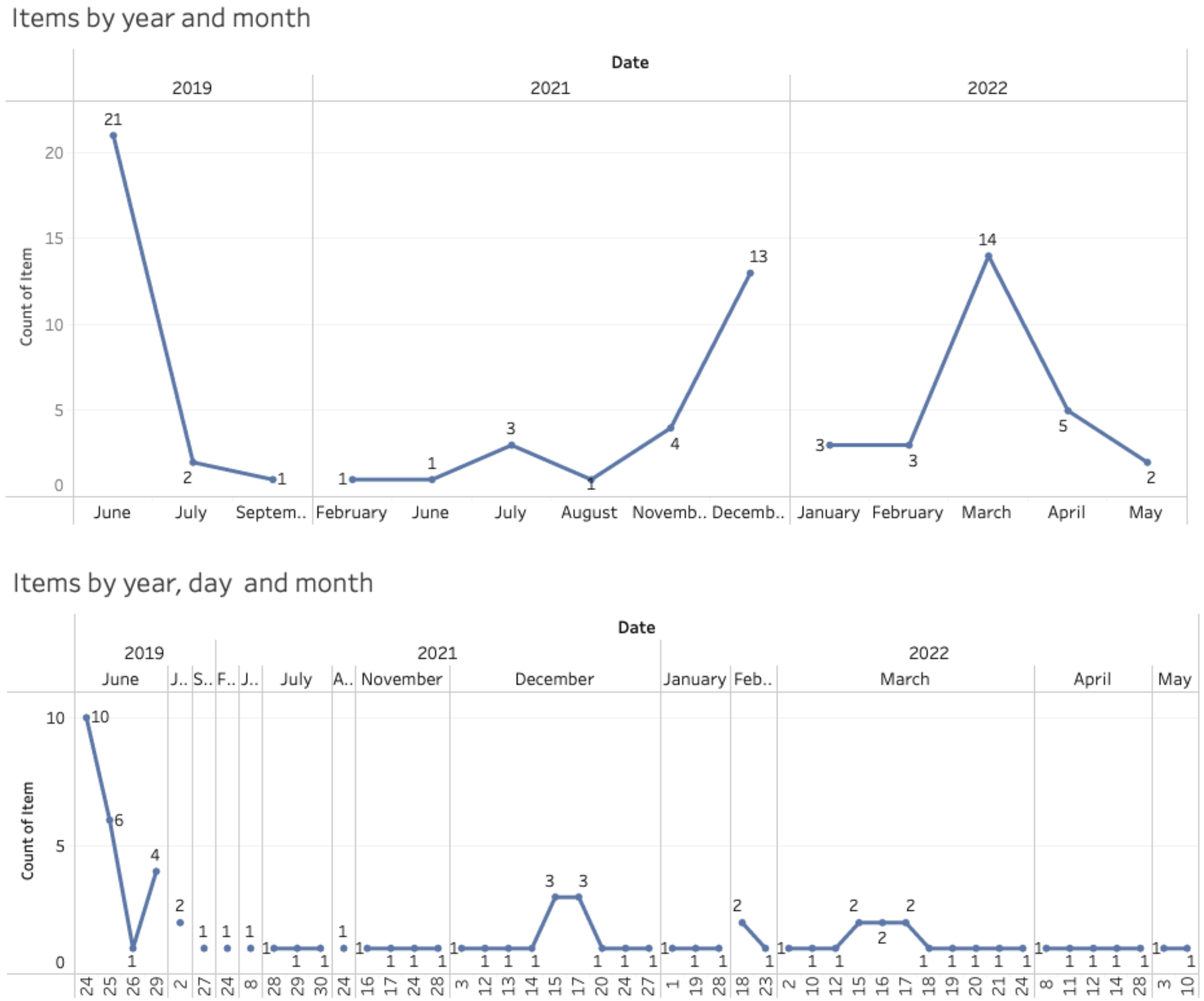
A total of 21 posts from June to July 2019 were for the promotional campaign for ‘Spider-Man: Far from Home’, which premiered in Hollywood during that period. Two notable elements present in those earlier posts were absent in subsequent posts: 1) the call to engage fans through a series of challenges based on seemingly amateur-produced videos and 2) the incorporation of other languages (e.g., French, Mandarin, Korean) through either subtitles or dubbing.
Compared to the 2019 posts, a clearer trend emerged for videos uploaded during 2021, whose focus shifted towards two primary objectives: 1) promoting product consumption and 2) establishing a strong brand image. During the summer months, specifically from June to the end of July, four posts were dedicated to promoting the digital premiere of two older Spider-Man films: ‘Homecoming’ and ‘Far from Home’. However, from August 24 to December 27, all efforts were directed toward keeping the fan community informed about the highly anticipated release of ‘No Way Home’ on December 17 in US theaters. During this period, a distinction can be made between two types of videos: • Official film trailers or teasers, which are longer, more artistic, and less focused on venue-specific promotion. • The remaining 20 videos, while also classified as teasers, followed the audiovisual language conventions prevalent on TikTok (e.g., vertical format, short duration, text on screen, use of filters, visual effects). These videos are produced more economically and consist of fragments from different Spider-Man franchises.
Such distinctions in content and production style allowed for a diverse range of promotional materials while meeting the preferences of the TikTok audience.
Finally, in 2022, a total of 26 videos were published as follows based on the intention toward the fan community: • Videos aimed at promoting the ongoing theatrical release of ‘Spider-Man: No Way Home’ (posted on January 1, 19, and 21 and February 18). • Videos oriented toward promoting the digital and Blu-ray release of the film, scheduled for the months of March and April (the Blu-ray format was released on April 12). • Videos serving as nostalgic reminders of the past 20 years since the premiere of the first installment in the Spider-Man trilogy of the 21st century. These videos revisit iconic characters, serving as a gateway for new fans to explore lesser-known authors, stories, events, and networks of characters from previous installments, encompassing comics, movies, and series (Mieth, 2021). These videos aim to facilitate the consumption of films within the franchise, even in the absence of new or unpublished content for the fan community.
These diverse categories of videos not only promote ongoing and upcoming releases, but also leverage nostalgia to engage the fan community. This representation of videos reflects the obsession of CCIs today to monetize the audience’s need (induced or not) to connect with the past, with the objective ‘to increase the economic viability of owned intellectual property, brands, and characters’ (Lizardi, 2020: 149). By reiterating and recreating iconic characters, these videos build bridges to previous installments, fostering interest in the franchise and expanding its reach to new audiences. This yearning for the past confronts the audience with a poignant and painful truth: the past is irretrievable, though vividly relived in these nostalgic videos (Batcho, 2020). From the analysis of the dates and publications, the posts are concentrated in months with major holidays – March-April (Easter) and December (Christmas) – when people seem to visit the cinemas more. They also coincided with the premiere of ‘Spider-Man: No Way Home’ in US cinemas in December 2021, and the international digital and Blue Ray release on April 12, 2022.
Figure 2 provides examples of the content featured in the three videos, considering their posting schedule. The first video (item 27) was a brief 7-s teaser, including the iconic Spider-Man character as a meme to celebrate the new year. The second video (item 14) serves as a clear illustration of how elements from peripheral aspects of film content (scenes unrelated to the main plot) are creatively employed to recreate content for specific celebrations. In this case, the character Goblin, also known as the Green Goblin, was used to send a greeting for St Patrick’s Day. The final video (item 8), featuring renowned basketball player Ja Morant, was part of an official campaign that gained significant traction on the platform, as explained below. Adaptations of Spider-Man’s narrative on TikTok, highlighting the influence of publication timing.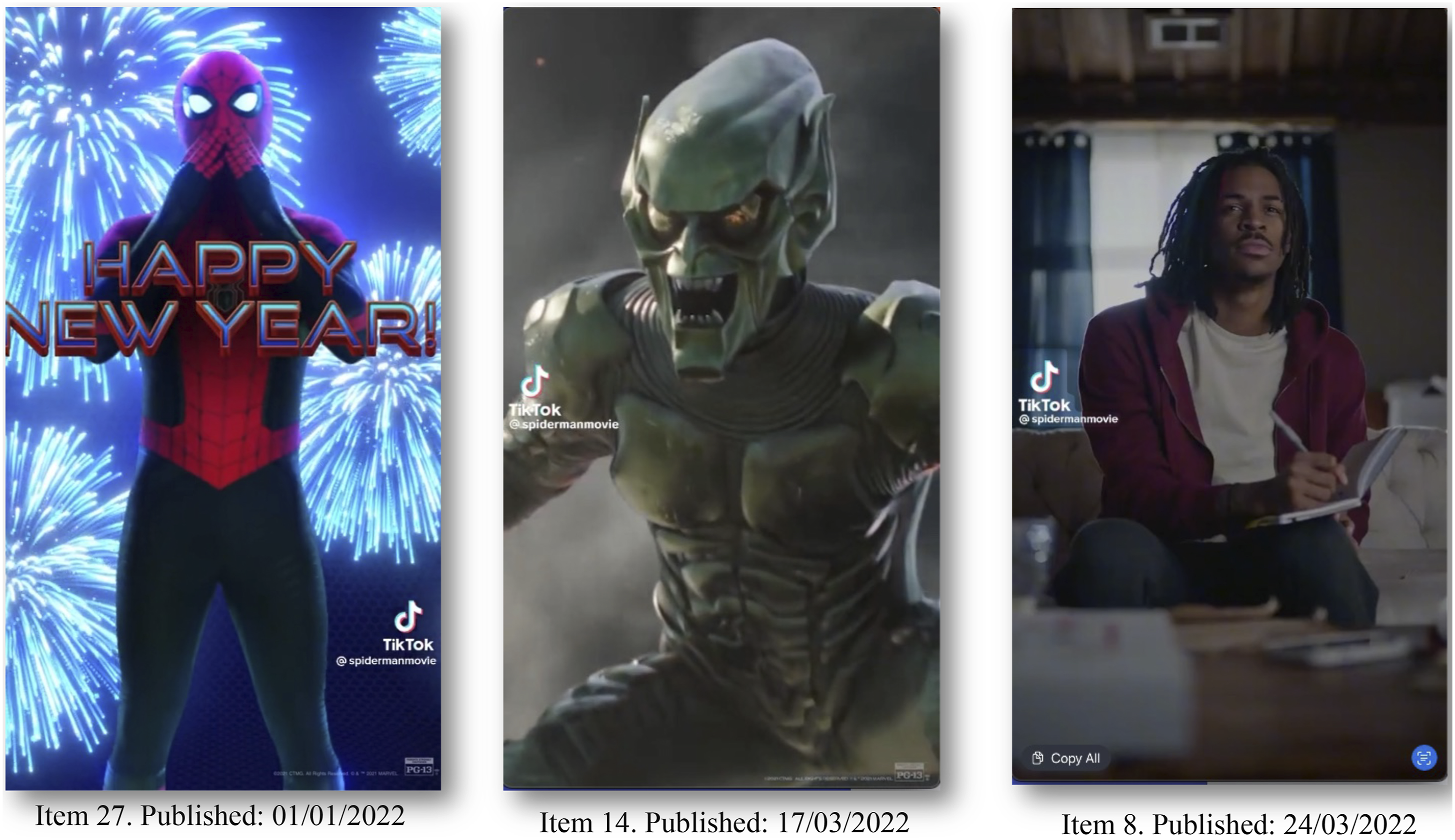
The first example shows how TikTok facilitates the connection and adaptation of different scenes, events, and moments – even those featuring the character of Spider-Man – from narratives of Marvel films that were reconceptualized for adaptation to a DVD format or digital downloads to promote repeated consumption. Although these videos do not appear to conform to a clear format strategy, they operate under the logic of transmedia narrative, where narrative expansions are created based on the timing of the publication (Freeman, 2017). In other words, they are developed with a sense of contingency and unpredictability, heavily influenced by audience responses, rather than a predefined and apparent strategy.
Industry strategies to increase audience engagement
To measure the Spider-Man account’s level of audience engagement, we use the engagement rate. It is a key metric, a relational measure provided by Analisa.io, and includes the level of interaction of followers with the content. It is calculated using the following formula: ‘Total engagement (likes and comments) divided by total follower count, divided by the number of total posts’. 2 Appendix 1 includes a list of the videos considering engagement, duration, and posting date.
Figure 3 illustrates the engagement levels for different posts. Notably, items 38 and 12 stand out with exceptionally high engagement scores of 122.12 and 121.73, respectively. They far exceed the following-on-the-list scores of items 40 (34.15), 23 (30.33), and 8 (21.71), which were posted in December 2021, February, and March 2022, respectively. Item 40 is part of a serialized publication to promote the film’s premiere in December 2021. The heightened engagement can be attributed to audience anticipation and excitement generated by this type of publication. By contrast, items 23 (February 2022) and 8 (March 2022) relate more to the development of the narrative surrounding the MCU brand and the need to sustain interest in the stories post-premiere. These posts capitalize on fan engagement through the participation of key actors (Holland and Batalon) and celebrities (Ja Morant). Items 72 (10.42), 30 (10.82), 69 (11.57), 39 (11.62), 17 (12.50), 31 (15.95), and 16 (16.53) employ the following strategies: 1) emphasizing the temporal dimension in the publications and 2) leveraging the presence of actors either as themselves or in character, along with appearances by celebrities, to enhance audience engagement. Engagement of videos, considering the month of posting.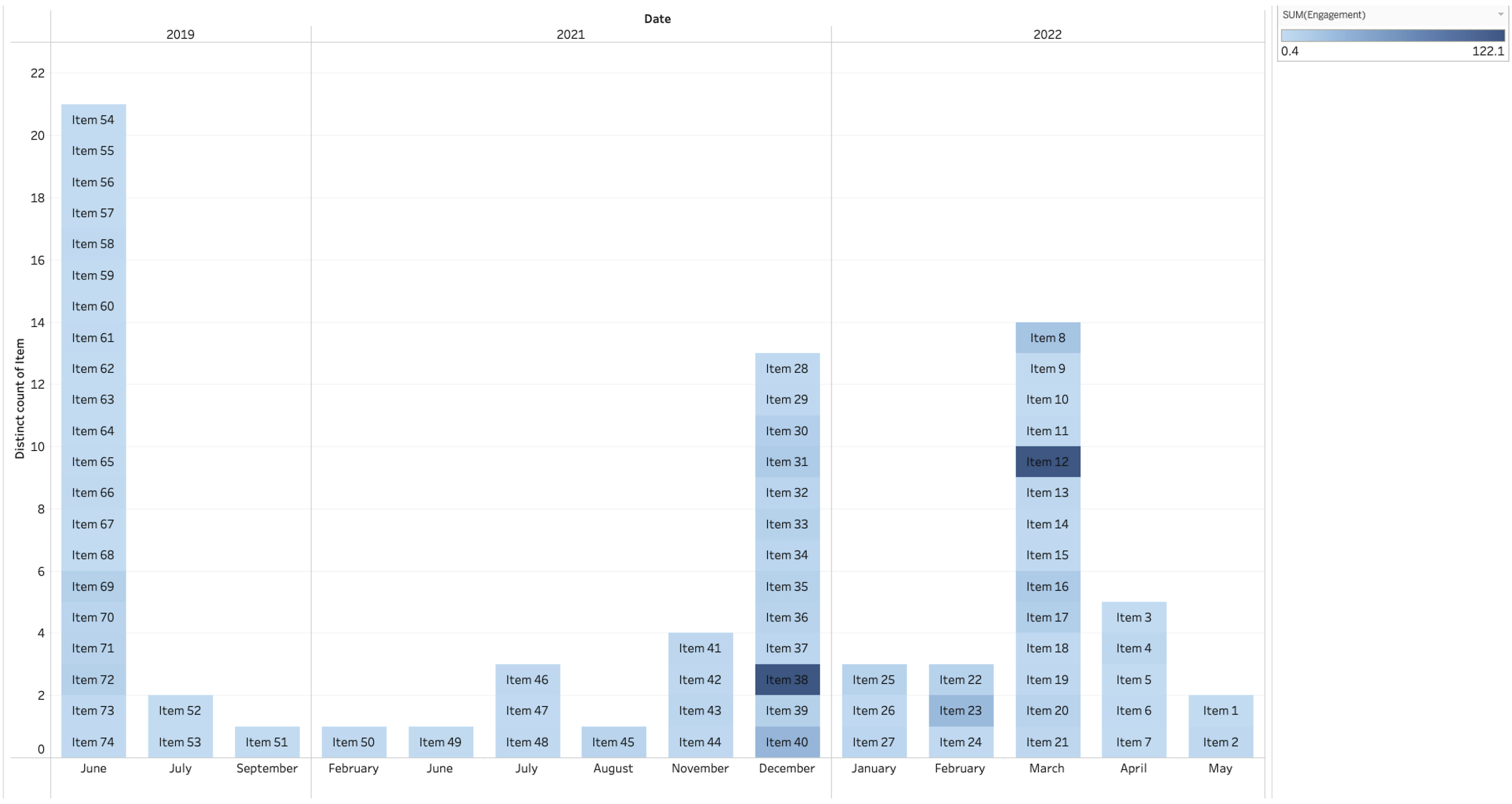
Below, we comprehensively analyze the account’s strategies, especially focusing on items 38 and 12, which generated a higher level of audience engagement. Although both videos promote ‘Spider-Man: No Way Home’, they were posted several months apart. These videos illustrate the paradigm shift described by Von Stackelberg (2018b) which is shaped by the transmedial evolution of cultural industries and the concurrent existence or combination of two production models. This shift, from character-centered transmedia productions that center around characters to franchises that are primarily based on narrative, is exemplified by the films produced by the MCU in the 2000s. According to Freeman (2017: 66–67), a choice is made for ‘either a parallel universe with alternate versions of the characters’ stories or a systematic dispersal of the characters and their stories across media’, based on the ultimate profitability of the original film. This insightful transition encapsulates the changing landscape of cultural industries, which adapts to the ever-evolving needs and interests of audiences across the globe.
In the case of item 38, its publication coincided with the theatrical release of a series of 10 videos published between December 12 and 20, 2021, none of which reached the level of engagement mentioned above. From a narrative perspective, item 38 followed a strategy similar to the other videos released for films in 2021 and 2022. These videos focused more on the presence of actors and their interactions rather than revealing fundamental aspects of the story or character development. As depicted in Figure 4, the video briefly featured the main protagonists (Holland, Zendaya, Batalon) announcing the premiere in theaters. It used cryptic images and texts edited from snippets of the film to engage the audience. The video created a stark contrast between the actors’ glamorous attires (1–6 s) and the series of intense action sequences between Spider-Man and his antagonists, Doctor Strange (6 s) and Doctor Octopus (9–11 s). ‘Spider-Man: No Way Home’ release (item 38, posted on December 18, 2021).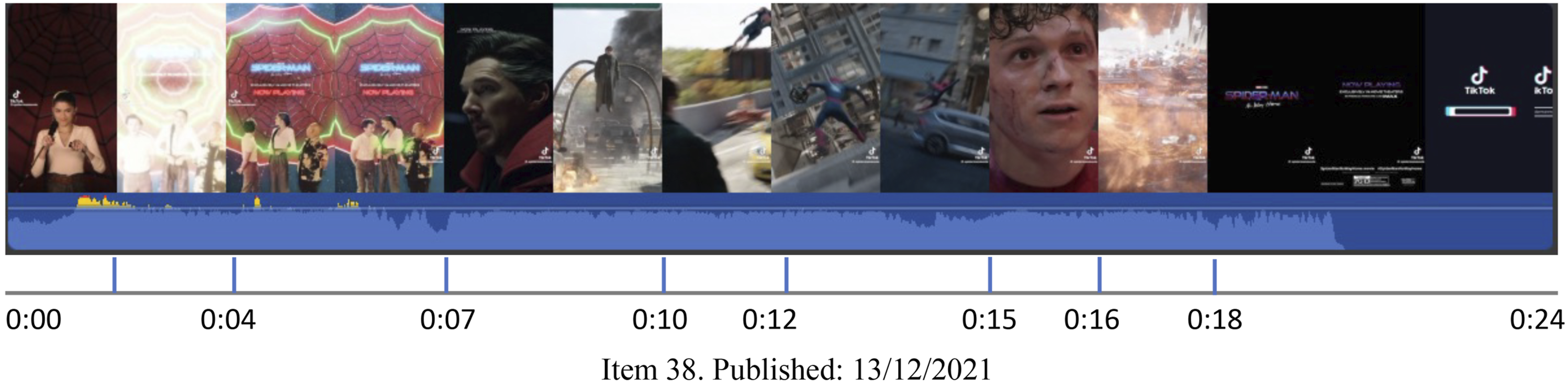
As shown in subsection 4.1, there is a change in the account concerning the type of videos between 2019 and 2021. This change may be related to industry adaptations to the TikTok medium. From 2021 onward, a more conscious use of both the type of content that can generate interaction and the use of TikTok’s affordances. Content matters to the extent that it is supported by figures (the actors and the characters they represent) with whom the audience can identify. It seems contradictory to the dynamic functioning of transmedia narratives generally based on ‘complex fictional worlds which can sustain multiple interrelated characters and their stories’ (Jenkins, 2007, para. 5). However, it is not if we consider how storytelling practices are enhanced by using TikTok’s visibility and persistence, as well as by its capacity to produce outcomes that evoke affective reactions in the audience (Papacharissi, 2015).
From this perspective, both the roles of the actors and the hero figure in the analyzed videos have the function of outcome. On the one hand, they anchor the audience in the iterations of the stories; on the other hand, they offer unity to the rest of the videos on the account, in addition to providing ‘a sense of permanence and continuity within the fictional universe’ (Jenkins et al., 2013: 132). TikTok’s affordances, by contrast, are how this audience can achieve its goal: accessing and viewing the content (Evans et al., 2017).
Item 12 (Figure 5) provided more revealing content about the film’s plot and its significance within the transmedia narrative context. The fact that it intended to promote the digital release, separate from its official release months earlier, allowed for the disclosure of crucial plot elements. The video showcased the three actors who have portrayed Peter Parker over the past 20 years (Maguire, Garfield, and Holland), appearing together from 1:01 to 1:06. It also featured two actresses (Stone and Zendaya) who have played the love interest of Peter Parker/Spider-Man. Announcement of the digital premiere of ‘Spider-Man: No Way Home’ (item 12, posted March 18, 2022).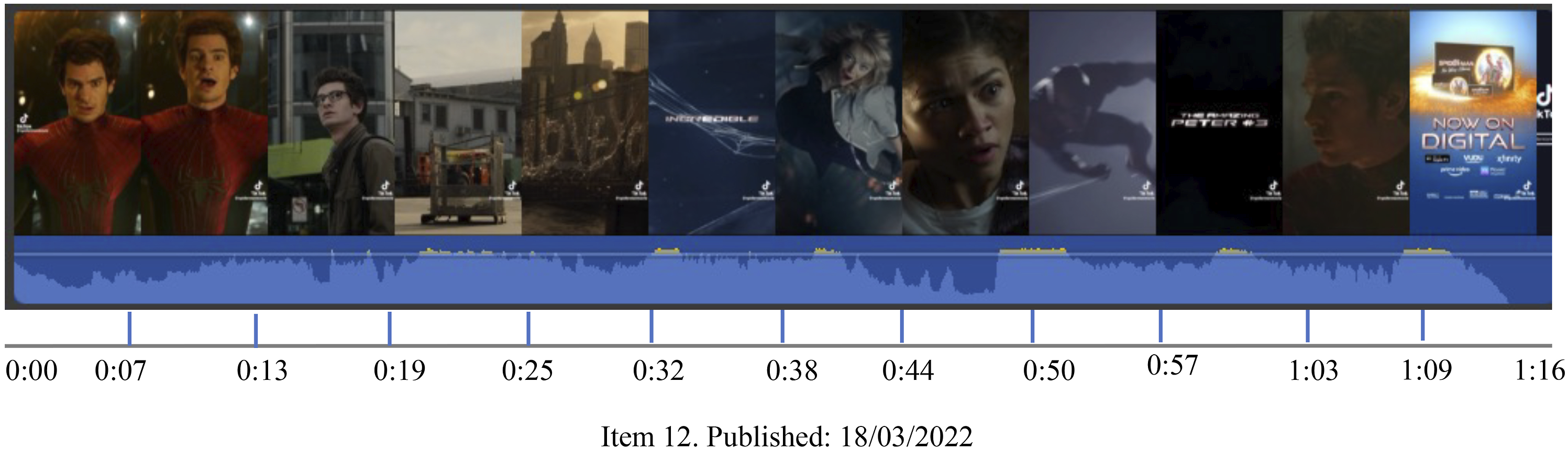
Figure 5 presents an intertextual relationship of the complex interpretation between the Spider-Man trilogy and duology, and other videos and productions shared on the TikTok account. Building on Freeman’s (2017) concept, the narrative is constructed with characters that transition across different Spider-Man iterations, demonstrating to the audience that a story can exist within another world and evolve in diverse directions. This promotional video for ‘Spider-Man: No Way Home’, not only serves to promote the film, but also functions as a narrative bridge connecting characters (the three Spider-Men and their love interests) from different Spider-Man film eras. Maguire’s Spider-Man is remembered for his involvement in Raimi’s original trilogy (2002-2007), while Garfield reprises his role from the Webb-directed films known as the duology (2012-2014). In the case of Holland, his character is rooted in the most recent trilogy directed by Watts (2017-2021). The video significantly highlights Garfield’s Spider-Man redemption in a scene that mirrors the tragic death of Gwen Stacy, a role played by Emma Stone in Webb’s duology, through his success in saving MJ (33-41 s), played by Zendaya, associated with Watts’ trilogy. This scene not only ties their stories together but also provides emotional closure, underscoring how Spider-Man’s distinct storylines converge and redeem each other (Luna, 2022).
It is fundamental to analyze the use of color, music, and the interrelation of past and present scenes to understand how the narrative is constructed. Following Van Leewen (2022), color always confers meaning. In most scenes, intense and somewhat somber colors (brown, red, dark blue) predominate, except for those that recall specific moments in the life of Peter Parker represented by Garfield (14-24 s). The color also shows his vital transition, symbolized by his love affair with Gwen. Thus, in a 7-s time frame (25–32 s), the colors are, again, darker, foreshadowing Gwen’s death, which is glimpsed but not explicitly shown. The use of music to accompany emotionally charged scenes is noteworthy, as it aims to emphasize the nostalgic aspect of the narrative. The soundtrack carries significant narrative weight during the film and conveys the brand image of the MCU and its characters. Regarding nostalgia, this example anticipates what we develop in more depth in section 4.3 as a strategy to increase audience engagement and visibility. The interrelation of scenes is carried out so that, in the first 32 s, it is difficult to distinguish between the characters and stories of the past and present. It seems to respond to one of the main motivations of the film ‘Spider-Man: No Way Home’: the celebration of the character of Spider-Man, which transcends beyond the actors who have portrayed him. The first seconds (1–9 s) place us in the present: the film’s narrative climax, where some of the main characters and the central conflict (Spider-Man’s identity) converge. They are also intended to guide the construction of the meaning of the last seconds of the video (59 s–1: 07 min). For those who do not know the story or are unfamiliar with the plot, this sequence facilitates understanding the joint appearance of the three Spider-Men. However, for those who already know the denouement, it is a humorous scene that lightens the tension and emotionality of the previous sequences.
These publications respond to the globalization of entertainment, extending the lifespan of products indefinitely through various formats. Moreover, the development of fan communities surrounding franchises involves utilizing fans’ personal and social connections (Von Stackelberg, 2018a). In the case TikTok becomes a platform to promote the different Spider-Man trilogy and duology. Consequently, it is not surprising that the video analyzed received the most comments (18,700), shares by followers (24,200), and inspired the most fan recreations on the platform using its music (67 videos).
Actors and (super)heroes: Integration of reality and fiction
The account utilizes the presence of the protagonists and, to a lesser extent, of the celebrities associated with the MCU to increase community engagement. These interventions are analyzed as part of the 74 videos and, along with the temporal dimension, serve as fundamental elements to understand the dissemination and distribution of content and user responses.
Discursively, one common practice to establish a connection with the audience is through the integration of reality and fiction. This approach shapes the construction of narratives and characters. Within this category, there are videos in which actors project their personalities, albeit in a measured manner, allowing viewers to relate to the glimpsed beliefs and social roles (Llorente-Barroso et al., 2022). This idealized projection prevents actors from conveying controversial messages and potentially harming their relationship with the brands and companies they represent (Eyal et al., 2020). These videos involve a certain degree of fictionalization in the treatment of actors, blurring the line between reality and the characteristics (e.g., being approachable, friendly, and loyal) associated with them, partly due to the characters they portray.
In Figure 6, we observe how the names of the actor/actress and the character they portray in ‘Spider-Man: No Way Home’ are highlighted (1–2 s). The significance of this video lies in the palpable sense of intimacy between the two protagonists (Holland and Zendaya), which is aimed at fostering a closer connection with the fans. They appear in a relaxed interview, exchanging private jokes and puns. The video is a condensed version of a much longer promotional interview (11.33 m) published on YouTube, where they answer fan questions about their preferences. However, the promotional aspect is subtly concealed in the TikTok release. While the film itself is not explicitly mentioned, glimpses of its announcement can be seen in the background during Zendaya’s appearance. As discussed in Section 2.2, this video embodies three characteristics representative of TikTok from a social and cultural standpoint, which aim to enhance the visibility of the content shared through TikTok’s features: • Its potential as a memetic text (Shifman, 2013; Zulli and Zulli, 2020). It is part of a series of content on the TikTok account with the same or similar communicative function and is susceptible to be made visible, disseminated, imitated, and so on through the likes, shares, and comments of the audience. • The incorporation of humor and comedy. In short, this is light content, which allegedly allows connecting with the audience, making the content visible, increasing participation and, thus, engagement. • The opportunity for users to identify with the protagonists (relatability), from the personality, or what transcends it, of the actors. This feeling of closeness and relationality is the result of what some studies have called “algorithmic closeness” (Krutrök, 2021; Madox and Gill, 2023), by which users see themselves reflected through the algorithm. ‘Spider-Man: No Way Home’, promotion by Holland and Zendaya (item 36, posted December 15, 2021).
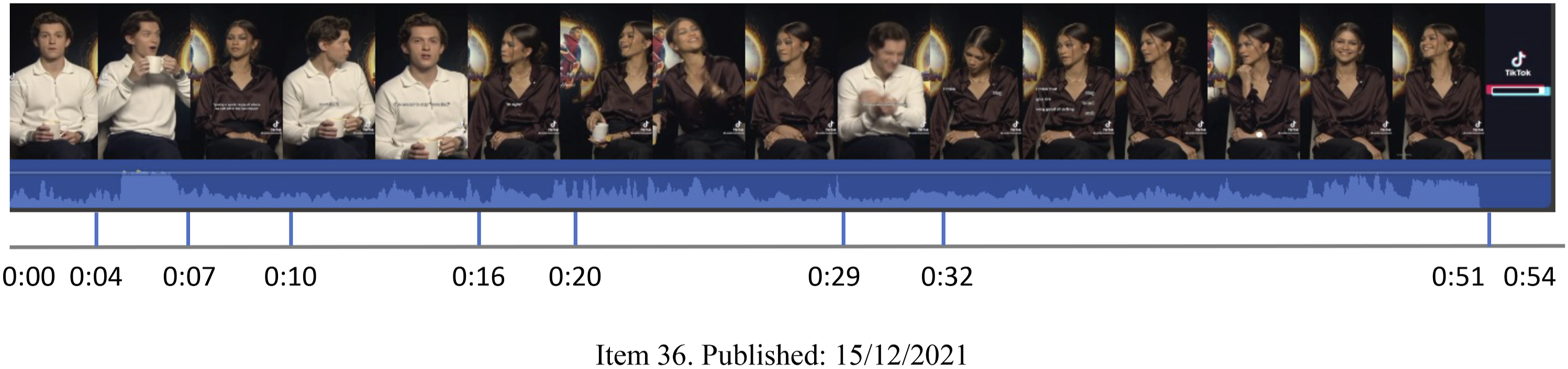
These elements converge in the editing of temporary text annotations in the video, which summarize actors’ interventions and their possible interpretations. The presentation of the actors, including the colors used in their outfits (cream and brown) and the type of framing (medium shot), also plays a significant role in determining the level of literal and figurative distance in their interactions (Kress and Van Leeuwen, 2021). Such visual choices contribute to the portrayal of stability and tranquility in the image they project.
The video serves as an announcement for the premiere of ‘Spider-Man: No Way Home’ through an interview featuring two of the main protagonists. Additionally, as depicted in Figure 7, certain appearances evoke a sense of nostalgic revisitation, a prevalent theme in contemporary cultural products such as ‘Stranger Things’, ‘Super 8’, and ‘Ready Player One’. This nostalgic approach aims to create a diverse fan community encompassing various age groups with different tastes (fans of comic book movies) (McCarthy, 2019). Within this context, the inclusion of iconic figures such as Stan Lee (1–7 s in item 19) and the portrayal of Spider-Man from the previous trilogy and duology (items 19 and 21) carry a deeper significance. Such strategies emphasize the continuity of the narrative at a time when audiences consume ‘multiple versions of the same franchise, each with different conceptions of the character’ (Jenkins, 2008: 20). Promotion of previous Spider-Man films in digital format (item 19, posted on March 12, 2022, and item 21, posted on March 2, 2022).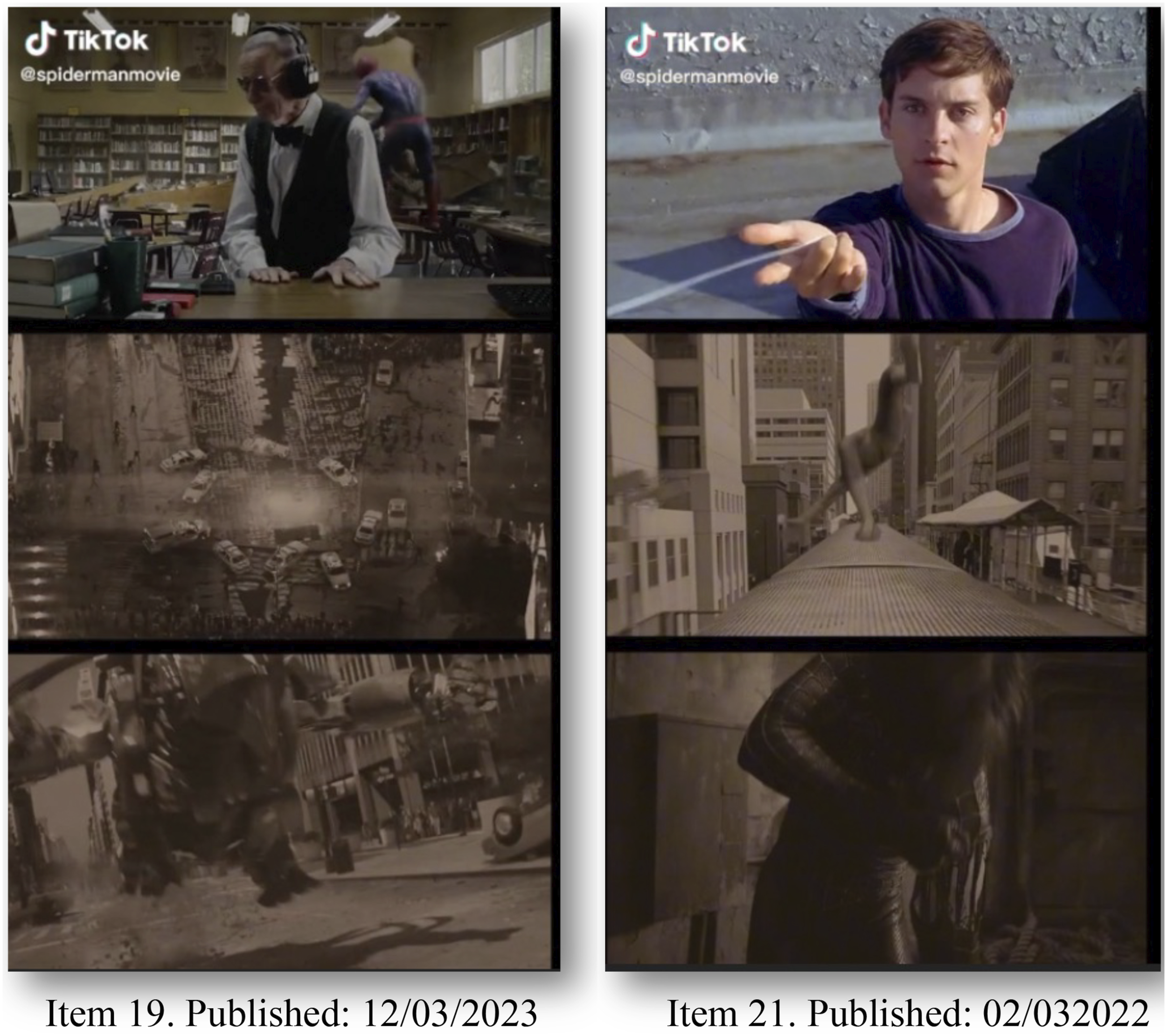
The recreation of the past in these videos illustrates how consumerism influences individual identities and collective memory (McCarthy, 2019). The nostalgic exploitation observed is not casual. Current research on memory, nostalgia, and media in their relationship with nostalgia (Baer, 2001; Boym, 2007, 2008; Lizardi, 2015, 2020; Niemeyer, 2014) examines their role in the evolution of consumption practices. In this sense, there is a direct relationship between the emergence of an industry oriented to ‘commodifying our collective ache not just for the past, but for flawless worlds’ (Tanner, 2021: 105) and how it is decided to represent (an idealized) reality through various media, platforms, and media formats. These two examples (items 19 and 21) embody a convergence of the strategies discussed thus far. First, the timing of the video releases aligns with a specific advertising objective (both published in February 2022, only 10 days apart). They also emphasize iconic actors and characters within the transmedia narrative of the Spider-Man franchises directed by Sam Reimi (produced between 2002 and 2007) and Mark Webb’s duology (produced between 2012 and 2014) (Mendelson, 2022). In other words, nostalgia and the mentioned development of transmedia are two processes that reinforce each other. Transmedia narratives offer infinite possibilities for revisiting stories, characters, and content. The aim is to increase and prolong the contact with the audience, who are offered the opportunity to delve deeper into the stories that matter to them (Jenkins et al., 2013); however, as data show, this can only be achieved sometimes. Consequently, the level of engagement of both videos is significantly lower (item 19, 3.27; item 21, 4.53) than that of previously analyzed examples in section 4.2 (item 12).
As we have seen, these videos not only seek to appeal to those who love the original Spiderman products but ‘instill an interest in these older texts for new audiences who are possibly too young to know the original’ (Lizardi, 2015: 106), particularly on TikTok. The videos’ format also exhibits numerous shared elements. Each video presents three notable scenes from the respective trilogy and duology, arranged to resemble sepia-colored celluloid paper. Both videos employ similar experiential metaphors, utilizing the color scheme, format (triptych), epic music, and action scene selection to guide user interpretation and engagement. This idea of experiential metaphor ‘focuses on a particular kind of metaphoric transference, the transference of our experience of concrete material qualities to more abstract ideas relating to these qualities’ (Van Leewen, 2022, para. 1). In this case, we interpret the use of color, music, and scenes as a narrative strategy that benefits from the affordances of TikTok (‘visibility, editability, and persistence’). These three elements will be briefly discussed below.
Both color and format offer textual coherence and cohesion, which are essential in this context of fragmented realities (Van Leewen, 2022). There is an adaptation of the polyvision film format, in which simultaneous and juxtaposed scenes are presented on a vertical screen. In this case, a succession of scenes is reproduced one after the other and their succession is codified using color (sepia indicates interrupted scenes). Music also plays a fundamental role. The opening scenes are seemingly quiet. Item 19 opens with a fragment of classical music, which marks the visual contrast between the medium shot showing the cameo of Stan Lee, who listens to the music calmly with his headphones on, and the chaos in the background, which shows a fight scene between Spider-Man and Lizard. In item 21, the music metaphorically represents the journey of the Peter Parker/Spider-Man character. These opening moments are a prelude to what people see and hear seconds later: action scenes.
Nevertheless, although the format is similar in both cases, the selection of scenes in item 21 is especially significant, as they represent, in this order, how Peter Parker learns to control the ability to throw webs (1–10 s); how Spider-Man confronts one of his main enemies, Doctor Octopus (11–22 s); and how Peter Parker/Spider-Man tries to get rid of the black suit, Symbiote (23–28 s). In other words, in just 30 s, it conveys essential aspects of the film’s story and the character’s development. From the discovery of his powers and the effort required to control them to the internal struggle between good and the darker aspects of his personality, symbolized in the black suit (Symbiote).
It is striking that, although they follow the same strategies (i.e., timing of publication, use of nostalgia, choice of relevant/impactful scenes) as other videos of the account analyzed in previous sections (item 12), they do not receive the same level of engagement and visibility. We can only speculate two possible motivations: (1) the need for more contemporary characters and (2) the choice of action scenes in these examples that may or may not appeal to the audience’s interests. Item 12, on the contrary, is not an essential action scene but rather the development of the love story between Peter Parker and Gwen Stacy, as presented in Webb’s duology, and its veiled ending. This story serves not only to connect past and present stories but also to justify the presence of specific characters in the present, such as MJ, portrayed by Zendaya.
Uses and meanings of teasers: Affordances and transmedia narratives
In terms of content and intentionality, videos are viewed as products that align with the characteristics of transmedia narratives while adapting to the practices of TikTok users. Following Schellewald’s (2021) classification, they can be categorized as comedy, commun life, documentary, explanatory, interactive, and meta-communication, to which we added teasers/trailers. The analysis results indicate that, between 2019 and 2022, most videos (47) published through the official Spider-Man TikTok account were teasers, which, in the context of the Spider-Man account, serve two primary objectives: 1) promote the consumption of Spider-Man products and 2) disseminate and solidify the values of the MCU through diverse contents.
A paradigmatic example of this type of publication is represented in Figure 8 (item 40 of Figure 3), which garnered high engagement (34.15). From a communicative perspective, it constitutes an act of speech (Halliday, 2014; Kress and Van Leeuwen, 2021) that demands a specific response from the recipient – a like, comment, share, and ultimately, the purchase of movie tickets. The textual overlays (‘Tickets on Sale Now, Dude’), accompanying message (‘DUDE! Get your #SpiderManNoWayHome tickets NOW!’), and action-packed images featuring significant characters form a multimodal semiotic production tailored to the platform’s affordances. Promotion of the premiere of ‘Spider-Man: No Way Home’ (item 4, posted on December 3, 2021).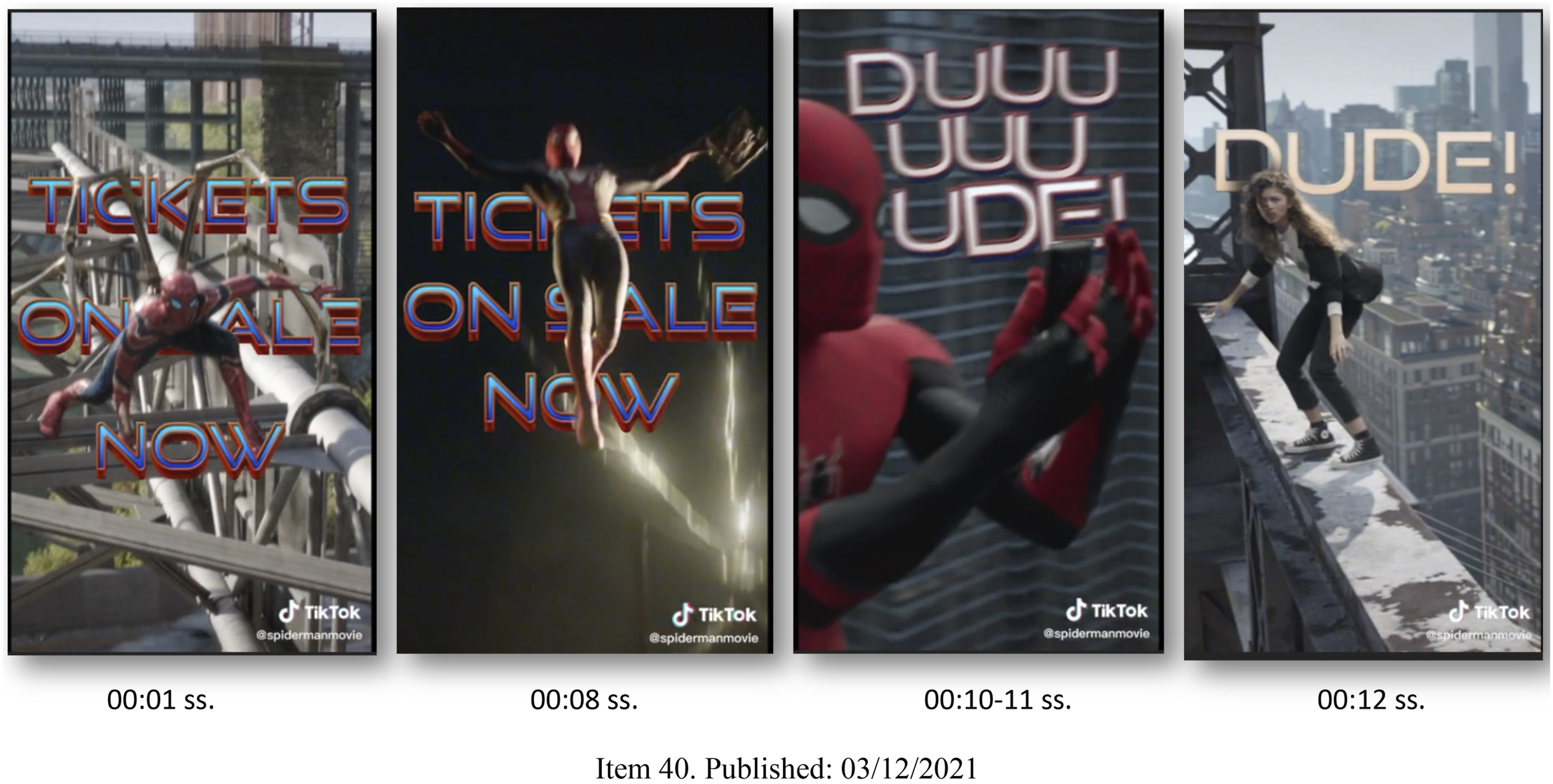
This 15-s production appears to emulate a meme or trend. Due to its technical characteristics (i.e., seemingly simple and cost-effective), it is likely that users perceived it as a ‘transient, fleeting, or short-lived phenomenon’ (Schellewald, 2021). The typography used is particularly evocative, serving a clear appellative function and referencing the traditional colors associated with Spider-Man’s iconography (red and blue). Despite its technical simplicity, its engagement surpasses that of the film’s official trailer (item 43, engagement 5.67), which was published in November 2021. This suggests that users feel more compelled to react through likes (252,400) and views (6,700,000) to videos of this nature, which align with the content produced, transmitted, and distributed within TikTok’s affordances, rather than more traditionally designed products for other media formats, such as trailers. Of the 74 videos in our corpus, only item 43 can be considered the official trailer of the film, as described in the accompanying text on the platform.
TikTok’s affordances can explain how this production is geared toward consumption in a broad sense, encompassing both the physical act of purchasing film tickets and user engagement. However, it is crucial to analyze the video from the perspective of transmedia narratives to comprehend the extent to which the reconstruction of Spider-Man’s discourse (in this video and the other 74 analyzed productions) revolves around two key elements: continuity and diversity. Some franchises uphold a narrative canon, maintaining a coherent narrative thread across various story extensions. Conversely, others explore alternative versions of characters and parallel universes across a multitude of media and platforms ‘to reward mastery over the source material’ (Jenkins, 2010). In this example, the history and version of the Spider-Man character from previous trilogies are revisited subtly and only recognizable to those intimately familiar with the rest of the franchises (e.g., Spider-Man, 2002). Through the interrelation of scenes, stories, and characters, this revisitation of the narrative serves as one of the strategies employed in transmedia productions. Its objective is to ‘fill temporal voids, ellipses, (…) or explain the genesis of the story’ (Bourda, 2019: 136). In essence, such videos allow us to comprehend and follow the plotlines of the various franchises, providing context for the departure of certain characters.
Discussion and conclusions
This descriptive study examined the practices of CCIs, particularly the MCU, based on its Spider-Man account on TikTok. We analyzed 74 videos within the corpus and shed light on the extent to which the objective of increasing engagement and fostering a connection with a global community of users was achieved through several strategies.
The element of temporality is evident in every published video. We have examined both the timing of each video’s release and how each one relates to other posts. This strategy directly influences user engagement by building anticipation and expectations regarding the content and promoted products. Furthermore, it serves as the driving force behind other strategies. However, these strategies can only come to fruition through three primary axes: 1) affordances of the TikTok platform; 2) characteristics of transmedia narratives; and 3) use of nostalgia, amplified by the development of transmedia products and storytelling over the last decade. While platform affordances shape the type of communication occurring with users, they do not entirely explain the content, video format, or the account’s positioning in terms of shared content. To fully understand these aspects, we must consider the account and each individual post as distinct cultural artifacts following the principles of transmedia storytelling.
Exploring relationships between fiction and reality through the interaction between superheroes and actors/actresses is a more complex process. To achieve this, we analyzed the videos based on three dimensions: content, form, and positioning (Shifman, 2013: 367). Content refers to the ideas and ideologies conveyed, while form encompasses the physical manifestation of the message perceived through our senses. Form includes the specific visual and auditory elements of certain texts, and the more intricate patterns related to genres that organize them. Positioning, as anticipated, proved to be the most intricate aspect, as it deals with how the account presents itself to users. Based on the results, we can only confirm that the account aims to challenge users to consume and engage with its content through various means: interrelating stories and significant scenes, actors, and characters through nostalgia and employing diverse multimodal semiotic resources (e.g., music, typography, colors).
Furthermore, the discursive and multimodal analysis of the account and its video content offers a preliminary understanding of the industry’s intentions (Marvel, responsible for the Spider-Man films). Marvel seeks to promote the consumption of Spiderman film products. However, drawing definitive conclusions about positioning the products in a specific manner relative to Marvel’s audience remains complex and would require contrasting the analyzed corpus with numerous other samples from TikTok and other media platforms. Additionally, the analysis could be enriched by incorporating user perspectives, positioning fans with respect to content, and exploring how CCIs contribute to the creation of narratives surrounding characters and stories on TikTok, based on audience opinions and experiences.
This exploratory study has its limitations. Our analysis of the account’s setting has solely focused on users’ responses to the published videos, namely, the number of views, likes, shares, and comments. Future research could investigate how the TikTok algorithm shapes affordances, particularly visibility, and its relationship with the narrative (Hautea et al., 2021; Mordecai, 2023; Treem and Leonardi, 2013). Visibility pertains to how content is localized and showcased in the highlights of the ‘For You’ feed, primarily through hashtags and trends. However, persistence is particularly relevant to the strategies used by Marvel with the Spider-Man Movie Official Account on TikTok, as it involves ‘an important resource for cultural memory’ (Schrey, 2014). This could involve examining how CCIs adapt to the most popular hashtags and trends suggested by the platform or how they create and encourage users to follow specific hashtags and trends to boost engagement with their posts.
Footnotes
Acknowledgments

Author contributions
All authors listed have made a substantial, direct, and intellectual contribution to the work and approved it for publication.
Declaration of conflicting interests
The author(s) declared no potential conflicts of interest with respect to the research, authorship, and/or publication of this article.
Funding
The author(s) disclosed receipt of the following financial support for the research, authorship, and/or publication of this article: This research has been carried out with funds from The International University of La Rioja (Spain) Reference CITEI B24-004.
Ethical statement
Data Availability Statement
The original contributions presented in the study are included in the article/supplementary material, further inquiries can be directed to the corresponding author