




Abstract
This paper conceptualises platformed solidarity, describing how platforms change their affordances to support particular social justice causes, sometimes temporarily, and often in response to current events. Such actions allow platforms to perform their support of different interests in response to issues such as racial and gender equality or pro-democratic aims, among other examples. In each case, a specific feature of the platform is modified to visibly promote support, altering how their users experience these spaces. In doing so, these interventions highlight how major platforms demonstrate their politics, raising questions about the differences between the politics that they publicly portray and policies they enact. This paper explores platformed solidarity through an extended examination of Twitter hashflags, typically temporary visuals attached to hashtags of particular commercial, social, and political interests and offering affective emphasis to selected content. While the bulk of hashflags are commercial products, created in partnership with brands to encourage engagement and promotion of a campaign or product, there have been a number of hashflags for major events and causes, from elections to selected social justice campaigns. We suggest that examples of platformed solidarity can elucidate what global platforms see as their role and influence in public communication. However, this raises important questions about what causes, events, and groups are deemed worthy of platformed solidarity? What values do they represent and how – if at all – are these supported by platforms’ policy decisions regarding the same issues? We suggest that, whether cynical or well-intentioned, these surface-level interventions do not always necessarily align with higher-order corporate priorities and decision-making. As such, we suggest that platformed solidarity is a corporate tactic that can have overlap with considerations of ‘woke capitalism’, where visible gestures towards causes and issues are made but underpinned by platforms’ missions to maintain high user numbers, grow engagement, and profit.
Keywords
Introduction
Every June, the advent of Pride Month is marked by various displays of corporate solidarity and affective support for LGBTQ + communities. On digital media, Pride Month is marked by visual updates to numerous apps’ icons to feature the Progress Pride Flag, and to brands’ social media avatars visibly promoting their engagement and allyship. Visual recognition of Pride Month is also marked in more platform-specific ways; in 2017, Facebook launched a custom ‘Pride’ reaction, although this was also critiqued for not being universally available (Kessler, 2017; Matias et al., 2017) and was not brought back the following year (Connellan, 2018). On Instagram, Pride-related hashtags appear in rainbow colours, while Pride stickers are promoted options for augmenting new Stories. On Uber, meanwhile, new journeys in June have been mapped out using a rainbow-coloured route (Figure 1). Screenshot of Uber during Pride Month 2021 (author archive).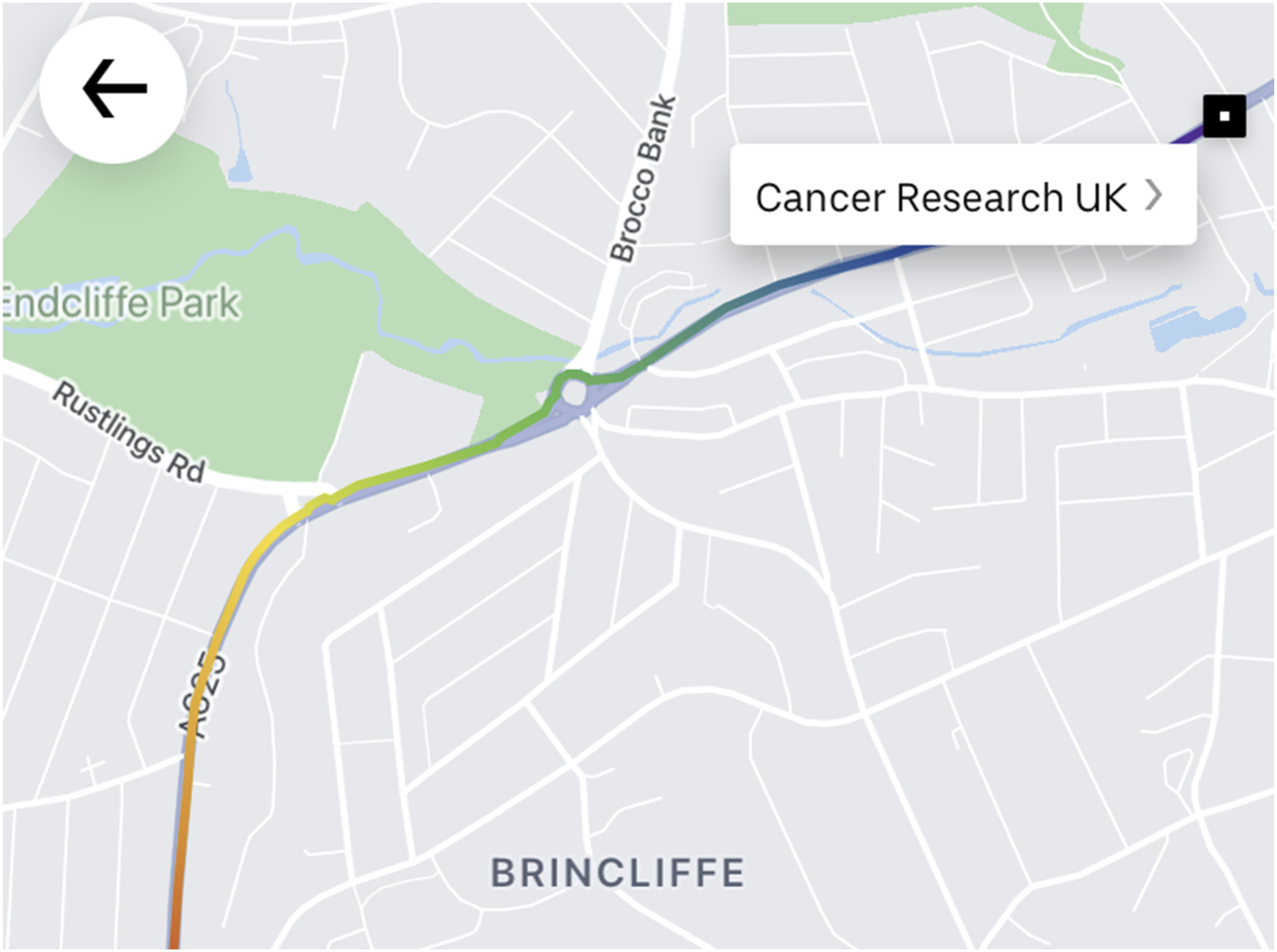
Twitter users have also been included in such displays. During Pride Month, the Pride hashtag has been automatically appended with a rainbow flag, one that has been updated over recent years to include representations for people of colour and the trans community, following, for example, the model of the Progress Flag (Figure 2). Screenshots of #Pride hashflags active on Twitter during June 2019 (left), 2020 (middle), and 2021 (right).
In this paper, we characterise such demonstrations as ‘platformed solidarity’, where platforms change their affordances to support particular social justice causes, sometimes temporarily, and often in response to current events. Such actions allow platforms to perform their support of different interests in response to issues such as racial and gender equality or pro-democratic aims, among other examples. In each case, a specific feature or affordance of the platform is modified to visibly promote support for that cause, altering how their users experience these spaces. In doing so, these interventions highlight how major platforms demonstrate their politics and also raise questions about the differences between the politics that they publicly portray and policies they enact.
This paper offers a conceptualisation of platformed solidarity and explores its performative nature through an extended examination of one specific type of platformed solidarity: Twitter hashflags, also known as hashtag emoji or occasionally as ‘hashmoji’ (see, e.g., Twitter Alas, 2021). Similar in appearance to emoji, these are typically temporary visuals attached to hashtags of particular commercial, social, and political interests, offering affective emphasis to selected content. They offer a distinction to Twitter hashtags themselves, which are generally seen as ‘discursive and user-generated’ (Jackson et al., 2020, p. xxviii). While anyone can create and choose hashtags for their tweets, hashflags are platform-directed and prescribed. While the bulk of hashflags are commercial products, created in partnership with brands and companies to offer additional devices for encouraging engagement and promotion of a campaign or product, there have been a number of hashflags that represented major events and causes, from elections to selected social justice campaigns. In this paper, we focus on these latter examples, exploring platformed solidarity through hashflags pertaining to civic campaigns, racial justice, and gender equality and rights.
As with other aspects of platform design and development, the full decision-making process behind hashflags is not (and likely will not be) made publicly available; similar to studies of algorithmic cultures and impacts, the commercial and proprietary nature of hashflags mean that much of this is ‘black-boxed’ (see, e.g., Brevini and Pasquale, 2020). However, by examining instances of platformed solidarity, we can explore what this says about how platforms present themselves. What the hashflag case shows us is how platforms promote causes and interests that are aligned with their corporate image, but do not always gel with their internal priorities and policies in practice. As with other forms of emoji, hashflags are not ‘just a bunch of symbols’ (Miltner, 2021, p. 522); instead, how Twitter chose which public interest or political causes got a bespoke symbol offers critical insight into how the platform viewed and portrayed its own role and influence in public communication. This is especially pertinent given that hashflags for civic causes were not something that could have been proposed for any and all causes and/or issues; instead, they were framed by Twitter as both a ‘limited resource’ (Badiucao, 2019a) and an ‘ad product’ to be ‘donat[ed]’ to ‘encourage participation in important conversations’ (Twitter, 2021a).
We suggest that examples of platformed solidarity can elucidate what global platforms see as their role and influence in public communication. In Twitter’s case, they portrayed themselves as a space for ‘the public conversation’ (Twitter, 2021b) and positioned hashflags as tools to encourage participation in said conversation. However, this raises important questions about which public(s) and what conversation(s) are being referenced, and to what end. What counts as an ‘important conversation’, how is this determined, and by whom? What causes, events, and groups are deemed worthy of platformed solidarity? What corporate values do hashflags represent and how – if at all – are these supposed values supported by platforms’ policy decisions regarding the same issues?
We suggest that, whether cynical or well-intentioned, these surface-level interventions do not always necessarily align with higher-order corporate priorities and decision-making. While the ongoing presence of hashflags for causes such as #BlackLivesMatter, #MeToo, and #MilkTeaAlliance supposedly demonstrated Twitter’s support for these campaigns, the performativity of these gestures is revealed when compared with the policy decisions made in relation to the underlying issues reflected by the hashflags (e.g., racial justice, gender equality). As such, we suggest that platformed solidarity is a corporate tactic that can overlap with considerations of ‘woke capitalism’ (see Kanai and Gill, 2020), where visible gestures towards causes and issues are made but underpinned by platforms’ missions to maintain high user numbers, grow engagement, and profit. In such instances, the ‘ambivalence’ of ‘wokeness’ (Sobande et al., 2022) comes to the fore: however well-intentioned Twitter’s act of giving visibility to civic or social justice issues may have been, the question remains as to who ultimately benefits from these displays, whose voices are amplified, and what change comes from them.
It is worth noting that research for this article was carried out before Elon Musk took over at Twitter (now ‘X') and instituted numerous changes to how the platform worked as both a company and social media platform. As such, it represents a somewhat historical discussion of a platform that is now in transition and seemingly subject to one man’s whims: key staff members have left or been made redundant, and teams that have direct links to the features and policies featured in this research have been dismantled. It is too soon to know what the long-term impact of Musk’s takeover will be on the civic and political position of Twitter/X, nor what will happen with regard to the feature itself. Indeed, hashflags were rebranded by X as ‘hashmoji' in mid-2023. At the time that this article went to press, new commercial ‘hashmoji' were still being released, and some historical civic hashflags (e.g., #BlackLivesMatter and #MeToo) were still appearing; however, others (such as the Pride hashflag) were not. Nonetheless, the argument that we make in this paper is relevant outside of the context of Twitter/X itself. The concept of platformed solidarity is applicable to any platform that positions itself as making a positive contribution to public life and acting ‘for good’ in the interest of civic and/or social justice causes.
Hashflags: A brief history
Twitter originally launched hashflags during the men’s football World Cup held in South Africa in 2010. To encourage tweeting during the event, Twitter appended the relevant flag to the hashtagged three-letter acronyms and abbreviations for each competing country (#BRA, #USA, #ENG, and so on). The feature was discontinued after the final match, but relaunched for the subsequent men’s football World Cup in 2014, using the same country-code/hashtag principle. This idea followed through to other major international (but time-limited) events: for the 2015 Eurovision Song Contest, Twitter activated similar hashflags featuring Eurovision’s own visual branding (as seen in Figure 3): Selected hashflags for Eurovision 2015 (top: Germany, San Marino, Austria; bottom: France, Australia, Portugal).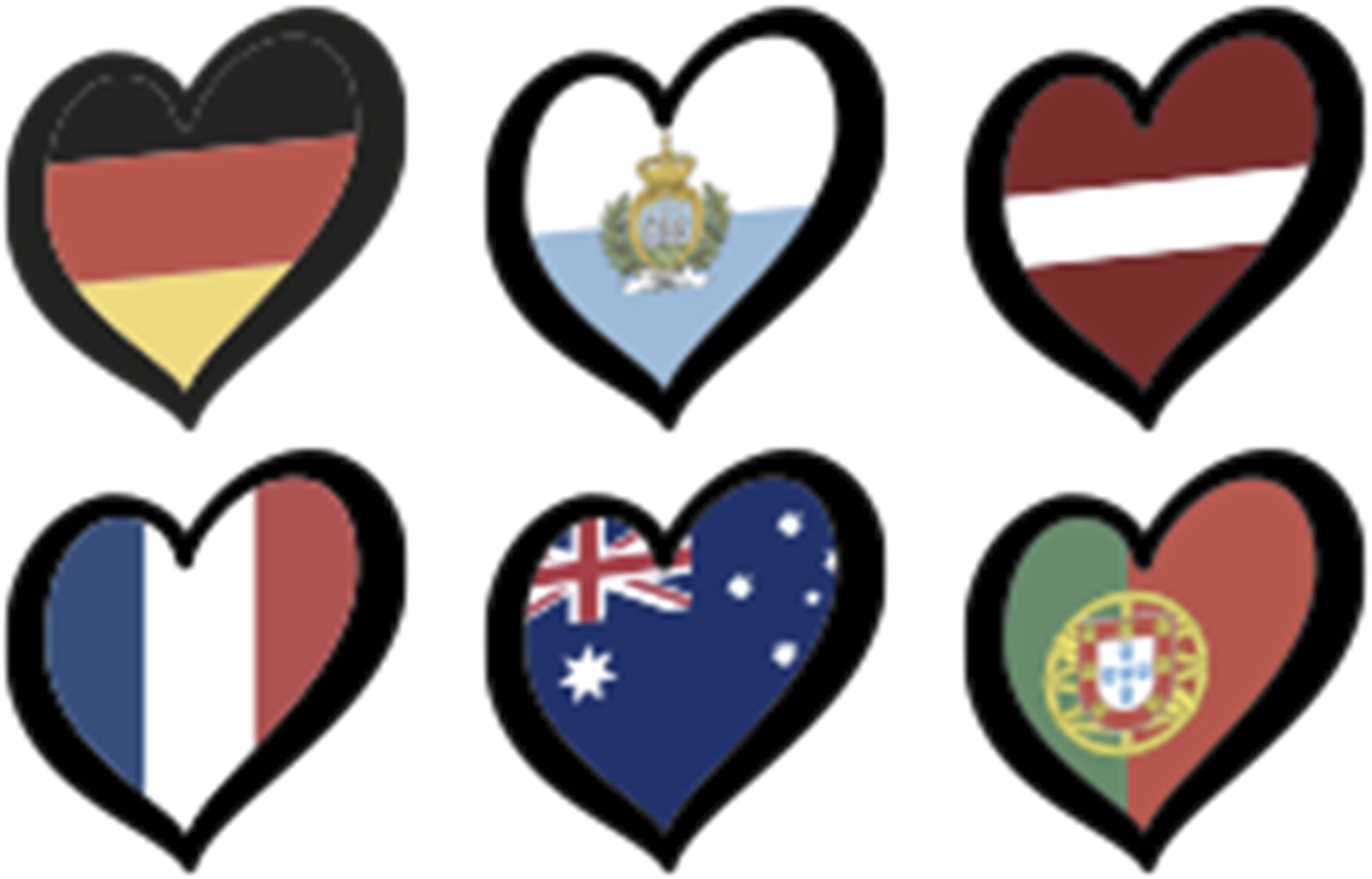
Since 2014, Twitter has developed hashflags beyond these initial contexts of flags, sports, and popular culture. Snapshots over time highlight the growth of the feature: the number of active hashflags on 28 September, 2017, represented 233 icons, attached to 609 hashtags. In comparison, over 1100 icons were active on 1 August 2021; a number boosted by country- and sport-specific hashflags for the Tokyo 2020 Summer Olympic Games. Major global festivals and religious holidays have also been accompanied by hashflags attached to hashtags in multiple languages: Lunar New Year in 2022, for instance, saw the Year of the Tiger icon appear alongside 51 hashtags in languages including English, Indonesian, Thai, Vietnamese, Korean, and Chinese.
While major events and holidays are prominent hashflag recipients, the feature is primarily intended for commercial purposes, pushed by Twitter as part of its advertising packages. A post for Twitter’s Marketing blog suggested that ‘People ♥ it when brands show emoji love’ (Brady, 2015). Referring to the icons as ‘branded emoji’ or ‘Twitter emoji’, the blog post outlined the platform’s own perspective on hashflags and recognised their promotional value: If emojis help people to inject their personality into Twitter conversations, the same is true for brands on Twitter — and that represents a major opportunity. Twitter emojis give brands the chance to inject some additional fun into their marketing, lighten their tone, and perhaps boost brand likeability. More than ever, it means that they can engage with people on Twitter in a language they understand (Brady, 2015).
Brand campaigns represent the majority of hashflags; at the start of March 2022, for example, hashflags were promoting subjects as varied as films (e.g., Death on the Nile, Doctor Strange in the Multiverse of Madness), television programmes (Squid Game, Pam and Tommy), award shows (Hanteo Music Awards, the Academy Awards), music (Red (Taylor’s Version), the members of BTS), sporting competitions (the 2022 women’s cricket World Cup, the Basketball Africa League), games and e-sports tournaments (Overwatch League, Elden Ring), and products from companies including Chevrolet and Pringles.
At a fundamental level, the hashflag feature is commercial in intent. This is also reflected in the framing of the feature for social causes; even while describing civic-oriented hashflags, the webpage for Twitter for Good notes that ‘We donate this ad product to activate custom emojis to encourage participation in important conversations around the world’ (Twitter, 2021a). For our consideration of platformed solidarity, it is this subset of hashflags that we focus on in the following analysis. While they operate in the same way as commercial hashflags, these more politically-oriented cases ostensibly have different motivations. Co-existing in March 2022 with hashflags for Jurassic World and American footballer Tom Brady’s (short-lived) retirement were icons for causes including national elections in Colombia and Costa Rica, Women’s History Month and International Women’s Day, and Japan’s COVID vaccination program. For these examples, the hashflag is a means for amplifying relevant discussions and helping them to become more visible, rather than seeking commercial benefits; by annotating with a custom visual, Twitter suggested that there would be more appeal for users to seek out and engage with these conversations. During elections in Taiwan in 2020, for example, Twitter positioned the launch of an associated hashflag as ‘a valuable visual link to help promote the discoverability of the election conversation’ (Twitter, 2020a). Through the presence of a hashflag, Twitter demonstrated what is ‘important’, conferring legitimacy and endorsement to events, issues, and causes. In this way, Twitter acted as a political gatekeeper, with only select topics deemed of interest by the platform on behalf of its users.
In considering hashflags as examples of platformed solidarity, we position the implementation of the feature at the intersection of two conceptual concerns. First, we argue that hashflags are visual demonstrations of platform politics. The presence of a hashflag offers insight into the values and interests of Twitter, the issues they support, and how these are framed and presented on the platform. Second, we suggest that such choices also align with the principles and practices of woke capitalism, where support for social justice campaigns co-exists alongside the commercial motivations of platform engagement and growth. As such, platformed solidarity highlights tensions between competing interests and stakeholders, encouraging an evaluation of the alignment between brand values, platform governance, and business strategy.
Platform politics
Despite prior claims that suggest that ‘social network platforms can be both technologically agnostic and politically neutral’ (as discussed in van Dijck et al., 2018, p. 148), the design and operation of social media platforms reflect specific norms and values. The decisions made by platforms – and their consequences for different users and stakeholders – underline their own priorities, whether political or commercial; to ignore platforms’ roles in social equity is to reinforce what Ruha Benjamin (2019) describes as ‘our naivety when it comes to the neutrality of technology’ (p. 11). As José van Dijck, Thomas Poell, and Martijn de Waal (2018) note, an interrogation of the role and public values of platforms needs to consider key questions of ‘whose interests a platform’s activity serves, which values are at stake, and who benefits’ (p. 25).
Drawing upon Adrienne Massanari’s (2017) definition of platform politics as ‘the assemblage of design, policies, and norms that encourage certain kinds of cultures and behaviors to coalesce on platforms while implicitly discouraging others’ (p. 336), we argue that platformed solidarity offers insight into the values that platforms publicly depict and promote through design and editorial choices. The likes of Twitter and Meta make decisions that give a literal platform to different stakeholders and concerns in ways that are not accessible to all users and following decision-making processes that are not visible. As Tarleton Gillespie (2018) writes, ‘Platforms don’t just mediate public discourse, they constitute it. They are designed to invite and shape participation, toward particular ends. This includes what kind of participation they invite and encourage; what gets displayed first or most prominently... and how they organize information through algorithmic sorting, privileging some content over others, in opaque ways’ (Gillespie, 2018, p. 257).
Elsewhere, Blake Hallinan, Rebecca Scharlach, and Limor Shifman (2022) argue that ‘platforms set significant conditions for public life’ (p. 203): the norms and values that platforms promote are a response to the context of their own design and development, and also (attempt to) frame how the discourse around these values and related issues plays out. However, as we will illustrate shortly, the values and interests promoted by platforms do not always clearly align with the decisions they make or the experiences of their users.
The politics and values of Twitter—or any platform—reflect the myriad stakeholders that collectively influence how it is used: the ethos and beliefs behind its original development and ongoing management; the interests of the employees working for the company; its corporate backers and commercial partners; and its diverse user base (see Gillespie, 2010). However, these various interests do not have equal weighting. Any examination of the politics of a platform like Twitter cannot avoid the fact that, regardless of any mission statement of public good, 1 the company is a profit-seeking one that is dependent on monetising user activity.
Recognition of this fact is important for this paper in two ways: first, it provides further contextualisation for how social media concerns around social justice, race, gender, and democracy are positioned within platform capitalism (e.g. Cottom, 2020). Second, it offers a lens for examining how platforms engage with social justice concerns, through wider considerations of corporate responses to movements aimed at combating racial and gender inequality.
Woke capitalism
Displays of corporate solidarity towards marginalised communities, disenfranchised individuals, and social justice campaigns have become commonplace in recent years, to the point where there are expectations and pressures upon brands to engage with prominent issues (Sobande, 2019). The result is ‘a corporate environment saturated by messages of rebellion and the apparent championing of identity politics’ (Kanai and Gill, 2020, p. 11), but one which is also underscored by the capitalist aims of the brands in question. Highly visible and arguably performative politics are accompanied by a push for profit, with the latter usually outweighing the former in importance to the brand.
Described variously by Francesca Sobande (2019) as ‘woke-washing’ and more broadly as ‘woke capitalism’ by Akane Kanai and Rosalind Gill (2020), the contemporary engagement by corporations with social justice concerns means that they are aligning themselves with campaigns and movements that are often rooted in Black, feminist, or queer contexts and aims. This can go beyond simply displaying affinity; for Kanai and Gill, they note that ‘woke capitalism reinforces its own claims to authority, positioning brands as leading movements for progress’ (p. 23). In other words, corporations are not just gesturing towards issues, but also suggesting that their involvement is making a significant and meaningful contribution to tangible change.
During the COVID-19 pandemic, for example, digital platforms and brands alike offered responses to the ongoing global crisis that sought to reaffirm their own promotion of care and support for new health measures. These could be seen as ‘care-washing’ (Chatzidakis and Littler, 2022), where the notion of care is repositioned as a commodifiable asset that can be promoted for profit. Such moves would at times seem to run counter to corporate strategies, yet the commercial motivations of brands and platforms still underpin these actions. For instance, Stefanie Duguay et al. (2022) note that since COVID requirements to stay at home were not necessarily a boon to the operating models of dating apps, they repositioned themselves to reflect a socially distanced reality and promote ongoing virtual dating activity using their platform. In their analysis of these decisions, Duguay et al. (2022) describe them as ‘technodiscursive strategies through which corporate actors reimagine technological affordances in times of crisis’, helping to reposition the apps and maintain their profitability when the pandemic threatened their standard use. These strategies also demonstrate an instance of platformed solidarity through cosmetic and gestural changes like updating logos in support of staying at home, as a temporary reframing of platform affordances in response to the pandemic.
Such strategies may also serve to performatively suggest a solution to issues on the platform. Nina Medvedeva (2021) describes ‘emotional governance’ in the corporate narratives produced by Airbnb in response to experiences of discrimination among LGBTQ+ and BIPOC users on the platform. Emily Tarvin and Mel Stanfill (2022) also explore ‘governance-washing’ on YouTube, whose ‘purpose is presenting the appearance of effective governance and improving the public perception of the platform’. Following their analysis, Tarvin and Stanfill suggest that such actions represent ‘superficial attempts’ by platforms ‘to appear vigilant’ about concerns such as child safety, but are not necessarily accompanied by full information about the policy changes or concrete actions being undertaken in response.
In other cases, the motivation behind acknowledging issues may be less obfuscation and more an attempt to acknowledge the importance of a cause and an apparent desire to improve the platform. This can reflect corporate aims of digital allyship, following the praxis described by Meredith D. Clark (2019) as ‘strategic digital discursive practices designed to signal participation in antiracist work by educating other Whites and working toward the movement’s shared goals’. Despite the intentions behind such moves, though, this can risk being perceived as ‘performative allyship’ (Wellman, 2022). Indeed, as Francesca Sobande (2019) notes in her examination of ‘woke-washing’ in advertising, ‘Given the structural nature of oppressive forces linked to racism, sexism and transphobia, addressing these issues requires much more than representational politics’.
This framing is central to our consideration of platformed solidarity. As with examples of woke capitalism, instances of platformed solidarity work as responses to social justice concerns, highlighting the causes the platform has deemed ‘important'. Beneath the gesture of support, however, there is a need to evaluate for what purposes these demonstrations are made, particularly by examining how they align with a platform’s own values and actions. Instances of platformed solidarity potentially demonstrate the ‘ambivalence’ of ‘wokeness’ (Sobande et al., 2022): in offering visual support to particular causes or communities, platforms can help to make them visible, highlighting their significance to users. At the same time, there remains a critical question of who benefits from these efforts, and to what extent they are merely performative.
In the following analysis, we apply these concerns to our examination of Twitter hashflags. Through an exploration of select social justice and civic-minded case studies, we investigate how Twitter presented its support for various causes, and how such gestures cohered – or not – with the platform’s own decision-making and policy developments.
Method
To carry out this study, we use a feature-based approach, following the example of Jean Burgess and Nancy K. Baym (2020), who note in their biography of Twitter that ‘looking closely at features helps us to see how Twitter is organized, in whose interests, and how these arrangements have changed over time’ (p. 110). We draw from a wider sample of hashflags activated by Twitter between 2016 and 2022, focusing specifically on social justice and civic engagement-oriented examples. These case studies represent three overarching themes: global civic causes (including electoral hashflags, movements like the Milk Tea Alliance, and demonstrations like Nigeria’s End SARS protest); racial justice (including Black Lives Matter and #StopAsianHate); and gender equality and related campaigns (including #MeToo and #HeForShe).
While hashflags have been present in different forms since 2010, Twitter does not provide a full repository of its hashflags past and present; instead, to access such information, researchers are reliant upon third-party archives, and accurate statistics about the feature are hard to come by. The most comprehensive archive was the Twitter bot account @HashflagArchive created by Jamie Magee; between January 2018 and 2 December 2022, 2 the account highlighted newly active hashflags released on Twitter, memorialised in a hashtagged tweet along with an image of the hashflag in situ so that the record persists even after the hashflag is deactivated. By December 2022, the account had tweeted about more than 52,000 hashtags with hashflags, although without further information about when (or if) a hashflag continued to be active or not. Some of the examples we focus on in our analysis also pre-date 2018; hashflags for the likes of #BlackLivesMatter, #MeToo, and #HeForShe have remained active since their launch, and are important instances of Twitter’s long-term support for particular issues.
We then cross-referenced the selected hashflags with archival tweets and blog posts from Twitter’s own accounts. Drawing upon official corporate communications from Twitter allows us to triangulate the causes and events promoted through hashflags with the platform’s corporate values and mission; in this regard, we build upon Jenni Hokka’s (2021) approach for studying YouTube’s policies and practices around freedom of speech. In our examination, we consider how Twitter’s focus on ‘the public conversation’ and ‘Twitter for Good’ is used to position the provision of hashflags and promote the worth of the platform itself. At the same time, we also explore how these ideals are reflected in related governance decisions made by the platform.
This triangulation is also subject to inconsistent public record-keeping by Twitter; a few prominent hashflags (e.g., #MilkTeaAlliance, discussed below) were documented through archival tweets from various official Twitter accounts (e.g. @Policy, @TwitterGov) or detailed blog posts about the particular event or issue, replete with GIFs depicting the relevant hashtags and iconography. Others are promoted in tweets from designers or platform employees, but without necessarily including a record of the hashflag itself. Because of these noted limitations, this research is not an exhaustive examination of all relevant hashflags. However, this research is designed as an exploration of a particular instance of platformed solidarity, a concept that extends beyond the single context of Twitter, and across further affordances and features than the hashflag alone.
Twitter hashflags and serving ‘the public conversation’
In the following analysis, our interpretation of hashflags as demonstrations of platformed solidarity takes into account how Twitter presented itself and its societal value. Twitter has long positioned itself as a platform where people can find out ‘what’s happening’ (see Burgess and Baym, 2020). The perceived importance of Twitter to news and information-sharing, available freely and rapidly updated, was showcased in the platform’s own justifications for its use. In 2012, for example, the platform’s UK general manager described Twitter as ‘the free speech wing of the free speech party’ (Halliday, 2012), arguing for the platform’s political neutrality while making a major public contribution by enabling conversation at scale and without censorship.
The positive role of social media in civic life has been an aspect promoted by Twitter in support of their own mission statements, both in response to perceived successes and in recalibrating its own practices. The importance of social media within the Arab Spring and Occupy movements of the early 2010s, as well as to the likes of Black Lives Matter and #MeToo, has been ‘exploited in publicity materials, making the case for [Twitter’s] own legitimacy’ (Burgess and Baym, 2020, p. 69). In research written as Twitter went public, Thorsten Busch and Tamara Shepherd (2014) positioned Twitter’s ethos through the lens of corporate social responsibility (CSR), arguing that its rhetoric ‘encourages a perception of Twitter as public space for socially beneficial and democratic communication’ (p. 301). Twitter promoted itself as indispensable for civic and political engagement, promoting social justice and democracy; at the same time, such arguments also bolstered the commercial health of the platform, encouraging greater participation and engagement.
Even in the wake of major criticisms and concerns about the political impact of social media, Twitter maintained that its primary contribution is offering a public and free venue for communication. Following the Cambridge Analytica scandal and the rise of misinformation, disinformation, and media manipulation on Facebook and Twitter, Twitter’s then-CEO Jack Dorsey reiterated what the platform could do to take responsibility for what was posted and to reaffirm its public value: ‘We’re committing Twitter to help increase the collective health, openness, and civility of public conversation, and to hold ourselves publicly accountable towards progress’ (jack, 2018). This was emphasised on Twitter’s About page, which proclaimed that ‘We serve the public conversation’.
The importance of the ‘public conversation’ to Twitter – and, by extension, Twitter to the public conversation – was repeatedly highlighted by the platform. Upon the release of Twitter’s first Global Impact Report in 2021, the corresponding tweet from @TwitterForGood stated that ‘Doing good has long been a priority at Twitter - it’s what connects us to our purpose in serving the public conversation’ (Twitter For Good, 2021). Similarly, @Policy tweets about coronavirus information, elections in India and Uganda, and Human Rights Day (among many other examples) all centred the public conversation as Twitter’s motivation and responsibility. This is only a segment of Twitter’s broader ethos around ‘freedom’, where it ‘weaves freedom rhetoric into almost every policy page it hosts, is forthright in touting an individualist ethos, and espouses traditional democratic ideals of equality, participation, and liberty’ (Konikoff, 2021).
We argue that hashflags acted as particular demonstrations of Twitter’s promotion of the public conversation and of the platform acting ‘for good’. While branded, commercial hashflags showcased the importance of Twitter as part of a social media marketing campaign, civic and social justice hashflags served to promote the platform itself; in essence, they were suggesting that Twitter is a key facilitator for conversations about significant social concerns. By pushing Twitter as the primary venue for discussing important contemporary issues, hashflags acted as further support for the platform’s ‘legitimacy’ (Burgess and Baym, 2020, p. 69). However, it is important to reflect on the platform context for these choices. How did these instances of Twitter doing ‘good’ match with its own governance decisions on the same issues? To what extent were hashflags gestural and performative, in line with critiques of woke capitalism (e.g., Kanai and Gill, 2020)?
To answer these questions, we explore hashflags as examples of platformed solidarity by focusing on three key issue areas: global civic causes, racial justice, and gender equality. In each of these cases, at least part of the rationale behind the production of a hashflag is how they presented Twitter as a platform ‘for good’. These examples highlight Twitter’s perception of itself as an important venue for discussing and campaigning for important issues as well as its mission to serve ‘the public conversation’. However, as the following analysis notes, there are limits to the extent of the platformed solidarity shown by Twitter. These limits are impacted by the interests of other stakeholders and the platform’s commercial operation, and by disconnects between Twitter’s public stance and its own policies and governance on certain issues.
Global civic hashflags
The ‘public conversation’ was a global concern for Twitter. Around the world, the platform positioned itself as a home for political engagement and discussion and as a significant contributor to the democratic process. During the 2020 Taiwanese election, for instance, a Twitter blog post outlining its electoral content argued that ‘during any election, Twitter is the place where people go to see what’s happening, participate in the conversation, and virtually join the campaign trail’ (Twitter, 2020a). In the same blog post, Twitter noted the importance of the platform to elections ‘The public conversation on Twitter is never more important than during elections, the cornerstone of any democracy. Twitter shows the world what is happening, democratises access to information and—at its best—provides insights into a diversity of perspectives on critical issues in real-time’ (Twitter, 2020a).
This view is seen most obviously through the development and promotion of electoral hashflags, where hashtags for different elections are accompanied by iconography that may variously feature flags, ballot boxes, votes, or symbolism unique to the location in question. These have included hashflags introduced for national and regional elections in India, Costa Rica, the Netherlands, New Zealand, Sri Lanka, Tunisia, Israel, and Argentina, among many others (see Figure 4). In each of these instances, hashflags offered visual engagement with politics but also intended to encourage further Twitter activity; during the 2019 European elections, for example, Twitter released two hashflags that they hoped would ‘drive engagement and unite citizens around common themes and issues, such as reaffirming the commitment to vote’ (Twitter, 2021). Similarly, the provision of an electoral hashflag also underlined Twitter’s own corporate aims. Twitter’s promotion of the 2020 Taiwanese election, for instance, came with the recognition that ‘Taiwan is a fast-growing audience market for Twitter and one of the most vibrant democracies in Asia’ (TwitterGov, 2020). Electoral hashflags for Costa Rica, New Zealand, Taiwan, India (regional) (top row), Nigeria, Australia, the Netherlands, and Tunisia (bottom row).
In these cases, there was a dual motivation: promotion of the democratic process while simultaneously showcasing the value of Twitter. These aims were particularly apparent in hashflags created in support of international issue-based civic campaigns that aligned with Twitter’s ostensibly pro-democracy values, but more importantly, have also been enabled by the platform. In April 2021, for example, Twitter’s Public Policy account announced the launch of a hashflag for #MilkTeaAlliance (Twitter Public Policy, 2021b; Figure 5). The Milk Tea Alliance originated in a 2020 Twitter meme about the digital tactics used by nationalistic Chinese users. Evolving into a South-East Asian pro-democracy movement in opposition to authoritarianism, the movement represents solidarity and civic activism in Taiwan, Hong Kong, Thailand, and Myanmar (Dedman and Lai, 2021; Kuang and Handley, 2021; McLaughlin, 2020). In endorsing the Milk Tea Alliance through the launch of the hashflag, Twitter’s announcement also served to reinforce how the platform viewed itself as central to democratic values and action ‘From #MeToo, #BlackLivesMatter to #MilkTeaAlliance, Twitter continues to play a unique role in enabling the public conversation around important social movements that are happening around the world’ (Twitter Public Policy, 2021c). Hashflag for #MilkTeaAlliance.
Hashflags for causes like the Milk Tea Alliance highlighted Twitter’s promoted values around democracy, where users were able to participate in discussions and movements that push for freedom and equality (see Konikoff, 2021). 3 However, other campaigns espousing pro-democracy values in the region have not been adopted. In 2019, the expat dissident Chinese cartoonist Badiucao contacted Twitter to propose a hashflag commemorating the 30th anniversary of the Tiananmen Square massacre, using the imagery of Tank Man (Frary, 2021). Memorial and commemorative hashflags are not uncommon; that same year, Twitter released a hashflag for the 50th anniversary of the Stonewall riots and in March 2021, the 10th anniversary of the earthquake and tsunami that devastated eastern Japan was marked by a series of hashflags attached to hashtags in multiple languages. 4 However, the #Tiananmen30 hashflag proposal was rejected; in correspondence that Badiucao tweeted, the platform’s decision was because ‘emojis are limited resources at Twitter. Each year there’s a limited number of emojis allocated to the public policy team’ (Badiucao, 2019a). While Badiucao campaigned for a #Tiananmen31 emoji for 2020, attempting to overcome the ‘limited resource’ argument by being approved well ahead of the anniversary (Badiucao, 2019b), this was similarly unsuccessful.
The conflicting examples of #MilkTeaAlliance and #Tiananmen30 demonstrate that Twitter’s investment in pro-democracy and civic causes was limited by higher-order corporate priorities. While both hashtags/hashflags are ostensibly about promoting democracy and encouraging civic participation, the Milk Tea Alliance also represented the platform’s endorsement of a movement that reflected Twitter’s own usefulness. Conversely, even though the Tiananmen protests would have explicitly aligned with Twitter’s stated pro-democracy and freedom of speech values, Twitter showing support for this hot-button issue would have also risked antagonising China. Although Twitter is banned in China and is only accessible via VPNs circumventing the Great Firewall, the platform had become a prominent one for diplomats and political figures promoting Chinese interests (Feng, 2019). More broadly, the importance of China as a market has meant that Western companies and institutions have long had to consider their treatment of subjects and issues that are sensitive in the Chinese context (see, e.g., Fish, 2018).
The positioning of hashflags as a ‘limited resource’ suggests that instances of platformed solidarity are deployed in a strategic manner that reflects more than a platform’s publicly stated priorities and values. It also illustrates the ambiguity behind the creation and approval process for these kinds of features: for example, the ‘limited’ availability of hashflags becomes less of an obstacle for causes that are important to key members of Twitter’s leadership team. In October 2020, Twitter launched a hashflag to support the End SARS protests against police brutality and the actions of the Special Anti-Robbery Squad in Nigeria (Figure 6). Unlike other politically-minded hashflags, the #EndSARS launch was not accompanied by promotional or explanatory tweets from Twitter’s official channels like @Policy or @TwitterGov. Instead, the hashflag seemed to reflect the personal support for the movement by Twitter’s then-CEO Jack Dorsey. On 14 October 2020, he had tweeted ‘Donate via #Bitcoin to help #EndSARS’ (jack, 2020a); two days later, he posted a tweet that simply read ‘#EndSARS’ (jack, 2020b), but now the hashtag was appended with the new hashflag shown in Figure 6. Hashflag for #EndSARS.
The #EndSARS hashflag represented Twitter’s support for social justice movements but also the limits of its platformed solidarity in the face of external factors. The hashflag’s launch reflected Dorsey’s personal investment in Nigeria as both an important market for Twitter and for cryptocurrency interests (Oseni, 2019; Orjinmo, 2021). Part of Twitter’s – and Dorsey’s – appeal for Nigerians, meanwhile, was their ‘ideals of open internet, freedom of expression and economic rights [which] resonate with those who feel marginalised by their government’ (Orjinmo, 2021). Censorship and interference by the Nigerian government meant that Twitter was seen as ‘the only surviving bastion for political discourse’ for the country (Akindele, 2021). However, while Twitter promoted freedom of participation, its displays of support also had consequences for its own availability in Nigeria. In June 2021, when Nigerian President Muhammadu Buhari published a tweet threatening secessionists, the tweets were deleted and Buhari’s account was temporarily suspended in line with Twitter’s ‘public interest framework’ regarding world leaders’ tweets (Reuters, 2021). In response, the Nigerian government blocked Twitter. Part of the rationale for the suspension was Twitter’s role in anti-government protest, such as #EndSARS, with a government statement noting ‘the persistent use of the platform for activities that are capable of undermining Nigeria's corporate existence’ (FeFed Min of Info and Cu, 2021).
The example of #EndSARS demonstrates how expressions of platformed solidarity also come up against the commercial considerations of corporate platforms. The #EndSARS hashflag was deactivated in June 2021. While the platform was eventually made accessible again in January 2022, after reaching an agreement with the Nigerian government, the #EndSARS hashflag did not return. Instead, Twitter’s Public Policy account tweeted: ‘We are pleased that Twitter has been restored for everyone in Nigeria. Our mission in Nigeria & around the world, is to serve the public conversation. We are deeply committed to Nigeria, where Twitter is used by people for commerce, cultural engagement, and civic participation’ (Twitter Public Policy, 2022).
What these collected examples of pro-democracy and civic engagement hashflags demonstrate is that such causes provide a visible realisation of how Twitter perceived its own value and contributions to public communication. In cases like the #MilkTeaAlliance or various election campaigns, hashflags highlighted Twitter’s view of its own importance, showcasing how and why people should use the platform and Twitter’s potential contribution to the democratic process. However, the examples of both #Tiananmen30 and #EndSARS show that other considerations had significant impact upon expressions of platformed solidarity on Twitter. Promoting freedom is all well and good – that is, until it threatens access to valuable markets. Such cases underline how platformed solidarity can be interpreted as performative or gestural. Hashflags demonstrate support for causes and movements up until the point that they antagonise influential stakeholders or interfere with the general operation of the platform.
Racial justice hashflags
The notion of Twitter being used ‘for good’ also extends beyond pro-democracy causes. Racial justice campaigns in the United States have been particularly adopted by Twitter as examples of the platform’s positive impact. Twitter has long served an important role for Black voices (see, e.g., Brock, 2020); Black Twitter, in its various forms, is a significant cultural resource and venue that is home to creative and vernacular practices that are not as visible or supported on other platforms. Internally, Twitter has made a great display of supporting its Black employees, most visibly through the Twitter Blackbirds (@Blackbirds), its Business Resource Group for the company’s Black employees. Through its corporate material, such as its Inclusion and Diversity reports, Twitter repeatedly stressed its aims for a diverse workforce, the importance of its Black employees to its mission, and its leading role in addressing wider concerns around inclusion and diversity within the tech industry (e.g. Twitter, 2022). 5
Twitter’s support for Black causes is also demonstrated through hashflag choices, some of which represented early instances of non-corporate iconography. Since 2016, the hashflag shown in Figure 7 has been appended to hashtags associated with certain Black causes. Depicting three fists of varying skin tones, the iconography makes clear connections to activist symbolism, especially from the Civil Rights and Black Power movements. It was initially launched by Twitter for Black History Month in February 2016, accompanying the #BlackHistoryMonth and #BHM hashtags. Hashflag for #BlackLivesMatter, #BlackHistoryMonth, and #BHM.
In July 2016, the hashflag was appended to the #BlackLivesMatter hashtag 6 as a direct memorialisation of two young Black men killed by police: Alton Sterling in Baton Rouge, Louisiana, and Philando Castile in Minneapolis, Minnesota. The re-launch of the ‘custom emoji’ was announced in a tweet from @Blackbirds: ‘In memory of #AltonSterling, #PhilandoCastile and those before them, we are bringing back our custom emoji from #BHM. #BlackLivesMatter’ (Twitter Blackbirds, 2016a, 2016b). The #BlackLivesMatter hashflag has remained active since 2016; only two Twitter-focussed hashflags have run continuously for longer (#Periscope 7 and #LoveTwitter). As a social justice cause, Black Lives Matter has occupied a particularly prominent place in US politics as well as globally. Like #EndSARS, a key element of the Black Lives Matter movement is a campaign against police brutality. Major protests have responded to the murder of Black individuals at the hands of the police, including those of George Floyd and Breonna Taylor in 2020. However, the movement also extends beyond this, encompassing demonstrations against the many structural inequities around race in the United States and beyond.
Despite the extensive footprint of the movement beyond Twitter (see Freelon et al., 2016) #BlackLivesMatter has been promoted and framed as a Twitter success within the company. In the platform’s 2020 Inclusion & Diversity Report, for example, #BlackLivesMatter was described as ‘a movement that transcends political parties or nation-states; it’s grounded in a struggle for fundamental human rights — and the hashtag first appeared in 2013 right on Twitter’ (Twitter, 2020b). Support for #BlackLivesMatter is also part of how Twitter promoted inclusion, diversity, and racial justice causes within the company; this included large displays of prominent hashtags like #Ferguson and #BlackLivesMatter on the walls at the platform’s offices (Twitter Blackbirds, 2014). Furthermore, a post on the Twitter blog in June 2020 offered guidance on how to provide allyship for Black and Brown colleagues and causes (Qureshi and jade, 2020). Using the hashtag #UntilWeAllBelong, accompanied by the hashflag in Figure 8, Twitter has offered allyship campaigns for supporting its employees: ‘#UntilWeAllBelong is more than a hashtag. It’s a step forward for us to become as inclusive and diverse as the people that use @Twitter’ (Twitter Together, 2019). Hashflag for #UntilWeAllBelong.
However, despite the visibility given to Twitter’s internal and external support for its Black employees and for movements like Black Lives Matter, the platform has not addressed the problems of abuse, harassment, and violence that it enables for racialized minorities. As Jackson et al. (2020) point out, ‘Twitter has publicly made moves that seem to align with Black Lives Matter activism’, but their ‘algorithms, policies, and business practices’ contradict these public displays (p. 192). There is a clear distinction between the corporate narrative around diversity and inclusion efforts at Twitter and the experience for marginalised users around the world.
For example, less than two weeks after the #BlackLivesMatter hashflag was launched, the comedian Leslie Jones left Twitter in the face of extended racist and sexist abuse and harassment (Lawson, 2018). Only after this very public instance of a Black celebrity being targeted did the platform take steps to permanently suspend key perpetrators like Milo Yiannopoulos (Addley, 2016). Furthermore, Twitter had long faced criticism for what one Atlantic headline would dub its ‘famous racism problem’ (Meyer, 2016). An internal memo leaked from then-CEO Dick Costolo in 2015 recognised that ‘we suck at dealing with abuse and trolls on the platform’ (Tiku and and Newton, 2015). Even with high profile examples, however, the platform’s responses to these problems continued to be reactive rather than proactive (Konikoff, 2021).
The advent of the Trump presidency in the United States, along with the rise of the alt-right and white supremacist ideologies internationally, created more visible and extensive accounts of race-oriented targeting of Twitter users (see Benjamin, 2019, p. 23). The ongoing development of Twitter’s hate speech and abusive content policies (see Konikoff, 2021) meant that the platform engaged in more suspension and removal of offending accounts. However, these changes also ended up highlighting how deeply insufficient Twitter’s original responses were, given the extent of these problems. Twitter still attempted to frame the amount of moderation required to effectively respond to these issues in a way that recognises its social and racial justice bona fides. A statement from one spokesperson, quoted in Roose (2020), noted that ‘We’ve taken down hundreds of groups under our violent extremist group policy and continue to enforce our policies against hateful conduct every day across the world. From #BlackLivesMatter to #MeToo and #BringBackOurGirls, our company is motivated by the power of social movements to usher in meaningful societal change’.
Despite Twitter’s attempts to ‘do better’ to ensure that the platform does ‘all we can to stop these abhorrent views and behaviours from being seen on our platform’ (TwitterUK, 2021), race-based abuse, violent threats, and harassment continued to be a major problem for its users. In July 2021, for instance, Black members of the England men’s football team were subjected to abuse following the team’s loss in the Euro 2020 final, as had happened throughout the tournament (Barr et al., 2021; Bustard et al., 2021).
8
Such demonstrations of race-based hate do not just concern Black users, either; Inara Rodis' (2021) large-scale study of tweets referencing Black and Asian women showcased the abuse and harassment also directed at Asian users, while anti-Asian sentiments on Twitter gained further visibility during the COVID-19 pandemic (Salcedo, 2021). While Twitter activated hashflags to support the #StopAsianHate campaign (Wong, 2021), seen in Figure 9, these only came in March 2021 after eight people, including six Asian women, were murdered in a hate crime in Atlanta.
9
Hashflag for #StopAsianHate.
Although the affective politics of the hashflag may add to an extended narrative around racial justice hashtag campaigns as significant components of contemporary social movements, they can also be read as tokenistic displays. This is particularly underlined by the disjuncture between Twitter’s professed support for racial justice causes and how it dealt with the problems of racist content on its own platform. In these cases, while providing hashflags for the likes of #BlackLivesMatter and #StopAsianHate could be seen as a reflection of Twitter’s corporate attempts to ‘do good’, the design and architecture of the platform worked to amplify and reward problematic and offensive practices that are in opposition to these same causes (see Benjamin, 2019; Phillips and Milner, 2020). In this way, the gestural elements of woke capitalism (Kanai and Gill, 2020) are apparent: Twitter displayed its support and positioned itself as a leader for social justice reform internally and externally in contrast to the dynamics and user experiences that were taking place on the platform.
Gender equality and rights hashflags
The distinction between the platformed solidarity displayed by Twitter through hashflags and what was happening on the platform is also evident with issues and causes concerning gender equality, identity, and intersectionality. Movements like #MeToo, as with #BlackLivesMatter, have been promoted as examples of the social good that Twitter can do. For example, in a 2019 guide to campaigning on Twitter, #MeToo was used as a case study for successful advocacy on the platform (Twitter, 2019). The #MeToo hashtag spread widely
10
in October 2017 after accusations of sexual assault and harassment were made against US film producer Harvey Weinstein. The hashflag in Figure 10 has accompanied #MeToo on Twitter, where users have shared widespread experiences of sexual assault and harassment and repeatedly called for justice and institutional support (including from social media platforms). Hashflag for #MeToo.
#MeToo is only one of several hashflags relating to issues concerning gender equality, women’s rights, or experiences of abuse and harm; among those that have remained active for multiple years are hashflags attached to campaigns pushing for global gender equality, combating violence against women, and protecting Black trans lives
11
(Figure 11). Twitter’s support for such campaigns, as with racial justice concerns, reaffirmed the importance of the platform as a venue for the promotion and discussion of social justice issues. For instance, Twitter was a corporate partner for the United Nations-sponsored campaign #HeForShe. In the HeForShe 2016 Corporate Parity Report, Twitter was described as ‘a powerful tool to create positive change around the world and is an incredible platform for driving the conversation on key social issues, including gender equality and the HeForShe campaign’ (HeForShe, 2016). A Twitter blog post reflecting on the first two years of the campaign, meanwhile, noted that ‘we’re humbled that the platform has created meaningful spaces for this global movement to thrive’ (Siminoff, 2016). However, despite such movements serving to legitimise Twitter's value for ‘driving the conversation’, these social justice bona fides were undermined by long-standing concerns about abuse and the lack of safety for women on the platform. Hashflags for #HeForShe gender equality campaign (activated September 2016); Stop Violence Against Women hashtags (e.g. #HerNameIs / #DontTellMeHowToDress; active since March 2020); #BlackTransLivesMatter #BlackTransWomenMatter #ProtectBlackTransWomen #BTLM (active since June 2020).
Assigning a hashflag to #MeToo suggests that Twitter deemed the issue of sexual assault and harassment to be of great social significance. However, its response to sexual violence on the platform also suggests Twitter’s investment in #MeToo was less about women’s safety and more about its self-perception as a venue for public discourse and advocacy. Indeed, a thematic exploration of #MeToo tweets by Rosemary Clark-Parsons (2021) noted that posting with the hashtag could make users targets of harassment on Twitter. Similar to instances of racist abuse, offensive messages and comments – including rape threats against sexual assault survivors – were not deemed as breaking Twitter’s Terms of Service (ibid). The extent of violence and abuse directed at women on Twitter was further highlighted by several reports from Amnesty International. Amnesty’s 2018 report, Toxic Twitter, documented the various forms this violence could take on the platform, from sexist and misogynistic comments and replies directed at users to the non-consensual sharing of intimate images and personal details (Amnesty International, 2018a). Focusing on female politicians and journalists, the organisation’s Troll Patrol study demonstrated how problematic and abusive tweets were regularly directed at these public figures, regardless of political affiliation (Amnesty International, 2018b). Meanwhile, follow-up studies exploring experiences in the UK, USA, India, South Africa, and Argentina underlined that the platform ‘continues to fall short on its human rights responsibilities and must do more to protect women’s rights online’ (Amnesty International, 2021) despite efforts to improve its transparency and better address gendered abuse.
Inaction towards violent threats made against female and non-binary users on Twitter – and on other social media platforms – is a long-standing issue, and is a key feature of what Adrienne Massanari (2017) calls ‘toxic technocultures’. Controversies like Gamergate, for instance, saw platforms like Twitter facilitate the targeting and doxing of individuals – but women in particular – who critiqued the games industry (see also Chess and Shaw, 2015). Indeed, it became necessary to avoid any mention of keywords or hashtags in order to comment on Gamergate-related issues as a means of protection from further attacks (see van der Nagel, 2018). More broadly, Twitter users promoting feminist views or campaigning for women’s rights have frequently been the targets of misogynist abuse and rape threats (see e.g. Mendes et al., 2018). These concerns also take on intersectional dimensions: the experience of women of colour, for instance, can reflect both race- and gender-based abuse. 12
Hashflags for campaigns and movements like #MeToo, #BlackTransLivesMatter, and #DontTellMeHowToDress highlight the limitations of platformed solidarity. While these hashflags showcased Twitter’s promotion of social justice causes and its role in related discourse, its problematic track record on issues of abuse speaks louder than promotional iconography. While hashflags may have interpellated marginalised users in a specific way – we care about these things, just like you – the misalignment between Twitter’s stated goals, their policy enforcement, and their resource allocation suggests that the platform’s investment in addressing these issues veered more toward the performative than the substantive. Offering a visual display of support through hashflags demonstrated Twitter’s awareness of these broader social concerns as well as the centrality of its own platform for campaigning for change and equity. However, as our analysis has explored, displays of platformed solidarity fell short given that Twitter also enabled the same problematic dynamics it was ostensibly opposing.
Conclusion
In this paper, we conceptualise the social justice and civic applications of Twitter hashflags as instances of platformed solidarity, where platforms change their affordances to support particular causes, sometimes temporarily, and often in response to current events. The provision of hashflags suggests that Twitter explicitly endorsed causes like #BlackLivesMatter, #MeToo, and #MilkTeaAlliance. Because of the selectivity of hashflags, and Twitter’s own promotion of the feature as a means for supporting ‘the public conversation’, we argue that hashflags allowed the platform to demonstrate its own politics. In these cases, we find that not only did Twitter align itself with progressive causes and values, but these same examples were used by the platform to endorse its own worth and contribution to public life.
Our analysis has also demonstrated that regardless of the intentions behind Twitter’s support for different causes, there were gaps between the projected image of the platform and the reality of its experience for users. As a commercial platform, Twitter represented many different stakeholders: users, developers, business partners, authorities and political bodies, and more, all with their own competing interests. This situation created tension between Twitter’s stated aims and its actions. Twitter may have endorsed pro-democracy causes and protest movements, but it was still ultimately dependent on political regimes allowing the platform access to markets. Campaigns for racial justice and gender equality were important internally and externally for Twitter, yet the platform itself also played (and continues to play) host to race- and gender-based hate, harassment, and abuse that flourishes by making use of the platform’s own affordances.
In this exploration of platformed solidarity, we have focused specifically on hashflags as one way that Twitter demonstrated affinity and solidarity with particular causes and issues. There are limitations to our analysis as it focuses on a single example of platformed solidarity within a single (and singular) platform context. We also acknowledge the gaps in our research design: because of the commercial and proprietary nature of hashflags, very little information about the feature is available publicly, and our analysis has relied upon what Twitter published as a guide to its own decision-making. The realisation of platformed solidarity on Twitter also reflects key aspects of its contextual specificity. Twitter’s self-stated importance for democracy and social justice gave it a particular positionality when it comes to platformed solidarity: hashflags had the potential to reinforce Twitter’s value for these same causes. For other platforms which do not necessarily have the same stance on these particular issues, however, demonstrations of platformed solidarity may cover different topics in different forms.
We argue that platformed solidarity offers a conceptual lens for considering the aims and values of platforms, especially when it comes to reconciling their mission statements and self-image with their corporate practices, policies, and governance. The example of hashflags is intended to provide a sample framework for identifying further instances of platformed solidarity outside of this one context. Expressions of platformed solidarity reflect the unique architectures and cultures of various platforms, and further research may explore how this is enacted in other digital spaces. Coming back to the depictions of solidarity with Pride from the introduction to this paper, how might further demonstrations of platformed solidarity take place on Facebook, Uber, or TikTok? How do the causes that a platform chooses to support align with its goals or values, and how might this be realised with regards to competing stakeholders and commercial imperatives? Furthermore, who benefits from these displays? What are the messages being promoted, by whom, and to what end? What is achieved beyond surface-level gestures of support and solidarity?
As platforms take on new roles and responsibilities within public life (van Dijck et al., 2020), understanding these dynamics is critical for understanding the motivations and actions behind the choices they make and the causes they endorse. Whatever the context, for platformed solidarity to extend beyond the cosmetic or gestural, a platform’s public allyship must be aligned with governance and policy decisions: it cannot simply amplify a platform’s self-perception or branding without acknowledging responsibility for its users (see Duguay et al., 2022). In Twitter’s case, the fact that hashflags were a fundamentally commercial feature cannot be ignored, nor can the platform imperatives to increase user activity and engagement, to grow the user base, and to expand into different markets. A hashflag for #MeToo or #BlackLivesMatter may not necessarily be a commercial revenue-raiser, but they symbolically underlined the power, health, and virtues of the platform to (would-be) users, advertisers, and other stakeholders. Supporting causes like #EndSARS in Nigeria or the #MilkTeaAlliance in South-East Asia allowed Twitter to showcase how it enabled ‘the public conversation’ around the world, and demonstrated its presence and engagement in important and emerging markets outside of North America and Europe. As this analysis has shown, however, support for these causes can – and often will – take a backseat to other factors that determine access to profitable markets and their users.
Footnotes
Declaration of conflicting interests
The author(s) declared no potential conflicts of interest with respect to the research, authorship, and/or publication of this article.
Funding
The author(s) disclosed receipt of the following financial support for the research, authorship, and/ or publication of this article: This project has received funding from the European Union’s Horizon 2020 research and innovation program under the Marie Skłodowska-Curie grant agreement no. 801215, The University of Edinburgh, and The University of Edinburgh Data-Driven Innovation Programme, part of the Edinburgh and South East Scotland City Region Deal.
