




Abstract
This article studies social perceptions of gig work and its conditions through the lenses of visual humour created and shared in digital environments. Food delivery services have thrived in cities, and riders – gig workers associated with such services – have become popular urban figures, easily recognisable through light means of transport and backpacks. These iconic elements have spread to forms of visual humour like memes and cartoons in social media. We aim to analyse the depiction of food delivery services and riders through graphic humour in digital environments, and its role as critical stances of gig work conditions. We draw from the literature on gig work, as well as critical humour in the workplace, approaching the phenomenon from the perspective of critical visualities and the memetic qualities of digital visual humour. Thus, we have conducted an analysis of rider memes, and carried out a focus group with Spanish cartoonists to better understand each form. From our analysis, we have observed that a) memes showcase less explicit critical stances but reflect a shared understanding of the hurdles associated to rider work; b) cartoons place riders in a contextualised, wider critique of platform economy and capitalism; c) while most graphic humour on riders takes an external, observational position, there is also an ‘inner look’ to the rider work, emphasising the promises and deceptions associated with the gig economy.
Keywords
Introduction
One of the most popular and visible manifestations of platform work, particularly in urban settings, is the proliferation of food delivery services. Such services have helped define what has been labelled as the gig economy, characterised by the emergence of platforms intermediating between consumers, producers, and service providers. Among the more popular examples, we can find the European startups Deliveroo (UK), Just Eat (Denmark), Delivery hero (Germany) or Glovo (Spain).
Food delivery services embody the main issues associated with the gig economy: platforms self-presenting as a convenient link between the different agents involved (product suppliers and customers), the promise of flexible work and a focus on maximization of economic efficiency (Alonso, Fernández Rodríguez e Ibáñez Rojo, 2021). This is achieved through the so-called ‘riders’, platform workers who use light individual means of transport to deliver orders managed through the platform app. Gig companies present riders as self-employed workers, that is, able to freely self-organise their time; however, precarious working conditions and labour affiliation with gig companies have proved highly controversial.
Riders and their bulky square backpacks have become a familiar element in the streets of many big cities, and ordering food an everyday habit. According to the Digital Future Society report (2020), rider services are on the rise because of the extensive use of digital platforms in mobile devices, but also due to deregulation of labour markets, the growth of temporary work and the increasing outsourcing and fragmentation of work.
The popularity of these services in everyday life, together with the ongoing social debate regarding work conditions, financial instability and the collective identity of riders (Huang, 2022) has favoured the creation and viral sharing of humorous images, such as memes and cartoons in digital environments, becoming a part of online humorous exchange in social media and instant messaging (Cancelas-Ouviña, 2021)
In this paper, we will study how global and local forms of graphic humour can be used as a tool for criticism and social commitment when talking about riders. Our main argument is that popular forms of humour circulating online, such as online cartoons and memes, are powerful exponents for the depiction of the relationship between different agents involved in the gig economy (platform companies, gig workers, customers and citizens). Both forms may present remarkable differences in terms of circulation, authorship, aesthetics and overt political intention, but are relevant ways to showcase online food delivery as a multi-faceted social practice, the social perceptions towards riders or their working conditions. And, ultimately, as potential assets for a critical understanding of the ecology of the gig economy. Our research questions are (a) How do humour images shared in digital environments reflect the main issues surrounding riders? (b) How do they contribute to foster critical social awareness of this type of labour practice? (c) What similarities and differences do we see in the different visualities about riders?
Even if there are different studies focused on the gig economy, only a few tackle the issue from the perspective of graphic humour in digital contexts and its implications for denouncing working conditions of gig workers. Our contribution comes precisely from the analysis of humour forms that showcase the external and internal perception of riders and their work, and its value in fostering a critical social conscience.
With this purpose, we focus on two key and distinct forms of online humorous visuality: cartoons and memes. Both reflect a familiarity with such a popular everyday activity and have memetic qualities (Baishya, 2021). This is especially relevant in memes, which can attain wider diffusion and be repurposed. Cartoons are more situated and contextualised, thus prone to reflect local realities, even if they can express universal topics and, therefore, become meme-like in terms of dissemination. To deal with a more contextualised approach to rider humour, we have resorted to cartoonists from our cultural environment, Spain.
Methodologically, we conducted a preliminary search for forms of critical and humoristic visuality on riders, followed by a more refined search on specific sites, such as spaces for the dissemination of visual humour in digital media, complemented with a focus group with Spanish graphic creators.
In order to elaborate our main argument and answer our questions, we have structured the paper as follows: first, we will briefly discuss the main topics around the nature of gig work and how they differ from traditional approaches to humour in the workplace; second, we will deal with the notion of critical visualities in terms of production but also of critical reception, which will allow us to consider how graphic humour has been used as a tool for resistance and political contestation; third, we will focus on the resemblances and differences between cartoons and memes, particularly in terms of their more or less explicit political and social implications; then we will proceed to develop our empirical analysis of memes and cartoon images, taking into account which topics are present, which subject positions may be identified regarding the ecology of gig work and how perceptions and stereotypes are showcased; and, finally, we will offer a discussion on the similarities and differences of the analysed memes and cartoons, completed with a focus group discussion with some renowned Spanish cartoonists, which will allow us to have a more nuanced and contextualised understanding of their social and political approach to the gig work phenomenon.
State of the art
Gig work and humour
There is a growing body of research devoted to gig work. Following the categorization by Vallas and Schor (2020), we understand gig workers as those affiliated to labour service platforms, self-presented as intermediaries which facilitate access of customers to on-demand services (Shapiro, 2018). Key exponents of gig work are mobility services (like Uber) and food delivery services. Both are performed offline, individually and are attached to local, generally urban, settings.
Most literature on gig work focuses on the relationship between companies and workers (Kuhn, 2016; Mumby et al., 2017; Thelen, 2018: Shapiro, 2018; Moore and Joyce, 2020; Popan, 2021), while fewer ones shift focus towards gig workers themselves or between gig workers and users (Pratt et al., 2019; Healy, Pekarek and Vromen, 2020). The nature of gig work demands to shift perspective from traditional company-worker antagonism to other relationships between agents: this is one of the key justifications for an approach centred on online humour, created and shared by different agents and circulating in different contexts.
Many contributions to the study of gig work examine the conflicting and often contradictory dynamics between what is presented as independent and self-organised freelance work and the strategies of control that constrain the autonomy of gig workers. As stated by Shapiro (2018), this is made mainly through the algorithms of worker-facing apps, which are not perceived as transparent and seem designed to influence workers' decision-making (Shapiro, 2018: 2959). Platform design can constraint workers' ability to make fully informed decisions and put into question the notion that workers can ‘log on and off at will’ (Shapiro, 2018: 2964).
Spaces and practices of resistance and collective organization have been identified, even in a work environment detached from the physical and seen as more individualistic. Ethnographic research is particularly useful in identifying informal structures and practices of collective organization, critique, and solidarity (Kuhn, 2016; Shapiro, 2018; Moore and Joyce, 2020; Popan, 2021). One key form of expression and critique collective expression is humour.
Indeed, there is a tradition of study of humour related to labour and collective practices at the workplace (Taylor and Bain, 2003). But in gig work, the notion of ‘workplace’ is tricky; therefore, we need to look to other forms. In gig work, humour is to be found at informal online spaces for workers, such as forums, Twitter accounts or WhatsApp groups (Mumby et al., 2017; Popan, 2021). Even if some studies mention the use of visual humour (Taylor and Bain, 2003), most focus on written or expressions like Irony, scepticism, or fantasy (Mumby et al., 2017), aimed at an internal target audience, the workers themselves, who can understand the textual and visual references used.
An approach to external manifestations involving different agents is sorely missed, and this is the focus of this paper. Due to the nature of gig work, there are two interconnected issues regarding humour that have been understudied and which are essential for this article: firstly, the perception of users regarding platforms and gig workers (Pratt et al., 2019; Healy, Pekarek and Vromen, 2020) and, secondly, the critique on precarious working conditions by external social commentators, such as activists, artists, humorists or cartoonists.
Critical visuality
Historically, some forms of graphic representation have dealt with certain topics of social interest, helping the public to become aware of an issue, favouring certain opinions or even actions (Segado Boj, 2006; Orobon, 2006; Schenquer and Raíces, 2014). The literature has approached critical visuality in different ways. It has been theorised as a method more oriented towards image production, that allows thinking ‘about the visual in terms of the cultural significance, social practices and power relations that produce’ (Troiani and Ewing, 2020). Or as a literacy, more oriented towards reception, which considers critical visuality as a tool to foster citizen critical thinking on how they read, create, and distribute images (Falihi and Wason-Ellam, 2009; Zagumny and Richey, 2012), so they can ‘analyse visual experiences purposefully by deconstructing elements of images and reconstructing them through critical viewing and interpreting messages in a broad social, environmental, and cultural context’ Falihi and Wason-Ellam (2009): 409. Our approach to critical visuality will consider both approaches, that of production and that of reception, as we will examine graphic representations on a given topic that can be used to critically reflect on its constituting elements, while it allows us to observe perceptions and archetypes.
Nowadays, graphic humour currently extends beyond traditional media to occupy other spaces like social media. In there, graphic humour is shared and created as memes, which have become part of the global language of online political discourse (Baishya, 2021). In some instances, politically charged memes can even become more culturally contextualised, more bounded to space and time, like in playful activism (Al Zidjaly, 2017). Graphic humour, in its various digital forms, such us memes or online cartoons, are thus particularly suitable to observe social perceptions and critical positions on the gig economy from two main perspectives: the potential of a critical view and as reflection of a shared multi-faceted phenomenon embedded in the everyday.
Theoretical framework
Cartoons and memes as elements for social criticism
A critical view on platform work can be found not only in discursive forms based on verbal communication but also through images. The critical use of images has manifested throughout history in multiple ways. Theorists such as Nelly Richard and artist Luis Camnitzer pointed out that art had the power to become a disruptive force capable of altering the usual ways of seeing, and questioning the instituted narratives, of intervening in the social (Piñero, 2017). The same has happened with other types of visual manifestations, among which we highlight comic strips and, in particular, cartoons. We will understand cartoons in the context of this research as a single published image representation of a reality, usually using humour or satire, being the image its central element, although they may be accompanied by text. Cartoons are a very effective tool for analysis and denunciation of reality (León Gross, 2004), over other, more restrained forms of denunciation (Suárez Romero, 2015). Nowadays, these critical graphic manifestations, such as cartoons, have found in social networks a profitable and effective dissemination channel to amplify their message. Moreover, they are mostly self-published, which allows them more autonomy and a more personal approach to the subject they deal with.
Besides cartoons, another extremely popular graphic manifestation on social networks are memes. When we think of a meme, we generally refer to an image with a superimposed text whose nature is usually pop culture-oriented (Zhang and Pinto, 2021; Milner, 2013; Shifman, 2014). They are considered a piece of culture that gains influence through online transmission (Davison, 2012), just like cartoons. We will define them as visual units that, without having an identified authorship and with a sloppy aesthetic design (usually made from templates), address current issues or popular interest and go viral thanks to mass sharing, thus being open to repurposing and re-contextualization. Its sense of immediacy is based on its ability to ‘convey the information more readily, more succinctly, and more expressively than an attempt to describe the idea in words’ (Matalon, 2009:418).
While it is true that most memes are fundamentally playful, they can be utilised as a form of protest or activism, as evidenced by Davis et al. (2016), whose study focused on a series of memes by Greenpeace as a part of an Arctic ‘Let’s Go!’ campaign that mimicked those of Shell Oil (Ross and Rivers, 2019: 976). The impact of memes has been recognised as a specific digital form of communication and is currently present in so many debates and mobilizations (Costanza-Chock, 2012; Piñeiro-Otero and Martínez-Rolán, 2016). Some authors claim that if political posters were used to support resistance, nowadays memes can fulfil that function in a digital environment, graphically materialising ideas shared by the community (Metahaven, 2014). In this sense, memes have a great capacity to influence and to shift discourses and consciousness (Al Zidjaly, 2017; Penney, 2017), something seen in the case of political dissent in Oman (Al Zidjaly, 2017), or in the Occupy Wall Street movement (Rowan, 2015). Therefore, this type of critical visualities based on humour (both memes and cartoons) can be a good way to reflect on popular expressions related to political (Suárez, 2015) or environmental issues (Davis et al., 2016; Ross and Rivers, 2019). Or, as we will see, to gig work.
But why is humour relevant? Humour can serve several functions (Berger, 1999: 67–74). One of them is to show structural discomforts through comic distance (Ballesteros, 2016). It can also be useful to raise awareness about a problem or issue or even to promote a particular behaviour (Kaltenbacher and Drews, 2020; Anderson and Becker, 2018). We have also seen the use of humour to address complex and serious issues, such as terrorist attacks, or a global pandemic (Dynel and Poppi, 2018; Roig and Martorell, 2021), thanks to its ability to reduce the psychological impact of traumatic social experiences, providing individual and collective empowerment (Demjén, 2016), fostering empathy and reducing stress from the hurdles of everyday life (Vitiuk et al., 2020). We consider that humour is like a kind of authorization to talk about any subject, even from a critical point of view. Although other authors disagree in considering that humour can cause a trivialization of serious topics (Penney, 2017), we defend that an analysis of humorous expressions as part of popular online conversation is an extremely significant way to understand complex, multi-faceted social phenomena.
Memetic visuality
In her research on memes and political humour, Baishya (2021) refers to ‘memetic visuality’ as a particular mode of inhabiting the digital that ties visual and textual codes through its strong intertextual nature, a sort of mimetic chain from meme to meme (Baishya, 2021: 1115). For the author, this goes beyond humour as such, as references to the everyday and to popular culture are key factors for the success of memes. Consequently, memetic culture would be driven by ‘the creation, circulation, and transformation of collective texts [in a digital context]’ (Milne, 2016: 3).
Baishya underlines the issue of the conscious intent of political critique and, specifically, visual political critique in forms of critical visuality in relation to authorship – a key difference between cartoons and memes. This was an important topic in the interviews and focus group carried out in our research. As some of our informants have also mentioned, Baishya states that political visual humour expressions like cartoons and visual jokes can ‘behave memetically when they enter online circulation [...] when exposed to the right conditions and stimuli’ (ibid: 1116), thus blurring the limits between memes and cartoons in digital media regarding political humour.
Methodology
Our empirical work was carried out on social media outlets over 6 months, between January and June 2022, using qualitative methodologies described below.
Our object of study is still images - memes and cartoons - created in digital environments which showcase humorous and sarcastic qualities regarding riders. We did a preliminary approach through search engines to locate sites hosting such graphic expressions and paying special attention to social networks such as Facebook or Instagram (being two mainly visual social networks). We tried different combinations to determine the keywords for the query, such as ‘delivery memes’, ‘delivery cartoons, ‘delivery humour’, ‘memes glovo’ or ‘glovo humour’.
In the subsequent manual process of identification and classification, we had to consider the coexistence of memes in English and also in Castilian and Latin-American Spanish, favoured by the location of searches (Spain).
List of images found in different types of social media accounts.
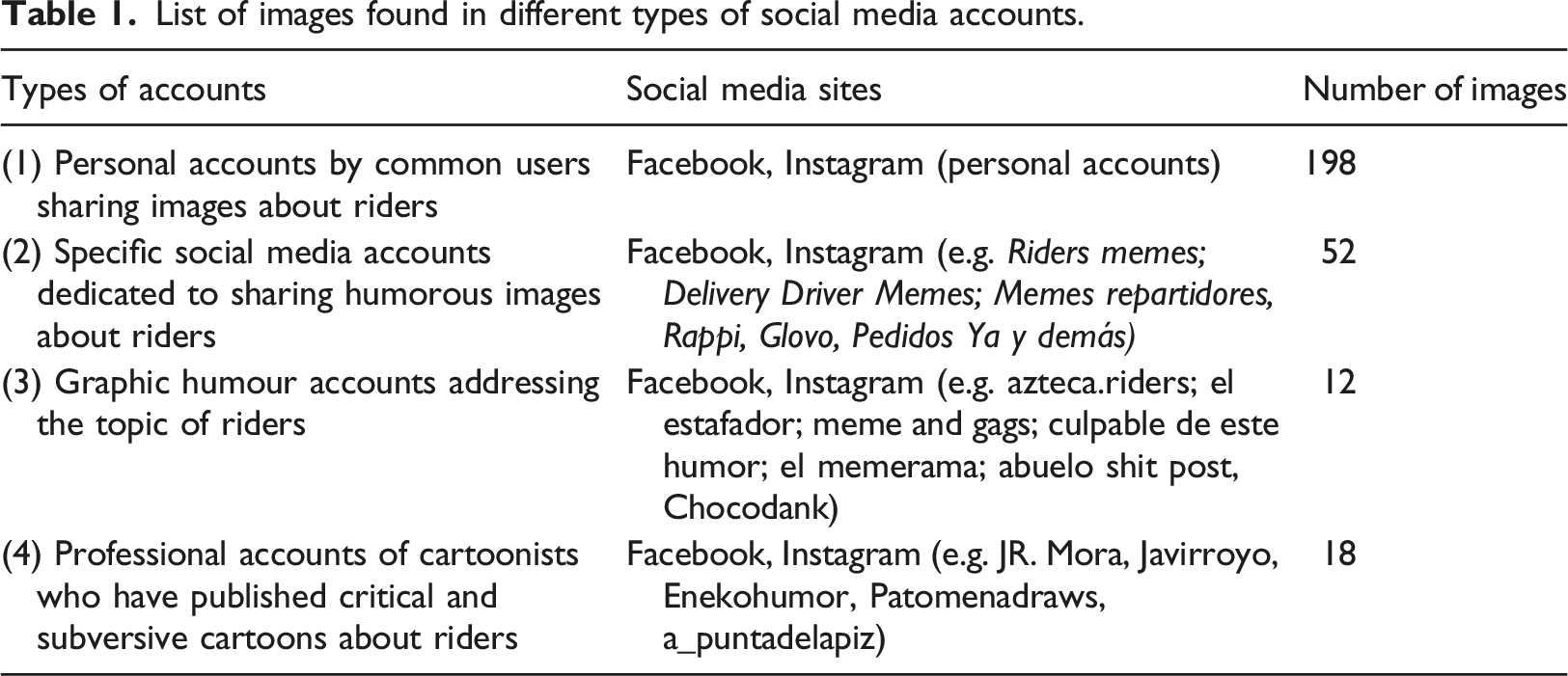
Subsequently, we extracted examples of each type depicting riders, collecting a total of 280 images, to conduct a first analysis on how they addressed the topic of riders and how they could contribute to social awareness.
Perspective of the agents involved.
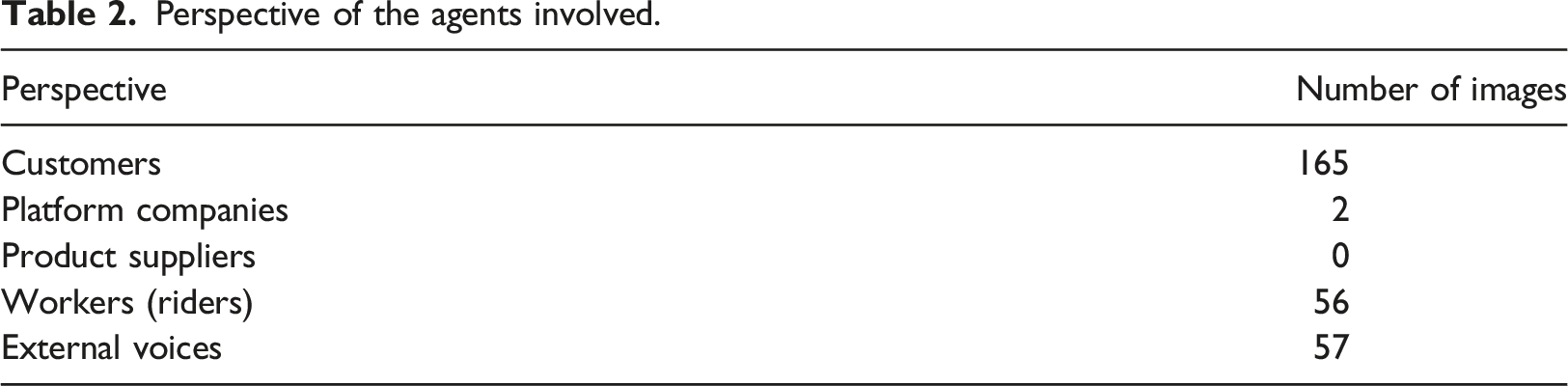
We were also interested in observing social perceptions, regardless of the point of view expressed, and applicable either to memes and cartoons. This pointed us towards narrative archetypes associated with riders, and the resource of content analysis along with thematic analysis. We identified four informal characterizations: (a) superheroes, (b) losers, (c) martyrs and (d) mean people.
After this process, we contacted a key collective of Spanish cartoonists to arrange a focus group, so they could tell us first-hand their involvement in the subject and the reach of their commitment and sense of social responsibility. This way, we could get a more situated account of our analysis, which couldn’t be done with memes.
We chose the Instagram account @elestafador, which launches a weekly magazine-like issue, in which several renowned collaborators publish cartoons on different social topics. We organised the focus group with four authors: Javirroyo (@Javirroyo, also its creator), Sandra Lodi (@sandralodi), Naranja Social (@naranjasocial), and Elkoko (@elkokoparrilla). We observed that, in @elestafador, the issue of riders was treated under three main themes: the conciliation of personal and work lives, bosses, and, curiously, local popular culture.
Results
We have organised our results in two main categories: the depiction of the world of riders (issues addressed, resources used, and formal issues), and the use of these visualities as potential tools for the denunciation of the work conditions of riders.
The graphic representation of the riders’ universe
We will first discuss the graphic representation of riders' universe through the eyes of the main agents involved in the delivery process. As previously stated, we offer the following categorization:
Attending to Table 2, we see that, as expected, most images are created from the consumers' point of view. However, these images are far from homogeneous: while some of them mock or are critical of riders, others empathise with them and value their work. Others even make jokes about the consumers’ odd behaviour (portrayed as impatient, wasteful, or greedy). This emphasises the interest of perceptions through narrative archetypes.
How memes, and also cartoons, deal with perspectives? In Figure 1, we find two examples of how customers value the work of riders. On the one hand, the speed and commitment to arrive on time. On the other hand, everyday convenience, as they save customers’ regular duties like cooking or shopping. In one of the following examples, riders become compared with a mother. Images using the customer’s perspective that value the riders' work.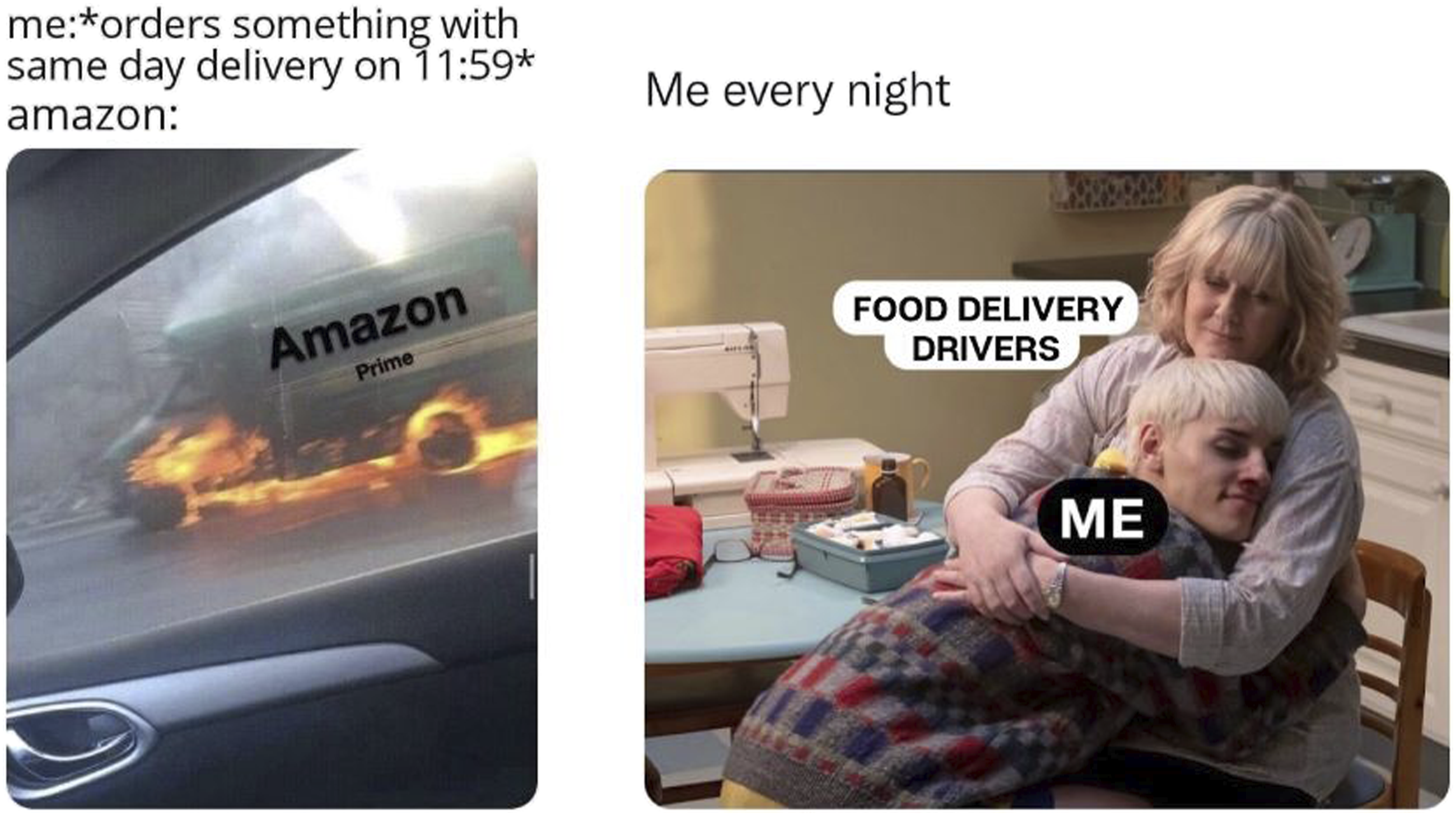
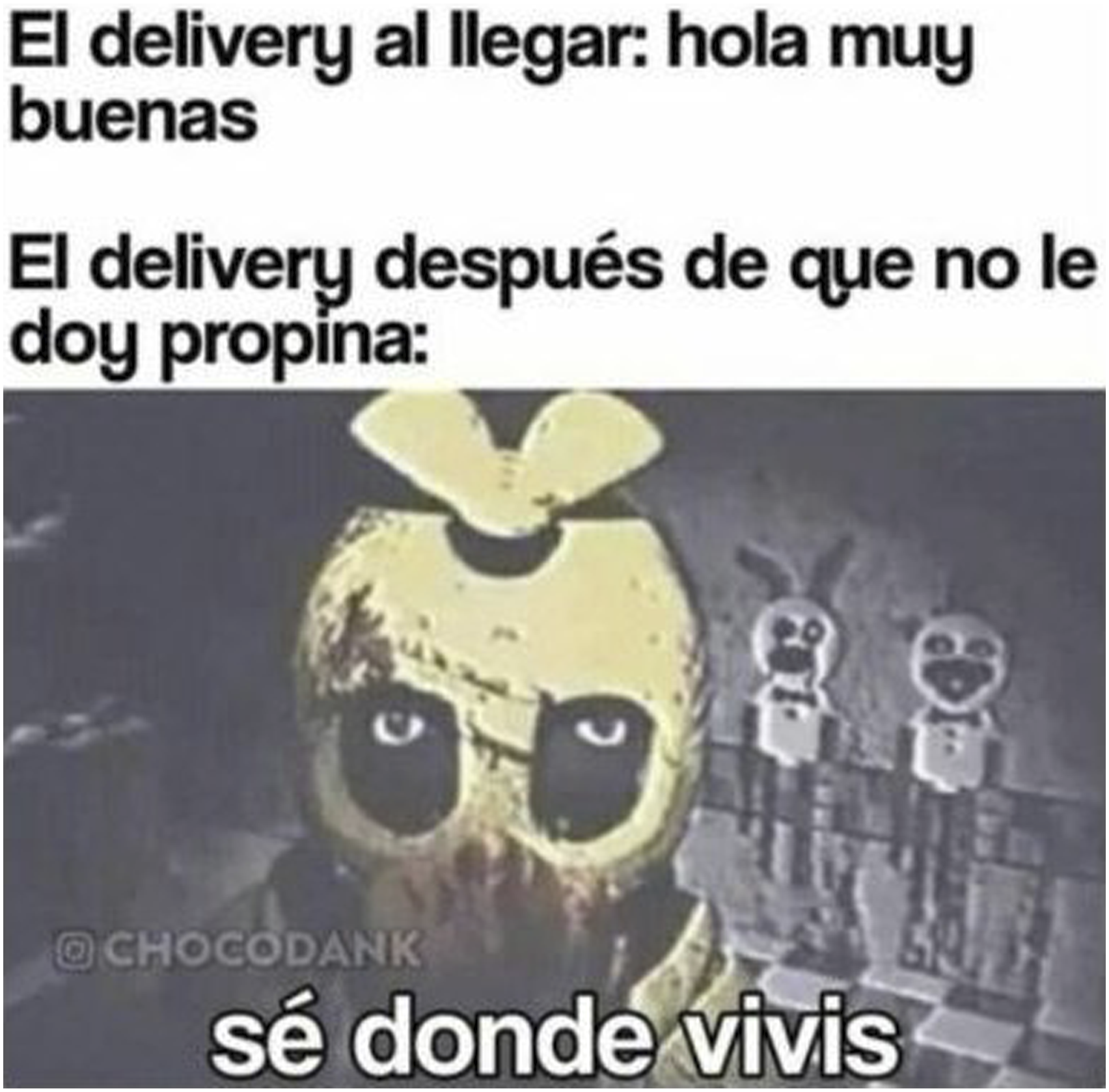
As showcased in the following two examples, the opposite is also true. In the first case, they are portrayed as slow; in the second, as evil, intimidating beings if they are not tipped (Figure 2). Images using the customer’s perspective that are critical of the riders.
1
Images using the customer’s perspective that portray the customers themselves.
2
Images using the rider’s perspective that talk about their everyday life.
3
Images using the rider’s perspective that are critical of their work.
4
Images using the platform companies' perspective (1) Meme; (2) Cartoon by JR Mora.
5
Images that talk about riders as external voices. (1) Cartoon by Eneko. (2) Meme.
6
Riders as superheroes. Riders as losers.
7
Riders as martyrs. Riders as mean guys.
8
Symbols in cartoons. Cartoon by Elkoko. Stereotyped statements used for many platform workers.
9
Cartoon by Naranja Social. Use of comparison and metaphor. (1) Cartoon by Pato Mena
10
; (2) Meme. Relationship between text and image in cartoons.
11
Cartoon by Elkoko.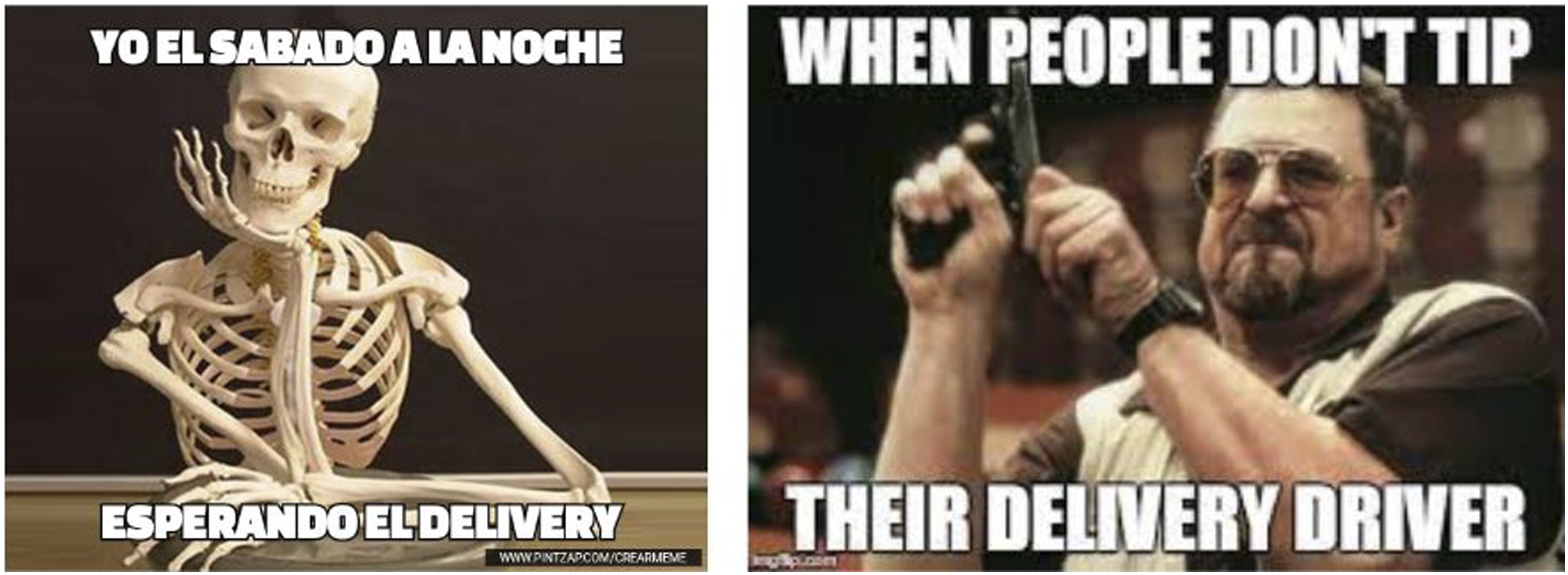
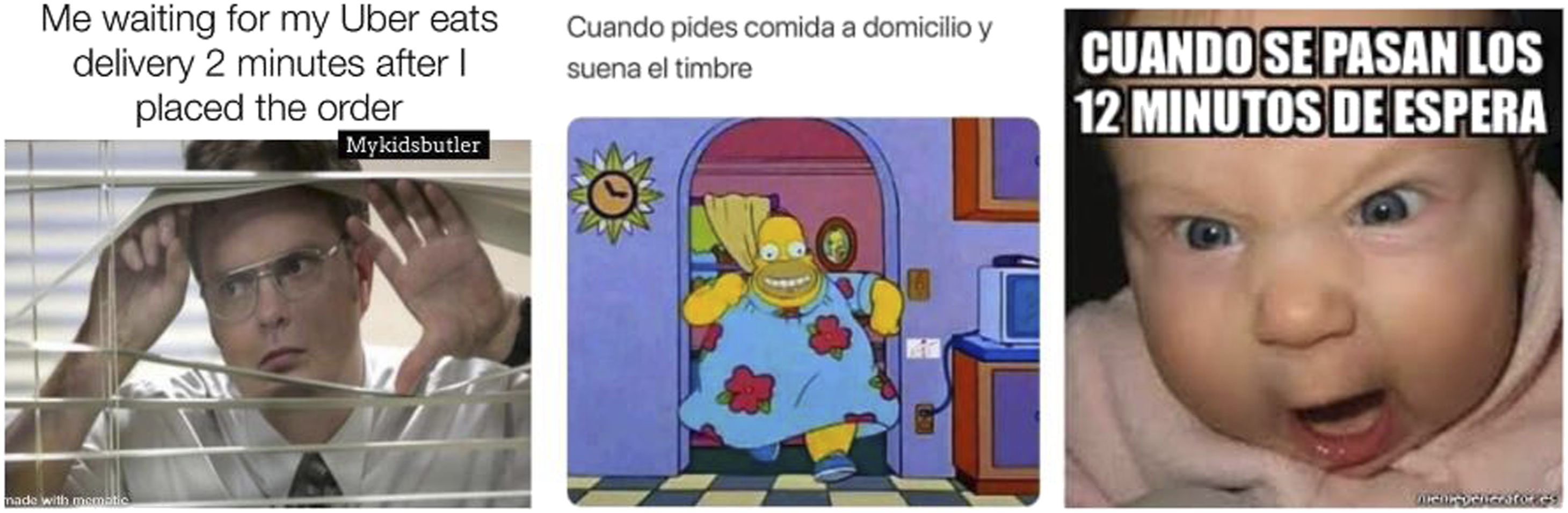
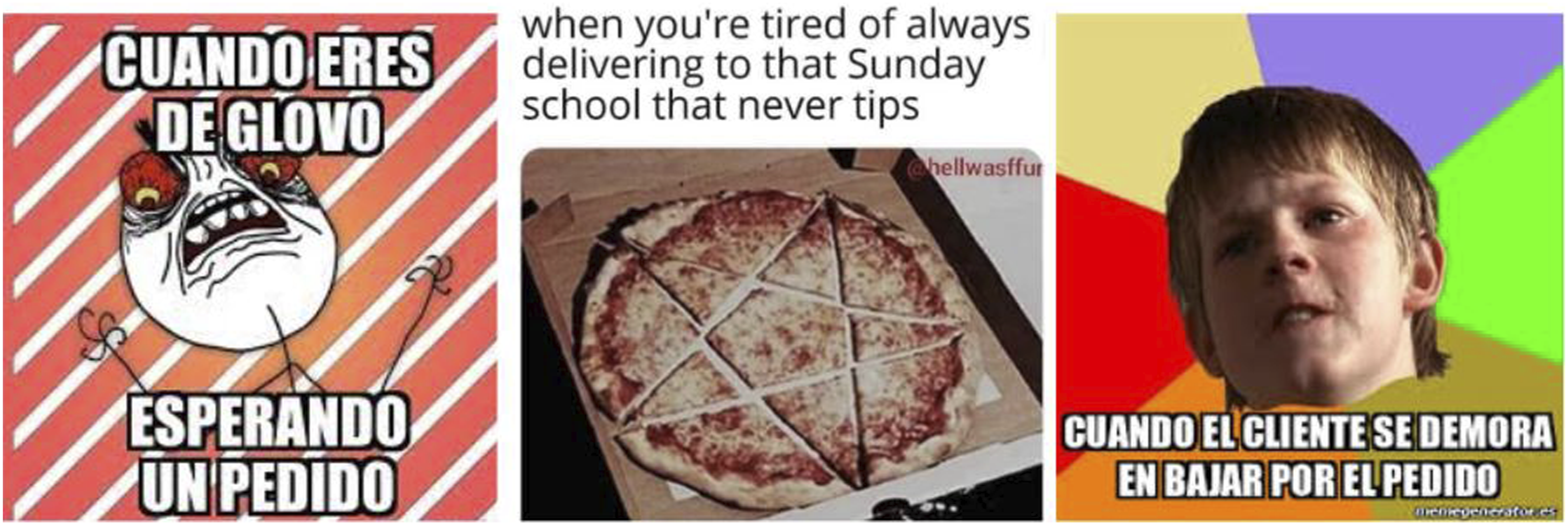
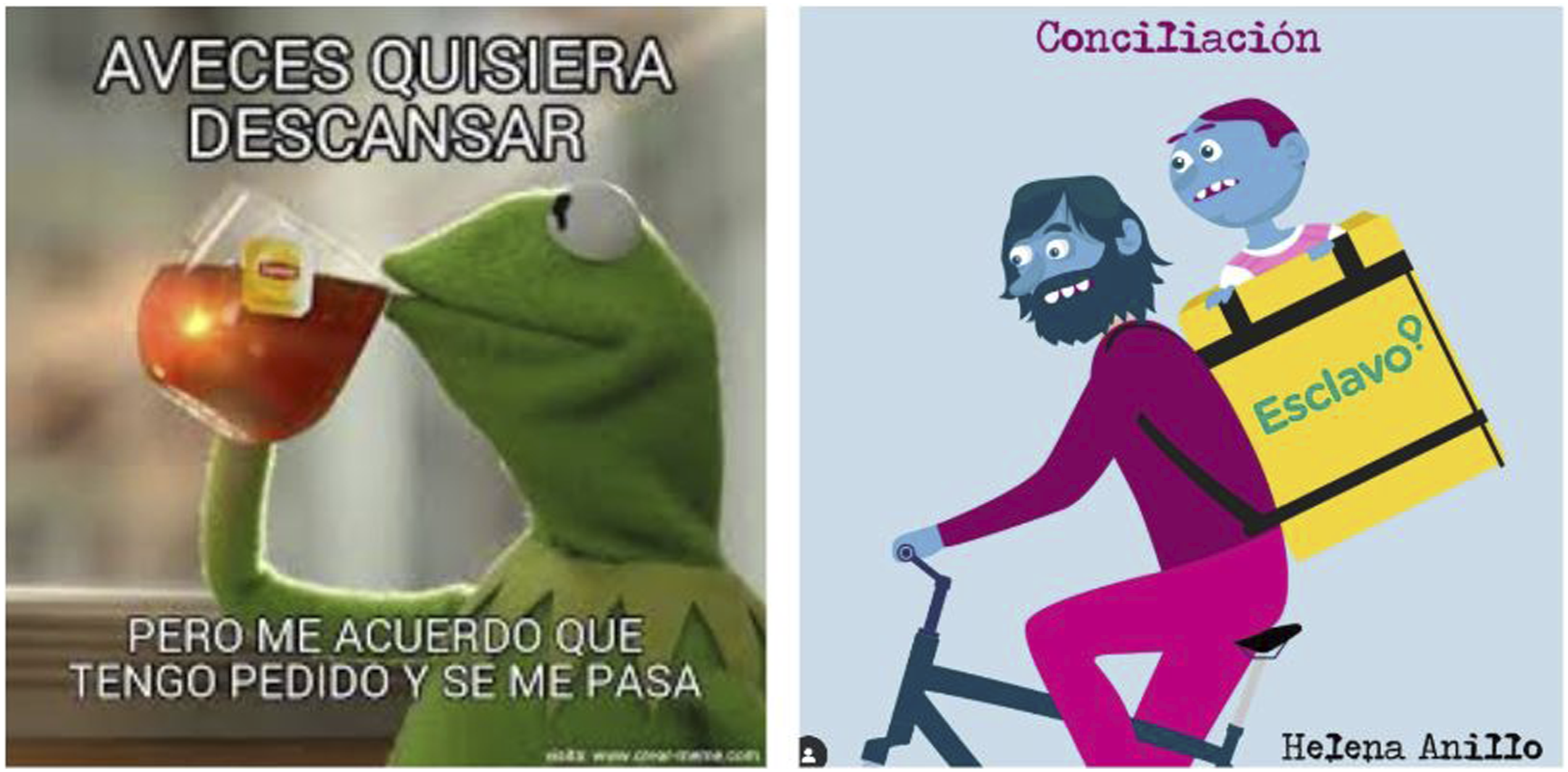
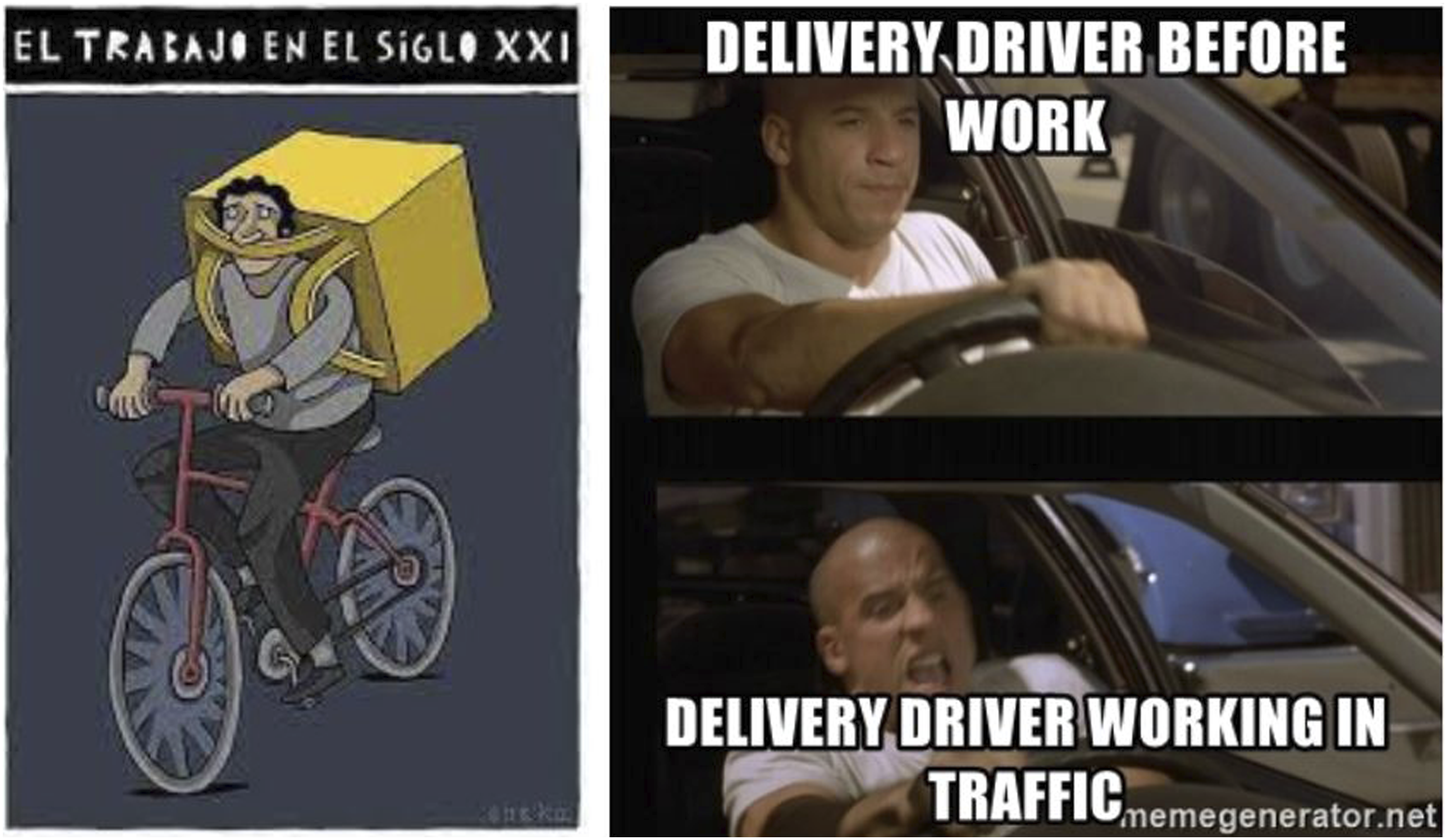
As previously said, the images shown from the customer’s perspective also make fun of the customers themselves (Figure 3).
Sometimes, these memes positions customers as friendly and even childish; sometimes as evil or lacking in empathy.
In the images showcasing the riders’ perspective, there is also a diversity of voices. Recurrent topics are everyday situations showing frustration and how the great dedication their work affects their personal life (Figures 4 and 5).
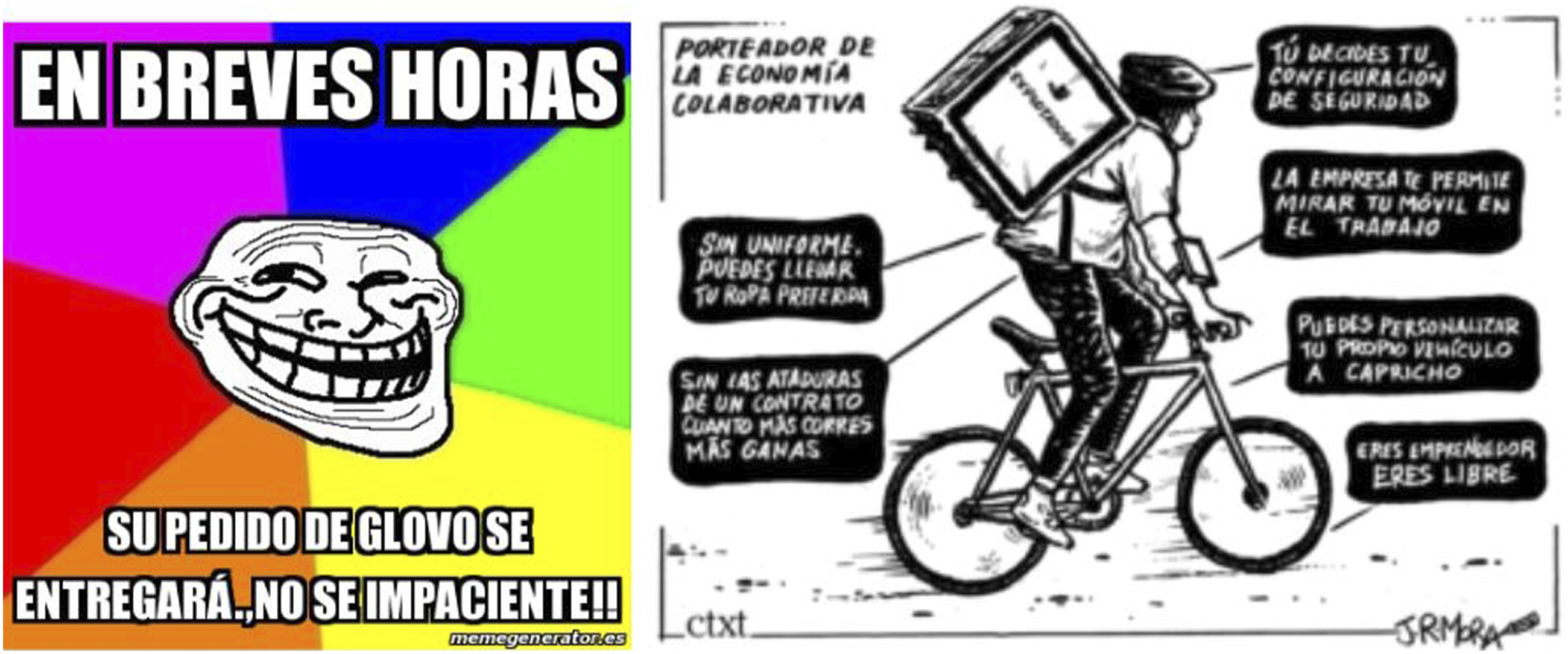
The discourse of the platform companies is barely represented: only in a meme and a cartoon. The first is posed as a response from a delivery app. The other one tells the possible arguments of the platform companies when convincing people to become riders (Figure 6).
We didn’t obtain any results depicting the vision of product supply companies. Although they are also part of the gig economy and must deal with last-minute orders from customers and demands from riders for quick delivery, their point of view is quite invisible.
The rest of the images showcase a more distanced, albeit still humorous, view on the agents involved (Figure 7).
Perception of riders as narrative archetypes.
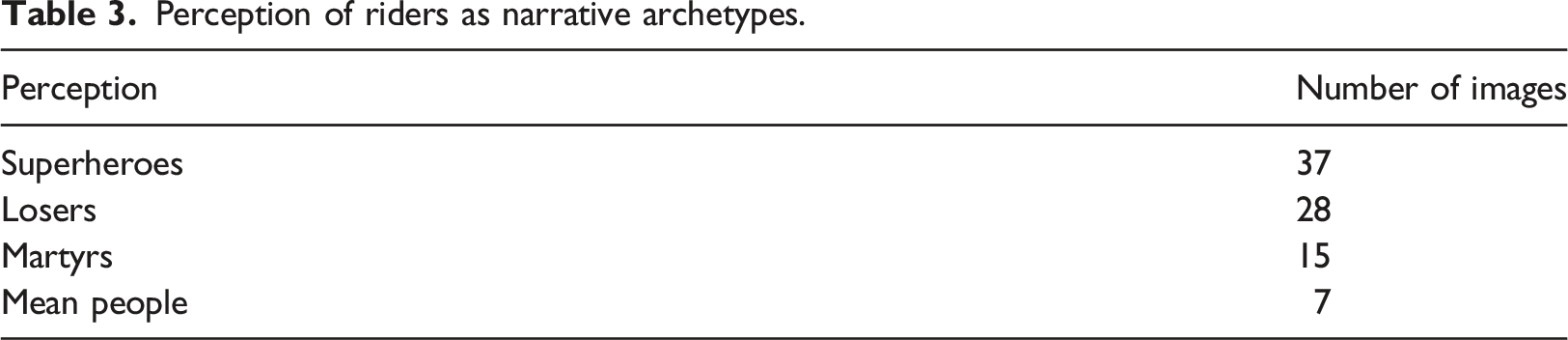
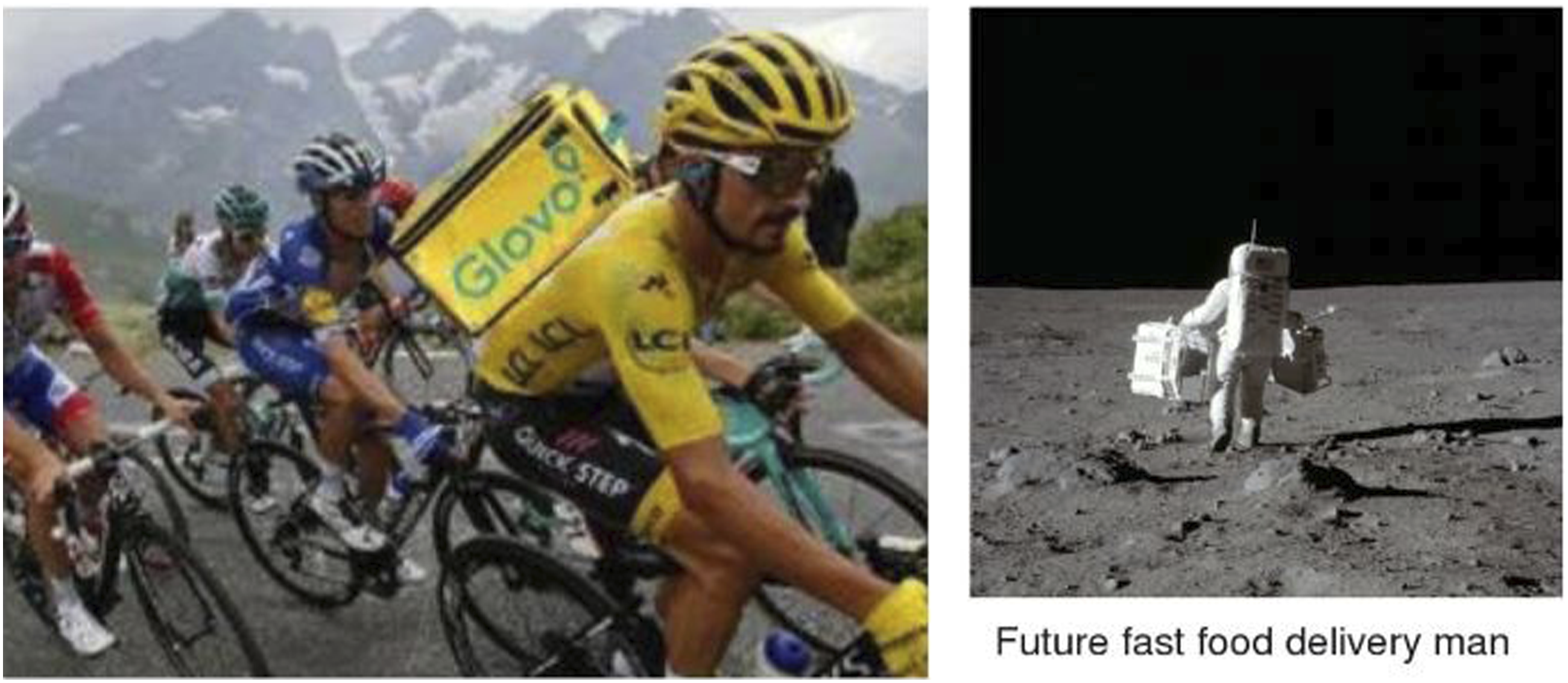
In the first group, we have found ‘superhero’ features such as super-speed or the fact that they serve under any condition and circumstances (Figure 8).
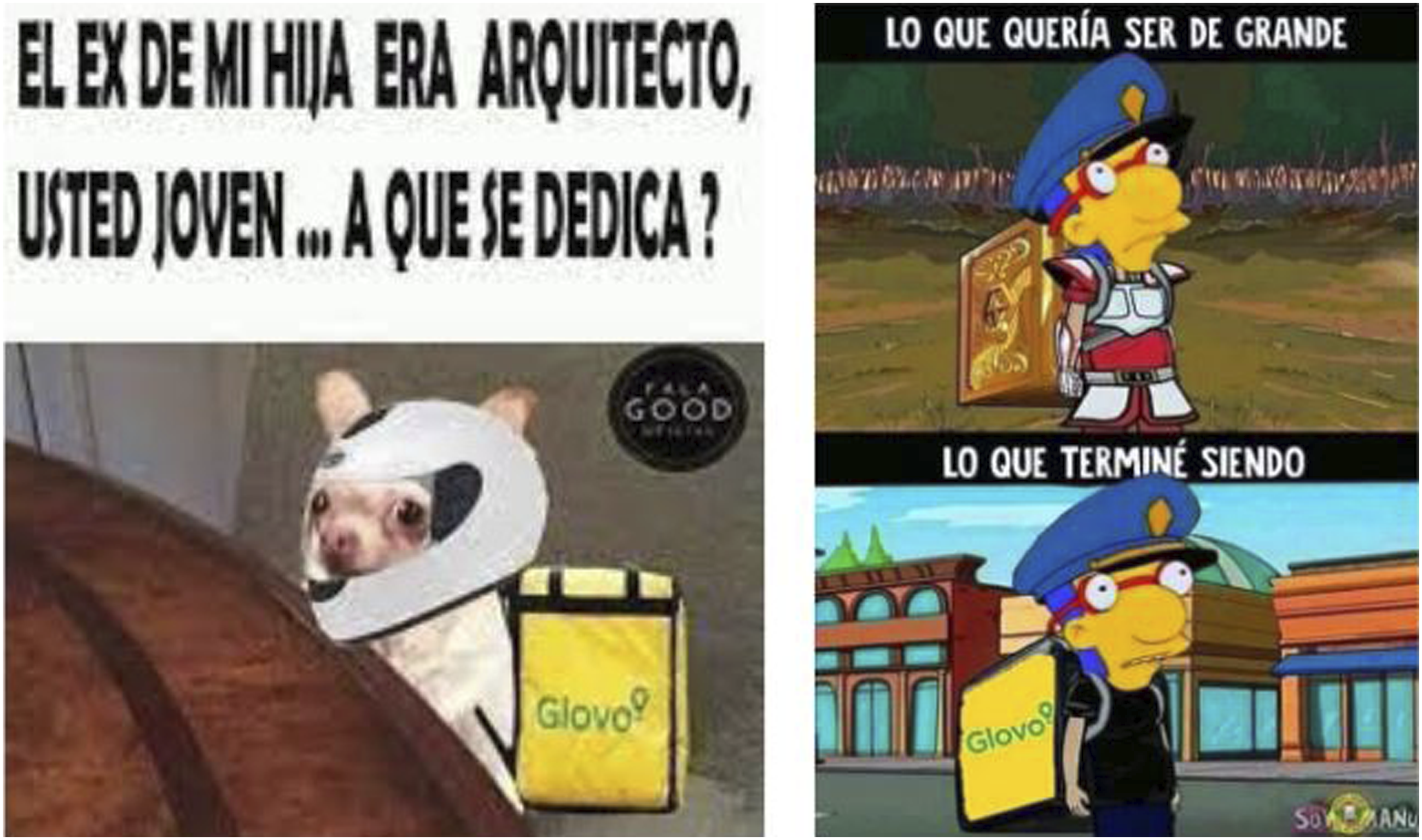
When they are presented as losers, they usually refer to the riders’ work as an underachievement in life (Figure 9).
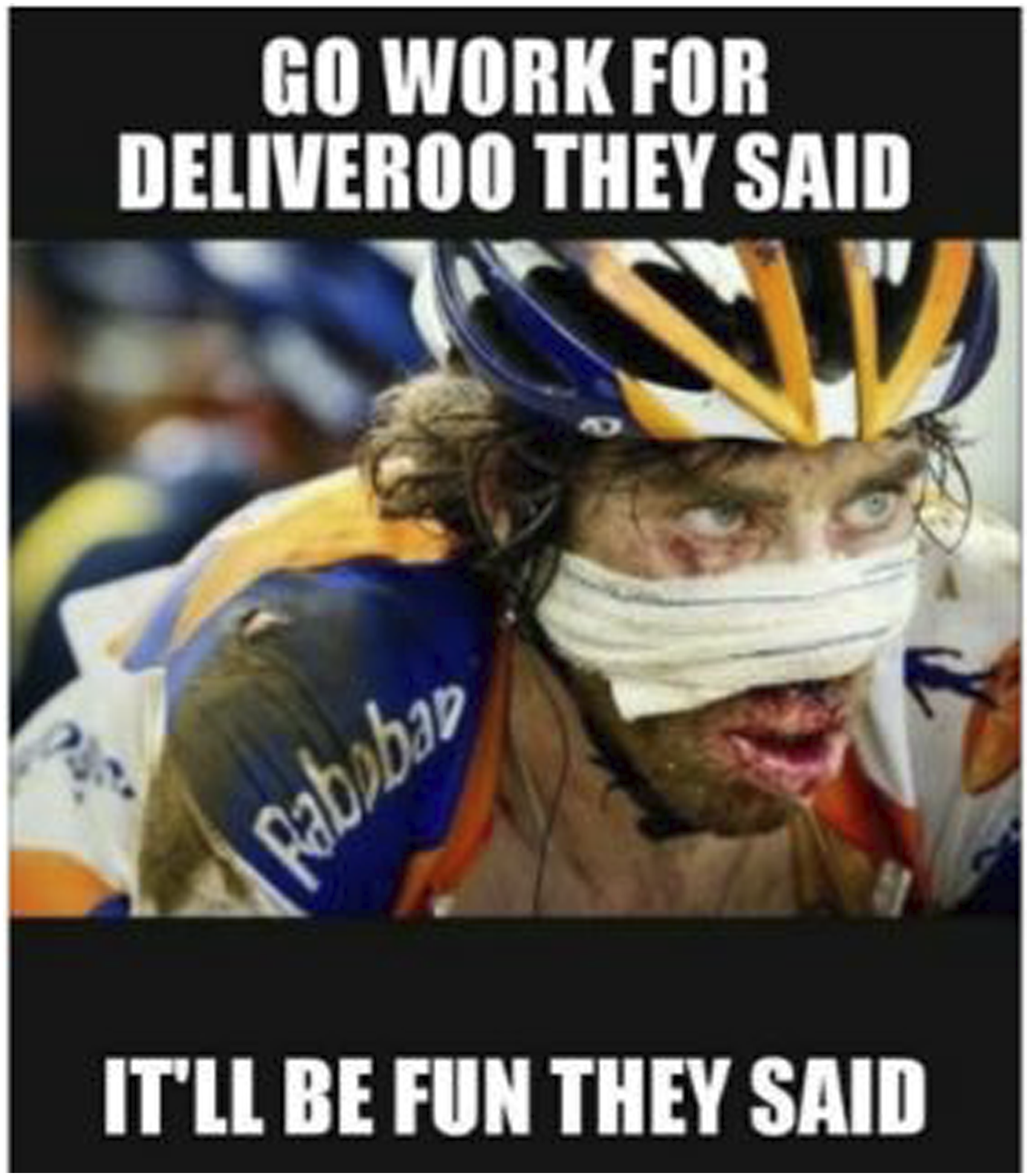
When presented as martyrs, they refer to the harsh conditions in which they work and are depicted as wounded, bruised, or stressed (Figure 10).
Sometimes users present riders as somehow mean (e.g., they get angry if they are not tipped). This negative view highlights how users themselves belittle the work of riders and contribute to the perpetuation of their precarious work, but it also opens the possibility for these seemingly inoffensive memes to be used for critical purposes (Figure 11).
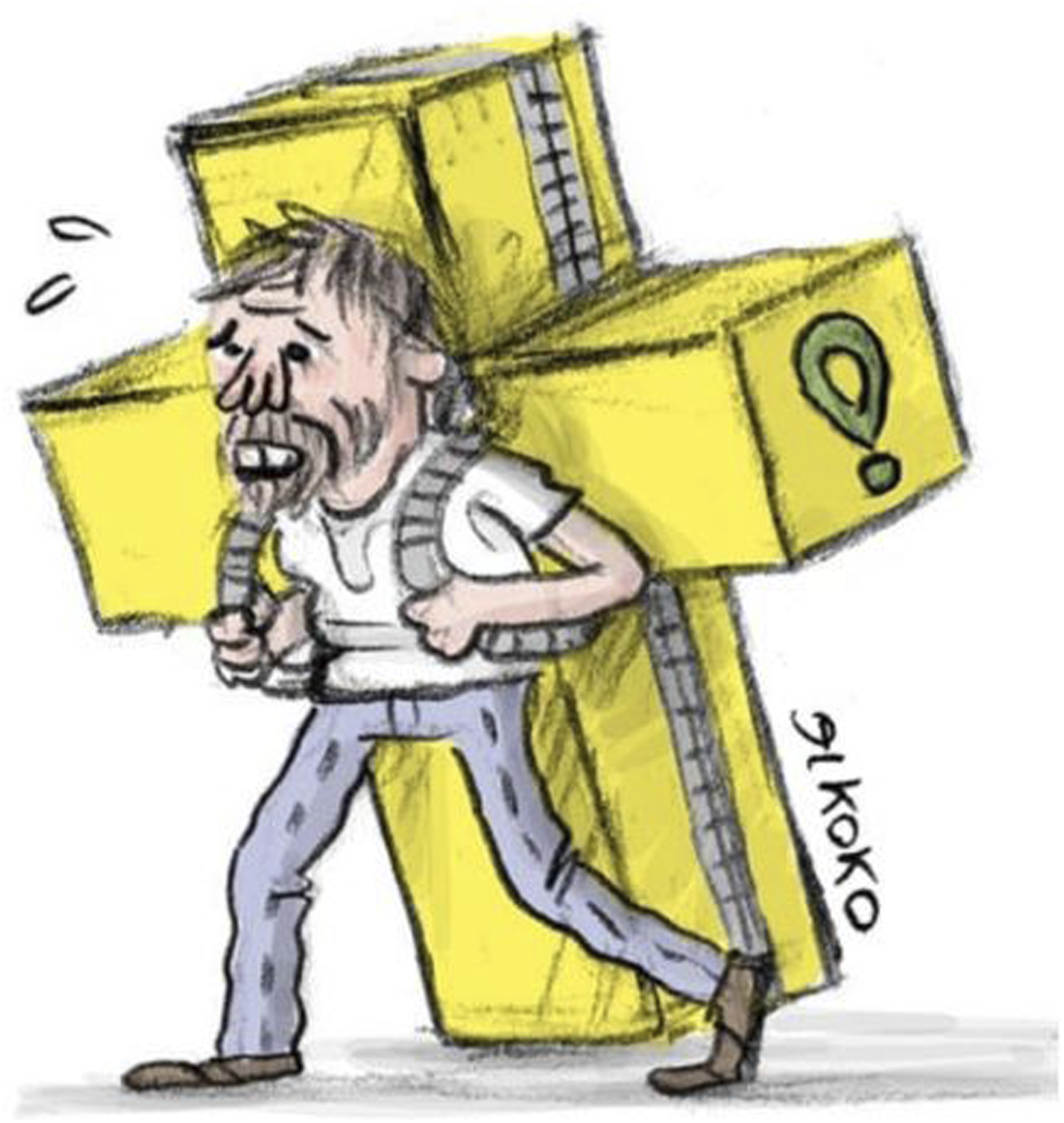
What we have observed in all the selected images, in coincidence with Meso-Ayerdi et al. (2017) is that these visualities show their reality in a direct, simple way. As cartoonist Elkoko points out, these images draw from stereotypes and symbols. An example of this is his cartoon of a rider carrying a backpack in the shape of a cross, which connects to Catholic imagery (Figure 12).
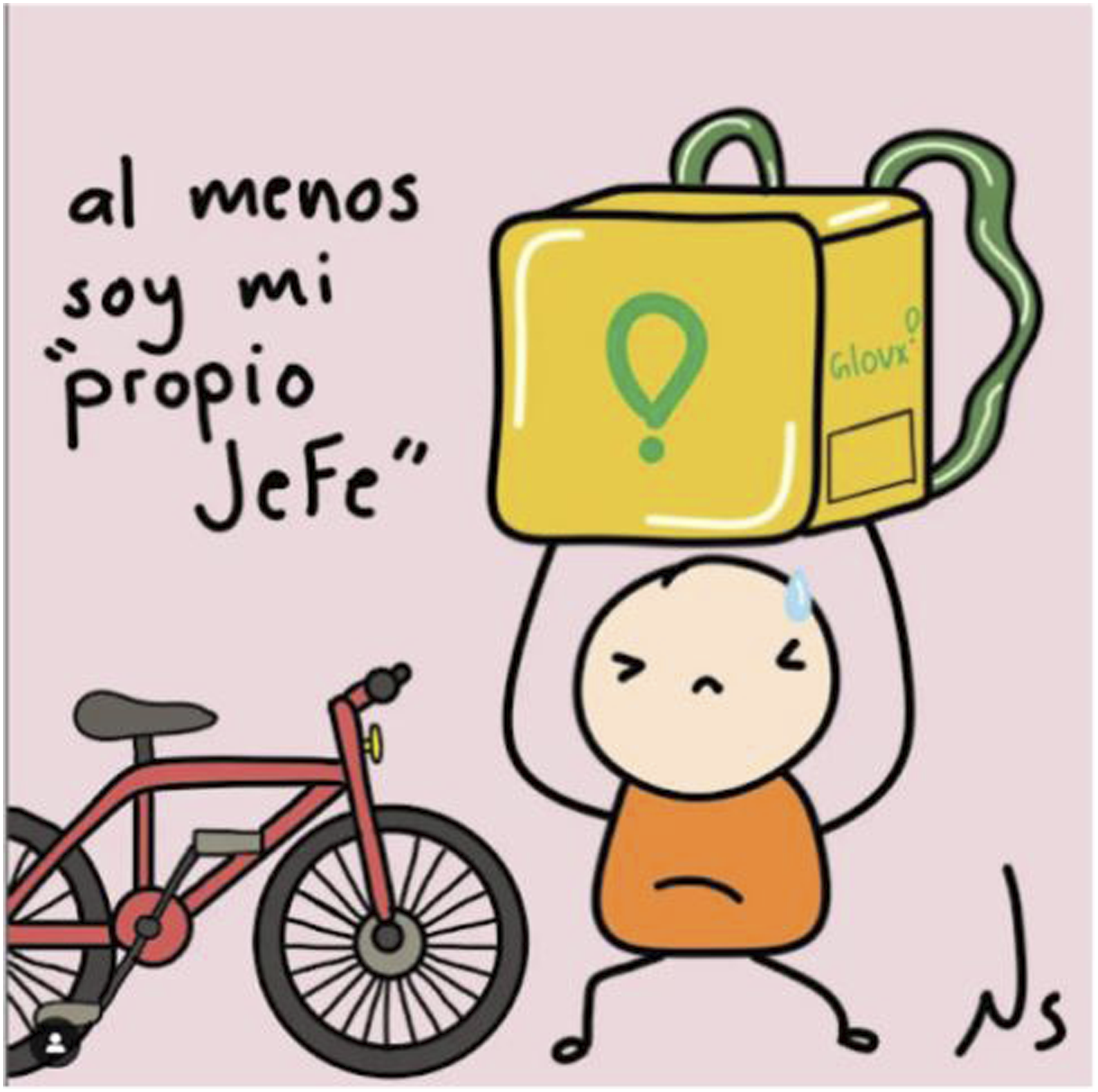
These images use easily recognisable situations for comic effect and reflection. Like the cartoon by Naranja Social in which we see a rider who is exploited but ironically grateful to be his own boss (Figure 13). According to its author, people connected with this cartoon because ‘you will be your own boss’ is a promise that many riders believed, as many other freelance workers. They believed they would be freer, but the reality is that they are often much more demanding than the worst boss. This identification helped readers to empathise with riders.
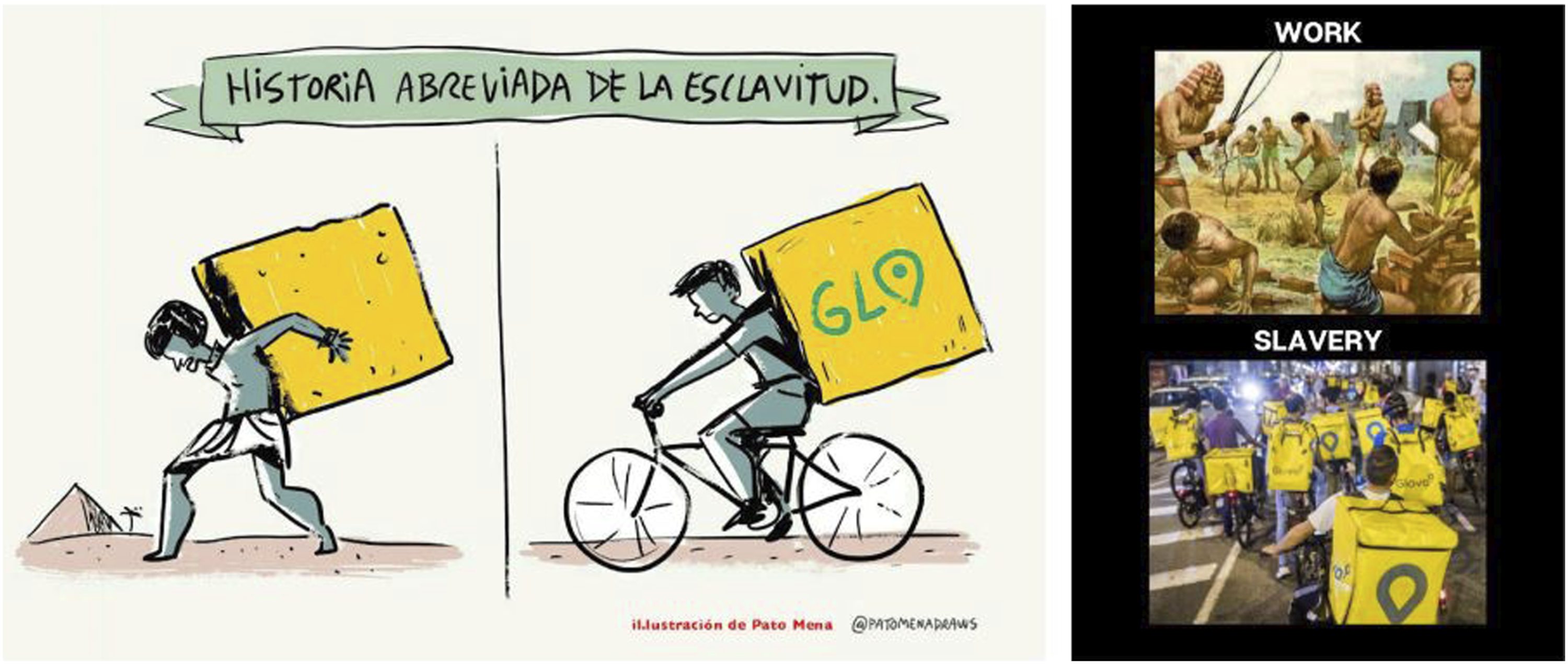
Other resources are comparison and metaphor, as we see in Figure 14.
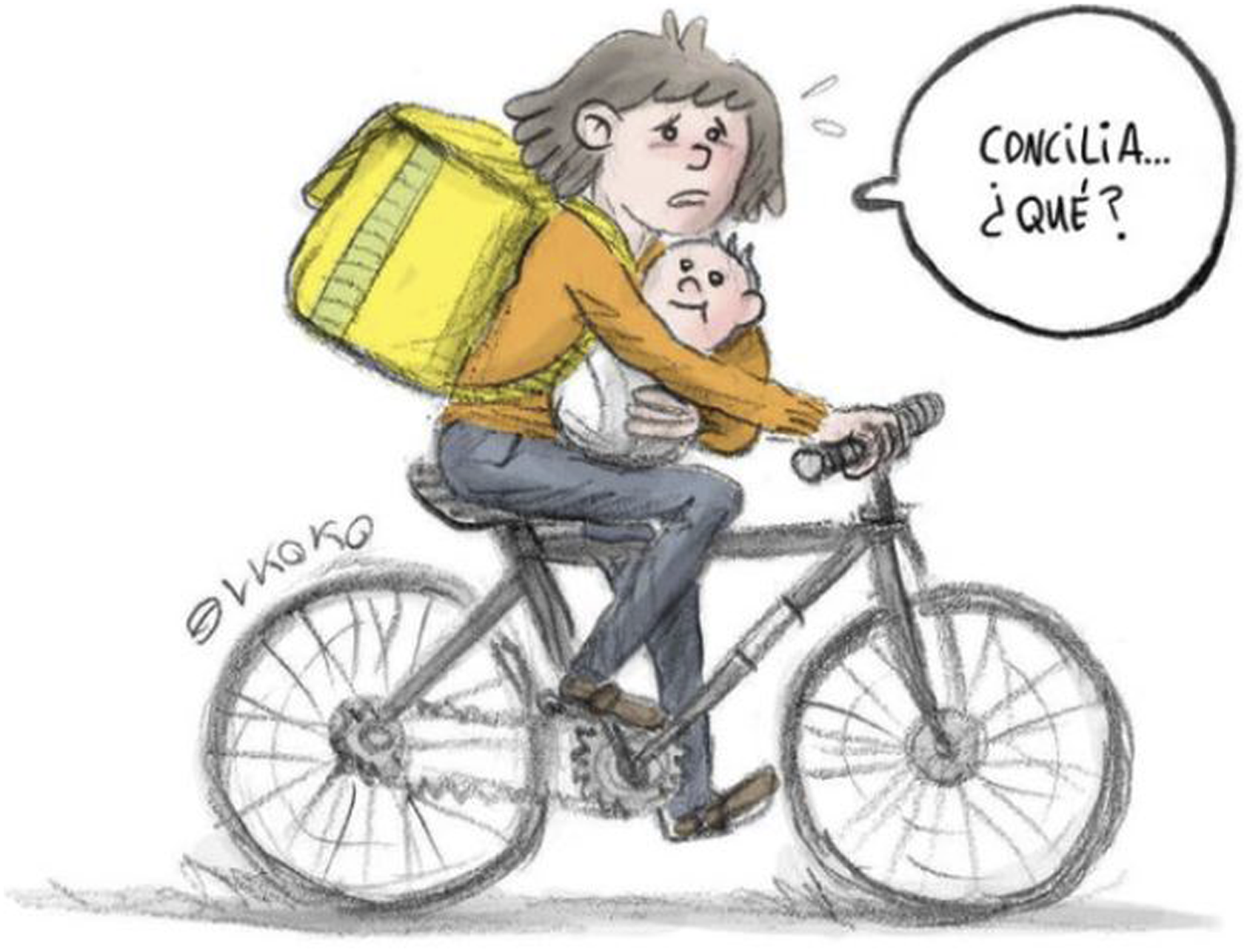
Image and text are combined in more than the 99% of the analysed images. In memes, the text is fundamental because they come mostly from recycled images repurposed through the text. In fact, most memes, although they talk about riders, do not show images of riders. On the contrary, in cartoons the figure of the rider is omnipresent, and the text is the element that complements and reframes the image. We see this in a cartoon by Elkoko (Figure 15), in which a rider woman complains about the false promises of family conciliation.
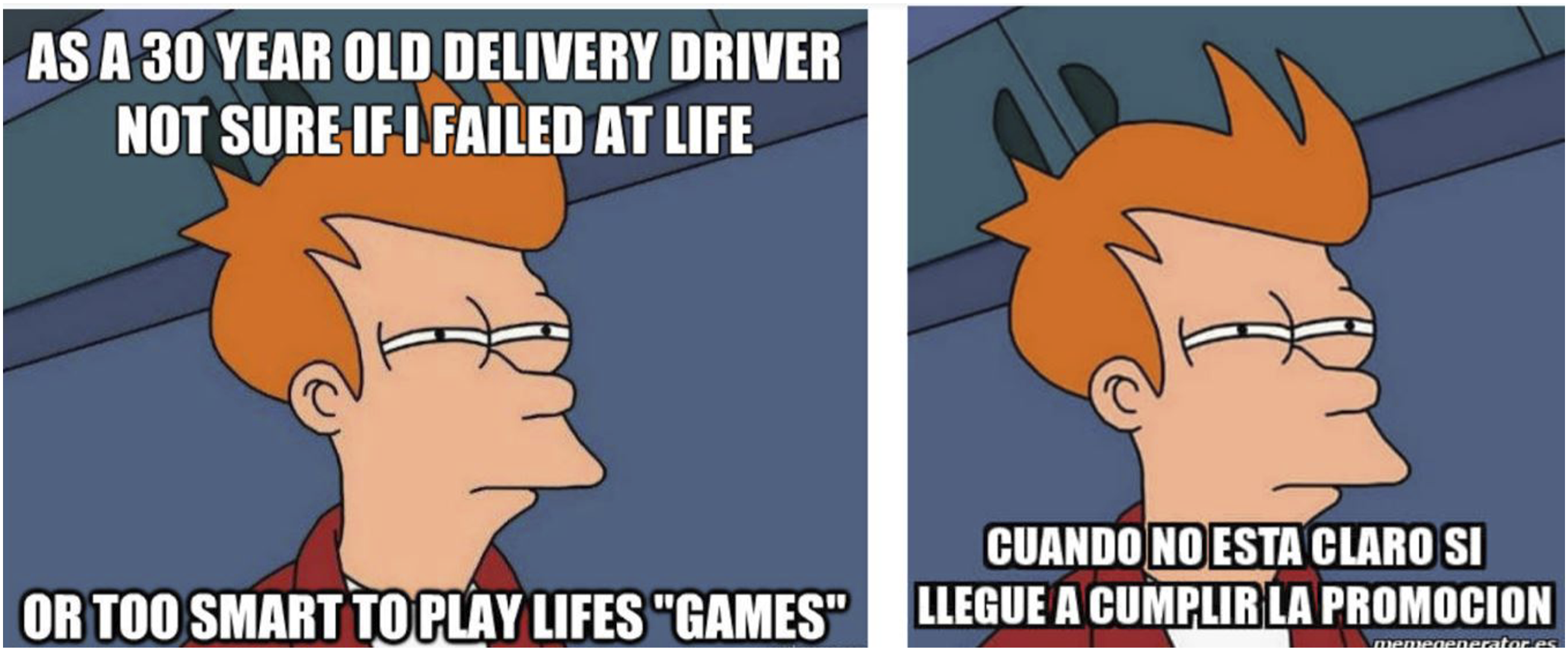
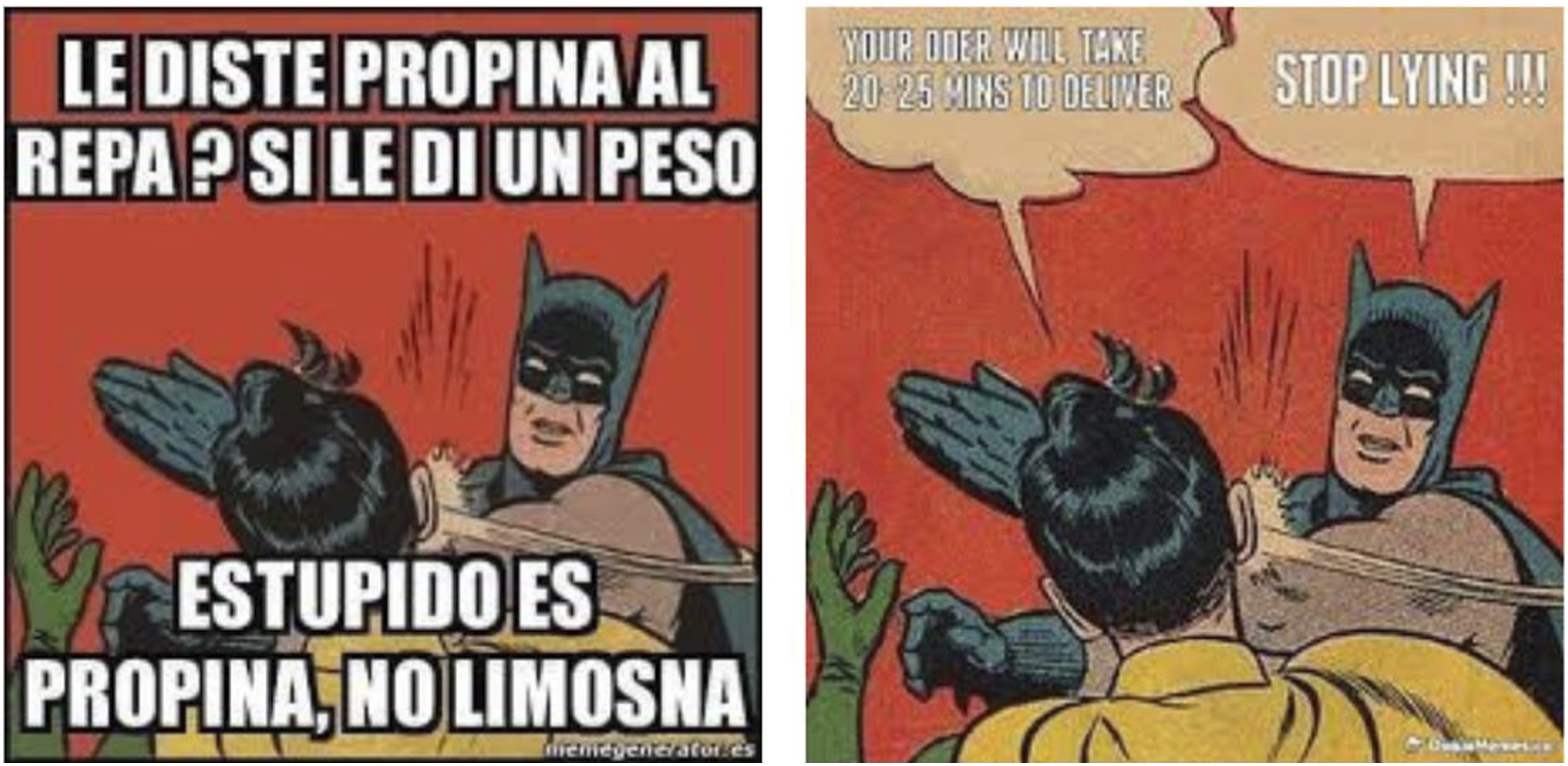
On an aesthetic level, there are also differences between memes and cartoons. Memes are simple and easy to create, combining images and superimposed text. Images are usually pre-set and chosen from templates. Precisely, the fun is that they have been replicated many times but with different jokes, so that the public immediately identifies them as memes. An example is the image of Philip J. Fry (Futurama) or Batman and Robin. The superimposed text uses in basic typography, clean and without serifs or ornaments, such as Impact or Arial.
As we can see, in Figures 16 and 17, the same image can be used for different meanings as they disseminate and mutate. Remixing, reappropriating and modification become part of their idiosyncrasy. Philip J. Fry (Futurama) memes.
12
Batman and Robin memes.
13
Cartoons, on the other hand, work differently. First, their aesthetics depend on the art and style of their creator. They are more reflective and have a more elaborate creation process (something on which all the focus group participants agree). Moreover, in the case of the riders, they use common symbolic elements: the backpack as a burden and penance or the bicycle as the most basic but at the same time precarious means of transportation (Figure 18). Use of symbolic elements.
14
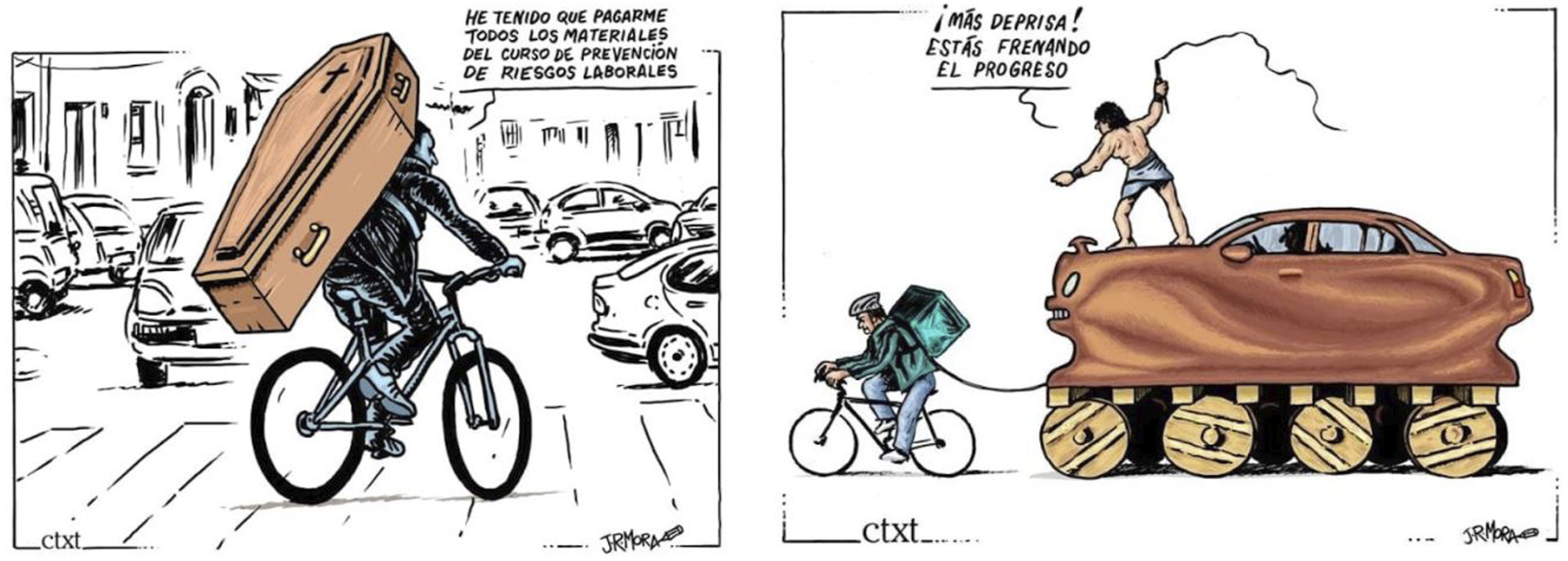
Cartoon de Eneko. Use of metaphor and hyperbole. Cartoon by JRMora.
15
Modern Mythology.
16
Cartoon by JRMora.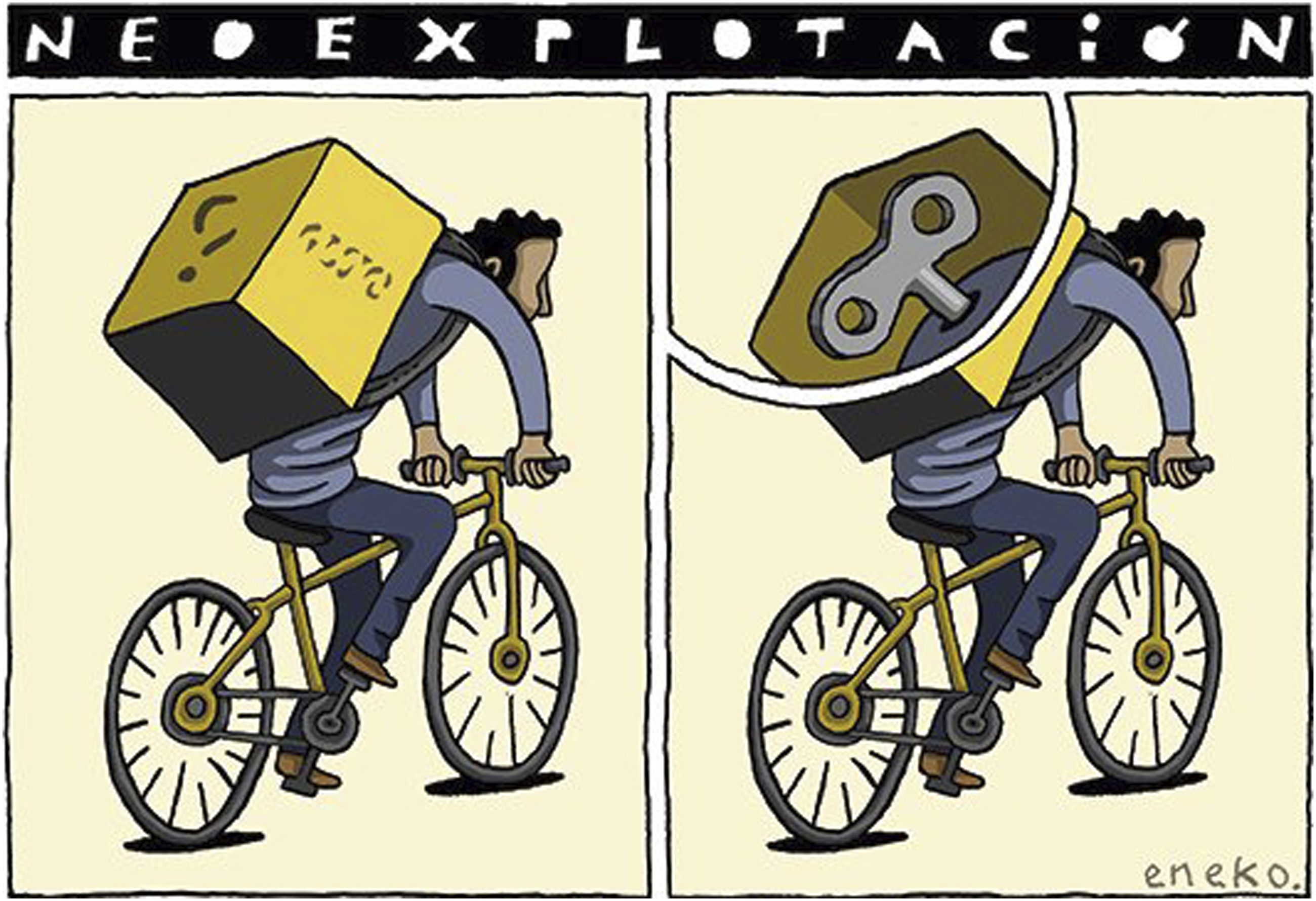
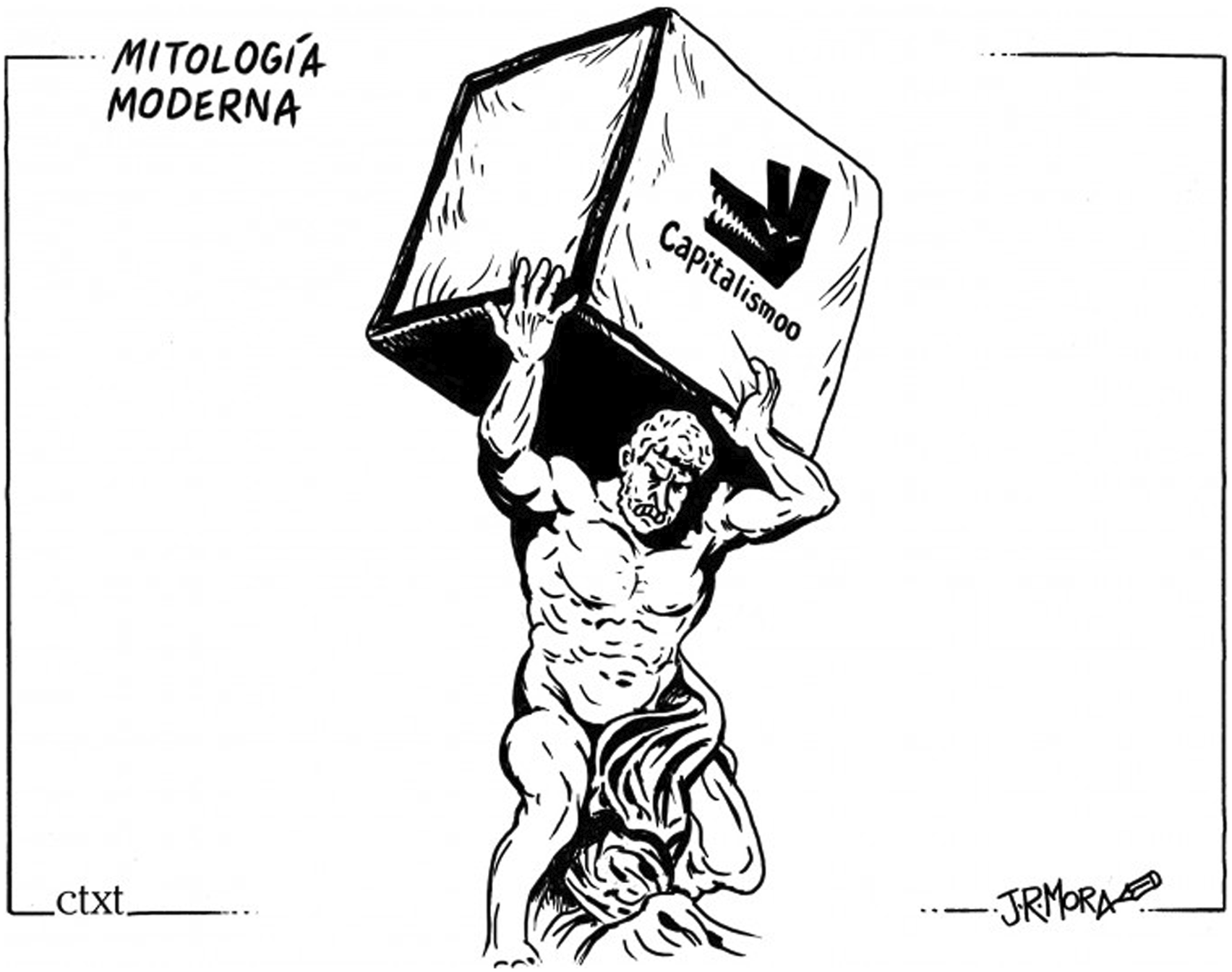
A tool for denunciation?
We have already referred to the image of the rider carrying a backpack in the shape of a cross as if he were a penitent Christ. In the focus group, cartoonist Sandra Lodi stated that this combination of drama and humour makes it possible to connect with the audience: first, it makes us smile, and then reflect. This is due, according to Javirroyo, to the relationship between drama and humour: you can laugh and empathise with things that strike a chord, which is why, despite the unfairness and harshness of the situation of riders, there are so many graphic jokes about them that help to denounce their precariousness and raise awareness.
The cartoonist JRMora deals recurrently with the issue of riders. He uses a lot of metaphor and hyperbole, as well as elements of quick identification, creating an immediate impact on the public. His images can sometimes be even violent, as the author wants to avoid our indifference (Figure 19). In this society where time is so highly valued, one of his images can be more effective than a well-elaborated text explaining the conditions in which the riders work.
Moreover, he criticises not only the conditions of the riders themselves but also the weight of the gig economy in current capitalism (Figure 20).
He feels the commitment to make these denouncements, as he believes that the problem of the riders is gradually reaching other sectors and reflect the dangers of the generalization of precarious work conditions.
All cartoonists contacted for this paper also use their images to denounce the situation of riders, each one from their own perspective and aesthetics, either forceful (JRMora), sardonic (Elkoko) or self-consciously naïf (Naranja Social).
Asked about the social role of cartoonists and whether they feel having a social responsibility for what they publish, all participants in the focus group agreed. For them, denouncing or criticising a situation does not mean they have to fulfil a social role. They freely express their opinion on a subject through their images and worldview. This is something that the public does not always understand, and they are often lashed out for what they say in their cartoons and how they say it. In this sense, even if cartoonists are not working directly for the cause of the riders, they are denouncing and indirectly contributing to raising awareness.
In the case of memes, anonymity makes difficult to know their critical intention. We have observed a more playful orientation towards reflecting everyday impressions and visions about riders in a humorous tone, rather than creating explicit critical awareness. Furthermore, they may even be subject to greater decontextualization in the process of viral dissemination. However, as memes depict key issues regarding the world of riders, they can be used to raise awareness.
Discussion and conclusions
The analysis of visual humour in digital environments regarding riders, their everyday practices and perceptions of their work contributes to the literature on platform work in nuanced and interesting ways. Our results point to the coexistence of different visual forms of representation of riders and their world, which reflect how the gig economy is perceived by different agents, mostly customers and the riders themselves. Also, a more detached, observational, broader subject position, which we have labelled as ‘external voices’, in which humourists, but also citizens, act as social commentators. In the following paragraphs, we will retake our research questions for an in-depth, structured discussion. (a) How do humour images shared in digital environments reflect the main issues surrounding riders?
Due to the features of the gig economy, there are noticeable differences regarding classic approaches to the study of humour in the workplace. First, because there is not a ‘workplace’ as such, understood as the nuclear place that fosters collective subjectivity and springs denunciation of work conditions, discrimination or management satire. Gig companies define work as dispersed (along cities), mediated (through apps), individual (freelancers attending orders with their own means of transport) and competitive (through rewards and incentives). The literature on gig work, particularly that based on ethnographic research, has shown how despite this dispersed gig work organization, riders are able to organise themselves, build their own coordination and informal structures of solidarity, and create their own collective vision and narratives, counteracting bureaucracy, control strategies and even brand storytelling, thus revealing contradictory discourses. This is difficult to observe through memes and cartoons. However, images in our sample depict riders as members of a collective facing similar problems; this way, there is still a connection, but in a radically different way. For instance, the waiting points where riders expect to receive products for delivery can become a ‘workplace’ and a space for interrelation, exchange, and solidarity, with workers from different platforms.
Cartoons, and many memes, differ from other forms of humour in the workplace as they mostly correspond to external, observational representations. However, we have been able to track self-representations of the rider job, mostly found in Riders’ Facebook Groups, and inner looks at the rider job in memes portals. This points to riders building some sort of personal narratives of their job. These memes emphasise everyday difficulties like dealing with deadlines, providers and clients and focusing on the hurdles of the rider job. As shown in Figure 21, the ‘Food delivery service Starterpack’ (similarly to other gig work memes like parcel delivery), acts as a collective vindication, fitting with the ‘martyr’ archetype. The ‘Death stranding’ meme (using as a template an action video game) emphasise the dangerous nature of riding, more in line with the ‘heroes’ and the ‘martyrs’ archetype. This shows that, even if memes are more ambiguous and decontextualised, they remain open to a specific, inner gaze. Two memes that depict riders’ self-representation.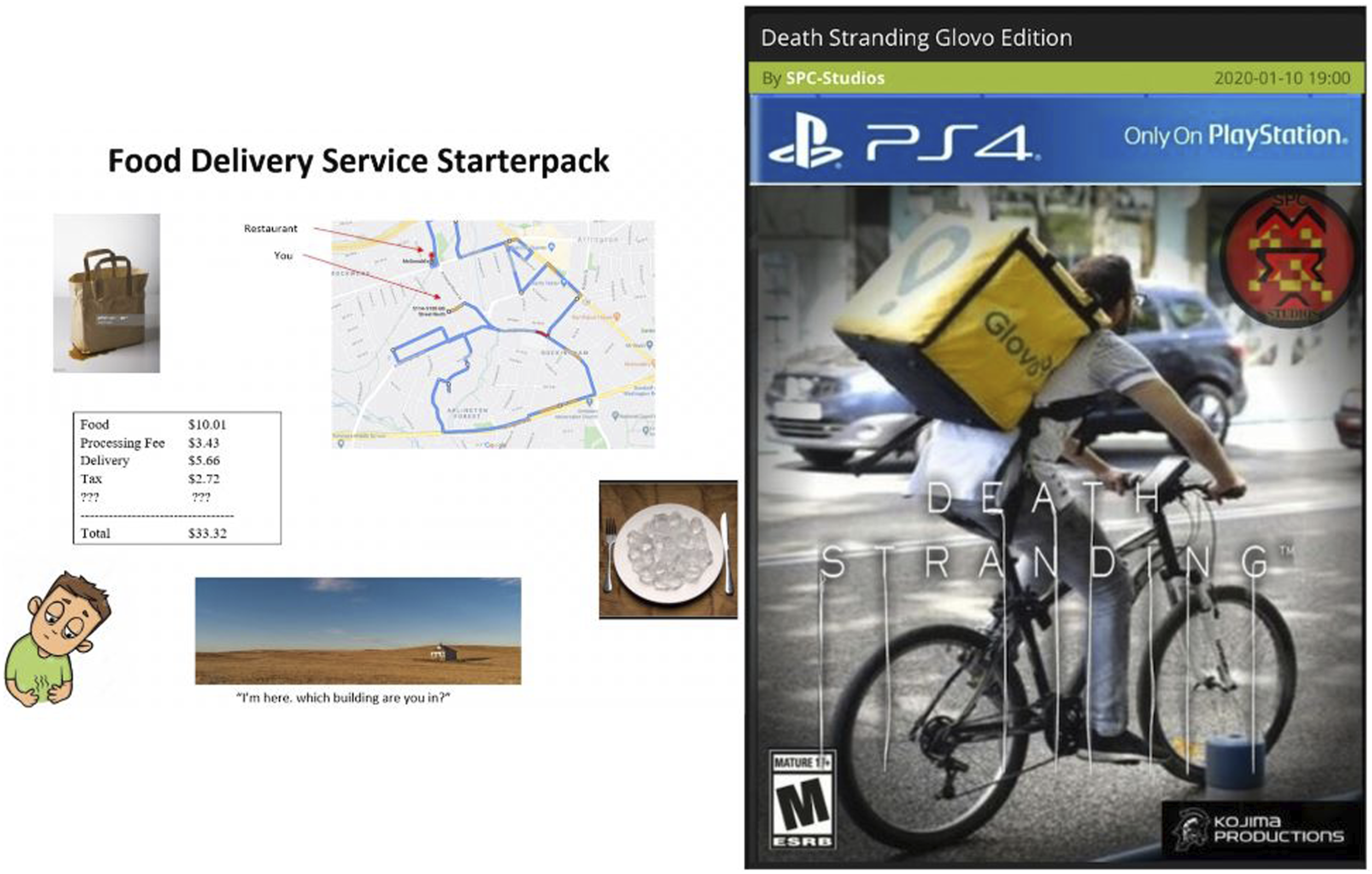
Further research on this inner gaze through humour made and/or shared by riders could be carried out through the analysis of Whatsapp groups or through ethnographic work in riders’ waiting points, which would also help to consider the heterogeneous socio-demographic composition of what we call the ‘rider collective’ and their interrelations. Therefore, even if the results that showcase this ‘inner look’ at the rider job are a minority of humorous visual expressions in digital contexts, they offer a clear expression of concerns, sensitivities, subjectivities and desires built in personal narratives that have to be explored further. (b) How do they contribute to foster critical social awareness of this type of labour practice?
As stated in the literature and as observed in our empirical work, memes have an inherent ambiguity, not only in terms of anonymity and simplicity but also in terms of lack of contextualization that makes it more difficult to state their critical intentions. This is precisely why memes are so appealing, through quick identification with everyday situations, repetition, and intertextual connection with popular culture and pre-existing memes. Therefore, memes that don’t reference specific events (like a specific campaign or political conflict) might seem to reinforce unfair situations disguised as ‘everyday’. In the case of rider memes, it could be said that memes, with their focus on riders as individuals, make gig companies invisible. Similarly, when the discursive perception of users is adopted in memes, it could fit in the way gig companies like to present themselves: as intermediaries between clients and service providers. This ‘user perspective’ regarding riders and their job would diminish empathy, potentially validating this precarious work relationship. Certainly, our research hasn’t revealed a meme visuality that could be considered, following the traditional literature on humour and labour or humour and political action, as ‘transformative’ or ‘activist’. However, the fact that memes depict different hurdles in the world of riders, and their relationship with clients, points to their potential to raise awareness about working conditions.
Furthermore, our analysis reveals that there is a more implicit, but still present, source of reflection and critique: first, memes are far from homogeneous, as they can adopt different subject positions, mainly riders, customers or citizens; second, they embrace contradiction through ambiguity, as any subject position can be interpreted or re-contextualised in different ways; third, they rely on narrative archetypes that depict, in an informal way, these ambivalent perceptions. Thus, memes are useful to depict many of the hurdles associated to the gig worker job, like being subjected to tight schedules, delays caused by providers, working under stress and difficult conditions, interacting with demanding clients or lacking in social or economic recognition. This is how, in our research, memes about riders contribute to mapping a multi-faceted social phenomenon from different angles, and fostering reflection on a subject, closer to cartoons than we initially envisaged.
Cartoons about riders align with a long-standing tradition of open critique of working conditions, highlighting the role of gig companies and their opaque policies. Cartoonists act as external, committed, critical analysts of society and capitalism, and their critical visualities are framed in this wider context. Therefore, there is a clear connection between the creations of cartoonists and their political and social interests, which fits in the literature on humour and the workplace. However, unlike traditional expressions of humour in the workplace, cartoons, and memes present riders – and certainly, also consumers – as mostly individual, isolated figures and the collective element appears in its dissemination through social media, rather than in its visual representation. This way, graphic humour showcases how the gig economy contributes to a model of society based on the isolation of citizens and relationships based on service, rather than on the collective and forms of solidarity.
Through the research process, we also wanted to consider cartoonists’ engagement with a denunciation of different kinds of social injustice, including gig work. From the results from the focus group, participants feel committed to social justice but refuse to take a role of social responsibility. Even if they sometimes feel pressure from their followers, doing so would eventually restrict their freedom of expression. (c) What similarities and differences do we see in the different visualities about riders?
Memes and cartoons exhibit notorious differences in terms of critical intention, authorship, or aesthetics. However, both forms own some sort of memetic quality: as stated by some participants in our focus group, they can be, at least potentially, easily shared through social media, and both seek to appeal to the readers’ emotions, thus creating an immediate connection through humour. But they do so in different ways: memes rely on templates and texts that look for a quick identification through everyday situations, while cartoons rely on easily recognisable iconic images with a text that frame the critical message regarding working conditions and unfulfilled promises of conciliation, self-organising, autonomy, profit or fun. Instead, these images underline exploitation, corporate control, and precariousness.
Both forms make use of stereotypes, archetypes, and intertextuality for easier identification: memes tend to refer – often repeatedly – to pop icons (Batman, SpongeBob, Marvel characters, video games) personalities or events, while cartoons tend towards more classic iconography (Ancient Egypt and Greece, Christian traditions, and capitalist urban societies).
In our view, humour offers a polyphony of voices and approaches to riders, which can seem contradictory and serve different purposes, unlike what we have seen in the traditional literature on humour at the workplace. There is indeed an explicit form of critique through cartoons, as humourists denounce precariousness and working conditions in the gig economy, as a symptom of the promises and deceptions of the platform economy. Cartoons, available mostly on the authors’ sites or collective platforms, are certainly more explicitly critical and use different strategies to connect the everyday perception of riders in the context of the platform economy and its impact on work conditions. This way, it could look like the lack of contextualization and inherent ambiguity of memes open some doubts about their role in a critical reading of gig work. However, our research shows that memes can deal with a closer representation of the rider’s work and its deceitful conditions (freelancing, conciliation). Therefore, we state that memes showcase a relevant potential for a nuanced discussion on the work conditions of riders and, ultimately, to lay the conditions for some sort of awareness and change.
Footnotes
Declaration of conflicting interests
The author(s) declared no potential conflicts of interest with respect to the research, authorship, and/or publication of this article.
Funding
The author(s) received no financial support for the research, authorship, and/or publication of this article.
