




Abstract
This article seeks to understand how app delivery workers construct their collective identity through the digital platforms of YouTube and TikTok. Said identity construction occurs in the context of the social controversy surrounding their status as workers without labor rights or as independent partners of digital platforms. To this end, we collected 977 videos and their metadata and analyzed them via cross-platform digital methods. The findings reveal that app delivery workers construct their collective identity through the interplay of two factors. The first is the identity narratives created by delivery workers as video bloggers. The second is the recognition narratives created by different associated actors, such as accountants, media, universities and research centers, and content creators. Through these interactions, the narrative of delivery workers as independent partners acquires more algorithmic strength and visibility than those that discuss their status as employees and their lack of labor rights. Audiovisual technology also works as an instrument to reach individual agency and face the precariousness of daily life.
Partners or workers? A problem of identity
It is Sunday midnight in Guadalajara, Mexico. An app delivery worker receives a strange message: he is to buy a kilogram of salt and bring it to the entrance of a cemetery. The app he works for will pay him $2 if his mission is successful. Perhaps to avoid feeling alone, he turns on the camera of his cell phone, which is permanently attached to his motorcycle, and, with curiosity and anxiety, narrates his journey in real time. No one greets him when he arrives at the cemetery. Then, rather than risk a mugging or worse, he cancels the delivery and leaves (EduarDo, 2020a). This video, which has 2.7 million views on YouTube, is one of many that app delivery workers (Uber Eats, Rappi, or Didi) use to post on their channels. It contains many characteristics of the precarity faced by Mexican app deliverers, such as the possibility of danger and accidents, long working hours and minimal pay, and the social denigration of experiences that can turn out to be tasteless practical jokes.
In Mexico, 88.6 million people are connected to the internet, 96% of whom use cell phones (INEGI et al., 2022). The country lends itself to platform economies, whose premise is to gather heterogeneous actors around social and commercial exchanges based on mobile applications and websites (Srnicek, 2016). These digital platforms pay value-added taxes (VAT) and, on a subscription basis, income taxes. The collection of these taxes increased by 600% in 2020 compared to 2019 (Noguez, 2021). From these data, we can deduce that Mexico is a country vulnerable to social platformization (Poell et al., 2022), understood as the penetration of transnational technological infrastructure into local exchange processes. The situation of platform delivery workers represents one of the many new challenges and conflicts in labor relations that arise from the participation of multifaceted market operators on these platforms (Sued, 2022).
Food delivery platforms have operated in Mexico since 2016. The most widely used, Uber Eats, claims to have 8 million users in the country (Uber, 2021). Since its launch, the number of delivery workers has increased by 150%, reaching approximately 243,000 in 2020. Although these delivery platforms bring significant economic benefits to both the platforms and providers (Carreón Rodríguez et al., 2021), many reports have shown that the labor conditions of delivery workers are precarious.
In Mexico, platform work takes place in the context of a general precariousness of the youth job market, based on unstable jobs, as well as lack of labor rights and social security. In addition, youth precariousness is characterized by wages below the poverty line, social discrimination, and expendable and dispensable lives (Valenzuela-Arce, 2015). Mexican youth suffer a historically higher level of labor precariousness than the adult population linked to successive economic crises, neoliberal politics, and GDP falls, which provoked the diminution of formal employment. Access to work worsens according to the level of education, social origin, and geographical environment (Covarrubias and Arana, 2023). Young people belonging to sectors already discriminated against, such as indigenous groups or those living in extreme poverty, are more likely to suffer multiple discrimination and job insecurity (Urteaga and Moreno, 2020). Stereotypes make it more difficult for youth to exercise their rights (Mora-Salas and Urbina-Cortes, 2021).
Platform rules for app deliverers may only serve to exacerbate this precarity. There are 350,000 delivery workers in Mexico. Eight out of every 10 delivery workers report that this is their only source of work, and more than half consider it a long-term job (Bensusán, 2021). App deliverers must use a carrier that identifies them with the company, and despite claims of flexible scheduling, they work an average of 9 hours a day, 6 days a week (Díaz-Santana, 2022).
After expenses, workers earn an average of $85 per week. Moreover, app deliverers do not sign a contract with the platform, and their earnings are only a fraction of the delivery costs. The Mexican government also considers them freelance workers, so they have to pay 8% VAT and 3% income tax. As a result, many have hired accountants whose fees must be deducted from their wages (Oxfam-México, 2022). In addition, platform delivery workers must provide their own resources to work for these companies: they work outdoors and receive no benefits. They are also responsible for paying their own insurance, which involves applying for a pilot program that offers social security for approximately $2 a day, a fee paid by the workers and not by the platforms (IMSS, 2021; Köhler, 2020; Oxfam-México, 2022). Nevertheless, the platforms they work for insist on calling them “delivery partners” because they supposedly are free to choose their working hours through the app that assigns the deliveries. This purported freedom is contradictory because the platforms set the payment for each delivery and distribute the deliveries via algorithmic controls (Revilla and Martin, 2021). If deliverers are not constantly connected and are unavailable during peak hours, these platforms will stop assigning jobs to them, resulting in de facto dependency. Although login times are flexible, platforms block workers if they refuse to accept orders and force them to follow their ranking and customer reviews.
Delivery work on platforms is set in a gray area between salaried work and self-employment in which, although the worker is not legally subordinate to his employer, he is not entirely free to determine his work hours, remuneration, or manner of work and can even be warned or suspended by the company if they do not receive good evaluations (Bureau and Corsani, 2018). These are the main reasons why some civil society actors are trying to shift this narrative from delivery partners to precarious workers (Díaz-Santana, 2022). This contrast between narratives develops and is resolved unevenly across different countries, and sometimes even within the same country (Defossez, 2022).
Academic research on the situation of delivery app workers has recently increased for several reasons. First, app deliverers establish particular labor relationships governed by algorithms and resisted by individual strategies of agency and solidarity mediated by technology (Yu et al., 2022). The research highlights the production and reproduction of job insecurity, including factors such as invisibilization and racialization, especially in the Global South (Leung, 2022). Also of particular interest are delivery workers’ narratives about their jobs, which vary in perspective. Some European studies claim that deliverers’ work does not allow for sublimation intended to subvert the ordinary suffering associated with their activities into something positive for their subjective experience. On the contrary, platform work managed by algorithms exacerbates all the harmful social and psychic dynamics that arise in configurations of generalized competition (Lemozy and Le Lay, 2022). Another research highlight the narratives of leisure, which include concepts such as pleasure and being cool, of the freelance, expressed in the expectation of easy money, and of the collective aspects of work, which highlight precariousness and the need for job improvements (Stewart et al., 2020). In this last case, delivery workers perceive their freedom as an illusion, as Japan-based research shows (Umer, 2021). They then organize strikes and collective protests in the streets and on social media, as in Brazil, where there is a tradition of small bicycle delivery cooperatives (Abilio et al., 2021). Sometimes these narratives can be mediatized and monetized through YouTube channels, where individuals aspire to create dual identities as platform deliverers and bloggers, gathering knowledge about their work to share with their audiences (Chan, 2019). Despite this progress, there is little research on the experience of platform work in Mexico.
Given the social diagnosis described above, this article adopts a cultural perspective to analyze app delivery workers’ construction of social identity. We assume that part of the controversy about the social situation of these workers is resolved when they create their own social identity (Tajfel and Turner, 2001) as app deliverers, as well as through the social recognition granted to them by the other actors with whom they interact. We understand social identity as a process of social categorization in which subjects construct belonging to a social group whose members share some characteristics (Stets and Burke, 2000). But complementarily, social and individual identities are established through social relationships; others should recognize identity in a dynamic social interaction (Pada, 2017). Furthermore, we assume that the construction of app deliverers is a relational process built by delivery workers and other social actors. Governments, unions, research centers, and the media assign specific characteristics to these app delivery workers that, together with their definitions, form a collective identity through a dynamic that results from the interplay of social categorization and social recognition (Giménez, 2009).
Narratives by and about delivery workers found on audiovisual platforms (Chan, 2019) provide material of interest that merits discussion. In this article, we address the creation of app-deliverer identities from the tension between partner and worker narratives on YouTube and TikTok. The article focuses on two questions. First, how do delivery workers construct their identities by negotiating agency with the precarity of their labor situation? Second, what other actors and narratives constitute the identity and recognition of app delivery workers in Mexico? To answer these questions, we employ digital methods to analyze a set of small data (Rogers, 2019) consisting of 977 videos and their metadata, collected and processed with digital techniques and analyzed with distant and close reading (Moretti, 2015).
This article is organized as follows: first, we frame social identity as a negotiation process between actors that occurs through communicative and media processes in a dynamic that includes the recognition of others. Next, we describe our methodological approach based on data collected from YouTube and TikTok APIs through applications developed by third parties. We then present our findings, which focus on the social identity construction of app deliverers and their social recognition of related actors as workers or partners.
Mexican app delivery workers on audiovisual platforms: between social digital identity and algorithmically mediated recognition
Several videos by and about app deliverers can be found on YouTube and TikTok. In addition, some Mexican app delivery workers have vlog channels where they share their daily experiences with their delivery jobs, which we will analyze in the findings. These productions can be used to study how Mexican app deliverers construct their social identity, that is, their belonging to a social group with which they share certain practices, knowledge, and forms of sociability (Tajfel and Turner, 2001). As app delivery is an emerging kind of labor, social identities are a construction that is still in process. One of its main features, the status of workers as independent partners of platforms or as dependent workers with labor rights, has not been fully clarified in Mexico or globally (Defossez, 2022). Thus, with regard to the unresolved status of partners or workers, it is relevant to analyze, on the one hand, how the Mexican deliverers construct their social identity as such and, on the other hand, how they are socially recognized by other actors who are not deliverers but are linked to them by social norms.
We define identity as a process of self-reflection in which individuals consider their abilities and potential and become aware of who they are. In addition, social identity is a socially generated process in which individuals define themselves by placing themselves in a category expressed through communicative interactions (Mercado-Maldonado and Hernández-Oliva, 2010). Although identity and social identity categories have many similarities (Stets and Burke, 2000), this article is interested in the social aspects of deliverers’ identities, that is, the characteristics they believe they share with their peers. Individuals’ reflexivity and perception of themselves as different from others are not sufficient to form an identity. There is also an intersubjective dimension: every identity requires recognition by others to exist publicly. In this sense, identity is a construction produced through the interplay between the narrative or story individuals create about themselves and the narrative created about them by social actors, be they close friends or strangers (Giménez, 2009).
Delivery workers are not the only ones who publish narratives about their work. Many other actors do the same, mobilizing different interests. The government, the media, research centers, and certain practitioners ascribe and reinforce certain identity attributes to app delivery workers, underscoring the intersubjective and negotiated composition of collective identities through the recognition of others. This recognition stems from the attributes and narratives other key actors are willing to contribute to constructing collective identities (Taylor, 1996). Recognition may become a source of social conflict, while a lack of recognition can lead to oppressive situations. However, recognizing the identity and rights of others contributes to a more just and egalitarian society, and the visibility of identity becomes a precondition for recognition. In contrast, the invisibilization or criminalization of identities threatens an individual’s right to participate in the public sphere, thus perpetuating an exclusionary logic (Castillo-González and Flores-Márquez, 2021).
Identity construction does not occur through behaviors but through narrative texts (Pérez-Salazar, 2022). These modes of narration do not have to coincide with a list of traits that social actors attribute to subjects; instead, they form a selection and classification of specific values. Digital media extend the historically studied contexts of identity construction, such as face-to-face interaction with family and friends, and enable users to create multimodal and participatory narratives.
Vlogs, or video blogs, are edited videos in which the authors, called bloggers, publicly express their thoughts, opinions, and concerns about their daily lives in the first person. They are ideal for identity construction. Far from being an individual experience, they become a social event in which the content creator addresses others, building a sense of belonging and shared experiences (Balleys et al., 2020).
Moreover, digital environments provide new opportunities and methods for self-presentation and evaluation, identifying features attributed to third parties (Terras et al., 2015). Digital identities require media visibility, which, in the case of platforms, is managed by automated systems that recommend, classify, and distinguish content between what is visible and what is not (Sued et al., 2022). These automated systems that select, filter, and classify information can decide what is most and least seen and what is not seen at all (Bucher, 2018). Their actions are based on rankings, circulation metrics, and content reactions (Cotter, 2019). Thus, a person can create their identity through one or more videos but will not receive social recognition if they are not made visible by social media algorithms. In the digital environment, it is essential to understand the narratives of identity construction and recognition, as well as the algorithmic action that does not make all narratives equally visible. This disparity in visibility influences the recognition of the precarious situation and lack of rights that these delivery workers face.
Methodology and materials
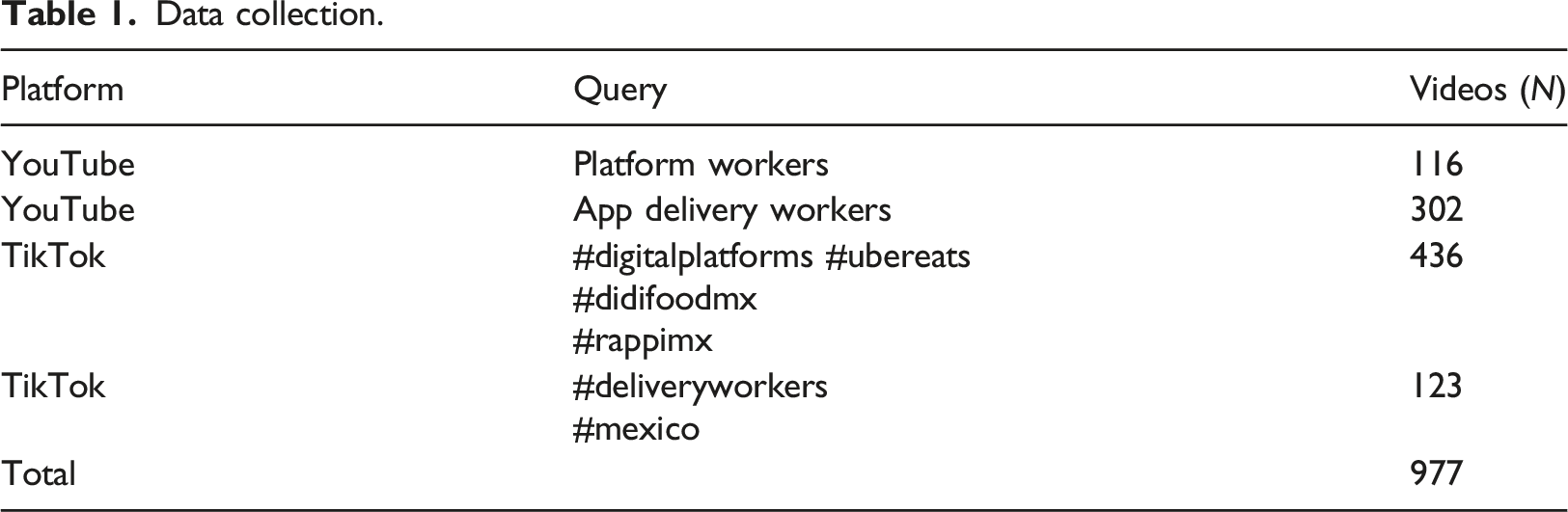
This article addresses the dynamics of identity and recognition through the narratives of independent partners and precarious workers posted on YouTube and TikTok videos. These platforms were selected because, in a previous review, we found that they are used extensively across Latin America to discuss the issue of app delivery workers in narrative form. Other platforms like Facebook and Twitter are used for different purposes, such as disseminating information, making complaints, and holding protests.
Data collection.
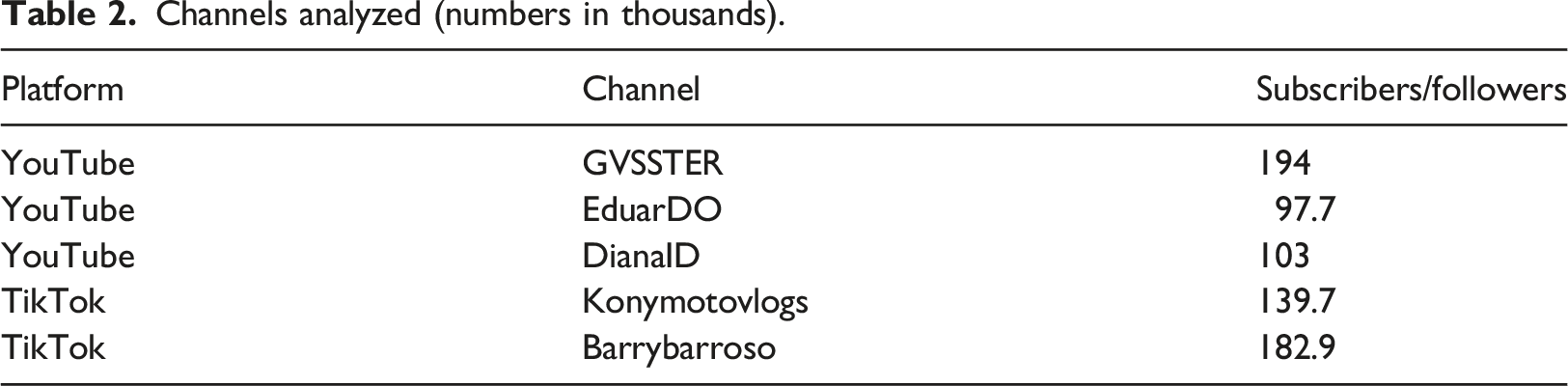
Channels analyzed (numbers in thousands).
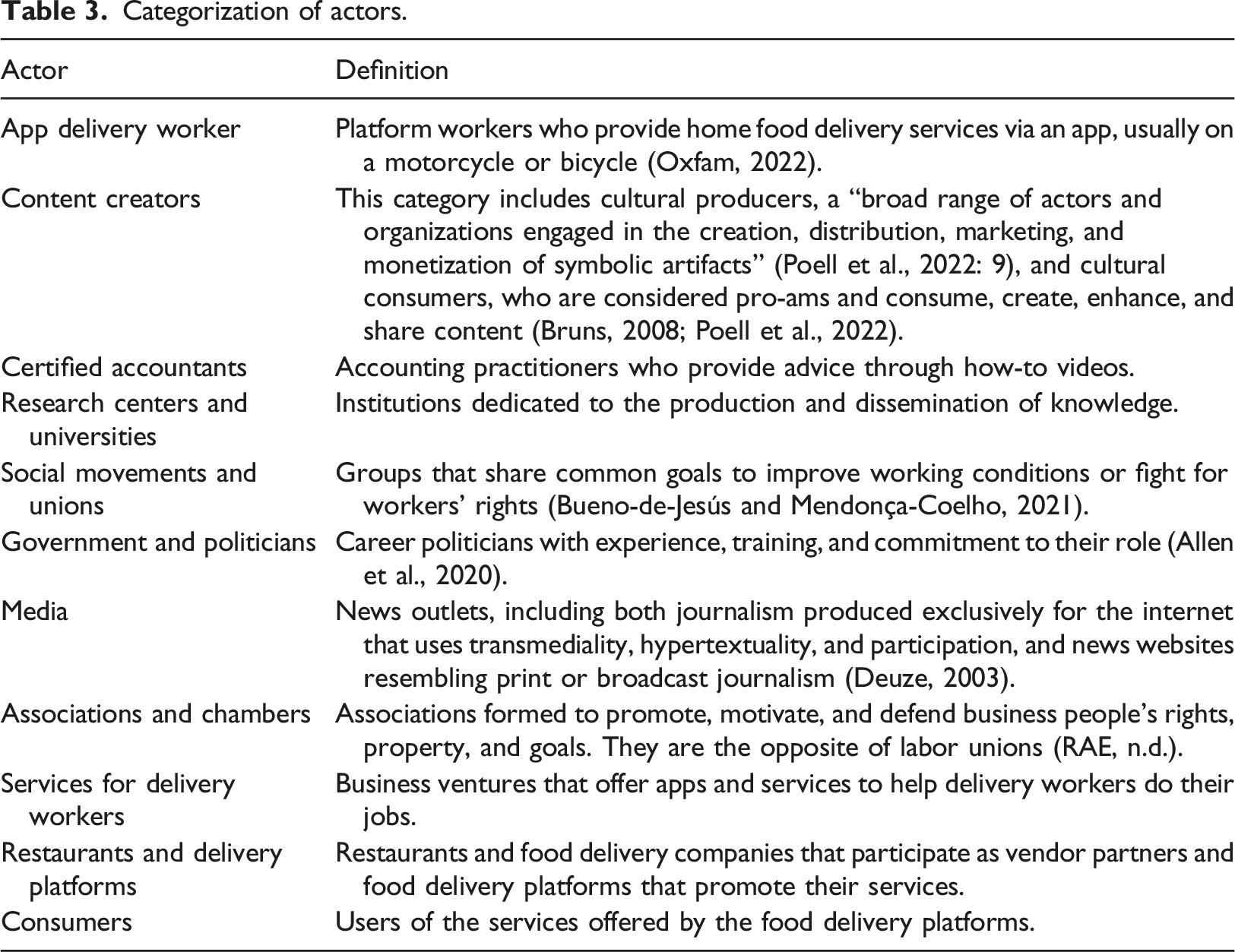
Categorization of actors.
Findings
On both YouTube and TikTok, delivery workers use video blogs to construct their identities using different resources, including live recordings, humor, and personal experiences. The camera serves to record these experiences and as an insurance policy for delivery workers’ precarious status. The recognition of their identity is achieved through various actors. Some engage in the narrative of precarious work and lack of rights, but others promote the narrative of the independent worker or partner. This perspective allows these platforms to avoid responsibility for this precarious job situation. The findings highlight both the identity construction and social recognition aspects of the workers’ and partners’ narratives.
Vlogs and identities of app delivery workers
In this section, we conduct a close reading of five app deliverer-blogger channels. We rely on the form and content of the videos, the titles, and the interaction in the comments section. Our observations focus on how they do so, whether from the narrative of a delivery partner or a precarious worker demanding rights to platforms. From the deliverers’ perspective, we see how they take on the features of the job in terms of schedules, pay, risks, algorithmic control of their orders, and customer interactions.
Some Mexican delivery workers have managed to create channels on YouTube and TikTok where they post their experiences, observations, and perceptions about their jobs. Some began 3 years ago and gradually built up their number of subscribers and hits. Then, many became “micro-celebrities” (Senft, 2013) by constantly posting their daily experiences and interacting with their audiences in video comments (Abidin and Brown, 2019). These channels provide significant relevant information about their daily tasks and how delivery workers deal with the difficulties and dangers of their jobs. The videos published on each platform vary as they follow the communicative guidelines of each medium (Figure 1). The videos on YouTube last an average of 11–12 minutes, and the delivery workers record them in real time with a camera mounted on their helmets or motorcycles. The camera is always subjective, which allows them to present their perspective to their audience while protecting their identity and minimizing the possibility of being recognized to avoid the control that platforms could exert on their channels. As they drive, they talk to their audience, share stories, show the streets they drive through, and talk about their delivery experiences, thus creating a record of their work. They also position themselves as experts; they offer advice to those who might want to sign up and weigh the pros and cons. Montage of video thumbnails collected from social media networks. Data extracted from the collected dataset (image design by Karla Quintana).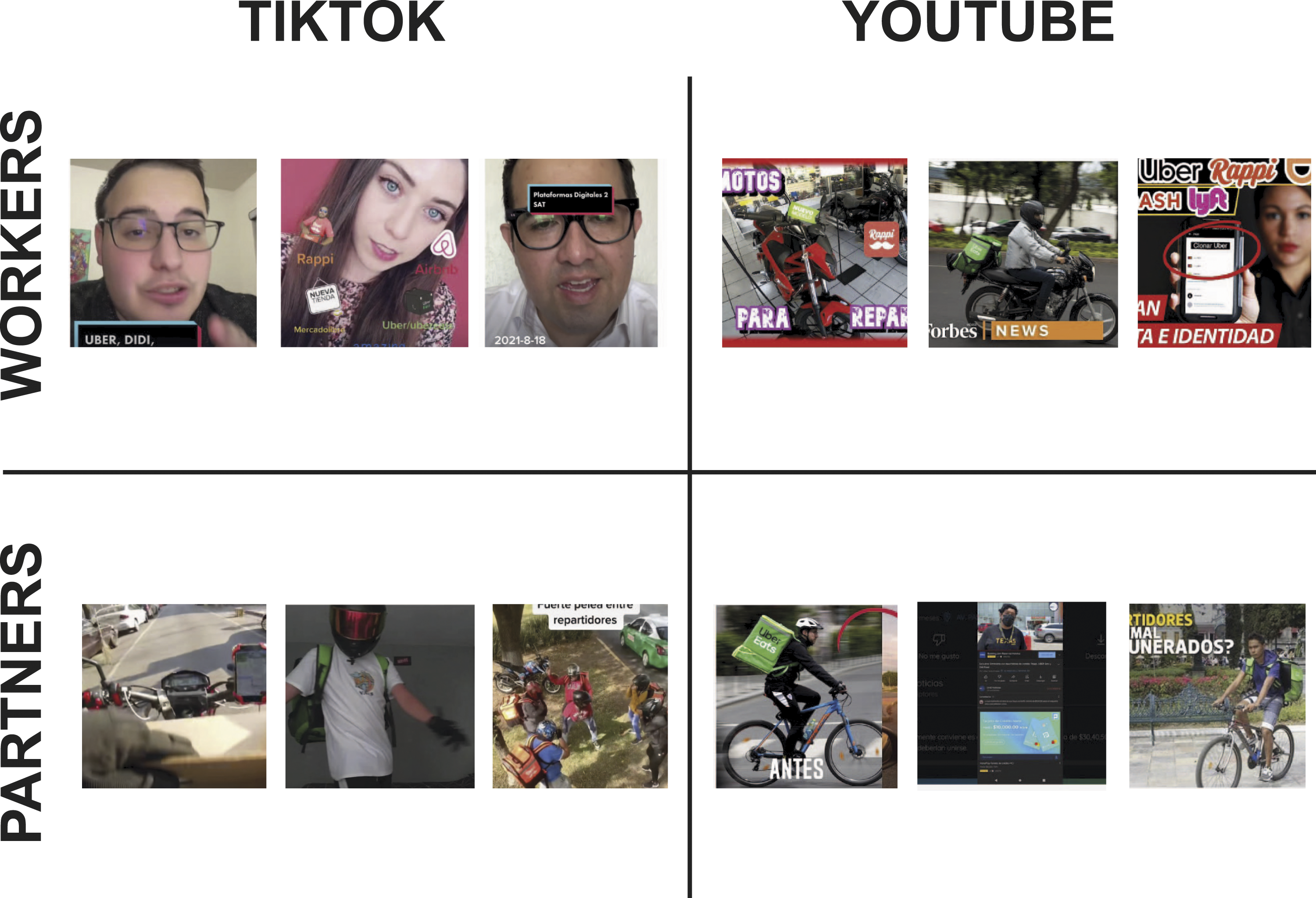
TikTok’s videos, on the other hand, are very short, lasting between 20 seconds and 2 minutes. They are also live-recorded, but they include some close-ups to adapt to the communicative guidelines of this platform. In this case, the posts refer to memes and topical jokes. For example, talking about job insecurity is done with humor or funny situations. Delivery workers do not only want to portray their delivery experiences; they also want their material to become famous and go viral. In the description of their videos, some of the hashtags that stand out are #fyp, #makemeviraltiktok, #viral, and #foryou. Although we found narratives of attempts to train or guide other delivery workers, this was not a common practice.
On both platforms, delivery workers identify themselves as “app deliverers,” “content creators,” “bikers,” or “bloggers.” There are three fundamental elements related to their self-presentation and the construction of their identity as deliverers: the motorcycle, the backpack, and the cell phone (Figure 1). The first connects them to the freedom to determine their own schedules and movements. Many delivery workers are true connoisseurs of their vehicles and maintenance needs, which they typically take care of themselves, as seen in GVsster (2021a). The second element connects them with providers and customers. Here they “pack up” their contentious relationships with restaurants and consumers. Carrying a backpack often implies that they feel discriminated against. On the one hand, most establishments do not allow them to enter to load the food and drop off the deliveries at the door, as narrated by Barrybarroso (2022a). On the other hand, the backpack connects them with the consumers, who often insult and threaten them (Konymotovlogs, 2021a).
Furthermore, delivery workers are afraid of the clients because they fear being reported to the platform and blocked, so they try to be extremely patient and tolerant when facing them. This is evident, for example, in the video “La peor clienta que me ha tocado |The worst client I’ve ever had” (GVsster, 2021b) or on TikTok by Konymotovlogs (2022a). Finally, their cell phone is the tool that connects them to orders and the opportunity to make money. Delivery workers and bloggers are not critical of the obscure algorithmic processes that distribute orders. They limit themselves to comments that “there are good days and bad days on this job,” as blogger GVsster advises in a video intended to counsel new deliverers. In the same video, we can observe that security advice takes precedence over other topics. Furthermore, advice on having savings and solving possible problems with motorcycles or phone cells (GVsster, 2021c) tends to delegate all the responsibility for insurance to the deliverers.
The relationship that delivery workers establish with platforms is ambiguous. On the one hand, they identify themselves with the brands. The platforms’ names, for example, frequently appear in titles, descriptions, and tags. Some indicate that they were working as employees at the companies rather than working independently for the companies “Work in Uber Eats, Didi, or Rappi” and “Volví a trabajar en Uber |I went back to work at Uber” (EduarDo, 2022) are examples of the deliverers’ engagement with the platforms. On the other hand, some deliverers are even bothered by the fact that their work is confused with other platforms and see themselves as representatives of the platform itself (Konymotovlogs, 2021b).
The platforms become invisible when the app deliverers talk about their stress, insecurity, and precarious situation. Although there are never any complaints or criticisms, self-censorship might play a role, as the delivery workers are afraid of being blocked or suspended. However, this silence does not help them demand better working conditions or change their subordinate status vis-à-vis the platforms and customers. Threats of being blocked overshadow the ostensible freedom of cruising around the city on a motorcycle. In fact, many of the delivery workers with social media channels have been blocked by Uber (Konymotovlogs, 2022b), causing them to change the platform they work for (DianaID, 2020).
The videos are not only a series of daily chronicles but also a way to deal with precarious situations. For example, DianaID, a female app deliverer and blogger, regularly records drivers that block her in or deliveries to empty or unsafe locations. In the video “Camionero me persigue y lo encaré |Trucker chases me, and I faced him” (DianaID, 2019), she documents how a truck driver tries to chase her and push her out of his lane. She confronts him and records the situation with her cell phone. Another blogger uses the videos as an outlet to talk about the stress and worries they experience given the challenges of the job. Since being a delivery worker is a solitary job, they use the videos to create a community that is complemented by the conversations in the comment section (EduarDo, 2021).
The conversations in the comments posted on the various videos we analyzed also show connections between other independent workers on social networks. App delivery workers do not seem to be involved in creating content for YouTube or TikTok with a collective narrative but rather share individual experiences. For example, BarryBarroso frequently uploads videos to his TikTok account to show the “weird things that happen to him as a food delivery worker.” One of his videos, with more than 700,000 views, recounts a conflict with a customer who refused to pay the amount indicated by the application (Barrybarroso, 2022b). The video shows that the deliverers, not the platforms, are the ones who face various problems that they must solve themselves, assuming responsibility in most cases. The videos of BarryBarroso and other workers are mostly about their own experiences, needs, and individual problems.
Delivery workers hide their precarious situation through their responsibilities and the small tactics that allow them to survive in the city and in their job. When stressed, it is because they work too much—not because their income per delivery is low or because the platforms do not inform them in advance of the amount they can expect to make in an hour. If they are mugged, it is because they were not careful enough. After all, they did not keep their money in a place other than their wallet. If they feel uneasy, it is because they do not know their delivery zone well enough. If a customer reports them, it is because they were not accommodating enough (see the long confession of EduarDO, 2020b).
We can conclude that app workers see themselves more as partners than as workers through their videos, with a sense of belonging to the companies through identification with their brands. Although this sense of belonging constitutes a part of their social identity as app deliverers, it does not become a collective demand for labor rights. App delivery workers do not appear to be involved in creating content for YouTube or TikTok with a collective narrative but share individual experiences that help them deal with street hazards and customers’ mistreatment and affirm their social identity as deliverers through expressive practices and shared knowledge.
The recognition of delivery workers: partners or workers?
In this section, we will analyze narratives that deal with the social recognition of the deliverers’ labor situation as partners or workers. These narratives were constructed by social actors who create linked content or are interested in the work of delivery platforms. To that end, we quantified the number of products each type of actor created and the detailed search terms. Both platforms show different actors who play a role in recognizing the delivery workers (Figure 2). On YouTube, the presence of institutions, media, and practitioners is more important, while on TikTok, the presence of content creators and bloggers stands out. Thus, the latter features both delivery workers and content creators who conform to the communication guidelines of the respective platforms. Social recognition of platform workers by type of actor (percent).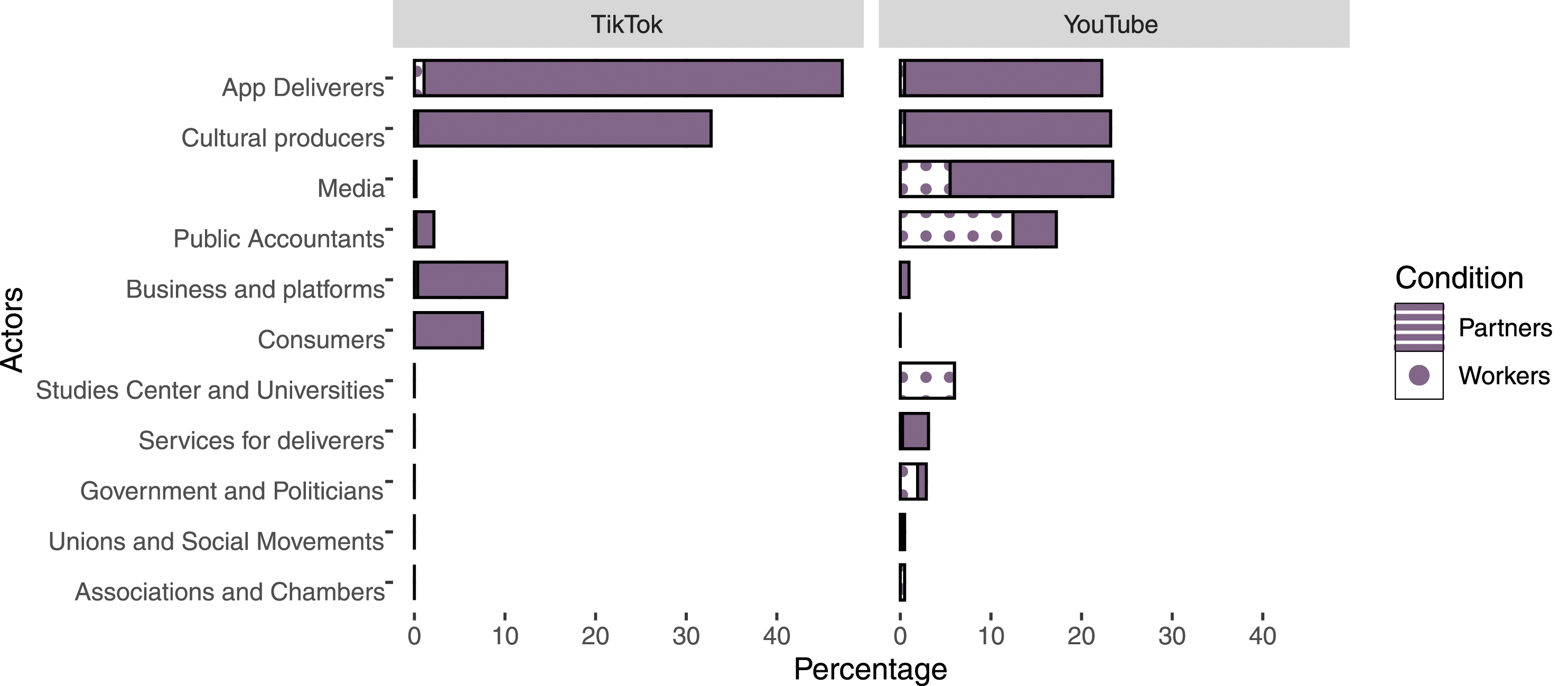
Data extracted from the collected dataset
The data analysis linked relevant actors who referred to the deliverers’ work with frequently used words in the videos’ text fields, such as titles, descriptions, and hashtags. For example, on YouTube, accountants, universities and research centers, and media are the actors who refer to delivery people as workers.
In contrast, the app deliverers do not use the words “worker,” “job,” “rights,” or “safety.” The most common words on their channels refer to their work tools: cell phones, motorcycles, helmets, and accessories. They are also concerned about paying their taxes, which supports the delivery partner narrative and shows acceptance of the role assigned to them by the platforms, whose brands are frequently mentioned. They see themselves as both delivery partners and content creators. Regarding accountants and other practitioners, although they use the word “worker,” their narrative is also more related to that of the partner because they consider workers as taxpayers who owe contributions to the treasury and do not discuss rights such as social benefits (Figure 3). Most common words used by actors on YouTube.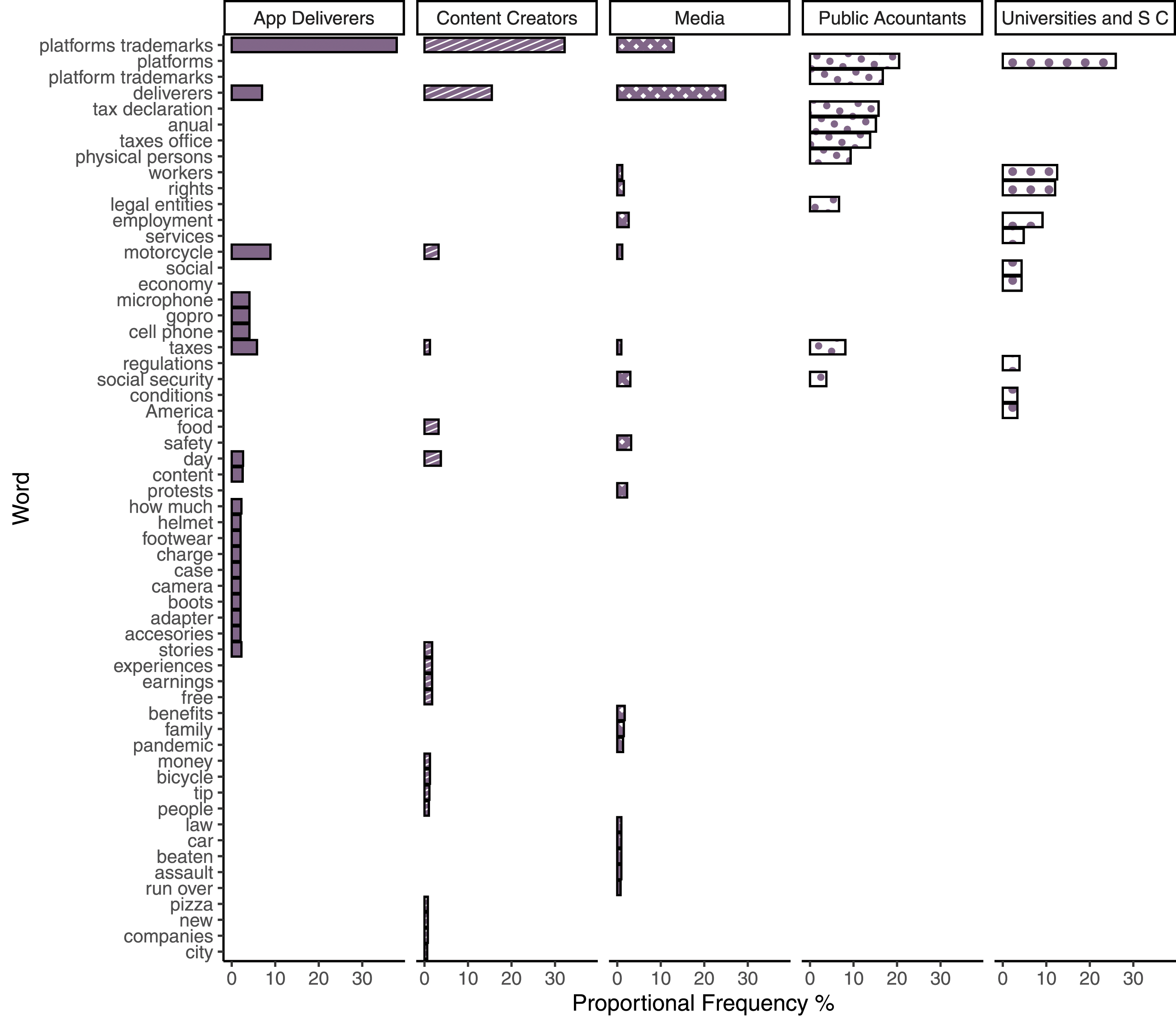
Prepared with collected data
Universities and research centers are the main actors that recognize the lack of rights, protection, and social security, as well as the hidden labor relations based on the number of hours that delivery workers tend to dedicate to their job, which supports the narrative of workers without rights. The media also promote this narrative by referring to them as workers but strangely contradict the same narrative by calling them delivery people. At the same time, media reports on the risks and conflicts: delivery workers have accidents, are mugged, extorted, and assaulted, and organize strikes and protests. They also mention the lack of access to social security and, together with universities and research centers, those that implicitly or explicitly expose the precarity that delivery workers face.
Meanwhile, the government is present in only a few posts, oscillating between training on tax payment procedures and the occasional bill to improve working conditions. The only reference we found by a politician was a campaign promise to offer free driver’s licenses to delivery workers.
Content creators look closely, but from the outside: they see a certain type of adventure narrative in the activities of the delivery workers. Perhaps they set out to be delivery workers for 24 hours and record their experiences; they inquire about and broadcast how much one can earn as a delivery worker; they explore nighttime narratives that brush up against the terrifying; and they offer advice for those who want to take such a job.
On TikTok, the main actors in both narratives were the delivery workers and content creators. Both focus their discourse on delivery as a job. However, in the independent partners’ narratives, we also found other relevant actors, such as accountants, businesses that sell through online platforms, and consumers of these delivery services. In the case of accountants, their discourse revolves around offering instruction on what “working” for digital platforms implies, leading them to offer their services and advice, particularly in relation to tax payments. The most common keywords for app delivery workers are #mexicotaxes and #digitalplatforms. Movements or associations do not yet see TikTok as a space to broadcast their objectives. This may be due to the still recent integration of TikTok into the Mexican context and its core Mexican audience’s low age range (13–24 years) (Baklanov, 2020). Moreover, the configuration of TikTok itself is focused on humor and going viral, making it difficult to create space for debate or discussion (Tejedor-Calvo et al., 2022). Therefore, it is not surprising that the complaints or everyday problems of delivery people are presented as comical. This is consistent with the prevailing narrative of the platform. Figure 4 Most common words used by actors on TikTok.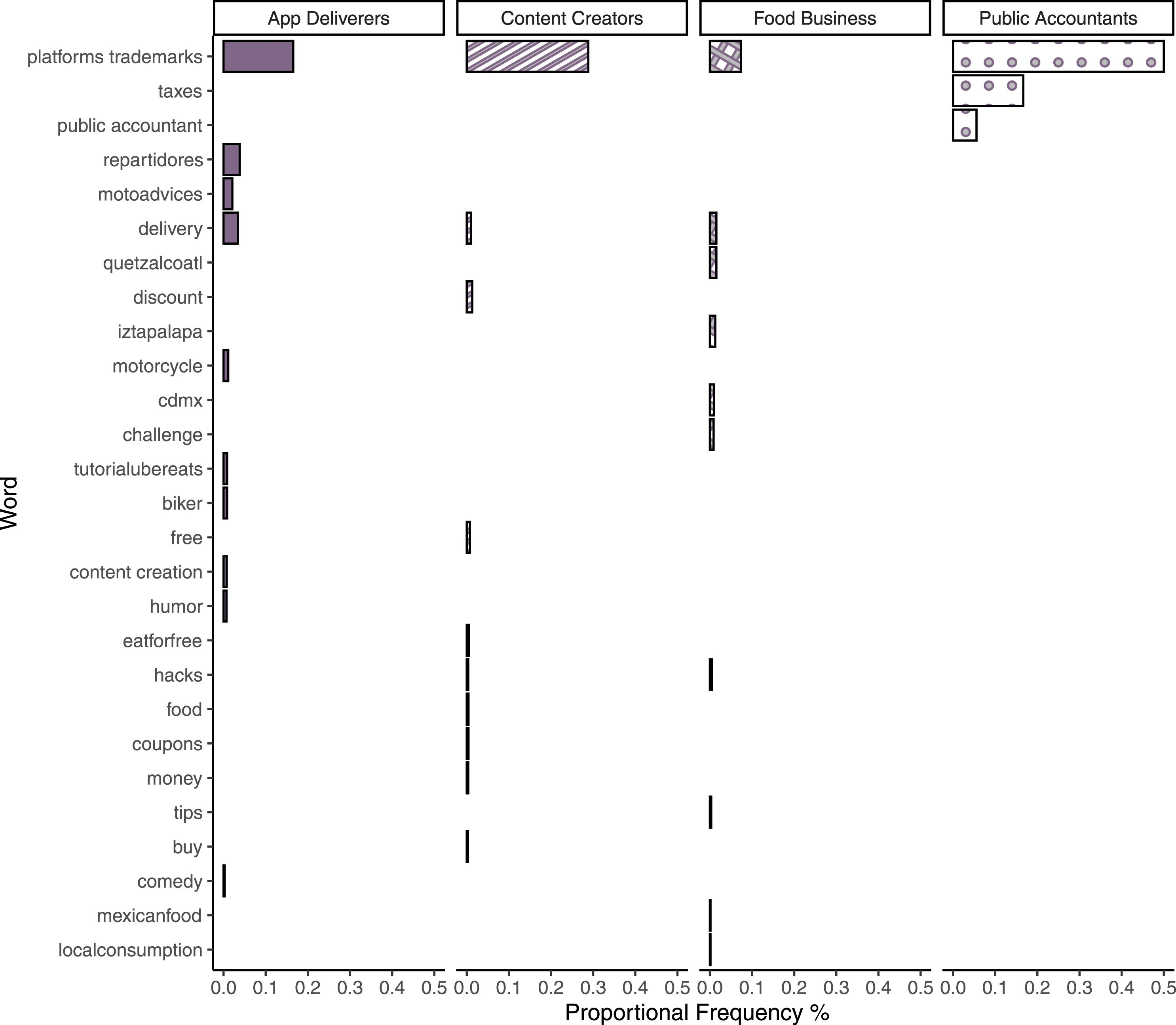
Prepared with collected data
In contrast to the YouTube sample, the consumers/users of delivery platforms use TikTok as a space to share their experiences with the service. They only mention app delivery workers to complain about them or to play practical jokes. Food businesses have also learned to use TikTok to promote their products and services through delivery apps. But like the other actors, the businesses do not acknowledge the role of delivery workers in this dynamic.
When considering both social media platforms, narratives that recognize deliverers as workers with rights, precarious working conditions, and platform responsibilities are rare and receive a much lower number of views than narratives that introduce a delivery partner. On YouTube, we found this particular discourse among actors specializing in the topic, such as in academia or labor organizations; it is virtually absent on TikTok. The contribution of these actors is significant to the realization of app deliverers’ rights, but it is quantitative and less visible than the narratives of partners and independent workers promoted by accountants, governments, and the delivery bloggers themselves, as noted in the previous section. Therefore, the social recognition of delivery jobs tends toward an independent partner narrative.
The quantitative—and thus more visible—prevalence of social recognition of app deliverers as partners is first associated with benefits for the state in tax collection and, second, for the practitioners, such as public accountants, who mediate between app deliverers and tax offices. Tax laws are the only regulations that must be followed in the legal sphere. They are entirely the responsibility of the delivery workers, as the Oxfam-Mexico report (2022) mentioned earlier.
Conclusions
This article contributes to the study of platform delivery workers’ social identity and recognition narratives in the context of a social and global controversy over their job conditions as disenfranchised workers versus their status as delivery partners working for themselves (Defossez, 2022; Díaz-Santana, 2022). Our main finding shows that, on audiovisual platforms, the narrative of delivery workers as partners prevailed over that of workers. They recognize themselves as part of a group, but do not act collectively to claim their rights as workers. In the interplay between identity and recognition, they are similarly recognized by public accountants, the government, and content creators. However, universities, research centers, and social movements are key actors in recognizing them as workers with rights. These are the only actors, app deliverers included, who highlight the precarious side of delivery work. The position of the media is a special case because they adopt both perspectives: when they focus on the daily activities of the delivery people, they frame them as partners, but when providing information about legislative or academic initiatives, they refer to them as workers. It is important to clarify, however, that their recognition as partners also leads to exclusion (Castillo-González and Flores-Márquez, 2021) because it negates issues of workers’ rights, obscures the actions of the platforms, and reproduces job insecurity.
The identity of delivery workers as partners is not only configured through the creation of narratives but is also reinforced through the power of algorithms to boost narratives to larger audiences (Bucher, 2018; Cotter, 2019). Although narratives exist that revolve around the situation of disenfranchised workers, they do not achieve sufficient algorithmic visibility. In this way, algorithms become active actors in constructing identities that are mediated by audiovisual platforms.
Deliverers build their identities as partners mediated by the platforms when they comment on the freedom to choose the times they want to connect to the apps. Yet this freedom proves to be apparent and contradictory (Revilla and Martin, 2021), or, as Umer (2021) describes it, illusory, as several vlogs warn of both dependency and fear of consumer treatment, as well as the long workday they must complete to earn the minimum to make a living. Even when they are aware of these challenges, delivery bloggers do not identify them explicitly as precarious features of their jobs. Although Mexican app deliverers confess their discomfort in some videos, we did not identify atrophied subjectivities or de-sublimation of work as a structuring condition of identities (Lemozy and Lelay, 2022). On the contrary, some consider delivery a better option than the jobs they had in the past. In addition, they prefer to show the “cool” side of the business or the opportunity to make money quickly (Stewart et al., 2020). We pose two possibilities on these different views: perhaps the double condition of deliverers and vloggers allows them to sublimate their working conditions, or the condition of suffering may vary between societies, depending on social factors whose require further study and even comparative approaches between countries.
In constructing their identity as independent partners, delivery workers assume personal responsibility for their precarious situation without transferring it to the companies. Perhaps this silence is due to self-censorship. Therefore, future research could use other methods to determine whether workers attribute their precarity to the platforms they work for or whether they continue to take responsibility for themselves.
Mexican app deliverers’ use of audiovisual technology becomes a strategy to fight against their precarious situation, becoming a confessional for their job woes, protecting themselves in dangerous situations, and sharing individual strategies that often take the form of advice for other delivery workers. This use of technology in the context of precarity goes far beyond keeping a daily record of events and sharing knowledge of application algorithms (Chan, 2019).
Mediatized experiences adapt to the communication guidelines of social media platforms: while TikTok focuses on creator-users and cultural consumers, YouTube has a stronger representation of institutional, media, and culture-producing actors (Bruns, 2008; Poell et al., 2022). As a result, posts on YouTube take the form of vlogs, where stories and sharing experiences take the foreground, while posts on TikTok are humorous and brief. In both cases, mobile cameras are added to the repertoire of technology used as resistance (Yu et al., 2022). In this case, however, they focus on challenging precarious conditions rather than algorithms.
App deliverers identify themselves with the brands of the apps they work for. They constantly mention and refer to them in their videos, but never in a critical sense. This identification with the brand reinforces nested platformization (Komljenovic, 2021), meaning that audiovisual content creation benefits delivery platforms.
This paper confirms the findings of Stewart et al. (2020) that the individual creation of narratives does not help raise awareness of precarious labor and lack of rights. We have demonstrated that in Mexico, the influence that agency app deliverers gain through these narratives is individual rather than collective, in contrast to countries such as Brazil (Abilio et al., 2021), illustrating that resistance techniques develop in different ways and with different goals depending on the culture in which they occur. As Díaz-Santana (2022) points out, Mexican app deliverers have no support from labor laws or unions, accompanied by a historical lack of a culture of labor rights in Mexico and job opportunities in the country. As we observed in the findings, many deliverers consider delivery a better option than the jobs they had in the past. However, further research could explore whether other platforms and technologies provide collective narratives that are aware of the precariousness of jobs on these and the need for collective change.
The self-perception of deliverers as partners, combined with widespread social recognition as such and the greater visibility of these narratives, may complicate changes in the way deliverers are viewed as workers with rights. However, before these changes occur, it is clear that, given the alleged and inalienable freedom of app deliverers and the assumption of responsibility in granting rights by the state and platforms, there needs to be a middle ground that accounts for both freedom and rights.
Work on digital platforms extends both in Mexico and around the world. Therefore, it is necessary to pay attention to the naturalization of work without access to rights that can be observed in media representations, as these narratives reproduce precarious labor and a lack of recognition of rights.
Footnotes
Acknowledgments
Dr. Sued thanks the UNAM-Coordination of Humanities postdoctoral fellowships, the Social Research Institute and her academic advisor Dr. Judith Zubieta García for their generous support in producing this article.
Declaration of conflicting interests
The author(s) declared no potential conflicts of interest with respect to the research, authorship, and/or publication of this article.
Funding
The author(s) disclosed receipt of the following financial support for the research, authorship, and/or publication of this article: Universidad Nacional Autónoma de México; Humanities Coordination Postdoctoral Fellowship.
