




Abstract
The prevalence of digital technologies and emerging social media platforms in the 21st century has altered the ways in which individuals and groups produce and consume elite football (soccer). Elite football is no longer consumed merely through ‘traditional’ media as television or radio. By comparing the ‘big five’ football leagues (the first divisions in England, France, Germany, Italy and Spain), this article examines how these leagues have adapted to an algorithm logic (monetization strategies/content strategies) on YouTube. Drawing from data collected (64,247 YouTube videos) using YouTube Data Tools, we argue that the ‘big five’s’ content creation on YouTube work in a complementary manner to ‘traditional’ platforms, allowing for the testing and adaption of their content practices based on instant consumer feedback. This article makes a contribution to the literature on the symbiotic media/sport relationship with its analysis and insights into the digital transformations occurring in a ‘platform society’.
Keywords
The ubiquity of digital technologies has altered the way individuals and groups produce and consume popular cultural manifestations (Arvidsson, 2019). Amongst those global cultural manifestations transformed by digitalization are media and sport, where the traditionally historical symbiotic relationship between those two separate entities (Rowe, 2004) gives way to a digital condition of sport as media (Hutchins and Rowe, 2012). Therefore, instead of interrogating the prosumption of sport through distinct media channels, it is important to understand how sport is prosumed in this diverse digital media ecosystem (Deuze, 2011). This digital condition is further complicated by the emergence and consolidation during the last two decades of the big five platforms – namely Alphabet, Amazon, Apple, Meta and Microsoft (Van Dijck et al., 2018) – that have reshaped the prosumption of popular cultural manifestations as sport in their different media products such as YouTube (Alphabet), Twitch (Amazon), Instagram and Facebook (Meta) (Duffy et al., 2019; Poell et al., 2022). By agreeing to join this new platform economy dynamic as content creators – or platform complementors – sport agents such as athletes, brands, clubs, leagues, national and international governing bodies enter a new symbiotic relationship that, instead of being governed by the editorial logic of traditional media, is now determined by algorithm logic of platforms (Poell et al., 2022). Against this backdrop, the purpose of this article is therefore to examine this continuum further, in the context of elite European football (soccer).
It remains clear that football is one of most global popular cultural manifestations (Giulianotti and Robertson, 2009). However, as with most of the other popular cultural manifestations (Duffy et al., 2019), the media-packaged football has also undergone profound changes to conform to the digital transformations. Whereas the ‘traditional’ media product of football was largely synonymous with the unconditional attention for 90 min on live television or radio (Galily and Tamir, 2014; Rowe, 2015), with the emergence of new digital media platforms its content scarcity and total attention is substituted for content abundance and attention scarcity (Hutchins and Rowe, 2012). In order to examine these adaptions further, this study subscribes to the key premises offered by digital sociology (Marres, 2017) as it employs YouTube Data Tools (Rieder, 2015) and seeks to answer the following research question through a comparative analysis of the YouTube channels of the ‘big five’ football leagues in Europe (England, Spain, Italy, France and Germany): How was the symbiotic relationship transformed in the algorithm logic in one specific platform?
By throwing a light on how YouTube, in European football’s context, may be seriously considered an alternative and complementary medium in comparison to traditional media, such as television, this article makes an original contribution to the existing literature on the nexus between sport and YouTube (Checchinato et al., 2015; Gil-Lopez et al., 2017; McCarthy, 2021a, 2021b) while our findings concurrently tie into, and push the boundaries of the wider and evolving digital football studies field (Lawrence and Crawford, 2022). We also extend the existing scholarship on the ‘big five’ leagues (e.g., Sanchez et al., 2021) through our analysis of their adaption to YouTube. To clarify, our chosen focus on what is often characterized as the ‘big five’ leagues (Deloitte, 2022) is justified for a series of reasons. Yet, most notably, the English Premier League (EPL), La Liga (Spain), the Bundesliga (Germany), Ligue 1 (France) and Serie A (Italy) have, in comparison to other elite leagues, undergone more intense processes of commercialization with ‘very strong increase of revenues’ (Sanchez et al., 2021: 355; see also Kennedy and Kennedy, 2012). In 2021/22, the ‘big five’ clubs dominated UEFA’s (2022) Club Coefficients ranking. The leagues also generate the most revenue from broadcasting rights in Europe (Statista, 2022). They are also generally considered the most popular leagues in terms of TV viewers. Moreover, many of its clubs are considered global brands entangled in global marketplaces. This, specifically, remains important for contextual purposes, given that a number of ‘super clubs’ (co-)exist within every ‘big five’ league possessing distinct capabilities (Andrews, 2015; Millward, 2006). These clubs’ revenue and engagement maximization strategies are not necessarily synonymous or in harmony with those adapted by their respective national leagues as seen in the case of the proposed European Super League (The Guardian, 2022). Concurrently, their brands may reinforce their league’s brand or significance (see also Hayton et al., 2017). To be sure, however, in this article, we examine how the leagues these clubs operate and compete within have adapted to YouTube.
In terms of our platform selection – YouTube – we first contend that, because of its affordances and historical focus on horizontal videos (not vertical as on TikTok or Instagram), it can be considered as the platform that is the most appropriate alternative to the arguably most important medium in sport: TV (Lee Ludvigsen and Petersen-Wagner, 2022a; Lee Ludvigsen and Petersen-Wagner, 2022b). Second, and relatedly, the selection of YouTube must also be viewed in context of the platform’s position as a distribution channel for existing assemblages of television-formatted material, thus rendering it a valuable platform of inquiry for our investigation of the ‘big five’ whom all have a presence on YouTube. Whilst the article’s platform-specific analysis and the ‘big five’s’ presence on other platforms (beyond YouTube) remain important to highlight as existing limitations of the current paper, the article also emphasizes that further work in this area is necessary to holistically capture the platform ecosystem in football and how specific European ‘super clubs’ separately have adapted to platforms like YouTube.
Literature review
Sport and media: The new media ecology
The once sedimented symbiotic relationship between sport and media (Rowe, 2004) has been transformed by the so-called digital revolution (Negroponte, 1995), and especially by the emergence of new powerful players in the ecology of media (Hutchins and Rowe, 2012). During the 1990’s and early 2000’s, the media environment saw the consolidation of the big five infrastructural platforms – Alphabet, Amazon, Apple, Meta and Microsoft – who became influential by acting as central nodes to the entire platform economy (Van Dijck et al., 2018). Nevertheless, the emergence and consolidation of the big five platforms did not mean the complete dismissal and disappearance of older media formats or media organisations controlling them, but a readjustment in the power asymmetries through a new form of convergent coexistence (Jenkins, 2006; Jenkins et al., 2013; Thorburn and Jenkins, 2004). In this new media ecology, the fight for attention becomes even more important to all players as content is now abundant and widely available through distinct media channels (Hutchins and Rowe, 2012).
Notwithstanding, while the convergent accommodations mean that both new and old media coexist, it does not equate to a balanced power symmetry between all players. Infrastructural platforms by controlling the flow of data, deciding the monetization strategies and the selection of content through their secretive algorithms (Van Dijck et al., 2018) can be considered central to the ecology of media while other players such as traditional media organizations, sport clubs, athletes and brands act as complementors by providing the much-needed content. By acting as sole matchmakers between content, audience and advertisers, infrastructural platforms create a new dependency on content creators that is anchored on the algorithm logic of winner-takes-all (Bärtl, 2018; Duffy et al., 2019; Poell et al., 2022; Srnicek, 2017). The impacts of this new logic on the creation and curation of content are far fetching for the cultural industries, and specifically to sport, as complementors are encouraged to adapt to the always evolving platform affordances such as in the case of YouTube and its video length changes over the years (Poell et al., 2022). Moreover, other platform affordances such as capacity for interactivity, and mix of on-demand and real-time streaming (McQuail and Deuze, 2020) can have a direct effect on content curation as complementors are compelled to use those to satisfy algorithm gatekeepers, such as the engineers at YouTube and the users who feed it through their engagement in the platform.
Sport on YouTube
YouTube was first launched in 2005 and acquired by Google (renamed as Alphabet in 2015 to reflect its restructuring) for $1.65 billion less than 2 years later (Arthurs et al., 2018; Burgess and Green, 2018). Currently, YouTube is considered the most popular and famous video sharing platform globally (Bärtl, 2018; Checchinato et al., 2015), with over 100 localized versions of the platform in 80 different languages (YouTube, 2022a).
Whilst YouTube has been instrumental in the wider trend speaking to participatory culture, it has also been (pro-)actively deployed by official/verified companies, organizations and brands which strategically utilize to share content and reach new consumer bases (Burgess and Green, 2018). The multi-sided market nature of YouTube as a platform means that it must coordinate the interests of multiple stakeholders such as amateur content creators, professional creators, media partners, advertisers and other intermediaries such as multi-channel networks, while still accommodating its own monetisation strategy that is based on the scalability of content and user base, attention economy and monetisation model that predominantly rests on advertisement (Burgess and Green, 2018; Srnicek, 2017). For instance, YouTube advertisement alone corresponds to roughly 11% of Alphabet’s annual revenue and has seen an increase of around 45% year-on-year between 2020 and 2021 (Alphabet, 2021), and this can be considered as an outcome of the two billion monthly logged-in users (YouTube, 2022a); whereas other revenues such as YouTube Premium and YouTube TV subscriptions are still accounted together with other revenue streams such as Google Play app purchases (Alphabet, 2021). For scholars of media, communication and sociology, this renders YouTube an extremely important and multifaceted platform because it can yield insights into the convergence of technological and sociocultural practices in the 21st century (see Arthurs et al., 2018), and its development as a platform is ‘tied to the story of the changing digital media environment, and to much older debates about the role of media and popular culture in society’ (Burgess and Green, 2018: 1).
Situated in the sporting world, YouTube, in a similar way to other social media platforms, provides new avenues for sports organizations and brands to ‘drive revenue, promote athletes and teams, increase fan engagement and reach a global audience’ (McCarthy, 2021a: 364). The strategic efforts of sporting organizations and brands to do this, via YouTube, have recently been recognized by researchers (Billings et al., 2018; Tang and Cooper, 2018). Scholars have across various sporting contexts examined, inter alia, misogyny and online abuse across YouTube comments (McCarthy, 2021a), the emergence of football Fan TV channels (Rivers and Ross, 2021) and the content generated by sports clubs, international federations, brands and fans (Checchinato et al., 2015; McCarthy, 2021b; Petersen-Wagner, 2022; Zimmerman et al., 2011). Meanwhile, other relevant areas that have been covered relate to YouTube and sports fandom and fan practices. Gil-Lopez et al. (2017), for example, examine fans’ commenting behaviour on YouTube during the ‘El Clasico’ (Real Madrid versus Barcelona) and demonstrate how YouTube provides key insights into how sports fandom has developed in a Web 2.0 era. Moreover, Petersen-Wagner and Lee Ludvigsen (2022) have looked at fan behaviour during the 2018 FIFA Men’s World Cup and how those fans have received the introduction of the Video Assistant Referee (VAR) in this tournament. Hinck (2018) also examined YouTube’s impact on patterns of football fandom, focusing particularly on fans as vloggers.
Despite this, it can still be contended that there is very limited research on how sports organizations and clubs have adapted to YouTube’s emergence and, more specifically, scant research explores how exactly the ‘big five’ have adapted to the platform algorithm logic. Thus, little is known overall about how this has reconfigured the leagues’ content, engagement and reach, as derived from the opportunities afforded by YouTube’s enormous and global reach (second only to other of Alphabet’s media product: the Google search engine). However, this remains especially important, not only since the mentioned leagues (and the specific clubs within those leagues) are deploying various strategies in actively seeking to capture new audiences to build or enhance their global brands (Millward, 2011; Hayton et al., 2017; Lee Ludvigsen, 2020; Kennedy and Kennedy, 2012) but also because YouTube, fundamentally, has altered the sociocultural practice of watching sport, as suggested above.
Methods
To examine the adaptions to algorithm logic by the ‘big five’ leagues, we subscribed to the key premises of digital sociology and this, subsequently, influenced our methodological choices. On a basic level, digital sociology proceeds on the basis that the undeniable prominence of digital technologies in the present-day societies has profound implications on the discipline of sociology (Marres, 2017). Yet, this does not merely render ‘the digital’ (i.e., technology, social media platforms) an important area of study for social researchers; it has also transformed and continues to transform the practices of doing social research and its methodological options or opportunities (ibid.). Indeed, as Arthurs et al. (2018) point out, the use of YouTube (and YouTube Data Tools), which we explain below, may be situated at the frontiers of digital research methods.
It can reasonably be argued that the sociology of sport, to date, has been responsive to the technological and digital shifts that are captured more generally by Marres (2017) and Lupton (2014) (see Petersen-Wagner, 2022; Lawrence and Crawford, 2022; Millward, 2016). This has, for example, seen the rise of digital football studies, in which one key strand of research has remained particularly concerned with football-related communications on social media platforms (Lawrence and Crawford, 2022). However, on a methodological level, there is still scope for social researchers to remain innovative, versatile and adaptable in their use of social media data for analysis of football or sport (Millward, 2016). In this respect, our approach meant that we sought to reflect both (1) ‘the digital’ as socially important by itself and (2) the digital’s transformative impact on social research methods more widely (cf. Marres, 2017). Thus, we employed YouTube Data Tools (see Rieder, 2015) to connect to YouTube’s Application Programming Interface (API) v3 (YouTube, 2022b) to automatically extract data from all the ‘big five’ leagues’ official channels. By using the video list module with the channel ID information (Rieder, 2015), we were able to collect, at the end of January 2022, all 1 uploaded videos’ data such as posting date, video category, tags, video description, duration in ISO8061 format and engagement metrics such as views, likes and comments.
With a data set containing 64,247 videos we then manipulated the data in Excel (Microsoft, 2022) to create further variables such as total duration in seconds, age of post in days, active engagement (sum of likes and comments), ratio of active (likes and comments) and passive (views), all engagement per day and views per day. Statistical analyses such as descriptive, correlations and non-parametric tests (Kruskal–Wallis) were performed using SPSS v27 for Mac (IBM, 2021). In the next sections, we seek to unpack the results and discuss them in relation to the wider literature.
Results
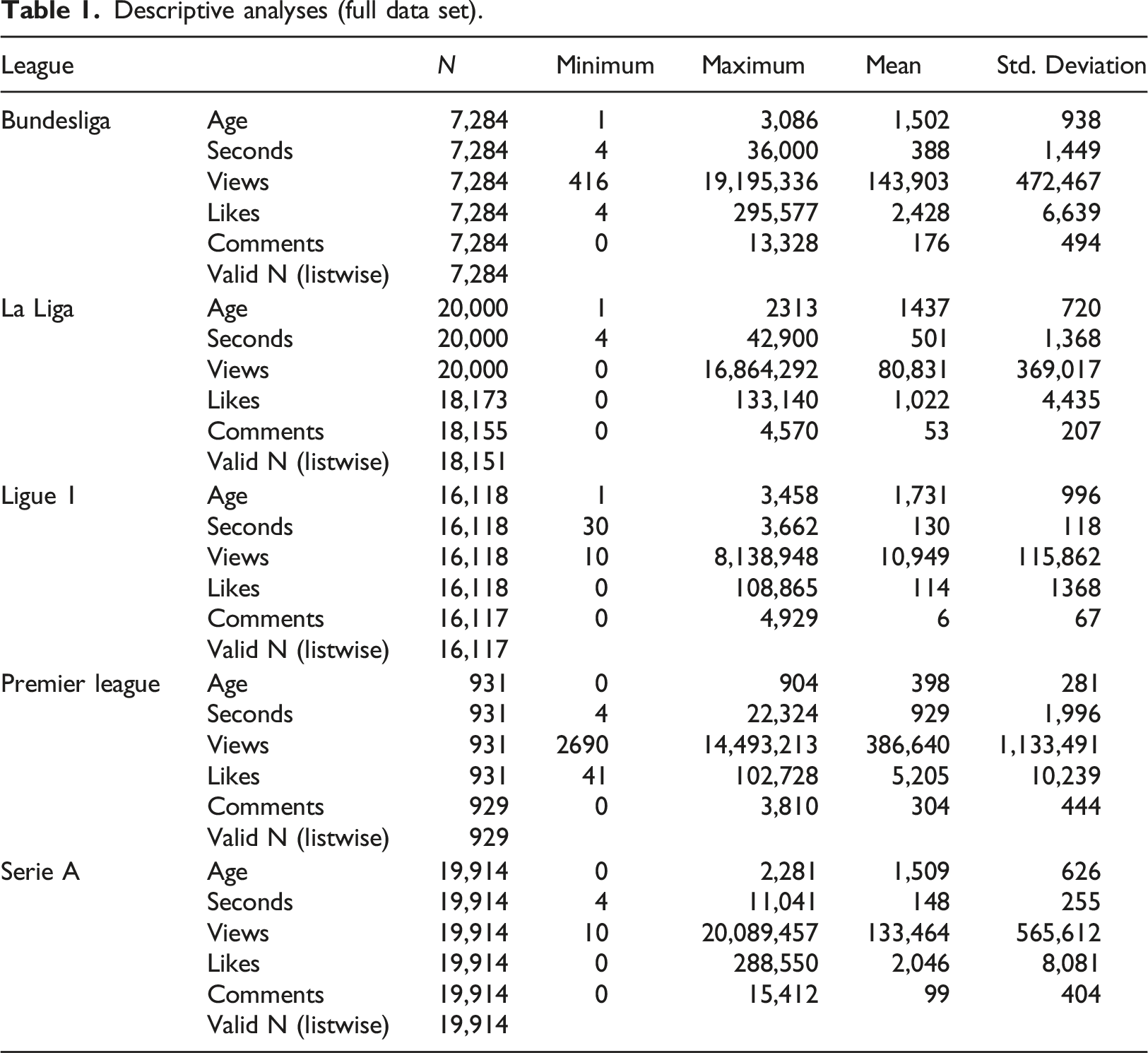
Descriptive analyses (full data set).
Descriptive analyses (less than 365 days).
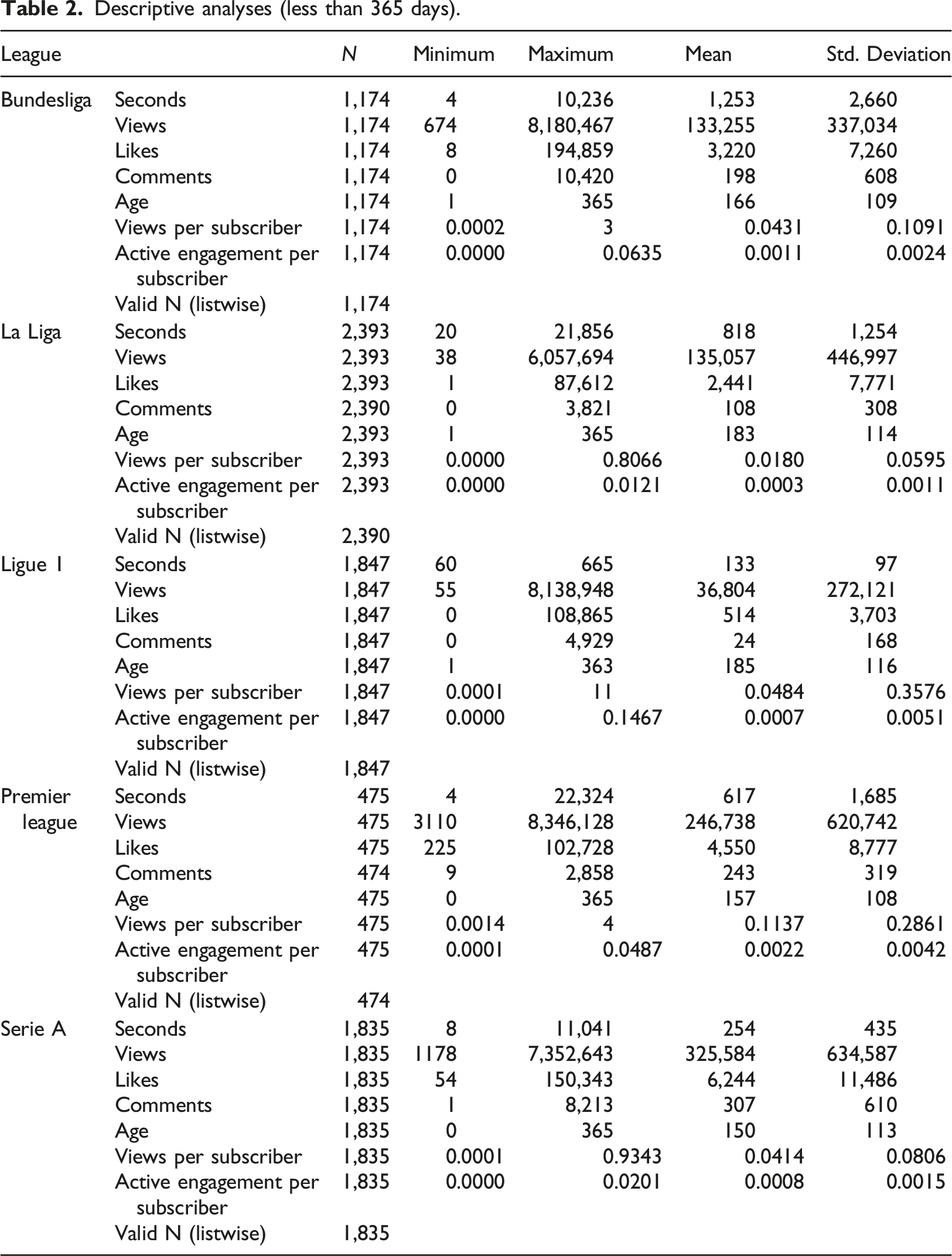
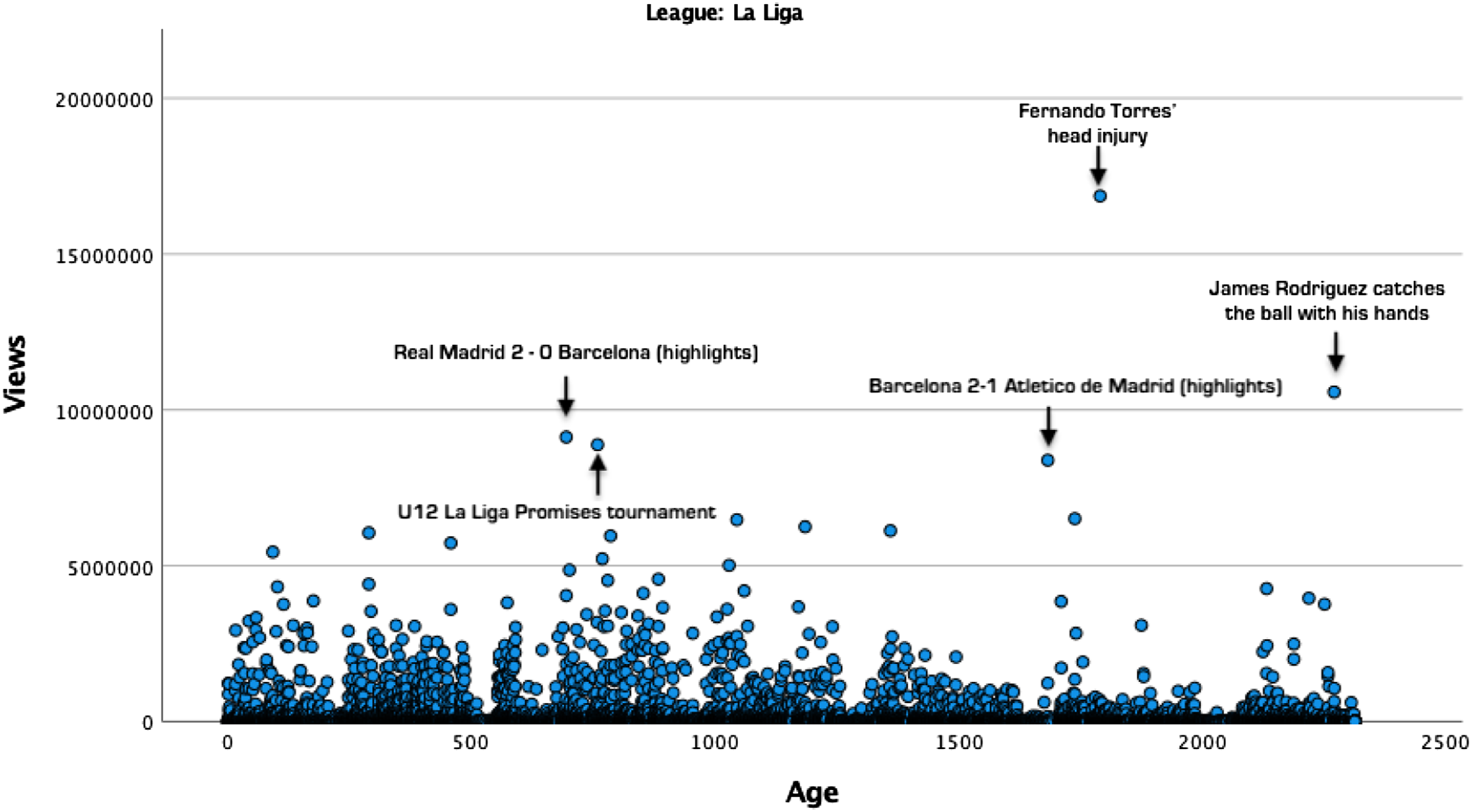
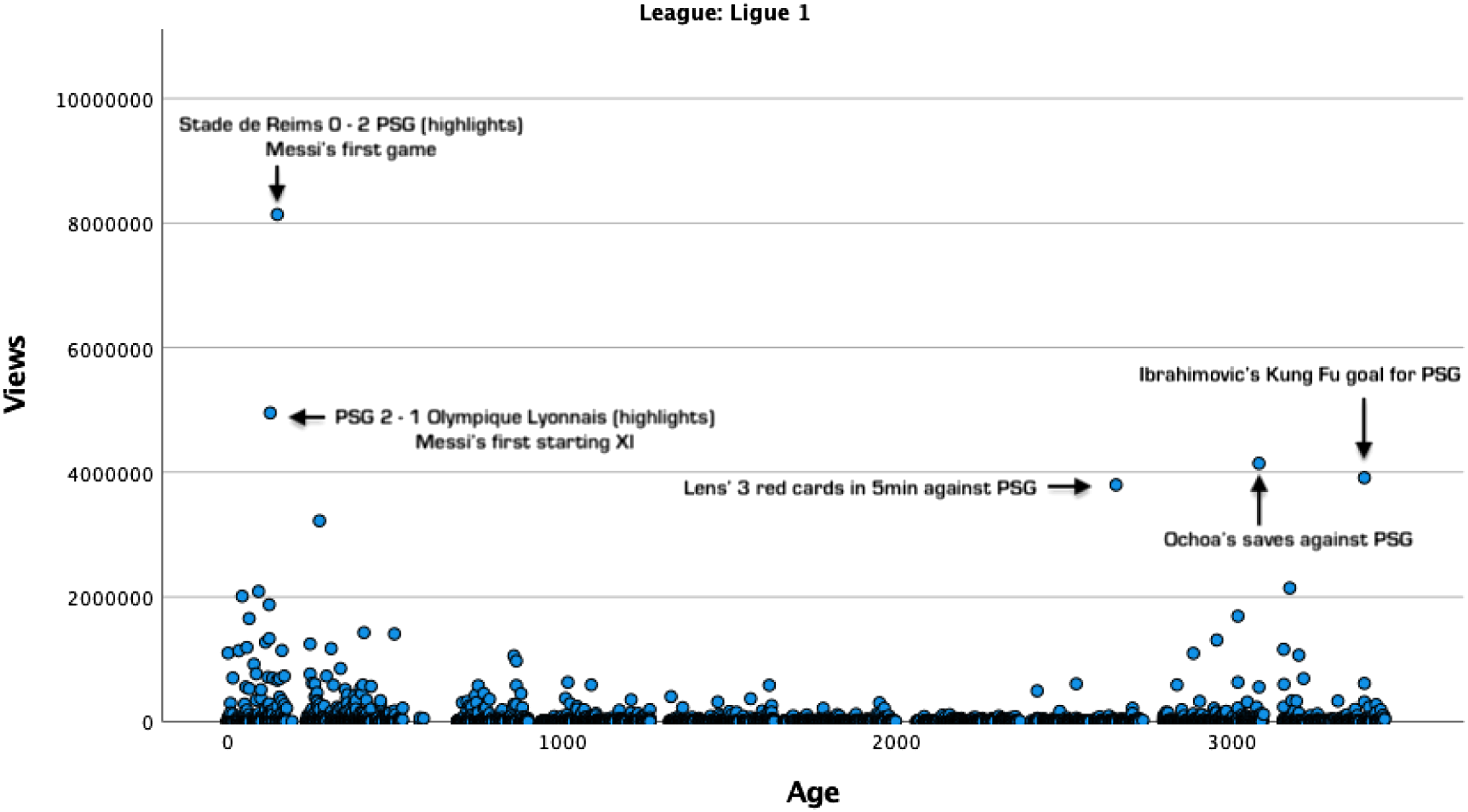
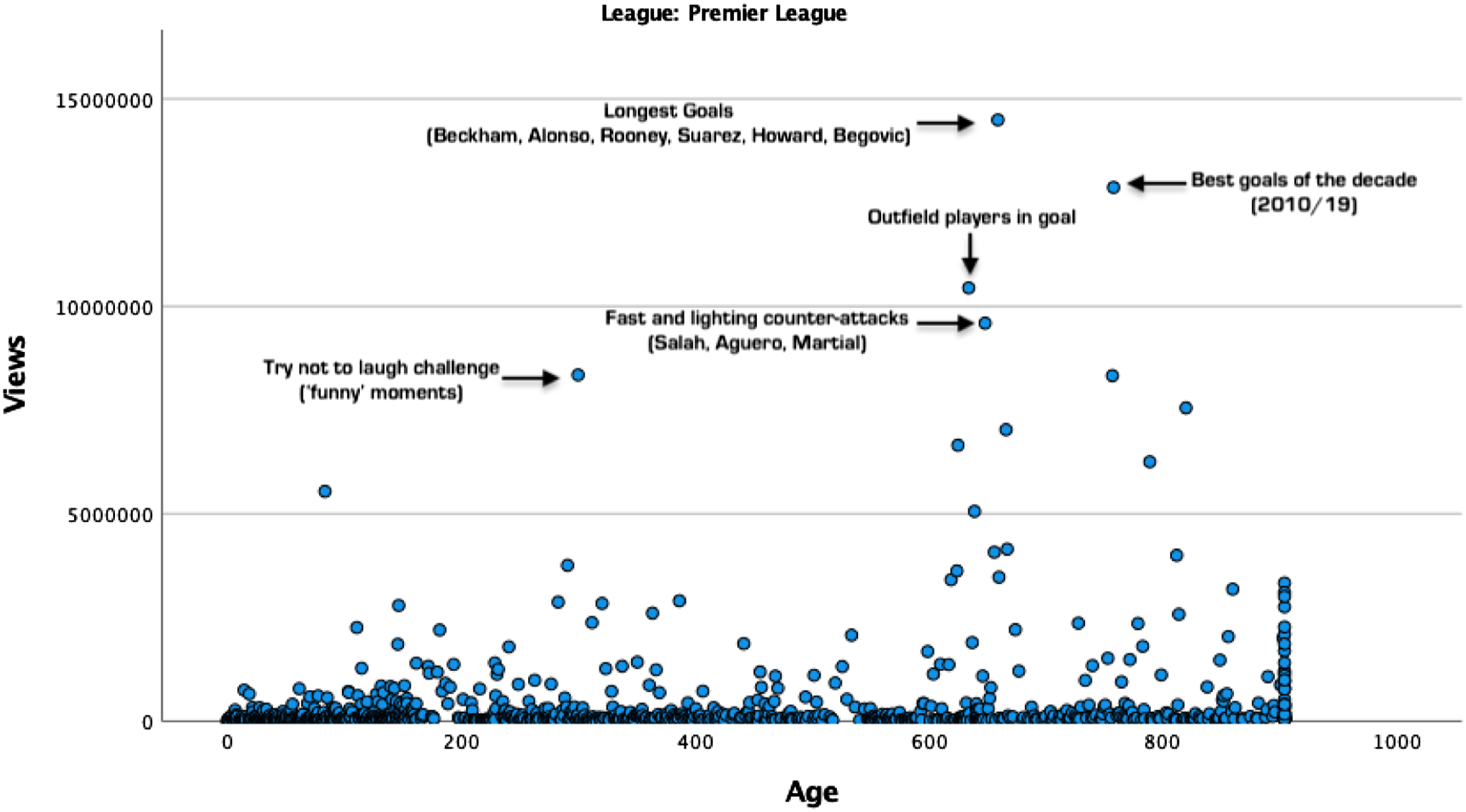
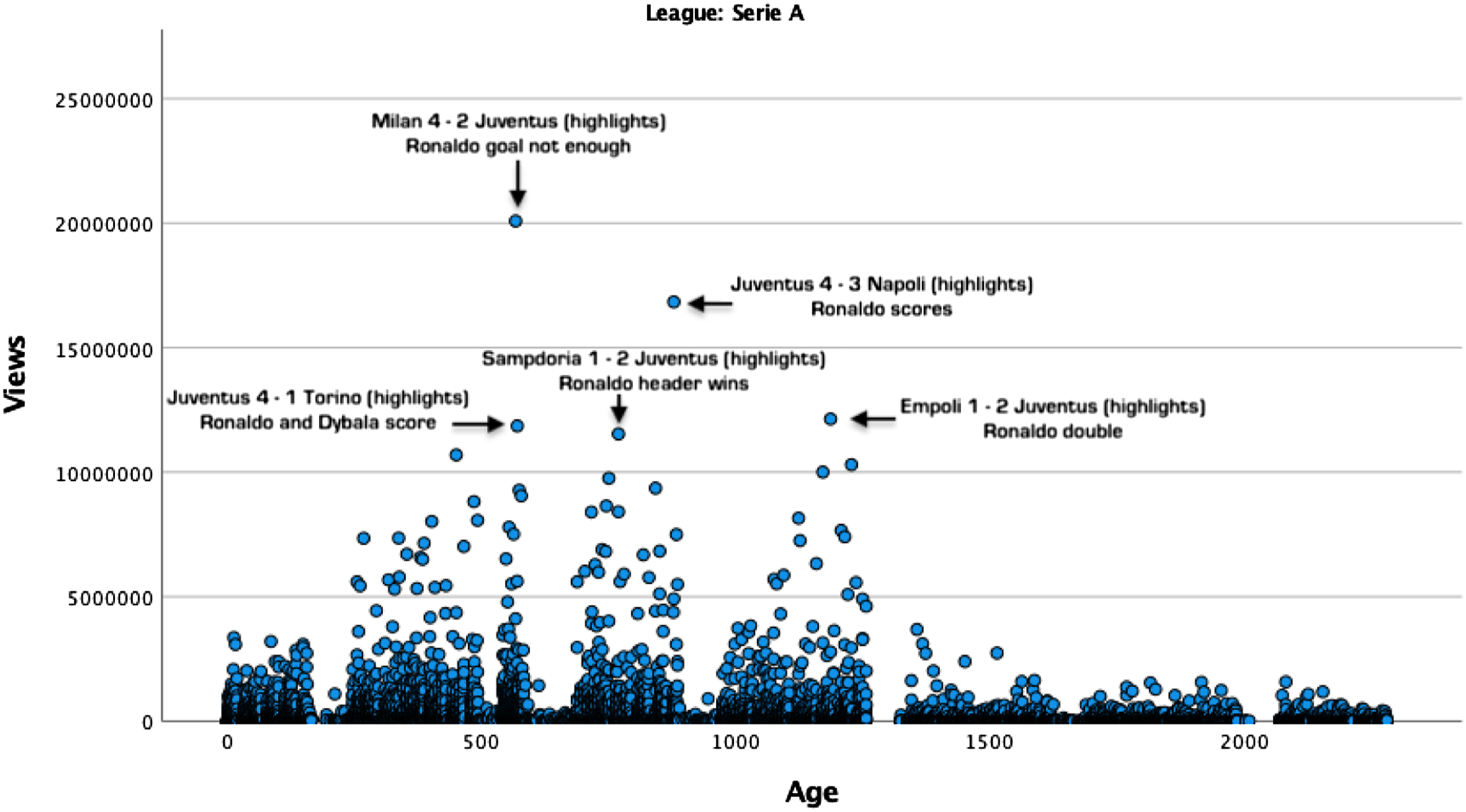
As it is possible to see, the leagues have approached their content creation on YouTube differently, with La Liga and Serie A producing the most content, followed by Ligue 1 and Bundesliga, and the laggard EPL with the least. The ‘big five’ predominantly produce and share content in the ‘Sports’ category on YouTube as exemplified by Ligue 1 and Serie A having all its content in that category (100% in ‘Sports’), meanwhile other leagues have a small content library under other categories such as the Premier League with two (99.8% in ‘Sports’) and La Liga with 74 videos in ‘Entertainment’ (99.6% in ‘Sports’), and Bundesliga with 93 in ‘Entertainment’ and five in ‘Gaming’ (98.7% in ‘Sports’). Not only historically – with the full data set – the leagues have approached their content curation distinctively, but also in the past year they have produced and shared a different number of videos (see Table 2 above). Results of non-parametric tests (Kruskal–Wallis) on both full data set and less than 1-year sub-sample were to reject the null hypotheses, meaning that the channels and leagues are distinct between themselves. In terms of the length of content, all leagues use the latest YouTube affordance of sharing over 15 min of content (900 s) (YouTube, 2022c), and especially other affordances such as streaming entire events of up to 12 h (43,200 s). Despite this, the most distinctive feature in terms of content between the ‘big five’ is that the EPL does not have any match highlights in its library, since these are merely available on the official broadcasters’ YouTube channels, or within the different clubs’ official channels that can be accessed through a curated playlist on EPL’s channel. Notwithstanding, the EPL still has the longest mean for duration in seconds (929 s), further indicating that its original content on YouTube might be used to complement TV rather than substitute it. The distinctiveness between the five leagues was also apparent when we plotted the most viewed videos in relation to their age (see Figures 1–5 below) and compared what type of video that received the most views. As it is possible to see from the figures, Serie A, Ligue 1 and Bundesliga have a stronger star player/manager and team quality effect that is congruent to what was found by Wills et al. (2020) in terms of UEFA Champions League TV audience broadcasting demand, while both La Liga and Premier League do have a mix of star player and team quality, and important moments in the leagues being more sober or funnier. Scatterplot Views by Age in Days and top five most viewed videos (Bundesliga). Scatterplot Views by Age in Days and top five most viewed videos (La Liga). Scatterplot Views by Age in Days and top five most viewed videos (Ligue 1). Scatterplot Views by Age in Days and top five most viewed videos (Premier League). Scatterplot Views by Age in Days and top five most viewed videos (Serie A).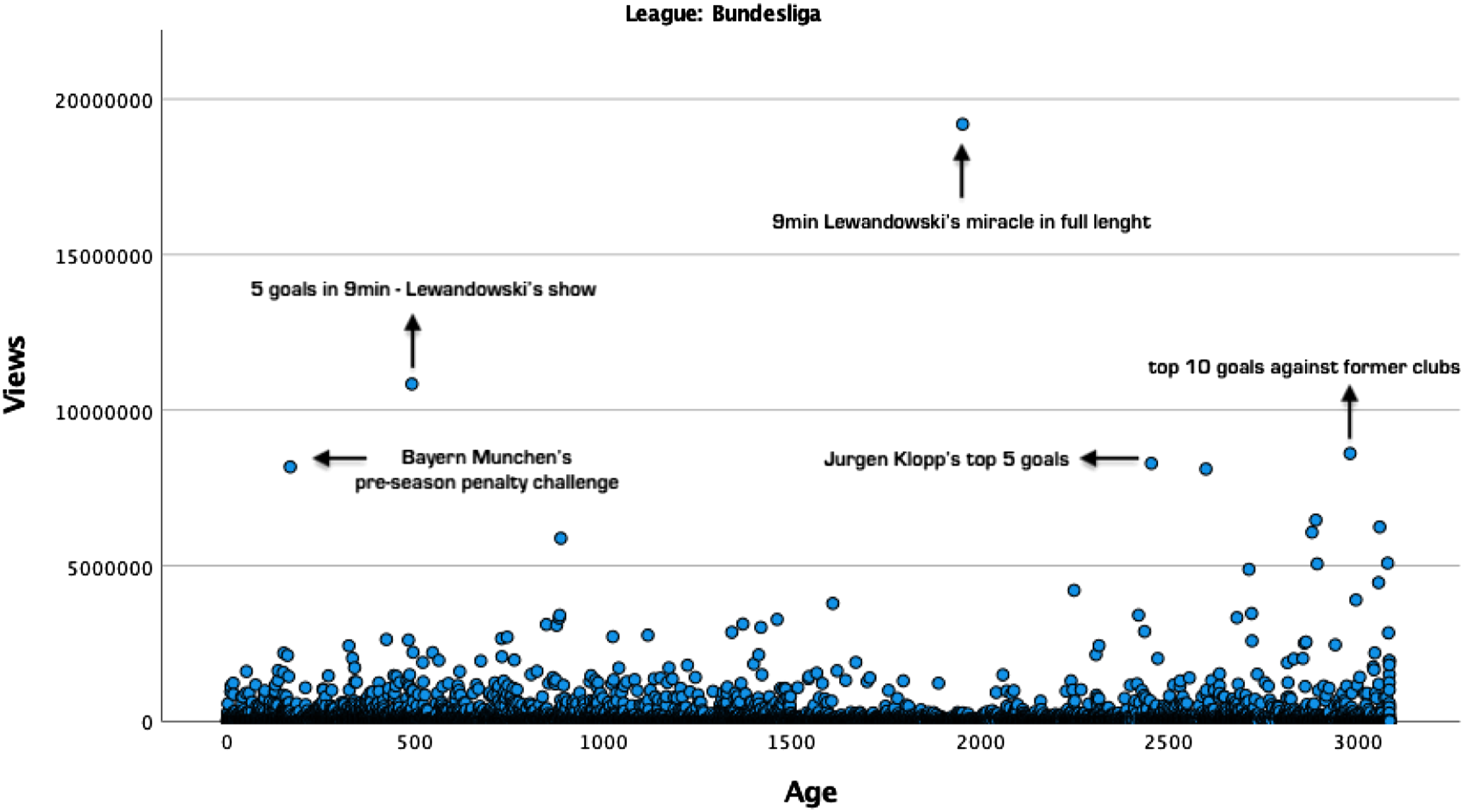
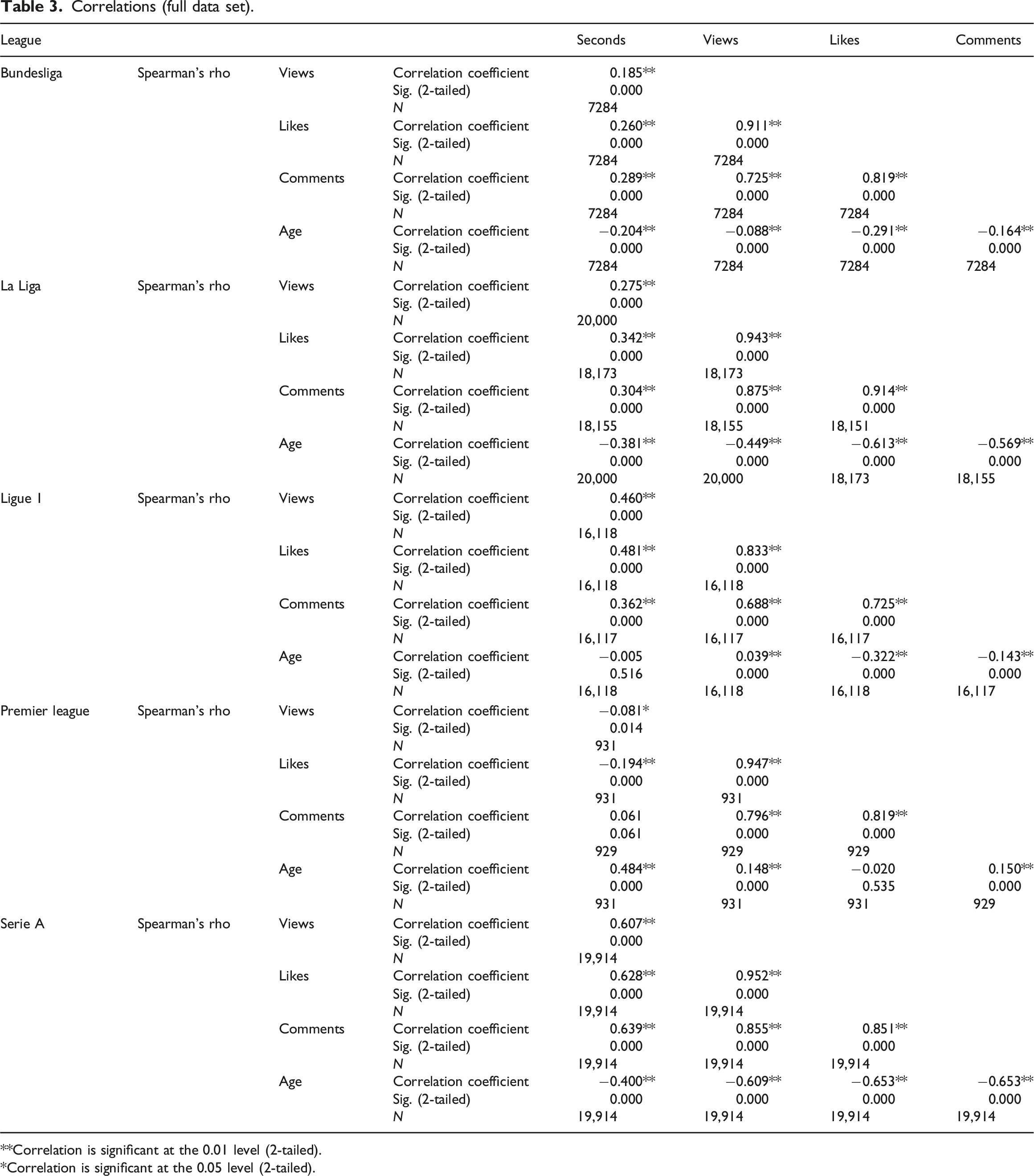
Correlations (full data set).
**Correlation is significant at the 0.01 level (2-tailed).
*Correlation is significant at the 0.05 level (2-tailed).
Correlations (less than 365 days).
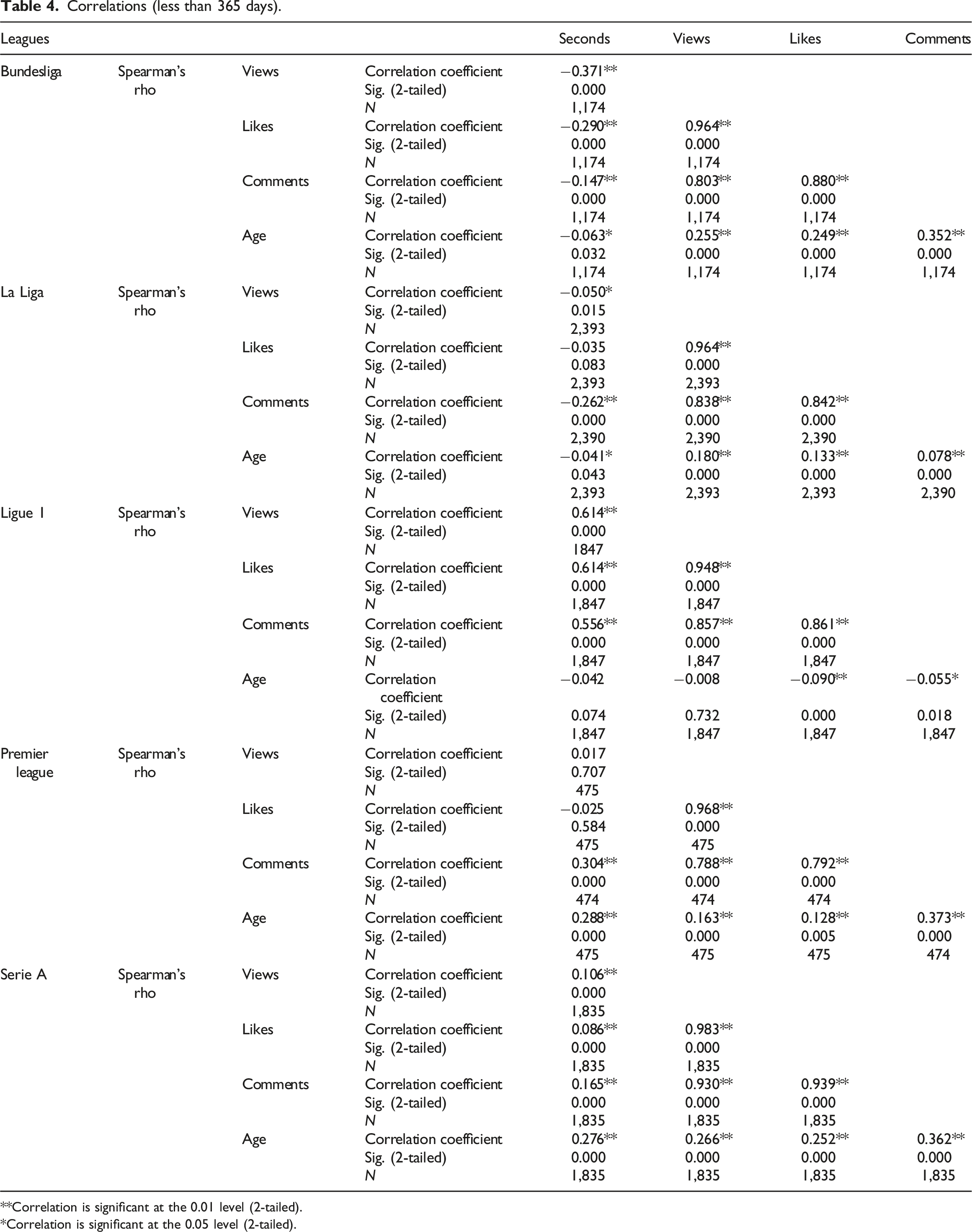
**Correlation is significant at the 0.01 level (2-tailed).
*Correlation is significant at the 0.05 level (2-tailed).
Active/passive engagement (full data set).
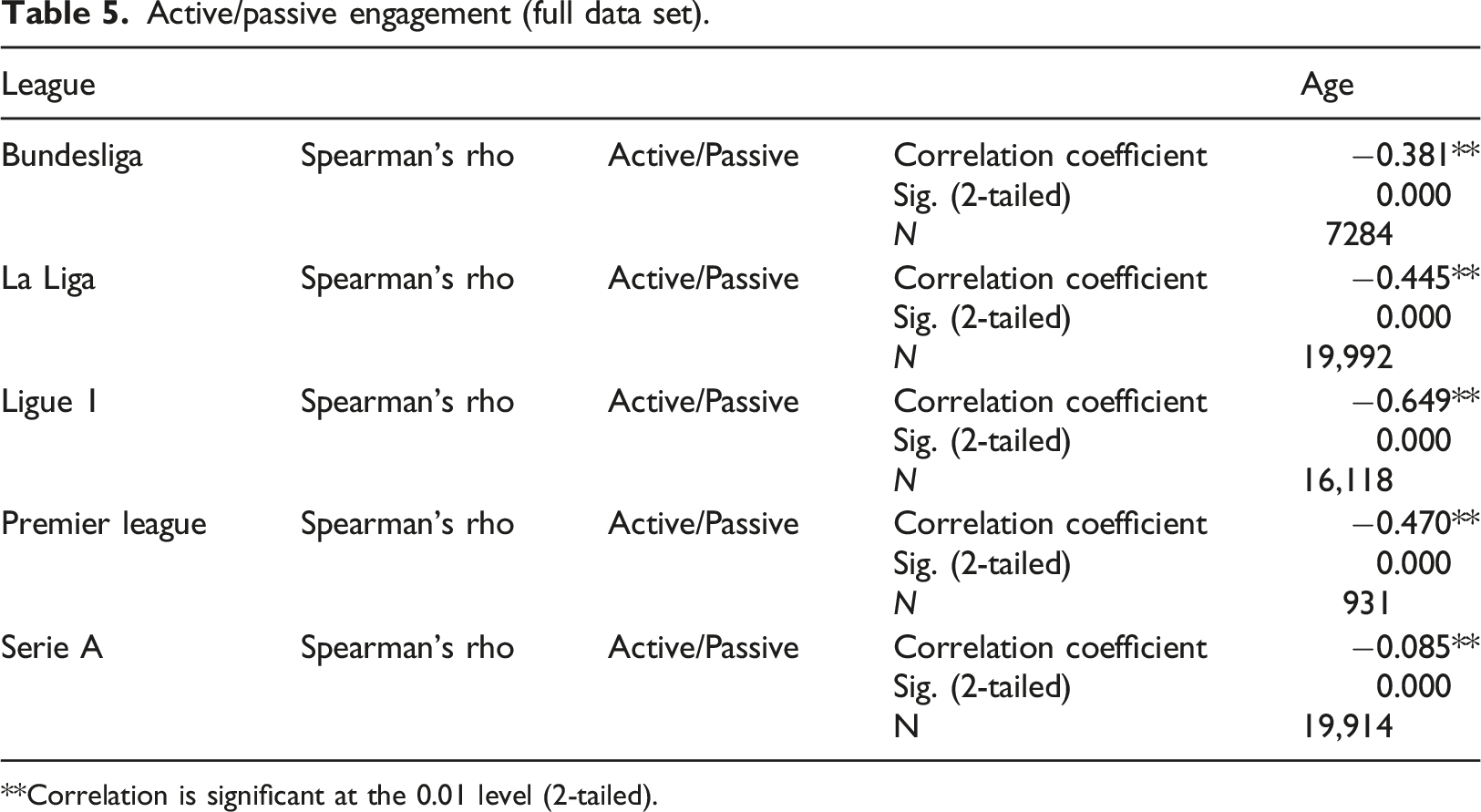
**Correlation is significant at the 0.01 level (2-tailed).
Overall, what our comparative analyses showed was that the live nature of digital platforms (see also Partin, 2020) with its changing technological affordances (e.g., longer video formats) and scalability (e.g., larger user base) translate into an environment that requires constant adaptation by complementors. If newer videos have better engagement in terms of views, likes and comments, and user engagement is at the core of YouTube’s algorithm (see YouTube, 2022d) then complementors necessarily must constantly produce newer content to satisfy the algorithm to still be relevant in the platform. Moreover, because of its newness in comparison to more established media such as TV, and its changing technological affordances, the ‘big five’ have not only approached their content library distinctively but have adapted it over the years in order to find the best fit.
Discussion
YouTube as a distinctive digital platform, that can be considered as an alternative to the more traditional medium of TV (see Lee Ludvigsen and Petersen-Wagner, 2022a; Lee Ludvigsen and Petersen-Wagner, 2022b), provides further space for brands such as football leagues to connect with their audiences. As we have showed in the data analyses above, the ‘big five’ are constantly exploring the different platform affordances by constantly curating distinct types of content. Because of its newness in relation to the more established medium of TV, its constantly changing affordances, and distinct cultural practices of prosuming in it, it was possible to recognise how the ‘big five’ are still navigating its idiosyncrasies. Furthermore, what is important to emphasise is that their mere presence on this particular digital platform reinforces the position that digital video is the new frontier in the digital transformation of business and society (Cisco, 2020; Forbes, 2021), and thus YouTube amongst other platforms such as Instagram and TikTok becomes a place to be. Nevertheless, a mere presence does not fully clarify the new digitally transformed symbiotic relationship between sport and digital platforms, which is what we seek to unpack below.
On a more basic level, by entering this new algorithm logic as complementors the football leagues supply the much-needed content for the platform to continue to scale its advertising business model (Burgess and Green, 2018). Despite of the content’s non-rival characteristic and its low marginal extra cost to digitally distribute through YouTube (see Poell et al., 2022), and the appetite for continuous content by the platform – entailing a more symmetric relationship – the reality is that the leagues are entering into a new asymmetric arrangement. When entering this new algorithm logic, the leagues we have investigated enter a new iron cage, transforming their symbiotic relationship that was based on the editorial logic of traditional media outlets, to one that is depended on platform engineers and users who feed the algorithm (Duffy et al., 2019; Nieborg and Poell, 2018; Poell et al., 2022). Their initiatives to please the algorithm can be exemplified by the changes that the ‘big five’ underwent in terms of length of video during the past year, but also in terms of the constant creation of content as with La Liga who has uploaded on average almost seven videos per day since 2006. As such, it is possible to argue that the ‘big five’ are now in an algorithm-dependent relationship.
On a deeper level, while the raison d’être of traditional media symbiotic relationship was the selling of profitable exclusive broadcasting rights by sport organisations (see Hutchins and Rowe, 2012) and subsequent media’s subscription and advertising monetisation strategies, in the algorithm logic there are transformations to the purposes of this relationship. While YouTube like their traditional media counterparts primarily relies on advertising and to a minor extent on subscriptions (Premium and YouTube TV) for monetisation (Alphabet, 2021), complementors instead of limiting themselves to selling rights can monetise their content by various other means such as display, overlay, video advertisings, channel membership, sale of merchandise, super chat and super stickers and receive part of Premium revenues (YouTube, 2022e). Even with that being the case, the leagues we have investigated mostly rely on paid product placement or the different forms of advertising on the content they shared on the platform. In a way, those leagues are not utilising all the platform affordances to fully monetise their content as seen on other video platforms and cultural industries loosely related to sport (see Johnson and Woodcock, 2019; Partin, 2020).
Therefore, if the ‘big five’ are not fully monetising their content on YouTube, and when they do, the revenues are not yet comparable to what is achieved through TV broadcasting deals; then what would be the reason for understanding this algorithm-dependent relationship as symbiotic? As we have contented above, for the platform the leagues provide the much-needed content based on one of the most important cultural manifestations worldwide (see Giulianotti and Robertson, 2009) in order to scale their advertising business. For the leagues themselves, their presence on YouTube provides not only a direct access to fans across the world that bypass the editorial logic but also most importantly provides a direct measurement of what is valued or not by those fans. Consequently, what keeps this relationship alive – and thus symbiotic – is the exchange of content for a small proportion of the user generated data. As Sadowski (2019) and Srnicek (2017) show, contemporary (platform) capitalism is centred around the constant accumulation of data, and while YouTube – or Alphabet – as infrastructure platform controls the flow and extracts most of the data for itself, the ‘big five’ as complementors have access to a share of this. Therefore, as complementors the raison d’être for keeping this relationship alive is essentially the access to data from the second most accessed digital space in the world.
In sum, while in traditional media the symbiotic relationship was governed by the editorial logic – or editorial-dependent – in this digitally transformed media ecosystem the algorithm logic creates a new asymmetric dependency in where the ‘big five’ trades its content for access to a share of user generated data from one of the most accessed platforms in the world.
Conclusions
The prevalence of digital technologies and platforms has transformed the ways in which individuals and groups produce and consume specific manifestations of popular culture (Arvidsson, 2019) This includes football, as one paradigmatic and highly global exemplar of popular culture in the 21st century (Giulianotti and Robertson, 2009). Against this backdrop, this article’s purpose was to explore how the ‘big five’ leagues have adapted to the algorithm logic on YouTube. This was situated within the context of the broader symbiotic relationship between sport and media which remains highly complex (Rowe, 2004) and continues to experience transformations in the present-day. Ultimately, as situated within the ‘platform society’ (Van Dijck et al., 2018), the emergence of new key players has reconfigured the ecology of the media (Hutchins and Rowe, 2012) and thus, understanding how the ‘big five’ leagues have adapted to YouTube – as the platform we focused on – remains important, because this provides insights into the broader trends speaking to exactly how new media platforms provide sports organizations digital spaces for content creation that is complementary to the more conventional means of football broadcasting, namely television. Overall, we argue that YouTube, for the ‘big five’, offers one medium through which they can act as complementors, receive user data and test/adapt their content strategies to please the algorithm gatekeepers. However, whereas YouTube, in economic terms, remains the key profiteer of this, the ‘big five’ can simultaneously gain knowledge from the testing of content strategies and especially the instant consumer feedback that again might inform their strategies on other or novel platforms in an ever-changing digital world.
We contend that this argument and our findings remain particularly significant for at least two principal reasons. First, scholars of sport and communication have, increasingly, recognized YouTube as a key space for fandom, content generation and vlogging (Checchinato et al., 2015; Hinck, 2018). However, scant research explores, in a comparative manner, how the ‘big five’ have adapted to YouTube, despite the platform’s global user base, enormous popularity and its general importance within digital societies (Arthurs et al., 2018; Marres, 2017). Second, our findings remain particularly significant when considering the strategic efforts of the ‘big five’ leagues (and associated clubs) to constantly reach out to new global audiences, engage in commercial activities and enhance their global brand values and popularity (Kennedy and Kennedy, 2012; Millward, 2011).
To summarize, this article has not only attached a new layer to the existing literature on the relationship between sport and YouTube (Checchinato et al., 2015; McCarthy, 2021a, 2021b) and the wider digital football studies project (Lawrence and Crawford, 2022), because we also make an original and timely contribution to the body of literature on the symbiotic media/sport relationship (Hutchins and Rowe, 2012; Rowe, 2004, 2015) in a digital sociological age, which has seen the rise of new platforms, such as YouTube. This area, and sports media more widely, remains as key cornerstones of the continually developing academic field revolving around the nexus between sport and communication (see Billings et al., 2018). Finally, this article has also added to available research on the ‘big five’ leagues (Sanchez et al., 2021) in a time where a number of key clubs competing in these leagues have been criticized by athletes, fans, sports officials, commentators and academics for establishing a European Super League. While the Super League plans announced in April 2021 were quickly abandoned by the 12 relevant clubs, the timing of this remains important, because the enormous public interest in this proposal serves as a reflector and reminder of the current sociological importance of European football, its ownership and marketing efforts in the present-day societies.
It remains necessary to acknowledge, as one limitation, that there are also some key players in the article’s context that our study does not account for specifically. That is the individual clubs of the ‘big five’ national leagues, some of which may be deemed European ‘super clubs’ (see Andrews, 2015; Millward, 2006), who possess distinct YouTube channels, subscriber bases and content strategies. We also acknowledge that there are certain limitations attached to our findings, stemming from our methodological approach and our platform-specific focus (YouTube), yet we concurrently contend that our findings remain significant and can serve to open up for and invite future research on the relationship between YouTube and sport and specific club’s strategies. Moreover, researchers may also look towards other digital platforms, such as the video game streaming site Twitch (Qian, 2022), where sport media products and eSports competitions are live and co-streamed, whereas the platform has been utilized by sports organizations and athletes. Lastly, the topic of active/passive participation – the acts of ‘liking’ or ‘sharing’ content – warrant qualitative exploration with regards to specific groups’ digital consumption and the meanings of being ‘active’ and ‘passive’ in such contexts.
Footnotes
Declaration of conflicting interests
The author(s) declared no potential conflicts of interest with respect to the research, authorship and/or publication of this article.
Funding
The author(s) received no financial support for the research, authorship and/or publication of this article.
