



Abstract
This article examines a cross-section of viral Deepfake videos that utilise the recognisable physiognomies of Hollywood film stars to exhibit the representative possibilities of Deepfakes as a sophisticated technology of illusion. Created by a number of online video artists, these convincing ‘mash-ups’ playfully rewrite film history by retrofitting canonical cinema with new star performers, from Jim Carrey in The Shining (Stanley Kubrick, 1980) to Tom Cruise in American Psycho (Mary Harron, 2000). The particular remixing of stardom in these videos can – as this article contends – be situated within the technological imaginary of ‘take two’ cinephilia, and the ‘technological performativity of digitally remastered sounds and images’ in an era of ‘the download, the file swap, [and] the sampling’ (Elsaesser 2005: 36–40). However, these ‘take two’ Deepfake cyberstars further aestheticize an entertaining surface tension between coherency and discontinuity, and in their modularity function as ‘puzzling’ cryptograms written increasingly in digital code. Fully representing the star-as-rhetorical digital asset, Deepfakes therefore make strange contemporary Hollywood’s many digitally mediated performances, while the reskinning of (cisgender white male) stars sharpens the ontology of gender as it is understood through discourses of performativity (Butler 1990; 2004). By identifying Deepfakes as a ‘take two’ undoing, this article frames their implications for the cultural politics of identity; Hollywood discourses of hegemonic masculinity; overlaps with non-normative subjectivities, ‘body narratives’ and ‘second skins’ (Prosser 1998); and how star-centred Deepfakes engage gender itself as a socio-techno phenomenon of fakery that is produced – and reproduced – over time.
Introduction
In November 2017, British actor Henry Cavill’s face attracted unwanted media attention due to the actor’s unsettling appearance in Hollywood blockbuster Justice League (Zack Snyder, 2017), thanks largely to the unconvincing post-production digital erasure of his real-life moustache and disquieting application of digital face replacement visual effects. During reshoots for the DC superhero feature, Paramount Pictures had refused to allow Cavill to shave the facial hair that he had been growing for his role as CIA assassin August Walker in Mission: Impossible – Fallout (Christopher McQuarrie, 2018). As Cavill was contractually obliged to maintain his moustache when filming the latest instalment of Paramount’s action spy series, Warner Brothers were forced to undertake an expensive process of digital re-touching for Justice League, subjecting Cavill to a form of invisible beauty VFX and utilising computer graphics to remove his moustache and replace it with a ‘clean’ top lip, lower cheekbones and jawline for his performance as Superman. The result was, as many commentators in the Hollywood trade press put it, a ‘mess of woeful digital design’ that created an ‘alarmingly askew face’ (Cavna, 2017), albeit one that was nonetheless a fitting symbol for Zack Snyder’s notably disrupted production. Yet such critical and popular ambivalence towards Cavill’s uncanny digitized appearance, and the immediate furore surrounding the digital manipulation of the pro-filmic performer, also reflects how the tone sounded by convincing digital ‘star’ faces remains a cautionary one, rooted in broader cultural anxieties around the digital management of identity and the positioning of embodiment, power and affect in relation to digital media and culture.
Despite the fact that ‘the body of the film actor has always been reworked technologically through the use of special makeup, lighting, filters, editing and so on’, Cavill’s digitized physiognomy in Justice League marked the latest stage in a longstanding ‘cyborg fusion’ of technological development with corporeal physicality (Rodowick, 2007: 6). The advent of digital effects media, including virtual face replacement technologies in the 1990s (typically in service of stunt work), first introduced the fascination of humans with faces crafted from digital imagery as part of their cyborg assemblage. However, as a striking amalgam of varying organic and cybernetic parts, Cavill’s new compound physiognomy and modified hyper-masculinity in Justice League represented yet another example of Hollywood’s pursuit of pristine CG visual illusionism, which placed the film star once again firmly at the intersection of art, culture and technology. The uncanny reproduction and enhancement of the analogue via sophisticated compositing techniques has since created an intensified electronic experience, with cinema’s increasingly posthuman existence and computerised industrial practices threading gender, the body and performance through various forms of extended image processing. The emergence of digital human faces has, therefore, served to reconjure cinema’s durable theoretical framing as a medium that mechanically embalms or petrifies time in how it blurs the boundary between the animate and inanimate, life and death. As Jacques Derrida writes, ‘every period has its ghosts, its own experience, its own medium, and its proper hauntological media’ (1994: 193).
This article argues that the aesthetic possibilities of such spectral, ‘ghostly’ apparitions within contemporary digital media culture have reached their latest peak with the emergence of ‘Deepfake’ technologies, a process of human image synthesis rooted in the creative potential of artificial intelligence in which computer software superimposes a ‘foreign’ human physiognomy onto pre-existing film footage. The seamless overlaying of one face with a convincing virtual facsimile (occasionally in real-time) provides both a harmless recalibration of identity and a dangerously insidious example of the monstrous trajectory of digital imaging technologies. These pervasive audiovisual hoaxes represent a powerful mode of video alteration, challenging the veracity of information by sowing seeds of mistrust while simultaneously inaugurating a certain methodological crisis in how such manipulations might now be critically understood at this key historical and political juncture. For John Fletcher, Deepfakes are ‘too recent for anyone to have much perspective’ yet so pervasive within online media production that to overlook them would be ‘akin to a study of modern warfare that ignores drones’ (2018: 457). Taking its cue from the convergence between Cavill’s digital reproduction in Justice League and the popularity (and availability) of Deepfakes image processing, this article examines a cross-section of viral Deepfake videos that specifically utilise, exploit and swap the recognisable physiognomies of popular Hollywood film stars to exhibit the representative possibilities of Deepfakes as a technology of illusion.
Created by numerous VFX artists and online fan communities, such convincing visual ‘mash-ups’ mark the next phase in digitally mediated forms of stardom that signal the depletion of the actor as central to dramatic and narrative signification. The manipulative processes central to Deepfakes provide an unsettling moment in internet culture, prompting ethical questions regarding the production of derivative media content and the broader cut-and-pasting of film stars as already culturally formed artefacts. However, this remixing of Hollywood stardom can be situated within a so-called ‘take two’ cinephilia, and a new ‘technological performativity of digitally remastered sounds and images’ in an era of ‘the download, the file swap, [and] the sampling’ (Elsaesser, 2005: 36–40). Such Deepfake cyberstars therefore aestheticize an entertaining surface tension between coherency and discontinuity, and in their modularity function as ‘puzzling’ cryptograms written increasingly in digital code. Fully representing the star-as-rhetorical digital asset, the reskinning of (typically cisgender white male) stars across numerous Deepfakes videos additionally sharpens the ontology and performativity of gender. By identifying Deepfakes as a ‘take two’ undoing, this article frames their implications for the cultural politics of identity, Hollywood discourses of hegemonic masculinity, overlaps with non-normative subjectivities and how star-centred Deepfakes engage gender as a socio-techno phenomenon of fakery that is produced – and reproduced – over time.
The politics of detection
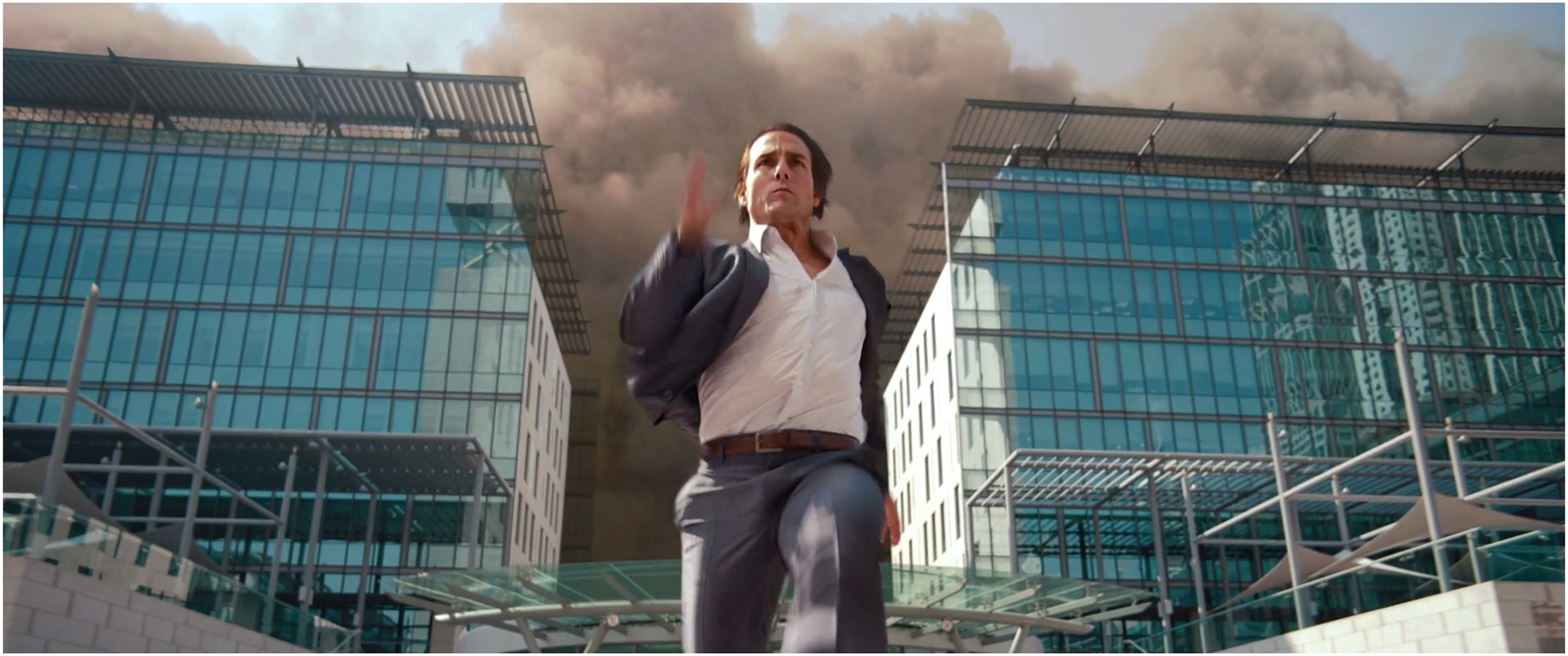
‘I’m Tom Cruise, and I’m running for the President of the United States’. Or so proclaimed the New York-born actor and international megastar in a short video that debuted online in August 2019 on several social media platforms. The brief two-minute advert appeared to show Cruise declare his intention to run for US President in 2020 through the promise of his physical exertion. Jogging at speed towards the camera, Cruise addressed the audience to champion his suitability as the President elect, while reviewing his extensive film career and status as ‘the last American movie star’ (Figure 1). In its emphasis on the actor’s physical mobility, fitness and proclivity for dangerous stunt-work (‘I do all those for real’), the short announcement drew directly upon Cruise’s particular star persona and ‘signature mode of action exhibitionism’ rooted in two defining components – what Lisa Purse calls Cruise’s ‘acrobatic physical extension, and running at pace and at length, both forms of spatial extension that are emphatically rooted in the body’ (2017: 177). Indeed, with Cruise dressed in a smart blue suit and crisp white shirt to stake his political credentials, the video strongly evoked a similar sequence from action film Mission: Impossible – Ghost Protocol (Brad Bird, 2015), in which the actor (playing IMF secret agent Ethan Hunt) is chased by an encroaching, and ultimately debilitating, sandstorm (Figure 2). However, despite the persuasiveness of the video and the slogan ‘Run Tom Run’ presented in a patriotic colour palette of red, white and blue, Cruise’s political ambitions were nothing more than a convincing digital fabrication rather than a genuine campaign video expressing a desire to be the new Commander-in-Chief. Directed by filmmaker Stephen Vitale, this ‘Deepfake’ (a combination of ‘deep learning’ and ‘fake’) used computer mediation, artificial intelligence algorithms and thousands of facial pictures of Cruise to convince audiences that his action star persona and heroic masculinity would be a perfect match to Presidential responsibilities. As the ‘Deepfaked’ Cruise (performed and voiced by longstanding Cruise impersonator Miles Fisher) states, ‘There’s a lot of talk about the race in 2020. Sure, there’s a lot of candidates in the running, but can any of them run? I mean, really run?’ The ‘TOM CRUISE 2020 – Presidential Campaign Announcement’ deepfake. Mission: Impossible – Ghost Protocol (Brad Bird, 2011).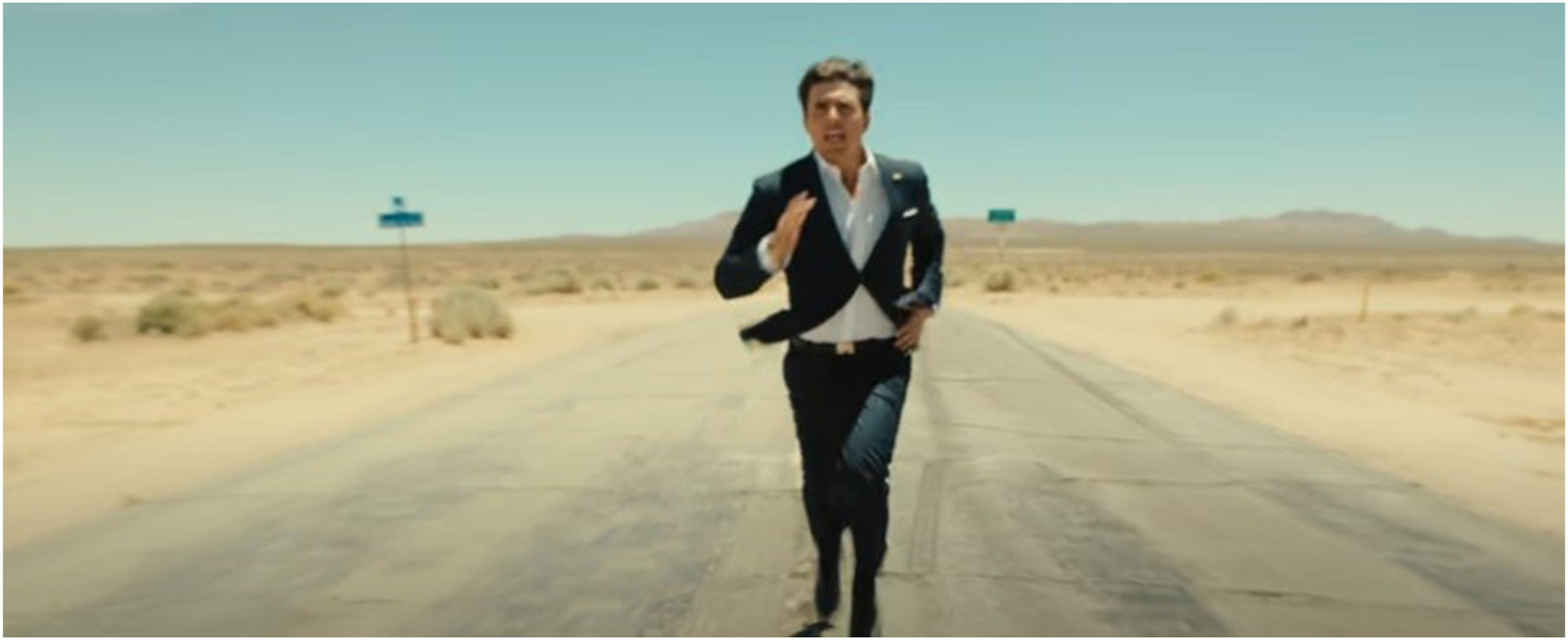
The discursive construction of film stardom certainly represents a useful entry point for subjecting Deepfakes to critical scrutiny as the new ‘drones’ of modern online media production. When taken together with the digital adjustments made to Cavill’s skin and complexion in Justice League, the exploration of Cruise’s star image through professional Deepfake processing secures the cultural–industrial significance of the film star as an anchoring force that authorises developments in new media technologies. Jane Gaines (1992) had already drawn particular attention to the exchange value and discrete property relations that underpin the cultural and political circulation of star image, which within Hollywood’s commodity production materialises both the star’s labour and capital. Gaines argues that in the specific case of (the legality of) ‘image appropriation’ that is ‘usually taken up in terms of the likeness’, the recognisability of the star’s ‘representational image’ (1992: 90) is a principle dimension of Hollywood’s privacy and copyright laws. The star’s typically iconic ‘name voice, and likeness’ is central to their cultural distinguishability, and in the business of Hollywood a driving force behind the star’s ‘commercial and promotional uses’ (Gaines, 1992: 157). Such opportunistic exploitations of the star’s publicity value anticipate why, and how, the star image has been progressively granted its power as a buttress supporting technological shifts in the very industrial system that frames it. As ‘branded identities’, stars often act as makeweights that offset, arbitrate and legitimise technological change, as their cultural and political currency facilitates the ‘negotiation and engagement with new technologies, texts, audiences and markets’ (Thomas, 2019: 453). As the playful Cruise promo makes clear, the Deepfake production of counterfeit footage featuring the transplanted audiovisual likeness of popular celebrities ultimately intensifies these fundamental qualities of the star as technological mediator, one who ‘represents stability, authenticity and accessibility’ (Thomas, 2019: 454) in the face of new mass media platforms. The star’s ability to be visually (and vocally) impersonated with high degrees of precision – and the spectators’ assumed recognition and verification of these (re)presented semiotic markers – therefore points to the specificity of stars’ durable iconicity, and suggests why the star has increasingly become the subject for sophisticated computer manipulation.
Although illusory and in service of parodic intent, Cruise’s political aspirations thus reflect a convergence of film stars and stardom with the US political landscape in the lead-up to the 2020 Presidential election. This collision further identifies how the arrival of Deepfakes technology into the contemporary media ecology, and its shared emergent faith in – and even celebration of – misleading ‘mediation-distortion’ (Fletcher, 2018: 469) sits squarely within the contemporary era of manipulated global media in a ‘post-truth’ climate. While modifications made to ‘visual and auditory media are as old as media themselves’ (Kietzmann et al., 2019: 135), the Deepfake phenomenon and widespread circulation of counterfeit, deceptive and uncertain moving image content (including its emergent relationship to celebrity culture) has acquired readymade cultural purchase thanks to the almost simultaneous mainstreaming of misinformation inaugurated by the election of US President Donald J. Trump in late-2016. Trump’s persistent criticisms of ‘fake news’ reporting – alongside the term’s co-option from shorthand descriptor of the inauthentic to effective propaganda tool for broader cultural–political discreditation – has provided a clear context for the popularisation of Deepfake technology, including its rapid move into the industrial–cultural lexicon of digital media production. Emerging from the political left in America, persistent attacks on Trump’s propensity for the superlative, alleged use of Russian-sponsored social media promotion, and his dubious relationship to fact-checking and forms of digital editing (including photoshopped images of his inauguration ceremony held at the United States Capitol in January 2017) run almost parallel to the acceleration of new Deepfakes algorithms and autoencoders that corrupt and transform audiovisual media.
According to the Malicious Deep Fake Prohibition Act of 2018 introduced to the US Senate, ‘the term “deep fake” means an audiovisual record created or altered in a manner that the record would falsely appear to a reasonable observer to be an authentic record of the actual speech or conduct of an individual’. Trump’s vehement attacks on the ‘fake’ news industry, his undermining of press reports, denial of allegations and deflection of blame have all been central to the aggrandizing of his ‘authentic’ identity across all corners of American culture – as a supposedly accomplished, prosperous, intuitive personality; as a self-reliant businessman and successful ‘dealmaker’ supported by a vast network of political and professional collaborations; and as a President connected to core values of American national history. But just as the rhetorical dimension of Trump’s presidency leans – for both the modern liberalism of the Democrats and passionate Republican conservatism – on a systematic dismantling of legitimacy and the distortion of credibility, so too Deepfakes have become the latest political tool blocking our access to truth. In digitally manipulating and intervening into the image’s questionable relationship to certainty (including the declaration that heroic Hollywood masculinity might feasibly run for the White House), Deepfakes function as part of a strong ‘Trumpian’ vernacular in their spectacular relegation of fact and swerving of reason.
The evolution of star-centred Deepfakes against the backdrop of an increasingly exploitative ‘heated political context’ (Fletcher 2018: 456) – namely the period immediately following the 2016 Trump/Clinton Presidential campaign underpinned by strategies of disinformation, vitriol and a lack of civil behaviour between candidates – has grounded the technology firmly within the Trump era and its association with misinformation. In October 2019, political journalist Siddharth Venkataramakrishnan warned that the persuasiveness of Deepfakes and their heightened levels of aesthetic verisimilitude were already on a collision course with UK and US domestic politics, and a very real threat to national security and diplomacy. The sourcing of Cruise’s digitized physiognomy and blockbuster masculinity to suggest partisan ambitions becomes, then, more than just a tool of entertainment or parody, but operates as a very-real indicator of how pixels, performance and politics might come to dangerously overlap. As Venkataramakrishnan noted: While they may be increasingly cheap to pull off, their repercussions could be far-reaching. Fraudulent clips of business leaders could tank companies. False audio of central bankers could swing markets. Small businesses and individuals could face crippling reputational or financial risk. And, as elections approach in the US, UK and elsewhere, deepfakes could raise the stakes once more in the electorate’s struggle to know the truth.
Prior to the ‘fraudulent’ Cruise video, the ‘stakes’ of such misrepresentations had already been thrown into sharp relief when, in May 2019, Trump shared a doctored video through his Twitter social media account of Speaker of the United States House of Representatives Nancy Pelosi. The short clip appeared to show Pelosi stammer and stutter her way through an official news conference, footage which was later determined to be the falsification of her verbal delivery to cast doubt on her physical and mental health. Trump would do the same again in April 2020, this time using his official Twitter account to circulate a similarly unflattering Deepfake video of the former Vice President Joe Biden, obviously manipulated to target and discredit the man who would ultimately become his presidential successor.
Despite the ease with which Trump has disseminated his own fake news (and thus become guilty of his own charges), the modified Pelosi video came only 2 months after a Deepfake circulated online featuring Trump himself as the centrepiece. A vocal impression of the 46th President by American comedian Jimmy Fallon (that was originally broadcast on NBC’s The Tonight Show in 2016) appeared on YouTube from user derpfakes, complete with a digital simulation of Trump’s face now covering any evidence of Fallon’s contribution. A month before that, in April 2017, actor and director Jordan Peele had starred in perhaps one of the most famous Deepfakes to date voicing Barack Obama in a PSA about fake news politics that reflexively proclaimed ‘We’re entering an era in which our enemies can make anyone say anything at any point in time’. The Obama Deepfake video – produced using Adobe After Effects and the AI face swapping tool FakeApp – drew explicit attention to the political applications of photorealist Deepfake technology that would later become central to the satirical edge of Cruise’s 2020 ‘campaign’. Distributed across a number of social media platforms (Facebook, Instagram, Twitter, YouTube, Snapchat), the falsified video was a collaboration between Peele’s company Monkeypaw Productions and the Buzzfeed online news outlet, one that was intended to raise awareness about ‘the importance of media literacy as technology makes it incredibly easy to disseminate misinformation by manipulating video and audio’ (Spangler, 2018). Yet the pointed citation of Obama’s identifiable physiognomy became a litmus test for both the technology’s aptitude for undetectable imitation and its ease of production, and unlike the unease that surrounded Cavill’s doctored top lip was celebrated for its photorealistic credentials and ability to persuasively simulate the movements and mannerisms of the outgoing President.
Given the accelerated cultural prominence of the Deepfakes phenomenon since 2017, it came as little surprise that by the end of 2019, the November 25th issue of The New York Times business section included the headline ‘Spot the deepfake. (It’s getting harder.)’ on its front page. This fresh visibility across news media was matched by the simultaneous arrival across the US of a number of so-called ‘Deepfakes laws’ and proposals, with several states (beginning with California, Virginia, Texas, Massachusetts, New York and Maryland) enacting official legislation to ban the computer manipulation of existing video footage. The scope of these laws encompassed the prohibiting of any digital likeness inserted into explicit pornographic videos (Virginia) to the use of Deepfakes for election interference (Texas). Following the Malicious Deep Fake Prohibition Act a year earlier, the subsequent introduction of the DEEPFAKES Accountability Act on 12th June 2019 was specifically aimed at combatting the increased ‘spread of disinformation’ (Clarke, 2019) by criminalizing synthetic media production. The legislation (as proposed by Representative Yvette Clarke) required any application of ‘video alteration technology’ involved in the creation of ‘an advanced technological false personation’ to include an embedded digital watermark identifying its transformed state, alongside an unobscured audiovisual disclosure that ‘identifies the record as containing altered visual elements, and a concise description of the extent of such alteration’ (Clarke, 2019). Submitted to the Subcommittee on Crime, Terrorism and Homeland Security, the bill – which cites Deepfakes via the acronym ‘Defending Each and Every Person from False Appearances by Keeping Exploitation Subject' to Accountability Act of 2019 – regulates the production and distribution of such counterfeit media, including its fraudulent use now enforceable by law.
Deepfakes evidently presents a possible future for how we might register ontologically deceptive and ‘defactualized’ (Arendt, 1972: 21) images in our own media ecology. The communicative, rather than referential, possibilities of CGI as a technology of potential misinformation fully supports this collapse of truth cued by the arrival of Deepfakes into contemporary digital culture. Indeed, when Stephen Prince argues that ‘The fabricated visual spaces of the digital realm split images from a knowable, observable reality’, and that ‘Everything can now be faked’ (2012: 51), his conclusions around VFX imagery in Hollywood blockbuster production matches the crises of truth and meaning inaugurated by Deepfake image processing. CGI’s photorealist potential and the judicious post-production editing techniques enabled by computer graphics have, within histories of special effects technologies, certainly been anchored to the ability of digital imagery to convincingly simulate human physiognomy. Deepfakes therefore culminate the many teleological narratives of pictorial and graphical realism that since the turn of the millennium have powerfully marshalled industrial developments in (and cultural understandings of) computer graphics. Writing in 2002 about the increasing use of computer animation in mainstream Hollywood production (including the popularisation of CGI in the post-Toy Story [John Lasseter, 1995] era), Julia Moszkowicz cited the reproduction of human form as the ‘ultimate challenge’ to animators and effects artists. Moszkowicz argued that the mimesis, approximation and ‘rendering of human and organic life forms […] [provided] the ultimate benchmark of quality or veracity’ (2002: 294). If the simulation of humanity has always been understood as the holy grail of mainstream effects imagery, then Deepfake technology has firmly secured its place within this teleology.
The ever-increasing ‘scope, scale, and sophistication’ of the AI technology (Fletcher 2018: 456) and accuracy of the machine learning tools has certainly enabled a more persuasive process of reskinning human figures through the detailed mapping of their digital facial geometry and virtual bone structure. Powered by Generative Adversarial Networks or GANs that involve two rival computer networks – a synthesiser (that creates content) and a discriminator (that compares and analyses) (Venkataramakrishnan, 2019) – the cut-and-pasting of digital masks wrapped around the human source offer an altogether more fearsome and nefarious set of outcomes for Deepfake technology. As Fletcher notes, since the arrival of crude, low-fi Deepfake videos online in 2017, the acceleration of high-tech fakes across commercial media platforms provides the opportunity to effortlessly ‘fabricate videos practically indistinguishable from authentic documentation’ (2018: 456). At their most potent, Deepfakes ‘allow anyone to create fakes that appear real with significant investment in training, data collection, hardware, and software. Unskilled individuals will soon be able to manipulate existing media or generate new content with relative ease’ (Kietzmann et al., 2019: 136). The rise of face swapping apps, such as Deepnude, Face Swap Booth, Face Stealer, REFACE and Zao (that allows users to insert themselves into existing media footage), alongside the accessibility of off-the-shelf software (Adobe After Effects, DeepFaceLab 2.0), has only intensified the online presence and portability of Deepfake productions, bringing with it a heightened cultural awareness of their potential application. However, as Cruise’s digitally realised future as a political candidate makes clear, a significant testing ground for Deepfakes technology has been the particular power and potency of Hollywood stars.
Digital ramification
Historical understandings of the very iconicity of the star image usefully evoke the logic and labour of certain kinds of Deepfake processes. In his canonical exploration of film stars, for example, Richard Dyer argues that the meanings of stars might be ‘masked or displaced’, or that stars negotiate an authenticity via the possibility that beneath the rhetorical construction is the real person (1979: 3). Dyer’s subsequent notion of a ‘fit’ (1979: 125–129) to explain the interrelationship between star and character is given a further technological edge when considered alongside the production of Deepfakes. As Dyer argues, ‘to discover the nature of the fit between star and image and character […] [we can] attempt to see what possible sources of “masking” or “pseudo-unification” the film offers (such as the irresistible unifying force of a star image)’ (1979: 131). In this way, the weaponization of Deepfakes according to a similar language of facial ‘masking’ or ‘fit’ suggests that their combination of actual and digital bodies evokes the rhetorical and transportable dimensions to irresistible star images. Deepfakes’ particular remixing of stardom thus represents the culmination of stars as manufactured ‘figures of exchange’ (McDonald, 2013: 11). The spectatorial pleasure in the act of discovery ultimately marks the fullest realisation of the star image as attractive and acquirable, (dis)embodying a fascinating political–historical moment in which star performances are falsified and reflexively ‘performed’ via digital technology in ways that support the star’s typically intensified visibility.
However, the visual trickery and elaborate mimicry available in synthetic Deepfaked media, alongside the ongoing struggle for detection, has been sharpened by the persistent siting of popular Hollywood stars within these discourses of audiovisual manipulation. As Deepfakes became a term that entered generic cultural usage, WIRED magazine reported that Dutch start-up company Deeptrace (now Sensity) conducted a ‘Deepfake census’ of online content in June and July 2019, which found that among a total of almost 15,000 fraudulent videos sourced a total of ‘96% of the deepfakes circulating in the wild were pornographic’ (Simonite, 2019). Utilising a variety of cybersecurity technologies (including the monitoring capabilities of a Visual Threat Intelligence Platform), Deeptrace were able to detect face swapping technology and, as a result, locate the presence of facial recognition and machine learning programs involved in the production of online Deepfake pornography. What is striking about the very first cycle of pornographic Deepfakes produced in late-2017 (posted to several pornography sites online) was their clear reliance upon the currency of global film stars. A range of counterfeit videos were found to be ‘made with software that pasted the faces of Hollywood actresses over those of the real performers’ to create threatening and malicious visual media (Simonite, 2019). Such ‘deep learning neural networks’ were put to use in the production of these early pornographic videos ‘to make it seem that Gal Gadot (star of 2016’s Wonder Woman) was the lead actress’ by digitally mapping photographs of Gadot onto the performer’s body (Fletcher 2018: 461) in ways that align an imaginary of intimacy with the authenticity of celebrity. Subsequent ‘face swap porn’ videos quickly emerged as part of this sexualized and erotic form of audience engagement with star bodies, featuring Hollywood actresses Daisy Ridley, Scarlett Johansson and Emma Watson, alongside singers Katy Perry and Taylor Swift, as the epitomes of desire. These invasive and defamatory high-definition videos sharpen the gender disparity that supports the production of ‘starry’ likenesses, with the star exploited in graphic sex scenes or placed in other sexually explicit situations without their consent. These sexualised images are, of course, equally damaging to the adult performers involved, whose bodies are repurposed and distributed again without their knowledge. Borne of a misogynistic culture, Deepfake pornography therefore objectifies and demeans its many subjects in ways that intensify the discourses of criminality, copyright and authorship that govern the unlicensed appropriation of a star’s image (Gaines 1992: 157). As Michael Taussig argues, the ‘fetish-effect’ invited by the human face structures it as an ‘epiphany, an event’, no less ‘beautiful in its status’ and ‘auratic splendor’ (1999: 223). In the disconcerting world of star-centred Deepfake pornography with its erotic dialectic of concealment and revelation, however, this experience of the star’s aura is further mythologised and mediated via the deceptive digital skins that constitute an (un)ethical and gendered zone of exploitation. Spectators may be momentarily conscious of the virtual ‘defacement’ yet simultaneously enchanted (and in this instance, aroused) by the known secrecy of this ‘epistemic murk’ (Taussig 1999: 49). Beyond the many forms of ‘gratification’ offered by the star within contemporary digital culture, such spectatorial encounters with such Deepfakes pornography serves to further align the technology with the negotiation of knowing/not knowing that often accompanies the audience’s connoisseurship of VFX imagery.
Following Deepfakes’ more ‘salacious roots’ (Simonite, 2019) that reach back into the non-consensual world of digitally animated online pornography, the use of recognisable Hollywood stars and the (re)production of their semiotic function has since developed within alternate media contexts. A number of videos produced by several online artists have explored the persuasive possibilities of Deepfakes through the playful rewriting of film history, retrofitting footage from canonical cinema with new star performers and performances. The Deepfakes produced by Slovakian-born online video artist Ctrl Shift Face provide an immediate and potent indication of the technology’s expressive possibilities for switching out gender and racial identities, targeting specific landmarks within Hollywood cinema and recasting its stories via machine learning. Ctrl Shift Face’s viral videos (that, to date, have all achieved between 200,000 and 5 million online views on YouTube) adopt a number of strategies as part of their computerised modifications, featuring either original audio overlayed with digitally manipulated visuals or – similar to Cruise’s falsified Presidential advert – employing the vocal dexterity of convincing impressionist performers to complete the illusion. Examples include Al Pacino taking over from Robert DeNiro in Taxi Driver (Martin Scorsese, 1976); comic actor Jim Carrey substituting Jack Nicholson in psychological horror The Shining (Stanley Kubrick, 1980); war epic Full Metal Jacket (Stanley Kubrick, 1987) as a star vehicle for comic actor Bill Murray; Willem Dafoe and Gillian Anderson as Hannibal Lecter and Clarice Starling respectively in Silence of the Lambs (Jonathan Demme, 1990); Sylvester Stallone in Terminator 2: Judgment Day (James Cameron, 1991); Tom Cruise (voiced by Evan Ferrante) in American Psycho (Mary Harron, 2000) and Brad Pitt in independent cult melodrama The Room (Tommy Wiseau, 2003). Ctrl Shift Face has also produced three versions of the famous ‘coin toss’ sequence from No Country for Old Men (Ethan Coen & Joel Coen, 2007), replacing Javier Bardem with Schwarzenegger, Dafoe and Leonardo DiCaprio, while Stallone has also been inserted into Christmas family comedy Home Alone (Chris Columbus, 1990) for a video titled ‘Home Stallone: A Deepfake Christmas Shortfilm’, his face digitally grafted onto that of child actor Macaulay Culkin (Figure 3). The ‘Home Stallone: A Deepfake Christmas Shortfilm’ deepfakes created by video artist VFXChrisUme, which grafts the physiognomy of actor Sylvester Stallone onto the body of Macaulay Culkin.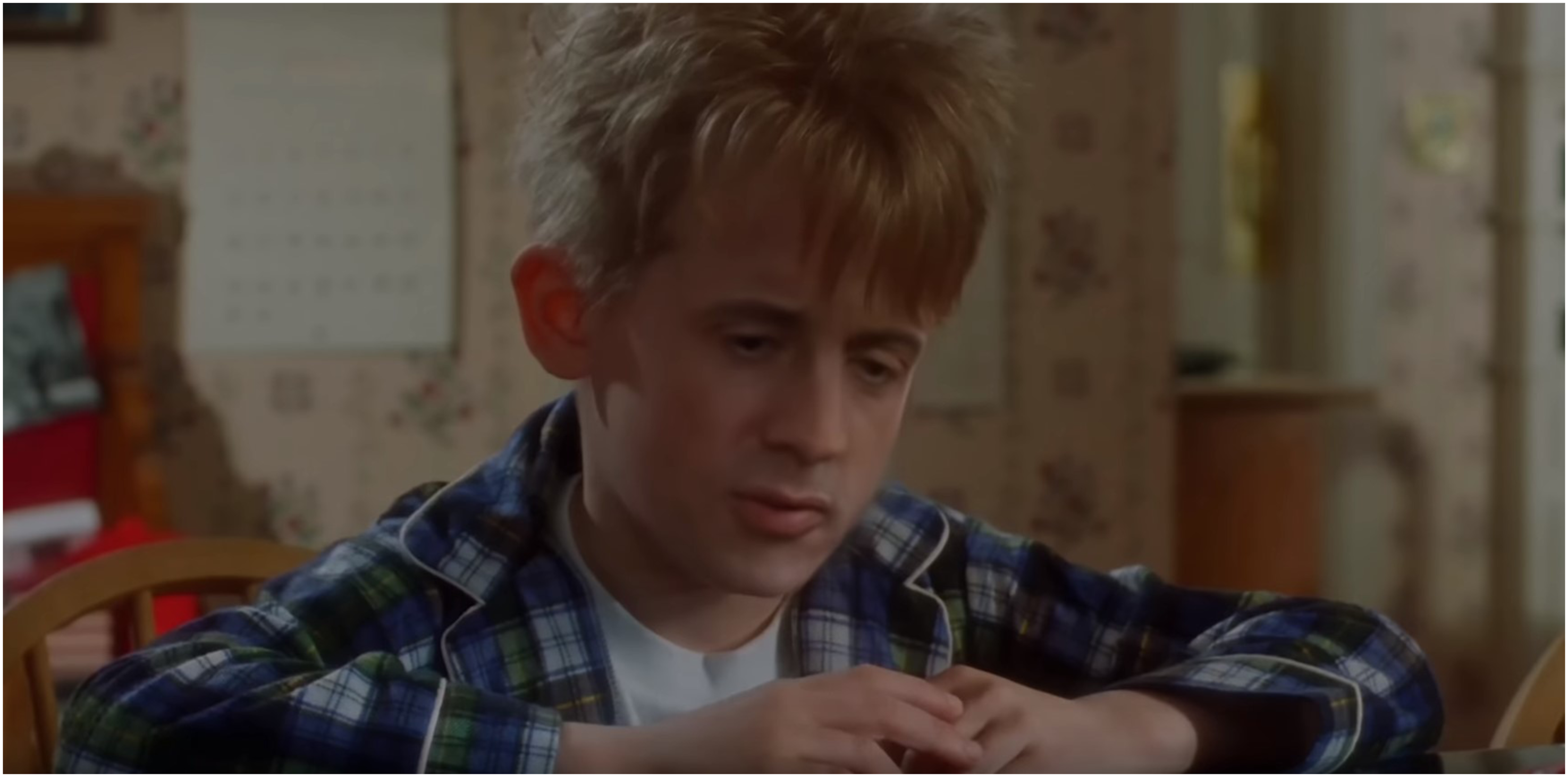
Such star-driven Deepfake videos are typically predicated on the pleasure of substitution whereby there is a conscious ‘going against’ that obtains its impact from the clash between two complex sign systems. The latent and possible set of tensions between star image and character, or the collision between what Dyer calls the ‘two complex sign-clusters’, yields manifold ways in which star-character relationships are understood through the image’s ‘use’ to construct fictional characters. In this way, Deepfakes can be understood as an intensification of Dyer’s oft-cited typology in his analysis of film stardom and the star/character relation, whereby stars traditionally either parallel a role precisely (perfect fit); are actively made to work against type in the emphasis of a disjuncture (problematic fit); or specific elements are exploited in the representation of character while others are deliberately softened, downplayed or ignored (selective fit). In the case of Deepfakes that playfully recast and retrofit popular cinema through sophisticated computer graphics, the creation of playful audiovisual (re)combinations falls largely in the category of problematic fit insofar as the desired outcome is typically a conflicting mix of star and character. Numerous other online artists have adopted this strategy, playing with the spectacle of alternate casting to manipulate a star’s image, type, fit and persona. Created by user EZRyderX47, Tom Holland and Robert Downey Jr. have been recast as Marty McFly and Emmett ‘Doc’ Brown, respectively, in Back to the Future (Robert Zemeckis, 1985); Keanu Reeves has replaced both Pacino in Scarface (Brian De Palma 1983) (by derpfakes) and Tom Hanks in Forrest Gump (Robert Zemeckis, 1993) (by The Fakening); and action stars Schwarzenegger and Stallone are cast in the recent bromance comedy Step Brothers (Adam McKay, 2008) (brianmonarch).
Other videos are more expansive in their digital manipulations, often extending beyond the substitution of singular performers to alter entire casts. Ctrl Shift Face has merged supernatural television series The X-Files (Chris Carter, 1993–2002, 2018) with science-fiction action comedy Men in Black (Barry Sonnenfeld, 1997); futuristic blockbuster The Matrix (The Wachowskis, 1999) with independent film comedy Office Space (Mike Judge, 1999) and The Room with Once Upon a Time in Hollywood (Quentin Tarantino, 2019), while two Heath Ledger performances in A Knight’s Tale (Brian Helgeland, 2001) and The Dark Knight (Christopher Nolan, 2008) become insidiously combined as ‘The Dark Knight’s Tale’. This spectrum of possible applications conventionally makes use of three of the four main methods that have been understood as constituting the majority of Deepfakes image processing. This includes full identity swap (involving the complete substitution of one performer’s face with another); a form of facial editing that ‘consists of modifying some attributes of the face such as the colour of the hair or the skin, the gender, the age, [and] adding glasses’ known as attribute manipulation; and expression swap or ‘face re-enactment’ that entails the low-level modifying of facial expressions (Tolosana, et al., 2020: 2–3). The creation of fully fictional faces (entire face synthesis) is less common within those Deepfakes that target Hollywood stars, precisely because of the desire to maintain enough recognisable elements of their celebrity physiognomy across the disingenuous alignment or ‘fit’ of bodies (and generations) in such monstrous digital composites.
The variant levels of digital manipulation increasingly available in relation to facial content have led to Deepfakes videos being deployed in imagining a possible world of Hollywood film history predicated on a premise of the hypothetical, conditional or ‘what if?’ These videos therefore derive their impact from what Ruth Ronen has called a logic of ‘ramification’, a term that within fictional world theory helps determine the legitimacy of a fictional world and its relationship to a range of elements that may or may not emerge from circumstances in this world (our real world). For Ronen, ‘ramification’ is a label within the interdisciplinary space of literary theory and philosophy that is applied to those fictional worlds across art and culture that are conceived of as alternatives to actuality, or as representing other ways things could have gone. She argues that ‘Possible worlds are based on a logic of ramification determining the range of possibilities that emerge from an actual state of affairs’ (1994: 8). So whereas ‘parallelism’ is Ronen’s term for the modal structure of a fictional world built on a clear, unmistakable equivalence to our world that is typically validated through its connection to reality, a world of ‘ramification’ is marked by ulterior laws of contradiction and divergence. Its strategies of deviance are rooted in a branching out from (or complication of) epistemological understandings of the actual world. Within Deepfakes’ creative possibilities for reconfiguring bodily form, ‘ramification’ ultimately speaks to the same kinds of creative impulses that mark genres of the conditional (commonly fantasy and science-fiction), insofar as they are likewise invested in manipulating film canons and their images through alternate casting practices. Deepfakes, in Ronen’s terms, therefore provide fictional domains that ‘ramify from the actual state of affairs’ (1994: 199), exploiting the visual illusionism of computer graphics and degrees of intertextual meaning-making to craft a space in which star bodies are inserted, exchanged, modified and switched.
Nowhere is this element of ‘ramification’ true than in popular Deepfake videos that are specifically aimed at digitally materialising real world casting histories as part of digital face replacement processes. Examples of this practice include the digital manipulation of Iron Man (John Favreau, 2008) to feature Cruise (in place of Downey Jr.); images from The Matrix doctored to star Will Smith as protagonist Neo; and Emily Blunt replacing Scarlett Johansson in the role of the eponymous Black Widow (Cate Shortland, 2021), all produced by artist Shamook. Beyond their convincing levels of digital mimesis and powers of photorealistic attraction, these Deepfakes casting Cruise, Smith and Blunt in new roles do so with the extra-textual knowledge of industrial (‘insider’) gossip narratives that have proclaimed how these stars almost came to play these characters. The online media production of Deepfakes therefore accomplishes a fantasy of these near misses, with a reproductive capacity to rewrite film history in its sampling, converting and copying of pre-existing film footage. In October 2020, Shamook also released a new viral Deepfake that digitally substituted Cruise’s role as Nick Morton in the reboot of The Mummy (Alex Kurtzman, 2017) for the image of actor Brendan Fraser, the star of the original film series (1999–2008). Shamook’s video is titled ‘If Brendan Fraser was in “The Mummy” reboot instead of Tom Cruise’, thereby identifying the creative pleasure within online media environments of recombining star performers to ‘ramify’ existing media products. But as Cruise’s replacement of Fraser suggests, Deepfakes also overlap with Hollywood’s emergent reboot culture, filmmaking multiplications and derivative media content. If rebooting within the landscape of contemporary cinema ‘has become a popular way to promote films and other media forms that revisit familiar narratives with an altered origin, narrative approach, or artistic aesthetic’ (Scahill, 2016: 317), then Deepfakes offer a creative treatment of Hollywood’s increasingly circular industrial logic that traditionally seeks to renew content via the technological language of a system reset. In this way, the Deepfaked appearance of Robin Williams in place of Will Smith as the Genie in Aladdin (Guy Ritchie, 2019) – a role that Williams had taken in Walt Disney’s 1992 cel-animated musical – or the grafting of Harrison Ford’s star physiognomy onto younger actor Alden Ehrenreich for Solo: A Star Wars Story (Ron Howard, 2018) that tells the origin story of Han Solo (initially played by Ford) suggests the ways in which Deepfake technology has intervened into the complex interrelationships between a source text and it subsequent derivations.
As this cross-section of examples makes clear, Deepfakes mark a valuation of star faces perhaps not seen since scholars first heralded the visual sensibilities of early cinema through the affective power of human physiognomies. While the conceptual and performative fascinations with the face have been central to several artistic and cultural traditions, from Commedia dell’arte and subversive political caricature to the contemporary era of the Deepfake, it was widely valued among filmmakers and theorists (these categories were not always separate) across Europe at the turn of the 20th century. Canudo (1911) in Italy; Epstein (1924) and Dulac (1932) in France; Lukács (1913), Balázs (1930), Benjamin (1931) and Panofsky (1933) in Weimar Germany (as well as Lindsay (1916) in America writing on the capital of the ‘photoplay’) all described early filmmaking through the face as a durable emblem of cinema’s perceptual and expressive conditions of possibility. As Tom Gunning writes, ‘For Balázs and other utopian theorists, the gnostic potential of the cinema was especially evident in the conjunction of the cinematic device of the close-up and the subject of the human face’ (2004: 141). Balázs’s ‘physiognomic’ model of representation developed the face as a loaded concept for constituting the language of film, while intervening into distinctions between the surface/depth, inner/outer, and the exchange between the whole and the part. But it was equally the convergence of film technology (the close-up) with expressive content (the face) noted by cinema’s very first theoreticians and cultural critics that legitimised film as a sincere art at the same time as it claimed too for the political potential of physiognomic analysis, pointing perhaps to the kinds of perceptual judgements spectators now make towards digitally created faces. As Panofsky would note, ‘The camera transforms the human physiognomy into a huge field of action where – given the qualification of the performers – every subtle movement of the features almost imperceptible from a natural distance, becomes an expressive event in visible space’ (1985: 249). Although celebrating the accomplishments of analogue cinema, such framing of the face as a ‘field of action’ seems to anticipate the ways in which the visual and production cultures of Deepfakes take the face both as a surface and as an instrument. The remixing of cultural artefacts, their renewal, conversion and sampling all points to a set of underlying concepts and practices that support the modularity of contemporary digital physiognomies, and the entertaining surface tension between coherency and discontinuity they solicit. Yet the online media production of Deepfakes ultimately occupies a particularly vibrant and creative space where skilful digital mediation, image processing, compositing and the volumetric capture of facial expressions meets more practical (and archaeological) processes of excavation, recovery and repossession.
Hollywood, take two
The contemplation of the art of the face as a precondition of Deepfakes – with star or celebrity physiognomies often viewed in extreme close-up and monstrously cut from their original body to craft new posthuman (yet still recognisably human) subjects – invites spectators to look closer at the expressiveness of faces alongside bodily gestures. Such Deepfakes that explore the specific physiognomic spectacle of stars are therefore placed on a collision course with alternate forms of digital stardom germane to moving image culture that equally interrogate the star’s ‘heavenly body’ (Dyer 1986) through digital recombination. As Lisa Bode argues, numerous digital processes have ‘allowed deceased actors to be extracted from their original cinematic contexts and recontextualized not just within new scenes but within new mise-en-scène’ (2010: 51). The digital resurrection of Christopher Reeve in place of Cavill in derpfakes’ altered footage for Justice League, for example, speaks to an ongoing cultural ambivalence towards the ‘reboot’ as a now-pervasive Hollywood product via a nostalgia for a franchise’s earlier casting practices. But the Reeve-as-Cavill Deepfake also presents an overlap with what Bode terms these kinds of ‘posthumous’ performances, which obtain their impact through the digital (and digitized) revival of stars and the repurposing of their image within new multimedia contexts.
More recently, Hollywood’s predilection for the virtual recreation of youth via digital de-ageing image processing has proven equally fertile ground for the kinds of seamless face replacement technologies central to Deepfakes’ powerful visual impact. Indeed, the nostalgic, memorial element to stardom has since been sharpened by the politics of digital de-ageing and its claims towards the computer-mediated fantasy of youthfulness. But the ontology of Deepfakes as a persuasive audiovisual façade has also allowed the technology to intervene into digital de-ageing’s often uncanny outcomes. The de-aged image of Carrie Fisher that climaxes the narrative of Rogue One: A Star Wars Story (Gareth Edwards, 2016), in which a digital prosthesis of the younger Fisher was grafted onto Swedish actor Ingvild Deila, was ‘corrected’ by artist Shamook in a video that ‘took only 24 hours on an $800 PC’ and that utilised 500 images of Fisher from the previous films in Star Wars franchise. Anticipating the kinds of mixed responses towards Cavill’s digitally altered top lip and the unsettling performance it created in Justice League, criticisms levelled at Fisher’s newly youthened image similarly reflected CGI’s relationship to the ‘undeath of cinema’ and the industry’s longstanding propensity for ‘the “Photoshopping” of movie stars’ (Sargeant, 2017: 18). Another online user, Jarkan, similarly sought ‘to improve the great work done by ILM [Industrial Light and Magic] on Rogue One’ by digitally editing the already virtual ‘posthumous’ appearance of actor Peter Cushing, while Shamook and Hemant Singh later corrected the de-aged appearances of Robert DeNiro, Al Pacino and Joe Pesci’s in The Irishman (Martin Scorsese, 2019), a Netflix feature adapted from Charles Brandt’s memoir I Heard You Paint Houses. The Independent’s Louis Chilton noted that ‘YouTuber channel Shamook recently posted a new deepfake of select scenes from The Irishman, depicting DeNiro’s character interacting with other characters’ (Chilton, 2020). The result of this ‘fan-made deepfake video altering the de-aging effects’ was, for Chilton, an example of the technology’s increased sophistication, affordability and accessibility, with audiences ‘quick to praise the new video, with one commenter stating that it was “mind-blowingly better”’ (Chilton, 2020). In June 2020, a video from user DeepCaked was uploaded to the YouTube platform titled ‘De-Ageing With Deepfakes (Machine Learning)’, while a few months later in the November the same user uploaded another video ‘Hollywood Vs Deepfakes (De-Aging)’ as a way of speaking to the proximity between the two processes. However, one video titled ‘JUSTICE LEAGUE OPENING SCENE - FIXED!’ explicitly aligned Hollywood’s industrial computer processing with the pervasive repetition, appropriation and ‘cut/copy and paste’ procedures of domestic remix culture that have altered what it means ‘to be a “contributor” in the age of the Internet and World Wide Web’ (Navas, 2012: 75, 121). Produced by Jarkan, the short video corrected Cavill’s previously unsettling digital face in Justice League using Deepfake software, aligning the original doctored footage and its new – and altogether more convincing – modification. The fan-made fixing of Hollywood stardom in this way overlays one digital face with another, while once again situating star bodies as continual ‘figures of exchange’ within technologically mediated forms of performance. Yet such user correction also speaks of broader ideological desire to maintain Cavill’s hegemonic masculine appeal, and to undo the ‘troubling’ of his gender and performance as a result of excessive digital intervention. The efficacy of Jarkan’s improved Deepfake is that it ultimately revises not just a perceived flaw in the quality or legibility of the digital image, but equally contributes to the preservation of the star’s ‘hard body’ masculinity (connoted by his sculpted muscular physique). Indeed, without this latest pristine digital correction, Cavill exhibits a troubling and emasculated gender identity that is otherwise a defining note of Superman’s fictional Clark Kent alter ego, and far removed from his superior (and ‘superheroic’) biological truth as a man of steel.
Alongside the creative negotiation of pro-filmic corporeality and coherency, the growing fan appropriation of popular cinema bears out what can be achieved by the application of digital intermediaries within a broader cinephile culture. The practice of cinephilia – what Susan Sontag claimed as ‘the name of the very specific kind of love that cinema inspired’ (Sontag, 1996) – plays a significant role in the production and reception of online Deepfake videos. The pleasure of Deepfakes partially responds to Sontag’s highly influential article ‘The Decay of Cinema’ published in 1996, which mourned the demise of any strong cinephilic interest in films. Claiming ‘the love of cinema has waned’, Sontag had initially speculated that ‘if cinema can be resurrected, it will only be through the birth of a new kind of cine-love’ (Sontag, 1996). In the years immediately after Sontag’s obituary to cinephilia in the mid-1990s, the acceleration of digital effects imagery across popular cinema provided the ideal backdrop for cinephilia’s progressive resurrection. Digital technologies came to rapidly articulate a ‘cine-love’ liberated from Sontag’s decay as part of a wider technological maelstrom often labelled videophilia, telephilia, technophilia or electronification. This approach to post-Sontagian, post-analogue cinephilia ultimately aligns with Thomas Elsaesser’s claim that while a historically ‘old’ cinephilia may have long since passed, a new generation of digitally capable cinephiles has been ushered in with new kinds of memory, affect, pleasure and intensity. These new cinephilic practices involve a compulsive and ritualistic engagement with the power of film fragments, information and resources, reconciling and sharing their knowledge(s) across specialised communities often through ‘very unconventional forms, embracing the new technologies, such as DVDs and the internet, finding communities and shared experiences through gender-bending Star Trek episodes and other kinds of textual poaching’ (2005: 36). Elsaesser’s recent thesis on this technological revolution suggests that cinephiles are obligated to distinguish between two kinds of cinephilic connoisseurship: one that keeps faith with an aloof auteur cinema and the ‘celluloid image’, and a second that locks into a post-auteur, non-celluloid period that acknowledges the fundamental impact of the digital. For Elsaesser, such ‘take two’ cinephilic interactions revise cinephilia’s processes and experiences. They are mobile, instantaneous, tangible and provide enough enchantment to become a ‘a love that never dies’ (Elsaesser 2005: 41) achieved by digital remastering.
Digital Deepfakes emerge as a key element of this fluid, modern digital cinephilia ‘take two’, not simply fuelling an urgent post-ontological debate of visual impoverishment and extinction at the hands of excessive digitization, but rather marking a solidification of digital technology as part of contemporary cinephilic debate that ‘flourishes on the internet’ (Elsaesser, 2005: 36). As intensified citational practices, Deepfakes are guided by a ‘take two’ emphasis on the remastering, repurposing and – most explicitly – re-framing within a techno-culture of seeming limitless potential that has introduced new technologies into the film experience. Elsaesser defines the online activities of re-framing according to an agency both of user and of content, noting ‘What is most striking about the new cinephilia is the mobility and malleability of its objects, the instability of the images put in circulation, their adaptability even in their visual forms and shapes, their mutability of meaning’ (2005: 38). The notion of the cinephilic re-frame is, therefore, also the condition or requirement to ‘un-frame’, to disconnect and to rupture, thereby activating the dimensions of shifting temporality and anachronism that are central to the pleasure of Deepfake spectatorship. As Christian Keathley argues, ‘Many films might have, secretly, used such effects in order to cinematically “airbrush” a change into an actor’s expression or into an uncontrolled background action. Digital technologies have cast deep doubt on our faith in film images’ (2009: 2). In the case of online Deepfakes produced outside the industrial structures of mainstream Hollywood, their visual discourse is altogether more declamatory in reflexively pronouncing their own manipulative activities and ‘take two’ re-tellings. The prestige attached to physiognomies by Deepfakes is understood through the re- or un-framing of time, combining bodies but also temporalities as part of its digitized assemblage. If across ‘take two’ cinephilia ‘the whole of film history is henceforth present in the here-and-now’ (Elsaesser 2005: 38), then Deepfakes are reliant upon such formal strategies of intertextuality that embrace a kind of nostalgia, while embodying cinephilia as a ‘kind of necrophilia’ as it relates to ‘something that is dead, past, but alive in memory’ (Willemen, 1994: 227).
Harvesting their contents largely from a star’s numerous screen roles and public performances, interviews and media engagements (ultimately the primary and secondary forms of star ‘circulation’ identified by Dyer), Deepfake artists create composite images encrypted with multiple levels of information. Many of the online Deepfakes produced by user derpfakes are, for example, supported by the intertextual relationships between histories of Hollywood filmmaking and one particular actor: Nicolas Cage. Cage’s digitized face has appeared via Deepfakes inserted into a series of unexpected media products, including footage from Heat (Michael Mann, 1995) and The Matrix, while he also makes a virtual appearance in Star Wars: The Rise of Skywalker (J.J. Abrams, 2019) taking the place of Daisy Ridley as Rey in derpfakes’ fan-made ‘The Rise of Cage’. Another video, titled ‘National Treasure 3’, digitally superimposes Cage’s face onto footage of actor Harrison Ford as a way of acknowledging narrative and thematic similarities between Ford’s Indiana Jones film series (1981–) and Cage’s more recent National Treasure (2004–2007) action adventure franchise. Cage’s star image is certainly central to understanding the particular humour of these widespread Deepfakes that digitally manipulate his star physiognomy. As David McGowan argues, the ‘unconventional’ and ‘unpredictable’ Cage remains ‘an extremely enigmatic figure’, often the regular target of ‘derision from certain critics, scholars, and fan communities’ (2017: 210). Following his Academy Award for Leaving Las Vegas (Mike Figgis, 1995) and roles during the second half of the 1990s in consecutive blockbuster features The Rock (Michael Bay, 1996), Con Air (1997) and Face/Off (John Woo, 1997) – a film about experimental face transplant surgery used to falsify physical appearance – the actor’s ‘perceived eccentricities’ have made Cage the subject of a number of online videos and memes that take aim at his performance style and perceived offscreen peculiarity. For McGowan, Cage’s flamboyant performance in the remake The Wicker Man (Neil LaBute, 2006) is highly significant in that it ‘emerged at a transitional point in the development of new media’, coinciding not only with the launch of YouTube the previous year but also the ‘rise in access to broadband services’ that, when taken together, supported the widespread circulation of scenes and sequences among an expanding World Wide Web audience. Cage’s subsequent stardom has been largely allied to his pervasive presence across digital media culture, with his career notably ‘continuing in the age of the Internet’ (McGowan, 2017: 214) often at the expense of his direct-to-video feature films. As an actor ‘no stranger to internet memes’ and who has ‘naturally’ been subject to those applications that ‘make is possible to scan a celebrity’s face and upload it onto pre-existing video content’ (Sharf, 2018), the acceleration of Deepfakes has actively contributed to Cage’s online cultural (re)production. Providing new modes of kind of engagement with stars and the culture of celebrity, Deepfakes are embedded in (and as) subsidiary forms of circulation that help to fictionalise the (increasingly fictionalised) star body in the age of networked communication technologies and sophisticated video editing.
The many creative involvements with Cage’s star image and his emergence as a regular target for Deepfakes technology has further surfaced how the cyberstars of such ‘take two’ cinephilic activities are typically cisgender white males. From Cruise and Downey Jr. to Reeves and Pitt, ‘attractive’ white stars are regularly reskinned anew to create modular Deepfaked performances that stabilise hegemonic masculinity at the same time as they suggest a degree of interchangeability to white male bodies (while also recalling the use of able-bodied cisgender white men to provide data for AI systems and even detect Deepfake images as part of vigilant online tracking). Few of the Deepfake videos available online cross race and gender boundaries in their rhetorical reskinning, yet there is nonetheless increasing evidence of gender swapping as part of Deepfakes potential future (alongside its growing centrality as a feature of accessible mobile apps). The manipulation of Cage to replace Ridley in Star Wars: The Rise of Skywalker, as well as his CG substitution of Julie Andrews in The Sound of Music (Robert Wise, 1965) (though user Jarkan favours a digitized Schwarzenegger to perform the film’s signature musical number), and of Jennifer Aniston, Courtenay Cox and Lisa Kudrow in footage from television sitcom Friends (David Crane and Marta Kauffman, 1994–2004), or even Amy Adams in a scene opposite Henry Cavill from Man of Steel (Zack Snyder, 2013) (Figure 4) partakes in what might be termed a broader cultural engagement with the mobility of gender, sex and sexuality (such gender mobility was notably canonised by early queer theory leading to the critical ‘institutionalization’ of ‘the trope of crossing’ [Prosser, 1998: 21]). In this way, star-centred Deepfakes meet theories of gender via the politics of drag as both concept and practice, particularly when considering drag’s similar obscuring and exaggeration of gender, and the challenges it makes to the slipperiness of bodily narratives. The destabilising of gender classifications and categories made by Deepfake technologies evidently complicate gendered bodies to evoke new models of gender subversion exemplified across both queer and drag discourses. Bode describes how ‘the uncanniness of the disordered body stems from the way in which it troubles prior conceptions about what we are as persons, about the coherent subject, about intentionality’ (2010: 59). Nowhere is this disorder registered as in those Deepfakes where the abstraction of the body is focused on the recombination of the actors through digital trickery as it unfolds along the fault-lines of gender. The digital insertion of Nicolas Cage into Man of Steel (Zack Snyder, 2013).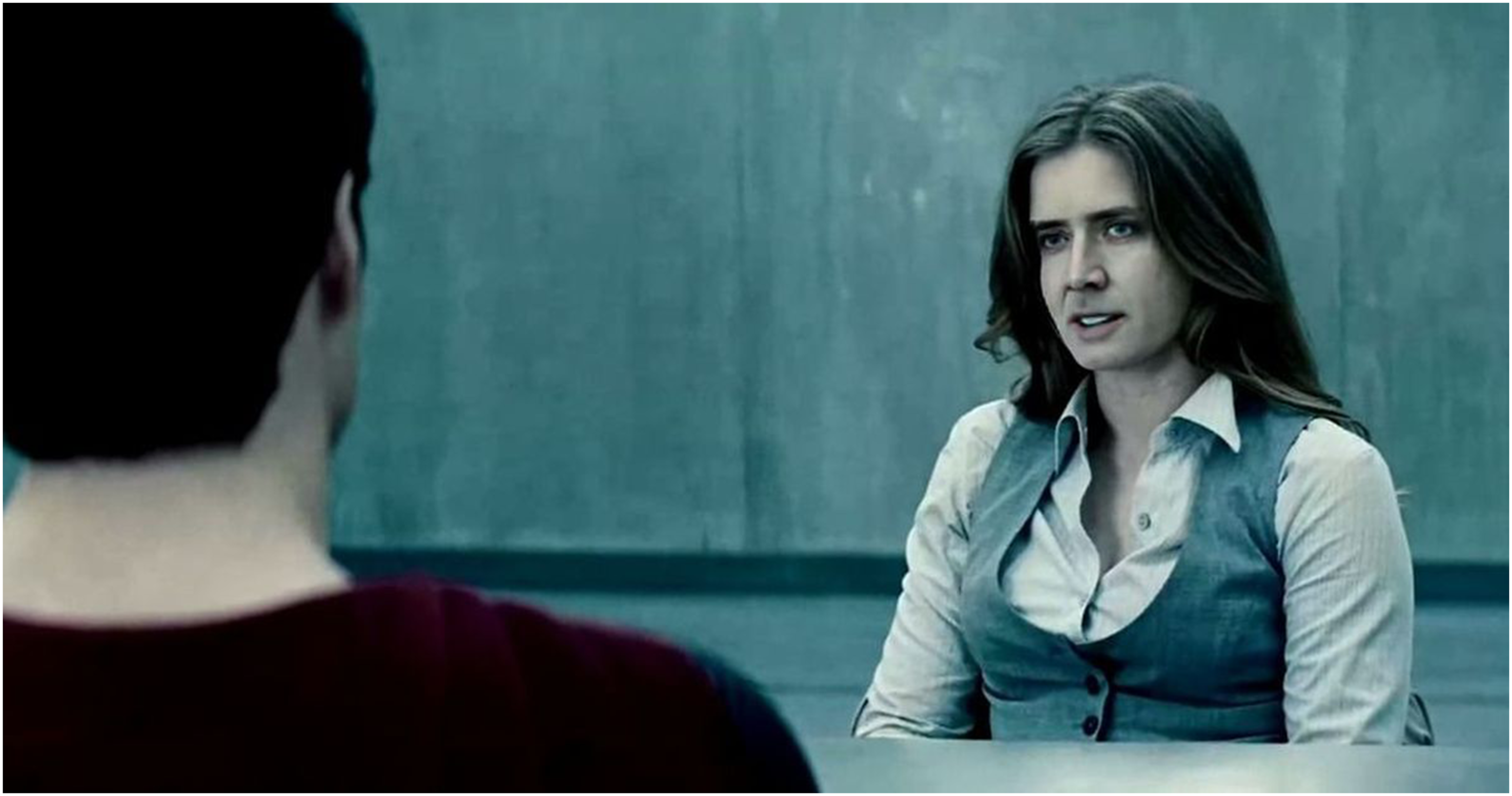
The ‘Deepfaked’ gender swap activities of online video artists function as a broader ‘take two’ undoing of gender as their models of representation challenge gender as accurate and authentic, thereby sharpening the ontology of gender as it has historically understood through discourses of performativity. Judith Butler’s famous collapse of the sex/gender distinction in their identification of gender as a form of social cultural inscription marks gender not as an ontology but through a politicised performativity, whereby the ‘repeated stylization of the body, a set of repeated acts within a highly rigid regulatory frame that congeal over time […] produce the appearance of substance, of a natural sort of being’ (1990: 43–44). Gender is, then, not something one is (being) but something one does (doing), a ‘stylised’ sequence of acts that are codified as a repertoire rather than being central to a pre-discursive identity. Drag performers present a parodic, comic acknowledgement of this myth of ‘original’ identity, as such artists intensify – rather than rebel against – the constructed dimension of gender through imitation and the dramatizing of culturally understood gender signs. As equally a product of discourse, the cross-gendered Deepfaked bodies might be understood to similarly engage and interrogate gender as a technology of fakery that is reproduced over time. So when Cage substitutes Andrews, Fisher and Adams, or when actor Steve Buscemi’s physiognomy is suddenly grafted onto Jennifer Lawrence by artist birdfakes for a 2019 video celebrating Lawrence’s 2016 Golden Globe victory, the creation of virtual doppelgängers makes intelligible the place of gender within both regimes of power and discourses of mimesis.
Drawing from the new critical language of transsexuality, Deepfakes provide stars with digitized ‘second skins’ in that ‘the body’s skin [is] […] the “clothing” that the subject needed changing’ (Prosser, 1998: 69). This digital ‘reskinning’ (as many artists, including Ctrl Shift Face, describe) highlights the technologies of gender to be a compelling illusion formed by an aggregate of repeated acts, enactments and gestures – a performativity that identifies (typically) masculinity as a set of embodied discursive practices achieved through culturally authored expectations, inscriptions and flickers. The Deepfaked substitution of male performers-as-female (or, occasionally, female-to-male, as in The Fakening’s doctored video of Anne Hathaway performing as Matthew McConaughey) represents the intensification of this process. However, all Deepfakes are strongly engaged in the cultural vocabulary of gender, not just in their many creative acts of digitally assisted substitution but in their very programmed structure, whereby GANs assess fixed identities and genders in the production of synthetic ones through digital recognition algorithms. Not all drag is defiant and rebellious, as Butler reminds us, though it does commonly occupy a space where the ‘annihilating [of] norms, those killing ideals of gender and race, are mimed reworked, resignified’ (2014: 125). Yet drag is crucially as much reiterative as it is subversive, and a space where parodies of gender do not necessarily displace their target, and where there actually might be the shoring up or reasserting of gender norms rather than their complete dismantling (Butler, 2014: 125). Deepfakes are supported by similar degrees of fluidity and ambivalence due to their combination of biology and technology, and often-comedic cross-fertilization of human and machine. As Marsha A. Hewitt puts it, ‘Like cyborgs, drag performers enact a “perpetual displacement” of traditional boundaries of anatomy and gender on a variety of levels, where identity is rendered fluid, shifting, ever-changing in a continued hyperbolic and subversive process of “resignification and recontextualization”’ (1993: 143). As a performance that makes gender a spectacle (and a problem) of technology, all Deepfakes solidify and displace the reality and artifice of gender, both at once. They are forms of ‘digital drag’ because they occupy precisely this middle ground, undoing gender while also reiterating its signifiers through the combination (and rewriting) of stars. The technology’s arrival within the contemporary ‘post-truth’ media ecology therefore offers another set of technical and social environments for contesting the slipperiness of gender, not just through the potential radical upheaval of hegemonic gender relations but through the broader falsification of normative identities via flagrantly computer-generated façades.
Conclusion
The compositing, reskinning and recombination of stars, and the merging together of actual and digital bodies as part of their computerised production, mischievously switches up faces and bodies to create increasingly synthetic and uncanny avatars that complicate the film star’s truth via excessive fabrication. Yet Deepfakes produced by a number of online video artists additionally propose a more serious interrogation of the ontological conditions of gender through the recognisable traces and fabrications of star identities and bodies, intervening into the space between the materialities and fantasies of gender construction. Such disobedient ‘Deepfaked’ stars are a magnet for thinking reflexively through broader social and cultural biases, and as a form of ‘techno-drag’ perhaps even helping to question ‘what kinds of bodies and sexualities will be considered real and true, and which kind will not’ (Butler 2004: 214). The challenge posed by Deepfakes to received cultural, social and political orthodoxies is certainly part of their ongoing pleasure, and central to their multiple non-normative narratives of gender ‘troubling’. Yet their continued frequency as a mode of popular entertainment will only help to sharpen what exactly is being (and will be) put into crisis by the falsification of celebrity physiognomies, if not making more visible the excessive ‘take two’ CG modification to which star bodies are becoming repeatedly subjected.
