




Abstract
As the Streaming Wars continue to heat up, recommendation systems like the Netflix Recommender System (NRS) will become key competitive features for every major over-the-top video streamer. As a result, film and television production and consumption will increasingly be in the hands of semi-autonomous algorithmic technologies. But how do recommendation systems like the NRS work? What purposes do they serve? And what sorts of impacts are they having on film and television culture? To respond to these questions, this article will (1) examine how algorithms are impacting processes of taste-making and (2) re-evaluate some of the critical theoretical perspectives that have come to dominate the discourse surrounding algorithmic cultures. To do so, I join Bucher ((2016) Neither black nor box: Ways of knowing algorithms. In: S Kubitscko and A Kaun (eds) Innovative Methods in Media and Communication Research. Cham: Springer International Publishing, pp. 81–98; (2018) If…then: Algorithmic Power and Politics. London: Oxford University Press) in adopting a relational materialist perspective of algorithms and proceed to reverse engineer the NRS; an experiment that exposes the system’s circular and economic logics while highlighting the complex and networked nature of taste-making in the film and television industry.
Keywords
The film and television industry has recently been transformed by a new wave of over-the-top (OTT) video streaming services, all of which rely heavily on the use of algorithms. Disney+, Apple TV+, NBC Universal’s Peacock, WarnerMedia’s HBO Max and Quibi (which recently went out of business after a turbulent 8-month run) were all released between 12th November 2019 and 27th May 2020, ushering in what the media has called the ‘Streaming Wars’. Since February/March 2020, the COVID-19 pandemic and subsequent global ‘lockdowns’ have only accelerated this tumultuous shift taking place in the film and television industry since the pandemic has prompted a significant increase in the global consumption of online film and television content (The Economist, 2020). Indeed, the COVID-19 pandemic has led to the proliferation of ‘virtual cinemas’ and online film festivals (Erbland, 2020), and it has intensified the competitive dynamics of the Streaming Wars, allowing services like Netflix and Disney+ to amass record-breaking subscriber numbers (Spangler, 2020). As these services – all of which deliver their own impressive catalogues of films and shows – compete for subscriptions, what ends up attracting potential users to one service over the other may depend not on the actual content they offer, so much as the ways that that content is produced, organized and recommended by algorithmic technology. If this is the case, the industry will witness an acceleration in the strategic development and implementation of algorithms, which will in turn make their presence increasingly important, pervasive and unavoidable for producers and consumers alike. Furthermore, this shift has the potential to exacerbate the concerns already raised by researchers of algorithmic cultures, namely, that algorithms are replacing the fundamentally human – or at least, the less digitally mediated – process of cultural meaning – and decision-making(Beer, 2013; Cohn 2019; Morris 2015; Napoli 2014; Striphas 2015).
The transformative shift taking place in the film and television industry today not only presents a prime opportunity to evaluate the evolving operations of algorithms and their entanglements with culture but also a moment to critically assess the existing scholarship on algorithmic cultures and some of its more dominant perspectives. Among these perspectives, there is a recurring tendency to think of algorithms as ‘black boxed’ technical devices that, due to their ability to sort, rank and distribute cultural items, possess the power to shape cultural tastes, practices and realities while remaining fundamentally exogenous from culture itself (Beer, 2013; Pasqual, 2015). Although this position has dominated much of the discourse on the subject within the social science and humanities, I would like to suggest that the tendency of these perspectives to view algorithms as one-way actors in our culture has amplified rather than eliminated the need for more holistic and multilayered analyses, particularly those that take into consideration the network of actors involved in an algorithm’s operation and the numerous ways that algorithms are interacted with.
To examine the truly complex role algorithms currently play in the distribution and consumption of film and television, I suggest that it is necessary to embrace a relational materialist understanding of algorithmic technology, as has been loosely developed by scholars such as Roberge and Seyfert (2016), Kitchin (2017), Seaver (2017) and Bucher (2018). From a relational materialist perspective, algorithms are understood to be sociotechnical processes that come into existence and operate in the world via a series of complex relations between human and non-human actors. As Kitchin (2017: 16) puts it, we need to conceive of algorithms as being ‘contingent, ontogenetic, performative in nature and embedded in wider socio-technical assemblages’. This perspective argues that algorithms are not static technical objects transforming culture from the outside, but rather dynamic and evolving processes that are enacted by a combination of social, cultural and technical practices that themselves respond to culture as they shape it. They are defined by their ‘constitutive entanglement’ with the multiplicity of actors involved in their becoming (Introna and Hayes, 2011: 108), all of whom serve varying purposes and are motivated by different interests and desires. These actors can include the algorithm’s code and the data structures they work on, other software and systems of algorithms that they engage with, the programmers and engineers who construct them, the companies and institutions that deploy them, the regulators who oversee them, the users who interact with them, the broader public who articulate and make sense of their presence and the complex contexts that inform the contingent nature of their becoming.
In keeping with such a relational ontology of algorithms, I have adopted Bucher’s (2016, 2018) flexible methodology of technography to analyse the global streaming giant Netflix and its sophisticated recommendation system, the Netflix Recommender System (NRS). Of the many algorithmic applications and practices propagating in the film and television industry, the NRS has received the most scholarly attention (see e.g. Burroughs, 2019; Cohn, 2019; Hallinan and Striphas, 2016). I contribute to this dialogue by examining the elements of the NRS that have most typically been called into question, in particular, its impact on taste-making. To do so, I have conducted a small experiment applying Bucher’s (2018) method of reverse engineering to the NRS, revealing the system’s circular and economic logic. By exposing the NRS’s embedded – yet largely invisible – commercial orientation, my findings elicit concern over the increasing influence semi-autonomous algorithmic technologies have in shaping our conceptions and practices of taste. That being said, my findings also point back to the rich relational complexity of taste-making in general, confronting us with questions about what it means to have agency over one’s own tastes to begin with. In hopes of expanding the conversation in this direction, and to push back against the dominant and, I would argue, overly deterministic perspectives of algorithms, I draw on Hennion’s (2004) ‘pragmatic’ conception of taste. In doing so, I suggest that systems like the NRS may have simply made the relational, reflexive and performative way taste operates in the world more tangible and comprehensible via the language, logics and processes of computation.
The NRS
A core feature of Netflix’s business and brand is the NRS, a collection of proprietary algorithms used to recommend content to users and personalize nearly every aspect of their experience on the platform. As of 2015, the NRS was responsible for approximately 80% of total hours streamed on Netflix, and the company had valued the combined impact of personalization and recommendation at an estimated one billion dollars per year in revenue (Gomez-Uribe and Hunt, 2015: 5). In 2016, Netflix expanded globally to an additional 130 countries. This expansion was followed shortly by the launch of an updated version of the NRS capable of operating at a global scale, allowing the system to share data and make recommendations across a total of 190 countries (McAlone, 2014). Unlike the other major OTT streamers, Netflix’s financial success depends solely on the company’s ability to attract and retain subscribers. In other words, their platform does not funnel users into larger media ecosystems (e.g. Apple TV+), it is not tied to additional services or products (e.g. Amazon Prime Video), nor does it generate revenue from advertising (e.g. NBCUniversal’s Peacock). Thus, a central financial incentive for Netflix is the need to prevent existing users from unsubscribing from their service to join the competition. The NRS plays a crucial role in achieving this and is currently one of the most advanced recommendation systems offered by any OTT streamer.
In broad terms, the NRS is powered almost entirely by machine learning, using a combination of content based-filtering and collaborative filtering algorithms to recommend content. Content-based filtering relies solely on a user’s past data, which are gathered according to their interactions with the platform (e.g. viewing history, watch time, scrolling behaviour, etc.). To produce recommendations and personalize a user’s experience, these data are combined with other large and intricate data sets that contain information derived from the 15,000 film and television titles offered by Netflix worldwide, including items such as their genre, category, actors, director and release year (Wasko and Meehan, 2020). Collaborative filtering involves the same data extraction process but makes its recommendations according to a weighted combination of other users’ preferences, thus imitating person-to-person recommendations. Previously, the NRS’s collaborative filtering recommendations were limited to the data extracted from users in a specific region or country (Stenovec, 2016). Now recommendations are pulled from the viewing preferences of users across the world, and users themselves are algorithmically grouped into global ‘taste communities’, of which there are currently over 2000 (Wasko and Meehan, 2020).
Crucial to the development of the NRS has been Netflix’s consistent use of A/B testing. A/B testing is used to measure the effectiveness of various algorithm and recommendation variants through the comparison of control and experimental groups of Netflix users (Gomez-Uribe and Hunt, 2015). These groups receive alternate recommendations, displays and experiences. The control group undergoes the same Netflix experience offered to all members, while the experimental groups receive alternate algorithmic treatments (Chanderashekar et al., 2016). According to Gomez-Uribe and Hunt (2015: 11), A/B test results are Netflix’s ‘most important source of information for making product decisions’.
Alongside methodical A/B testing, another area from which Netflix derives its competitive advantage is the sheer granularity of its data, which the NRS transforms, categorizes, evaluates and uses to produce recommendations. For example, every film or show offered on Netflix has been individually tagged by human experts with a ‘rich taxonomy of 200 different story data points’ (Sundeep, 2019). These story attributes include items such as the content’s level of romance, goriness, plot conclusiveness and even the moral status of its characters. Once tagged, content is algorithmically organized into appropriate ‘thematic containers’, that is, genres and hyper-specific altgenres (Gomez-Uribe and Hunt, 2015). Unrealized by most users, Netflix offers approximately 77,000 altgenres (Madrigal, 2014) that group content into as precise categories as ‘Dark Suspenseful Gangster Dramas’ and ‘Cerebral French Art House Movies’.
Today, each user’s entire experience of the Netflix homepage is algorithmically generated, including all suggested titles, the ranking of those titles within custom ‘rows’ (e.g. ‘Crime Dramas’, ‘Top Picks’, etc.) and the ordering of those rows on the homepage. Titles that the NRS ranks as being most relevant to a user land at the start of a row and those rows determined to be most relevant appear higher on the homepage itself. Furthermore, almost all the information displayed regarding a specific title is personalized including its match score, artwork, trailer, synopsis and metadata (e.g. awards, cast, etc.). In the words of Netflix, their ‘deep personalization’ has enabled the company to ‘not have just one Netflix product but hundreds of millions of products: one for each member profile’ (Netflix, n.a.).
Reverse engineering the NRS
Bucher (2016: 85) posits that researchers must ensure they ‘do not fear the black box’ and instead tackle the discoverable aspects of any algorithm. One of the methods she suggests for accomplishing this is to use reverse engineering: a process that extracts knowledge about the operational logics of algorithms through ‘speculative experimentation and playing around’ (Bucher, 2018: 60). Because technography is concerned with how algorithms form new social and cultural meanings, engaging with them directly through the platforms they are embedded in – and doing so in a calculated manner that allows for the careful observation of their procedural outcomes – can be particularly revealing.
I have reverse-engineered the NRS by setting up three Netflix user profiles with three distinct taste personas. Every day for 2 weeks (24th May 2020 to 7th June 2020), I selected one new film or television show for each profile, chosen from their homepage, and did so according to each profile’s predetermined ‘tastes’. I recorded the titles of the films and shows selected, as well as the altgenre Netflix attributed them. Much like Bucher (2012), I simply tracked any changes by taking screenshots of the homepage every day, before a selection of a film or show had been made. I allowed each selected film or show to play in its entirety as the NRS takes into account watch times, fast-forwarding and exit rates. I also gave each selected title a ‘thumbs up’, providing the NRS with an additional indication of that persona’s preferences. In addition, I never allowed two personas to stream titles at the same time. When a title was completed by one persona, I would then log off and sign in as one of the other personas and begin a stream for them.
To construct these personas, I adapted a method commonly used by advertisers and marketers called consumer personas (see e.g. Cooper, 2004; Mulder and Yaar, 2006; Nielsen, 2013). Consumer personas are developed with the intent of producing a realistic character sketch of a specific target audience, which can then be used to guide future marketing and advertising decisions. Mulder and Yaar (2006: 19) explain that ‘each persona is an archetype serving as a surrogate for an entire group of real people’. They can be presented as hyper-specific personalities (e.g. The Explorer) or as a single fictional person (e.g. Francis the First-Time Home Buyer) (Mulder and Yaar, 2006: 20). A consumer persona not only includes a mix of demographic and geographic data but also psychographic characteristics, that is, a persona’s behaviours, goals, values, preferences and attitudes (Well, 1975).
I drew on this method to better structure the taste personas used in my own experiment, primarily borrowing from it the use of psychographics and rich character description. However, unlike the consumer personas being used by marketing firms, my Netflix taste personas are not intended to direct business decisions. Rather, they were developed with the aim of exposing the operational logics of the NRS and therefore were designed to represent different ‘types’ of Netflix users. Each persona was specifically constructed with the intent to capture the vicissitudes of the NRS and, therefore, can be best thought of as exaggerated caricatures of potentially real Netflix users. By keeping each persona’s tastes unrealistically narrow in focus, I intended to provoke a more acute – and consequently, more revealing – response from the NRS. Much like Netflix’s use of ‘taste communities’ (which are proprietary and inaccessible to the public), these personas serve as archetypes representing different Netflix user populations who not only possess varying tastes and preferences but also express different attitudes in regards to why they use Netflix and what compels them to consume film and television.
Three unique Netflix taste personas were constructed, each possessing distinct identities with specific preferences for film and television content. These include (1) the Die-Hard Sports Fan, (2) the Culture Snob and (3) the Hopeless Romantic. In addition to these three personas, I created a control profile that I named (4) the Disruptor. This profile was devoid of a persona and was operated according to no taste preference inputs at all. I used this Disruptor profile in an attempt to disrupt the NRS by making random and usually contradictory content choices.
The outline for each taste persona contains the following elements: a brief character description, their favourite film, their favourite television show and three Netflix altgenres that most accurately define their tastes. 1 To be clear, this information was not inputted directly into Netflix, as there are no options for customizing a profile’s preferences aside from the actual act of consuming one’s preferred content on the platform and by ‘thumbing’ titles up or down. Therefore, the details I have included (i.e. favourite film, favourite television show and defining altgenres) were only used as guiding examples for content selection, grounding each persona in reality and providing myself with a more accurate starting point. Also, knowing that the NRS tracks time-of-day data, I rotated streaming times for each persona. For example, if the Hopeless Romantic watched a film in the evening, their following stream would take place in the morning, and their next in the afternoon. To avoid biases in my own decision-making, I ensured each persona was void of basic demographic information such as age, gender, race, ethnicity and geolocation. In doing so, the following taste persona’s may actually align more closely with Netflix’s own use of ‘taste communities’, which the company claims have replaced their previous reliance on more traditional demographic categorizations (Lynch, 2018).
It is also worth noting the limitations of my experiment. All four of the personas were set up under the same Netflix payee account. In 2013, Netflix introduced a feature that allowed users to create multiple profiles. This feature was introduced for the purpose of allowing customers, especially those sharing their accounts, to set up distinct profiles where they could receive their own unique recommendations and algorithmic treatments via the NRS. That being said, knowing that Netflix extracts transactional billing data (Netflix Technology Blog, 2016a), it is possible that the coexistence of these personas under the same account, registered by one credit card holder, could impact the recommendations recorded. In addition, the account was set up in Toronto, Canada, meaning all the documented changes led by NRS are tied to one defined geographic region, which has a unique inventory of titles, as well some distinct algorithmic processes due to the geo-specific application of Netflix’s A/B testing (Netflix Technology Blog, 2016b).
Netflix taste personas
The Die-Hard Sports Fan
The Die-Hard Sports Fan turns to film and television content to supplement their unbounded passion for live sports. When they’re not watching live games, they spend their leisure hours reading athlete biographies, managing fantasy sports teams and swearing at community centre referees. If it weren’t for a mysterious knee injury, the Die-Hard Sports Fan surely would have gone pro, but they are now content to live vicariously through the athletes they see on TV. They turn to sports stories as a source of inspiration valuing the hard work and dedication embodied by their favourite athletes. The Die-Hard Sports Fan enjoys any and all sports-related content from golf to basketball, CrossFit to Big Wave surfing. Outside of sports, they enjoy the odd superhero movie, and they make a concerted effort to avoid romantic comedies and anything they deem to be too pretentious. The Die-Hard Sports Fan doesn’t bother themselves with notions of taste and simply views Netflix as just another avenue for satisfying their ceaseless hunger for sports content. Favourite Film: Rocky (1976) Favourite Show: Friday Night Lights (2006–2011) Netflix Micro Genres: Inspiring Sports Documentaries, Oscar-winning Sports Dramas and Extreme Sports
The Culture Snob
The Culture Snob is a highly educated individual who wants to engage with intellectually challenging and stimulating cultural content, though they claim to dabble in more ‘low brow’ fare from time to time. They spend their downtime strolling through parks, attending art galleries, reading avant-garde literature and talking at their friends about subjects they have no interest in. The Culture Snob considers themselves to be a cinephile and takes matters of taste seriously. They seek out obscure, classic, foreign and critically acclaimed content and generally tend to be less interested in watching television shows; they particularly despise reality TV. The Culture Snob frequently questions why they even have a subscription to Netflix to begin with, which more often than not leads them to long bouts of inner dialogue regarding cogs and machines. Favourite Film: 8½ (1963) Favourite Show: The Wire (2002–2008) Netflix Micro Genres: Critically-acclaimed Independent Movies, Classic Foreign Dramas and Cerebral Art House Movies
The Hopeless Romantic
The Hopeless Romantic engages with cultural content to escape the monotony of everyday life; for them this escape is best facilitated by films and shows teeming with passion, romance, sex and high drama. Their love for romance is so pure and unfettered that where others may draw lines between high and low culture (e.g. Culture Snob), they make no such distinctions for romantic content; in a single day they may go from being totally engrossed in the details of the latest celebrity wedding, to tearing through the pages of a Jane Austen classic. Outside of romance, they tend to prefer musicals or more current and popular content, particularly reality TV. They have zero interest in sports or documentary content. Overall, The Hopeless Romantic doesn’t take matters of taste too seriously because for them Netflix is a place to escape into more romantically compelling and dramatic worlds. Favourite Film: The Notebook (2004) Favourite Show: The Bachelor (2002–present) Netflix Micro Genres: Steamy Forbidden-Love Dramas, Sentimental Romantic Tearjerkers and Feel-good Romantic Comedies
Findings
Upon setting up each profile, I was prompted with an option to jump-start the NRS by selecting three titles of interest from a list of a few dozen options. I skipped this step for each persona, and as a result they all began with a virtually identical homepage, which according to Netflix represents ‘a diverse and popular set of titles’ (Netflix, n.a). On Day 1 of the experiment, the Die-Hard Sports Fan watched two episodes of Netflix’s Michael Jordan docuseries The Last Dance (2020), the Culture Snob watched Francis Ford Coppola’s The Godfather (1972) and the Hopeless Romantic watched Crazy, Stupid, Love (2011) starring Ryan Gosling and Emma Stone. By day two, each homepage had been slightly reordered by the NRS, alternative artworks had appeared for select titles and one or two altgenre rows populated near the bottom of each profile’s homepage. For example, for the Die-Hard Sports Fan, Formula 1: Drive to Survive (2019–present) made its way to the first ranked title in the ‘Netflix Originals’ row, ‘Sports Documentaries’ appeared as a genre row, and the altgenre row ‘Strong Black Male Lead’ emerged near the bottom of the homepage, which interestingly would climb closer to the top over the course of the experiment. In comparison, for the Hopeless Romantic, the show You (2018) (about a romantic stalker) was the first ranked title offered in the ‘Netflix Originals’ row, the already existing genres row ‘Romantic Movies’ and ‘Comedies’ climbed closer to the top of the page, and an altgenre row appeared titled ‘Girls Night In’.
As the experiment progressed, each profile’s homepage became increasingly personalized and recommendations became more accurate. For example, on Day 5, an altgenre row literally titled ‘Movies for Hopeless Romantics’ appeared halfway down the Hopeless Romantic’s home page, and a row titled ‘Critically-acclaimed Auteur Cinema’ made its way to the top of the Culture Snob’s. By Day 7, even seemingly neutral genre rows such as ‘Exciting Movies’ and ‘Familiar Favourites’ had been highly tailored to each profile. For the Die-Hard Sports Fan, the ‘Exciting Movies’ row now consisted of numerous sports related titles such as Crossfit documentary The Redeemed and the Dominant: Fittest on Earth (2016) and hockey documentary Ice Guardians (2016). Meanwhile, ‘Familiar Favourites’ for The Hopeless Romantic included almost entirely romantic comedies such as Friends with Benefits (2011) and He’s Just Not That Into You (2009). Interestingly, this kind of personalization was even visible within the ‘Popular on Netflix’ row, which could easily be mistaken as an objective and impersonal collection dedicated to the most popular/viewed content offered on the platform. As it turns out, even this row is organized to align with user inputs and interests. For the Culture Snob, the top-ranked content within the ‘Popular on Netflix’ row would include award-winning Japanese drama Shoplifters (2018), for the Die-Hard Sports Fan it was Antoine Griezmann: The Making of a Legend (2019) and for the Hopeless Romantic, Fifty Shades: Freed (2018).
I continued to select appropriate titles for each persona for the remainder of the experiment: Coach Carter (2005) for the Die-Hard Sports Fan, David Lynch’s experimental short What did Jack Do (2017) for the Culture Snob, 50 First Dates (2004) for the Hopeless Romantic and so on. After 2 weeks, each profile was noticeably personalized, and the NRS had appeared to successfully tailor its recommendations to the tastes of each persona. The Die-Hard Sports Fan’s homepage was thoroughly covered in sports content, predominantly of the documentary and non-fiction variety. Interestingly, there was an abundance of suggested content tagged as ‘inspiring’ and two new altgenres emerged titled ‘Inspiring Dramas’ and ‘Inspiring Documentaries’. Similarly, the Culture Snob’s homepage consisted of dozens of critically acclaimed, foreign and independent titles. Altgenre rows named ‘Hidden Gems’, ‘Dramas Based on Books’ and ‘Cerebral Documentaries’ occupied prime homepage real estate, and even some avant-garde titles were being ranked first for standard genre rows. Furthermore, the Culture Snob received a disproportionately greater number of older title suggestions (e.g. Lawrence of Arabia released in 1962), and it was the only profile to receive top ranked suggestions containing foreign content. Likewise, the Hopeless Romantic’s homepage was ruled by romance and reality television content. Of the three profiles, the Hopeless Romantic’s homepage had the least diverse offering of titles and rows beyond those belonging to their taste preferences (I assume this is because Netflix has a large number of romance-related content in their catalogue). Included in Figures 1 to 3 are examples of rows from each profile’s homepage following the 14-day experiment:
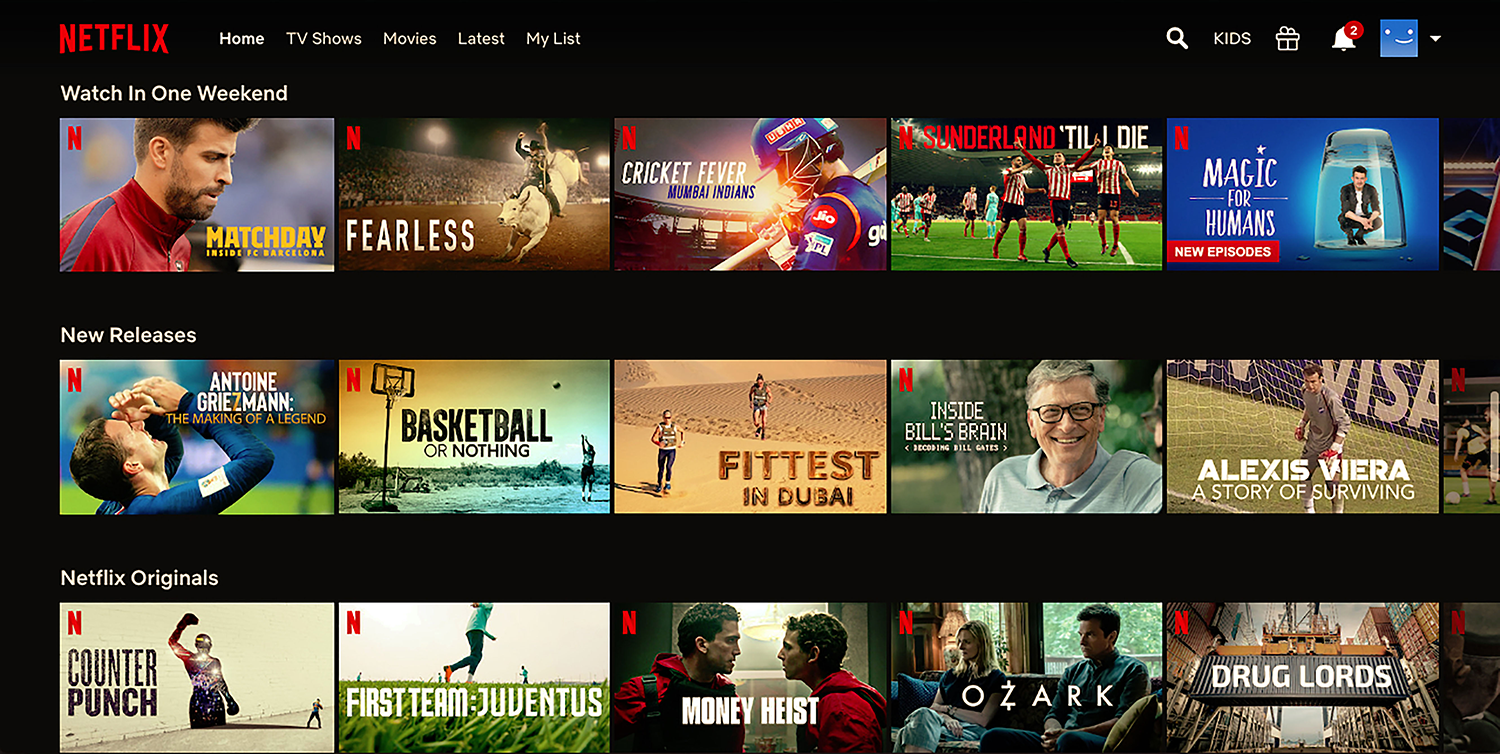
Screenshot of the Die-Hard Sports Fan’s homepage following the 14-day experiment.
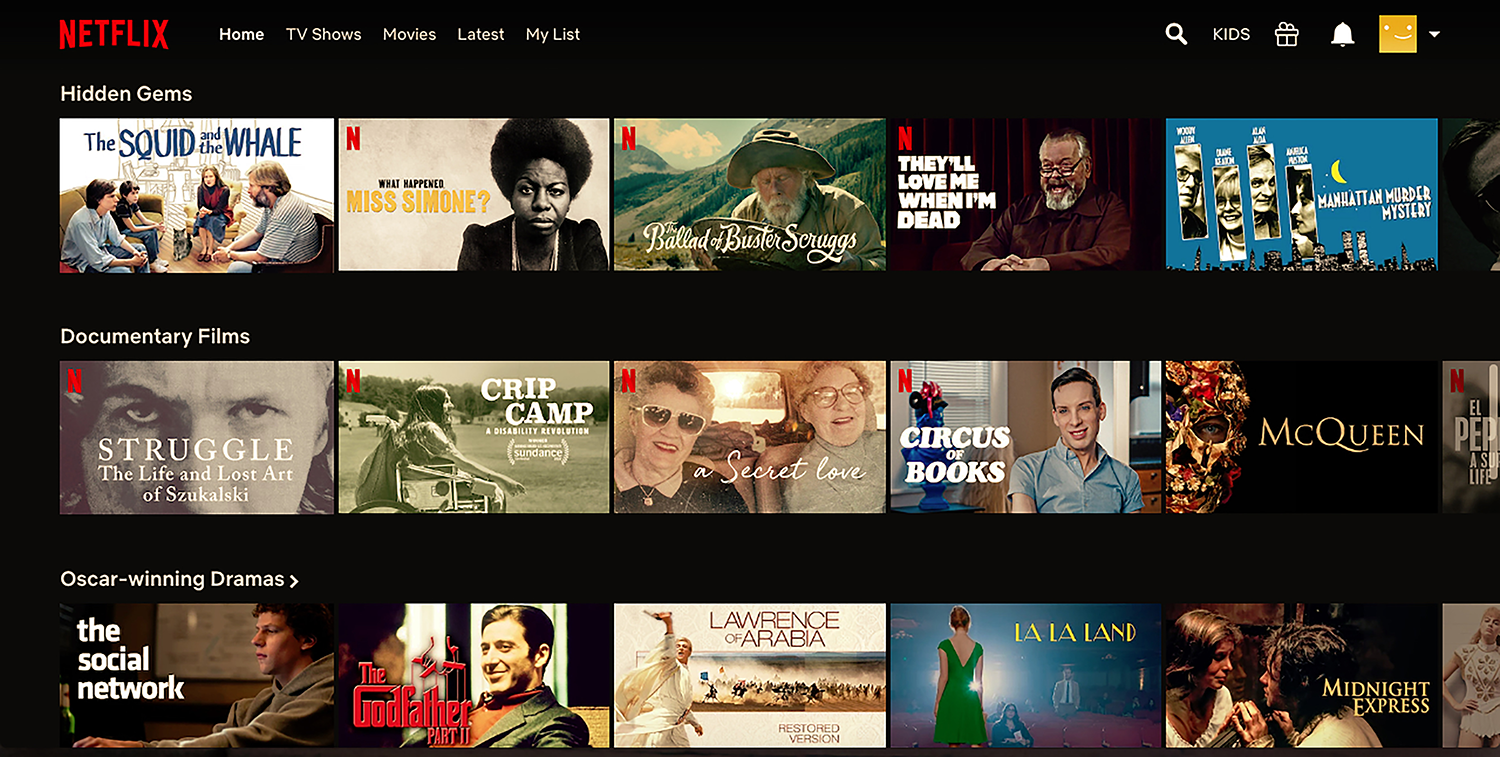
Screenshot of the Culture Snob’s homepage following the 14-day experiment.
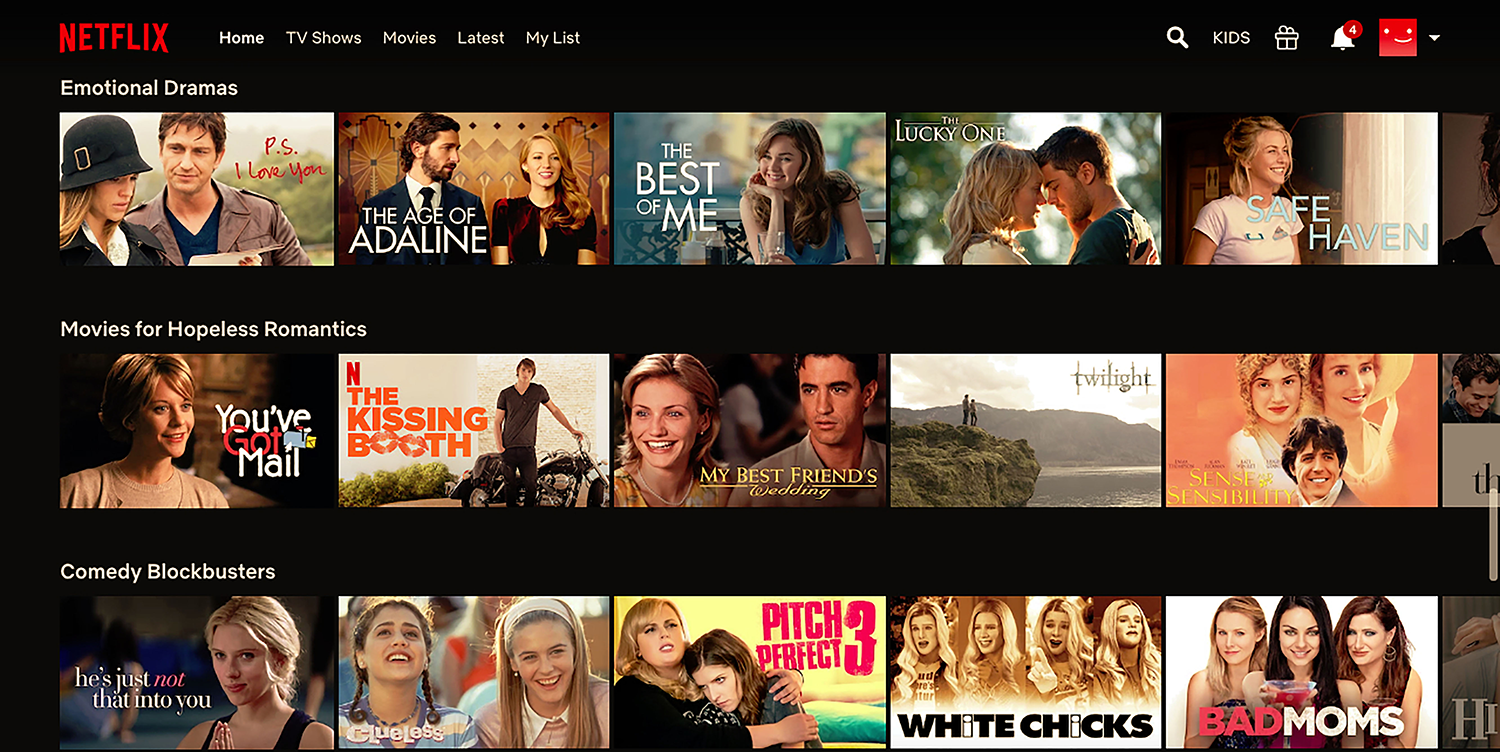
Screenshot of the Hopeless Romantic’s homepage following the 14-day experiment.
Some of the most interesting and unexpected results of the experiment came from changes in title artwork. Indeed, the NRS’s artwork personalization ended up making each persona’s homepage quite visually distinct, even when viewed as a single composition. For example, by the end of the experiment, The Hopeless Romantic’s homepage was occupied by a disproportionate number of images of men and women romantically embracing. Of the first 10 titles suggested for the Hopeless Romantic, which were spread across the top two rows, five of them presented artwork images containing a romantic embrace (e.g. a couple kissing or staring into one another’s eyes). Additionally, the banner image at the top of the homepage was a blown-up still of Brad Pitt and Claire Forlani kissing, taken from the film Meet Joe Black (1998). Likewise, the Die-Hard Sports Fan’s homepage was covered with artwork images containing movement (e.g. running, jumping, catching, racing, etc.), and they also generally displayed brighter and more dynamic colours. In addition, there was a significant number of shirtless bodies and athletic physiques dispersed across the rows. Meanwhile the Culture Snob’s homepage – though the subtlest of the three – was dominated by darker hues, black and white artwork images and plenty of actor headshots. Taken as a whole, these changes did create a sensation of entering and scrolling through distinct aesthetic worlds via the homepage. However, the most noteworthy changes in artwork were those differences between artwork images that were used for the same title across all three profiles. By the end of the experiment, when identical titles were offered to each profile, they almost always had different artwork images, though I did not document any differences in trailers or synopses. Not only were artwork images for the same titles different from one another across profiles, but they were personalized quite accurately for each taste persona. For example, at one point, the Netflix original series Outer Banks (2020–present) was recommended for all three profiles. The show follows a group of teenagers living on the Outer Banks of North Carolina, who band together in an attempt to discover a legendary treasure that is tied to the disappearance of the protagonist’s father. The artwork image presented for Outer Banks (2020–present) on the Culture Snob’s homepage was of the protagonist, Chase, facing the camera atop a collaged backdrop containing a map and a still image from the show. However, for the Hopeless Romantic, it was a close-up of Chase and a female character, Madelyn, about to kiss. For the Die-Hard Sports Fans, the artwork image was two male characters carrying surfboards as they walk into water. While the artwork image for the Culture Snob appeared quite neutral, the other two had been accurately personalized to the Hopeless Romantic and the Die-Hard Sports Fan’s specific tastes. I have included a comparison of these artwork images below (see Figure 4), as well as those presented for the film La La Land (2016), which were also tailored differently to each profile, for what appear to be similar reasons.
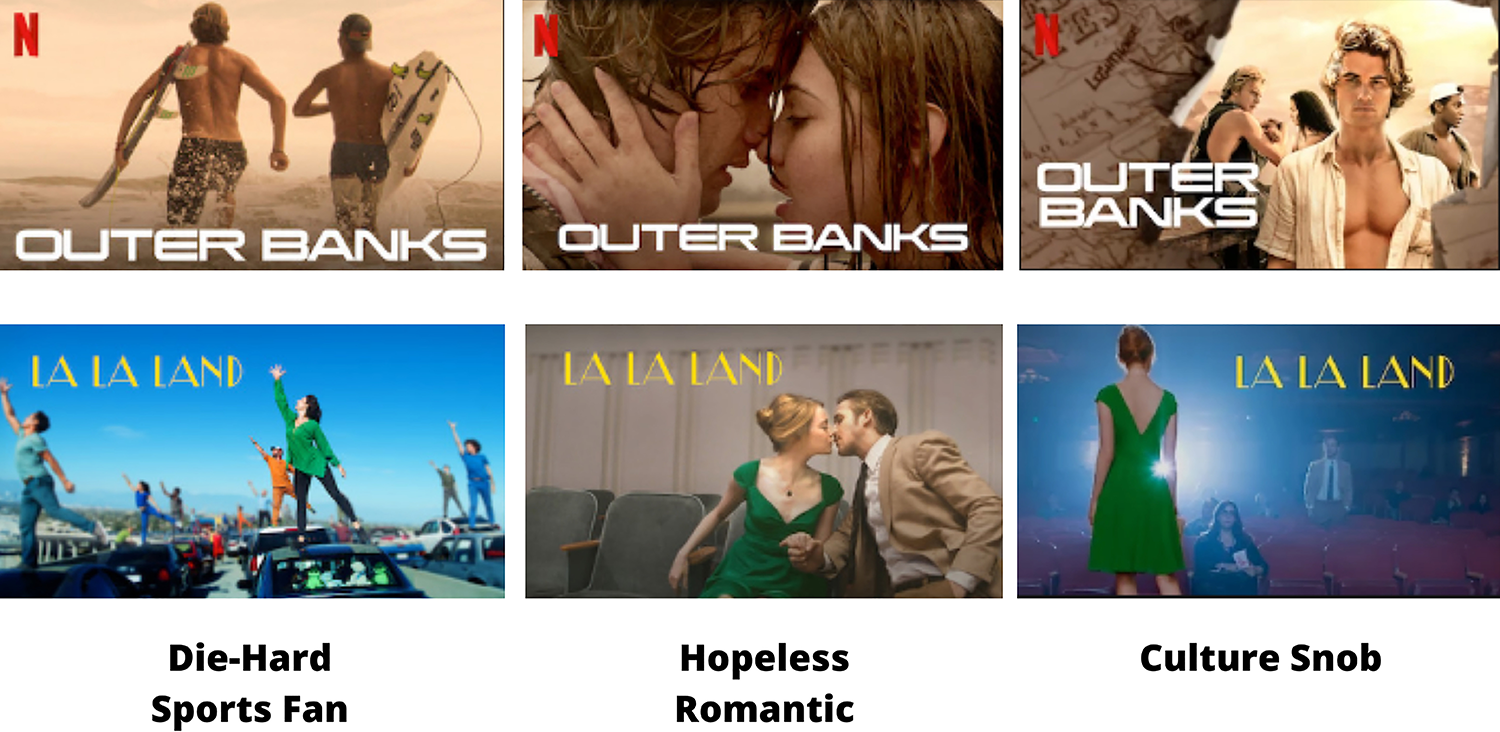
Comparison of artwork personalization for Outer Banks (2020–present) and La La Land (2016) for each taste persona.
Lastly, I want to briefly discuss the Disruptor’s homepage. For the Disruptor, I did not follow the same 2-week schedule as the other personas. Rather, over the course of the month of May 2020, I irregularly deployed bursts of content viewing, selecting films and shows that I believed would most conflict with one another. For example, I had the Disruptor watch multiple episodes of the romance reality show, Love Is Blind (2020–present), followed immediately by Orson Welles’ 1941 classic Citizen Kane. In addition, I thumbed up and down dozens of titles, whether they had been watched or not. Again, I tried to keep these intentionally inconsistent. For example, Kill Bill: Volume 1 (2003) would receive a thumbs up, but Kill Bill: Volume 2 (2004) would get a thumbs down; Shrek (2001) would get a thumbs up, but so would the The Irishman (2019), followed by a thumbs down for Incredibles 2 (2018) and The Godfather (1972). For the most part, this seemed to lead to a highly diverse homepage absent of an easily distinguishable taste identity. However, the chaotic selecting of content did appear to produce a small rift in the NRS. An ‘Exciting Films’ row was consistently suggested at the top of Disruptor’s homepage. The row contained six of the eight Fast & Furious films offered on Netflix, all of which were ranked as the top 10 options within the row (see Figure 5). The remaining two films in the series were also located elsewhere on the homepage.
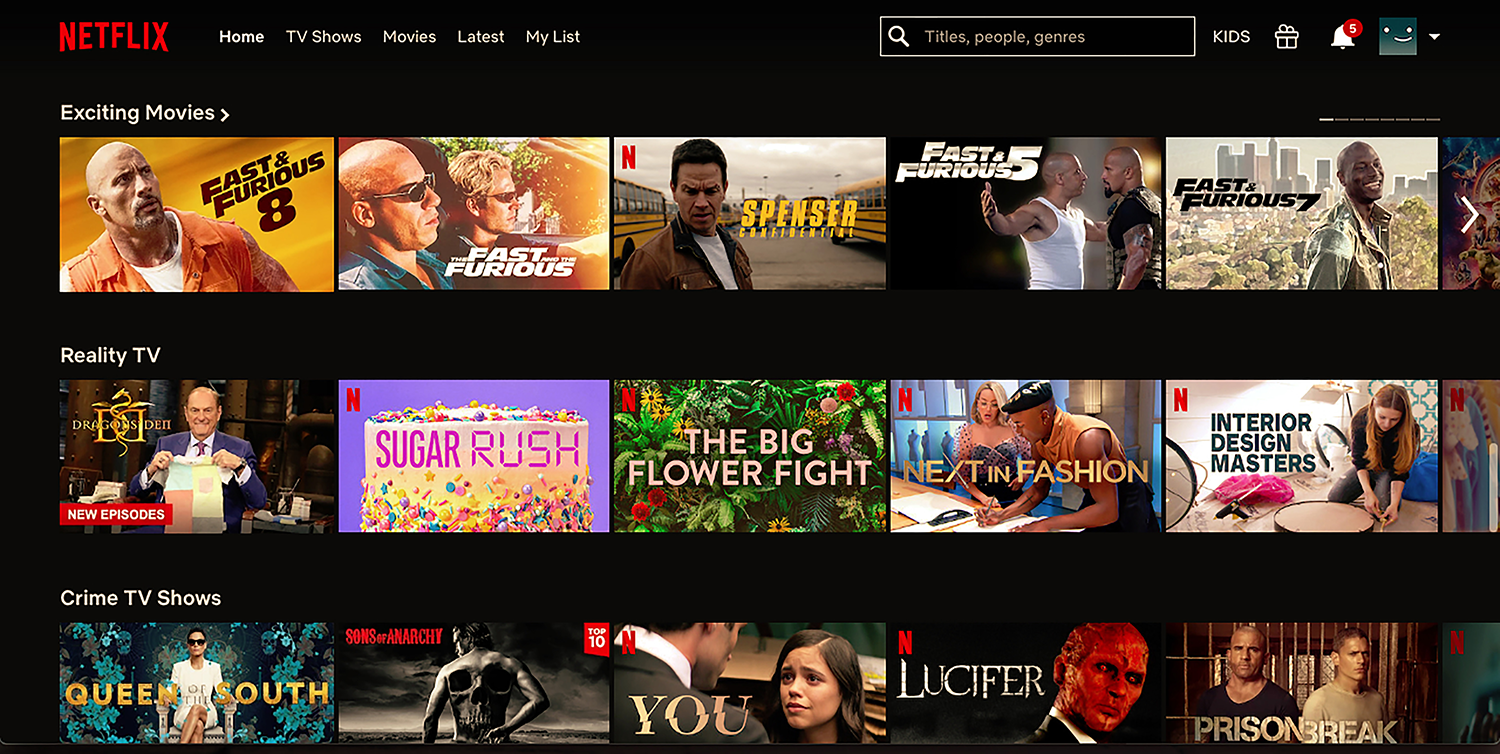
Four of the first five titles offered in the Disruptor’s ‘Exciting Movies’ row belonged to the ‘Fast & Furious’ film series.
Analysis
The circular and economic logic of the NRS
By the end of the experiment, each profile had been individually reconfigured and thoroughly personalized via the algorithmic operations of the NRS. Rows were reordered, precise altgenres had materialized, artwork images changed and a seemingly endless – as well as ever-changing – slate of content titles had emerged, all tailored to the tastes and preferences of each persona. No doubt, this model of user-centric personalization has made Netflix an exemplary case of the way culture – in today’s algorithm-saturated world – finds us (Beer, 2013), rather than the other way around.
Not surprisingly, what my experiment made particularly obvious was the anticipatory and circular logic embedded in the NRS and its operations. In order for a Netflix user to experience the level of ‘deep personalization’ outlined above, only two things are required of them: consumption and interaction. The more content a user consumes on Netflix and the more time they spend interacting with the platform itself (e.g. scrolling, clicking, rewinding, searching, etc.), the more data the NRS is able to extract from them, resulting in more elaborate personalization and increasingly precise recommendations for both them and the global Netflix community via collaborative filtering. In theory, a more personalized experience, as well as more accurate recommendations, should then lead to greater user consumption and interaction, and therefore more data, better recommendations, and so on and so forth. Nowhere in this circular equation, it is necessary for users to seek out new content, search for specific titles or experiment across genres. For example, by Day 3 of my experiment and onwards, each persona would have hardly had to venture past the second row of their homepage to consume their preferred content ad infinitum. Of course, this is a concern frequently raised in regards to all algorithmic recommender systems, namely, that of feedback loops and filter bubbles, which in the case of the NRS would allow for what Arielli (2018: p. 86) has called ‘algorithmic self-confirming aesthetic consumption’. The concern with this kind of consumption is that feedback loops reinforce a user’s pre-existing preferences, diminishing their exposure to a diverse range of cultural offerings and denying art, aesthetics and culture of its confrontational societal role. Furthermore, there is concern that NRS-generated feedback loops threaten to homogenize film and television culture, particularly considering that the individual feedback loops of each user can ‘iteratively influence the collaborative filtering algorithm’s predictions over time’ (Sinha et al., 2016: 1). What this means is that the individual feedback loops each user is caught in (e.g. the Die-Hard Sports Fan’s endless loop of sports-related content) can contribute to large-scale, even global loops, because user consumption patterns are extracted by the NRS and contribute to recommendations made to other users across the world. 2
However, when thinking about the feedback loop phenomena and its cultural implications, we must be hesitant to work from the assumption that the NRS reproduces a user’s true tastes in the first place. After all, Netflix does not sell content in the traditional sense, it sells itself as a platform that can be purchased for a monthly subscription fee. Unlike services such as YouTube, Netflix makes no money from advertising revenues or single transactional sales (TVOD). Therefore, content is leveraged by Netflix only as a means of attracting and retaining users (retention being an increasing priority for all OTT streaming services amidst the Streaming Wars). Gomez-Uribe and Hunt (2015: 8) explain that to improve Netflix’s retention rates, you must increase user engagement, which is where the NRS truly generates its business value: If we create a more compelling service by offering better personalized recommendations, we induce members who were on the fence to stay longer, and improve retention. In addition, all members with an improved experience (not just those on the fence) may be more enthusiastic when describing Netflix to their friends, strongly influencing new subscriber acquisition through word-of-mouth effects.
Interestingly, my experiment revealed that the ‘closed commercial loops’ produced by the NRS extend beyond the reproduction of consumption patterns and into the entire aesthetic experience of navigating the Netflix interface. The personalization of artwork, trailers, synopses and metadata can be attributed to what Netflix calls ‘evidence selection’ algorithms. These algorithms alter the way content is presented to provide each user the appropriate ‘evidence’ that a recommended show or film is right for them (Gomez-Uribe and Hunt, 2015). Netflix claims that by personalizing artwork they, ‘help each title put its best foot forward for every member and thus improve our member experience’ (Chanderashekar et al., 2017). However, as my experiment progressed and each persona’s homepage became increasingly visually personalized, it was never clear how artwork customization could translate to improved user experiences. For example, it was simply misleading when the artwork image for Good Will Hunting (1997) changed for the Hopeless Romantic from an image of Robin Williams to one of Matt Damon and Minnie Driver romantically embracing. For the Hopeless Romantic, Good Will Hunting would appear to be one of the dozens of romantic movies displayed on their homepage, especially considering it was surrounded by other romantic titles with comparable artwork. Similarly misleading was the selecting of an image of surfboarders for a television show that was not about surfing (i.e. Outer Banks as displayed to The Die Hard-Sports Fan) or displaying black and white images for films shot in full colour (as seen on the Culture Snob’s homepage). What again became clear was the economic motivations of the NRS, in this case, its use of ‘evidence selection’ specifically. 4 Personalized artwork coupled with lengthy homepages and rows built for endless scrolling creates the illusion that Netflix contains an infinite amount of content perfect for every user. This illusion is easily understood when considering the affective quality of images, which, when absorbed dozens at a time, could register at an unconscious level, subtly shaping a user’s perceptions of their Netflix experience. For example, if the Die-Hard Sports Fan was to casually scroll down their homepage, by the time they reached the bottom they would have been inundated with a plethora of sports-related imagery, whether they were completely aware of it or not. They also would have passed dozens of half visible, yet possibly relevant titles fading out on the right-hand side of every row. Whether unconsciously perceived or consciously noted, personalization via ‘evidence selection’ would likely incite feelings in a user that no matter how much of their favourite content they have consumed, they have only scratched the surface of Netflix’s offerings. Although these changes in artwork may at first seem trivial, they could ultimately be the reason many users renew their subscriptions every month, which is why Netflix has introduced the feature in the first place. Thus, ‘evidence selection’, I would argue, is almost entirely a tool designed to improve retention rates, not user experience, making it a prime example of what Sandvig (2014) has called ‘corrupt personalization’: a personalization scheme built around a user’s preferences and presented as if to be in their best interest, but which really serves the goals of the provider of the scheme and does so at the expense of the user.
Another example of this kind of ‘corrupt personalization’ witnessed during my experiment – and perhaps one that is more directly illustrative of the NRS’s built-in economic reasoning – was the persistent recommendation of the Fast & Furious films for each of my experiment’s personas. On 3rd June, Netflix Canada added the first seven films from the Fast & Furious franchise to their platform, in addition to already offering its eighth instalment (Hynes, 2020). This meant that Netflix Canada now offered eight of the nine Fast & Furious films available. Considering these were all hugely popular films when released, Netflix’s licensing of the series is a strong example of the kind of tent pole content strategy currently defining the Streaming Wars (i.e. heavily financed and marketed movies that single-handily draw in new subscribers and compensate for a service’s niche content). Throughout my experiment, the Fast & Furious films were recommended to each persona, despite never matching their tastes. By the end of the experiment, two films from the franchise were being recommended in outlier rows on both the Die-Hard Sports Fan and the Hopeless Romantic’s homepages. While this could be attributed to the NRS’s calculated promotion of discovery-based content (see e.g. Alvino and Basilico, 2015), the fact that the Disruptor’s homepage was so overwhelmingly oriented towards promoting this content seemed uncoincidental. By the end of the experiment, all eight of the ‘Fast & Furious’ films available on Netflix appeared on the Disruptor’s homepage, six of which were presented in a single top-ranked row titled ‘Exciting Movies’. As mentioned earlier, these recommendations did not appear as a result of the Disruptor watching action films or other related content. Rather, they seemed to have emerged in this unusual way due to a rift or glitch in the NRS caused by an excessive, random and contradictory selection and ‘thumbing’ of content. As Striphas (2015) and Bucher (2016) have pointed out, it is within these moments of malfunction that the logics of algorithms tend to reveal themselves most plainly. In this case, it appeared that when the NRS was overwhelmed with difficult and inconsistent input data, it defaulted to recommending content with a high likelihood of producing user engagement and did so under the guise of personalization. Not only is each Fast & Furious film likely to produce a high degree of user engagement due to their known popularity, but taken together they represent a ‘bingeable’ series making them particularly useful for increasing retention rates. Furthermore, they could be leveraged to funnel users into watching Netflix’s own original Fast & Furious spin-off series titled Fast & Furious Spy Racers (2019–present). Perhaps, what this rift in the system exposed was a specific commercial feedback loop constructed around the ‘Fast & Furious’ series itself. Combined, these eight films would take users over 16 h to watch, and considering user retention is the current currency of the Streaming Wars, it would be in Netflix’s best interest to have users watch every second of them – or better yet, plan to eventually do so.
Recommendation systems, agency and taste-making
My analysis of the NRS and its operational logics is nested in a broader inquiry regarding the tension between human and algorithmic agency as it relates to cultural consumption and recommendation systems. For example, it is not entirely clear whether the NRS is predicting what film and television content users may prefer, or whether it is determining it; and it is within this murky territory of locating agency where many critical questions about recommendation systems have been raised. Has the NRS passed the ‘threshold’ as Finn (2017: 50) puts it from ‘modeling to building cultural structures’? And if so, what does it mean that the NRS operates according to a circular and economic logic? It is nearly impossible to engage with these questions without taking into consideration notions of taste, as it is our tastes that are understood to drive our cultural consumption patterns and vice versa.
As a cultural intermediary, the NRS plays a critical role in the process of film and television taste-making. It reveals and conceals various titles and genres and exercises control over our ‘decision pathways’ (Finn, 2017: 97). More specifically, as Gaw (2019: 39–40) has pointed out, the NRS constructs taste within a ‘social vacuum’ relying solely on data generated within and by the recommender system, and it undertakes the ‘quantification of taste’ by ‘splicing’ users and content into endless attributes to construct taste communities and altgenres. This algorithmic construction of taste by the NRS is precisely what several scholars have criticized (see e.g. Gaw, 2019; Striphas, 2015). For them, the question of agency goes beyond whether the NRS is dictating what we watch, to whether it is a prime example of the ways algorithms are now exerting control over our artistic and aesthetic judgements (i.e. our cultural preferences) – which we tend to believe are inherently human and deeply personal affairs – and doing so according to the logic of computation. For example, Hallinan and Striphas (2016: 129) question the implications of a ‘court of algorithmic appeal’ in which ‘objects, ideas, and practices are heard, cross-examined, and judged independently, in part, of human beings’.
However, if – as I am suggesting – we are to adopt a relational materialist perspective of algorithms, we must diverge from the typical critical readings of the NRS and recommendation systems like it. According to a relational ontology, agency itself is inherently distributed; it is a mediated phenomenon brought to fruition via the associations of a multiplicity of both human and non-human actors (Latour, 2005) or as Barad (2003: 818) sees it, ‘agency is not an attribute but the ongoing reconfigurings of the world’ and the universe itself is ‘agential intra-activity in its becoming’. Thus, the relational perspective is not compatible with the critical readings typically leveraged against recommendation systems because it does not attribute individual agency to algorithms nor to humans in regards to the development of their ‘personal’ tastes and preferences. In accepting this position, the dialogue surrounding the relationship between the NRS and taste-making takes a drastically different turn. Therefore, I want to suggest the adoption of Hennion’s (2004) ‘pragmatic’ conception of taste as it directly coincides with the relational nature of algorithms. In doing so, I am consciously stepping away from Bourdieu’s (1984) influential theory of taste, which has been drawn on previously to support the critical social analysis of recommendation systems (see e.g. Gaw, 2019; Morris, 2015).
According to Hennion (2004: 131, 133), taste is a reflexive and performative activity with a deeply ‘entangled history’ that is always in the process of unfolding; it is ‘corporated, framed, collective, equipped’ and simultaneously produces both the taster and the objects they value. Hennion presents his theory as a direct criticism of Bourdieu and his follower’s perspective on taste, which he views as overly restrictive and reductive. For Bourdieu (1984), taste is socially constructed. It is acquired and refined according to a person’s social and cultural capital. Notions of ‘good taste’ and ‘bad taste’ are not inherent, but learned through social conditioning and are constructed in accordance with the dominant group or ruling class’s sets of criteria. Because taste is directly tied to social class, it acts as an instrument for reproducing hierarchies between and within class groups, and therefore, tastes are only falsely perceived to be unique and personal (Maguire and Matthews, 2014).
Although Hennion (2004: 131) agrees with Bourdieu’s proposition regarding the relational nature of taste, he rejects the theory for presenting a ‘radically unproductive’ view that mistakenly reduces cultural objects to mere ‘random signs’ and positions tasters as ‘passive subjects of an attachment’ who are ignorant to the true determinants of their passions (i.e. their social position). Alternatively, he argues that taste has the capacity to ‘transform sensibilities and create new ones’, because people are inherently active and productive: they ‘constantly transform objects and works’ (Hennion, 2004: 131). Furthermore, he argues that Bourdieu’s conception of taste refuses to take the ‘amateur’ seriously: the passionate fan or cultural virtuoso who does not belong to the social elite, but who may commune with other amateurs to form their own rules and hierarchies of knowledge surrounding works of pop culture or those deemed to be ‘low-brow’; these amateurs, Hennion argues, are guided by an identical relational process of taste-making as those of the social elite. His analysis of taste places emphasis on the reciprocal relationship between cultural works and their audience, seeing taste as a ‘co-formation of a set of objects and the frame of their appreciation’ (Hennion, 2004: 134). This model of taste requires ‘even more ties, attachments, and mediations’ as every incremental step involved in tasting (i.e. the conscious consuming of cultural products) influences both ‘future perceptions and past catalogues of works’ (Hennion, 2004: 134).
If we accept Hennion’s ‘pragmatic’ conception of taste, we accept that we do not have absolute agency over our tastes and preferences, that they are not completely derived from the aesthetic properties of the works we consume nor can they be explained away as being the result of ‘external determinisms’ tied to our social position (Hennion, 2001: 1). From a relational perspective, taste, like the operations of algorithms, is performative and transformative, it exists and functions in a constant state of revision, where its cultivation and purpose is negotiated among the various actors involved in its becoming. These actors can include the individual taster, their social position, their personal temperament and disposition, the commercial market, the cultural work and its various aesthetic elements, and now the algorithmic technologies ordering and ranking these works according to their own circular and economic logics; logics that are designed by engineers, who are guided by business executives, who themselves are informed by market researchers relying on other systems of algorithms. Therefore, the NRS is best conceived of as one of the many actors deeply entwined in the complex networks that constitute contemporary film and television taste-making, adding profound complexity to notions of taste by introducing an additional layer of abstraction via the language, logics and interfaces of computation. Moreover, the NRS and its algorithmic operations appear to actually mirror the relational, reflexive and performative way taste exists and operates in the world more broadly, giving it material form by compounding key elements typically involved in the construction of taste into a single and highly accessible digital platform. Considering the NRS constructs taste in a social and cultural vacuum (Gaw, 2019), it could further be viewed not just as a reflection, but a microcosm of the relational, reflexive and performative processes of taste-making as described by Hennion. For example, Hennion (2004: 131) argues that taste is ‘a performance: it acts, engages, transforms and is felt’. On Netflix, taste is not ascribed to inherently passive users according to the social or demographic dimensions of their profiles. Rather, users perform taste through consumption and interaction, which the NRS continuously tracks, measures and leverages to transform nearly every aspect of Netflix, including, those user’s profiles and experiences, the global ranking of Netflix’s existing catalogue and the development of future content. Transformation is, I would argue, the fundamental labour of the NRS, and taste on the platform can only be performative; it is always being ‘formed as it is expressed and is expressed as it is formed’ (Hennion, 2004: 135). This means that Netflix and its users reciprocally construct one another, as agency over taste passes between consumer, producer and every actor in-between. Furthermore, Hennion (2004: 135) argues that taste is ‘accomplished through a collective which provides a frame’. In the case of the NRS, the collective includes all of Netflix’s global users now spanning 190 countries, who collaboratively cultivate each other’s tastes via filtering algorithms, which are then framed in Netflix’s algorithmically generated homepage. Hennion points out that even the methods regulating the construction of taste (e.g. the mainstream media, critics, blogs, etc.) are constantly being revised and updated. The Netflix microcosm puts this notion into overdrive, as the NRS’s algorithmic methods for governing taste are continuously being revised and optimized via nonstop, 24/7, A/B testing.
Ultimately, if we are to adopt a relational materialist approach to understanding the NRS, we must reject the commonly posed dichotomy between human and algorithmic agency which often dominates discussions related to recommendation systems and their influence on taste-making. In doing so, the NRS can no longer be positioned as an unknowable technical device capable of dictating our experience of culture, as its agency over our tastes and preferences, much like our own, remains only partial. In fact, as I have described above, the NRS could perhaps more usefully be viewed and studied as a microcosm for the relational, reflexive and performative way taste operates in the world more broadly, giving these complex processes a new computational materiality.
Conclusion
As the Streaming Wars progress, recommendation systems like the NRS will become key competitive features for every major OTT streamer, meaning the distribution of film and television, and therefore our consumption patterns, will increasingly be in the hands of semi-autonomous algorithmic technologies. This makes the current moment – that just before these systems come to represent the dominant mode of film and television consumption – an important one for questioning how they work, what purposes they actually serve and what their impact on film and television culture has been and will continue to be.
This article has set out to accomplish two interrelated goals: (1) to explore the current role algorithmic technology play in the distribution and consumption of film and television, and to assess how these technologies are impacting processes of taste-making; and (2) to push back against the critical theoretical perspectives that have come to dominate the discourse surrounding algorithmic cultures. In doing so, I have joined Bucher (2016, 2018) in adopting a relational materialist understanding of algorithms and I have reverse engineered the NRS. On the one hand, my experiment effectively exposed the NRS’s circular and economic operational logics, warranting a necessary degree of both public concern and scholarly criticism. On the other hand, however, it drew attention to the complex and networked nature of taste-making more broadly. As a result, I extended the relational ontology I afforded to algorithms to the concept of taste, as taste-making represents an equally complex and fundamentally relational process in and of itself – a point eloquently captured by Hennion (2004) in his ‘pragmatic’ conception of taste.
As we move deeper into the digital age, it has become clear that algorithmic technologies will continue to present new abstract frameworks for representing cultural reality, many of which will be overcoded by the commercial and economic interests of those developing and deploying these technologies. As Finn (2017: 54) points out ‘like Turing’s original abstraction machine, these [algorithms] extend a symbolic logic into the cultural universe that reorders minds and meanings that come into contact with them’. If my research has revealed one thing, it’s that a profound commercial and economic orientation is deeply embedded in the ‘symbolic logics’ carried by systems such as the NRS. I would even argue that the fundamental mode of abstraction used by these systems is one that turns creativity, taste and culture into a problem that can, and must, be efficiently solved. In the case of taste-making, the circular and economic logics embedded in the NRS appear to turn taste into an equation, where authentic taste performance is equated with consumption, and maximizing user engagement and retention rates is considered the end goal. As streaming becomes the dominant mode of film and television consumption, and recommendation systems similar to the NRS continue to proliferate, I’d like to suggest that our notions and practices of taste – both on and offline – will increasingly abide by these logics. That being said, this does not mean that we should strive as social science and humanities researchers to criticize and tear down these frameworks, since they also present to us new and useful ways of ‘seeing’ the complex and deeply relational processes inherent to cultural life. For example, in 1986, Hennion and Meadel (p. 287) called the radio, ‘an invisible machine for making the world visible to itself’. Perhaps, this is true for all of computation, algorithms and Big Data alike. If so, it would appear that the real concern lies not so much with the algorithms themselves, but the way in which the layers of computational abstraction they have introduced, which now blankets much of cultural reality, has been co-opted or hijacked by corporate and commercial interests.
