




Abstract
Digital transformation (DT) has fundamentally reshaped socioeconomic activities and production systems. Despite growing scholarly interest in DT and performance, a fragmented understanding of the theoretical foundations and mechanisms underlying DT’s impact on tourism performance remains. To address current gaps, this study conducts a systematic literature review that clarifies the conceptual boundaries of DT and performance, and proposes a conceptual framework to understand the processes of DT’s impact on performance. This review summarises the theoretical foundations of DT and performance and explores the evolution and challenges these theories face in the digital age. According to the conceptual framework, this article analyses the antecedents, influencing factors, strategic pathways, and performance outcomes, revealing their interconnected dynamics. Building on these insights, a research agenda is developed to advance theoretical and empirical inquiries into DT-driven performance, and actionable guidance is provided to researchers, policymakers, and practitioners navigating digital disruption.
Introduction
Digital transformation (DT) is commonly conceptualised as the replacement of traditional non-digital processes with digital alternatives, triggering profound structural shifts and facilitating the emergence of innovative business models across individuals, organisations, ecosystems, and societies. The systemic renewal driven by DT is closely intertwined with changes in socioeconomic performance, such as productivity, efficiency, and profitability. Particularly, the COVID-19 pandemic has acted as a catalyst, illustrating DT’s transformative agency and regenerative capacity in value creation across production networks.
Nevertheless, the impact of DT on performance remains ambiguous and contested. Enterprises face a so-called digitalisation paradox, wherein substantial investments in digital technologies do not consistently translate into the expected performance gains. Some studies indicate that, compared with other resources, DT has no significant effect on enterprises’ performance, or that both low- and high-level DT are not conducive to performance (Guo et al., 2023; Sarya et al., 2023).
DT and performance have become buzzwords, but face concept confusion. DT is often regarded as a synonym for the “Internet of Things” (IoT), “Information technology”, or some other technologies (Ancillai et al., 2023). Moreover, the distinction among digitisation, digitalisation, and DT remains contentious. Digitisation refers to the conversion of analogue data into digital formats, and is often framed as the initial step in digital development (Rachinger et al., 2018). Digitalisation describes how digital technologies can be used to alter existing business processes (Verhoef et al., 2021). DT is the most pervasive phase, defined as the process that is used to restructure economies, institutions, and society on a system level (Vial, 2021). Most of the literature states that the first two more incremental phases are needed to attain the most pervasive phase of DT (Kraus et al., 2022; Verhoef et al., 2021). Different academic terms and research perspectives confirm that the definition of DT in the field of tourism still needs clarification. Similarly, although performance is a widely acknowledged area of academic inquiry with an abundance of published articles, its conceptualisation and measurement are still under-researched (Rowe and Morrow Jr, 1999; Sainaghi et al., 2017). While such buzzwords are readily employed, in the absence of precise definitions and measurement, it is challenging to ascertain whether DT genuinely influences performance.
Several researchers have reviewed the tourism literature on the link between DT and customer value co-creation (Dang and Nguyen, 2023), entrepreneurship and creativity (Varotsis, 2022), sustainable development and post-crisis resilience (Elkhwesky et al., 2024), and marketing strategies (Dewantara et al., 2023). While these studies offer valuable diversity by examining specific facets of DT, the insights are still fragmented without a holistic and comprehensive understanding of how various aspects of DT shape performance. Furthermore, existing literature reviews tend to focus on specific technology adoptions, such as artificial intelligence (García-Madurga and Grilló-Méndez, 2023), robotics (Cain et al., 2019), ICT (Lin et al., 2024), broadband and internet (Ratna et al., 2023). These reviews primarily focus on bibliographic analyses from a specific type of DT, lacking a coherent conceptualisation of DT and robust theoretical foundations to generalise the understanding of DT and how it affects performance. Thus, existing reviews fail to identify distinct sets of enablers and barriers that shape performance, and overlook the complex, multi-level relationships among different entities.
Without understanding the whole influencing mechanism of DT on performance across different entities, DT cannot be utilised and converted into strengths to enhance performance and competitiveness. The urgency to address these gaps is magnified by the post-pandemic imperative for tourism enterprises to leverage DT not merely as a recovery tool but as a source of sustained competitive advantage in today’s highly competitive tourism market (Tang and Huang, 2023). Theoretically and academically, a comprehensive overview of the literature on DT and performance across all contexts would be more desirable to better understand, bridge current siloed studies, compile and generalise current understanding of DT and performance, identify research gaps, and point out future research directions to fill those gaps.
As such, this article attempts to address the above research gaps by examining the intersection of the literature about DT and performance, through a systematic literature review: (i) to clarify the conceptual ambiguity surrounding DT and performance by offering precise definitions, (ii) to construct a holistic, process-oriented framework that moves beyond fragmented analyses, (iii) to identify and critically evaluate the relationship between DT and performance at employee, enterprise and destination levels, (iv) to present a discussion about future research directions. Thus, to the best of our knowledge, this study is the first to investigate the socioeconomic performance of DT in tourism in a holistic way, and it provides a conceptual framework to understand the blocking process.
Conceptual background
Digital transformation
Definitions of DT.
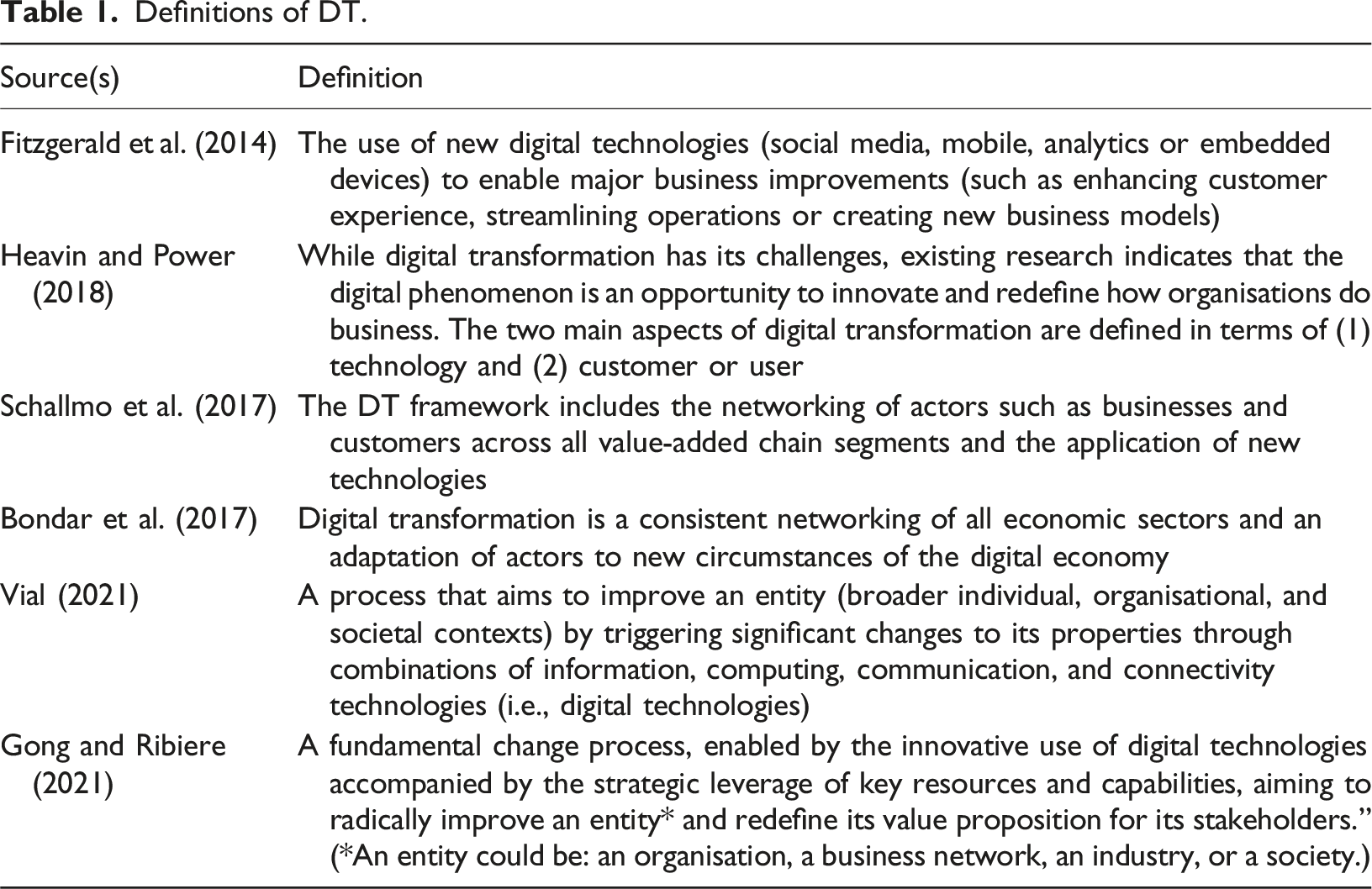
According to these definitions, we identify some key elements of DT: “digital technology” is positioned as the core driver of socioeconomic transformation, linked to both its causes and outcomes; “entity” should include different levels; “shaped” refers to the overarching role of DT beyond the mere triggering role; consider the expected outcome of the DT. Based on existing literature and properties of DT, we summarise DT as a socioeconomic change in which the adoption and utilisation of digital technologies across different entities lead to transformation and progress.
Iranmanesh et al. (2022) classify digital technology into two categories: enabling technology (e.g., internet infrastructure, websites, IT systems) that underpins operational processes and disruptive technology (e.g., blockchain, big data) that drives market innovation. Digital technologies should involve a broader ecosystem and the demand side (Hanelt et al., 2021), strengthening the idea of networks as a means to explore and comprehend new ways of engaging with and interpreting the world (McLennan, 2016); therefore, disruptive technology better represents digital technology.
DT occurs across organisations, markets, industries, societies, and the lives of individuals (Dąbrowska et al., 2022). Individuals actively participate in social processes and contribute to value creation (Kong et al., 2021). Enterprises develop strategies and coordinate internal and external transformations, leveraging digital technology for governance and the co-creation of value propositions (Berné et al., 2015). At the geopolitical level, DT is regarded as a means to secure market leadership and exert socio-political influence, shaping the economic environment in which individuals and enterprises operate, as well as influencing regional and national dynamics (Vial, 2021). In this context, a destination is conceptualised as a socioeconomic unit, reflecting the integration of economic, institutional, and social structures within a specific territorial space, and serving as a foundation for the emergence of new economic forms and services, such as the digital economy (DE) and digital financial inclusion (DFI). As a new model succeeding agricultural and industrial economies, DE drives significant changes in production methods, lifestyles, and governance practices (Tang, 2023b). DFI refers to the provision of formal financial services to previously underserved populations (CGAP, 2015).
Under the influence of Schumpeter’s theory of “creative destruction”, DT triggers profound changes such as market competition, operational processes, and labour skill structures. These stimuli, under the influence of dynamic capabilities and the internal resource-based view (RBV), transform the strategic response of different entities. According to classical strategic management theory, these strategic choices ultimately determine the nature and level of performance. At the same time, the adoption of DT is influenced by both internal and external conditions, which conforms to the technology-organisation-environment framework. Based on the research objectives, we map the DT process that emerged through our analysis across five overarching building blocks: the landscape of DT, multilevel influencing factors, disruptions, strategic responses, and outcomes, through three lenses: employee, enterprise, and destination, as illustrated in Figure 1. The processes of DT’s impact on socioeconomic performance.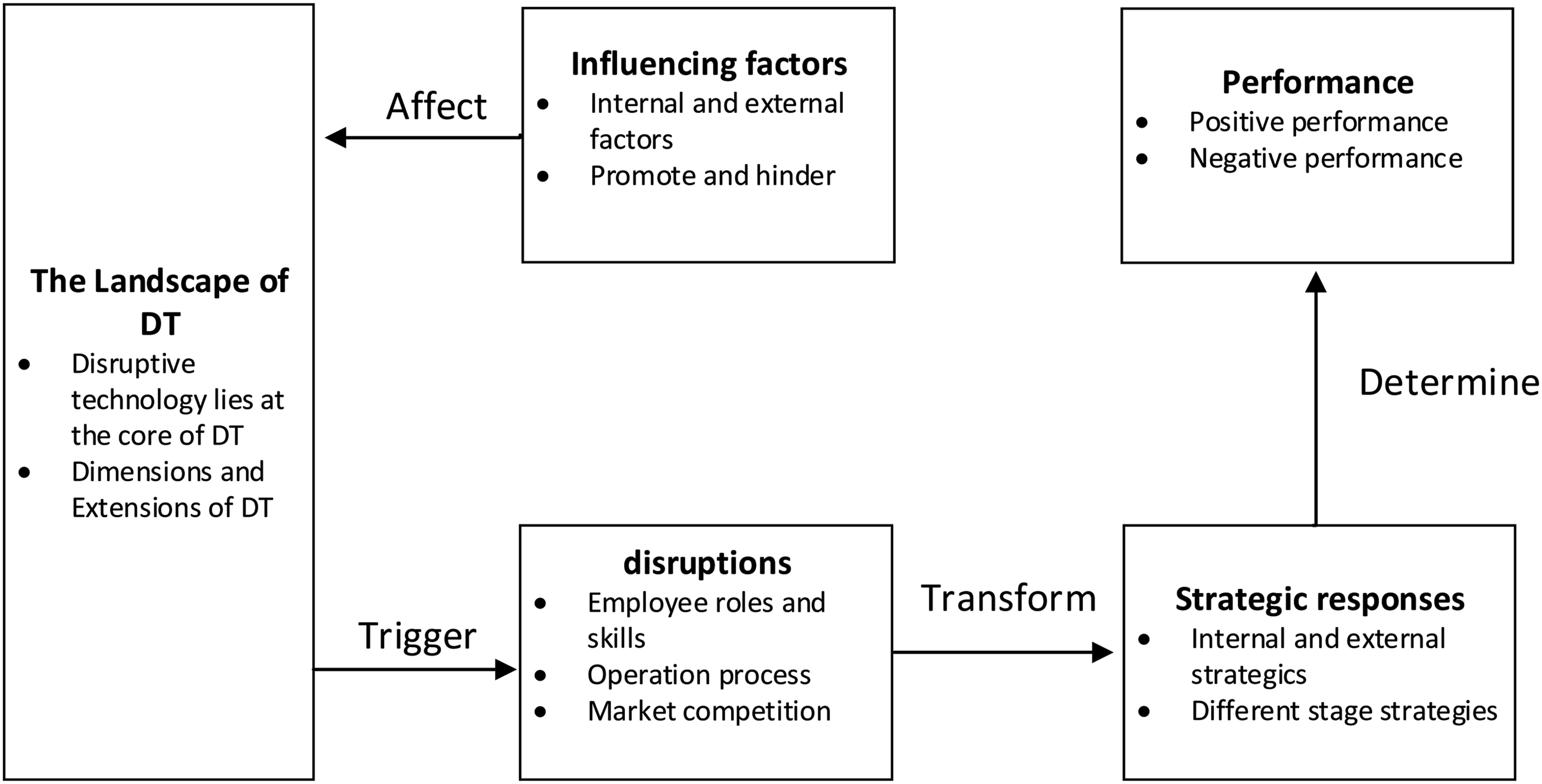
Performance
It is essential to define performance clearly to avoid confusion, yet this is often neglected (Sink et al., 1989). The classification of performance can vary widely, and its measurement has expanded beyond single indicators (Goshu and Kitaw, 2017; Sainaghi et al., 2017). Some studies have classified performance from an economic perspective, such as efficiency, effectiveness, productivity, quality, and timeliness (Keong Choong, 2013); profitability, growth, and other performance (Karim et al., 2022; Saeed et al., 2014); efficiency, competitiveness, and productivity (Sainaghi et al., 2017); profitability, liquidity, capital structure, and market share (Cho et al., 2012).
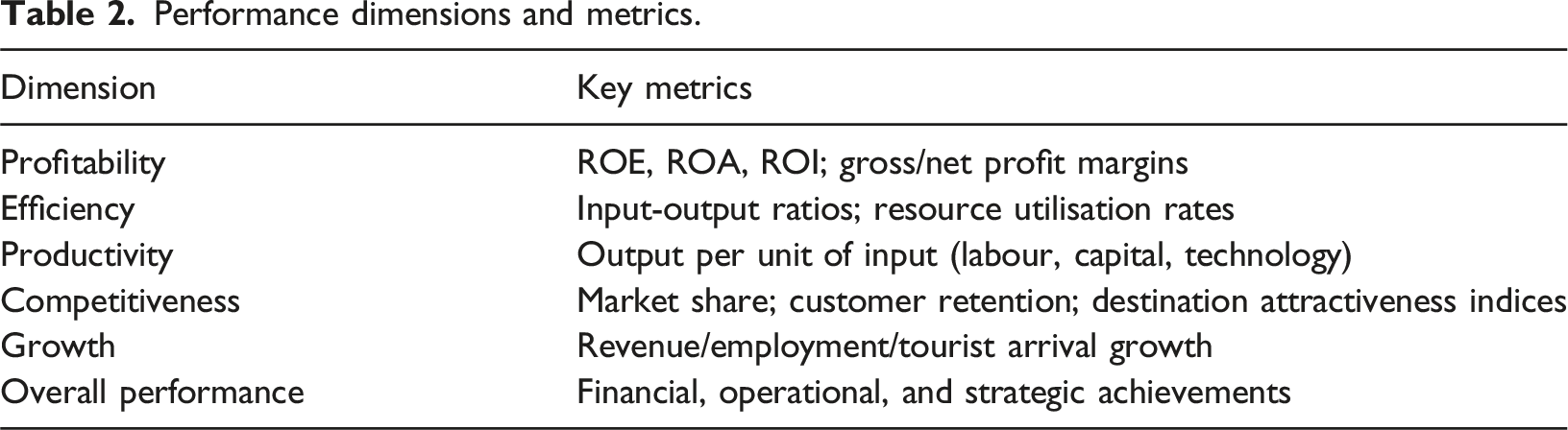
Given that this study adopts a supply-side perspective, which pertains to value creation mechanisms and the broader business environment, our framework concentrates on economic indicators to assess performance development. This approach enables a focus on the direct and measurable economic impacts of DT, rather than extending it to broader spillover effects such as customer satisfaction and sustainability. Drawing on existing literature (Iranmanesh et al., 2022; Lin et al., 2024) and considering the multifaceted impact of DT on performance—such as DT-enhanced economic resilience (Tang, 2023a) and restructured market competition networks (Albayrak et al., 2021)—this study adopts an economics-informed taxonomy to classify performance into six discrete but interrelated dimensions that capture the core aspects of economic performance in the digital era: profitability, efficiency, productivity, competitiveness, growth, and overall performance.
Profitability refers to the ability of a company or business to generate profit from its operations and is often evaluated through metrics like gross profit margin, net profit margin, return on assets (ROA), and return on equity (ROE) (Karim et al., 2022).
Efficiency is the degree to which an activity maximises possible outputs from a specific set of inputs (Anthony, 1965; Keong Choong, 2013; Vuorinen et al., 1998). Although closely linked, efficiency is distinct from productivity, which deals with the operational performance of an enterprise (micro-level) or country (macro-level) (Schreyer, 2001) and is defined as “the amount of a resource used to produce a unit of work” (Keong Choong, 2013: 114). It can be expressed as output divided by input (Joppe and Li, 2016).
The term “competitiveness” is a relative concept and is usually multidimensional (Scott and Lodge, 1985). Considering the long-term competitive advantage, we integrate current concepts and define competitiveness as the ability of a destination or organisation to achieve a sustainable tourism economy and benefit local residents (Song et al., 2023).
Performance dimensions and metrics.
Methodology
Planning the review
This study follows the PRISMA 2020 flow diagram, which begins with identifying appropriate keywords for the literature search using Boolean operators. As discussed earlier, scholars utilise diverse terminology when examining DT (Ancillai et al., 2023; Verhoef et al., 2021) and performance (Cho et al., 2012; Keong Choong, 2013). We limited our search to the hospitality and tourism field specifically to incorporate broader industry contexts and practical implications in understanding DT and performance in the tourism and hospitality industry.
To ensure a comprehensive and rigorous search process, we utilised Web of Science and Scopus, as these databases encompass leading hospitality and tourism journals, as well as highly ranked scientific management publications. This review examines the literature published between January 2010 and January 2025, as 2010 marked the emergence of “Industry 4.0” and its subsequent widespread recognition (Iranmanesh et al., 2022).
Conducting the review
The selected keywords, which may appear in the title, abstract, or keywords list, were entered into the selected databases, excluding conference papers, proceedings, and book chapters. The search is limited to peer-reviewed journals, as these are considered reliable sources of validated knowledge and are likely to exert the most significant influence on the academic community.
We focus on Hospitality, Leisure, Sports, Tourism, Management, Business, Economics, Social Sciences, Interdisciplinary Studies, Geography, and Sociology, as these fields are most pertinent to the research topic. A set of selection criteria were established, resulting in a final sample of 103 studies for analysis. Figure 2 illustrates the review procedure. Systematic review procedure.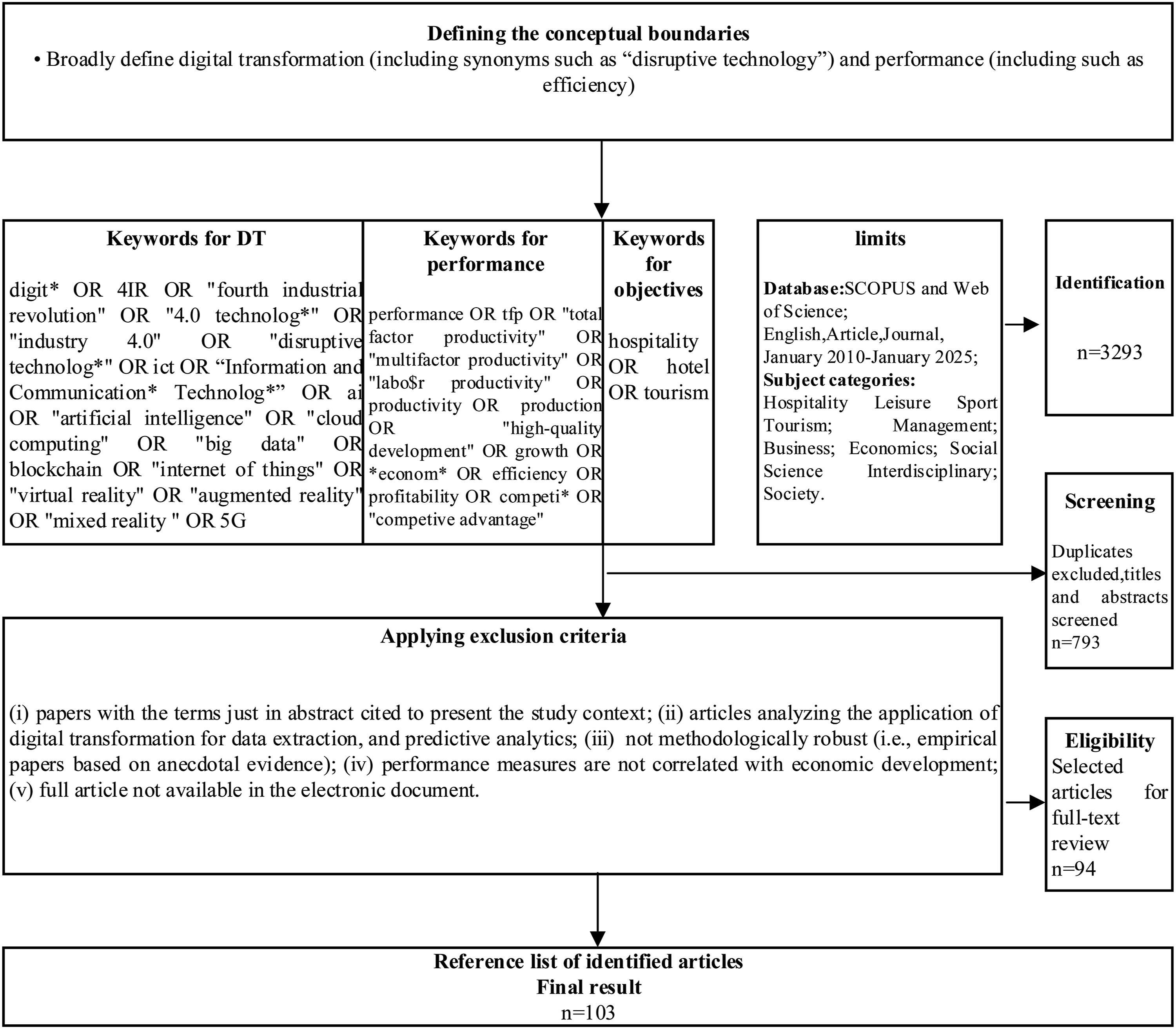
Reporting the review
To report the review outcome, this section starts with a descriptive analysis of bibliographic references. Then, we synthesise the theoretical foundations uncovered by our review. Our analysis shows that past literature primarily builds on several core theories, and this mapping of theoretical foundations sets the stage for our subsequent synthesis. Section on disciplinary underpinnings of DT analyses the specific disciplinary approaches that were most frequently employed in the literature and offers detailed explanations supporting the model and the DT-performance relationship. Section on interdisciplinary research on DT provides an interdisciplinary theoretical basis for the research. The remaining sections present a structured analysis of the antecedents, influencing factors, strategic responses, and performance outcomes at the employee, enterprise, and destination levels, respectively, following the framework outlined in Figure 1. Final section outlines the methodological trends in DT and performance research.
Bibliographic references
An initial examination of publication trends demonstrates a sustained and increasing scholarly interest. As illustrated in Figure 3, academic attention has increasingly concentrated on exploring the relationship between DT and performance since 2019. This trend corresponds to the rising adoption of DT among enterprises, particularly as a response to crises within the tourism industry. Number of articles published and citations by year.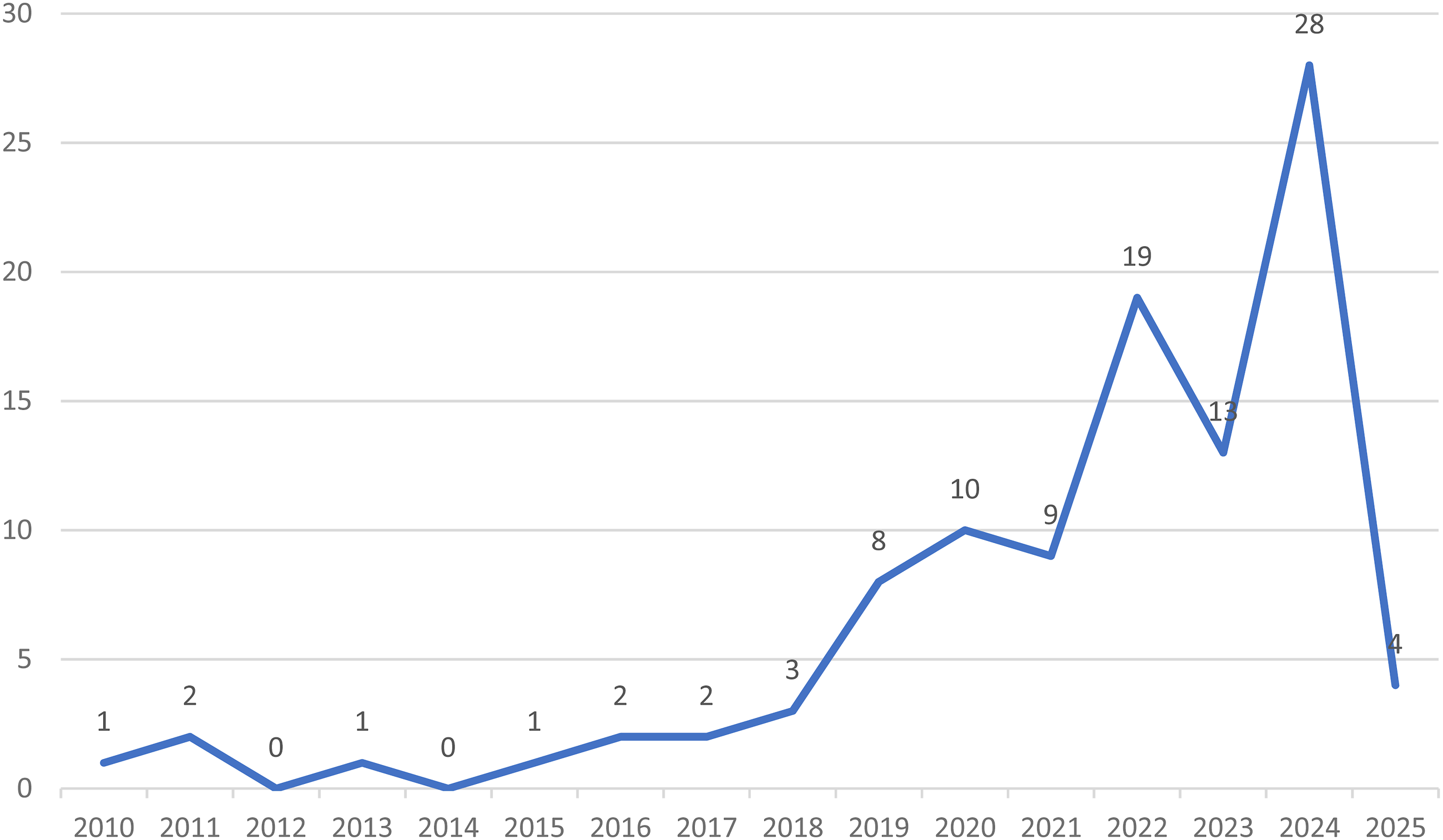
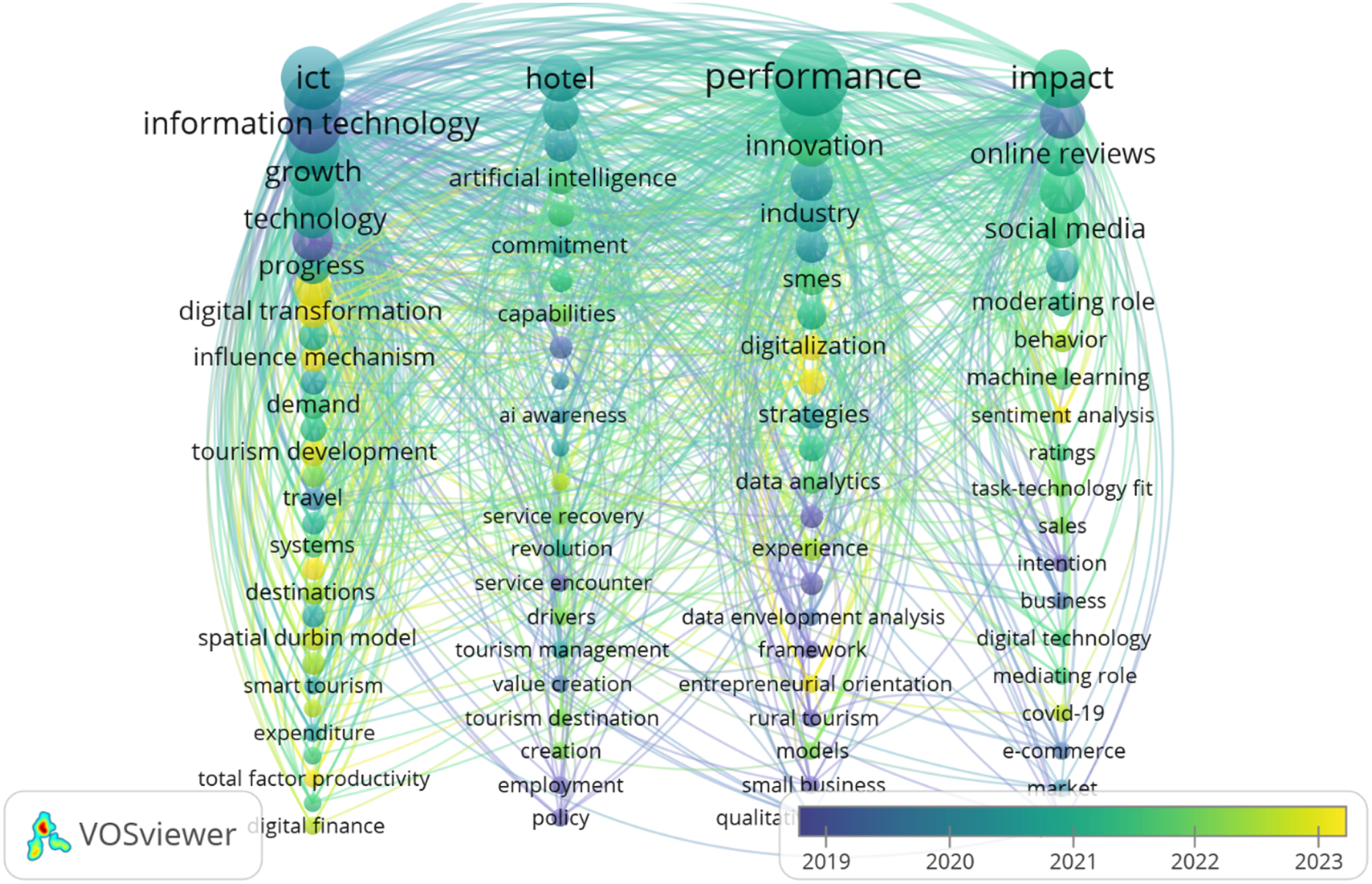
Subsequently, the analysis centres on co-occurring words, with keywords used in at least two co-occurrences; through cluster analysis, four clusters are identified, revealing closely associated keywords. Traditional technologies, primarily ICT, continue to receive the most attention, driving the adoption of research methods such as spatial econometrics; hotels serve as the main application field for DT and are closely linked to technologies such as AI; changes at the performance level concentrate on the impact of innovation and strategy; online reviews remain a focal point, with methods such as machine learning further exploring the value of data. Figure 4 illustrates this network of keywords derived from the co-occurrence matrix of keywords. Additionally, Figure 5 presents a temporal overlay visualisation of index keywords. Since 2023, the primary focus of tourism DT research has shifted towards spatial econometrics, productivity, digitalisation, and machine learning, indicating a deepening of DT research and a shift towards more advanced analytical approaches. Keyword co-occurrence clusters in research. Temporal trend and evolution of research themes.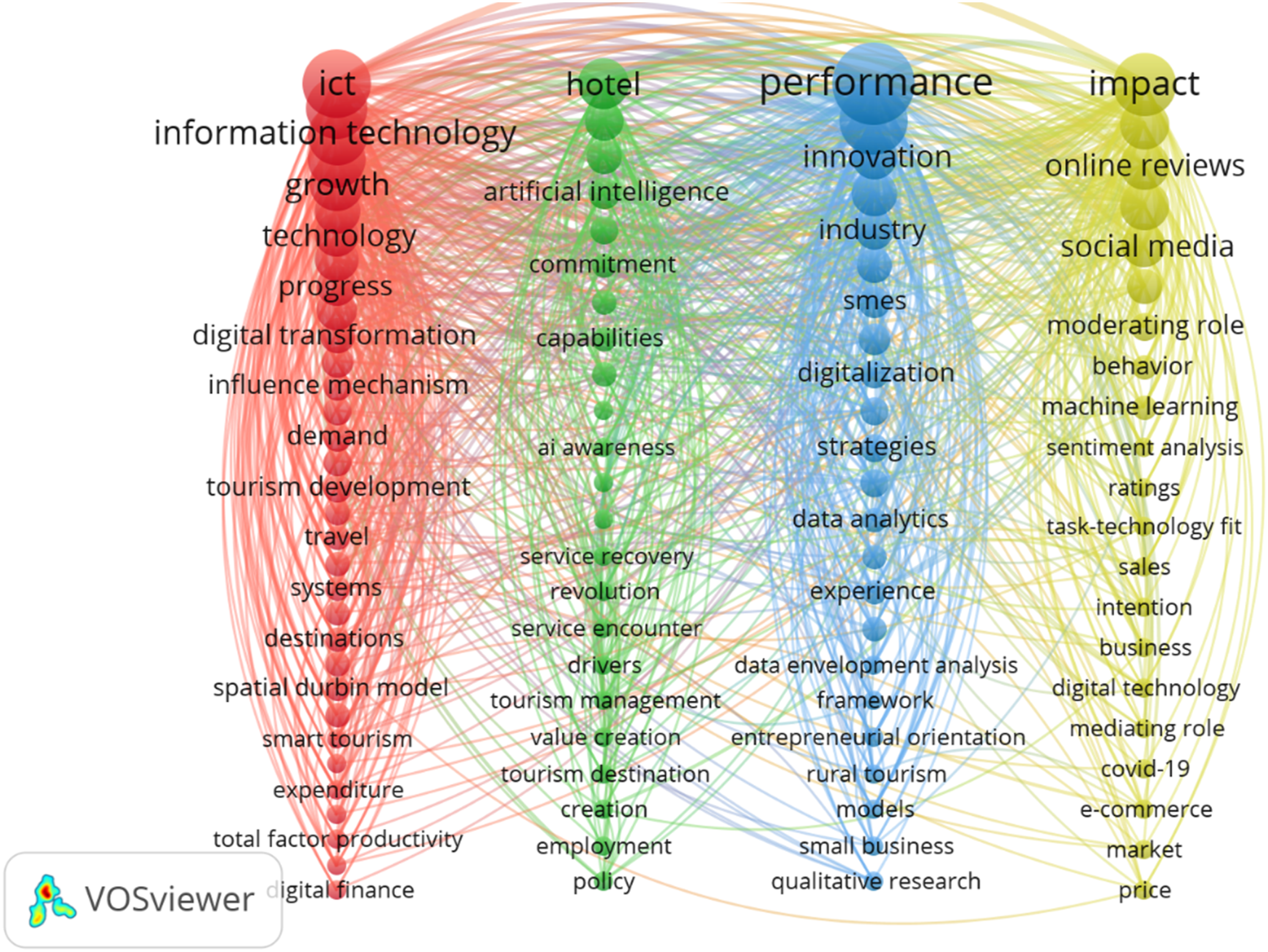
Theoretical foundations of DT
Disciplinary underpinnings of DT
From neoclassical economics, economic growth theory provides a foundational lens for understanding the relationship between DT and performance, with neoclassical and endogenous approaches offering different perspectives. Neoclassical growth theory (Solow, 1956) treats technological progress as an exogenous driver, while endogenous growth theory (Romer, 1986) emphasises innovation and knowledge as internal sources of growth. Quantitative DT indicators or big data has been incorporated into the Cobb-Douglas production function to become a production factor, in addition to capital and labour (Chu et al., 2025). The application of the Romer model or the Lucas model to incorporate DT into the endogenous growth framework (Cong et al., 2021) has sparked further discussion on the applicability and boundaries of traditional theories (Jones and Tonetti, 2020; Sadowski, 2019). Traditional industrial organisation theories (e.g., Structure–Conduct–Performance Framework) emphasise information asymmetry and vertical integration. However, DT reshapes these dynamics as enterprises leverage big data to achieve scale and informational advantages, while digital platforms reduce asymmetries through co-creation and shared pricing (Berné et al., 2015; Raguseo et al., 2017; Tang, 2023b). These innovations foster industry network development.
From the perspective of new institutional economics, DT redefines institutional arrangements by reducing transaction costs through smart contracts (Guttentag and Smith, 2017) and challenging conventional notions of asset ownership, access, and governance (Tang et al., 2024). Evolutionary economics emphasises innovation, adaptation, and cumulative change as key drivers of performance, aligning with the changes brought about by DT. Schumpeterian theory frames DT as creative destruction, disrupting existing markets while requiring enterprises to evolve alongside technological shifts to retain competitiveness (Schumpeter, 2013; Tang, 2023b). Beyond rational-choice assumptions, Veblenian evolutionary theory brings attention to social, psychological, and institutional co-evolution, highlighting how organisational structures, infrastructure, and stakeholder dynamics adapt in complex environments (Berné et al., 2015; Elsner et al., 2014). Similarly, new economic geography focuses on spatial spillovers and regional interdependence. DT facilitates interregional knowledge exchange, infrastructure diffusion, and resource flows, enabling transformation to transcend geographic origins and expand through broader spatial networks (Tang, 2023b).
Within the management field, information systems explain the utilisation and acceptance of technology, cybersecurity, and data governance, highlighting enterprise challenges in ensuring data integrity and compliance (Sharma and Sharma, 2023). From a marketing perspective, network theory elucidates the enhancement of the relationship between tourism distribution systems and various stakeholders (Raguseo et al., 2017). In strategic management, the resource-based view/theory argues that sustained competitive advantage derives from valuable, rare, inimitable, and non-substitutable resources (Barney, 1991; Lutfi et al., 2022). In operations management, enterprises integrate dynamic capabilities (e.g., real-time data analytics) into workflows to improve performance (Tang and Huang, 2023). In human resource management, DT transforms talent management and workflows, enhancing engagement but complicating work-life balance (Ye and Chen, 2024). In innovation and entrepreneurship, DT reshapes tourism into a technology-driven co-creation ecosystem, leveraging digital platforms and tools to catalyse collaborative innovation (Suder et al., 2022).
In the sociological and psychological fields, DT is shaped not only by technical capabilities but also by social processes and stakeholder negotiations (Fulk, 1993). From the generation side, DT is directed by societal needs, values, and conflicts, making technology a product of social processes. For example, the COVID-19 pandemic has promoted contactless services (Yoon et al., 2021), hybrid working, and digital human resource management (Ye and Chen, 2024). From the diffusion side, DT is connected to social networks, communication channels, and the social characteristics of adopters. For instance, consumers’ experience-sharing can influence others to adopt digital tools (Yoon et al., 2021). Participatory culture (Jenkins, 2006) underscores its reconfiguration of market power structures through user-merchant collaboration (Alexander, 2006; Raguseo et al., 2017), reinforcing inequality (Berné et al., 2015). Approach/avoidance theory (Liu et al., 2024b) and conservation of resources theory (Tan et al., 2024) demonstrate DT’s dual role in augmenting self-efficacy and depleting well-being, mediated by behavioural responses. Figure 6 provides a diagram of DT-related disciplines. The diagram of DT-related disciplines.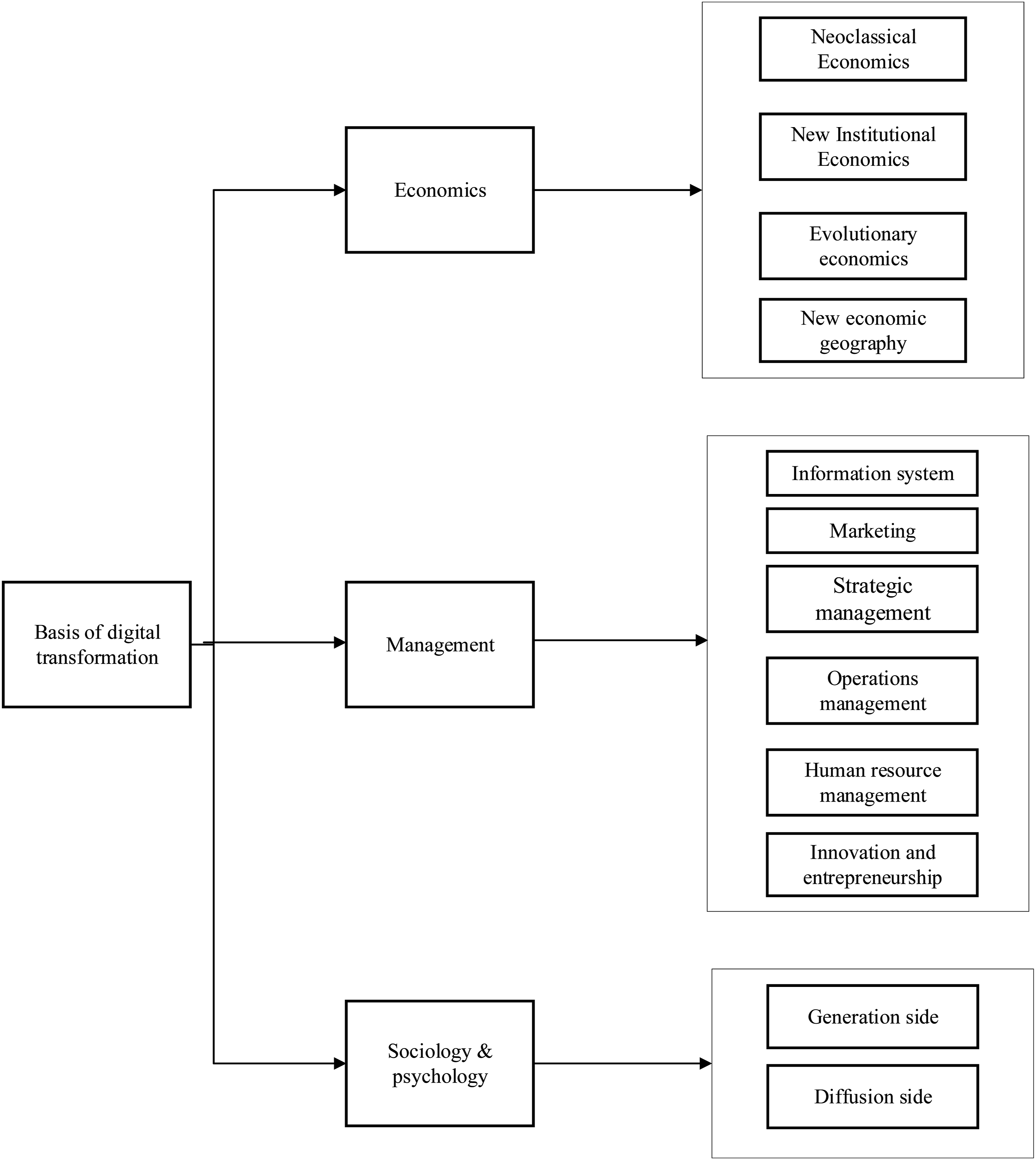
Interdisciplinary research on DT
Interdisciplinary research bridges disciplinary divides by synthesising shared conceptual frameworks to address complex scientific challenges, and over time, a new interdisciplinary field emerges (Sciences et al., 2005).
Diffusion of innovation theory explores how new technologies are adopted and diffused within organisations. The technology acceptance model (TAM) is widely used to understand tourists’ intentions to use specific technologies. Similarly, the unified theory of acceptance and use of technology (UTAUT) and the more recent UTAUT2, both developed based on prior models and integrated with other theories, provide a foundation for understanding the factors influencing the acceptance and use of digital technologies (Mejia and Torres, 2018). The Task-technology fit (TTF) model emphasises the importance of alignment between technology and the tasks it supports, particularly in the context of hotel enterprises (Su et al., 2024).
Many interdisciplinary theories from the fields of management, psychology, and organisational studies explain the changes DT brings to employees, as well as employees’ reactions and adaptations. For example, competitive psychological climate reflects the increasingly competitive work environment resulting from the emergence of AI and robotics (Li et al., 2019). In response to the stress and competency demands associated with DT, theories such as self-determination theory, the job demands–resources model, and alienation theory have been used to explain employees’ service behaviour and engagement (Ye and Chen, 2024). According to the conservation of resources theory, employees strive to obtain, retain, and protect resources when facing resource loss (e.g., job insecurity), which can lead to turnover intention (Khaliq et al., 2022). Therefore, under the lens of perceived organisational support, organisations are expected to value employees’ contributions and show concern for their well-being (Li et al., 2019).
Employee-level analysis
The landscape of DT
The enablers at the employee level include ICT and AI (5%). Some studies employ AI awareness (6%) and IT identity (1%) as constructs to assess employee perceptions of potential job and career impacts, while others contextualise DT as an analytical framework (4.5%) to examine the shifts in employee performance outcomes. All research samples are derived exclusively from contexts in the hotel industry.
DT influencing factors
According to the theories outlined in Section 4.2 and the socio-technical system approach (Baxter and Sommerville, 2011), we distinguish influencing factors into (1) individual-related, (2) technology-related, and (3) environment-related factors. The individual-level factors describe the individual’s competencies, such as AI awareness, emotional intelligence, insecurity and stress (Li et al., 2019). The technology-related factors include the characteristics of technology or the digital system, like comprehensiveness, format, reliability, and flexibility (Prentice et al., 2020). The environment-related factors describe employees’ work environment, including task and organisational characteristics, such as competitive psychological climate and job support (Khaliq et al., 2022).
Strategies to improve performance
Developing digital competence
Human resource strategies should prioritise sustained training programs to equip employees with competencies to manage the cognitive and behavioural impacts of technology adoption (Kong et al., 2021; Ye and Chen, 2024). However, merely possessing technological skills is insufficient; organisations ought to provide various soft skills, such as communication and analytical thinking, as enhanced organisational support can decrease turnover intention (Li et al., 2019).
Enhancing the working environment
Facing intentional job insecurity and powerlessness, organisations need to identify the factors causing an adverse competitive psychological climate (Kong et al., 2021), create a culture of trust, respect, and care (Khaliq et al., 2022), foster IT identity and emotional ability in their work (Prentice et al., 2020; Su et al., 2024), and implement regular social events and well-being sessions to further sustain performance.
Improving task-technology fit
The alignment between the hotel’s technology and its organisational processes is a critical factor (Su et al., 2024), and enterprises should support employees in participating in customer relationships and adapting to new roles in the changing environment caused by DT (Bakir et al., 2025), rather than competing with traditional positions, and design better work arrangements to empower employees with more work autonomy (Ye and Chen, 2024).
DT and performance
Review articles acknowledge the effect of DT on the overall performance of employees, including reductions in labour costs (Liu et al., 2024b) and positive impacts on productivity (Su et al., 2024). However, most studies point to the fact that the development of technology will replace employees’ jobs. On the one hand, DT-induced competition increases stress and job insecurity (Bakir et al., 2025), which in turn reduces efficiency (Prentice et al., 2020), culminates in burnout (Kong et al., 2021), and eventually increases turnover intentions (Khaliq et al., 2022; Li et al., 2019). On the other hand, while technology demonstrably displaces certain roles, it simultaneously fosters job crafting—a process that enhances employee competitiveness and productivity, particularly for those who derive meaning from their work (Liu et al., 2024b). In service encounters, the human presence remains highly valuable, particularly in critical incidents where technology plays a peripheral role, and reductions in labour costs through technology have minimal impact in employee-operated contexts (Melián-González and Bulchand-Gidumal, 2017).
Enterprise-level analysis
The landscape of DT
Research emphasises specific technologies, adoption attitudes and capabilities, and DT stages. ICT and related technologies (14.6%) and big data analytics (14%) are the most extensively studied enablers. Emerging technologies such as AI (1%), blockchain (1%), cloud manufacturing (1%), and IoT (1%) remain underrepresented. Digital capabilities—such as strategy formulation, marketing, innovation, orientation, and smart ecosystems—are examined in 7.1% of studies. Terms such as digitalisation (2.8%), which is broadly conceptualised as a DT state, along with DT maturity (3%), awareness (2%), and DE (1%) are also examined.
DT influencing factors
The technology, organisation, and environment framework is widely employed to identify factors for enterprises to adopt DT. Technological factors include relative advantage, cost of adoption, compatibility, and security (Sharma and Sharma, 2023). Organisational factors encompass organisational readiness, top management support, knowledge and competence, and organisational characteristics (Lutfi et al., 2022). Environmental factors include corporate social responsibility (CSR), infrastructure, government regulations, competition, and future expectations regarding the economic cycle (Liu and Jiang, 2024). Successful DT necessitates the symbiotic integration of technological infrastructure and soft paradigms (e.g., leadership, cultural adaptation).
Strategies to improve performance
Automating the operational process
DT enhances communication between higher and lower levels, minimising information distortion (Tang et al., 2024) and increasing operational flexibility (Tang and Huang, 2023). Additionally, optimisation algorithms and intelligent scheduling systems contribute to reduced processing time and energy consumption costs (Lu, 2024), while reducing manpower waste in workplaces (Sirirak et al., 2011).
Transforming organisational structure
DT flattens hierarchies, accelerates decision-making, and eliminates departmental silos, enabling agile resource reallocation (Tang et al., 2024). Big data and analytics refine decision-making amidst dynamic competition (Albayrak et al., 2021), facilitating real-time pricing, strategic investments, and predictive forecasting (Armillotta et al., 2024).
Creating a value co-creation ecosystem
By leveraging customer reviews and user profiles, enterprises can provide more personalised and customised products and services, thereby enhancing supply-demand alignment (Tang and Huang, 2023). Furthermore, the technology removes geographical and other communication barriers, amplifies market penetration, strengthens vertical and horizontal relationships (Berné et al., 2015), and fosters stakeholder collaboration and value co-creation (Tang et al., 2024).
Enhancing digital capabilities and knowledge management
Digital abilities mean dynamism, agility, proactiveness, risk resistance, and innovativeness (Abrate et al., 2020; Suder et al., 2022) and often align with other initiatives (Díaz-Chao et al., 2016), such as educational activities, organisational efforts, and business processes. Effective knowledge management is not just the use of technology; one reason for the failure of DT in enterprises is inadequate knowledge management, which directly affects performance (Pena et al., 2011).
DT and performance
While only 1.9% of studies focus on profitability, evidence suggests DT enhances enterprise profitability even during crises such as the COVID-19 pandemic (Liu et al., 2024a); for instance, small hotels can improve profitability by managing their online visibility across different forms of information mediation (Raguseo et al., 2017).
Efficiency is examined in only 1% of studies. Mariani and Visani (2019) integrate online ratings into data envelopment analysis models, which reveal that the efficiency scores shift for 2- and 3-star hotels. Abrate et al. (2020) demonstrate that dynamic capabilities positively correlate with operational efficiency.
Approximately 5.8% of studies link DT to productivity; DT can improve labour productivity (Díaz-Chao et al., 2016) and reduce performance gaps between industry leaders and laggards (Perez et al., 2022). However, tourism enterprises may exhibit short-term total-factor productivity (TFP) stagnation due to Baumol’s cost disease (Tang, 2023b) or inverted U-shaped relationships (Zhao and Li, 2024), with spatial spillovers and industry heterogeneity moderating outcomes. Enterprise traits (e.g., property rights, growth stage) further influence productivity (Tang et al., 2024).
Competitiveness is explored in 6.8% of studies. Real-time data drives dynamic pricing and strategic decisions (Armillotta et al., 2024), while competitor monitoring intensifies market fluidity (Cho et al., 2024), reflecting the constantly changing nature of the digital era.
Growth-focused studies are about 2.9%. Operator type can moderate the impact of IT expenditures on performance (Hua et al., 2020). Metrics such as revenue, profit, and stock returns gauge growth quality (Tang and Huang, 2023).
The largest proportion of studies (31.1%) examines overall performance, encompassing both financial and non-financial aspects (Buhalis and Leung, 2018; Song et al., 2024), such as booking cancellations and predicting bankruptcy or failure in hotel revenue management, organisational performance, and high-quality development.
Destination-level analysis
The landscape of DT
Key antecedents include ICT (13.5%), digital infrastructure (1%), AI (1%), big data (1%), digitisation (1%), DE and DFI (15.5%). Due to the applicability of advanced technologies, ICT remains the most popular technology at the regional level. DE and DFI, as closely associated outcomes emerging from DT, receive significant scholarly attention; however, consensus regarding their conceptualisation and measurement remains elusive.
DT influencing factors
At the destination level, influencing factors are mainly at the macro level, like crisis events (e.g., COVID-19, terrorism) (Yu et al., 2024), policy factors (e.g., infrastructure, public finance) (Zhang et al., 2023), market and investment factors (e.g., market constraints, service trade) (Adedoyin et al., 2020). Geographical distance and regional image further moderate DT efficacy (Guedes et al., 2023).
Mechanisms to improve performance
Research identifies diverse pathways through which DE elevates tourism performance. For instance
DFI further amplifies tourism growth by enhancing enterprise competitiveness and consumer expenditure (Zhang et al., 2023), financial market participation and entrepreneurial activity (Qin et al., 2022). The technology-organisation-environment framework highlights digital finance and internet-driven innovation (Liu and Jiang, 2024). Meanwhile, information intermediation mechanisms (Liu et al., 2024c) mediate the relationship between DE and regional tourism development.
DT and performance
Two studies verify the positive effect of DT on tourism competitiveness (Milicevic et al., 2020; Zhang and Zhang, 2024), and one study verifies the positive effect of DFI on the efficiency of tourism resource allocation (Qin et al., 2022). Some studies focus on overall performance (8.7%), including tourism resilience and destination high-quality development (Wu et al., 2023; Yu et al., 2024).
Most studies focus on growth. The relationship between DT and performance is multifaceted. From a spatial perspective, the DT of other regions can also impact the tourism growth of the local region (Wu et al., 2023), although the spatial spillover effect can sometimes be negative (Lee et al., 2023). Regarding the temporal aspect, DT may not influence tourism growth in the short term but does in the long term, as the use of technology is subject to a time lag (Lee et al., 2021) and operates with a threshold (Lee et al., 2023). Similarly, the DFI-tourism growth relationship may follow an inverted U-curve, peaking then declining when DFI intensity exceeds a threshold (Ma and Ouyang, 2023). The effect of DT on tourism growth is influenced by different variables, such as the level of DE development (Yu et al., 2024) and the stage of tourism development (Lee et al., 2021).
Methodological trends in DT-performance research
Summary of methods.
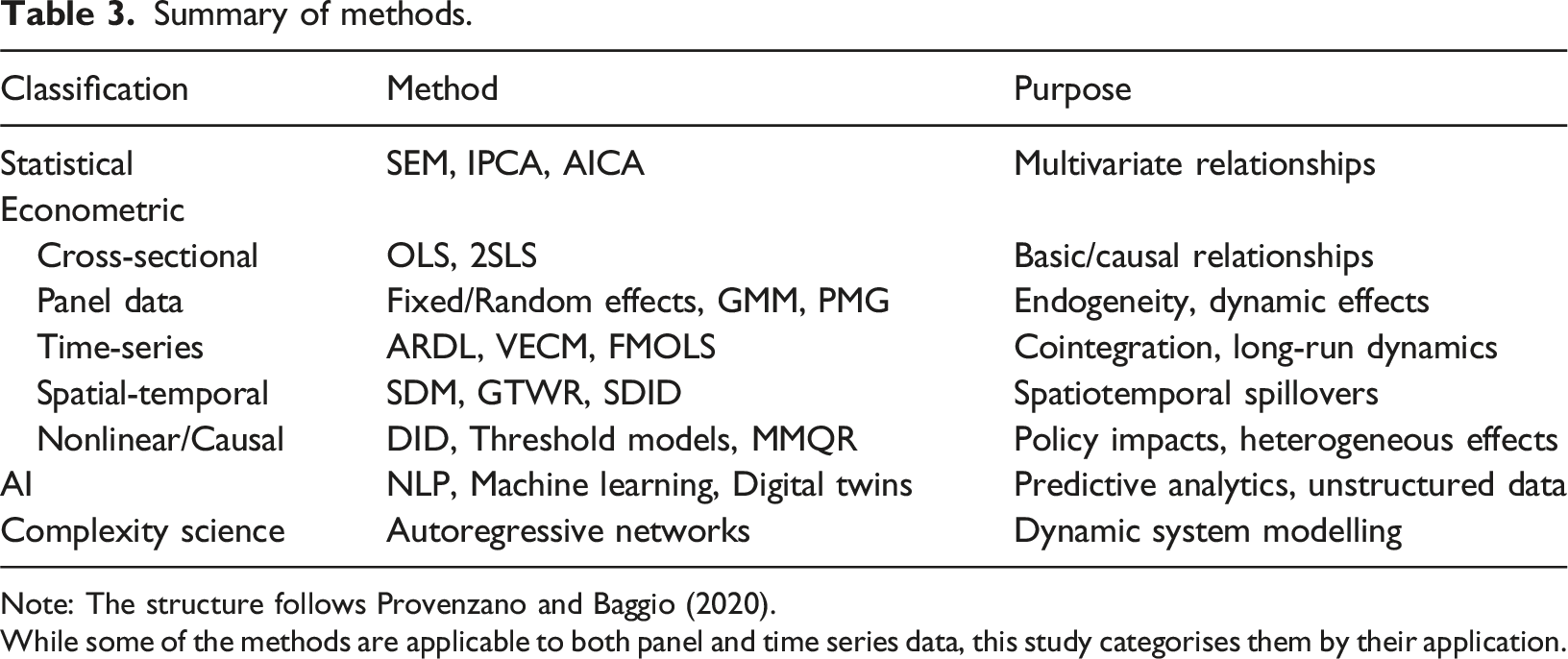
Note: The structure follows Provenzano and Baggio (2020).
While some of the methods are applicable to both panel and time series data, this study categorises them by their application.
Statistical analysis encompasses importance-performance competitor analysis (IPCA) and asymmetric impact competitor analysis (AICA) to evaluate the competition (Albayrak et al., 2021). Structural equation modelling (SEM) is widely employed to assess relationships between related constructs (Ye and Chen, 2024). The reliance on self-reported data (e.g., surveys and online texts) introduces risks of subjectivity, highlighting the necessity for triangulation. Emerging methods, such as simulated data modelling (Lu, 2024), show DT’s potential to enhance efficiency while addressing scalability challenges in resource-constrained contexts.
Econometric models serve as the methodological backbone, addressing endogeneity, heterogeneity, and spatial-temporal complexities. Panel data models such as system generalised method of moments (GMM) and pooled mean group (PMG) models capture the temporal dynamics by disentangling short- and long-term impacts (Tang, 2022). Time-series techniques, including autoregressive distributed lag (ARDL), resolve debates about short-term stagnation. The nonlinear ARDL (NARDL) captures asymmetric effects of digital adoption shocks, while vector error correction (VECM) and fully modified OLS (FMOLS) disentangle cointegration in dynamic systems (Rehman et al., 2020). Spatial-temporal models, such as geographically weighted regression (GTWR) and spatial Durbin models (SDM), quantify how the benefits of DT diffuse across regions (Ma and Ouyang, 2023). Nonlinear methods, including threshold models and method of moments quantile regression (MMQR), are commonly used to explain the impact across different quantiles of tourism development (Wu et al., 2023). The difference-in-differences (DID) approach is employed to verify the relationship between DT policies and tourism development, such as “China’s free trade” and “National smart tourism” policies (Tang, 2023a).
AI methods address challenges in data granularity and real-time analysis by using natural language processing techniques, such as LDA (Cho et al., 2024) and sentiment analysis (Albayrak et al., 2021) for topic modelling, and machine learning for predicting future business performance (Dioko and Guo, 2024). Lu (2024) employs simulated data to model scheduling and service production, offering insights for digital twin modelling and simulation.
Complex networks provide analytical perspectives on real-time data in a dynamic environment. Autoregressive networks combine the concepts of autoregression (AR) from time-series analysis with network structures to model dynamic pricing in the digital market.
Future research agenda and conclusion
Future research agenda
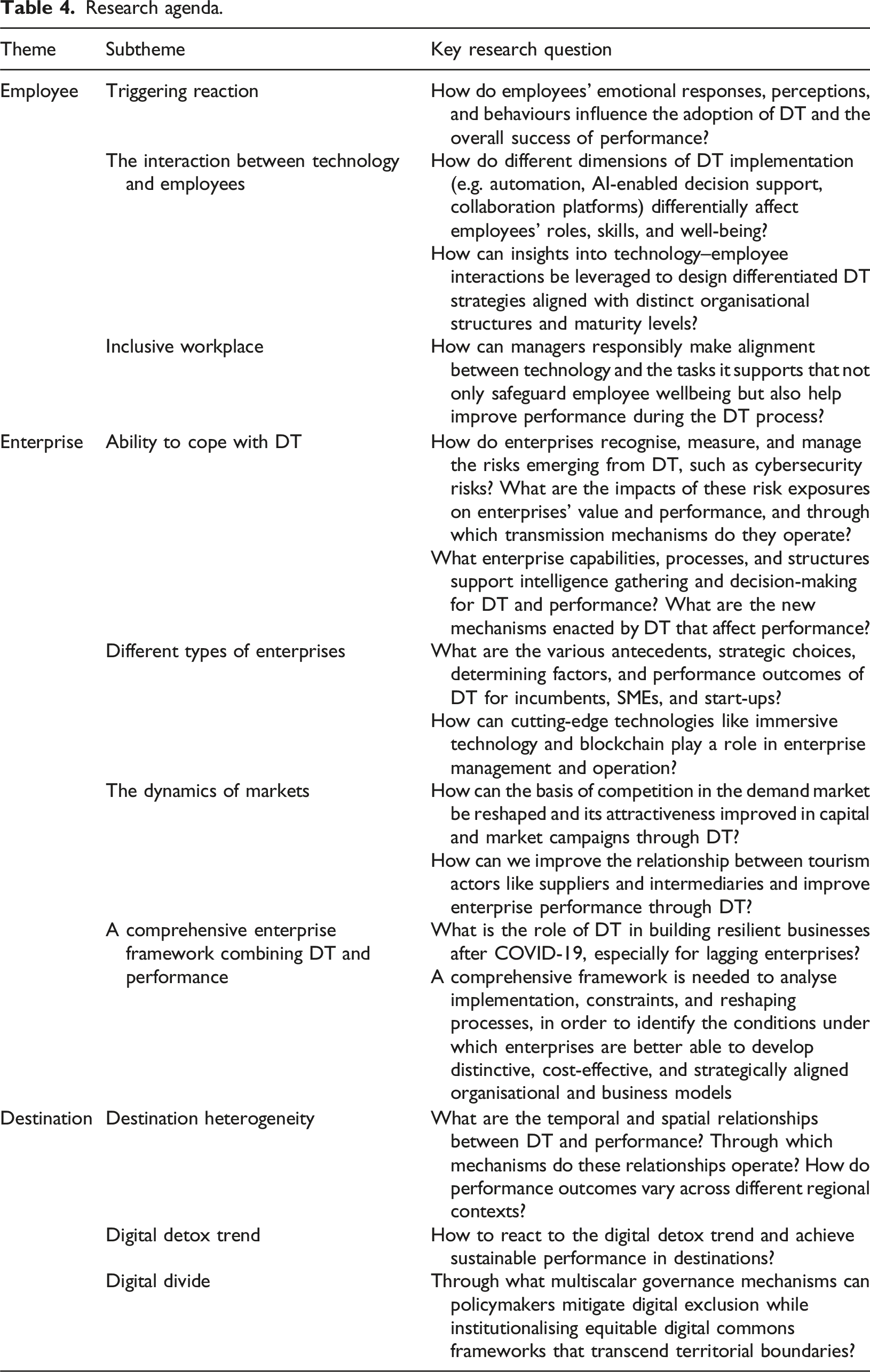
This section identifies the knowledge gaps that deserve future investigation and proposes future research avenues for analysing DT and performance in the tourism and hospitality industry.
Approximately 62% of review articles lack clear and explicit theoretical support, and a comprehensive theoretical framework clarifying the DT-performance nexus remains underdeveloped
This need for theoretical evolution is also evident in the field of Industrial Organisation. For instance, dynamic competition weakens the impact of market structure on effective competition; pioneering enterprises capitalise on their extensive and reproducible big data advantages to scale up production and achieve increasing returns to scale, disrupting perfect competition and contributing to the digital divide. This requires us to reflect on and update the entire analysis chain from market structure, corporate behaviour, to market performance, and develop new theoretical frameworks and analytical tools that are more adapted to the characteristics of the digital economy. Moreover, the advancement of the digital era calls for the update of classical theories (e.g., TAM, UTAUT, TTF) and the development of new theoretical perspectives and frameworks. While established theories, including network economy theory and internet-facilitated trade theory, have been applied to tourism research, their applicability can be significantly enhanced. This requires them to be more precisely contextualised within the specificities of the tourism industry and systematically aligned with ongoing DT trends, such as highly experiential and heterogeneous demand, dual physical–virtual spatial characteristics, distributed and complex supply chains, and real-time demand volatility with resource scarcity. Accordingly, future research should focus on fostering interdisciplinary theoretical synergy and delivering impactful practical guidance. For example, such disciplines as computer science, law and ethics, and economics need to be integrated to analyse the market power concentration, algorithmic bias against small operators, and opaque “black box” decision-making in digital platforms (OTAs, Airbnb). Also, it is necessary to theorising ‘Sustainability' in the digital age, and combine data science and political economy to question who benefits from DT and whether DT might mask deeper issues of resource privatisation and social inequity, and how DT can achieve true socio-ecological resilience and align with Sustainable Development Goals (SDGs).
Moreover, regarding the employee level research, only 16.5% of existing studies investigate how employees adapt mentally and physically to DT. Future efforts should strive to create more inclusive workplace designs (hybrid on-site/remote models, participatory decision-making, well-being support structures) to reduce turnover within the industry. At the enterprise level, DT not only brings risks such as management complexity and data privacy, but also offers opportunities. However, the understanding of how to utilise DT to generate unique performance outcomes remains limited and underexplored. At the destination level, given the diverse influencing factors and development conditions, the relationship between DT and performance is complex across both temporal and regional dimensions, such as the presence of spillover effects, offsetting effects of related policies, and negative shocks. These prospective research themes address urgent concerns regarding fairness and inclusivity and must align with the SDGs to promote the role of tourism in enhancing sustainable socioeconomic development, improving well-being, education, and social equity, among others.
The rapid development of DT also emphasises the need and potential to update existing methodologies to capture DT’s dynamic, complex impacts on tourism performance. Initially, diverse methodological approaches are needed to explore both the depth and breadth of data. While big data holds significant potential to advance organisational science, its application often remains limited to surface-level phenomena (e.g., sentiment analysis of online reviews). Spatial methods represent one crucial future research direction in methodological advancements in understanding DT. The traditional “Law of Distance Decay” is being challenged and reconstructed in the digital era; however, this does not mean that “space” is no longer important; instead, the connotation of “space” and the spillover mechanism have become more complex and multidimensional. Some new trends have emerged: spillover is no longer a single geographical concept, it is a hybrid space where physical and virtual environments interweave and coexist (Aslesen et al., 2019); distance decay has not completely failed, for implicit knowledge that requires trust, complex collaboration, and inspiration, geographic proximity is still crucial and even more valuable (Li et al., 2025); new spillover models are taking the lead, and virtual cluster spillovers across geographical boundaries and “core-periphery” hub-and-spoke spillovers are becoming more mainstream models in the digital economy era (Shen and Zhang, 2024). Research on these issues requires a breakthrough in traditional spatial analysis methods, especially the transmission mechanisms, so that different entities can better integrate into the global digital network and capture the “spatial spillover” dividends of the new era.
Additionally, integrating machine learning with complex network analysis offers a promising avenue for capturing the dynamic and real-time impacts of DT in the digital era. For example, dynamic graph neural networks and temporal network embedding can be used to analyse real-time system diagnostics. These new methodologies can help handle high-frequency asynchronous data (e.g., social media pulses vs quarterly economic indicators), resolve multi-scale network conflicts (e.g., micro-behaviours vs macro-economic resilience), and quantify intangible value co-creation in tourism digital ecosystems.
Regarding data sources, the reliance on cross-sectional primary data limits the potential for longitudinal analysis. Future studies should combine cross-sectional primary data with longitudinal secondary data to gain further insights into the dynamic roles of DT. Furthermore, expanding data sources—such as stakeholder surveys, interviews, social media analytics, and mobile phone tracking—and enhancing the robustness of validity checks on self-reported data are crucial for reducing subjectivity. The dataset exhibits pronounced geographical concentration, with the majority of observations sourced from Asian economies (e.g., China and Thailand) and European nations (e.g., Spain, the UK, and Italy). Limited representation comes from Middle Eastern, American, Australian, and African contexts. Notably, a critical gap persists in cross-national comparative analyses, particularly given the divergent technological readiness levels across these regions. In addition, a longitudinal research design is necessary to capture the long-term dynamic effects of DT on performance.
Research agenda.
Conclusion
Overall, the existing literature presents diverse perspectives on the relationship between DT and performance, resulting in significant fragmentation across studies. This article makes three key contributions to the literature. First, it provides an interpretative framework to promote a deeper understanding and a more coherent systematisation of how DT influences performance in tourism. Second, it offers a comprehensive overview of the theories and methodologies employed, which will be valuable for future comparative studies. Third, it identifies key antecedents of DT adoption, influencing factors, strategies, and the relationships between DT and performance at the employee, enterprise, and destination levels, providing insights into the more efficient utilisation of DT across different levels. Finally, this study outlines future research directions to further contribute to the literature on DT and tourism performance.
Supplemental Material
Supplemental Material - Digital transformation and tourism performance: A systematic literature review and research agenda
Supplemental Material for Digital transformation and tourism performance: A systematic literature review and research agenda by Qi Zhang, Jason Li Chen, Gang Li, and Xiaoying Jiao in Tourism Economics.
Footnotes
Acknowledgements
The authors gratefully acknowledge the valuable comments and constructive suggestions provided by the anonymous reviewers.

Funding
The authors received no financial support for the research, authorship, and/or publication of this article.
Declaration of conflicting interests
The authors declared no potential conflicts of interest with respect to the research, authorship, and/or publication of this article.
Supplemental Material
Supplemental material for this article is available online.
Author biographies
References
Supplementary Material
Please find the following supplemental material available below.
For Open Access articles published under a Creative Commons License, all supplemental material carries the same license as the article it is associated with.
For non-Open Access articles published, all supplemental material carries a non-exclusive license, and permission requests for re-use of supplemental material or any part of supplemental material shall be sent directly to the copyright owner as specified in the copyright notice associated with the article.
