



Abstract
Competitiveness is a well-discussed research topic in various disciplines and fields, amongst which competitiveness in the visitor economy is a prominent research stream. With rapid transformations in the visitor economy, destinations, regions, sectors and businesses have had to adapt – with varying degrees of success – to internal and external changes, significantly affecting their competitiveness. Existing studies are dominantly based on a few pioneering models and indicators and relatively few empirically challenge the assumed causality of competitiveness factors at different scales. This article, therefore, conducts a systematic literature review of competitiveness in the visitor economy post-2005 and examines the intellectual and conceptual structures of the extant literature as a platform to identify knowledge gaps and emerging trends and perspectives for future research.
Introduction
Competitiveness is a complex, contingent and multi-faceted concept which has long fascinated tourism researchers. Historically, policy makers at the national level viewed competitiveness as the ability to generate a positive balance of payments, clearly relating it to international trade and competitiveness (Chaudhuri and Ray, 1997). At the industry level, competitiveness is viewed as the collective ability of firms in an industry to earn foreign exchange by competing with foreign industries (Chaudhuri and Ray, 1997). At the firm level, it can refer to the ability of the firm to compete for market share and customers in a competitive business environment or market segment. These different scalar perspectives have contributed to shifts in the focus of research. Although the original concept of competitiveness was proposed by economists ranging from the early work by Smith and Ricardo, to the later formulations by Porter and others, competitiveness has become increasingly important in management scholarship (Bhawsar and Chattopadhyay, 2015; Tsai et al., 2009).
Considering the different levels of competitiveness and relativity of the concept, defining and measuring tourism competitiveness constitutes a separate research question (Aguiar-Barbosa et al., 2021) beyond the reach of this article. The most commonly cited definition, reflecting the traditional focus on national economies, is from the OECD as ‘the degree to which a country can, under free and fair market conditions, produce goods and services which meet the test of international markets, while simultaneously maintaining and expanding the real incomes of its people over the longer term’ (Roy, 2011: 52). This contrasts with the World Economic Forum’s (WEF) broader macroeconomic definition as ‘the set of institutions, policies, and factors that determine a country’s level of productivity’ (Schwab, 2018: 43). At a different scale, tourism destination competitiveness came to be understood in terms of competitive advantages based on the price and non-price components of tourism offerings (Firgo and Fritz, 2017). The WEF (2019) defines the competitiveness of travel and tourism as ‘the set of factors and policies that enable the sustainable development of the Travel and Tourism (T&T) sector, which in turn, contributes to the development and competitiveness of a country.’ A destination’s competitiveness, however, not only directly affects visitor numbers and income but also indirectly affects tourism and hospitality businesses such as hotels, tour operators, destination management organisations, airlines and other tourism-related industries such as retailing (Ritchie et al., 2000; Tsai et al., 2009). Hassan (2000: 239) argued the need to ‘examine the relationships among all stakeholders involved in creating and integrating value-added products to sustain resources while maintaining market positive relative to other competitors’ in the context of destination competitiveness. Increasingly, competitiveness in the visitor economy, which refers to the tourism and hospitality sectors and other interdependent sectors that involve visitor-related economic activities, has come to be considered a multi-level and dimensional construct that requires a broad conceptualisation that has moved away from its narrower economic origins.
Since the 2005 Tourism Economics special issue on ‘Tourism competitiveness’ (Pashardes and Sinclair, 2005), there has been extensive additional research, with important developments in both the conceptualisation and measurement of tourism competitiveness, and significant changes in the research landscape. Research on competitiveness ranges from input-orientated to output-orientated studies, as well as balanced mixed approaches. In terms of inputs, price differentials, human capital, infrastructure and resources have all been identified as important factors in competitiveness (Ivanov and Webster, 2013; Li et al., 2013; Mangion, et al., 2005). Hence, the effective deployment of resources in a destination or business can enhance competitiveness and, ultimately, productivity and performance (Blake et al., 2006; Mendieta-Peñalver et al., 2018). There has also been increasing focus on quality, rather than quantity, measures of tourism exports and receipts, innovation, social systems and cluster effects as key determinants of competitiveness in the visitor economy (Benur and Bramwell, 2015; Pejanović et al., 2017). It is therefore important to consider the influence of the internal (e.g. infrastructure, resources, safety and security) and external (e.g. inflation, political-economic environment and disasters/crises) environment of a destination (Blanke and Chiesa, 2013; Kim et al., 2019) as the research landscape is shifting. In contrast, output-orientated competitiveness studies tend to focus on performance measures such as productivity, GDP per capita, income, export performance and employment (Dogru et al., 2020; Gómez-Vega and Picazo-Tadeo, 2019; Knežević Cvelbar et al., 2016). However, it is recognised to be important to look beyond GDP measures of competitiveness, for example, considering social and environmental implications and well-being when (re-)conceptualising competitiveness in the visitor economy (Aiginger, 2013; Nguyen et al., 2019; Önder et al., 2017). Additionally, with rapid digital transformations of the visitor economy and the emergence of smart tourism destinations, the competitiveness of the platform or sharing economy (e.g. Airbnb and Uber) and the implications of new technologies and intelligence systems pushes further the boundaries of competitiveness in the visitor economy (Zekan, et al., 2019).
Despite the widening focus of competitiveness research, there are some limitations in the current literature. First, much of the focus has been on the repetitive application of tourism-specific indicators and measures of competitiveness, developed by Crouch and Ritchie (1999) and Dwyer and Kim (2003), to different times and contexts (Cronjé and Du Plessis, 2020; Koc, 2009). Secondly, this has also meant relative neglect of the profound challenges to competitiveness arising from digital transformations and rapidly changing environments and policy agendas (such as the sharing economy, smart destinations, sustainability and welfare). Thirdly, because many destination competitiveness studies are based on combined performance measures, there have been few empirical studies challenging the assumed causality of the different competitiveness factors at the destination scale (and indeed at the regional or sectoral and firm levels). This significantly undermines the identification and analysis of the impact of unobserved and emerging factors of competitiveness. The COVID-19 pandemic has also fundamentally changed the context of, but if anything has increased the importance of, competitiveness as the key to resiliency and survival of firms and destinations in the visitor economy. Henceforth, there is a need to assess the extent to which the extant literature on competitiveness addresses, or needs to address, emerging trends and perspectives in the changing research landscape.
Responding to these changes, this article conducts a systematic literature review of competitiveness in the visitor economy (hereafter visitor economy will refer to the overall tourism and hospitality sectors unless stated separately) post-2005. It examines the intellectual and conceptual structures of the existing literature as a platform to identify knowledge gaps and emerging trends and perspectives for future research. This study represents one of a small number of (systematic) literature reviews on the competitiveness of the visitor economy. Existing review papers on competitiveness include Tsai et al. (2009) qualitative review paper covering both tourism and hospitality sector competitiveness, and Koc (2009) review of tourism competitiveness research (at the national level) using descriptive statistics and summaries, covering publications in the top 10 country markets in the top three tourism and hospitality journals between 1997 and 2006. Roy (2011) also conducted a qualitative review of the competitiveness literature in the service sector, with specific reference to the hospitality context; this is one of the few review articles that differentiates hospitality competitiveness from tourism or destination competitiveness. More recently, Lee (2016) conducted a qualitative review of international business, tourism and migration research to understand the structure of the multi-dimensional framework of country attractiveness from a sustainable development perspective. Taking a broader perspective, Azzopardi and Nash (2017) have reviewed the key conceptual models of tourism competitiveness – Crouch and Ritchie, Heath, and Dwyer and Kim – examining their applicability to different destination contexts. In terms of methodology, Estevão et al. (2019) is one of the few review papers that has conducted a bibliometric analysis of tourism competitiveness, covering articles published from 1992 to 2016, but offers a limited critical appraisal of the existing literature and emerging research themes and approaches.
Most recently, Cronjé and Du Plessis (2020) reviewed the relevant literature from 1997 to 2018, identifying different perspectives on tourism destination competitiveness research, and Aguiar-Barbosa et al. (2021) analysed the evolution of 130 definitions of tourism competitiveness over two decades (1998–2018) using both qualitative and quantitative analyses. However, these review papers do not address the intellectual and conceptual structure and adopt purely qualitative or quantitative review methods. Hence, this current article aims to provide a comprehensive overview of the existing literature on competitiveness post-2005 using both qualitative and quantitative analyses to identify key theories, trends and research gaps. Since most previous reviews have covered pre-2000s research publications, this study will collect the literature post-2005. However, key literature published before 2005 will also be covered in the citation analysis. This provides a platform to address a future research agenda that engages with the new trends, challenges and issues emerging in the visitor economy.
Research design
To examine competitiveness in the visitor economy within the tourism and hospitality literature, a systematic literature review was undertaken of academic articles indexed on Scopus and the Web of Science databases from 2006 to 2020. A systematic review can explicitly identify, select and critically review relevant research based on a clear research question (Moher et al., 2009). The method has been widely adopted in the tourism and hospitality discipline (Pahlevan-Sharif et al., 2019), including tourism economics (Song et al., 2012).
Data source
Data were retrieved from two large databases: Scopus and the Web of Science. These are key data sources that are considered to be the most comprehensive sources of scholarly articles in social sciences (Vieira and Gomes, 2009). Scopus covers over 22,000 titles from over 5000 international publishers and the Web of Science covers over 28,000 journals from cross-disciplinary research. These databases ensure the reliability and validity of the retrieved articles (Gomezelj, 2016). The data used for this study were collected in November 2020, while the search was confined to the period of 2006–2020.
Article selection
The relevant literature was identified via a search strategy of the key data sources from 2006 to the present. Several search criteria were adopted. Only full-length empirical and review articles and those written in English were included, excluding other contributions, such as conference papers and book chapters, and all non-English language papers. The keywords ‘competitiveness’, ‘tourism’ and ‘hospitality’ were used to build the target literature sample. A Naïve Boolean search using the following terms ‘competitiveness AND tourism’ and ‘competitiveness AND hospitality’ were conducted on both databases. Although the authors have constrained the search on publications to be specific to the visitor economy, the search was not restricted to tourism and/or hospitality specific sources. A total of 2,729 articles were directly extracted from the two data sources. Duplicates were removed, leaving 1,152 articles. The initial search was conducted based on their titles, abstracts and keywords, and subsequently, the titles and abstracts have been manually screened to further select the literature that focusses on competitiveness in tourism and/or hospitality. To reduce potential personal bias, the data screening and last step of the selection process was conducted by multiple researchers and cross-check within the research team. After screening, 487 articles remained, and an additional 146 articles were removed as the studies were not directly focusing on the competitiveness of the visitor economy. 341 full-text articles were assessed as being potentially eligible. However, despite all the included journals in the database being peer-reviewed, there was considerable variety in the journal quality. It was necessary, therefore, to filter the data by sources included in the ABS and SSCI database, which led to the exclusion of 222 articles, leaving a final sample of 119 eligible articles related to competitiveness in tourism and/or hospitality. The results of the literature search are outlined in Figure 1. Flow of literature search.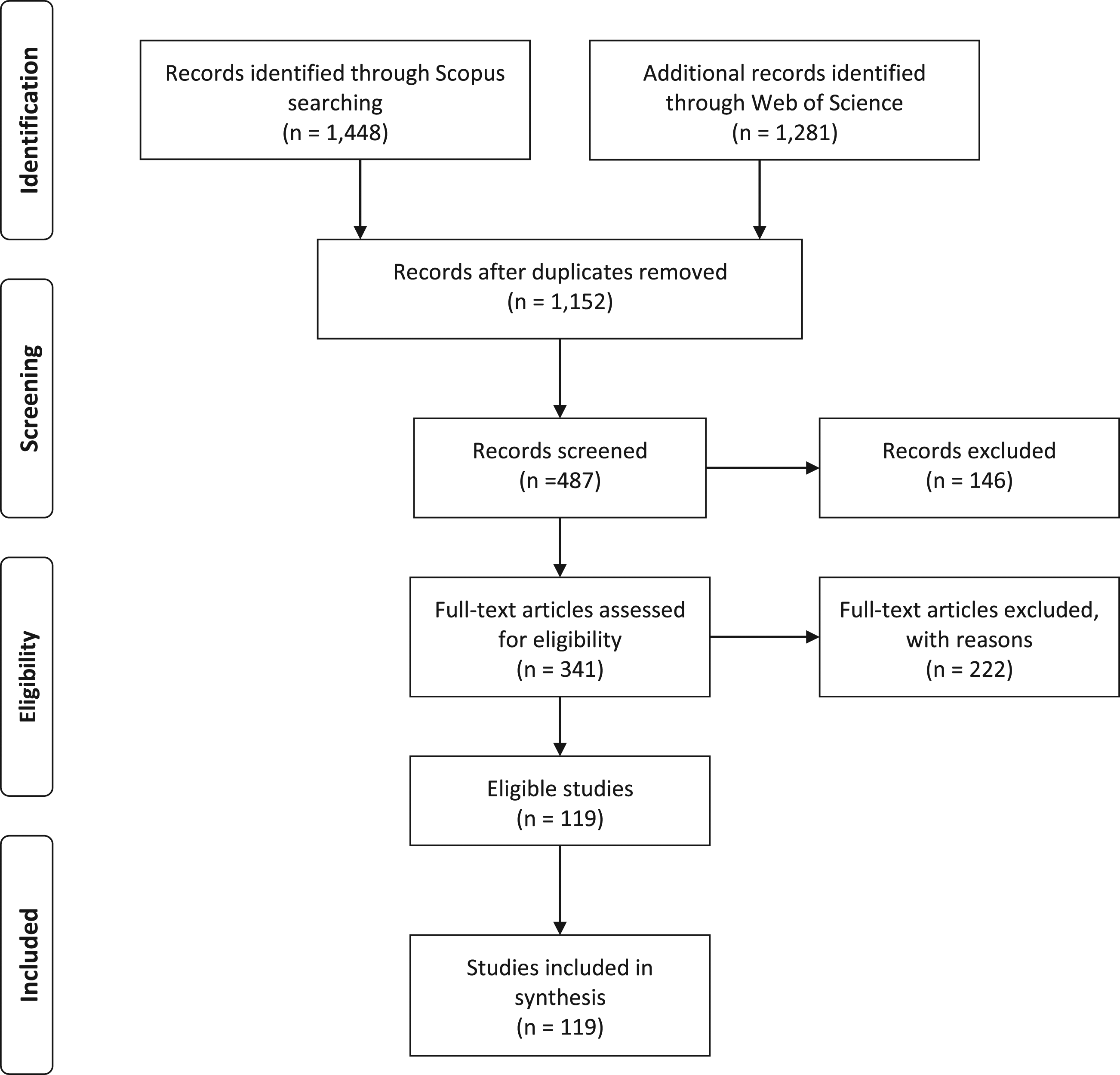
Data analysis
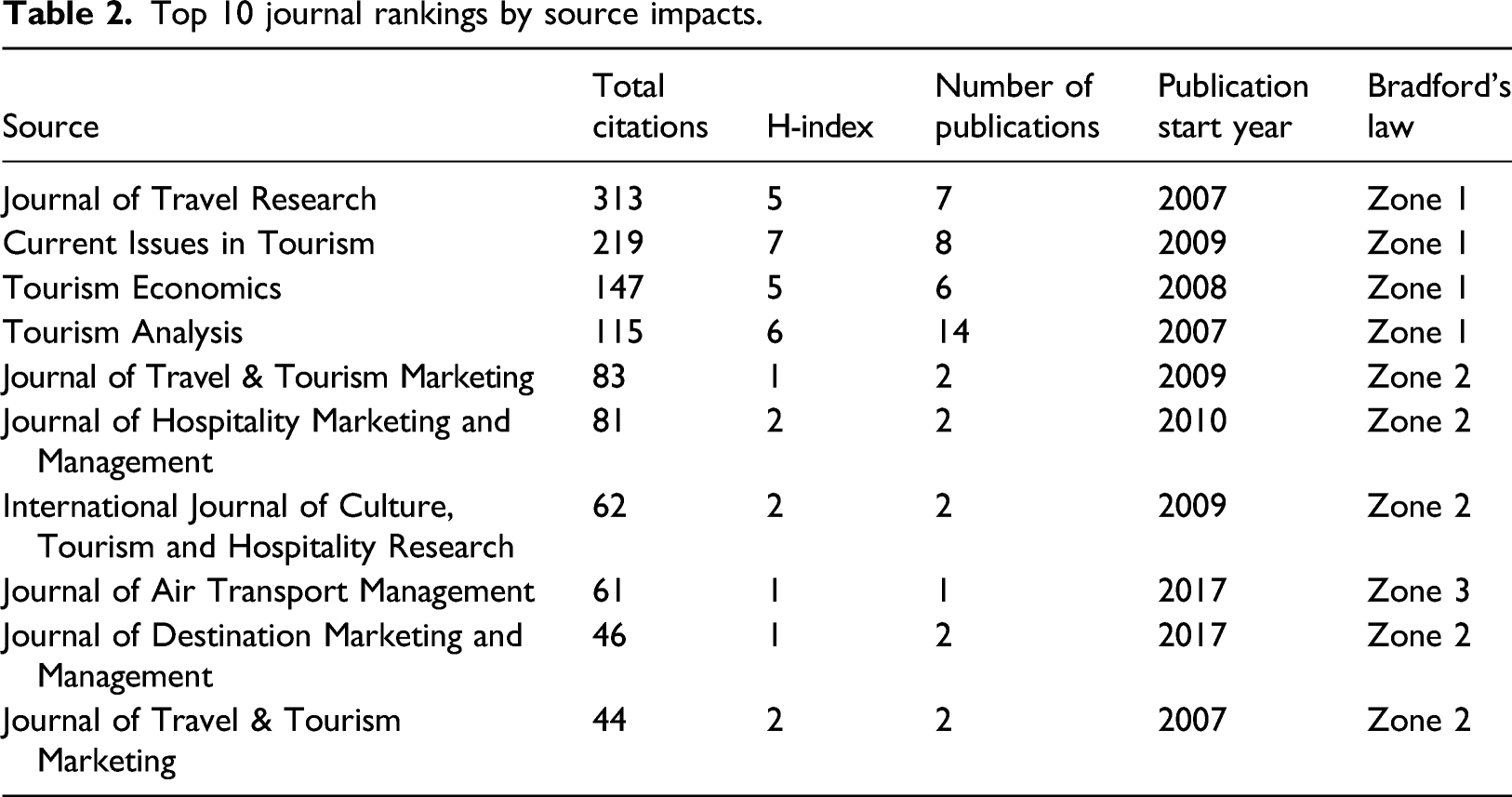
For the bibliometric analysis, this study used the R-package, bibliometrix, and its web-based interface, biblioshiny (Aria and Cuccurullo, 2017). An overview of the authors and publications are presented with descriptive analyses of the collected literature. To analyse the core sources and authors, source impact and total citations per year have been investigated. The core sources were identified by using Bradford’s law where sources are divided into three zones: Zone 1 refers to highly productive sources, Zone 2 is moderately productive and Zone 3 is low productive sources (Mayr, 2013).
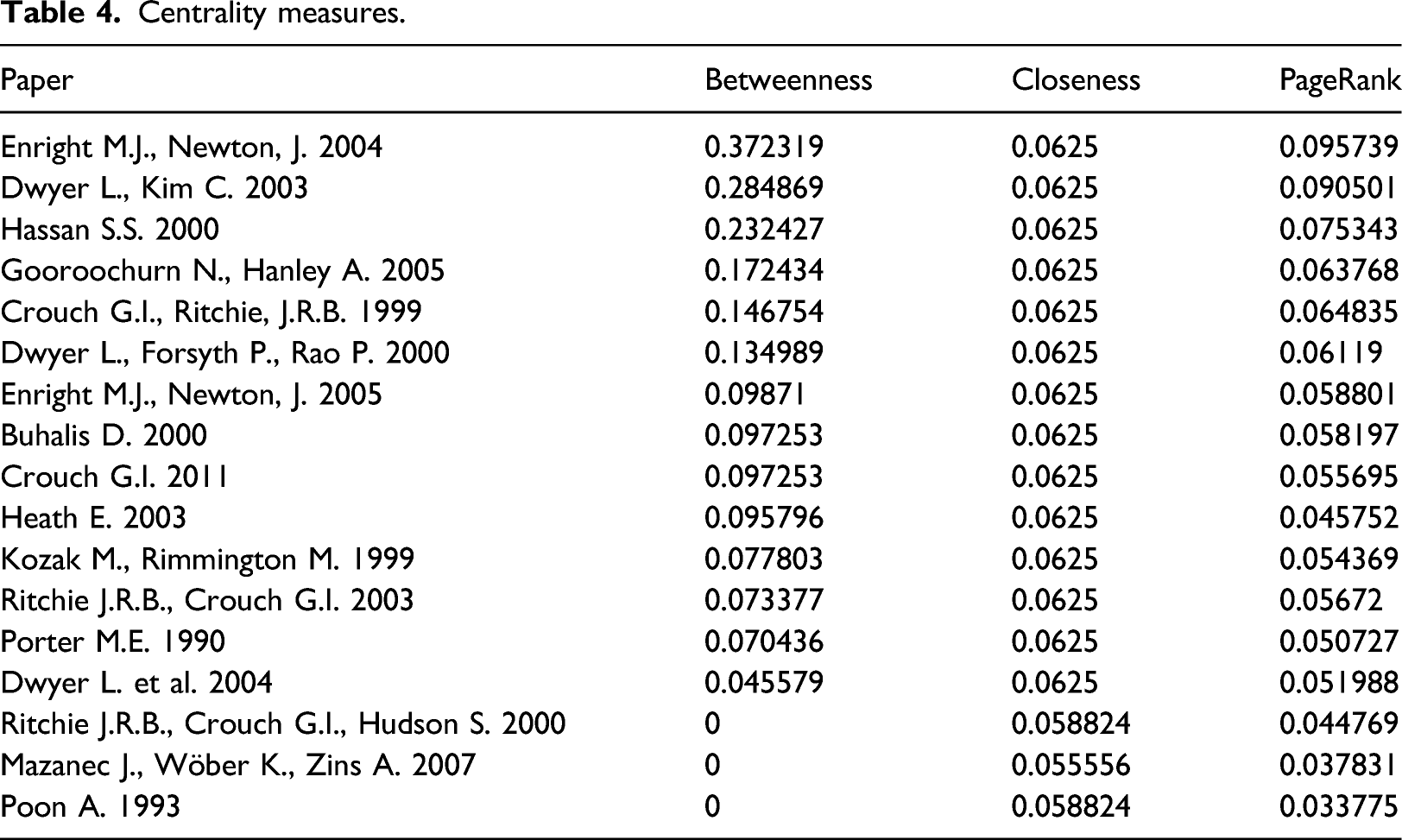
Core areas of study and key themes are imperative for linking varied research streams and generating future direction of research. Co-citation network analysis and thematic maps with the author’s keywords are used to describe the knowledge structure of the research on competitiveness in the context of the visitor economy and to help to identify and connect different research areas. In the co-citation networks, if two references are cited by one paper, it is termed a co-citation (Uddin and Khan, 2016). The nodes in the network indicate the cited papers and the edges in-between stand for the co-cited intensity of two papers. A high co-citation intensity indicates the two papers focused on a similar topic or shared a similar conclusion (Aria and Cuccurullo, 2017). Based on the network analysis, the characteristics of the networks are analysed by centrality measures: betweenness, closeness and degree. A paper with high betweenness implies that it is a key connector that links other papers together (Yin et al., 2006). Such measures provide understanding into the influence of the papers within the network in terms of flow and spread of information. Closeness centrality reflects the extensivity of influence over the entire network as it measures the proximity between the papers. The higher the measure of closeness, the quicker the spread of information in the network. PageRank, a measure of degree centrality, was estimated using bibliometrix to reflect the influential papers which are associated beyond the direct connections with other papers (Aria and Cuccurullo, 2017; Cambridge Intelligence, 2020; Xie and Huang, 2014) and is able to reflect wide-reaching influential papers in the network. The co-citation network analysis is adopted to summarise systematically the themes of competitiveness studies in the visitor economy literature.
In the network analysis, the co-occurrence of authors’ keywords was summarised into clusters by cluster analysis. These themes were analysed using thematic maps split into four quadrants based on the approach of Callon et al. (1991) and Cobo et al. (2011): 1. Motor themes (top-right): strong centrality + high density = well developed and important for structuring research field. 2. Niche themes (top-left): low centrality + high density = well developed internal ties but unimportant external ties (only marginal importance for the field), that is, very specialised and peripheral in character. 3. Emerging (or declining) themes (bottom-left): low centrality + low density = weakly developed and marginal [Note: a very low centrality and low density imply a declining theme]. 4. Basic themes (bottom-right): high centrality + low density = important but not developed.
The thematic maps facilitate the identification of future research directions (Aria and Cuccurullo, 2017).
Findings
Bibliometric descriptive statistics
Descriptive statistics of the literature on tourism/hospitality competitiveness.
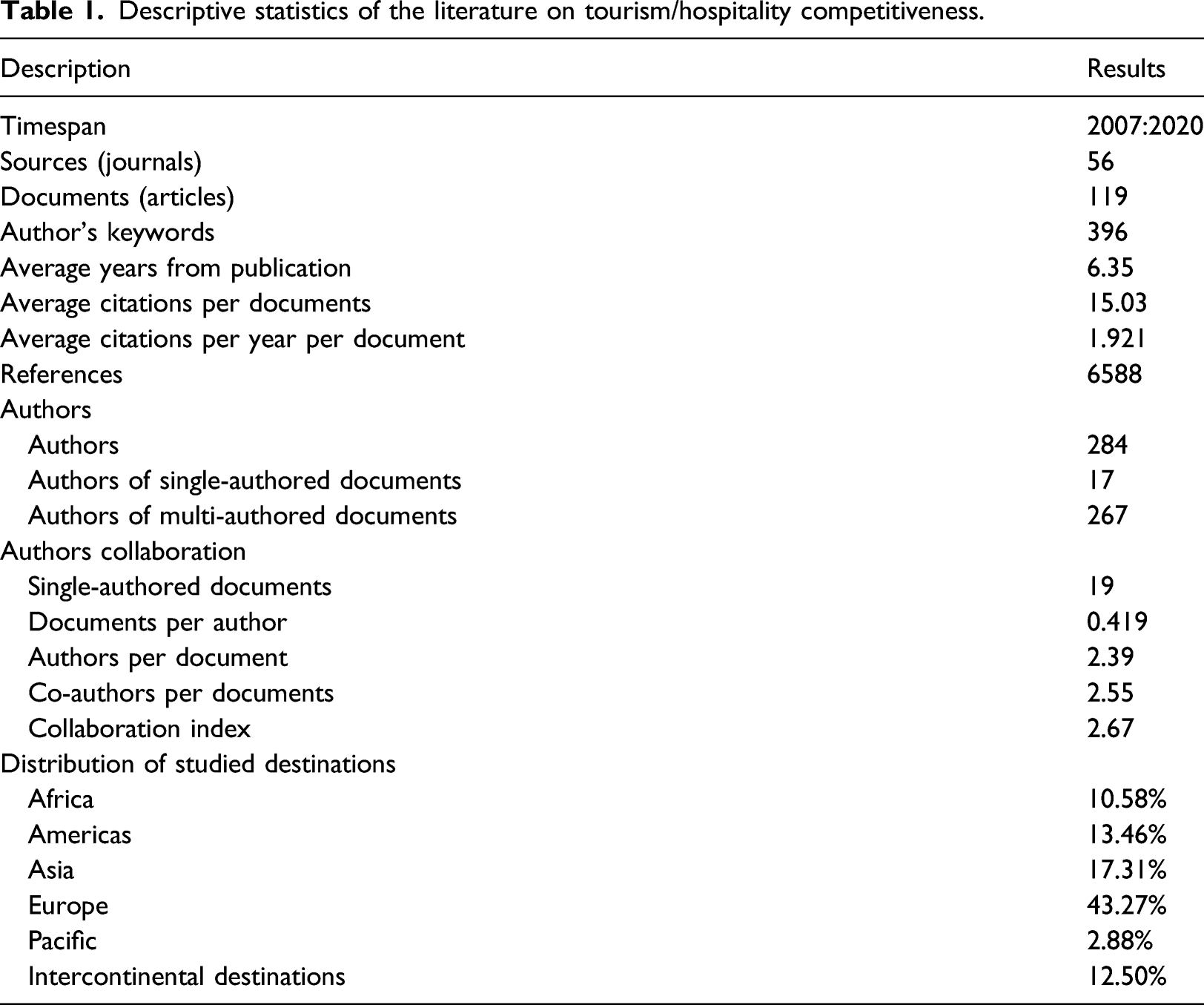
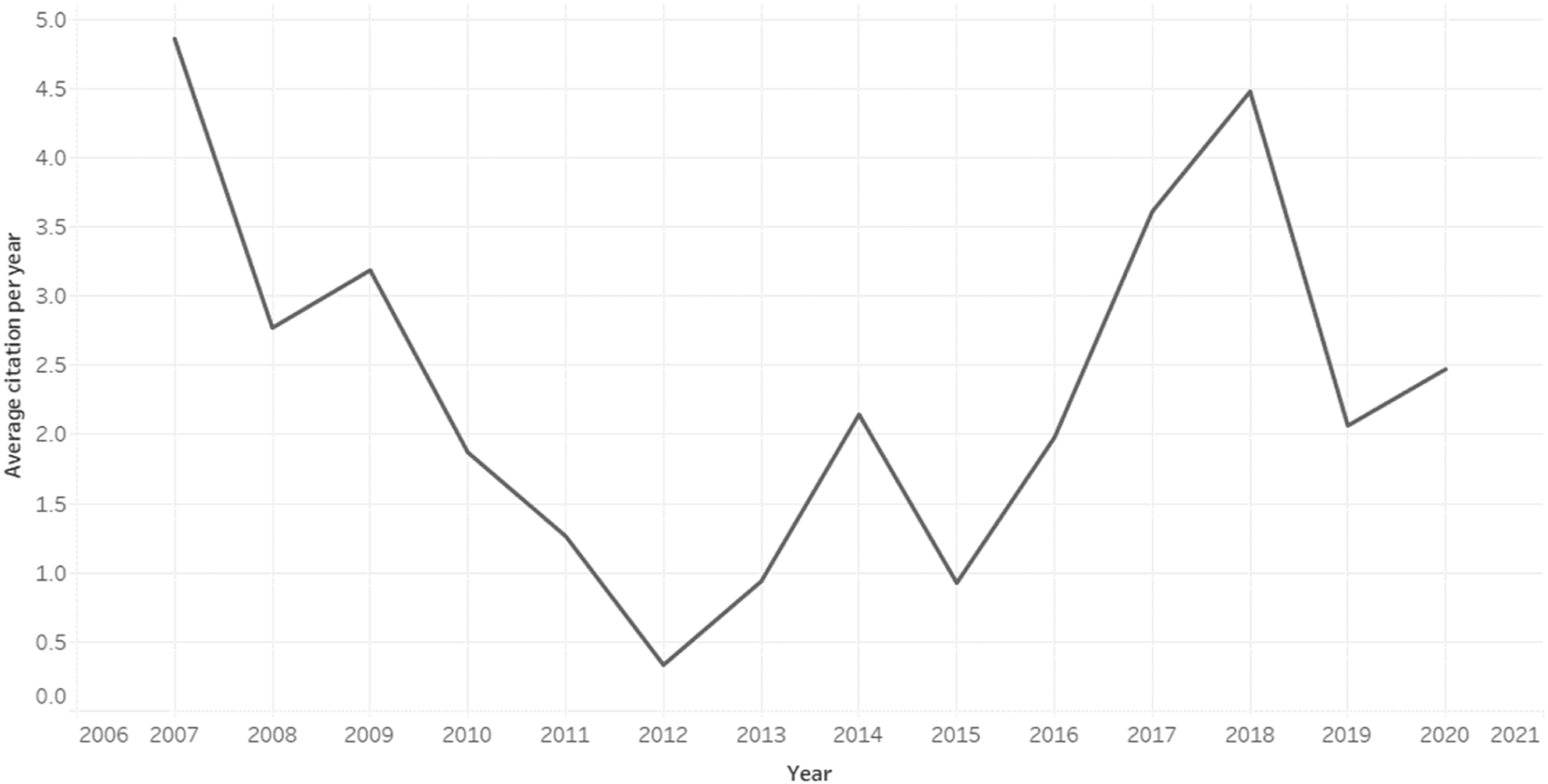
Figure 2 presents the annual production of articles, demonstrating an annual growth rate of 11.8%. From 2008, there was an increase in the number of articles and then a slight drop in 2012, but from 2013, despite fluctuations, there was an overall increase in the number of articles published on competitiveness in the visitor economy. Figure 3 shows the average article citation per year. The highest average citation year was in 2007 due to this being the publication year of the most cited article: paper by Mazanec et al. (2007) on Tourism Destination Competitiveness: From Definition to Explanation? Annual scientific production. Average article citation per year.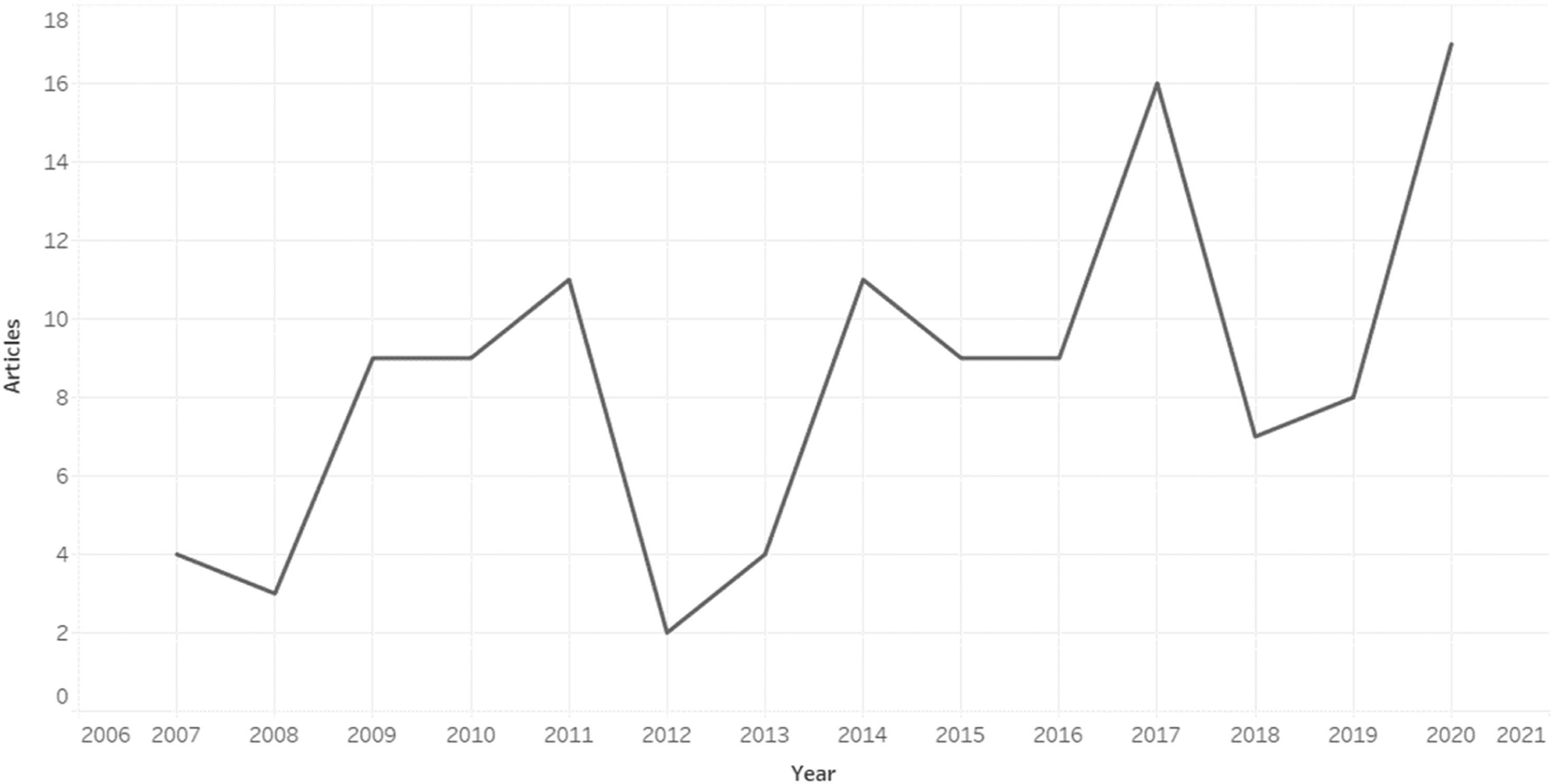
Top 10 journal rankings by source impacts.
Top 10 cited documents.
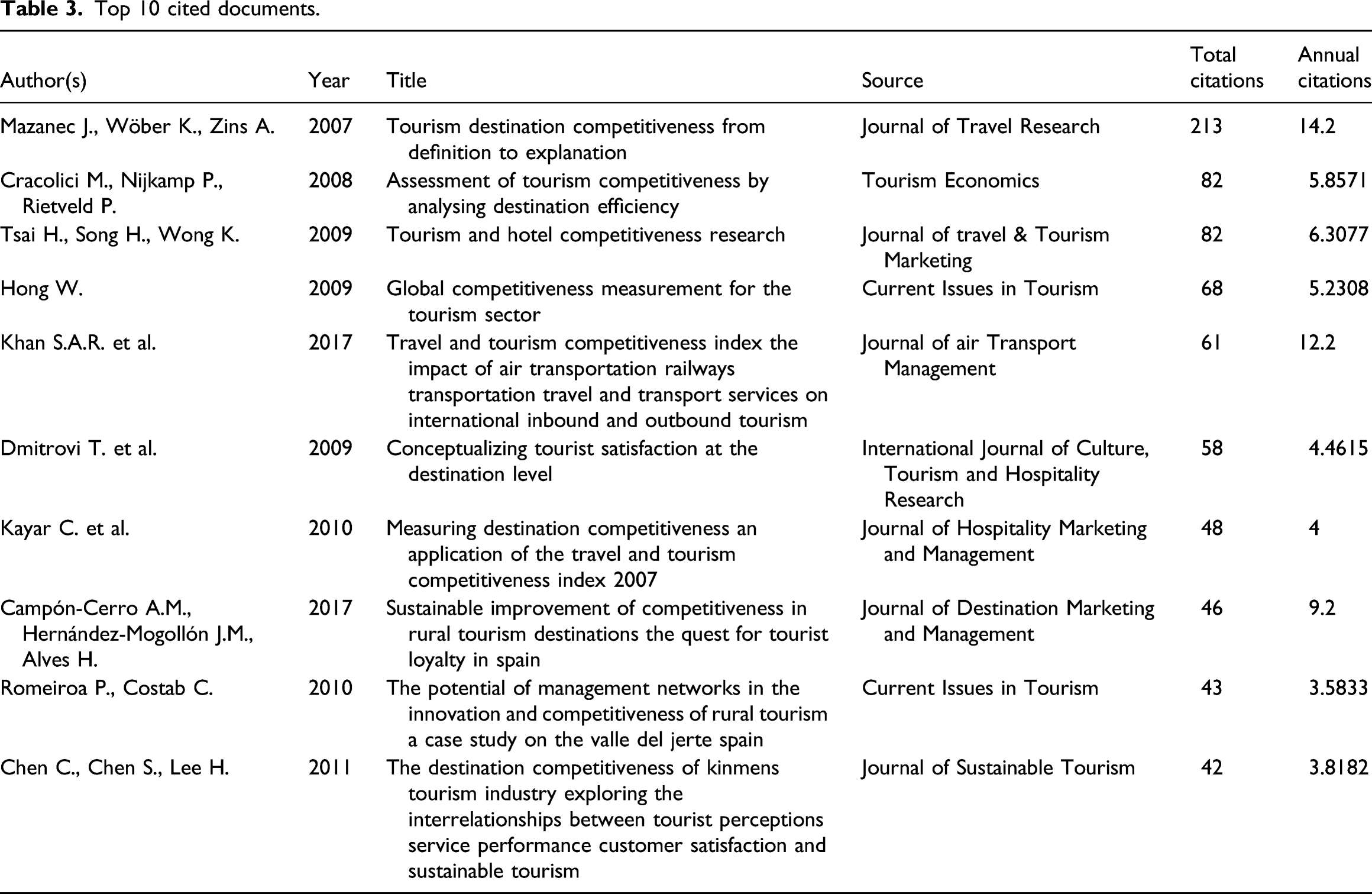
Figure 4 presents the top 10 most frequently used words in the literature based on the author’s keywords, title and abstract. Excluding the words “paper”, “study”, “analysis” and “case”, “competitiveness”, “tourism” and “destination” are the most common words. Both the tourism and hospitality sectors are captured, which implies that studies have not just been focussed on destinations but also at the business (e.g. ‘hotel’ and ‘brand’) level when examining competitiveness. Top 10 frequent words used.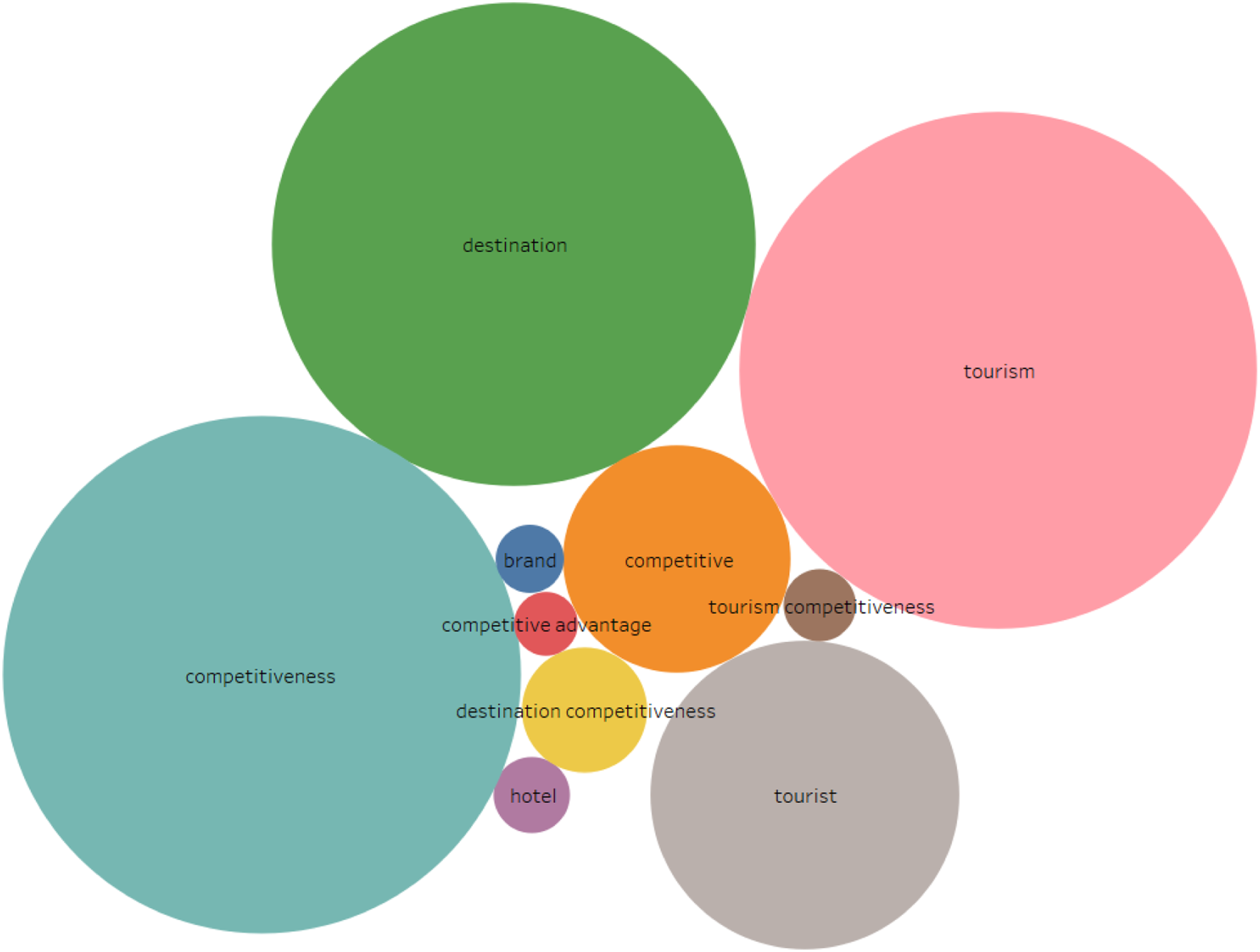
Figure 5 summarises the methods adopted in the selected literature. The pie chart shows that competitiveness studies are dominated by the quantitative approach – 86 out of 119 studies – followed by the qualitative approach. Conceptual and mixed-methods approaches are very limited in this field. Quantitative studies including the quantitative components in the mixed methods are dominated by three methods which are competitiveness index development (26), regression (20) and structural equation modelling (19). Index development research is rooted in Crouch and Ritchie (1999) who developed a comprehensive index system to measure destination competitiveness. Follow-up studies attempted to apply the framework in different destinations and time periods. The regression method treated competitiveness as either an independent variable (e.g. Wong, 2017) or a dependent variable (e.g. Javed and Tučková, 2020). Since competitiveness cannot be directly measured, structural equation models were adopted to reveal the relationship between the dimensions of competitiveness and the overall competitiveness (e.g. Pike and Mason, 2011). There have been considerable, if largely incremental, developments within these three broad approaches over time. Methodology summary.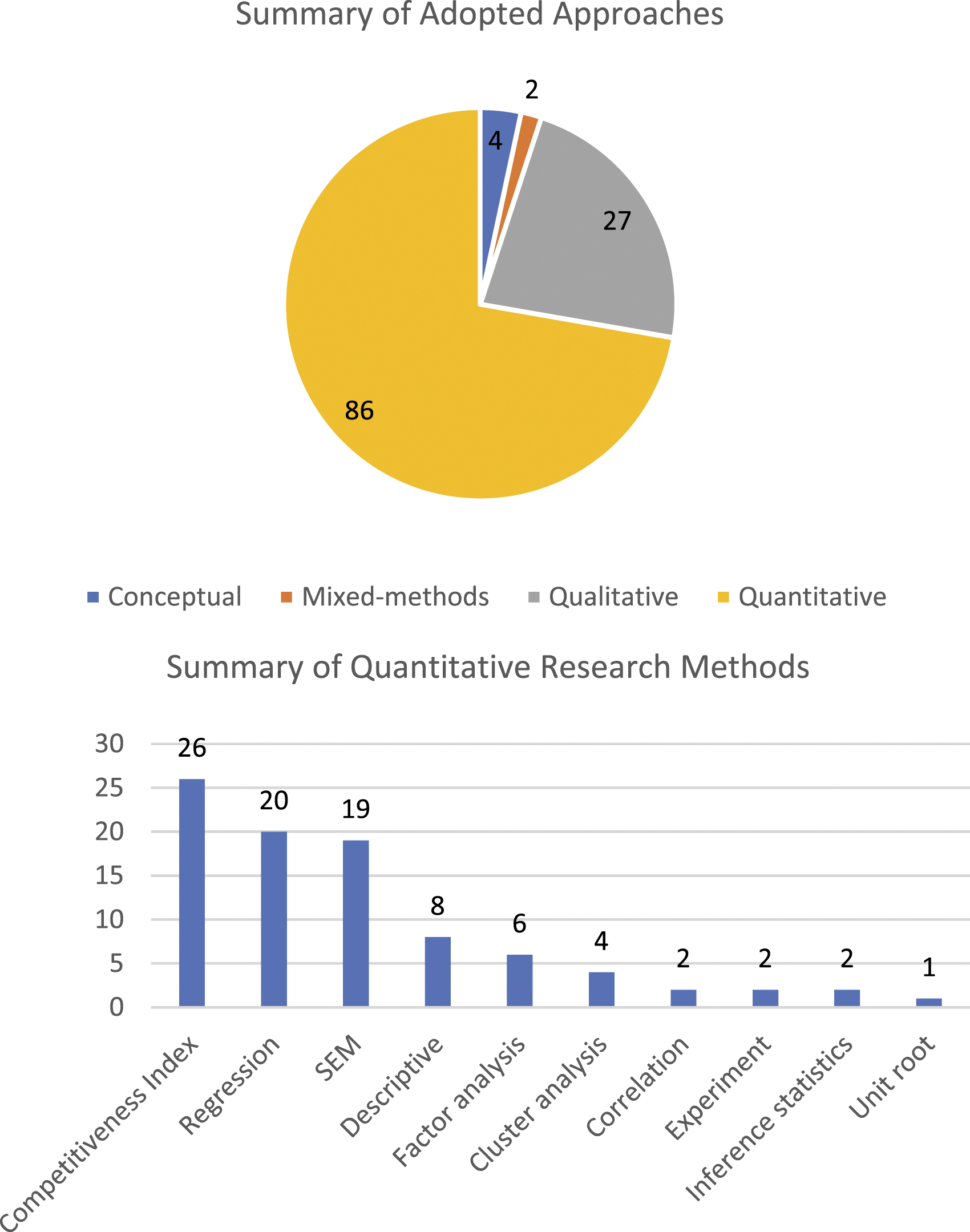
Co-citation analysis
The co-citation analysis indicates the intellectual structure of the competitiveness literature in the tourism and hospitality field. Figure 6 presents the co-citation network by papers using the leading eigenvalue clustering algorithm based on 35 nodes. Table 4 presents the corresponding centrality measure, ranked by the betweenness measure. Enright and Newton (2004) have the highest betweenness, closeness and PageRank measures which indicate its high influences in the competitiveness literature. Porter (1990) is also a highly influential and connector of information flows within the network as it is a pioneering work in competitiveness research generally. However, most of the co-citations within the network presented in Figure 6 are built upon Crouch and Ritchie (1999) and/or Dwyer and Kim (2003) models. Crouch and Ritchie (1999) developed a comprehensive framework of destination competitiveness including both the micro and macro competitive environment, core resources and attractors, supporting factors and resources, and managerial and situational factors. The authors emphasised the importance of the notion of sustainable destination competitiveness in terms not only of economy and ecology but also socially, culturally and politically. Dwyer and Kim (2003) developed a model from Crouch and Ritchie’s study but with a greater emphasis on competitiveness as an ultimate goal to maintain and increase the real incomes of the local residents in the destinations, explicitly recognising the importance of demand conditions as a determinant of competitiveness, which differs from Crouch and Ritchie’s model. Buhalis (2000) study on competitiveness destination marketing can be considered another connector in the intellectual structure of competitiveness research in tourism. Hassan (2000) and Ritchie and Crouch (2003) examined destination competitiveness and the importance of sustainability, which is empirically evident in the centrality measures. Co-citation network by paper. Centrality measures.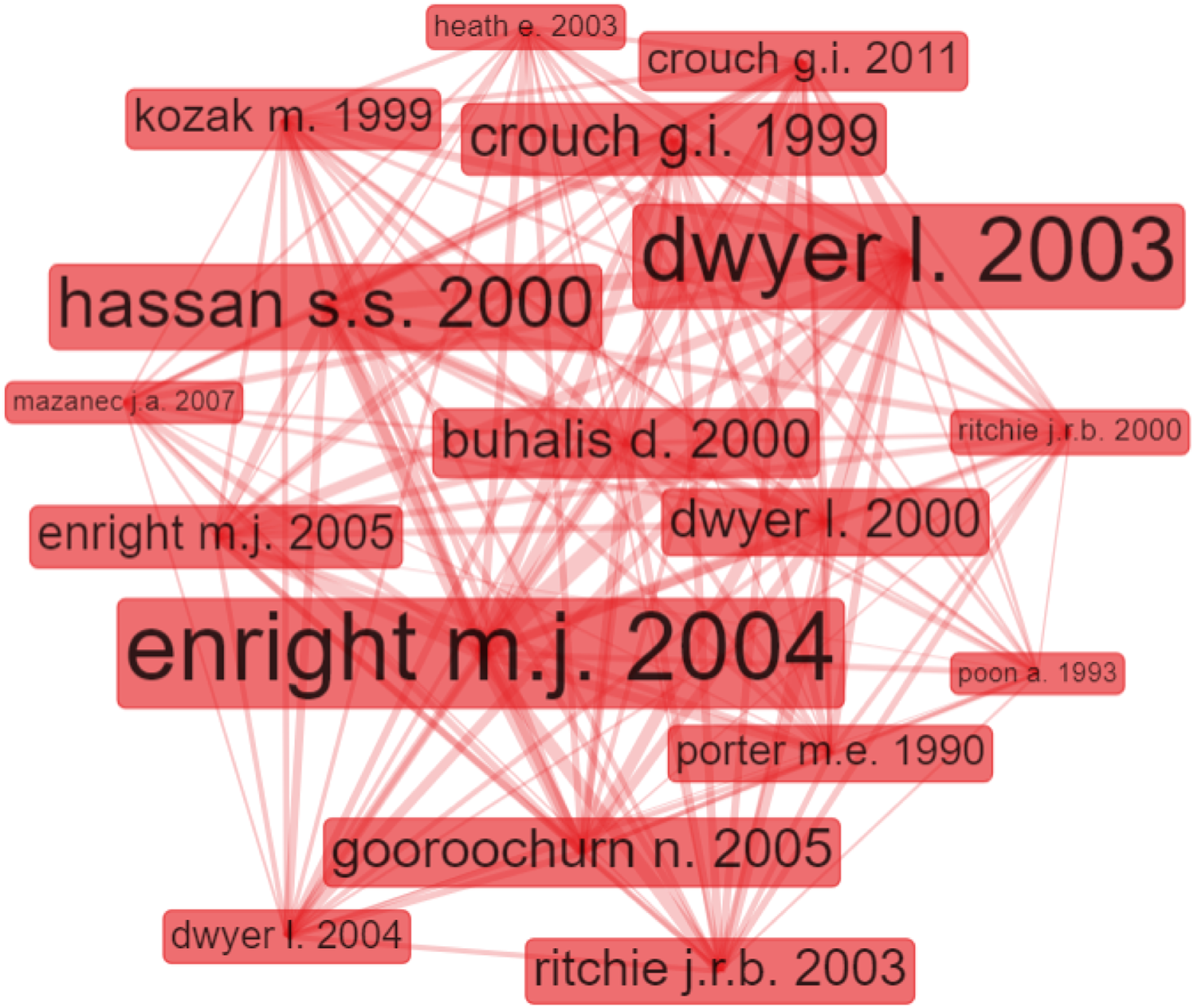
Thematic analysis
To better understand the intellectual structure of competitiveness in the visitor economy, it is important to refer back to the original concept. As a collection of firms create an industry and a collection of industries form a region and a collection of regions create a national state, the implications of competitiveness are broad and multi-faceted. It is widely understood that competitiveness and economic growth are closely associated, involving a complex interactive process of social, political, institutional and environmental changes (Dwyer and Kim, 2003). It is also related to profitability, productivity and efficiency as a means of achieving better living standards and social welfare (Huggins, 2000). However, not all of the firms or industries in a nation contribute positively to competitiveness. For example, the long tail of productivity laggards within a national economy is pulling down the overall productivity and competitiveness in the global economy, which further impacts on living standards and/or welfare depending on distributional outcomes (Kim et al., 2019; OECD, 2016). Krugman (1994) also argued that domestic factors are what determines national living standards than the competitive rivalry between countries. Nevertheless, competitiveness is an important topic and measure for policy makers worldwide. Large organisations such as the WEF’s Growth Competitiveness Index (GCI) and the Travel and Tourism Competitiveness Index (TTCI) have developed indicators to benchmark national performances. Based on the complex and multi-level nature of competitiveness, the current literature can be categorised into the national level, sectoral and/or regional level and firm level (Estevão et al., 2019; Hanafiah and Zulkifly, 2019), which the following sub-sections will discuss the co-citation network analyses by these three levels.
National level
The concept of competitiveness has emerged initially from the economics and, subsequently, the management literature – for example, Smith’s absolute advantage theory, Ricardo’s comparative advantage theory and Porter’s competitive advantage theory (Bhawsar and Chattopadhyay, 2015). It has been argued that competitiveness research started with the seminal work by Porter (1990), which defined competitiveness as an outcome of a country’s ability to achieve and maintain a competitive position over other nations. In tourism, building upon Crouch and Ritchie’s destination competitiveness model and integrating Porter’s competitive advantage framework, Hong (2009) used analytic hierarchy process to weight different evaluation dimensions, elements and indicators in the proposed tourism competitiveness measuring model; this inferred the importance of exogenous comparative advantages and overall competitive advantages for destinations to be competitive.
There are still many studies that have only applied incrementally different, or even identical, indicators and measures of competitiveness to different national contexts. Sometimes a comparative perspective is adopted as with Kayar and Kozak (2010) utilisation of the Travel and Tourism Competitiveness Index (TTCI) developed by the WEF, to compare destination competitiveness in the EU and Turkey, or Leung and Baloglu (2013) work on Asia Pacific countries. A number of econometric analyses have been conducted on international tourism demand forecasting based on TTCI indicators related to aviation and transport services (e.g. Khan et al. 2017); these have confirmed the predictive causal relationship between transportation and the TTCI index as well as the feedback relationship from inbound tourism index to different travel and transport services. Although, responding to Mazanec et al. (2007) critique, predictive causal-and-effect models of competitiveness have increased over time (Assaker et al., 2014; Croes et al., 2020; Hanafiah and Zulkifly, 2019), there is still a relative lack of in-depth causal-and-effect studies in competitiveness research in the visitor economy.
Sectoral/regional level
Developed from Porter’s national competitiveness and diamond model, a focus on the geographical aspects of related industries has led to cluster theory (Porter, 1990, 1998) and the investigation of competitiveness at the industrial and regional levels. The notion of regional competitiveness led to the development of substantive theoretical frameworks underpinning various analyses and measurements. The application of endogenous growth theories and New Economic Geography to industries and regions examined concepts such as agglomeration economies and industrial districts and how these increase productivity and performance and, ultimately, competitiveness (Delgado et al., 2012; Huggins et al., 2017; Karaev et al., 2007). Such studies are also found in tourism and hospitality research (Enz, et al., 2008; Erkus-Ozturk, 2009; Kim et al., 2021; Marco-Lajara et al., 2016; Peiró-Signes et al., 2014).
This literature argues that the territorial competitiveness of destinations is strongly related to tourism demand and visitors (Bernini et al., 2020). Research on regional competitiveness related to visitor economy activities (e.g. tourism in regions and clusters) is different to that on destination competitiveness tending to take a macro level perspective when considering the territory (region) similar to national-scale studies of competitiveness as described previously (Ferreira and Estevão, 2009; Iordache, 2010; Lopes, et al., 2018). Recent studies on regional competitiveness in the visitor economy include: Karakitsiou et al. (2020) study of regional efficiency and competitiveness using data envelopment analysis (DEA) in the context of the hotel and restaurant sector in Greece. Adopting a different technical approach, Firgo and Fritz (2017) used the econometrics shift-share model to disentangle the regional visitor mix and regional components of attractiveness in analysing tourism development. They spatially and structurally disaggregated industry levels by regions in Italy and infer red that the region-specific attractiveness dominates the effects on regional tourism development and growth rather than the competition for tourists that visit the regions. Such studies highlight the importance of place-specific strategies and policies for tourism development and competitiveness, but there are still very few studies on territorial or regional competitiveness of the visitor economy.
Several studies on rural destinations are evident. Campón-Cerro et al. (2017) conceptualised rural destination loyalty while Romeiro and Costa (2010) proposed business networks of innovation as a key competitiveness factor of rural tourism (destinations). Chen et al. (2011) looked at island destination competitiveness, specifically at the interrelationships between tourist perceptions, service performance and customer satisfaction. They concluded that overall tourist satisfaction is not correlated to destination competitiveness, but the relationships between service satisfaction and tourism resources and attractions are key to assisting sustainable competitiveness in an island context.
These expand into research on sustainable tourism competitiveness, which is an important and increasing pool of literature (Eraqi, 2009; Sánchez and Jaramillo-Hurtado, 2010) as evidenced by the centrality measures (Table 3). Hassan (2000) and Ritchie and Crouch (2003) examined destination competitiveness and the importance of sustainability; sustainable destination competitiveness. Iraldo et al. (2017) investigated the environmental strategies and sectoral competitiveness of hotels and restaurants, examining the impact of competitive advantage, customer satisfaction and employee motivation on environmental practices in greening competitiveness for the hospitality sectors. Thus, sustainable tourism competitiveness at the sectoral and regional level has been examined. Yet, the social and economic dimension of sustainable tourism competitiveness is relatively under-examined.
Despite these advances, the integration of sectoral or regional competitiveness studies with other scales is lacking. The existing literature suggests the collection of firms and individuals establish a sector or region and its impact on competitiveness is important to understand the underlying dynamics of a destination and the visitor economy (Aiginger, 2013; Bernini et al., 2020; Crouch and Ritchie, 1999; Enright and Newton, 2004). However, there is scope for further investigation of competitiveness at the sectoral and regional level in the visitor economy and for making links to the national and individual level of competitiveness.
Business and individual level
Following on from the national competitiveness debate, Porter (1998) argued that firms rather than national states compete in international markets, and this contributed to competitiveness being considered to be the ability to produce better goods or services more effectively and efficiently than other firms. Although there are fewer business-level studies of competitiveness in the visitor economy, research investigating strategic decisions on hotel performance, productivity and efficiency, marketing and branding (e.g. loyalty) and customer satisfaction and service quality and pricing are evident (Tsai et al., 2009). For example, Dmitrović et al. (2009) built upon marketing and tourism theories to propose a conceptual framework of tourist satisfaction (at the destination level) as a key factor in destination competitiveness. More recently, Xia et al. (2020) evaluated the role of hotel characteristics in hotel brand competitiveness based on hotel characteristics, while Cheraghalizadeh and Tümer (2017) examined the effect of human and physical resources on customer relationship management as a source of competitive advantage.
Another strand of research focussing on how tourists’ and local residents’ experiences shape destination competitiveness emerged from Heath (2003) and remains a major aspect of tourism and hospitality studies. Following on from Ritchie and Crouch (2003) who considered the quality of life of local residents to be a factor of tourism or destination competitiveness, the focus on residents has been increasingly recognised from different perspectives compared to tourist satisfaction at a destination level (Dmitrović et al., 2009) and well-being (Perles-Ribes et al., 2020). Campo-Martinez and Garau-Vadell (2010) examined how tourist destination satisfaction can lead to repeat visitation, increasing destination competitiveness. More recently, Guizzardi, and Mariani (2020) created a dynamic destination satisfaction matrix to model how tourist satisfaction translates into competitiveness (Crouch, 2011); in a break with previous studies, they designed a new method to monitor and disentangle tourist satisfaction in relation to the destination. In another development, Bernini (2020) examined tourists’ happiness (subjective well-being) and competitiveness with respect to the endogenous and exogenous amenities of the destination using amenity-based theory. They demonstrate how regional patterns and heterogeneity in tourist happiness across Italy ultimately affects territorial competitiveness.
Aiginger (2013) argued it is important to look beyond GDP measures of competitiveness to individual well-being and behaviour, which needs to be explored further using alternative theories such as welfare or behavioural economics and how these can affect competitiveness. However, the importance of understanding individual level satisfaction as a measure of destination competitiveness is arguable. In contrast, the existence of multi-actors and agents within the complex and dynamic visitor economy requires more integrated modelling of competitiveness at multiple levels within the visitor economy – from macro to micro, which also include the regional and sectoral level of the visitor economy.
Network analysis
Network analyses have been conducted to understand the relationship between keywords and identify the main themes in the competitiveness literature. The identified networks of words on a bi-dimensional matrix (thematic map) are analysed in terms of the centrality and density of the network. To detect key and emerging research themes, thematic maps (Figures 7–9) have been constructed based on network density (y-axis), which measures the development of the theme, and centrality (x-axis), which measures the importance of the theme. Each bubble represents a network cluster, labelled with the highest occurrence word. The size of the bubble is proportional to the cluster word occurrences, that is, the larger the bubble, the higher the co-occurrences. Thematic map (2007–2020). Thematic map (2007–2014). Thematic map (2015–2020).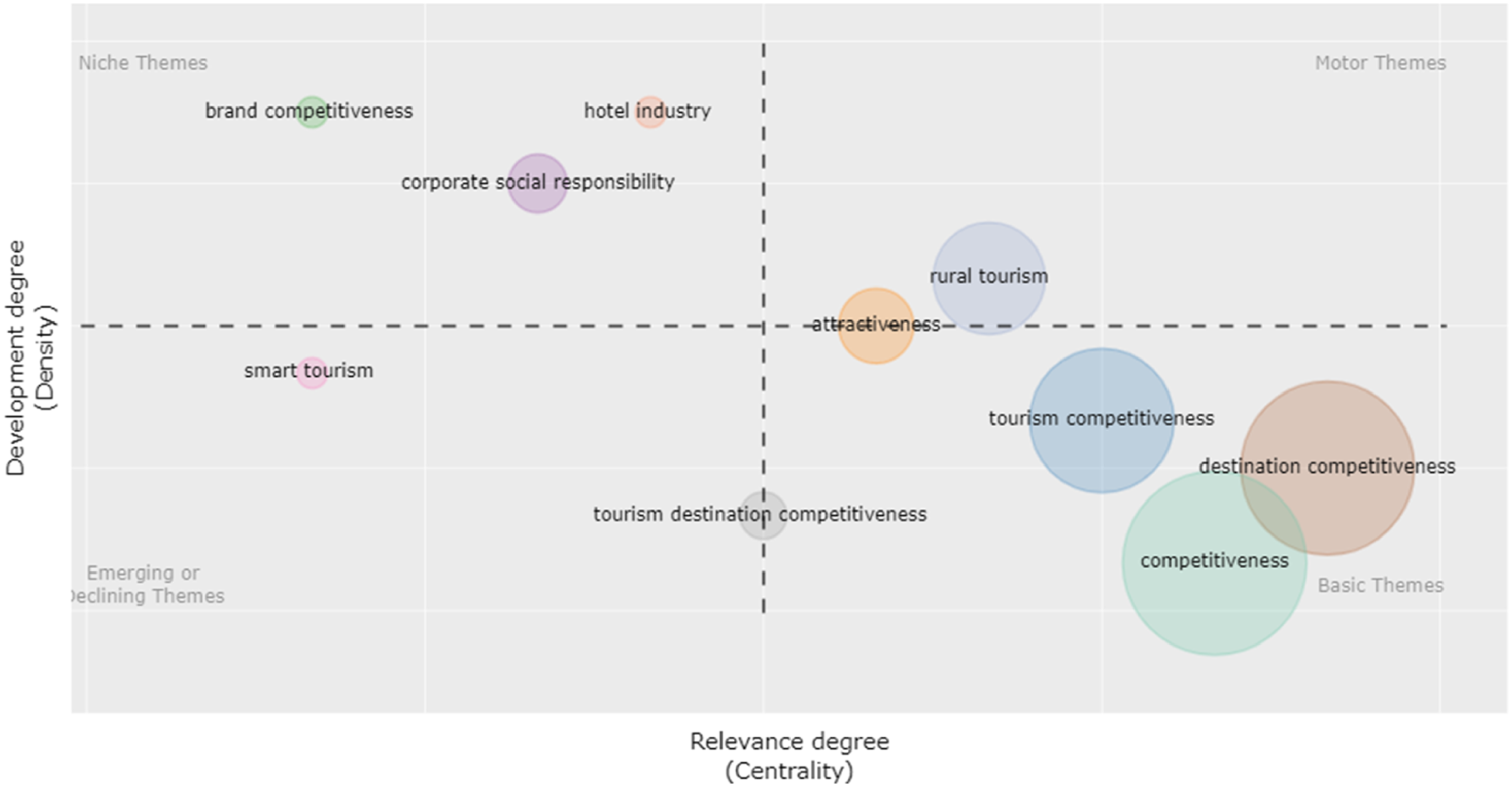
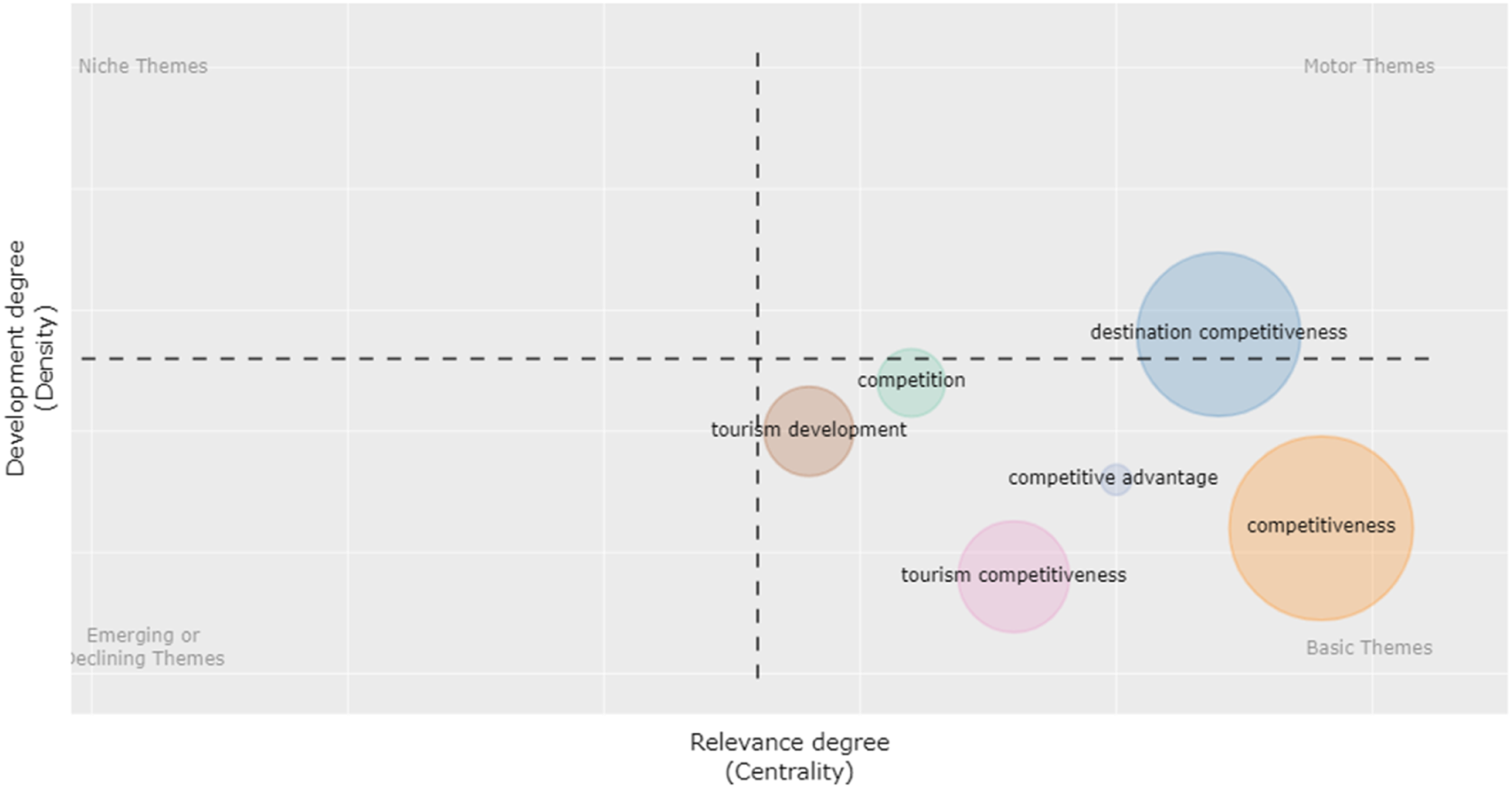
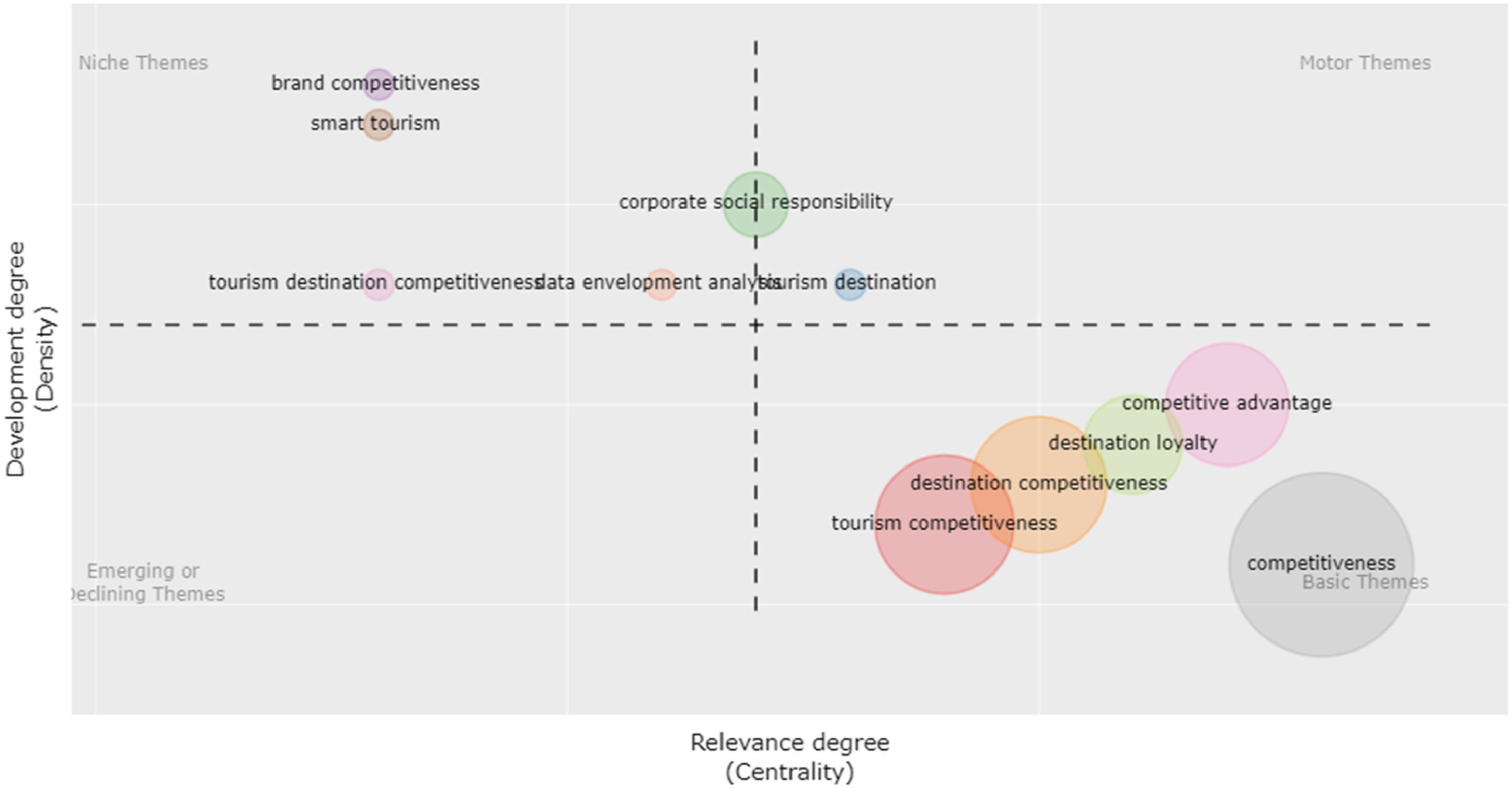
Figure 7 presents the thematic map based on 396 author’s keywords and the full timespan from 2007 to 2020. Overall, the basic themes of ‘tourism competitiveness’ and ‘destination competitiveness’ are evident as anticipated, indicating high co-occurrence by the author’s keywords. ‘Smart tourism’ is under the emerging theme quadrant, which reflects the increasing literature on the impact of information technology on destination competitiveness. ‘Corporate social responsibility’ (CSR) is under the niche-theme quadrant, which suggests that there are a cluster of literature on sustainable tourism destination competitiveness and firm level competitiveness studies. As previous analyses indicated, sustainability is one of the conceptual frameworks applied to competitiveness studies in the visitor economy. ‘Rural tourism’ and ‘attractiveness’ are higher in density compared to the basic theme, which indicates that there is increasing development in the literature.
As this review covers a period of 14 years, the evolution of the themes was disaggregated into two time periods (Figures 8 and 9). From 2007 to 2014 (Figure 8), there is limited variability in the themes. High centrality is observed in the expected keywords of “competitiveness”, “tourism competitiveness”, “competitive advantage” and “destination competitiveness” with high density and the largest bubble, which illustrates the increasing development of destination competitiveness studies. This confirms the dominance of macro level studies of competitiveness in the visitor economy, which can also be observed in Figure 9 that captures the themes from 2015 to 2020. According to Figure 2, there was an increase in the number of articles published during that period, but there was no substantial evolution of themes in the basic theme quadrant except for their increase in centrality and density. ‘Destination loyalty’ has been added which is closely linked to competitiveness (Bianchi, 2018; Campón-Cerro, 2017; Wong, 2017).
Over the time period, niche themes have emerged as more articles have been published since 2015. ‘Data envelopment analysis’ refers to the method of analysing efficiency: Cracolici et al. (2008) equated competitiveness to destination efficiency, comparing the stochastic frontier analysis (SFA) and DEA (parametric and nonparametric analysis). From the competitive advantage perspective, the authors argue that if destinations have high efficiency levels, they can deploy the inputs at their disposal in an efficient way to maximise their share of tourist demand and, therefore, their competitiveness. More recently, Cho and Wang (2018) used DEA to measure destination efficiency as an indicator of competitiveness and Karakitsiou et al. (2020) on regional efficiency.
‘Corporate social responsibility’ has a higher centrality than in Figure 8, which suggests that the importance of sustainability has emerged more recently, and the number of studies related to sustainable tourism and competitiveness at the firm level has increased over time (Nguyen et al., 2019; Rodrigues, et al., 2020). This confirms the co-citation analysis in terms of the importance of sustainability and destination competitiveness. Nguyen et al. (2019) studied the impact of the CSR of tourist enterprises (i.e. firm level) on their competitiveness in Vietnam. Rodrigues et al. (2020) at a city destination level, in the context of Porto, examined the importance of CSR image and branding on competitiveness. Both businesses and national states (or destinations) can sustain their competitive advantages and also embrace social, political, institutional and environmental changes to enhance competitiveness. This proposition, initially advanced by Crouch and Ritchie (1999), has become more evident in the empirical literature over time.
‘Brand competitiveness’ and ‘smart tourism’ are marginal areas of study but are increasing in density. Competitiveness and brand loyalty or image are closely linked in the management and marketing literature. The theme of ‘brand competitiveness’ refers to studies on destination branding (Frías Jamilena et al., 2017; Kendall and Gursoy, 2007; Pike and Mason, 2011; Rodrigues et al., 2020) but also some studies at the business level (Xia et al., 2020). With rapid technological advancements, innovation and information and communication technology (ICT) has become another key factor of competitiveness in the visitor economy. Studies related to smart tourism within the dataset of this current review include Ji et al. (2016) and Nyaboro et al. (2021) which have argued that existing research on tourism destination competitiveness focusses on the combined performance of various destination attributes and amenities which overestimates unobserved factors that impact on competitiveness.
Digital transformations in the visitor economy are changing the dynamics of the tourism system but also the behaviour of individual actors within the system (e.g. from government and private entities, destination marketing/management organisations to local residents and tourists). However, there is still minimal understanding of how ICT and smart tourism is shaping national, regional or business competitiveness in the visitor economy. For example, Önder et al. (2017) introduced an ICT system to measure the competitiveness of European destinations and adopted a DEA to assess efficiency of those cities. A research note by Petrović (2017) examines the correlations between ICT and destination competitiveness of EU transition countries, but this was excluded in the current review’s dataset as it falls out for the selection criteria. This illustrates that ‘smart tourism’ is yet a marginal study area but rising in density. These are niche themes that are still peripheral in the current literature as the thematic map suggests. Empirical implications for smart destination competitiveness are relatively little known, despite the wide range of extant studies on ICT and tourism and smart tourism destinations and their importance in rapidly transforming the visitor economy, and therefore, further empirical research on ‘smart tourism’ and competitiveness is considered a priority.
Conclusion and future research
This study systematically reviewed 119 competitiveness studies in the visitor economy from 2005 onwards, with the thematic analysis dividing the research into destination/national, sectoral/regional and individual firm levels. The review has highlighted the dominance of destination/national level studies of competitiveness in the literature. The major conceptual framework is destination competitiveness which has heavily relied on the models by Crouch and Ritchie and Dwyer and Kim, as well as the TTCI and WEF data and reports (Tsai et al., 2009). In contrast, there are relatively few studies at the regional or sectoral and micro levels which suggest that there is a very partial understanding of different levels within the visitor economy.
Based on the above findings, some future research directions are proposed. First, there is a need to revisit the roots of the concept of competitiveness in industrial and international economics, where the understanding of competitiveness in the visitor economy context started from comparative advantages and price competitiveness (Dwyer et al., 2000) and productivity (Cracolici et al., 2008). Subsequently, conceptualisation has increasingly incorporated strategy and management perspectives as well as the non-price components of the visitor economy, such as tourist experiences and satisfaction and the well-being of residents. Hence, many competitiveness studies on the visitor economy are theoretically framed within the management and marketing literature and are commonly categorised at the national, destination and firm/individual levels. Hence, the conceptualisation of competitiveness in the visitor economy has, to some extent, become detached from economic theories and concepts, while there has also been limited advanced economic theory-informed empirical investigation. As one of the common features of competitiveness and productivity is that both are unobservable, there is considerable scope for utilising growth theories (e.g. Liu et al., 2018 for exogenous growth theory; Liu and Wu, 2019 for new growth theory) at the destination level and productivity spillover effects at the sectoral or firm level (e.g. Kim et al., 2021), as a theoretical foundation for competitiveness studies.
Second, previous research has emphasised that competitiveness in the visitor economy is a complex, multi-level and multi-dimensional notion, which highlights the need for more in-depth knowledge of competitiveness at different levels of a visitor economy – from individual firm to sectoral or regional level and destination level. In contrast, most competitiveness models have aggregated different dimensions on the same level, based on the simplifying and underlying assumption that agents in the lower levels are homogeneous with respect to competitiveness. There is a lack of multi-level integrated models which can provide a more holistic approach to understanding the composition of competitiveness in the visitor economy. This is surprising as increasing data availability through open sources of data has made multi-level studies of competitiveness in the visitor economy more feasible. Thus, future research is recommended taking multi-level (e.g. from national, regional sectoral to firm and/or individual level) modelling approaches to examining competitiveness in the visitor economy. When considering the territorial or regional competitiveness, spatial multi-level modelling is also recommended as this can account for spatial spillover effects, which can provide useful insights of competition and complementary effects of competitiveness between destinations both at the regional and national level. From the methodological perspective, the competitiveness index and structural equation model studies are all based on a composite relation model. As causal inference studies emerge in tourism economics (e.g. Deng et al., 2019), more studies disclosing the causal determinants of competitiveness are recommended.
Finally, more research on unobserved and emerging factors of competitiveness and multi-level changes in the visitor economy is needed. Dynamic changes in the internal and external environments in the visitor economy need to be incorporated into competitiveness studies. From the network analysis undertaken in this article, important niche themes such as smart tourism, brand competitiveness and CSR (or sustainability and well-being) are seen to be still at the periphery of the network. These determinants of competitiveness need to be further investigated. Additionally, external shocks such as COVID-19 and other forms of crises and disasters are changing the dynamics of the visitor economy and how to accommodate consequential changes in travel behaviour and experience. From the destination to the regional and individual levels, such changes will increasingly influence competitiveness as the key to the resiliency and survival of the visitor economy. This also fundamentally relates back to original economic understandings of competitiveness in terms of productivity, economic growth and standards of living.
An important limitation to stress is that the databases used in this systematic literature review are limited to work published in English and to academic journal articles. Future research including other arenas of literature and comparative analyses of academic and industry sources can offer additional insights into the competitiveness literature.
Footnotes
Declaration of conflicting interests
The author(s) declared no potential conflicts of interest with respect to the research, authorship, and/or publication of this article.
Funding
The author(s) received no financial support for the research, authorship, and/or publication of this article.
