




Abstract
Informal entrepreneurship is woven into the economic fabric of South Africa’s tourism sector. Some people are ‘pushed’ into the sector by a lack of opportunities in the formal economy; others are ‘pulled’ into the informal sector by the prospect of better livelihoods, independence and personal fulfilment. Starting any business requires different types of capital (financial, social, human and psychological). While many studies have explored these aspects in relation to entrepreneurs/firms in the formal sector, how they impact the informal sector is less well understood. In this study, we examined the relationships between informal entrepreneurs’ motives, the different forms of capital available to them, and business success. Data were collected through structured questionnaires in three major South African cities. Multivariate statistics and quantile regression analysis revealed synergies between capital types and entrepreneurial motives, highlighting that success reflects not only the availability of capital but also the effective strategic utilisation of resources.
Keywords
Introduction
South Africa’s tourism sector is one of the cornerstones of the country’s economy, underpinned by a vibrant cultural heritage and a wide range of natural assets. It also makes a significant contribution to economic expansion and job creation (UNWTO, 2019), with tourism contributing 8.8% to the country’s gross domestic product and supporting 1.68 million jobs within the country during 2024 (Department of Tourism, 2025). Informal entrepreneurial activities offer affordable products and services to tourists, absorbing surplus labour and helping to alleviate unemployment (Çakmak et al., 2019; Fourie et al., 2024 ; Saayman et al., 2020). In South Africa and other tourism-rich economies, the informal tourism sector operates outside formal institutional structures (Webb et al., 2009). As such, it engages in a variety of activities that are not officially declared to the government for tax or employment reporting purposes but are nevertheless legal (Evans et al., 2006; Williams, 2006).
In the 1990s, tourism studies began to put small informal enterprises under the microscope (Çakmak et al., 2019; Dahles and Bras, 1999). A common theme emerging from these studies was the role played by informal economic activities in alleviating poverty and improving the livelihoods of marginalised communities (Çakmak et al., 2019; Saayman et al., 2020; Scheyvens, 2007). However, what was lacking in many of these studies was a specific focus on entrepreneurship development within the communities in question.
One explanation for the limited attention given to entrepreneurship, as displayed by ‘shop-less’ and self-employed street vendors, domestic workers, home-based workers and day labourers, is that little is known about these informal workers as they operate outside normal regulatory and business parameters (Valenzuela Jr, 2001). Valenzuela Jr (2001: 335) offers a second possible explanation, saying: “… literature on entrepreneurship is primarily elitist, placing a large emphasis on firm size and location, innovation, proprietorship, and capital start-up”. Indirectly supporting this notion, Williams and Nadin (2010) conclude that the literature on entrepreneurship until recently focussed on a “virtuous ideal-type” of entrepreneur – ignoring manifestations of entrepreneurship that does not confirm to this view. Williams and Nadin (2010: 362) state that “Indeed, it is perhaps precisely because of the predominance of this virtuous representation that so little attention has been paid to the relationship between entrepreneurship and the informal economy”.
A third perspective places informal sector business activities within the worldwide globalisation drive that commenced in the 1970s, following continued efforts to open and deregulate the global economy (Castells and Portes, 1989; Salinas et al., 2021). Within this paradigm, informal businesses can form a component in an overall (often worldwide) value chain – symbiotic relationship that applies to the tourism industry (Salinas et al., 2021). Tourism’s global value chain consists of interdependent networks, which includes tour operators, transportation, accommodation and other diverse tourist-related activities (Romero et al., 2020; Salinas et al., 2021). Within these categories important links between formal and informal entrepreneurial activities is evident (Salinas et al., 2021). Many disciplines, such as sociology and development economics, have set out to address the dearth or patchy nature of information on informal entrepreneurship. Çakmak et al. (2019) state that the literature on informal economies contains important results on topics such as the entrepreneurial process (e.g., Webb et al., 2009), the reasons for informal entrepreneurship (e.g., Williams and Youssef, 2013), and the characteristics of informal economy entrepreneurship and how it differs from entrepreneurship in the formal economy (e.g., Hipsher, 2010).
Çakmak et al. (2019) assert that informal entrepreneurs typically have relatively limited access to formal capital markets. This has given rise to possible misconceptions in the literature about informal entrepreneurs’ sources and uses of capital (Çakmak et al., 2019). The literature is awash with studies on the relationships between social capital, psychological capital and formal entrepreneurial pursuits (e.g., Mahfud et al., 2020), as well as the influence of various forms of capital on entrepreneurs’ success (e.g., Elsafty et al., 2020). However, little is known about these interrelationships in the informal (including tourism) sector, including how they capitalise their businesses to survive in a highly competitive market (Çakmak et al., 2019).
The available literature on informal activities in the tourism industry focussed on the impact of the development of the industry on the size of the informal sector in a specific country or a combination of countries (e.g., Kahyalar et al., 2023; Lv, 2020; Salinas et al., 2021; Xu and Lv, 2022). In one the few available studies with a different aim, Saleha et al. (2024) found that small and medium enterprises (SMEs) form the backbone of the informal Egyptian tourism sector. These businesses are cash driven with no reliance on the formal banking system. Motta (2017) investigated the possible financial constraints of SMEs among hospitality firms in Latin America. However, Macbeth et al. (2004) assert that informal entrepreneurs’ motivations for entering the tourism sector, their access to capital and how they use it have not been examined to the same extent as formal businesses.
We contribute to the literature relating to informal entrepreneurship in the tourism sector by studying informal entrepreneurs’ motivations (necessity or opportunity) for entering the sector, the different forms of capital available to informal entrepreneurs, and the factors contributing to overall business success. To this end, we challenge, as did scholars such as Light and Rosenstein (1995) and Valenzuela Jr (2001), the elitist constructs with which entrepreneurship has traditionally been associated. In our study, measures of entrepreneurs’ motives for entering the tourism sector are based on the work of Szivas (2001), while proxies for financial capital, social capital and human capital are derived from the work of Stošic Panić (2017), Kim and Shim (2018) and Skuras et al. (2005).
A review of the relevant literature and an appropriate theoretical framework are presented next, followed by the methodology, results and discussion, an overall conclusion, and a number of management and policy recommendations.
Literature review
Entrepreneurship and motivation
The literature on entrepreneurship is vast and fragmented, which can be confusing at times (Valenzuela Jr, 2001). This is because of the large number of disciplines contributing to this field. While entrepreneurship lacks a universally accepted definition, there is a general consensus that it revolves around opportunity identification and innovation (Morrison, 2006; Yang and Wall, 2008). Whether operating in the formal or informal sector, entrepreneurs are known for their ability to recognise and seize opportunities, often taking calculated risks in the process.
Entrepreneurs innovate by leveraging opportunities and combining them with available resources to create novel products or services while strategically targeting specific markets to maximise their competitive advantage (Çakmak et al., 2018). The informal tourism sector, however, presents unique challenges (Power et al., 2017). Its small size, informality and ill-defined boundaries often complicate the process of seizing opportunities (Power et al., 2017). Moreover, the innovation process is heavily dependent on entrepreneurs’ personal motivations and circumstances, which can differ markedly.
The literature often differentiates between ‘necessity entrepreneurs’, who are forced into entrepreneurship due to a lack of viable employment alternatives, and ‘opportunity entrepreneurs’, who are drawn into entrepreneurship to capitalise on business opportunities (Maritz, 2004; Perunoviæ, 2005; Williams, 2007). Studies show that not all entrepreneurs are forced into the informal sector due to exclusion from the formal sector; some entrepreneurs voluntarily choose to work informally (Williams, 2007). For example, some entrepreneurs believe they are using their capital more effectively in the informal sector than if they were obliged to pay taxes in the formal sector (Siqueira et al., 2016).
According to Szivas (2001), individuals are drawn to the tourism sector because of its promise of a better lifestyle, improved standard of living and pleasant work environment, all enriched by high levels of human interaction. The allure of the sector aligns with the findings by Brown (1987), who notes that the most critical skill for tourism entrepreneurs is the ability to handle interpersonal relations effectively, which calls for human and social capital. These so-called ‘softer’ skills are critically important for competitiveness and constitute the foundation of a theoretical framework that we derived for this study.
Theoretical framework
The resource-based view (RBV) is a framework used to analyse the internal resources and capabilities of an organisation and its potential to achieve and maintain competitiveness. This framework is increasingly being adopted by entrepreneurship scholars to explain different levels of performance among entrepreneurs, based on a deep understanding of their resource management capabilities (Alvarez and Barney, 2002; Ireland et al., 2003; Michael et al., 2002). Resources are defined by scholars such as Daft (1983) and Barney (2001) and Barney and Arikan (2005) as both tangible and intangible assets that are strategically employed to achieve an entrepreneur’s or firm’s goals.
The RBV is grounded in two foundational concepts or assumptions: resource heterogeneity and resource immobility. Resource heterogeneity suggests that each entrepreneur or firm has a unique set of resources that it owns and controls, which distinguish it from other entrepreneurs/firms (Ireland et al., 2003). Resource immobility implies that it is difficult for a firm to acquire or reproduce the resources enjoyed by competing firms (Ireland et al., 2003).
Entrepreneurial success, whether measured subjectively or objectively, hinges on the effective management of essential resources, such as financial capital, human capital, social capital and psychological capital, as identified in studies by Ireland et al. (2003) and Elsafty et al. (2020). It is also important to consider the effects of these different types of capital on entrepreneurial success, with some possibly having a greater influence than others. Çakmak et al. (2019) observe that informal entrepreneurs are likely to adapt their capital mix to their different stages of development and that no single type of capital, on its own, is sufficient to survive in the tourism market. Furthermore, Çakmak et al. (2019) emphasise the importance of gaining deeper insights into how informal entrepreneurs manage and utilise various forms of capital in the tourism locations in which they operate. Understanding how to balance and leverage these differences gives informal entrepreneurs a valuable competitive advantage.
Applied to informal entrepreneurship, RBV suggests that success depends on how entrepreneurs leverage their unique resource portfolios to compensate for institutional voids (Webb et al., 2009). For example, social capital may substitute for formal market access while psychological capital enables resilience. It may be that this heterogeneity in resource bundles explains why informal entrepreneur’s outcomes vary within similar contexts.
In the following section, the theoretical framework specifically tailored to informal entrepreneurs operating in the tourism sector is further developed with reference to the different forms of capital.
Entrepreneurial success and different forms of capital
Entrepreneurial success is frequently discussed in the academic literature, yet (like entrepreneurship) it lacks a universally accepted definition (Fisher et al., 2014). Scholars do, however, concur on two of the ways to measure entrepreneurial success. The first is to arrive at an objective view, where success is quantified using economic indicators such as revenue, profit, productivity, growth, employee numbers and years of experience in the sector (Elsafty et al., 2020). The second is to arrive at a subjective view, where success is gauged from the entrepreneur’s feelings of fulfilment, independence, work–life balance, and satisfying social and personal relationships (Fisher et al., 2014; Orser and Dyke, 2009; Wach et al., 2015, 2018).
The objective and subjective dimensions of entrepreneurial success are in evidence in a rich strand of literature on the combinations of these two broad constructs. Orser and Dyke (2009), for example, examined how Canadian entrepreneurs perceived their success, identifying four dimensions: market conditions, market acceptance, economic and financial achievements, and autonomy. Wach et al. (2015, 2018) emphasise the subjective nature of entrepreneurial success, defining it as an individual’s assessment of how well (or otherwise) they have met certain key (personal) criteria. This underscores the importance of personal goal achievement among entrepreneurs, over and above broader and more objective economic indicators.
As highlighted by Luthans et al. (2004), Elsafty et al. (2020) and Hmieleski et al. (2015), the scale and scope of entrepreneurial success are heavily dependent on financial capital, human capital, social capital and psychological capital. Financial capital includes all the different monetary resources that firms use to develop and execute their strategies. It facilitates the acquisition of both tangible resources (e.g., beads for crafting, imported West African masks, and other materials or inventory used by informal tourism entrepreneurs) and intangible resources, including human capital (Ireland et al., 2003). Access to financial capital also facilitates business expansion, diversification and growth (Petersen and Carpenter, 2002). Xu and Hitt (2020) expanded the findings of previous studies. The authors pointed out that “…external capital availability and internal slack can either provide the financial support for family firms to remain committed to socioemotional wealth or to motivate those firms to engage in foreign expansion” (Xu and Hitt, 2020: 127). Studies show that entrepreneurs often seek financial resources from a variety of sources, ranging from formal institutions like banks to family members (Ackah et al., 2024; Sirmon and Hitt, 2003). However, limited access to financial capital is often cited as a significant hurdle for entrepreneurs in the informal economy and a barrier to innovation (Bruno and Tyebjee, 1985). The literature also reveal possible gender bias as an additional obstacle to entrepreneurs in terms of access to finance (Emon and Nipa, 2024).
Human capital encompasses an individual’s total knowledge, experience, skills and competencies, which are shaped not only by education and training but also by work and industry experience. This concept, first advanced by scholars like Becker (1964) and Schultz (1971), is further divided into general human capital, which covers education and broad work experience, and specific human capital, which covers industry-specific knowledge and technical skills. Specific human capital, in particular, has been shown to substantially enhance people’s ability to identify and capitalise on new opportunities (Ucbasaran et al., 2008). The literature is unanimous in its conclusion that human capital is vital for entrepreneurial success and business survival (Unger et al., 2011; Yadav et al., 2018; Cueto et al., 2021; Paunović, 2021).
Social capital provides access to goods and resources and reduces transaction costs (Çakmak et al., 2019). According to Çakmak et al. (2019), social capital is primarily about connectedness and membership of more formalised groups. Bourdieu (1986) refines this definition, describing social capital as the sum of potential or actual resources connected to a robust network of recognised relationships. Nahapiet and Ghoshal (1998) identify three distinct dimensions of social capital, namely structural, relational and resources. The structural dimension focuses on the configuration of connections – identifying who is connected to whom and how. The relational dimension deals with the strength of these connections. Meanwhile, the resource dimension highlights the value of personal networks that contain rich resources and powerful ties, which, when mobilised, can yield high returns, as described by Batjargal (2003). Studies have shown that high levels of social capital enable entrepreneurs to access crucial stakeholders like customers and suppliers, thereby facilitating entrepreneurial success (Rijal et al., 2024).
To successfully navigate the multifaceted challenges of entrepreneurship, entrepreneurs need to leverage more than just financial, human and social capital. Psychological capital is crucial in dealing with business difficulties and uncertainties (Luthans et al., 2004). This form of capital comprises four key elements: confidence, optimism, resilience and hope. Confidence is about believing in one’s ability to achieve desired outcomes and attain entrepreneurial success (Bandura, 2009), while optimism involves expecting positive results even under tough circumstances (Carver and Scheier, 2002). Hope includes the willpower to pursue goals (Envick, 2005), and resilience is the capacity to recover from setbacks (Envick, 2005; Luthans et al., 2004).
Figure 1 presents the authors’ theoretical framework used in this study. The framework draws on the principles of the RBV framework and is adapted from the work of Elsafty et al. (2020). It highlights the interrelationships between the different types of entrepreneurship (necessary-driven and opportunity-driven), the different forms of capital (financial, human, social and psychological discussed above) and the different measures of success (objective and subjective), and how all these contribute to the determination of informal entrepreneurs’ business success. Theoretical framework for informal entrepreneurship in the tourism sector. Source: Adapted from Elsafty et al. (2020).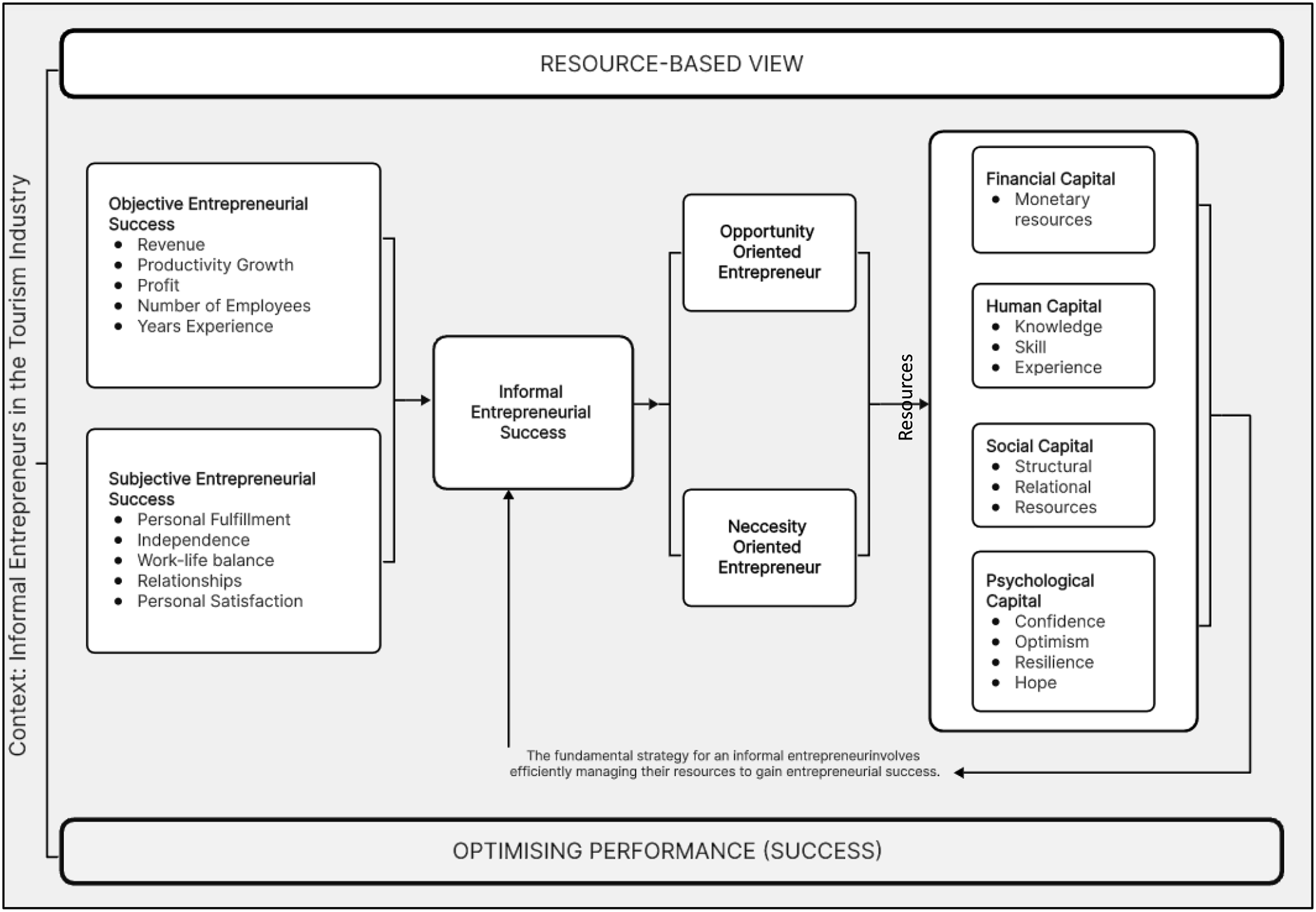
Methodology
An explanatory research design was adopted with a view to arriving at an in-depth understanding of the relationship between necessity-driven entrepreneurship and opportunity-driven entrepreneurship, as well as the different forms of capital available to informal entrepreneurs that contribute to their success. A mono-method research approach, underpinned by a positivist philosophy, was followed to answer the research question: How do the necessity motive and opportunity motive, respectively, influence the success of informal entrepreneurs in the tourism sector, and what roles do different forms of capital play in this dynamic?
Questionnaire design
A structured questionnaire was used to collect unique primary data on the informal traders’ demographic characteristics, the nature of their informal businesses, their level of resilience, their motives for being entrepreneurs, their usage of different forms of capital, and the measures used to determine their business success – within the context of the informal tourism sector.
The questionnaire had three sections. The first section was designed to gather demographic details, including gender, year of birth (age), education, nationality, tenure as an informal entrepreneur, prior work experience, possession of any business permits, gross income and clientele. The second section comprised statements that respondents had to rank, using a three-point Likert scale. These statements related to motives, capital sources, business decisions and resilience. The statements relating to resilience were based on the Conner–Richardson Resilience Scale, which consists of 10 items, while the statements relating to business decisions and use of capital were adapted from Szivas (2001), Skuras et al. (2005) and Kim and Shim (2018).
Data collection
Four fieldworkers were responsible for data collection, supervised by the researchers. Fieldworkers were recruited in each of the study sites from groups of unemployed graduates who had completed their degrees but had not yet been able to secure full-time employment. The reason for this approach was to cater for the various languages predominantly spoken in each of the research locations. Some of the fieldworkers had assisted in previous projects – hence, a satisfactory level of experience was ensured. The researchers trained the fieldworkers beforehand and were present throughout the fieldwork in case any problems or uncertainties arose. A debriefing took place after each day’s fieldwork to give the fieldworkers an opportunity to express their feelings and share their experiences.
Sampling
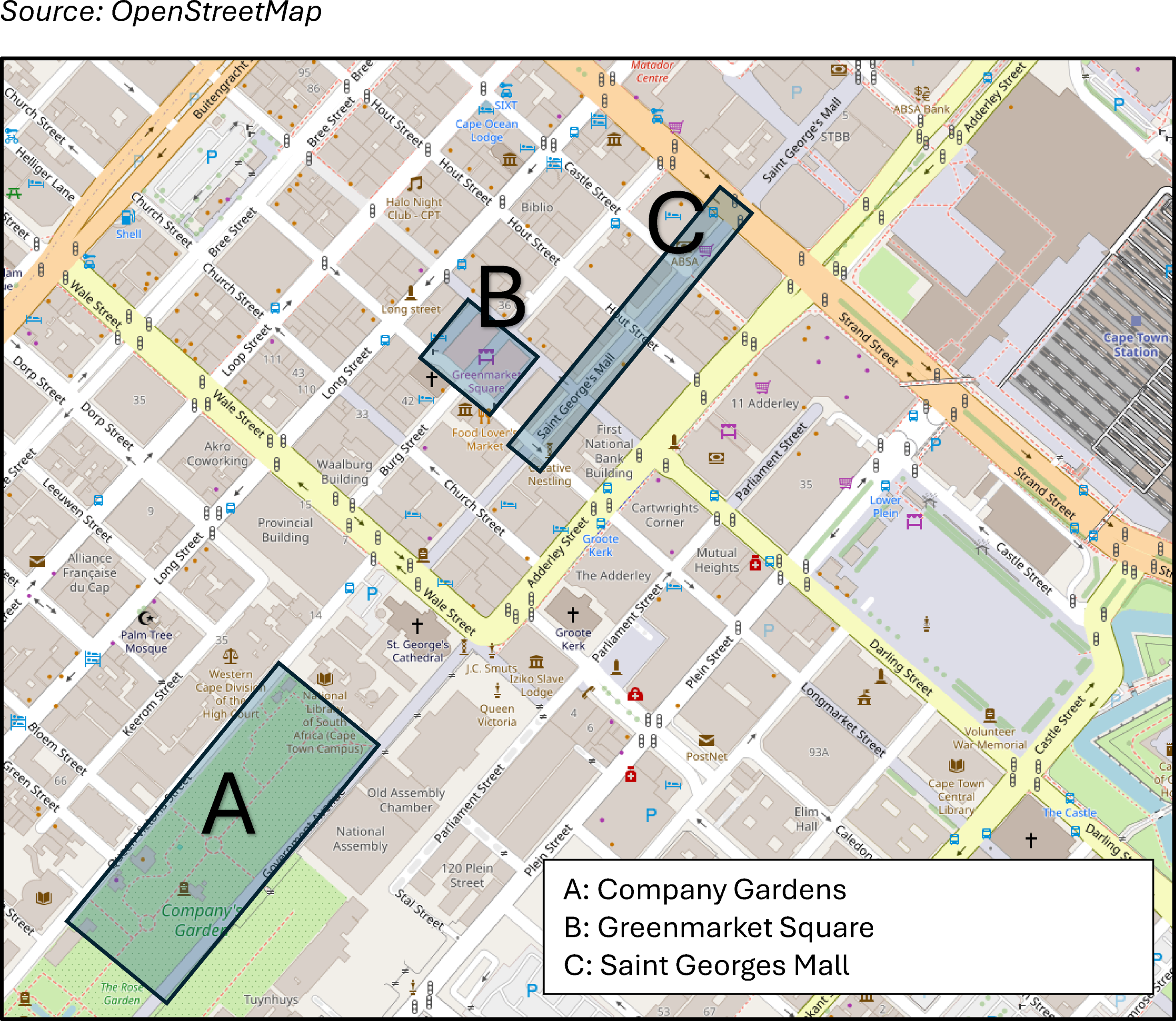
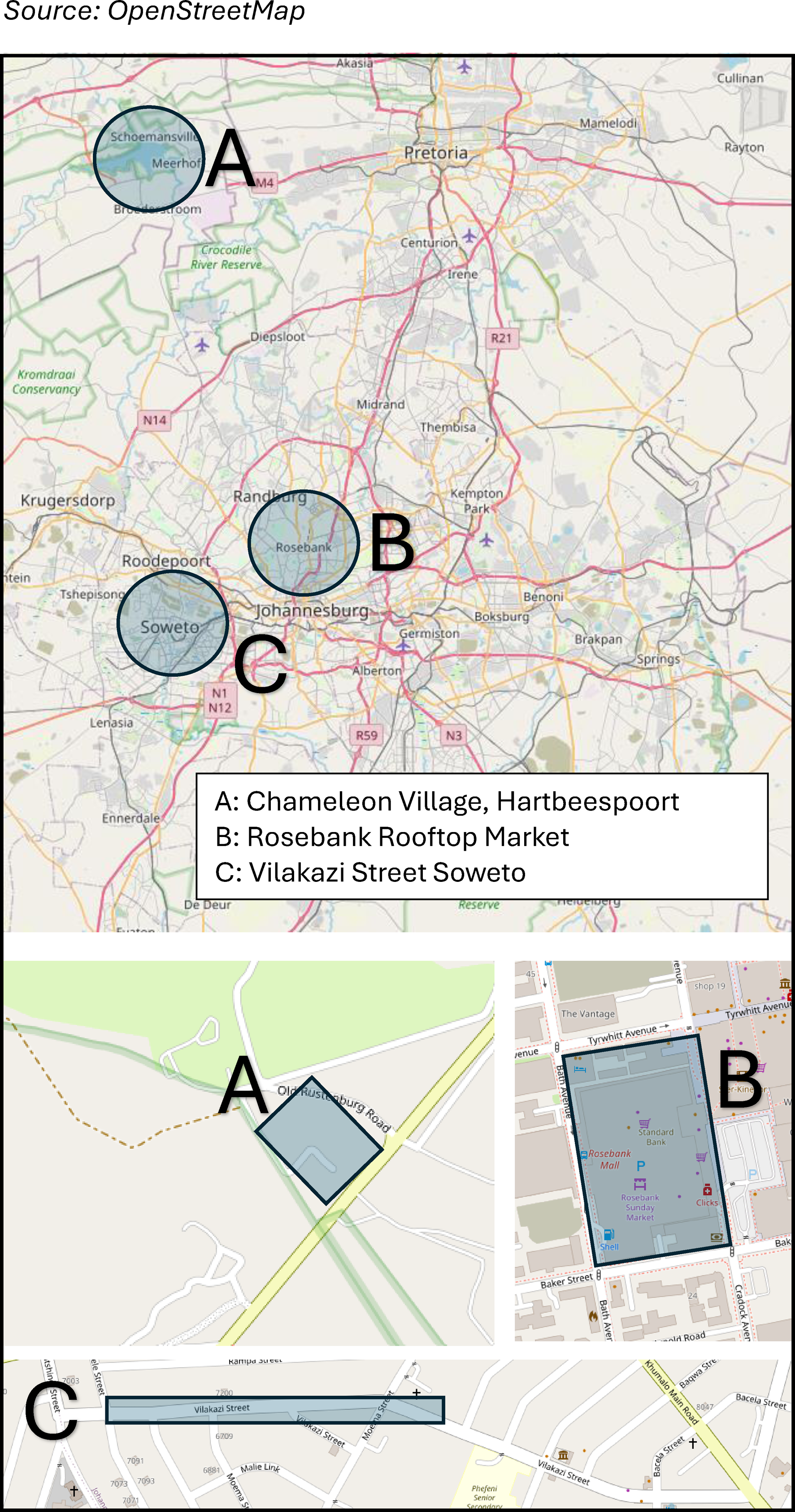
The total population of informal traders selling tourist items in the areas covered within this study was 521 (as ascertained through a count of all the informal sellers by the authors). With a confidence level of 99%, a sample size of 285 was required. Purposive sampling was employed to give all interested informal traders the opportunity to take part in the study if they wished to do so. The data were gathered from informal traders (street vendors) operating in various locations in Durban in KwaZulu-Natal (Figure 2), Cape Town in the Western Cape (Figure 3) and the greater Johannesburg area straddling Gauteng and the North West province (Figure 4) between September 2022 and March 2023.
1
Traders sold their goods in, for example, the Beach Road area (Durban); Green Market Square, St George’s Mall and Company Gardens (Cape Town); and Vilakazi Street in Soweto, the Rosebank Rooftop Market and the Chameleon Village in Hartbeespoort (greater Johannesburg area). A total of 363 questionnaires were obtained. Durban study area. Source: Google Maps, edited by the authors. Cape Town study area. Source: Google Maps, edited by the authors. Greater Johannesburg study area. Source: Google Maps, edited by the authors.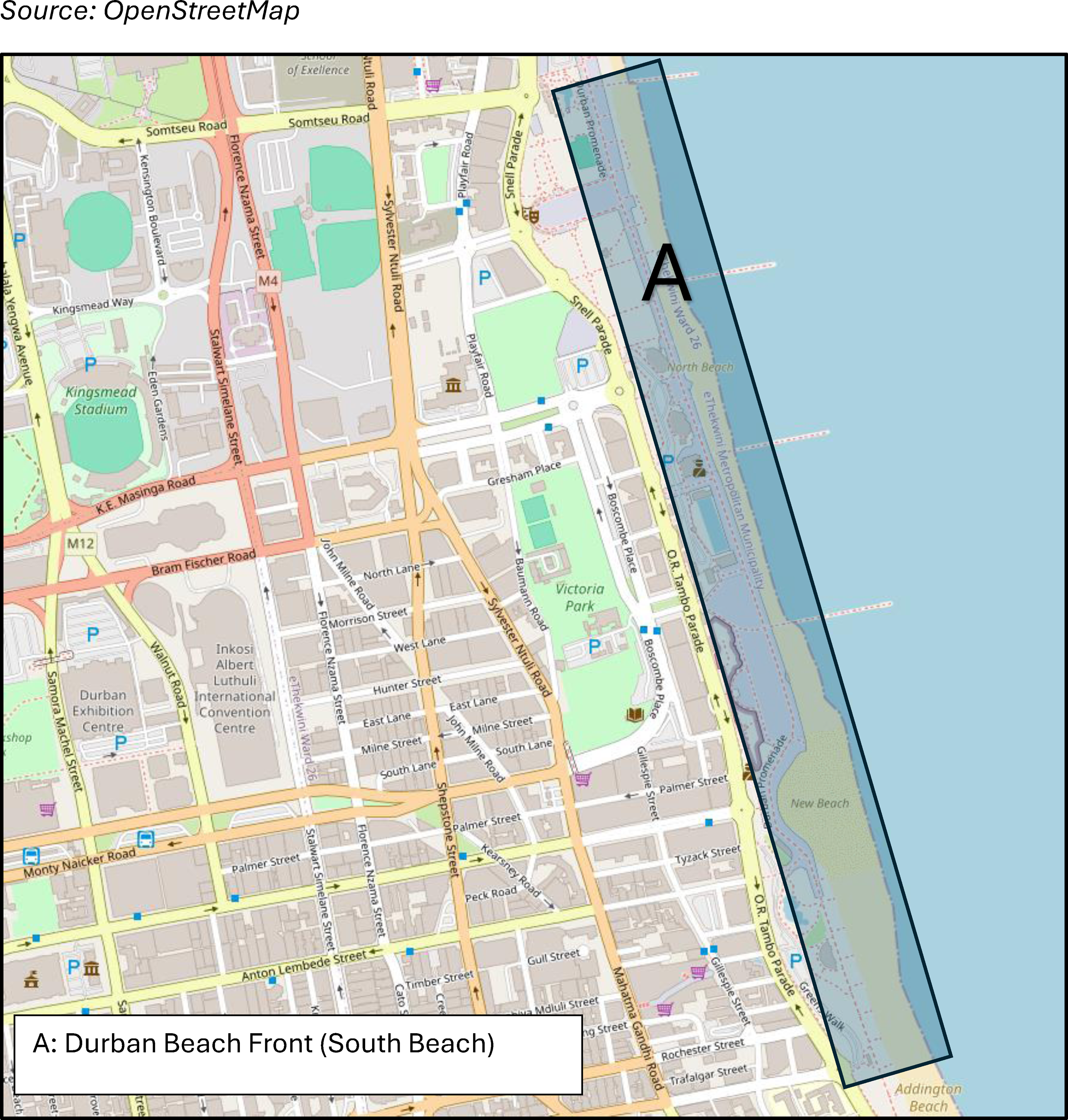
Data from South African Tourism (2025) reveals that between the years 2013–2023, 39.2% of all international tourists to South Africa visit the Gauteng province, and the most popular destination city is Johannesburg. The city hosts the largest international airport within the country, is the business hub of South Africa and is also home to several historic sites. The Western Cape Province receives 15.7% of all international tourists, with Cape Town the most popular destination within the province (South African Tourism, 2025). Table Mountain, a selection of beaches and the Victoria and Alfred Waterfront are drawing cards. Altogether 8.5% of international tourists tend to visit KwaZulu-Natal province, with the city of Durban the most important tourism destination (South African Tourism, 2025). Nestled along the shores of the Indian Ocean, this dynamic city with its distinct Zulu culture, offers a tropical climate and expansive beaches. The three destinations chosen in this study are therefore well-known tourist destinations within South Africa, also marketed by Travel and Tour World (2024).
During the fieldwork, all the required ethical protocols for fieldwork of this nature were diligently observed. Anonymity and privacy of data were also assured, and all respondents were informed that they could end their voluntary participation at any time. The collected data were entered on an Excel spreadsheet, which was used as a basis for the descriptive and regression analysis described in the next subsection.
Data analysis
Descriptive statistics were first used to describe the sample and to provide an overview of respondents’ motives for becoming entrepreneurs and the forms of capital that they used, including their psychological capital. Since both the sources of capital and participants’ motivations were measured using a 3-point Likert scale, exploratory factor analysis was used for dimension reduction. To ascertain whether the data could be subjected to factor analysis, the Kaiser–Meyer–Olkin Measure of Sampling Adequacy and Bartlett’s test of sphericity were assessed. Subsequently, Kaiser’s criterion was used to determine the number of factors to extract. In both cases, principal component analysis was used, which assumes a linear relationship between the components, with a varimax rotation, to minimise the sum of the square loadings (Field, 2009). The component scores were computed using the Anderson–Rubin method. Since the Conner–Richardson Resilience Scale was used, which was already considered to be a consistent measure of resilience, the average score of each respondent was taken.
The regression model is derived from RBV’s premises that success is a function of resource heterogeneity and strategic resource deployment (Barney, 2001) Here, financial, human, social and psychological capital represent the heterogeneous resources entrepreneurs possess, while motives (necessity or opportunity) reflect their strategic intent. Success was gauged in terms of income earned per month and the duration of a trader’s informal business. Although these are not the only ways to determine business success, they remain objective measures that allow businesses to be compared. As an informal trader’s success cannot only be dependent on motivation and capital, we also controlled for various demographic and business characteristics. Hence,

Variables used in the regression models.
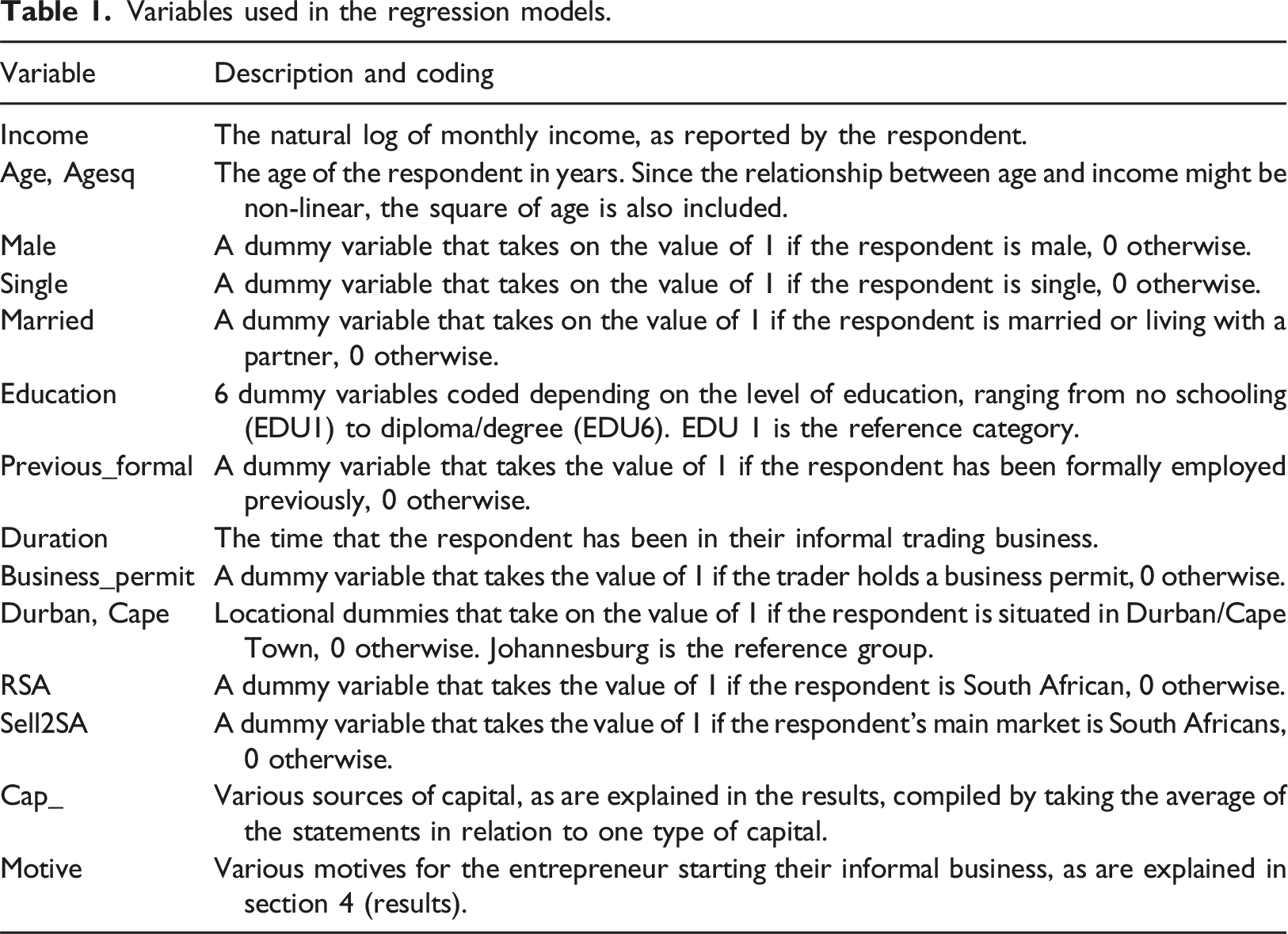
To determine the significant regressors to include in the model, a stepwise regression was first estimated. The stepwise regression is a selection procedure, while a stepwise forward method is used as the stopping criteria with the probability set at 0.5. The capital and motivational variables were always included, though, in keeping with the aim of this study.
Once the regressors were determined, the regression model was re-estimated and tested for violation of the classical linear regression model assumptions – specifically, homoskedasticity, which is a concern in cross-sectional data. Since a regression model estimates the expected mean value of the dependent variable, given the independent variables, it is also referred to as the mean equation or estimate.
However, the mean does not always tell one about the conditional distribution characteristics and how less successful entrepreneurs react in response to the regressors compared to more successful (higher-income) entrepreneurs. This also corresponds with the theoretical view by Çakmak et al. (2019) that the capital mix differs over different development stages of the business. The procedure proposed by Koenker and Bassett (1978), namely quantile regressions, allows one to determine how various percentiles of the respondents, such as the 25th percentile, the median (or 50th percentile) and the 90th percentile, respond to the regressors. This requires the data to be ordered from lowest income to highest income, since the percentiles are based on the dependent variable. For a more comprehensive analysis, the results of the mean regression and the quantile regressions (defined above) were included in this study.
Results and discussion
Descriptive statistics on the respondents revealed that the average age of the informal traders was 44 years, with an almost equal distribution between male (45%) and female (55%) traders. In total, 58% of the respondents were non-South Africans, mainly from countries such as Zimbabwe, Mozambique and Malawi. However, they had been living in South Africa for an average of 15 years. Two-thirds of the respondents relied solely on their income from trading for their and their families’ livelihoods.
The respondents had ample trading experience – on average, 14 years. They employed an average of 0.8 employees and earned an average monthly income of ZAR11 105. 2 Respondents in Johannesburg tended to earn more on average (ZAR17 593) than respondents in Cape Town (ZAR12 021) and Durban (ZAR2 575).
Sources of capital
Importance of financial, human and social capital.
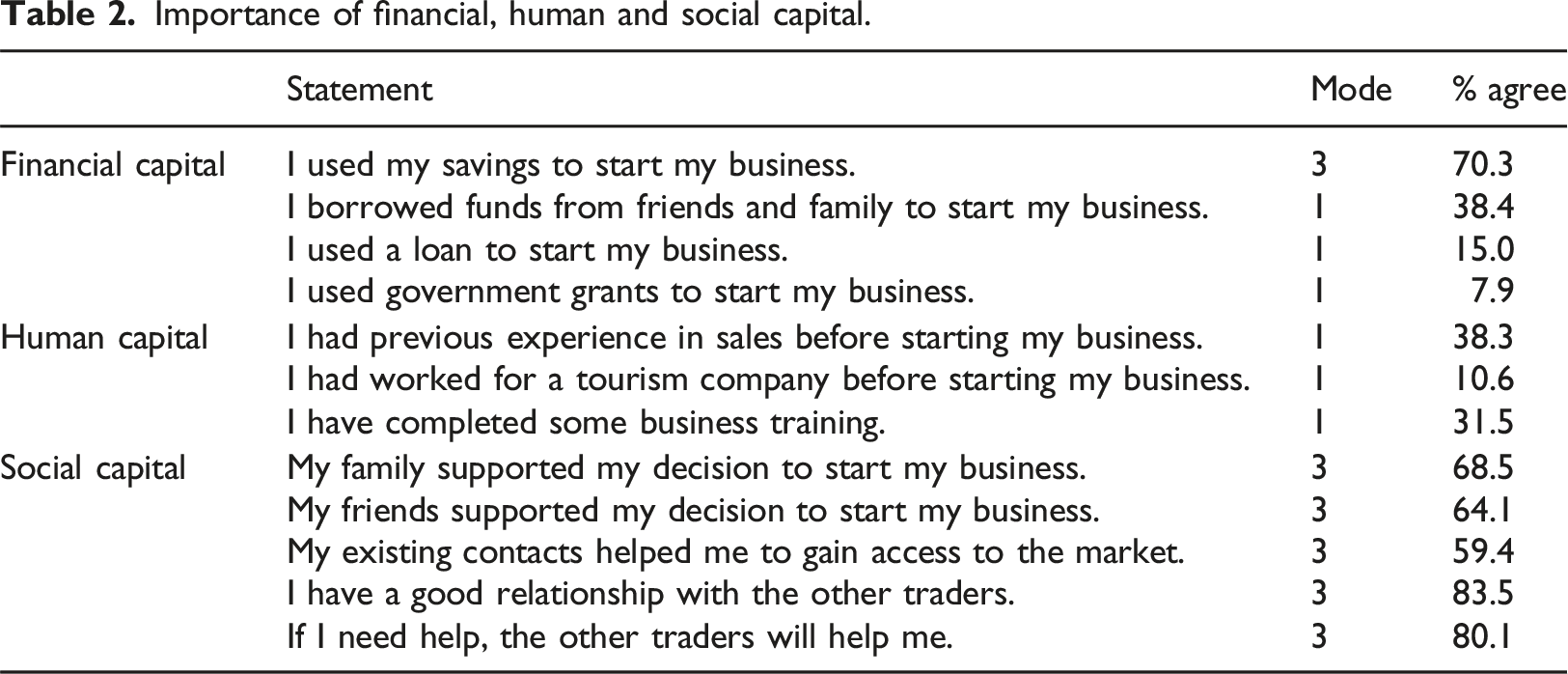
Table 2 indicates that most respondents relied on their own savings to start their trading business. It is also clear that government grants were the least popular source of funding and that very few respondents had access to loans to finance their business. In general, there seemed to be a heavy reliance on social capital, especially social networks of fellow traders.
Importance of psychological capital.
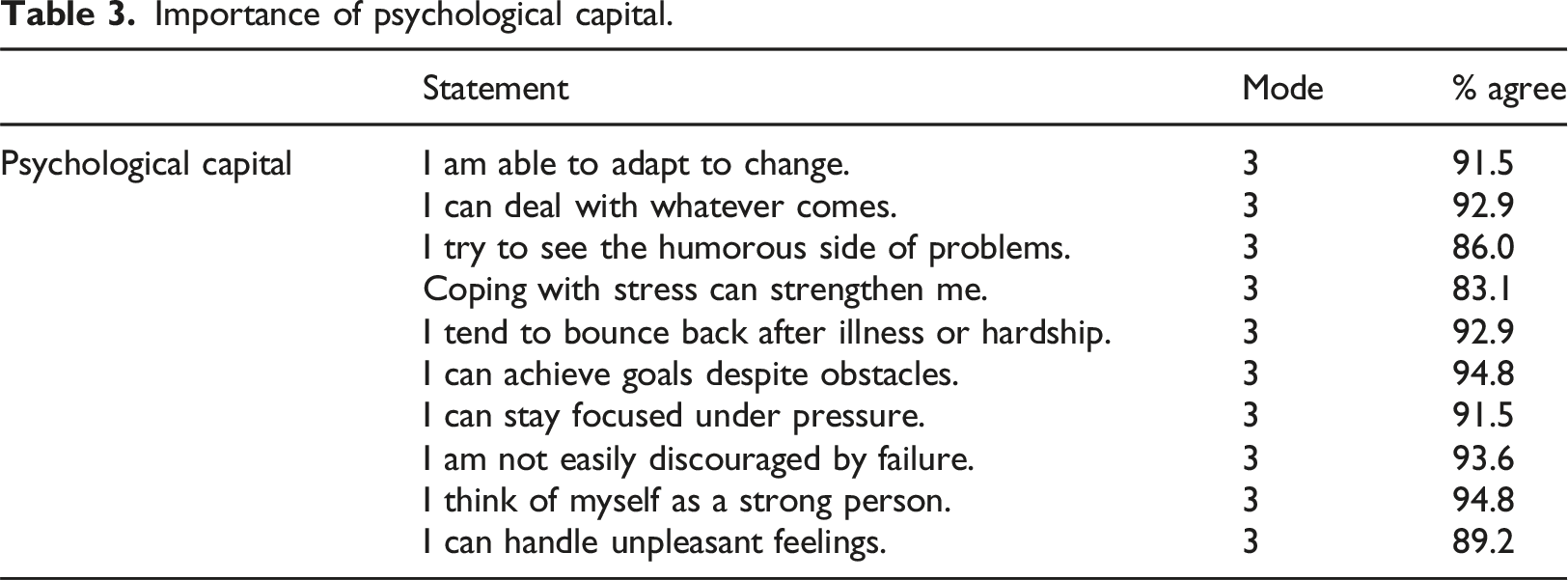
While the psychological capital questions were derived from a tested measuring scale (the Connor-Davidson Resilience Scale) and can therefore be considered a coherent measure of resilience, the same cannot be said about the various social, financial and human capital questions. To ascertain the coherence of the statements, the latter were subjected to a factor analysis. A principal component analysis using Varimax rotation was performed. The Kaiser–Meyer–Olkin Measure of Sampling Adequacy was 0.714 and Bartlett’s test of sphericity was 845.28 (p < .001), indicating that factor analysis could be performed.
Results of the principal component analysis: Capital.
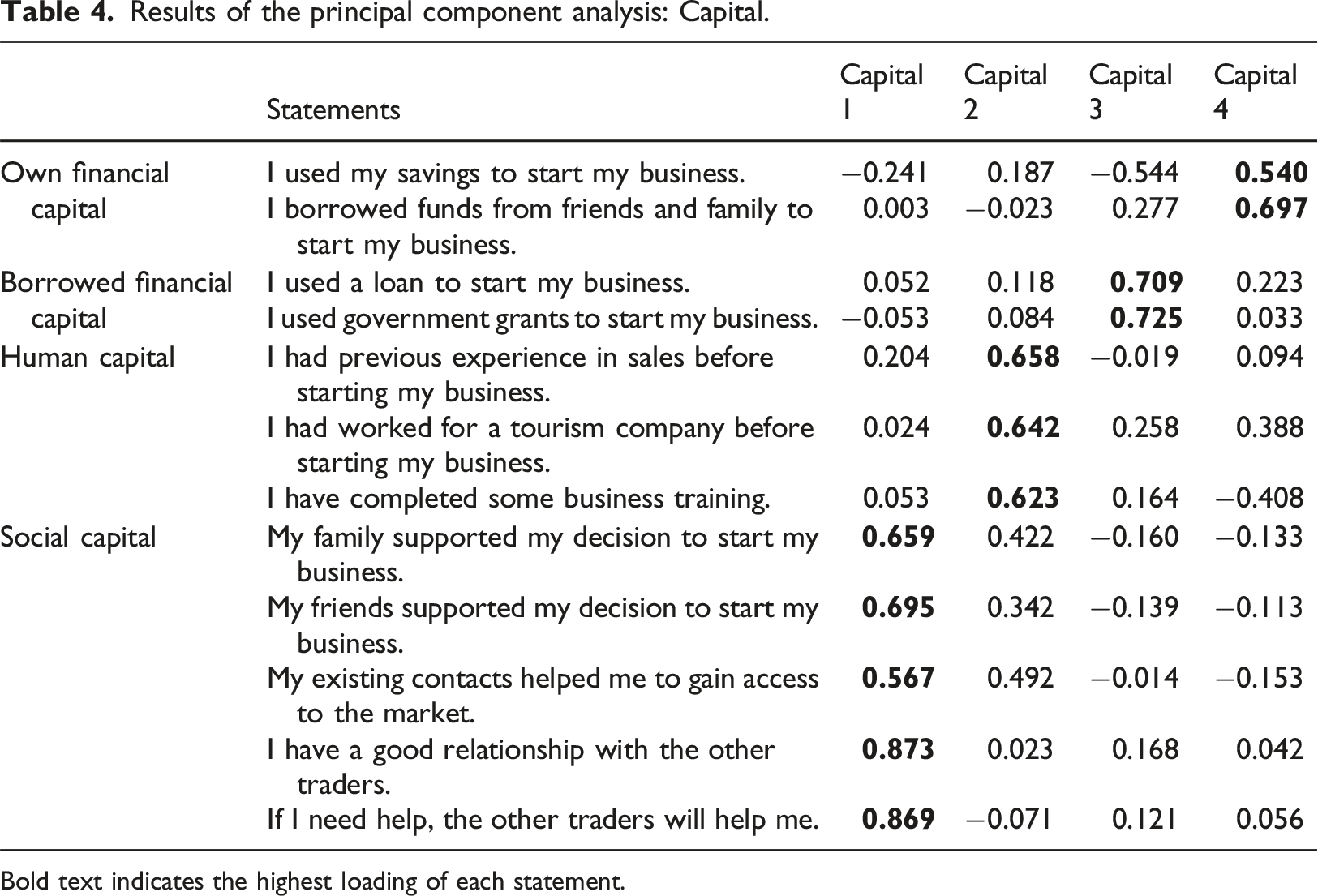
Bold text indicates the highest loading of each statement.
Motivation
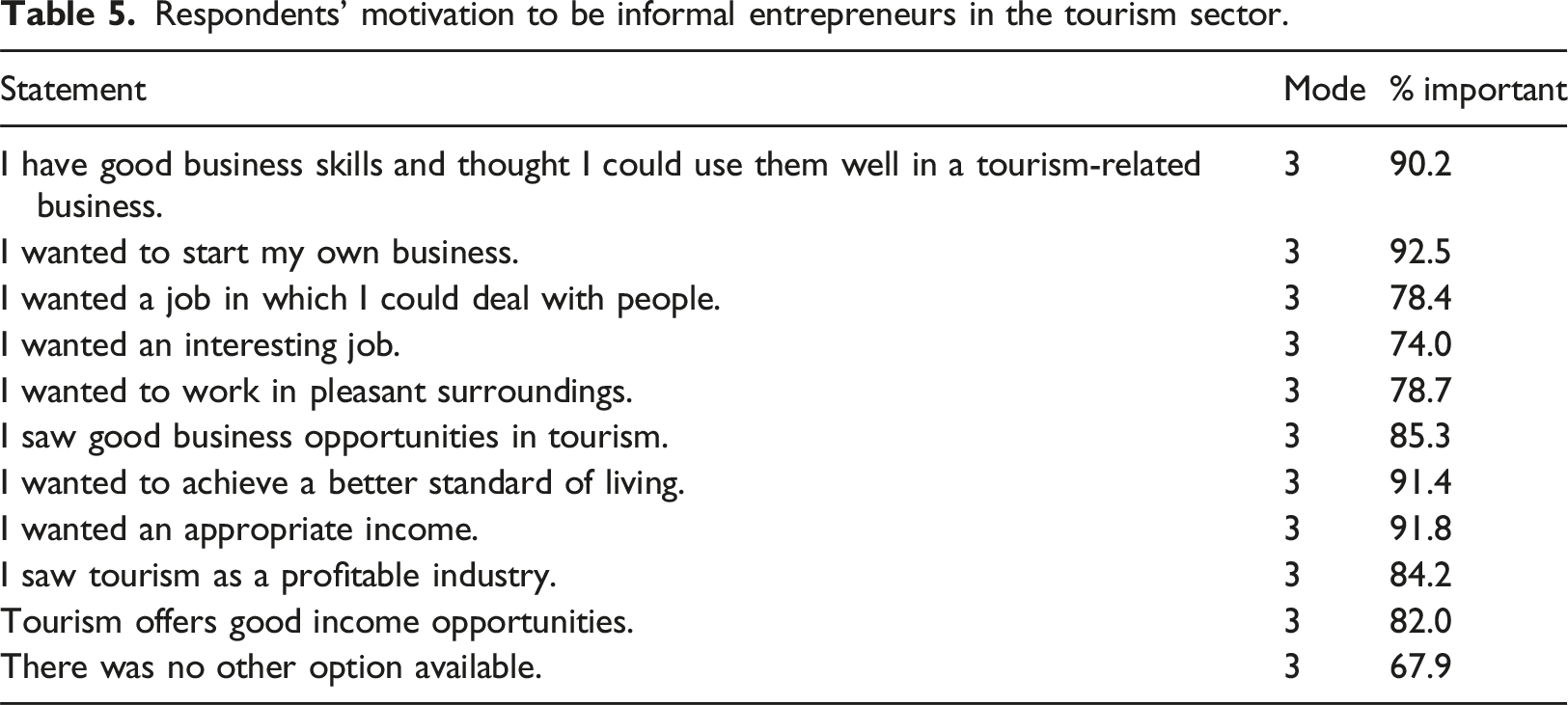
Respondents’ motivation to be informal entrepreneurs in the tourism sector.
Results of the principal component analysis: Motivation.
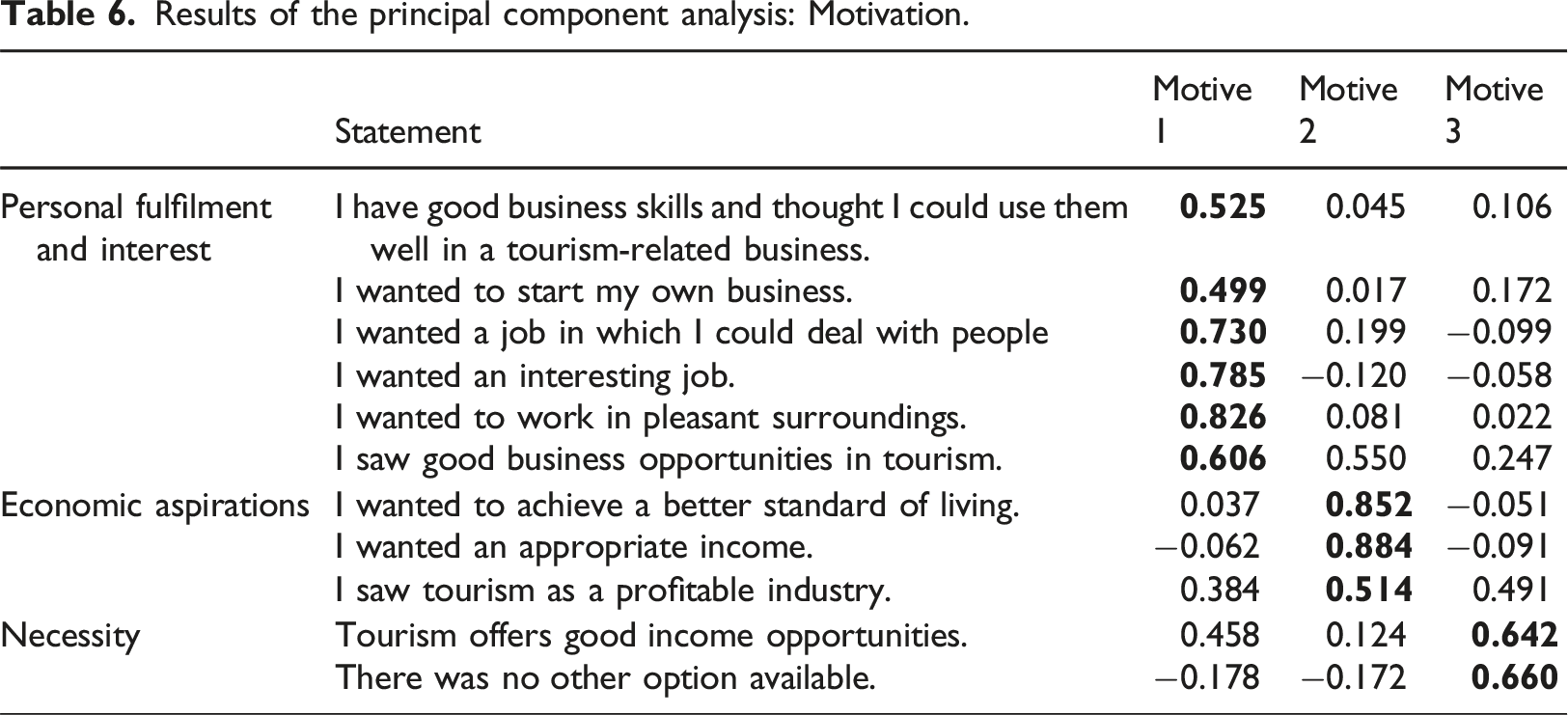
It is evident that motive 1 corresponds with typical ‘push’ factors in tourism motivation literature, while motive 3 corresponds with typical ‘pull’ factors. Motive 2 covers statements that measure the need to improve living standards, typically associated with business motives. Therefore, motives 1 and 2 are more in line with the concept of opportunity entrepreneurship, while motive 3 is linked to necessity entrepreneurship in the tourism sector. Factor scores for the different motives were determined using the Anderson–Rubin method, which leads to standardised factor scores that can easily be used in regression analysis.
Regression analysis
Regression results, LINCOME = dependent variable.
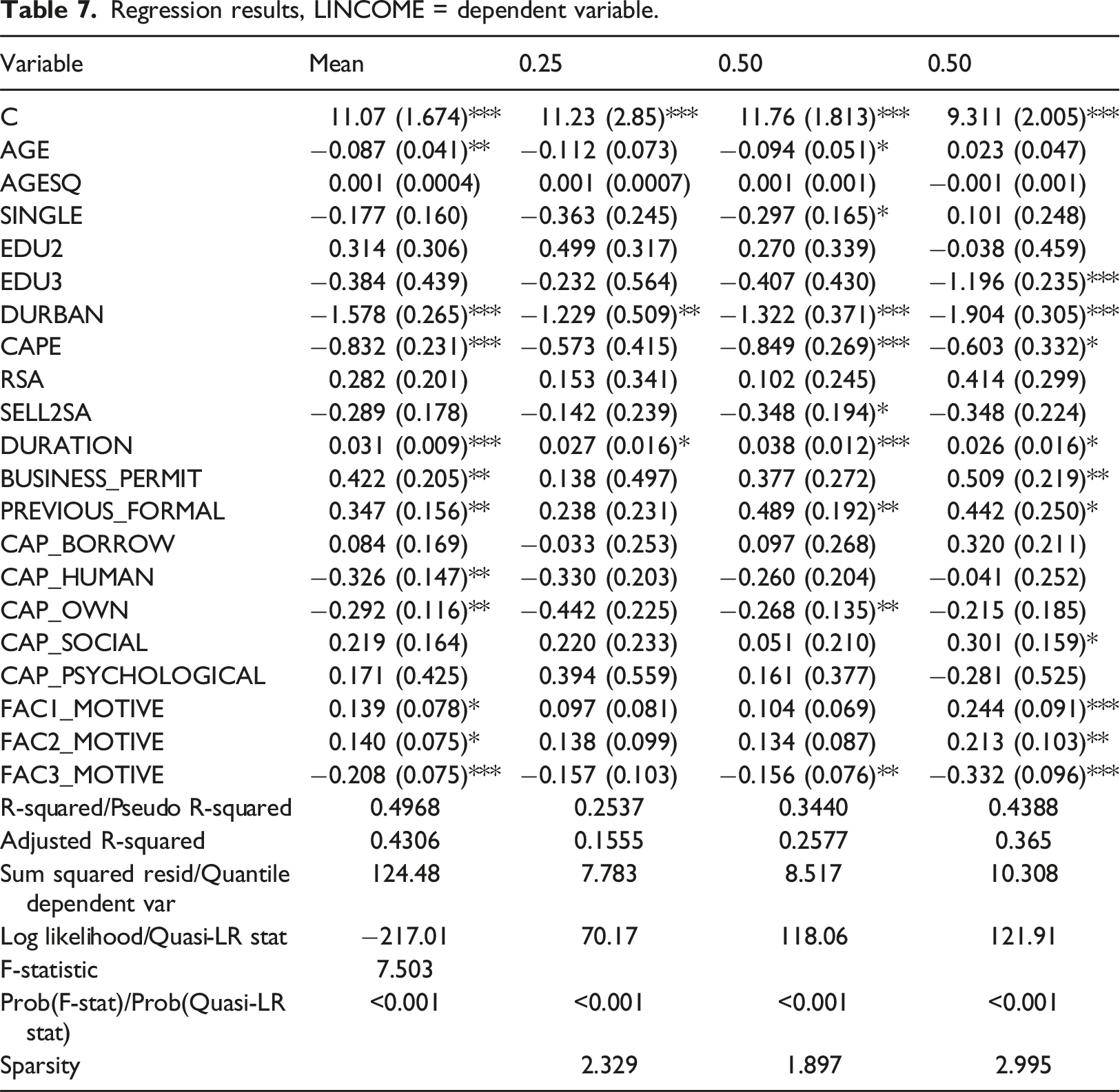
The stepwise procedure indicated that age and age-squared, single persons, education 2 (some primary school) and education 3 (completed primary school), the two locations (Durban and Cape Town), whether the respondent was previously formally employed, and whether the respondent was South African should be included in the model. Business-related variables identified for inclusion were whether the respondent had a business permit, how long the respondent had been an informal trader and whether their main market was South Africans. By design, all the capital and motivational variables were included. The mean equation explained almost 50% of the variance in income and the F-statistic indicated that the super-restricted model was rejected in favour of the more expanded model.
Columns (2), (3) and (4) report the results for the 25th percentile (lowest 25%), the median (or 50th percentile) and the 90th percentile, respectively. The summary statistics indicate that between 25% and 44% of the variance in income is explained by the various quantile regressions and that the quasi-LR statistic is significant, indicating that the models are valid.
When business success was measured by income, the mean equation reflected several significant predictors of success. Age was negatively associated with success, indicating that younger entrepreneurs tended to be more successful. This finding contrasts with some studies suggesting that experience, which often correlates with age, enhances entrepreneurial success (Unger et al., 2011). Entrepreneurs in Durban and Cape Town earned significantly less than those in Johannesburg, which aligns with studies on regional economic disparities in South Africa’s tourism sector. Informal traders in Durban for example, did not only had to deal with the impact of the COVID-19 pandemic, but were facing a decline in tourist numbers before the advent of the pandemic. Qualitative discussions with respondents in Durban for example revealed issues of crime and crumbling infrastructure as contributing factors to this trend – pointing towards the possible role of institutional factors on the informal tourist sector’s performance. The duration of working in the specific trade was positively correlated with business success, as those who had been in the trade longer earned higher incomes, thus supporting the notion that prolonged engagement in a trade fosters success (Fisher et al., 2014).
Entrepreneurs with a business permit also earned higher incomes than those without one, highlighting the importance of formal recognition even within the informal sector, as noted by (Williams, 2007). Previous formal employment was associated with greater success, which is aligned to research indicating that prior work experience contributes significantly to entrepreneurial capabilities (Ganotakis, 2012). The sources of capital significantly related to business success were ‘own capital’ and ‘human capital’, both showing a negative relationship, indicating that those more reliant on these sources of capital are not earning higher income through trading activities. In addition, the negative relationship between ‘own capital’ and success aligns with RBVs assertion that mere resource possession is insufficient; strategic deployment matters (Sirmon and Hitt, 2003). Entrepreneurs relying heavily on personal savings may lack complementary resources such as social networks to exploit opportunities effectively. This finding challenges the traditional view that access to financial and human capital is invariably positive for entrepreneurial success (Clarke et al., 2011; Unger et al., 2011), suggesting that other factors might mediate these relationships in the informal sector. Possibilities could be that traders with better access to funding and those possessing better skills are not motivated to make a success of their activities in the informal sector, since they strive to rather access the formal sector (i.e., they are discouraged to be informally employed). An alternative hypothesis could be that the types of capital needed to be successful in the informal sector differs from the formal sector, with psychological and social capital of greater importance.
All three motives were significant, with personal fulfilment and interest and economic aspiration associated with opportunity entrepreneurs positively associated with success. This is consistent with Szivas (2001) and Çakmak et al. (2019) who found that opportunity-driven motives are crucial for success. In contrast, motive 3 showed a negative relationship with business success, reaffirming the literature that necessity-driven entrepreneurship often leads to lower economic outcomes (Maritz, 2004; Perunoviæ, 2005). The quantile regressions largely confirmed the mean regression results, providing a clearer picture of where (in the sample distribution) the results were most pronounced.
For ease of interpretation, Figure 5 provides a visual presentation of the capital and motivational aspects, which were particularly relevant to this study. Human and own capital became more important in the upper part of the income distribution (i.e., 90th percentile), which corresponds with research highlighting the critical role of specific human capital in entrepreneurial success (Ganotakis, 2012). Social capital was more important for both low-income earners and high-income earners compared to the median of the sample, underscoring the dual role of social networks in accessing resources and opportunities (Çakmak et al., 2019). Social capital’s varying importance across income quantiles reflects RBV’s resource immobility where high-income entrepreneurs likely leverage exclusive networks, while low-income entrepreneurs rely on generalised ties for survival (Çakmak et al., 2019). Visual presentation of the capital and motive coefficients with income as dependant (orange indicates mean equation coefficient).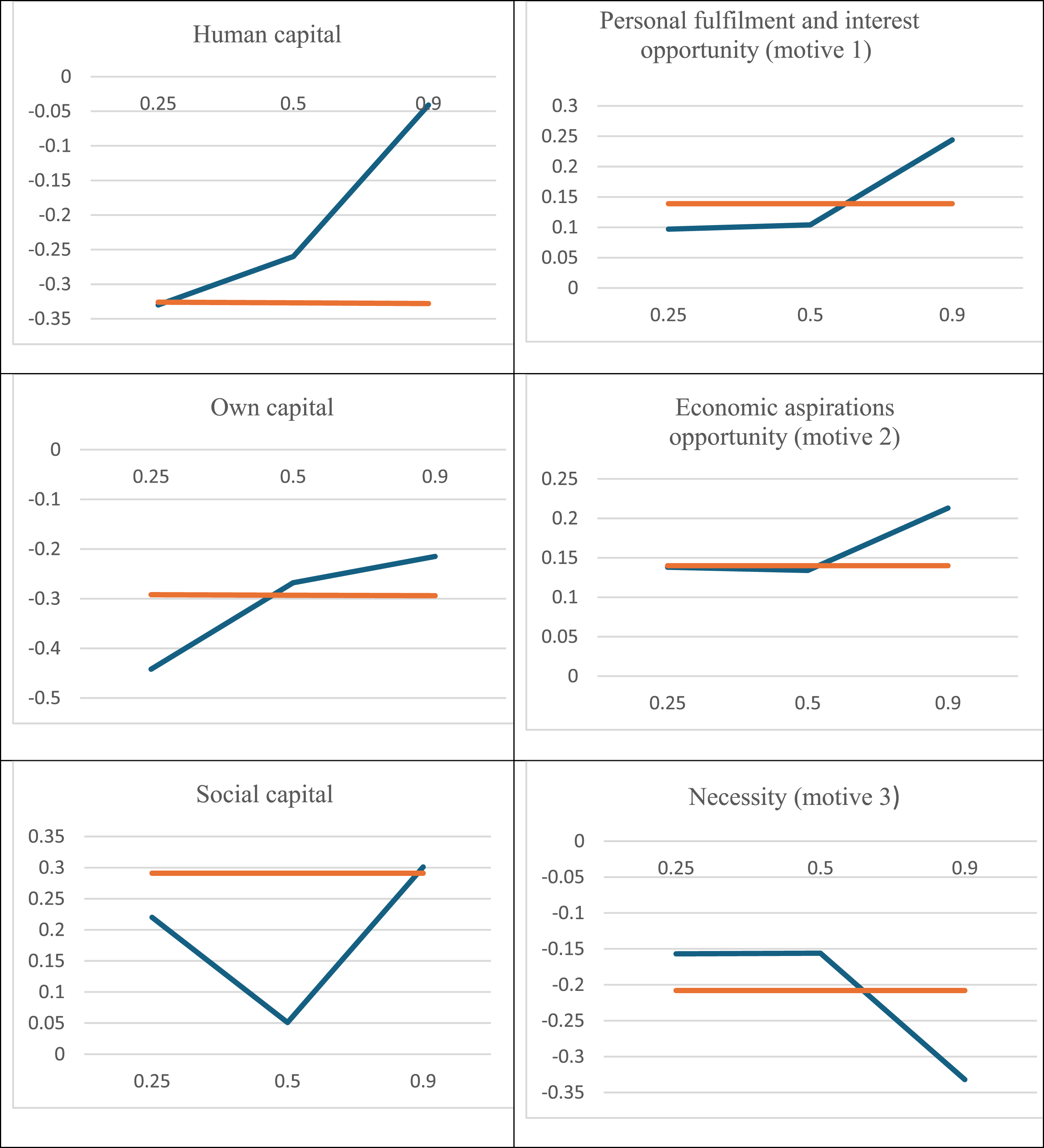
Regarding motives, personal fulfilment and interest and economic aspirations were better predictors of higher levels of entrepreneurial success than lower levels of business success. This is consistent with the literature on opportunity entrepreneurs who leverage favourable conditions to achieve success (Szivas, 2001). Conversely, the necessity motive was negatively related to higher levels of entrepreneurial success, reflecting the challenges that necessity entrepreneurs face compared to their opportunity-driven counterparts (Maritz, 2004).
Regression results, DURATION = dependent variable.
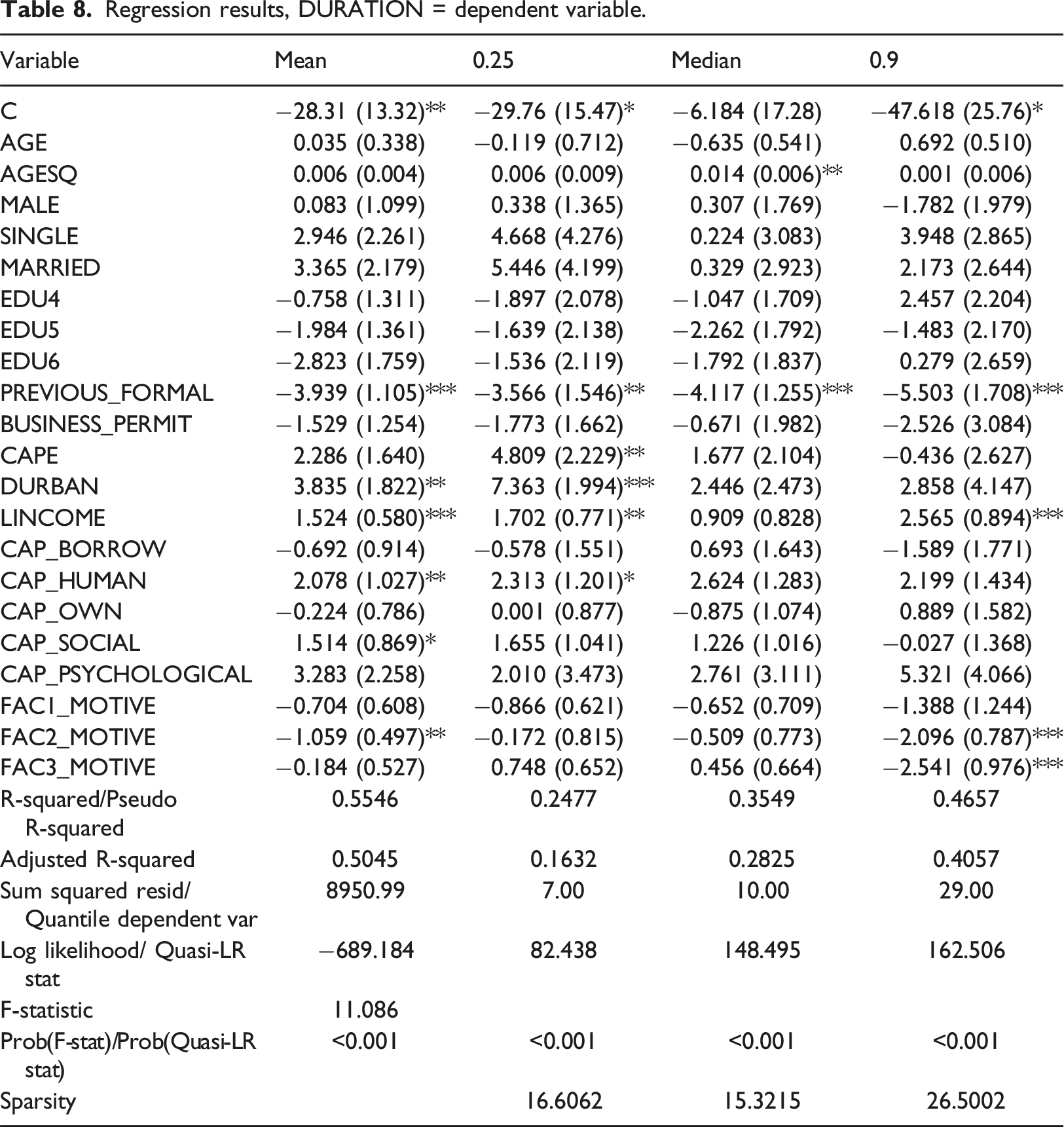
The mean equation indicates that the conditional mean of business duration was significantly influenced by several variables. Entrepreneurs who had previously been formally employed tended to have younger businesses compared to those who had not been employed. This result can be related to the impact of the pandemic; i.e., that is those expelled out of formal employment due to the impact of the pandemic created an informal business. Another (perhaps more plausible) explanation is that this illustrate the fact that those who could not secure formal employment ventured directly into the informal sector as a means of earning an income – pointing towards the permanency and long term nature of the South African informal sector (Theodore et al., 2015). This finding also contrasts with some studies’ suggestion that prior formal employment contributed positively to entrepreneurial capabilities (Ganotakis, 2012).
Businesses in Durban had significantly longer durations than those in both Cape Town and Johannesburg. This regional variation aligned once again with the research on economic disparities and entrepreneurial environments in South Africa’s tourism sector. Additionally, there was a positive relationship between income and business duration, indicating that objective measures of success were reinforcing, which supports the notion that financial stability contributes to business longevity (Fisher et al., 2014).
Higher levels of both human capital and social capital contributed positively to business success. This finding is consistent with the literature which highlights the importance of human capital (encompassing knowledge, skills and experience) in enhancing entrepreneurial success (Becker, 1964; Unger et al., 2011). Social capital also played a crucial role in sustaining business operations (Çakmak et al., 2019; Rijal et al., 2024).
Among the motives, only economic aspirations were significant, and these were negatively associated with business success. This finding contrasts with research emphasising the positive impact of opportunity-driven motives on entrepreneurial outcomes (Szivas, 2001). The negative relationship suggests that while some motives might drive individuals into entrepreneurship, they do not necessarily translate into long-term business success, especially in the informal sector where resources and support systems are limited (Williams, 2007). The possibility that those with higher economic aspirations leave the informal tourism sector when better opportunities for higher income present themselves, may also explain the observed negative relationship.
Figure 6 compares the quantile regression results with the mean regression results for the various forms of capital and motives. Starting with capital, borrowed capital was more important for businesses of median duration than for younger and older businesses, while the opposite was true for own capital. This aligns with Çakmak et al. (2019), who emphasise the limited access to formal capital markets for informal entrepreneurs, making own capital a crucial factor for business success, as measured by duration. Social capital was important and positively affected businesses with median to low duration but became less significant as the business matured. This finding was consistent with Bourdieu’s (1986) concept of social capital, which suggests that initial social networks are crucial for early business stages but may diminish in importance as the business stabilises. Visual presentation of the capital and motive coefficients with duration as dependent (orange indicates the mean equation coefficient).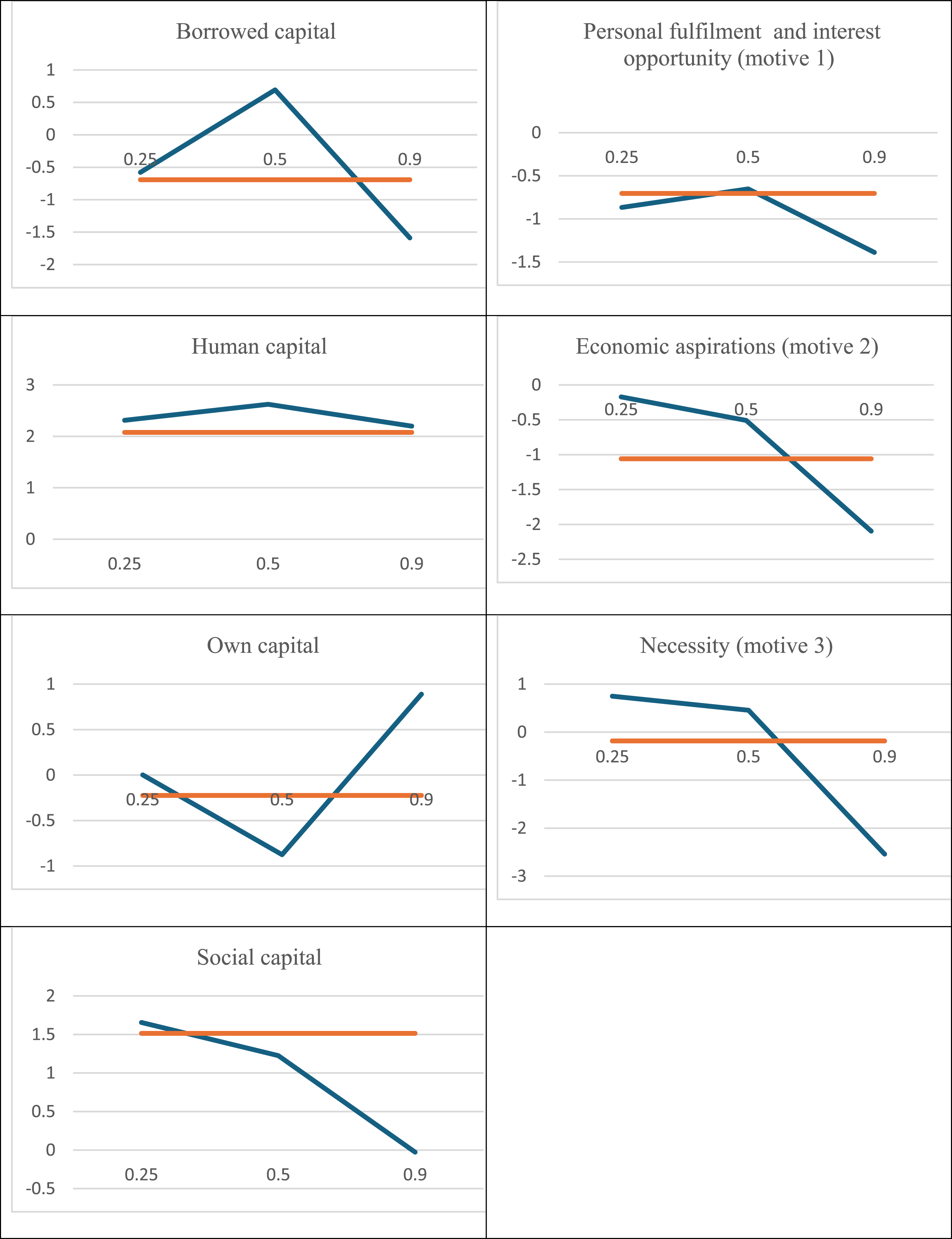
Human capital remained consistently important across different business durations, reinforcing the findings of Unger et al. (2011). Therefore, the mean estimate of human capital’s importance was an accurate representation across the different business durations.
Regarding motives, it is evident that economic aspirations and necessity were positively associated with shorter durations. This suggests that necessity entrepreneurship was crucial for starting a business but did not necessarily lead to sustainability, aligning with Williams (2007). Personal fulfilment and interest were negatively associated with business duration across all quantiles. This implies that opportunity entrepreneurs may be more likely to change businesses as they identified new opportunities in other sectors, which is consistent with Szivas (2001).
Conclusion
This study makes an important contribution to the literature by delving into what makes informal entrepreneurial businesses successful in the tourism sector in South Africa, with specific reference to the influence of different forms of capital and entrepreneurs’ motivations for entering this sector.
Incorporating the resource-based view (RBV), our analysis revealed that the effective strategic management of resources significantly influenced entrepreneurial success. This suggests that it is not merely the presence of resources but also their effective deployment that drives success in the informal tourism sector. For example, while access to own financial capital may not be all that important in the early stages of a business, saving and reinvesting own resources become crucial as time goes by if the business is to grow and become successful.
The motivations for becoming entrepreneurs also significantly influence entrepreneurial success. Our findings suggest that opportunity-driven entrepreneurs are more likely to be successful than necessity-driven entrepreneurs. The former leverage different types of capital more effectively, aligning resources with strategic business opportunities that enhance their competitive edge. This adds important nuances to the RBV.
The results of this study reveal several management and policy imperatives aimed at enhancing informal entrepreneurs’ prospects of success in the tourism sector. Firstly, it is crucial to develop targeted support structures that facilitate informal entrepreneurs’ access to optimal forms of capital at different stages of a business’s development. This calls for inclusive, participatory engagement with entrepreneurs to determine their specific needs, which may range from simple financial interventions to more sophisticated solutions spanning financial, human and other forms of capital. Secondly, it is essential to conduct comprehensive training and development programmes for informal entrepreneurs, focusing in particular on building human and social capital for business scaling and sustainability. Thirdly, policymakers should consider offering government incentives that promote opportunity-driven entrepreneurship in the tourism sector, encouraging higher levels of success while also reducing barriers to entry and expansion.
Our study was not without limitations, however. Firstly, informal entrepreneurs’ activities at various sites were probed within a South African context only. Future research could build on our results by examining informal trading activities in the tourism sector, together with their critical success factors, in other developing regions. Secondly, the concept of social capital is multi-faceted, with our study homing in on selected aspects only. The various dimensions of social capital and their influence on entrepreneurial success among informal traders therefore warrant more research.
Supplemental Material
Supplemental Material - Informal entrepreneurship in the tourism sector: How entrepreneurs’ motives and capital contribute to business success
Supplemental Material for Informal entrepreneurship in the tourism sector: How entrepreneurs’ motives and capital contribute to business success by Alicia Fourie, Andrea Saayman and Derick Blaauw in Tourism Economics
Footnotes
Declaration of conflicting interests
The author(s) declared no potential conflicts of interest with respect to the research, authorship, and/or publication of this article.
Funding
The author(s) disclosed receipt of the following financial support for the research, authorship, and/or publication of this article: This work was supported by the University of Pretoria.

Supplemental Material
Supplemental material for this article is available online.
Notes
Author biographies
References
Supplementary Material
Please find the following supplemental material available below.
For Open Access articles published under a Creative Commons License, all supplemental material carries the same license as the article it is associated with.
For non-Open Access articles published, all supplemental material carries a non-exclusive license, and permission requests for re-use of supplemental material or any part of supplemental material shall be sent directly to the copyright owner as specified in the copyright notice associated with the article.
